
A squeaky bed frame can interrupt sleep and make every small movement annoying. The noise usually comes for various unknown reasons.
Learning how to fix a squeaky wooden bed frame and metal frames starts with locating the exact source instead of tightening random parts.
Once identified, most fixes are simple and cost far less than buying a new bed.
Acting early also limits wear on the frame and prevents the noise from becoming worse.
In this blog, you will find some of those fixes for how to stop a squeaky bed that you can try at home and get relief from the squeaky noise of the bed.
Why is My Bed so Squeaky?
A bed often becomes squeaky because separate parts rub, shift, or loosen during regular use.
Bolts, screws, and joints can gradually lose their grip, allowing the frame to move whenever weight changes.
Wooden slats may also rub against the frame, creating a sharp creak with every turn. Sometimes, the noise comes from the mattress rather than the bed frame.
Worn springs, sagging areas, or uneven pressure can produce squeaks when someone sits or lies down.
An unstable frame is another common cause, especially when one leg does not rest evenly on the floor. This imbalance makes the bed rock and places added strain on its connections.
How to Find the Source of a Squeaky Bed Frame?
Before grabbing any tools, you need to know exactly where the noise starts. A few minutes of testing now saves you hours of guesswork later.
- Do a weight-shift test: Press down slowly on different corners and sections while someone else listens for the sound.
- Isolate it by section: Check the headboard, footboard, center support, slats, and mattress one at a time.
- Test joints by hand first: Apply gentle pressure to each joint before reaching for a screwdriver or wrench.
- Rule out the mattress: Press directly on the mattress alone to see if the noise is coming from there instead of the frame.
Once you’ve traced the sound to its source, fixing it becomes a lot more straightforward. You’ll know exactly which part needs attention, so you’re not wasting time or effort on the wrong fix.
Gather These Before You Start
A few basic items are all you need; most are already sitting in a kitchen drawer or toolbox at home.
Having everything ready before you start means you won’t have to stop halfway through a fix.
| Tool | Purpose |
|---|---|
| Flathead and Phillips screwdriver | Tightens most bolts and screws on the frame |
| Adjustable wrench | Handles larger nuts and bolts |
| WD-40 or silicone spray | Lubricates metal joints and pivot points |
| Beeswax or candle wax | Lubricates wooden joints without damaging the wood |
| Felt pads, old socks, or cloth strips | Cushions slats and reduces friction points |
| Rubber washers | Adds a buffer between metal parts to stop rubbing |
| Furniture pads | Levels uneven or wobbly legs |
| Non-slip mat | Prevents mattress from sliding on the frame |
| Flashlight | Helps you inspect joints and slats under the bed |
With everything laid out, you’re ready to start fixing the squeak with no extra trips to the store required. Once you’ve got these on hand, the actual repair takes just a few simple steps.
How to Stop Squeaky Bed?
Not every squeak needs a full repair: most can be solved in minutes with things you already own.
Start with the simplest fix and work your way down the list until the noise stops. Each one targets how to fix a squeaky wooden bed frame, along with metal frames.
Fix 1: Tighten All Bolts and Screws
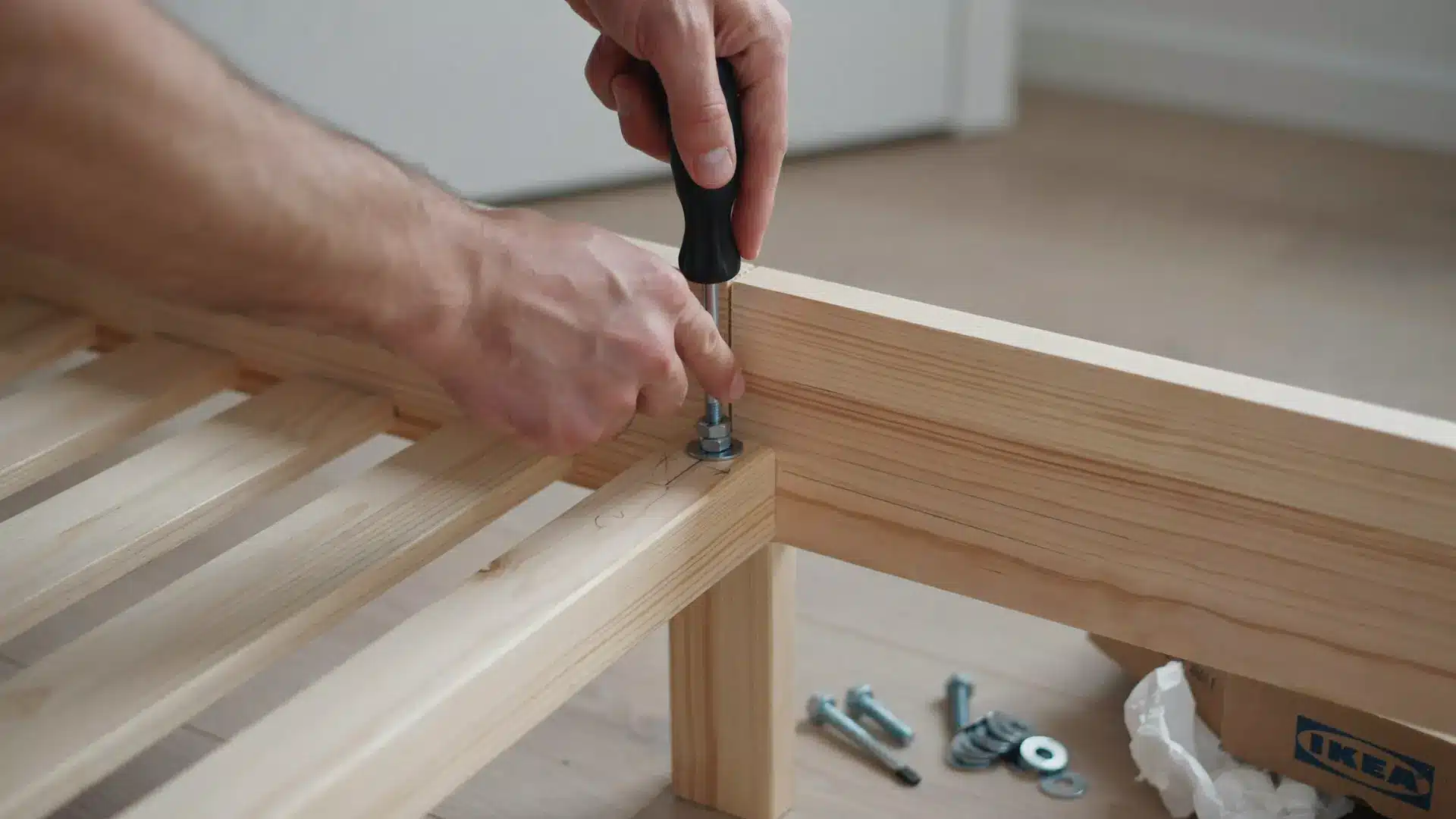
Loose hardware is the single most common reason beds start squeaking, and thankfully, it’s also the easiest problem to solve.
Every joint on your frame depends on bolts and screws staying snug, but normal daily movement gradually works them loose over months or years of use.
Before assuming a bigger issue, always start here: a simple tightening session resolves the majority of squeaks without any extra cost or tools.
How to Do It:
- Locate every joint on the headboard, footboard, and side rails.
- Use a screwdriver or wrench to tighten each bolt and screw firmly.
- Avoid overtightening, as this can strip the hardware or crack wood.
Fix 2: Disassemble and Reassemble the Frame
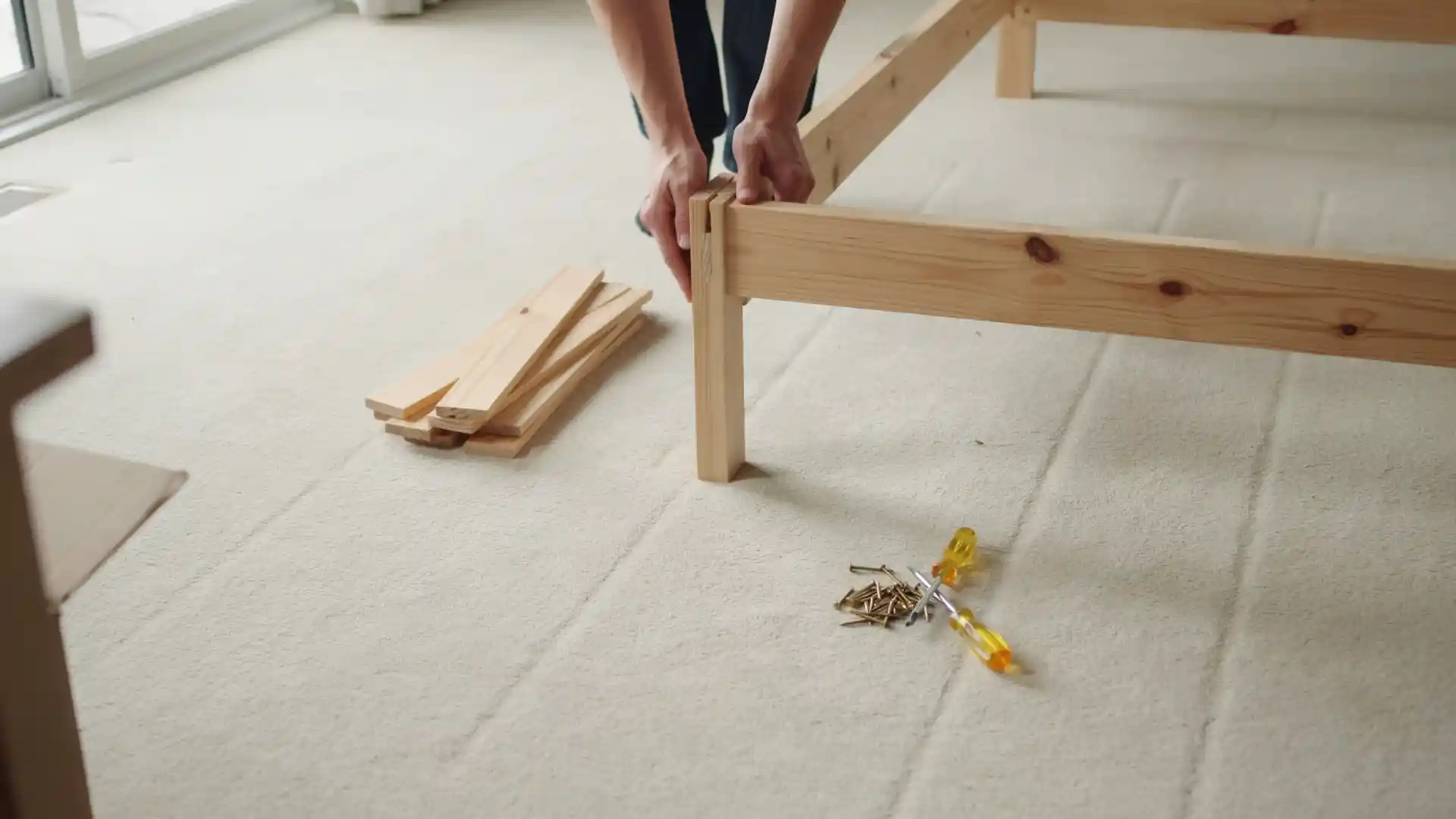
Sometimes tightening alone doesn’t fully solve the problem, especially if joints have shifted slightly out of alignment over time or if dust and debris have accumulated.
Taking the entire frame apart and carefully rebuilding it resets every joint to its proper position, often eliminating stubborn squeaks.
This fix takes a little more time but works well when the noise keeps returning despite smaller efforts.
How to Do It:
- Remove the mattress and any bedding.
- Carefully take apart the headboard, footboard, and side rails.
- Wipe down each joint to remove dust or debris.
- Reassemble the frame, making sure every piece fits snugly.
- Tighten all bolts and screws once everything is back in place.
Fix 3: Apply Beeswax or Candle Wax to Wooden Joints
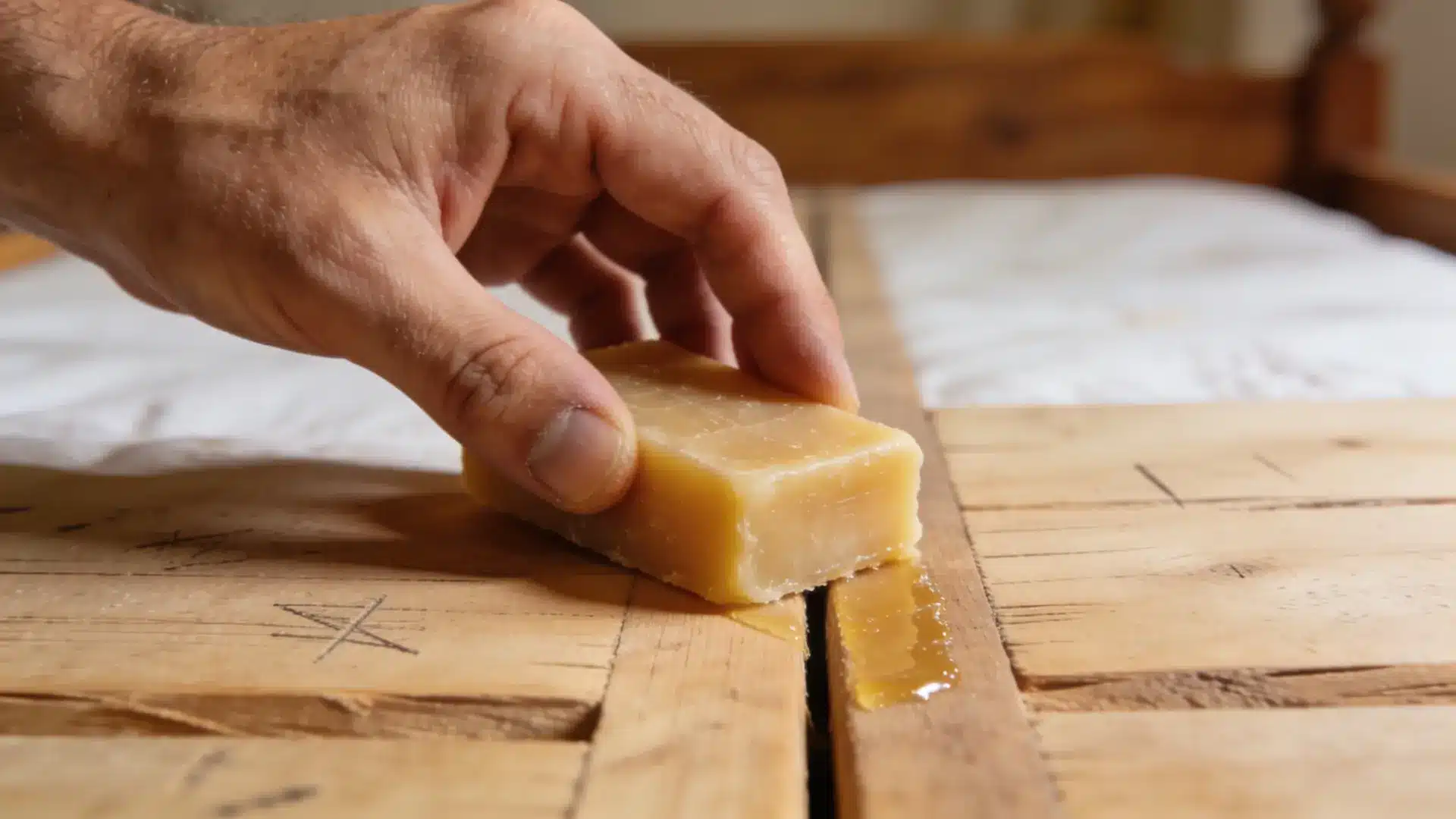
Wooden frames frequently squeak because wood rubs directly against wood at each joint, creating friction with every small movement on the bed.
Beeswax or candle wax forms a smooth, natural buffer between these surfaces, reducing that friction significantly.
If the joint looks dry, cracked, or discolored, restoring worn wood surfaces first will help the wax bond better and last longer.
How to Do It:
- Identify the wooden joints causing the noise.
- Rub wax generously along the contact points.
- Reassemble or reposition the joint and test for noise.
Fix 4: Use WD-40 or Silicone Spray on Metal Joints
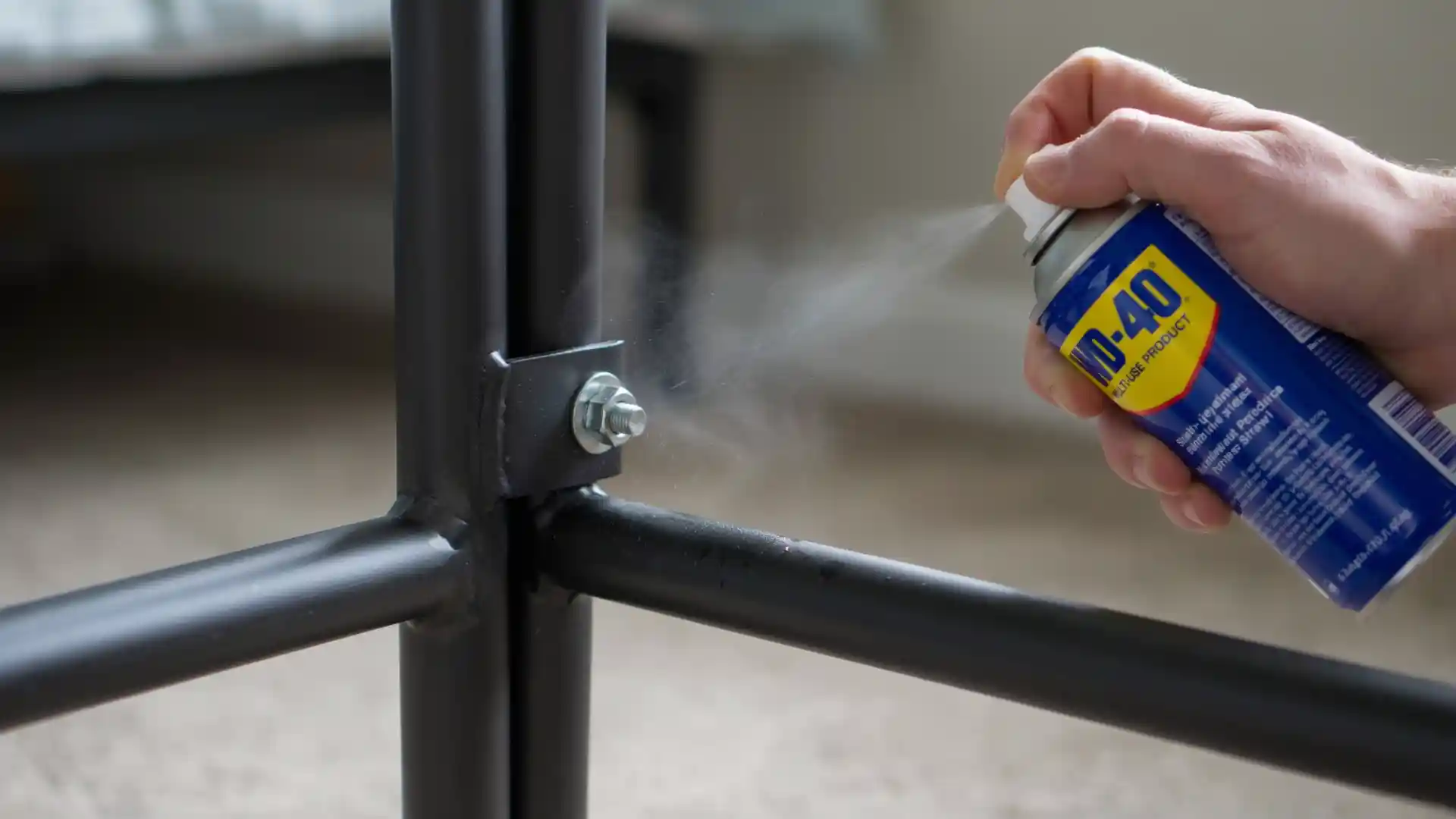
Metal bed frames squeak when metal parts rub together, and this friction often worsens over time due to rust, dryness, or general wear on the joints.
A penetrating lubricant spray like WD-40 or silicone spray reduces this friction almost instantly.
How to Do It:
- Locate the metal joints or pivot points causing the noise.
- Spray a small amount of WD-40 or silicone spray directly onto the area.
- Move the joint slightly to help the lubricant spread evenly.
- Wipe away any excess to prevent staining your bedding.
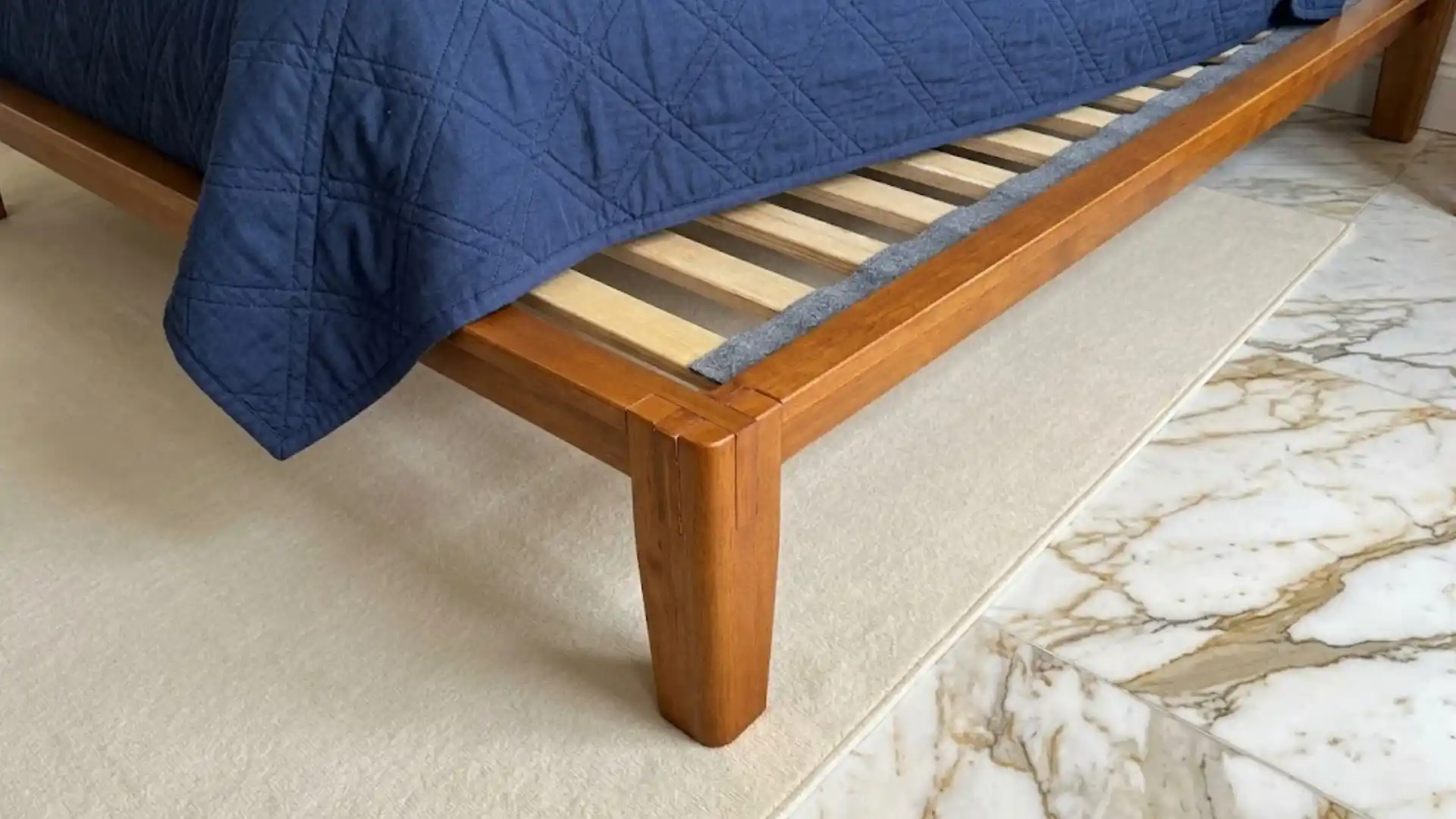
Fix 5: Add Felt Pads Between Slats and Frame
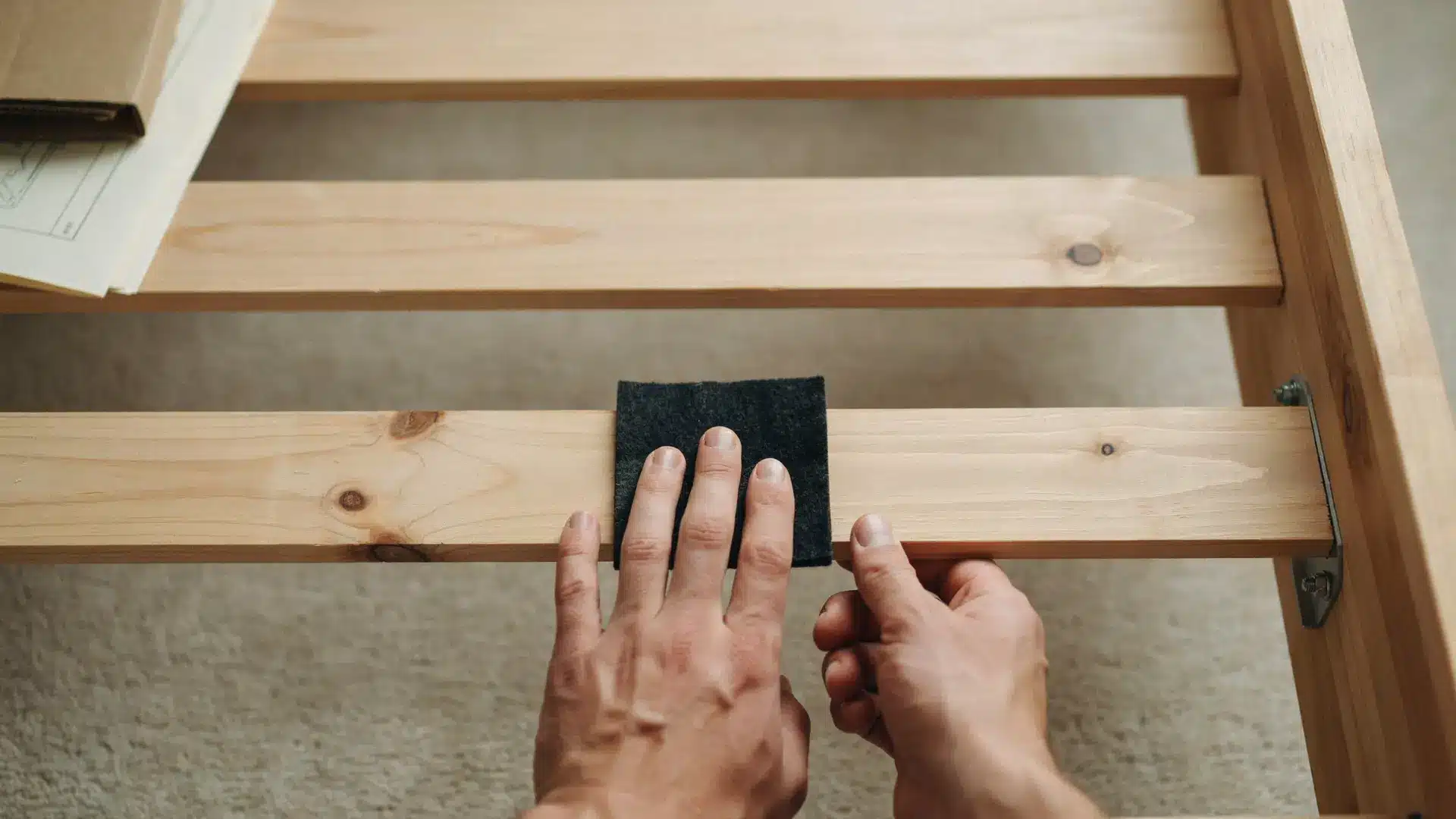
Wooden or metal slats resting directly against a bed frame create a hard, unpadded contact point that rubs and squeaks with nearly every movement you make.
Felt pads placed between the slats and the frame introduce a soft cushioning layer that absorbs this friction effectively.
This fix is especially useful for beds where slats sit loosely in place, since the padding also helps reduce minor shifting during use.
How to Do It:
- Remove the mattress to access the slats.
- Cut felt pads to fit the width of each slat end.
- Place a pad wherever a slat touches the frame.
- Reposition the mattress and test for remaining noise.
Fix 6: Wrap Joints with Old Socks or Cloth
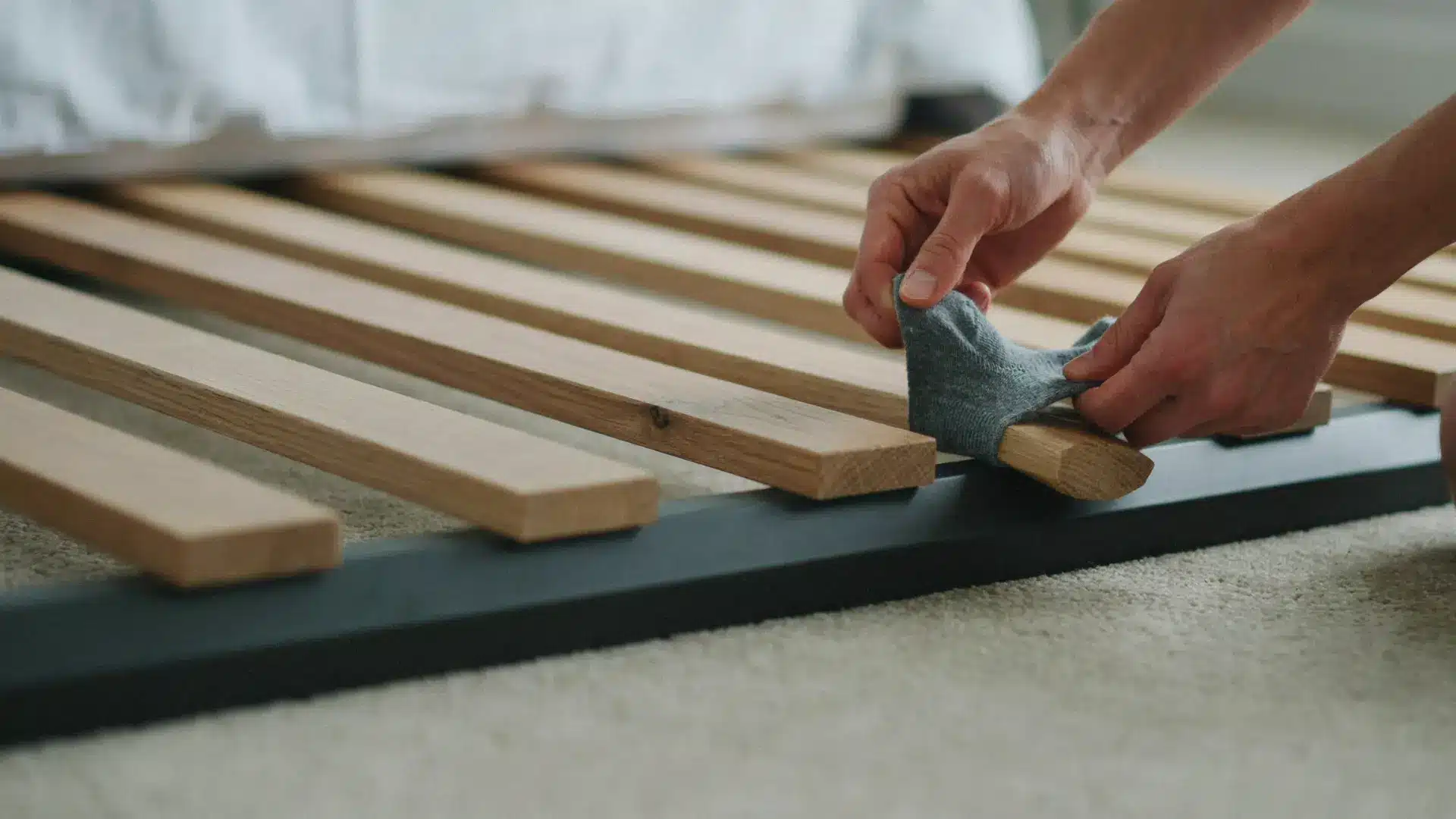
When wax or felt pads aren’t within reach, household items you already own work surprisingly well as a temporary or even long-term fix.
Wrap joints or slat ends in old socks or folded cloth to cushion the contact points the same way felt does, quieting the rubbing sound.
It’s a practical, zero-cost option for anyone who wants an immediate fix without a trip to the store.
How to Do It:
- Identify the noisy joint or slat end.
- Wrap a sock or folded cloth snugly around it.
- Secure it in place if needed with a small rubber band.
Fix 7: Insert Rubber Washers at Metal Contact Points
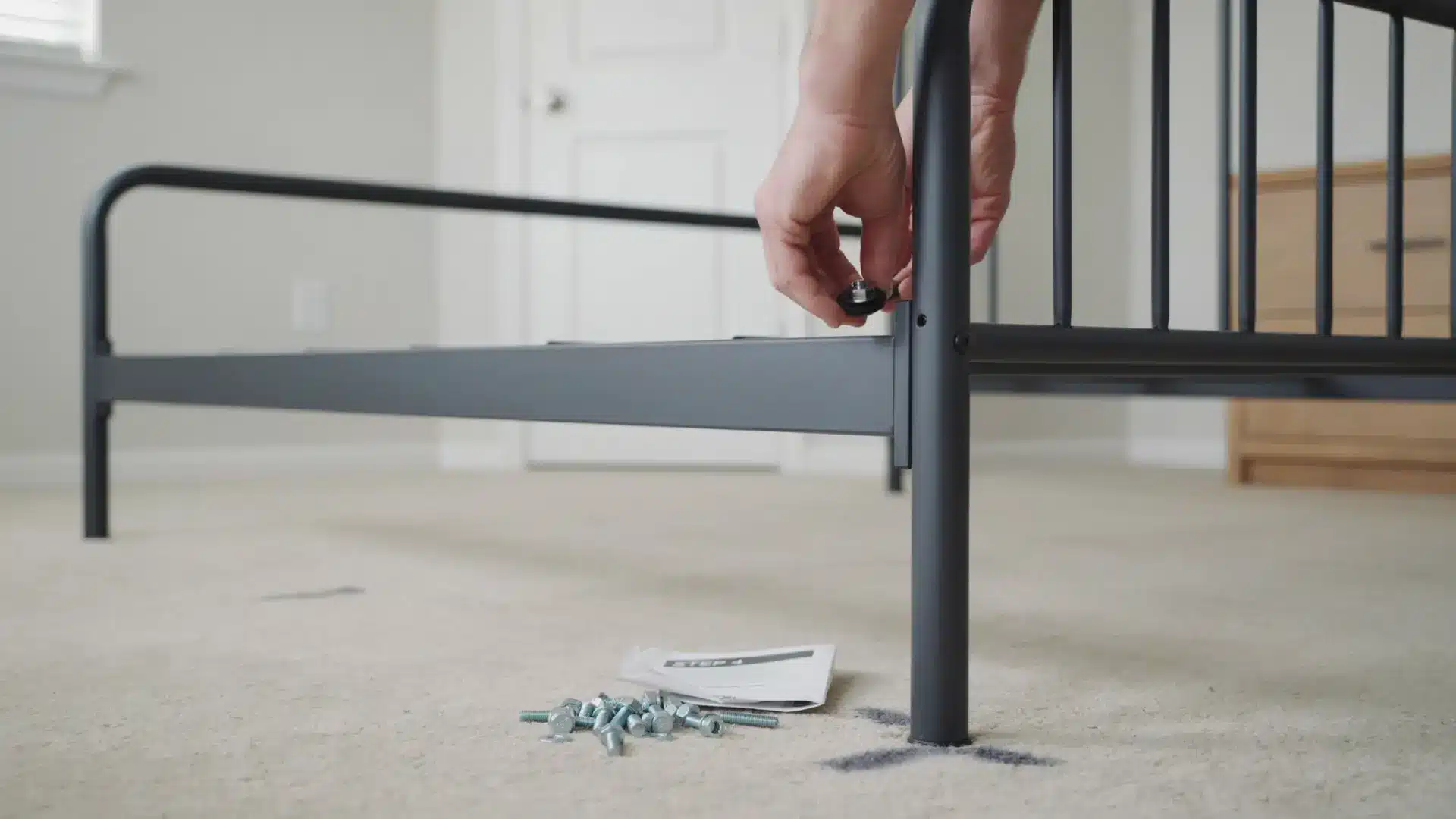
Metal-on-metal contact tends to produce a sharper, more persistent squeak than other causes.
Rubber washers placed between these metal surfaces absorb vibration and prevent direct grinding contact.
This fix works especially well on frames where the squeak returns quickly after spraying oil.
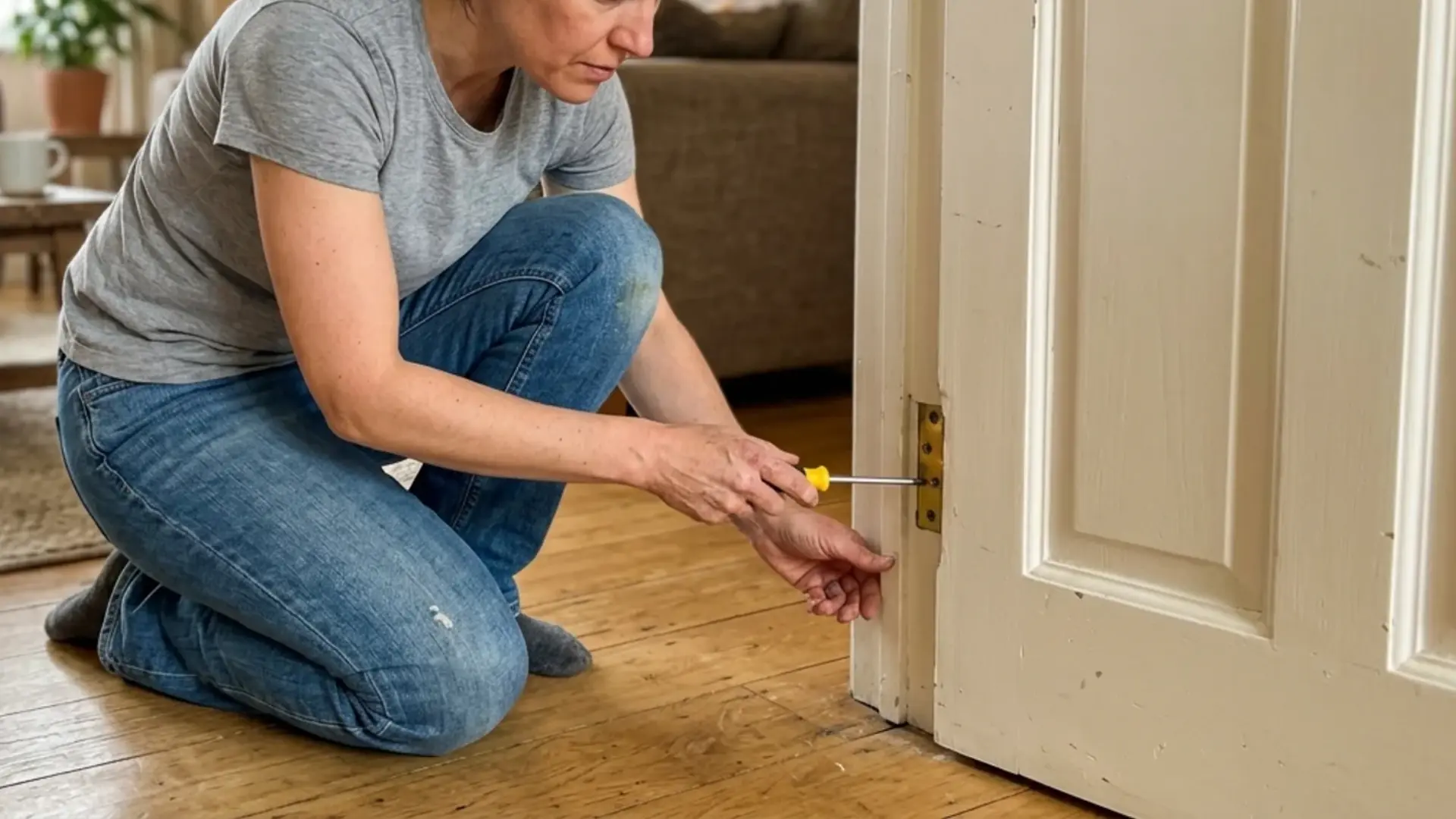
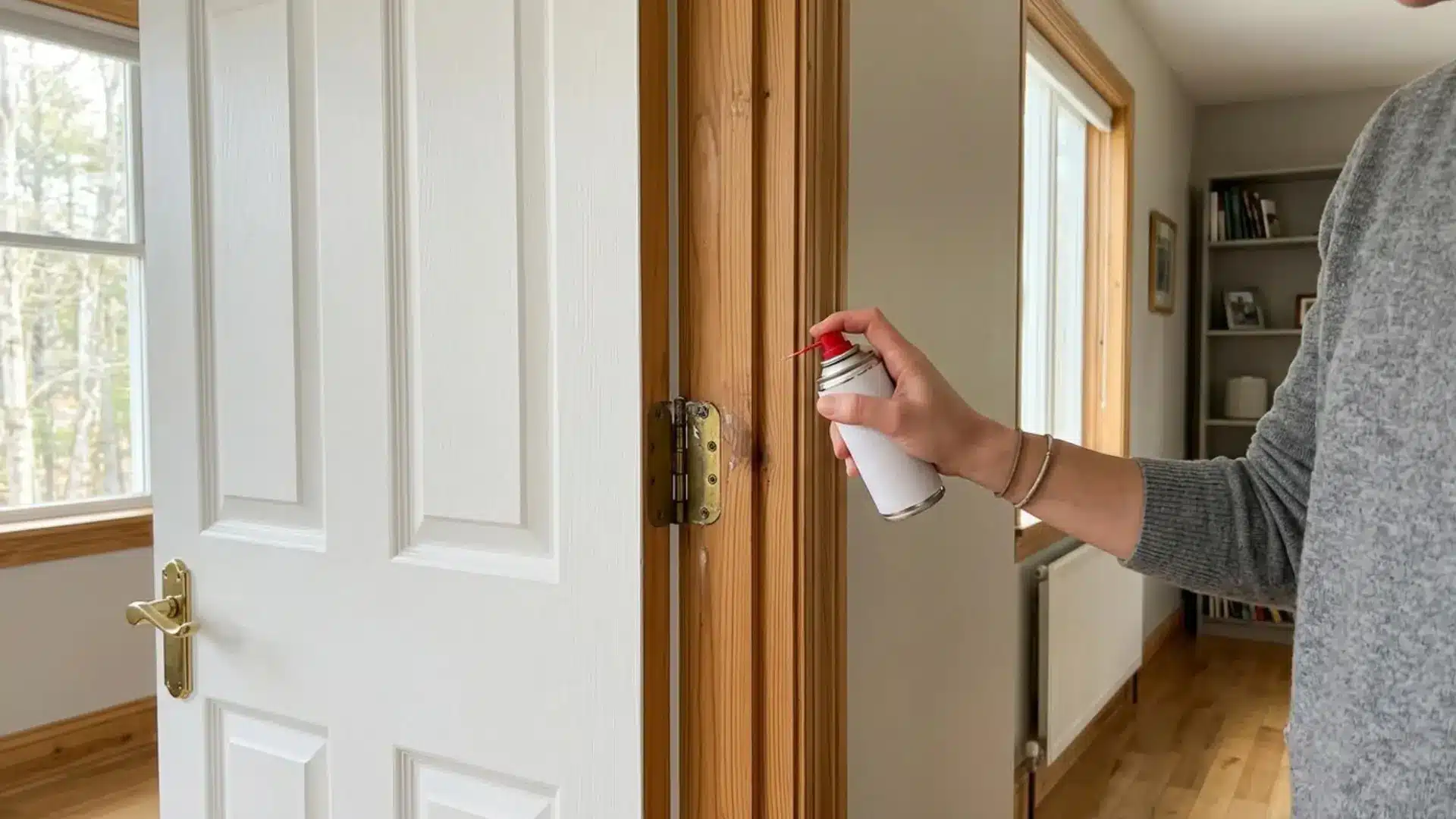
The same joint-checking habit works on other creaky spots around the house, including silencing squeaky door hinges before they turn into a bigger repair.
How to Do It:
- Locate the metal bolts or joints causing friction.
- Loosen the bolt slightly to slide a rubber washer into place.
- Retighten the bolt so the washer sits snugly between the surfaces.
- Test the joint by applying light pressure.
Fix 8: Rotate or Flip Your Mattress
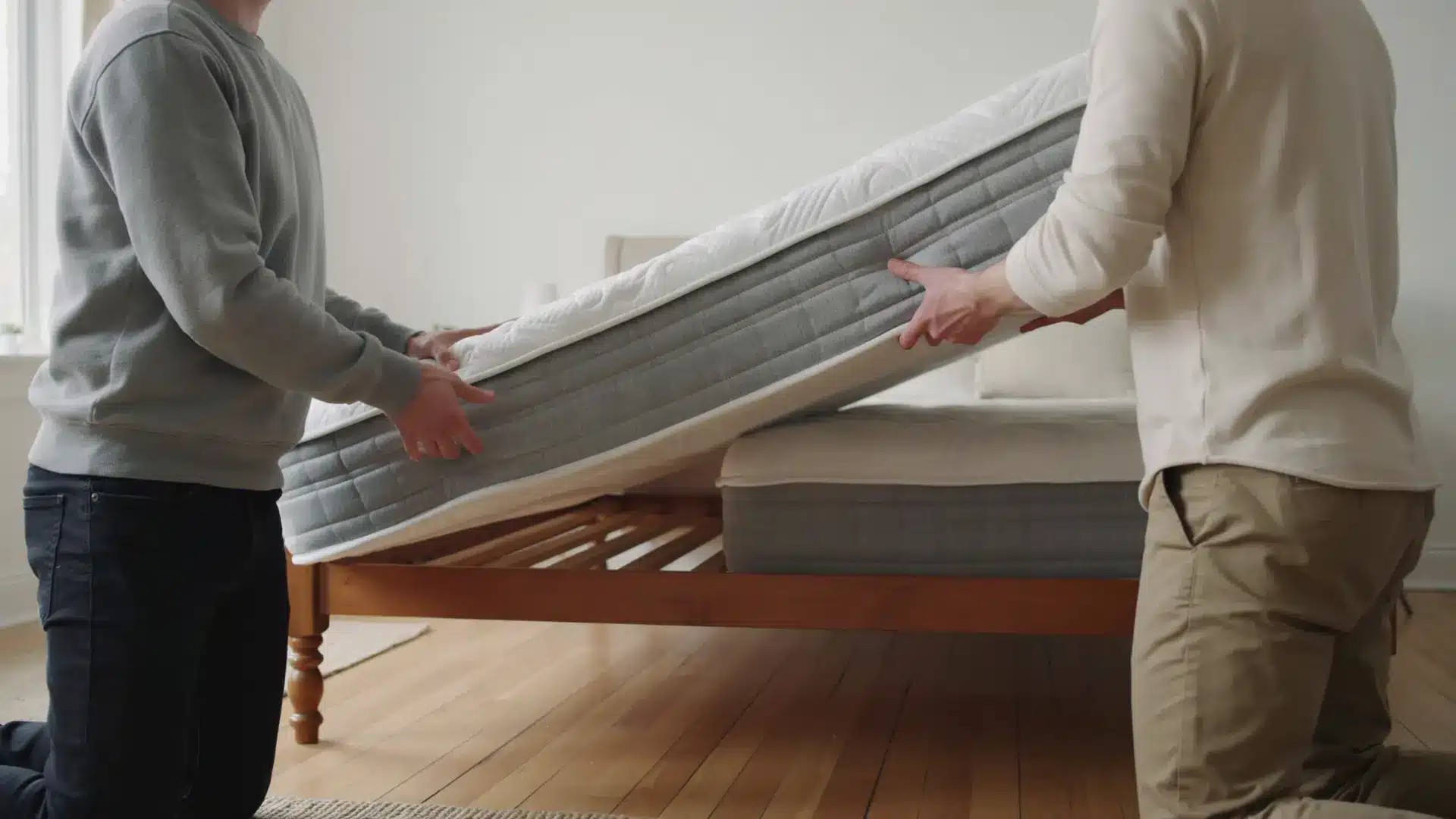
Mattresses wear unevenly over time since most people consistently sleep in the same spot.
This uneven compression creates pressure points that squeak against the frame or box spring beneath.
Rotating or flipping the mattress redistributes your body weight across less-worn areas, often solving the problem without touching the frame itself.
How to Do It:
- Remove all bedding from the mattress.
- Rotate the mattress 180 degrees so the head becomes the foot.
- Flip it over if your mattress type allows this.
- Reposition it on the frame and test for noise.
Fix 9: Add a Mattress Topper as a Buffer
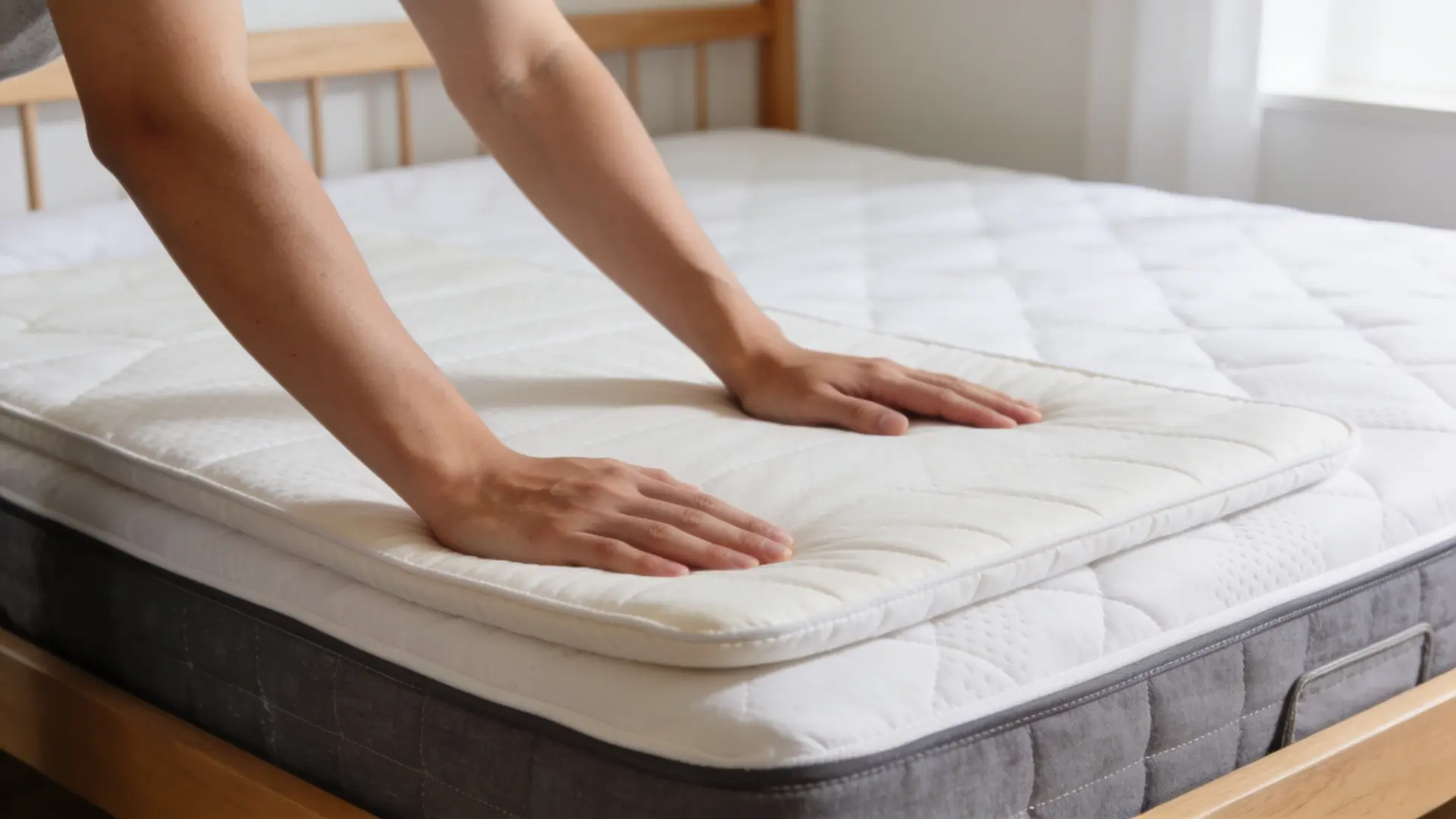
If rotating the mattress doesn’t resolve the squeak, the issue may lie deeper within worn springs or a foundation that’s beginning to sag under regular use.
A mattress topper adds an extra layer that absorbs pressure before it reaches those noisy components underneath.
This fix won’t repair the underlying wear, but it often muffles the sound enough to restore quiet, comfortable sleep in the meantime.
How to Do It:
- Choose a topper thickness suited to your mattress type.
- Place it evenly across the top of the mattress.
- Secure it in place using any attached straps or corners.
Fix 10: Level Uneven Legs with Furniture Pads
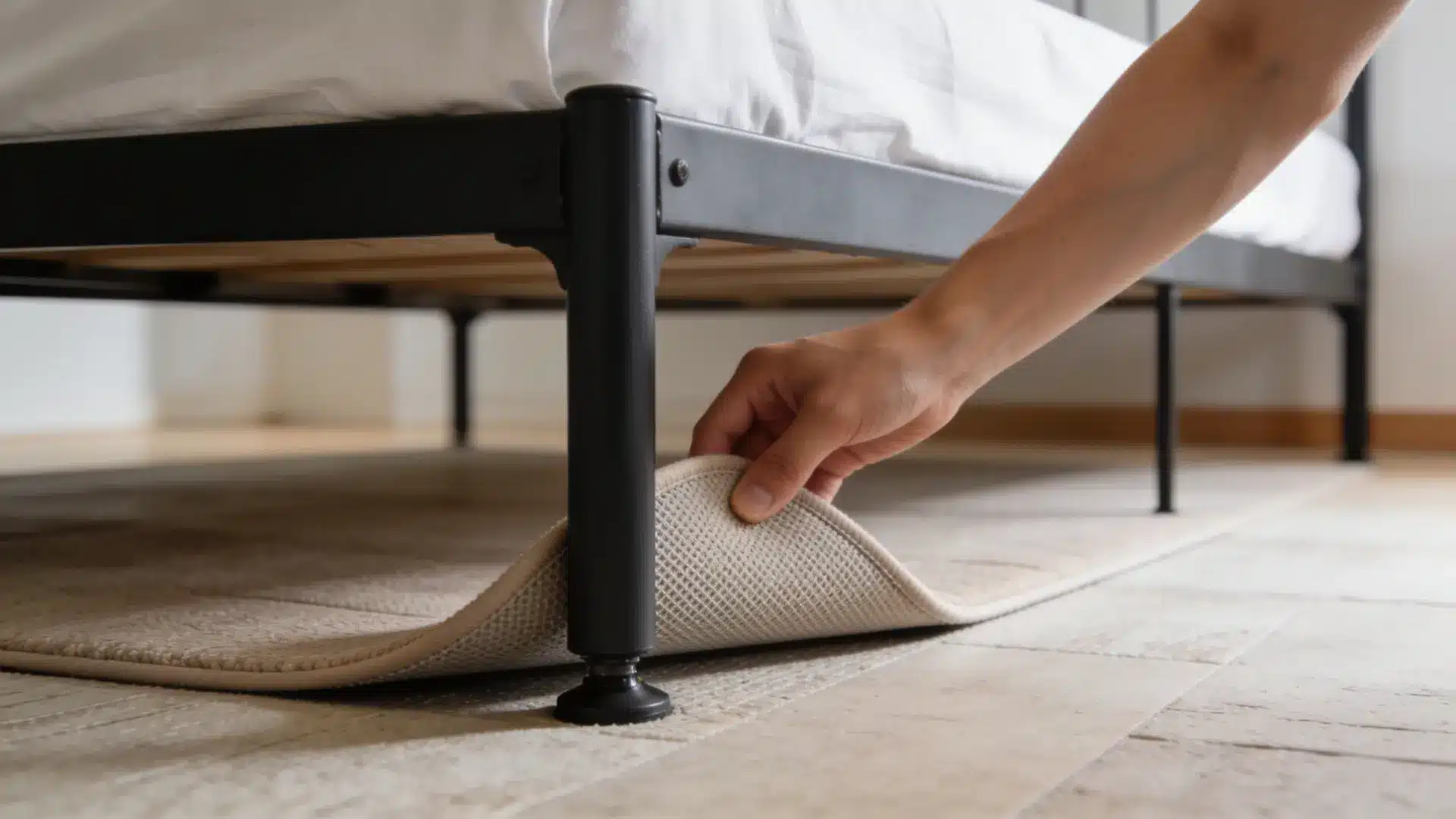
A bed frame that rocks even slightly with movement will almost always produce a squeak, since the imbalance creates repeated contact between the leg and the floor.
Furniture pads placed under the shorter or uneven leg restore full, even contact across all four legs.
This simple adjustment eliminates the rocking motion entirely, which is often the true root cause behind noise that seems to come from everywhere at once.
How to Do It:
- Check each leg for full contact with the floor.
- Identify which leg is uneven or slightly raised.
- Place a furniture pad under that leg.
- Test the frame by applying pressure at each corner.
Fix 11: Place a Non-Slip Mat Between Mattress and Frame
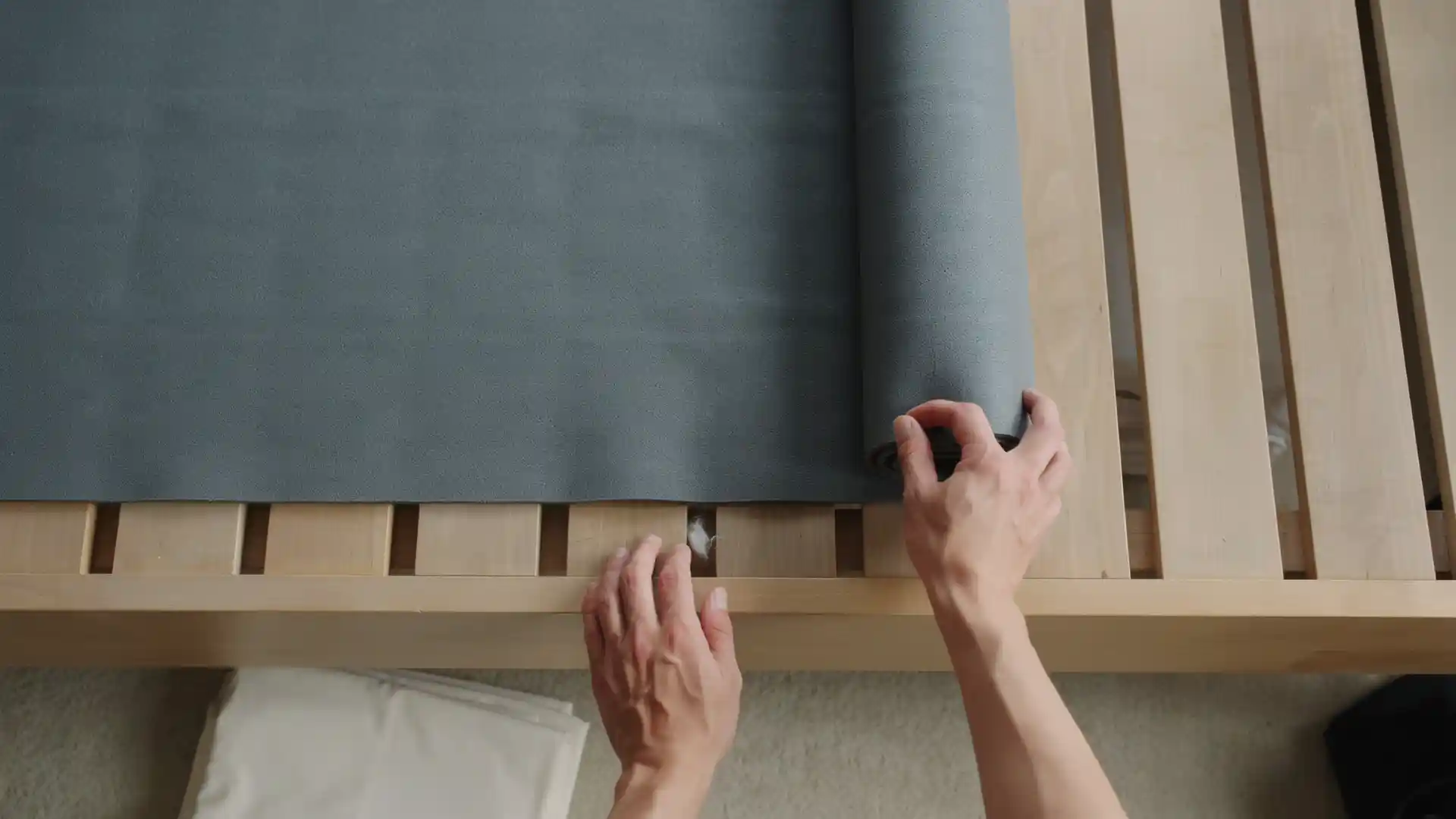
Firmer mattresses that don’t compress much against the frame’s edges can shift slightly during movement, creating friction between the mattress and the surface beneath it.
A thin non-slip mat, similar to the type used under area rugs, keeps the mattress firmly in place and prevents this sliding motion.
This fix is particularly effective for firmer or foam mattresses that tend to sit rigidly on the frame.
How to Do It:
- Remove the mattress from the frame.
- Lay a non-slip mat evenly across the frame surface.
- Reposition the mattress on top of the mat.
Fix 12: Replace Cracked or Warped Slats
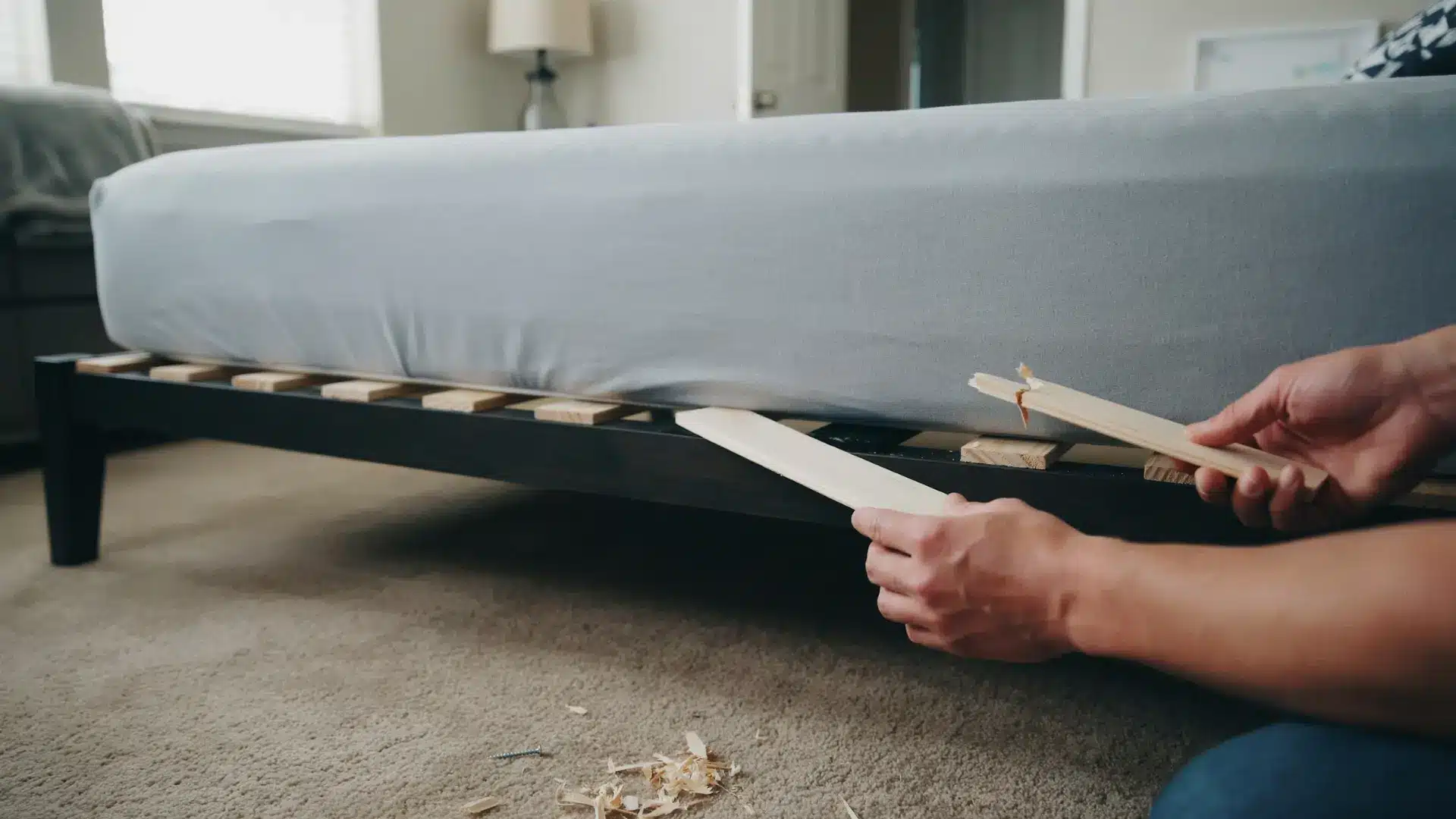
Slats that have cracked, warped, or worn down over years of use will continue squeaking regardless of how much padding or lubricant you add around them.
At this stage, replacement is the only lasting fix.
Swapping out damaged slats is a relatively simple and affordable repair that also restores proper support and structure to your bed.
How to Do It:
- Inspect each slat for visible cracks or warping.
- Remove any damaged slats from the frame.
- Measure the length needed for a replacement.
- Install the new slat and secure it in place.
- Test the frame for remaining noise.
Fix 13: Add a Rug or Floor Padding Under the Frame
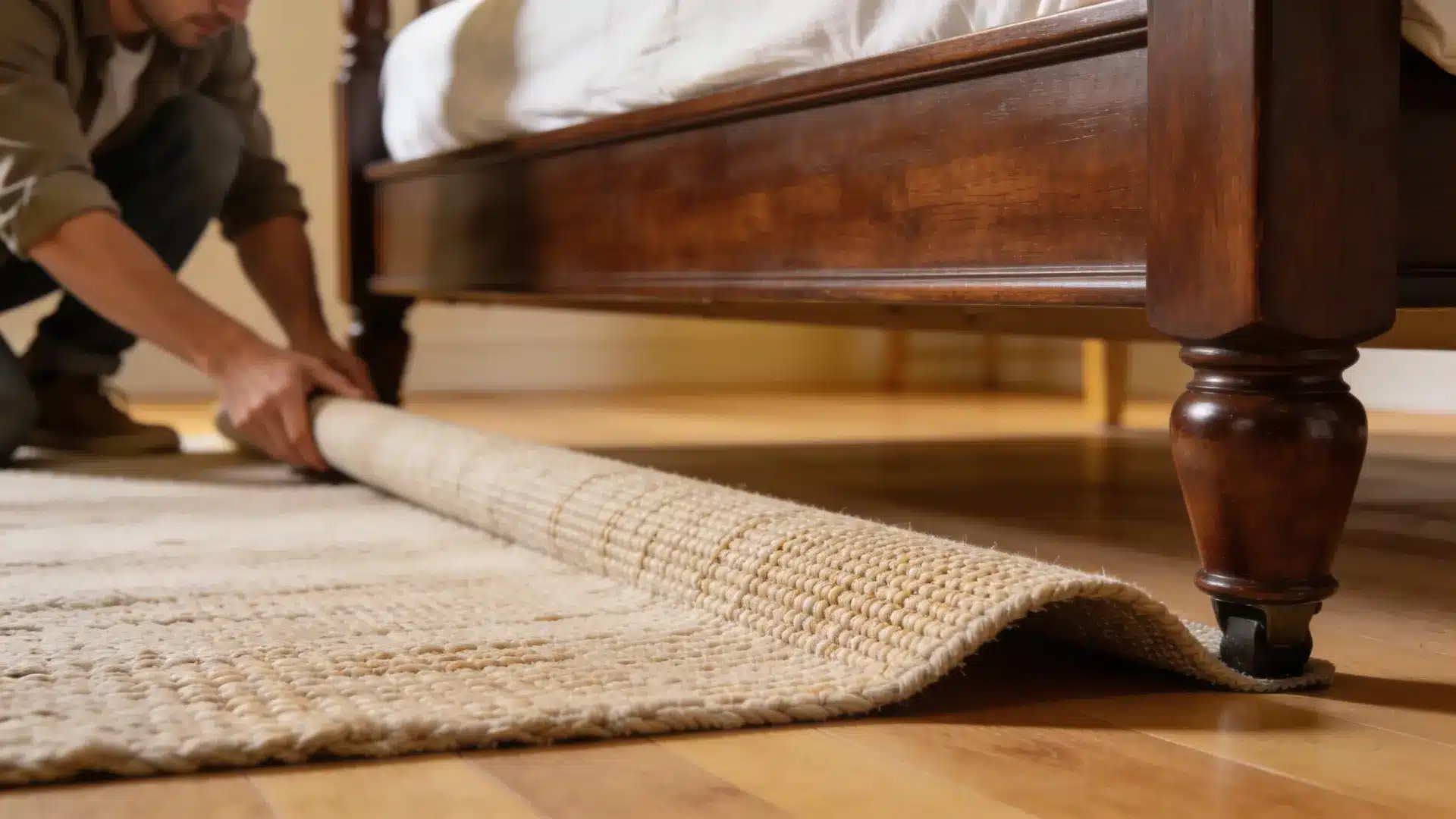
On hardwood, tile, or other slippery flooring, the entire bed frame can shift slightly with movement, creating friction and noise between the legs and the floor itself.
A rug or dedicated floor padding placed underneath the frame adds grip and absorbs this small movement before it turns into sound.
This fix works well as a finishing step after addressing joints, slats, and mattress-related causes.
How to Do It:
- Choose a rug or padding slightly larger than the frame’s footprint.
- Place it underneath the bed before repositioning the frame.
- Adjust the frame so all legs rest evenly on the padding.
The Best Fix for Your Specific Bed and Frame Type
Whatever the type, the rule stays the same: find the joint, secure it, and test before settling in for the night. Here’s the best fix for each type:
| Bed/Frame Type | Best Fix | Key Tip |
|---|---|---|
| Wooden Bed Frames | Apply beeswax or candle wax to wood joints | Rub with the grain; avoid overtightening |
| Metal Bed Frames | Use WD-40 or silicone spray on joints | Check for rust; add rubber washers at pivots |
| Upholstered and Hybrid Frames | Inspect hidden joinery under fabric panels | Lift or unzip covers to find the real squeak |
| Ottoman and Storage Beds | Lubricate hinges and check the gas-lift cylinder | Focus on the mechanism, not the frame |
| Divan Bases and Box Springs | Lift or unzip fabric to access base joints | Check that all legs sit evenly on the floor |
| Bunk Beds and Loft Beds | Tighten every bolt on the ladder and frame | Prioritize safety, since joints bear extra weight |
Preventing Squeaks From Coming Back
A one-time fix doesn’t have to stay a one-time effort. A little routine maintenance keeps the noise from ever coming back.
- Twice-a-Year Joint Checks: Inspect every frame joint twice yearly to catch loose connections before squeaks return.
- Bolt and Screw Tightening: Tighten loose bolts and screws promptly to prevent movement, friction, and recurring bed frame noise.
- Wax or Lubricant Reapplication: Apply fresh wax or lubricant when the previous coating wears away, or friction becomes noticeable.
- New Creak Detection: Listen for faint or unfamiliar sounds during normal use, then inspect the affected area immediately.
- Wobble Monitoring: Watch for slight frame movement when sitting or turning, since wobbling often signals loose hardware.
- Joint Looseness Test: Gently move each joint by hand to find weak connections before they create noticeable squeaking.
- Localized Noise Tracking: Identify the exact corner or section producing sound to make repairs faster and more accurate.
Conclusion
Stopping a squeaky bed frame often comes down to finding the exact source and using the right repair.
A few tightened bolts, a bit of wax or lubricant, and the right padding in the right spots solve the vast majority of cases, no special skills or expensive tools required.
Start with just two or three fixes tonight, and see how much quieter your bed feels by morning. If the noise still lingers, the real issue might lie elsewhere.
Which repair worked best for your bed frame? Share your experience, helpful tips, or questions in the comments below.
Frequently Asked Questions
Is It Normal for a New Bed to Squeak?
Occasionally, yes. New frames can settle in the first few weeks as joints adjust. Persistent squeaking from day one, though, often points to a loose connection during assembly.
Can a Squeaky Bed Affect My Sleep?
Yes. Repeated noise from movement can disrupt sleep cycles for you and your partner, leading to lighter, more fragmented rest over time.
How Can I Stop My Box Spring From Squeaking?
Check for loose wooden joints or worn springs inside the box spring. Tightening hardware or adding felt padding between contact points usually resolves the noise.
Should I Replace My Bed If It Keeps Squeaking?
Not necessarily. Most squeaks are fixable with basic maintenance. Replacement is only worth considering if the frame is old, unstable, or the noise returns constantly despite repairs.