
Your living room looks fine until someone walks across the rug and it slides right out from under their feet; it can be frustrating.
Worse, the constant movement made the room look untidy, no matter how often one fixed it.
That daily annoyance can stop when you learn how to keep rugs from sliding without damaging the floor or relying on a costly solution.
The answer depends on more than placing tape underneath and hoping for the best.
Once you understand why your rug is moving in the first place, fixing it becomes a lot easier than you might expect, no matter what floor sits underneath it.
Why Your Rug Keeps Sliding
Most rugs slide because there is nothing holding them back. Smooth floors like hardwood, tile, and laminate barely offer any grip, so the moment you step on the rug, it starts to shift.
Thin or lightweight rugs move even faster since they do not have enough weight to stay put.
Carpet is not much safer either. Two soft surfaces rubbing against each other can still slide, especially in busy rooms.
Weather changes things too. Humid days can loosen the backing on some rugs, making them slip even more than usual.
Once you know why this happens, choosing the right fix becomes a lot simpler.
How to Keep Rugs from Sliding?
No single trick works for every rug or floor, so here are fifteen ways to keep yours firmly in place, sorted from the simplest to the more hands-on options below:
1. Premium Non-Slip Rug Pad
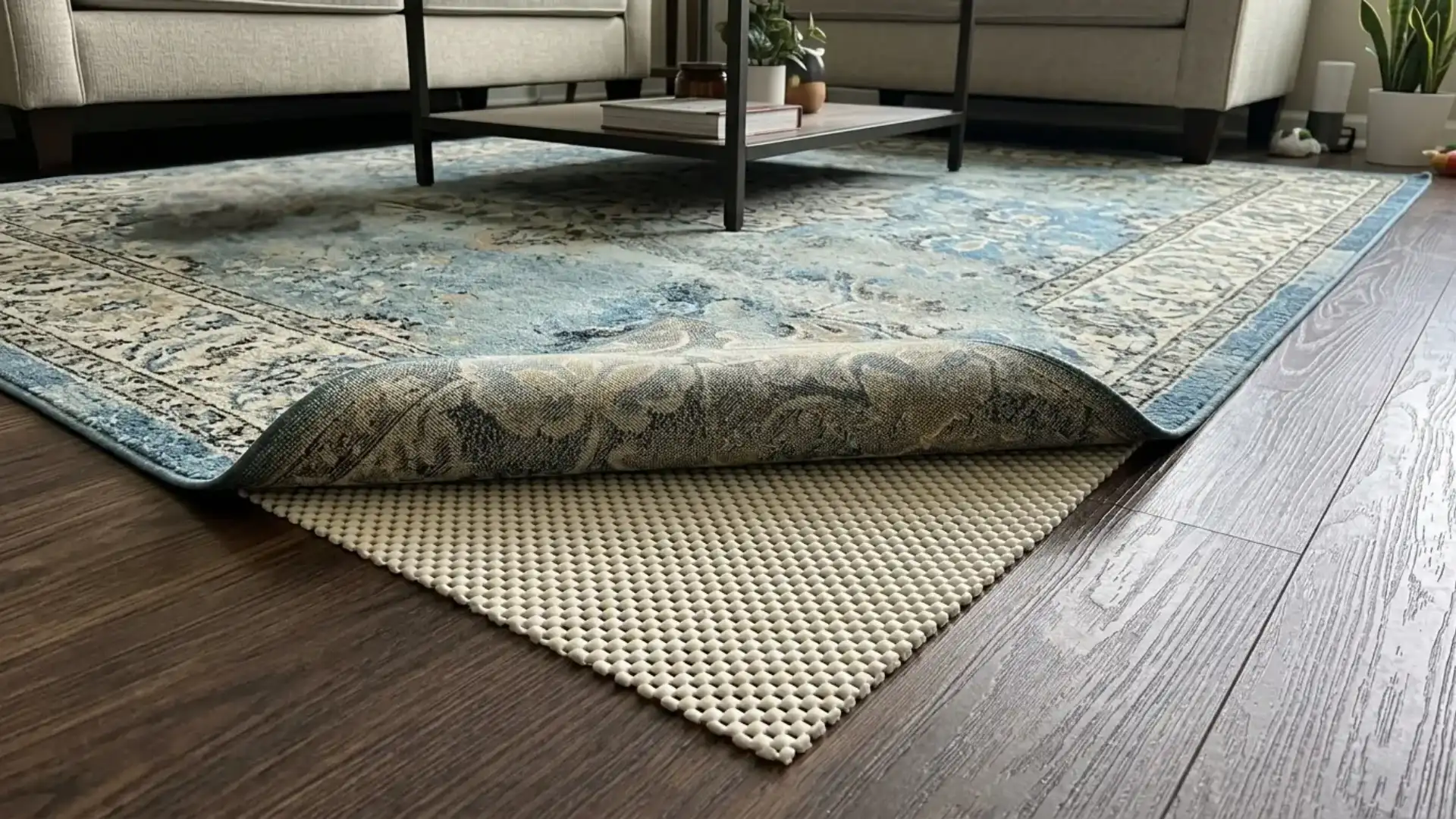
It combines a soft cushion with a grippy rubber base that holds your rug firmly in place. Regularly lift the rug and clean beneath the pad to prevent dust from reducing traction.
Cut the pad slightly smaller than your rug so the edges stay hidden, then let your rug settle on top for a snug fit.
This option also adds comfort underfoot while protecting flooring from scratches caused by dirt trapped beneath the rug fibers.
2. Rug Gripper Pads
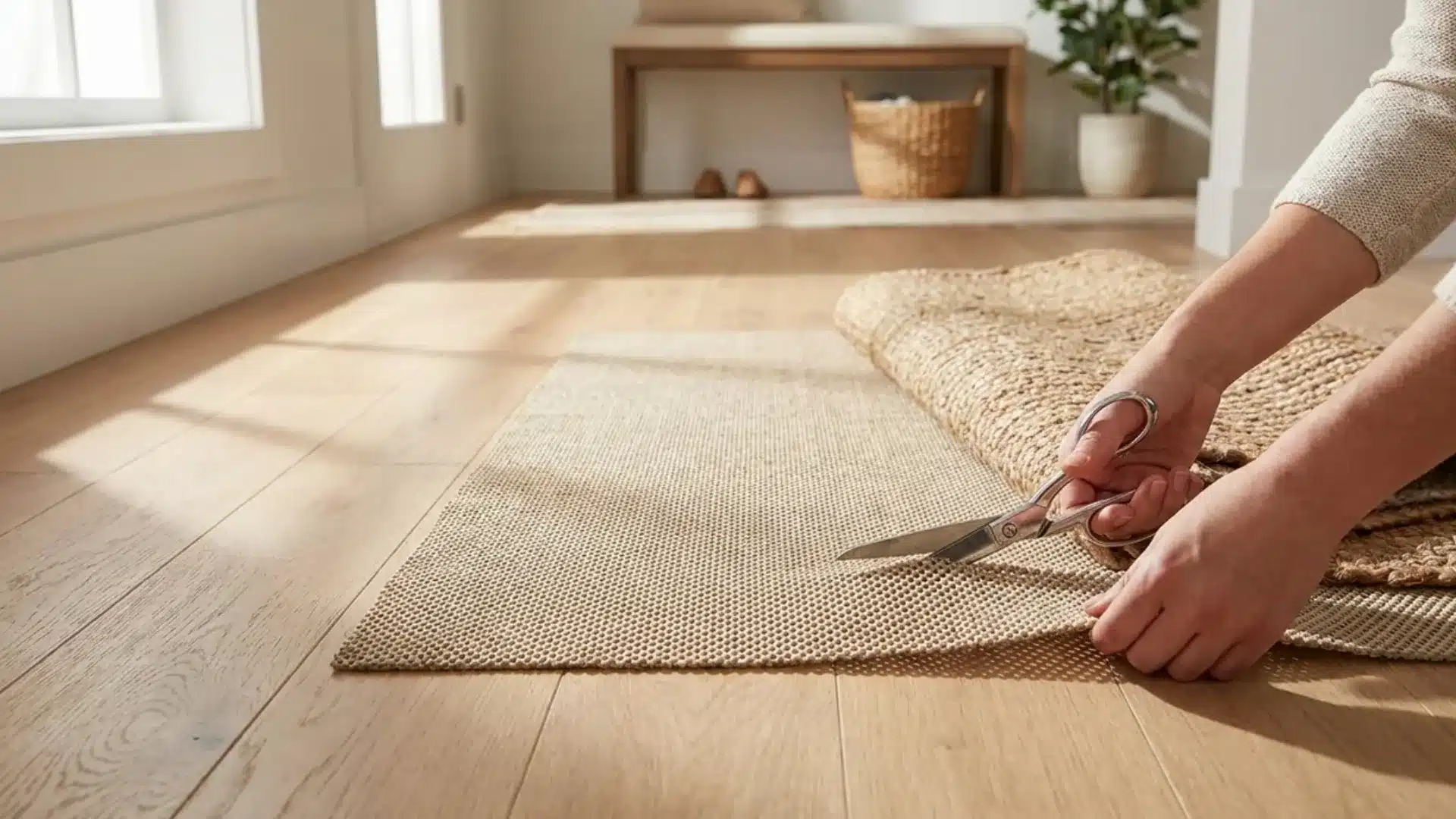
These thin, mesh-like pads use texture rather than glue to hold your rug in place.
They work on most floors and are easy to trim to size, which makes them great for smaller rugs or rentals.
They will not offer as much cushioning as a thicker pad, but for everyday movement, they get the job done without any mess.
3. Carpet-to-Carpet Waffle Pad
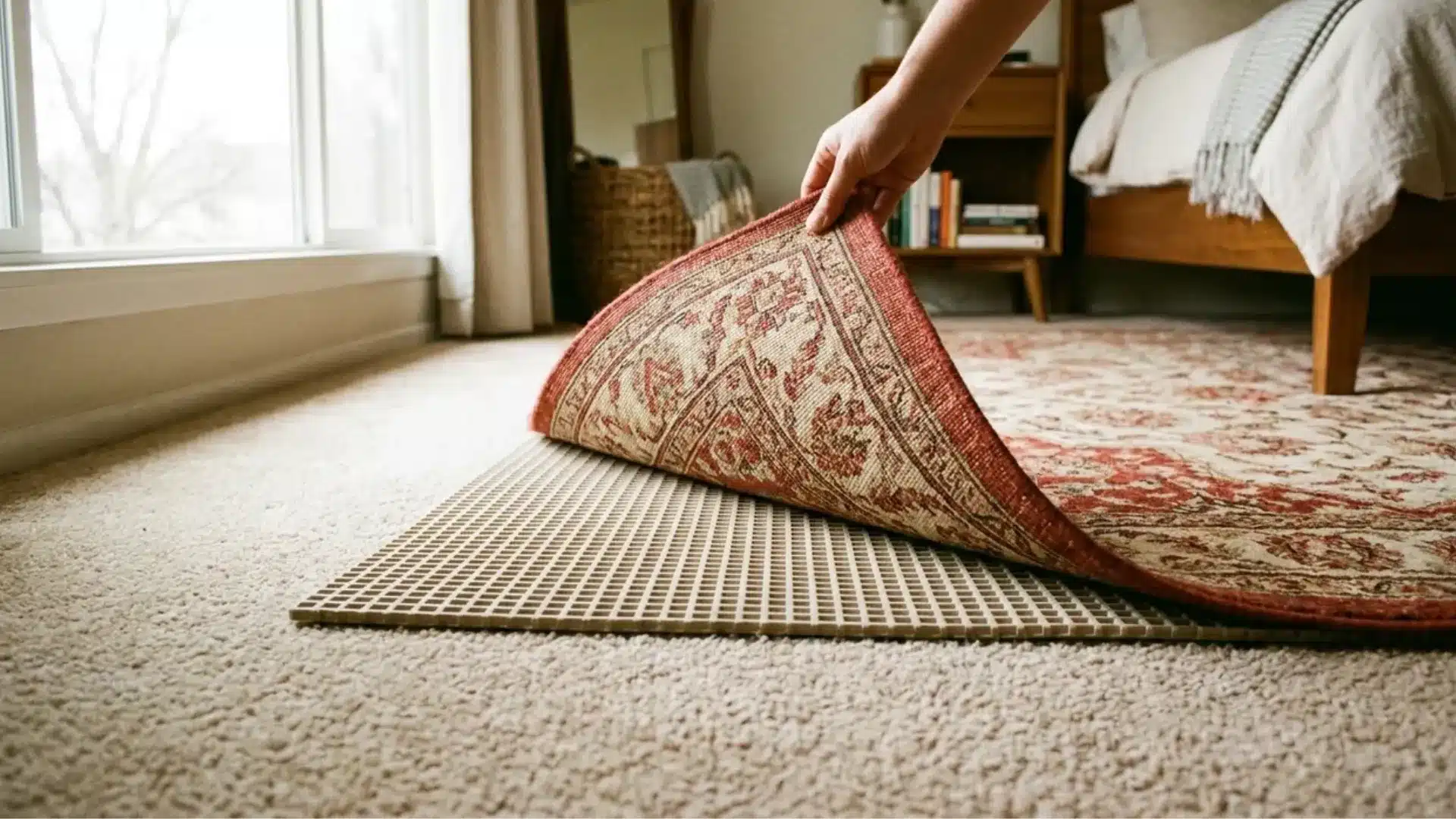
Placing a rug on top of carpet creates a tricky problem, since two soft surfaces tend to slide against each other.
A waffle pad solves this with a raised, textured grid that grips carpet fibers underneath.
Unlike solid rubber pads, its open design allows air to pass through, helping prevent moisture buildup.
4. Rubber Corner Grippers
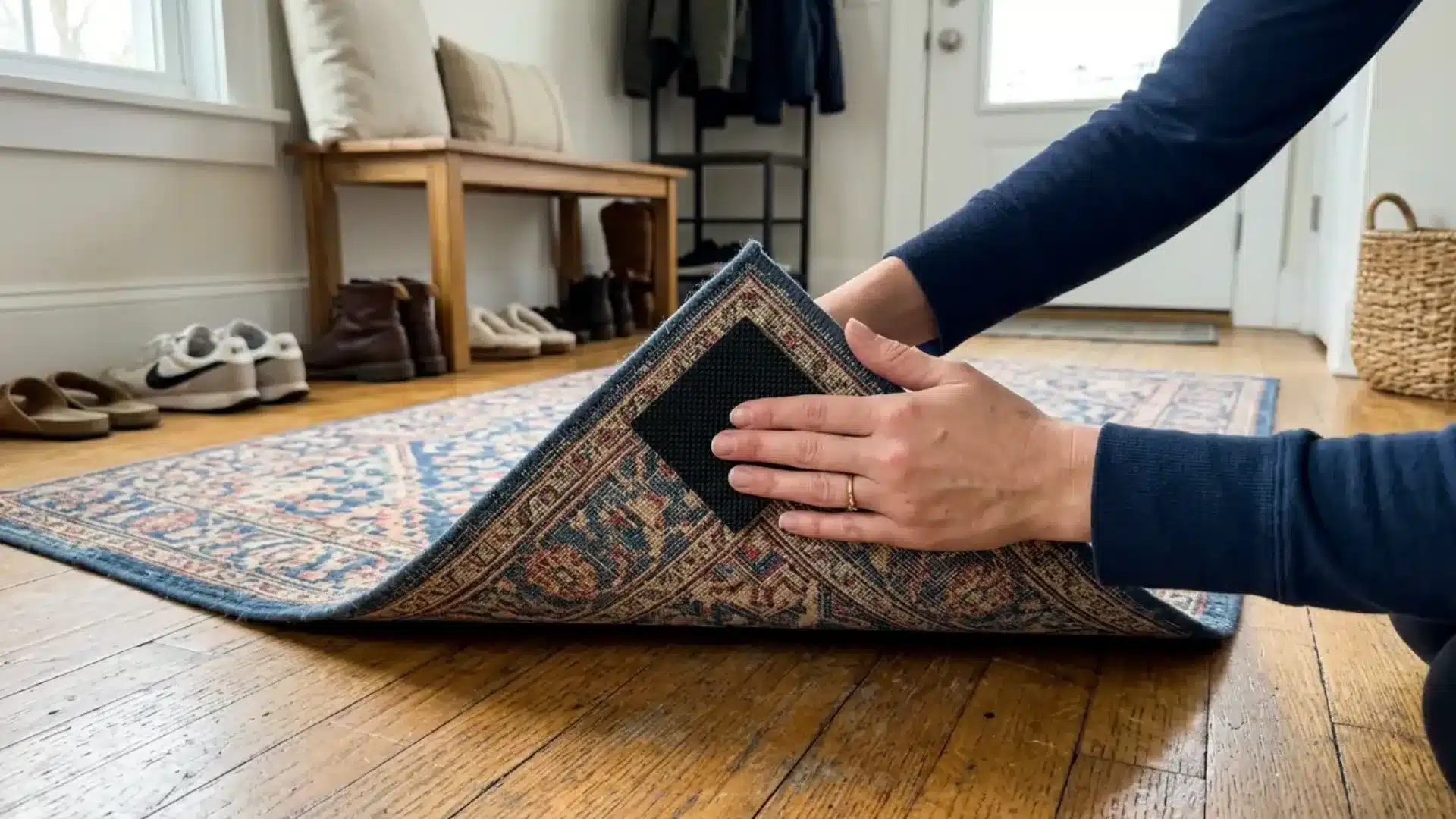
Sometimes only the corners cause trouble, especially with runners or smaller mats near entryways.
Rubber corner grippers stick discreetly underneath each corner, stopping the lifting and curling that usually starts there first.
Since they only cover four small spots, you skip the effort of fitting a pad under the entire rug.
5. Double-Sided Carpet Tape
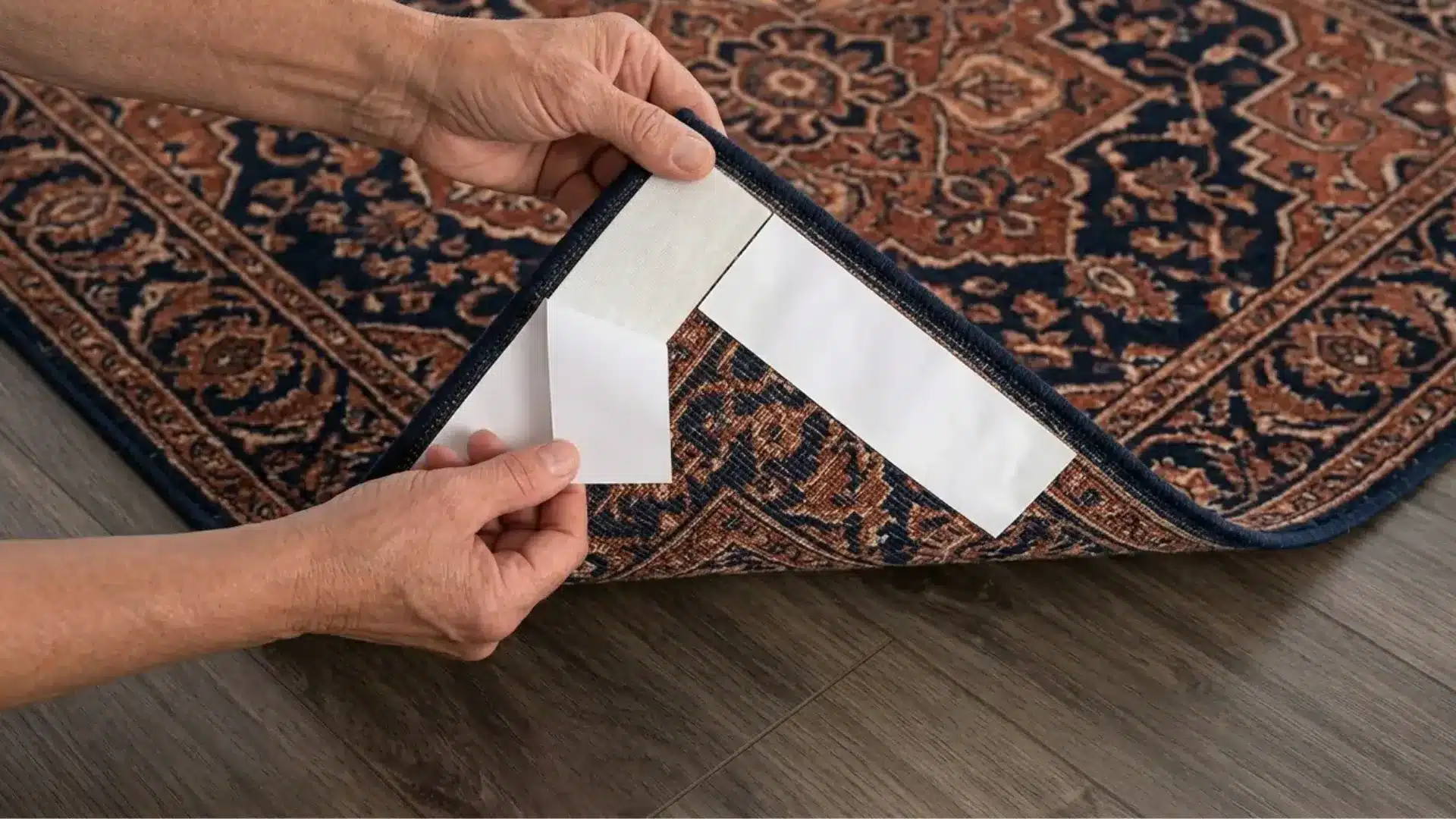
For rugs that shift across their entire surface rather than just at the corners, double-sided tape offers a stronger hold.
Applying strips along the edges and an X pattern in the center keeps larger rugs anchored during heavy foot traffic.
This method suits hard floors best, since it grips tightly without needing a full pad underneath.
6. Velcro Strips
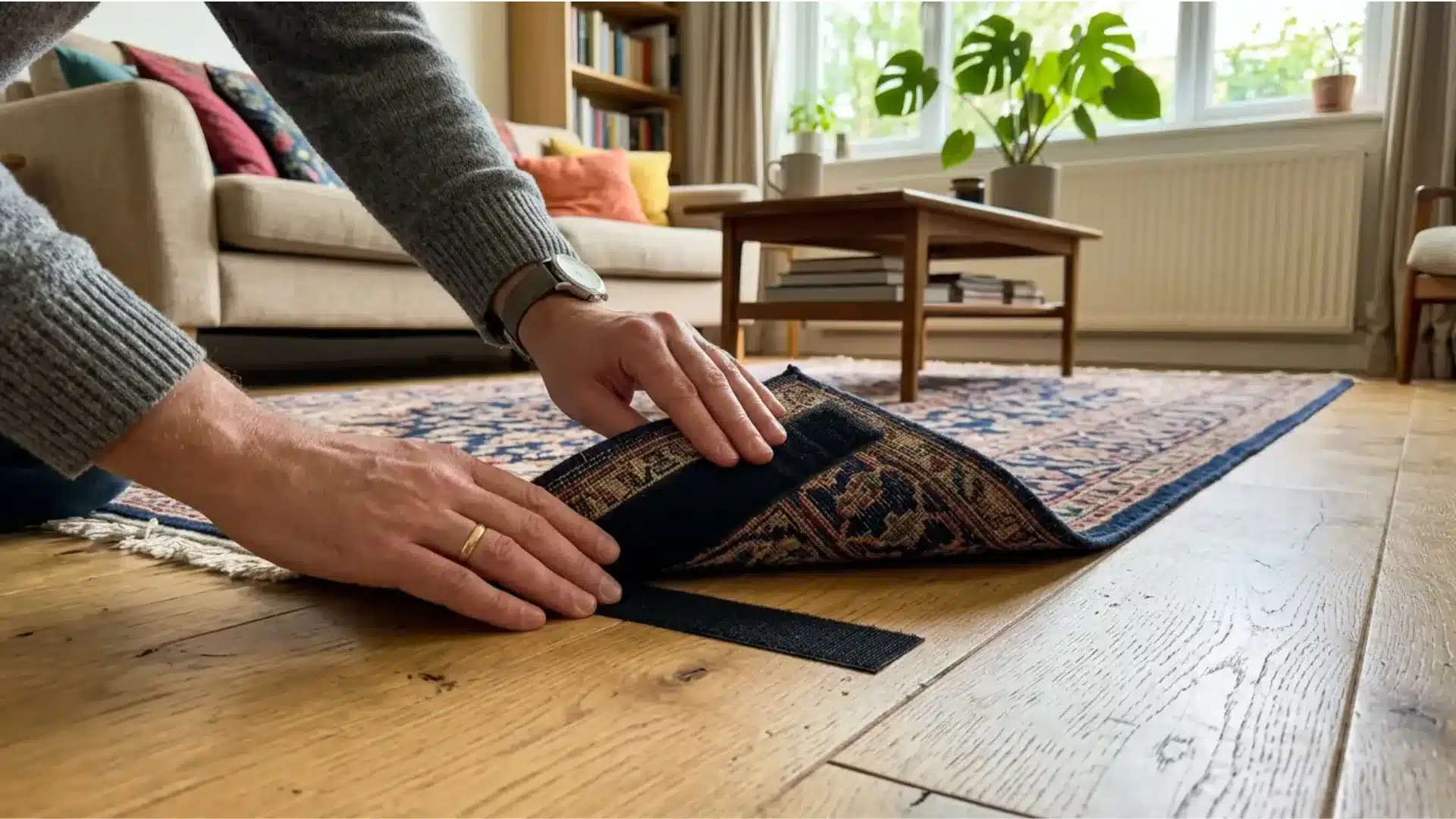
Velcro strips solve this with a hook-and-loop system, one side pressed onto the floor and the other attached to the rug’s underside.
Once connected, the two pieces hold together firmly until you decide to pull them apart.
Best of all, you can peel them off cleanly whenever you move or rearrange furniture. This method works especially well for small rugs placed in busy kitchens or entryways indoors.
7. Silicone Caulk Backing
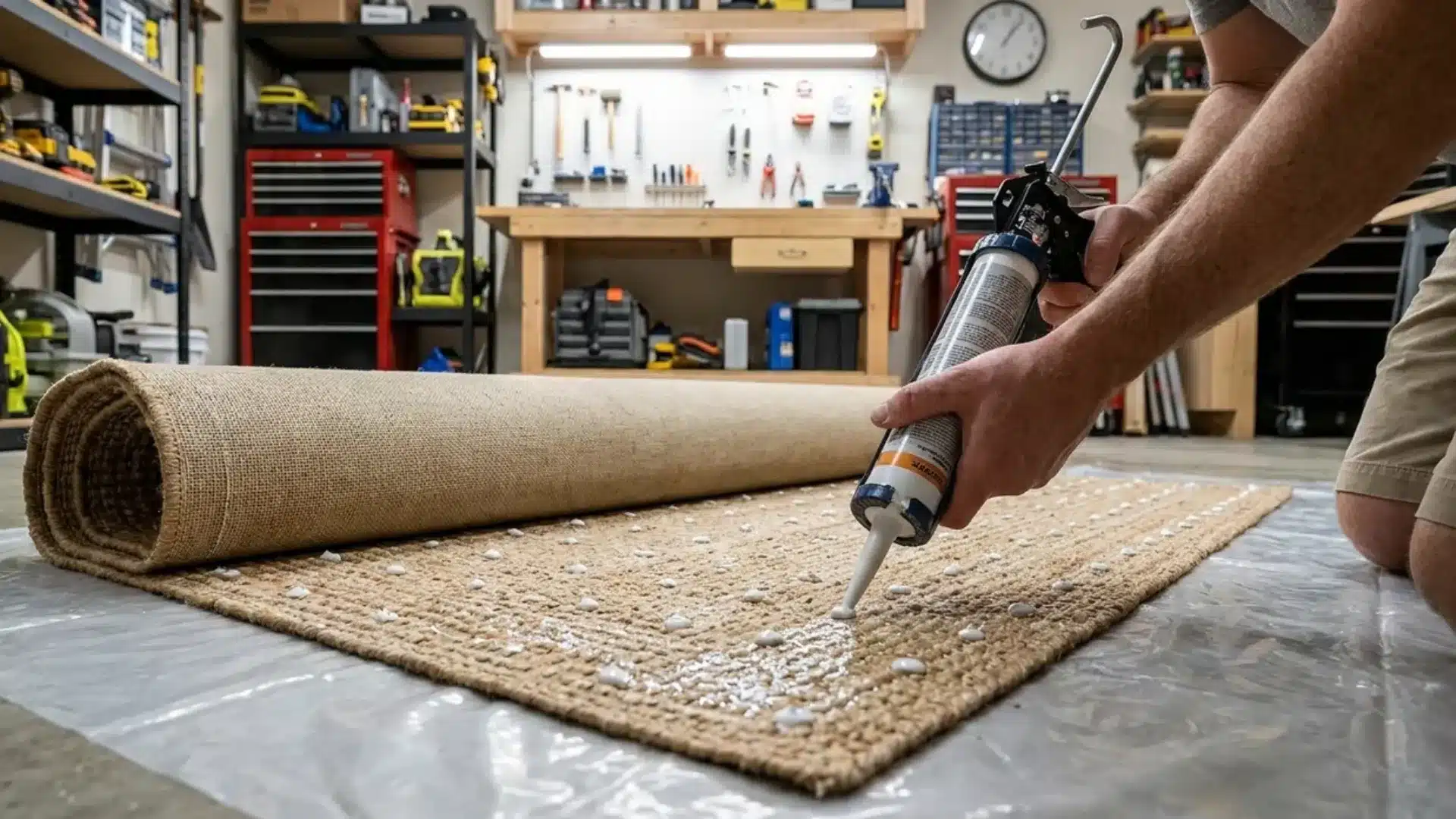
For a fix that lasts years rather than months, silicone caulk applied directly to the rug’s underside creates a permanent grip.
A thin layer of dots or lines dries into a rubbery texture that holds firmly against hard floors.
Keep in mind this method cannot be undone, so save it for rugs you plan to keep in one spot. Allow the caulk to cure completely before placing the rug back on the clean floor.
8. Custom Rug Backing Upgrade
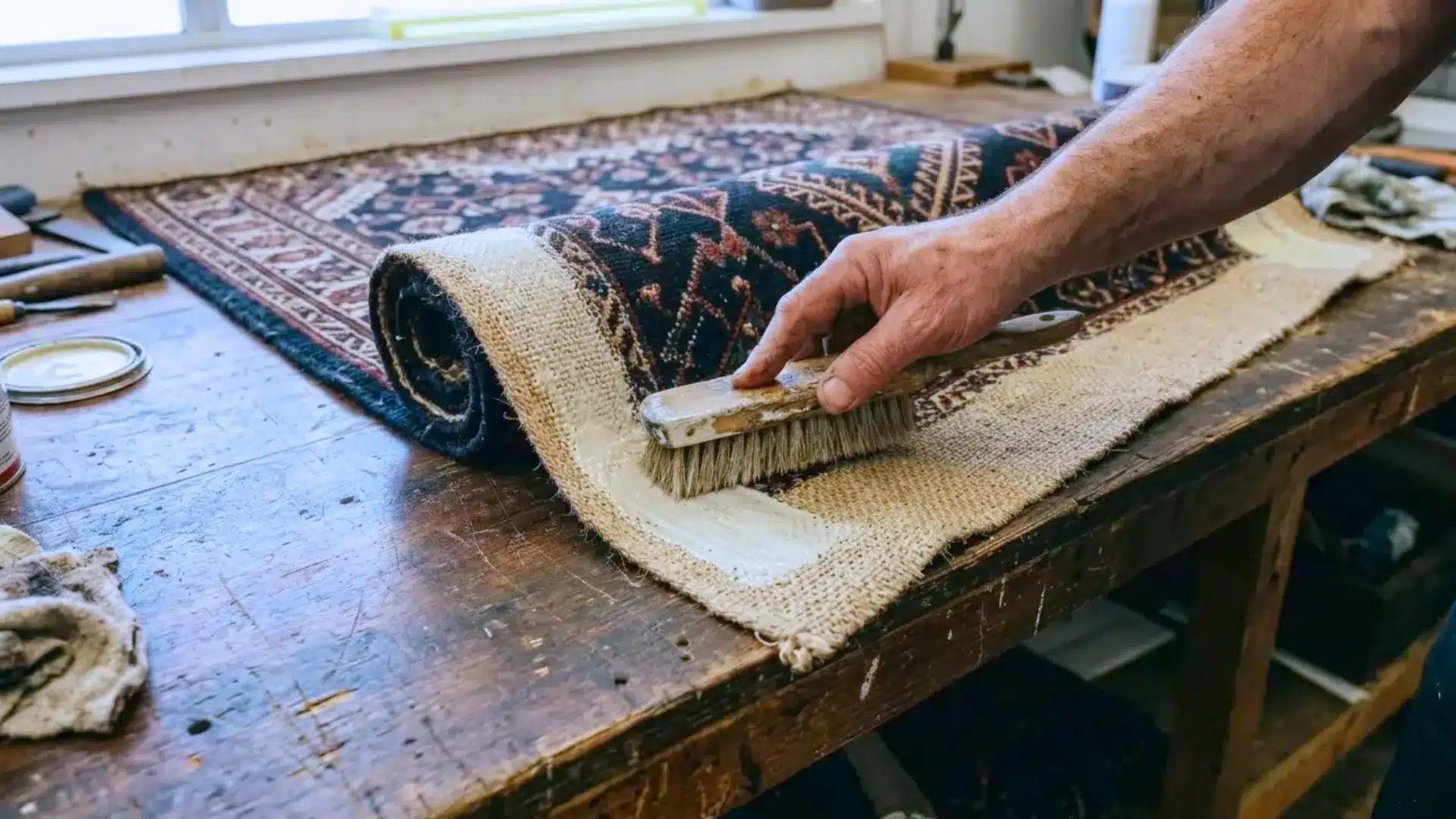
For rugs holding real value, like hand-knotted or wool pieces, a professional backing upgrade offers protection without the guesswork.
A specialist applies a latex or rubber coating underneath, built to match the rug’s weight and material.
It costs more than a store-bought pad, but for a rug worth protecting over the long term, it can be worth the investment.
9. Anti-Slip Spray Coating
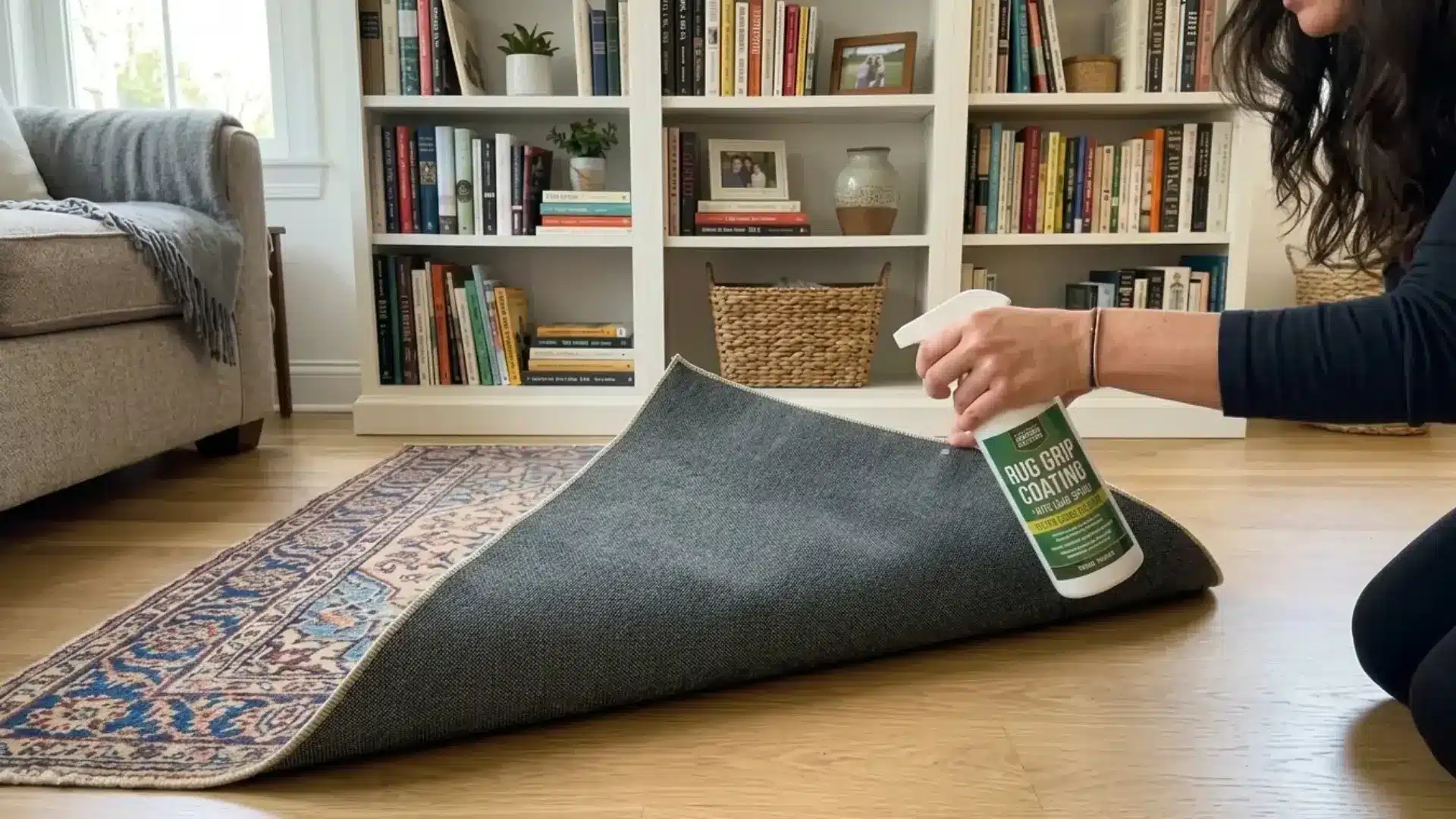
If a permanent fix feels like too much commitment, an anti-slip spray offers a lighter touch.
Sprayed directly onto the rug’s underside, it dries to a thin, tacky layer that adds grip without altering the rug.
This works well for rugs you rotate seasonally or move between rooms often. Reapply every few months, since the coating wears down faster than pads or tape.
Best Fixes by Floor Type
Not every solution works equally well on every surface, so here is a quick breakdown to help you match the right method to your floor:
| Floor Type | Best Solution | Why It Works |
|---|---|---|
| Hardwood | Non-slip rug pad | Grips without scratching the finish |
| Tile and stone | Anti-slip spray coating | Adds grip without residue |
| Laminate and vinyl | Non-slip shelf liner | Grips without damaging the surface |
| Carpet | Carpet-to-carpet waffle pad | Grips fibers instead of sliding |
If you’re arranging more than one rug in the same room, layering an area rug over a base one calls for its own sizing and anchoring rules to keep both layers flat.
Non-Toxic Options for Homes With Kids and Pets
Babies and pets spend plenty of time close to the floor, so what sits under your rug matters as much as what sits on top of it. Look for these safer choices:
- Natural rubber pads: Provide a strong grip without producing harsh chemical odors.
- Felt and rubber blends: Feel soft underfoot while offering stability without synthetic surface coatings.
- Water-based anti-slip sprays: Dry with fewer fumes than solvent-based products and help keep rugs from moving.
- Rug gripper pads: Use a simple mesh design to hold rugs in place without added chemical coatings.
- Sandpaper strips: Create grip through surface texture without leaving materials that pets may chew or lick.
Common Mistakes That Make Rugs Slide Worse
Even an effective rug grip can fail when installed incorrectly. Avoid these common mistakes to keep rugs secure and protect the floor underneath.
- Using one pad for every floor: Different flooring materials require specific pad types to create enough friction and prevent unwanted movement.
- Cutting the pad to the rug’s full size: A pad that matches the full rug size can show around the edges and create a noticeable tripping hazard.
- Skipping floor cleaning: Dust, dirt, and oily residue weaken the pad’s grip, causing the rug to slide more easily.
- Using cheap PVC on hardwood: Low-quality PVC pads may react with hardwood finishes and leave yellow marks or permanent discoloration.
Conclusion
Knowing how to keep rugs from sliding makes every room safer, neater, and more comfortable.
A suitable rug pad, gripper tape, or water-based spray can provide reliable hold without damaging the flooring.
Take time to measure correctly, choose floor-safe materials, and check the rug edges for movement.
Small changes can prevent falls and protect both the rug and floor for years.
Have you tried any of these methods to keep rugs from sliding? Share what worked best for your home in the comments below.
Frequently Asked Questions
Can I Use a Rug Pad on Top of Another Rug Pad?
No, stacking two rug pads adds unnecessary bulk, creates uneven edges, and may reduce grip rather than improve stability underneath.
Will a Rug Pad Damage a Heated Floor?
Most felt and rubber pads are suitable for heated floors, but confirm the product carries a radiant heat safe label.
Does Rug Thickness Affect How Much It Slides?
Yes, thin rugs often slide more because their lighter weight provides less pressure and grip against the flooring surface below.
Can Pets Damage Rug Pads Over Time?
Yes, claws, scratching, and chewing can damage softer pads, so choose a dense, durable material for homes with pets inside.