

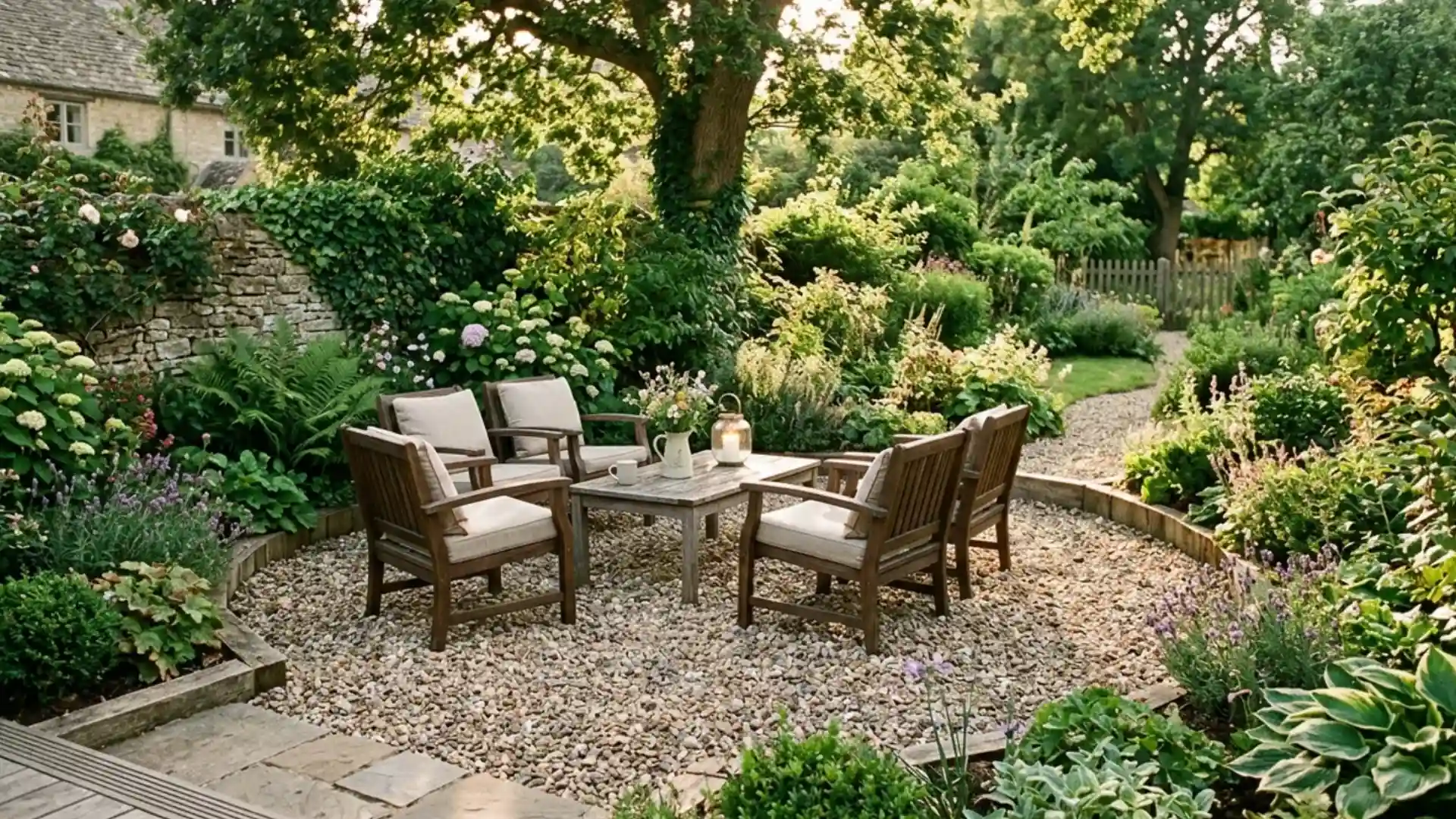
A pile of loose stone can become the best yard seat, and gravel patio ideas make that change simple.
Forget the assumption that a patio needs concrete slabs or pricey pavers to look intentional.
Gravel suits rustic cabins and modern courtyards alike, and it never demands a big budget to look put together.
It drains well, installs quickly, and forgives uneven ground. Whether the goal is a quiet reading nook or a lively dining spot, the right layout and gravel type set the tone.
This blog walks through design, upkeep, and comparisons to help build a patio that actually fits the space.
How to Design a Gravel Patio that Looks Finished
A gravel patio appears complete when its layout shows clear logic rather than a scattered arrangement of stones.
Structure and framing make the difference between a yard feature and an unplanned project.
- Create a sharp-edged border with steel, timber, or brick to contain the gravel.
- Divide large areas by installing a paver or flagstone pathway through the stone.
- Anchor the seating area by grounding the furniture with a durable outdoor rug.
- Add vertical elements like tall planters, trellises, or a small overhead pergola to create visual interest.
- Use edge lighting such as solar stakes or string lights to outline the area at night.
Balance and repetition tie it together.
Use the same edging material for a raised bed or fire pit surround and keep plant choices consistent.
Small backyard landscaping choices tend to lean on the same defined borders and elements, since a tight footprint reads as designed rather than leftover once the edges are set.
How to Choose the Best Gravel for a Patio
Choosing gravel carelessly can ruin a patio project due to its many shapes, colors, and sizes.
Pea gravel rolls underfoot and scatters easily, while crushed stone locks together for a firmer, more stable surface.
Decomposed granite packs down smooth and suits a rustic look, though it can turn muddy after heavy rain.
Drainage matters just as much as looks, and so does foot traffic.
A patio near a pool calls for different gravel than one tucked under a pergola. Match the material to the space and the climate, and the surface holds up for years without shifting or sinking.
Gravel Patio Ideas to Inspire Your Outdoor Space
The right idea can turn a bare backyard corner into an inviting space.
From fire pit lounges to courtyards, these rock patio ideas suit all layouts and budgets, with simple ways to refresh each look.
Note: The costs below are estimates for materials and basic setup, not firm quotes. Pricing shifts by region, supplier, and project size, so confirm current rates with a local landscape yard before setting a budget.
1. Minimalist Gravel Courtyard
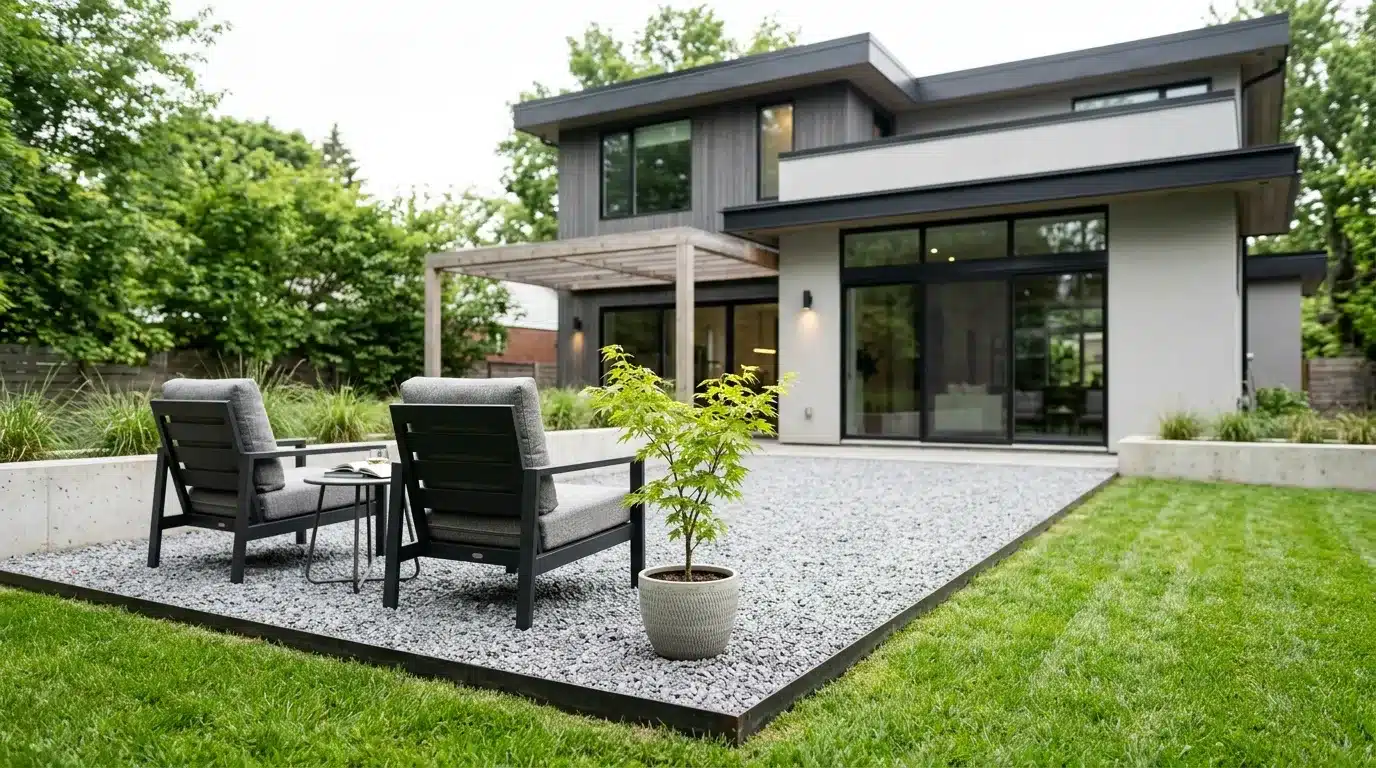
Clean lines and neutral gray gravel give this style a sleek, uncluttered finish.
Costs typically run $3-$6 per square foot for basic pea gravel. The look reads modern without trying hard.
Refresh it by raking the stones into fresh patterns every few weeks to instantly renew the appearance without spending a dime. A single sculptural chair or bench keeps the focus sharp.
Smooth-edged gravel also feels comfortable underfoot, even in bare feet.
2. Fire Pit Gravel Lounge
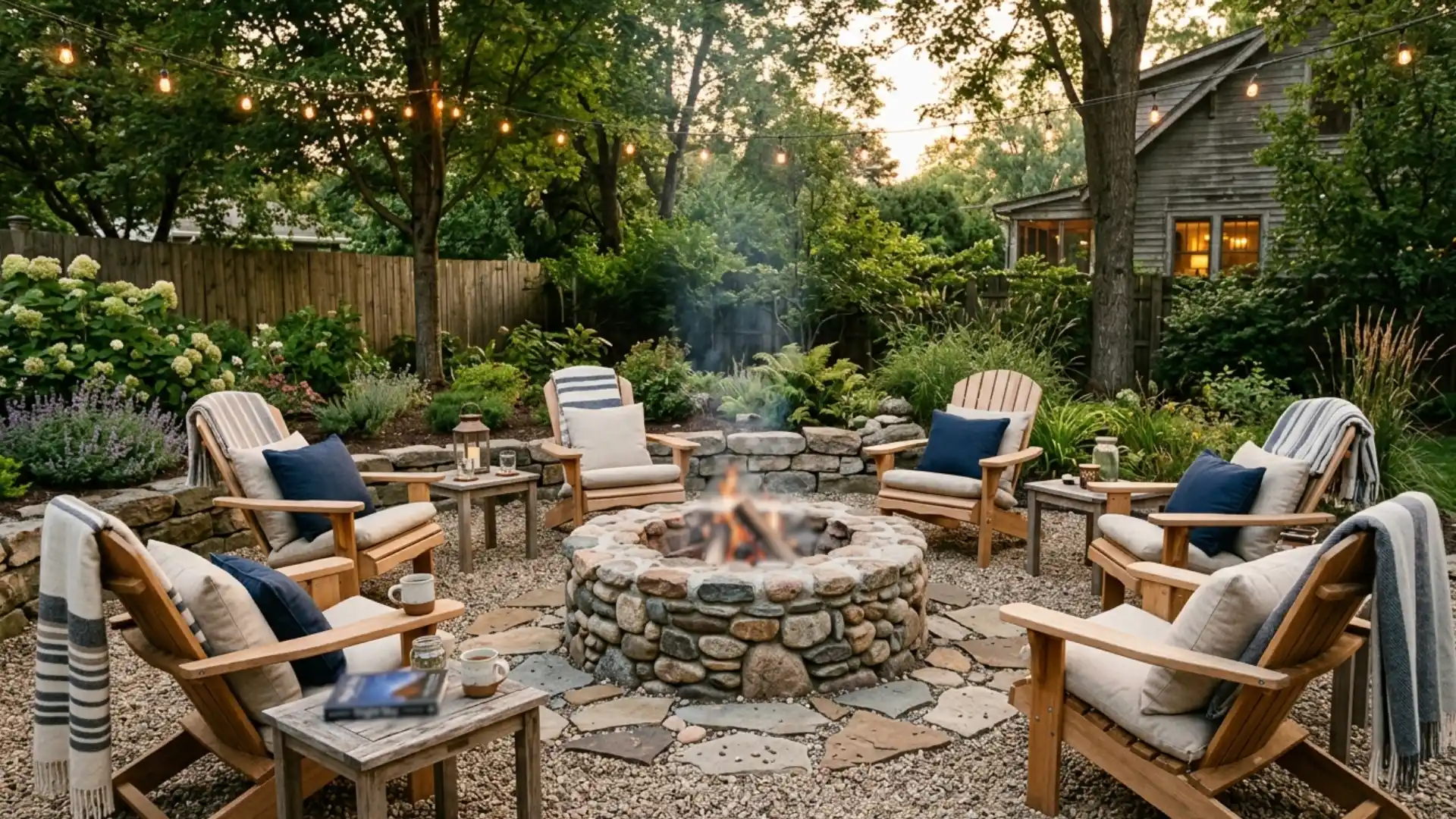
A circular gravel bed around a fire pit creates a cozy gathering spot.
Expect to spend $150-$400 on a basic steel fire pit plus gravel fill.
The finished look is warm and inviting, ideal for evenings. For an inexpensive update, swap cushions or blankets seasonally instead of replacing furniture. Heat-resistant gravel like lava rock withstands direct flame.
A ring of larger stones also keeps loose gravel from scattering near the fire.
3. Cottage-Style Gravel Garden Patio
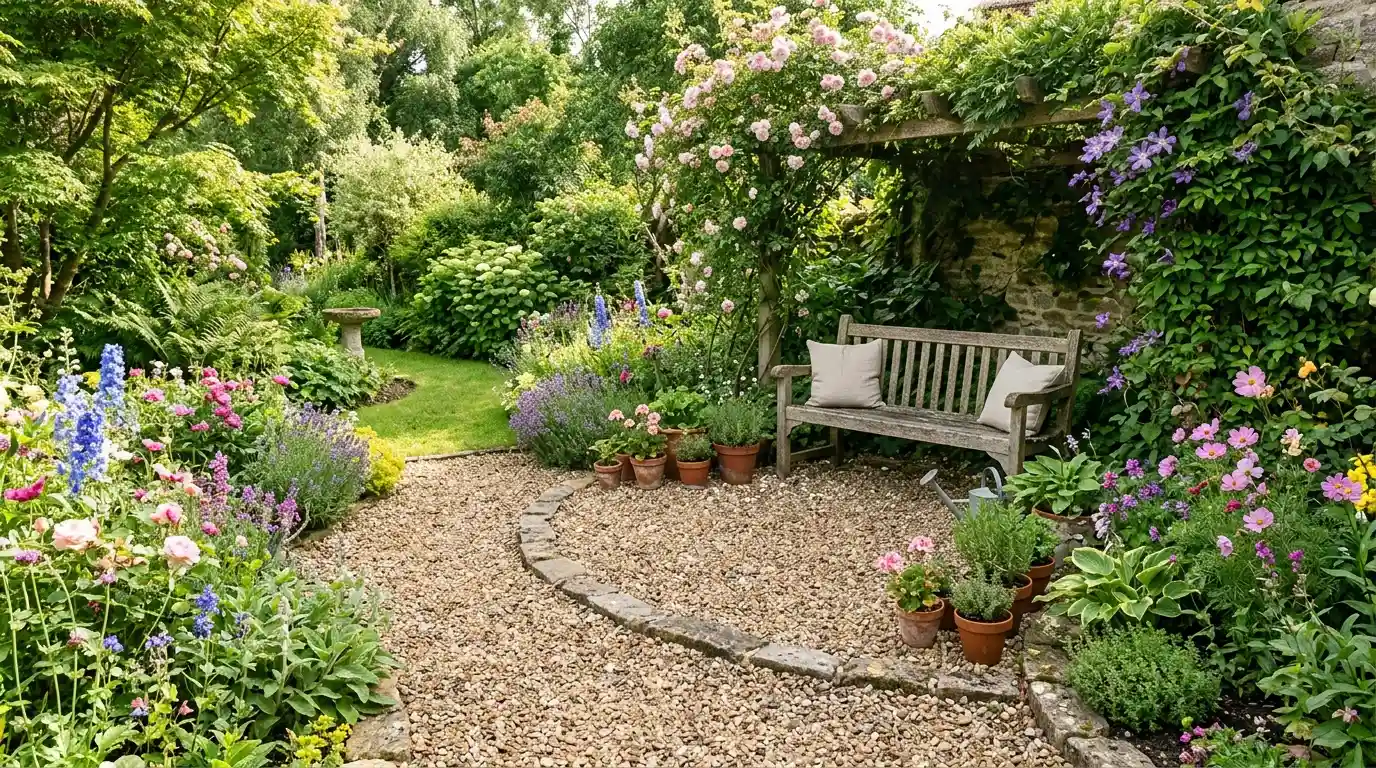
Soft, rounded pea gravel paired with overflowing flower beds creates charm instantly.
Material costs stay low, often under $500 for a modest space. The finished patio feels lush and lived-in.
Add climbing vines on a trellis for vertical interest.
Refresh space cheaply by rotating seasonal potted blooms instead of permanent landscaping. Curved gravel edges soften the layout. A weathered garden bench adds a lived-in touch without extra cost.
4. Modern Gravel and Pavers Combo
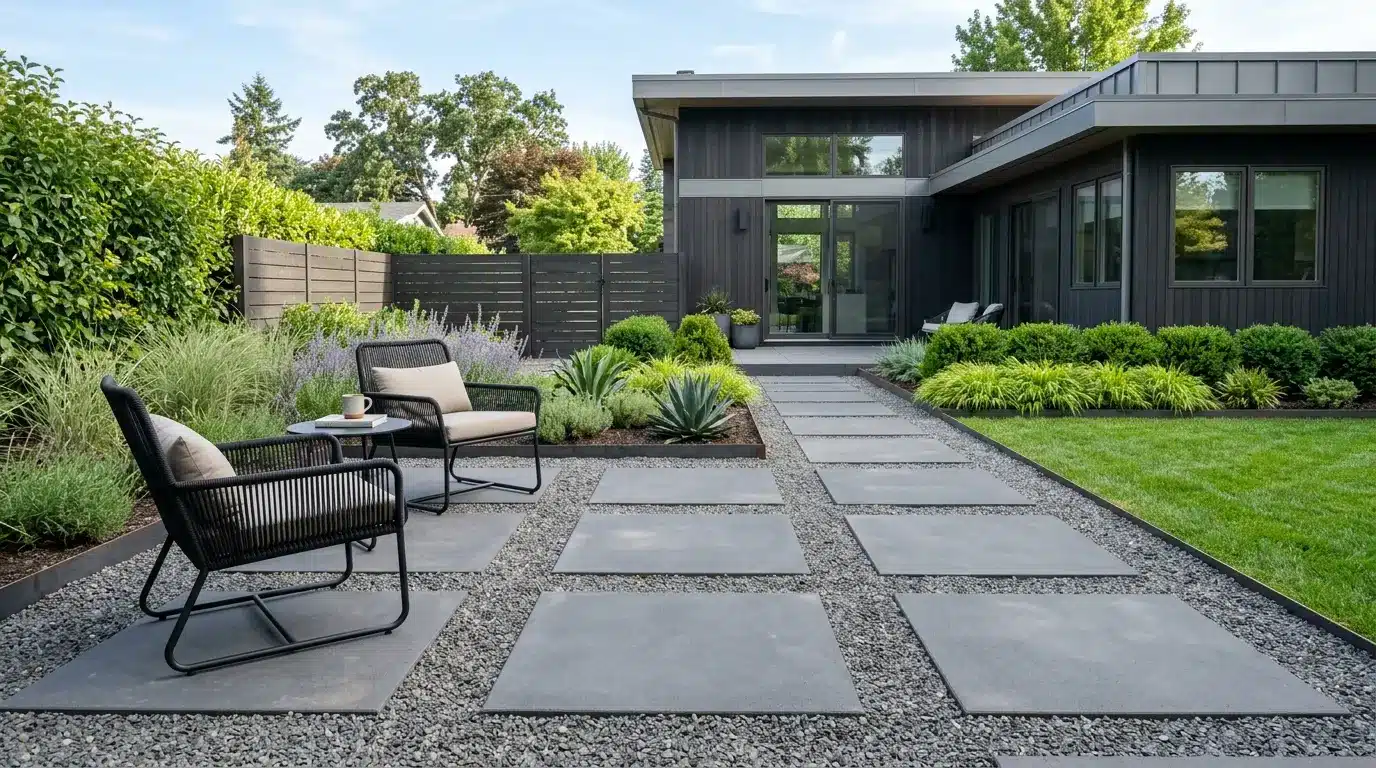
Large square pavers set into gravel create striking geometric contrast. This hybrid runs $8- $15 per square foot, depending on paver material. The finished look feels architectural and intentional.
Gravel fills gaps affordably while pavers anchor walkways.
Refresh the space by power-washing pavers annually and topping off gravel where it’s thinned.
Consistent paver spacing keeps the grid pattern crisp.
Concrete pavers also resist cracking better than natural stone in freeze-thaw climates.
5. Zen Gravel Meditation Space
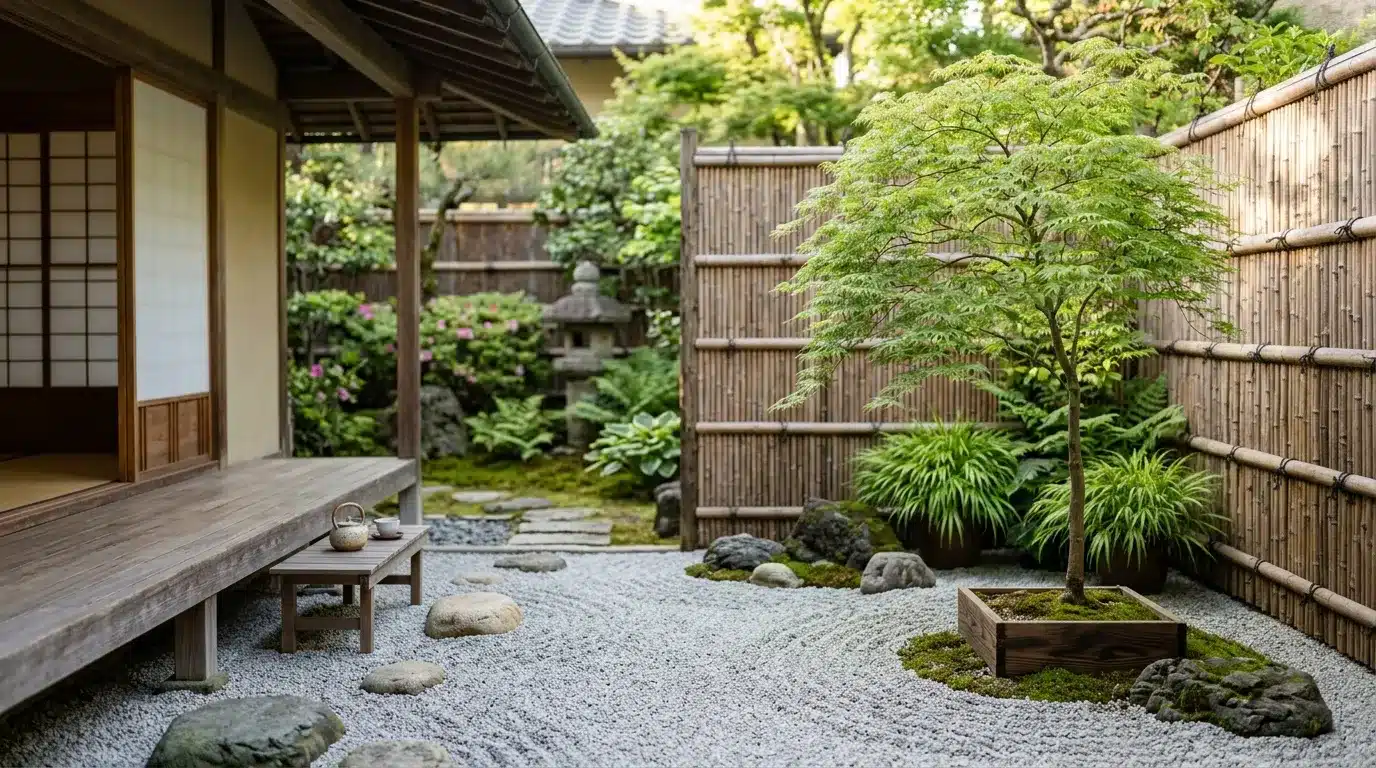
Raked gravel patterns around smooth stones evoke a Japanese-inspired calm.
Costs stay minimal, often $200-$500 for a small courtyard nook. The finished result feels peaceful and deliberate. Add a single sculptural plant like a Japanese maple for focal interest.
Refresh weekly by re-raking patterns, a five-minute task that maintains the space’s intentional feel.
Gravel reflects light and calms the atmosphere, while a bamboo screen provides privacy without blocking airflow.
6. Gravel Patio with Raised Planters
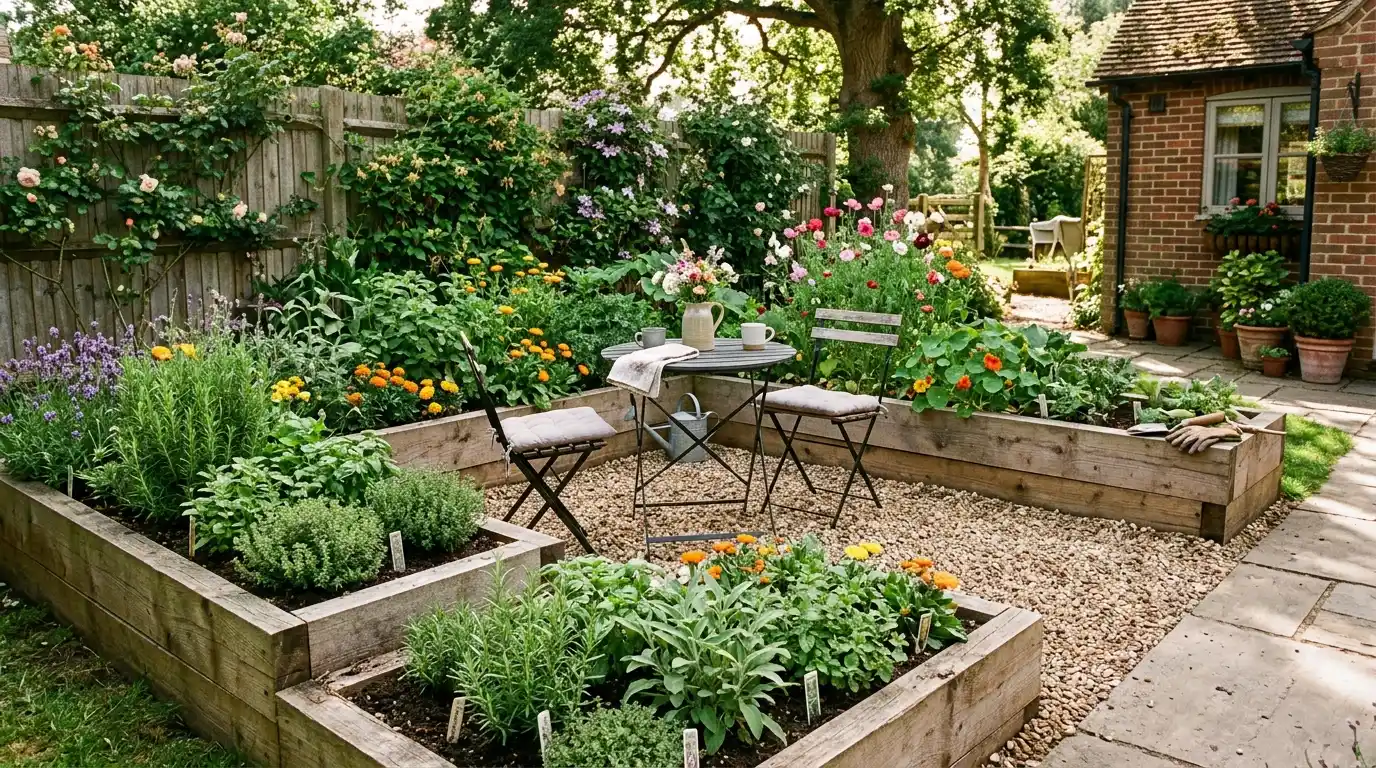
Wooden raised beds bordering a gravel base add structure and greenery.
Planters cost $50-$150 each depending on size and material.
The finished look feels organized and productive, especially for growing herbs or vegetables. Refresh the space affordably by rotating crops seasonally and repainting planter boxes for a quick color update.
Cedar boxes resist rot better than pine in damp climates, and high planters reduce bending and simplify upkeep.
7. Rustic Gravel Patio with Wood Accents
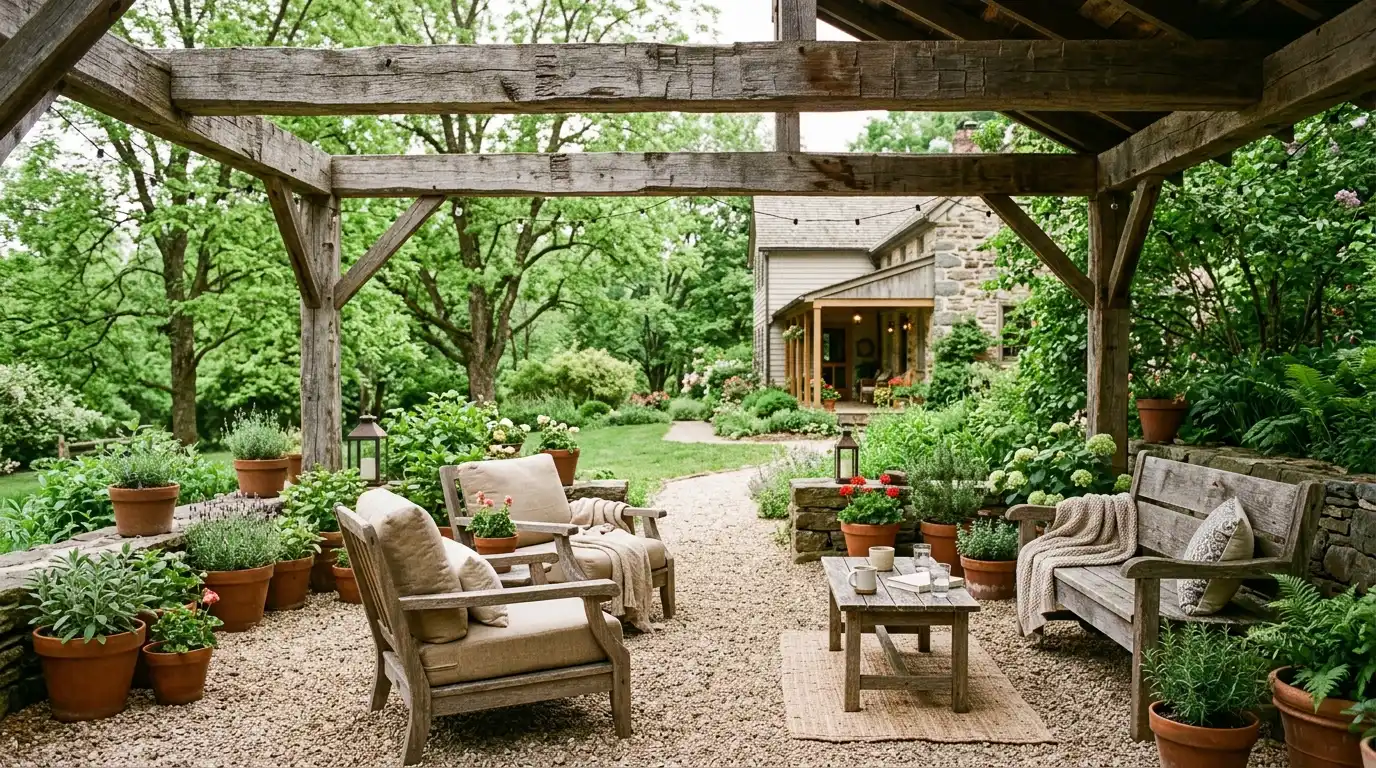
Reclaimed wood beams and a crushed-granite base create farmhouse warmth.
Expect $4-$8 per square foot for granite fines. The finished patio feels grounded and textural.
Pair with weathered furniture for cohesion. Refresh the look cheaply by staining wood accents every few years and swapping throw pillows for new patterns. Granite fines compact tightly, reducing shifting.
Exposed beams overhead can double as a rustic pergola frame.
8. Gravel Dining Nook
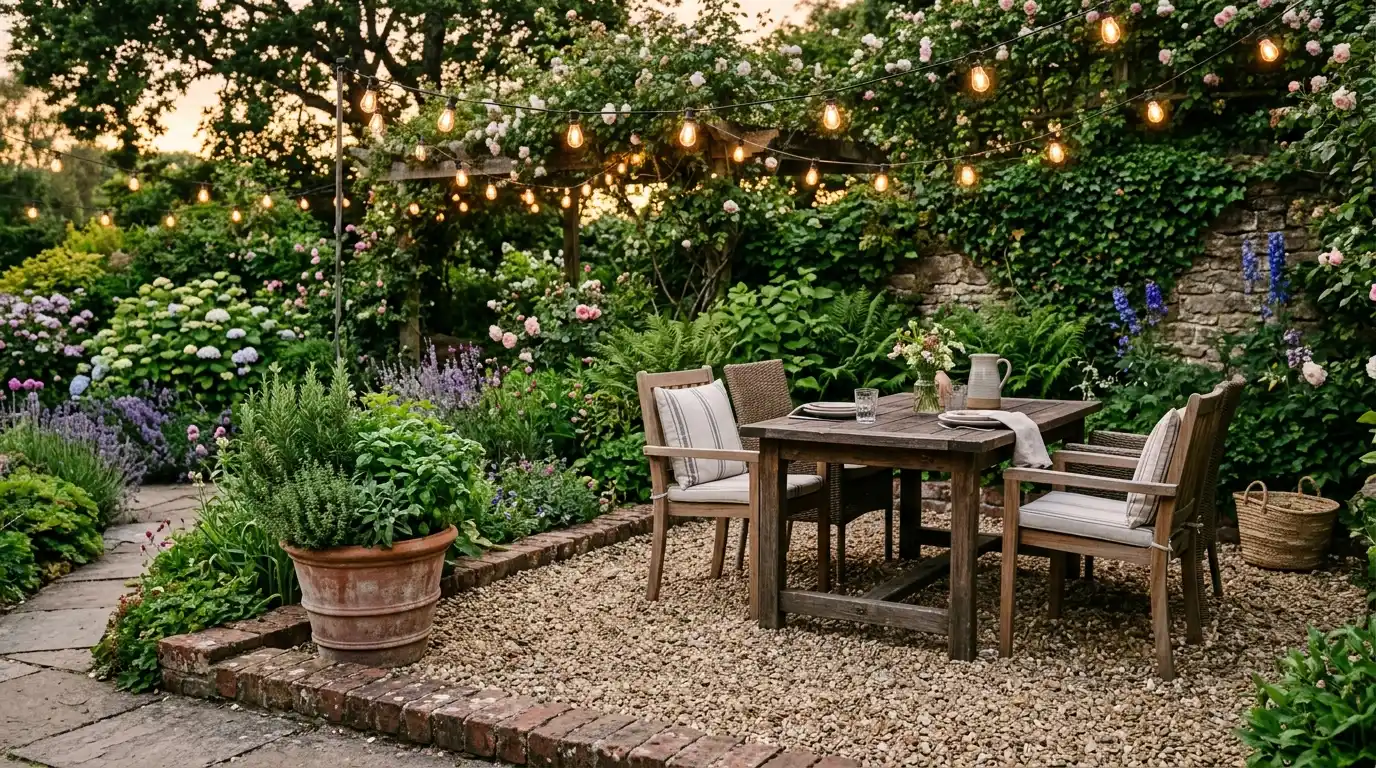
A defined gravel square anchors an outdoor dining set beautifully.
Setup costs range from $300 to $700, including basic furniture. The finished space feels functional and welcoming for meals outside. Border the area with pavers for a clean edge.
Refresh it by adding a tablecloth or string lights, small touches that elevate the mood instantly.
Angular gravel locks in place better under table legs. A nearby planter box doubles as a herb garden for cooking.
9. Gravel Patio with Pergola Shade
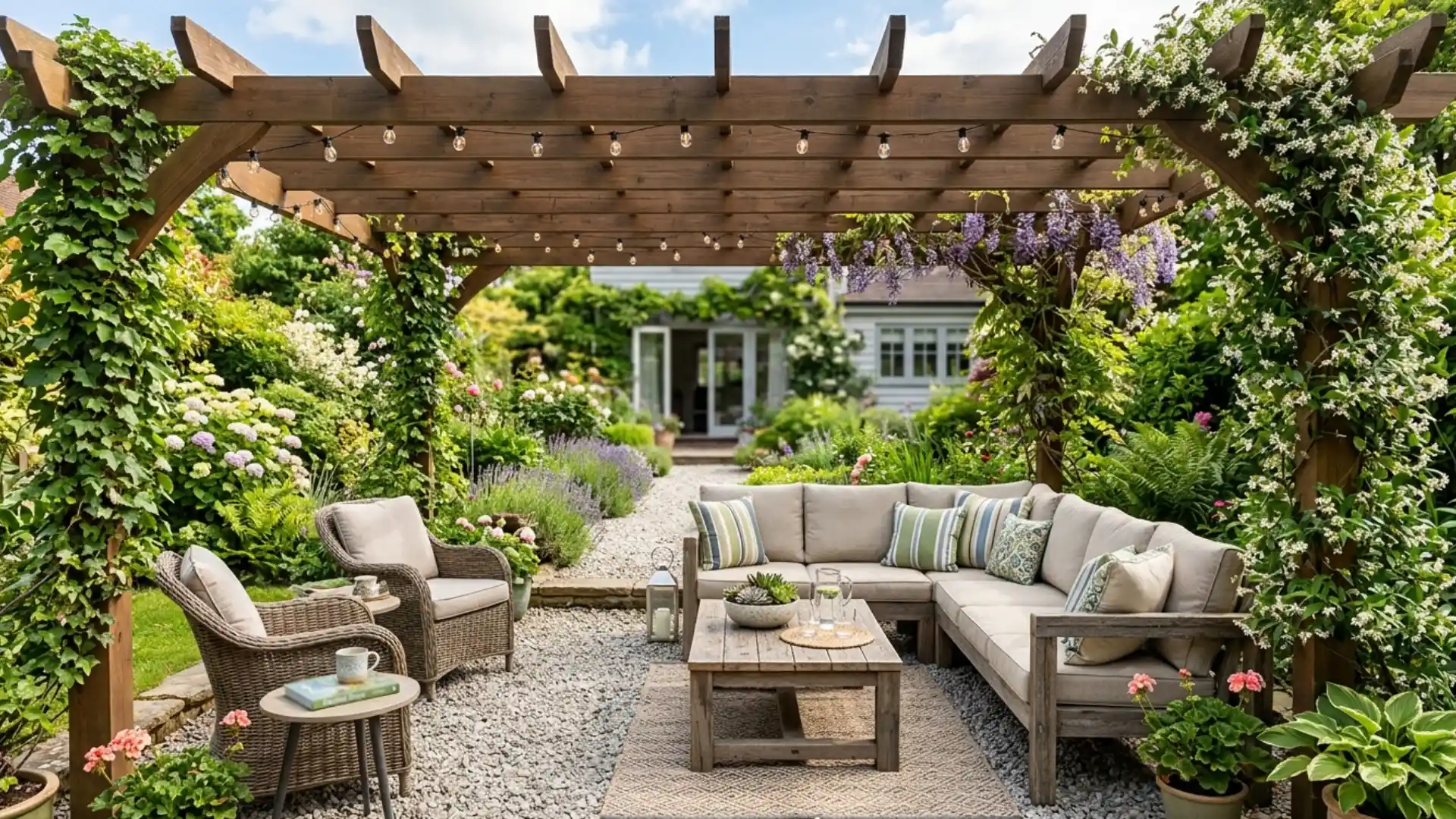
A wooden pergola over gravel flooring adds vertical drama and shade. Pergolas run $500-$2,000 depending on size and material, while gravel stays cheap underneath.
The finished look feels elevated and architectural. Train climbing plants up the posts.
Refresh the space seasonally by swapping outdoor curtains or adding solar lights along the beams.
Gravel underneath also drains quickly after rain, keeping the space usable sooner.
10. Mediterranean-Style Gravel Patio
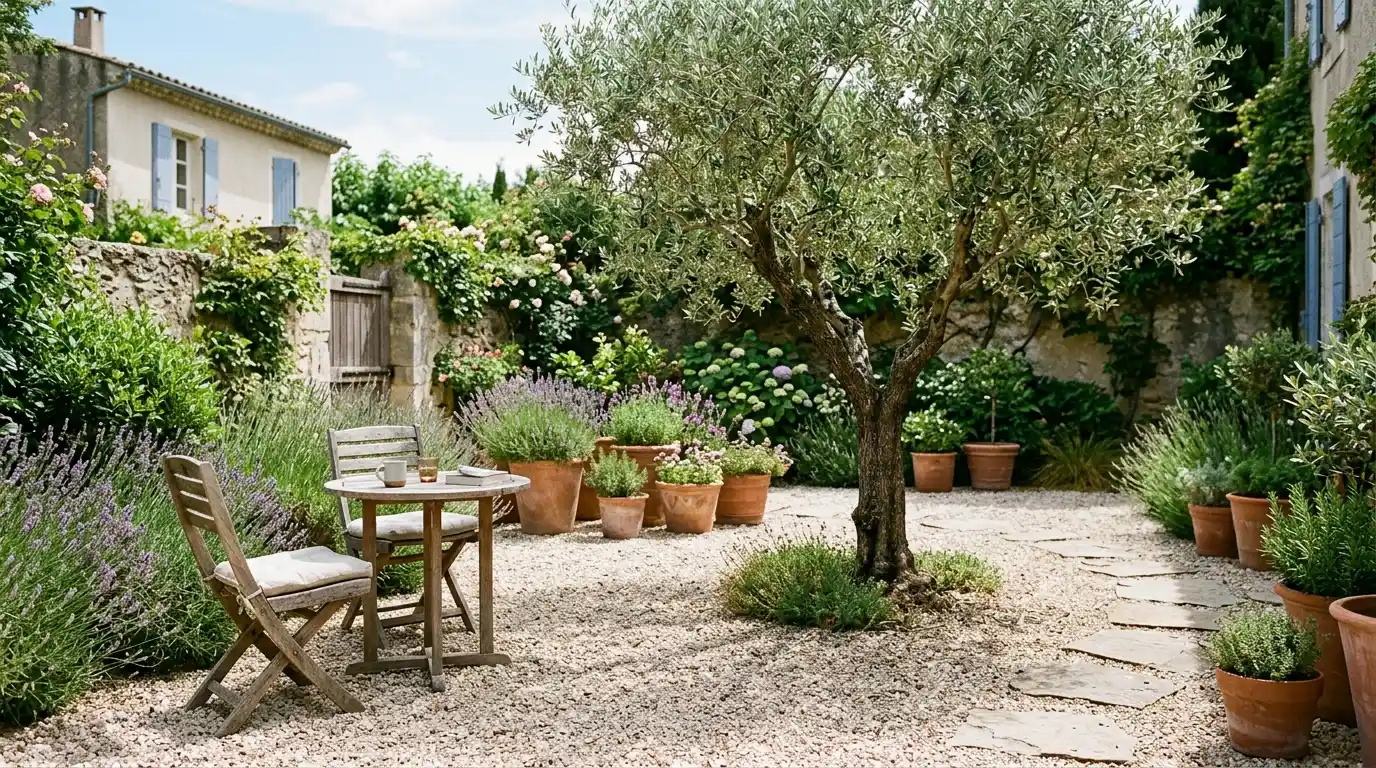
Warm terracotta pots and light-colored gravel create sun-soaked charm.
Costs stay reasonable, around $3-$7 per square foot for gravel alone.
The finished patio feels breezy and vacation-like. Pair with olive trees or lavender for authenticity. Refresh cheaply by repainting terracotta pots and rotating them. Mediterranean herbs through the seasons.
Light gravel reflects heat, keeping the surface cooler in summer.
11. Gravel Patio with String Lights
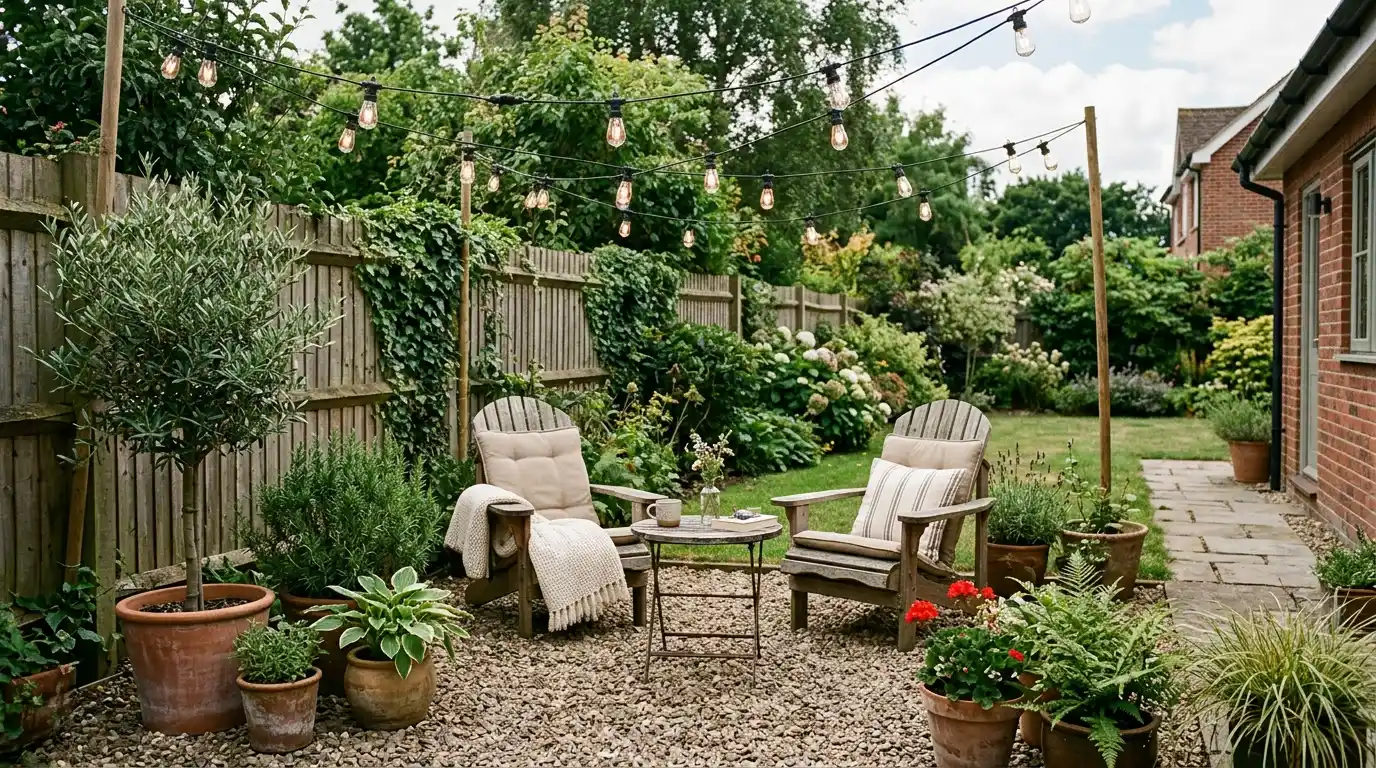
Simple string lights strung overhead transform gravel into an evening destination.
Lighting costs $20-$60 for basic sets, keeping this upgrade affordable. The finished look feels magical after dark without major investment. Hang lights from a pergola or nearby trees.
Refresh the vibe seasonally by switching bulb colors for holidays or gatherings.
Solar-powered strands cut electricity costs entirely.
Warm white bulbs also flatter gravel tones better than cool white light.
12. Multi-Level Gravel Terrace
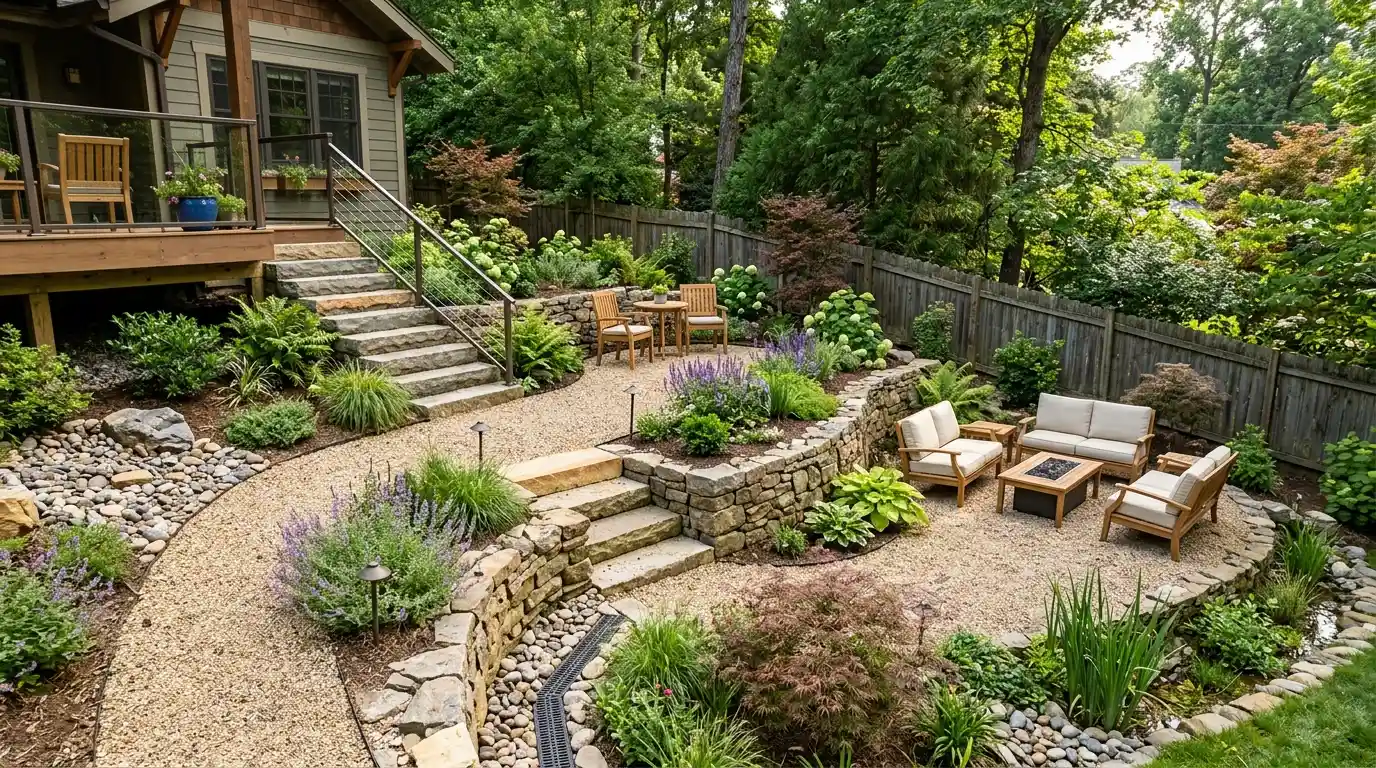
Stepped gravel platforms built into a sloped yard add dimension and function.
Costs run higher, often $10- $20 per square foot, due to retaining walls.
The result is dramatic and purposeful. Use railroad ties or stone blocks for level transitions. Refresh tiers independently with new furniture or plants without redoing the entire terrace.
Proper drainage prevents erosion over time.
Each tier can also serve a distinct purpose, like dining or lounging.
13. Gravel Patio Bordered by Low Hedges
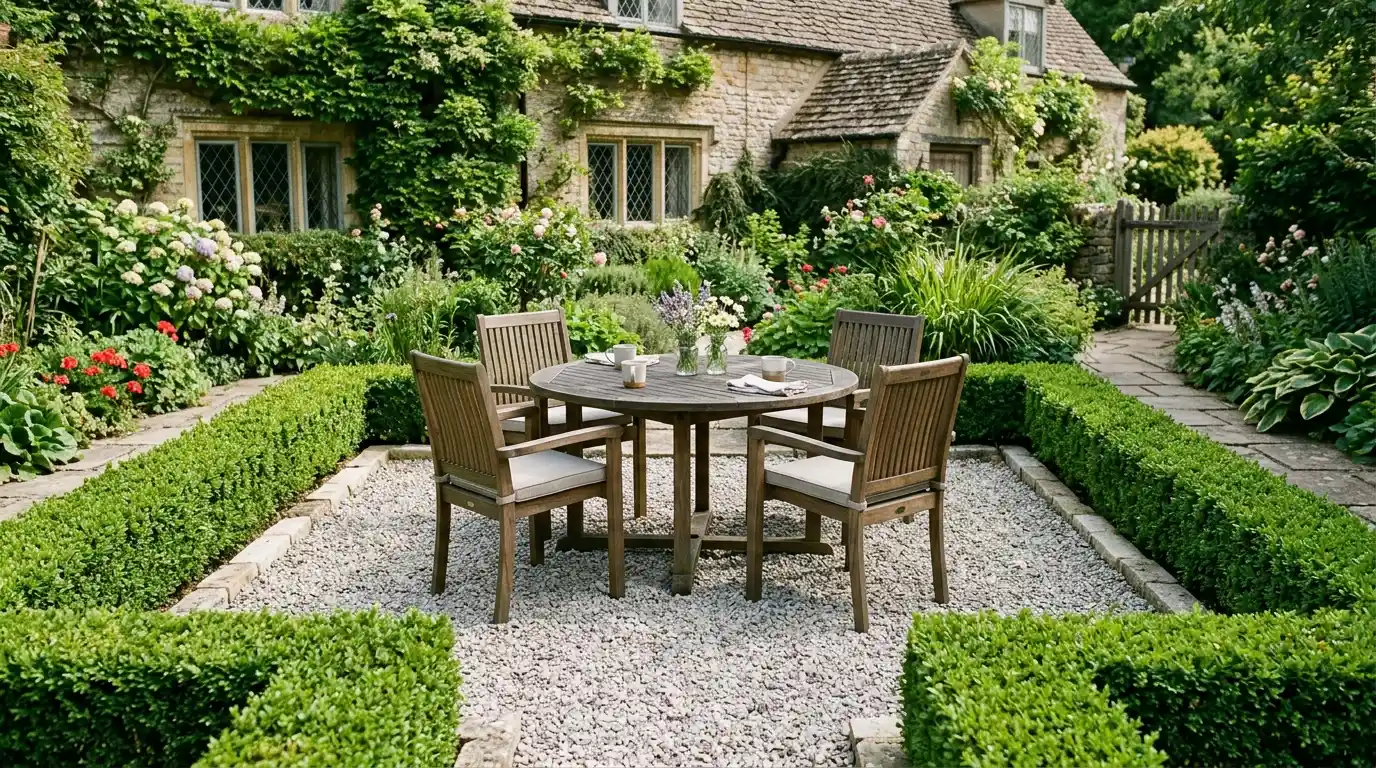
Boxwood or similar hedges framing gravel create a tidy, formal structure.
Hedge costs vary, roughly $15-$40 per plant depending on size.
The finished patio feels polished and intentional. Trim hedges into simple geometric shapes for extra impact.
Refresh the space by shaping hedges seasonally, a low-cost task that keeps edges crisp year-round.
Evergreen varieties keep the border looking full through winter.
14. Gravel Path Leading to Seating Circle
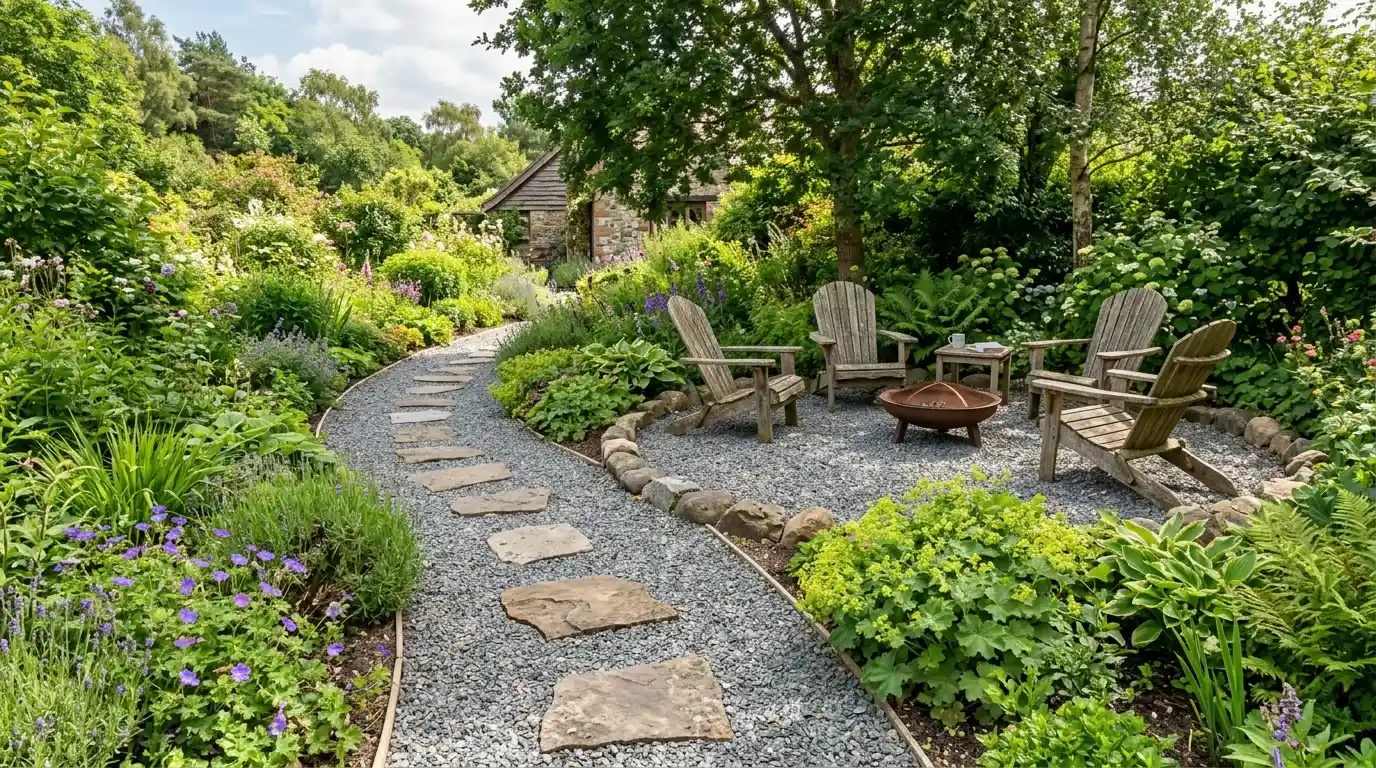
A winding gravel path guides guests toward a circular seating arrangement.
Path materials cost little, often under $300 for smaller yards. The finished look feels intentional and story-driven.
Use stepping stones along the path for texture. Refresh the destination by rotating outdoor chairs or adding a small side table for drinks. Curved paths naturally slow foot traffic, encouraging exploration.
Low-voltage path lighting also improves safety after sunset.
15. Coastal-Style Gravel Patio
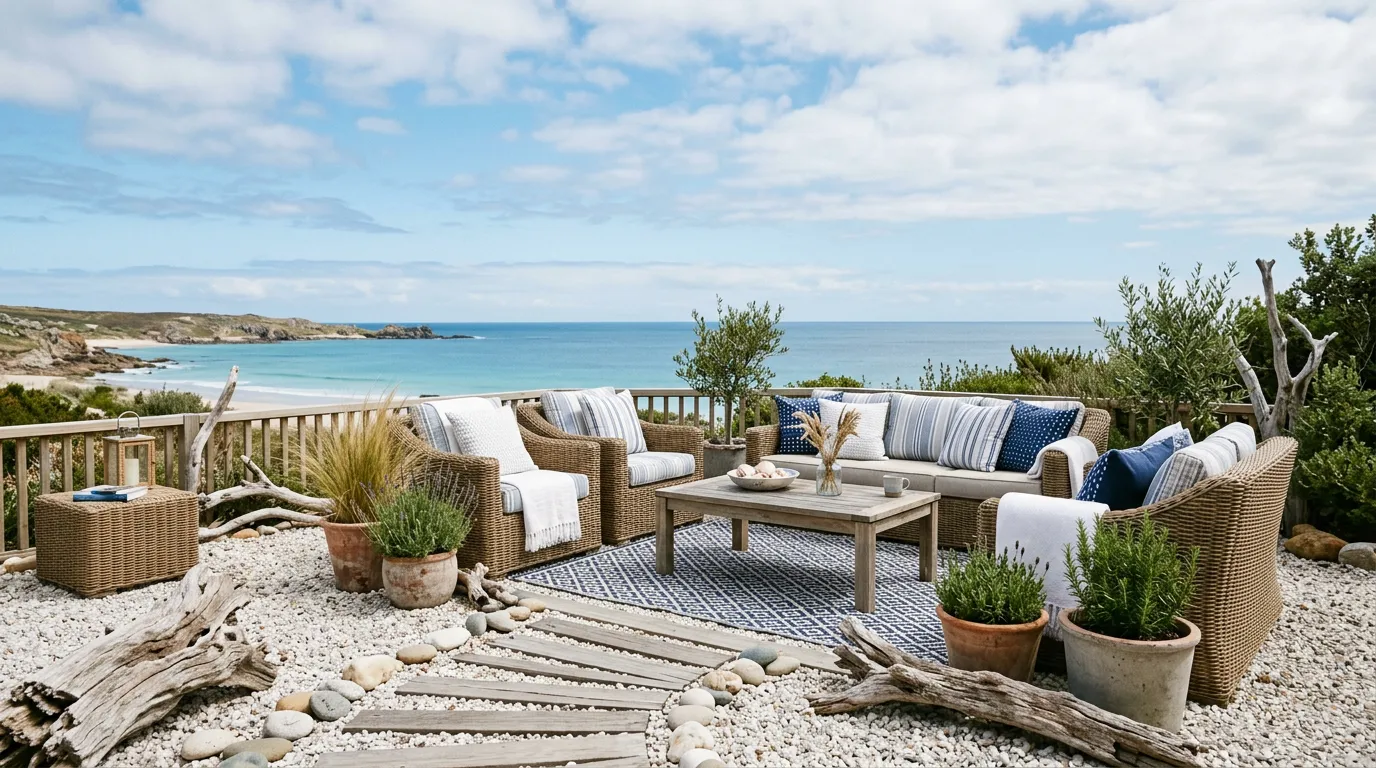
Light gray or white gravel paired with driftwood accents nails a beachy feel.
Material costs stay moderate, around $4-$7 per square foot. The finished space feels breezy and relaxed.
Add rope details or woven furniture for texture. Refresh cheaply by swapping cushion covers to blues and whites each summer season. Rounded gravel mimics beach pebbles for added authenticity.
Salt-resistant furniture materials also hold up better near coastal air.
16. Gravel Patio with Built-In Bench
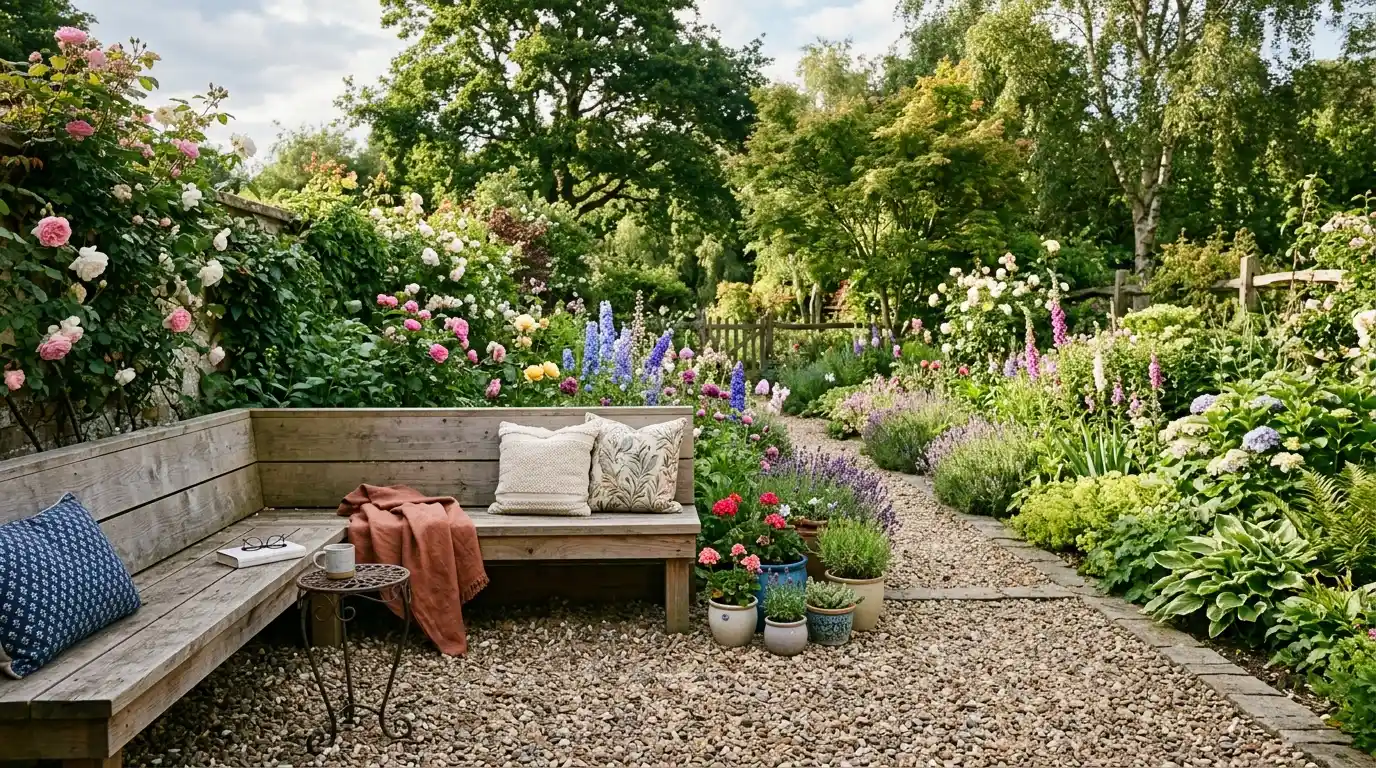
A wooden or stone bench set into the gravel adds permanent seating.
Bench costs range from $100 to $400, depending on material and size.
The finished patio is functional and grounded. Face it toward a garden view or fire pit. Refresh seats cheaply with seasonally swapped weatherproof cushions. Built-in design frees floor space for other furniture.
Stone benches also hold heat, staying comfortable into cooler evenings.
17. Industrial-Style Gravel Patio
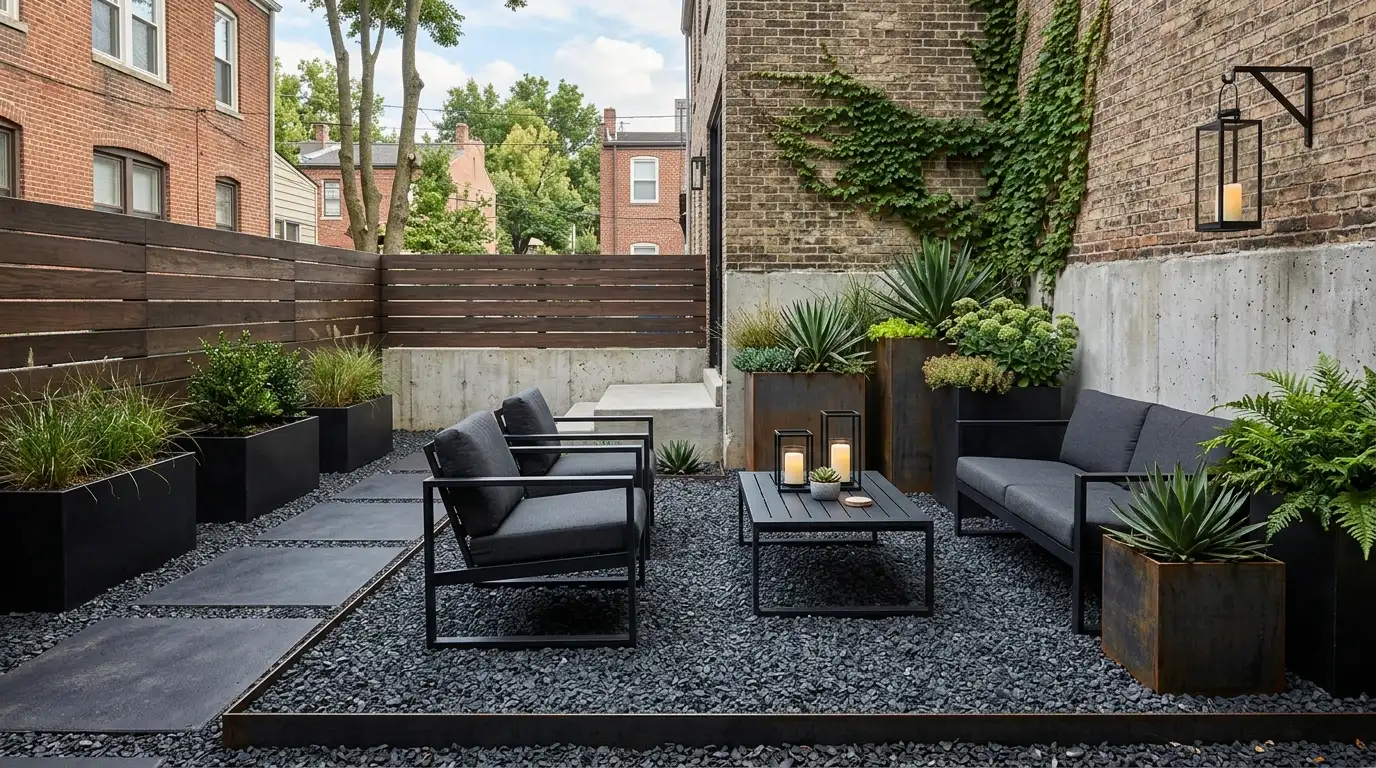
Dark charcoal gravel paired with metal furniture creates an edgy, urban feel.
Gravel costs stay standard, $3-$6 per square foot. The finished look feels bold and low-maintenance.
Add exposed metal planters for cohesion. Refresh the space with string lights or lanterns to soften the industrial edge without major spending. Powder-coated furniture resists rust better than raw metal.
Dark gravel also hides stains and wear far longer than lighter shades.
18. Gravel Patio with Water Feature
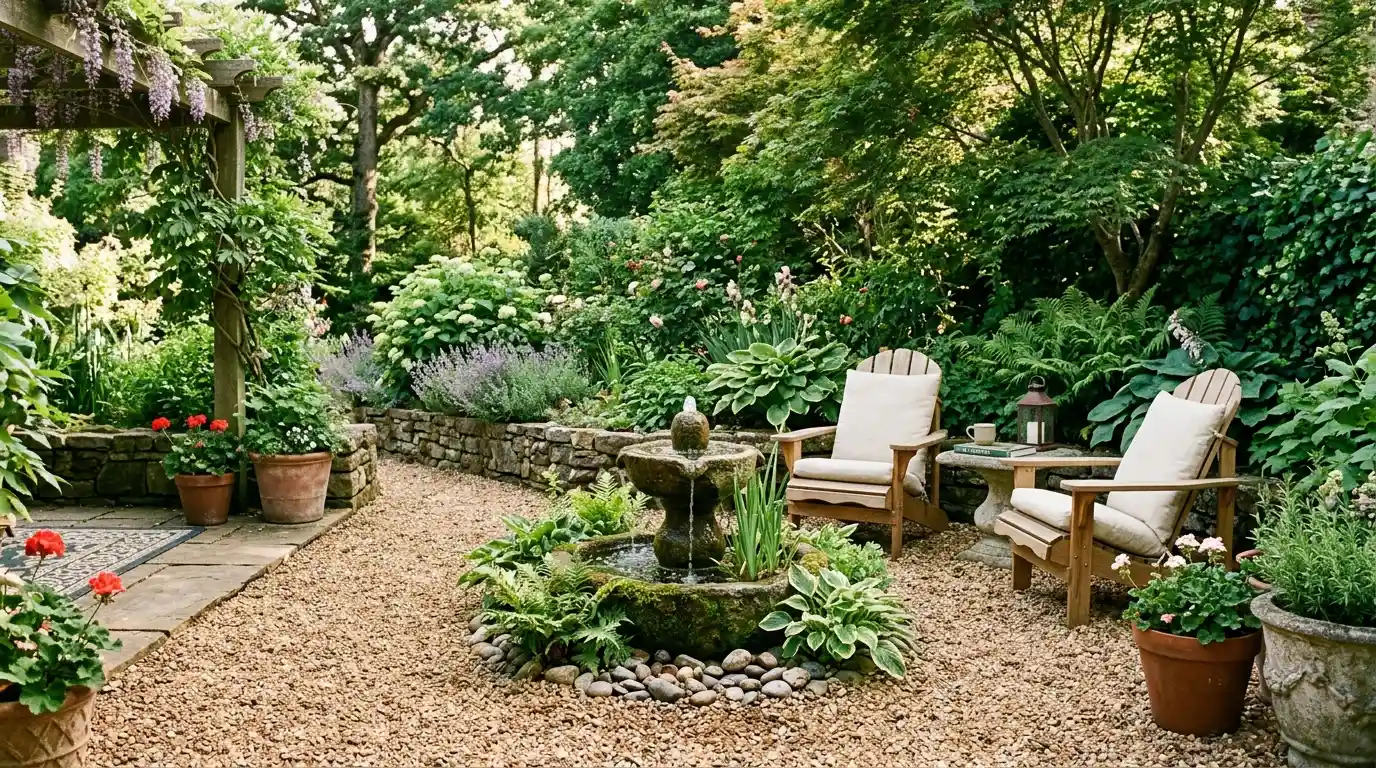
A small fountain or pond edged by gravel adds soothing sound and movement.
Fountains cost $100-$500 for basic tabletop or standing models.
The finished result feels serene and upscale. Surround the feature with smooth river rock for contrast.
Refresh the area by adding aquatic plants or solar lights near the water.
A submersible pump keeps maintenance simple and low-cost.
19. Gravel Patio with Outdoor Rug
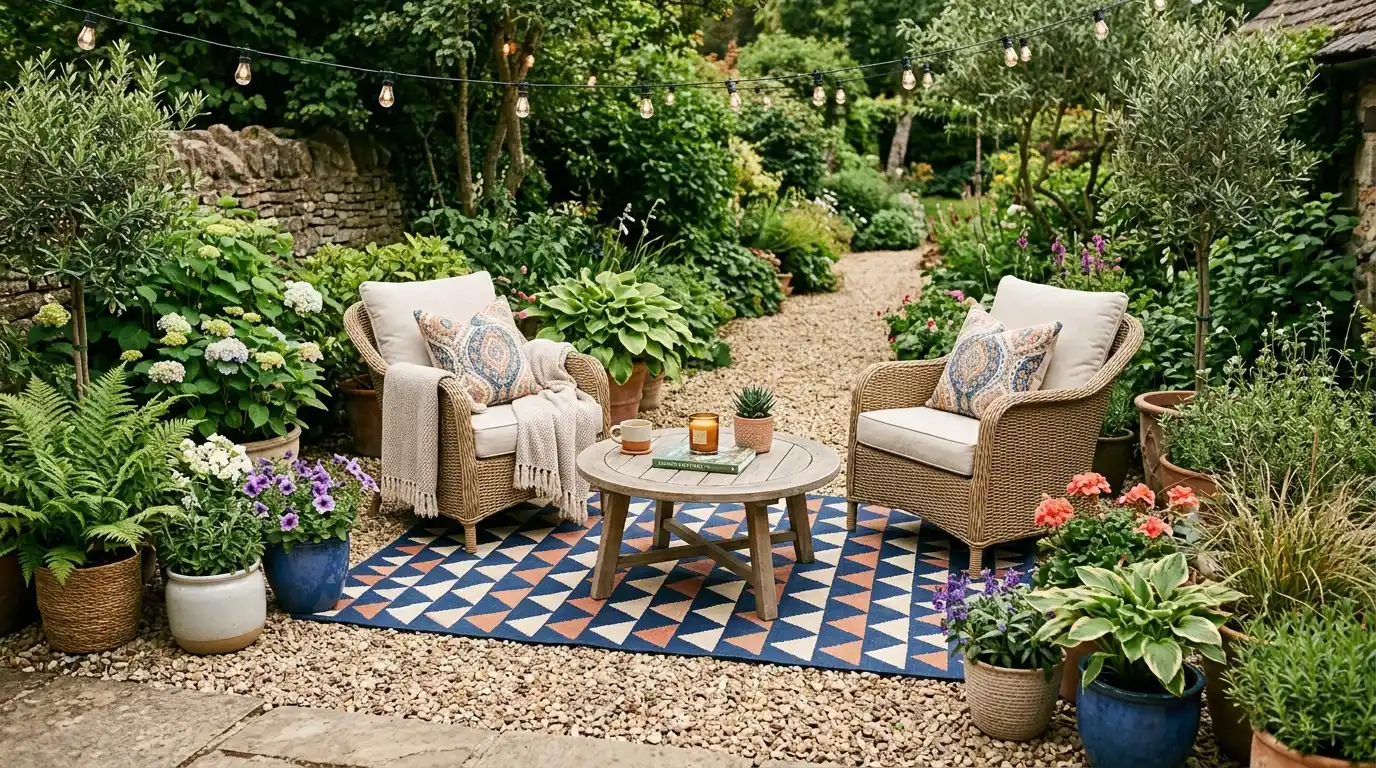
Laying a weatherproof rug over gravel adds instant color and comfort.
Rugs run $30-$100 depending on size and material. The finished look feels cozy and pulled-together.
Choose bold patterns to anchor furniture visually. Refresh the space seasonally by rotating rugs, an easy swap that changes the entire mood. Polypropylene rugs resist mold and fade less in direct sun.
A rug pad underneath also keeps gravel from poking through the weave.
20. Colorful Gravel Mosaic Patio
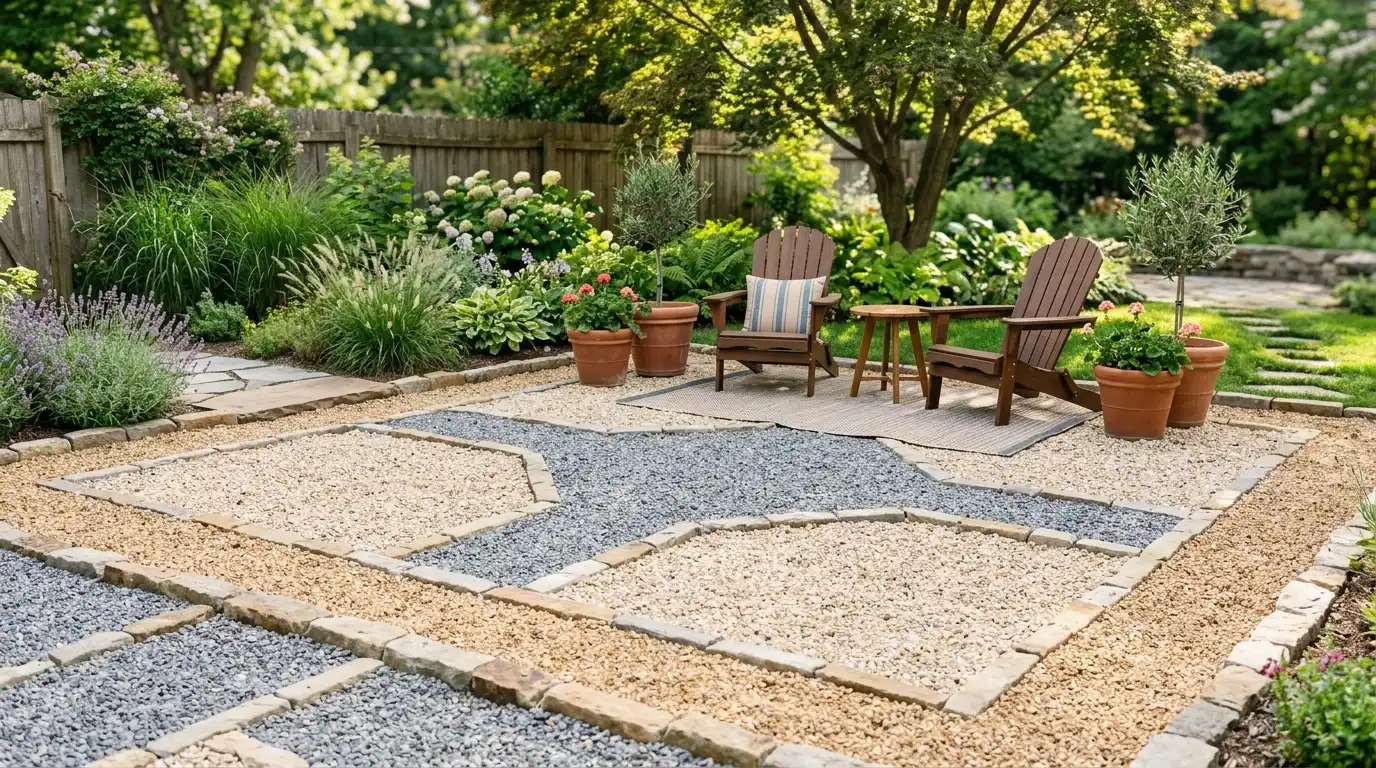
Mixing different colored gravels creates playful patterns or borders.
Costs increase slightly due to sourcing multiple gravel types, often $5-$9 per square foot. The finished patio feels artistic and unique. Use contrasting colors to outline seating zones.
Refresh the design by adding or shifting colored gravel sections whenever inspiration strikes.
Bold color blocks also help visually define separate activity areas.
21. Gravel Patio with Hammock Corner
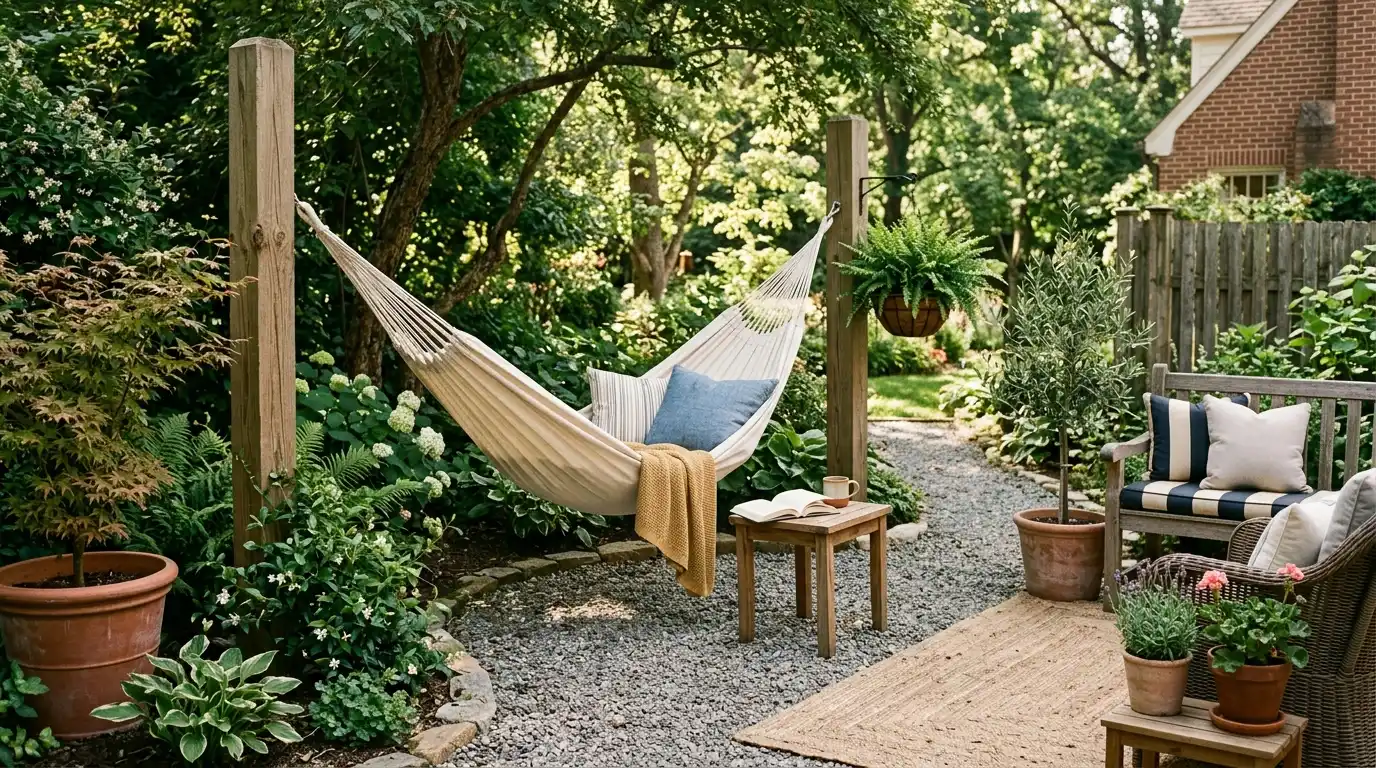
A shaded corner with a hammock strung between posts turns gravel into a relaxation zone.
Hammocks cost $30-$100, making this an affordable addition. The finished space feels laid-back and inviting.
Add a small side table for drinks or books. Refresh the corner by swapping hammock fabric colors seasonally.
Gravel underneath also cushions the area better than bare soil.
22. Farmhouse Gravel Patio
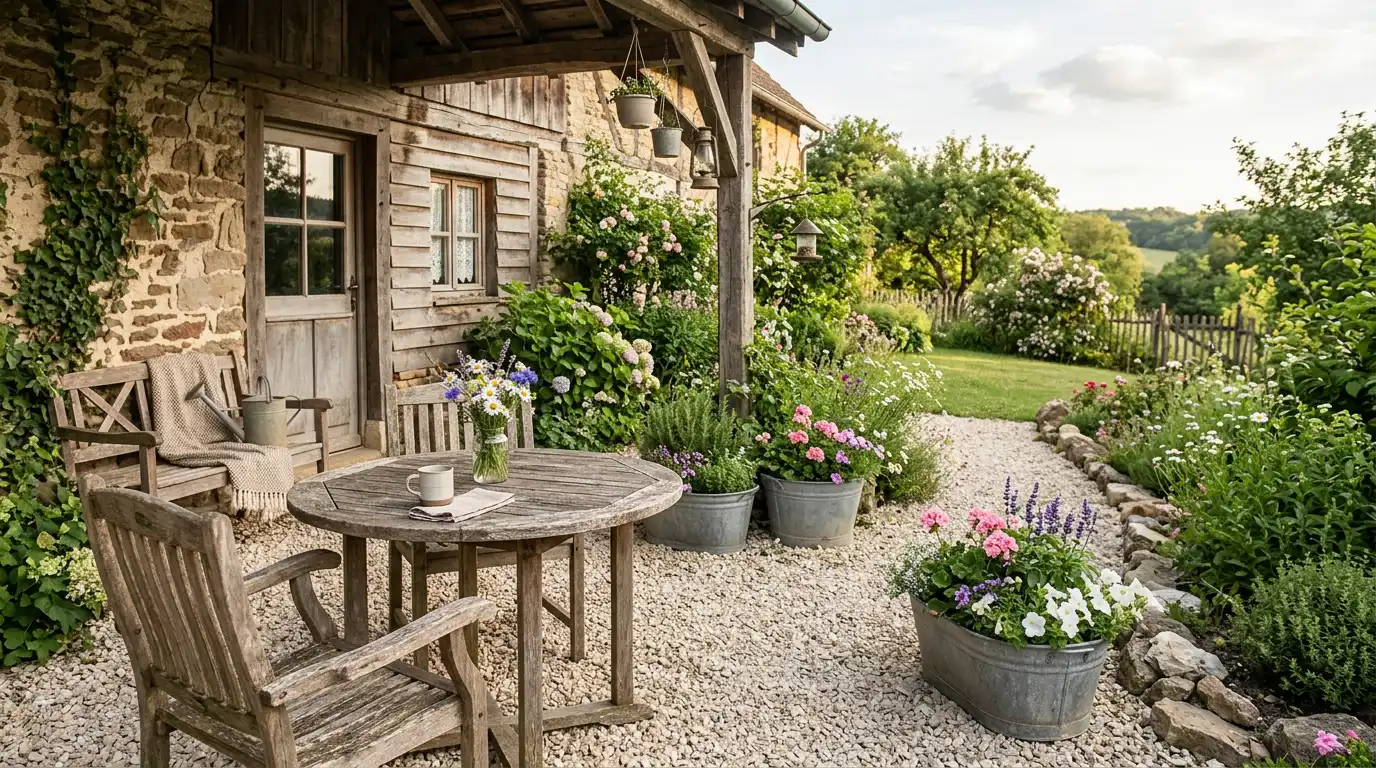
Crushed limestone gravel paired with vintage-inspired furniture creates classic farmhouse appeal.
Costs run $4-$7 per square foot for limestone. The finished look feels warm and nostalgic.
Add galvanized planters or a wagon wheel for character. Refresh the space with seasonal wreaths or signage on fencing. Limestone gravel compacts well and withstands heavy foot traffic.
Weathered wood furniture ages gracefully, adding to the charm over time.
23. Gravel Patio with Vertical Garden Wall
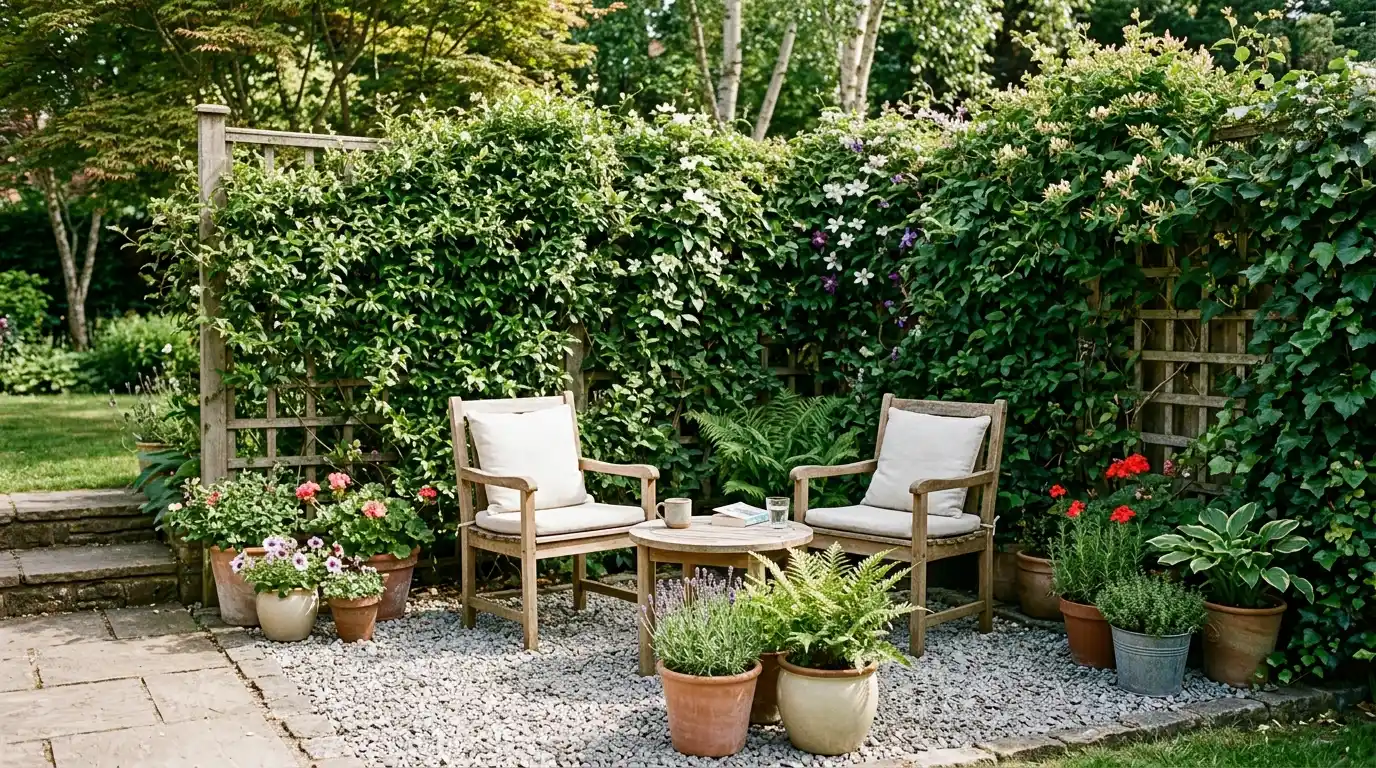
A trellis or pallet wall covered in climbing plants adds greenery without using floor space.
Materials cost $50-$150 for a basic wall setup. The finished patio feels lush and layered.
Position it as a backdrop behind seating. Refresh the wall by rotating plant varieties or adding string lights through the greenery. Vertical gardens improve privacy without blocking airflow like solid fencing.
Trailing plants like ivy fill gaps quickly for a fuller look.
How to Maintain a Gravel Patio
Maintaining a gravel patio’s sharp appearance requires minimal effort once you establish a basic routine.
- Rake the gravel weekly to redistribute stones and smooth out foot traffic ruts.
- Remove weeds manually or use a pre-emergent herbicide every spring.
- Refill thinning areas with new gravel every one or two years.
- Install or fix edging to prevent gravel from spilling onto lawns or beds.
- Inspect drainage systems following heavy rainfall and remove any obstructions from pathways.
- Avoid pressure washing directly on gravel, as it can scatter smaller stones.
- Periodically rotate furniture placement to avoid uneven compaction.
How to Keep Gravel Patio Furniture Stable
Wobbly furniture on gravel comes down to uneven weight distribution, not bad luck.
Place wide, flat pads or paver squares under each furniture leg to spread the load.
This stops legs from sinking unevenly into loose stone.
Choose furniture with adjustable feet for quick leveling on uneven patches. Heavier pieces naturally resist shifting better than lightweight chairs, so anchor lighter items with sandbags in windy spots.
Furniture layout planning also plays a role here, since heavier anchor pieces placed at the center of a seating group tend to resist shifting better than pieces set near the gravel’s edge.
Compact the gravel firmly beneath high-traffic seating areas before placing furniture.
Checking stability every few months catches small sinking issues before they become tripping hazards.
Gravel Patio vs. Concrete, Pavers, and Flagstone
Material costs and upkeep vary sharply across four common patio choices.
| Material | Cost | Durability | Maintenance |
|---|---|---|---|
| Gravel | Lowest | Shifts over time | Rake, refill |
| Concrete | Mid-range | Cracks in freeze-thaw | Seal, patch cracks |
| Pavers | Higher | Individually replaceable | Reseal joints, weed |
| Flagstone | Highest | Lasts decades | Periodic sealing |
The costs are average installed prices; contact a local provider to confirm pricing in your area.
Common Gravel Patio Mistakes to Avoid
Skipping a weed barrier underneath invites unwanted growth through the gravel within months.
Choosing the wrong gravel size for the intended use causes constant shifting or poor drainage. Ignoring proper edging lets stones quickly migrate into lawns and garden beds.
Ordering too little material leaves thin patches that expose the base layer beneath.
Skipping compaction during installation results in an uneven, unstable surface underfoot. Placing gravel directly against home siding traps moisture and invites pest issues.
Overlooking slope planning causes water to pool instead of draining away properly.
Budget-Friendly Ways to Save on a Gravel Patio
These budget backyard makeover strategies apply just as well to a gravel patio, since phased projects and repurposed materials stretch a small budget further than one large purchase.
- Buy bulk gravel from a landscape yard instead of expensive bagged gravel at a hardware store.
- Handle excavation and spreading yourself, and hire a pro only for base compaction if drainage issues exist.
- Reuse existing materials, like leftover pavers, bricks, or timber, for edging instead of buying new borders.
- Start with a smaller footprint and expand the patio in stages as budget allows.
- Time the purchase for late fall or winter when landscape suppliers lower gravel prices during the slow season.
Frequently Asked Questions (FAQ’s)
1. Does a Gravel Patio Need a Subbase?
Yes, a compacted subbase prevents sinking and keeps the surface stable long-term.
2. Is Gravel Cheaper than Pavers?
Yes, gravel typically costs less upfront than pavers for the same square footage.
3. What Do You Put Under a Gravel Patio?
A layer of crushed stone or road base topped with landscape fabric works best.
4. Are Gravel Patios a Good Idea?
Yes, they offer an affordable, low-maintenance option with good drainage for most yards.
5. What Type of Gravel is Best for an Outdoor Patio?
Angular crushed stone locks together best for a stable, walkable surface.
Wrapping It Up
Gravel rewards creativity more than most outdoor materials. Small choices decide whether the patio lasts.
Edging keeps stones in place, drainage keeps the base solid, and the right gravel size keeps furniture from sinking.
Get those right, and the surface holds up season after season with just a weekly rake and the occasional top-off.
Which of these gravel patio ideas fits the yard best?
Drop a comment with the style in mind, or share a photo once the stones are down.
Real projects make the best reference for the next reader planning theirs.


One Response