
A door that won’t close is one of the most common home repairs you’ll face. It seems small, but it can throw off your whole routine.
The door sticks, the latch misses, and nothing lines up right. Maybe a hinge loosened, or the wood swelled from damp weather. Maybe the frame settled a bit and shifted the door slightly.
Knowing how to fix a door that won’t close starts with finding the exact cause. Once you spot it, the fix is usually quick and simple.
You don’t need special tools or a repair call. Grab a screwdriver, set aside a few minutes, and get started. A sticky door doesn’t stand a chance against these simple fixes.
Why a Door Won’t Close Properly
A door that will not close often comes down to a small mechanical problem. Hinges can loosen over time, letting the door hang a bit crooked.
That tiny shift changes how the door lines up with the frame. Loose hinges often start squeaking before they cause real misalignment, so fixing squeaky doors early can stop bigger issues.
Sometimes the strike plate moves, so the latch cannot find its slot. Wood doors can also swell when the weather turns humid or wet.
This makes the door feel tight and stuck along one edge. Older homes tend to settle, and that can twist the frame slightly.
Most of these problems look similar at first glance, even though each has its own cause and fix.
Tools You’ll Need Before Starting
A little prep makes it easy to avoid stopping mid-repair to search for a missing tool. Gathering everything ahead of time keeps the whole job moving without unnecessary delays. Here is what to gather along with its estimated cost:
| Tools | Estimated Cost |
|---|---|
| Screwdriver | $3–$8 |
| Longer Screws | $2–$5 |
| Masking Tape | $2–$4 |
| Lipstick or Chalk | $1–$3 |
| Sandpaper or Sanding Block | $3–$6 |
| Metal File | $5–$10 |
| Wood Glue and Toothpicks | $3–$6 |
Having these on hand means the entire repair can usually be done in one sitting, without pausing halfway through to run to the hardware store.
Note: These prices are estimated averages and may vary based on brand, location, and current retailer pricing at the time of purchase.
How to Fix a Door That Won’t Close: Common Fixes to Try
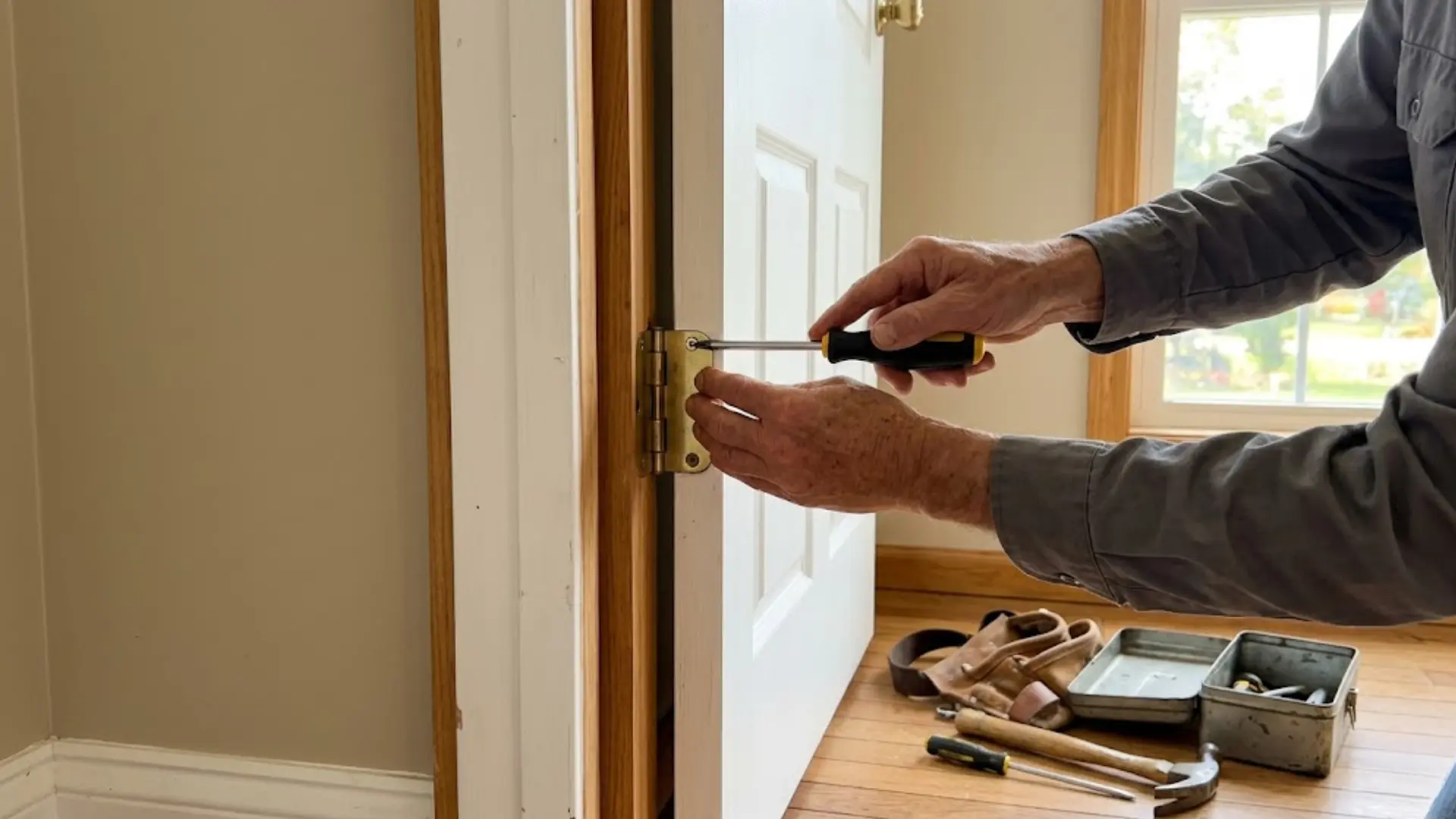
Once you identify the exact cause, you can solve most issues with one of these targeted fixes. Here’s how to handle each one:
Fix 1: Tighten or Replace Hinge Screws
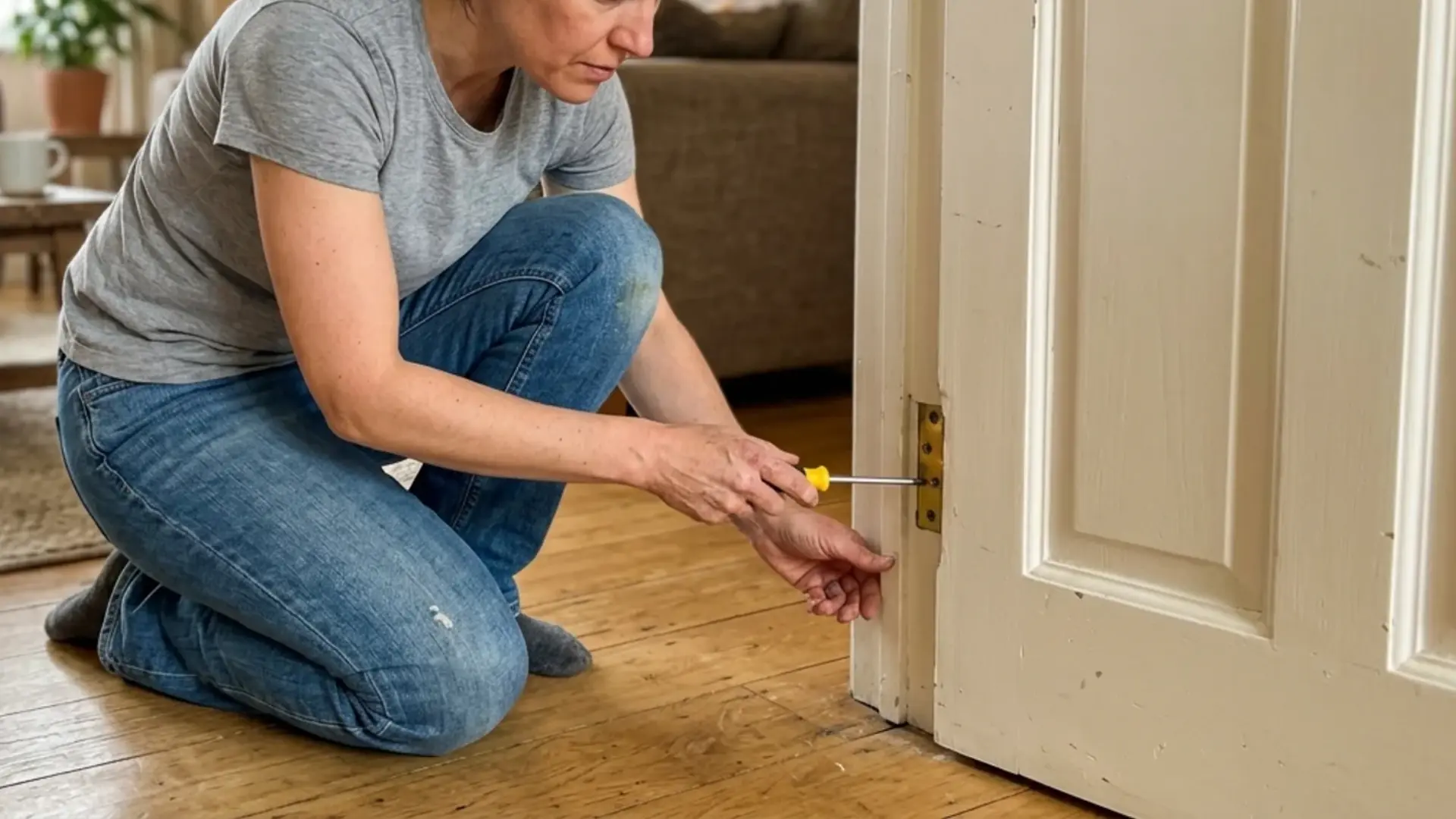
Loose hinge screws are the most common reason a door shifts out of position over time.
As screws work themselves loose from repeated use, the door sags slightly, throwing off its alignment with the frame.
This is usually the first thing worth checking, since it takes only a couple of minutes and often solves the problem outright.
How to do it:
- Open the door and locate all hinge screws
- Tighten any loose screws with a screwdriver
- Replace stripped screws with longer ones that reach the wall stud
- Test the door’s swing and alignment
Fix 2: Shim a Loose Hinge
Even after tightening, some hinges sit too loose in their recess, causing the door to hang unevenly. A small shim behind the hinge tightens this gap and restores proper alignment.
This fix works especially well on older doors where the hinge recess has worn down slightly over years of use.
How to do it:
- Remove the hinge screws and pull the hinge leaf away from the frame
- Insert a thin cardboard or shim material behind the hinge
- Reinsert the hinge and screws
- Test the door’s swing to confirm it hangs evenly
Fix 3: Adjust the Hinge Pin
Sometimes the issue isn’t the screws at all, but a slightly bent hinge pin causing the door to hang unevenly.
This throws off the smoothness of how the door swings and closes.
A minor bend can often be corrected without replacing the entire hinge, saving time and materials.
How to do it:
- Remove the hinge pin using a hammer and a nail or pin punch
- Gently straighten the pin against a flat, solid surface
- Reinsert the pin into the hinge
- Test the door’s movement and adjust further if needed
Fix 4: Reposition the Strike Plate
When the latch doesn’t quite reach the strike plate hole, the door won’t catch properly, even if the door and hinges are otherwise fine.
This is one of the most common fixes after running the lipstick test, since it directly targets the exact misalignment the test reveals.
How to do it:
- Run the lipstick test to confirm the direction of misalignment
- Loosen the strike plate screws slightly
- Shift the plate in the direction indicated
- Retighten the screws and test the latch
Fix 5: File the Strike Plate Hole
If the strike plate is only slightly off, filing the hole slightly is often easier than repositioning the entire plate.
This works well when the latch is close to catching but not quite lining up with the existing hole.
How to do it:
- Use a round or curved metal file
- File evenly around the edge of the strike plate hole
- Test the latch after every few passes
Fix 6: Sand Down a Sticking Edge
A door that rubs or drags against the frame usually has a spot where too much material is making contact. This fix removes just enough wood to restore smooth movement.
Since removing too much wood can create new gaps, this fix requires a slow, careful approach rather than one aggressive pass.
How to do it:
- Identify the exact rubbing spot using a piece of paper slid around the frame
- Sand the area gradually with a sanding block
- Check the fit frequently as you go
- Seal the sanded edge once the door closes smoothly
Fix 7: Fix a Swollen or Warped Door
Humidity and temperature changes can cause a wood door to swell or warp slightly, making it stick or fail to close during certain seasons.
This fix addresses a temporary, weather-related cause rather than a permanent mechanical issue with the hinges or frame.
How to do it:
- Identify the swollen area, usually along the top or side edge
- Lightly sand the swollen section down
- Test the door’s fit as you go
- Seal the sanded area to protect against future moisture
When Is Replacement Better Than Repair?

Sometimes a door is too far gone to fix. Deep cracks, heavy warping, or splitting wood can signal real damage.
Water damage is another red flag, since soaked wood tends to swell and rot from the inside. If a door has been repaired again and again but still will not fit right, that is a problem.
It may no longer match the shape of the frame at all. At this point, it helps to compare repair costs with the cost of a new door.
At this point, compare repair costs with the cost of a new door. Checking standard sizing first prevents a costly measuring mistake.
How to Prevent This Problem
A quick fix today doesn’t mean the problem won’t return unless a few small habits become part of regular home upkeep. These steps help keep doors closing smoothly long-term:
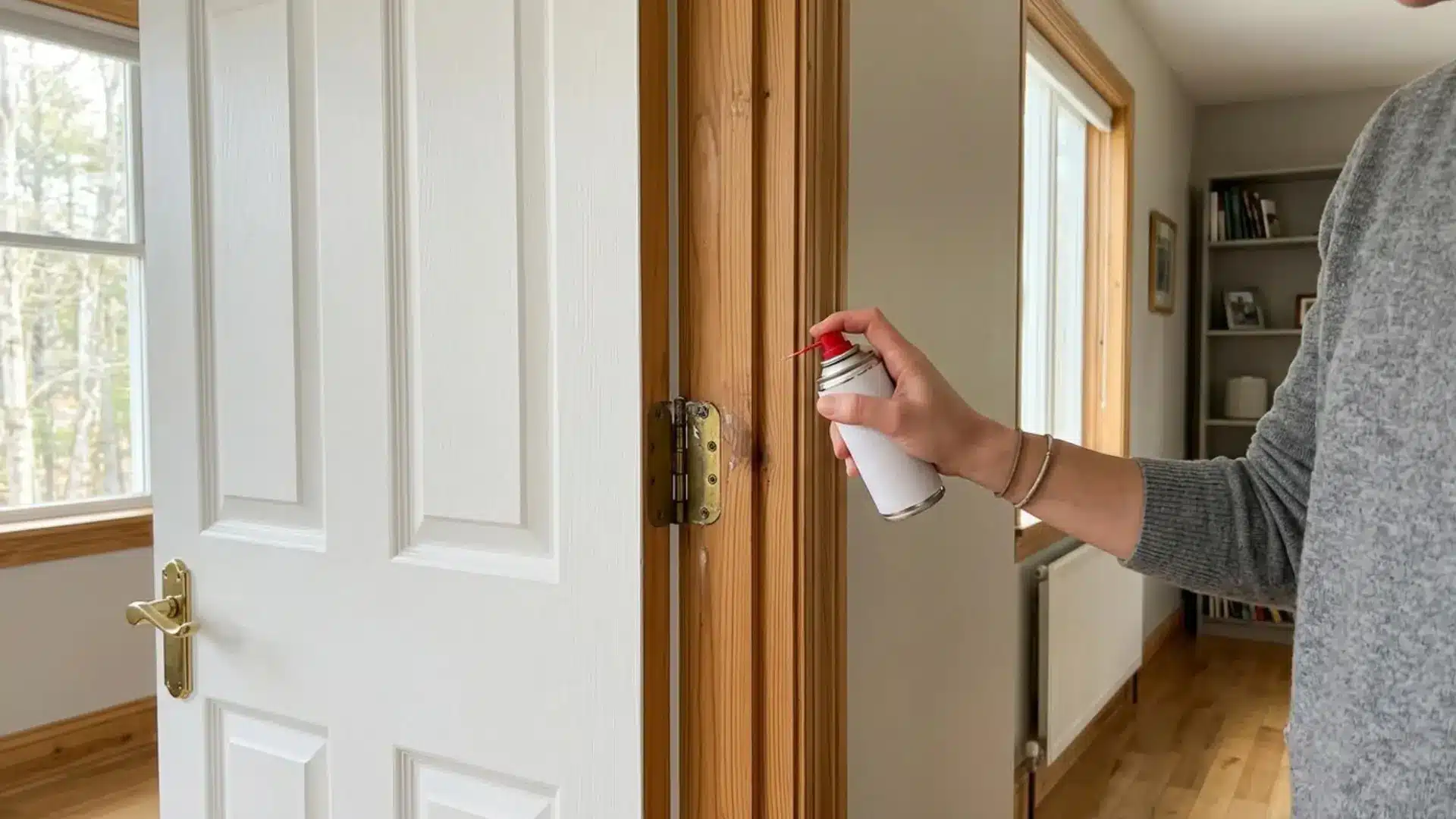
- Lubricate Hinges Periodically: Apply lubricant every six months to keep hinges moving smoothly and prevent rust.
- Check Screws Twice a Year: Tighten any hinge or strike plate screws before they loosen enough to cause misalignment.
- Avoid Slamming Doors: Repeated slamming stresses hinges and frames, speeding up wear over time.
- Watch for Seasonal Changes: Keep an eye on doors during humid or dry seasons, as swelling and shrinking often recur each year.
A few minutes of upkeep now saves a lot of hassle later. Small habits like these make a real difference over time, much like lubricating door hinges keeps a home running smoothly.
Frequently Asked Questions (FAQs)
Why Does My Door Only Stick In Certain Seasons?
Humidity causes wood doors to swell in warmer months and shrink in drier, colder ones. This seasonal shift often explains why sticking comes and goes throughout the year.
Is Adjustment Normal For A New Door?
Yes, new doors often need minor adjustments as hinges settle and seasonal humidity affects the wood during the first few months after installation.
How Much Does A Professional Repair Cost?
Costs typically range from $100 to $300, depending on the issue’s complexity, though frame or structural repairs may cost more.
Closing Thoughts
A stuck door usually comes down to one small cause. Tighten loose screws, shim a hinge, or shift the strike plate. Sand a sticking edge or straighten a bent pin if needed.
Knowing how to fix a door that won’t close can save you a repair call. Check your hinges every few months and tighten screws as needed. This can help prevent bigger issues later on.
Doors need occasional care to keep working well. Save these tips and share them with someone dealing with a stuck door too.