
That sharp squeak every time a door opens can drive anyone up the wall. It is one of those small problems that is easy to put off but simple to fix.
Most squeaky doors come down to one thing: the hinge. Once you know what is going on, the fix is usually quicker than you expect. You do not need special skills or expensive tools to sort it out.
Knowing how to fix a squeaky door can save you time and a lot of frustration. Everything you need, from spotting the cause to keeping it quiet for good, is right here.
What Makes a Door Squeak?
A squeaky door is almost always a hinge problem. The sound happens when metal parts rub against each other under pressure. Over time, hinges collect dust, lose lubrication, and start to corrode.
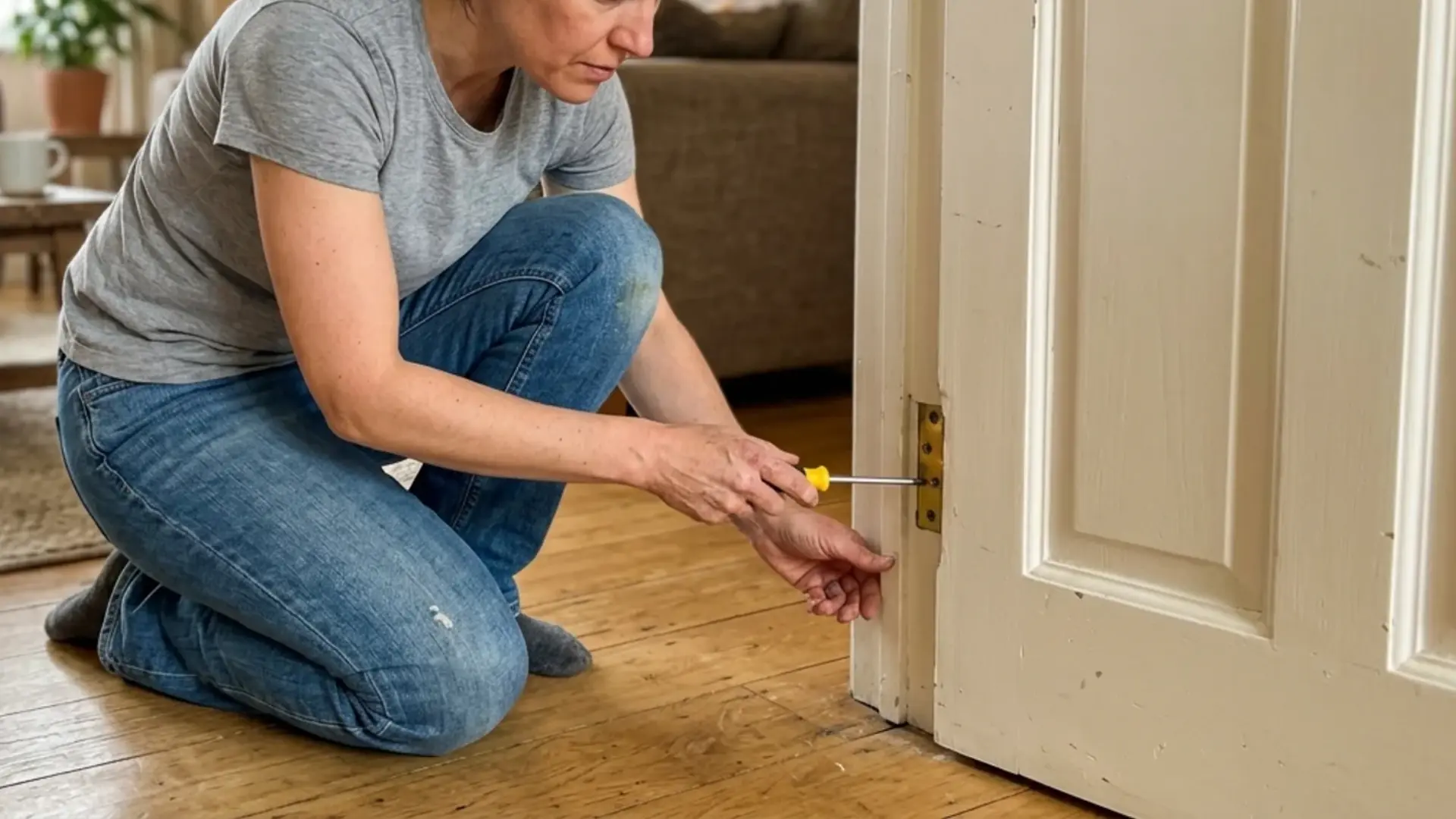
Loose screws can also shift the door’s alignment, adding extra friction. Each of these issues puts stress on the hinge, and that stress turns into noise.
Before reaching for any tools, it helps to know exactly what you’re dealing with. Every cause on this list has a straightforward fix. Identifying the right cause saves you time and gets your door moving quietly again.
Tools and Supplies You May Need
You do not need a full toolbox to fix a squeaky door. Most of these items are already sitting around the house. Here is what you may want to have on hand:
| Category | Items | Quantity |
|---|---|---|
| Lubricants | Silicone spray, white lithium grease, household oil | 1 can or bottle each |
| Cleaning Supplies | Clean cloth, mild cleaner, small brush | 2–3 cloths, 1 bottle, 1 brush |
| Basic Repair Tools | Screwdriver, hammer, pliers | 1 of each |
| Optional Products for Stubborn Squeaks | Petroleum jelly, bar soap, or wax, commercial hinge lubricant | Small amount as needed |
Having the right supplies ready before you start makes the whole process faster. You will not need every item on this list, just the ones that match your specific situation.
How to Fix a Squeaky Door: Step-by-Step Guide
Fixing a squeaky door hinge does not require any special skills or expensive products. A little cleaning and the right lubricant can solve the problem in under thirty minutes. Follow these steps to get it done:
Step 1: Locate the Noisy Hinge
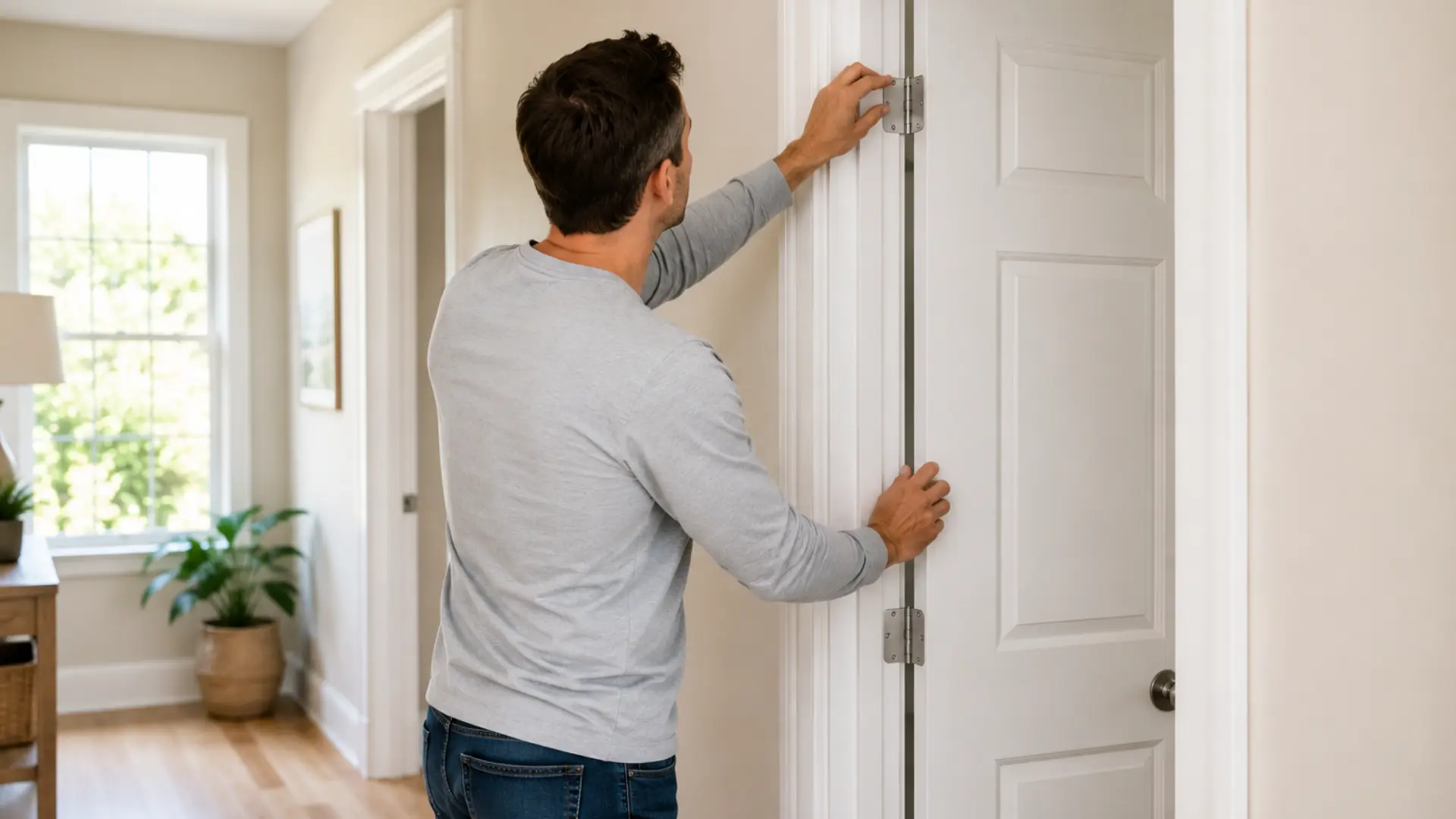
Open and close the door slowly while watching each hinge carefully. The squeaky one will usually show visible wear, rust, or dirt buildup.
Press lightly on the door as it moves to feel where the resistance comes from. Once you spot the culprit, mark it with a small piece of tape. That way, you do not lose track when you start working.
Step 2: Clean Dirt and Debris
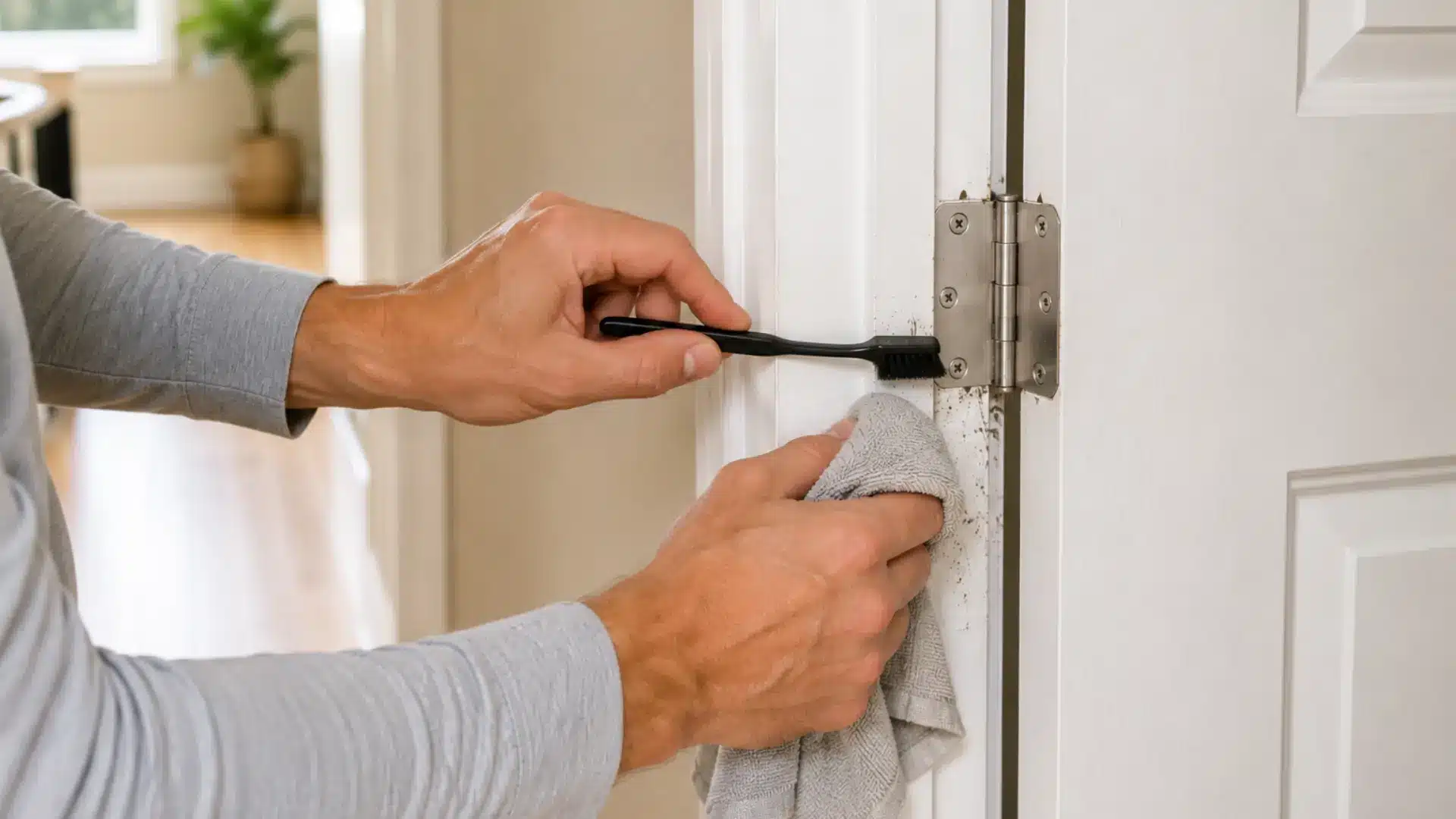
Use a small brush or dry cloth to wipe around the hinge thoroughly. Remove any dust, grime, or old grease buildup from the hinge pin and plates.
A mild cleaner works well for stubborn dirt that won’t budge easily. Make sure the hinge is completely dry before moving to the next step. Moisture left behind can interfere with the lubricant.
Step 3: Apply Lubricant to the Hinge
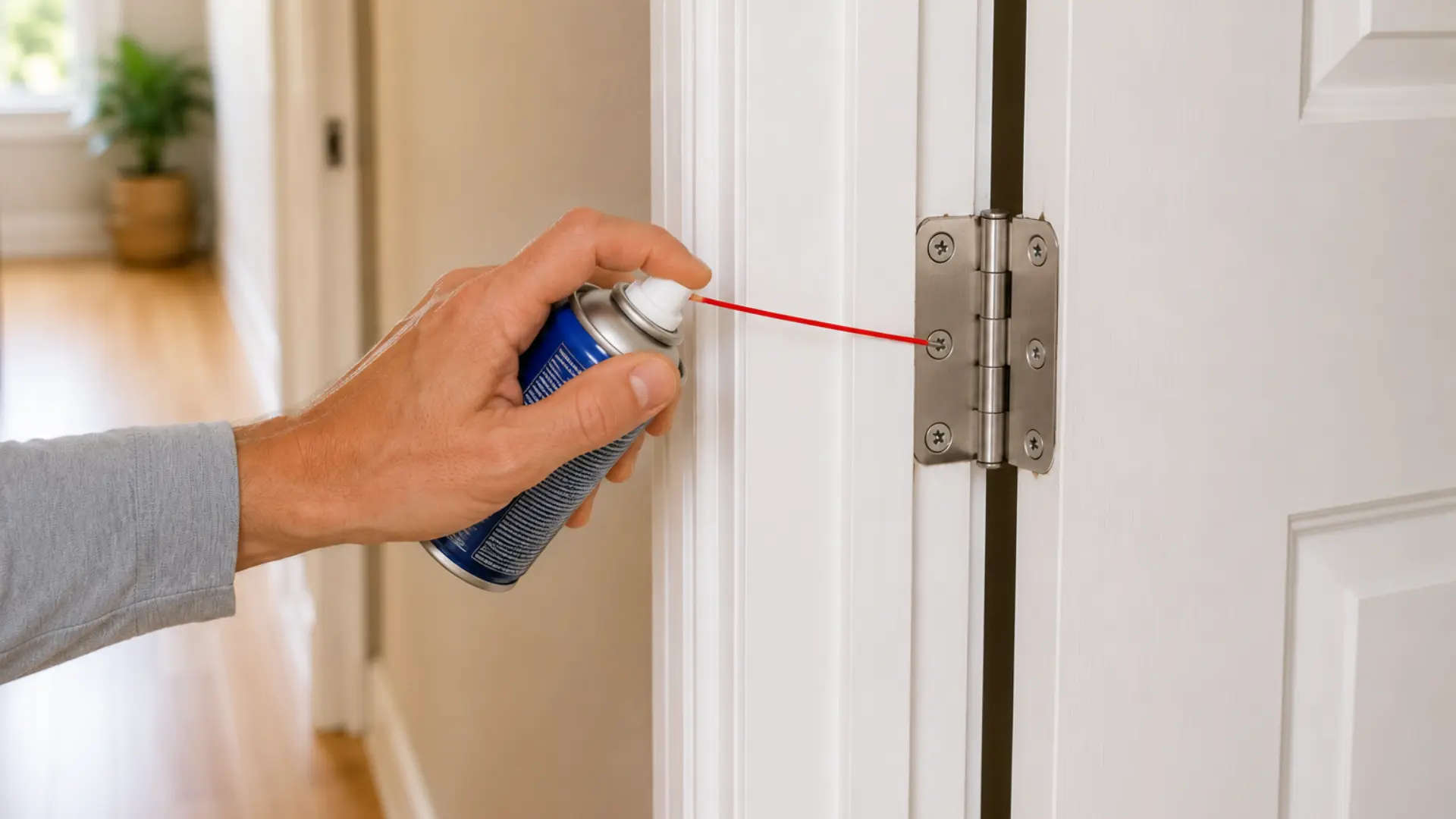
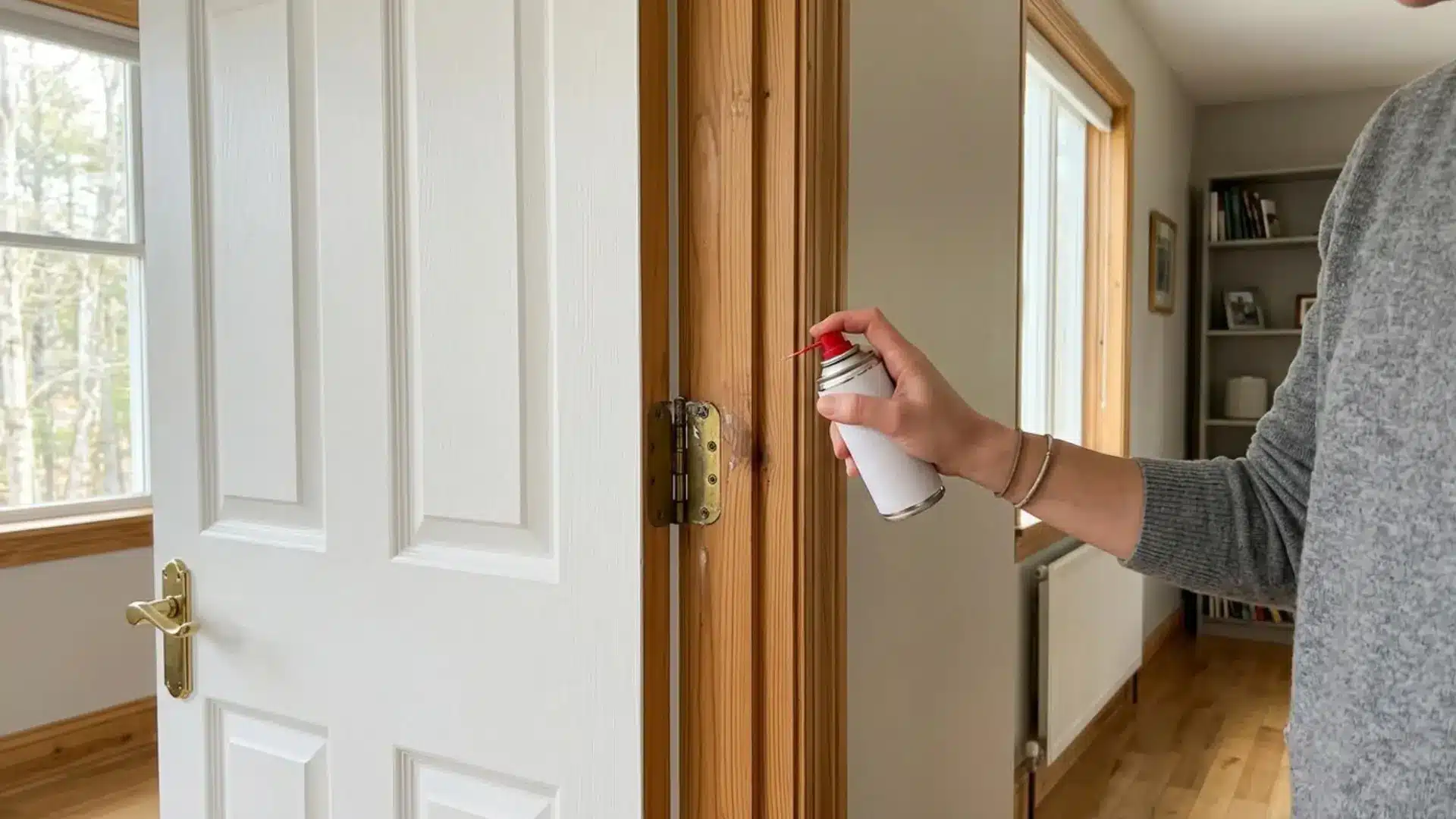
Pick a lubricant that suits what you have available at home. Silicone spray, white lithium grease, or even household oil all work well.
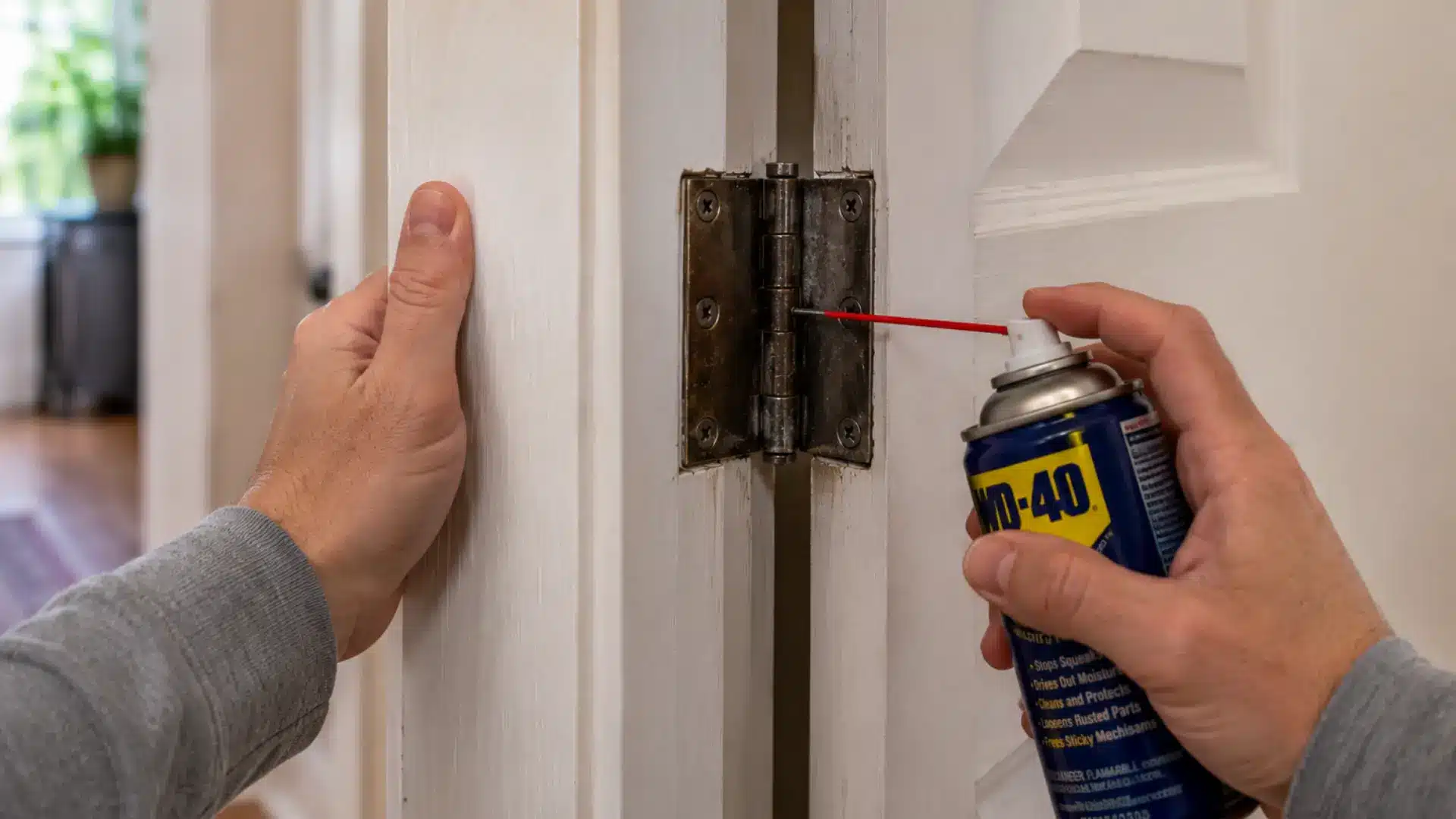
Apply a small amount directly to the hinge pin and along the hinge plates. Work it in by moving the door back and forth a couple of times. A little goes a long way here.
Step 4: Open and Close the Door Several Times
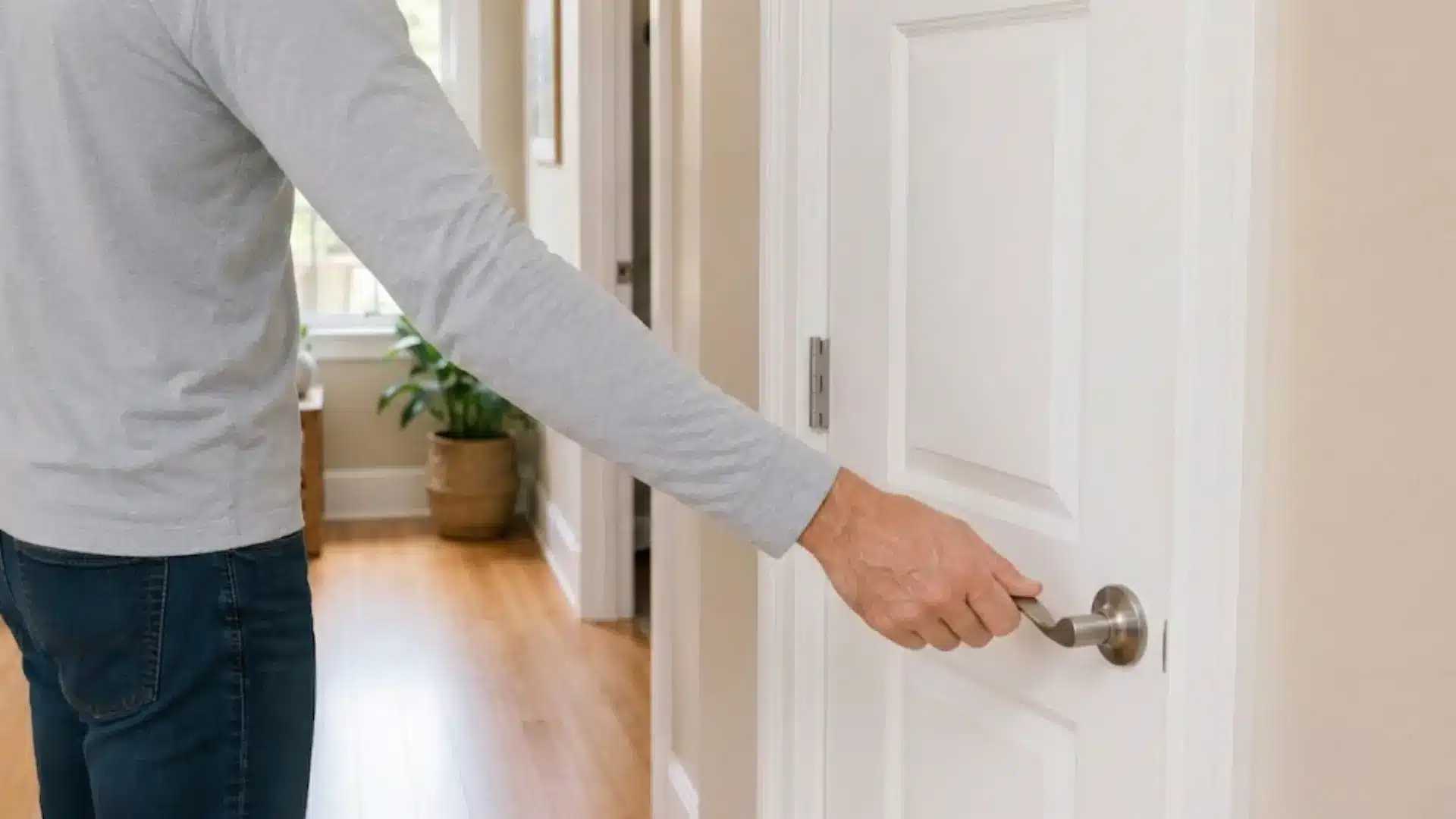
Move the door slowly at first, then gradually work up to a normal pace. This helps the lubricant spread evenly across all the moving parts inside the hinge.
Do this around five to ten times for best results. You should start to notice the squeak fading with each pass. This step makes a real difference in how well the fix holds.
Step 5: Wipe Away Excess Lubricant
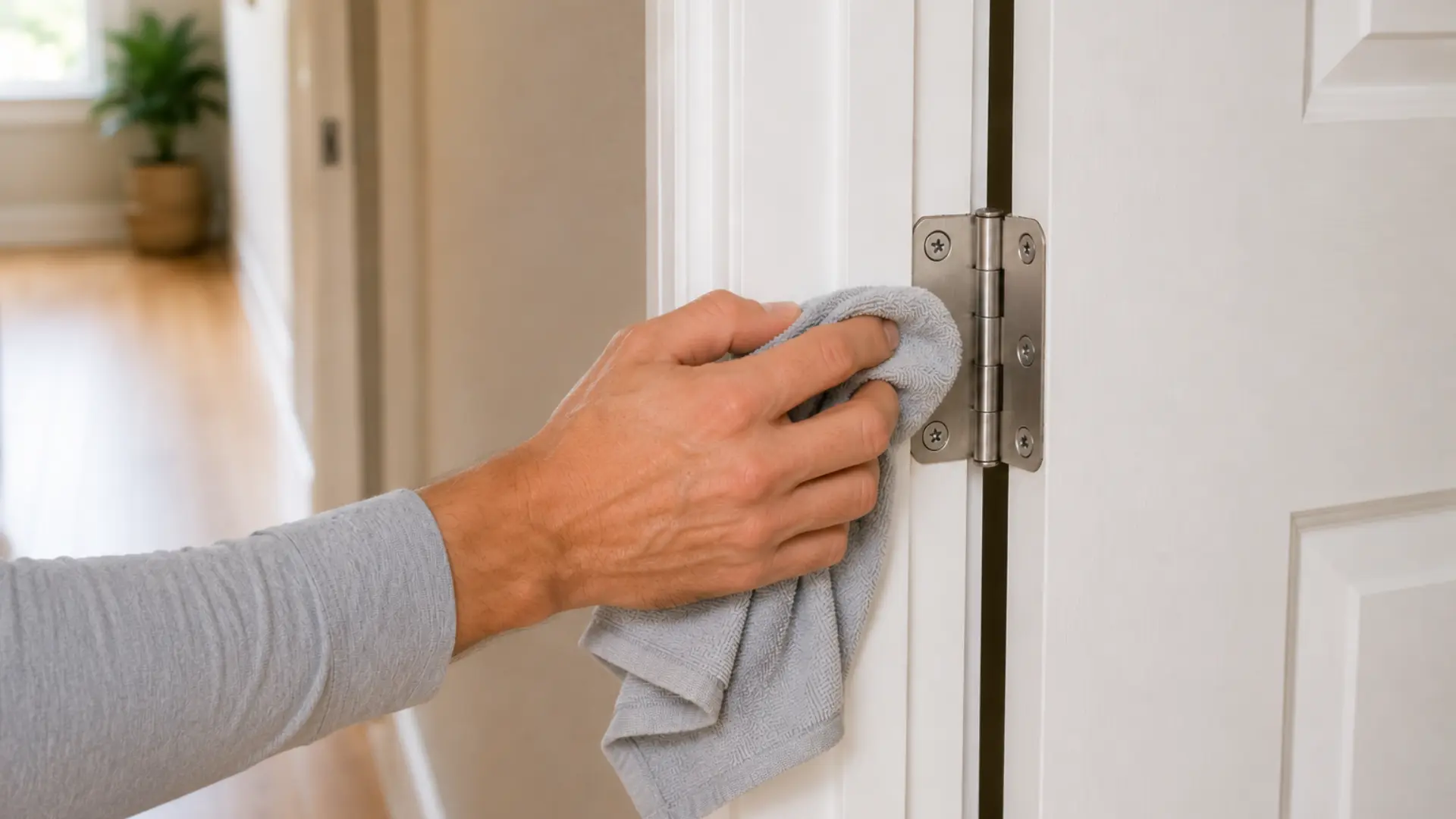
Too much lubricant left on the surface attracts dust and dirt over time. Use a clean, dry cloth to wipe away any excess from the hinge and surrounding area.
Pay close attention to the door frame and the floor directly below. Keeping things clean now means the fix lasts longer. You will not have to redo this job anytime soon.
Step 6: Test the Door Again
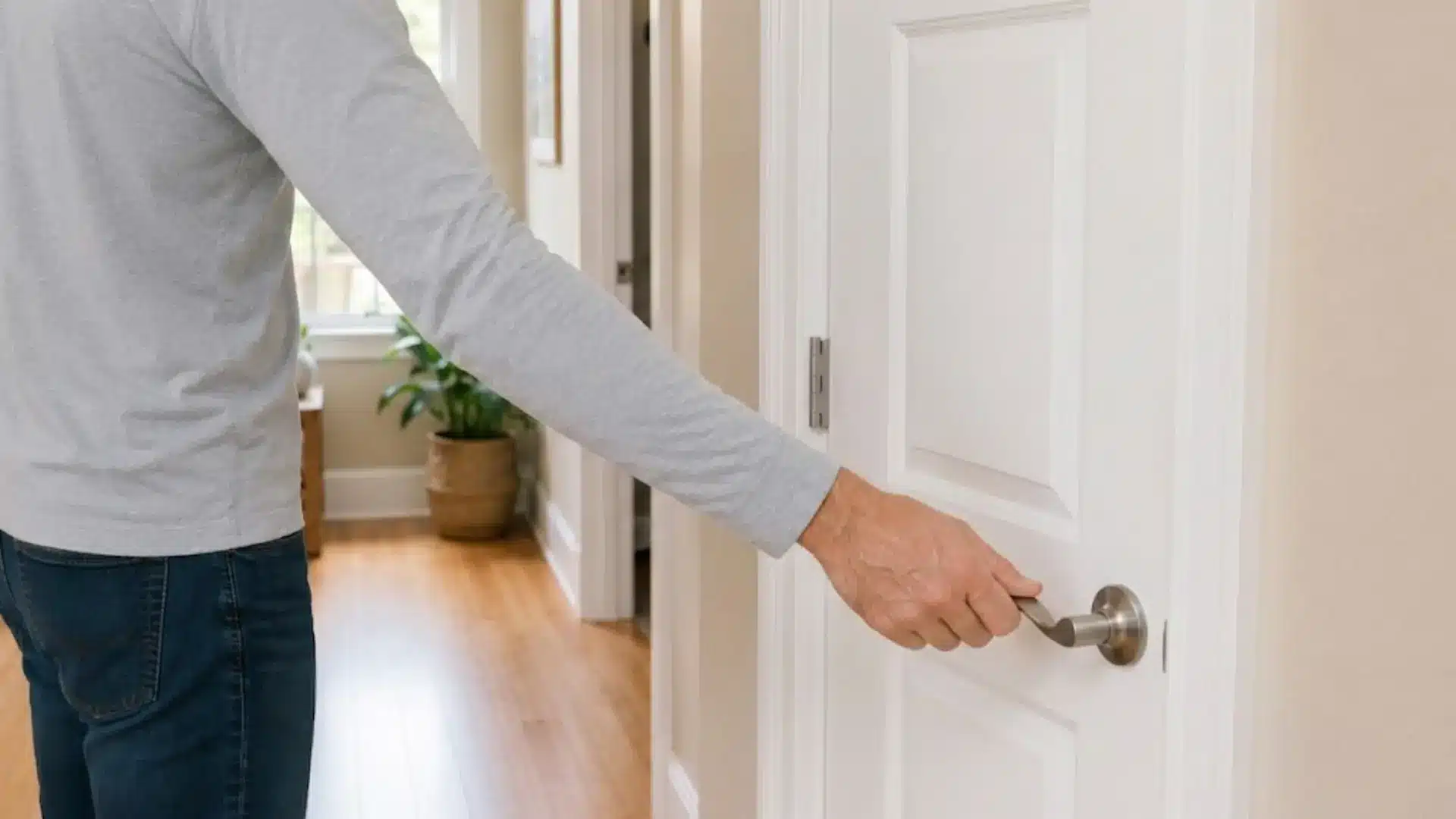
Open and close the door several more times to check the final result. The squeak should be completely gone or at least significantly reduced by now.
If you still hear some noise, apply a second small amount of lubricant and repeat the process. Stubborn squeaks may need one more round of cleaning before they fully settle.
Most doors respond well after two rounds.
Best Lubricants for a Squeaky Door Hinge
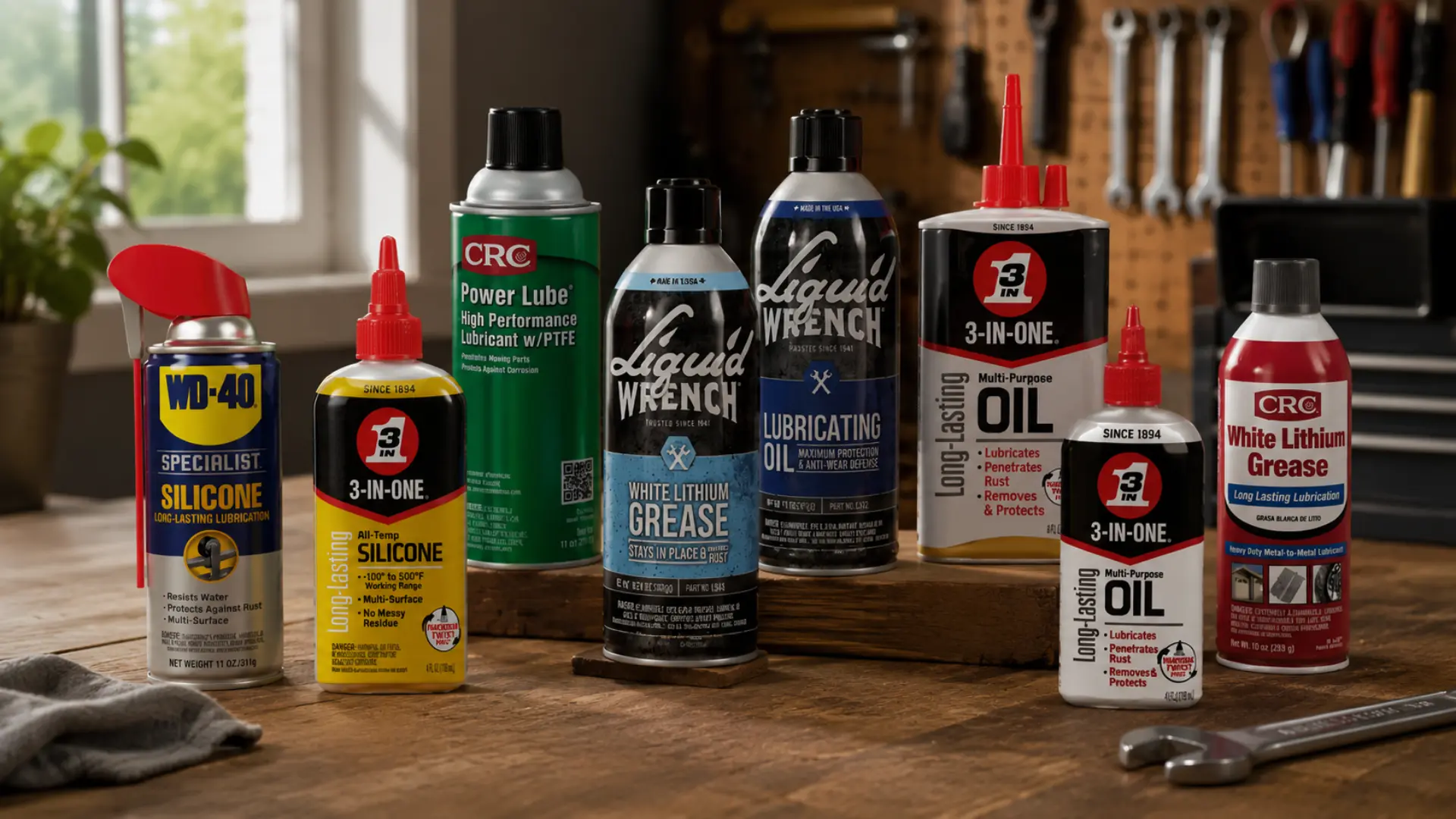
Not every lubricant works the same way on a squeaky door hinge. The right pick depends on how bad the squeak is and what type of hinge you are dealing with. Here are the top options worth knowing about:
Silicone Spray
Silicone spray dries fast, leaves no sticky residue, and works on both metal and non-metal surfaces. With regular use, it can keep a hinge quiet for up to six months. Here are three reliable options to look at:
- WD-40 Specialist Silicone Lubricant: a fast-drying, water-resistant formula that protects against corrosion and works across extreme temperatures.
- 3-IN-ONE All-Temp Silicone Oil: a clear, quick-drying silicone oil that leaves no residue and works safely on metal, rubber, and plastic.
- CRC Power Lube with PTFE: a silicone-based spray with PTFE for extra lubrication power on stubborn or high-friction hinges.
Silicone spray is a smart first step before reaching for heavier products. It handles most everyday squeaks without making a mess.
White Lithium Grease
White lithium grease is thicker than spray lubricants and stays in place longer on metal-to-metal contact points. A single application can keep a hinge well-lubricated for up to a year or more. Here are three solid picks:
- CRC White Lithium Grease: a multi-purpose spray grease recommended for door hinges, latches, and metal-to-metal applications.
- Permatex White Lithium Grease: an all-purpose lubricant that reduces friction and protects against rust on metal and plastic surfaces.
- Liquid Wrench White Lithium Grease: a heavy-duty grease that will not melt, run, or freeze, built for auto, home, and shop use.
White lithium grease is a go-to for older or heavier doors that need more than a light spray. It holds up well under regular use and pressure.
Household Oil
Household oil is the most accessible option and works well for light squeaks on interior doors. It gets into tight hinge spaces quickly and is easy to apply with precision. These are three dependable choices:
- 3-IN-ONE Multi-Purpose Oil: a classic household lubricant that cleans, lubricates, and protects in one simple application.
- 3-IN-ONE Multi-Purpose Oil with Marksman Twist Spout: the same trusted formula with a precision tip for cleaner, more controlled application on hinges.
- Liquid Wrench Lubricating Oil: a light-duty oil that frees stuck parts and stops squeaks on hinges, chains, and moving hardware.
Household oil is a practical short-term fix that most people already have at home. Results typically last a few weeks to a couple of months before a touch-up is needed.
Graphite-Based Lubricants
Graphite lubricants are dry, so they do not attract dust or dirt after application. They are a low-maintenance pick for hinges in high-traffic areas. Here are three options worth considering:
- B’laster Graphite Dry Lubricant: a fast-drying graphite spray that creates a long-lasting film for locks, hinges, and high-temperature applications.
- B’laster Dry Lube: a PTFE-based dry lubricant that reduces friction on hinges, door tracks, and cables without leaving an oily mess.
- WD-40 Specialist Dry Lube with PTFE: a graphite-based spray that dries clean and resists dust on metal, wood, and fabric surfaces.
Graphite lubricants are especially useful on interior doors where mess and buildup are a concern. A single application can last several months depending on how often the door is used.
Household Items You Can Use in an Emergency
Temporary fixes are best for minor squeaks when you have no lubricant on hand. Here is when they make the most sense:
| Household Item | How to Use | How Long It Lasts | Best For |
|---|---|---|---|
| Petroleum Jelly | Rub a small amount directly onto the hinge pin and plates | Two to four weeks | Interior doors with light squeaking |
| Bar Soap | Rub a dry bar of soap along the hinge pin and moving parts | One to two weeks | Quick fixes when nothing else is available |
| Cooking Oil | Apply a few drops to the hinge pin using a cloth or dropper | One to two weeks | Light squeaks on interior doors |
| Candle Wax | Rub a candle or wax block along the hinge pin and edges | Two to three weeks | Dry indoor hinges with minimal movement |
These fixes are easy to apply and require nothing more than what you already have at home. They buy you time, but a proper lubricant will always deliver cleaner, longer-lasting results.
What to Do If Lubrication Doesn’t Stop the Squeak
Sometimes lubrication is not enough to fix a squeaky door hinge. The problem could be loose screws, a bent hinge pin, or built-up rust.
It could also be poor door alignment, putting uneven pressure on the hinges. In these cases, you need to go a step further. Tighten any loose screws first, since that alone fixes a surprising number of squeaks.
If the hinge pin looks bent or worn, replacing it is a quick and inexpensive fix. Rust needs to be sanded or treated before any lubricant will work properly.
When none of these steps solve the problem, checking the door alignment is the next logical move.
Signs It’s Time to Replace the Hinge
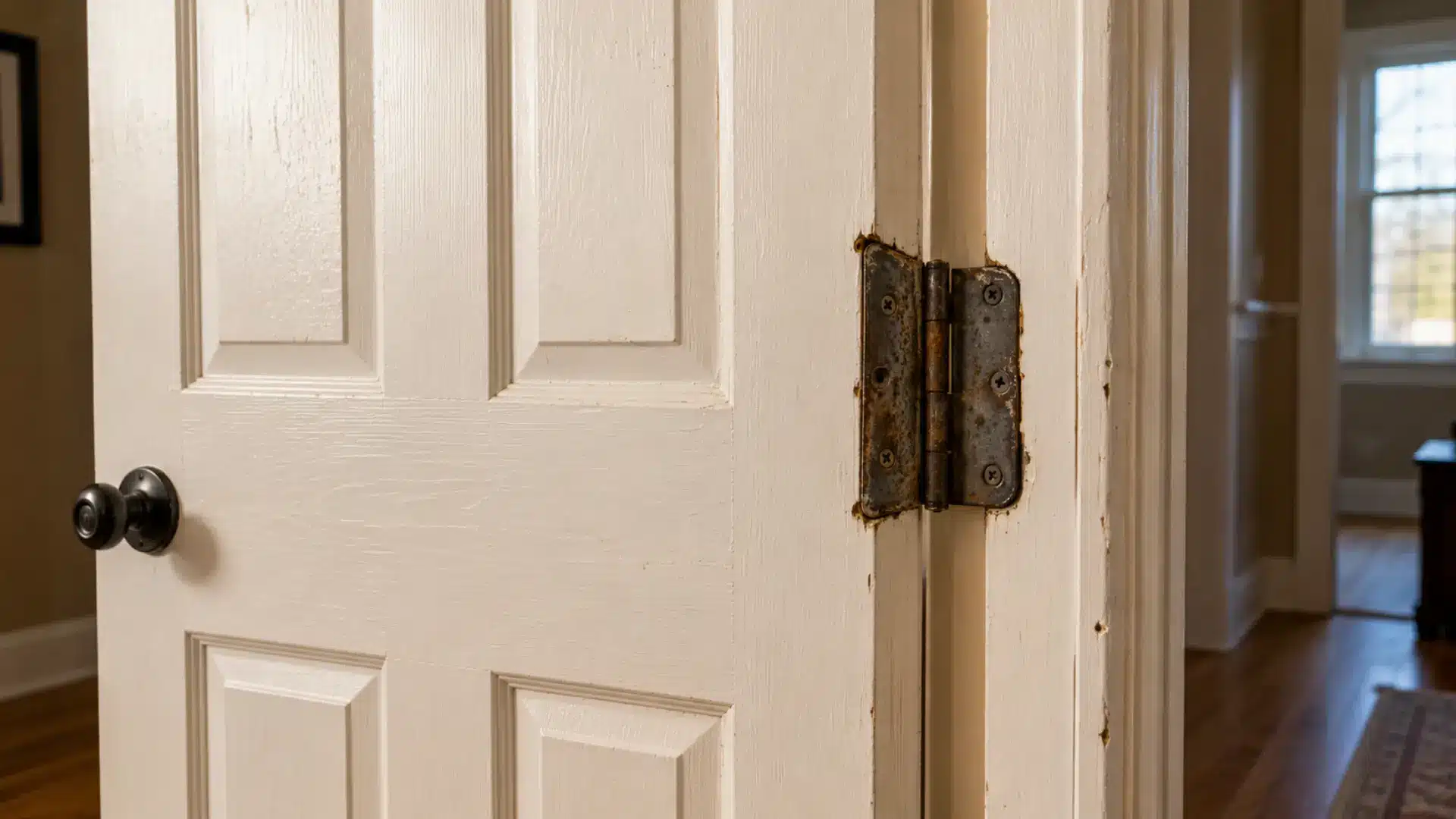
Most squeaky door hinges can be fixed with a little lubrication or tightening. But some hinges are simply too far gone to repair. Here are the signs that tell you it is time to replace rather than fix:
- The hinge has visible rust damage that cleaning and lubricating cannot clear up.
- The hinge plate or pin looks bent, warped, or no longer sits flush against the door or frame.
- The squeak keeps coming back even after multiple rounds of cleaning and lubrication.
- The hinge plates feel loose or wobbly even after the screws have been tightened.
- The door drags, sticks, or refuses to open and close smoothly despite all repair attempts.
Replacing a hinge is a straightforward job that most people can handle without professional help. Catching these signs early saves you time and prevents bigger door problems down the line.
Common Mistakes When Fixing a Squeaky Door
Even a simple fix can go wrong if you skip a few basic steps. Knowing what to avoid saves you from dealing with the same squeak all over again. Here is a breakdown of the most common mistakes and how to avoid them:
| Mistake | What Happens | How to Avoid It |
|---|---|---|
| Using too much lubricant | Attracts dust and dirt, making the hinge worse over time | Apply a small amount and wipe away any excess immediately |
| Ignoring dirt and debris | Lubricant cannot work properly over grime and buildup | Always clean the hinge thoroughly before applying anything |
| Choosing the wrong lubricant | Short-term relief with faster wear and more frequent reapplication | Match the lubricant type to the hinge material and usage level |
| Skipping hinge inspection | Missing the actual cause means the squeak keeps coming back | Check each hinge closely before reaching for any product |
| Forgetting to tighten screws | Loose hardware causes friction that no lubricant can fix | Test every screw before and after applying lubricant |
Taking a few extra minutes to do this right the first time makes a real difference. A careful approach means fewer repeat fixes and a quieter door that stays that way longer.
How to Prevent a Squeaky Door in the Future
Fixing a squeak is one thing, but keeping it from coming back is even better. A little regular attention goes a long way in keeping your door hinges in good shape. Here is what you can do to stay ahead of the problem:
- Clean hinges regularly: remove dust, dirt, and old lubricant buildup before they cause friction.
- Lubricate once or twice yearly: this keeps hinges moving smoothly as part of your regular home maintenance routine.
- Inspect for wear and rust: catching small issues early stops them from turning into bigger problems.
- Keep moisture away: wipe hinges dry after cleaning and avoid excess water near door frames.
- Tighten loose screws immediately: small shifts in hardware are often the first sign of trouble ahead.
Prevention takes far less time and effort than dealing with a fully developed squeak. A quick check every few months is all it takes to keep your doors moving quietly.
The Bottom Line
Squeaky doors are more fixable than they seem. Now that you know how to fix a squeaky door hinge, the solution is closer than you think. Start with the simplest fix and work your way up only if needed.
Clean the hinge, apply the right lubricant, and check for loose screws. That covers most squeaks without any extra effort.
A little maintenance every few months keeps the problem from coming back. Your doors can stay quiet with almost no time or money spent. Tell us what solved your squeak in the comments below.