
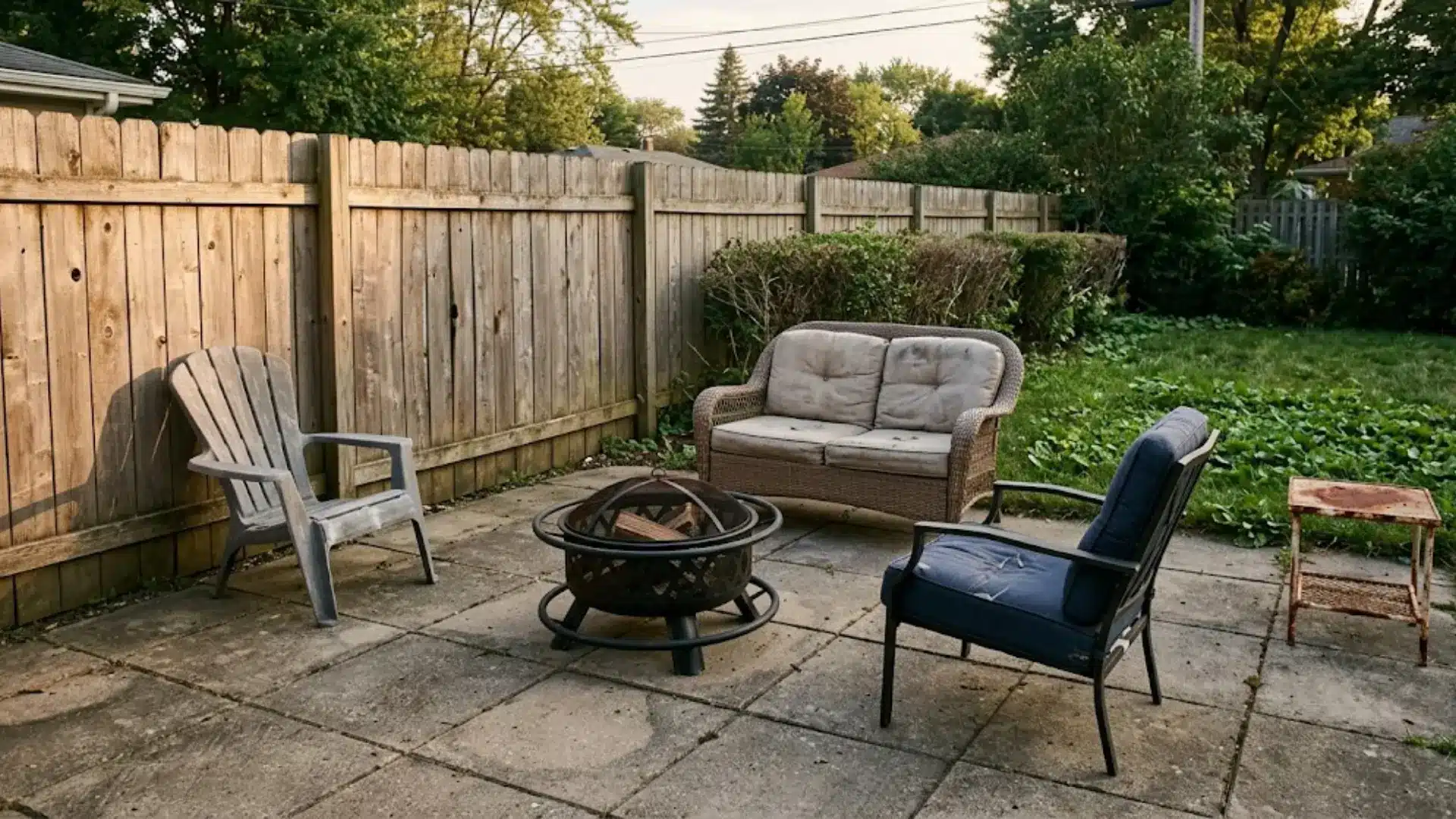
A patio with a great fire pit and zero plan still feels off somehow, and that disconnect usually comes down to furniture placement.
Indoors, we obsess over flow and conversation zones. Outdoors, pieces often get pushed against a fence and called done.
Learning how to arrange outdoor furniture changes that entirely, turning a flat backyard into a space people actually want to linger in, talk in, and host in.
We are covering layout planning, the principles behind arrangements that feel natural, space-specific ideas, mistakes worth dodging, and outdoor furniture layout plan examples to borrow from.
Start with Your Outdoor Space Assessment
Grab a tape measure before you grab any furniture.
Note your patio dimensions, door swing, steps, railings, and any built-in grills, fire pits, planters, or pools that eat into usable space.
Next, study the shape you are working with, whether it is a rectangle, square, narrow patio, L-shaped deck, wraparound porch, or circular seating area, since shape dictates how pieces can flow together.
Finally, map out permanent features like a fireplace, outdoor kitchen, pergola, pool, garden beds, water feature, or a view worth framing, because these anchor every decision that follows.
Decide How You Want to Use the Space
Before picking out a single chair, get clear on how the space will actually be lived in. Most backyards fall into one of a few categories below, and knowing your primary use shapes every furniture choice that follows.
| Purpose | Key Furniture | Best For |
|---|---|---|
| Outdoor Dining | Dining table, dining chairs | Family meals and casual dinner parties |
| Outdoor Living Room | Sofa, sectional, coffee table | Evening unwinding and everyday lounging |
| Relaxation Zone | Chaise lounges, hammocks, daybeds | Solo downtime and afternoon naps |
| Entertainment Space | Fire pit, bar seating, outdoor TV | Hosting friends and weekend get-togethers |
| Multi-Purpose Space | Zoned dining, lounge, and play areas | Households needing one space to do it all |
If your space needs to do it all, zoning is the answer, rather than cramming every function into a single open area. A dining zone near the kitchen, a lounge area angled toward the view, and a separate play corner for kids let one backyard serve several roles without feeling cluttered or chaotic.
Create a Focal Point First
Every well-arranged outdoor space starts with one clear anchor, and the furniture simply follows its lead.
Your focal point could be a fire pit, an outdoor fireplace, a dining table, a scenic view, a water feature, a garden bed, or even the pool itself.
Once that anchor is chosen, furniture should face it or curve around it rather than scatter randomly across the patio.
A few ways this plays out in real layouts:
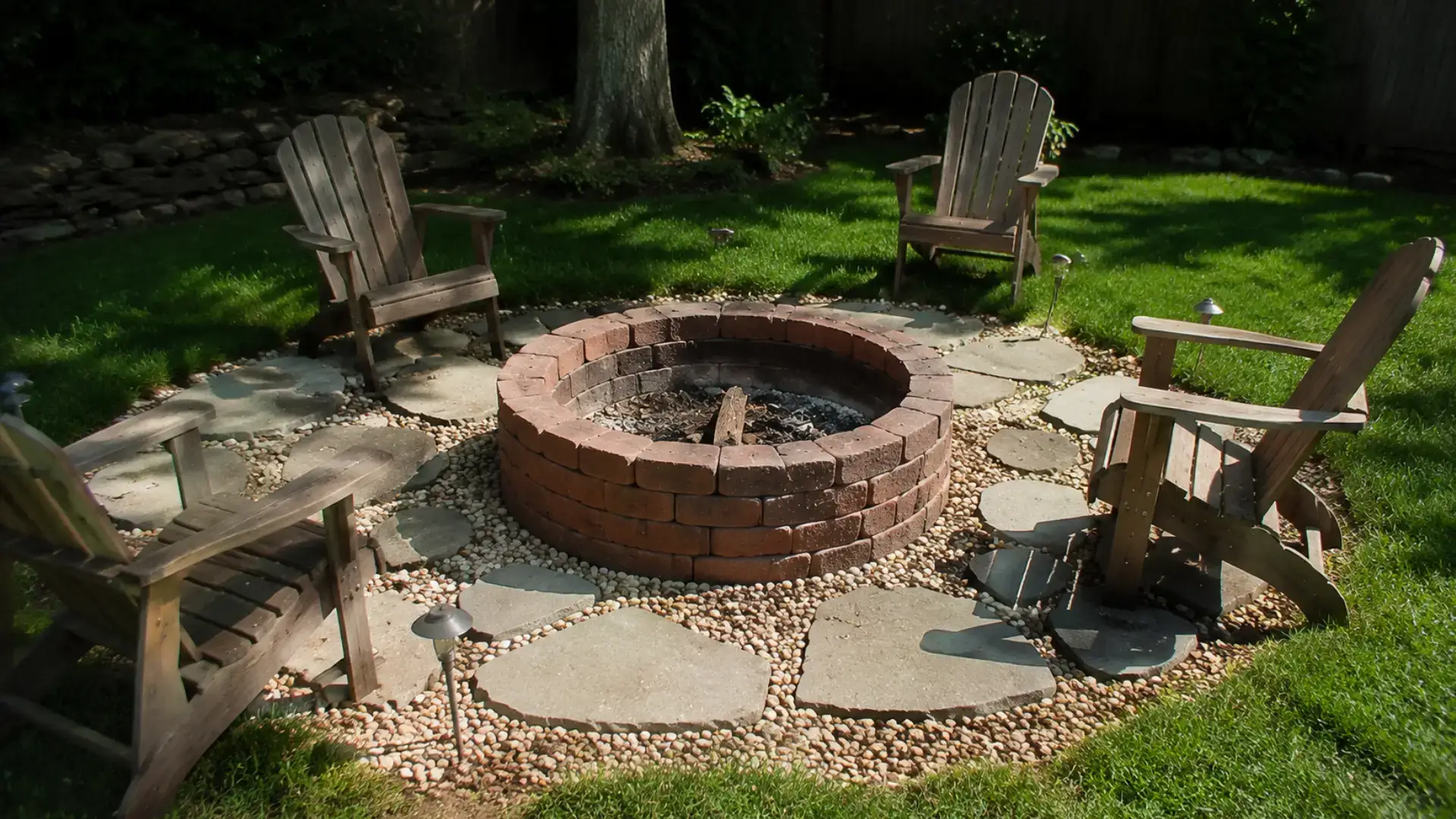
- Seating arranged in a loose circle or semicircle around a fire pit so everyone can see the flames and each other.
- Chairs angled toward a view instead of lined up facing one another, letting the scenery do the talking.
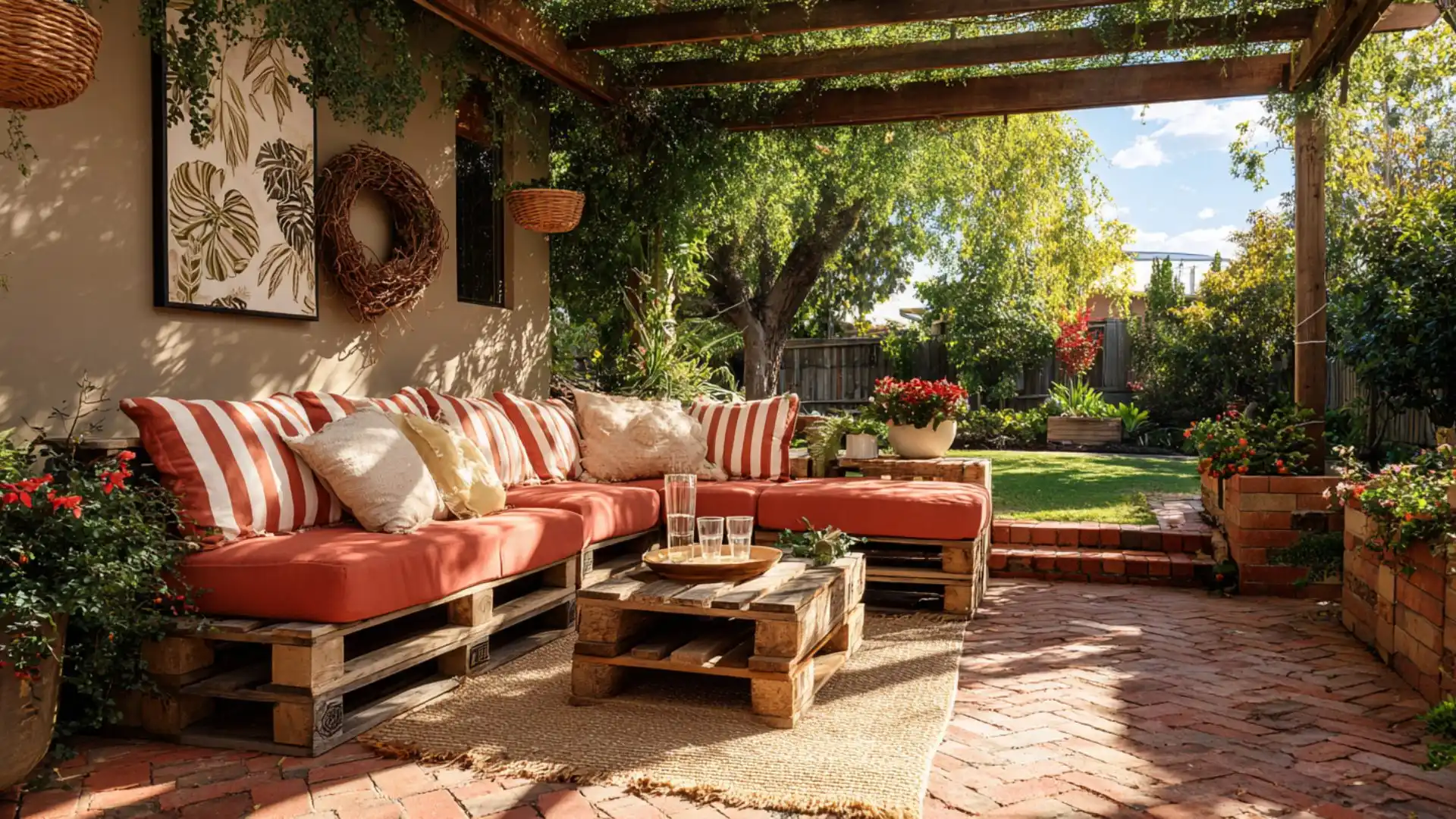
- A sectional or lounge set positioned with its back to the house, opening up toward a garden or water feature.
- Dining chairs pulled close to all sides of the table, keeping the meal itself as the focal point of the gathering.
Without this anchor, even beautiful furniture ends up feeling directionless, like a room with no front and back. A defined focal point gives every other piece a reason for where it sits.
Follow Basic Outdoor Furniture Layout Principles
A handful of core principles separate a layout that feels intentional from one that feels accidental. These rules apply whether you have a small balcony or a sprawling backyard.
1. Arrange Furniture for Conversation
Seating that faces inward invites genuine conversation rather than forcing everyone to twist around.
A few arrangements that work well:
- Chairs facing each other directly across a coffee table.
- A U-shaped setup for larger groups and bigger patios.
- An L-shaped arrangement that tucks neatly into corners.
- A circular layout around a fire pit or low table.
- A semi-circle that opens toward a view or focal point.
2. Avoid Pushing Everything Against the Walls
Lining furniture along the edges of a patio might seem to save space, but it usually does the opposite.
Floating furniture toward the center creates better balance, makes conversations feel more intimate, and actually improves how people move through the space.
A sectional pulled a few feet off the wall, with a rug or pavers anchoring it, instantly looks more curated and lived-in than one pushed flush against the wall.
3. Maintain Comfortable Walking Paths
Spacing is easy to overlook until someone is squeezing between a chair and a planter.
Aim for these general guidelines:
- 30 to 36 inches for main walkways
- 18 inches between seating and coffee tables
- Enough clearance to pull out dining chairs without bumping the table behind them
4. Keep Tables Within Easy Reach
A coffee table or side table only works if someone can actually reach it without leaning.
Keep coffee tables close enough to a sofa that drinks and books stay within arm’s length, and position side tables right beside individual chairs rather than across the seating area.
Near a fire pit, side tables or small stools placed just outside the seating circle give guests a spot to rest a glass without crowding the flames.
Outdoor Furniture Layout Plans for Different Spaces
Every patio size calls for its own approach, since what works on a sprawling backyard deck will only crowd a narrow balcony.
Below are practical layout plans, along with diagrams showing exactly how the pieces fit together.
Layout 1: Small Patio
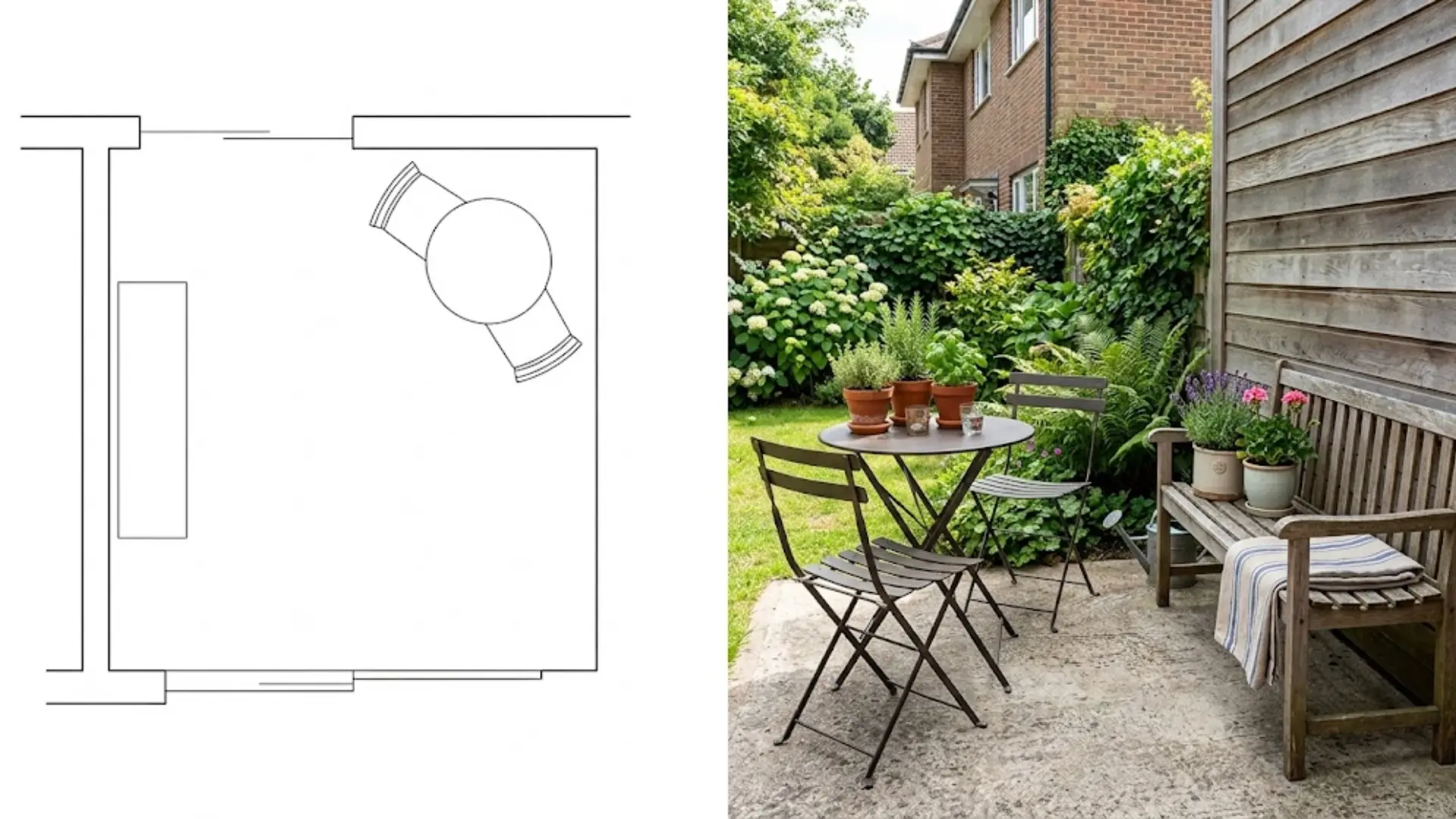
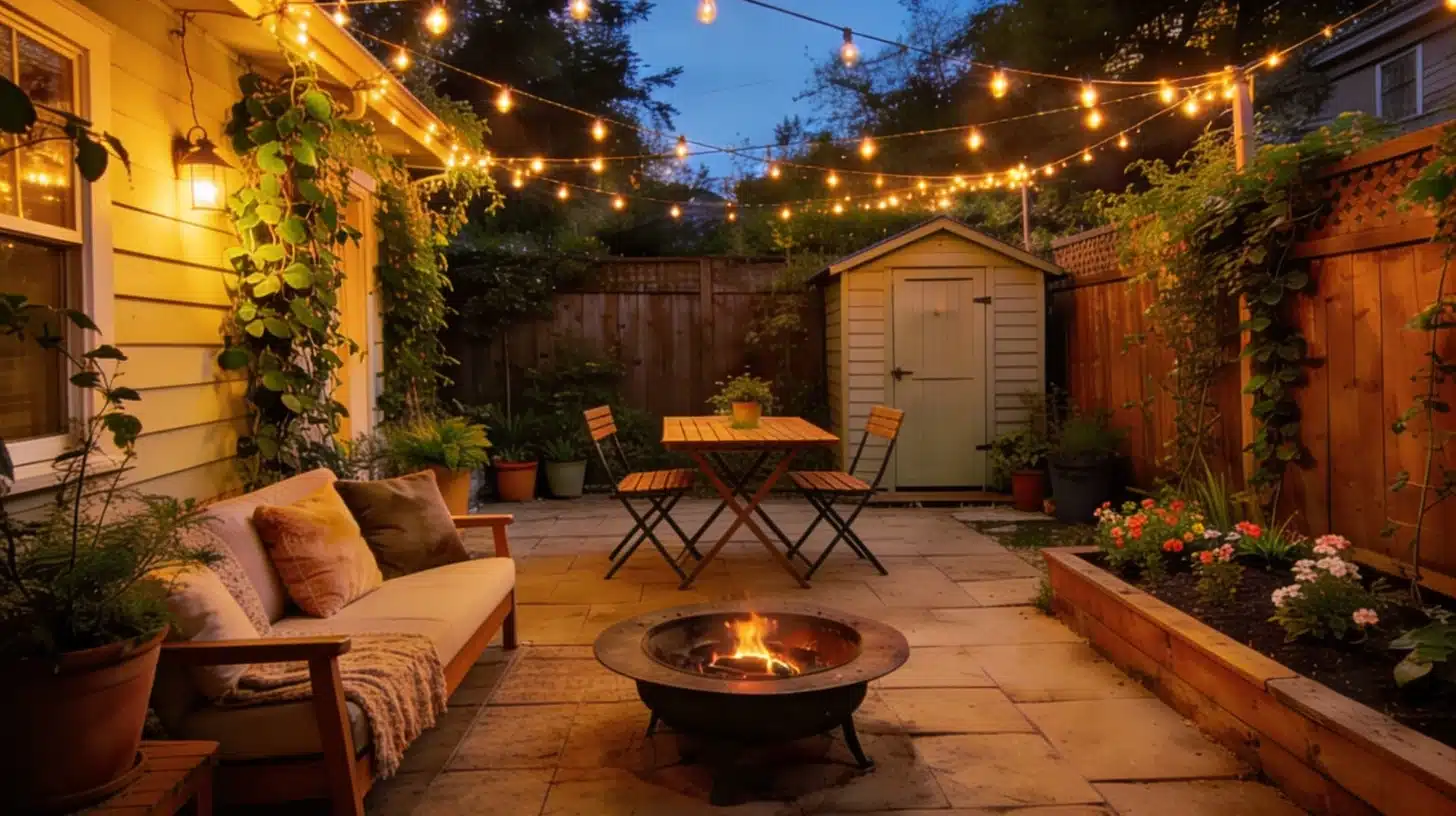
Small spaces reward restraint. A bistro set with two chairs keeps the footprint tight while still offering a place to sit, and foldable furniture means the area can be cleared for other uses when needed.
Bench seating tucked into a corner saves floor space compared to two separate chairs.
The key is to anchor everything in one corner rather than spread pieces thin across the whole patio, which only makes a small space feel emptier and less defined.
Layout 2: Medium Patio
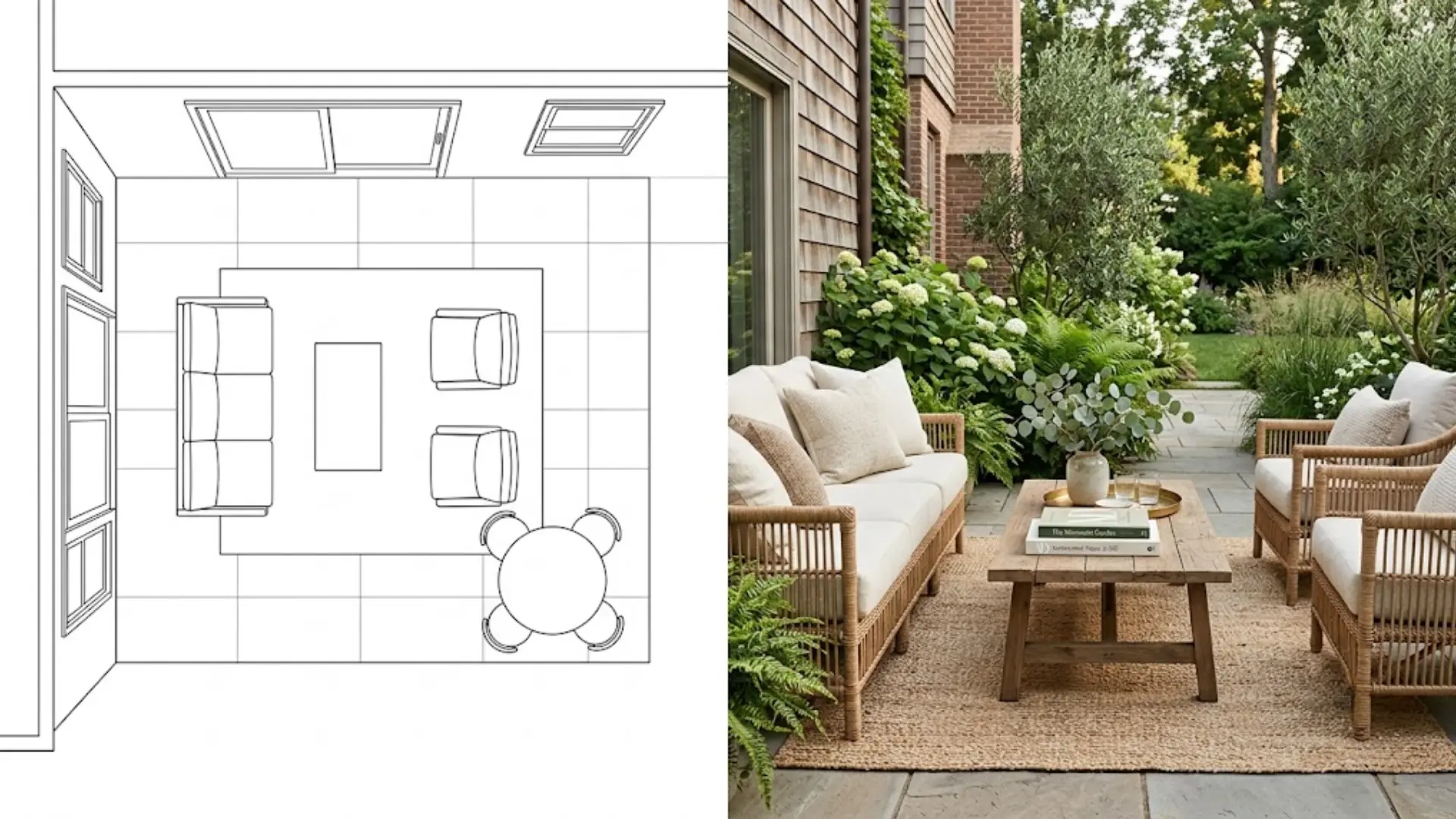
A medium-sized patio has enough space to separate functions without sacrificing intimacy.
A conversation set with a coffee table forms the core lounging zone, while a small dining corner sits nearby for meals.
Accent chairs add flexibility for extra seating, and an outdoor rug ties the whole arrangement together visually, signaling where one zone ends and another begins even without walls.
Layout 3: Large Patio
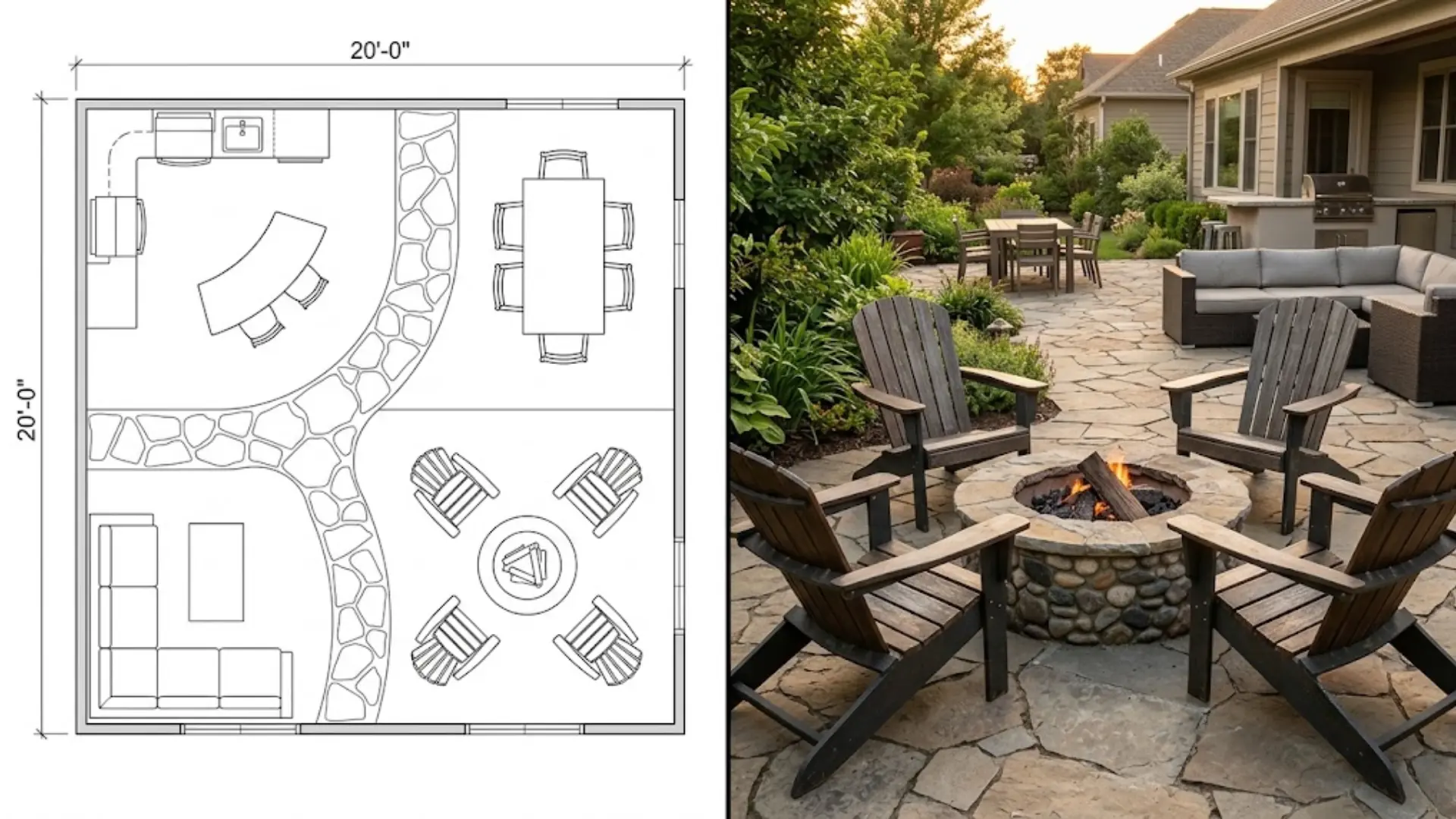
A large patio can support multiple seating zones operating independently, each with its own purpose and personality.
An outdoor kitchen anchors one end for cooking and serving, a fire pit area creates a separate evening gathering spot, and a dedicated dining area provides a meal area away from the smoke and heat.
A lounge area rounds out the relaxation side, and a garden pathway can connect the zones so movement between them feels natural rather than abrupt.
Layout 4: Long Narrow Patio
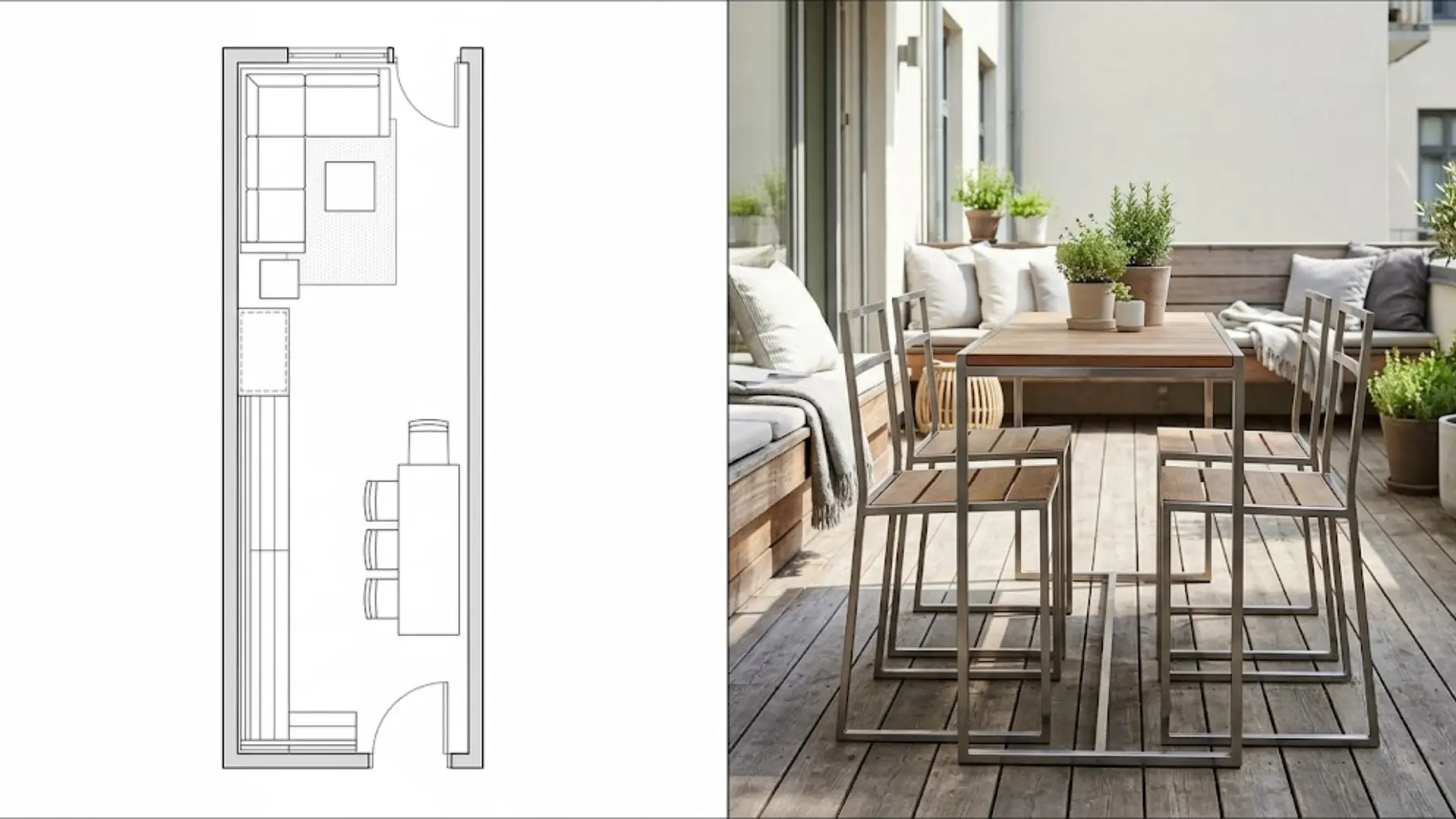
Narrow patios fight back against bulky furniture, so the solution is going linear instead of fighting the shape.
Linear seating runs along the length of the space rather than across it, and dividing the strip into two or three small zones keeps it from feeling like one long hallway.
Slim furniture with shallow profiles prevents the walkway from shrinking, and a bench against the long wall adds seating without eating into floor space.
Layout 5: Balcony Furniture
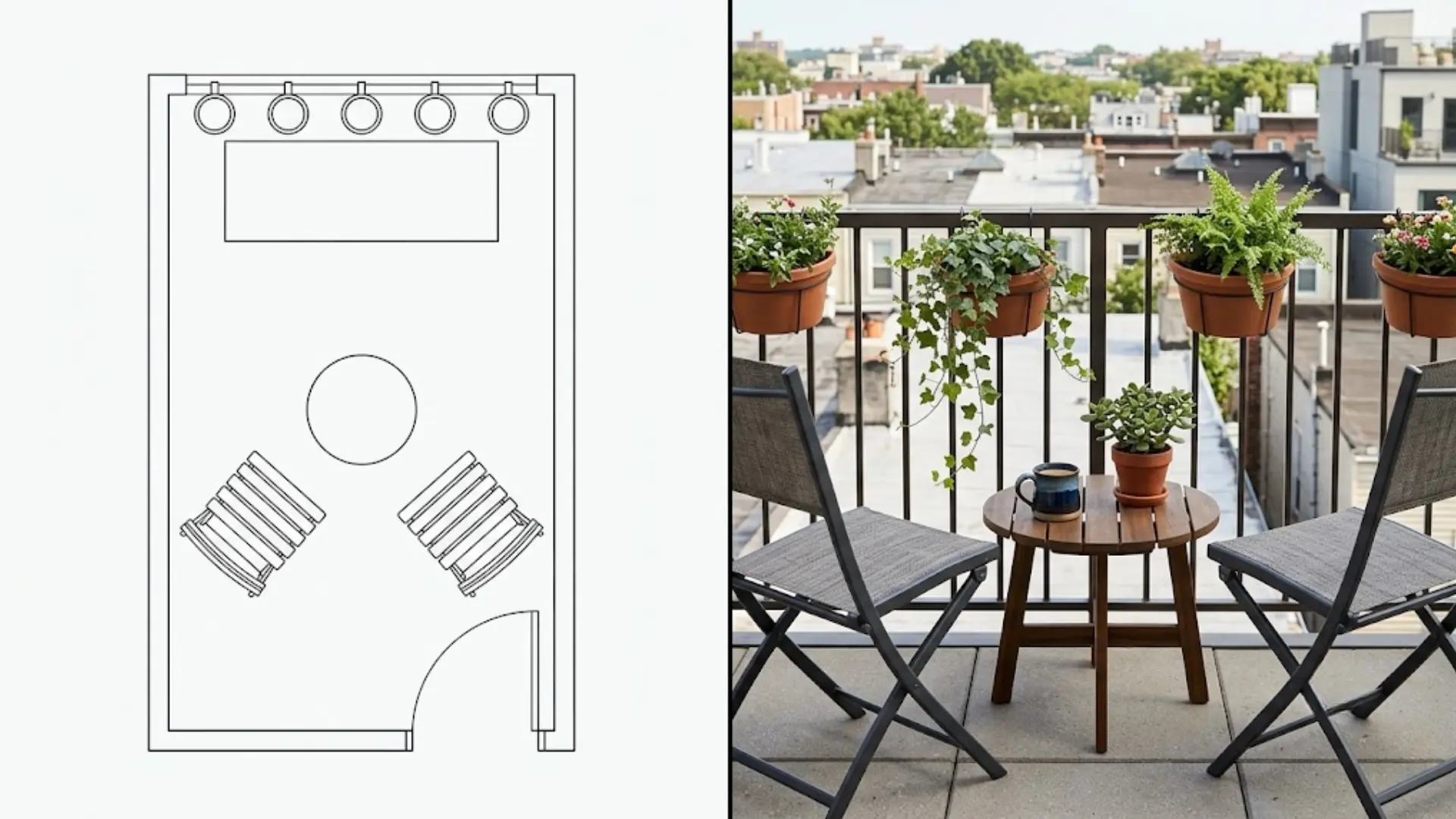
Balconies demand furniture that earns its keep in every dimension.
Folding chairs disappear when not in use, hanging planters bring in greenery without claiming floor space, and a storage bench doubles as seating and a place to tuck away cushions or tools.
A small coffee table finishes the setup without crowding the railing or blocking the view.
Layout 6: Deck Furniture
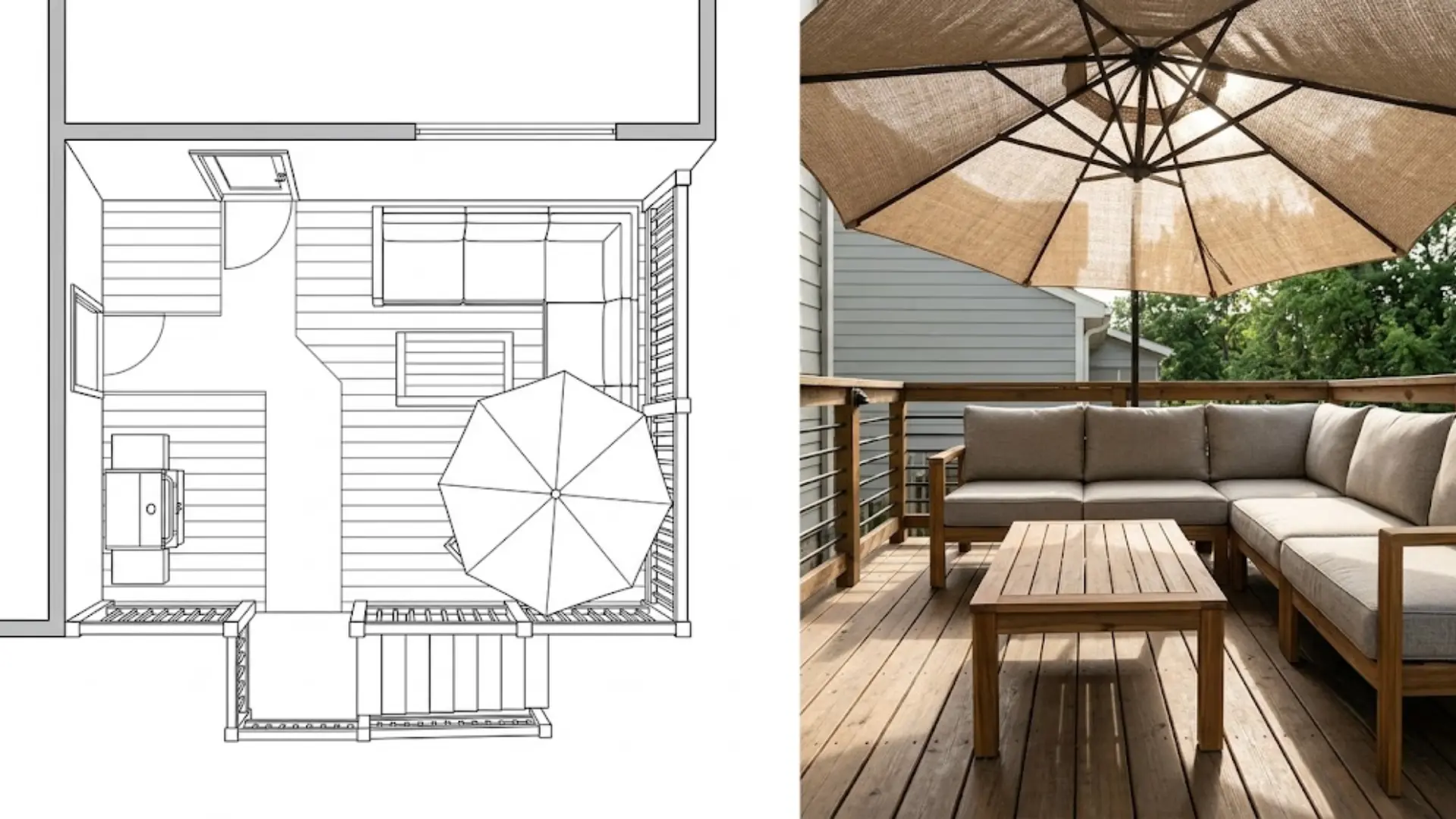
Decks come with their own set of considerations beyond just furniture choice. Traffic flow needs to remain open between the house and the yard, so seating should be positioned to one side rather than blocking the main path.
Grill placement matters too, since it should stay clear of railings and seating to avoid smoke drifting toward guests.
If the deck offers rail views, furniture should be angled toward them, and shade placement, whether from a pergola or an umbrella, should fall over the seating rather than the walkway.
Outdoor Furniture Layout Ideas by Furniture Type
Layout decisions often start with the furniture itself rather than the space, since each type of furniture has its own best practices for placement.
Here is how to approach the most common categories of outdoor furniture.
| Furniture Type | Configurations | Best For |
|---|---|---|
| Sectional Sofa | L-shape, U-shape, floating sectional | Corners, larger groups, open, centered layouts |
| Dining Set | Center placement, near kitchen access, umbrella positioning | Easy serving and shaded meals |
| Fire Pit Seating | Circular seating, Adirondack chairs, conversation circle | Evening gatherings around the flames |
| Lounge Chairs | Side by side, angled rows, railing aligned | Pool, garden, deck |
| Mixed Furniture | Dining, lounging, accent chairs, benches | Multi-function backyards |
Use Rugs, Planters, and Accessories to Define Zones
Furniture alone only does half the job, since the smaller accessories are what actually make a layout read as intentional. A few additions go a long way toward clearly defining each zone.
- Outdoor rugs anchor furniture groupings and visually separate one zone from another.
- Planters add privacy, create visual boundaries, and bring in green accents without permanent structure.
- String lights add a soft ambient glow across the whole space.
- Lanterns bring warm, low-level lighting to tables and corners.
- Solar lighting keeps pathways and edges lit without extra wiring.
- Path lights guide movement between zones after dark.
- Umbrellas offer flexible shade that can be repositioned as needed.
- Pergolas create a defined, semi-permanent shaded structure.
- Shade sails cover larger areas with a more modern, minimal look.
Layered together, these small details turn a collection of furniture into a space that feels finished, lived in, and genuinely thought through.
Outdoor Furniture Spacing Guide
Getting the spacing right is what makes a layout feel comfortable rather than cramped. Use this table as a general reference when placing furniture.
| Furniture Element | Recommended Clearance |
|---|---|
| Walkways | 30 to 36 inches |
| Coffee table to sofa | 14 to 18 inches |
| Dining chairs to the table edge | 24 to 30 inches |
| Fire pit to seating | 36 to 48 inches |
| Sectional to opposite seating | 7 to 9 feet |
Seasonal Tips for Rearranging Outdoor Furniture
A layout that works perfectly in June can feel completely off by October, since sun angles, wind patterns, and how the space gets used all shift throughout the year. A few seasonal adjustments keep the arrangement working year-round.
- Spring calls for shifting seating to catch the lower, gentler angle of the sun before summer heat sets in.
- Summer often means pulling furniture toward shaded corners and angling pieces away from harsh afternoon glare.
- Fall is the time to reposition seating to face the prevailing wind direction and start planning for holiday entertaining needs.
- Winter usually means clearing furniture from open areas, fitting pieces with furniture covers, or moving them into storage altogether.
Paying attention to these shifts keeps the space functional and comfortable no matter what the season brings, rather than leaving furniture fighting the weather it was never meant to withstand.
How to Style Your Outdoor Space Like an Indoor Living Room?
The line between indoors and outdoors blurs fastest with the right styling choices, starting with an outdoor rug that grounds the seating the way one would in any living room.
From there, layered lighting replaces the harsh single overhead glow, while throw pillows and side tables bring in the comfort and function people expect indoors.
Outdoor curtains soften hard edges and add a sense of privacy.
Once decorative accents, a coordinated color palette, and cohesive furniture styling come together, the space stops feeling like a backyard add-on and starts feeling like a true extension of the home.
Wrapping Up
Getting the layout right turns a patio from a place you walk past into one you actually want to sit in.
Small choices, from anchoring a focal point to leaving enough room to pull out a chair, add up to a space that feels considered rather than accidental.
A tiny balcony and a sprawling deck call for different approaches, but knowing how to arrange outdoor furniture, whether your space is limited or not, means every corner finally earns its place.
Drop a comment below sharing what your outdoor space looks like right now, and we will help you figure out the layout that fits it best.
Frequently Asked Questions (FAQs)
What is the Best Outdoor Furniture Layout Plan?
There is no single best plan, since it depends on the space and how it will be used. A layout centered on a clear focal point with adequate walkway clearance tends to work well in most patios and yards.
How Much Space Should Be Between Patio Furniture?
Walkways generally need 30 to 36 inches of clearance, while coffee tables should sit 14 to 18 inches from seating. Dining chairs need 24 to 30 inches from the table edge to pull out comfortably.
Should Outdoor Furniture Face the House or the Yard?
This depends on what the space is meant to highlight, whether that is a view, a fire pit, or the house itself. Most layouts work best when seating faces the strongest focal point rather than the house.
Should Outdoor Furniture Sit Against the Walls?
Pushing furniture against the walls often makes a space feel emptier and less inviting. Floating pieces toward the center, even by a few feet, usually creates better balance and easier movement.