

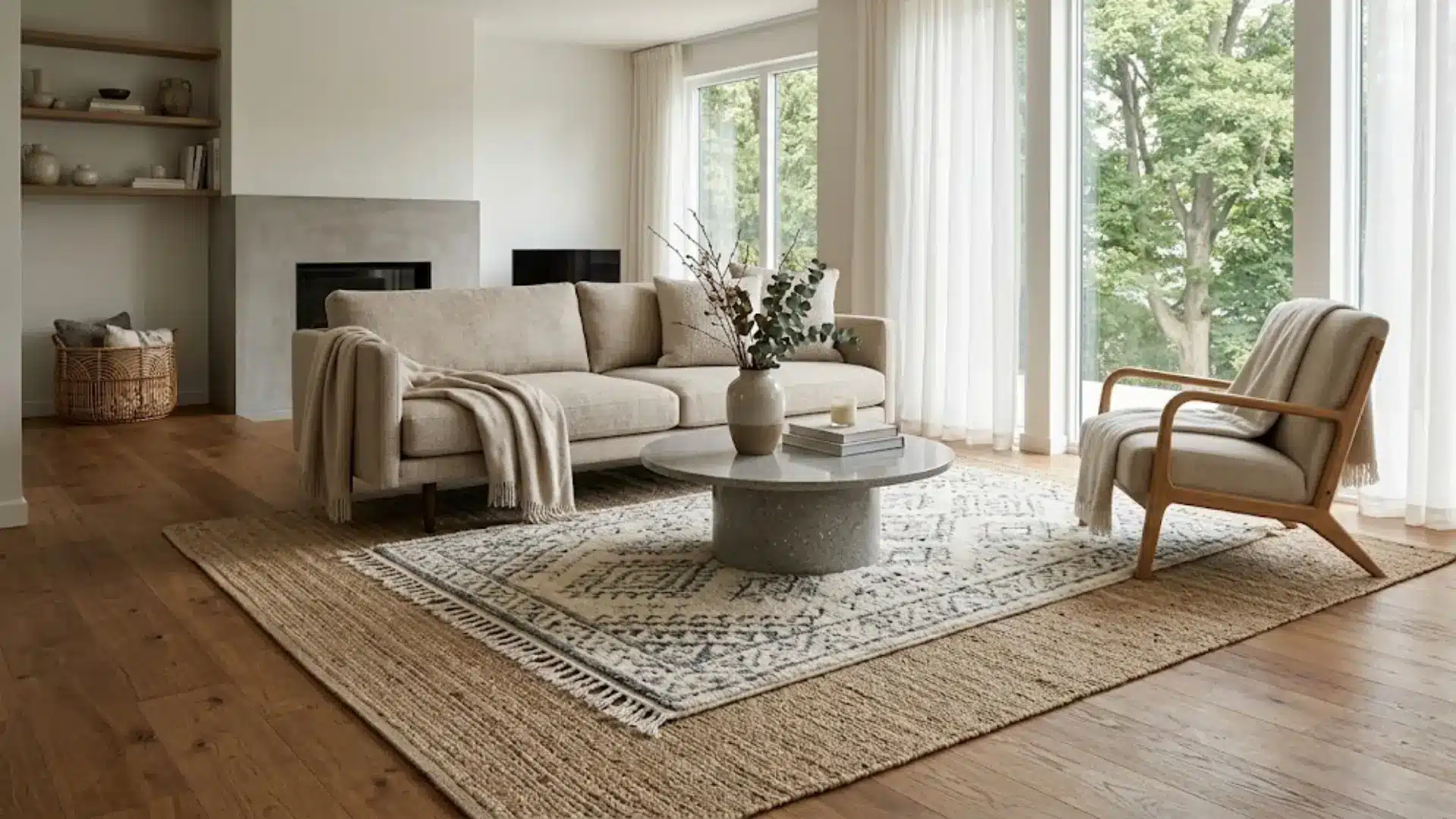
Layering rugs sounds like something only interior designers do. But it is actually one of the easiest ways to make a room look more put together.
You do not need a big budget or a perfectly decorated space. You just need to know how to layer rugs the right way. Done well, it adds warmth, defines zones, and gives your floor real personality.
This walks you through everything, from picking the right sizes to avoiding the most common mistakes. By the end, you will have a clear idea of exactly where to start.
Why Two Rugs Often Work Better Than One
Layering multiple rugs in one room is more useful than it looks. Each rug can carve out a distinct zone in an open-plan space.
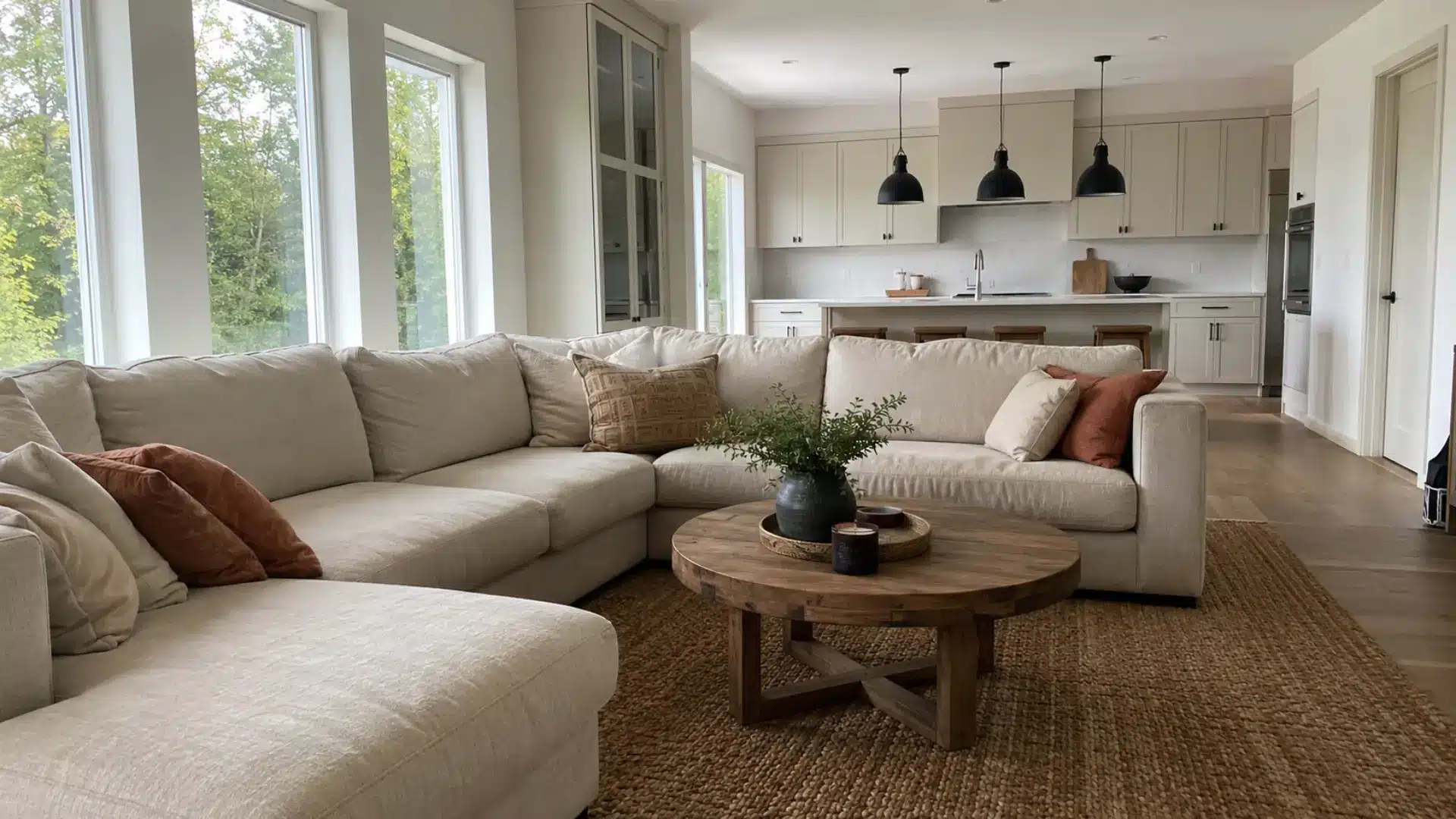
A rug under the sofa says, “This is the living area.” One near the kitchen island says, “this is where we gather.” That kind of visual separation makes a big room feel intentional instead of empty.
Rugs also add warmth and softness to hard floors. They make a space feel lived-in.
And when the seasons change, swapping one rug out is an easy way to refresh the whole room without redecorating. Two rugs give you twice the flexibility.
Basic Rules for Layering Rugs the Right Way
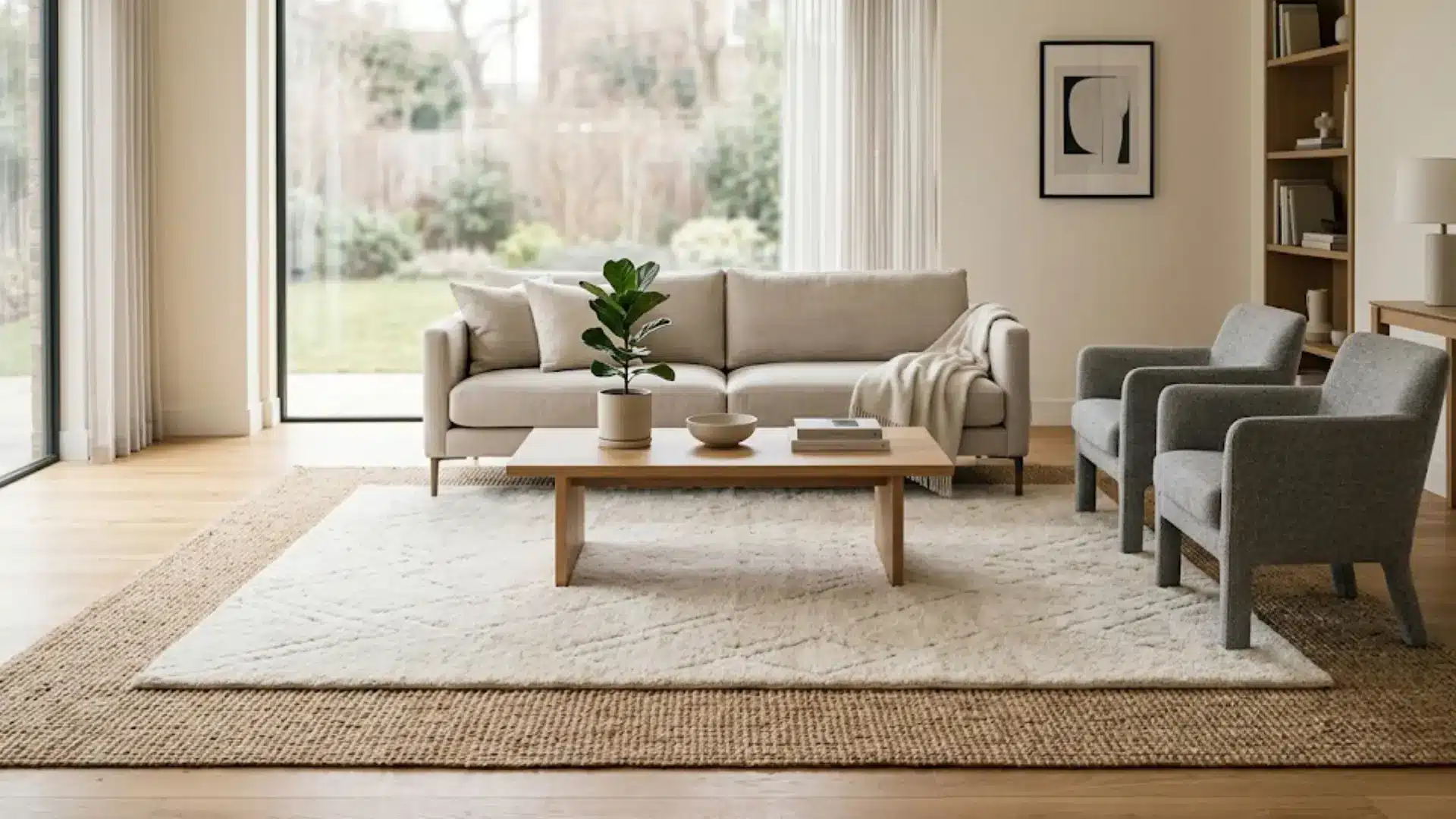
Layering rugs works best when you follow a few simple guidelines. Get the size, spacing, texture, and color right and the whole room comes together naturally.
Rule 1: Always Start With a Larger Base Rug
The base rug does the heavy lifting. It needs to be big enough to anchor your furniture and define the zone. Think of it as the foundation everything else builds on.
Without a solid base rug, the layered look falls apart before it even starts. Size it generously, place it first, and build everything else around it from there.
Rule 2: Keep Enough Visible Border Around the Top Rug
If the top rug covers too much of the base rug, you lose the layered effect entirely. Aim to leave a clear border of base rug showing on all sides.
That gap is what makes each rug readable as its own piece. Without it, two rugs just look like one messy, flat, and confusing surface that adds nothing to the room.
Rule 3: Mix Texture, Not Just Color or Pattern
Color and pattern get a lot of attention, but texture is what makes layering feel truly intentional. Try a flat weave jute rug as your base, then layer a plush or shaggy rug on top.
That contrast in feel adds real depth to the floor and makes the whole setup look far more considered, styled, and put together.
Rule 4: Stick to a Controlled Color Palette
You do not need both rugs to match exactly. But they should share at least one color or tone. Pull a shade from your sofa, curtains, or wall color and let that guide your picks.
When the colors connect, the room feels calm and cohesive. When they clash, the whole floor feels chaotic and visually heavy to look at.
Rule 5: Avoid Using Two Rugs of the Same Size
Same-size rugs placed together just look like a mistake. The whole point of layering is contrast. One rug should clearly be larger than the other.
A noticeable size difference is what creates that intentional, styled look. If the sizes are too close, the effect reads as accidental rather than deliberate, and the layered look loses all its impact.
Rule 6: Align Rugs With Furniture Layout
Your rugs should follow your furniture, not fight it. The base rug should sit under or around your main furniture pieces. The top rug should fill the center of that zone.
When rugs are placed randomly without connecting to the furniture layout, the room feels unplanned and visually off in a way that is hard to fix easily.
Rule 7: Don’t Overload the Room With Too Many Layers
One layered rug setup per zone is plenty. If every corner of the room has stacked rugs, it starts to feel cluttered very fast. Keep it simple.
One well-done layered pair in the living area is far more effective than multiple competing setups that fight for attention and make the whole room feel overwhelming and hard to relax in.
Best Rug Combinations That Always Work
Some rug pairings just work, no matter the room style or size. These combinations balance texture, tone, and visual weight in a way that feels natural and easy. Here are five rug combinations that tend to look great in most rooms:
| Rug Combination | Why It Works | Best Used In |
|---|---|---|
| Natural fiber + patterned rug | The plain base keeps the pattern from feeling too busy | Living rooms, bedrooms |
| Neutral base + bold accent | The neutral ground lets the accent rug stand out without overwhelming the space | Open plan spaces, sitting areas |
| Solid rug + textured rug | Texture adds visual interest when color and pattern are kept simple | Minimalist and modern rooms |
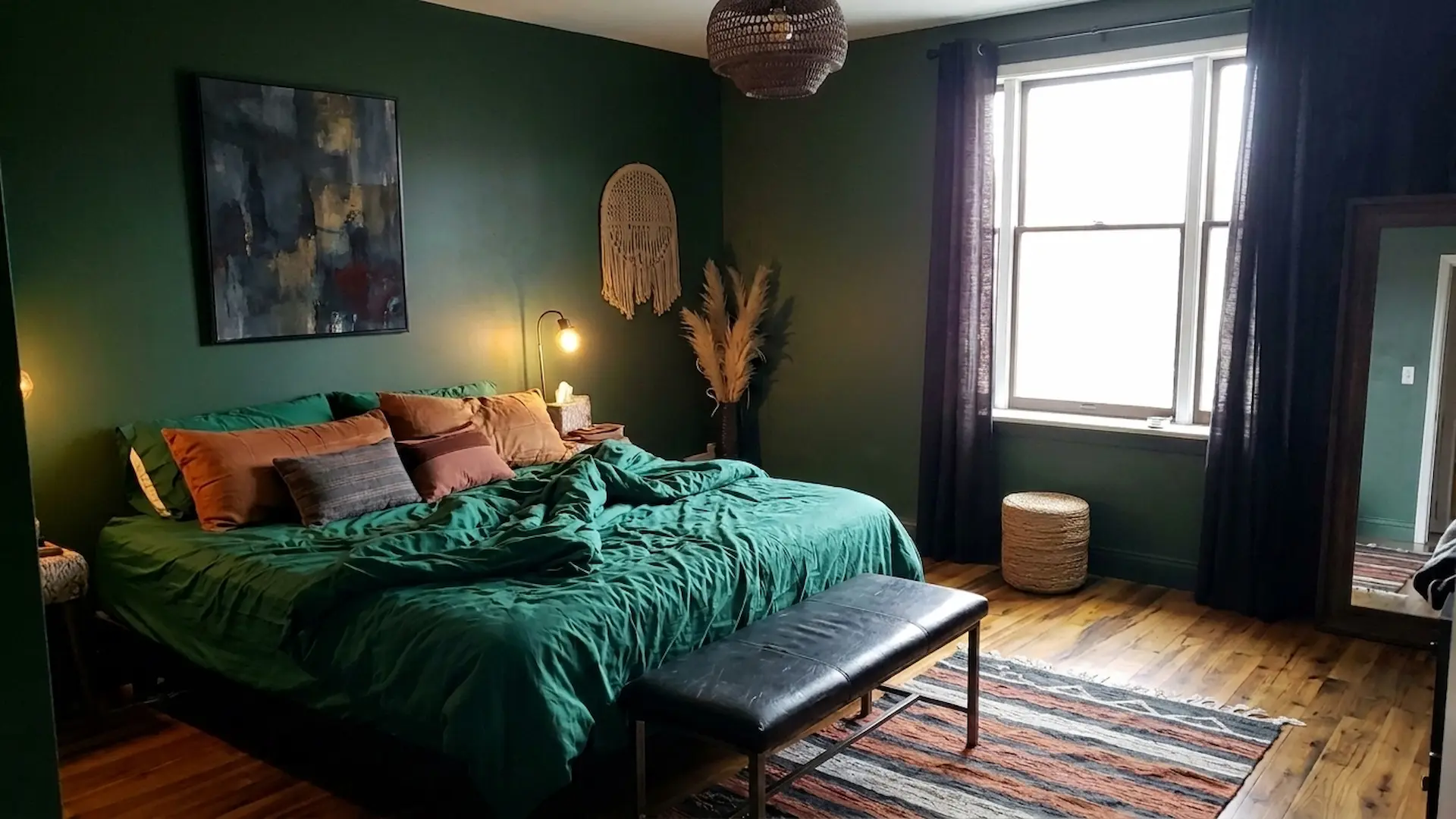
| Light rug + dark overlay | The contrast in tone creates depth and makes both rugs stand out clearly | Rooms with neutral or white walls |
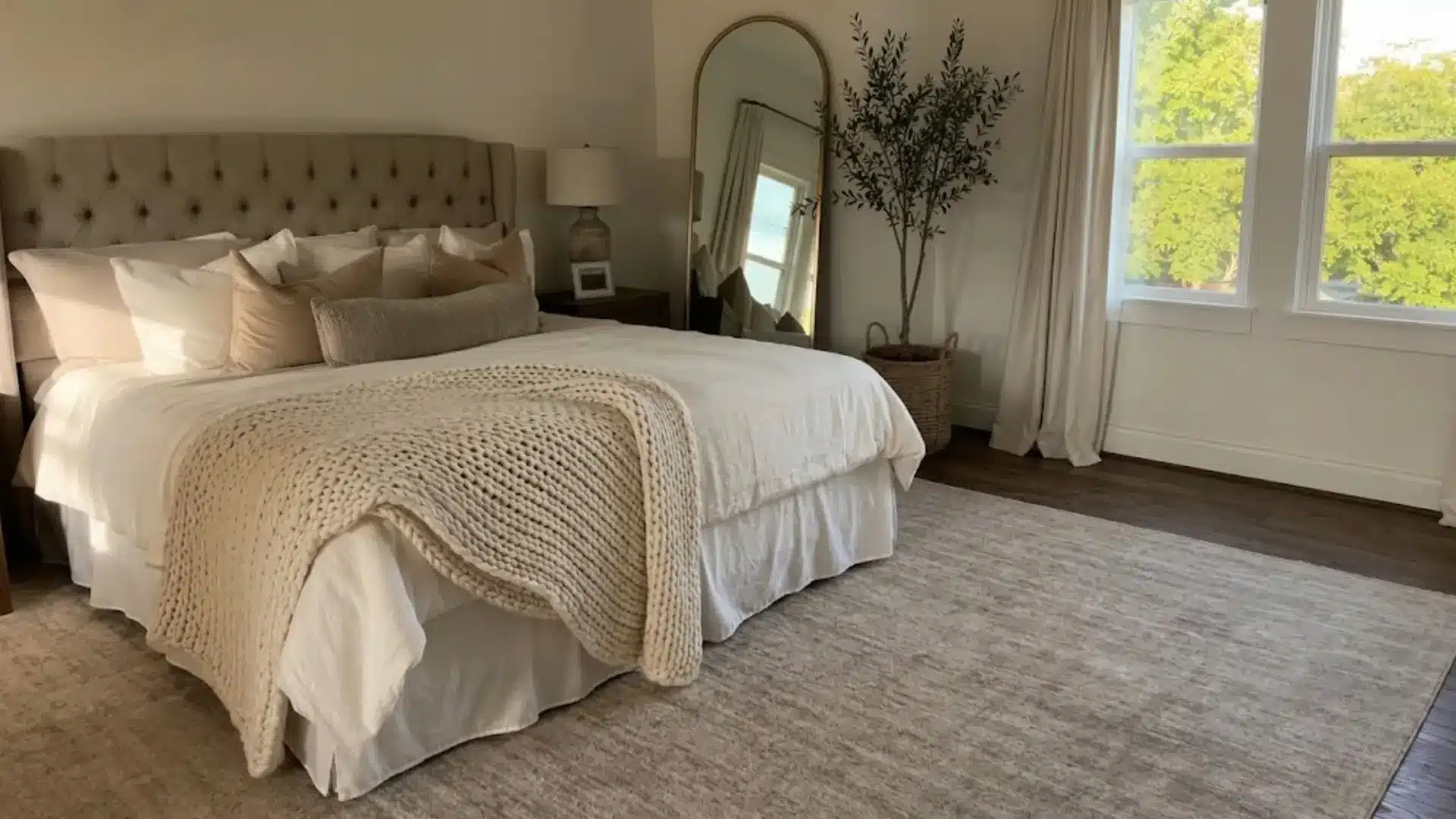
| Low-pile base + high-pile top rug | The difference in pile height adds a tactile layer that makes the floor feel rich | Cozy spaces, reading nooks, bedrooms |
These combinations work because they rely on contrast rather than matching. Pick any one of these pairings and you already have a strong starting point for your room.
Choosing the Right Rug Sizes for Layering
Size is where most people go wrong with layered rugs. If the two rugs are too close in size, the layering looks accidental. If the base rug is too small, the whole setup feels cramped and off.
A good rule is to make the base rug at least one to two feet larger on every side. The top rug should sit clearly within it, with visible base rug showing around the edges.
Watch where your furniture lands too. Front legs on the base rug and the top rug centered in the seating zone is the setup that works best most of the time.
Material Guide for Layered Rugs
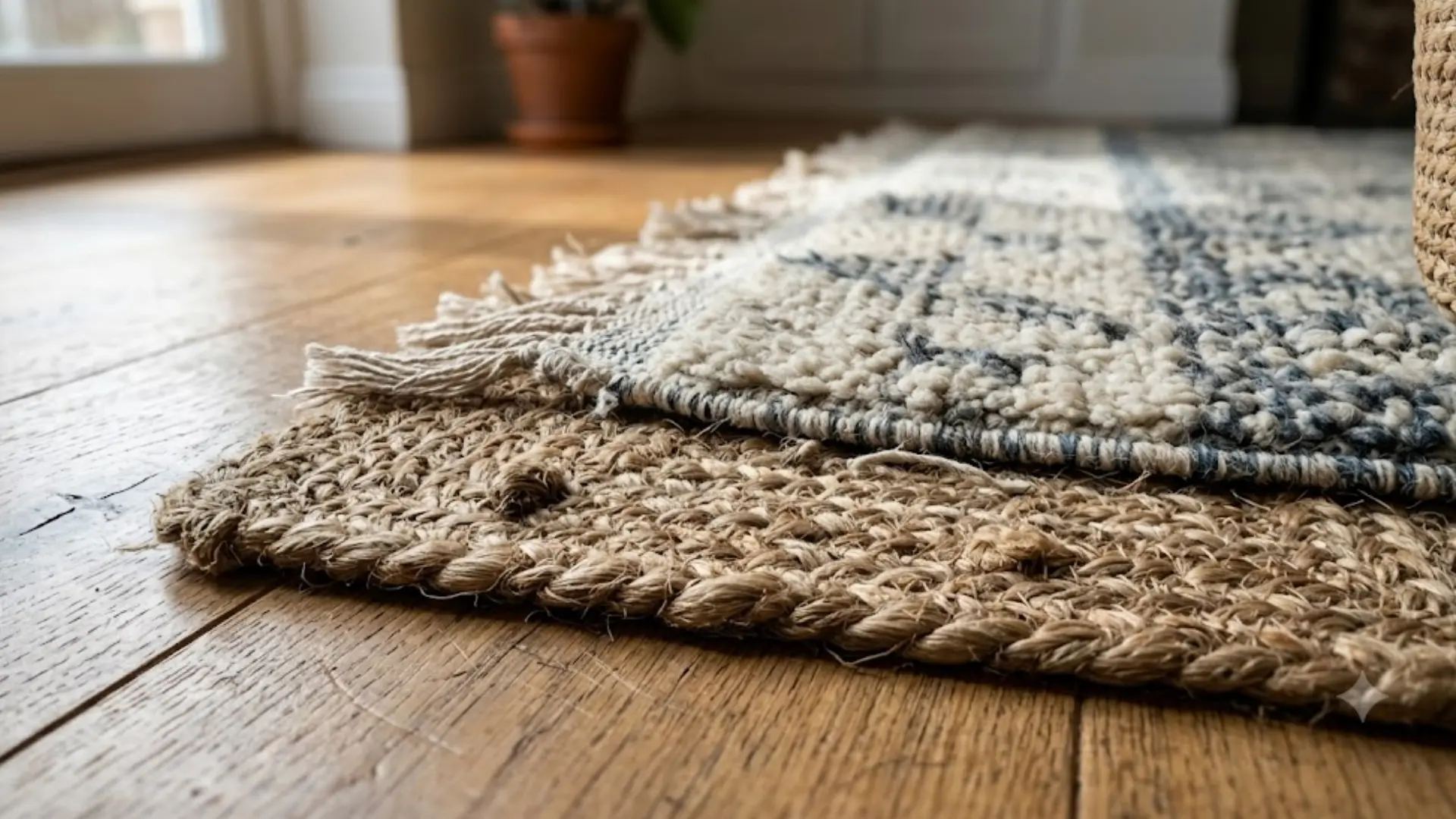
The materials you choose matter just as much as the size and color. Some combinations feel great underfoot and hold up well over time, while others look good at first but wear down or shift around quickly.
Here is a breakdown of the most common materials used in layered rug setups:
- Jute is a popular base rug material. It is firm, flat, and natural looking. It holds its position well and gives the top rug a stable surface to sit on.
- Wool works well as a top rug. It is soft, durable, and comes in a wide range of textures and patterns. It also holds color well over time.
- Cotton is lightweight and easy to clean. It works as either a base or a top rug and is a good choice if you want something simple and affordable.
- Sisal is tough and hard wearing. It is best used as a base rug in high traffic areas where you need something that can handle a lot of daily use.
- Synthetic fibers like polypropylene are practical and budget friendly. They resist stains and moisture, which makes them a solid choice for busy households or homes with kids and pets.
Picking the right material for each layer makes the whole setup more practical and longer lasting. Always pair a stable, low profile base with a softer top rug for the best result.
Common Mistakes When Layering Rugs
Layering rugs is simple once you know what to watch out for. A few small missteps can throw off the whole look and make even a well-furnished room feel unfinished.
Here are the most common mistakes people make when layering rugs:
| Mistake | What Goes Wrong | How to Fix It |
|---|---|---|
| Using similar-sized rugs | The layering looks accidental and the two rugs blend into one flat surface | Always make the base rug at least one to two feet larger than the top rug on every side |
| Overusing bold patterns | Two busy patterns compete for attention and make the floor feel visually overwhelming | Pair one patterned rug with one solid or textured rug to keep the look balanced |
| Ignoring room scale | A small rug in a large room looks lost and the layered setup feels disconnected from the space | Size the base rug to fit the room first before choosing the top rug |
| Poor furniture alignment | Rugs that sit randomly under furniture look unplanned and break the flow of the room | Place the base rug so at least the front legs of your furniture sit on it |
| Skipping rug pads | The top rug shifts around constantly and becomes a tripping hazard over time | Use a non-slip rug pad under both rugs to keep everything flat and in place |
Avoiding these mistakes makes a bigger difference than most people expect. Get these basics right and your layered rug setup will look intentional, styled, and pulled together.
Frequently Asked Questions
Can you layer rugs on carpet?
Yes, you can. Choose a flat, thin rug as the top layer. Avoid thick or high-pile rugs as they become unstable and uneven on carpet.
Is layering rugs suitable for small rooms?
Yes, but keep it simple. Use a neutral base rug and a smaller top rug. Avoid bold patterns that make a small room feel overwhelming.
How do you stop layered rugs from slipping?
Use a non-slip rug pad under each rug. Double-sided rug tape is another good option for keeping the top rug firmly in place.
Final Words
Now that you have all the basics covered, putting it into practice is the easy part. Start with a solid base rug, pick a good contrast, and let your furniture direct the placement.
Do not skip the rug pad. You do not need to get everything perfect on the first try. Start with one combination that feels right and adjust as you go.
Small changes to your floor can shift the entire feel of a room. Your space will come together more easily than you think.
Try one of these layering ideas at home and share your results in the comments below.


4 Responses