

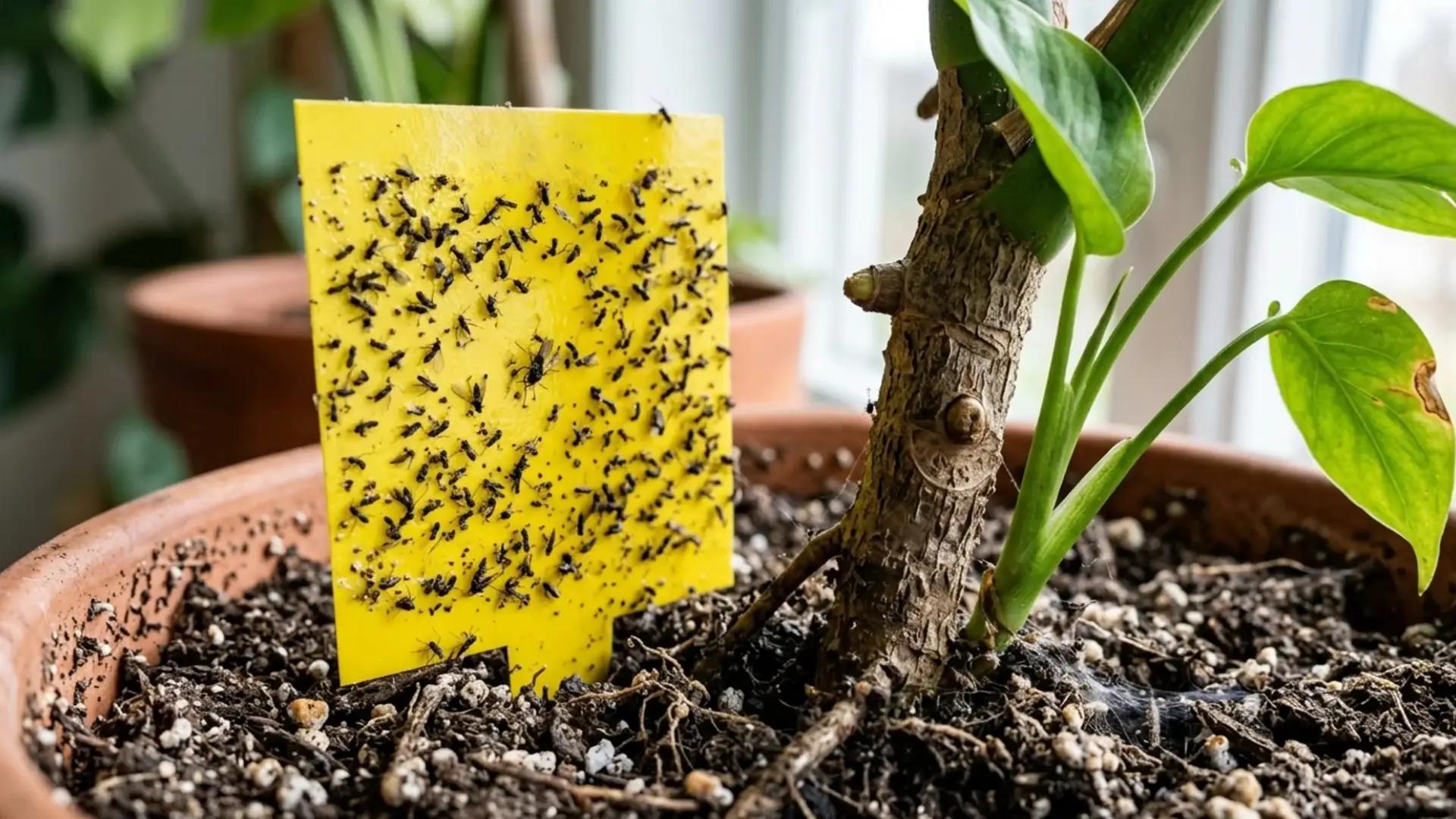
You water your plants, notice a few gnats, and assume they will disappear. Then suddenly, they seem to be everywhere.
Those tiny black flies hovering around your houseplants may seem harmless at first, but they can quickly become a frustrating problem.
Learning how to get rid of fungus gnats starts with understanding why they appear in the first place.
The good news is that a fungus gnat infestation doesn’t mean my favorite plants are doomed. With the right approach, I can take back control of my indoor plants.
What Attracts Fungus Gnats?
Adult fungus gnats are small, dark, mosquito-shaped flies, about 1/8 inch long, with long legs and a single pair of smoke-colored wings.
They are most commonly attracted to moist, organic-rich soil where they can lay eggs and where their larvae can develop.
Understanding what creates the ideal conditions for these pests can help you prevent and control an infestation.
- Moist Soil: Fungus gnats are strongly attracted to consistently damp potting soil because moisture provides ideal conditions for laying eggs and developing larvae.
- Overwatering: Watering plants too frequently keeps the soil wet for longer, creating a favorable environment for fungus gnats to reproduce.
- Organic Matter: Decaying leaves, roots, compost, and other organic material in the soil can feed fungus gnat larvae and encourage infestations.
- Poor Drainage: Pots without adequate drainage can retain excess moisture, making the soil more attractive to fungus gnats and their larvae.
- Warm, Humid Conditions: Warm temperatures and high humidity can support faster fungus gnat reproduction, especially when combined with consistently moist soil.
How to Get Rid of Fungus Gnats?
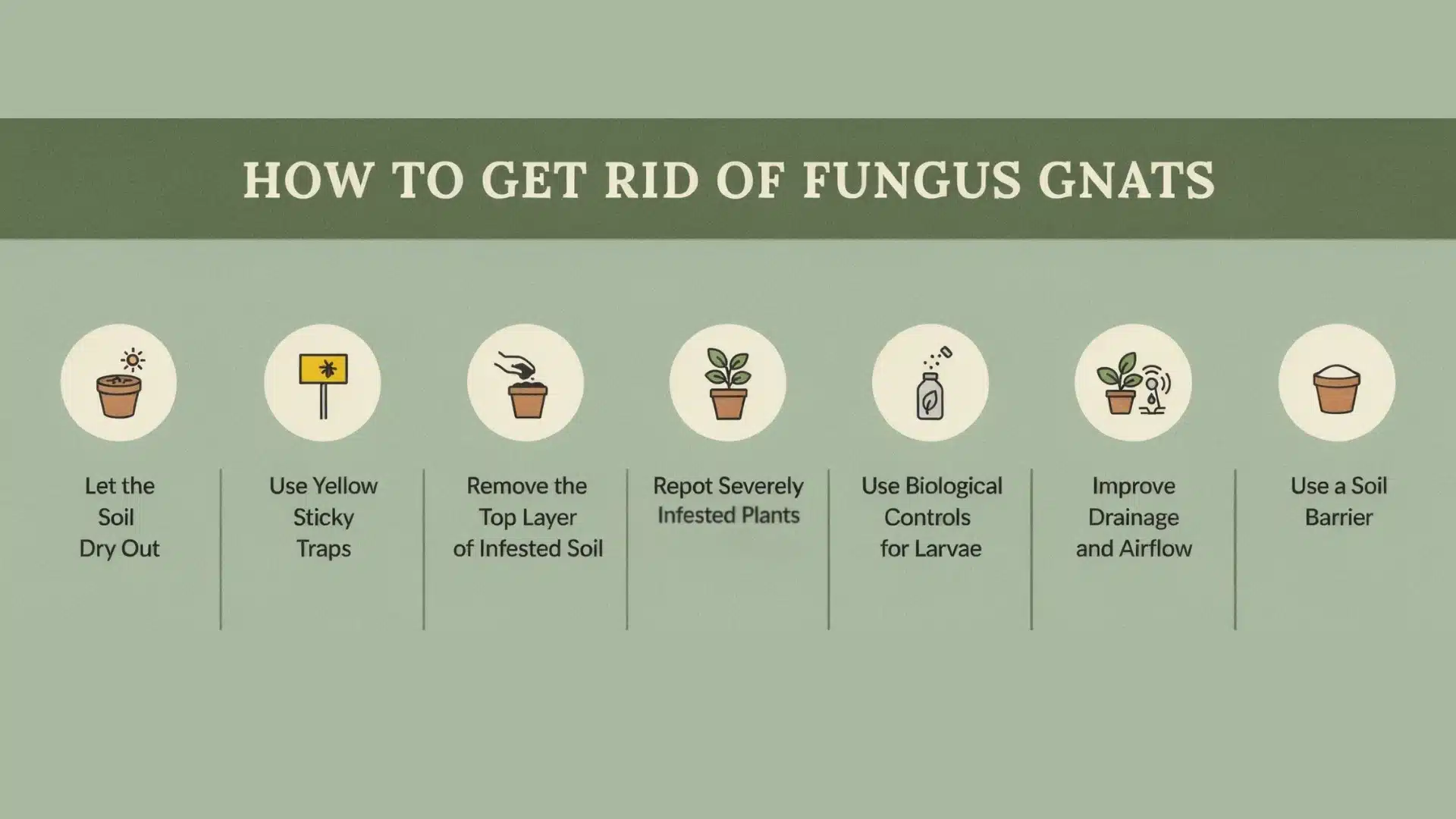
Getting rid of fungus gnats takes more than catching the tiny flies you see around your plants. These simple methods can help control an infestation and keep your houseplants healthier.
1. Let the Soil Dry Out
Fungus gnats thrive in moist soil, so letting the soil dry out properly can help break their breeding cycle. Before watering, check whether the top layer of soil has dried.
Avoid keeping pots in standing water, as excess moisture creates ideal conditions for gnats.
However, don’t let plants become completely dry if they need consistent moisture. Watering needs vary by plant type, so adjust your routine to each plant’s requirements.
2. Use Yellow Sticky Traps
Yellow sticky traps are a simple way to catch adult fungus gnats and reduce the number of flying pests around your plants.
Place the traps close to affected plants, with the sticky surface positioned just above the soil.
Adult gnats will become trapped when they land on the surface. However, these traps do not kill eggs or larvae living in the soil.
3. Remove the Top Layer of Infested Soil
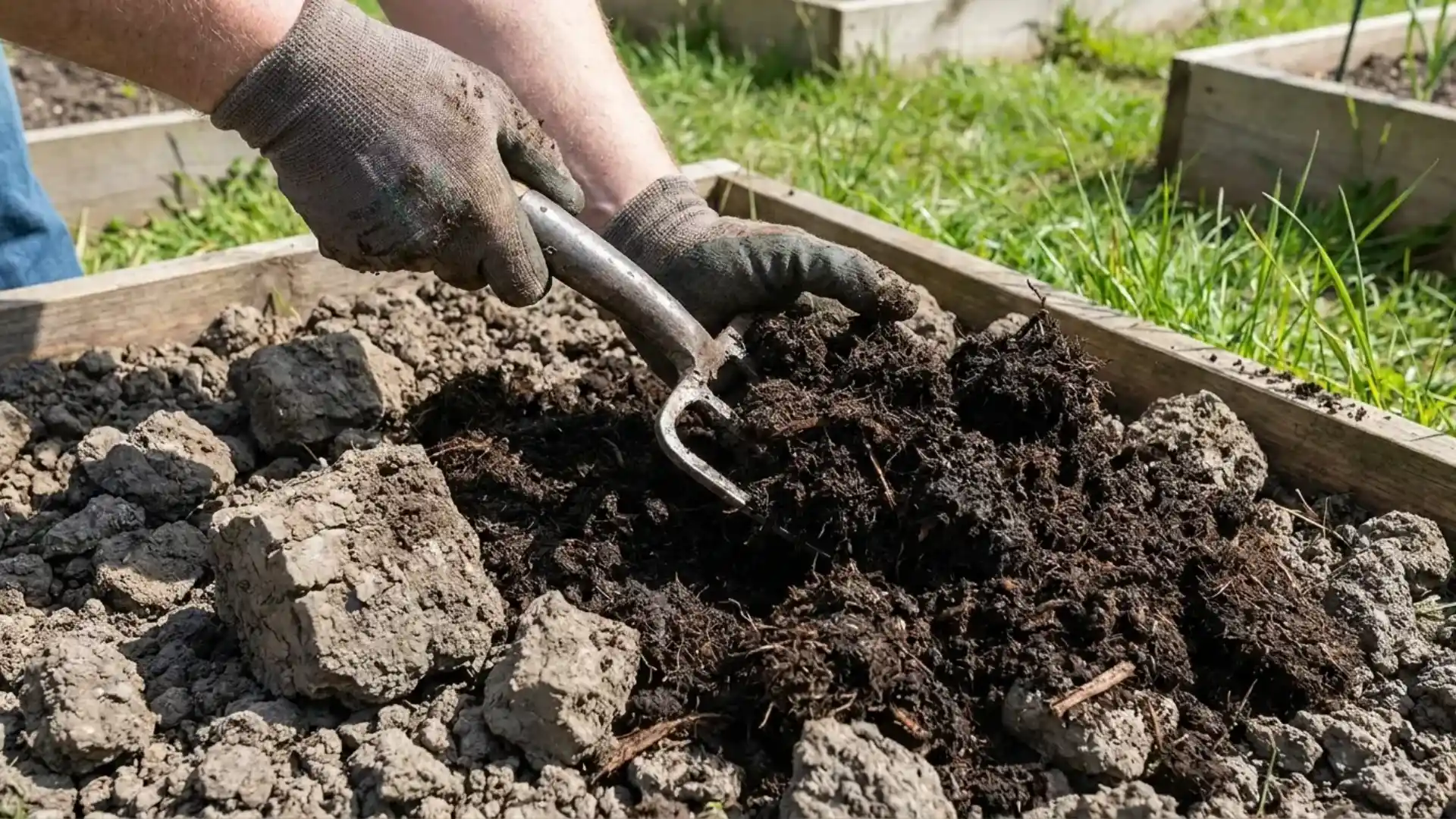
Fungus gnat larvae are often found near the surface of moist potting soil. Removing the top layer can help reduce the number of larvae and eggs around an affected plant.
Carefully scoop away the upper layer without disturbing the plant’s roots. Replace the removed soil with fresh, suitable potting mix.
This method works best when combined with better watering habits.
4. Repot Severely Infested Plants
Repotting can be useful when a fungus gnat infestation is severe or keeps returning despite other treatments.
Carefully remove the plant from its container and gently loosen the old soil around the roots. Discard the infested potting mix and clean the container before reuse.
Then, place the plant in fresh, well-draining potting mix. Make sure the new pot has drainage holes.
5. Use Biological Controls for Larvae
Biological controls can help target fungus gnat larvae directly in the soil.
One commonly used option is Bacillus thuringiensis israelensis (Bti), which targets certain mosquito and fly larvae, including fungus gnat larvae.
Unlike sticky traps, these treatments work below the soil surface rather than against adult gnats. Always follow the product label for proper use, dosage, and application frequency.
6. Improve Drainage and Airflow
Poor drainage can leave soil wet for too long, making your plants more attractive to fungus gnats.
Check that each pot has adequate drainage holes and that excess water can escape easily. Avoid containers much larger than the plant’s root system, as they can hold moisture longer.
Not every bug in your potting mix is doing damage, and learning which soil bugs actually help your plants can save you from treating a beneficial one like a pest.
7. Use a Soil Barrier
A suitable layer of coarse material over the soil can make the surface less favorable for adult fungus gnats to lay eggs.
The barrier should allow water to reach the soil while still helping the surface dry properly. Avoid using anything that blocks drainage or keeps the soil unnecessarily wet.
This method is most effective when combined with proper watering and yellow sticky traps.
What Not to Do When Treating Fungus Gnats?
Getting rid of fungus gnats requires more than simply killing the adult flies. Avoiding common mistakes can help break their breeding cycle and prevent the infestation from returning.
| What Not to Do | Why to Avoid It |
|---|---|
| Do not overwater your plants | Constantly wet soil creates an ideal breeding environment for fungus gnats. |
| Avoid relying only on sticky traps | Sticky traps catch adult gnats but don’t eliminate eggs or larvae in the soil. |
| Never ignore poor drainage | Excess water can keep the soil moist and encourage further infestations. |
| Do not use harsh chemicals unnecessarily | Strong chemicals may damage plants and can be unsafe around people and pets. |
| Do not leave dead leaves on the soil | Decaying organic matter can provide food and shelter for fungus gnat larvae. |
| Do not stop treatment too early | Eggs and larvae can remain in the soil, allowing the infestation to return. |
How Long Does it Take to Get Rid of Fungus Gnats?
Getting rid of fungus gnats can take 2 to 4 weeks, depending on how serious the infestation is and how consistently you treat it.
Adult gnats may decrease within a few days after using sticky traps, but eggs and larvae can remain in the soil.
To fully control the problem, let the soil dry appropriately between waterings, improve drainage, and treat the larvae when needed.
Continue monitoring your plants even after you stop seeing adult gnats.
Consistent treatment is important because new adults can emerge from the soil. If conditions remain moist, the infestation may continue or return quickly.
How to Prevent Fungus Gnats From Coming Back?
Preventing fungus gnats means keeping your plants’ soil dry, clean, well-drained, and regularly monitored.
- Avoid Overwatering: Allow the soil to dry between waterings, as consistently wet soil encourages fungus gnats to reproduce.
- Remove Debris: Regularly remove fallen leaves, dead plant material, and other organic debris from the soil surface.
- Inspect New Plants: Carefully check new plants for visible gnats or larvae. Tiny wingless hoppers rather than flies usually point to springtails instead of gnats.
- Use Sticky Traps: Place yellow sticky traps near plants to monitor adult gnats and catch them before populations increase.
Conclusion
A fungus gnat problem can be an early signal that something in your plant-care routine needs attention.
Instead of focusing only on the pests you can see, pay attention to what your plants and soil are telling you about their changing needs and overall growing conditions.
Once your plants are back on track, make regular checks part of your routine so you can spot unusual activity early.
Ready to take the next step? Start by checking your plants today and identify the areas that need attention. Then, share your fungus gnat experience in the comments below.
Frequently Asked Questions
Can Fungus Gnats Fly Far From Their Breeding Site?
Yes, adult fungus gnats can move between nearby plants, especially when several containers have moist soil and favorable breeding conditions.
Can Fungus Gnats Spread From One Plant To Another?
Yes, they can spread when adults move between plants or when infested soil, plants, or contaminated potting materials are introduced.
Should I Isolate a Plant With Fungus Gnats?
Yes, isolating an affected plant can help prevent adult gnats from spreading to other nearby houseplants.


One Response