
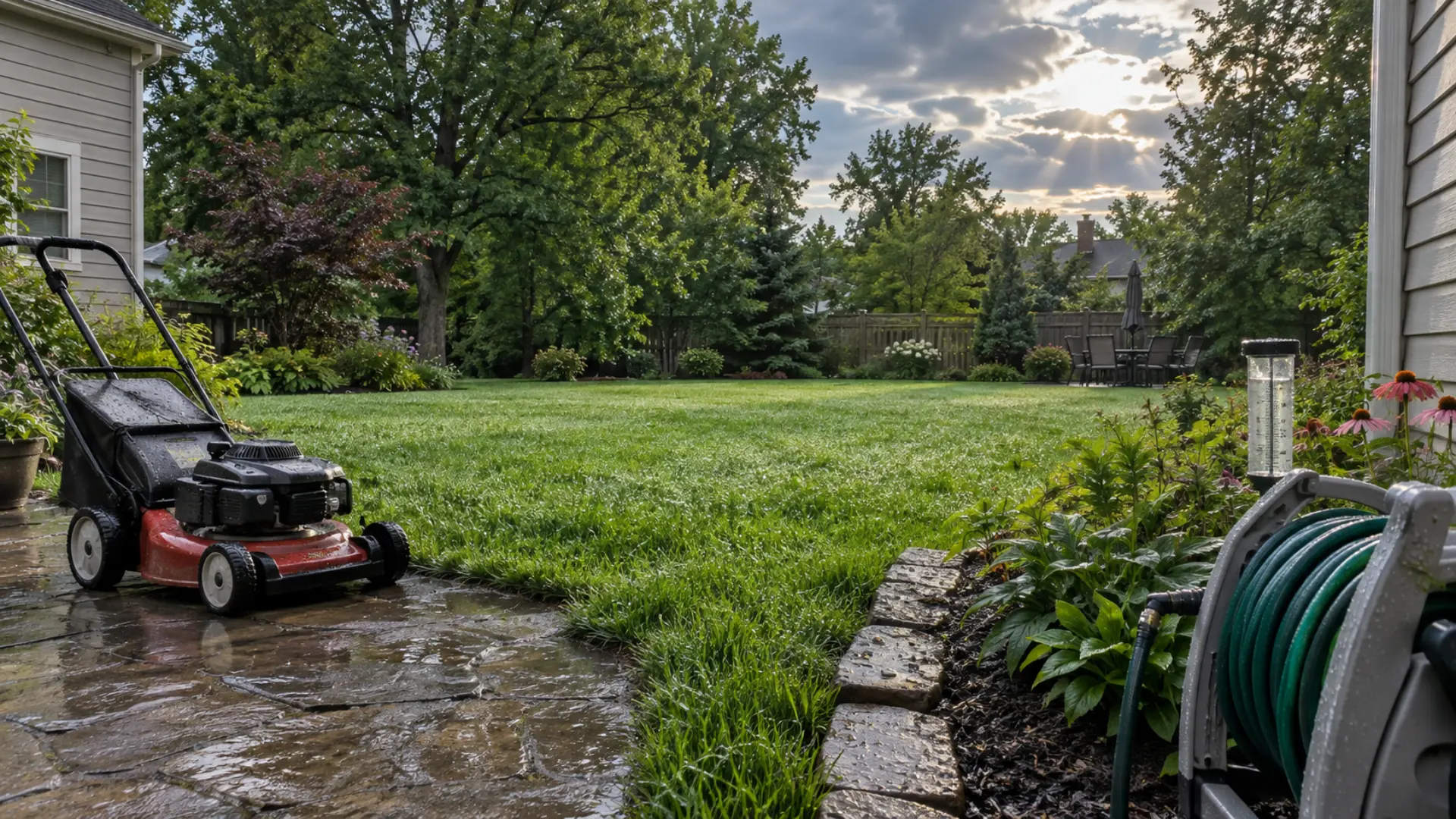
Can you mow wet grass? Technically, yes. Should you? Not really.
I have made this mistake more than once. I would rush out to mow right after rain because I did not want to lose the free time later. I would end up with clumped clippings stuck to the blades and patchy, uneven strips across the lawn.
Wet grass just does not cut cleanly, and it can leave your soil more compacted than you would like.
Waiting for things to dry out a bit makes the whole job easier and the results better.
So let’s look at what actually happens when you mow wet grass, and how to know when it is the right time to start.
Is It Bad to Mow Wet Grass?
Yes, it is generally a bad idea, though not a disaster if it happens once.
There is a real difference between grass that is slightly damp from morning dew and a lawn that is genuinely saturated from heavy rain.
I have mowed lightly damp grass occasionally without any issues, but making it a habit is where the real damage builds up over time. It is not just about wet blades either.
The soil underneath matters just as much, since soggy, soft ground gets compacted and rutted far more easily than dry ground does, and I have ended up with rutted patches from ignoring that before.
What Mowing Wet Grass Actually Does to Your Lawn
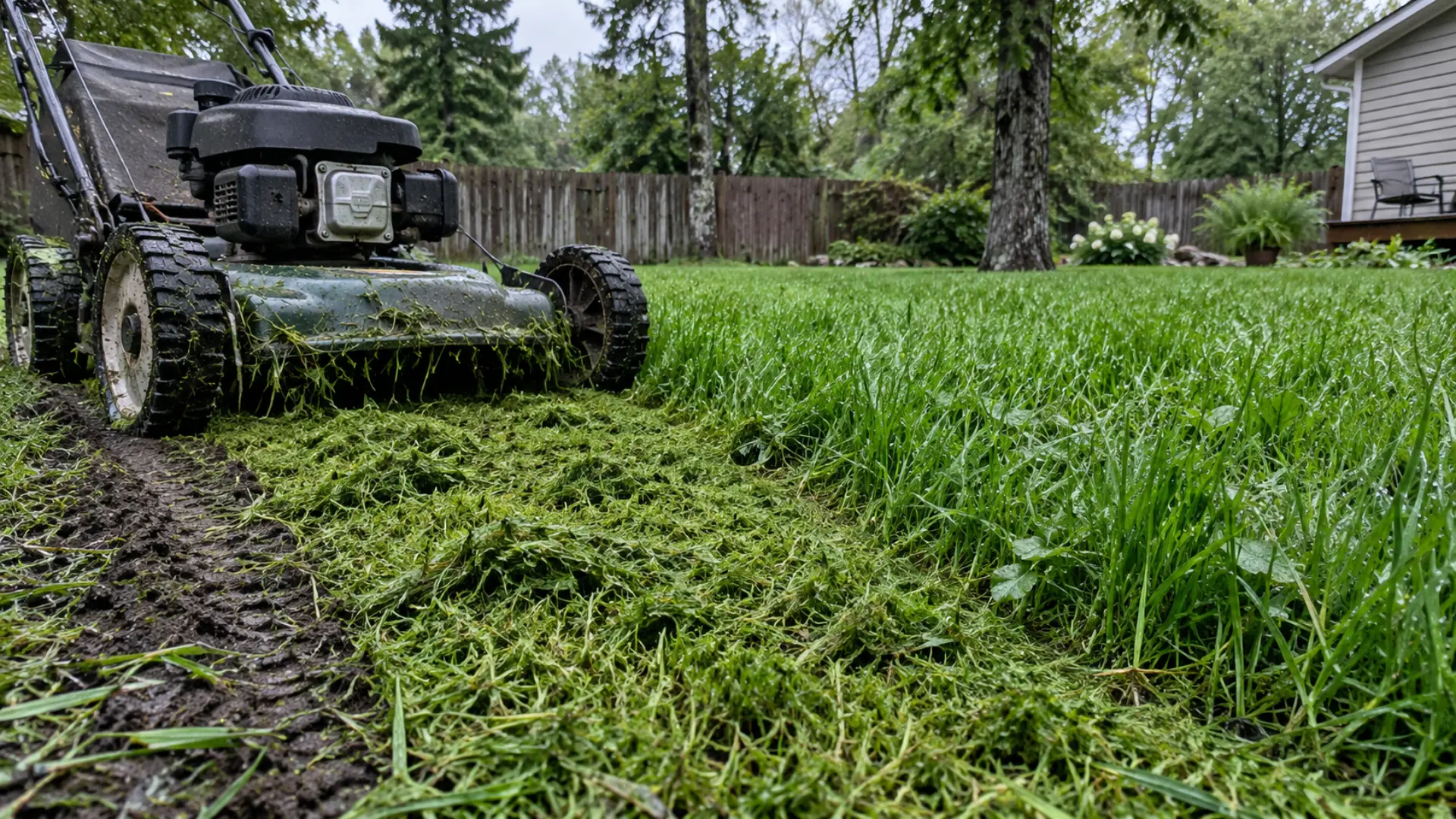
Once you know what wet grass does to your mower and your lawn, waiting a few hours starts to feel like the easier choice.
Take a look at each reason below.
1. Wet Grass Does Not Cut as Cleanly
When grass is wet, the blades bend under the weight of the moisture instead of standing upright to meet the mower blade.
That means the mower ends up tearing the grass rather than slicing it cleanly.
Torn grass tips turn brown and ragged within a day or two, leaving the whole lawn looking uneven and almost bruised instead of giving you that crisp, fresh-cut finish.
2. Wet Clippings Clump Together
Wet clippings are heavier and stickier than dry ones, so instead of scattering evenly, they cling to the underside of the mower deck and to each other.
This leaves thick clumps sitting on top of the grass once you are done.
Left sitting for too long, those clumps block sunlight and trap moisture against the lawn underneath, which can smother patches of grass and leave yellow spots behind within a few days.
3. Wet Soil Can Develop Ruts and Compaction
Rain does not just wet the grass; it softens the soil underneath too.
When you run a mower over ground that is still soaked, the wheels can sink slightly and leave visible tracks behind.
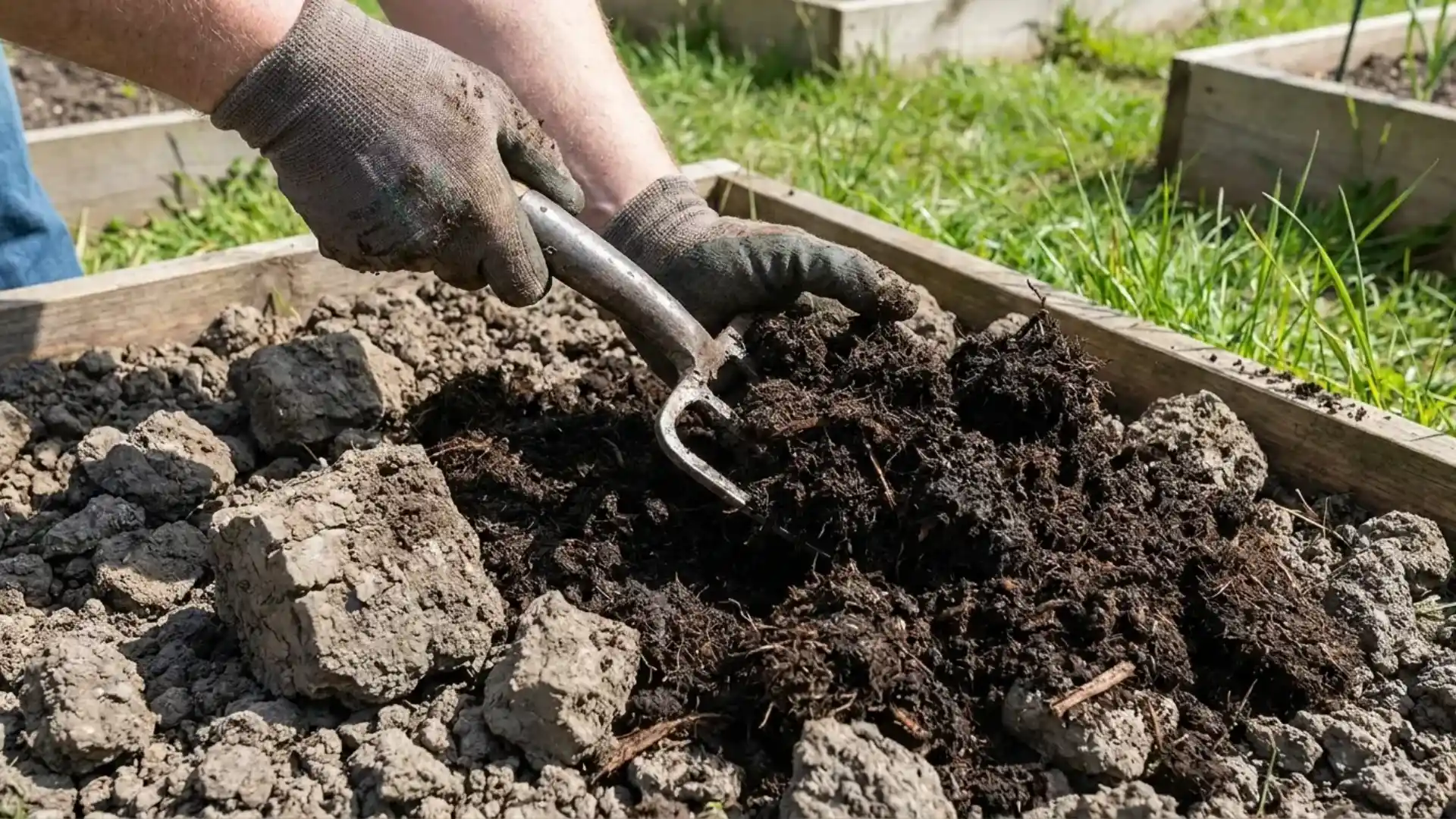
Heavier riding mowers put even more pressure on soft ground, which can compact the soil enough to affect root growth and drainage in that spot for weeks afterward.
4. Wet Conditions Make Mowing Less Safe
Wet grass is slippery, and that affects your footing as much as the mower’s traction. Slopes and uneven patches of the yard get riskier to navigate when everything underfoot is damp.
Always follow your mower’s manufacturer safety guidelines, especially with electric mowers, since moisture and electrical components are never a good mix.
Taking it slow, or simply waiting, avoids the risk altogether.
5. Wet Mowing Can Increase Lawn Disease Concerns
Torn grass blades combined with damp conditions can create an environment where fungal issues are more likely to take hold.
This does not mean wet grass automatically leads to disease, but it does add unnecessary stress to your turf.
Mowing when things are dry keeps the grass healthier overall and cuts down on the small risks that build up with repeated wet mowing sessions.
6. Wet Grass Can Clog the Mower
Moisture causes clippings to stick and build up underneath the deck instead of clearing out the way they normally would.
Over time, this buildup slows down the mower’s cutting efficiency, forcing you to stop again and again to clear it out.
If you do end up mowing in damp conditions, cleaning the underside of the deck afterward helps prevent rust and keeps the mower cutting properly next time.
How Long Should You Wait to Mow After Rain?
There is no fixed number of hours that works for every lawn.
Drying time depends on how much rain fell, how sunny and warm it is, wind, humidity, how dense your grass is, whether the area gets shade, and how well your soil drains.
Since conditions vary so much, it helps to check the grass and soil directly rather than watching the clock.
Signs to notice before you start mowing
Your shoes stay dry after walking across the grass.
No visible moisture or shine on the grass blades.
The soil feels firm and does not leave footprints.
No standing water anywhere on the lawn.
Shaded areas have dried out too, not just the sunny parts.
Can You Mow Wet Grass With Different Types of Mowers?
The risks of mowing wet grass shift depending on the mower you are using. Weight, blade type, and power source all play a part in how much trouble damp conditions can cause.
Mower Type | Main Concern | Extra Risk | What to Watch For |
|---|---|---|---|
Push Mower | Clumping and clogging | Slippery footing | Harder to push and control on wet grass |
Riding Mower | Soil compaction and rutting | Weight of the machine | Extra caution needed on slopes and soft ground |
Electric Mower | Electrical safety | Damp grass near components | Always follow manufacturer instructions |
Reel Mower | Difficulty cutting cleanly | Wet, matted grass | Blades cannot grip and slice properly when wet |
What to Do if You Absolutely Have to Mow Wet Grass
Sometimes there is no way around it, whether it is a rental deadline or an event that cannot wait.
This is not a recommendation to mow saturated turf, but a few precautions that limit the damage when there is truly no other option.
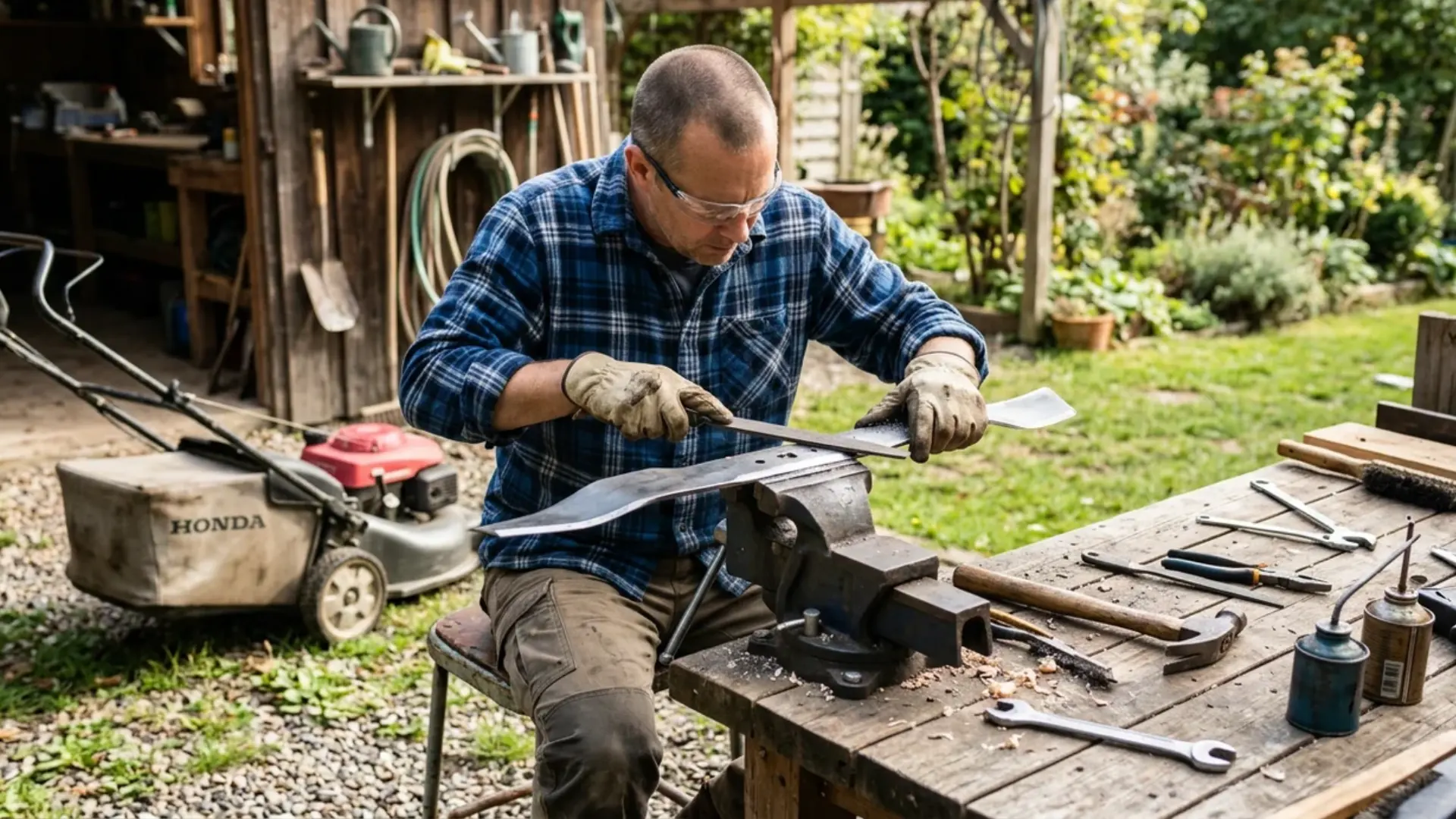
Make sure the mower blade is sharp to avoid ragged, torn cuts.
Raise the mower deck instead of cutting the lawn too short.
Mow slowly and avoid sudden turns to help the mower handle the wet grass.
Skip steep or slippery slopes, since traction and safety matter more than the schedule.
Use side discharge if it suits your setup, and clear out any thick clumps that build up.
Stop immediately if the mower clogs, and never reach under it while it is running.
Clean the mower thoroughly afterward and let it dry before storing it away.
A mower that gets cleaned and maintained properly after a wet mowing session tends to hold up far better over time than one that gets left damp and clogged.
Treat wet mowing as a rare workaround, not a routine, and the lawn and equipment both stay in better shape.
What If the Grass Gets Too Long While You are Waiting for It to Dry?
Several rainy days in a row can leave your lawn noticeably overgrown by the time it finally dries out.
It might be tempting to chop it all back down in one pass, but taking off too much at once stresses the grass and can leave it patchy or scalped.
Once the lawn is dry enough, ease it back to the right height over a couple of sessions instead of one.
Sticking to the one-third rule, never cutting more than a third of the blade length at a time, keeps the grass healthier through the process.
Checking Your Lawn’s Condition Before You Mow
Lawn Condition | Mow? | Why |
|---|---|---|
Light morning dew | Wait until blades dry | Better cut and fewer clumps |
Grass still damp after light rain | Usually wait | Cutting quality and clumping can suffer |
Wet grass but firm soil | Usually wait | Turf can still be difficult to cut cleanly |
Saturated or muddy soil | No | High risk of ruts and soil compaction |
Standing water | No | Lawn is too wet for normal mowing |
Grass and soil dry | Yes | Better mowing conditions |
How to Mow After a Long Stretch of Rain?
A run of rainy days often leaves the lawn both soggy and overgrown at the same time, which makes the first mow back a little trickier.
Purdue University’s Turfgrass Science program notes that rainy spring stretches can make it hard to stick to the one-third rule every single time.
An occasional mow that removes more than a third of the leaf blade usually causes little long-term damage. Even so, easing the lawn back gradually rather than scalping it in one pass is still the safer bet.
Wait until the lawn surface feels firm and mower wheels no longer sink in.
Raise the cutting height first if the grass has grown noticeably long.
Take off only part of the excess growth during the first pass.
Bag or redistribute clumps instead of leaving thick piles behind.
Bring the mower down to its normal height gradually, once the lawn has recovered.
Working through it gradually gives the grass time to bounce back without the stress of an aggressive first cut, and a sharp blade throughout the process makes every pass that much cleaner.
The Bottom Line
Waiting a bit longer before mowing pays off more than it might seem in the moment.
Dry grass cuts cleaner, clumps less, and puts far less strain on both your lawn and your mower than pushing through when everything’s still soaked.
So the next time you are wondering, can you mow wet grass, let the condition of the lawn guide you rather than the clock.
A little patience now saves you patchy strips, soggy ruts, and extra cleanup later, and your yard will look better for it all season long.
Have you ever mowed wet grass by mistake? Drop a comment below and let us know how it turned out.
Frequently Asked Questions (FAQs)
Can Mowing Wet Grass Damage My Mower Over Time?
Yes, repeated wet mowing speeds up rust and dulls blades faster than normal use. Damp clippings stuck to the deck create the perfect conditions for corrosion.
Will Mowing Wet Grass Actually Kill My Lawn?
A single wet mow is unlikely to kill your lawn, though it can leave temporary ruts or ragged cuts. The real damage builds up when it becomes a habit.
Can a Leaf Blower Help Dry the Lawn Faster Before Mowing?
A leaf blower can clear light surface moisture like dew a little faster. It won’t dry out soaked soil underneath, so it’s only useful on mildly damp mornings.
Is It Okay to Fertilize or Treat Weeds Right After Mowing Wet Grass?
It is better to wait, since wet clippings and foliage can affect how well these products stick. Applying them once the lawn dries gives more consistent results.
How Soon Can I Walk on the Lawn After Mowing It Wet?
Giving the lawn a day or so of light recovery time helps it bounce back if the soil got compacted. This matters most when the mow was already borderline too wet.