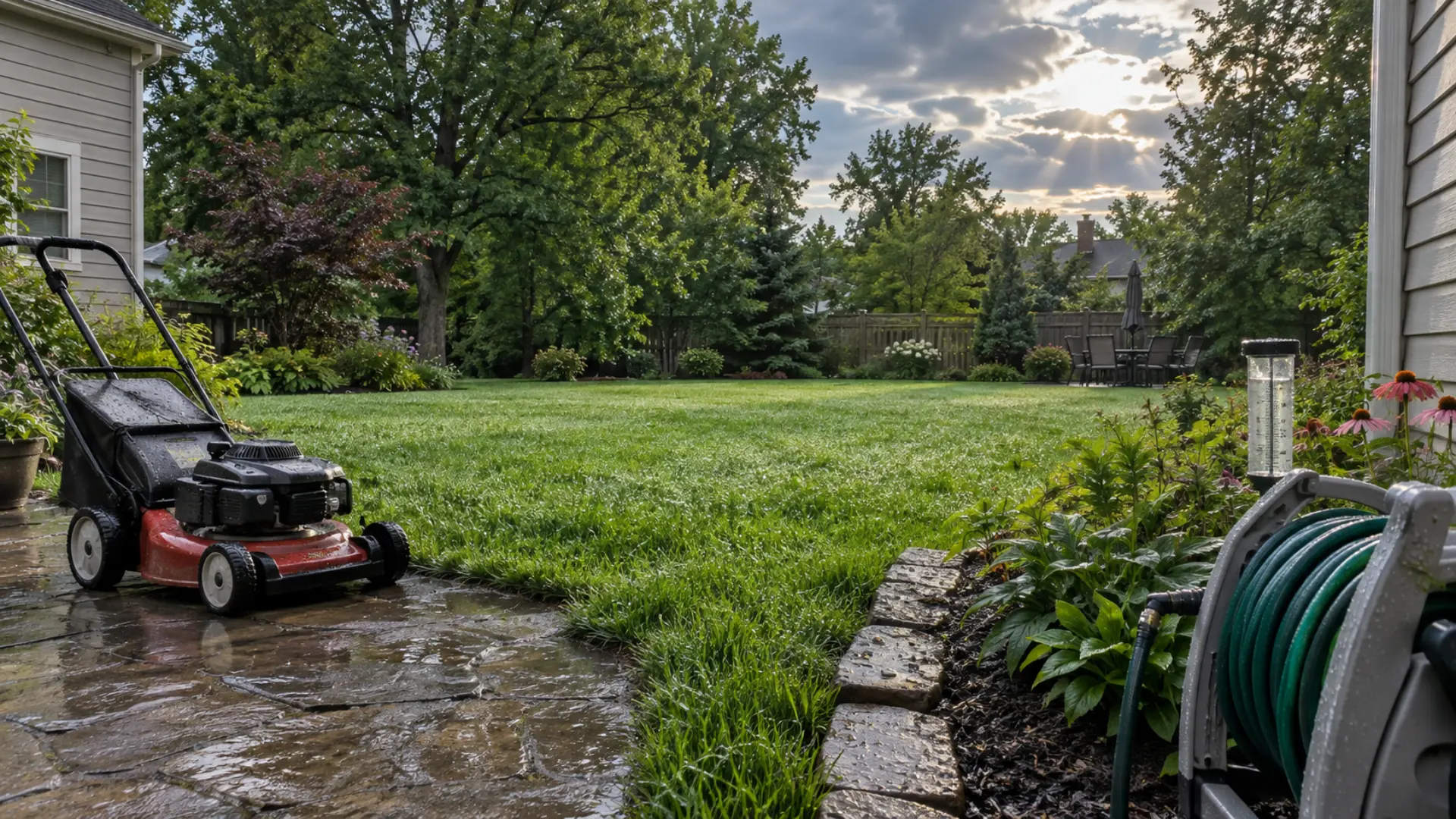

A lawn mower that struggles to cut grass evenly may not need a repair or replacement.
The blade could simply be dull from regular use, contact with small rocks, sticks, and other debris, and it can tear grass instead of cutting it cleanly,
The good news is that the solution can be much simpler than replacing the mower or buying expensive equipment.
Sharpening the blade is a straightforward maintenance task that can restore its cutting edge and help your mower perform better.
Learning how to sharpen a mower blade can also help you avoid unnecessary wear, maintain a healthier-looking lawn, and get more value from the equipment you already have.
How Do You Know When Your Lawn Mower Blade Needs Sharpening?
A lawn mower blade becomes dull over time, especially if you regularly mow rough or uneven areas.
One of the easiest signs is grass that looks torn, ragged, or uneven after mowing instead of having clean cuts. You may also notice brown or yellow tips on the grass a day or two after mowing.
If your mower starts leaving uncut patches or requires more passes to get the job done, the blade may need sharpening.
Excessive vibration or unusual noise can also indicate a damaged or unbalanced blade, so inspect it before sharpening.
As a general rule, check the blade regularly and sharpen it when you notice these signs.
Tools and Materials You Will Need to Sharpen a Blade
The right tools make lawn mower blade sharpening safer, easier, and more precise.
You do not need a large collection of equipment, but a few basic items are essential for removing the blade, sharpening its edge, and checking its balance.
- Work gloves and safety glasses
- Correct-size socket
- Metal file
- Bench and handheld grinder
- Cordless drill with sharpening attachment
- Blade balancer
- Vise
- Wood block or nail
How to Sharpen a Lawn Mower Blade: Step-by-Step Process
Sharpening a lawn mower blade is a straightforward maintenance task when you use the right tools and follow the proper safety steps.
The following process walks you through the job from start to finish.
Step 1: Disconnect the Spark Plug and Position the Mower
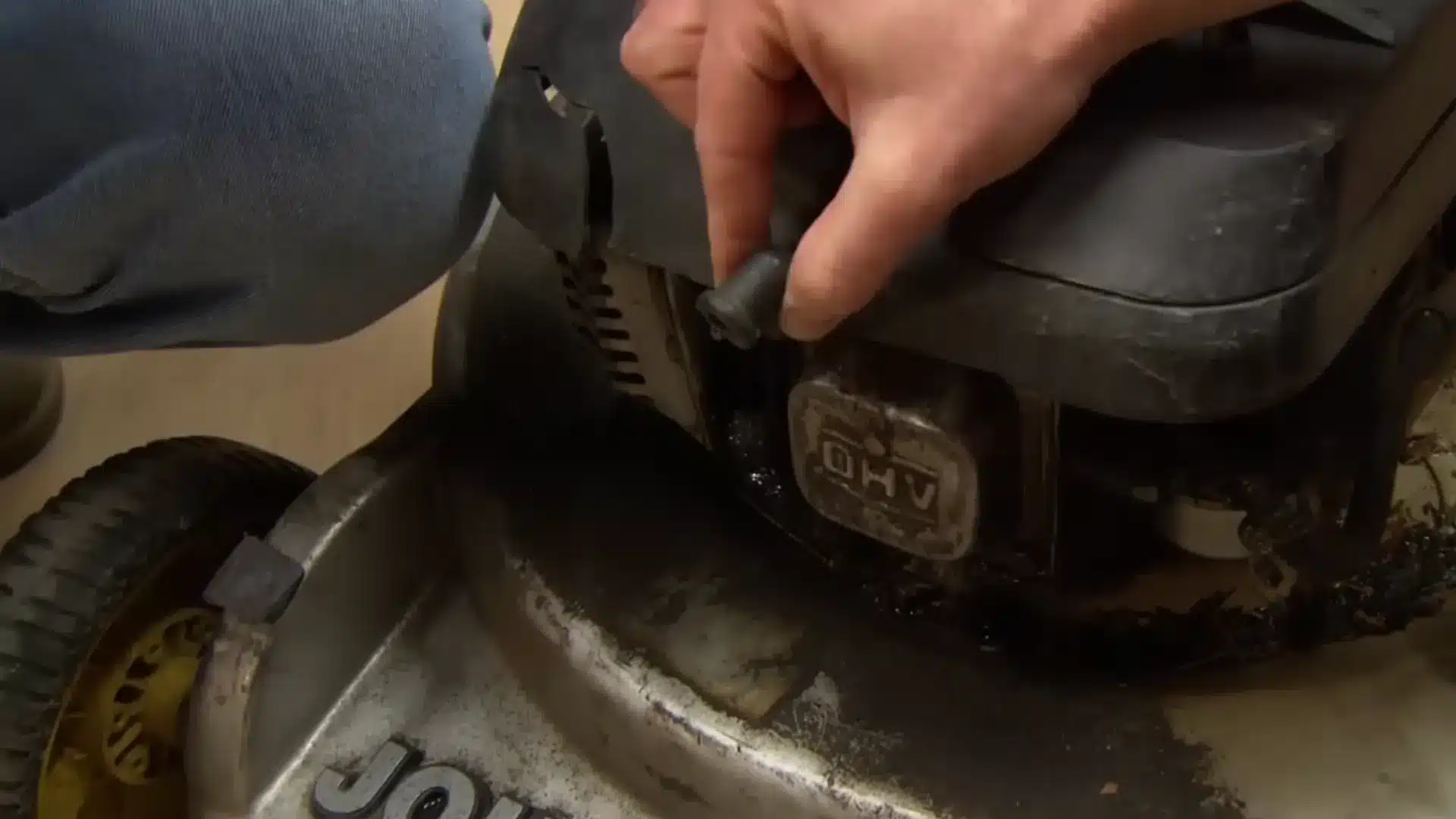
Before working on the mower, disconnect the spark plug wire to prevent the engine from starting accidentally.
If your mower has other starting systems, follow the manufacturer’s safety instructions. When tipping a gas mower, keep the spark plug facing upward.
This position helps prevent oil or fuel from flowing into areas where it should not. Secure the mower so it remains stable while you access the blade underneath.
Step 2: Remove the Mower Blade
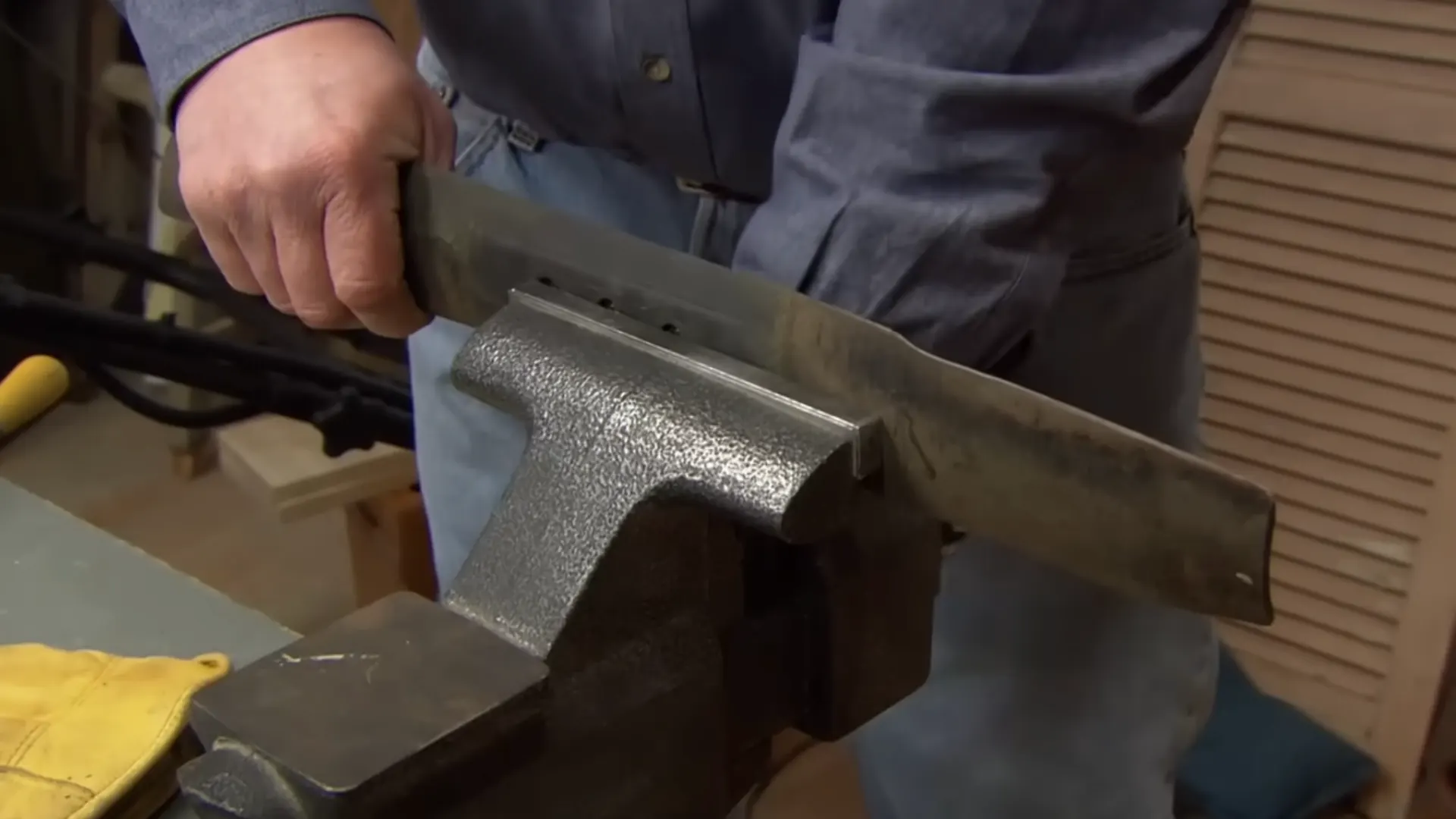
With the mower safely positioned, locate the nuts holding the blade in place. Use a correctly sized socket to loosen them without rounding the nuts.
Wear gloves and hold the blade securely while removing the fasteners.
A piece of wood can help stop the blade from turning, but avoid placing it at an angle and applying excessive force, as this could bend the blade.
Step 3: Sharpen the Blade With a Metal File
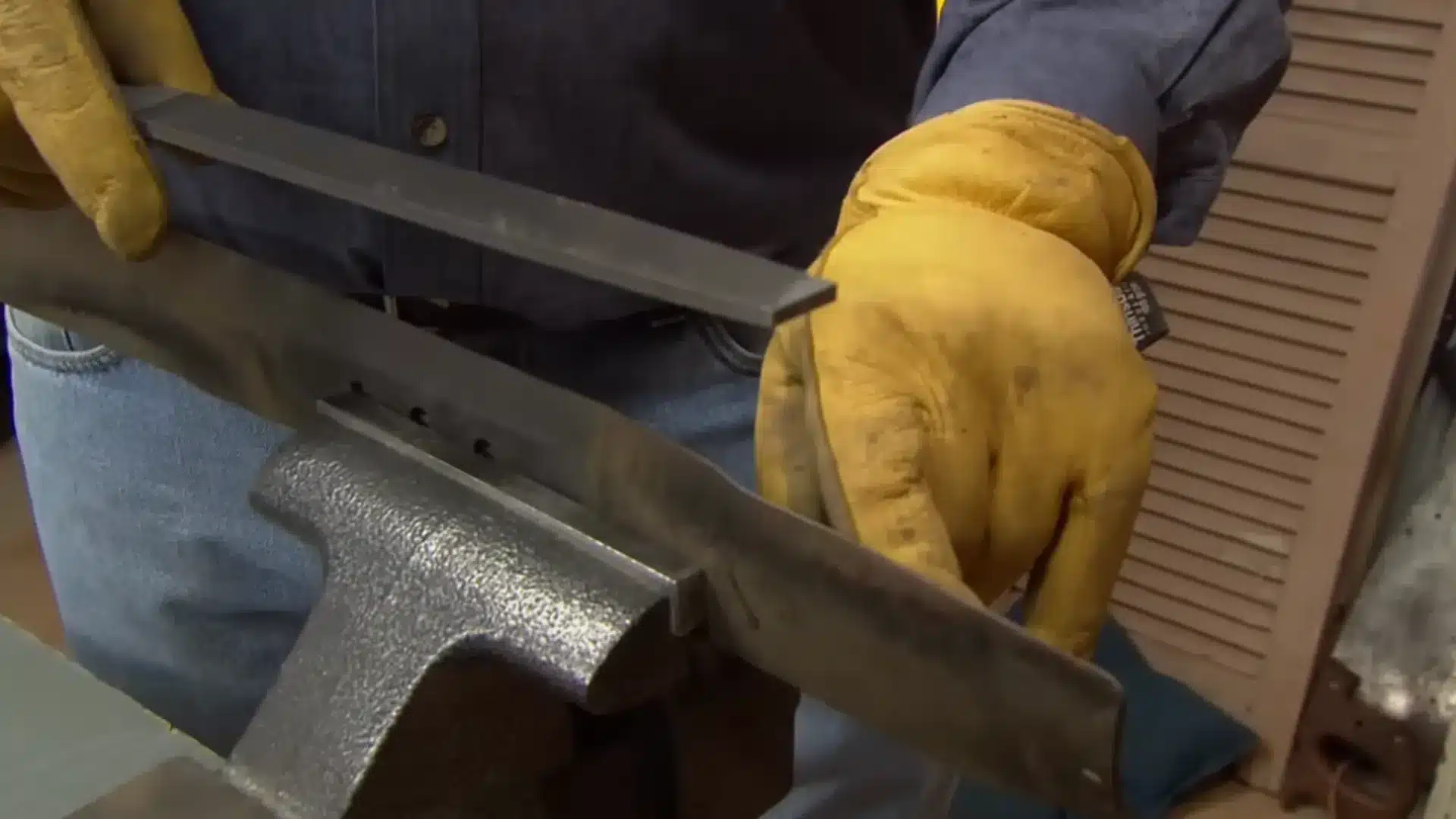
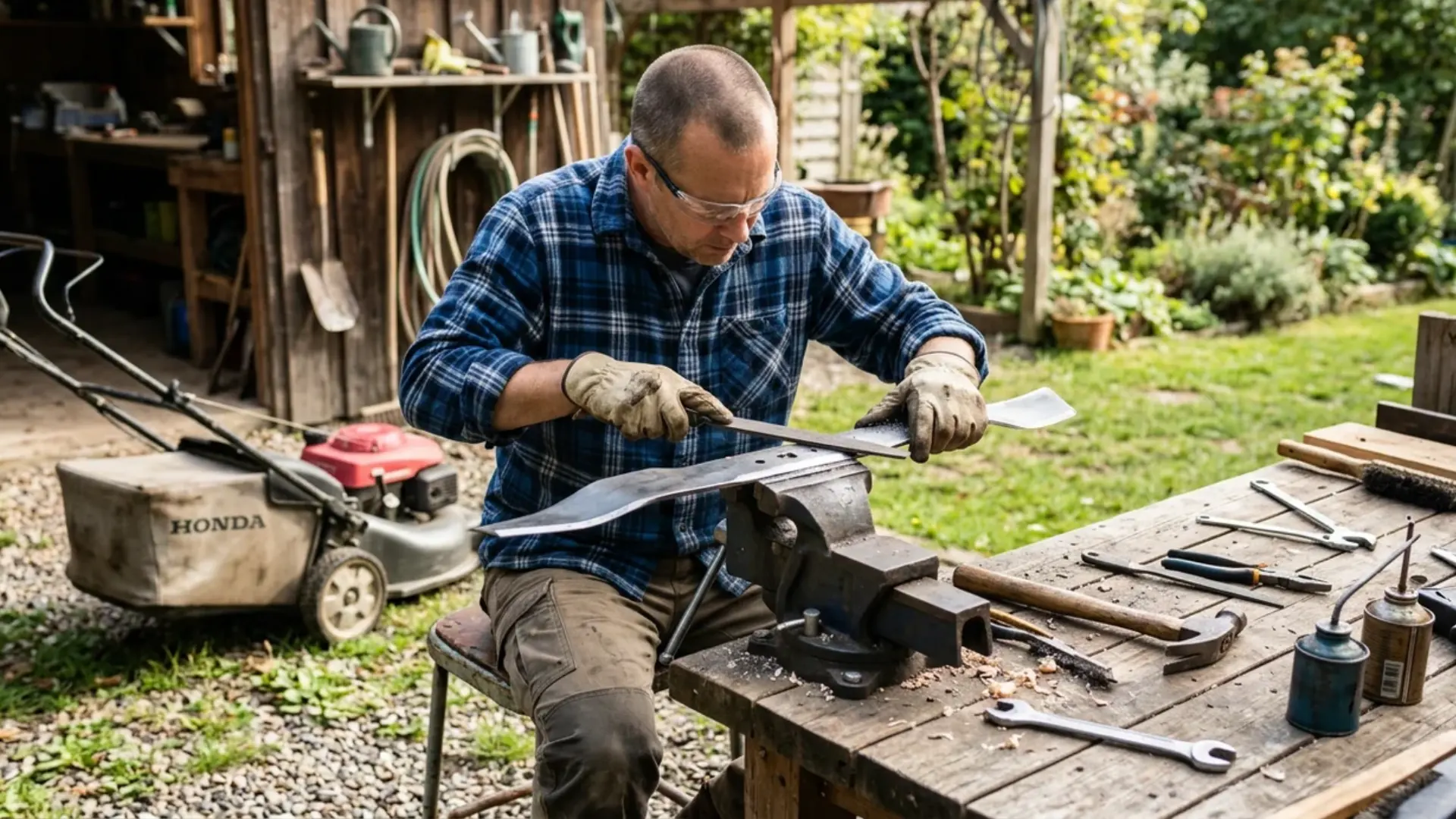
Secure the blade firmly in a vise before sharpening. Put on gloves and follow the existing cutting angle rather than creating a new one.
Using a metal file, make repeated strokes in one direction along the cutting edge. Continue filing until the nicks are removed and the edge becomes even.
Avoid unnecessary filing that removes too much metal. Once finished, run the file along the back side lightly to remove any remaining burrs from the edge.
Step 4: Try a Drill Sharpening Attachment
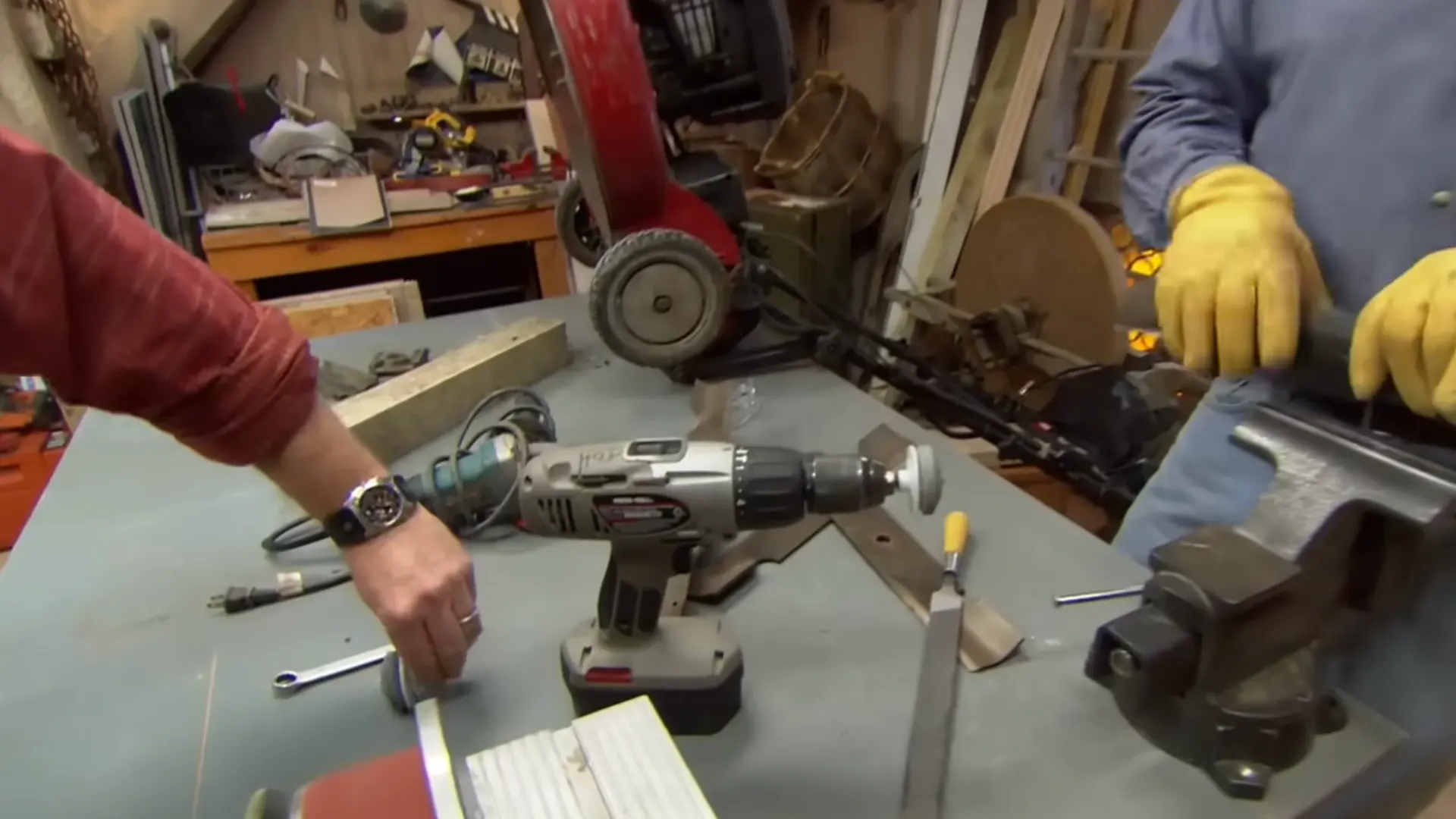
A cordless drill with a mower blade sharpening attachment can speed up the process.
The attachment typically includes a sharpening stone and a plastic guide that helps maintain the correct position against the blade.
Wear safety glasses before operating the drill. Place the guide against the blade edge and move the attachment along the cutting surface.
Step 5: Use a Grinder for Faster Sharpening
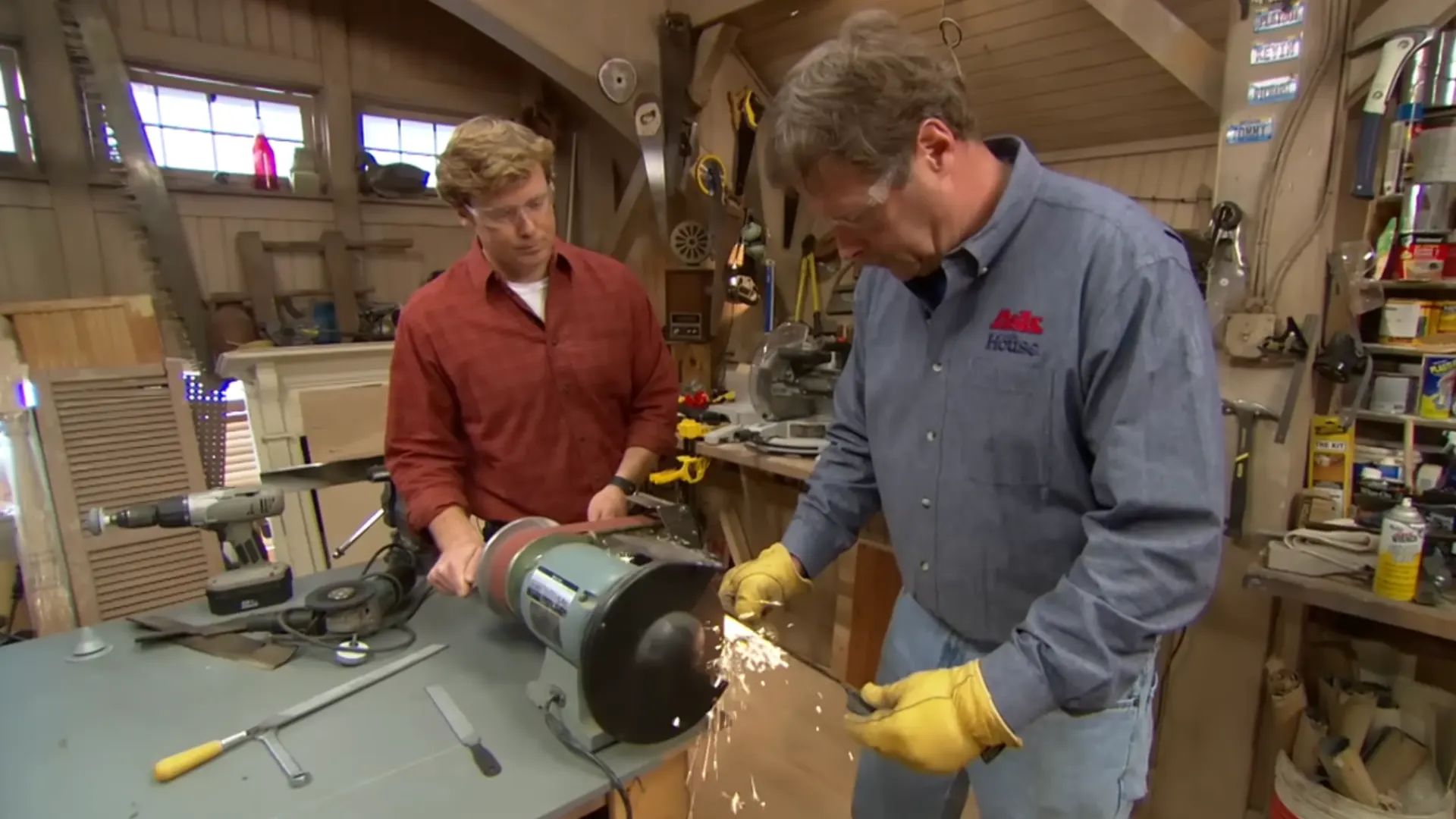
For quicker sharpening, you can use a handheld grinder or bench grinder. A bench grinder is particularly useful when sharpening multiple blades.
Always wear proper eye protection and work carefully because grinding removes metal quickly.
Follow the blade’s existing bevel and avoid holding the blade against the grinder for too long in one spot.
Remove a similar amount of metal from both sides so the blade retains its original shape and remains properly balanced after sharpening.
Step 6: Check the Blade Balance
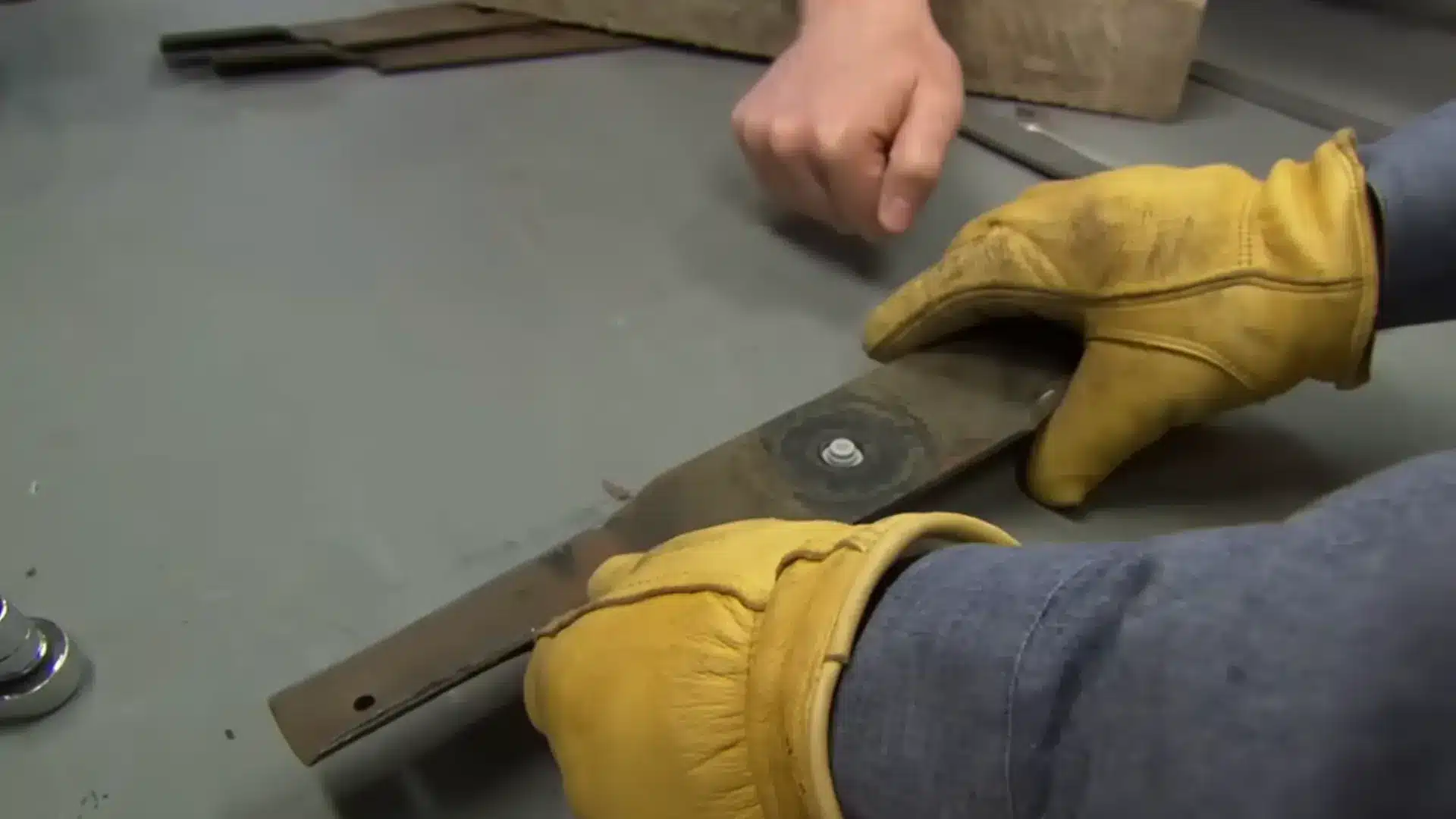
After sharpening, check whether the blade is balanced before reinstalling it. Place the blade on a blade balancer and see whether one side drops lower than the other.
If one end is heavier, carefully remove a small amount of metal from that side and check the balance again. Alternatively, hang the blade from a small nail.
A balanced blade is important because an uneven blade can cause vibration and potentially damage the mower.
Step 7: Clean the Deck and Reinstall the Blade
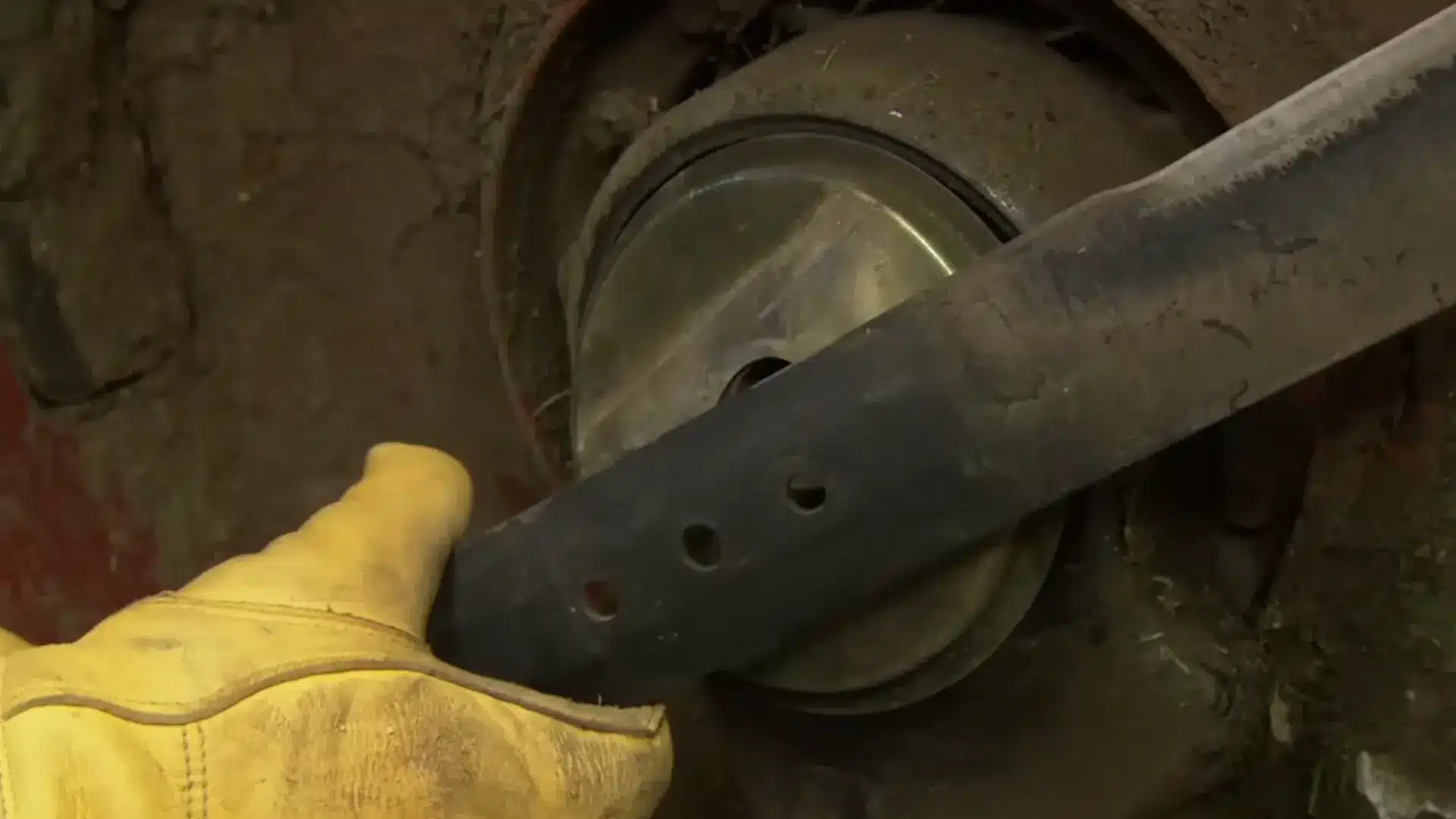
Before reinstalling the sharpened blade, clean accumulated grass and debris from underneath the mower deck.
Then reinstall the blade in its correct orientation and tighten the fasteners securely.
Make sure the blade is seated properly and follows the mower manufacturer’s installation requirements. Once everything is secure, reconnect the spark plug wire.
This tutorial is based on a helpful video by This Old House. You can check out the original video on their YouTube channel here or watch it below.
How Often Should You Sharpen a Lawn Mower Blade?
You should generally sharpen your lawn mower blade after every 20 to 25 hours of mowing, or about once or twice during the mowing season for regular home use.
However, the right frequency depends on your lawn and mowing conditions.
If your yard has rocks, sticks, sandy soil, or rough ground, the blade can become dull faster and may need more frequent sharpening.
A healthy, evenly cut lawn also does a lot of the work behind, since garden beds and seating areas tend to stand out more against cleanly cut grass.
Check the blade regularly for signs of wear, such as ragged grass cuts, uneven mowing, or brown grass tips.
If you mow often, inspect the blade every month during the active season. Sharpening the blade before it becomes very dull helps your mower cut grass more cleanly and work efficiently.
When Should You Replace a Lawn Mower Blade Instead of Sharpening It?
Sharpening can restore a dull lawn mower blade, but it cannot fix serious damage.
Using a damaged blade can cause poor cutting, excessive vibration, and potential safety problems during mowing.
Check the blade carefully for these warning signs:
- Even small cracks can grow during use and cause the blade to break.
- A badly bent blade may not balance properly after sharpening.
- Replace the blade when too much metal has been worn away from repeated sharpening.
- Heavy corrosion can weaken the blade and make it unsafe to use.
- Large chips or missing sections may require replacement instead of sharpening.
A new blade is often the better choice when the damage is beyond simple sharpening.
Always choose a replacement that matches your mower’s make and model. Before installing it, check the manufacturer’s instructions for proper fit and installation.
Mistakes to Avoid When Sharpening a Lawn Mower Blade
Sharpening a lawn mower blade is simple when done correctly, but a few common mistakes can damage the blade or create safety risks.
Avoid these errors to sharpen your blade safely and maintain proper mower performance.
- Skipping safety steps: Always disconnect the spark plug or battery before removing or handling the mower blade.
- Using the wrong sharpening angle: Follow the blade’s original bevel to maintain its proper cutting performance.
- Removing too much metal: Avoid excessive grinding or filing because it can weaken the blade and affect balance.
- Ignoring blade balance: Check the blade balance after sharpening to prevent excessive vibration and uneven mower performance.
- Sharpening a damaged blade: Replace cracked, severely bent, or heavily worn blades instead of trying to sharpen them.
Conclusion
Keeping your lawn mower blade sharp does not have to be difficult or time-consuming.
With the right tools, a little care, and proper safety precautions, you can sharpen the blade and get cleaner, more even cuts from your mower.
Remember to inspect the blade regularly, sharpen it when it becomes dull, and check its balance before putting it back.
A well-maintained blade can also help your mower work more efficiently.
How often do you sharpen your mower blade? Share your routine in the comments below.
Frequently Asked Questions
How Do I Know Which Side of the Blade to Sharpen?
Sharpen the top side of the cutting edge, following the existing factory bevel. Avoid sharpening the flat underside of the blade.
What Angle Should a Lawn Mower Blade Be Sharpened At?
Follow the blade’s existing bevel rather than creating a new angle. Most lawn mower blades have a sharpening angle of about 45 degrees.
Is It Bad to Over-Sharpen a Mower Blade?
Yes. An overly thin edge can dull and chip quickly. Sharpen evenly until the edge is clean and firm, not razor-sharp.