
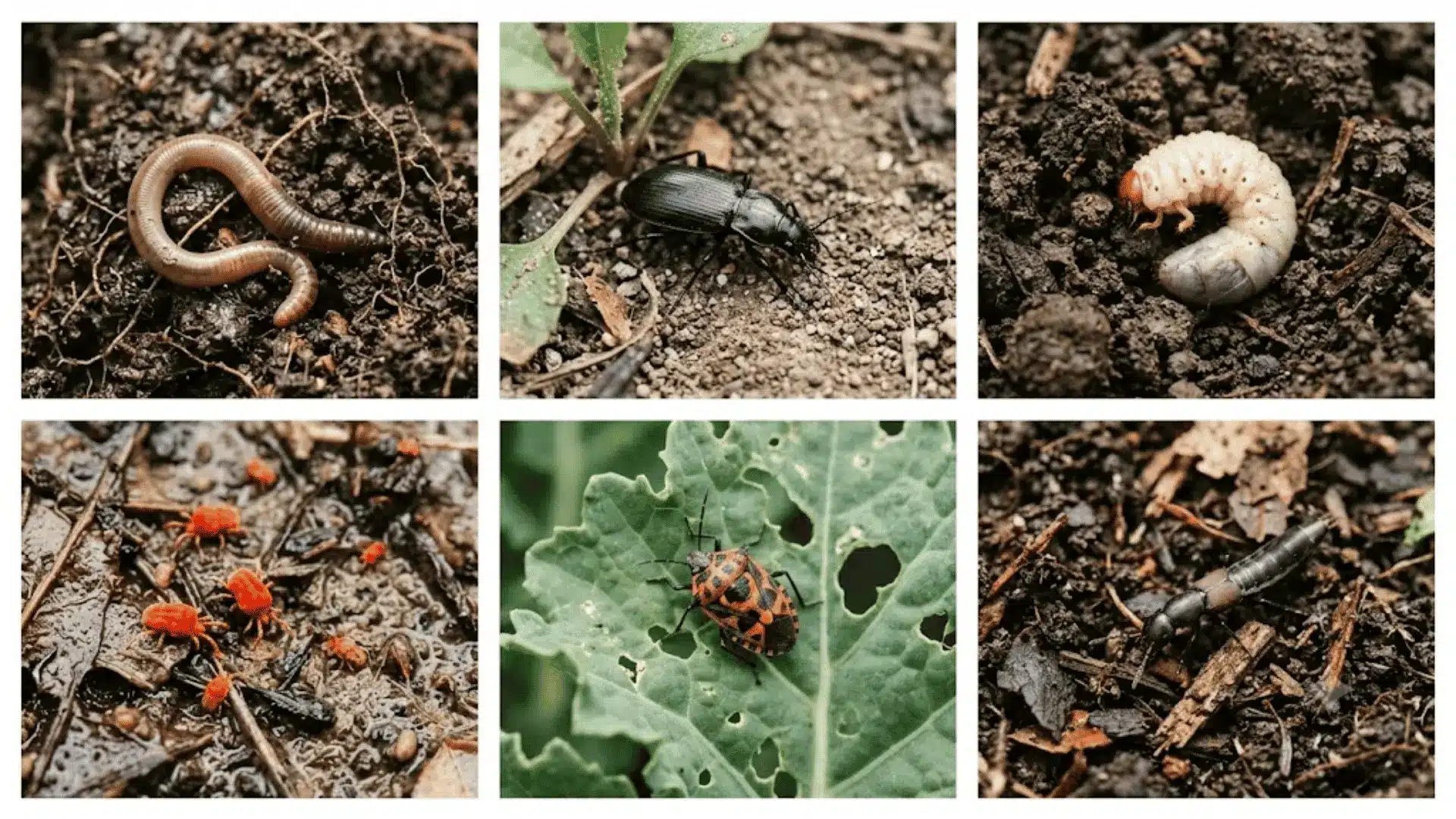
Soil bugs don’t announce themselves. By the time your plants start struggling, something beneath the surface has already been at work for a while.
Learning soil bugs identification early means catching the difference between a pest quietly destroying roots and a beneficial organism doing exactly what your garden needs.
This post covers the most common soil dwellers, what they signal about your garden’s health, and how to read the signs your soil is already leaving for you.
Why are Soil Bugs Important in Every Garden?
Not every bug in your soil is a problem. Many insects and organisms living underground are actively breaking down organic matter, aerating the soil, and supporting root health in ways that directly benefit your plants.
The issue starts when the balance tips. Harmful pests outnumber beneficial organisms, feeding on roots, spreading disease, and weakening plants from the ground up.
Soft, yellowing leaves, stunted growth, or soil that seems to repel water are all signs worth paying attention to.
Understanding what lives in your soil gives you a real advantage before visible damage even begins.
Soil Bugs Identification Basics
Getting a proper ID on soil insects comes down to a few reliable methods most gardeners overlook.
- Look at color, size, and body shape since these three details narrow down most species quickly.
- Check the damage pattern on roots and leaves for clues about what type of pest is feeding.
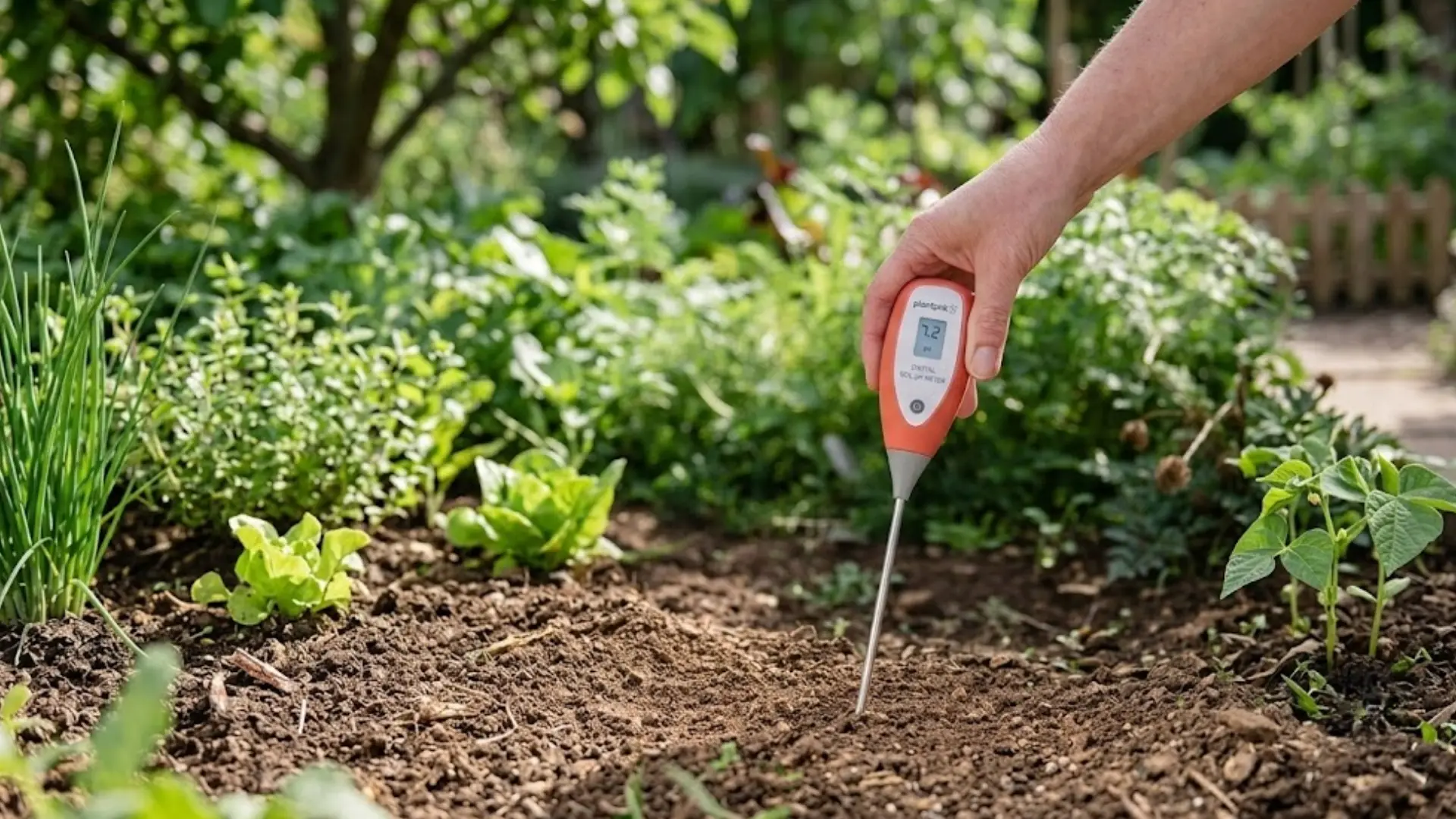
- Dig a small soil sample a few inches deep near struggling plants to spot insects directly.
- Use a magnifying glass or loupe for smaller organisms that are easy to miss with the naked eye.
- Cross-reference with a field guide or identification app to confirm what you’re dealing with before treating.
The earlier you build this habit, the less guesswork your garden care involves.
Common Beneficial Soil Bugs You Should Protect
Some of the most hardworking members of your garden never show up above ground. These soil dwellers quietly improve drainage, break down organic matter, and keep pest populations in check.
1. Earthworms
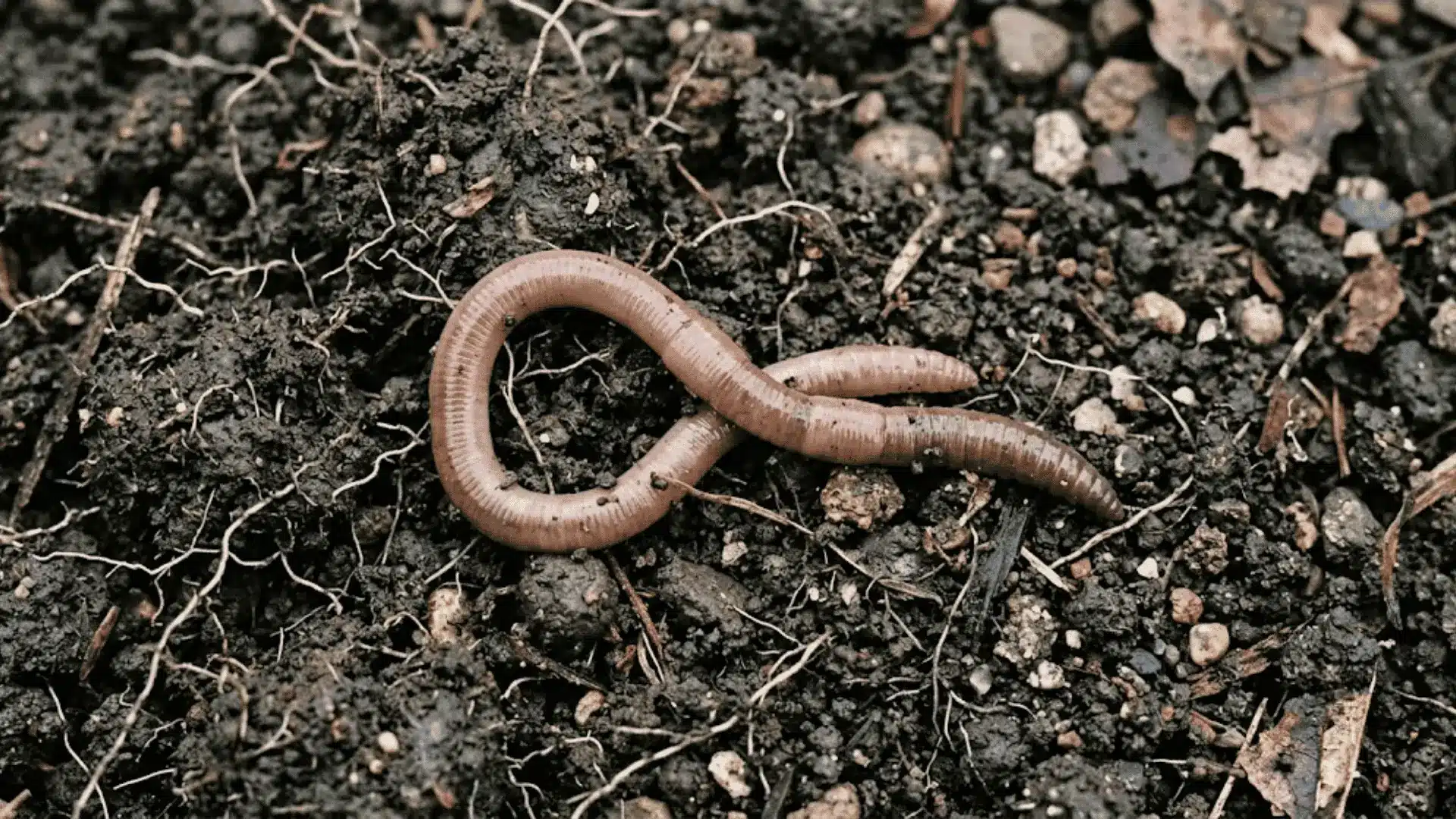
- Appearance: Long, segmented, pinkish-brown body with no legs
- Size: Typically a few inches long, varies by species
- Harmful or Beneficial: Beneficial
Earthworms are one of the strongest indicators of healthy, living soil. As they move through the ground, they aerate compacted earth and leave behind castings that are naturally rich in nutrients.
Their presence means your soil has good organic matter content and the right moisture balance to support plant root development.
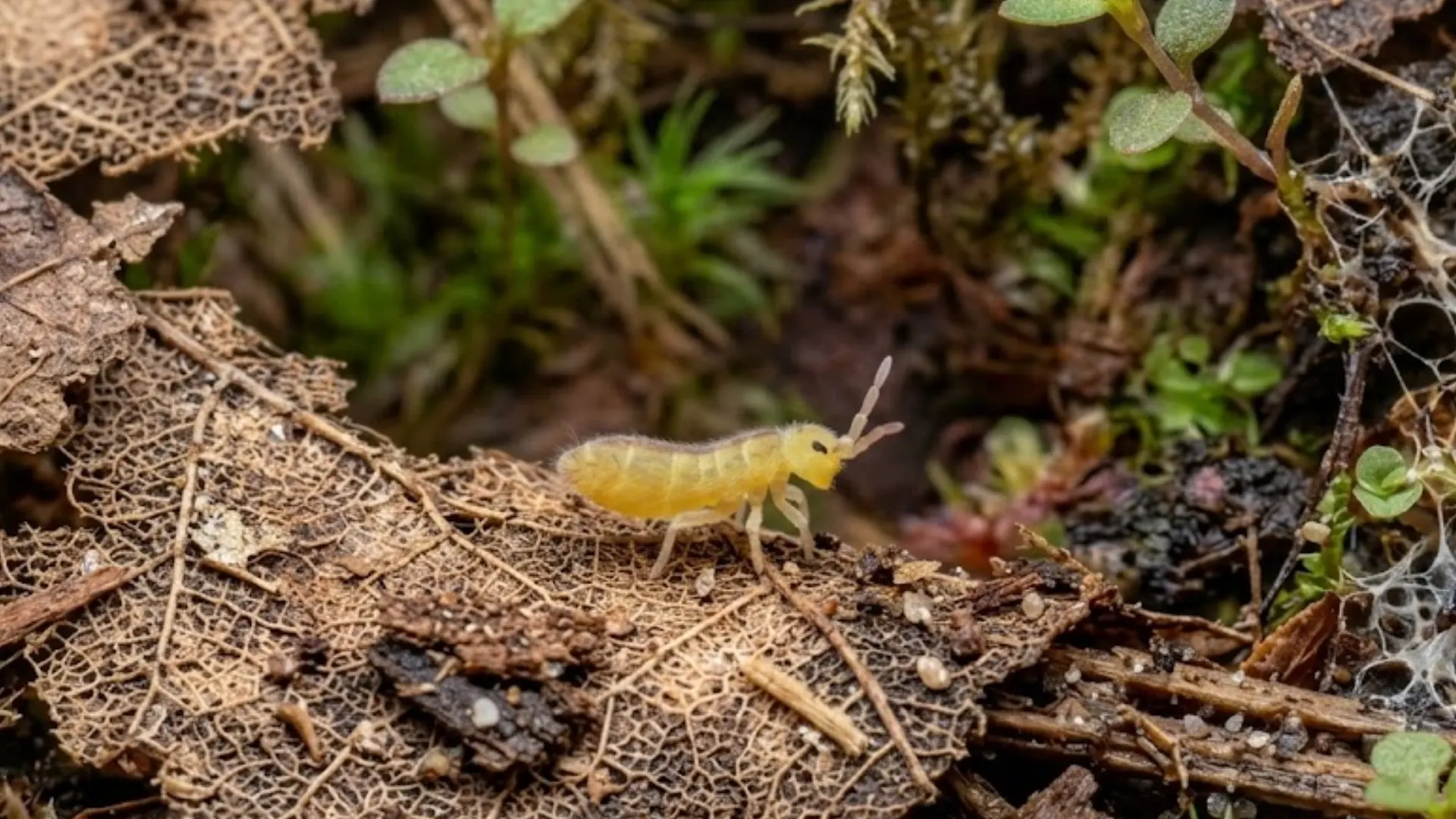
2. Springtails
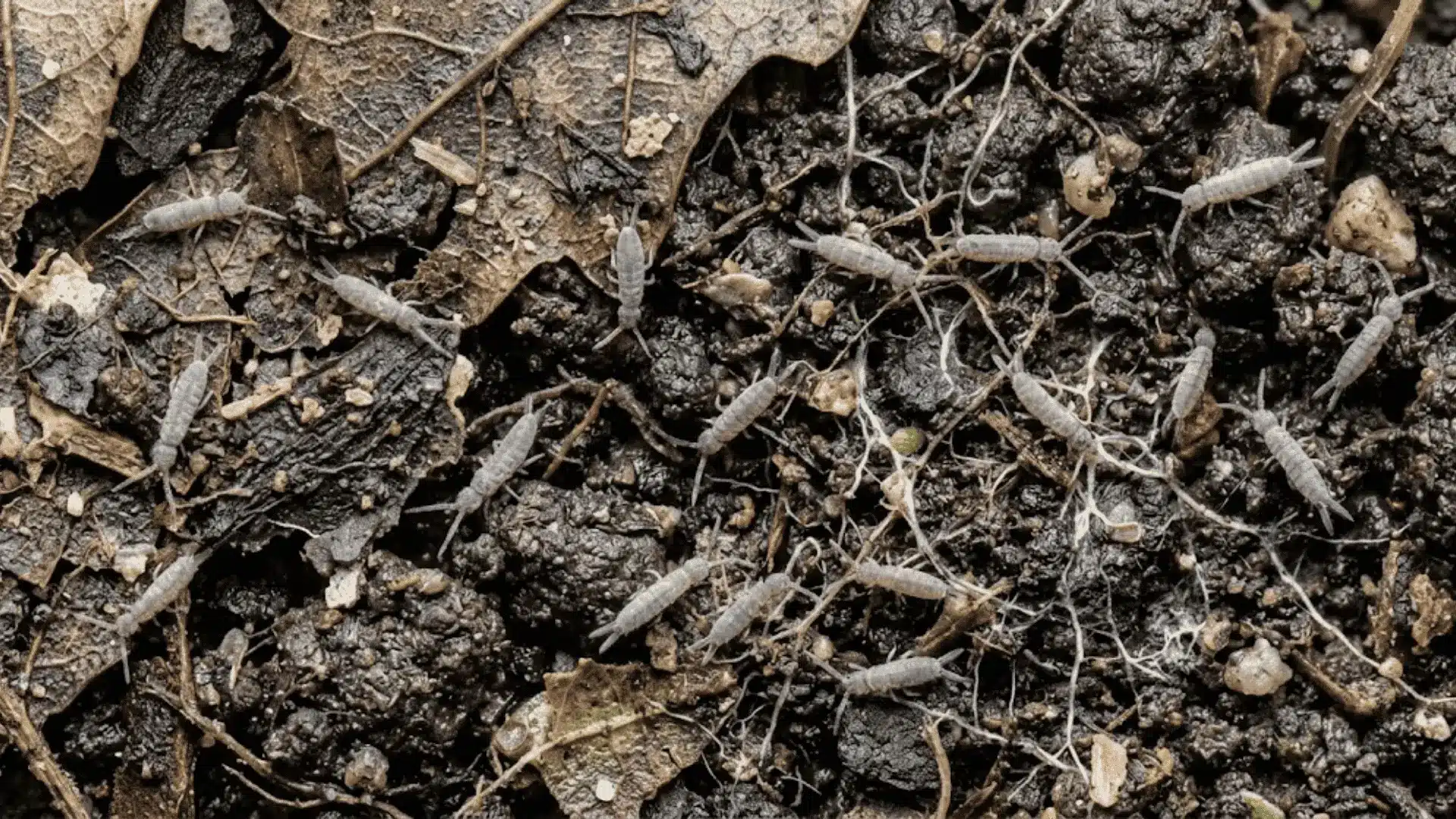
- Appearance: Tiny, pale or gray, with a forked tail-like structure used for jumping
- Size: Barely visible to the naked eye
- Harmful or Beneficial: Beneficial
Springtails thrive in damp, organic-rich soil and are almost always harmless to plants. They feed on decaying plant material and fungal spores, which actually helps keep mold from building up around roots.
If you notice them jumping when you disturb moist soil, it is a sign your soil ecosystem is fairly active and balanced.
3. Ground Beetles
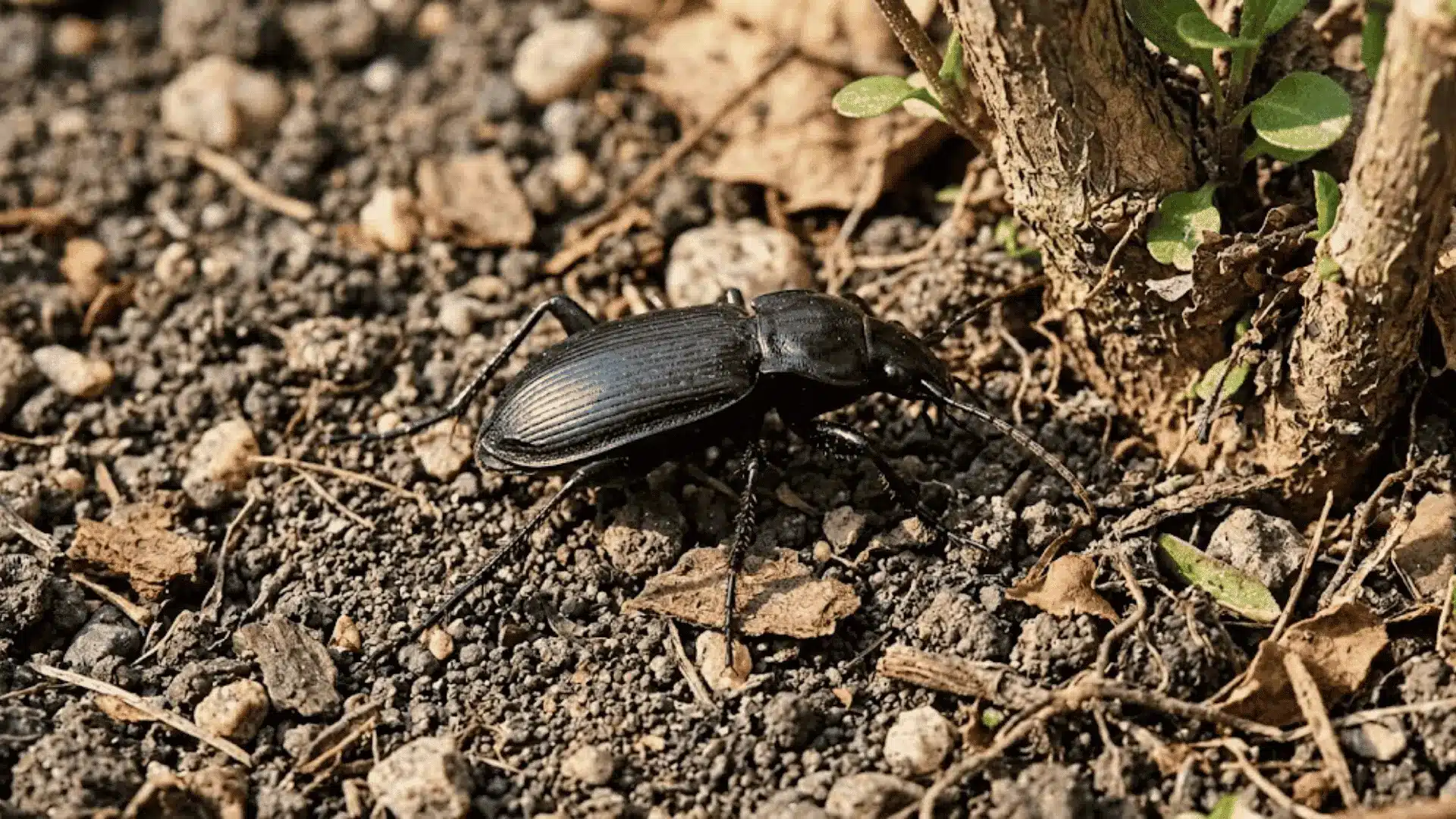
- Appearance: Shiny, dark-colored body, often black or dark brown, with long legs
- Size: Medium-sized, roughly half an inch to an inch
- Harmful or Beneficial: Beneficial
Ground beetles are natural pest controllers that hunt at night. They feed on slugs, soil-dwelling larvae, and small insects that would otherwise damage your plant roots.
Finding them near garden beds is a good sign. Avoiding chemical pesticides helps keep their population stable, which means less manual pest management on your end.
4. Rove Beetles
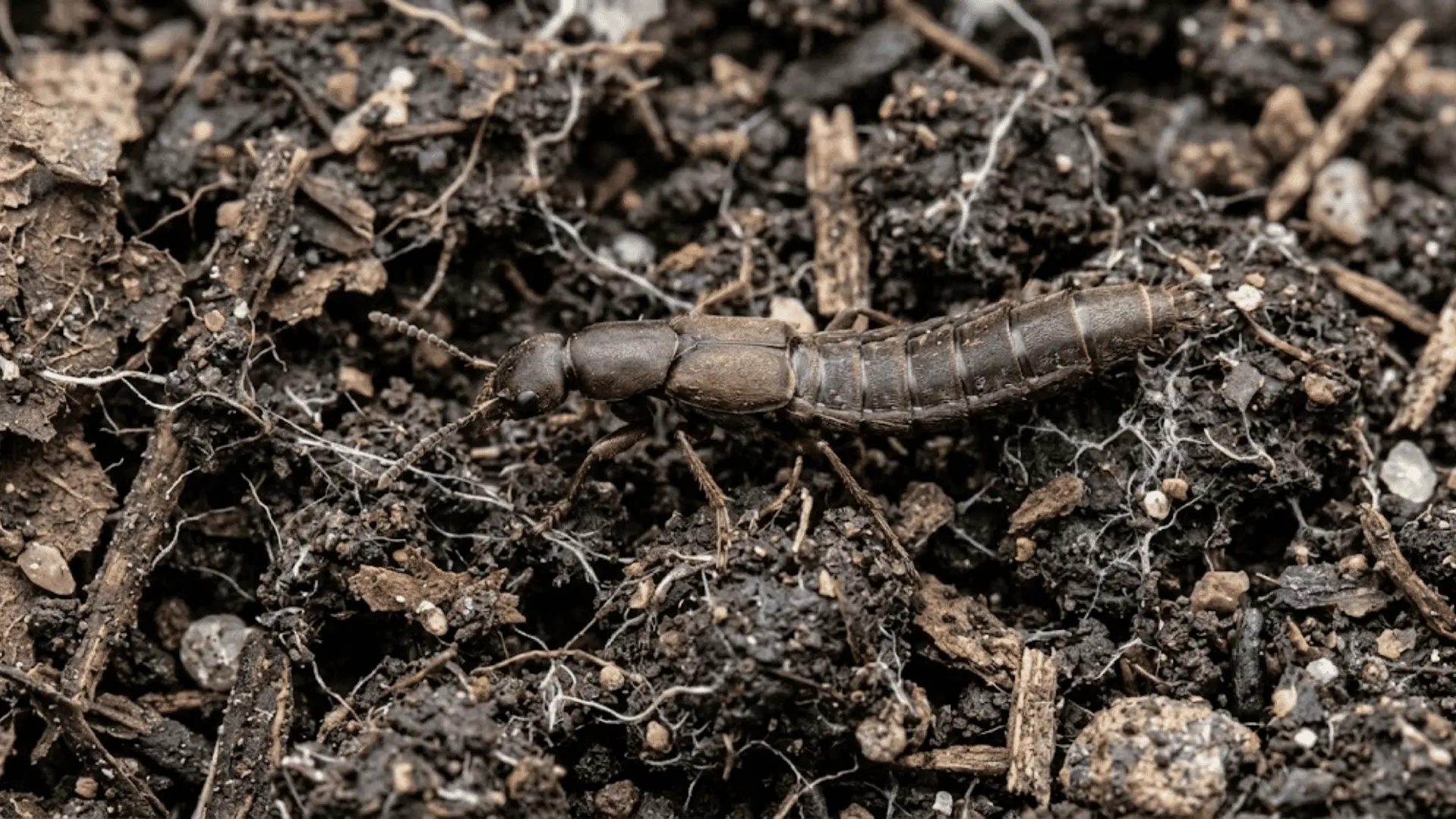
- Appearance: Slender body with short wing covers, exposing the abdomen; usually dark brown or black
- Size: Small to medium, varies widely by species
- Harmful or Beneficial: Beneficial
Rove beetles are aggressive predators that move fast through the soil hunting fly larvae, mites, and other harmful insects.
They are easy to confuse with earwigs because of their exposed abdomen, but rove beetles do not pinch and are entirely on your side. Compost-heavy garden beds tend to attract them naturally.
5. Pill Bugs and Sow Bugs
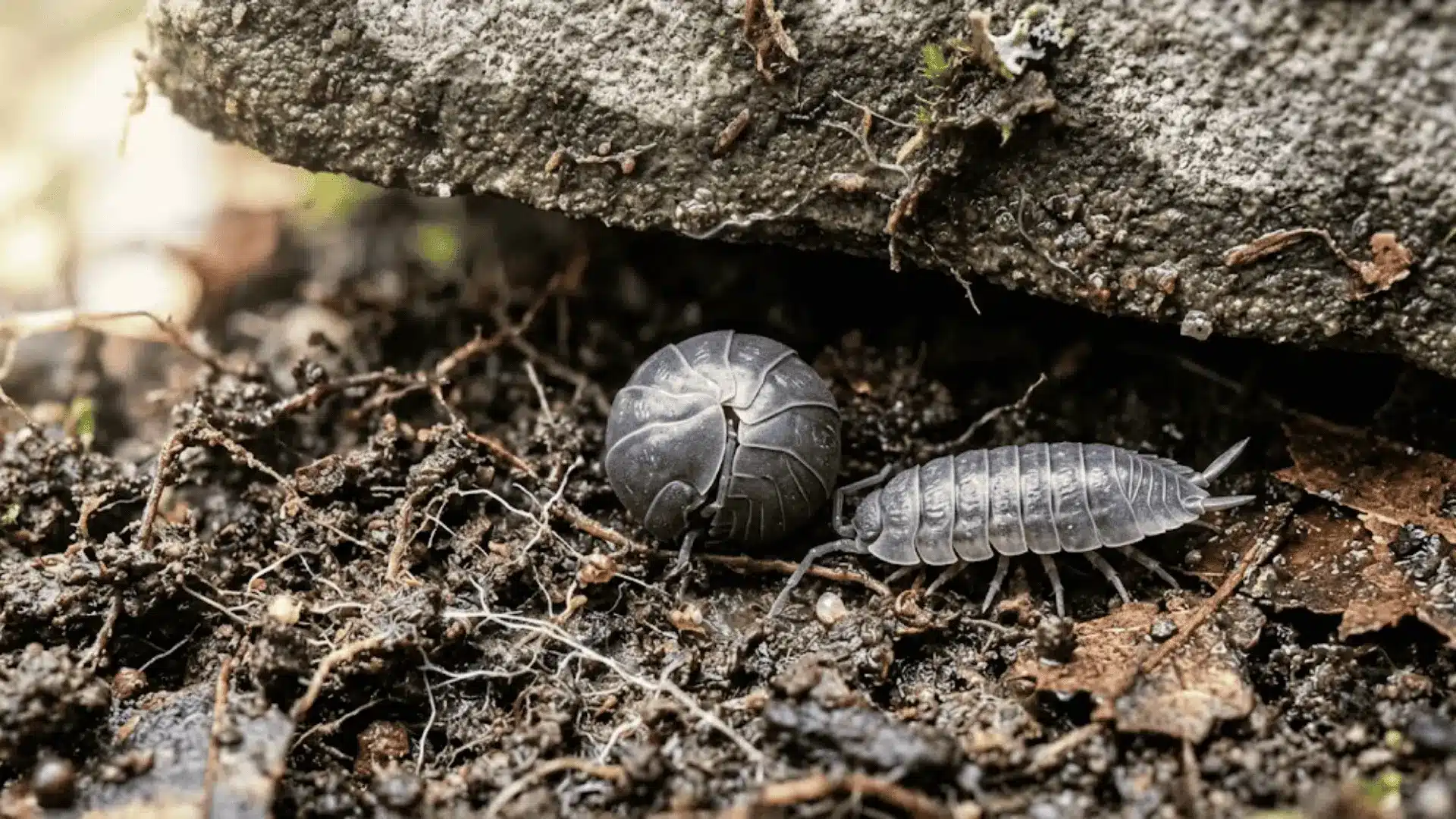
- Appearance: Gray, armored, segmented body; pill bugs roll into a ball while sow bugs remain flat
- Size: Small, roughly a quarter to half an inch
- Harmful or Beneficial: Mostly beneficial, occasionally problematic in very large numbers
Both are decomposers, not true insects, and spend their time breaking down dead plant material into usable organic matter. Pill bugs curl into a tight ball when threatened, while sow bugs stay flat and move faster.
In healthy gardens, both contribute more than they take, though very large populations may occasionally nibble on tender seedlings.
Common Harmful Soil Bugs and Garden Pests
Not everything living in your soil is working in your favor. These common garden pest identification targets are worth knowing by sight before they cause serious root damage.
6. Fungus Gnat Larvae
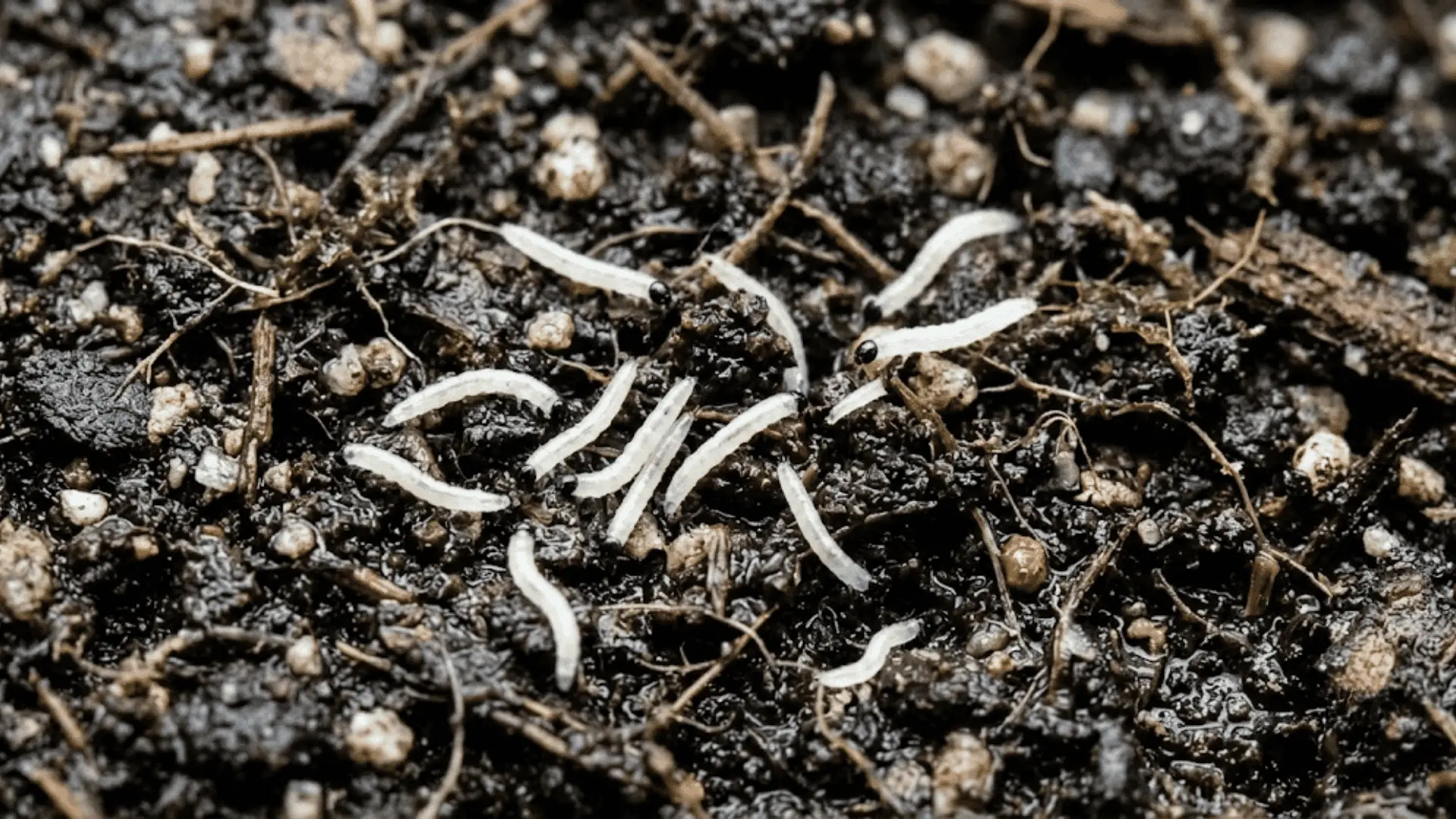
- Appearance: Tiny, white, thread-like body with a black head
- Size: Very small, under a quarter inch
- Harmful or Beneficial: Harmful
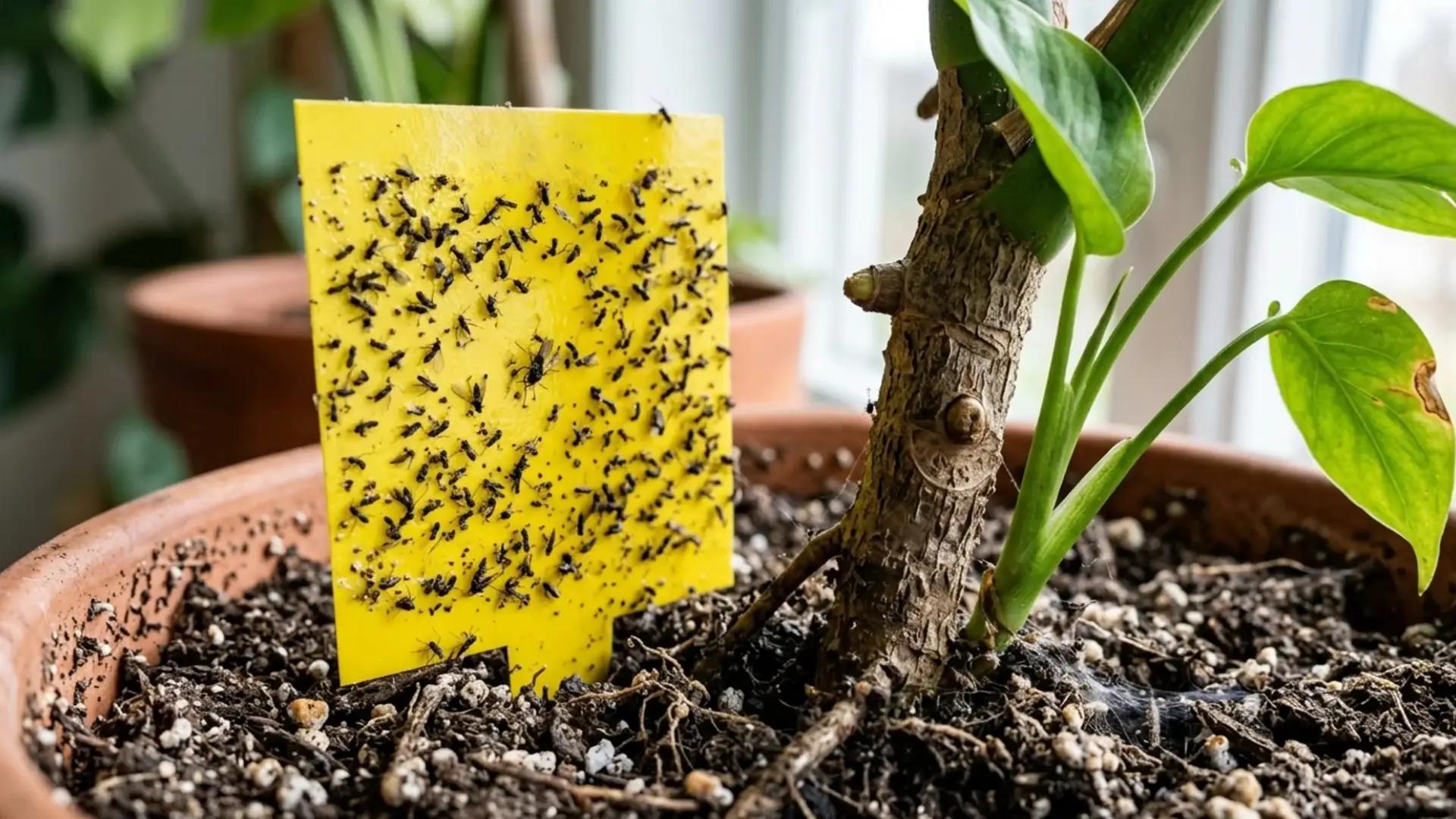
Fungus gnat larvae live in the top layer of moist soil and feed on root hairs and organic matter. The adults are mostly a nuisance, but the larvae cause real damage by stunting root growth, especially in seedlings and houseplants.
Yellowing leaves and slow growth in consistently damp soil are the most common signs of an active infestation.
7. Root Aphids
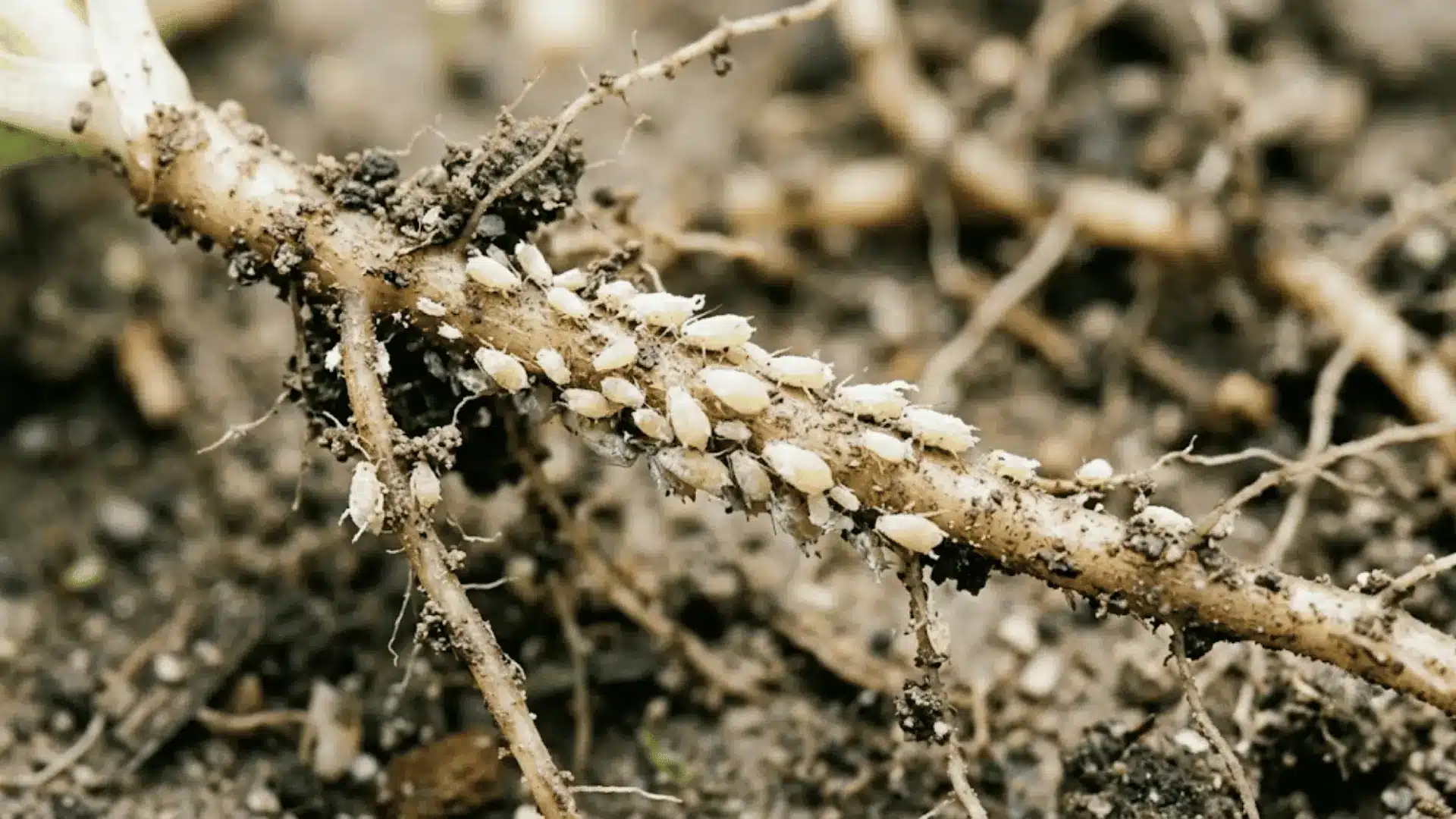
- Appearance: Pale yellow, white, or light green, waxy coating, pear-shaped body
- Size: Very small, similar in size to common aphids
- Harmful or Beneficial: Harmful
Root aphids are easy to miss because they feed entirely underground, making them harder to catch early.
They cluster on roots and draw out sap, causing wilting, yellowing, and a decline that looks like a watering or nutrient issue. Pulling up a struggling plant and checking the root zone for tiny, clustered insects quickly confirms the problem.
8. Wireworms
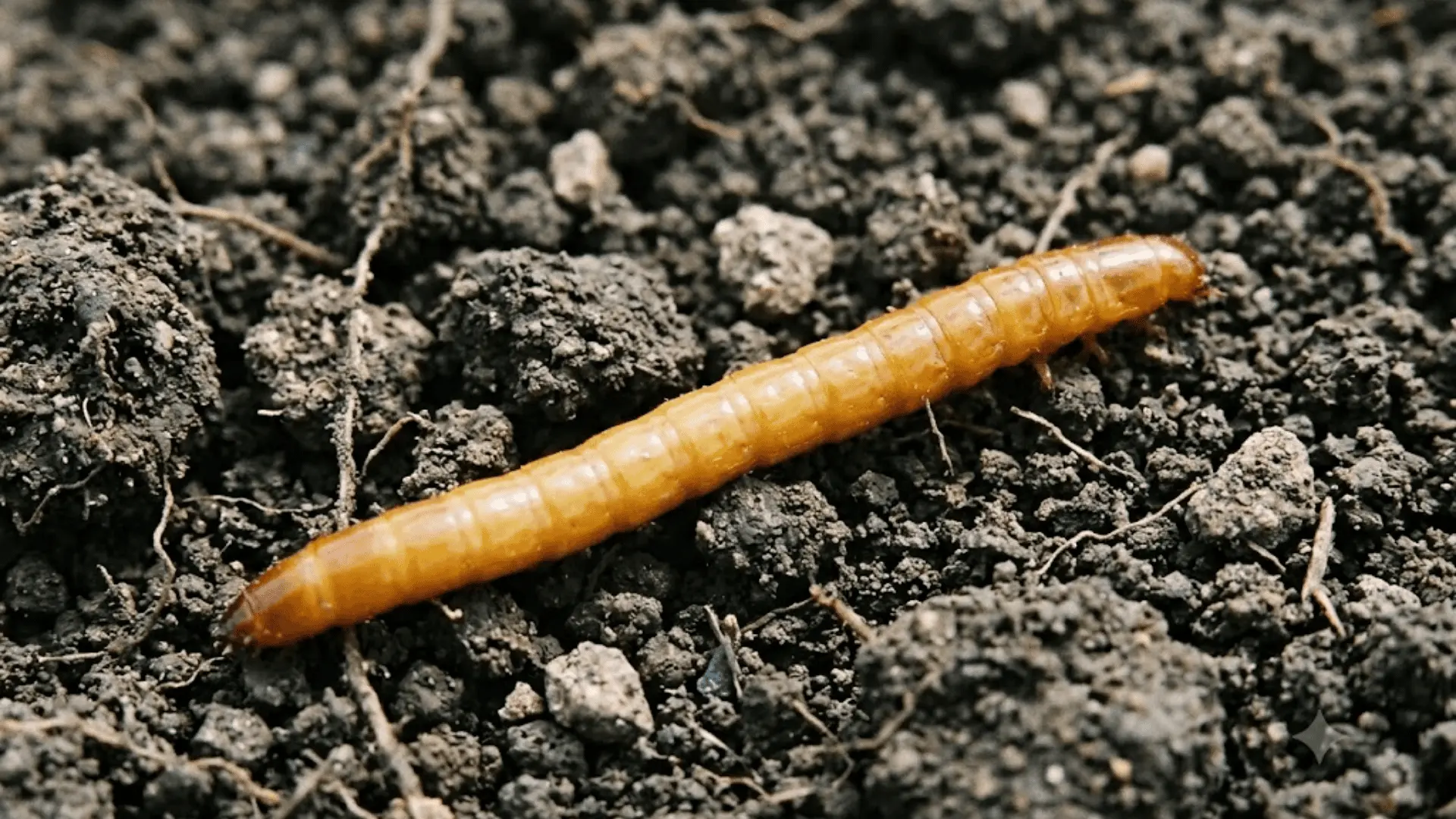
- Appearance: Long, slender, smooth, and hard-bodied with a yellowish to orange-brown color
- Size: Up to an inch long
- Harmful or Beneficial: Harmful
Wireworms are the larvae of click beetles and spend several years in the soil before maturing. They tunnel through seeds, roots, and tubers, making them especially destructive to carrots, potatoes, and corn.
Newly tilled soil or beds converted from grassy areas tend to have higher wireworm populations, so checking before planting saves a lot of crop loss.
9. White Grubs
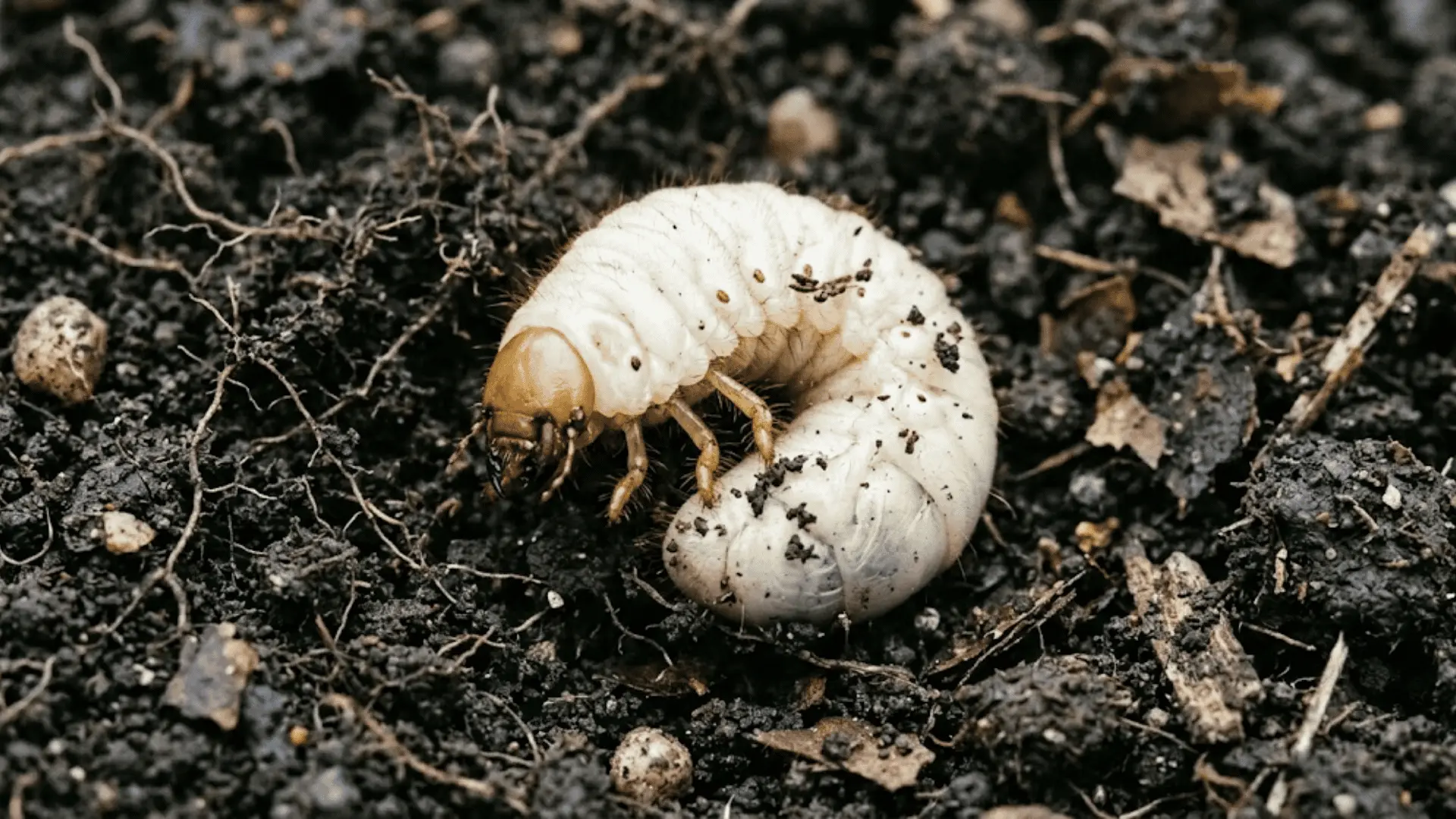
- Appearance: Creamy white, C-shaped body with a tan or orange head and visible legs
- Size: Ranges from half an inch to over an inch depending on species and life stage
- Harmful or Beneficial: Harmful
White grubs are the larvae of beetles, including Japanese beetles and June bugs. They live in the soil, feeding on grass roots and plant root systems, causing brown patchy lawns and weak, easily uprooted plants.
Heavy grub populations attract digging animals like raccoons and skunks, so sudden soil disturbance can actually be a secondary sign of an infestation.
10. Cutworms
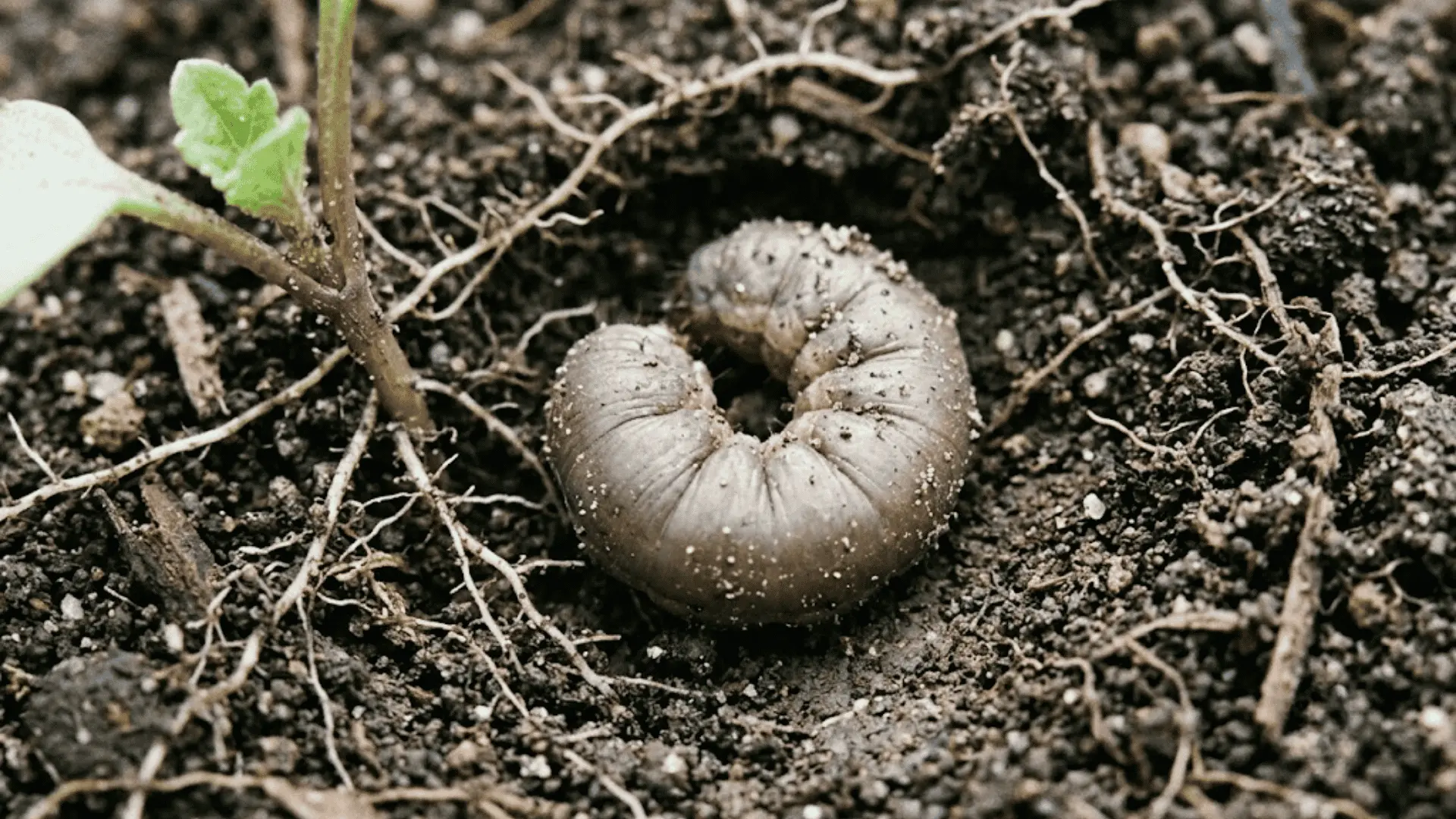
- Appearance: Plump, smooth, gray or brown caterpillar that curls into a C shape when disturbed
- Size: Up to two inches long
- Harmful or Beneficial: Harmful
Cutworms hide just below the soil surface during the day and feed at night, cutting seedlings off at the base cleanly. If young transplants are falling over with no visible above-ground pest, cutworms are usually the culprit.
Digging around the base of affected plants typically reveals one curled up close by. They are most active in spring when new planting begins.
11. Root Maggots
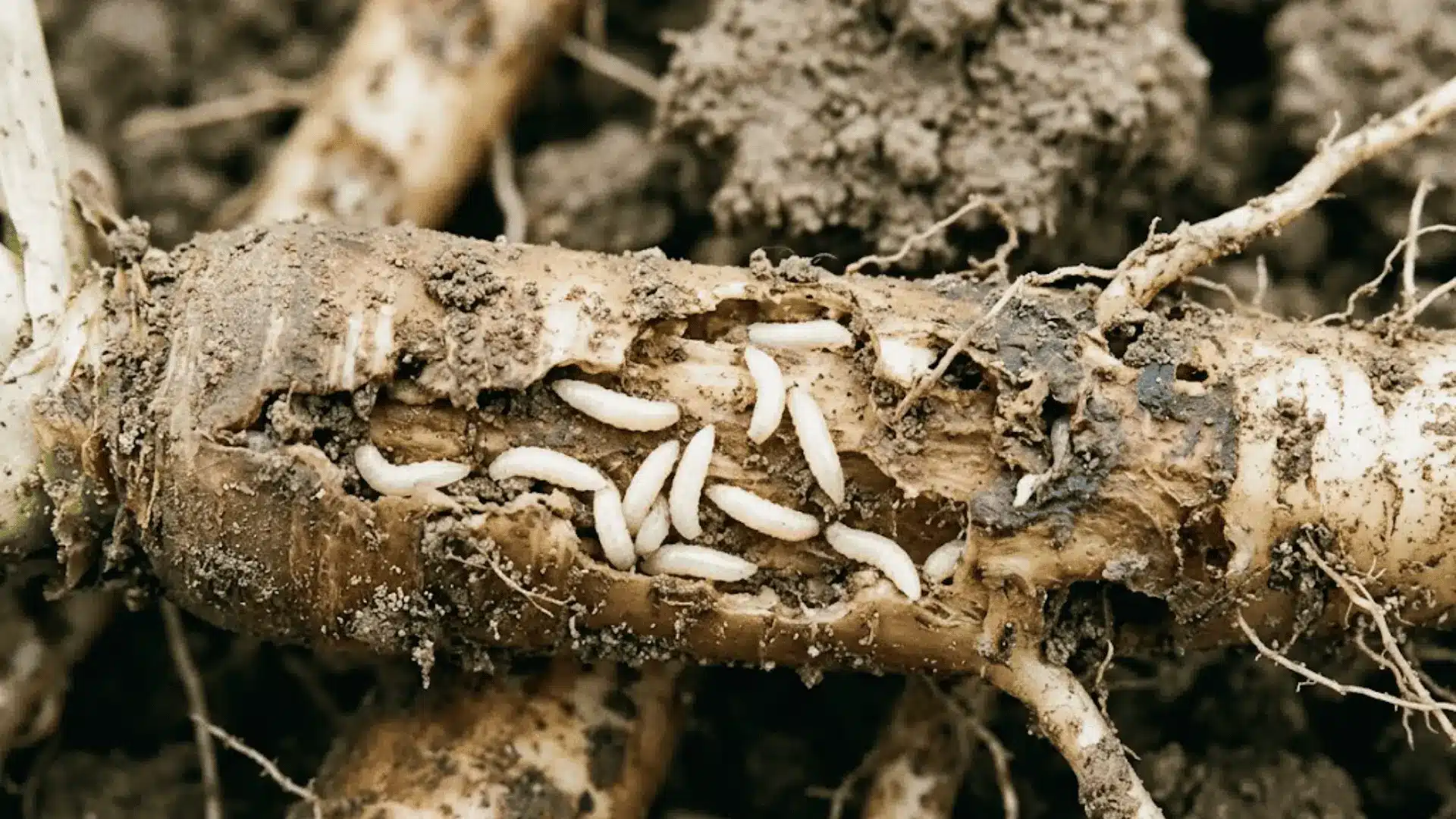
- Appearance: Small, white, legless, and tapered at one end
- Size: Under half an inch
- Harmful or Beneficial: Harmful
Root maggots are the larvae of several fly species and tunnel directly into root vegetables and brassica roots, causing rot and decay from the inside.
Wilting plants with roots that appear tunneled or discolored are a strong indicator. Row covers placed at planting time are one of the most effective ways to prevent the adult flies from laying eggs in the first place.
Red and Black Bug Identification Guide
Red and black coloring in insects usually signals something worth paying attention to, though not always danger. Here is how to tell the most common red and black bug identification cases apart.
12. Boxelder Bugs
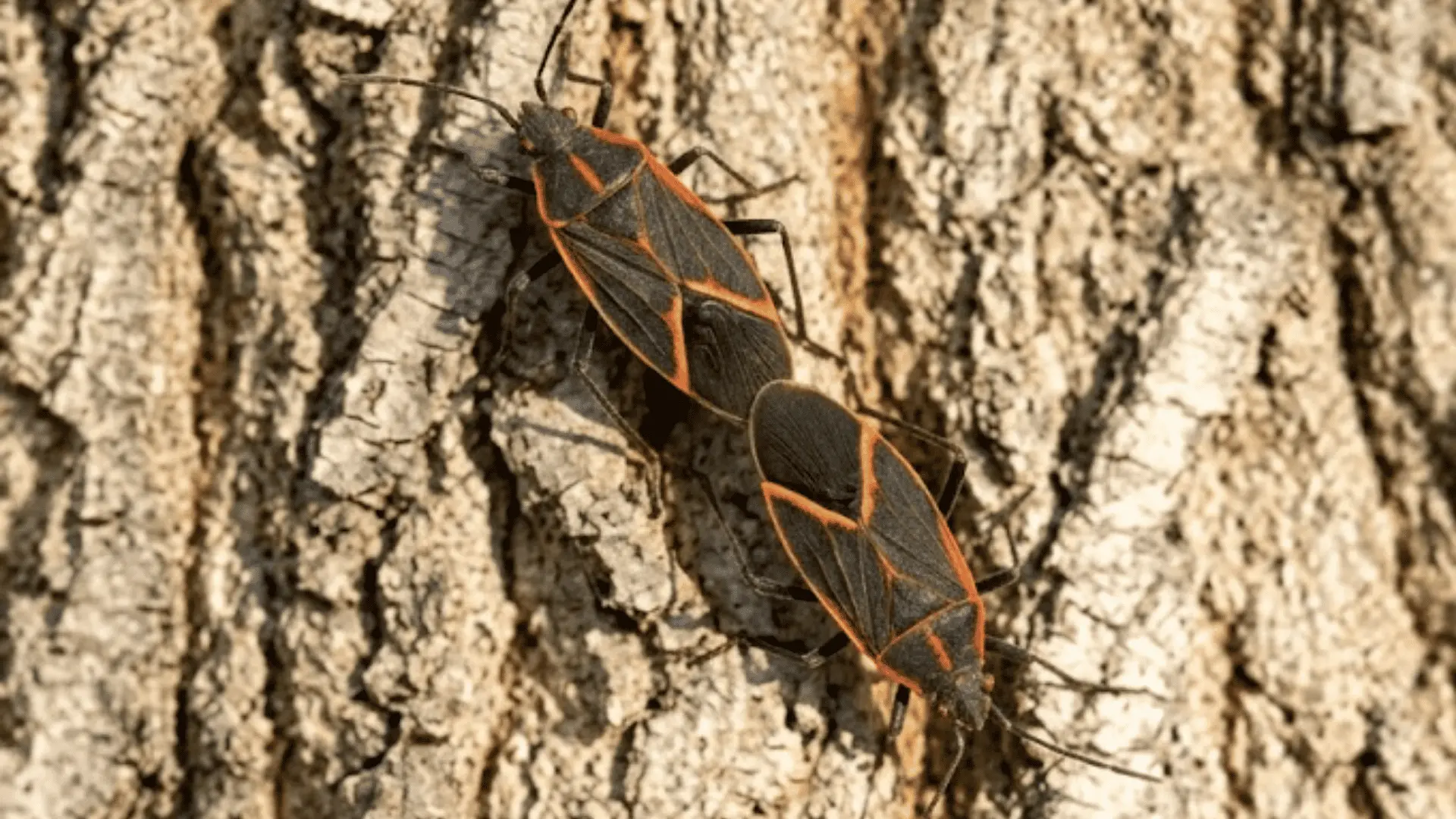
- Appearance: Black body with distinctive red-orange markings along the edges and wing veins
- Size: About half an inch long
- Harmful or Beneficial: Mostly harmless to plants, nuisance pest
Boxelder bugs are most commonly seen clustering on warm surfaces in the fall as they search for overwintering spots. They feed on boxelder, maple, and ash seeds but rarely cause significant plant damage.
Indoors, they become a nuisance, but in the garden, they are largely cosmetic. Large clusters near foundation plants or tree trunks are the most common sighting pattern.
13. Harlequin Bugs
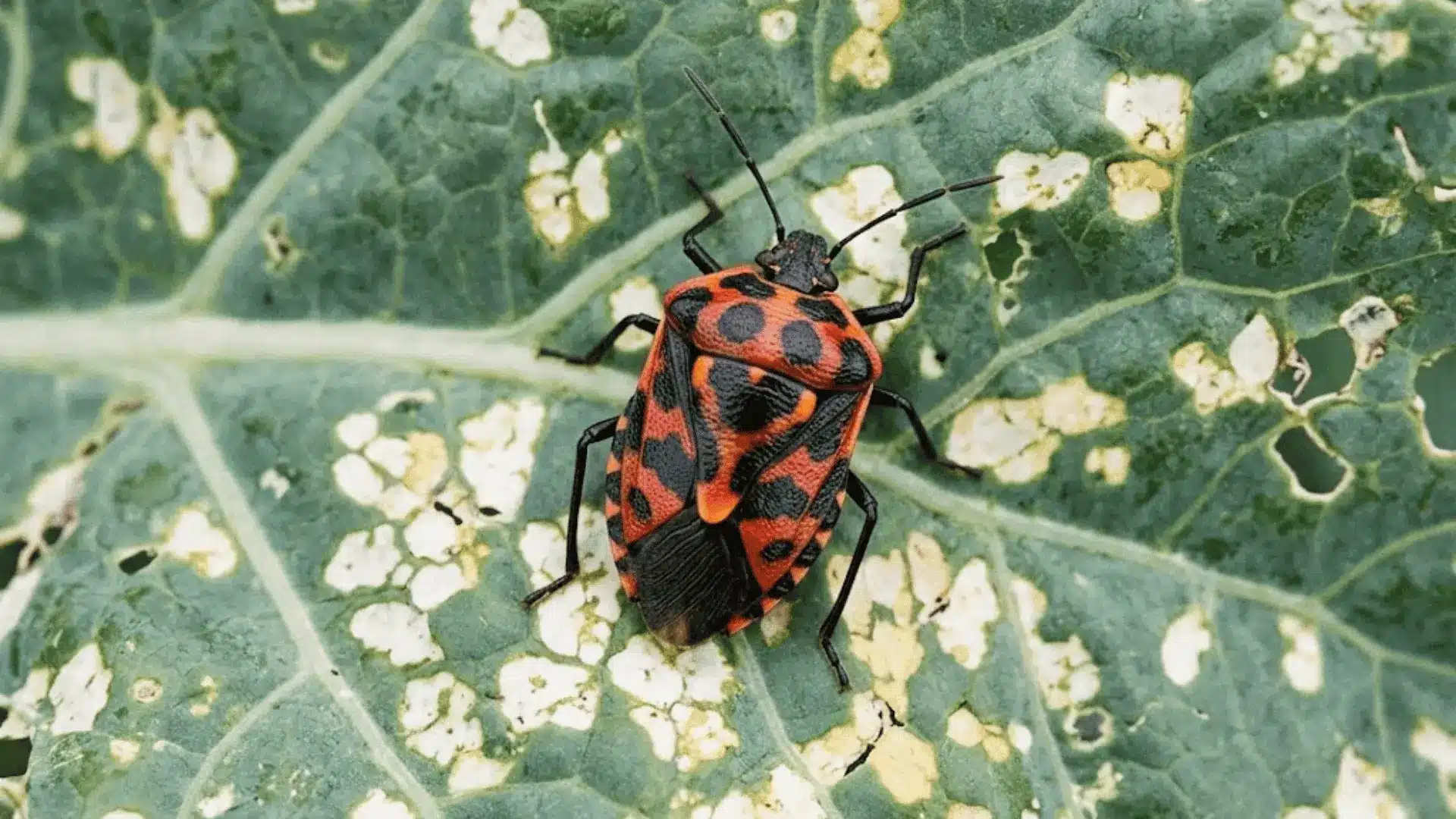
- Appearance: Shield-shaped body with bold red, orange, and black patterning
- Size: Around three-eighths of an inch
- Harmful or Beneficial: Harmful
Harlequin bugs are stink bugs in the same family and are pests of brassicas, including cabbage, kale, and broccoli. They pierce plant tissue and inject toxic saliva, causing white or yellow blotches that eventually kill affected leaves.
Their bold coloring makes them easy to spot, and egg clusters on leaf undersides look like small barrels arranged in neat rows.
14. Milkweed Bugs
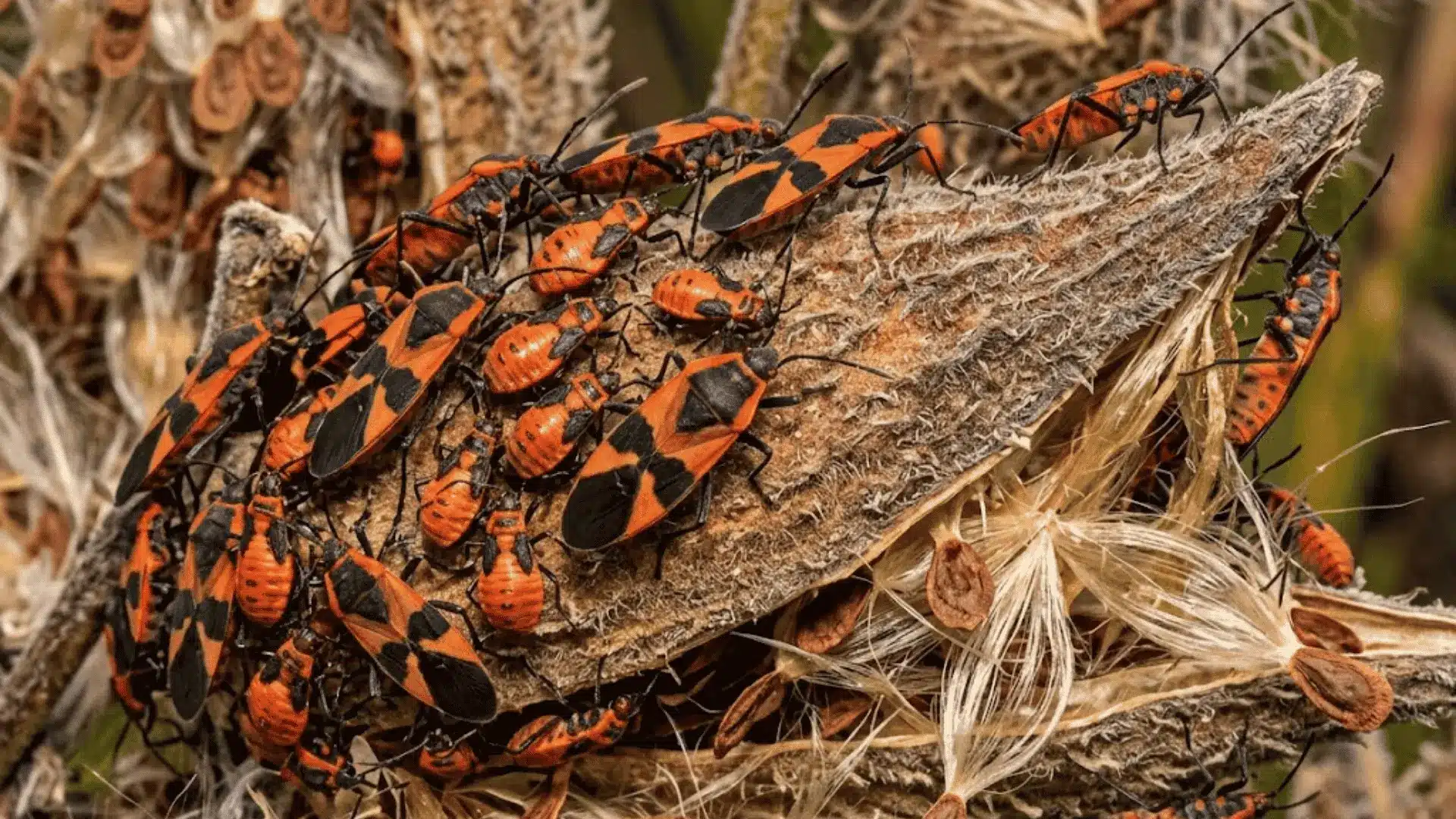
- Appearance: Oval body with a bold red-orange and black pattern, often with an X shape visible
- Size: About half an inch long
- Harmful or Beneficial: Mostly harmless
Milkweed bugs feed almost exclusively on milkweed seeds and plant tissue and are not considered a serious garden pest outside of that context. Their coloring is a warning signal to predators that they are unpalatable.
You are most likely to find them in groups on milkweed pods in late summer. They rarely spread to other plants even in large numbers.
15. Assassin Bugs
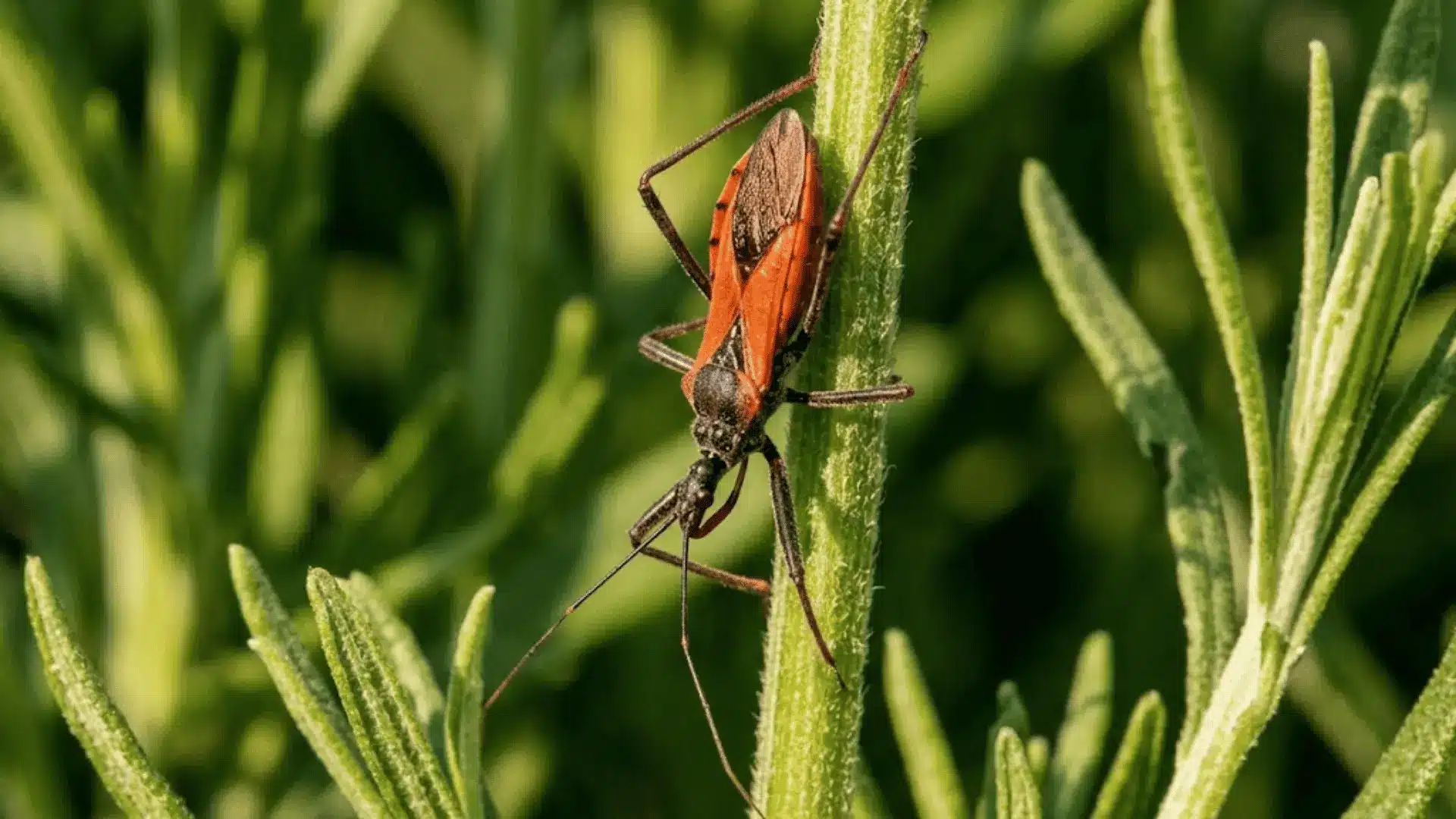
- Appearance: Elongated body, red or orange abdomen, dark legs and head, curved beak underneath
- Size: Half an inch to over an inch, depending on species
- Harmful or Beneficial: Beneficial, but can bite if handled
Assassin bugs are active predators that feed on caterpillars, beetles, and other soft-bodied insects. Their red and black coloring varies by species, but the curved beak tucked under the head is a consistent identifier.
They are slow-moving enough to observe closely, though handling them is not advised since they can deliver a sharp, painful bite when they feel threatened.
16. Red Velvet Mites
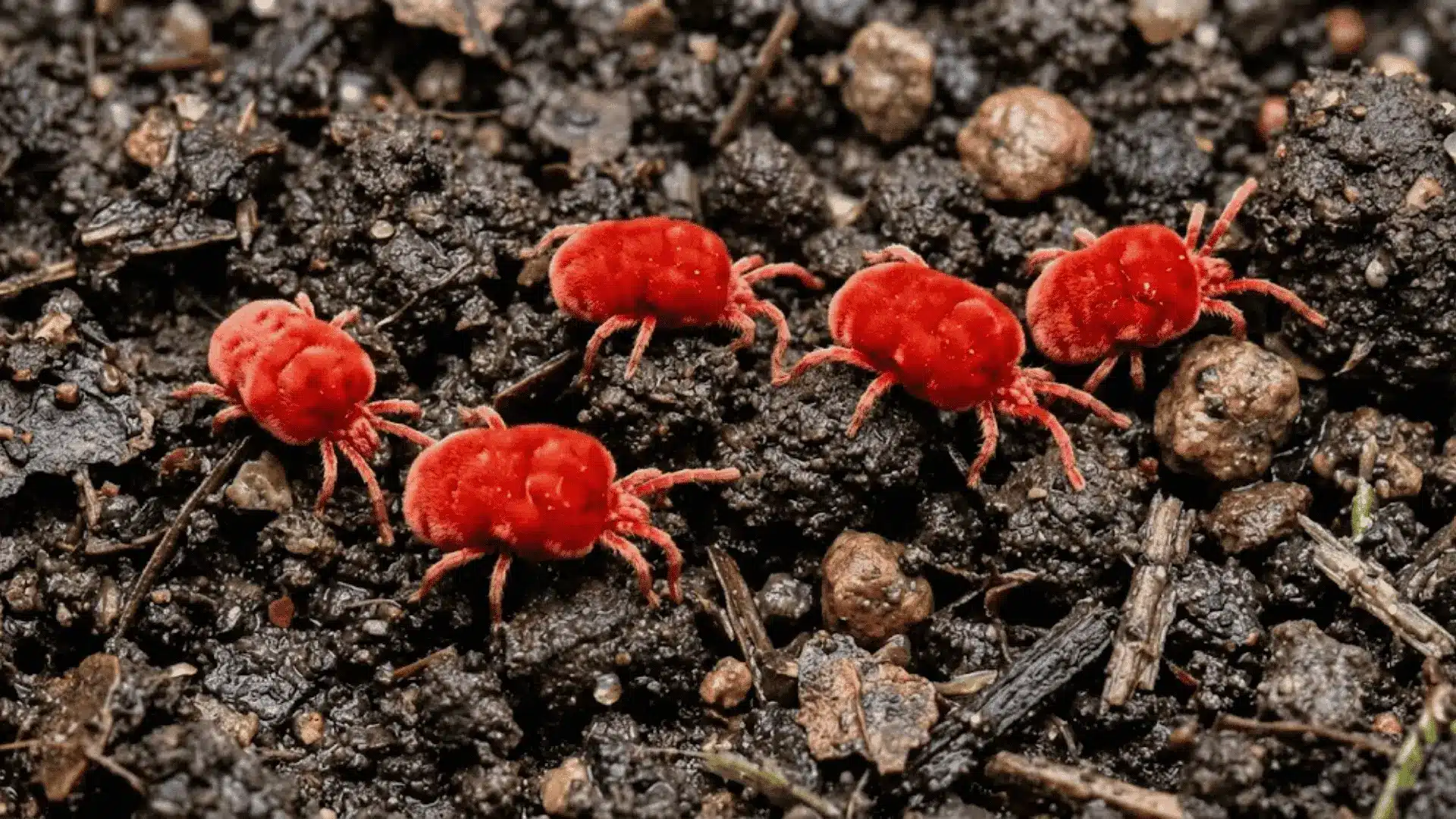
- Appearance: Bright, velvety red, round body with tiny visible legs
- Size: Very small, about the size of a pinhead
- Harmful or Beneficial: Beneficial
Red velvet mites are predatory mites that feed on smaller insects, larvae, and other mites in the soil. Their vivid red color makes them one of the more striking soil organisms to come across.
They are completely harmless to plants and indicate a biologically active soil environment. Seeing them after rain is common since they emerge to hunt near the surface when moisture is high.
How to Tell Similar Red and Black Bugs Apart?
| Bug | Body Shape | Pattern Placement | Behavior | Common Host | Size & Texture |
|---|---|---|---|---|---|
| Boxelder Bug | Oval, flat | Red lining along edges and wing veins | Clusters passively on warm surfaces | Boxelder, maple, ash | Half an inch, smooth |
| Harlequin Bug | Shield-shaped | Bold red, orange, and black across the full body | Feeds in groups on leaves | Brassicas | Three-eighths inch, smooth |
| Milkweed Bug | Oval | Centered red-orange X pattern | Clusters on seed pods | Milkweed only | Half an inch, smooth |
| Assassin Bug | Elongated | Red or orange abdomen, dark head, and legs | Moves with intention, solitary hunter | No fixed host | Up to an inch, smooth |
| Red Velvet Mite | Round, compact | Fully red, no black patterning | Emerges after rain, moves quickly | Soil surface | Pinhead-sized, fuzzy |
Natural Methods to Control Harmful Soil Bugs
Keeping harmful soil bugs in check does not always require chemicals. A few consistent habits go a long way in making your garden less hospitable to pests.
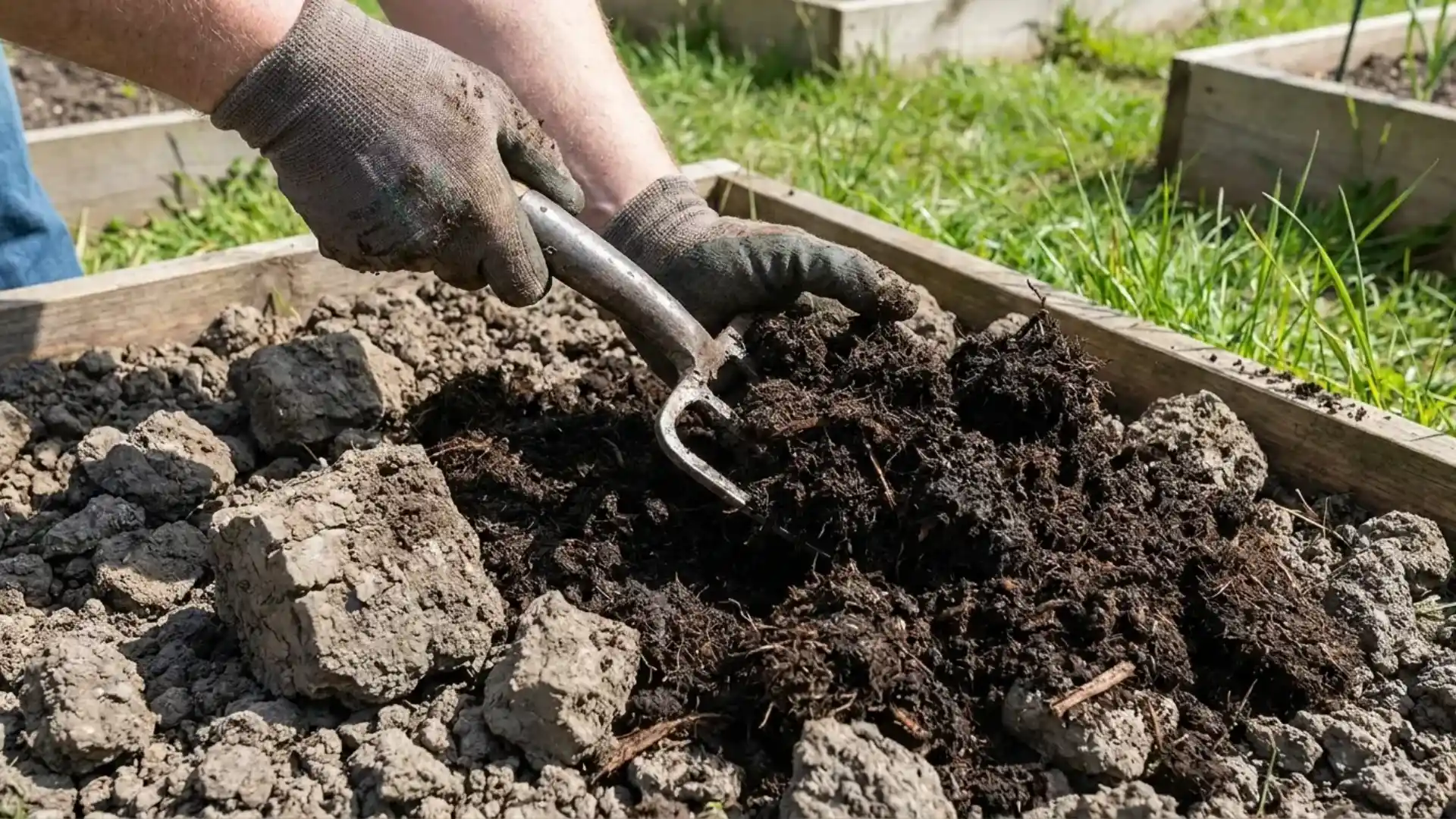
- Improve soil drainage and aeration to reduce the damp, compacted conditions most harmful larvae thrive in.
- Avoid overwatering since excess moisture is one of the biggest attractants for fungus gnats, root maggots, and similar pests.
- Introduce or protect beneficial insects like ground beetles and rove beetles that naturally regulate pest populations.
- Rotate crops seasonally so soil-dwelling pests that target specific plants cannot establish a permanent cycle.
- Use neem oil or diatomaceous earth as organic intervention options that target pests without disrupting the broader soil ecosystem.
Building these habits early means your soil does the heavy lifting, and pest problems become the exception rather than the norm.
How to Identify Unknown Bugs in Your Garden?
Unrecognized bugs in your garden are easier to identify than most people expect.
A systematic approach using a few different reference points gets you to an answer faster than guessing based on appearance alone.
| Method | What to Do | What It Helps Identify |
|---|---|---|
| Photo Identification | Take close-up photos in natural light and run them through an insect ID app or search tool | Species-level ID based on color, shape, and markings |
| Life Stage Comparison | Compare eggs, larvae, and adult forms separately since they can look entirely different | Confirms whether a pest is in an early or active damage stage |
| Damage Pattern Analysis | Study where and how plants are affected, roots, leaves, stems, or soil surface | Narrows down the feeding type and likely pest category |
| Local Extension Services | Submit samples or photos to your nearest agricultural extension office | Provides region-specific ID and treatment advice from specialists |
Mistakes to Avoid When Identifying Soil Bugs
Misidentifying soil bugs is more common than most gardeners realize, and the consequences can set your garden back significantly.
- Never treat before confirming the pest, since broad pesticide use wipes out beneficial insects alongside harmful ones.
- Learn to identify larvae separately because most look nothing like their adult form and are frequently misread as harmless.
- Do not overlook early warning signs like subtle leaf discoloration or slow growth, as these often point to underground activity already in progress.
- Avoid assuming every unfamiliar bug is a threat, since many soil organisms actively support root health and decomposition.
Taking a few extra minutes to confirm what you are dealing with protects both your plants and the soil ecosystem supporting them.
The Bottom Line
Soil is a living system, and the bugs within it are part of what keeps it that way.
Getting comfortable with soil bugs identification means you stop reacting to every unfamiliar creature and start making more informed decisions about your garden.
Some will need managing; most will not. Either way, knowing the difference puts you in a much better position than guessing.
If you spotted a soil bug recently and are not sure what it is, drop it in the comments below and let’s figure it out together.
Frequently Asked Questions (FAQs)
Are All Soil Bugs Harmful to Plants?
Not at all. Many soil insects like earthworms, springtails, and ground beetles actively support plant health by aerating soil and keeping pest populations in check.
What are Red and Black Bugs in My Garden?
Red and black bugs range from harmless milkweed bugs to beneficial assassin bugs to damaging harlequin bugs. Body shape, pattern placement, and the host plant are the quickest ways to tell them apart.
What Bugs Indicate Healthy Soil?
Earthworms, rove beetles, red velvet mites, and springtails are all indicators of biologically active, well-balanced soil. A diverse mix of these organisms means your soil structure and organic matter levels are in good shape.