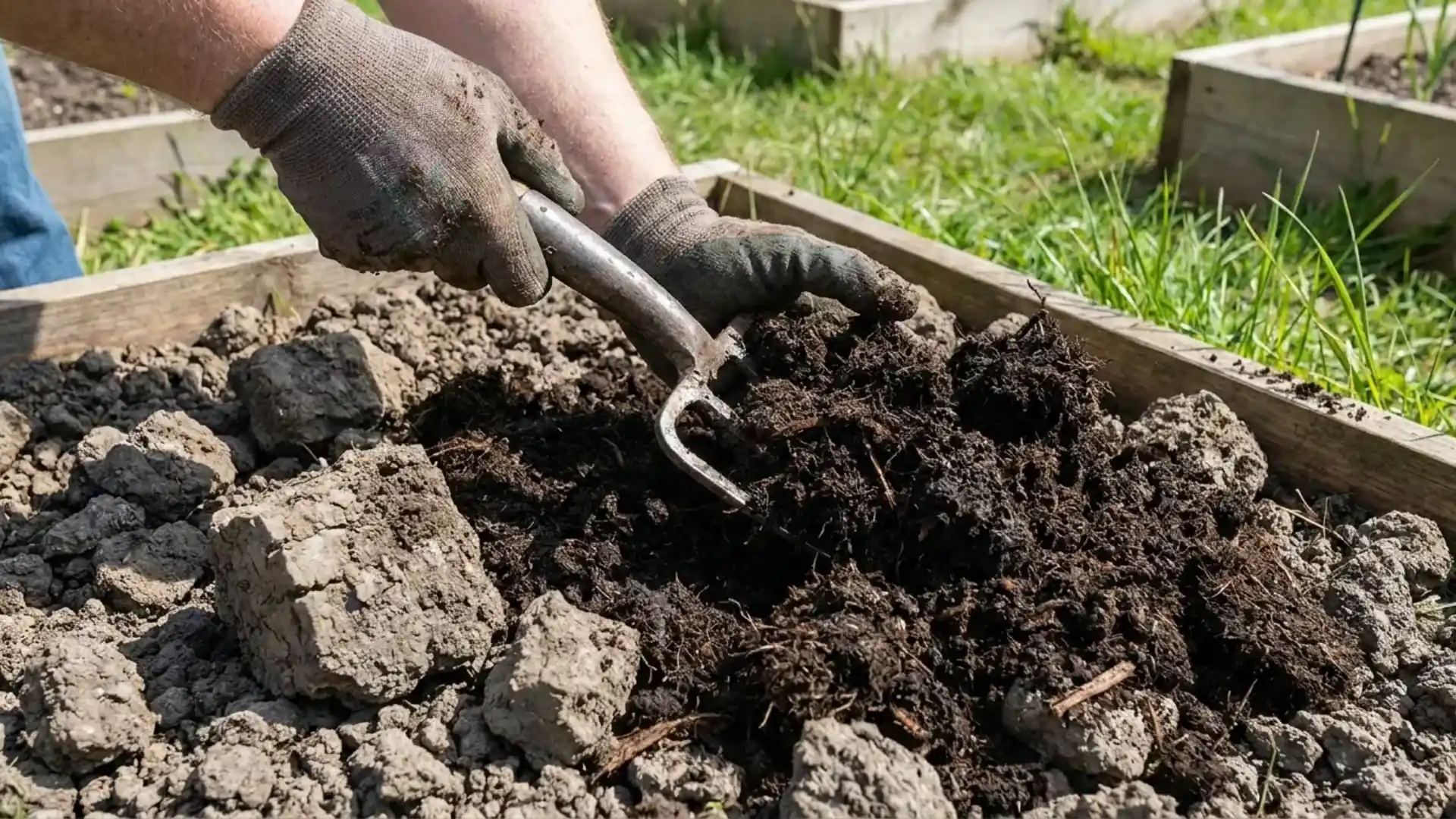

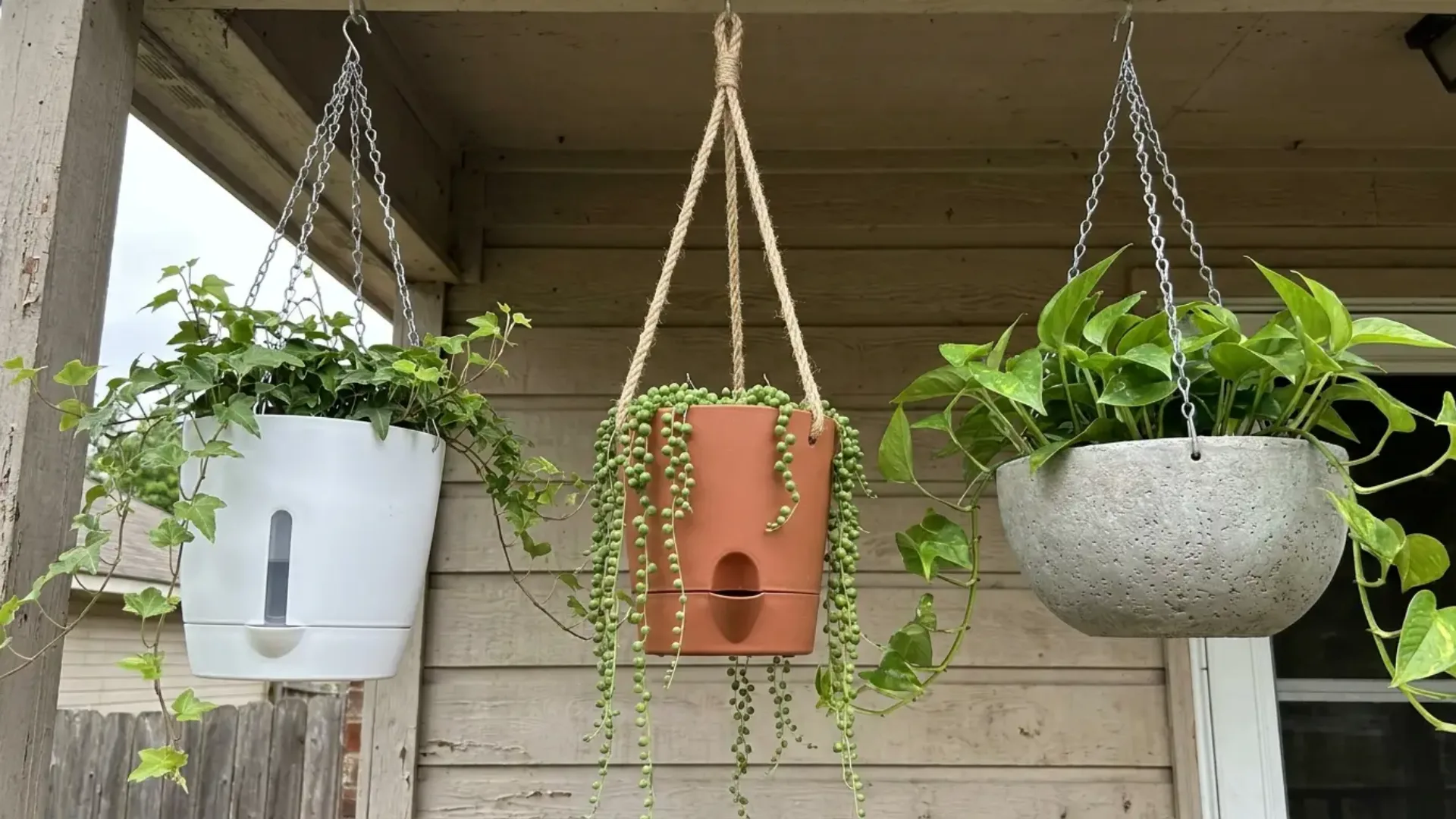
Nothing kills the joy of a hanging basket faster than watching it wilt because life got busy and watering slipped your mind.
Self-watering hanging planters fix this problem at the root, holding a small reservoir of water that feeds plants steadily instead of leaving them thirsty one week and drowning the next.
They work well for me as when I have to travel frequently.
This list rounds up planters made from different materials and built for different spaces and budgets, so finding one that fits your home and your plants should be easy.
How Do Self-Watering Hanging Planters Work?
Self-watering hanging planters use a built-in water reservoir to keep plants supplied with moisture.
Instead of watering the soil from the top, you fill the reservoir at the bottom of the planter.
Most people hang these planters from ceiling hooks or brackets rather than drilling straight into a joist.
A wick or similar system draws water from the reservoir into the soil through capillary action. The plant then absorbs the moisture through its roots as needed.
This helps keep the soil evenly moist and reduces the risk of letting it dry out too quickly.
However, self-watering does not mean maintenance-free. You still need to refill the reservoir, check the plant’s moisture levels, and ensure proper drainage to prevent root problems.
Self-Watering Hanging Planters
From understated ceramic designs to budget-friendly picks, self-watering hanging planters come in a range of materials, sizes, and price points.
1. Ceramic Planter
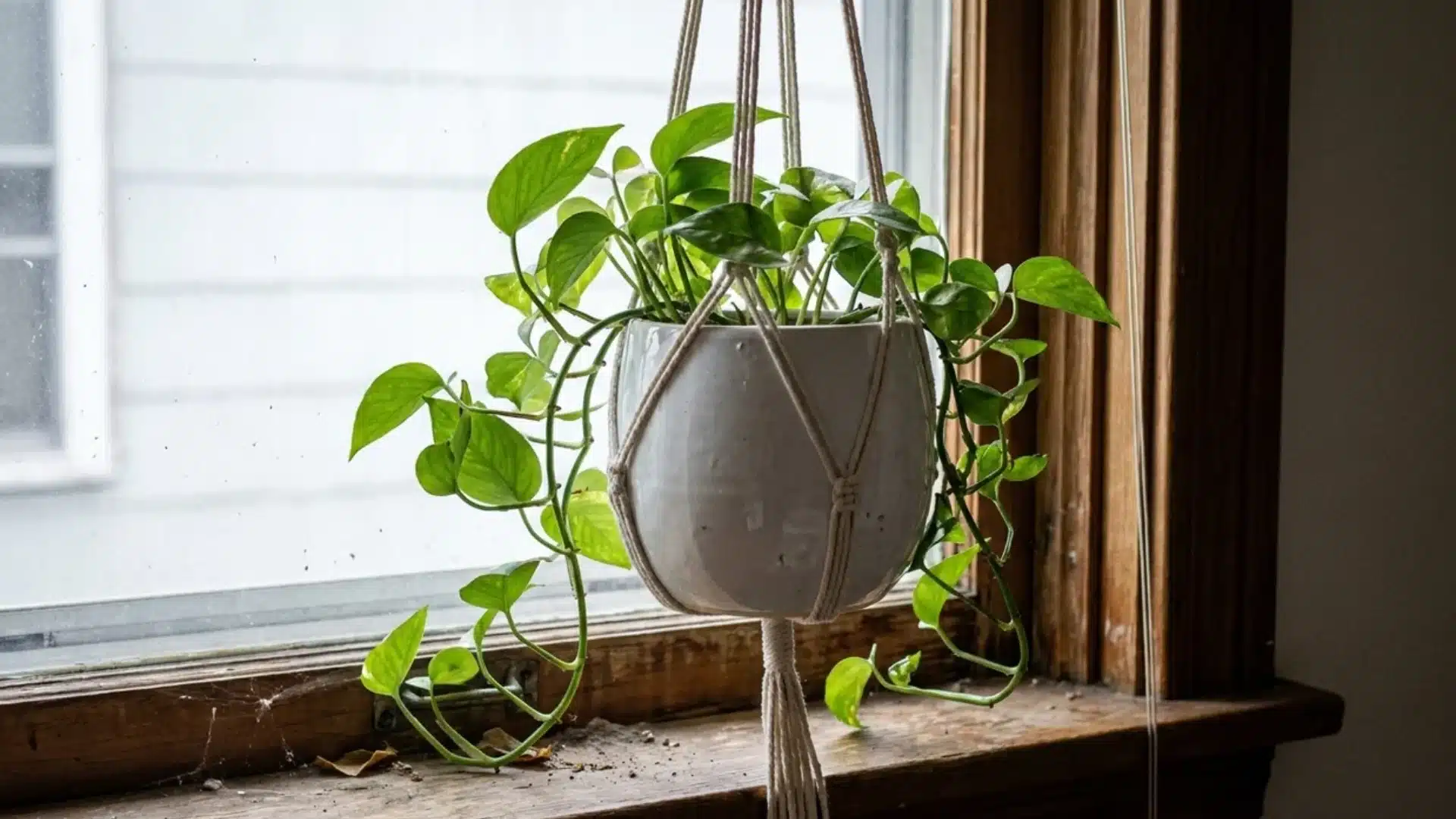
Ceramic hanging planters bring a polished, heavier feel to a room and hold moisture well thanks to the material’s thickness.
They pair nicely with trailing plants and suit spaces where a sturdy, classic look matters more than portability.
These come with drainage holes rather than a sealed reservoir, so they work best paired with a drop-in wick insert
- Best plants: Pothos, Philodendron, English Ivy
- Recommeded Product: Mkono Ceramic Hanging Planter
- Cost: $18-$45
2. Plastic/Resin Lightweight Planter
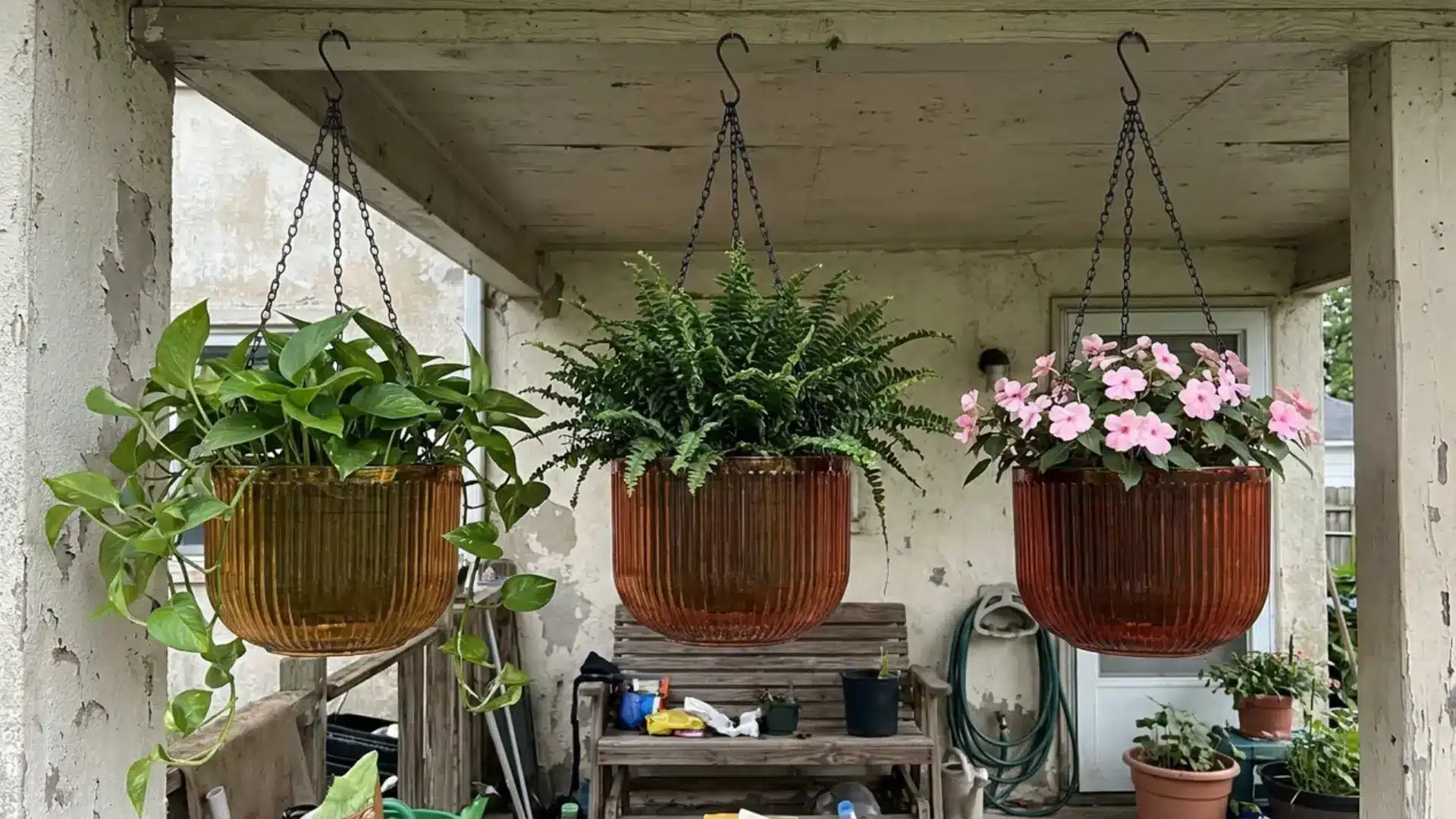
Plastic and resin planters are a practical pick for anyone hanging multiple pots at once, since the lightweight design puts less strain on hooks and ceiling brackets.
They also resist cracking if bumped or dropped. Shatterproof build makes it safe for high-traffic or outdoor areas
- Best plants: Spider plant, Ferns, Petunias
- Recommeded Product: ZMTECH
- Cost: $8-$20
3. Macrame-Style Planter
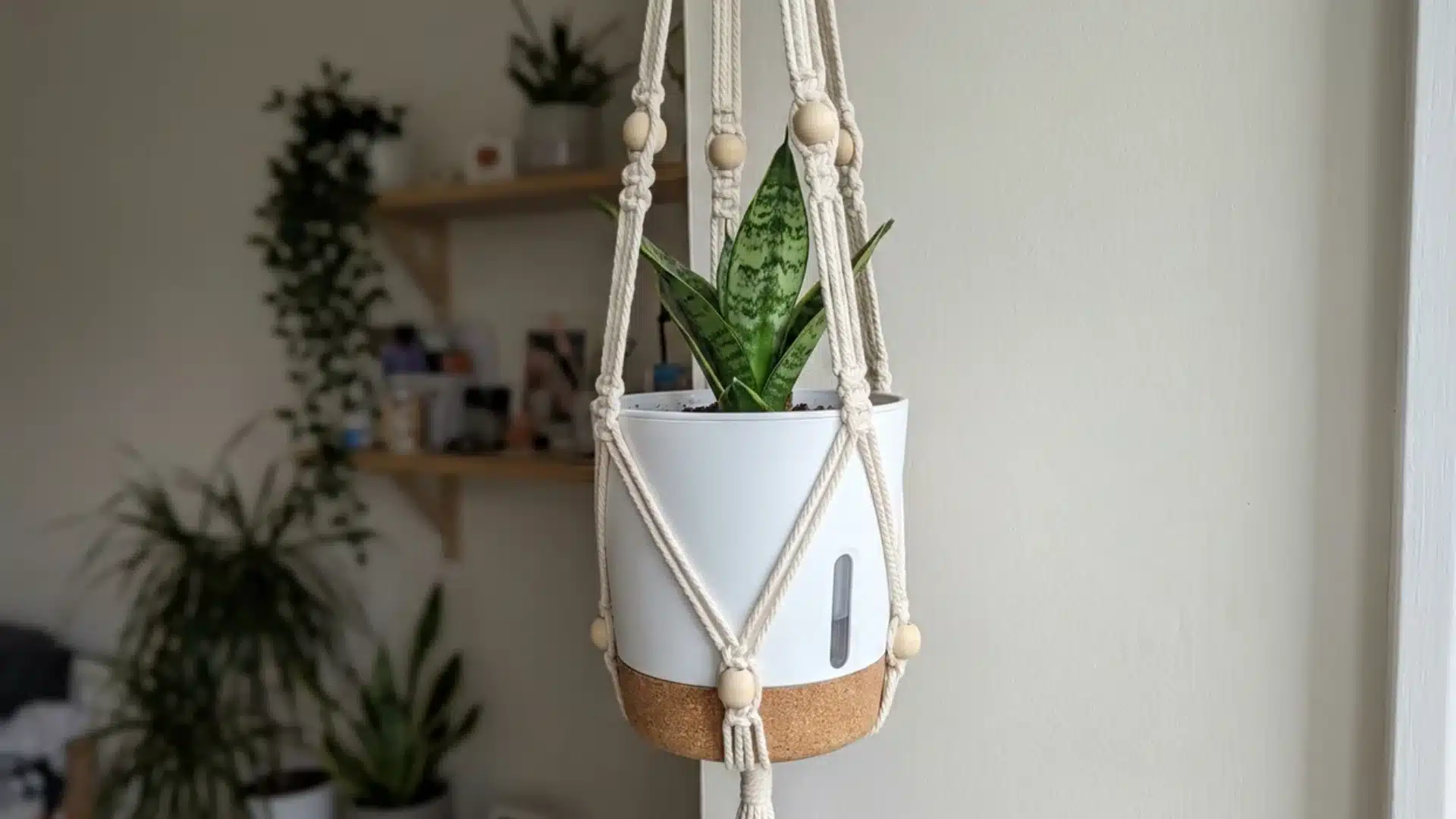
Macrame hangers wrapped around a self-watering pot combine a textured, handmade look with practical moisture control.
The cotton or jute netting cradles the pot securely while adding warmth to the display. The macrame layer adds insulation, slowing water evaporation from the pot
- Best plants: Succulents, String of pearls, Small ferns
- Recommeded Product: SwinDuck
- Cost: $12-$28
4. Terra Cotta-Style Planter
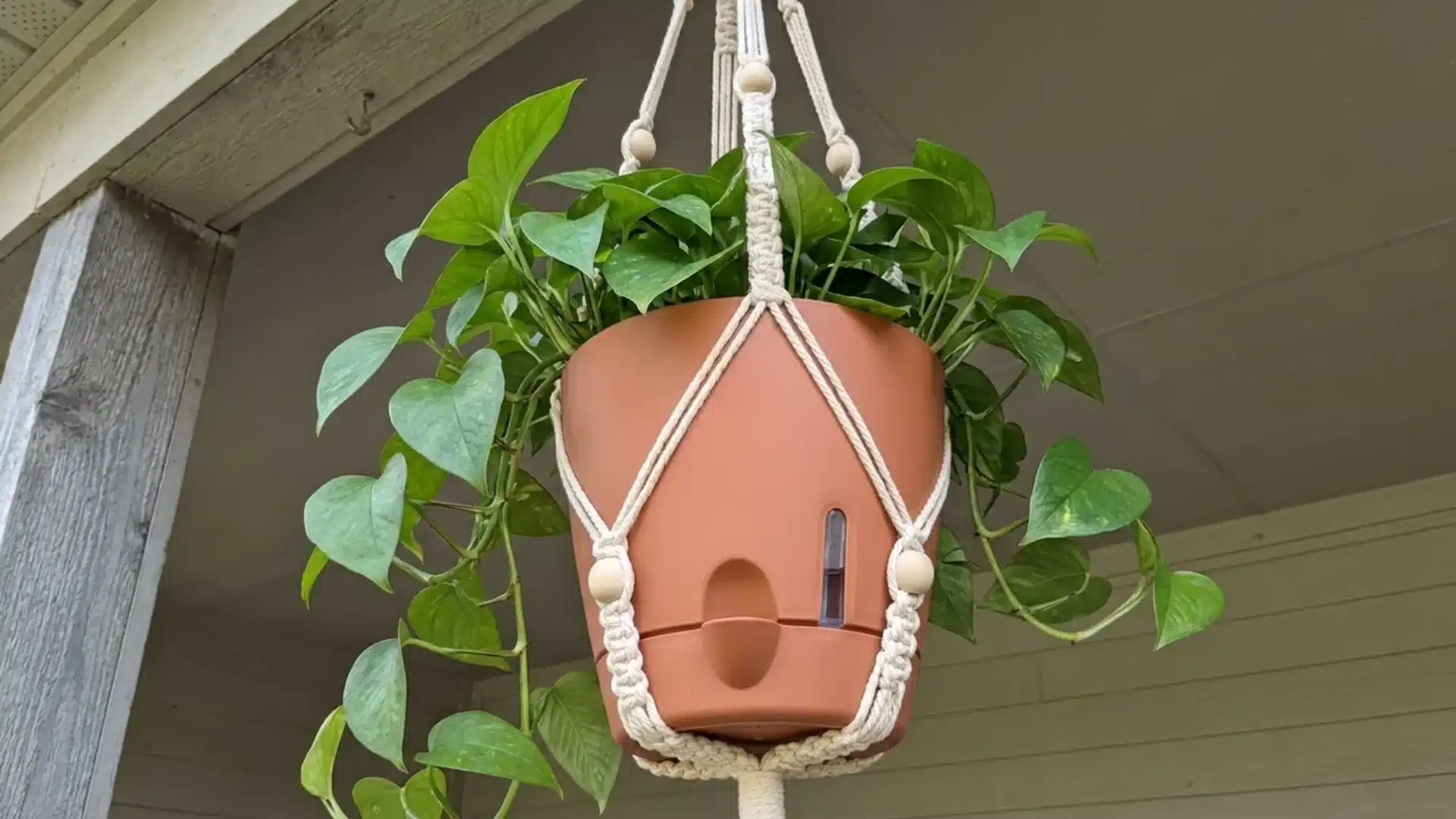
Most self-watering hanging planters sold as “terra cotta” are actually terra cotta-colored resin or plastic rather than true clay, since porous natural clay tends to wick moisture away.
These give the rustic look while keeping the self-watering mechanism functional.
- Best plants: Herbs, Succulents, Geraniums
- Recommeded Product: The Weekender
- Cost: $15-$35
5. Modern Geometric Planter with Reservoir
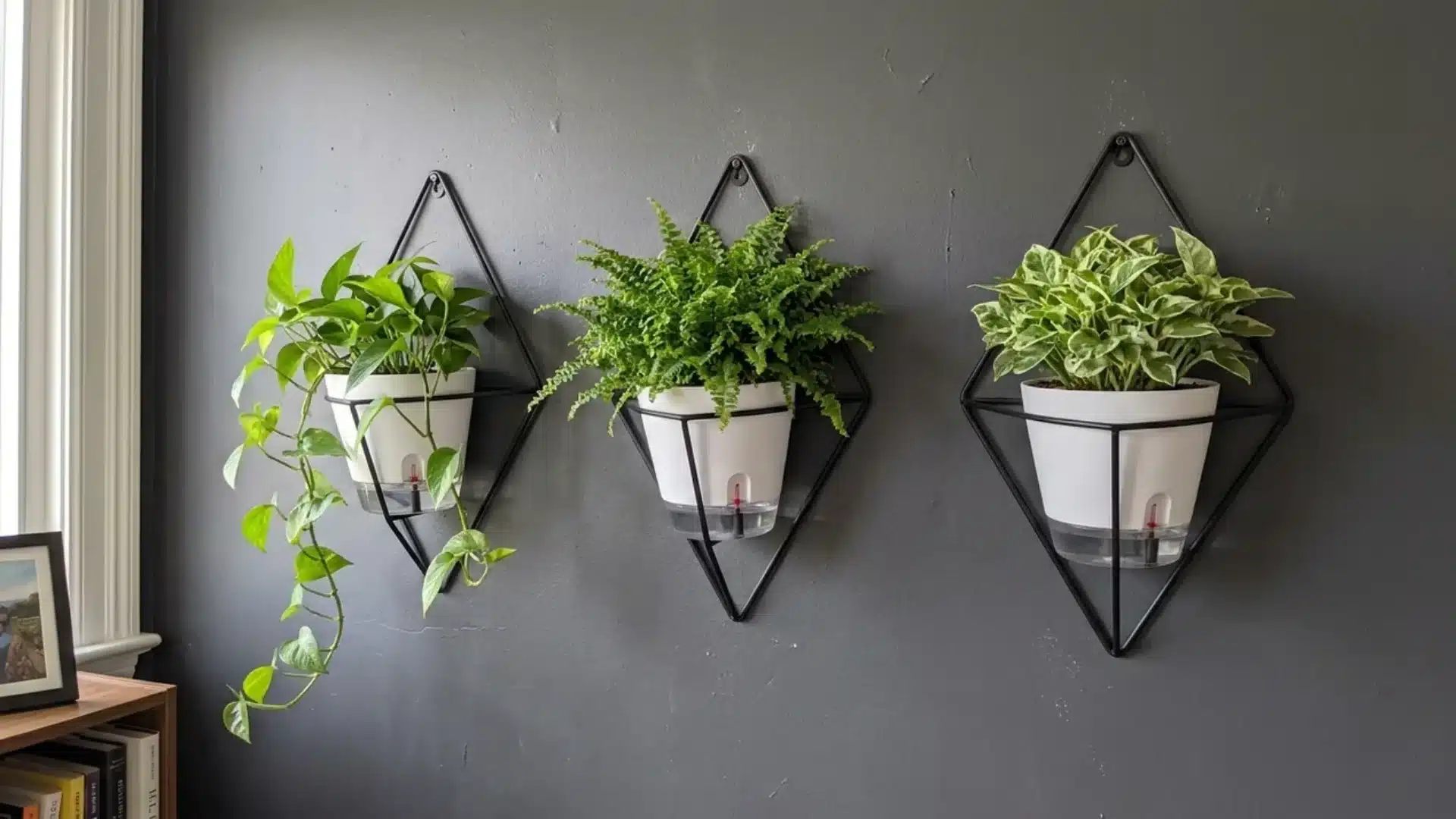
Geometric planters with angular or faceted shapes suit contemporary interiors and minimalist decor.
Many come in matte finishes with hidden reservoirs built into a raised base or double-wall design. Concealed reservoir keeps the clean geometric silhouette free of visible water lines
- Best plants: Snake plant, ZZ plant, Pothos
- Recommeded Products: LaLaGreen
- Cost: $18-$40
6. Gardenised Hanging Basket
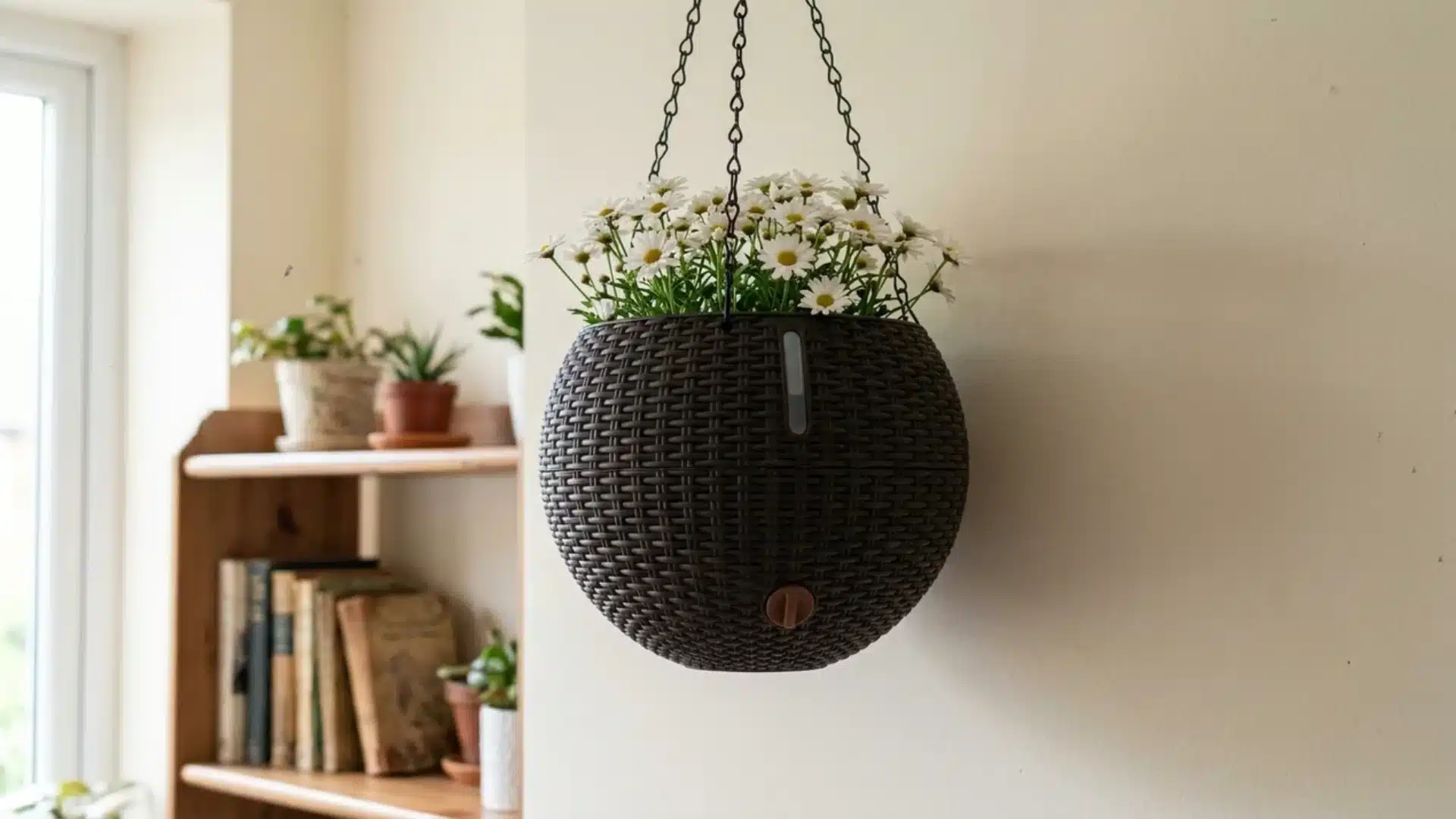
This bronze plastic hanging basket brings a warm metallic-toned finish to patios and gardens while keeping the self-watering system fully functional.
It includes an easy-fill water port, a visible water indicator, and a drainage plug, making it simple to check moisture levels without guessing.
- Best plants: Petunias, Geraniums, Trailing Ivy
- Recommeded Products: Gardenised Store
- Cost: Around $35-$45
7. Small/Compact Pot
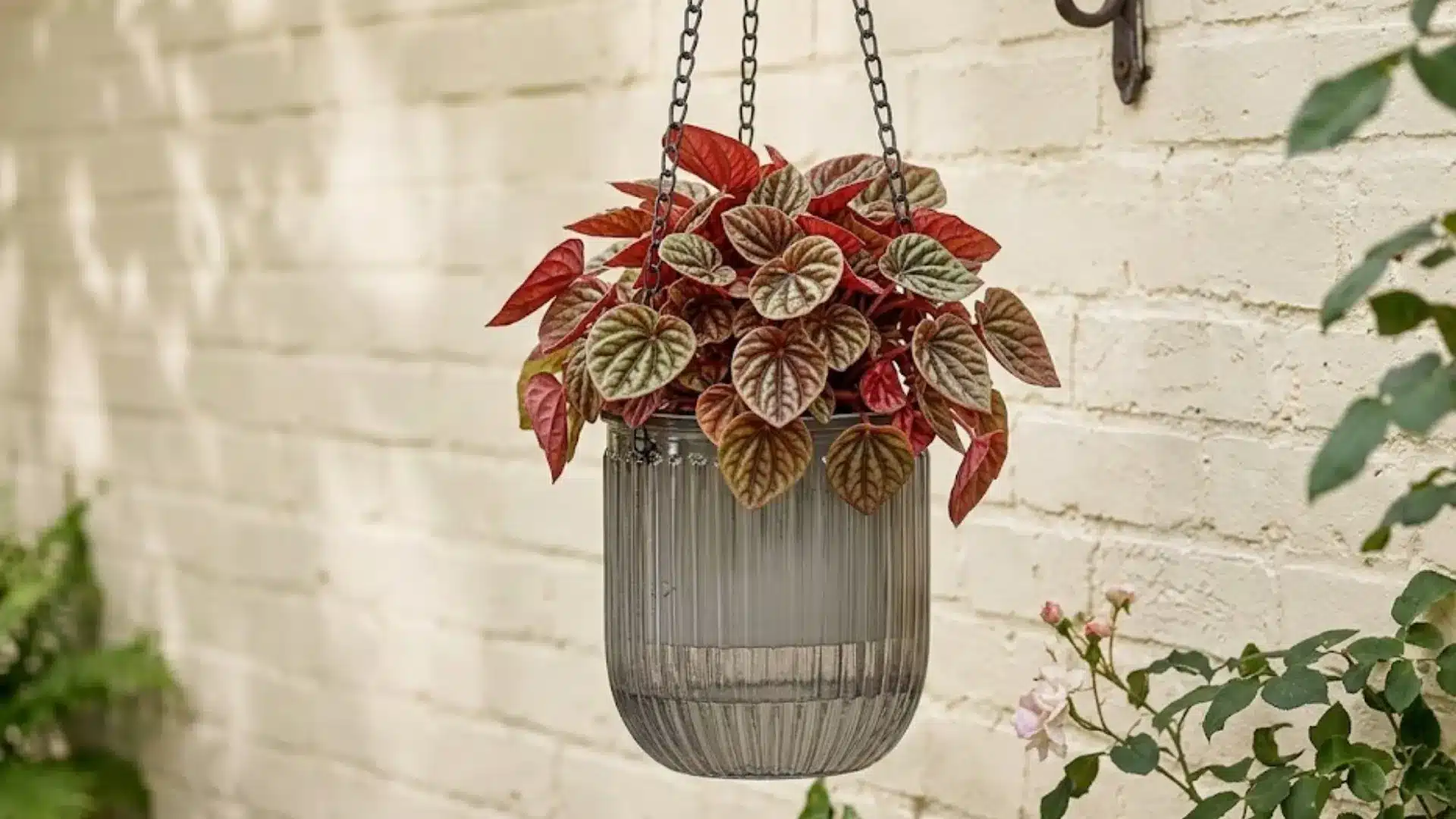
Compact hanging pots suit small apartments, windowsills, or spaces where several tiny plants are grouped together.
Their small reservoirs need more frequent refilling, but the low weight makes them easy to hang almost anywhere.
- Best plants: Succulents, Small herbs, String of hearts
- Recommeded Product: Josteve
- Cost: $6-$15
8. Planter with Drainage Indicator
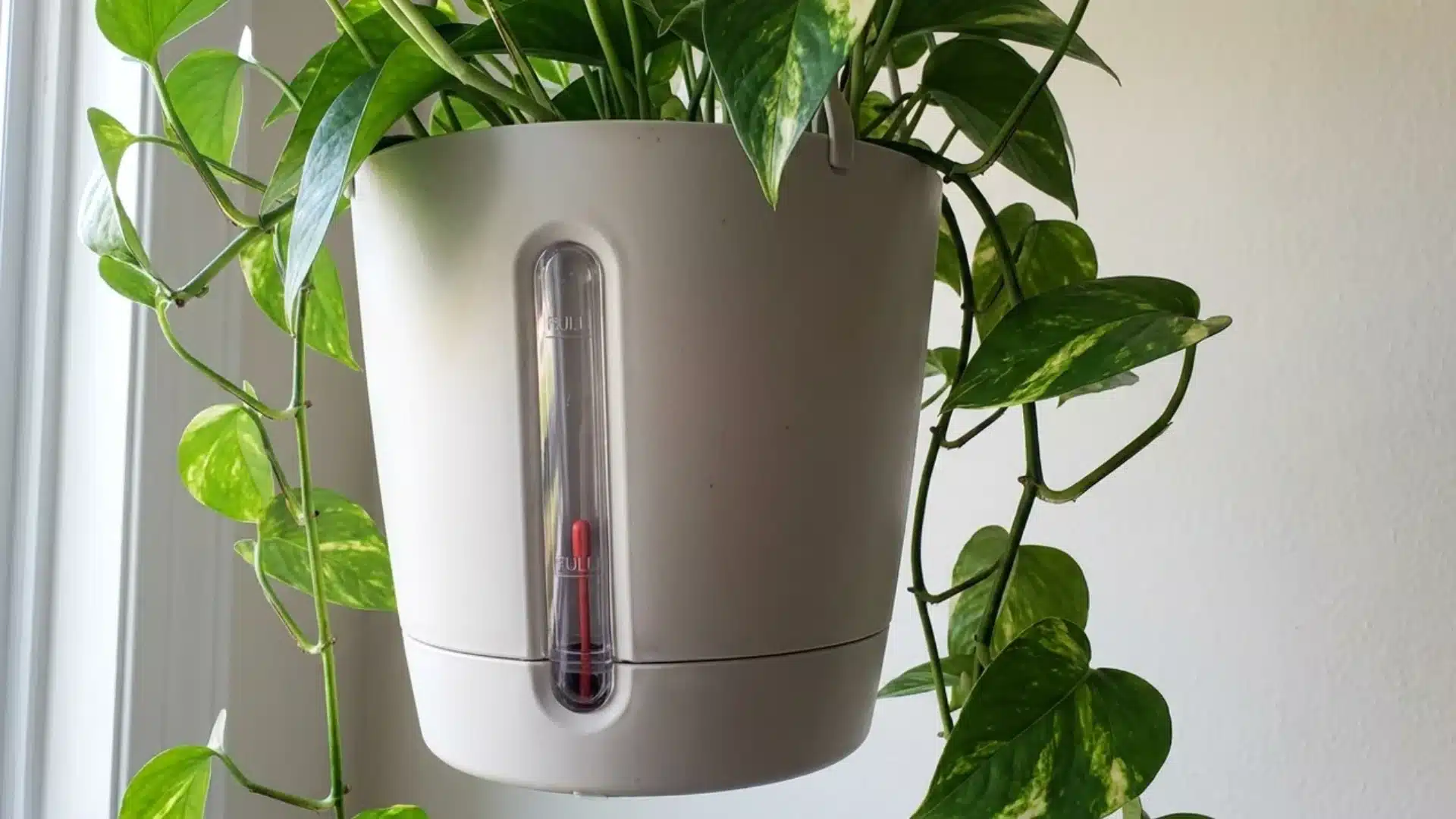
Planters with a built-in indicator take the guesswork out of watering by showing exactly how much water remains in the reservoir.
A visible strip or float stick rises and falls with the water level.
- Best plants: Pothos, Peace Lily, Spider plant
- Recommeded Products: UOUZ
- Cost: $15-$30
9. Double-Wall Insulated Planter
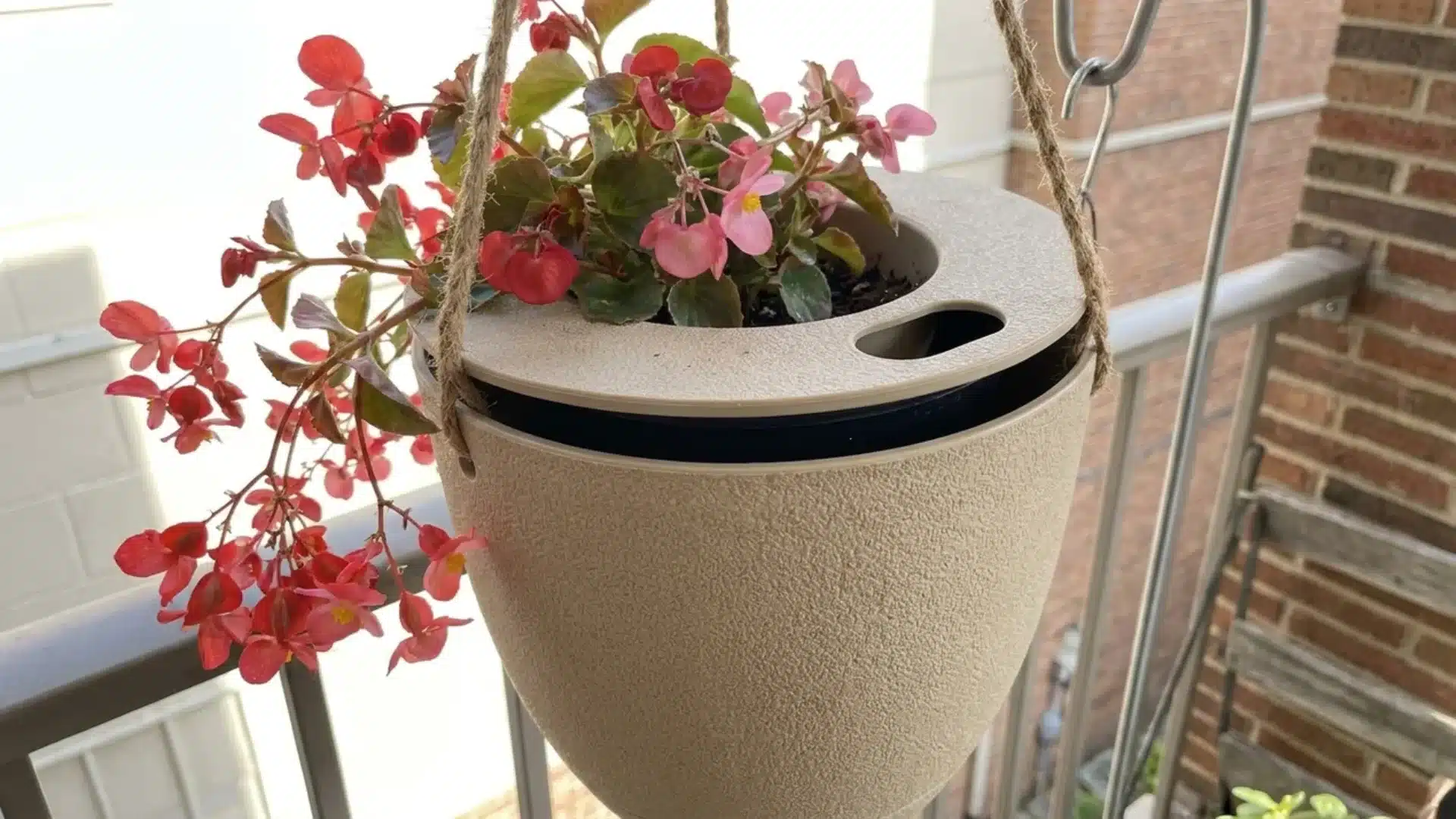
Double-wall construction creates an air gap between the outer shell and inner pot, which slows temperature swings and reduces evaporation from the reservoir.
This makes them well-suited to outdoor spaces with strong sun exposure.
- Best plants: Petunias, Begonias, Trailing succulents
- Recommeded Product: Mayne Caprio
- Cost: $22-$45
How Long Does a Reservoir Actually Last?
Reservoir life depends on the pot size, the plant, and the weather, but a few real-world numbers help set expectations.
In one round of hands-on product testing, hanging planters with a roughly 50-ounce reservoir kept soil moist for 7 to 14 days, with hot, sunny stretches on the shorter end of that range.
Smaller compact pots with tiny reservoirs will run through their water supply faster, sometimes in under a week.
I’m not certain how that figure holds up across every brand and pot size, so treat it as a general range and check your own planter’s water window every few days.
Benefits of Self-Watering Hanging Planters
Self-watering hanging planters do more than save a trip to the watering can. Here is what makes them worth adding to your space.
- Prevents watering problems: Maintains balanced moisture, reducing the chances of both overwatering and underwatering your plants.
- Saves valuable time: Reduces frequent watering needs, making plant care easier for busy homeowners and plant lovers.
- Supports healthier roots: Keeps soil moisture consistent, creating better conditions for strong and healthy root development.
- Ideal for busy lifestyles: Provides plants with moisture during short absences, making it useful for frequent travelers.
- Reduces water waste: Delivers water gradually to plants, minimizing unnecessary runoff and keeping watering more efficient.
These small conveniences add up to healthier plants and a lot less daily effort. Once one of these planters is set up, plant care becomes a quick check rather than a constant chore.
How to Use a Self-Watering Hanging Planter Correctly?
Getting the most out of a self-watering hanging planter comes down to a few simple habits. This table breaks down what to do and why it matters at each step.
| Aspect | What to Do | Why It Matters |
|---|---|---|
| Filling the Reservoir | Pour water slowly until it reaches the indicator line | Prevents overflow and soil flooding |
| Checking Indicators | Check the water gauge every few days | Avoids refilling too early or too late |
| Seasonal Adjustments | Refill more in summer, less in cooler months | Water use changes with plant growth rate |
| Soil Type Considerations | Use a well-draining potting mix | Dense soil blocks proper capillary action |
| Initial Setup | Moisten the soil fully before the first reservoir fill | Dry soil doesn’t wick water efficiently |
| Long-Term Care | Flush the reservoir every few months | Clears mineral buildup that clogs wicks |
A little routine care keeps these planters running smoothly and plants consistently well fed.
Once the basics of filling, checking, and seasonal adjusting become habit, the whole system practically runs itself.
Conclusion
Choosing the right self-watering hanging planter comes down to matching material, reservoir size, and plant type to the space you have in mind.
Whatever style fits best, the real payoff shows up over time, in soil that stays evenly moist, roots that stay healthy, and far less daily upkeep.
With the right pick hanging in place, lush greenery becomes something to enjoy rather than manage.
Which self-watering hanging planter would you choose for your space? Share your favorite type or plant in the comments below!
Frequently Asked Questions
Can Self-watering Hanging Planters Be Used Outdoors in Winter?
Most plastic and resin models can stay outdoors in mild winters, but ceramic and terracotta versions should be brought indoors to prevent cracking from freezing water.
How Often Should the Water Reservoir Be Refilled During Hot Summer Months?
During hot summer months, reservoirs typically need refilling every three to five days as plants draw water faster in the heat.
Do These Planters Attract Mosquitoes Because of Standing Water?
Standing water can attract mosquitoes if the reservoir stays uncovered or unused for long periods, so keeping the lid sealed and the system active helps prevent this.