

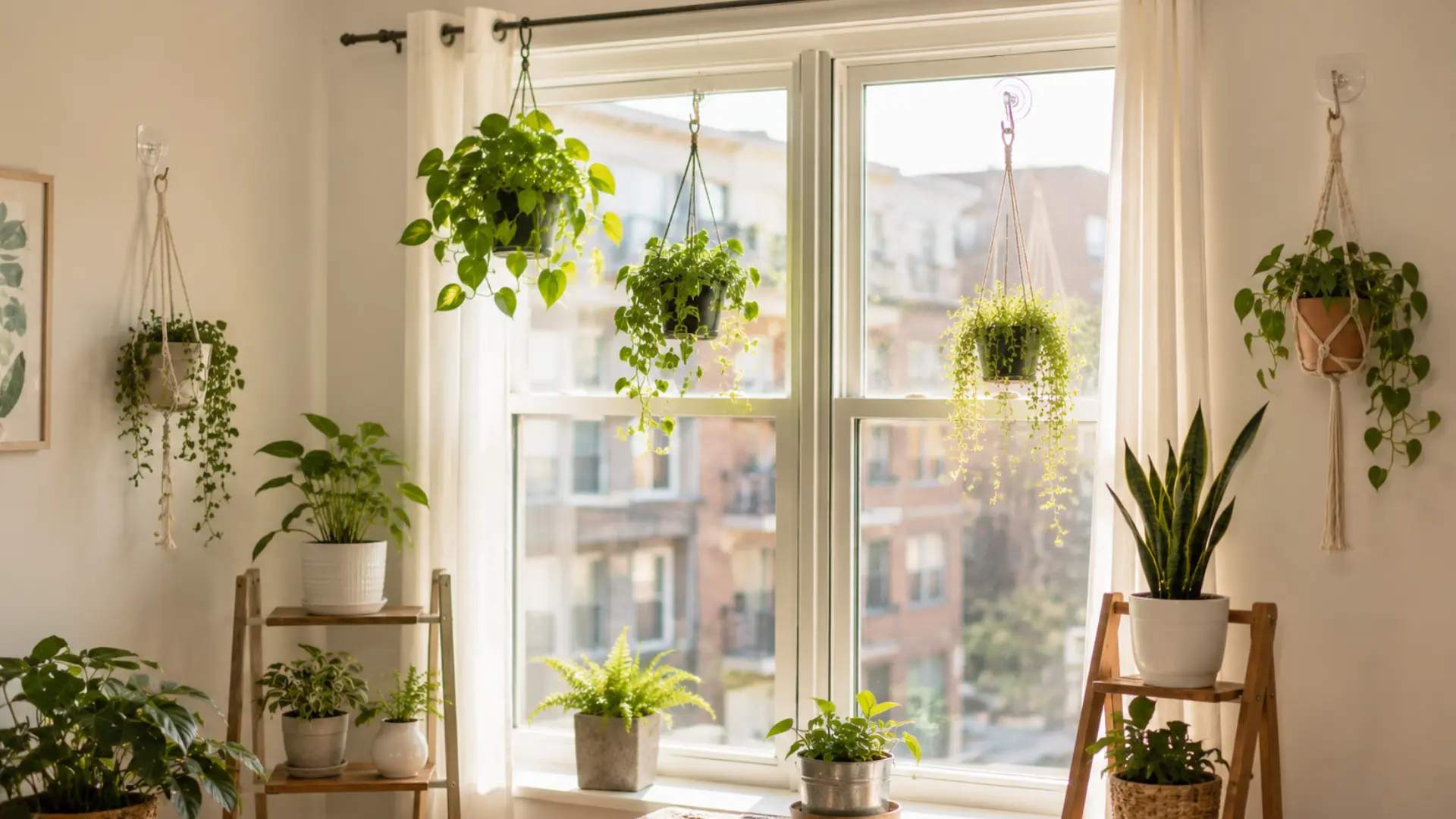
Bare walls and empty corners can make a space feel flat and lifeless. A hanging plant fixes that instantly, but drilling into your ceiling is not always an option.
Renters especially need a smarter way to get the job done. You do not need a single drill hole to pull this off. Knowing how to hang plants from ceiling surfaces without causing damage is easier than you think.
You just need the right hook, the right surface, and the right plant for your space. Everything you need to know is right here.
Why Traditional Ceiling Mounting Isn’t Always the Best Option
Ceiling hooks usually go in with a drill. You bore a hole, insert an anchor, and screw in the hook. Simple enough, but permanent.
That hole stays in your ceiling long after the plant comes down. For renters, that is a real problem. Most leases ban drilling without permission.
Landlords can charge for repairs when you move out. That cost can come straight out of your security deposit.
Even homeowners sometimes want to avoid the mess. Maybe you are still deciding on placement. Maybe you rent a room in your own house. No-drill methods give you flexibility without the damage.
Best Ways to Hang Plants Without Drilling
There are more ways to hang plants without drilling than most people think. Here are some options worth trying:
1. Adhesive Ceiling Hooks

Adhesive ceiling hooks stick directly to your ceiling using strong glue pads. They work best for small, lightweight planters like air plants, small succulents, or trailing vines in plastic pots.
Always check the weight limit on the package before buying. Most hold between one and five pounds.
Pick a hook rated higher than your plant’s actual weight. A good rule is to go one pound above what your plant actually weighs.
Steps to get it done:
- Clean the ceiling spot with rubbing alcohol and let it dry fully.
- Peel the adhesive backing and press the hook firmly for thirty seconds.
- Wait twenty-four hours before hanging anything on the hook.
- Weigh your plant after watering to make sure it stays within the limit.
2. Tension Rod Plant Hangers
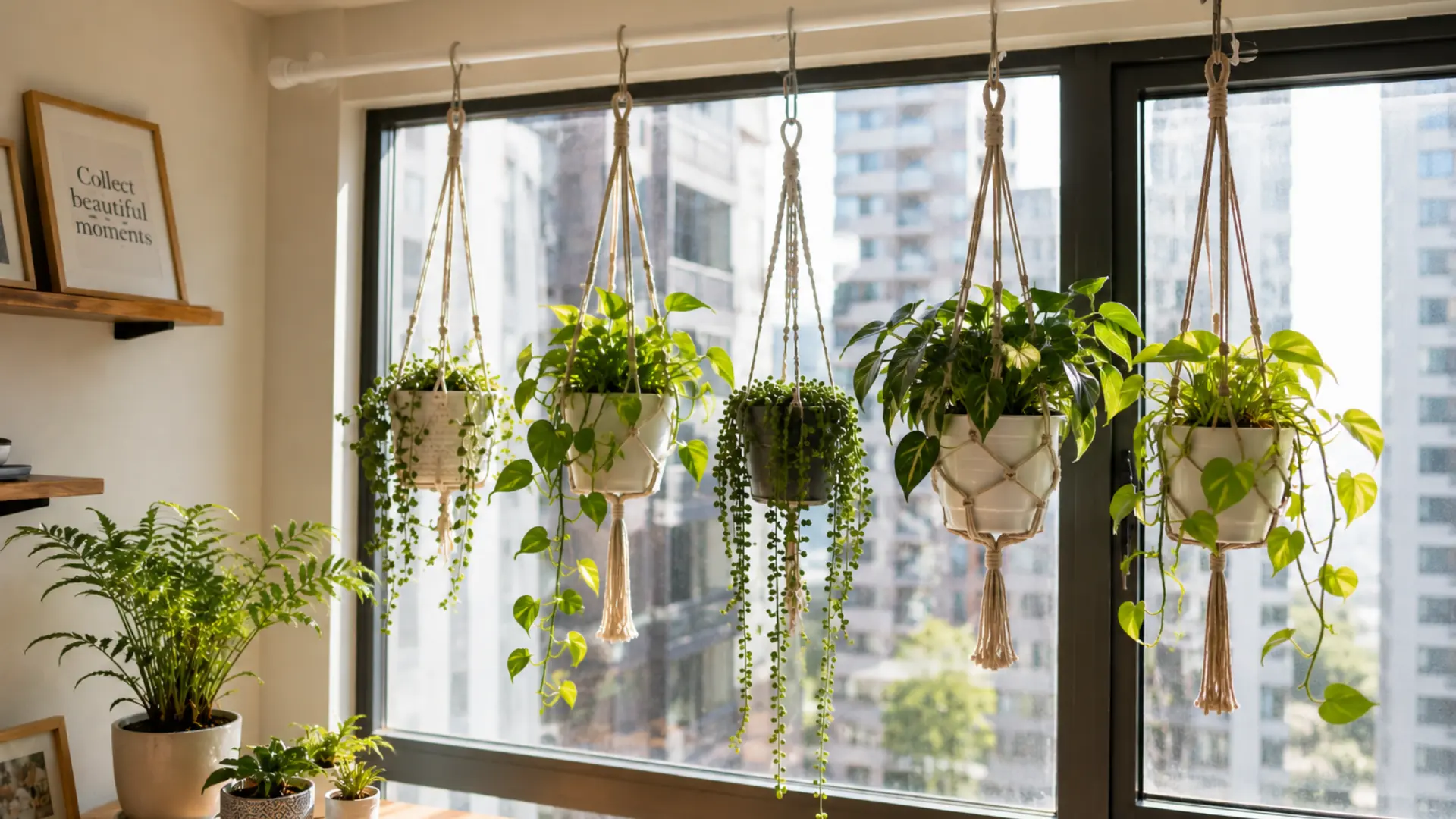
A tension rod wedges between two walls or surfaces using pressure alone. It creates a stable bar from which you can hang planters with hooks or twine.
Windows and narrow corners work best. You can hang multiple small plants from one rod. This option is great for renters who want a full display without damaging walls or ceilings.
Steps to get it done:
- Measure the width of your window frame or corner space before buying a rod.
- Twist the rod to extend it until it fits snugly with firm pressure.
- Attach S-hooks or twine to the rod and hang your planters from them.
- Check the rod weekly to make sure it has not shifted or loosened.
3. Magnetic Hooks for Metal Surfaces
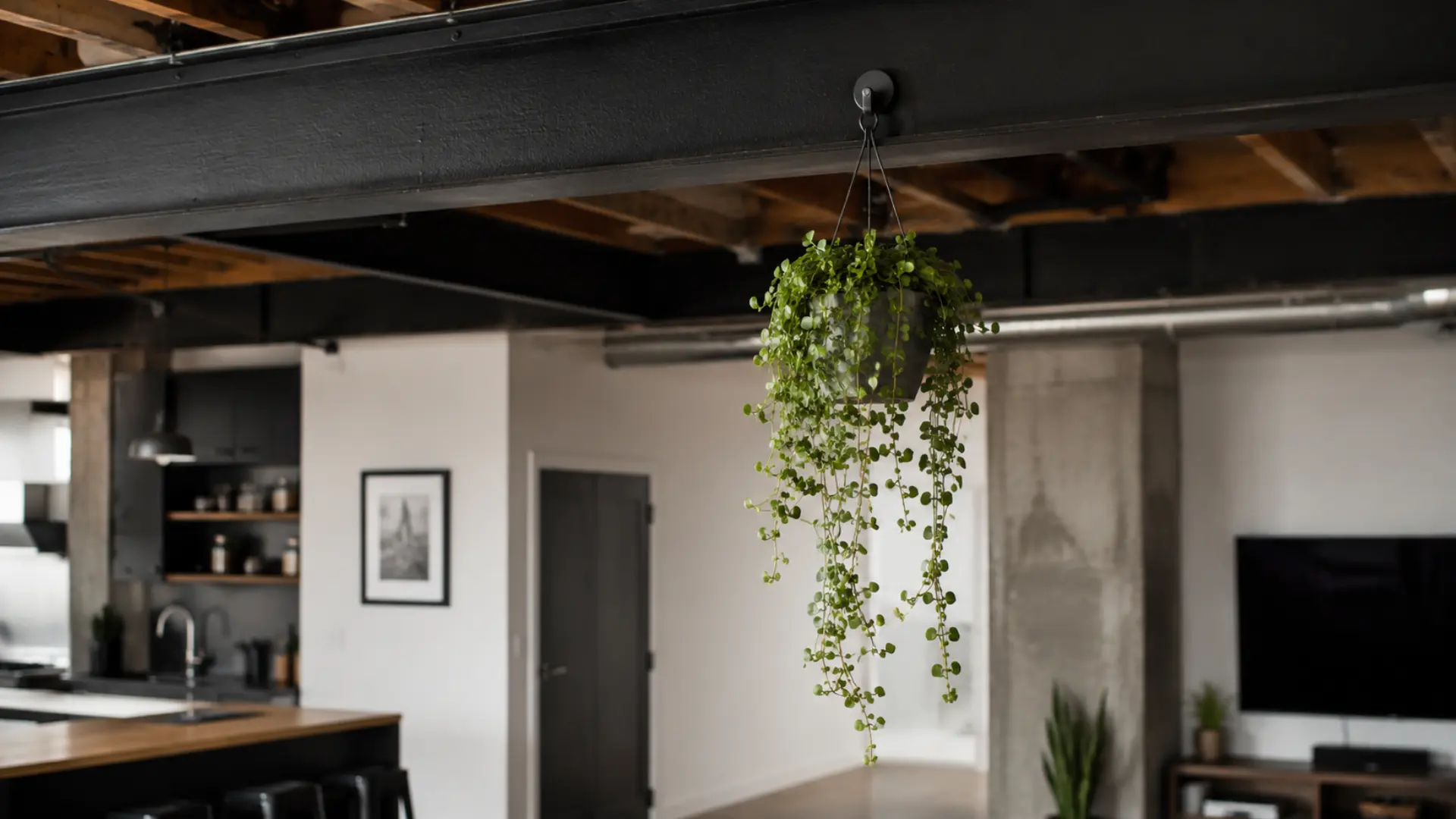
Magnetic hooks only work on metal surfaces like steel ceiling beams, metal door frames, or exposed pipes. They are not for drywall or wood ceilings. These hooks are strong but not meant for heavy plants.
Small to medium planters work well. Check the magnet’s weight rating before use. The surface must be clean and flat for the magnet to hold properly.
Steps to get it done:
- Find a metal surface on your ceiling like an exposed beam or steel panel.
- Clean the metal spot with a dry cloth to remove dust and grease.
- Press the magnetic hook firmly onto the surface and hold for a few seconds.
- Test it with light pressure before hanging your plant on the hook.
4. Freestanding Plant Hanger Stands
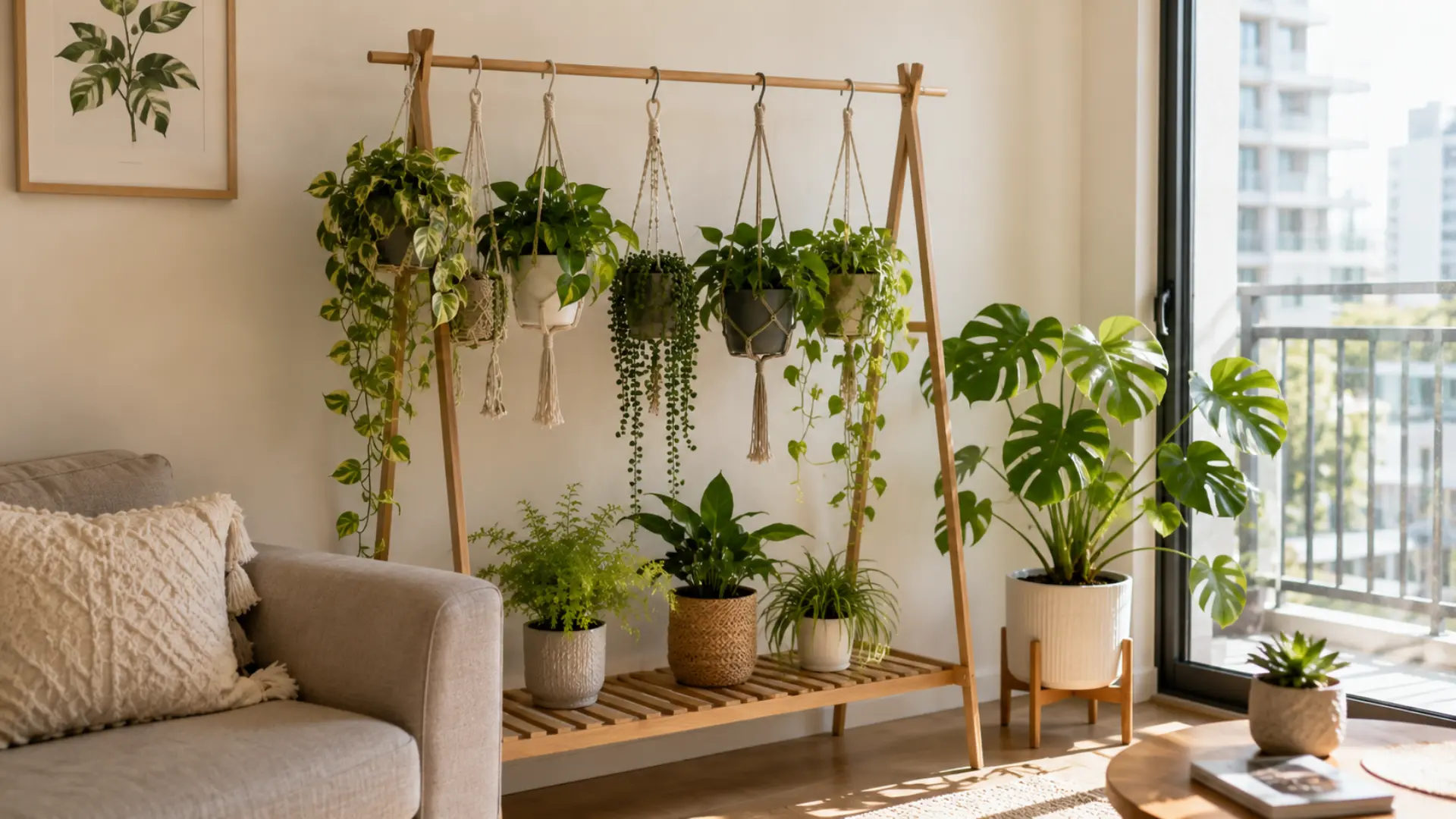
A freestanding plant stand sits on the floor and holds hanging planters at different heights. This is perfect for renters or anyone nervous about ceiling damage.
Many styles are available, from minimalist metal to rustic wood. You can move it around freely and style it as a decorative display piece. It also works well in corners where ceiling hooks would be hard to place.
Steps to get it done:
- Choose a stand with a height and weight capacity that fits your space and planters.
- Assemble the stand on a flat, stable surface following the included instructions.
- Attach your planters using the built-in hooks or add your own S-hooks.
- Place it near a window for best light and adjust plant positions as needed.
5. Hanging Plants From Curtain Rods
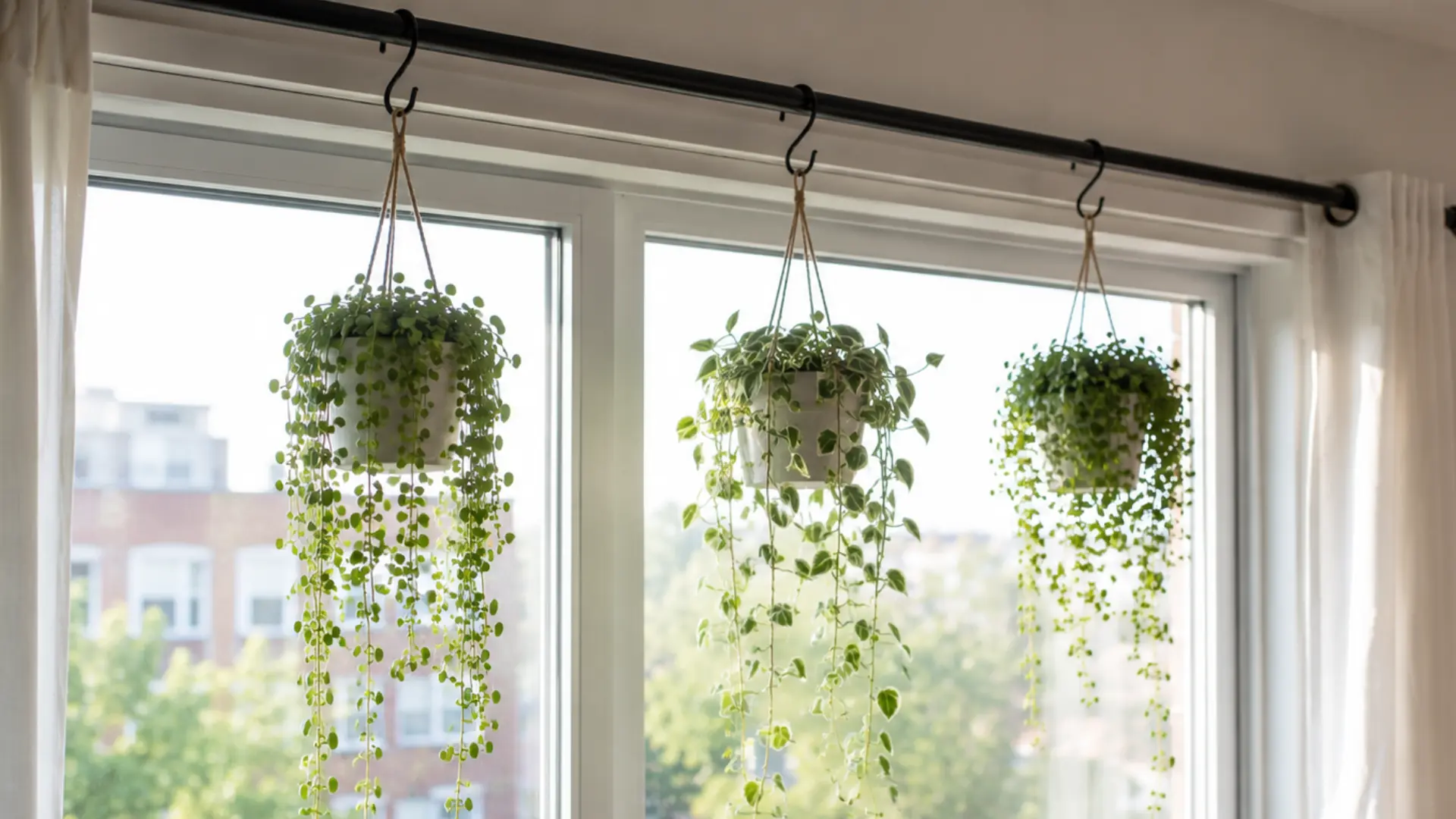
Most people already have curtain rods installed, and these can double as plant hangers with zero extra effort. Use S-hooks to hang small planters directly from the rod.
This works best near windows where plants get good light. Stick to lightweight plants only. A heavy pot on a curtain rod can pull it loose from the wall brackets over time.
Steps to get it done:
- Check that your curtain rod brackets are firmly attached and not already under strain.
- Add small S-hooks to the rod by opening the hook slightly and slipping it on.
- Hang lightweight planters like pothos, string of pearls, or small ferns from the hooks.
- Space plants evenly across the rod to keep the weight balanced on both sides.
6. Using Clothing Racks and Decorative Ladders
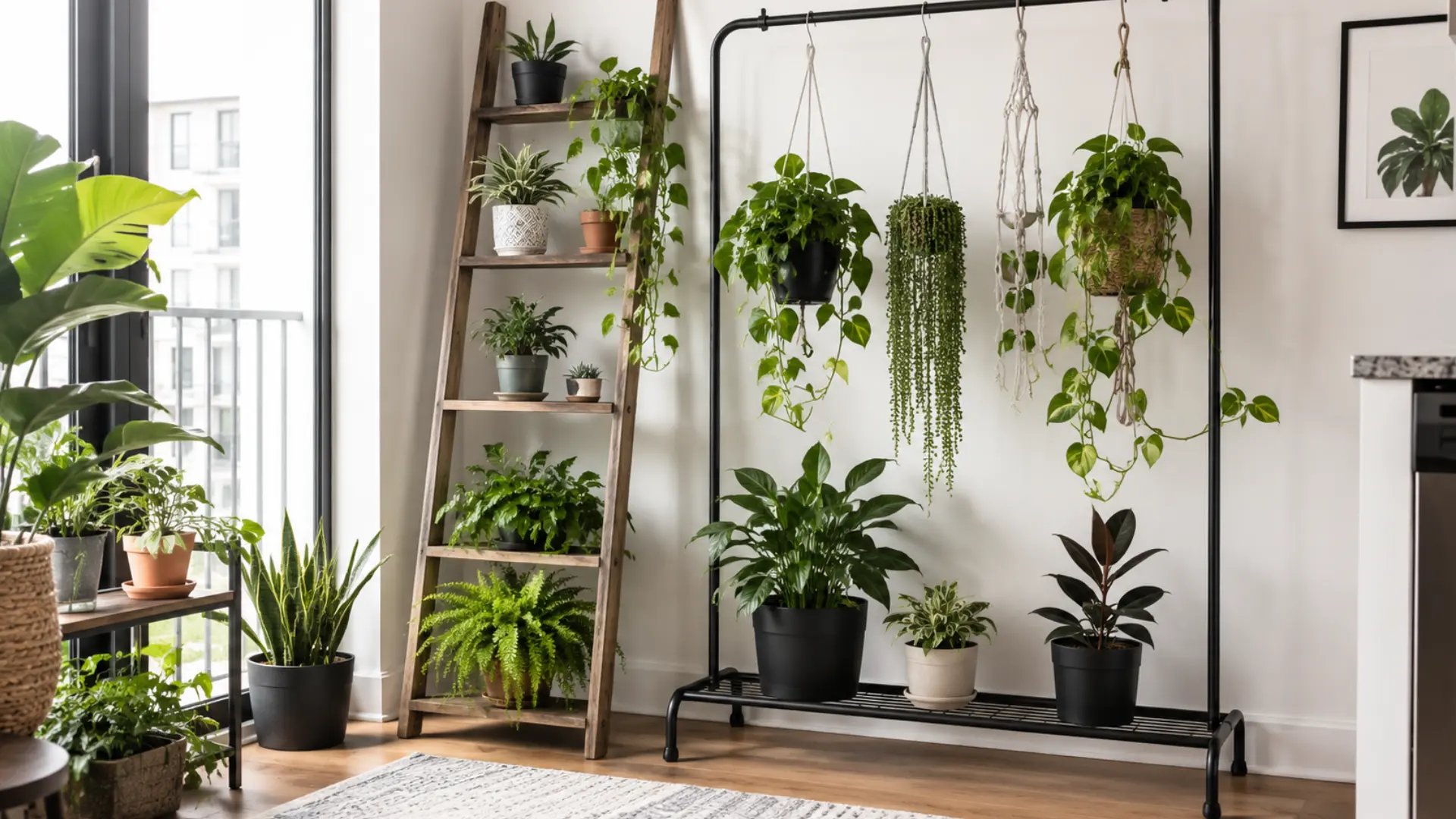
A clothing rack or a leaning ladder makes a great plant display without touching the ceiling at all. Hang planters from the rack’s horizontal bar or drape them over the ladder rungs.
Both options are portable, affordable, and easy to style. A ladder leaned against a wall takes up very little floor space. You can mix hanging planters with potted ones for a layered look.
Steps to get it done:
- Choose a sturdy clothing rack or wooden ladder that can hold the weight of your plants.
- Place the rack or lean the ladder against a wall in a well-lit spot.
- Use S-hooks or twine to hang planters from the bar or ladder rungs.
- Add potted plants on the ladder steps to fill out the display with more greenery.
7. Hanging Plants With Suction Cup Hooks
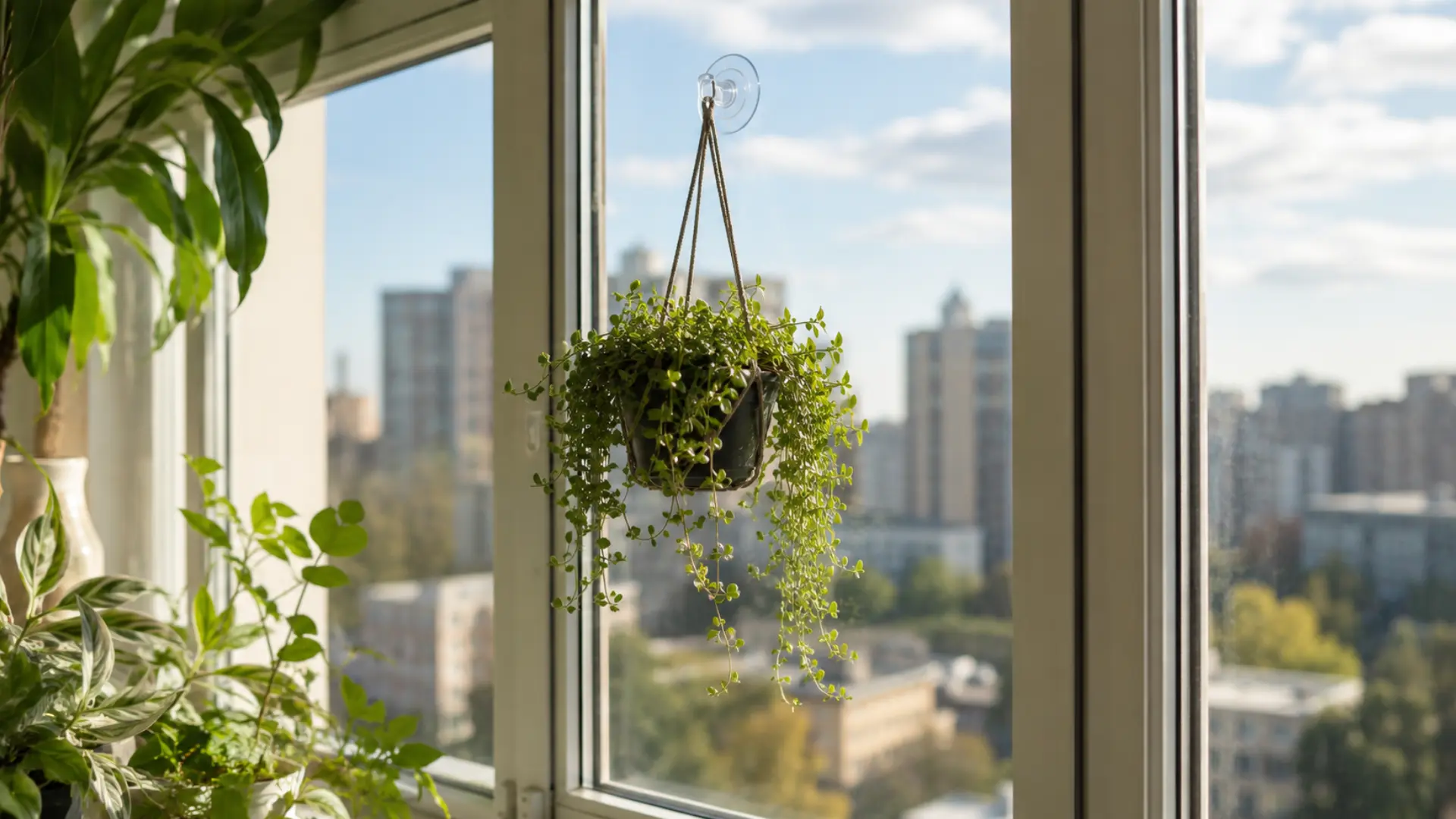
Suction cup hooks grip smooth, non-porous surfaces using air pressure. They work best on glass windows, glass doors, and mirrors.
This makes them a great option for displaying small trailing plants right where the light is. They are not meant for heavy planters. Stick to small pots under one pound.
Clean the surface well before applying and press the cup firmly to get a strong seal.
Steps to get it done:
- Clean the glass surface with rubbing alcohol and let it dry completely before applying.
- Press the suction cup firmly against the glass and flip the lock lever down.
- Hang a lightweight planter and check the grip after a few hours.
- Re-press the cup every few weeks to maintain a strong hold on the surface.
8. Using Over-the-Door Plant Hangers
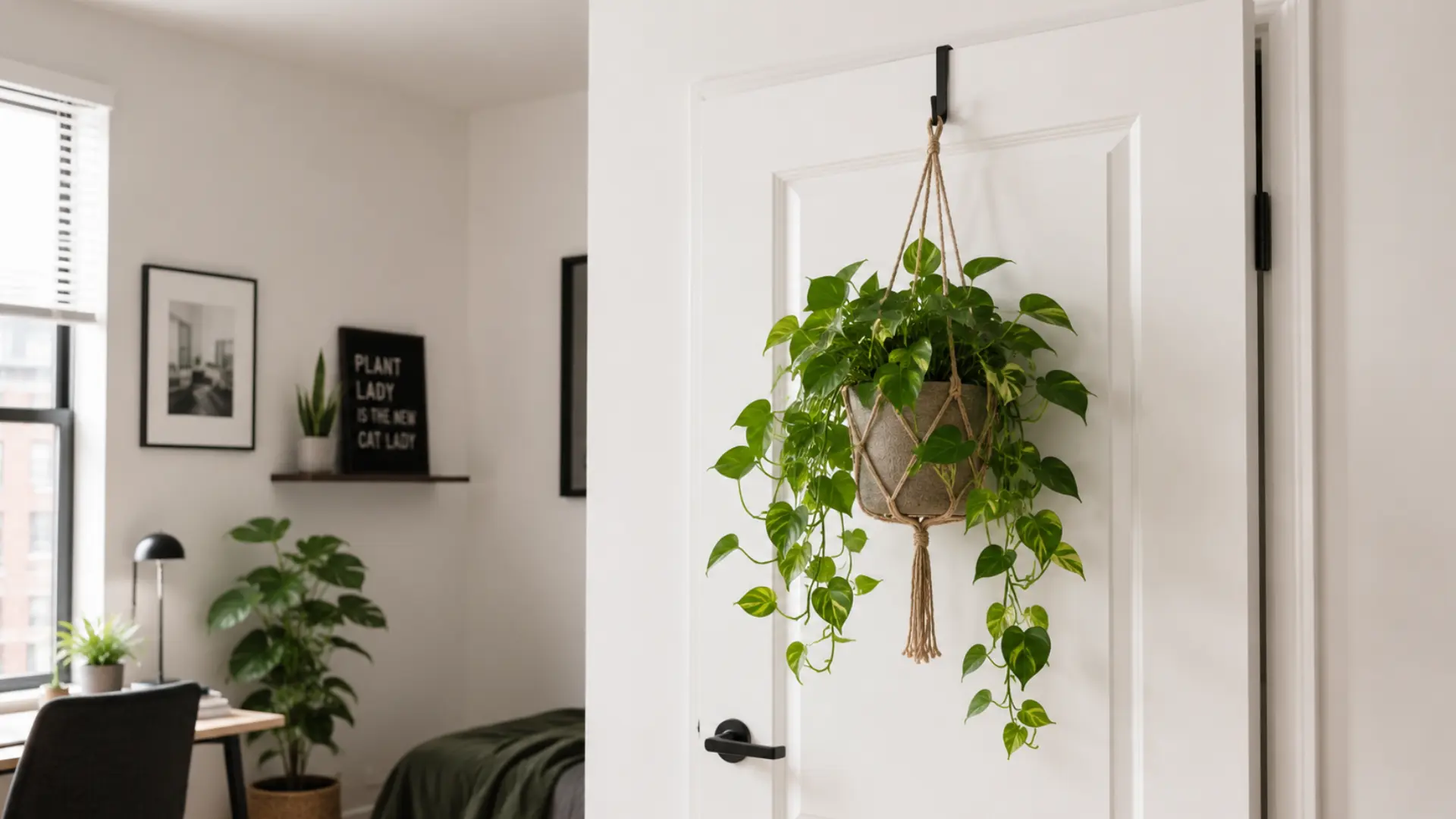
Over-the-door hangers hook over the top of any standard door frame without touching the ceiling. They create instant hanging space for trailing plants in apartments and dorm rooms.
These are easy to move from room to room. They work best on interior doors that stay open most of the time. Keep the plant weight light to avoid putting stress on the door frame over time.
Steps to get it done:
- Choose an over-the-door hanger with a weight rating that matches your planter size.
- Hook it over the top of a door that stays open and gets decent natural light.
- Hang your planter from the hook and adjust the height using an S-hook if needed.
- Check the door frame weekly for any scratches or pressure marks from the hanger.
9. Hanging Plants From a Peg Rail System
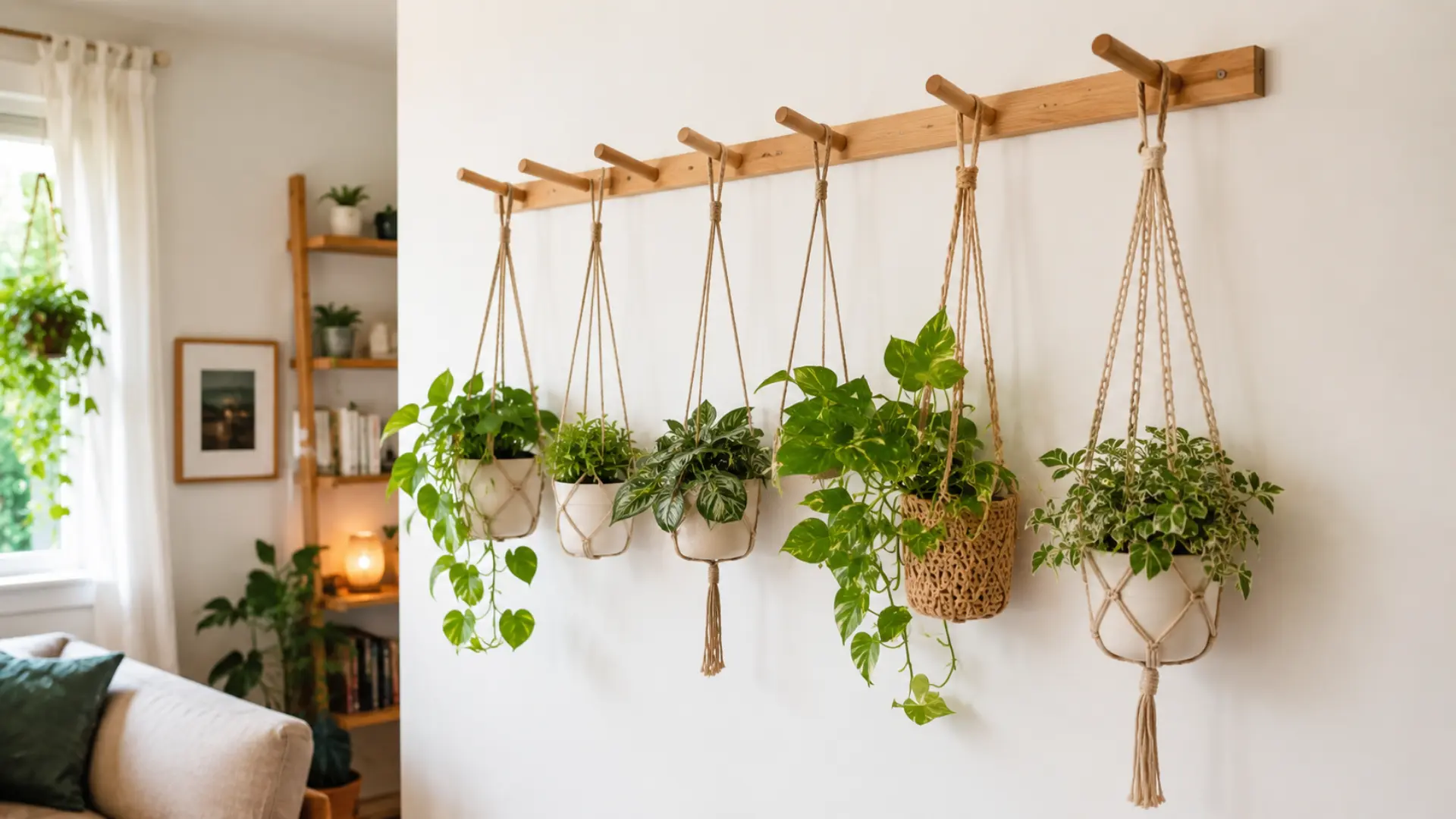
A peg rail system is a row of pegs mounted on a rail that can hold plants, baskets, and other decor items. Some removable or tension-mounted versions work well for renters.
This setup makes it easy to switch plants and decorations throughout the year. It works especially well in entryways, living rooms, and bedrooms while using very little space.
Steps to get it done:
- Choose a removable or tension-mounted peg rail that fits your wall space and weight needs.
- Install the rail according to the manufacturer’s instructions, making sure it is secure and level.
- Hang lightweight planters from the pegs using hooks, rope, or macrame hangers.
- Rearrange plants and seasonal decor as needed to refresh the look without making permanent changes.
Best Plants for No-Drill Ceiling Hanging
Not every plant is a good fit for no-drill hanging. The best ones are lightweight, slow-growing, and happy in indoor light conditions. Here is a quick look at the top picks:
| Plant | Best Hanging Method | Light Needs | Watering Needs |
|---|---|---|---|
| Pothos | Adhesive hooks, curtain rods | Low to medium indirect light | Once a week |
| Spider Plant | Command hooks, tension rods | Bright indirect light | Once a week |
| String of Pearls | Suction cup hooks, window systems | Bright indirect light | Every two weeks |
| Philodendron | Curtain rods, freestanding stands | Low to bright indirect light | Once a week |
| English Ivy | Adhesive hooks, over-the-door hangers | Medium to bright indirect light | Twice a week |
| Air Plants | Suction cup hooks, magnetic hooks | Bright indirect light | Mist twice a week |
| Faux Hanging Plants | Any no-drill method | No light needed | No watering needed |
Faux plants are a great call if you want the look without the upkeep. For real plants, pothos and air plants are the easiest ones to start with.
How Much Weight Can No-Drill Plant Hangers Hold?
This is one of the most important things to get right before you hang anything. The answer is that it depends on what you are using and where.
Most no-drill options hold between one and five pounds. Some can handle more, but that is not always guaranteed. A few things affect holding power, no matter what you use.
Humidity weakens adhesive over time. Watering adds more weight than most people expect. Surface texture matters too. A smooth ceiling holds better than a rough one every single time.
Always stay under the rated limit, not at it. When in doubt, go with a lighter plant and a stronger hook.
Common Mistakes to Avoid When Hanging Plants
A few small mistakes can cause a plant to come crashing down. Knowing what to avoid will save you a lot of trouble before it happens. Watch out for these common ones:
- Hanging plants too soon: Adhesive hooks need at least twenty-four hours to bond fully before you hang anything on them.
- Using hooks on the wrong surfaces: Rough, textured, or popcorn ceilings do not hold adhesive well, so always match your hook to the surface.
- Forgetting water weight: A dry pot feels light but can weigh significantly more after a full watering session.
- Placing plants in high-traffic areas: A hanging plant in a busy hallway or doorway is more likely to get bumped and fall.
These mistakes are easy to avoid once you know about them. Take a few extra minutes to check your setup, and your plants will stay exactly where you put them.
Frequently Asked Questions
What is the safest way to hang plants in a rental apartment?
Freestanding stands and over-the-door hangers are your safest bet. They leave zero marks and are easy to move anytime.
How can I hang a heavy plant without drilling?
Use exposed beams or pipes with beam straps or pipe clamps. These are the strongest no-drill options available.
Do adhesive hooks damage ceilings?
They usually do not, but peeling them off too fast can pull paint. Always remove them slowly and carefully.
Final Thoughts
You now have everything you need to get started. Hanging plants without drilling is very doable, and the results can look great. The key is matching your method to your ceiling type and your plant’s weight.
Start small if you are new to this. Pick one plant, one spot, and one method. See how it holds up before adding more.
Knowing how to hang plants from ceiling surfaces the right way saves you from a lot of mess and frustration later. Your space deserves a little green.
Drop a comment below and tell us which method you are going to try first.


One Response