

A blank wall behind the bed often feels like the one thing left unfinished in a bedroom, even after everything else falls into place.
Fixing it does not require a carpentry background or a big budget.
This roundup of DIY headboard ideas covers rustic wood builds, upholstered fabric designs, painted accents, boho textures, budget-friendly repurposed finds, modern minimalist styles, bold statement pieces, and more.
Along the way, you will pick up practical tips on how to make a headboard that fits your space, skill level, and personal style.
Finding the Right Style Before You Start
The right headboard style depends on a few practical things before any building begins: the size of the room, the mood of existing decor, and how much time you want to spend on the project.
Some designs come together in an afternoon with basic tools, while others call for more patience and precision.
Renters often need options that skip permanent mounting altogether, while homeowners have more freedom to build something fixed.
Knowing how to make a headboard that suits your actual space, not just a design you liked in a photo, makes the whole project easier from the start.
Wood & Rustic Headboards
These rustic designs lean on raw materials, visible grain, and a slightly imperfect finish that feels lived-in rather than staged, making them a solid starting point for anyone new to DIY headboard ideas.
1. Reclaimed Pallet Headboard
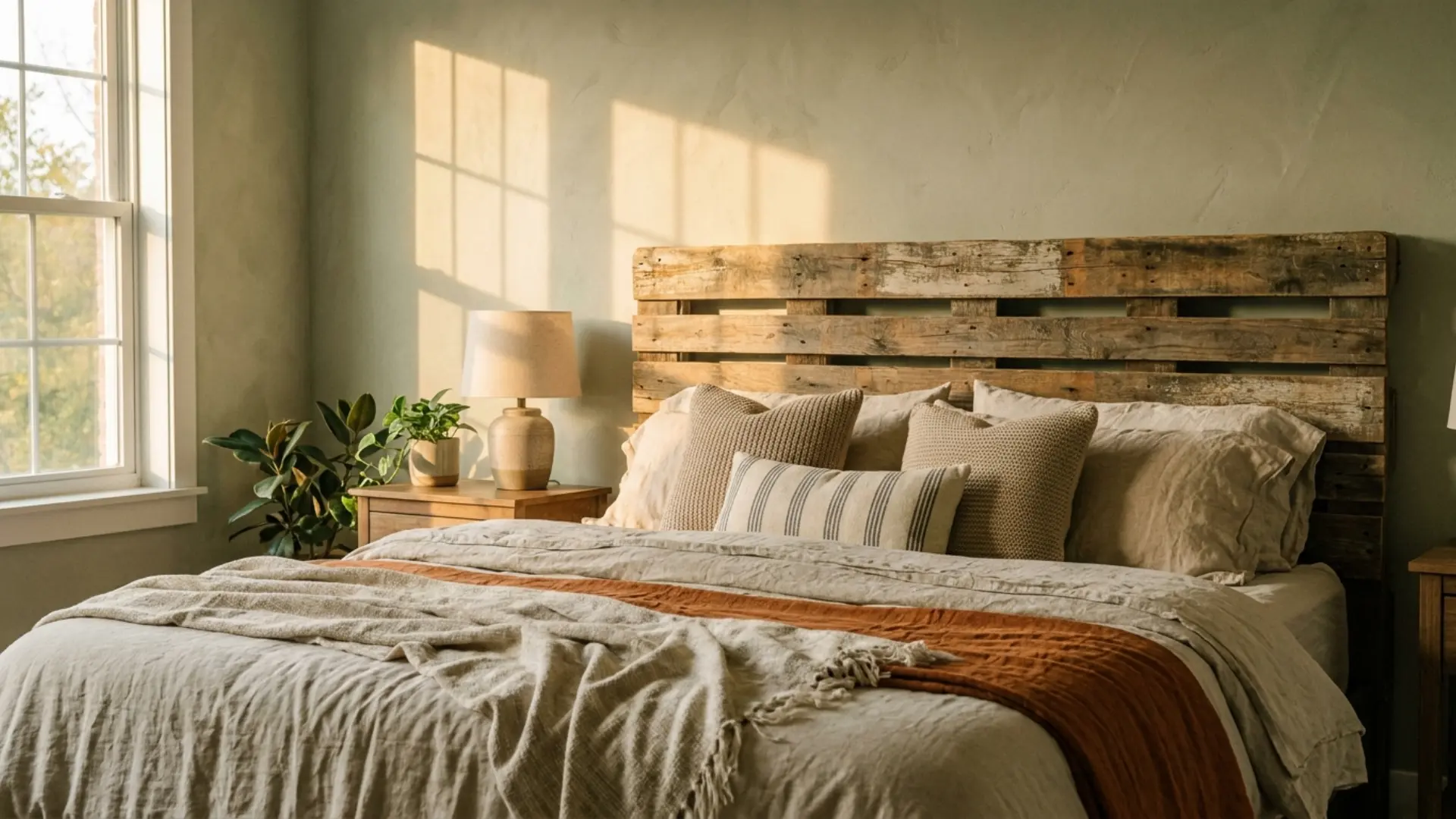
Pallet wood is one of the easiest ways to build a headboard without buying new lumber.
Sand the rough edges, stain the wood or leave it natural, then attach the planks to a simple frame or directly to the wall studs.
Gaps between boards add texture without extra effort. This project suits anyone testing out how to make a headboard for the first time, since small mistakes barely show.
2. Barn Door Style Headboard

A barn door headboard borrows the sliding hardware without requiring an actual moving door.
Use tongue-and-groove boards or wide planks fastened together with a Z-frame brace on the back for stability. Black metal handles or hardware accents complete the look.
This style pairs well with farmhouse or industrial bedrooms and serves as a sturdy, permanent option once securely mounted to the wall.
3. Shiplap Panel Headboard

Shiplap boards create horizontal lines that anchor a bed to the wall instead of leaving it floating in the room.
Thin planks with a small groove along each edge fit together snugly, then get nailed to a plywood backing or straight to the wall.
A coat of white or muted paint keeps the look bright and cottage-style, simple enough for anyone with a basic saw and nail gun.
4. Driftwood Accent Headboard

Driftwood pieces bring a coastal, weathered feel without any painting or staining required.
Collect pieces of similar tone and thickness, then arrange them across a plywood base in a pattern that fits the bed’s width.
Wood glue and a few screws from the back hold everything in place. Because each piece is naturally irregular, no two driftwood headboards ever look quite the same.
5. Log Slice Headboard
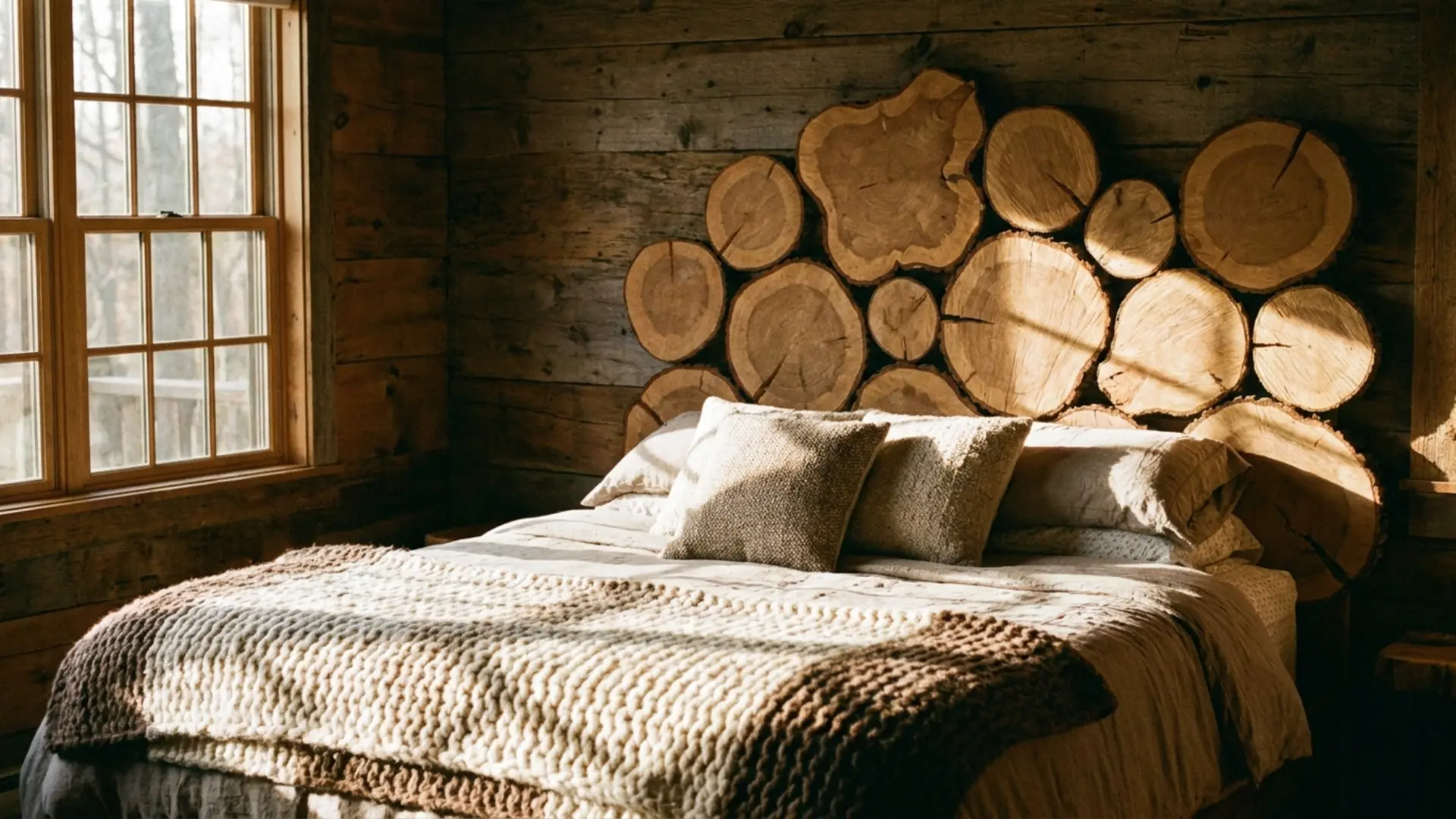
Log slices, cut from a fallen tree or bought at a craft store, create a forest-inspired look when arranged edge-to-edge.
Sand each slice smooth, seal with a clear finish to prevent cracking, then mount the pieces to a plywood backing in a honeycomb or scattered pattern.
The natural rings and bark edges add texture without any painting needed.
6. Weathered Plank Headboard
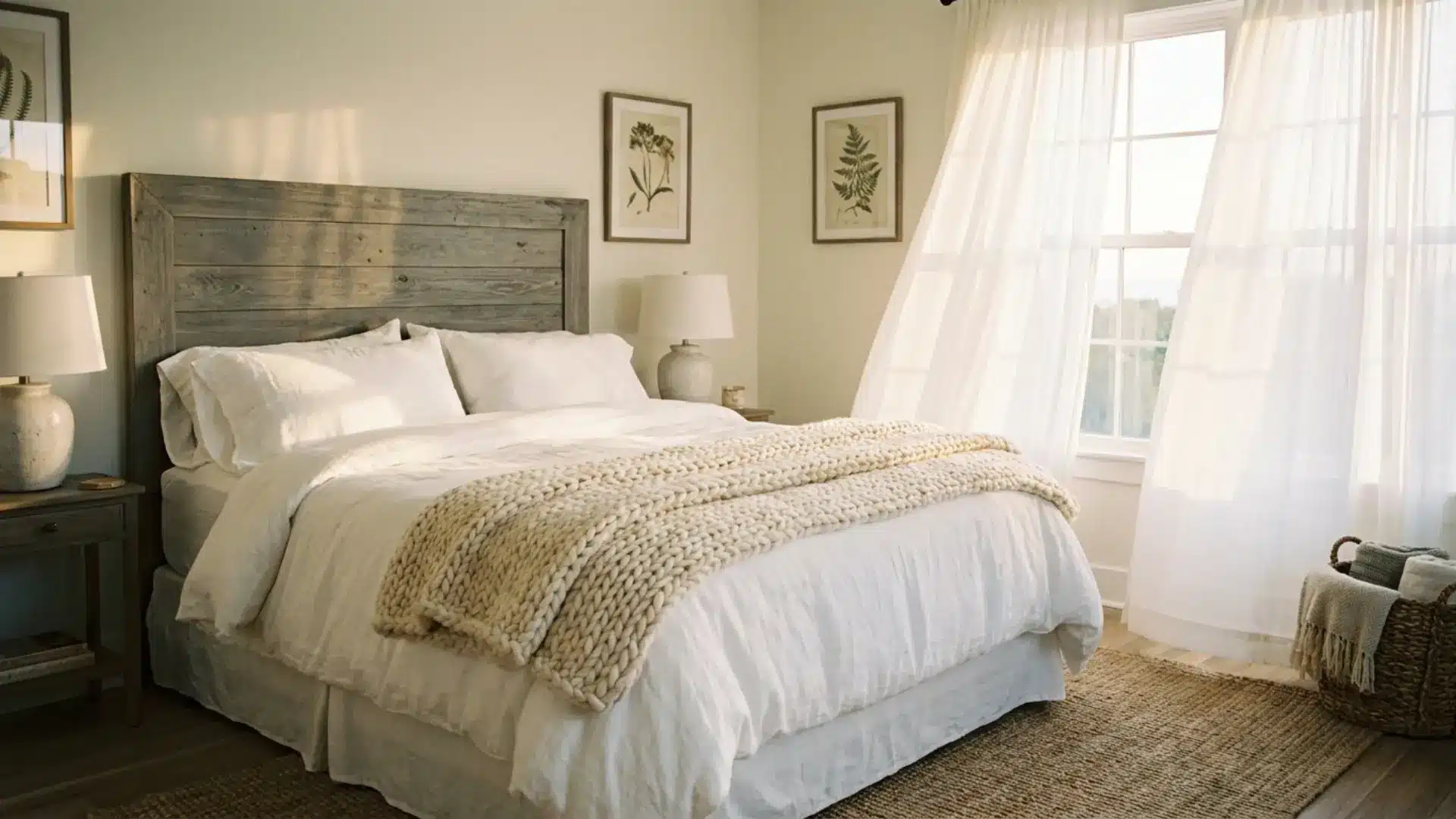
Weathered wood planks give a headboard an aged, sun-bleached quality without waiting years for natural weathering.
A vinegar-and-steel-wool solution darkens raw wood in a few hours, or a gray-wash paint technique achieves a similar effect faster.
Attach the planks vertically or horizontally to a frame, then mount the frame on the wall for a coastal or farmhouse feel.
7. Timber Frame Headboard
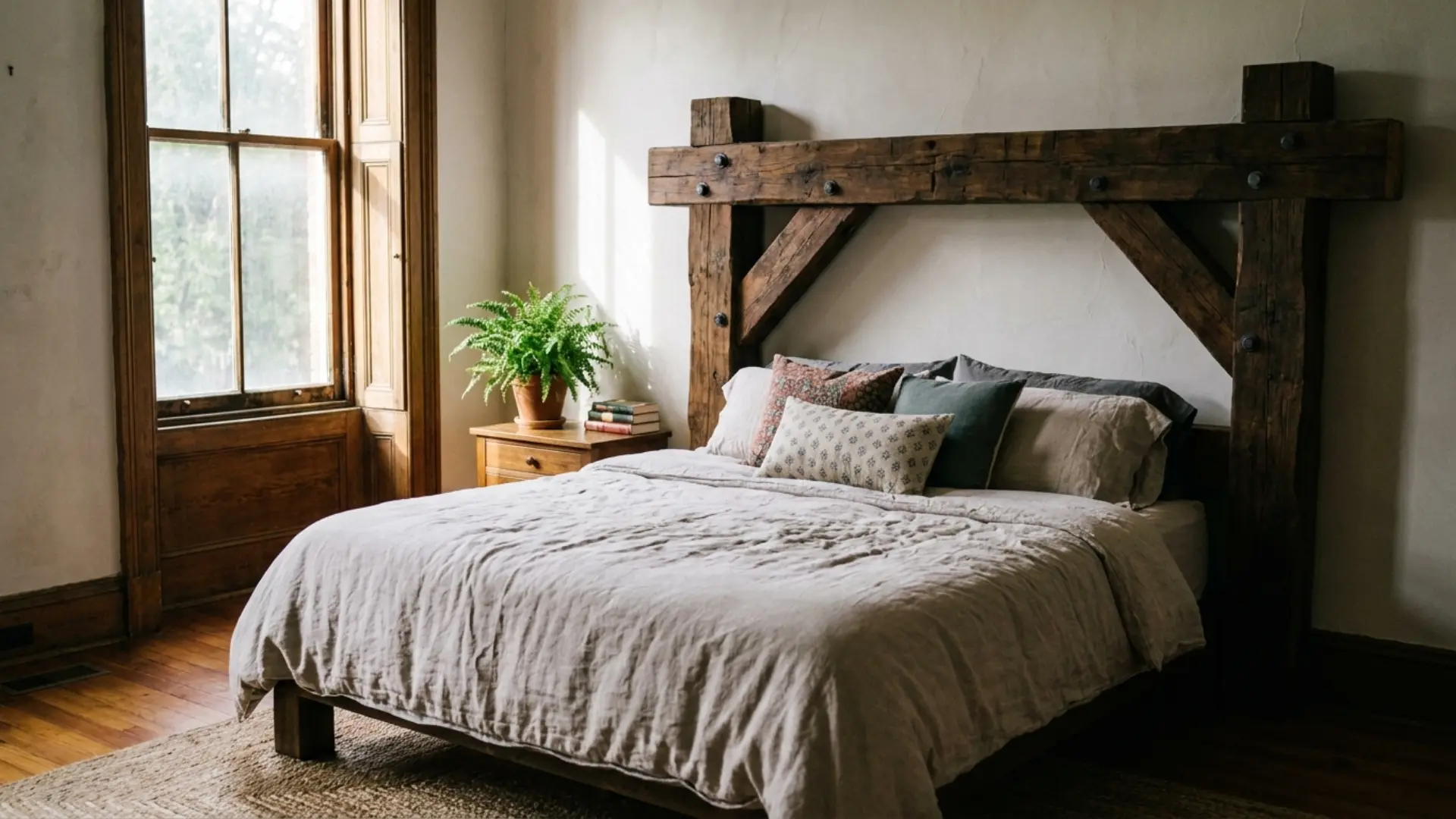
A timber frame headboard uses thick beams joined at the corners to create a bold, architectural outline rather than a solid panel.
Basic mortise-and-tenon joints or simple metal brackets hold the frame together, and the open middle can stay bare or be filled with a fabric or wood insert.
This style suits larger bedrooms with higher ceilings, where a substantial piece does not overwhelm the space.
Upholstered & Fabric Headboards
Soft materials change the overall feel of a headboard, adding comfort and visual interest. Here is how each fabric-based option comes together.
8. Tufted Velvet Headboard

A tufted velvet headboard adds instant softness and a slightly formal touch to a bedroom.
Foam padding gets wrapped in velvet fabric over a plywood base, with buttons or thread pulled through at even intervals to create the tufted dimples.
A staple gun secures the fabric edges on the back. Deep jewel tones like emerald or navy make this style feel especially rich against plain walls.
9. Linen Panel Headboard

A linen panel headboard keeps things simple with a single stretch of natural fabric over a padded board.
Batting wrapped in linen gets stapled to a plywood frame, then mounted directly to the wall or attached to the bed frame.
The relaxed texture of linen softens a bedroom without adding visual clutter, making it one of the easier fabric options for beginners to sew or staple.
10. Channel-Stitched Headboard

Channel stitching creates clean vertical lines of padded fabric that run from top to bottom of the headboard.
Foam strips get wrapped individually or sewn into channels before being secured to a backing board, giving the surface a structured, tailored look.
This style suits bedrooms with a slightly more polished aesthetic and works well in fabrics like linen, boucle, or cotton twill.
11. Quilted Patchwork Headboard

A quilted patchwork headboard repurposes fabric scraps or an old quilt into a padded panel full of color and pattern.
Squares of fabric get pieced together, layered over batting, then stapled to a board.
This option works well for anyone wanting to reuse sentimental fabric or mix patterns in a way that feels collected over time rather than matched from a single bolt.
12. Canvas Drop Cloth Headboard
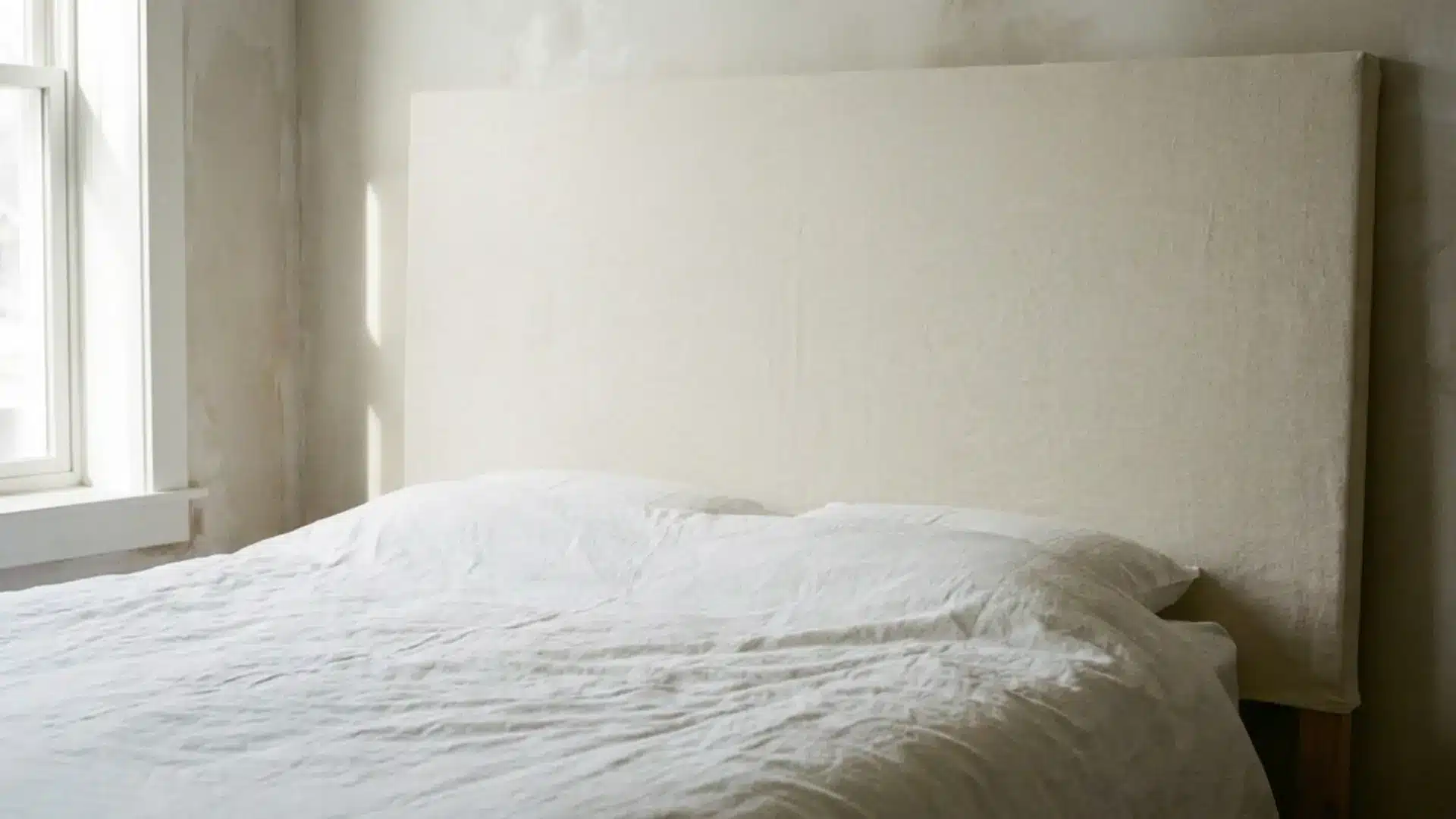
A canvas drop cloth, usually bought inexpensively at a hardware store, makes a sturdy, neutral-toned fabric headboard.
The heavy material is stretched over a padded board and stapled tightly at the corners to ensure a smooth finish.
Because the drop cloth is untreated, it also takes dye or fabric paint well if a warmer tone is wanted instead of the natural off-white shade.
13. Curtain-Hung Fabric Headboard

A curtain-hung headboard skips the padded board entirely and instead uses a curtain rod mounted above the bed to hang a length of fabric.
This approach requires no stapling or building, just a rod, brackets, and a few yards of fabric gathered or left flat. It also makes it easy to swap out whenever a different fabric or color is wanted.
14. Button-Tufted Diamond Headboard

A button-tufted diamond headboard follows a diagonal grid pattern rather than straight rows, creating the classic diamond-tufting look often seen on upholstered furniture.
Buttons get pulled through pre-marked points on a padded board using a long needle and strong thread.
This style takes more time than basic tufting but gives a headboard a distinctly tailored, upholstered furniture feel.
Painted & Stenciled Headboards
Color and pattern are among the most affordable ways to transform a plain headboard shape. Here are seven approaches worth trying.
15. Ombre Gradient Headboard

An ombre gradient headboard blends two or three shades of the same color from light to dark across a painted wood panel.
Paint gets applied in horizontal bands, then blended together with a dry brush or sponge while still wet.
This technique works on a plain plywood cutout in almost any shape, and it pairs especially well with soft pastel or muted tonal palettes in a bedroom.
16. Geometric Stencil Headboard
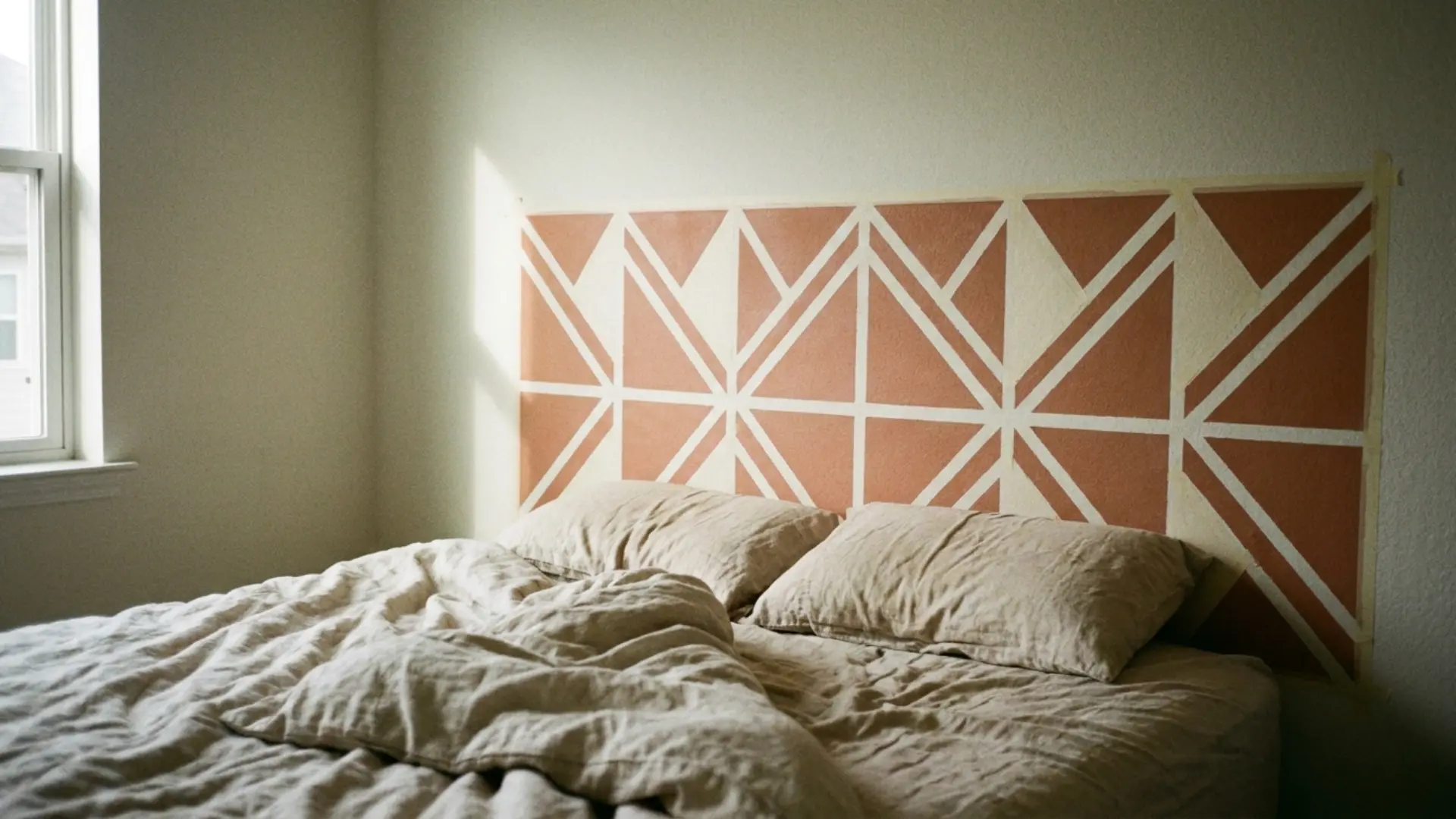
A geometric stencil headboard uses painter’s tape or a pre-cut stencil to create sharp, angular patterns such as triangles, chevrons, or hexagons on a wood panel.
Base paint goes down first, then the stencil pattern is added in a contrasting shade once the base coat has fully dried.
This approach suits modern bedrooms and gives a plain board a graphic, intentional look without much material cost.
17. Chalk Paint Distressed Headboard

Chalk paint distressed headboard styling uses a matte, chalk-based paint applied over wood, then lightly sanded at the edges and raised areas to reveal the wood underneath.
A wax or sealant coat protects the finish afterward.
This technique quickly gives a headboard a vintage, worn character without years of natural wear and works well on shaped or paneled headboard cutouts.
18. Color-Block Headboard
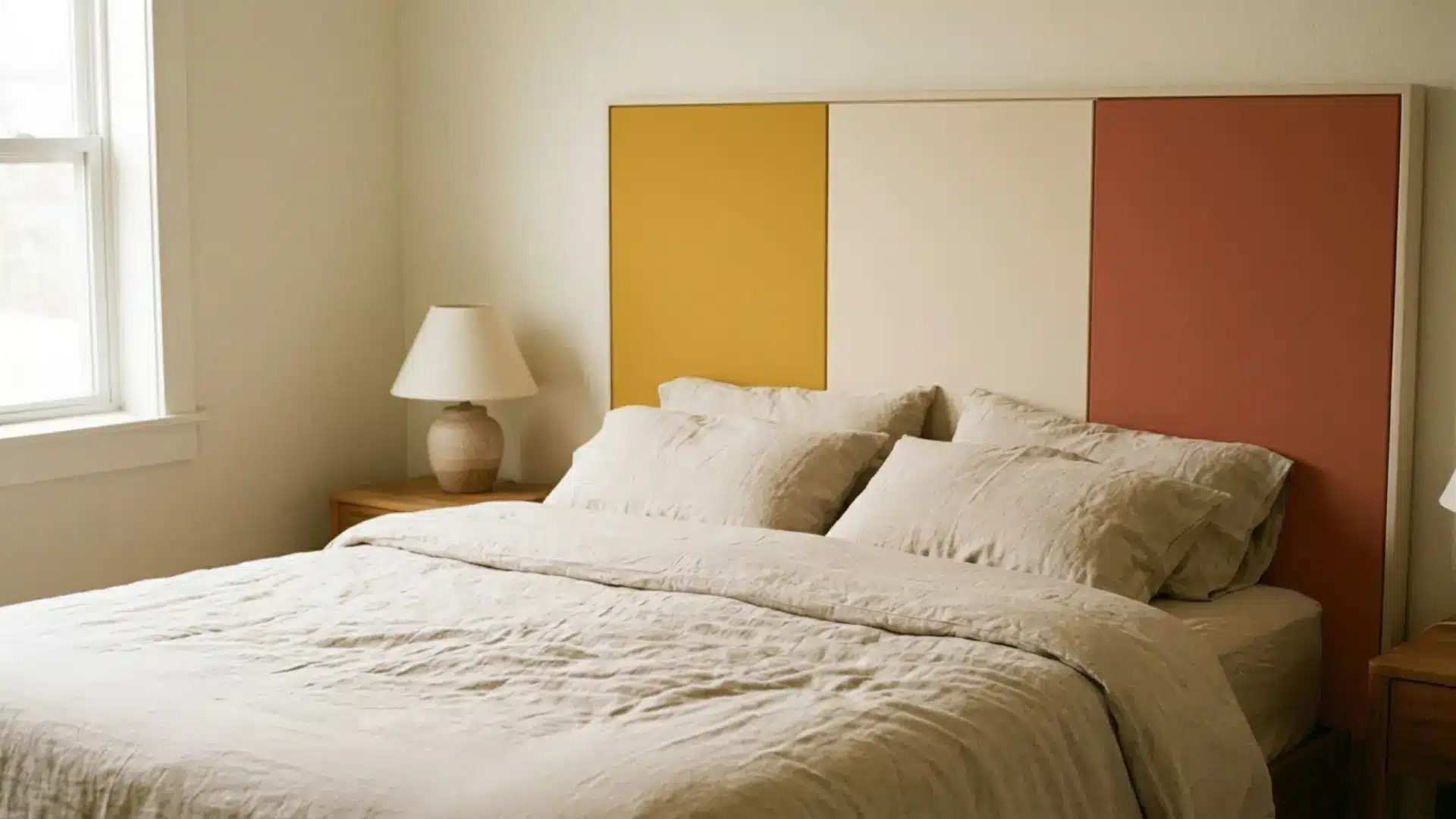
A color-block headboard divides the surface into distinct sections, each painted a different solid shade.
Painter’s tape marks off clean sections before each color gets applied and left to dry separately.
This approach works well on headboards with a simple geometric shape, such as an arch or a rectangle split into thirds, and offers an easy way to incorporate multiple accent colors at once.
19. Floral Hand-Painted Headboard

A hand-painted floral headboard turns a plain wooden panel into a soft, botanical artwork.
Simple flower and leaf shapes get sketched lightly in pencil first, then filled in with acrylic or craft paint in muted or bright tones depending on the room.
This option takes more time and a steadier hand than other painted styles, but it results in a completely one-of-a-kind headboard.
20. Striped Pattern Headboard

A striped headboard uses painter’s tape to mark off even or varied-width bands across a wood panel before painting each section in alternating colors.
Vertical stripes tend to make a headboard feel taller, while horizontal stripes widen the visual footprint.
This method works with almost any headboard shape and remains one of the simpler patterned techniques for those new to painting projects.
21. Metallic Accent Headboard

A metallic accent headboard uses gold, copper, or silver paint on select details rather than the entire surface, as the edges of a paneled headboard or a stenciled pattern layered over a matte base color.
Metallic paint pens or small brushes help keep the application controlled.
This technique adds a subtle shine and a slightly formal touch without overwhelming the rest of the room’s palette.
Boho & Textural Headboards
Layered materials and relaxed shapes bring a lived-in, collected feel to this next set of ideas.
22. Macrame Headboard
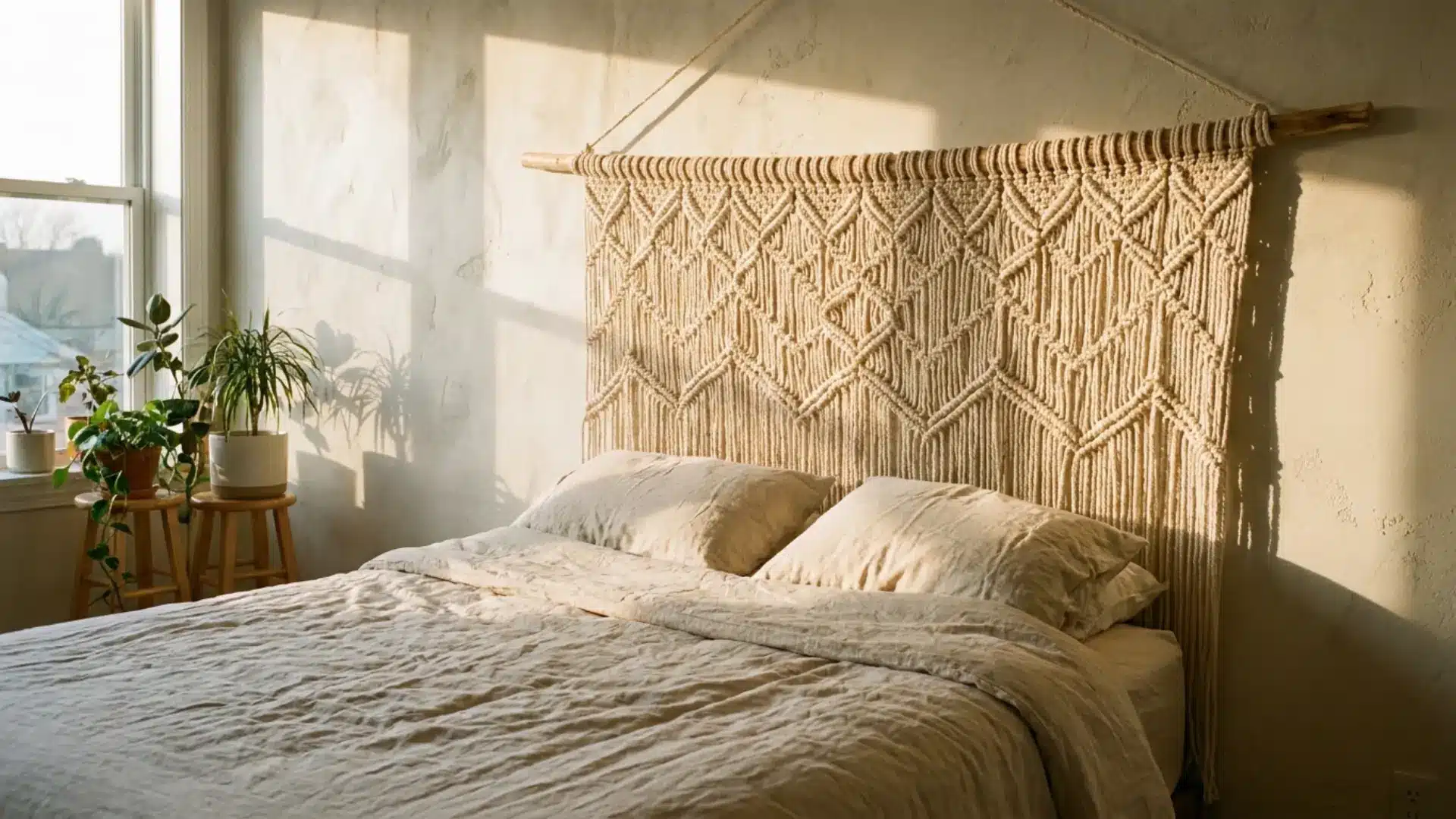
A macrame headboard uses knotted cord in a pattern that hangs behind the bed instead of a solid panel.
Cotton rope is knotted onto a wooden dowel using basic macramé knots such as square knots and half hitches, and then the dowel is mounted on two small hooks on the wall.
The open, woven texture adds a soft boho feel and works especially well in smaller bedrooms where a bulky headboard would feel heavy.
23. Woven Rattan Headboard

A woven rattan headboard brings a natural, textured surface to a bedroom using pre-made rattan panels or cane webbing stretched over a wood frame.
The webbing gets stapled or nailed around the frame edges, then the whole piece mounts to the wall or attaches to the bed frame.
This style pairs well with light wood tones and plants, giving a bedroom a relaxed, slightly tropical feel.
24. Tapestry-Hung Headboard

A tapestry-hung headboard uses a large woven or printed textile mounted on the wall behind the bed in place of a built structure.
A curtain rod, wall hooks, or even a few small nails hold the top edge of the tapestry in place.
This remains one of the fastest boho options to set up, since it involves no building at all, just hanging fabric at the right height.
25. Dried Pampas Grass Headboard

A dried pampas grass headboard arranges tall dried stems in a fan or cluster shape and is mounted behind the bed.
Stems get bundled and secured to a small wood dowel or directly to wall hooks, then fanned out for volume.
Because the material is lightweight, this option needs very little hardware, making it one of the simplest boho ideas to put together in an afternoon.
26. Fringe Trim Headboard

A fringe-trimmed headboard adds movement and texture by attaching long strands of yarn, cotton fringe, or fabric trim in rows to a wood or fabric backing.
Rows are stapled or sewn, starting from the bottom and working upward, so each layer overlaps the row below.
The result has a soft, tactile surface that catches light differently depending on the angle at which it is viewed.
27. Layered Textile Headboard
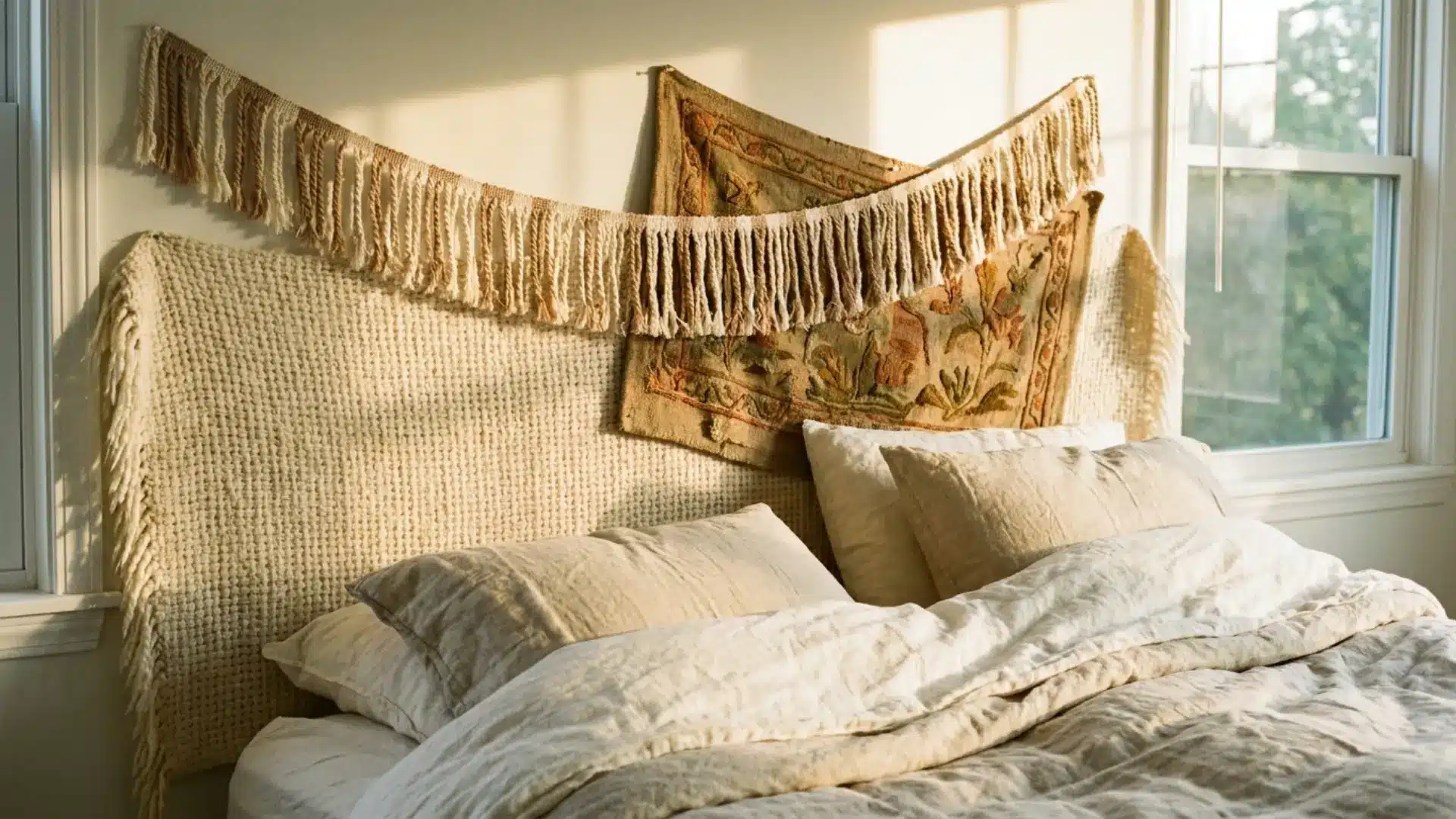
A layered textile headboard combines multiple fabric types, like a woven throw, a small tapestry, and a strip of fringe, arranged together behind the bed rather than relying on a single material.
Each piece gets hung or pinned at slightly different heights to create depth.
This approach works well for anyone who wants a boho look without having to sew or build anything from scratch.
28. Wall Hanging Style Headboard

A wall-hanging-style headboard draws on fiber art traditions, using a mix of woven sections, wooden beads, and knotted rope arranged on a dowel.
Unlike a simple macrame piece, this style often combines several textures and materials in a single hanging for greater visual complexity.
It mounts the same simple way, using a dowel and two wall hooks, making it easy to remove or replace later.
Budget & Repurposed Headboards
These ideas rely on materials already on hand or bought secondhand, keeping cost low without cutting corners on style.
29. Cardboard-Backed Fabric Headboard

A cardboard-backed fabric headboard uses thick cardboard cut to shape as the base instead of plywood, making it lightweight and nearly free to build.
A layer of thin foam or batting gets glued to the cardboard, then fabric wraps around and is stapled or glued to the back.
This option works well for renters or anyone testing out a headboard shape before committing to a sturdier version.
30. Old Door Repurposed Headboard
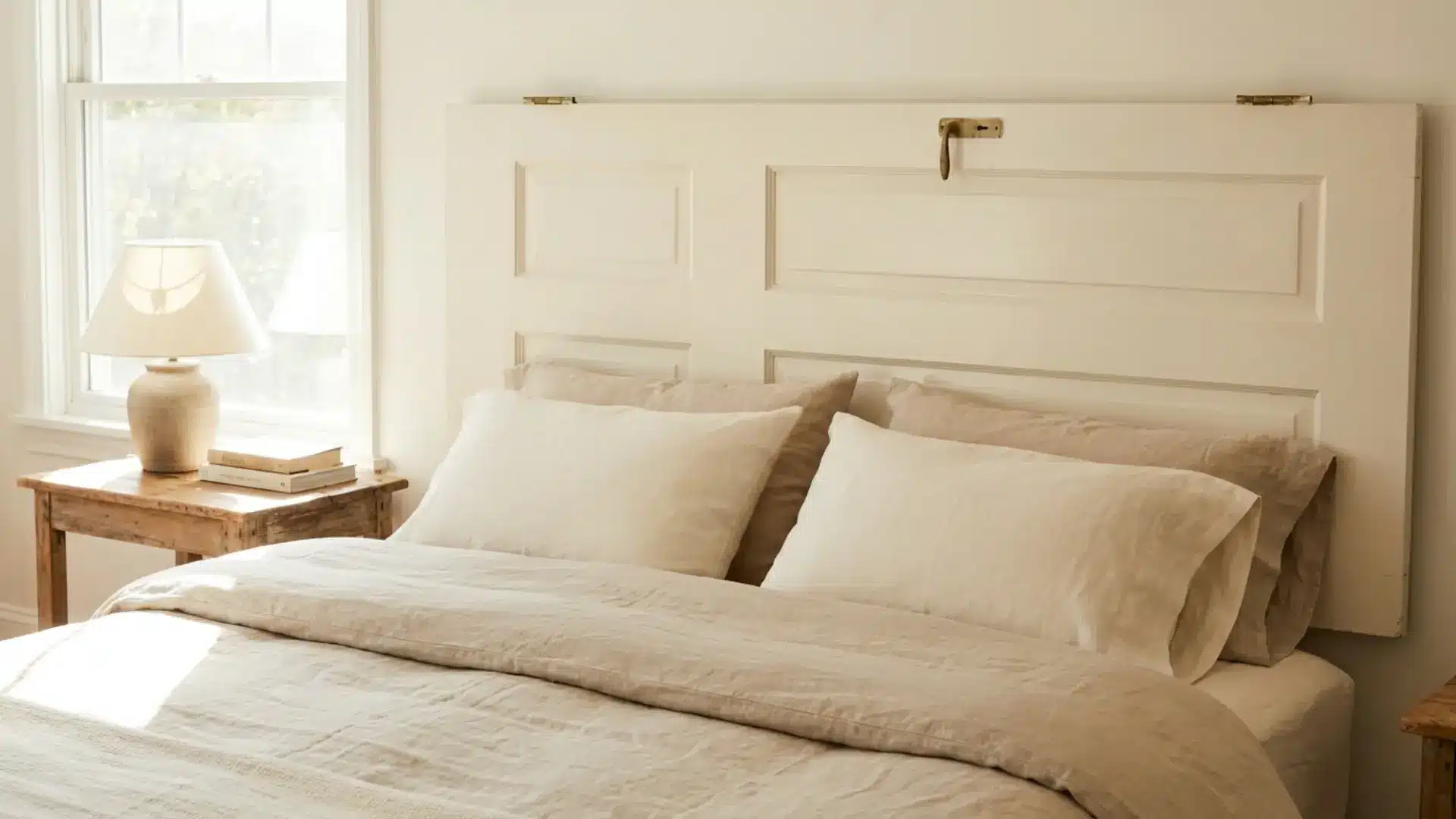
An old door repurposed as a headboard turns a salvaged interior or exterior door into a full-height headboard behind the bed.
The door is mounted horizontally or vertically depending on its size relative to the bed, with existing hardware such as knobs or hinges either removed or left as character details.
Peeling paint or worn spots on the original door usually add rather than take away from the look.
31. Ladder-Style Headboard

A ladder-style headboard uses an old wooden ladder, either found secondhand or built from scratch, positioned horizontally or leaned against the back of the bed.
The rungs create natural visual interest and can double as a spot to drape a throw blanket or hang small string lights.
This option requires almost no modification if a suitable ladder is already available, making it one of the fastest-repurposed builds.
32. Window Shutter Headboard

A window shutter headboard repurposes old louvered or paneled shutters, often bought secondhand, and mounts them side by side behind the bed.
Two or three shutters get connected with small hinges or brackets on the back, then the whole piece mounts to the wall.
Leftover paint or a fresh coat in a new color both work, depending on whether the shutters’ original finish suits the room.
33. Picture Frame Collage Headboard

A picture frame collage headboard arranges a mix of empty frames in different sizes and finishes directly on the wall behind the bed, forming the shape of a headboard.
Frames get hung using a paper template first to plan spacing before any nails go into the wall.
This option costs very little if frames are already on hand and offers an easy way to change the arrangement later.
34. Foam Board Padded Headboard

A foam board padded headboard uses rigid foam insulation board, sold cheaply at hardware stores, as the base instead of plywood.
A thin layer of batting and fabric wraps around the foam board and is stapled to the back, similar to other upholstered builds but with a lighter, less expensive core.
This option works well for anyone wanting a padded look without investing in wood or heavier tools.
35. Curtain Rod Hack Headboard

A curtain rod hack headboard uses two curtain rods, mounted horizontally at different heights, to hold a stretched fabric panel or a rolled textile between them.
This skips both a wood base and any padding, relying entirely on the tension and placement of the rods.
It remains one of the most budget-friendly options on this list because the total materials required are minimal.
Modern & Minimalist Headboards
Clean lines and restraint define this next group, favoring simple shapes over heavy ornamentation.
36. Floating Wood Slab Headboard
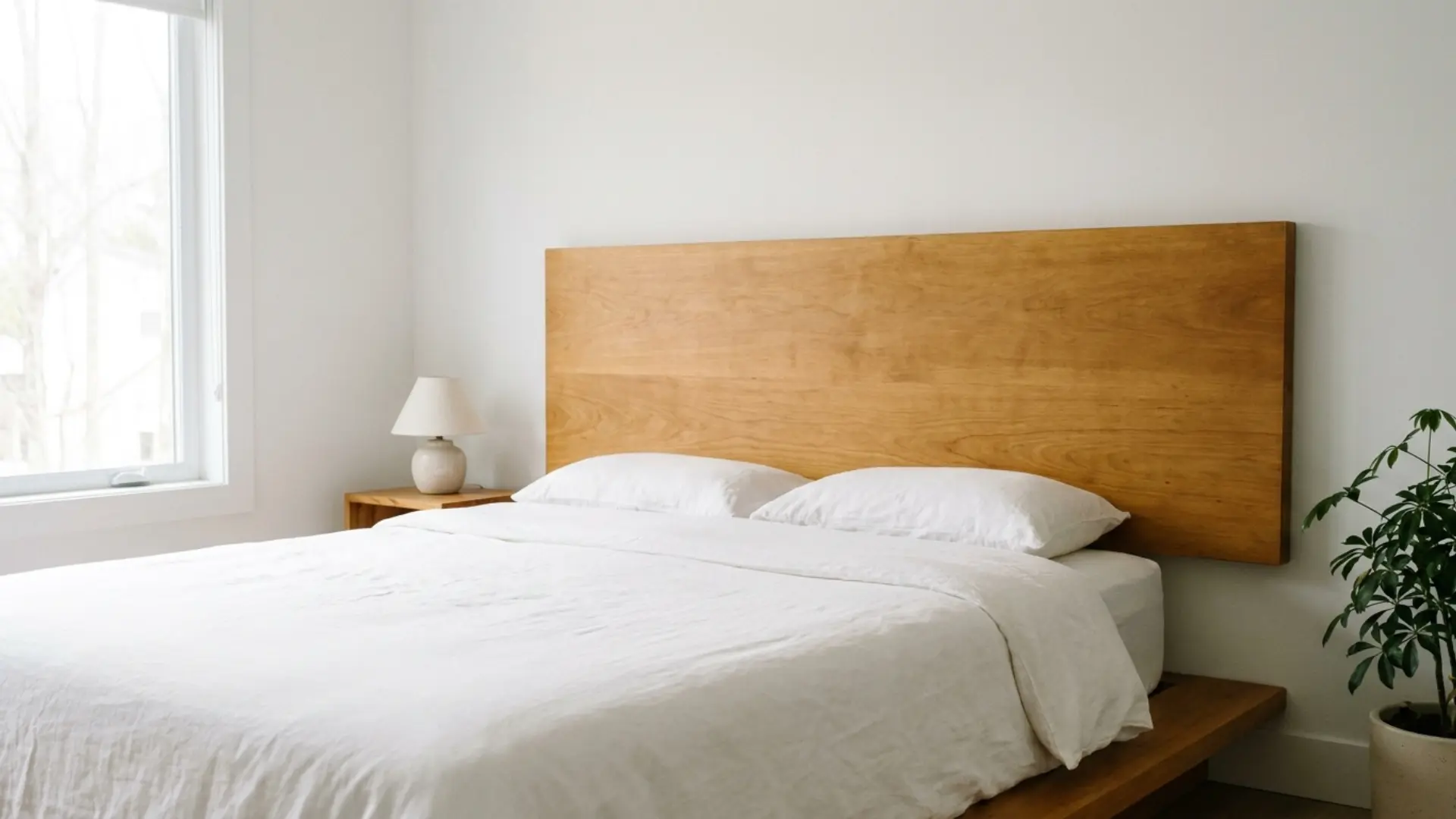
A floating wood slab headboard uses a single thick piece of wood mounted directly to the wall with hidden brackets, giving the appearance that it has no visible support.
The slab can stay in its natural finish or get a matte sealant for a slightly more refined surface.
This style suits bedrooms with a pared-back aesthetic, where one solid material does more work than a built-up structure.
37. Geometric Metal Frame Headboard

A geometric metal frame headboard uses thin metal rods or tubing welded or bolted into an angular shape, such as a hexagon or an arched outline, and mounted behind the bed.
Unlike wood-based options, this style stays open rather than solid, letting the wall behind show through the frame.
Black or brushed brass finishes both work well, depending on whether the room leans industrial or slightly warmer in tone.
38. LED-Backlit Panel Headboard

An LED-backlit panel headboard mounts a solid or slatted wood panel slightly off the wall, with an LED strip placed in the gap to cast a soft glow around the edges.
The panel itself can remain a simple rectangle or curve at the top, and the lighting can stay dimmable for a subtle wash rather than a bright, obvious glow.
This option suits bedrooms wanting a slightly more modern, tech-forward detail.
39. Concrete-Look Board Headboard

A concrete-look board headboard uses a faux-concrete finish, either a specialty paint product or a skim-coat compound, applied over a plywood base to mimic the texture of poured concrete without the actual weight or cost.
The surface takes on a slightly mottled, matte gray look once dry.
This style fits well in modern or industrial bedrooms where a raw-material feel is desired.
40. Monochrome Plywood Headboard

A monochrome plywood headboard keeps the natural plywood edge visible while painting the flat face a single solid color, creating a subtle contrast between the raw edge grain and the smooth painted surface.
The shape can stay a simple rectangle or be rounded at the top corners.
This approach works well for anyone wanting a modern look without entirely hiding the material.
41. Angular Wood Cutout Headboard

An angular wood cutout headboard uses a plywood or MDF panel cut into a geometric shape, like a chevron, trapezoid, or asymmetric angle, rather than a standard rectangle.
A jigsaw handles the cutting once the shape gets marked out, and the edges get sanded smooth before a paint or stain finish.
This option gives a headboard a distinct silhouette without needing any padding or fabric.
42. Negative-Space Frame Headboard

A negative-space frame headboard uses a wood or metal outline mounted behind the bed, leaving the center open rather than filled with a solid panel.
The wall behind shows through the middle, letting existing paint or wallpaper act as part of the design.
This style works especially well in bedrooms where the wall itself already has visual interest worth keeping visible.
Statement & Bold Headboards
This next group is meant to be the focal point of the room, using scale, shape, or material to stand out rather than blend in.
43. Arched Panel Headboard

An arched panel headboard uses a plywood or MDF base cut into a rounded top instead of a standard rectangle, giving the shape a softer, more architectural feel.
The curve is marked out using a simple string-and-pencil compass method, then cut with a jigsaw.
This shape works well upholstered, painted, or left as bare wood, and tends to make a bed feel taller and more intentional in the room.
44. Oversized Scalloped Headboard

An oversized scalloped headboard uses a row of rounded, cloud-like bumps along the top edge instead of a straight or single curved line.
Multiple half-circle shapes get traced and cut along the top of a plywood panel before padding or painting.
Because the scallops read best at a larger size, this style tends to extend higher on the wall than a typical headboard shape.
45. Mixed-Material Mosaic Headboard

A mixed-material mosaic headboard combines wood, tile, mirror fragments, or fabric scraps arranged across a single panel rather than relying on a single material throughout.
Each piece is glued into place according to a rough pattern, and then grout or trim covers any visible gaps between sections.
This option takes more planning than most other ideas on this list, but results in a completely unique, one-off piece.
46. Neon Sign Accent Headboard

A neon sign accent headboard pairs a plain painted or upholstered panel with a small LED neon sign mounted at the center or to one side.
The sign can spell out a word, a simple shape, or an abstract line design, and can be plugged into a nearby outlet or run on batteries, depending on the model.
This works best in bedrooms with a slightly playful or eclectic style already established.
47. Gallery-Wall Style Headboard

A gallery-wall style headboard skips a single built structure entirely, instead using a cluster of framed art, mirrors, and small shelves arranged behind the bed in the general shape and footprint of a headboard.
Pieces get planned out on the floor first, then transferred to the wall using a paper template.
This option offers the most flexibility to change or add pieces over time.
48. Mirror-Paneled Headboard
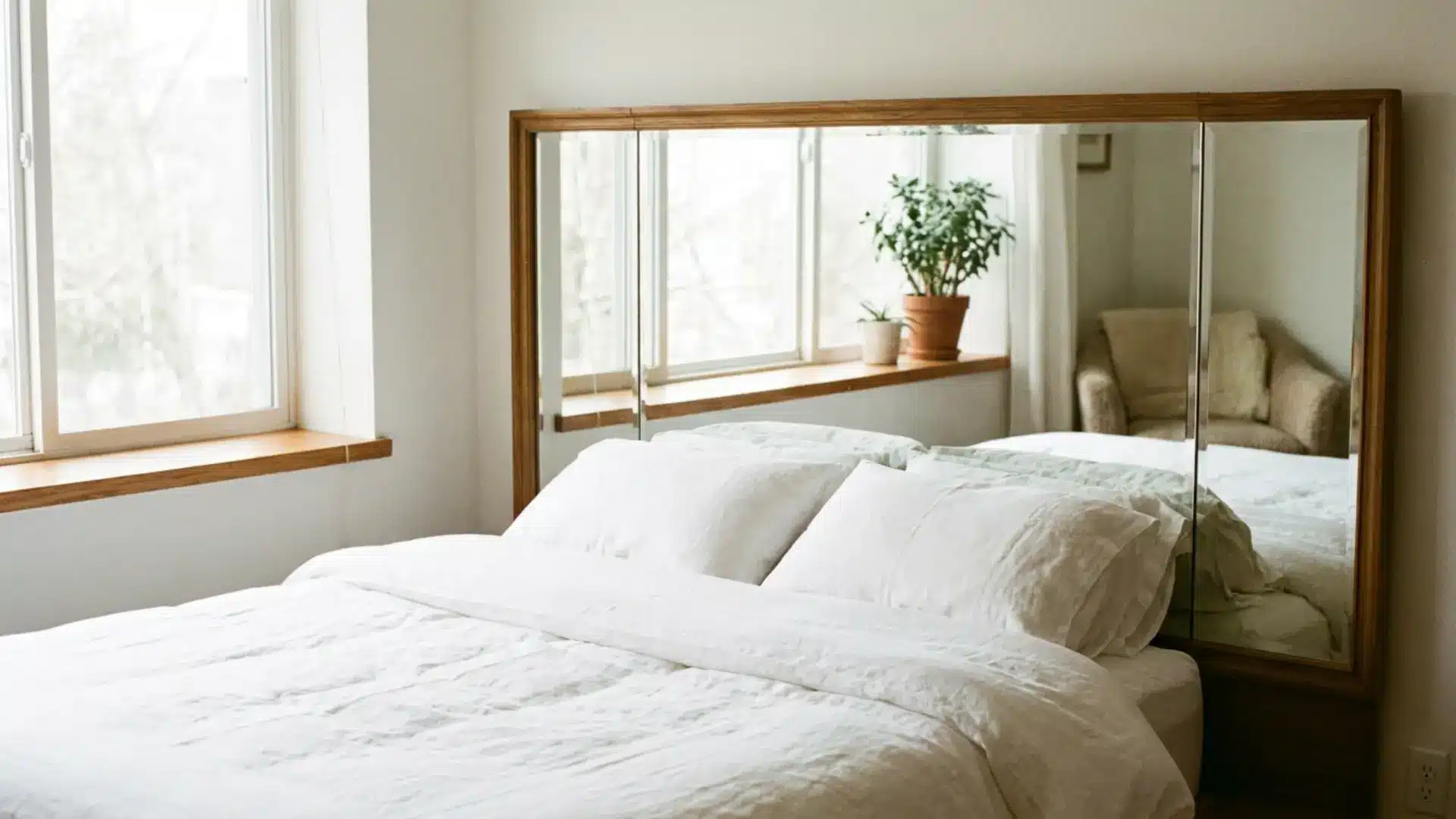
A mirror-paneled headboard uses one large mirror or several smaller mirrored panels mounted directly behind the bed.
Mirror clips or a simple frame hold the glass securely to a backing board before the entire piece is mounted to the wall.
Beyond the visual impact, mirrored panels also help bounce light around a room, making this a useful option for smaller or darker bedrooms.
49. Sculptural 3D Headboard
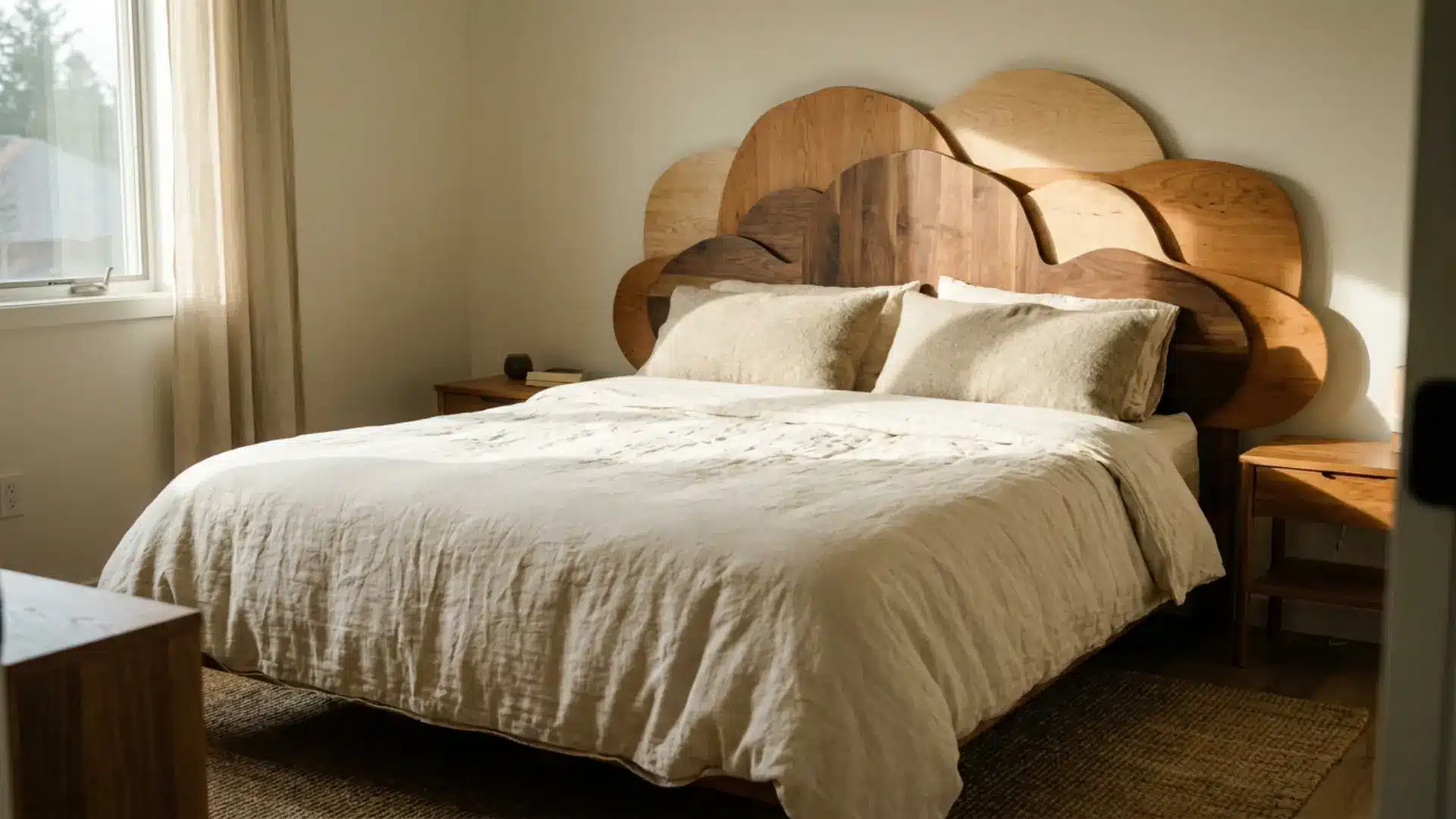
A sculptural 3D headboard moves away from a flat panel entirely, using layered wood cutouts, carved foam, or stacked geometric shapes to build a headboard with real depth and dimension.
Each layer gets built and finished separately before being assembled into the final piece.
This option takes the most time and design planning on this list, but creates a headboard that functions as a standalone art piece.
Kids & Playful Headboards
Playful shapes and colors take priority in this next set, designed with children’s rooms in mind.
50. Cloud-Shaped Headboard

A cloud-shaped headboard uses a plywood panel cut into a soft, rounded cloud silhouette instead of a standard rectangle.
The bumps along the edge get traced using a simple curved template before cutting with a jigsaw and sanding the edges smooth.
Painted on a white or pale sky-blue background, this shape suits a nursery or a young child’s room and pairs well with soft string lighting nearby.
51. Painted Rainbow Headboard

A painted rainbow headboard uses curved bands of color arranged in an arc across a wood panel, mimicking the classic rainbow shape.
Each band gets marked out with a compass or string method before painting one color at a time, working from the outer arc inward.
This design brings bright, cheerful color into a child’s room without needing any built-up texture or padding.
52. Chalkboard Panel Headboard
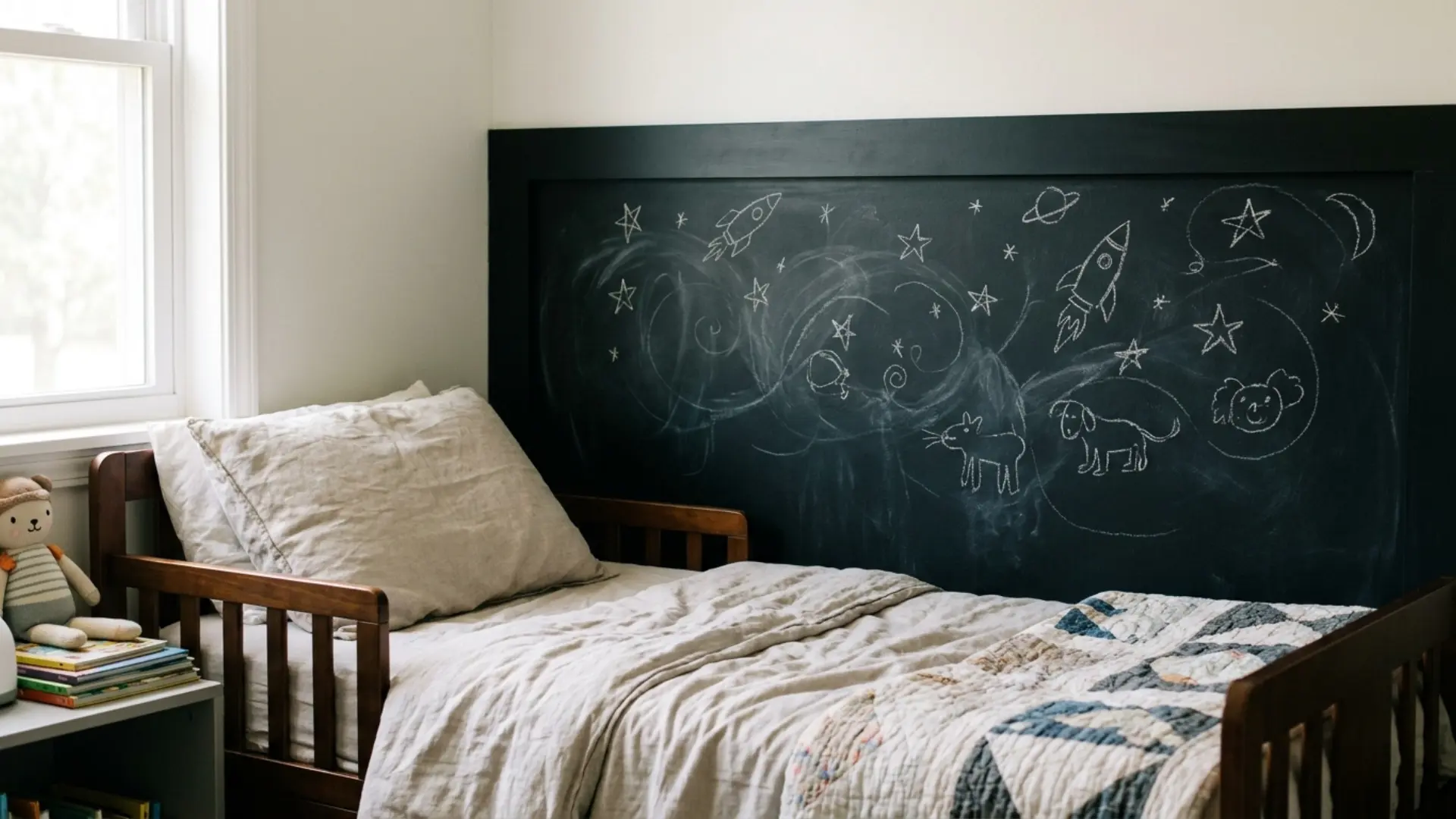
A chalkboard panel headboard uses chalkboard paint applied over a plywood base, turning the entire surface into a writable, drawable space.
Two or three coats of the paint go on with a roller for even coverage, then a light dusting of chalk conditions the surface before first use.
This option gives a child’s room a functional headboard that can be updated with new drawings at any time.
53. Name-Lettered Wood Headboard
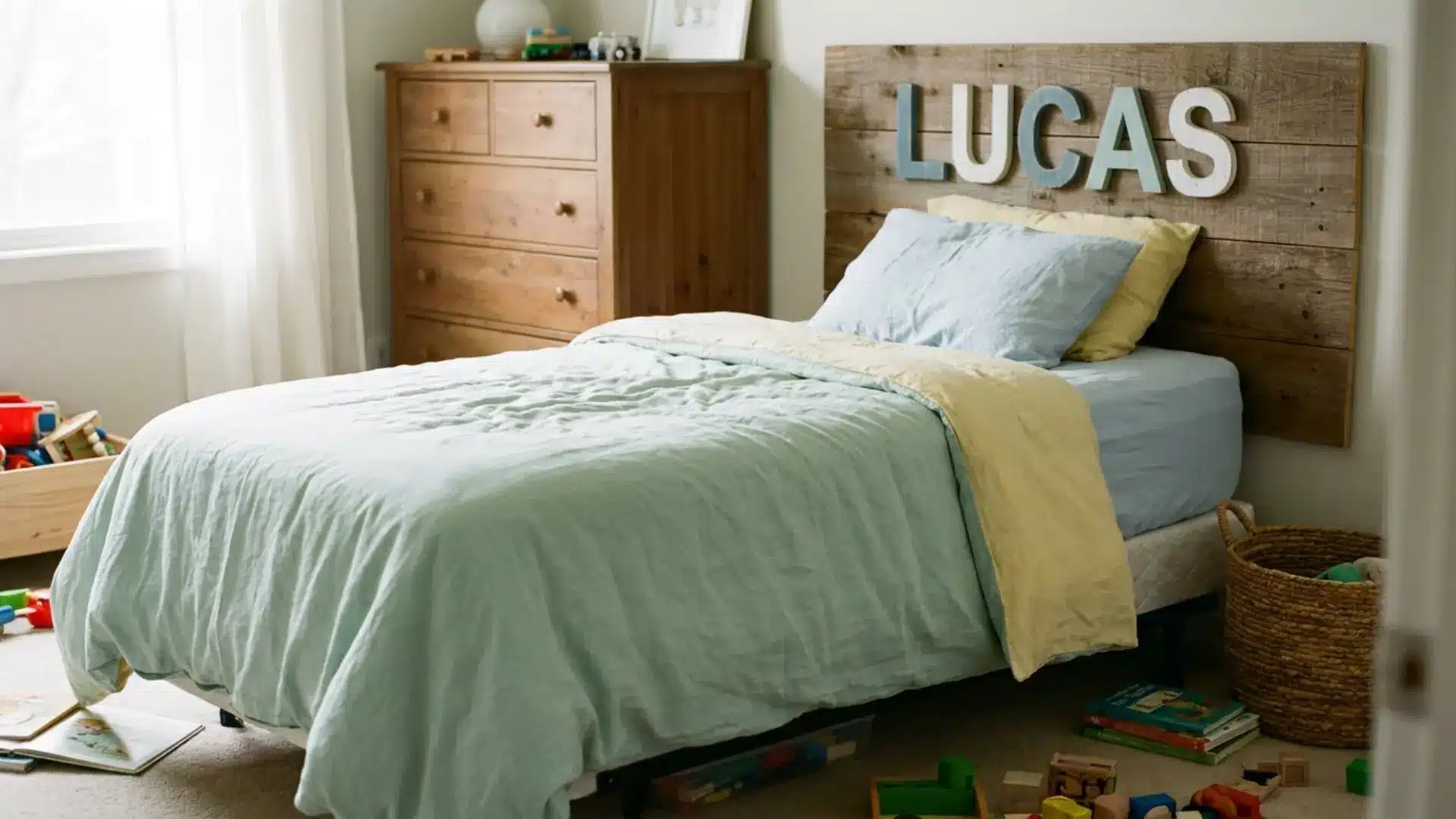
A name-lettered wood headboard uses cutout letters, either bought pre-made or cut from plywood with a jigsaw, arranged to spell out a child’s name across the headboard surface.
Letters are painted individually in various colors or kept in a single matching tone before being mounted on a backing board or directly on the wall.
This personalized option works especially well for a nursery or toddler room.
54. Fabric Canopy Style Headboard

A fabric canopy style headboard combines a padded or flat headboard base with a length of sheer or lightweight fabric draped from above, framing the bed in soft folds.
A small curved rod or two ceiling hooks hold the fabric’s upper edge in place.
This design adds a whimsical, slightly dreamy quality to a child’s room without requiring a full canopy bed frame.
55. Star-Cutout Headboard

A star-cutout headboard uses a plywood panel with one or several star shapes cut directly into the surface, letting light or wall color show through the openings.
A jigsaw handles the cutting once the star outlines get traced, and sanding smooths the inner edges of each cutout.
This design works well with a small LED light placed behind the panel for a soft glow through the stars at night.
56. Pastel Scalloped Headboard

A pastel scalloped headboard follows the same rounded scallop shape as the bolder version earlier on this list, but in a softer, muted color palette suited to a younger child’s room.
Light pink, mint, or lavender tones work well here, applied evenly across the padded or painted scallop shape.
This softer-color approach keeps the playful silhouette while feeling gentler in a small child’s space.
Small Space & Renter-Friendly Headboards
This final group focuses on options that skip permanent mounting altogether and are suited to rented spaces or smaller rooms.
57. Removable Fabric Panel Headboard
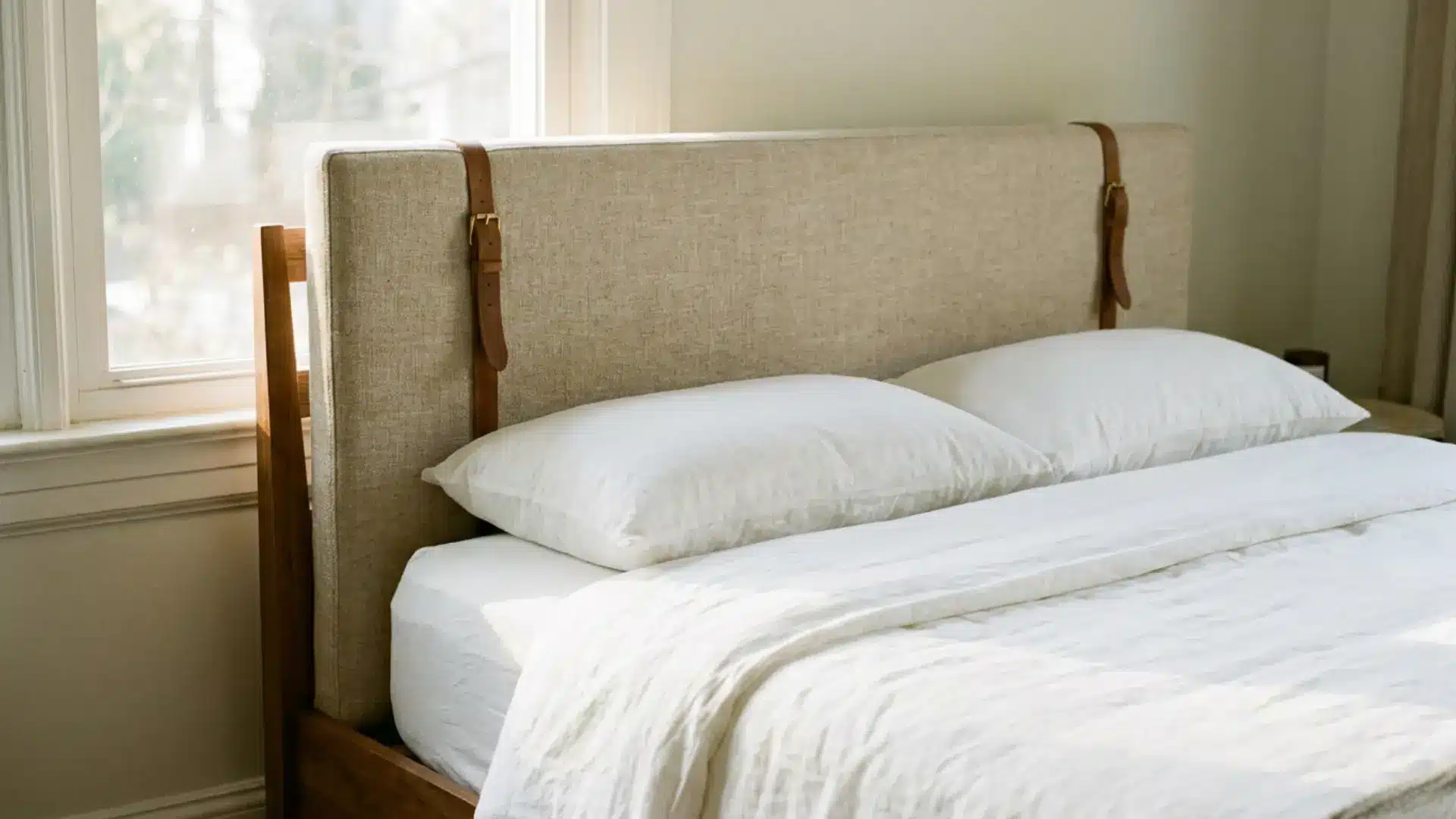
A removable fabric panel headboard attaches to the bed frame itself rather than to the wall, using straps, ties, or a slot-in bracket system to hold the padded fabric panel in place.
Because nothing gets fixed to the wall, this option moves easily with the bed during a rearrangement or a full move.
Most versions use a lightweight foam core, keeping the whole panel simple to lift on and off.
58. Tension-Rod Mounted Headboard

A tension-rod mounted headboard uses a spring-loaded rod fitted between the floor and ceiling, or wedged tightly between two walls in a corner setup, to hold a fabric panel or curtain in place behind the bed.
No drilling or wall anchors are needed, since the rod’s tension alone keeps everything secure.
This works especially well in a rental with strict rules against wall damage.
59. Washi Tape Design Headboard
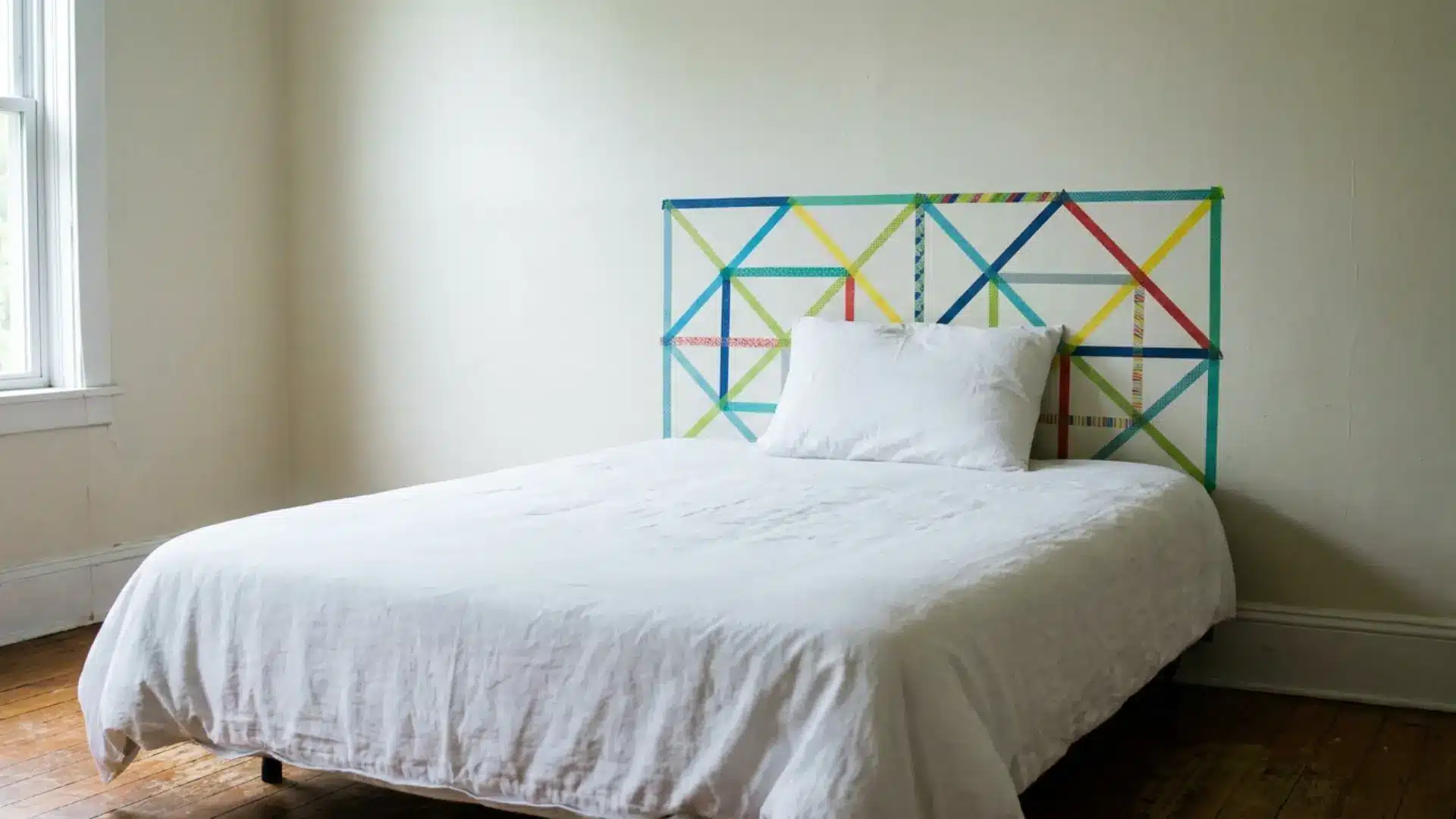
A washi-tape design headboard skips a physical structure entirely, using strips of colorful washi tape applied directly to the wall in a geometric or simple line pattern to shape a headboard outline.
Because washi tape removes cleanly without damaging paint, this remains one of the most temporary and low-cost options on this list, suited to a dorm room or short-term rental.
60. Adhesive Wall Decal Headboard
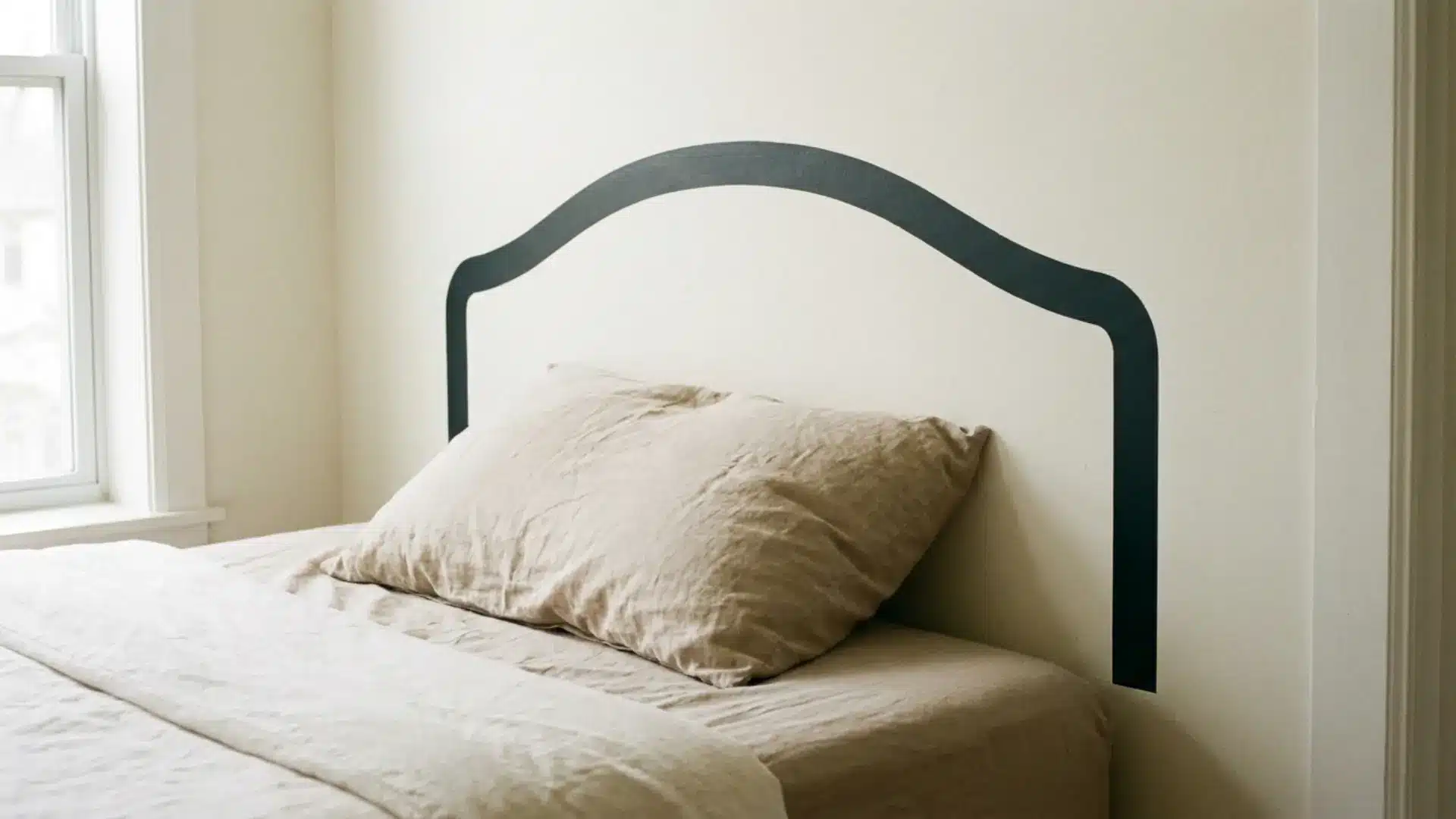
An adhesive wall decal headboard uses a large pre-cut vinyl decal, shaped like a headboard outline or pattern, applied directly to the wall behind the bed.
The decal goes on smoothly using a squeegee or credit card to push out air bubbles, then peels off later without leaving residue on most painted walls.
This option requires no tools at all beyond careful placement.
61. Command-Strip Hung Headboard

A command-strip-hung headboard uses heavy-duty adhesive strips instead of nails or screws to mount a lightweight panel, such as foam board or thin plywood, behind the bed.
Weight limits on the strips matter here, so lighter materials work best for a secure hold.
Once removed, the strips pull away cleanly, making this a practical option for anyone wanting a real headboard shape without wall damage.
62. Temporary Wallpaper Panel Headboard

A temporary wallpaper panel headboard uses a sheet of peel-and-stick wallpaper cut into a headboard shape, applied directly to the wall rather than covering the entire surface.
The shape gets marked out and cut before the paper’s backing peels away for application.
This option brings pattern and color into a rental-friendly design without needing any physical panel behind it.
63. Lightweight Foam Board Headboard

A lightweight foam board headboard uses a thin sheet of rigid foam, cut to shape and either left plain or wrapped in fabric, leaned against the wall behind the bed rather than mounted at all.
Because nothing attaches to the wall or bed frame, this remains one of the simplest options to swap out or remove entirely, making it suited to short stays or frequently changing rooms.
How to Make a Headboard: Quick Steps
Most DIY headboards follow the same basic process regardless of style.
- Step 1: Measure the bed width to determine the size of the headboard base, adding a few extra inches on each side for a fuller look.
- Step 2: Choose a base material such as plywood, foam board, or a solid wood panel, depending on the desired style and weight.
- Step 3: Cut the panel to size using a jigsaw or circular saw, then sand any rough edges smooth before moving to the next step.
- Step 4: Add the chosen finish, whether paint, stain, fabric, or padding, following the specific technique for that headboard style.
- Step 5: Let the finish fully cure, as paint, adhesive, or fabric glue needs time to set before handling the panel further.
- Step 6: Attach the headboard to wall studs, a bed frame bracket, a tension rod, or simply lean it against the wall for renter-friendly setups.
- Step 7: Style the bed against the finished headboard with pillows and bedding to complete the look.
Frequently Asked Questions (FAQs)
What is the Cheapest Way to Make a DIY Headboard?
A curtain rod hack or a foam board panel wrapped in fabric is the most budget-friendly option on this list.
Can I Make a Headboard Without Damaging My Walls?
Yes, tension rods, adhesive strips, and peel-and-stick decals all work well for rentals without any drilling or permanent damage.
What Size Should a DIY Headboard Be?
A headboard typically extends 12 to 18 inches above the mattress for a balanced look.
How Long Does It Take to Build a Simple DIY Headboard?
Simple builds like a fabric panel or curtain-hung design can come together in an afternoon, while detailed styles like tufting or mosaic work take longer.
Final Thoughts
These ideas are a lot to take in at once, but the real value is in seeing just how many directions a single wall behind a bed can go.
Wood, fabric, paint, and repurposed materials all lead to different moods, and none of them require professional skills to pull off.
What matters most is picking a style that fits the room’s existing character rather than forcing a trend that feels out of place. These DIY headboard ideas work best as a starting point, something to adapt with materials already on hand.
Tried one of these? Drop a comment below and share how it turned out.


2 Responses