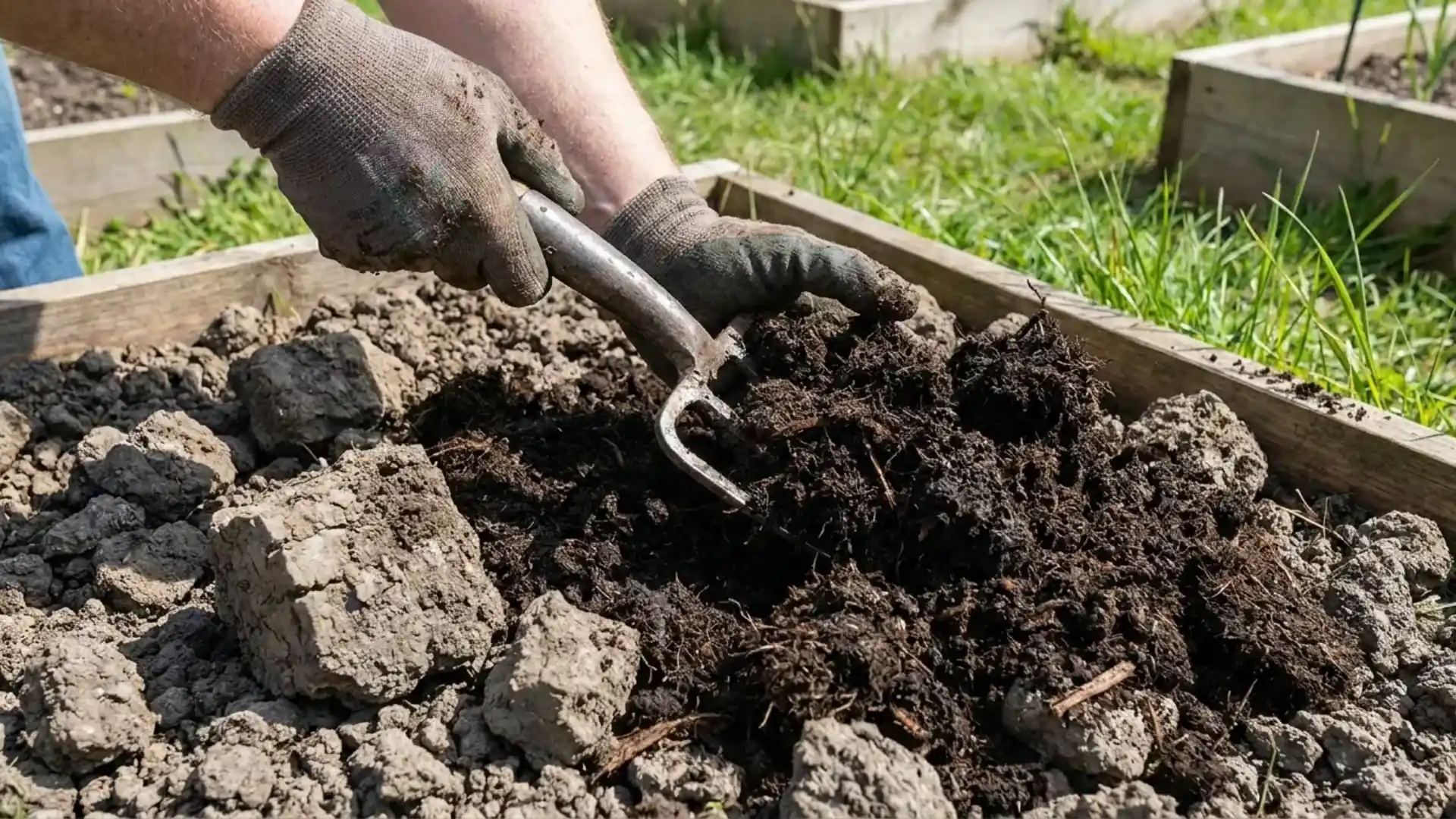

A lawn can slowly lose its thick, healthy look. It can feel disappointing, especially when the yard once looked soft and green.
The good news is that starting over is rarely necessary. Learning how to overseed a lawn can help bring new life to worn grass without removing everything already growing.
By sowing grass seed on existing lawn areas, you give fresh seedlings room to fill gaps and improve density.
A little preparation, steady watering, and patience can change the way the whole yard feels beneath your feet.
Let me walk you through the process step by step, from timing and prep to seed choice and aftercare, so you can turn a tired, patchy yard into a thick, green space.
What is Lawn Overseeding and Why Does it Work?
Overseeding means spreading grass seed across an existing lawn without removing the turf or starting again from bare soil.
The seeds settle between established grass blades, where they germinate and fill open spaces.
This method suits lawns that appear thin, faded, patchy, or worn after heavy use, heat, drought, or seasonal stress.
New growth can improve color, increase coverage, and create a softer, denser surface during the growing season.
Thicker grass also leaves less open soil for weeds to occupy, which may reduce weed pressure.
Overseeding requires less labor than replacing an entire lawn, making it a practical option for gradual improvement.
Signs Your Lawn Needs Overseeding

A lawn often shows clear signs when grass density starts declining. Check for these common problems before deciding to overseed.
- Thin or Sparse Grass: Large sections look weak or patchy, even though the lawn previously appeared thick and healthy.
- Bald Patches: Empty areas appear where grass no longer grows, commonly near walkways, shaded corners, or busy spaces.
- Increasing Weed Growth: Weeds spread into open soil because existing grass is too thin to compete for available space.
- Uneven Lawn Color: Some sections appear yellow, faded, or dull while surrounding grass remains green and visually healthy.
- Visible Lawn Damage: Pets, extreme heat, disease, or frequent foot traffic leave noticeable dead spots and weakened grass.
- Aging Grass: Older lawns gradually lose density as grass plants weaken, making overseeding helpful for restoring fuller coverage.
Tools and Materials You’ll Need Before You Start
Having everything on hand before you begin means less back-and-forth once seeding day arrives.
Before you get started, gather these essentials suited to your lawn size, soil condition, and grass type to keep the process running smoothly from start to finish.
- Grass seed
- Lawn mower
- Rake
- Core aerator (optional)
- Lawn spreader
- Garden hose/sprinkler
- Starter fertilizer
- Compost/topdressing (optional)
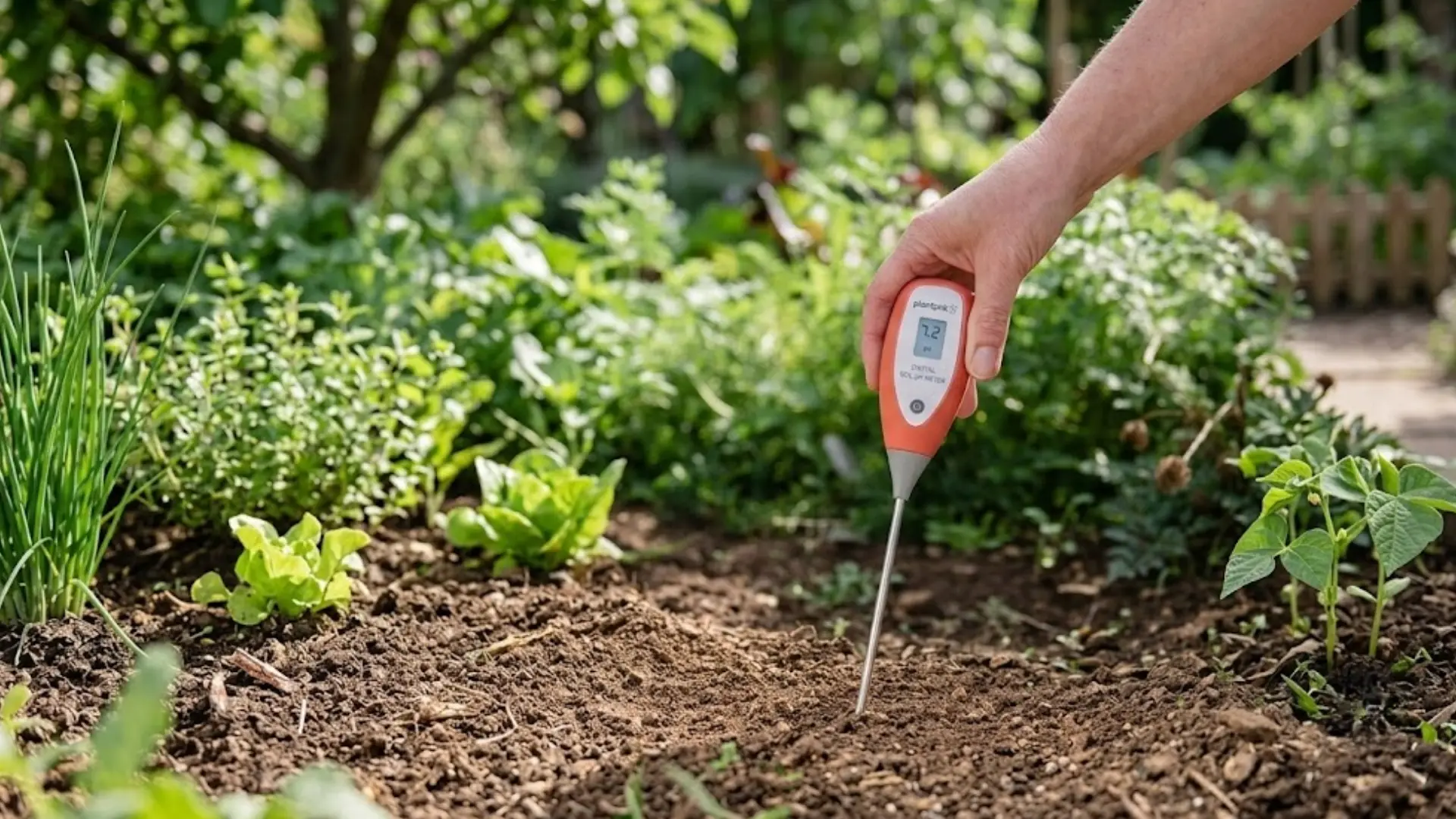
- Soil test kit (optional)
Always follow product labels, equipment instructions, and local watering guidelines for safe, effective seeding results overall.
How to Overseed a Lawn: Step-by-Step Process
Successful overseeding requires careful lawn preparation, even seed distribution, and consistent watering to encourage healthy germination and strong grass establishment.
Step 1: Mow the Lawn Short
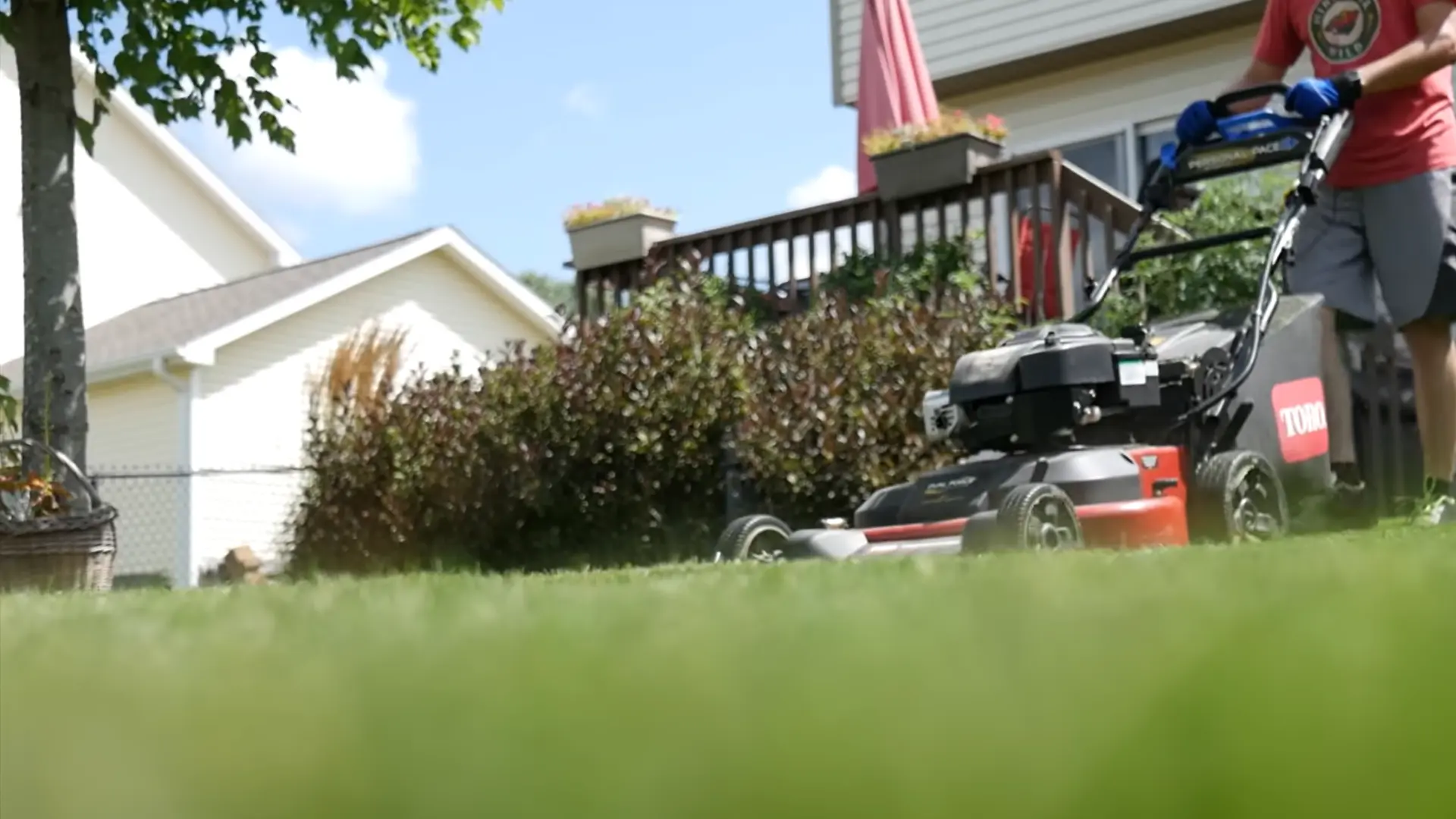
Before you spread a single seed, cut your grass shorter than your usual mowing height.
Tall grass blocks sunlight and creates a barrier that keeps seeds from settling onto bare soil where they can actually take root.
Shorter grass gives seeds a clear path down to the surface, improving contact and boosting germination rates significantly.
Step 2: Remove Thatch and Debris
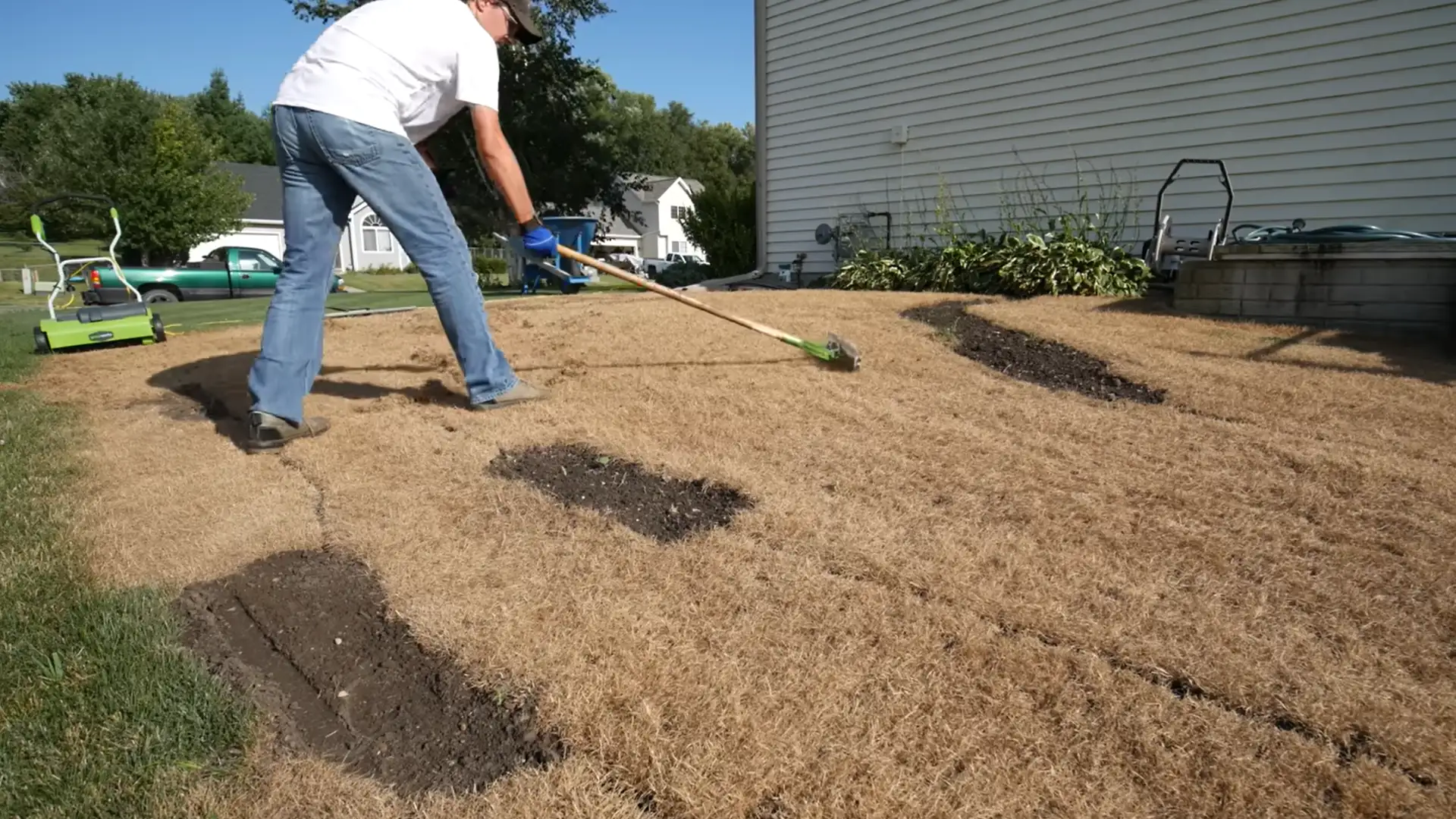
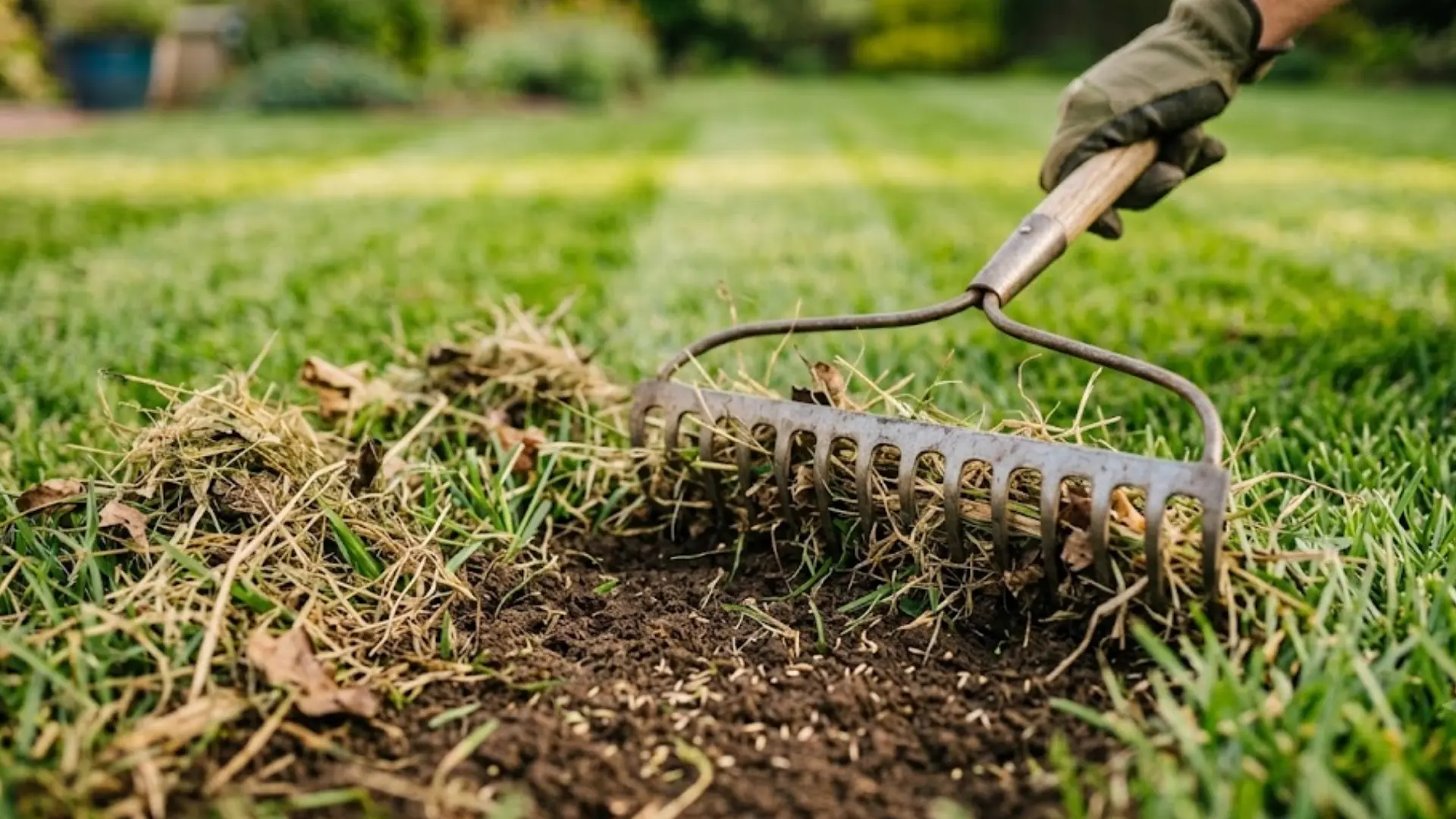
Clear the lawn of leaves, dead grass clippings, sticks, and any other debris sitting on top of the soil before you begin seeding.
A layer of thatch thicker than half an inch can block moisture, sunlight, and nutrients from reaching new seed, making dethatching a necessary step rather than optional.
Raking thoroughly across the entire yard ensures seeds land where they belong instead of getting stuck on decaying organic matter.
Step 3: Aerate Compacted Soil (If Needed)
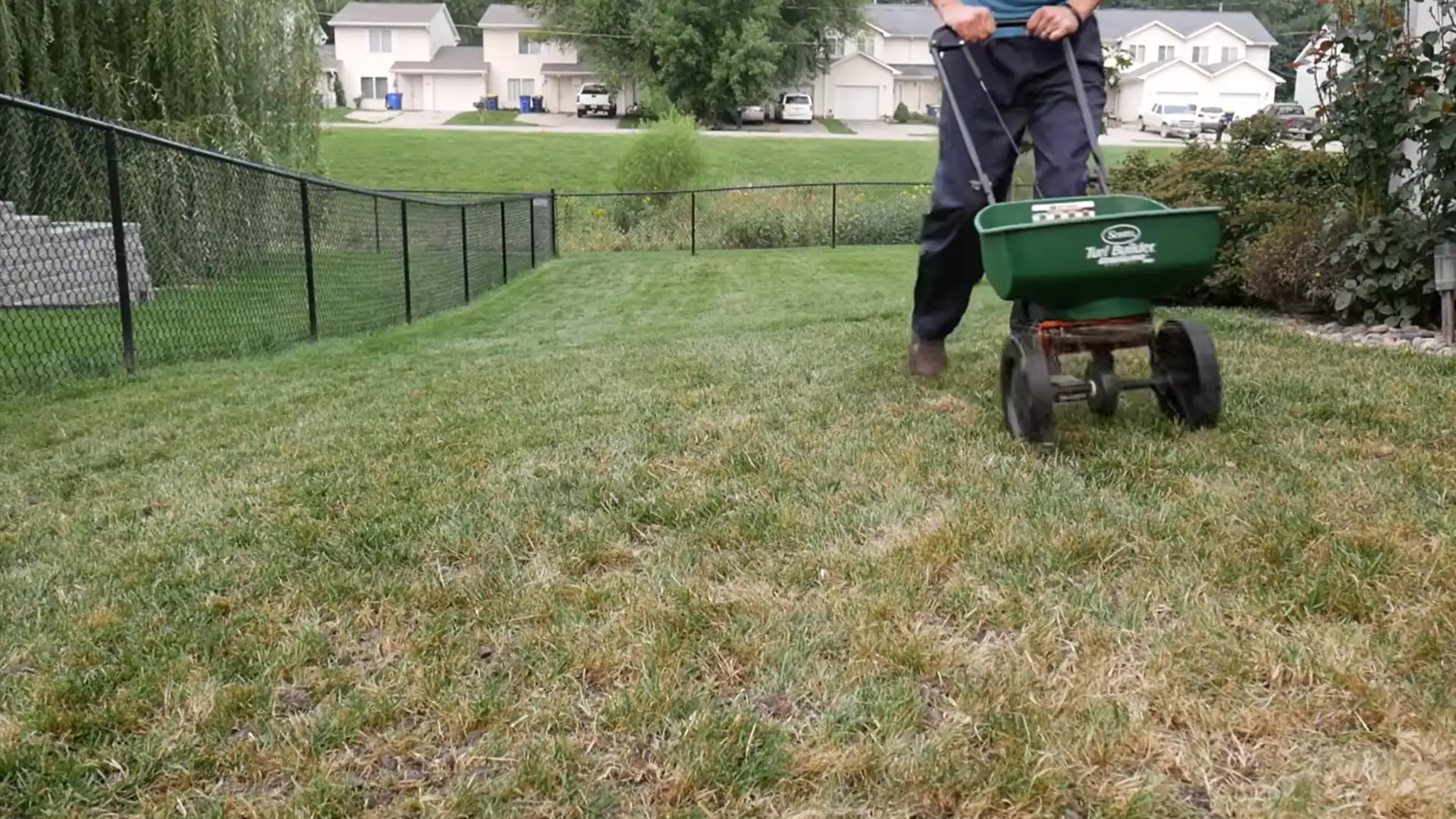
Aerating lawn creates small holes throughout compacted soil, allowing water, air, and nutrients to reach grass roots more efficiently.
You’ll know your lawn needs this step if water tends to pool on the surface, if the ground feels noticeably hard underfoot, or if you have heavy foot traffic.
Clay-heavy soil and older, well-used lawns benefit most from aeration.
Step 4: Spread the Grass Seed Evenly
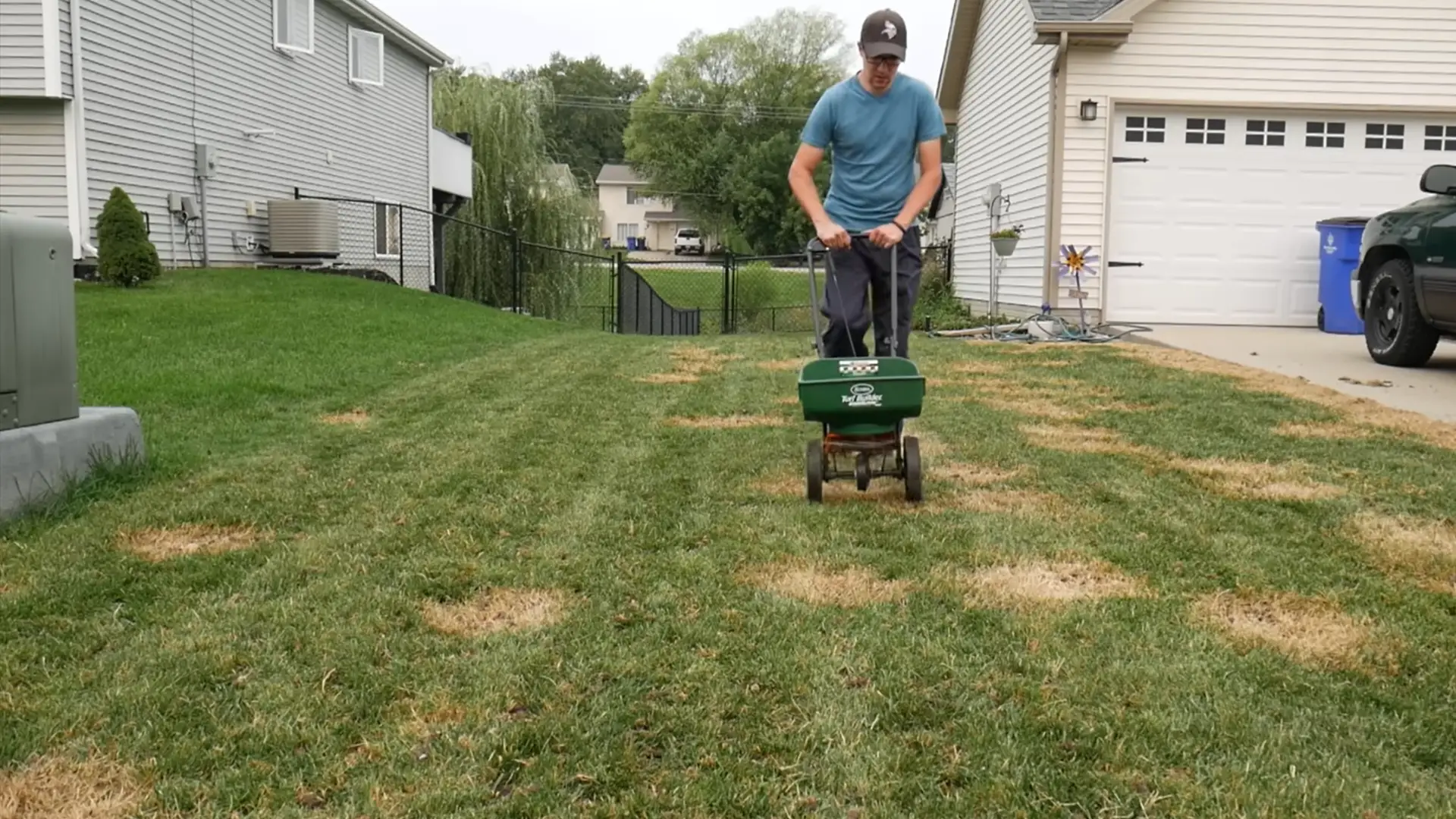
Choose a broadcast spreader for covering larger open areas quickly, or a drop spreader when you need more precision along garden beds, walkways, and other borders.
Always follow the seeding rate printed on the bag, since too much seed leads to overcrowding and competition among seedlings.
Walk in a crisscross pattern, first one direction and then perpendicular to it.
Step 5: Apply Starter Fertilizer
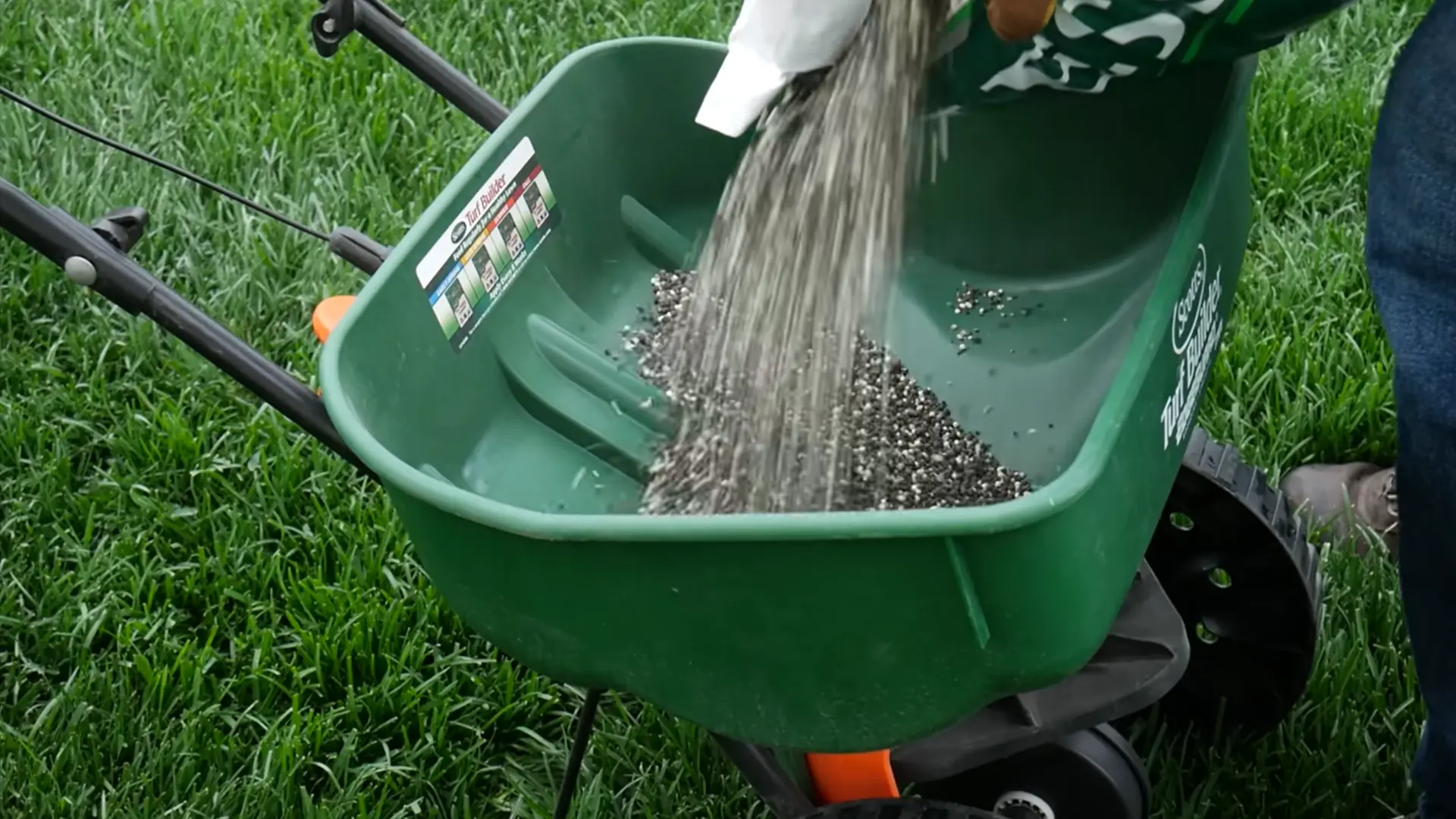
Starter fertilizer is formulated differently from regular lawn fertilizer, typically containing higher phosphorus levels that support early root development.
Apply it shortly after seeding to give young grass the nutrients it needs to establish itself without overwhelming its still-developing root system.
Be careful not to over-fertilize, though, since excess fertilizer can actually burn tender seedlings before they’ve had a chance to mature.
Step 6: Water the Lawn Properly
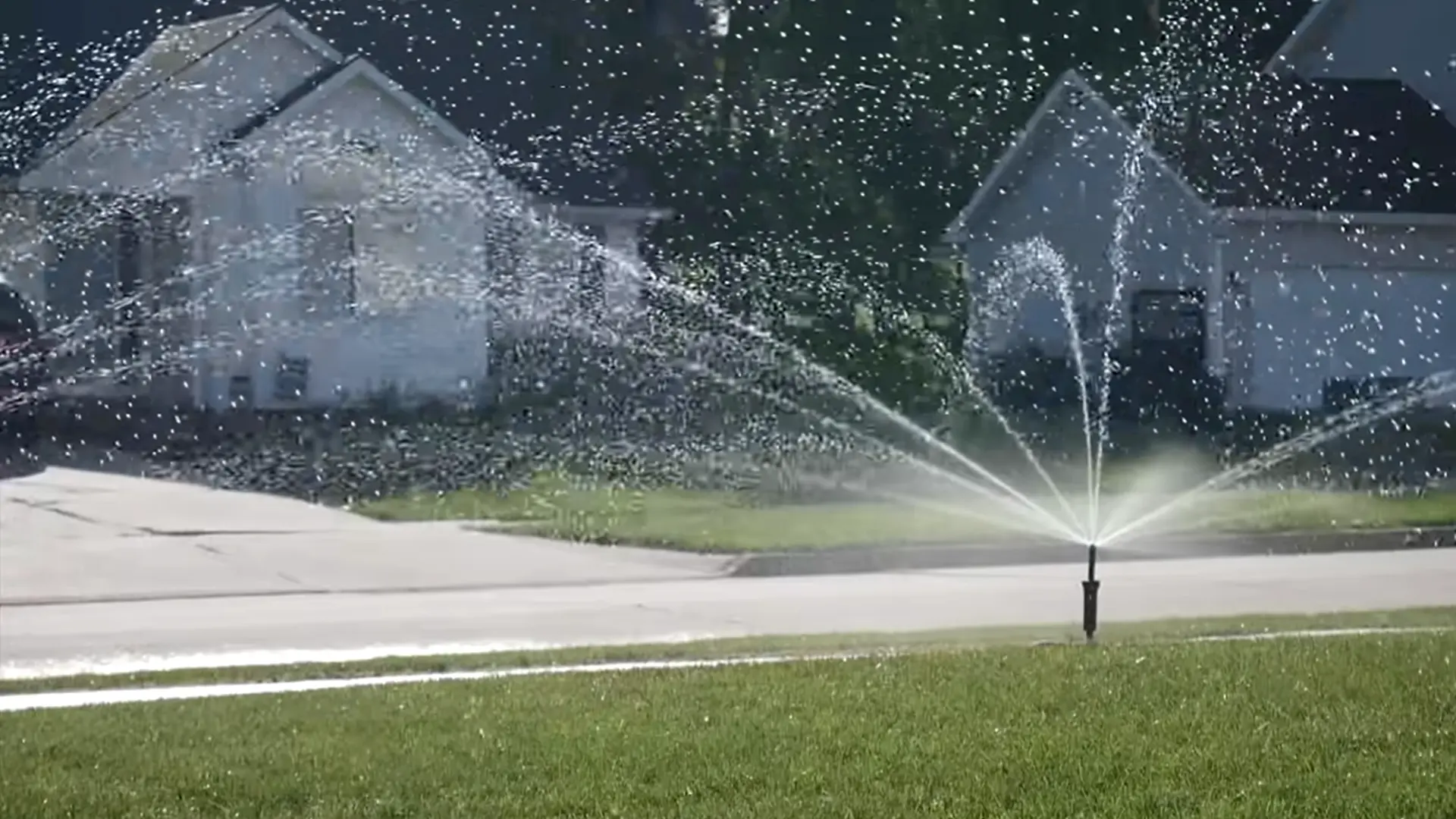
During the first couple of weeks, water lightly and frequently, aiming to keep the top inch of soil consistently moist without letting it become waterlogged or soggy.
This might mean watering once or twice daily depending on your climate and weather conditions.
Once seedlings emerge and begin developing stronger roots, gradually shift toward less frequent but deeper watering sessions.
This transition encourages roots to grow downward in search of moisture, building a more resilient lawn that can better handle heat and dry spells later on.
This tutorial is based on a video by Ryan Knorr Lawn Care.
Lawn Care After Overseeding
Once the seed is down, the real work shifts to aftercare. How you treat your lawn in the following weeks determines whether it fills in thick and healthy or struggles to take hold.
- The First Week: Keep soil consistently moist through light, frequent watering; avoid walking on seeded areas.
- Weeks Two to Four: Gradually cut back watering frequency while increasing depth; mow once new grass reaches about three inches tall.
- After One Month: Return to your normal mowing and watering routine; apply a follow-up fertilizer if your lawn needs it.
Check for any thin spots that may still require spot-seeding. Stay consistent through each of these stages, and your new grass will have the strongest possible start toward a thicker, greener lawn.
Overseeding Calendar by Season
Timing makes a real difference when it comes to overseeding success. Here’s how each season stacks up.
| Season | Is It Recommended? | Notes |
|---|---|---|
| Spring | Yes (cool-season) | Good but weeds compete |
| Summer | Usually No | Heat stresses seedlings |
| Fall | Best for cool-season | Ideal conditions |
| Winter | Rarely | Dormant seeding only in some climates |
Fall remains the top pick for most cool-season lawns, but spring can work too if you stay on top of weed control. Save summer and winter seeding for special cases only.
How Long Does Overseeding Take to Grow?
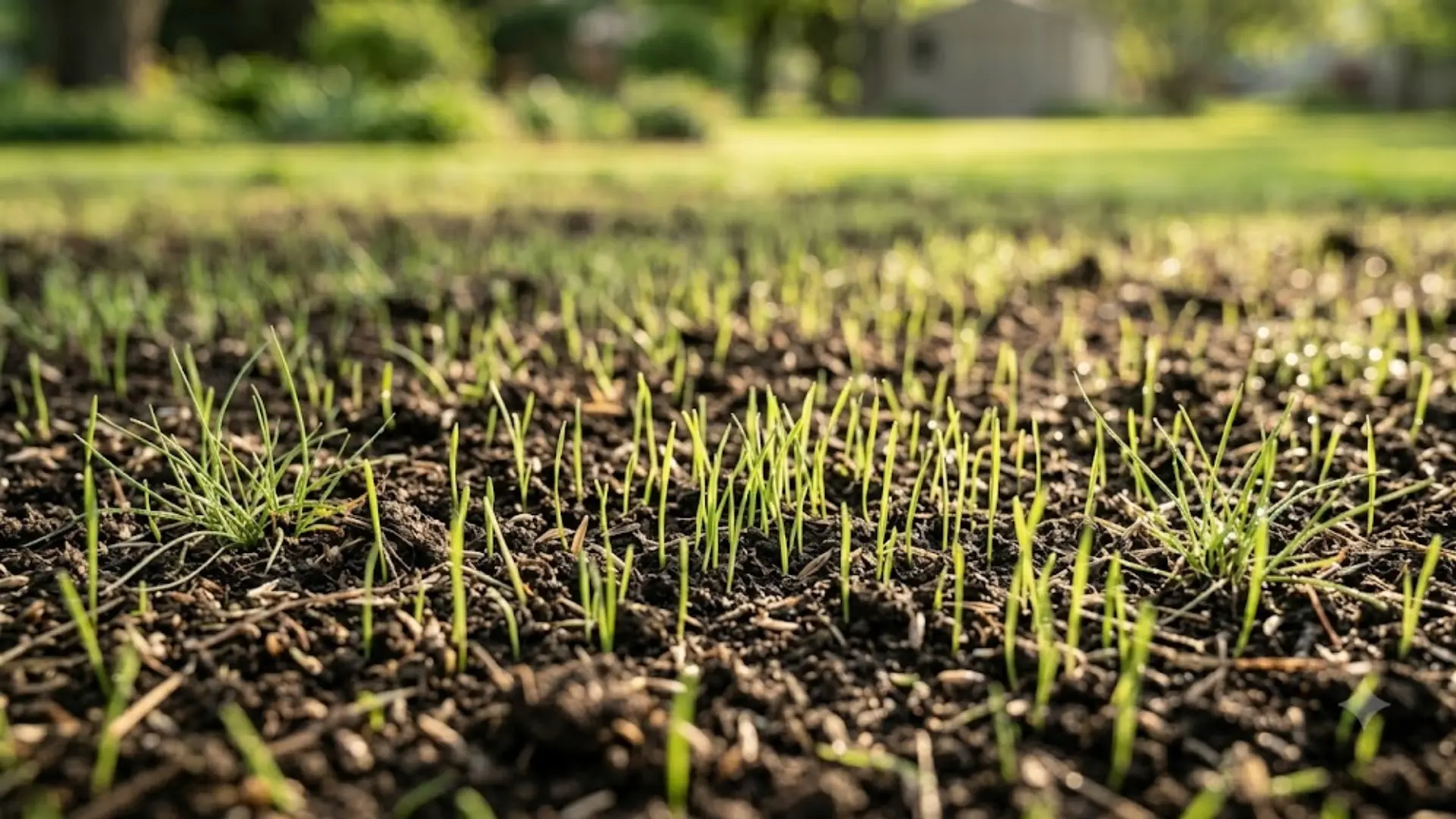
After overseeding, most grass seeds begin to sprout within 5 to 21 days, depending on grass type, soil temperature, moisture, and weather.
Ryegrass often appears in 5 to 10 days, while fescue usually takes 7 to 14 days. Kentucky bluegrass can take 14 to 30 days.
A lawn may look greener after two or three weeks, but full coverage often takes six to eight weeks.
Keep the top layer of soil consistently moist during germination, then reduce watering as roots grow deeper. Avoid mowing until the new grass reaches about three inches tall.
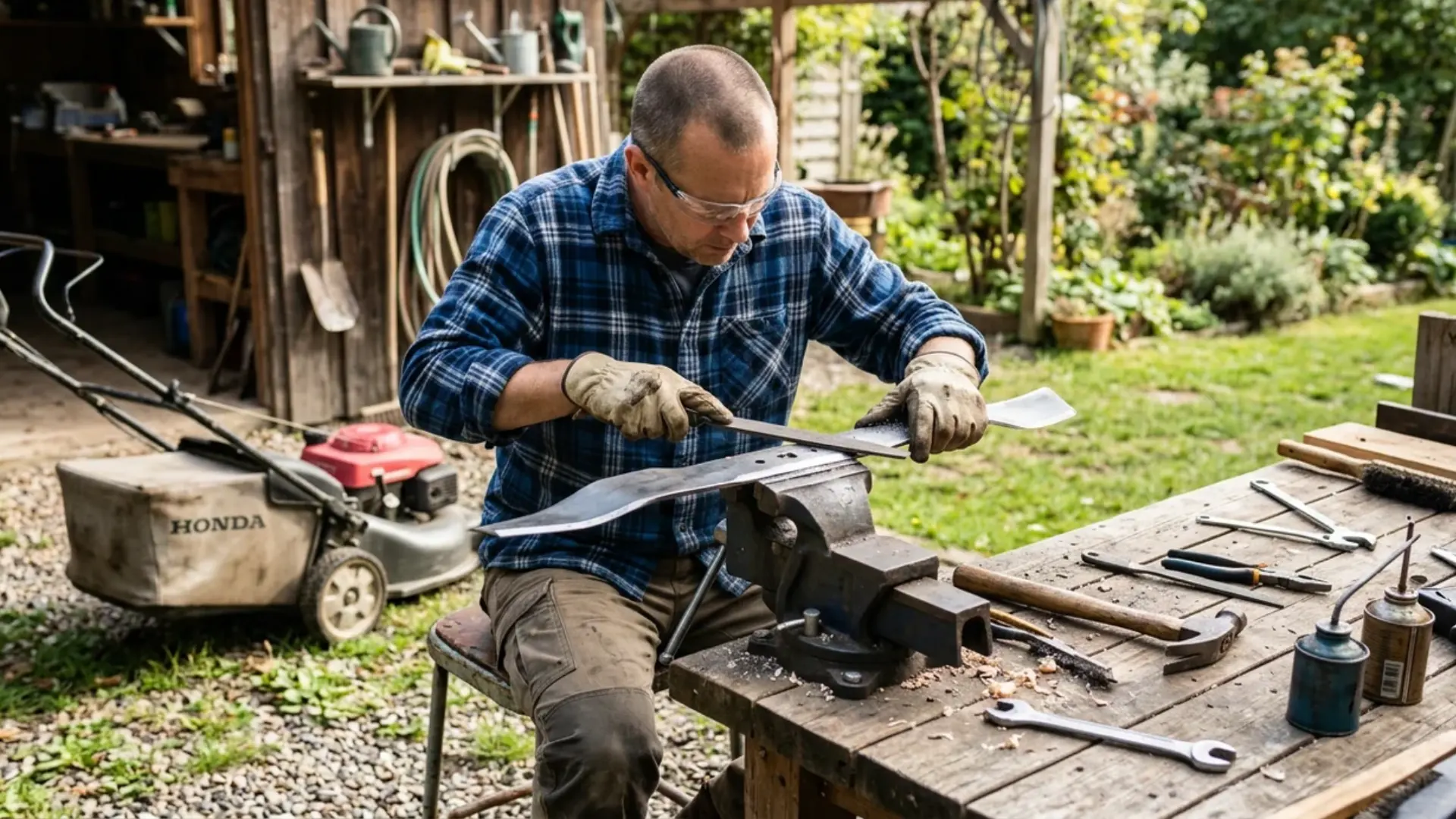
Use a sharp mower blade and remove no more than one third of the height.
Heavy foot traffic, poor seed contact, cold soil, or missed watering can delay results and leave thin patches across the lawn.
How Much Grass Seed Do You Need?
Getting the seed amount right matters more than most people think; too little and bare spots stay bare, too much and seedlings end up competing for space. Here’s a quick breakdown of how much seed to use and what can shift that number.
| Grass Type | Overseeding Rate (per 1,000 sq ft) |
|---|---|
| Kentucky Bluegrass | 2–3 lbs |
| Perennial Ryegrass | 4–6 lbs |
| Tall Fescue | 4–6 lbs |
| Fine Fescue | 3–5 lbs |
| Bermuda Grass | 1–2 lbs |
| Zoysia Grass | 1–2 lbs |
Factors That Change Seed Requirements
Not every lawn needs the same amount of seed, or the same amount when sowing grass seed on an existing lawn.
A few key factors can push your numbers higher or lower than the standard rate.
- Existing grass density: Thin, sparse lawns usually require more seed than established turf with only minor gaps.
- Soil condition: Compacted or low-nutrient soil can reduce germination; loosening compacted soil first with a conditioner can raise germination rates.
- Climate and grass type: Regional temperatures, rainfall, and suitable grass varieties influence seeding rates and establishment success.
- Sun exposure: Shaded areas may need shade-tolerant varieties, while sunny sections support different grass types.
- Bare patches: Completely bare soil requires heavier seeding than lawns experiencing light or general thinning.
- Seed quality: Seed with a high germination rate provides better coverage and may reduce the quantity required.
Conclusion
Overseeding might sound like a job for lawn experts, but it’s genuinely one of the easiest projects a beginner can take on with real, visible payoff.
You don’t need fancy equipment or years of experience, just the right timing, a bit of prep work, and consistent watering while those new seedlings settle in.
Stick with the aftercare, keep foot traffic light, and you’ll watch thin, patchy spots fill back in over the following weeks.
Have you tried overseeding your lawn? Share your experience, results, or questions in the comments below.
Frequently Asked Questions
Can I Just Throw Grass Seed on My Lawn?
You can, but results will be weak without proper prep. Seed-to-soil contact through mowing and raking makes a big difference in germination.
Do I Need Topsoil When Overseeding?
Not always, but a thin layer helps in bare or uneven patches. Most lawns with existing grass coverage don’t require it.
Can I Overseed a Weedy Lawn?
Yes, though tackling weeds first gives new grass a better chance to establish. Overseeding alone can also help crowd out weeds over time.
How Often Should You Overseed a Lawn?
Most lawns benefit from overseeding once a year, typically in fall or spring. Thin or high-traffic lawns may need it more frequently.