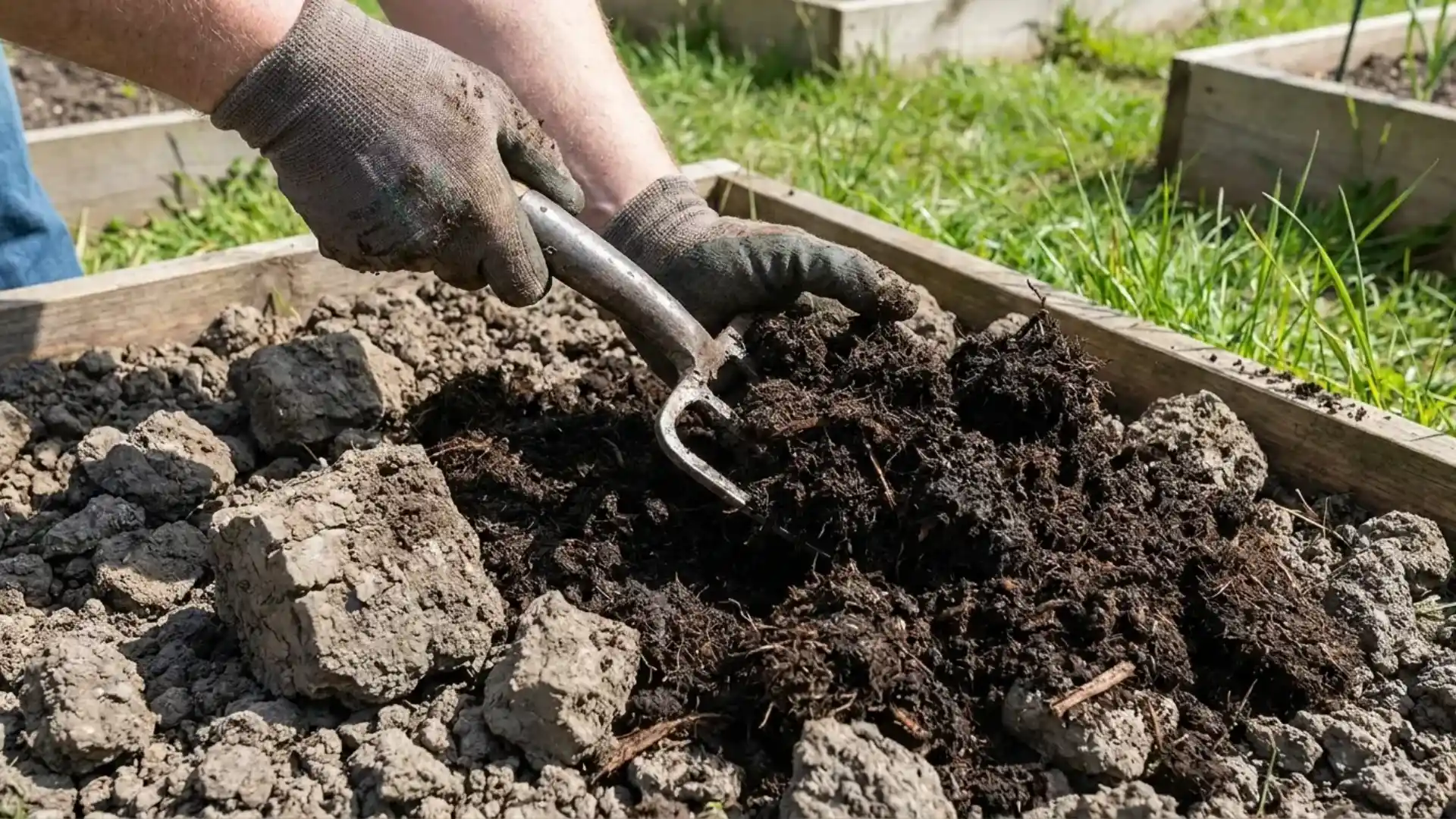

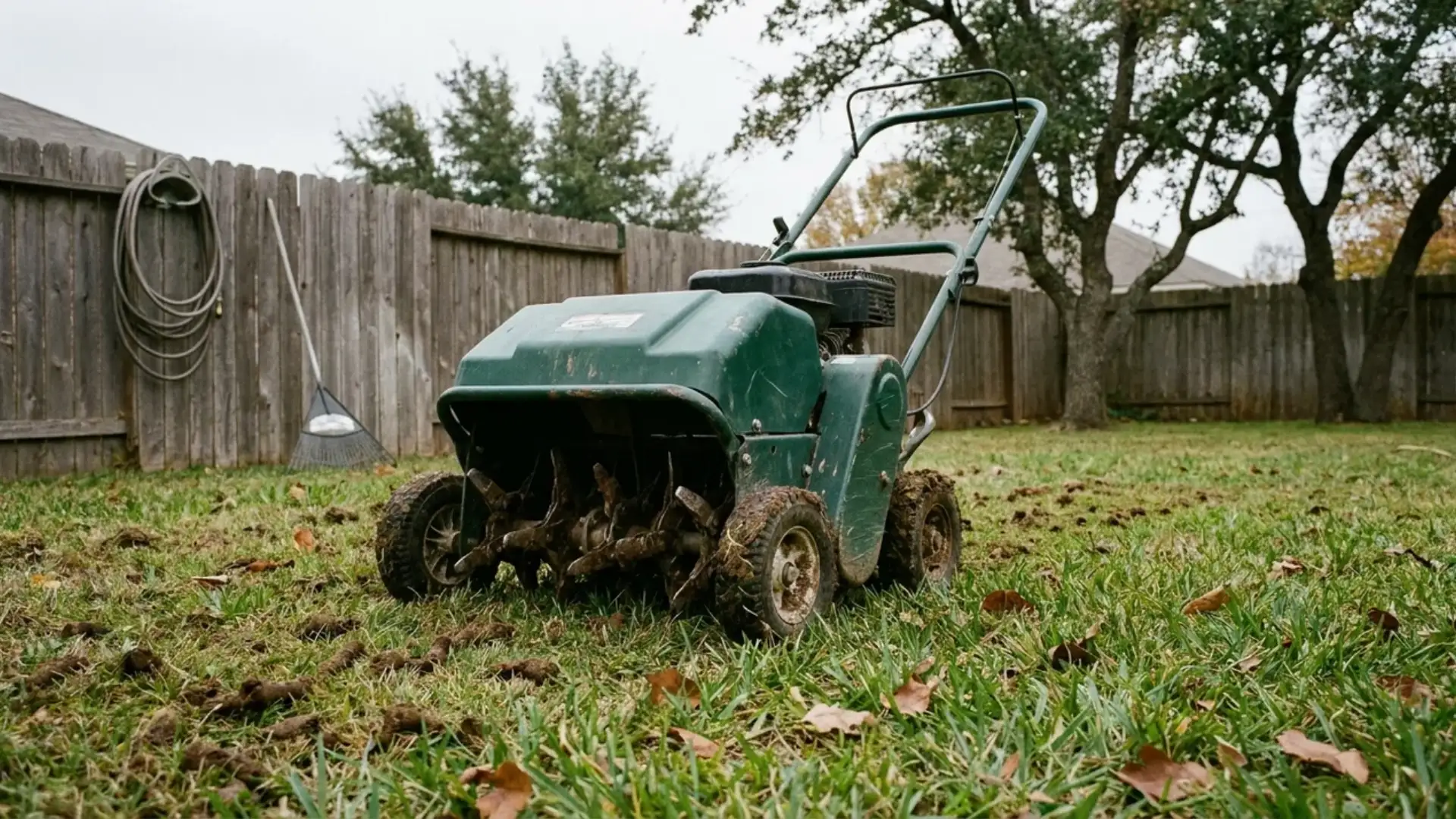
Your lawn might look fine on the surface, but the soil underneath could be compacted than you realize.
Maybe water sits on the surface after rain, grass grows thin near the walkway, or stubborn bare spots keep returning despite regular care.
Learning how to aerate lawn soil properly can turn that around fast, giving roots room to breathe and grow. The trick also lies in knowing when to aerate lawn areas
I’ve found that lawns respond fastest when aeration lines up with active growth, since that’s when the roots are ready to use the extra room.
Get that right, and every step after it falls into place, from the tools you grab to the grid pattern you walk across the yard.
How Does Aerating a Lawn Work?
Every time you walk across your yard, mow it, or let rain pound down on it, the soil underneath gets pressed down a little more.
Over time, that soil turns dense and tight, leaving almost no room for air or water to move through it.
Grass roots need that space to spread out and grow deep.
Without it, they stay shallow and weak, which is why your lawn might look tired even when you’re doing everything right.
Aerating breaks up that tightness by pulling small cores of soil out, opening channels for air, water, and nutrients to reach the roots.
Compacted dirt also blocks the kind of nutrient exchange that keeps garden soil fertile, which is part of why lawns and garden beds run into so many of the same soil problems.
How to Know if Your Lawn Needs Aeration?
Compacted soil often causes visible changes in grass growth, drainage, and soil texture. Check for these common warning signs:
- Hard soil: A screwdriver struggles to enter the ground, showing that tightly packed soil may restrict healthy root growth.
- Standing water: Rain or irrigation remains on the surface because compacted soil cannot absorb moisture efficiently.
- Thin grass: Sparse patches and weak growth can indicate roots are receiving too little oxygen, water, or nutrients.
- Heavy traffic: Lawns used frequently by people, pets, or vehicles often develop compacted soil beneath the grass.
- Thick thatch: A layer thicker than half an inch can block water and limit airflow around roots.
How to Aerate Your Lawn: Step by Step Process
Tools required: You can either rent a core aerator for roughly $15 per hour with a 3-4 hour minimum, or buy one if you plan to aerate every year.
Aerating a lawn requires proper soil moisture, suitable equipment, and even coverage. Follow these steps to reduce compaction without damaging the grass.
Step 1: Start Up the Aerator
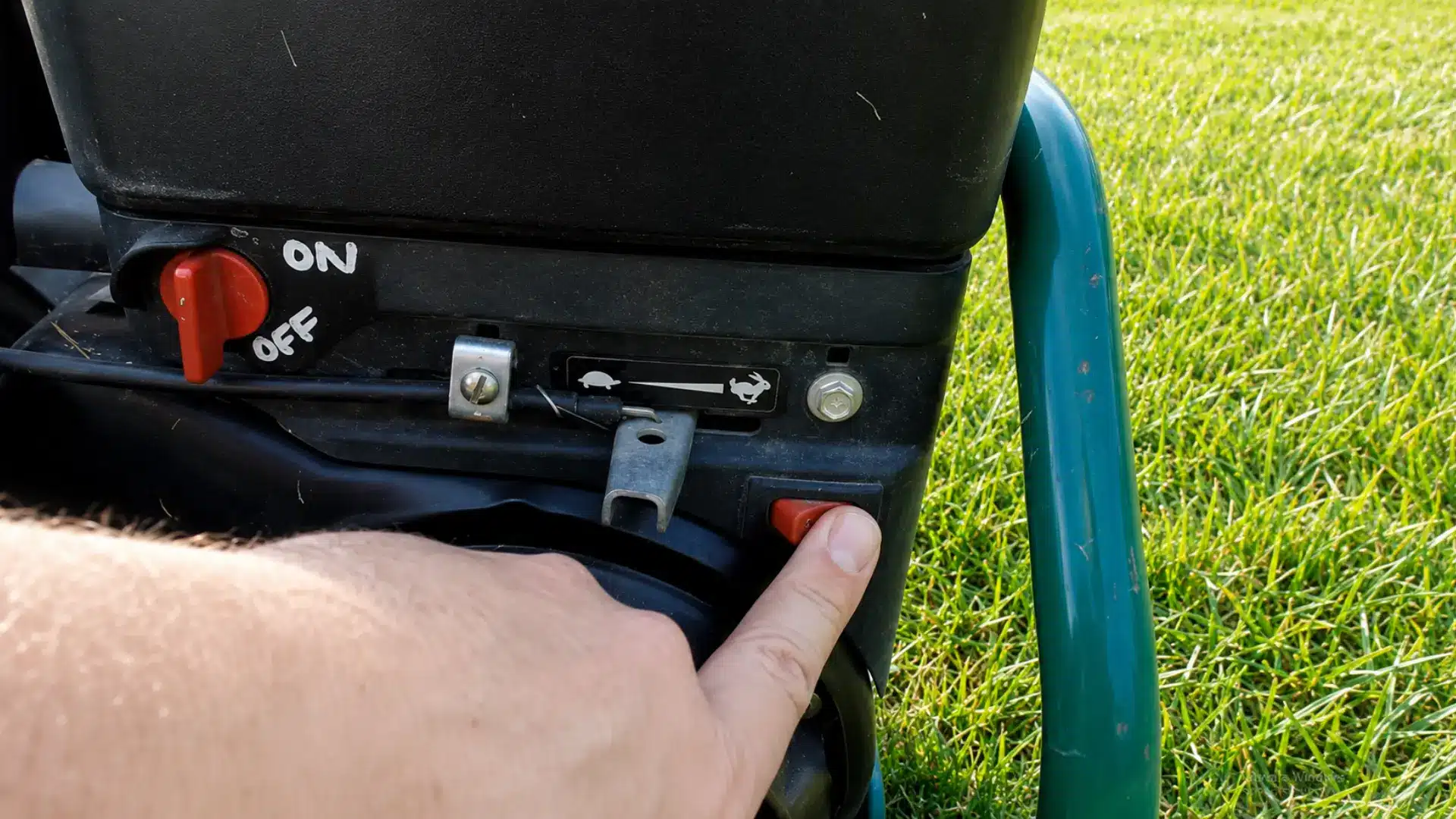
Every aerator starts the same basic way. Find the master switch and flip it on, then check that the fuel shutoff isn’t closed since it needs to stay open the whole time you’re working.
Set the choke next, and give the pull cord one firm, confident tug.
If the machine is tuned right, it should fire up on that very first pull without much fuss at all.
Step 2: Open the Throttle Fully
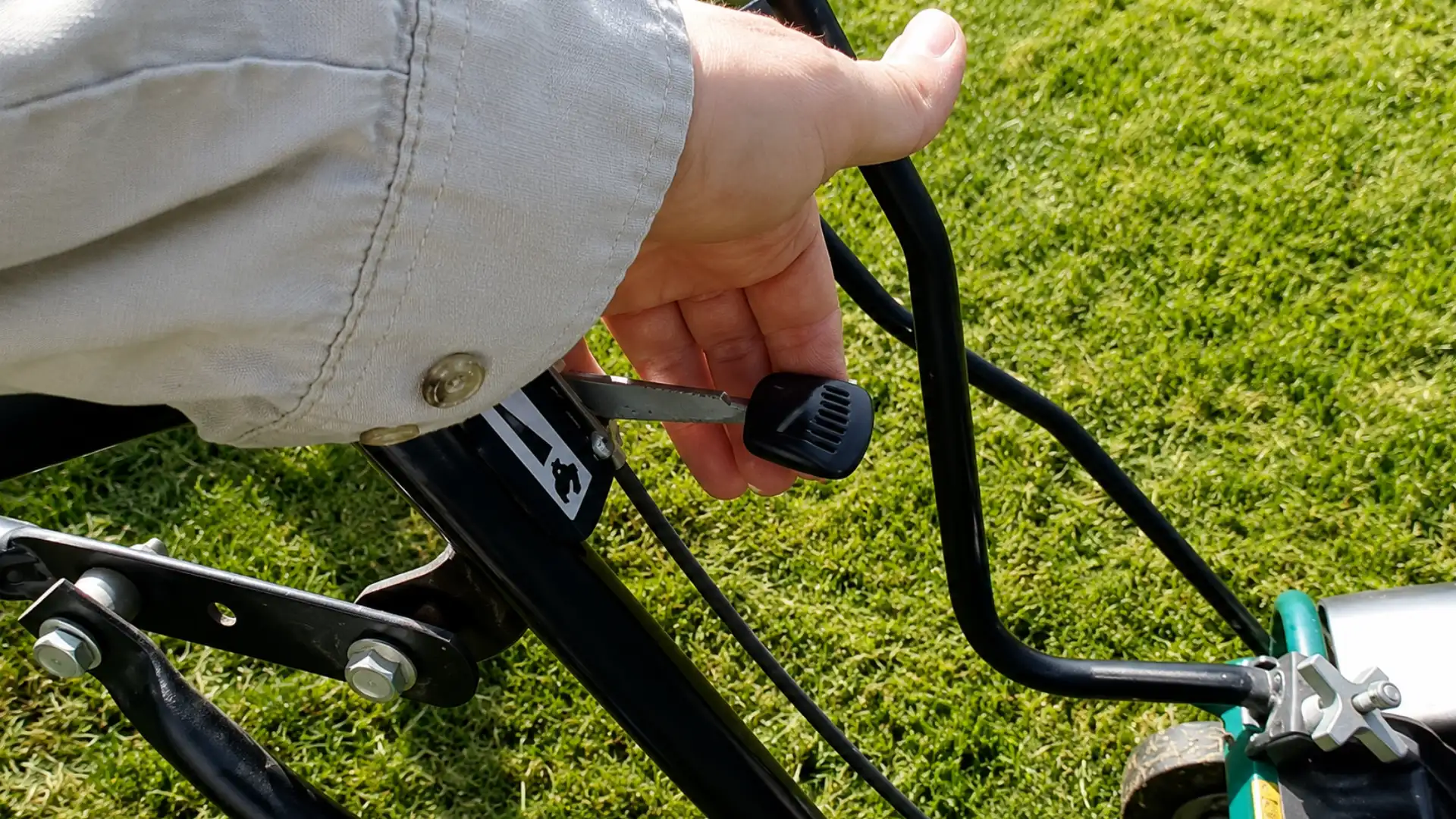
Once the engine catches, don’t leave the throttle sitting halfway. Turn it all the way open so the machine gets full power right from the start.
Aerators need serious force to push tines into compacted ground, and running on low throttle just makes the whole job harder and slower.
A little extra noise here saves you a lot of extra effort later, so don’t hold back once it’s running.
Step 3: Learn the Drive and Drop Handles
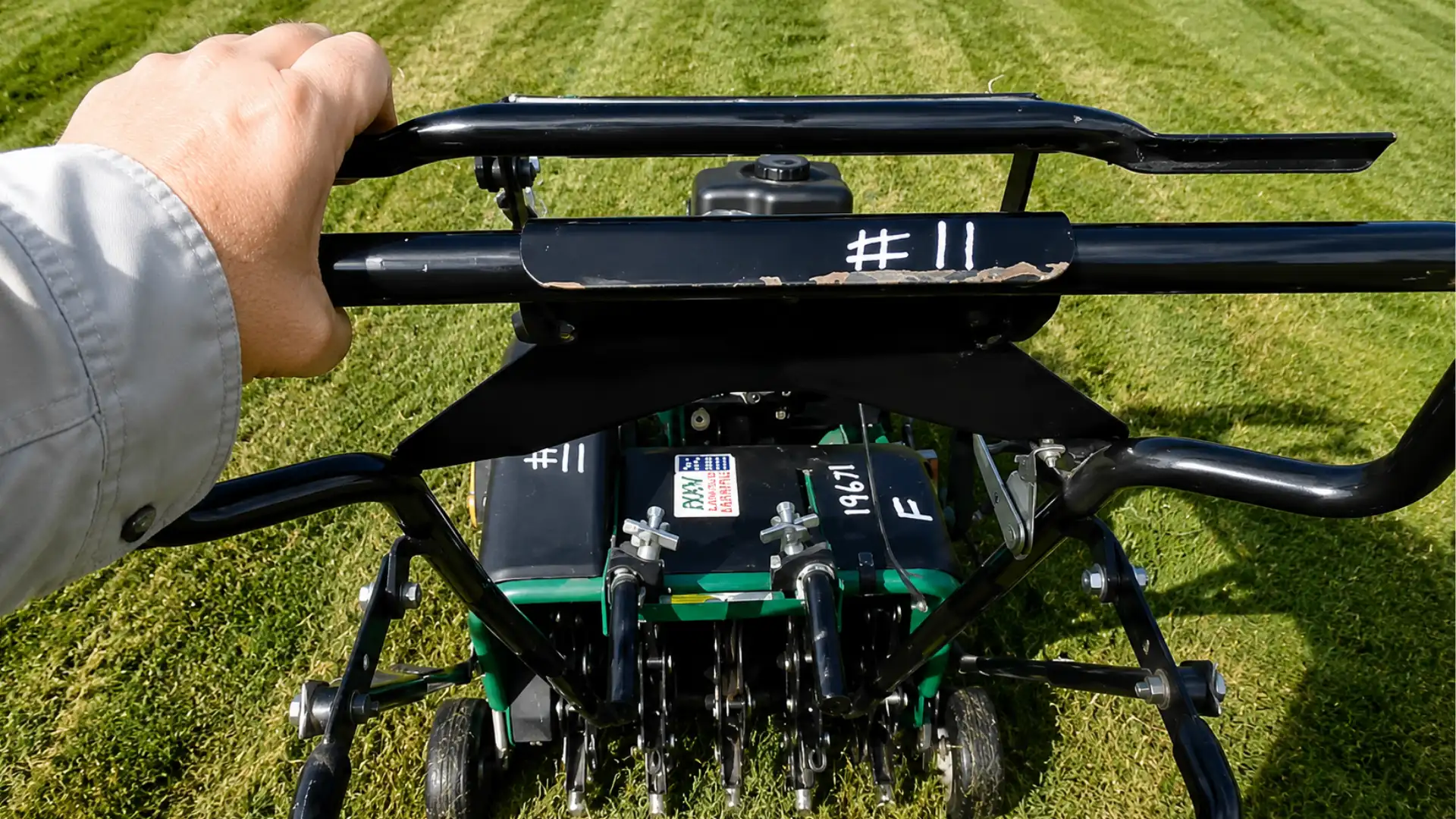
Two handles matter most on these machines. The drive handle spins the tines and makes the aerator self-propelled, pulling it forward as you walk behind it.
The drop handle does something different. It lifts the wheels and lowers the tines into the ground so they can grab a core.
Get comfortable switching between the two before your first real pass, since you’ll be using both constantly.
Step 4: Brace for the Jerk at Start
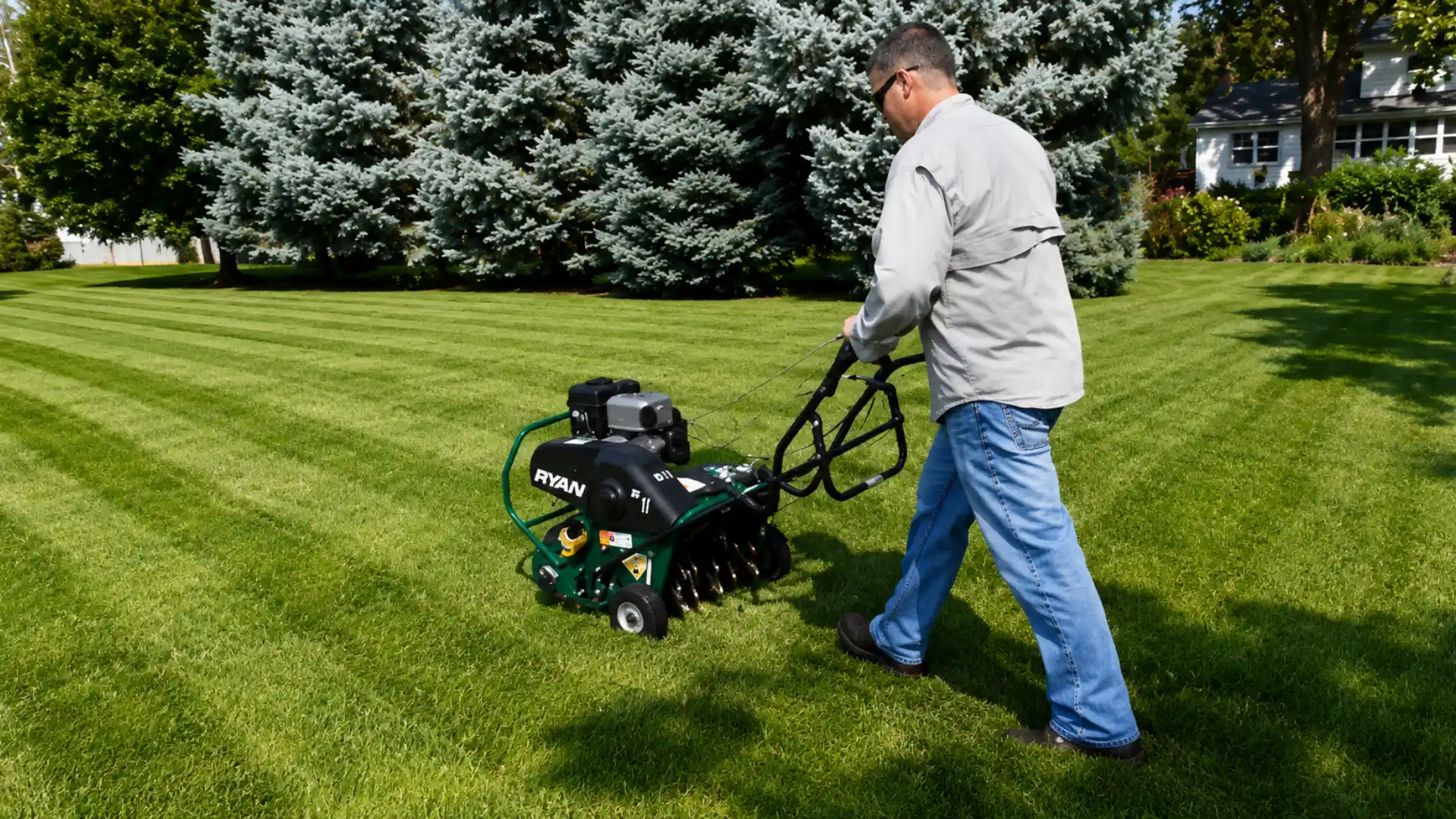
The second those tines hit compacted soil, the machine is going to jerk hard, and it catches a lot of first timers off guard. Don’t fight it or hold it back.
Let it pull you forward instead, since that’s just the horsepower doing its job against the ground.
Fighting the pull only tires you out faster and makes steering harder than it needs to be.
Step 5: Run Straight Lines, Not Curves

This isn’t a mower built for tight turns, so don’t try forcing one. Stick to straight passes across the yard, and when you hit the end of a row, let off the drive lever.
Lift the tines, then use the drive handle to help spin the machine around.
Drop the tines back down once you’re facing the right way, and keep going in that same straight pattern.
Step 6: Check Core Depth
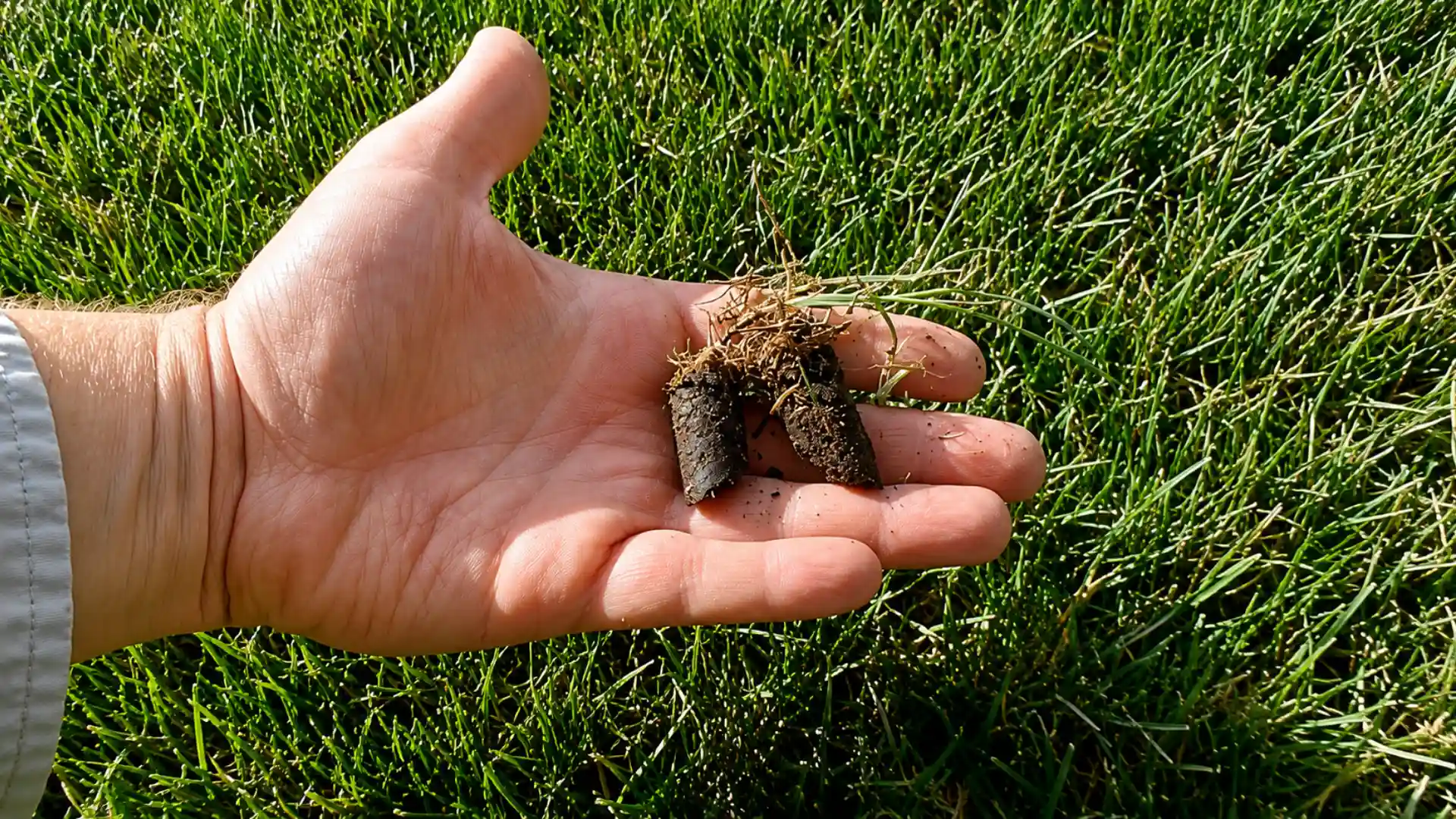
After a couple of passes, stop and actually pull up one of the cores to look at it closely.
You want at least 2 inches, ideally more, since shallow cores mean the aeration isn’t doing much good.
Shadier, wetter parts of the lawn usually pull longer cores because the softer ground gives the tines less resistance to fight through.
Step 7: Double Pass for Better Results
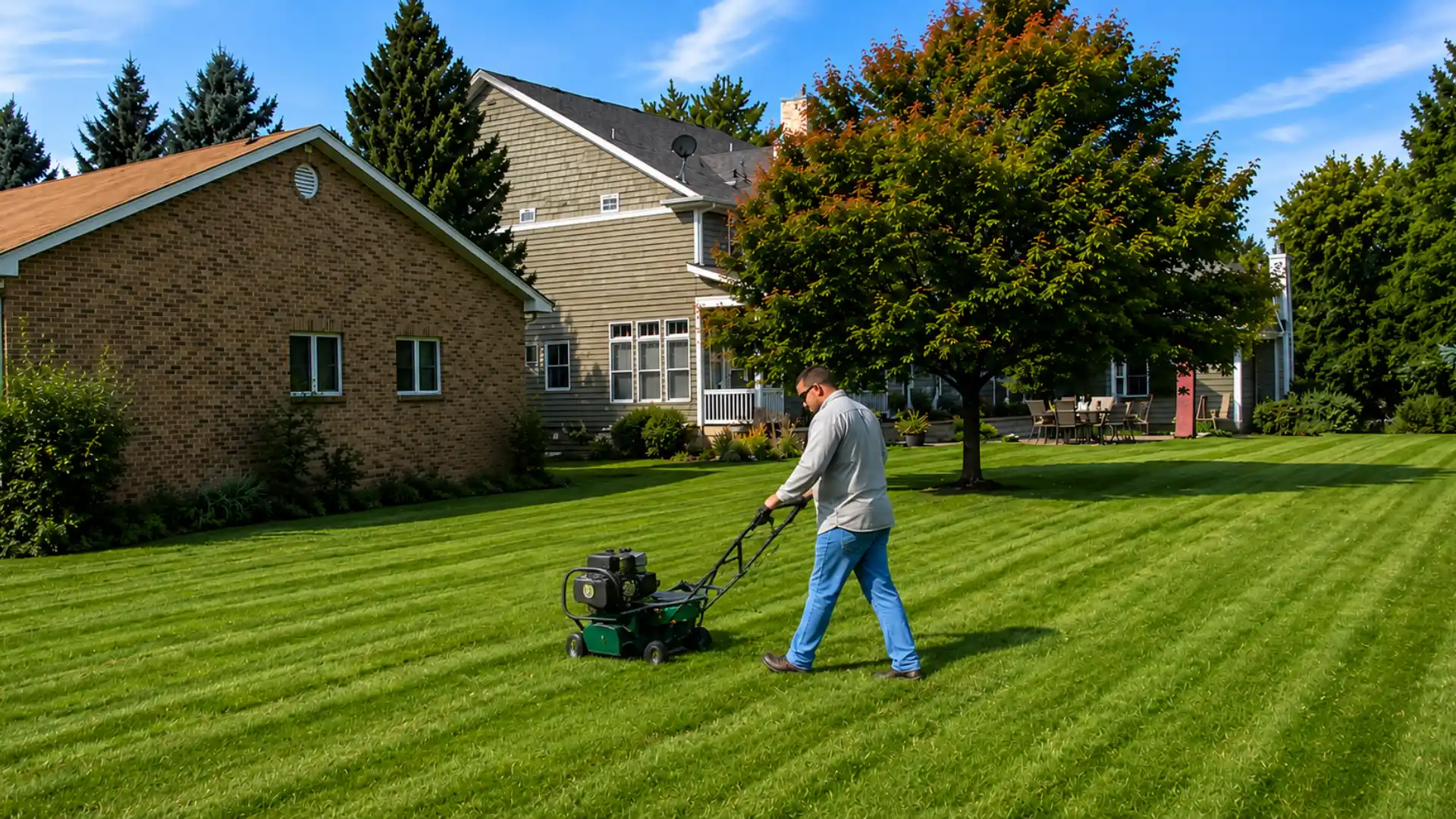
Finishing one full pass might feel like the job is done, but it isn’t quite over yet.
Go back over the entire yard a second time, this time moving in the opposite direction from your first pass.
More cores pulled across the lawn always means better results, so that second round is well worth the extra effort every time.
For more details, watch the complete video tutorial by The Lawn Care Nut
When to Aerate Lawn?
The best time to aerate a lawn depends on the grass type and local growing season.
Aerate cool-season grasses, such as fescue, ryegrass, and Kentucky bluegrass, in early fall or early spring. Fall is usually preferred because grass grows actively while weeds compete less.
Aerate warm-season grasses, including Bermuda, Zoysia, and St. Augustine, during late spring or early summer after active growth begins.
Choose a day when soil is moist but not soaked. Water the lawn one or two days before aeration if rainfall is limited.
Avoid aerating during drought, extreme heat, frozen conditions, or dormancy.
Most lawns need aeration once a year, while lightly used lawns with loose soil may only need it every two or three years. Clay soil and busy lawns require more frequent treatment.
Lawn Care After Aerating
Proper care after aeration helps the soil recover and gives grass roots better access to water, air, and nutrients.
- Handle the soil cores: Leave the removed soil plugs on the lawn and allow them to break down naturally.
- Overseed thin areas: Spread grass seed across bare patches while the aeration holes provide direct contact with the soil.
- Apply starter fertilizer: Add a suitable starter fertilizer to support seed germination, root development, and steady grass growth.
- Water deeply: Water the lawn regularly during the first week to keep the soil moist and support recovery.
- Delay mowing: Wait until the grass looks fuller and reaches the recommended height before using the lawn mower again.
Watering deeply that first week matters as much as sticking to a sensible watering routine the rest of the season, since fresh cores and new seedlings both dry out fast in full sun.
Core Aeration vs Spike Aeration
Core aeration removes small plugs of soil, while spike aeration creates holes without removing soil. The right method depends on soil condition and lawn size.
| Feature | Core Aeration | Spike Aeration |
|---|---|---|
| Method | Removes small plugs from the soil | Pushes solid spikes into the ground |
| Compaction relief | Reduces moderate to severe compaction | Works for mild surface compaction |
| Soil impact | Creates open space for roots | May compress soil around each hole |
| Best for | Clay soil and busy lawns | Small lawns with loose soil |
| Equipment | Manual or powered core aerator | Garden fork, shoes, or spike roller |
| Results | Provides greater, longer-lasting improvement | Offers short-term surface improvement |
| Cost | Usually costs more | Usually costs less |
| Recommended choice | Better for most compacted lawns | Suitable for occasional light aeration |
Common Aerating Mistakes to Avoid
The mistake I see most often is someone aerating dry, hard-packed dirt and then wondering why the cores barely broke the surface.
Avoiding common aeration mistakes protects grass, improves soil treatment, and helps your lawn recover without unnecessary stress or damage afterward.
- Aerating dry soil: Dry, hard ground prevents tines from reaching proper depth and reduces the overall benefit of aeration.
- Skipping the core check: Inspect removed plugs because shallow cores show the machine has not penetrated deeply enough.
- Making tight turns: Sharp turns can tear grass, disturb soil, and place unnecessary strain on the aerating machine.
- Aerating just once: Complete a second pass across compacted areas to create enough holes for better soil access.
- Mowing too soon: Allow grass time to recover because early cutting can stress weakened roots and slow growth.
Conclusion
A healthier lawn often starts below the surface. By aerating at the right time, you give compacted soil room to receive air, water, and nutrients effectively.
Choose moist soil, use a core aerator for heavy compaction, and cover the lawn evenly.
A lawn often reveals what it needs through its texture, drainage, and color. Pay attention to those signals, adjust your care routine when needed, and avoid treating every patch the same way.
Thoughtful timing and care can make lawn maintenance feel more manageable.
What changes have you noticed after aerating your lawn? Share your experience, results, or questions in the comments below.
Frequently Asked Questions
Can I Aerate and Overseed at the Same Time?
Yes, aerating before overseeding creates better seed to soil contact, helping grass seeds absorb water, establish roots, and grow successfully.
How Deep Should Aeration Cores Be?
Aim for cores at least 2 inches deep. Shallow cores barely break up compaction, so check a few during your first passes.
Should You Aerate Your Lawn Twice?
Yes, a double pass in opposite directions pulls significantly more cores, giving your lawn better airflow, drainage, and overall root growth.