
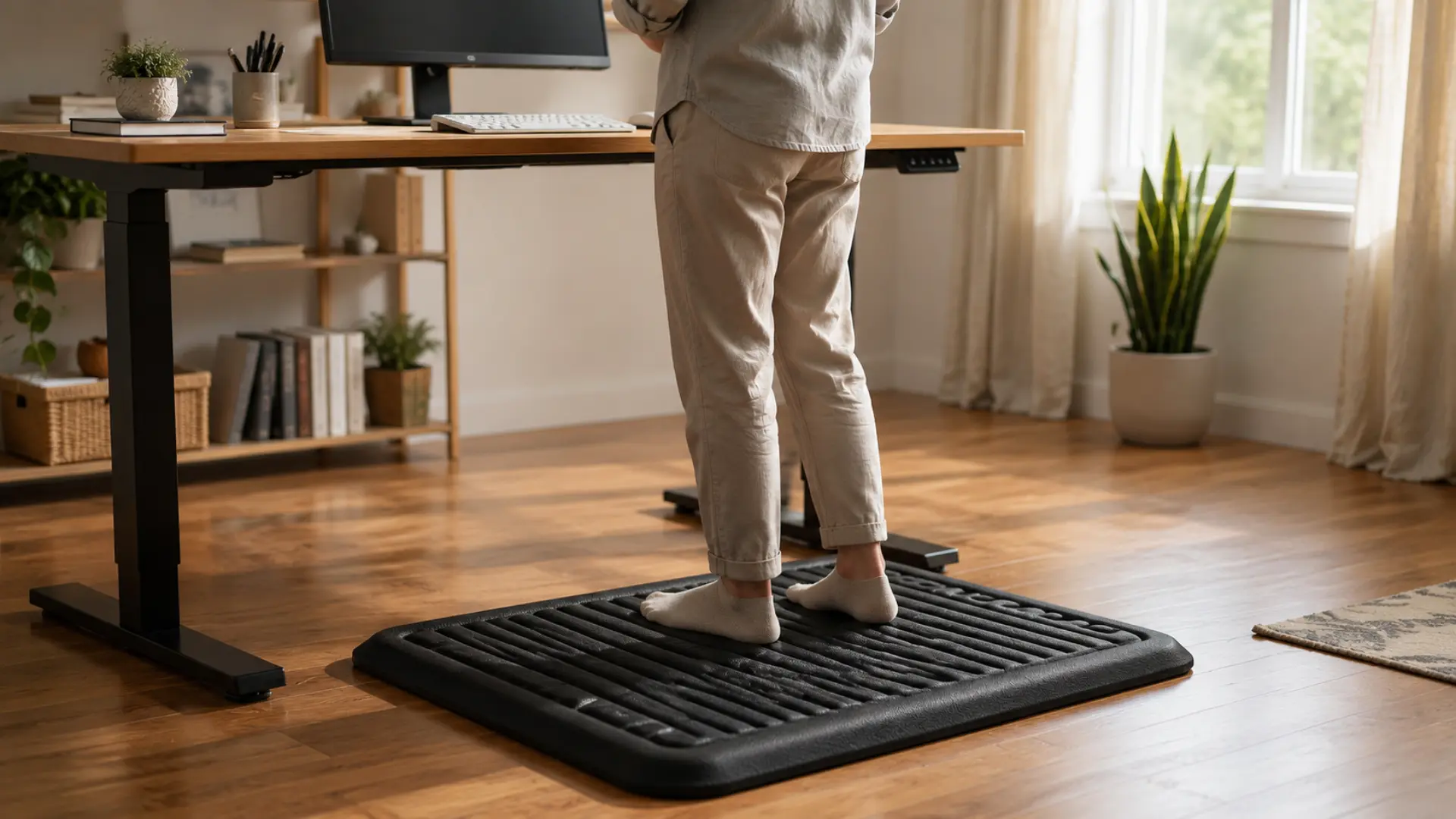
Standing on a hard floor for hours puts steady pressure on your feet, knees, and lower back, and that discomfort adds up fast enough to make anyone quit standing altogether.
A good standing desk anti-fatigue mat fixes this by giving your feet a surface built for movement, not stillness.
Choosing the right one isn’t simply about picking the thickest mat.
It’s about finding the balance between cushioning, stability, durability, and everyday comfort that makes standing feel genuinely easier.
Ahead, you’ll find how these standing desk anti-fatigue mats work, what to look for before buying one, and options worth considering based on your needs.
What is an Anti-Fatigue Mat and How Does it Work?
An anti-fatigue mat is a cushioned surface designed to sit under your feet during long periods of standing.
Unlike a rigid floor, it gives slightly under your weight.
Standing still on a hard surface forces your leg muscles to hold one position, which slows blood flow and leads to stiffness over time.
This is what it actually does for your body during a workday:
- Reduces foot and back strain by cushioning pressure points
- Improves circulation through small, constant posture shifts
- Eases knee and hip discomfort by absorbing impact
- Helps you stay focused for longer stretches without fatigue
- Encourages consistent standing instead of switching back to sitting
These benefits only show up with the right mat under your feet. The wrong one can feel just as tiring as bare flooring.
Types of Anti-Fatigue Mat Materials
Each type offers a different balance of cushioning, support, and durability. This is how the three most common options compare:
| Material | Feel Underfoot | Key Benefit |
|---|---|---|
| Foam | Soft, springy cushioning | Comfortable for shorter standing sessions and easy on the budget |
| Gel | Dense, slow-moving cushioning | Absorbs pressure well and feels stable during long stationary standing |
| Polyurethane | Firm yet responsive | Holds its shape under daily use and supports extended standing without sinking |
Press your thumb into the mat’s center to test recovery. Foam takes a few seconds and flattens permanently over time. Gel lasts a bit longer but softens unevenly. Polyurethane bounces back instantly, even after a year of daily use, making it best for long-standing sessions.
Best Overall Terrain-Style Anti-Fatigue Mats for Active Standing
If you stand for hours and want your mat to do more than cushion, terrain-style mats keep your feet subtly moving throughout the day.
These options trade a flat surface for contoured designs built around active standing:
1. ErgoDriven Topo
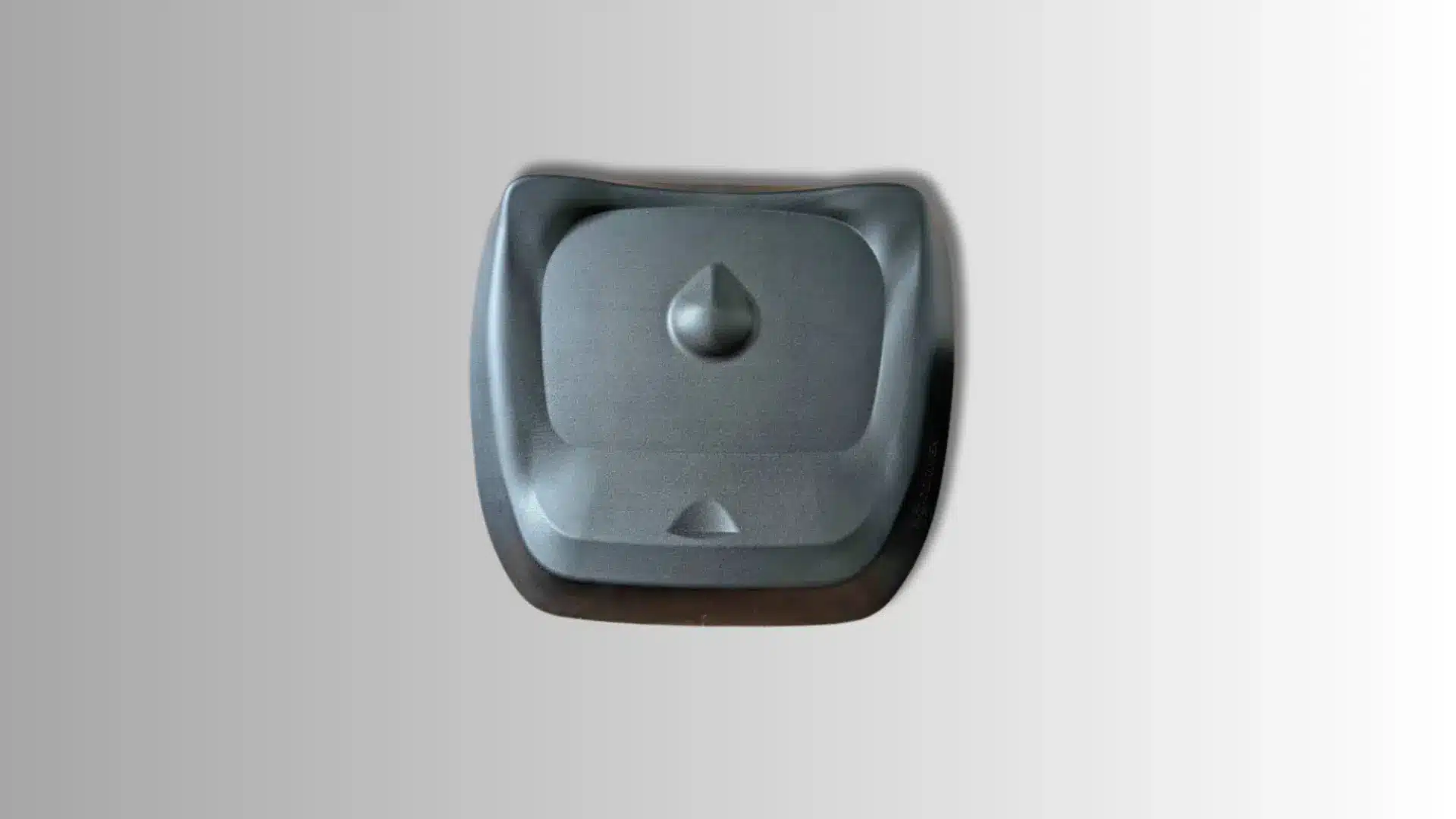
- Material: 100% non-toxic polyurethane foam
- Thickness: 0.85” in the neutral standing area, up to 2.7” at raised terrain points
- Size: 29″W x 26.25″D
Topo is widely regarded as the original standing desk mat, built around a contoured “not-flat” terrain that gently pushes your feet into different positions throughout the day.
It’s held the top spot in independent testing since 2016, largely because polyurethane foam holds its shape far longer than standard foam.
Backed by a 7-year warranty, it’s built for people who stand for more than 2 hours daily.
2. Vari ActiveMat
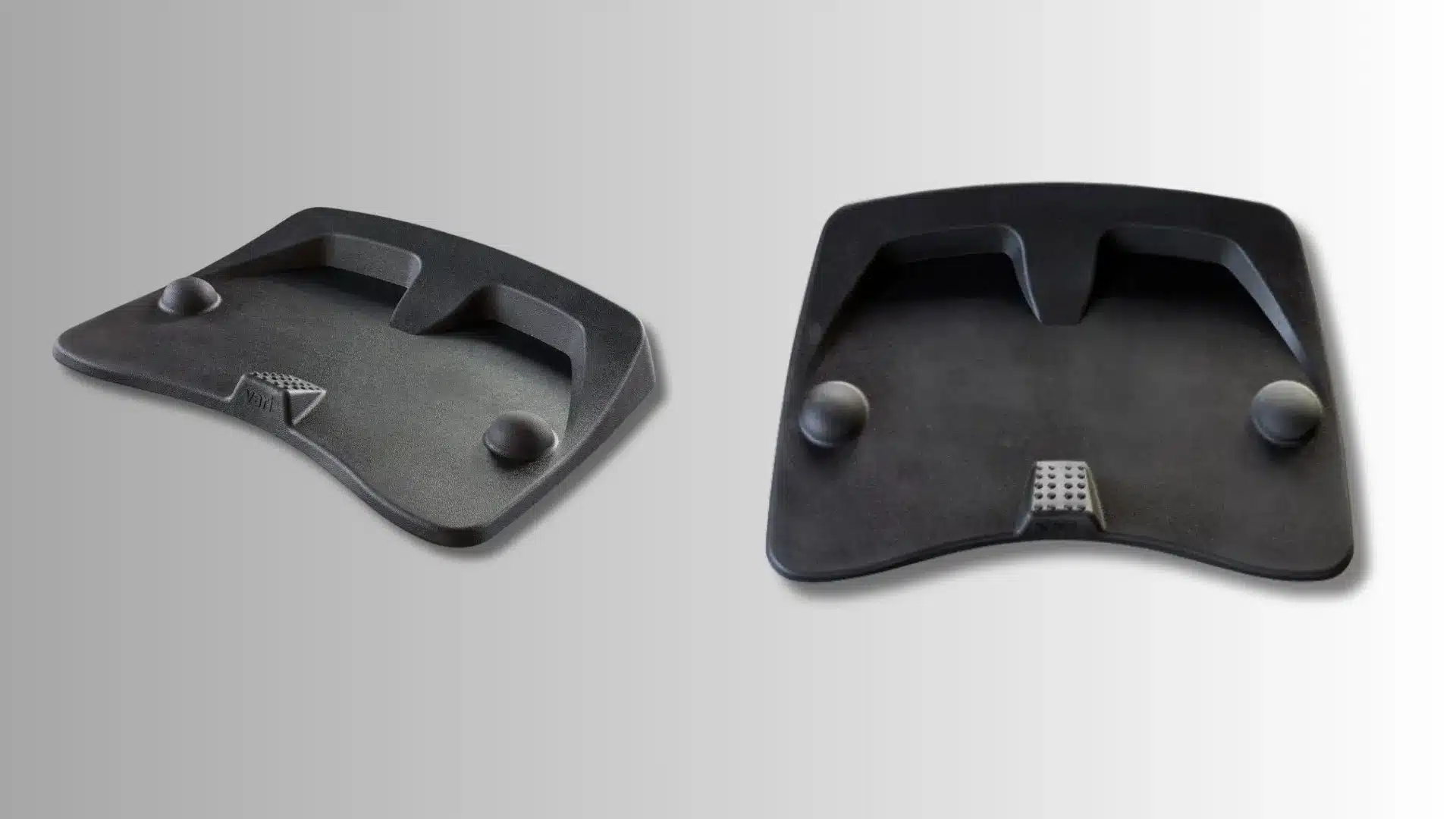
- Material: Polyurethane with a high-density core
- Thickness: Approximately 3”
- Size: 35.5″W x 23.75″D
The ActiveMat takes a similar terrain-based approach to Topo but adds raised side panels and a dedicated wedge for calf stretches.
Its polyurethane build is durable and easy to clean, and it’s positioned at a premium price point aimed at users who want a more dynamic, stretch-friendly standing experience.
3. Kangaroo Pro
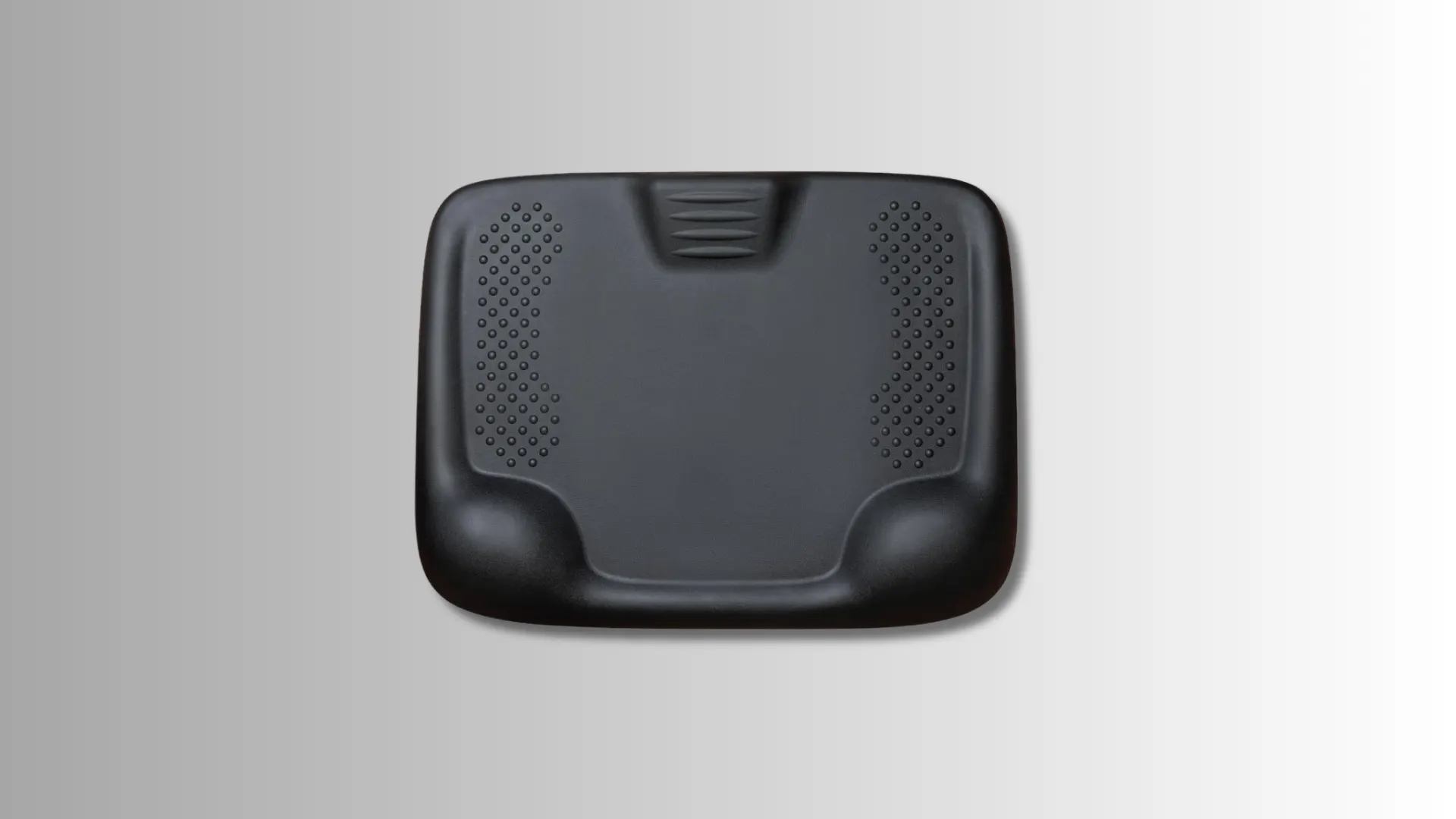
- Material: High-density polyurethane foam with an attachable acupressure pad
- Thickness: 1” foam core
- Size: Approximately 32 “W x 22 “D
The Kangaroo Pro combines a flatter foam base with an optional acupressure attachment, and it is a better option for an adjustable wall rail desk.
It works best barefoot or in thin socks, since the acupressure texture is designed for direct foot contact rather than use with formal shoes.
Best Flat Foam Anti- Fatigue Mats
Not everyone needs a premium terrain mat, and these flat foam options prove comfort does not have to come with a high price tag.
Each one delivers reliable cushioning for moderate daily standing without stretching your budget.
4. HEALEG Anti Fatigue Mat
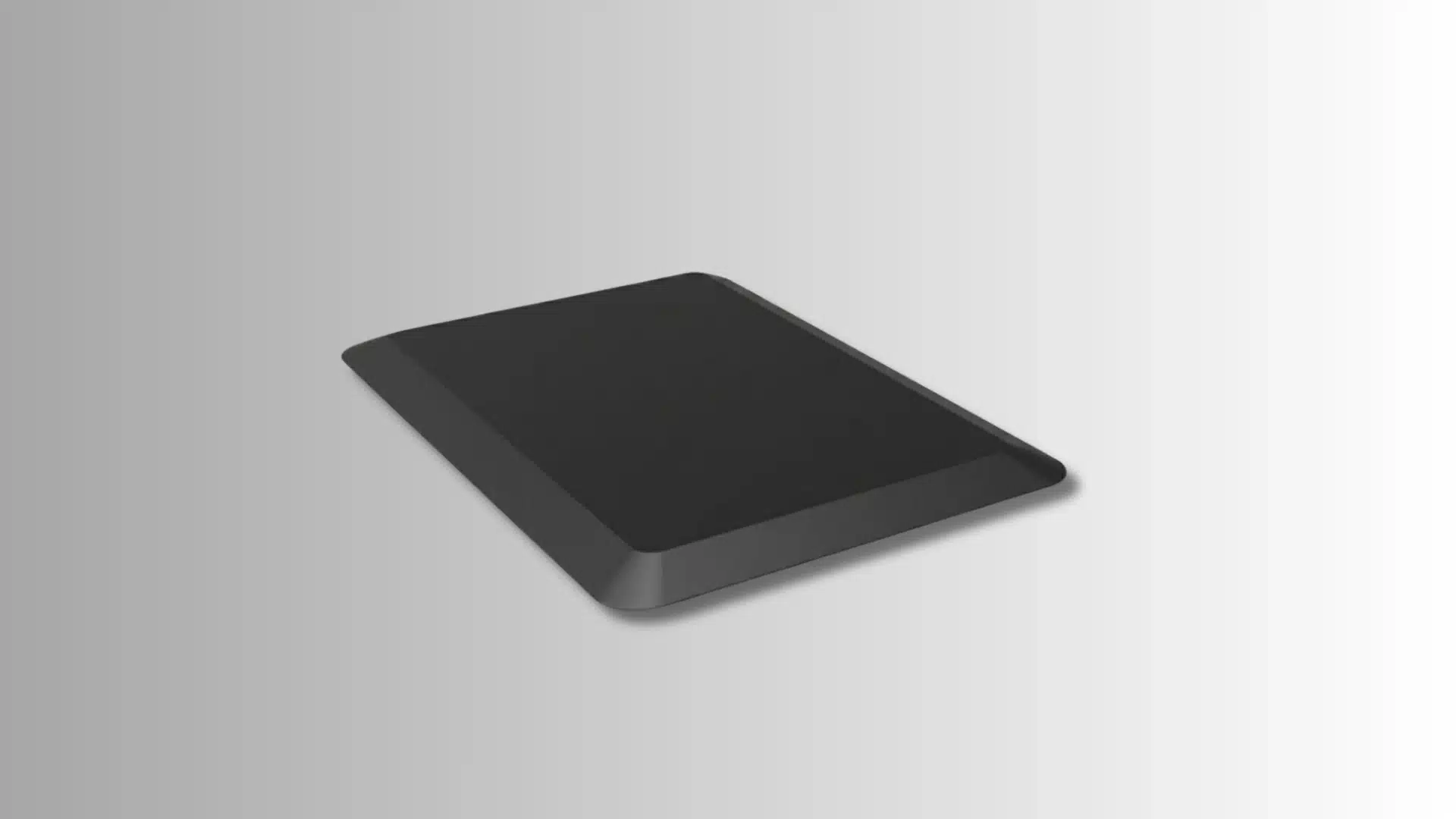
- Material: High-density polyurethane (PU) foam, 140D molded core
- Thickness: 1”
- Size: Common options include 30″L x 20″W and 20″L x 32″W
HEALEG is sold as a multi-purpose mat for standing desks, offices, and garages.
Its high-density PU foam resists the permanent compression that cheaper foam mats suffer from, which is unusual at this price point.
At around $39, it’s a strong entry-level pick for anyone standing a few hours a day who isn’t ready to invest in a premium terrain mat.
5. ComfiLife Anti Fatigue Mat
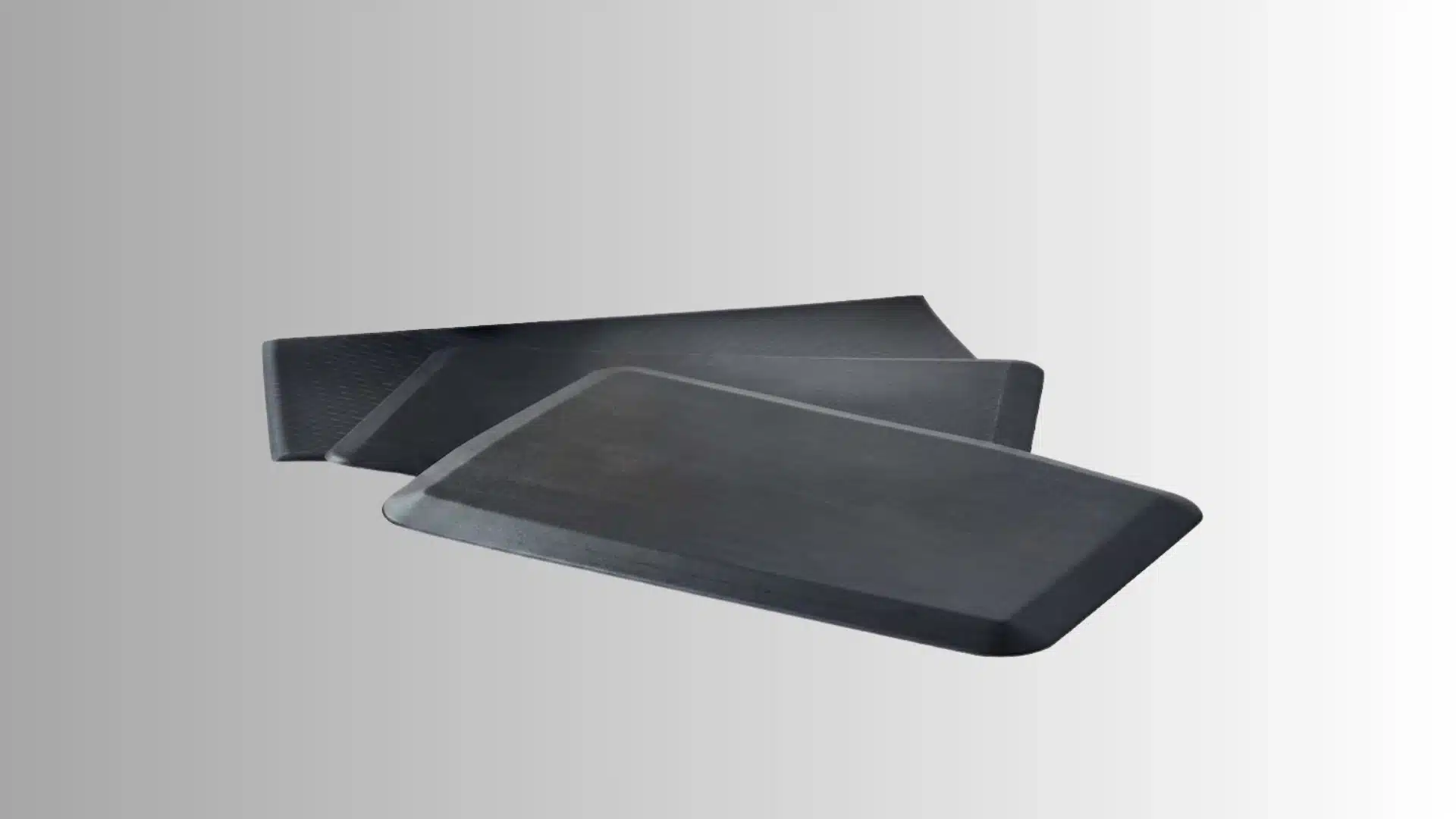
- Material: High-density memory foam
- Thickness: 3/4”
- Size: Multiple sizes available, generally 20” x 32”
ComfiLife is another dual-purpose mat, popular for both kitchen counters and standing desks.
It is slightly firmer than HEALEG, with a non-slip ridged bottom and gently sloped beveled edges that reduce trip risk.
Its lifetime warranty and wide color selection make it an easy recommendation for first-time standing desk users who want dependable comfort without spending much.
6. Sky Solutions Anti-Fatigue Mat
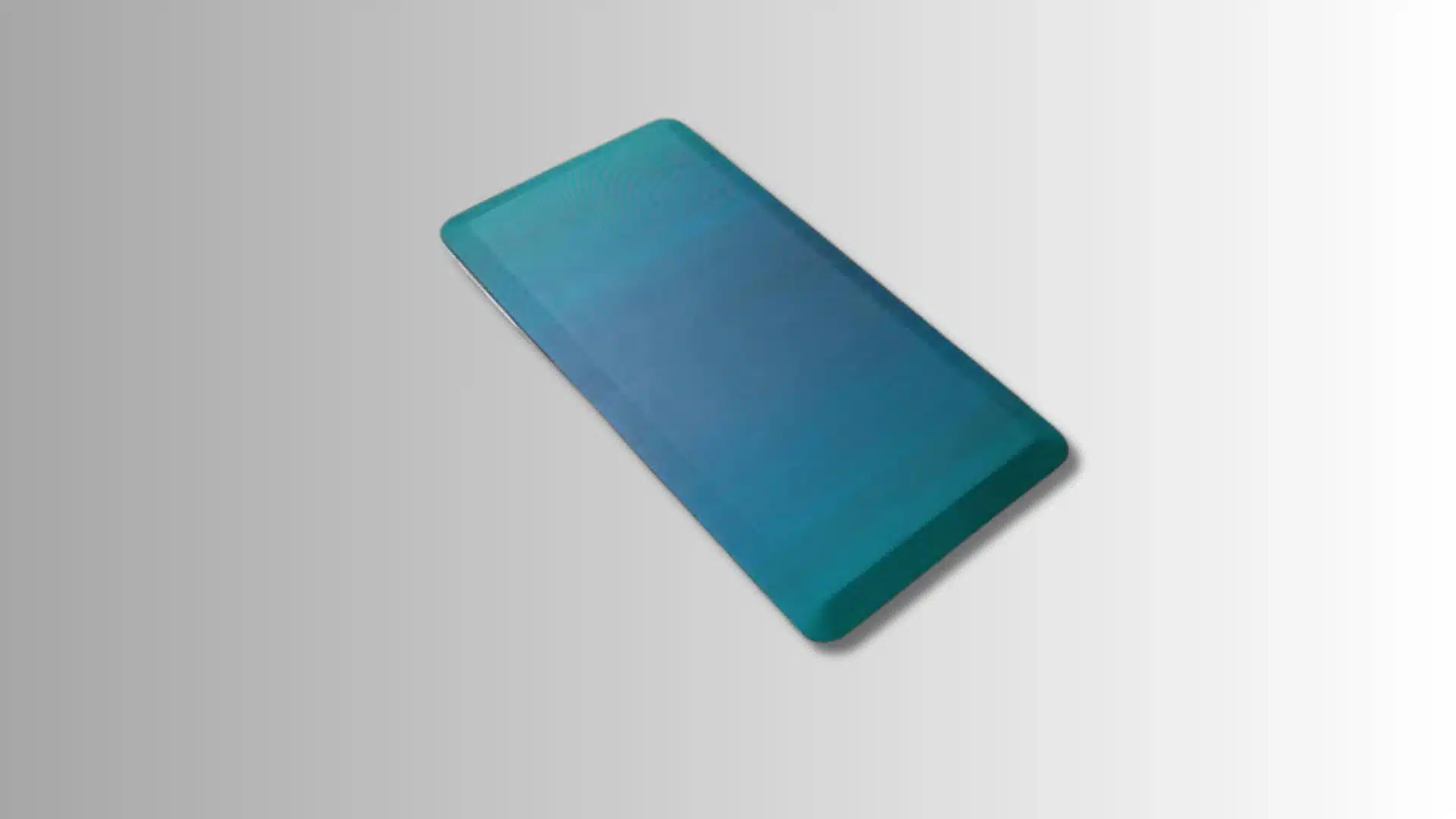
- Material: High-density PU foam
- Thickness: 3/4”
- Size: Available in multiple sizes, including larger runner-length options
Sky Solutions is marketed for home, office, and garage use, not exclusively for standing desks.
It features a non-slip bottom and an anti-curl beveled edge, and it’s available in more sizes and colors than most budget mats, including longer runner mats for wider desk setups.
It’s a practical option if you want size flexibility over specialized features.
Best for Heavy Daily Use: High-Density Polyurethane Mats
For anyone standing 4+ hours a day, durability matters as much as comfort, and these high-density polyurethane mats are built to hold their shape under sustained pressure.
They are the picks worth the investment if you are not willing to replace your mat every year:
7. Imprint CumulusPro
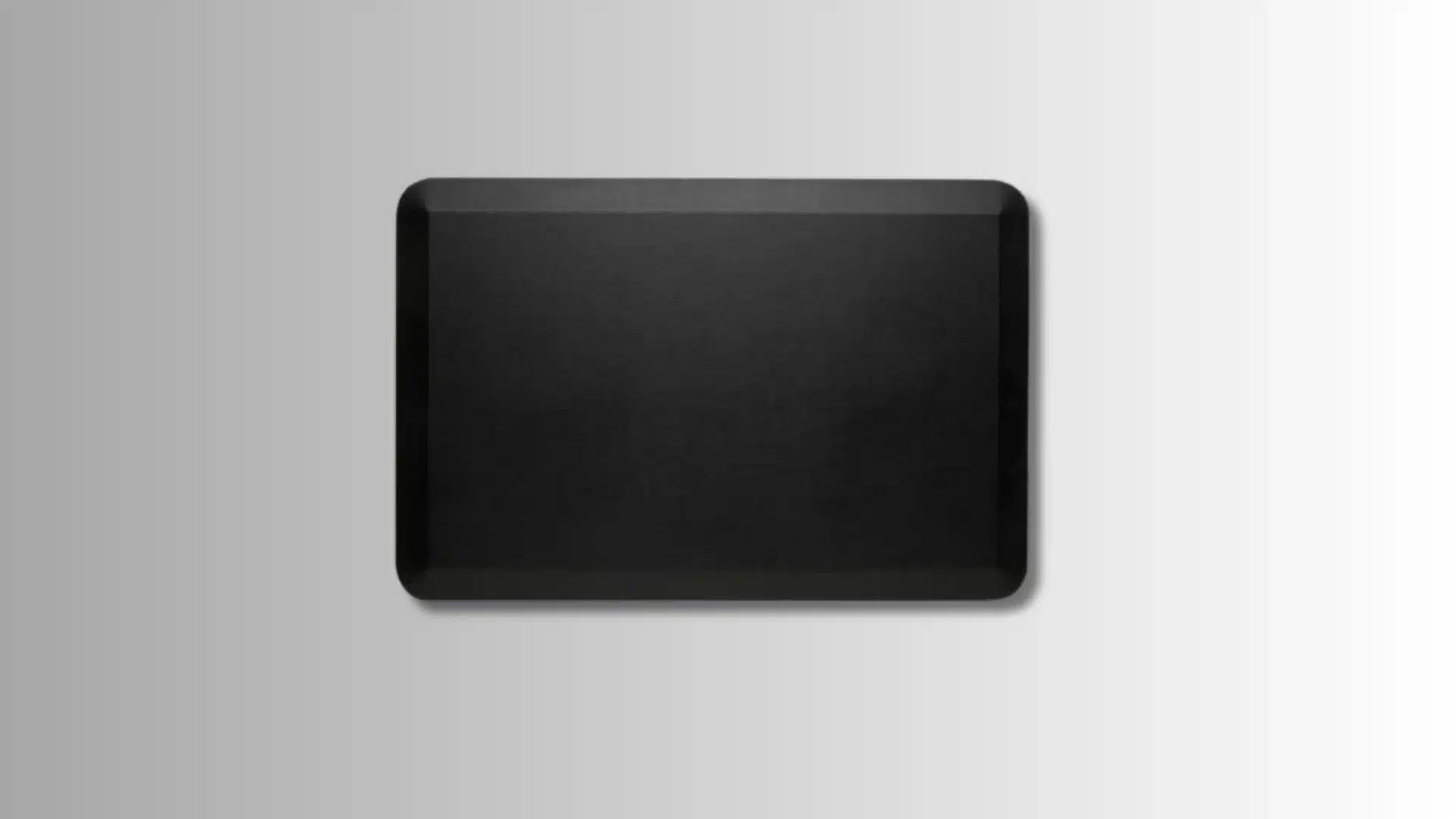
- Material: Solid, one-piece polyurethane with a high-density core
- Thickness: 3/4”
- Size: Common sizes range from 20 ” x 30 ” up to 24 ” x 60 “
CumulusPro uses what the brand calls Cushion-Core construction, and it is tested and certified by the National Floor Safety Institute.
Its one-piece polyurethane build is designed specifically not to lose support over time, which shows up in its unusually large base of long-term reviews.
It’s marketed for standup desks, kitchens, and garages alike.
8. WellnessMats
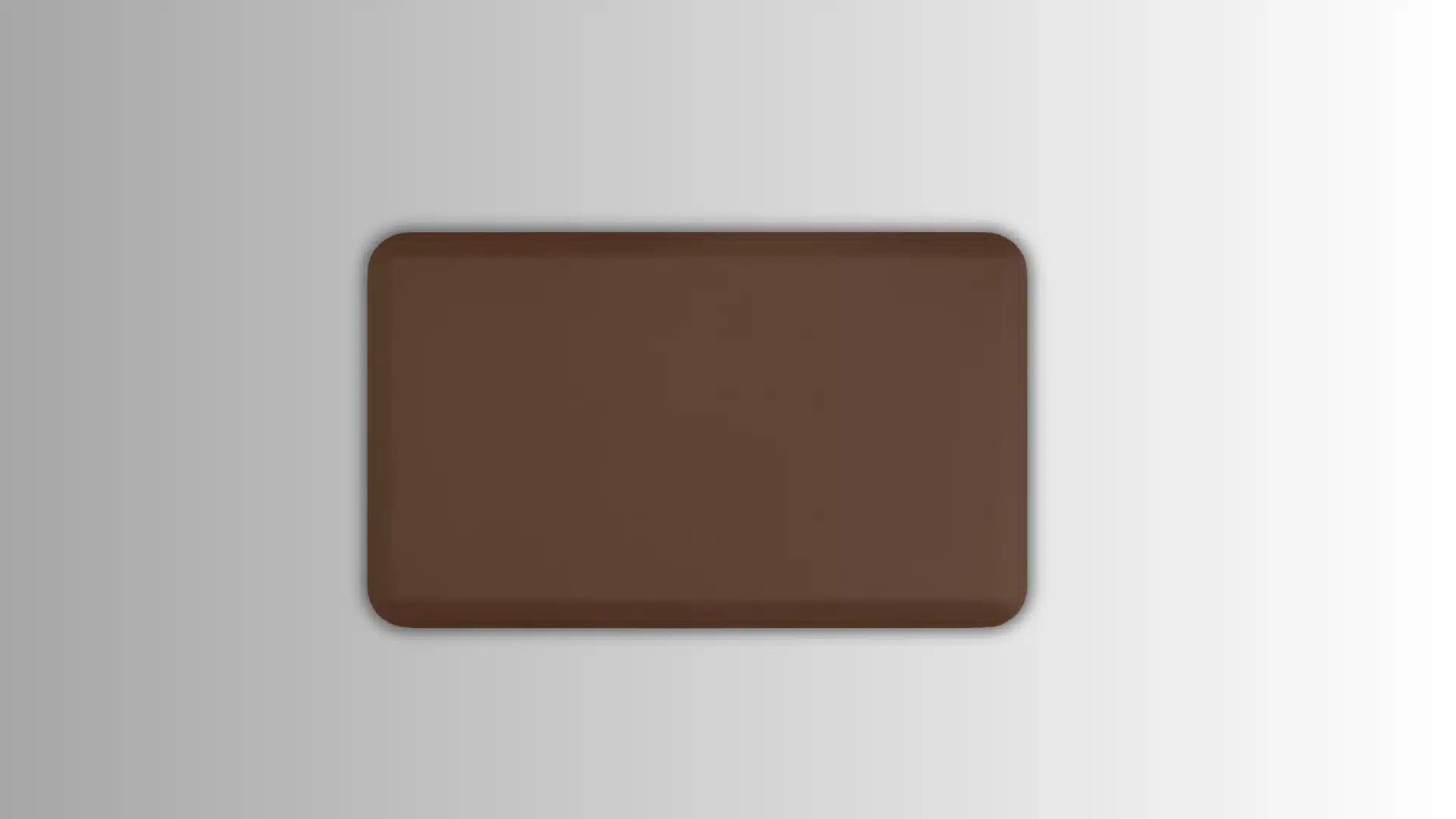
- Material: 100% polyurethane (proprietary Advanced Polyurethane Technology)
- Thickness: 3/4”
- Size: Multiple sizes available across several design collections
WellnessMats is built around the idea that material matters more than thickness for long shifts.
Its dense polyurethane core is engineered specifically to resist compression across 6-10+ hours of daily standing.
The mats are made in the US, backed by a lengthy warranty, and sold for home, kitchen, garage, and office standing desk use.
9. FEATOL Industrial Mat
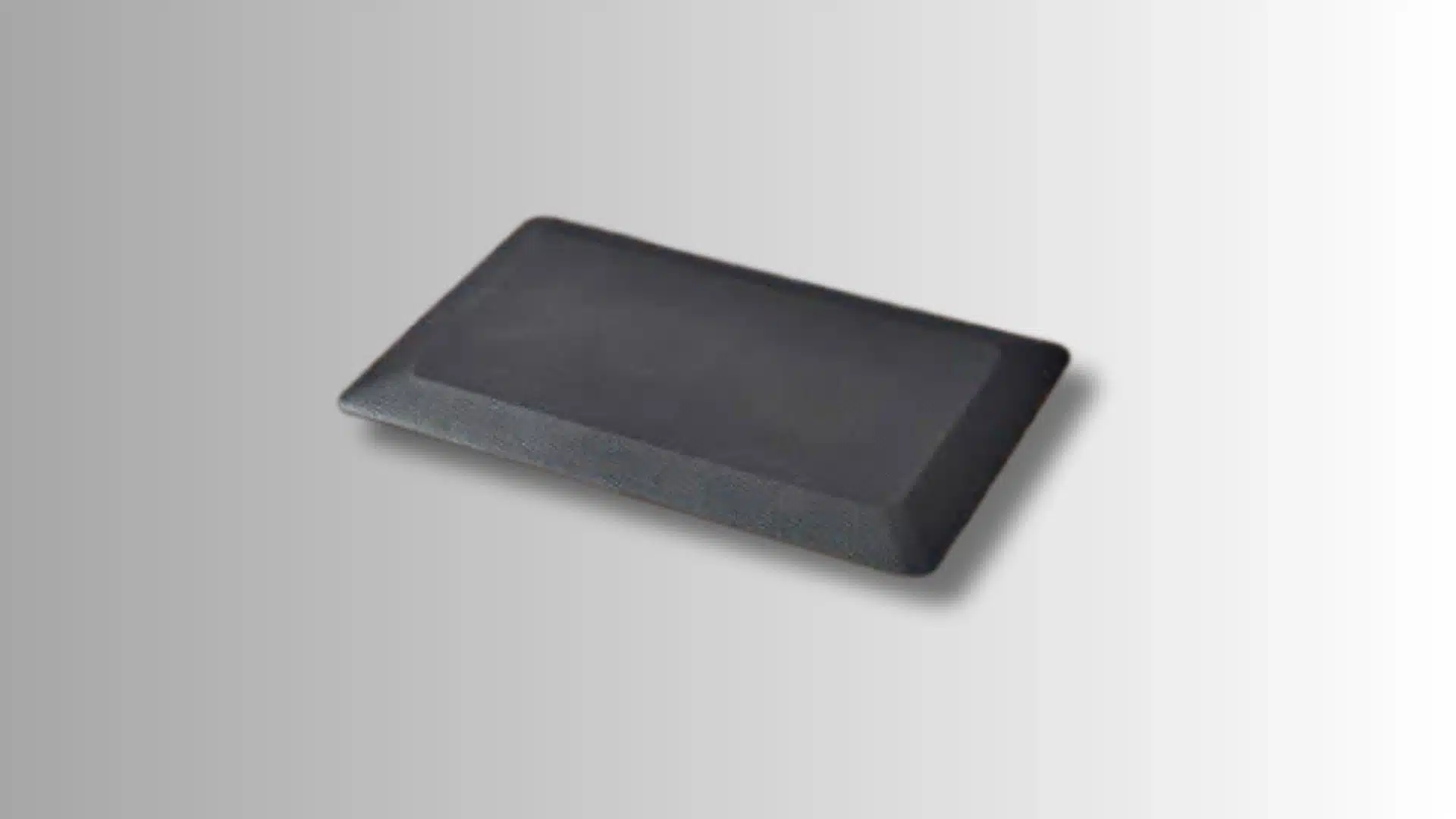
- Material: High-density memory foam with a PU leather top
- Thickness: 9/10” (also available in 1”)
- Size: Common sizes include 20 ” x 32 ” and 24 ” x 36 “, with longer runner options
FEATOL is built thicker than most mats on this list, and it’s explicitly marketed for garages, factories, and workshops in addition to standing desks.
It is a waterproof, oil-resistant surface designed to hold up in messier environments.
Its high-density memory foam core is positioned as more durable than standard polyurethane, resisting cracking or damage even with sustained daily use.
Anti-Fatigue Mat Choices by Flooring Type
The right anti-fatigue mat depends on your flooring type, as different surfaces require varying levels of grip, cushioning, stability, and protection.
| Flooring Type | Best Mat Match |
|---|---|
| Concrete or garage floors | Thicker mats with a durable, non-marking base built for constant impact |
| Hardwood or laminate | Polyurethane or foam mats with a soft, non-slip backing that won’t damage the surface |
| Tile or vinyl | Mats with a strong non-slip bottom and beveled edges to prevent sliding or curling |
| Carpet | Slightly firmer, thinner mats; overly thick mats on carpet can feel unstable or shift underfoot |
Look for a mat between 3/4 inch and 1 inch thick for reliable daily comfort. Avoid anything thinner, since it starts feeling like bare flooring within weeks.
Anti-Fatigue Mat Care and Cleaning Tips
A little regular care keeps your mat performing the way it did on day one, and knowing when to retire it saves you from standing on a mat that’s stopped helping.
- Wipe Weekly: Clean the surface with a damp cloth weekly to remove dirt, dust, spills, and everyday buildup.
- Avoid Harsh Chemicals: Use mild cleaners because strong chemicals can gradually damage foam, rubber, or polyurethane materials.
- Dry Completely: Let the mat dry thoroughly before replacing it to prevent moisture buildup and potential floor damage.
- Rotate Regularly: Reposition the mat slightly every few months to distribute pressure and prevent uneven wear patterns.
- Check Foam Breakdown: Regular cleaning cannot restore compressed cushioning, so inspect for permanent flattening, cracks, or reduced support.
Regular cleaning keeps your mat hygienic and looking new, but it won’t reverse foam that’s already broken down; that’s a sign it’s time to check the wear signs below.
Conclusion
A supportive mat can help cushion your feet, reduce pressure on your legs, and make those longer work sessions easier to manage.
But comfort isn’t one-size-fits-all, especially when your flooring, work habits, and personal preferences vary.
Ultimately, the goal isn’t to stand all day; it is to create a healthier balance between sitting, standing, and moving.
Not sure which pick fits your setup? Start with your daily standing hours and floor type, then match them against the categories above.
Frequently Asked Questions
Should I Wear Shoes or Stand Barefoot on the Mat?
Either works, though acupressure or textured mats are designed primarily for barefoot or socked use rather than formal shoes.
What is the 20/8-2 Rule For Standing Desks?
The 20/8-2 rule suggests alternating 20 minutes of sitting, 8 minutes of standing, and 2 minutes of movement each half hour.
Is it Healthy to Use a Standing Desk All Day?
No, standing all day is not ideal; alternating sitting, standing, and movement helps reduce fatigue and potential musculoskeletal discomfort.