


Long hours at a fixed desk take a toll on the back. Store-bought standing desks fix that, but they cost a lot.
A DIY sit stand desk solves the same problem for less. It just takes some plywood, a few brackets, and an afternoon.
This blog covers everything needed to build one properly. It walks through the right tools, the right measurements, and design ideas for different rooms and budgets.
It also covers what to do when a desk wobbles or squeaks.
No filler. Just clear steps that lead to a stable, comfortable standing desk built to fit real needs.
What Sets a DIY Standing Desk Apart from a Regular Desk
A DIY standing desk changes how a workspace feels. A regular desk locks you at one height, all day, every day.
A DIY sit stand desk lets you switch between sitting and standing as you work. Building your own also means full control. You choose the height. You choose the size. You choose the materials.
A fixed desk limits your options. It dictates your posture and your layout. A DIY build doesn’t.
It can fit a tight corner, a shared space, or a full home office, because you’re the one designing it.
There’s a bonus, too. A DIY standing desk lets you reuse furniture and spare materials. An old cart, leftover plywood, unused shelving, all of it becomes usable. It’s a desk built around how you actually work.
Tools And Materials Needed For a DIY Sit Stand Desk
A DIY sit-stand desk requires the right tools and materials for safe assembly and a stable structure.
| Category | Items Required | Purpose |
|---|---|---|
| Measuring Tools | Tape measure, ruler, level tool | Helps set the correct height, alignment, and balance |
| Cutting Tools | Hand saw, circular saw, drill machine | Used for shaping wood, boards, and supports |
| Fastening Tools | Screwdriver set, screws, bolts, brackets | Used for joining frame parts securely |
| Support Materials | Wooden boards, plywood, MDF sheets | Forms the main desk surface |
| Frame Materials | Metal pipes, wooden legs, and shelf units | Provides structure and height support |
| Surface Finish | Sandpaper, wood polish, paint | Smoothens and protects the desk surface |
| Optional Add-ons | Cable clips, anti-slip pads, storage boxes | Improves organization and stability |
Using the right tools and materials ensures stability, safety, and durability for a DIY sit-stand desk.
Basic Step-by-Step Instructions for a DIY Sit Stand Desk Setup
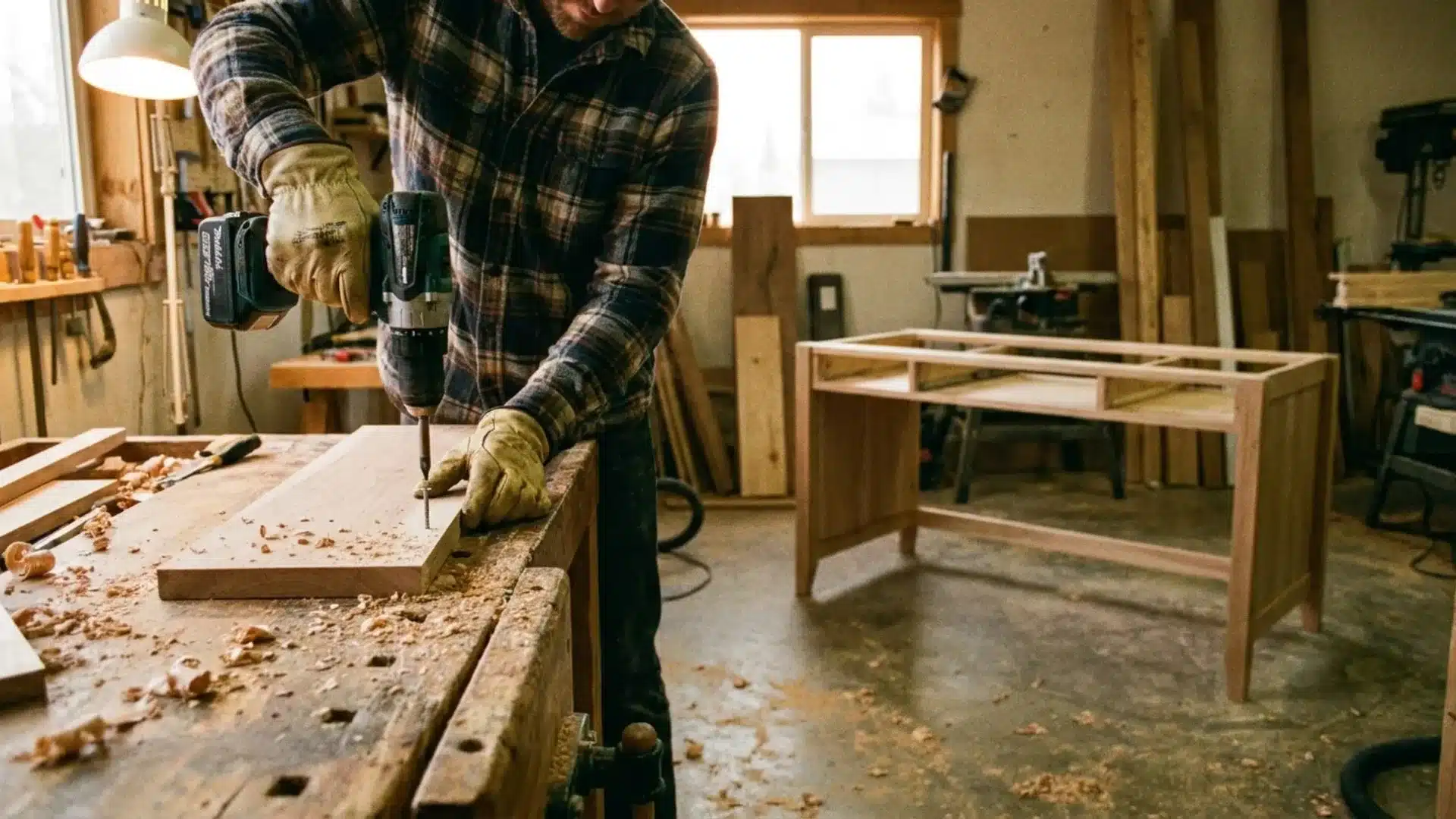
A desk build works best when you plan first, build second, and test last. Each step keeps the desk safe, balanced, and ready for daily use.
Step 1: Plan Room Layout and Desk Height
Start by measuring your floor space.
Mark a working height between 95 and 120 cm, based on your posture and screen level.
Map out monitor distance and keyboard reach before you cut anything. This step alone prevents the most common mistake: a desk that doesn’t fit the room or the person using it.
Step 2: Select a Strong Base Structure
Pick a base that can carry real, daily weight. Hardwood legs, steel pipe frames, and reinforced storage units all work; the right choice depends on your design. The base controls stability.
A weak one wobbles under load; a strong one holds steady through long work hours.
Step 3: Prepare and Cut the Desk Surface
Cut your tabletop to size, with clean, even edges. Sand it smooth to remove rough spots and add durability.
This surface is where your devices live, so accuracy here directly affects comfort and daily usability.
Step 4: Assemble the Frame and Secure Supports
Attach legs, brackets, and fasteners with precise alignment.
Tighten every joint fully; loose connections cause movement over time. Add reinforcement at stress points, such as leg-to-top junctions, to ensure long-term strength under daily loads.
Step 5: Final Setup and Stability Testing
Load the desk with your actual equipment.
Watch how it holds under real use. Tighten any loose fittings and fix uneven spots. Test it while typing and writing to confirm it stays steady through a normal workday.
Follow this sequence, and your build stays stable, comfortable, and ready for years of daily use.
DIY Sit Stand Desk Ideas for Every Budget
Every option focuses on what the setup is, how it works in daily use, and where it fits best in a room.
1. Wall-Mounted Foldable Desk
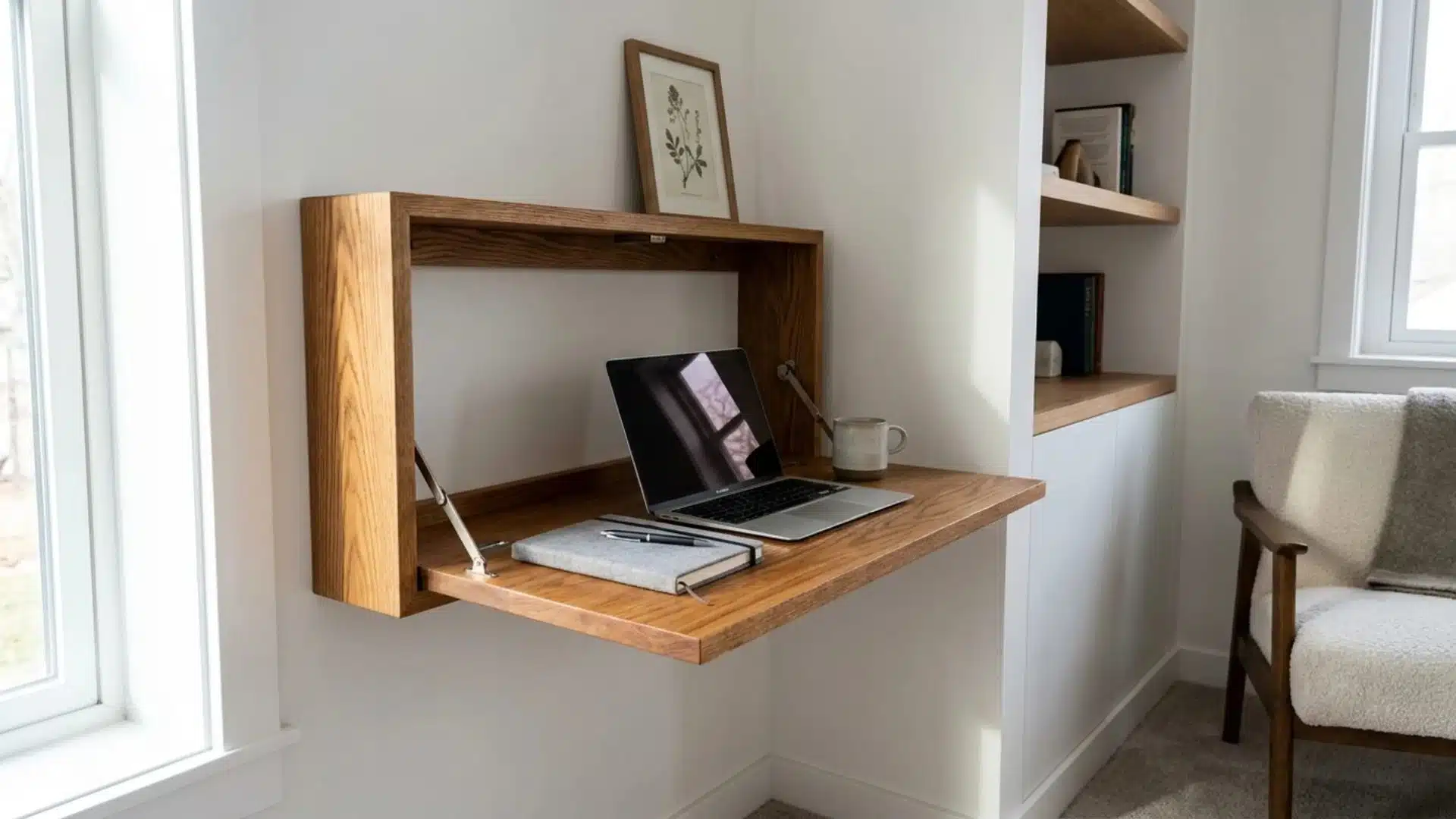
This DIY sit-stand desk uses a wall-mounted board supported by folding brackets.
The surface stays open during work and folds flat when not needed, freeing up floor space. Height is set during installation for comfortable standing use. It suits light tasks like laptop work, writing, or video calls.
This setup works best in small rooms, apartments, or shared spaces where space-saving is a key need.
2. Bookshelf Raised Desk Surface
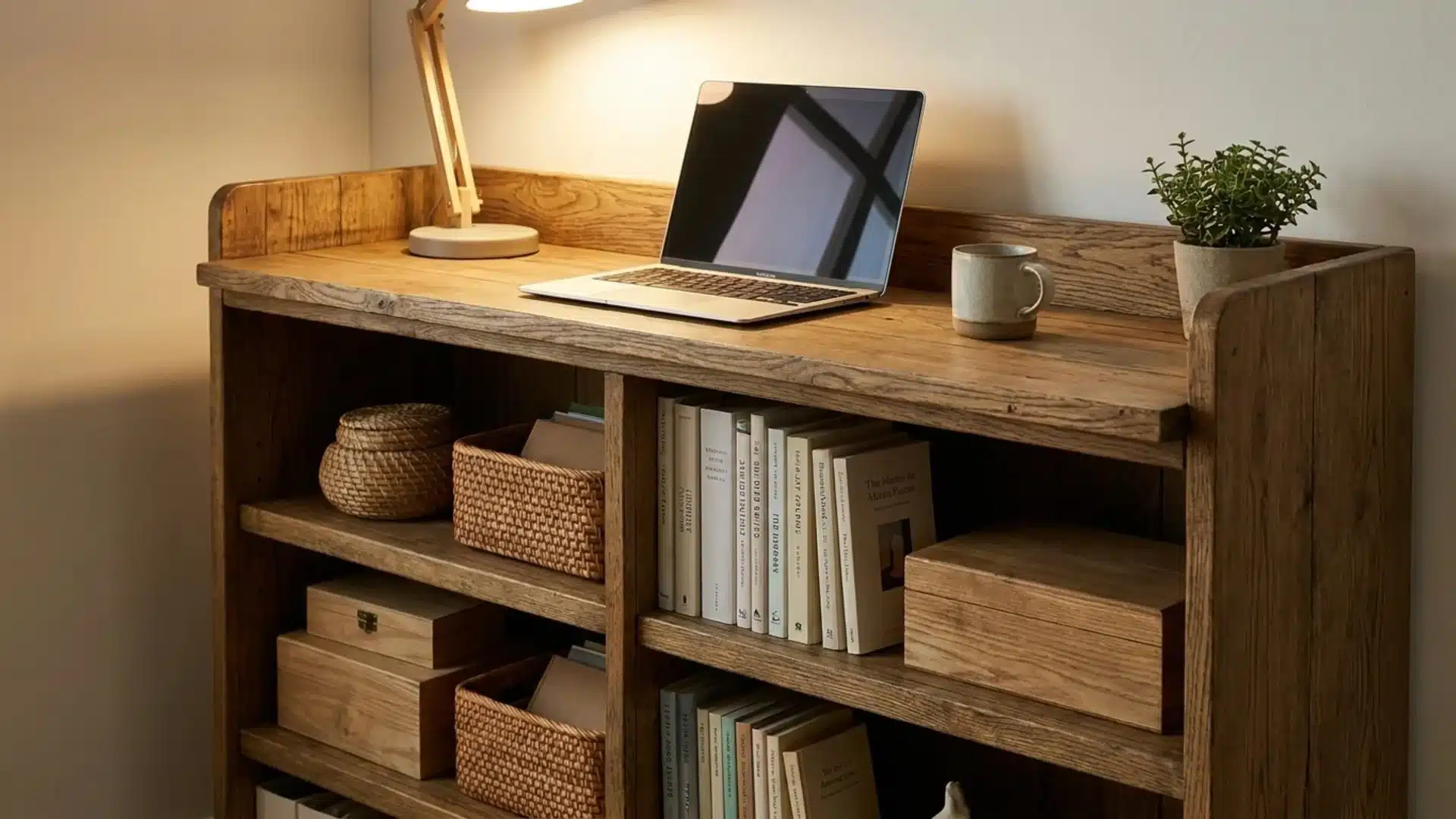
A bookshelf-raised desk turns a sturdy shelf unit into a work surface.
The top shelf serves as the desk, while the lower shelves store books, files, or office supplies.
This sit-stand desk idea requires minimal construction effort and depends on the shelf height selected. It works well in study rooms, student setups, and shared home spaces where both storage and workspace are required in one unit.
3. Kitchen Counter Extension Desk
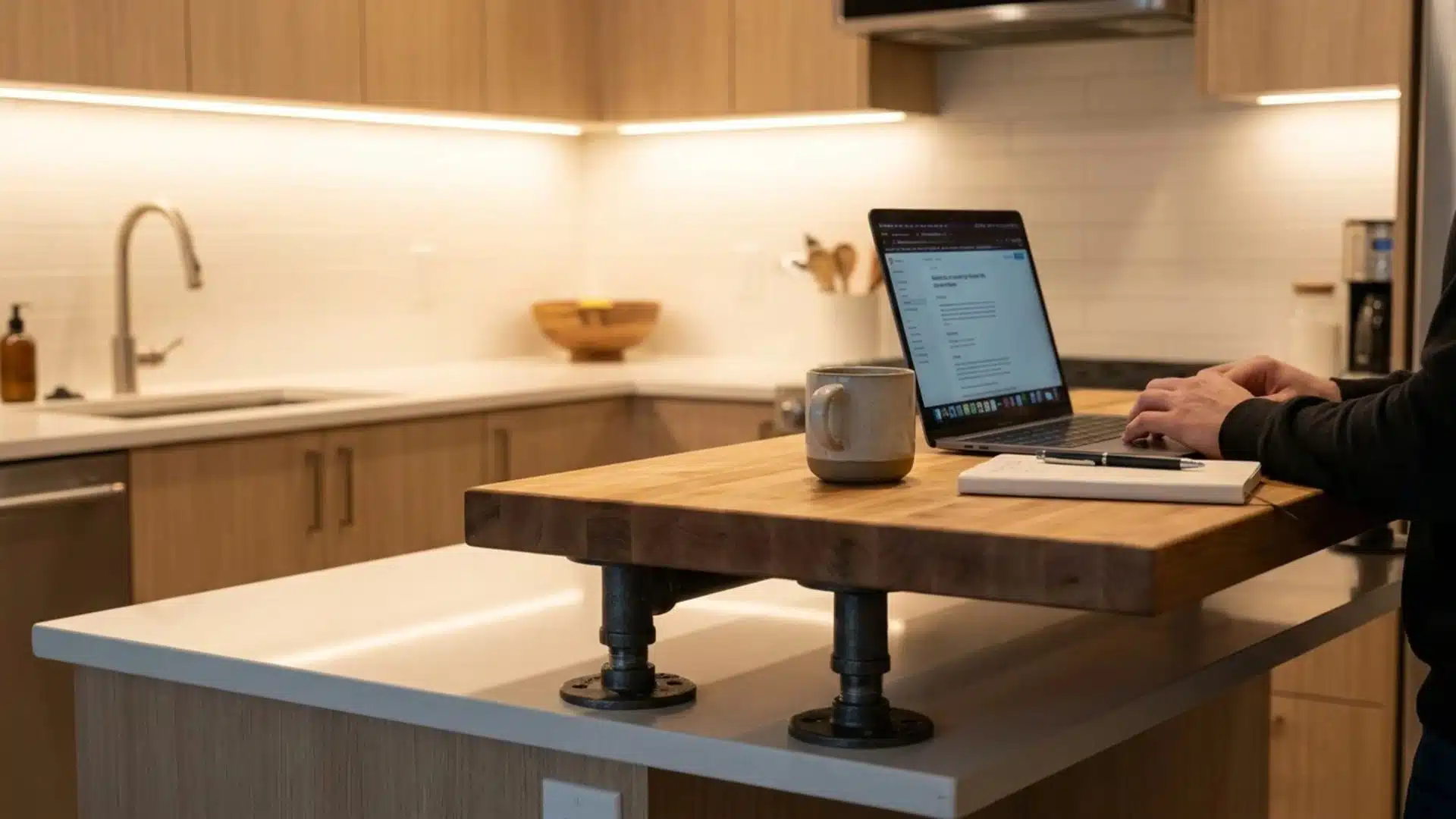
This setup uses a kitchen or bar counter as a standing-desk base.
A flat surface or an extended workspace provides more space for devices and writing tools.
The height is already close to standing level, making it easy to use without changes. It suits short work sessions, casual office use, or multitasking in open kitchen or dining areas with available counter space.
4. Multi-Shelf Vertical Standing Desk
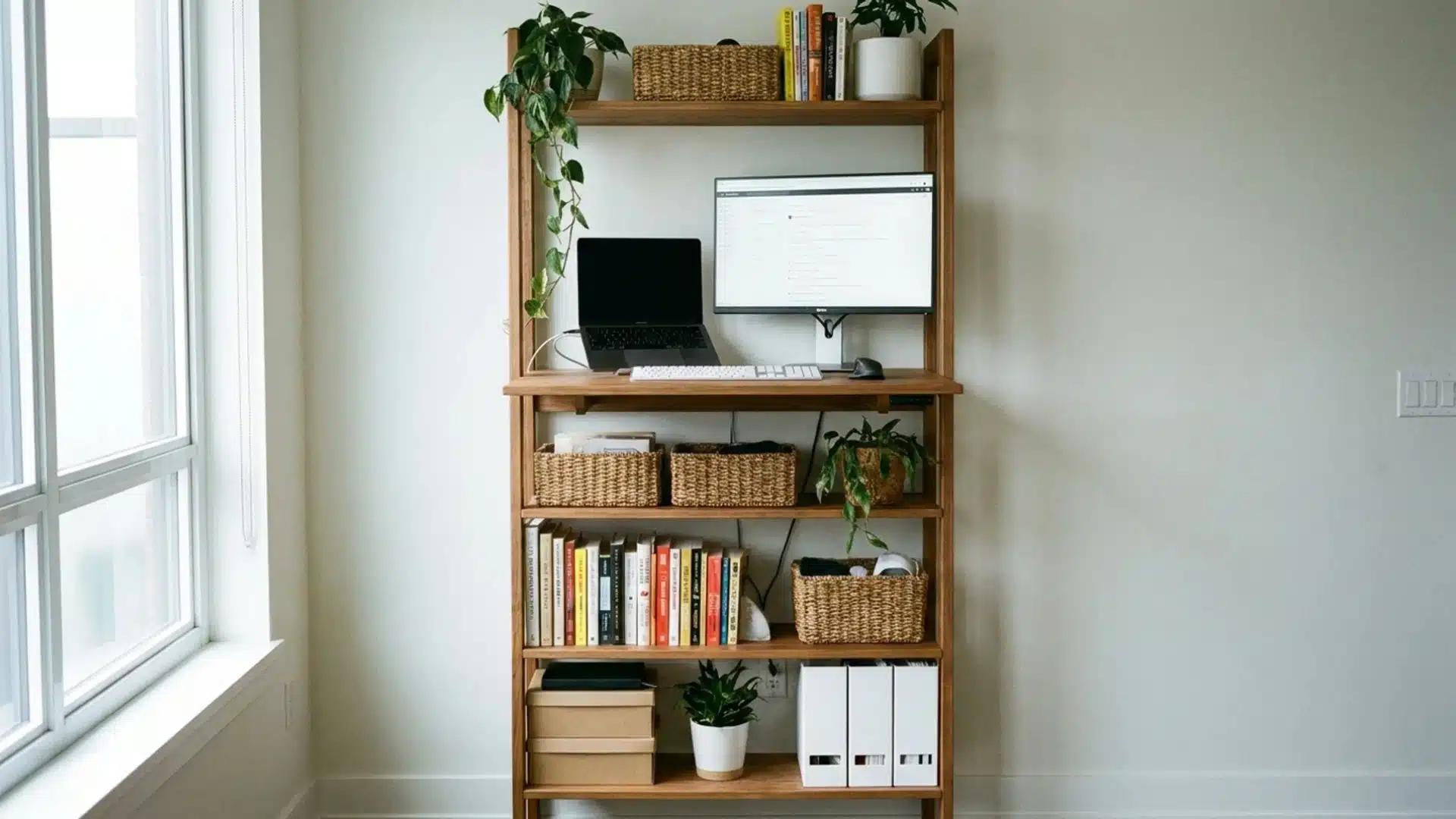
This setup uses stacked vertical shelves with the top level acting as the main standing desk surface.
Lower shelves store office items and devices. It saves floor space while providing both function and storage.
This sit stand desk idea works well in small rooms or studio apartments.
5. Wall Rail Adjustable Desk System
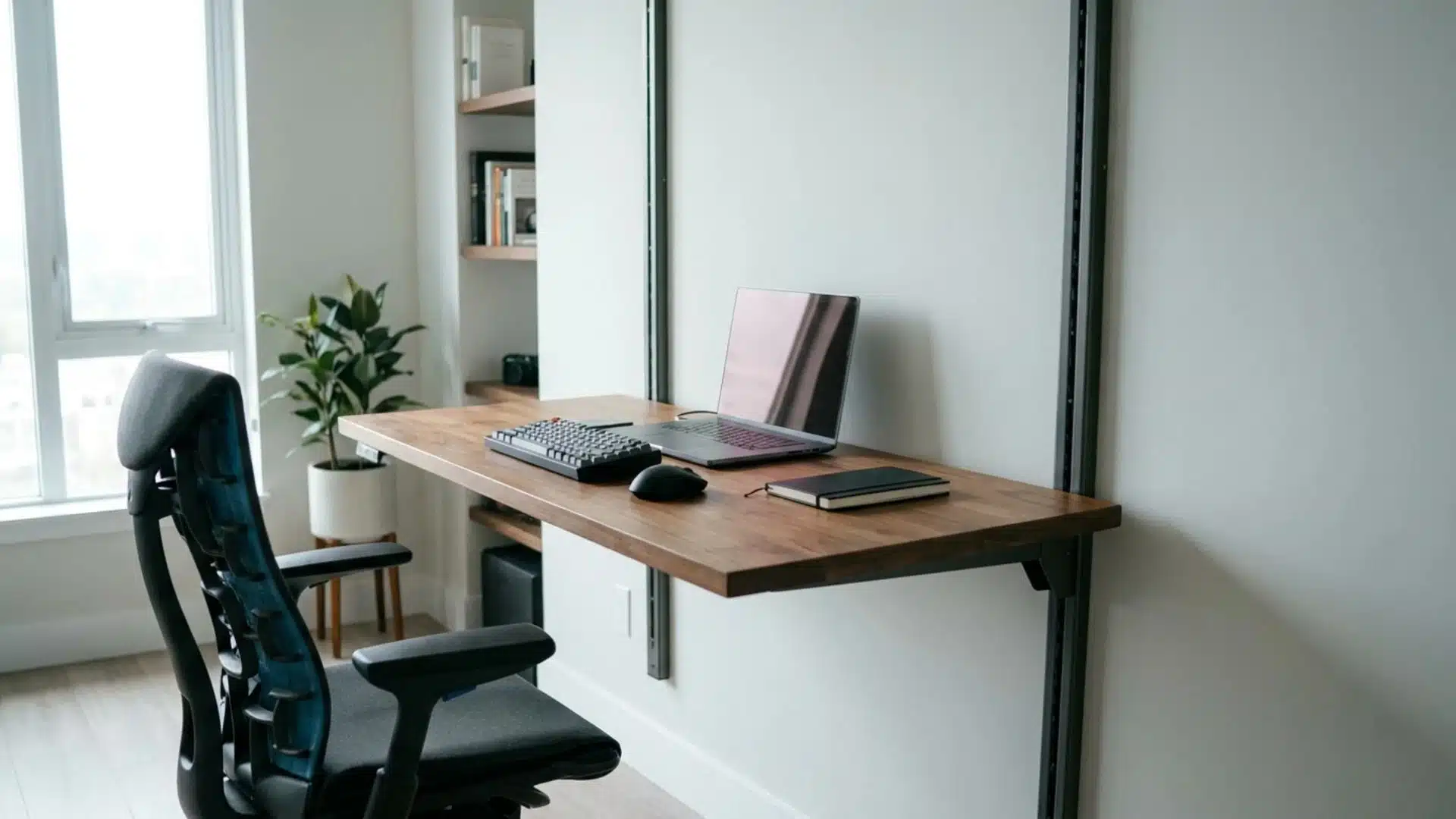
A wall-rail desk uses tracks mounted on the wall to support an adjustable wooden surface.
The desk can be moved up or down depending on standing or sitting needs.
It provides a stable workspace without using floor support. This desk idea works well in compact rooms and gives flexibility for different users sharing the same workspace.
6. Storage Cabinet Top Desk Setup
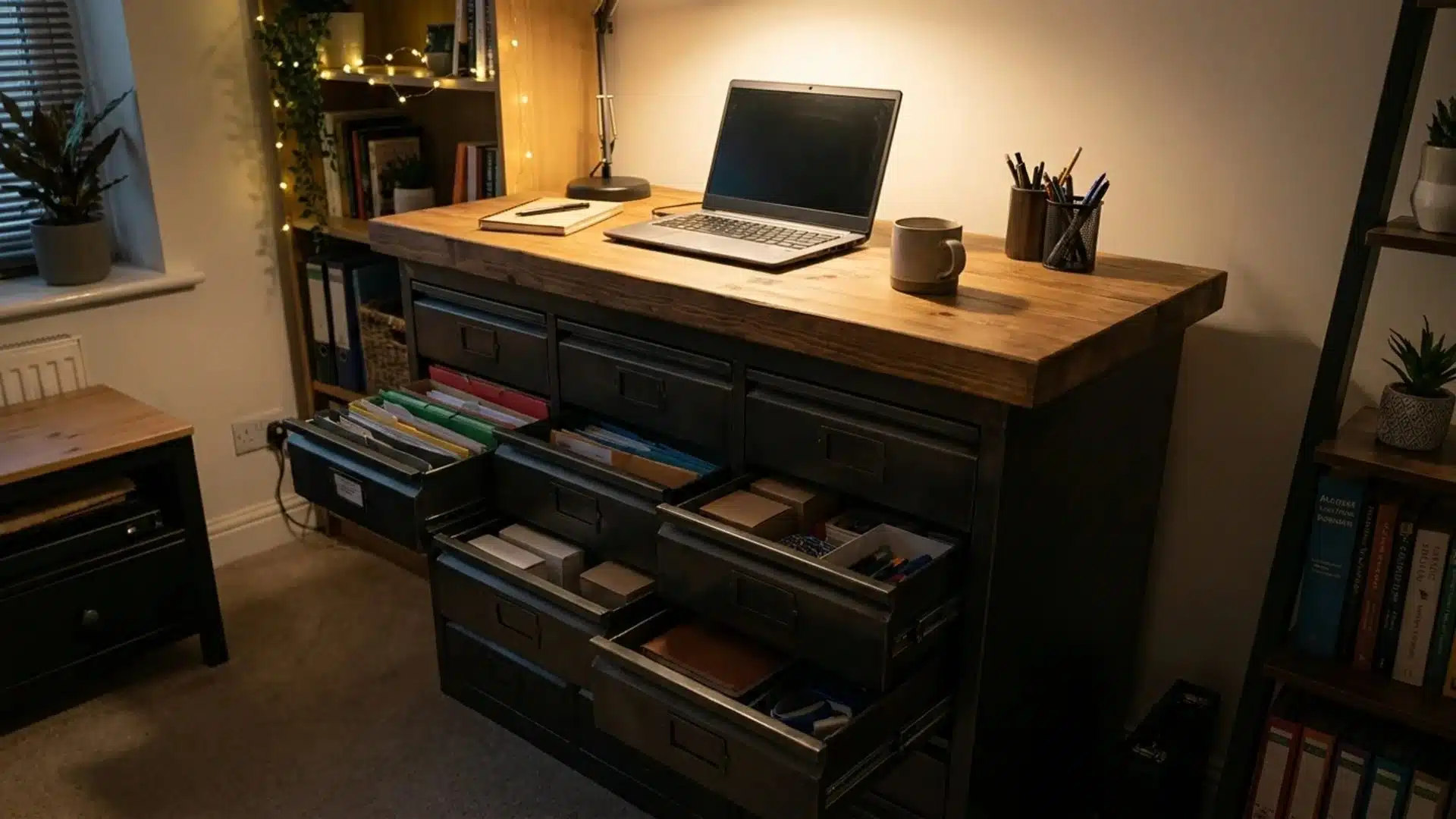
This idea converts a strong storage cabinet into a standing desk base. A flat board or the cabinet surface becomes the workspace. It combines storage and desk functions in one setup, reducing the need for extra furniture.
Height depends on cabinet selection, so stability is important.
It works best in small rooms where maximizing storage and maintaining a clean work area are important.
7. Rolling Cart Movable Desk Station
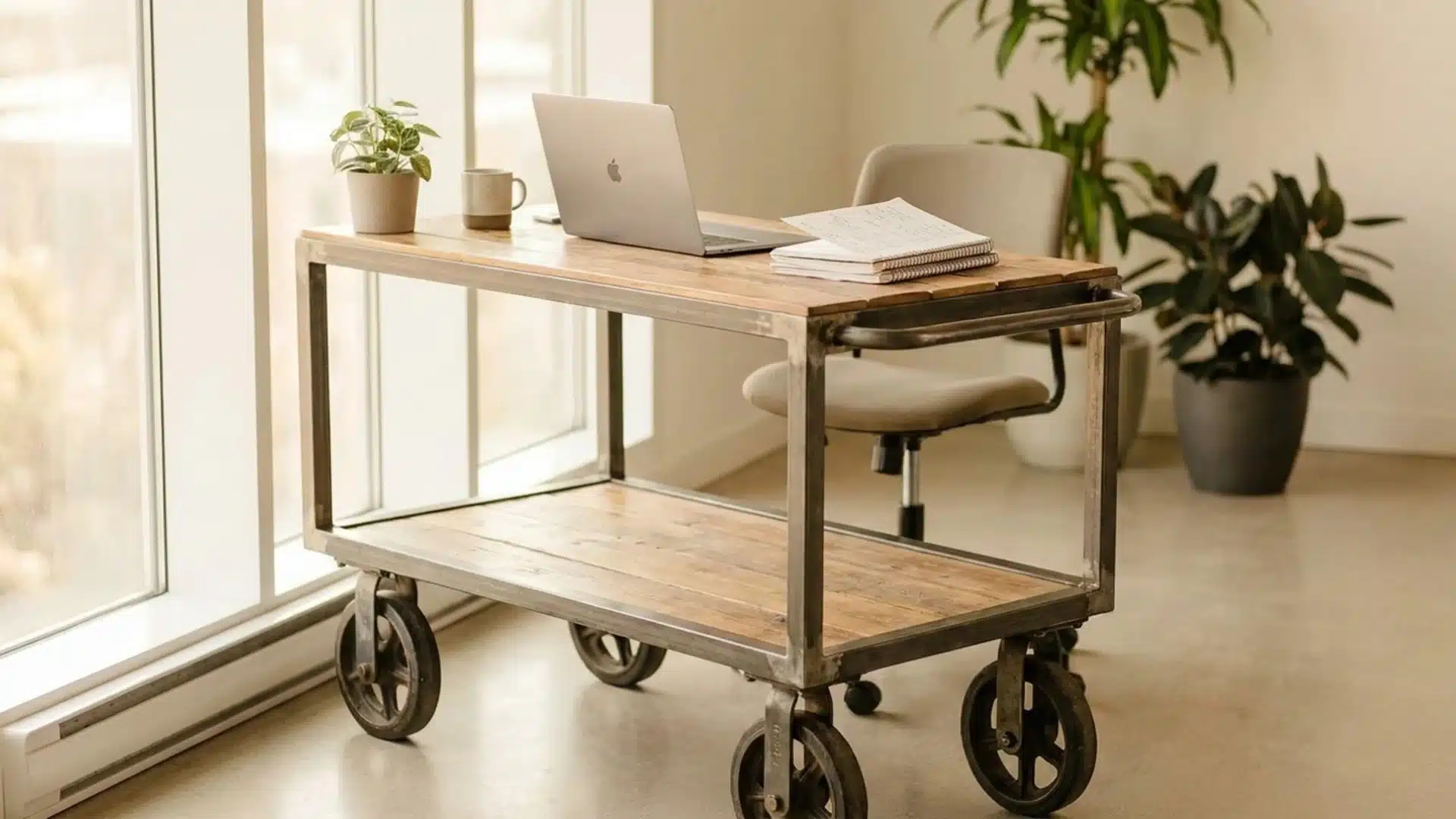
A rolling cart desk uses a mobile cart with a flat top surface as a workspace.
It allows easy movement between rooms while working. This desk setup supports flexible work habits and light office tasks. It can hold laptops, stationery, and small tools.
It works best for users who prefer changing locations or need a temporary workstation in the home.
8. Ladder Shelf Desk Setup
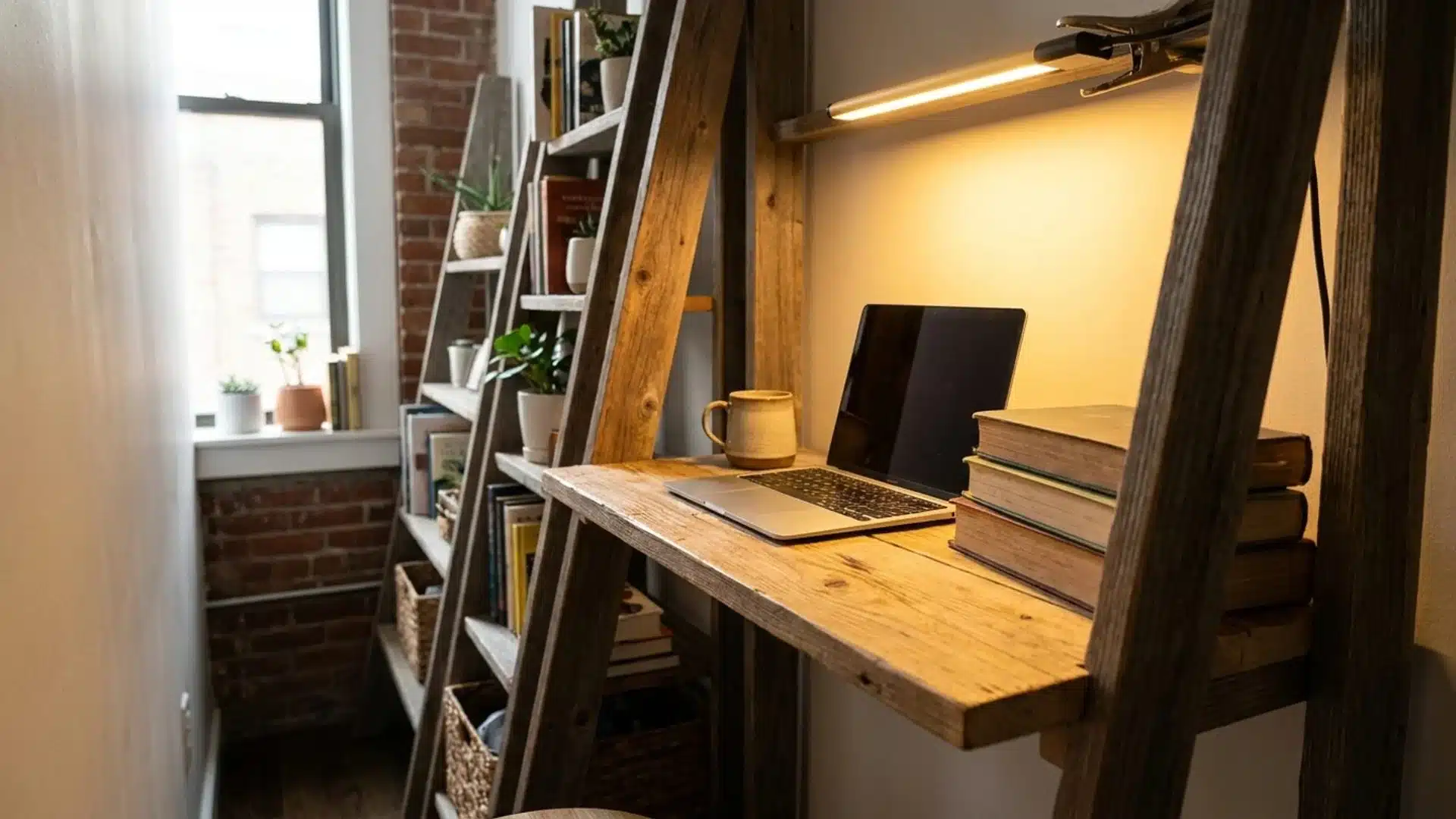
A ladder shelf desk uses a leaning shelf unit as the main structure.
A wider shelf serves as the work surface, while lower shelves store items.
This sit stand desk idea combines workspace and storage in a vertical layout. It fits well in corners or narrow wall areas. The design keeps everything organized while using minimal floor space in compact rooms.
9. Modular Cube Storage Desk Base
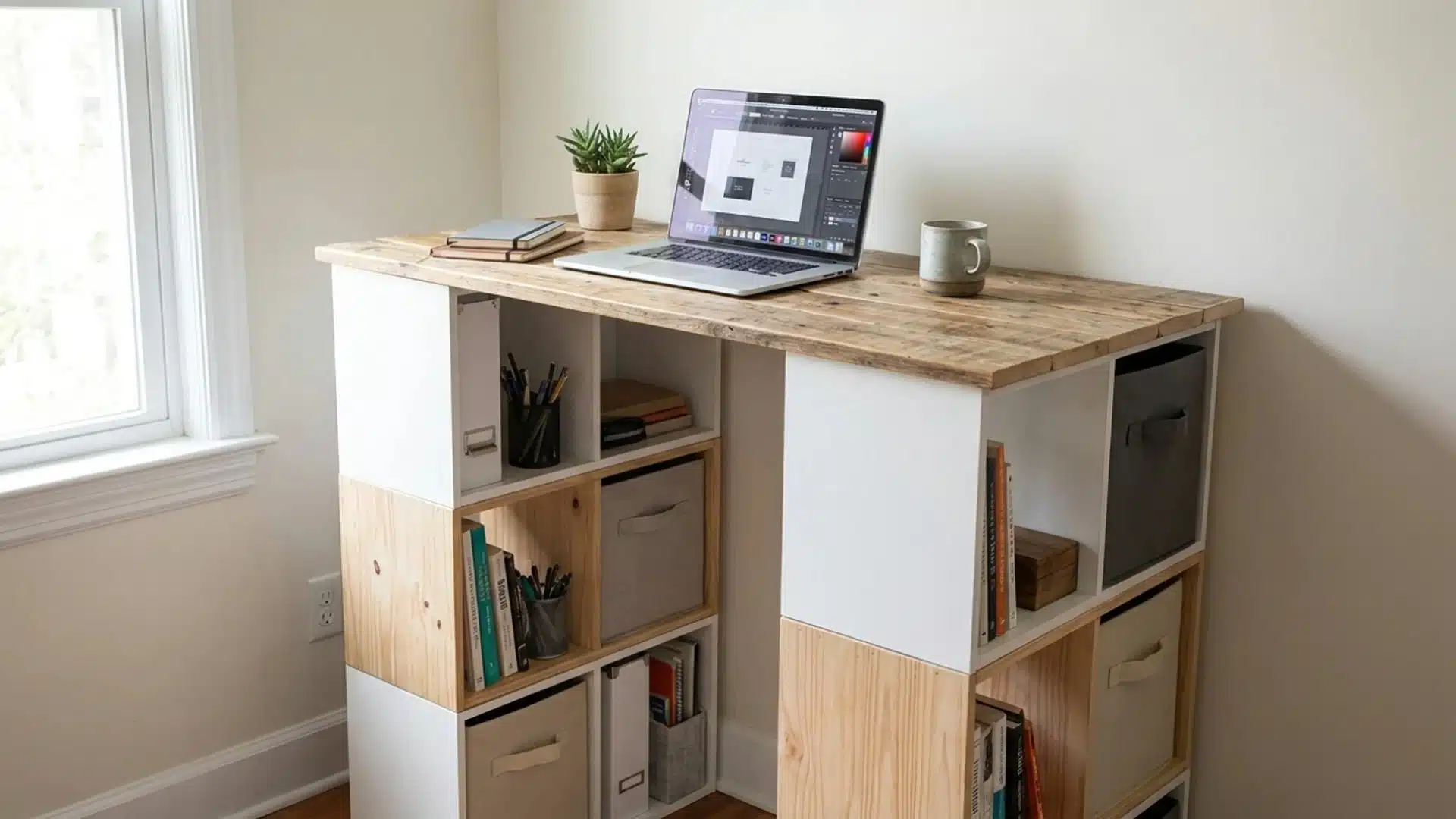
Cube storage units are stacked to form a stable desk base with a flat board on top.
This design combines storage and workspace in one structure. Height depends on the cube arrangement, allowing some flexibility. It works well in compact rooms where organization is important.
The setup helps keep items stored neatly while maintaining a functional standing workspace.
10. Corner L-Shaped Standing Desk Built
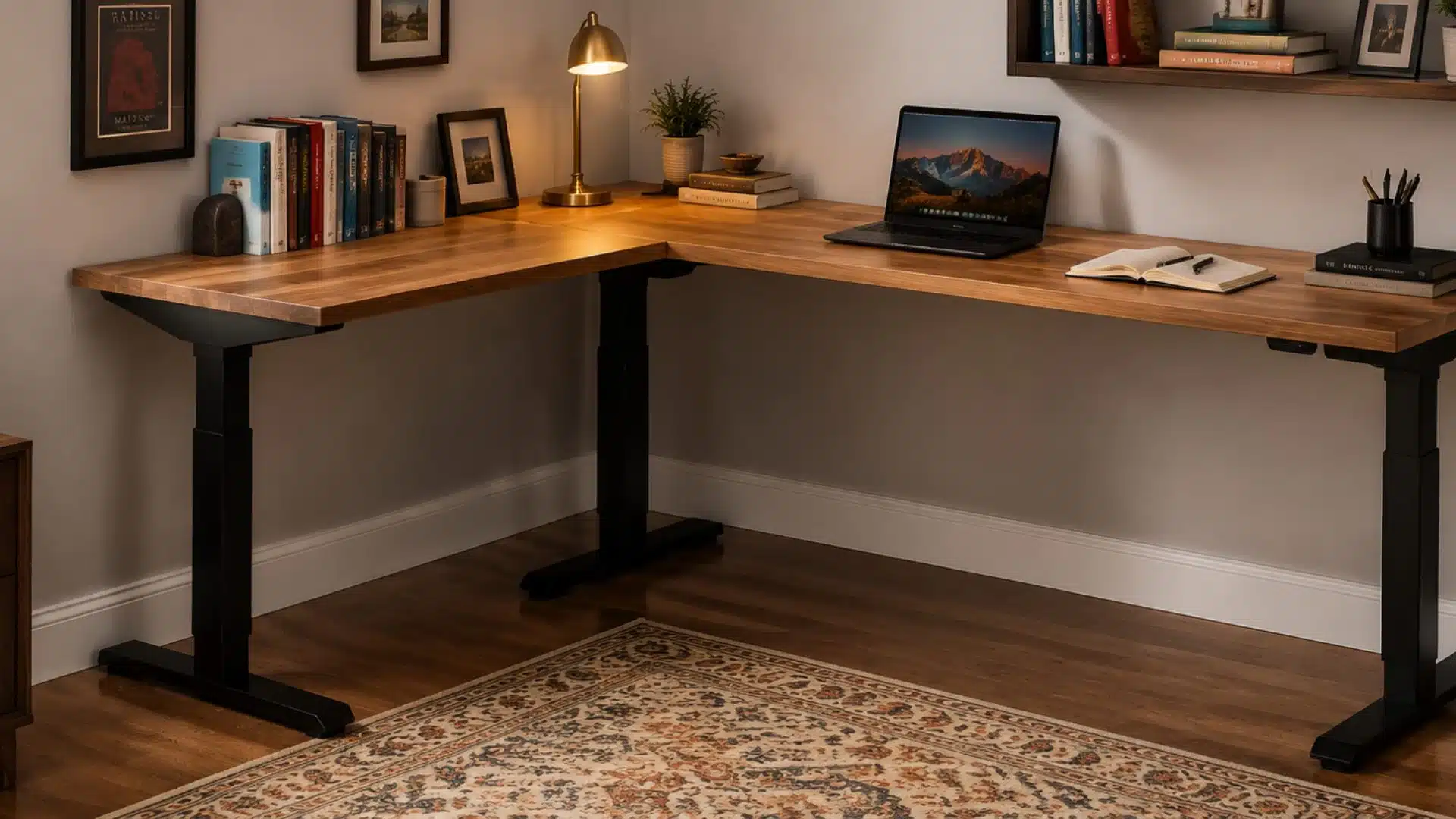
This setup uses two wooden boards joined in an L-shape, supported by corner brackets or frames.
It provides a large working surface for multiple devices.
This DIY sit-stand desk idea works well for multitasking users who need separate zones for monitors and writing space. It fits perfectly in the corners of the room.
11. Minimal Trestle Desk Build
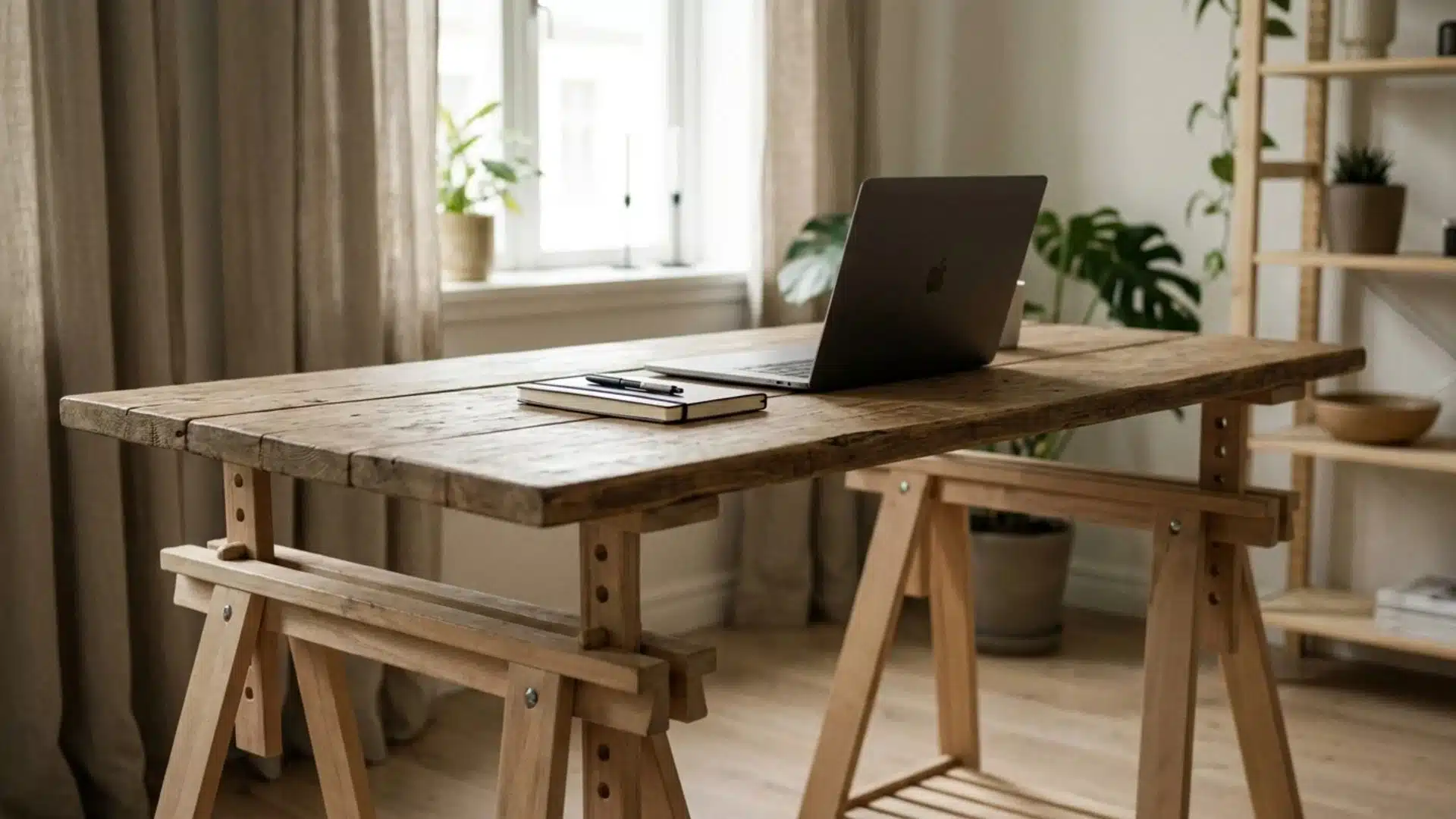
A trestle desk uses two side supports and a flat board to form a standing workspace.
Height is set during assembly based on user needs. It is simple to build and adjust with basic materials.
This diy sit stand desk works well in most home office spaces.
The clean structure allows easy movement and flexible placement in different room layouts.
12. Under-Stair Desk Setup

An under-stair desk uses unused space beneath a staircase to create a standing workstation.
A fitted surface is installed between wall supports for stability.
It makes use of otherwise wasted space in the home.
Storage shelves can be added nearby for better organization. This setup works well in compact homes where maximizing every available corner is important for workspace creation.
13. Industrial Shelf Frame Standing Desk
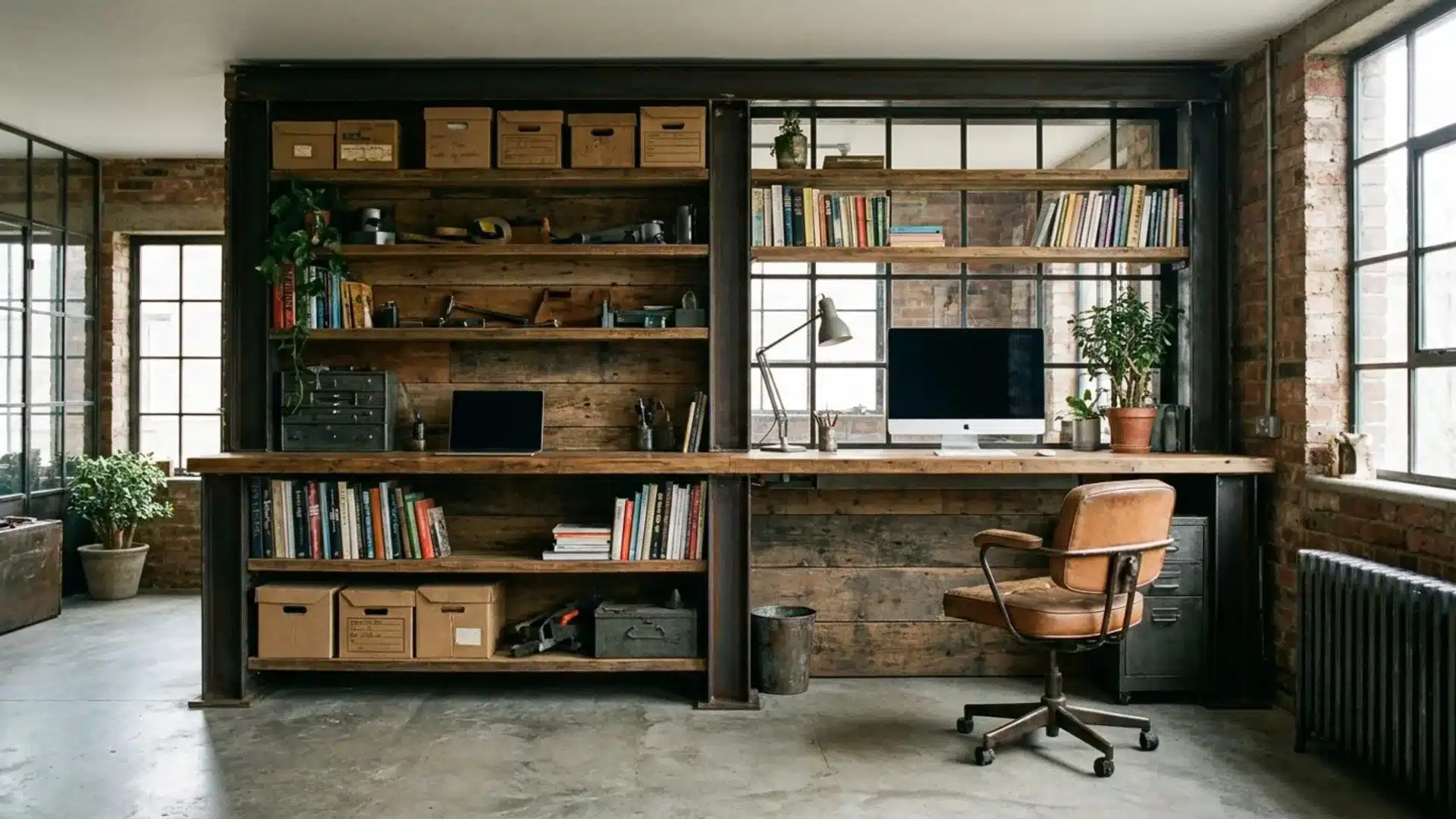
This design uses a metal or wooden shelf frame as the base, with a solid tabletop placed above it.
It gives strong support and a clean industrial look.
The structure allows easy storage on lower shelves. This DIY sit-stand desk idea works well for users who need durability and extra storage space in a home office.
Troubleshooting: Fixing a Wobbly, Uneven, or Squeaky Desk
A DIY sit-stand desk may develop issues like wobbling, uneven balance, or squeaking over time due to loose fittings or surface shifts. Start by tightening all screws, bolts, and brackets to restore structural stability.
Check each leg or support to ensure it is level, and adjust uneven bases with rubber pads or small shims.
For squeaking sounds, apply lubricant to joints and connection points.
Inspect the surface board for warping and redistribute weight evenly across the desk.
Regular checks and small adjustments help maintain a stable, quiet, and comfortable workspace for daily use.
How to Choose the Right DIY Sit Stand Desk Design
The right design depends on your space, how often you’ll use the desk, and how much comfort you need.
Match the build to your real situation, don’t overbuild, and don’t guess.
- Small room? Choose a wall-mounted fold-down desk. It saves floor space and disappears when not in use.
- Limited storage? Choose a cube base or cabinet desk. It combines workspace and storage in one build.
- Need flexibility for different tasks? Choose a rolling cart or adjustable-leg desk. It moves easily.
- Low budget? Choose a pallet-wood or riser platform desk. It uses basic materials and costs the least.
- Awkward or unused space? Choose an under-stair or corner L-shaped desk. It puts dead space to work.
Maintaining Your Standing Desk Long-Term
Regular maintenance keeps a DIY sit-stand desk stable, safe, and comfortable for daily use.
Simple care habits prevent wear, loosened joints, and surface damage over time. Surface Cleaning removes dust using a soft, dry cloth and keeps the workspace clean and smooth
Joint Tightening secures screws and brackets firmly to prevent wobbling and improve structural stability
Frame Inspection checks legs and supports regularly to detect imbalance or early signs of wear
Cable Management keeps wires organized and maintains a safe workspace setup. Consistent upkeep helps your DIY sit-stand desk stay durable, reliable, and efficient for everyday home or office work.
Summing it Up!
A well-planned workspace changes how your whole day feels. A DIY sit stand desk gives you that control.
Build it to match your space, your work style, and your comfort needs using the ideas and methods above.
Compact solution or full home office build, you now have options that fit your routine
Take the next step.
Start building your DIY sit-stand desk today, and give yourself a workspace that supports better posture and work.
Frequently Asked Questions (FAQ’s)
1. Can a DIY sit-Stand Desk Safely Support Dual Monitors?
Yes, sturdy frames like metal pipes or reinforced wood can support dual monitors if properly balanced and secured.
2. What is the Ideal Desk Height for Standing Work?
A height of 95 to 120 cm, depending on user height, posture comfort, and screen eye-level alignment.
3. Do Standing Desks Require Special Maintenance?
Basic cleaning, periodic screw tightening, and stability checks maintain long-term usability and safety.




One Response