
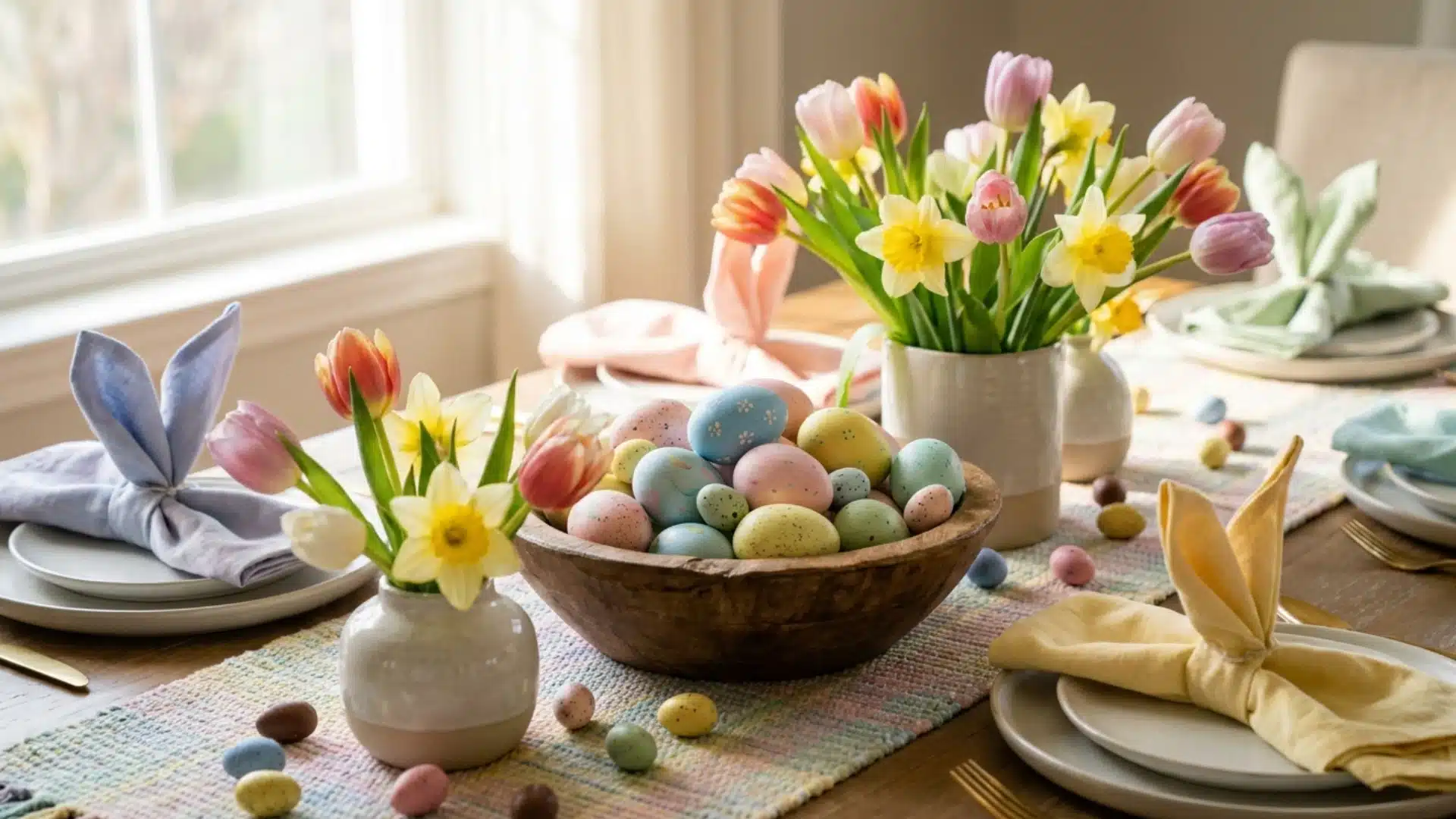
You don’t need a large budget or a design background to create Easter decor ideas that feel intentional.
A few painted eggs, a well-placed wreath, and a splash of color can change an entryway in an afternoon.
This list covers every corner of the home: doors, tables, shelves, kitchens, bedrooms, and yards.
Each project comes with clear materials and simple steps, so nothing gets lost in guesswork. I’ve pulled together the room-by-room combinations that photograph well and hold up through a full season of use.
Choose a style, gather some supplies, and begin with a simple project.
Quick Note: The easiest way to build cohesive Easter decor is to pick one style, use a two- or three-color palette, and repeat it across the entryway, table, and another room. Start with a wreath and centerpiece, then add smaller accents like napkin folds, painted eggs, or a mantel display.
Choose Your Easter Decorating Style Before You Start
Every great setup starts with a direction, not a shopping cart full of random pastels.
Here’s a brief overview of common choices:
- Modern design features a two-tone color palette, sculptural forms, and minimal clutter.
- Cottage style features florals, gingham, vintage baskets, and tin buckets.
- Coastal design features linen textures, seashell motifs, and a color palette of soft blues and whites.
- Boho style features macrame, dried flowers, and warm terracotta tones.
- Classic style features pastel eggs, ribbons, and traditional bunny and basket motifs.
- Rustic decor includes burlap runners, wooden crates, and wildflower centerpieces.
Each style shapes your color scheme, materials, and table layout differently.
Blending too many directions leaves rooms feeling scattered and mismatched, so it helps to commit early.
Write your palette down before buying anything, then check each item against it before checkout. Extend the same theme to porches or entryways for a cohesive look front to back.
Consistency plays a key role here and becomes evident as soon as guests arrive.
Popular Easter Color Palettes
Color sets the tone before a single decoration goes up, so pick one that fits your space.
| Palette Name | Color Combination | Best For |
|---|---|---|
| Garden Botanical | Moss green, ivory, dusty rose | Living rooms and mantels |
| Citrus Spring | Lemon yellow, coral, white | Kitchens and dining nooks |
| Soft Meadow | Periwinkle, buttercream, sage | Bedrooms and reading corners |
| Sunlit Neutral | Terracotta, oatmeal, gold | Entryways and porches |
| Powder Pastel | Lilac, seafoam, blush | Tablescapes and centerpieces |
Easter Decoration Ideas for the Entryway and Front Door
Subtle details that make your front door feel springtime before guests arrive.
1. Floral Easter Wreath
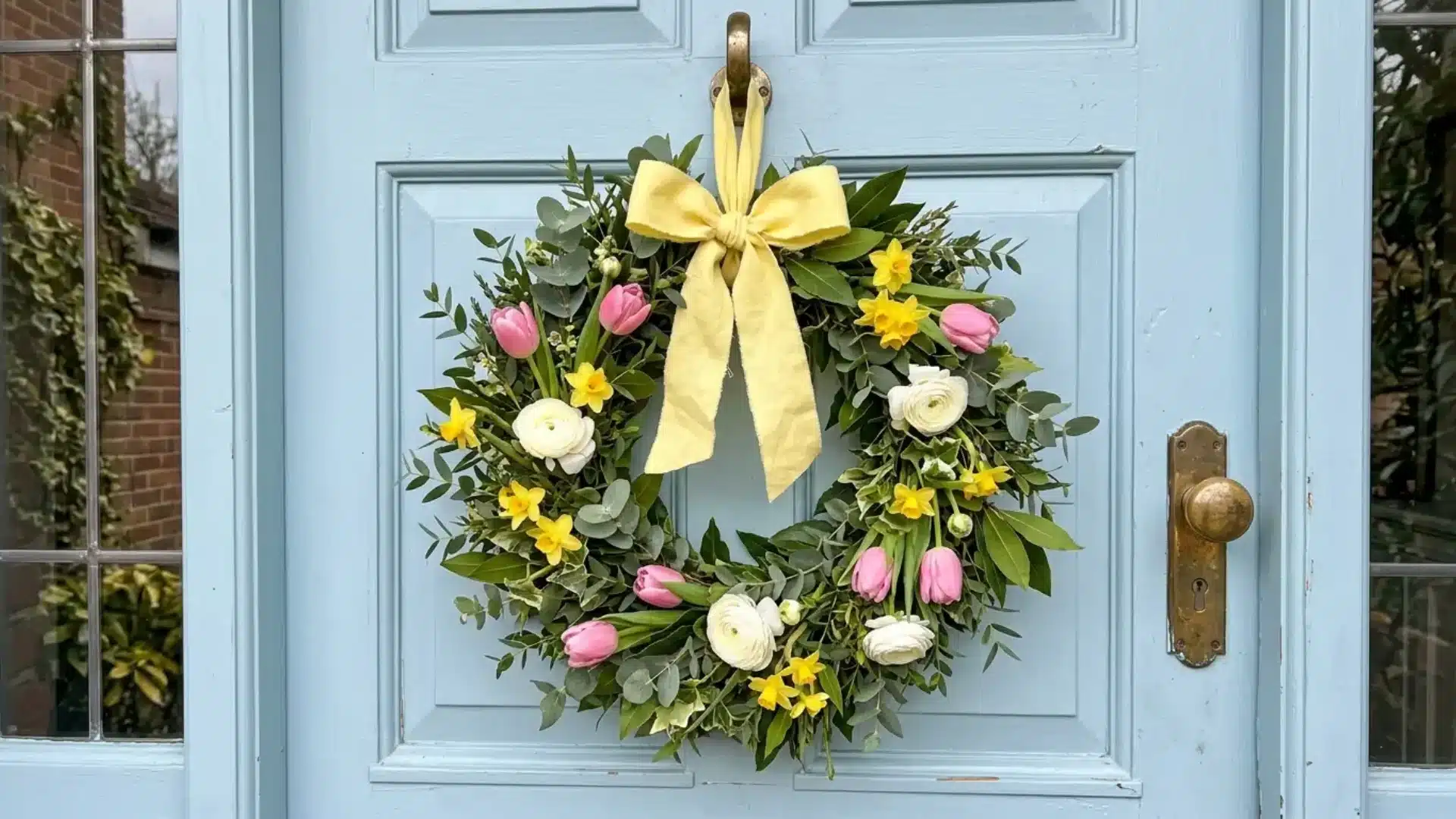
Materials: Wreath form, tulips, daffodils, greenery sprigs, pastel ribbon, floral wire or hot glue
Cover the wreath form with greenery sprigs first, securing each piece with wire or glue.
Add tulip and daffodil stems in uneven clusters for a fuller look. Skip perfectly even spacing. Finish with a ribbon bow at the top, then hang using an over-the-door hook.
2. Easter Egg Wreath
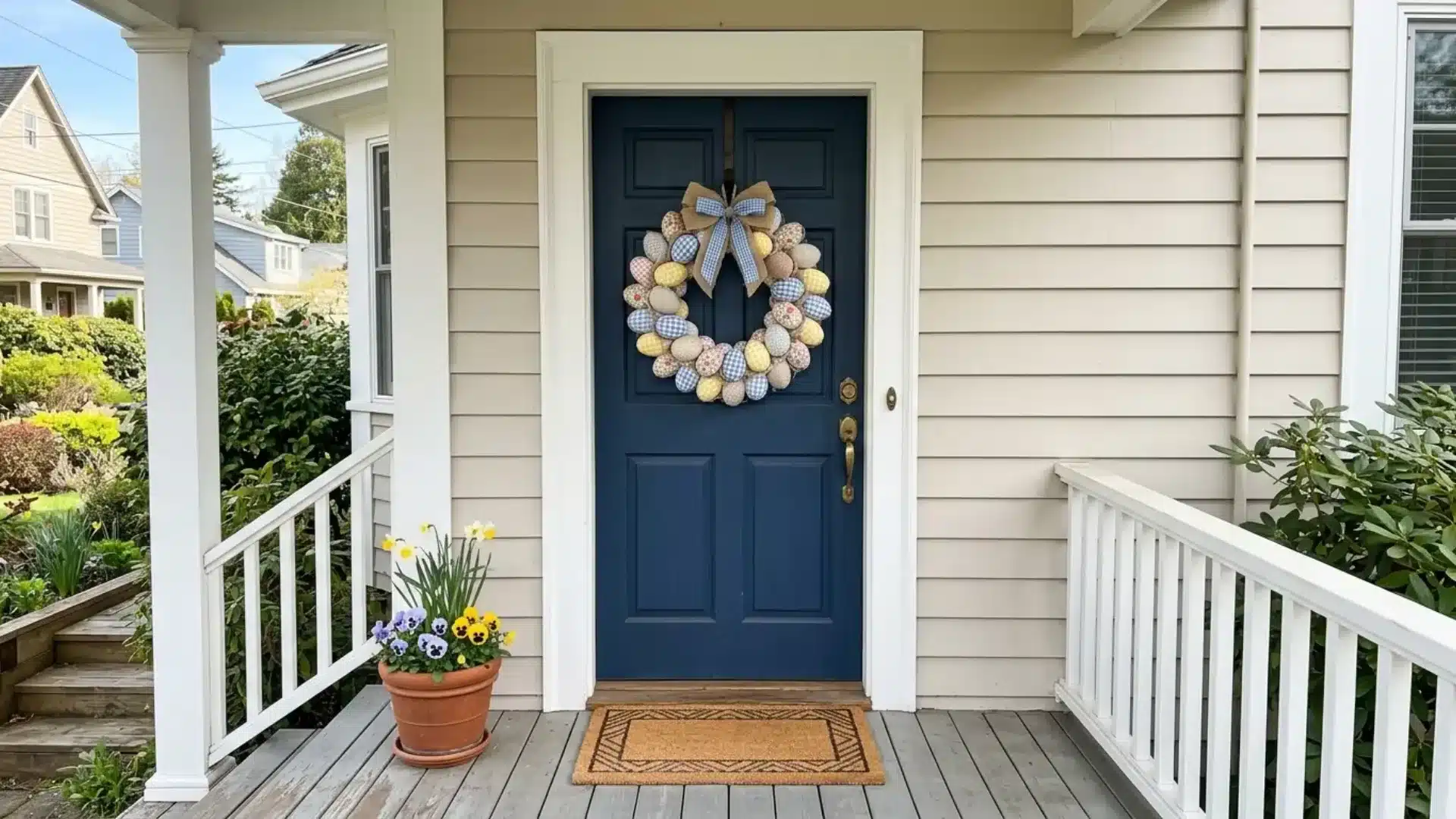
Materials: Wreath form, painted or fabric-wrapped eggs, hot glue gun, ribbon
Gather eggs in coordinating pastel shades, painted, speckled, marbled, or fabric-wrapped. Dab hot glue onto the back of each one, then press firmly onto the form, working section by section.
Keep going until the entire wreath is covered. Add a ribbon at the top for hanging.
3. Bunny Door Hanger
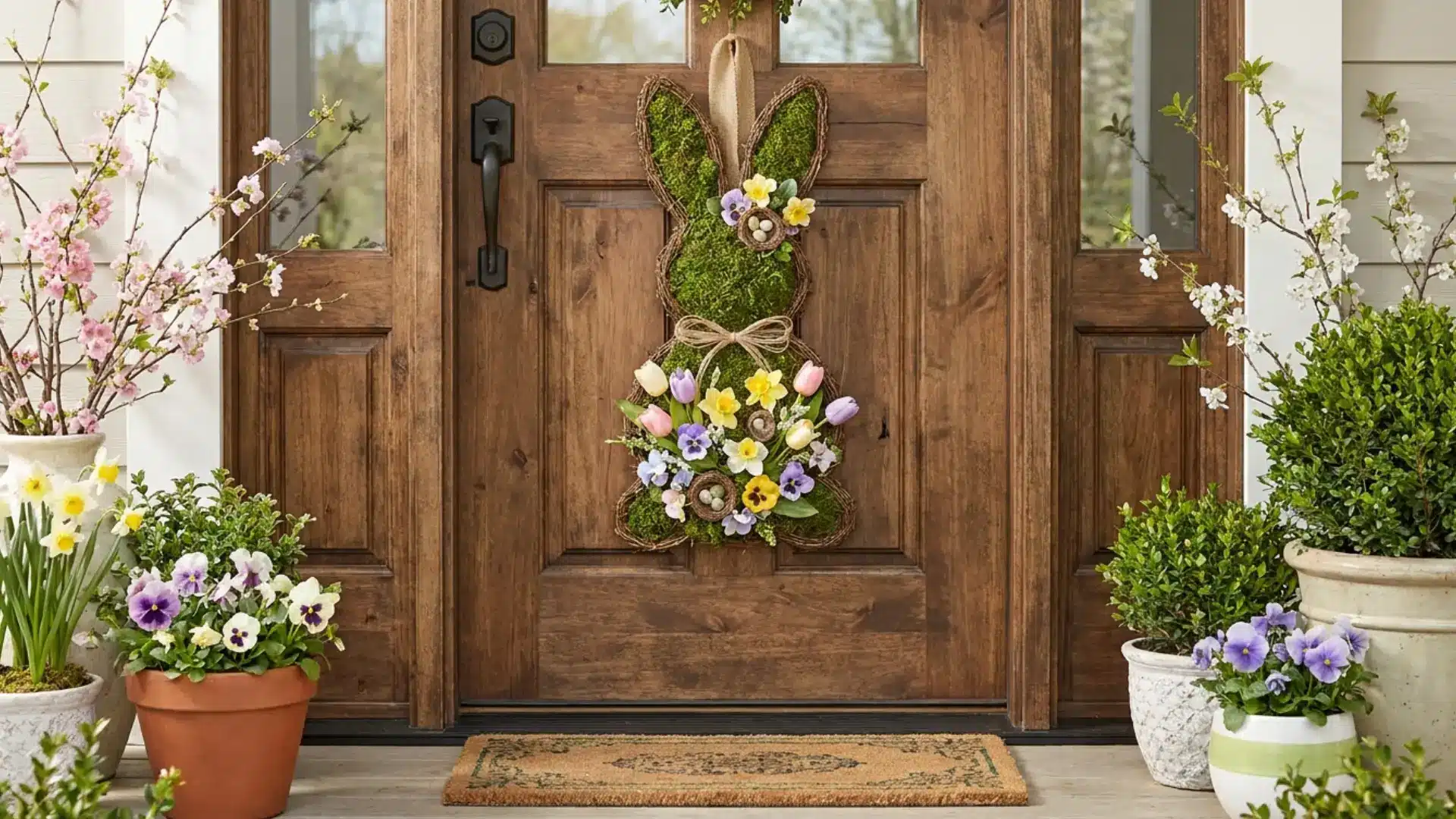
Materials: Grapevine or wooden bunny silhouette, moss or floral accents, ribbon
Start with a pre-made bunny silhouette; grapevine or wood works well.
Glue small moss clumps or florals onto the shape, focusing on ears and body edges for texture.
Attach a ribbon loop to the back, then hang the finished piece directly on the door.
4. Spring Doorway Garland
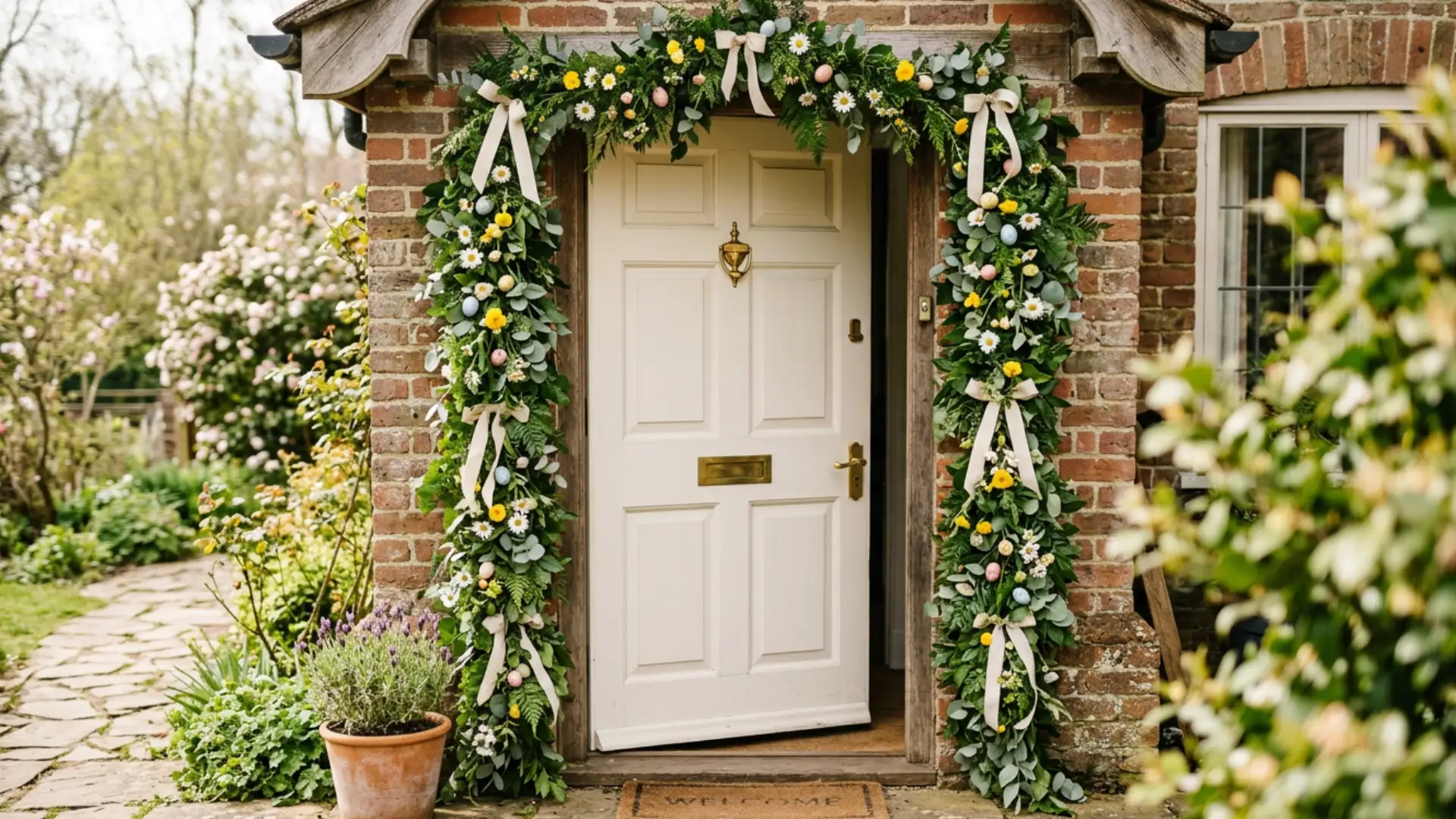
Materials: Greenery garland, small flowers, ribbon, pastel eggs, removable adhesive hooks
Drape a greenery garland across the top of the doorway, securing it with adhesive hooks to protect the frame. Weave small flowers and a few pastel eggs into the greenery at intervals.
Let ribbon accents hang down at each corner for a framed, finished entrance look.
5. Layered Easter Doormats
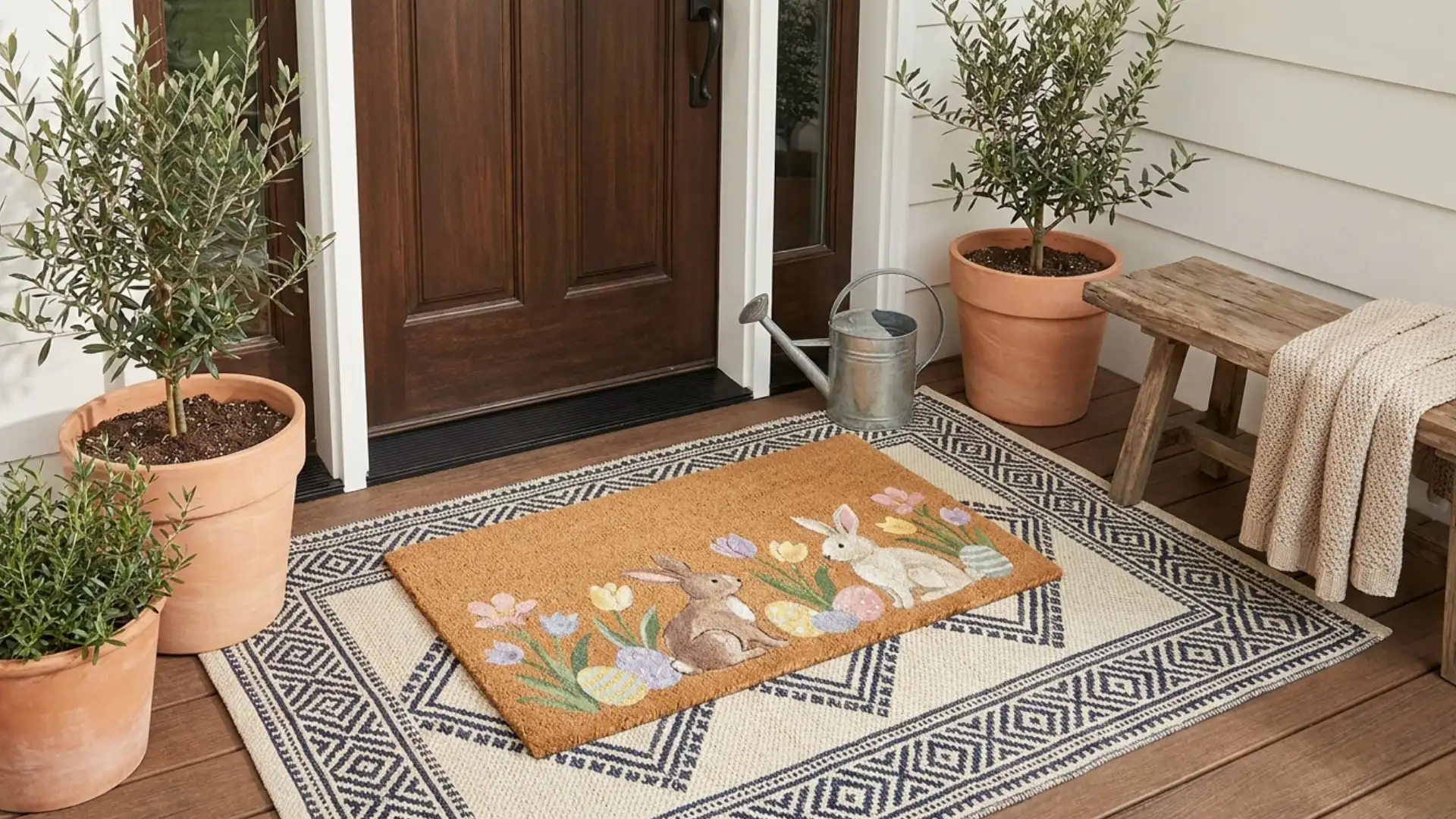
Materials: Small Easter-themed doormat, larger outdoor patterned rug
Choose a larger, neutral or patterned outdoor rug as the base layer for your entryway.
Center a smaller Easter-specific doormat on top of it, aligning the edges evenly. This layered look adds color and dimension without needing anything beyond the two rugs themselves.
6. Potted Spring Flowers
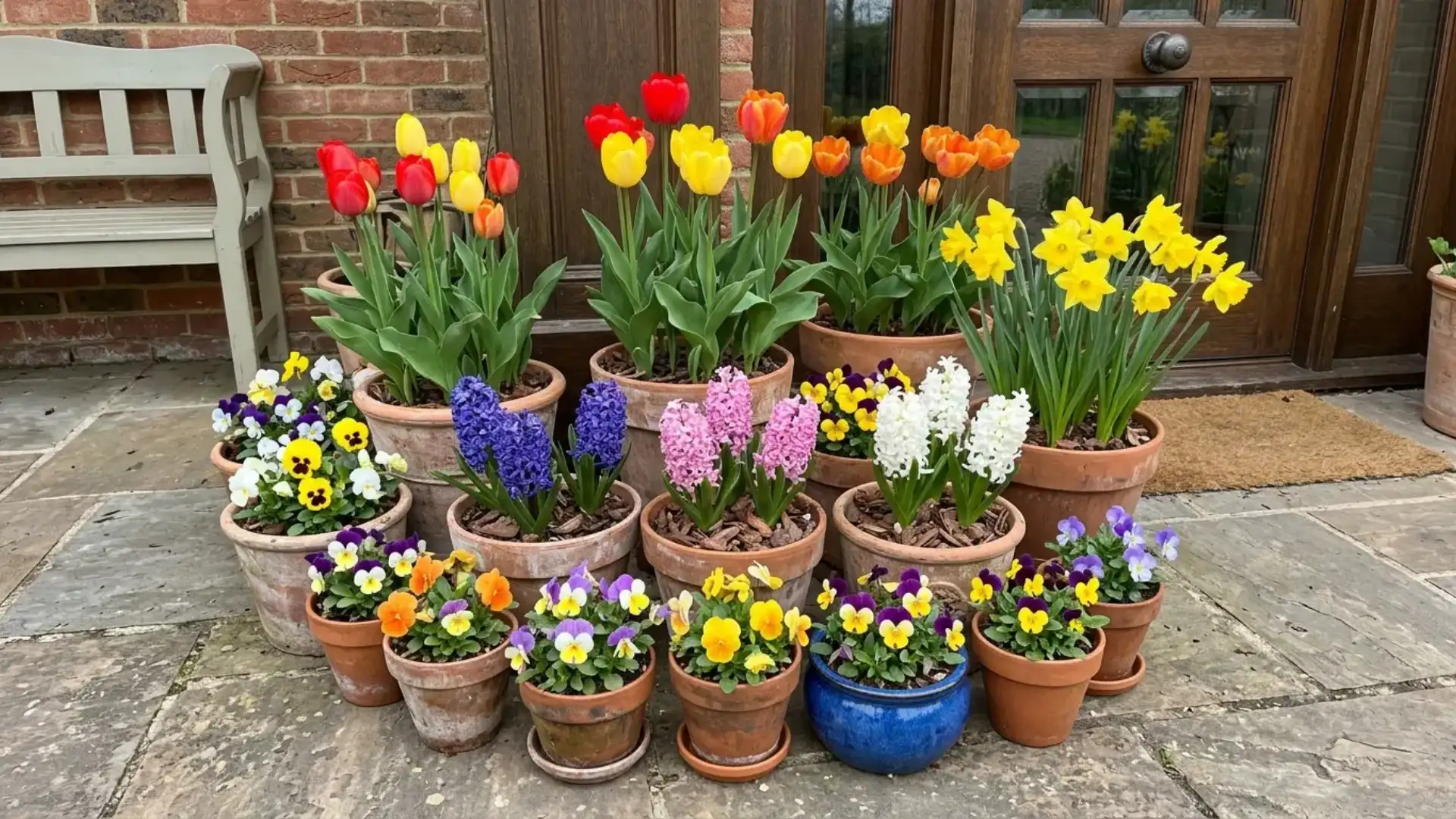
Materials: Tulip, daffodil, hyacinth, or pansy bulbs/plants, containers of varying sizes
Select containers in a few different heights and widths to create visual variety.
Plant or place potted tulips, daffodils, hyacinths, or pansies into each container. Arrange the pots in a cluster near the entryway, placing taller varieties toward the back and shorter ones in front for a layered effect.
7. Easter Porch Lanterns
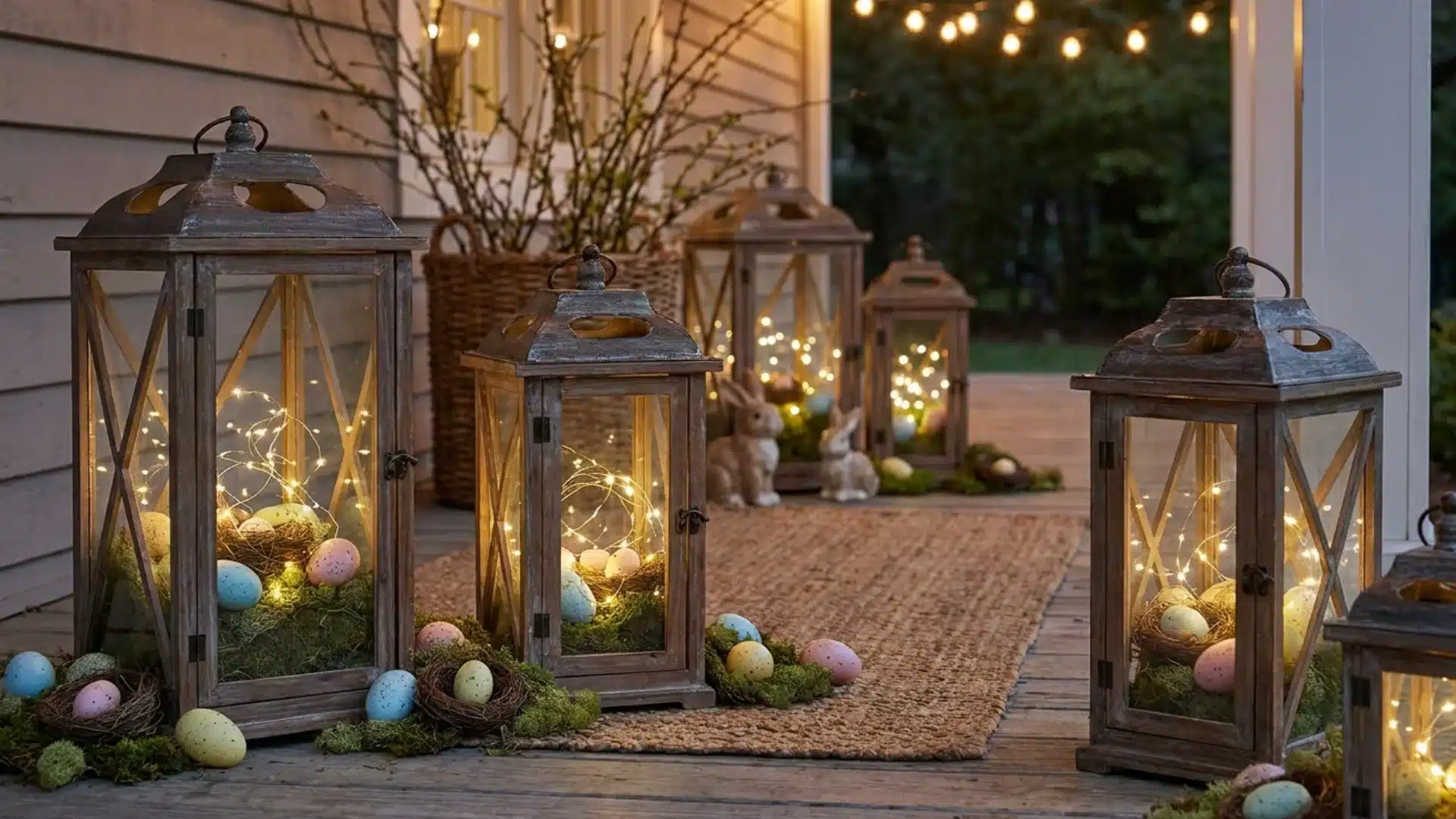
Materials: Decorative lanterns, pastel eggs, moss, miniature nests, battery-operated fairy lights
Open each lantern and line the base with moss for texture.
Add a small cluster of pastel eggs or a mini nest on top. Tuck battery-operated fairy lights around the arrangement, then close the lantern. Place it near the front door or porch steps.
8. Easter Entryway Console
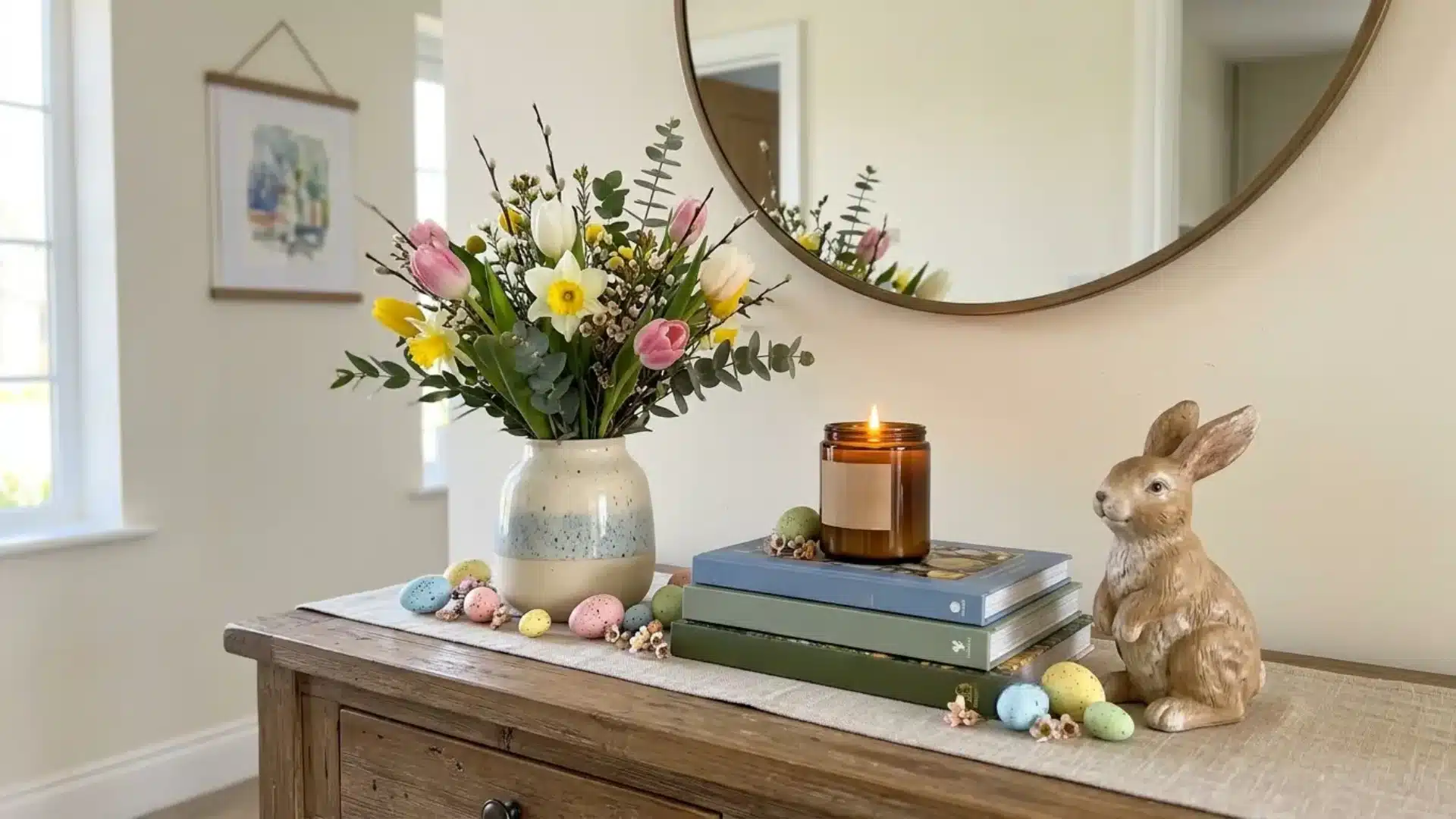
Materials: Spring flowers in a vase, stacked books, candles, decorative eggs, small bunny figure
Place a vase of spring flowers off-center on the console table to anchor the display.
Stack two or three books nearby, then set a candle on top for height variation.
Scatter a few decorative eggs around the base and add a small bunny figure as the final accent piece.
Easter Living Room Decor Ideas
Simple swaps and accents that bring Easter into the room your family actually gathers in.
9. Easter Mantel
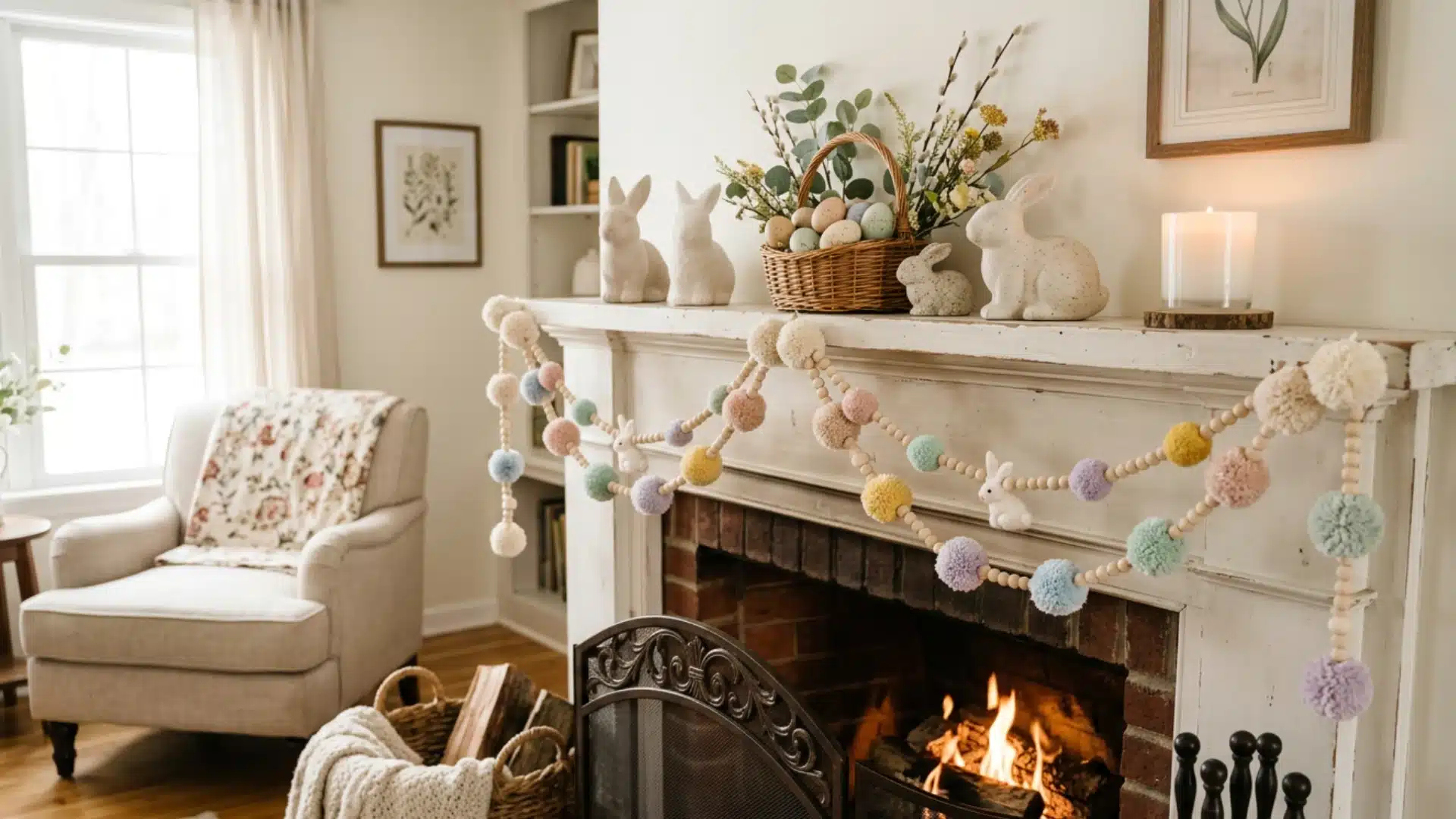
Materials: Pom-pom garland, candlesticks, decorated eggs, framed artwork, bunny figurines
Drape a garland along the mantel length, letting it dip slightly at the edges for movement. Place candlesticks at varying heights, then lean framed artwork against the wall behind them.
Fill remaining gaps with decorated eggs and bunny figurines for a full, balanced arrangement.
10. Fireplace Easter Garland
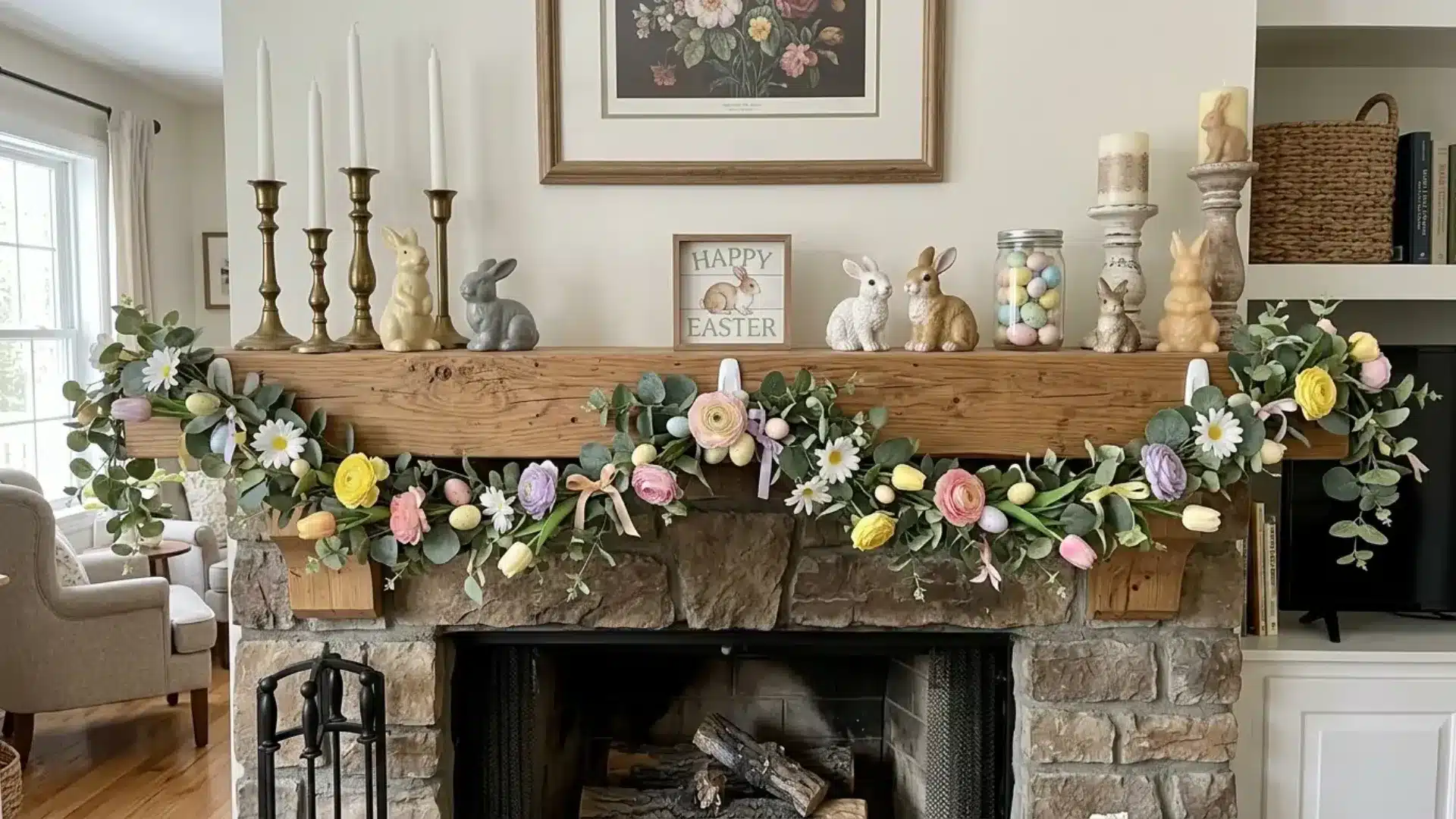
Materials: Green garland base, removable hooks, or mantel clips, eggs, bunny figurines, and candlesticks.
Pick a garland that matches your living room palette; egg-shaped, carrot-themed, or leafy green all work.
Secure it along the mantel edge using removable hooks or clips. Let the center dip slightly for a soft curve, then add candlesticks and figurines around it
11. Bunny Figurine Collection
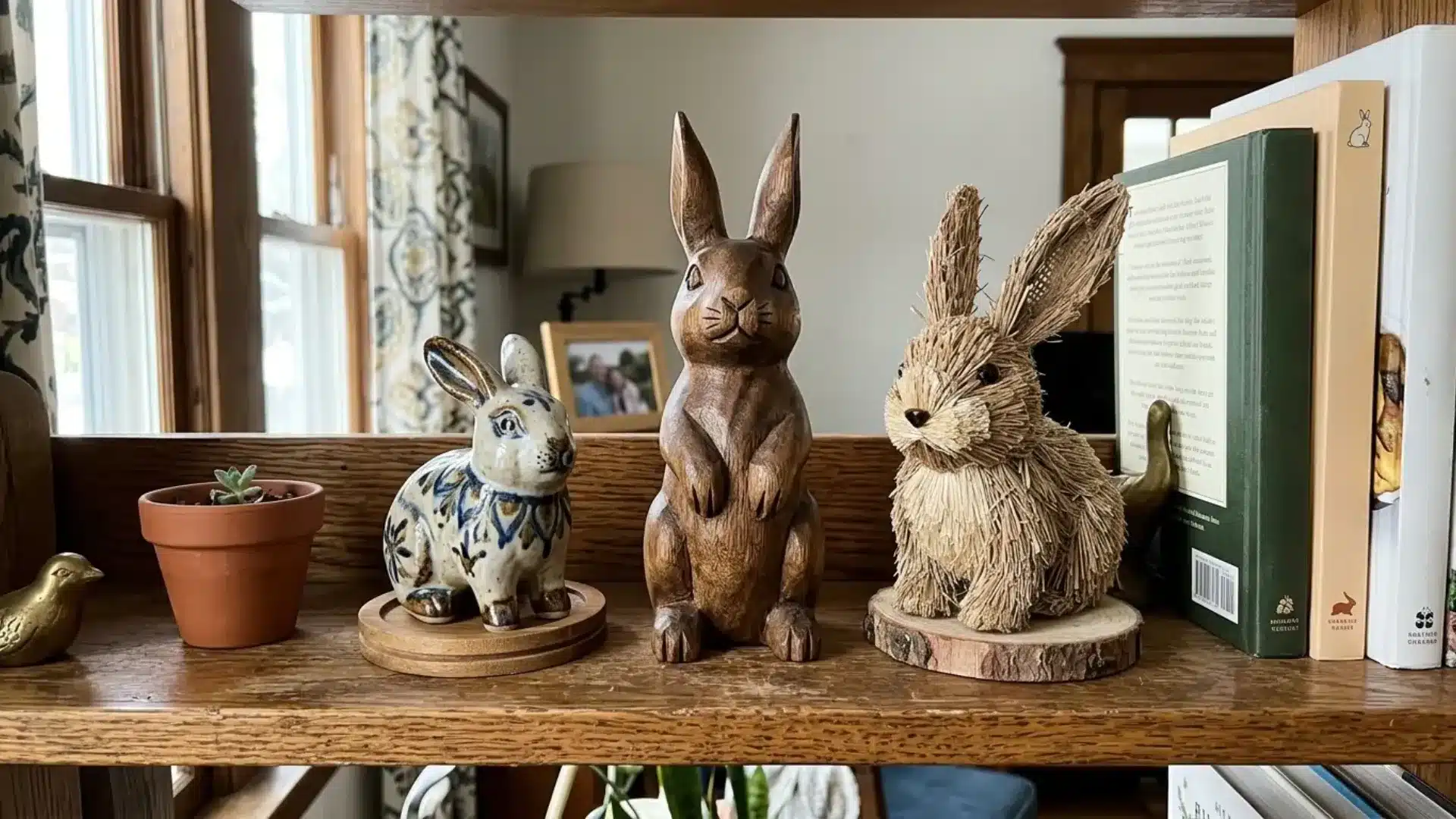
Materials: Ceramic, wooden, rattan, glass, or fabric rabbit figurines (in odd numbers)
Gather rabbit figurines in a mix of materials, ceramic, wood, rattan, glass, or fabric, for visual variety.
Group them in odd numbers; three or five works particularly well, since odd groupings tend to look more balanced than even ones. Arrange them together on a shelf, mantel, or side table at slightly staggered heights.
12. Easter Throw Pillows
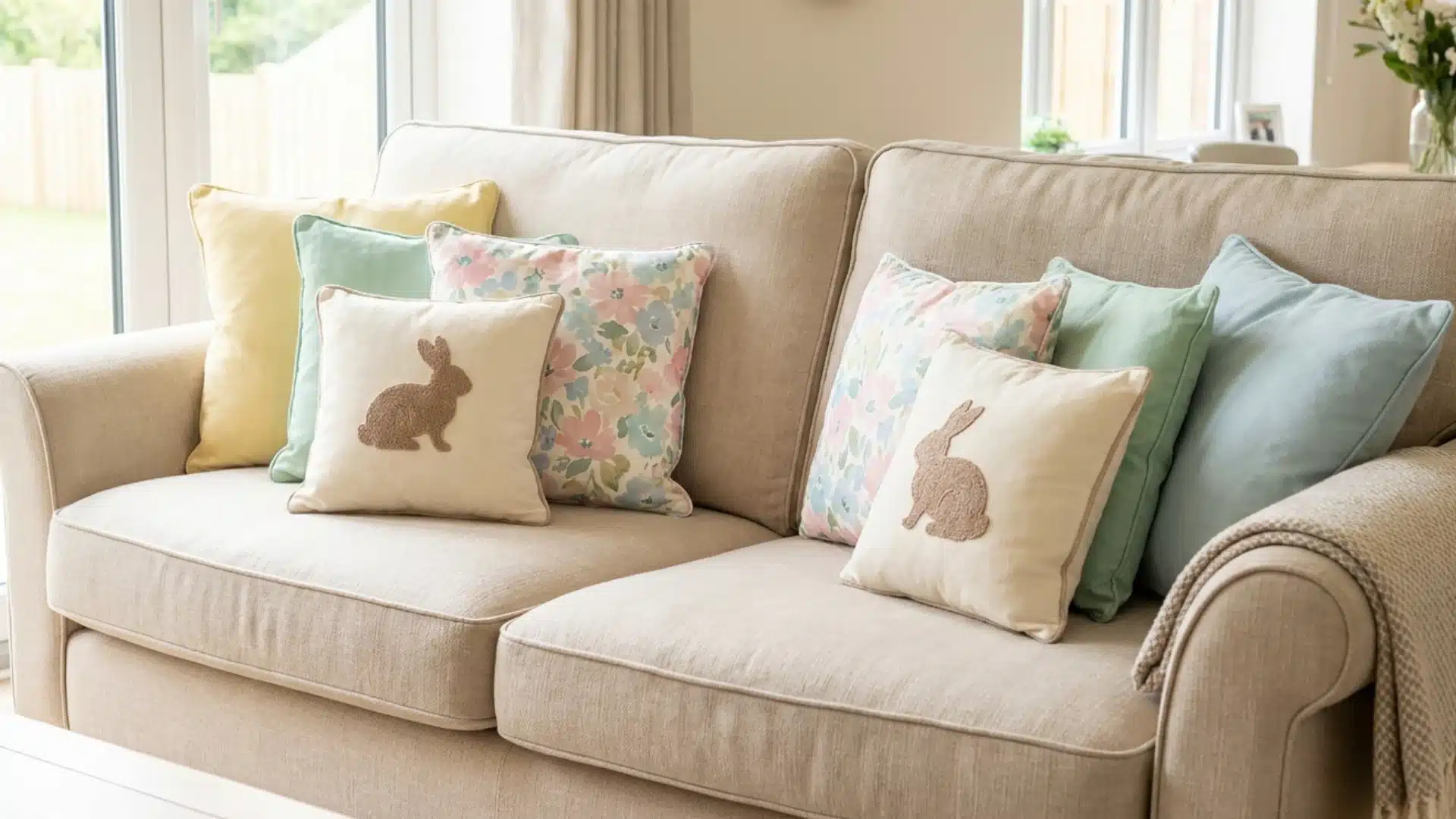
Materials: Pillow covers, bunny silhouette, embroidered egg, floral, or gingham print
Pick two or three covers in coordinating patterns, bunny silhouettes, embroidered eggs, soft florals, or gingham.
Swap them onto your existing sofa or chair pillows.
Pair patterns with solid pastel shades already in the room, rather than stacking prints, for a calmer, balanced result.
13. Pastel Spring Throws
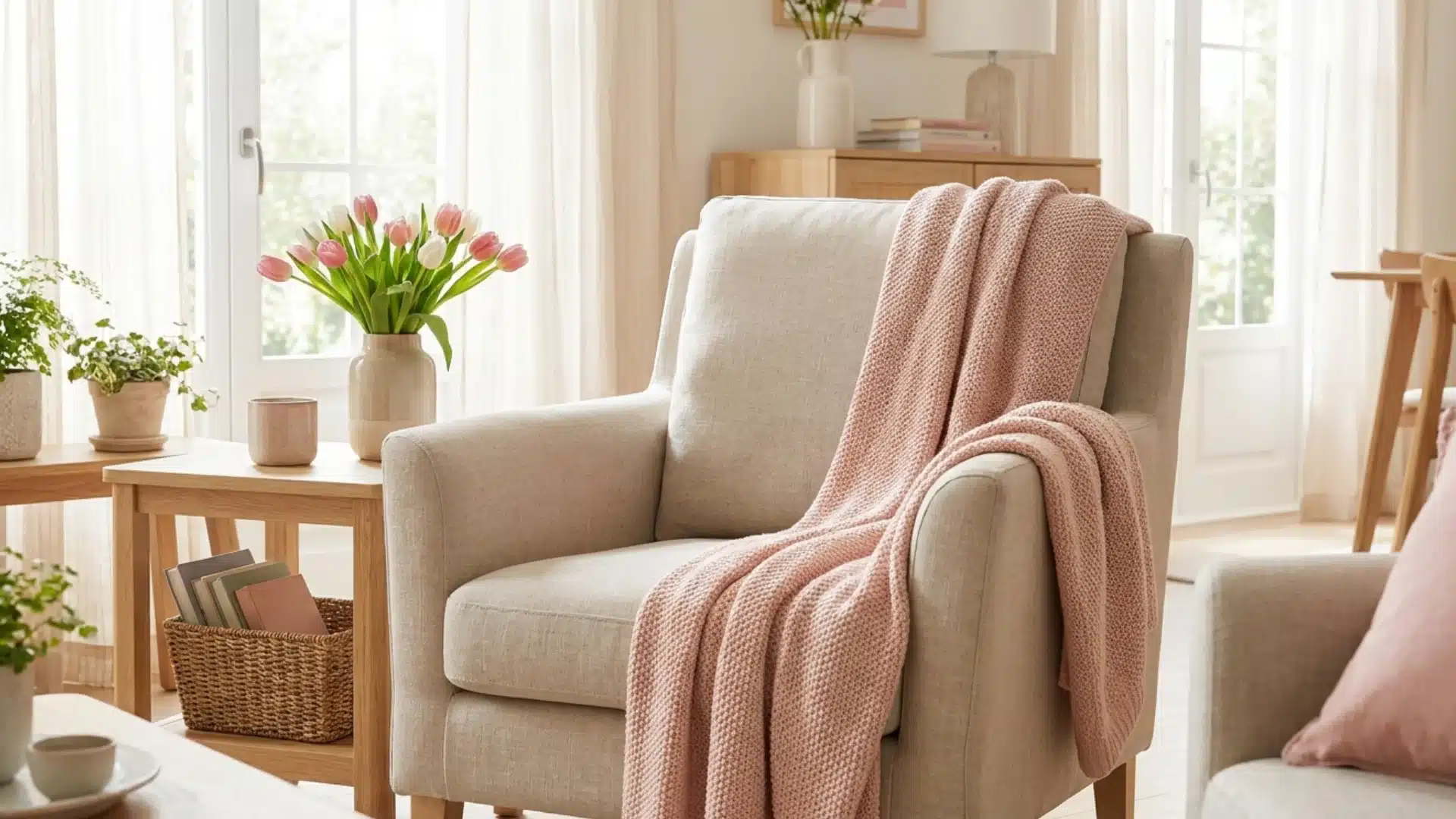
Materials: Cotton or linen throw blankets in pale yellow, blush pink, lavender, mint, or soft blue
Choose one or two throw blankets in soft spring colors that complement your existing color scheme.
Drape one casually over the arm of a sofa or chair, folding it loosely rather than perfectly for a lived-in look.
Layer a second throw over a nearby ottoman or bench if you want more color repetition.
14. Easter Coffee Table Tray
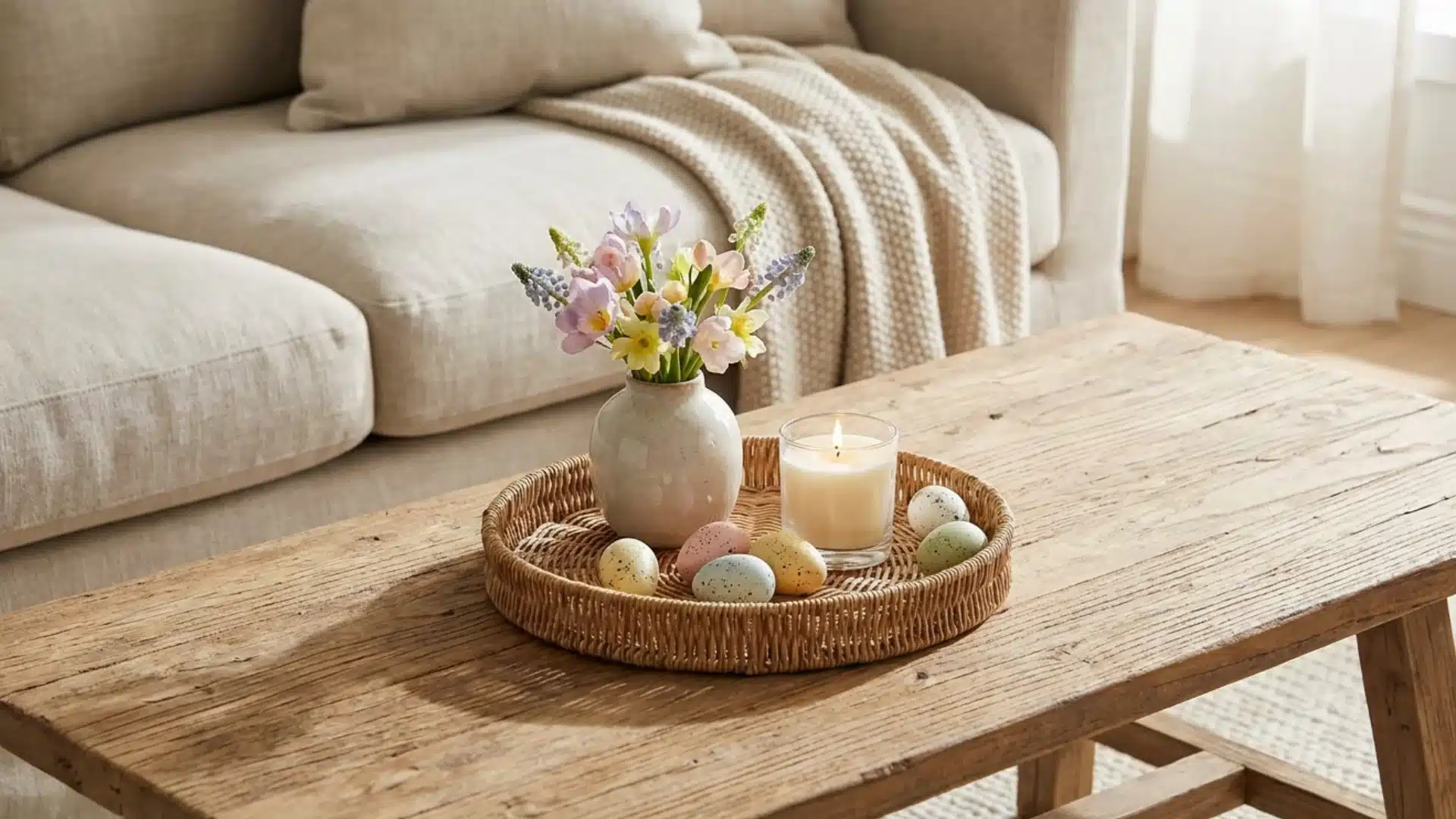
Materials: Decorative tray, small flower vase, candle, decorative eggs, one Easter ornament
Place a decorative tray at the center or edge of your coffee table as the base for the vignette.
Add a small vase of flowers as the focal point, then position a candle beside it.
Scatter a few decorative eggs around the base and add one small Easter ornament to complete the grouping.
15. Easter Egg Tree
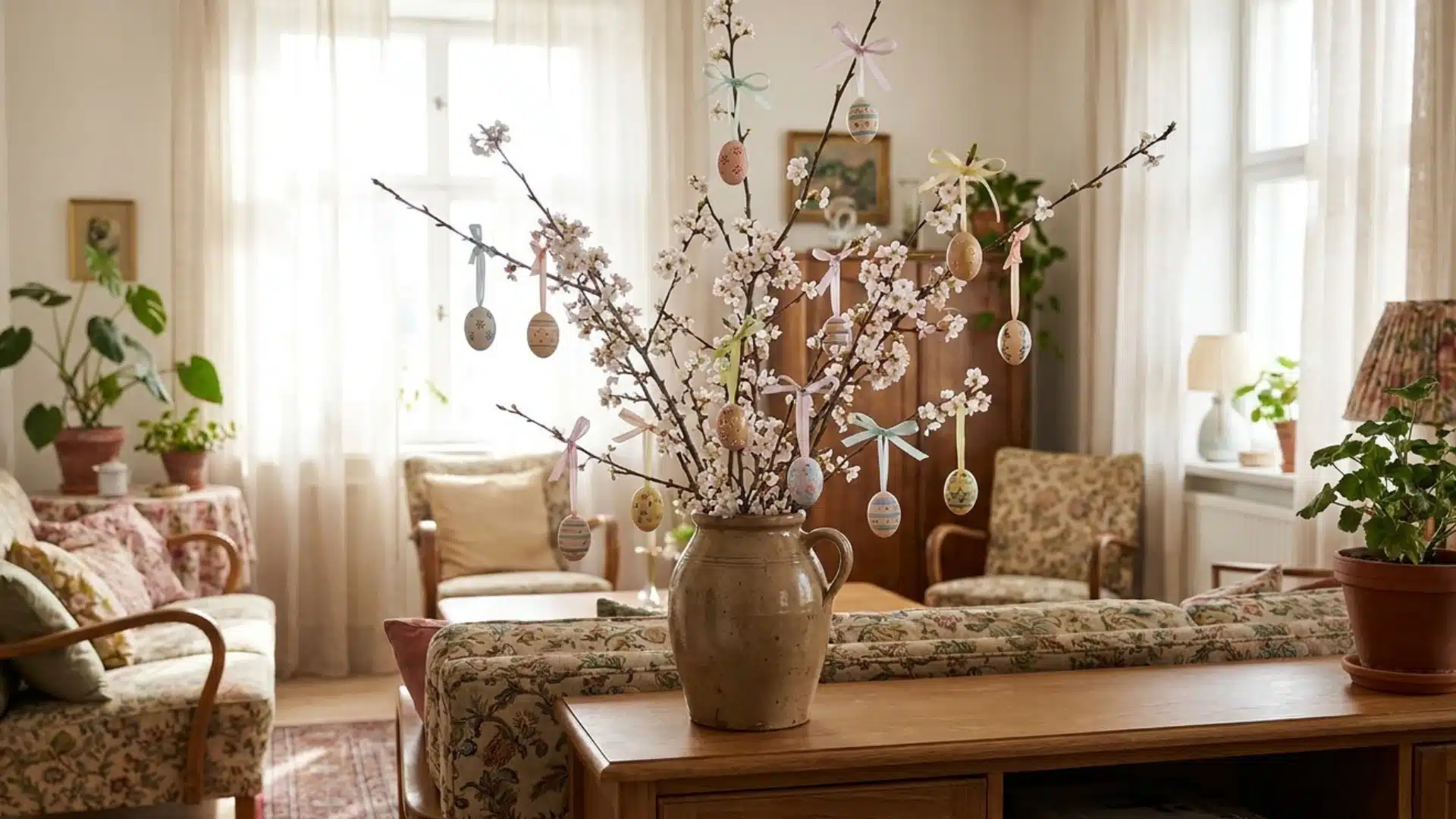
Materials: Bare or flowering branches, vase, painted eggs, ribbon, miniature ornaments
Arrange several bare or flowering branches into a sturdy vase, using pebbles or floral foam at the base to keep them upright.
Tie small painted eggs, ribbon loops, or miniature ornaments onto the branches using thin string or ribbon.
Space the hanging pieces evenly across the branches so no single area looks overcrowded.
16. Framed Easter Artwork
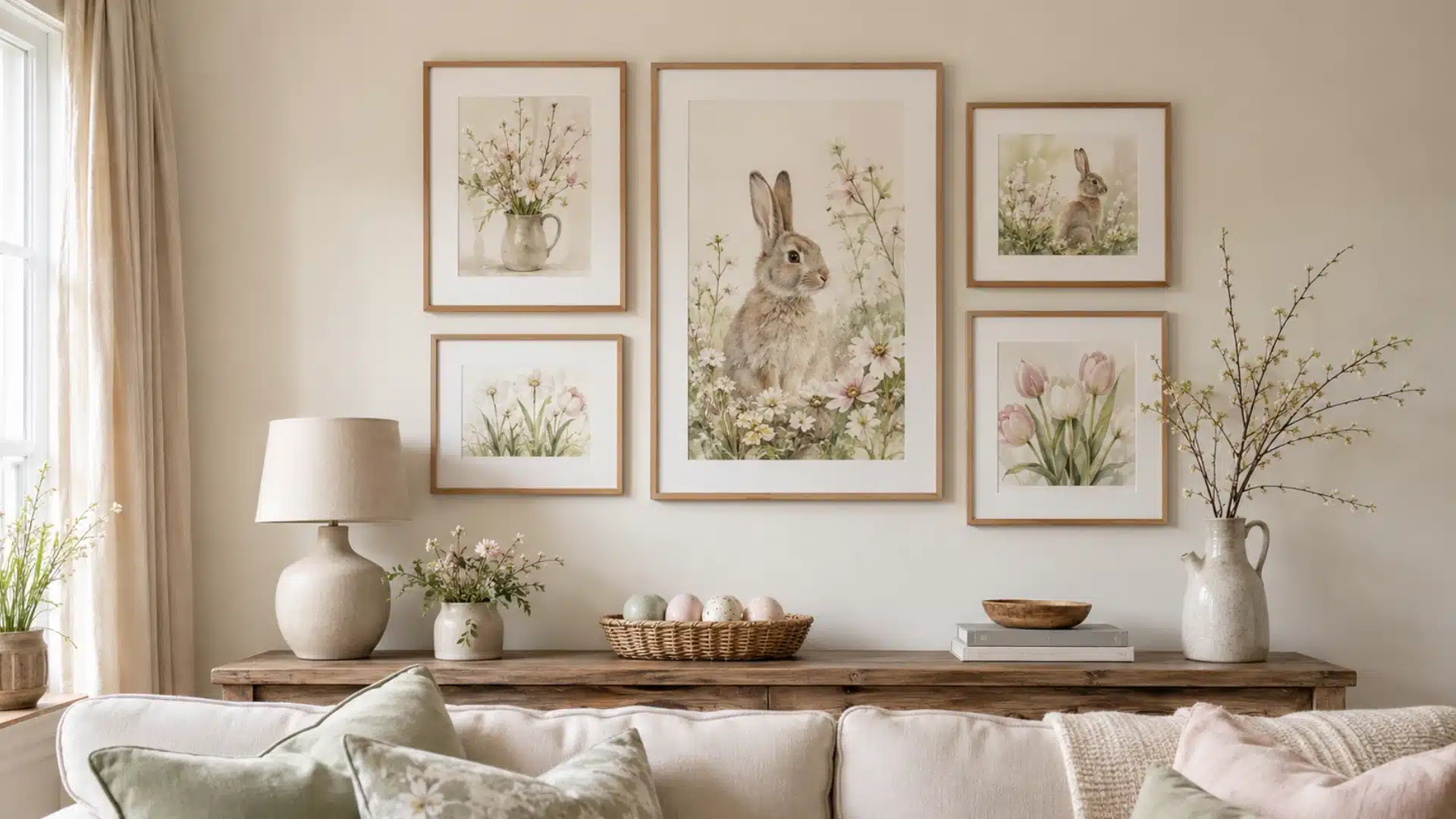
Materials: Framed prints (watercolor rabbits, botanical illustrations, spring flowers, or painted eggs)
Temporarily remove your everyday artwork from existing frames or wall space. Replace it with seasonal prints, watercolor rabbits, botanical illustrations, spring florals, or painted egg designs, sized to fit your current frames.
Rehang in the same spots for an instant seasonal refresh without needing new hardware.
17. Easter Shelf Accents
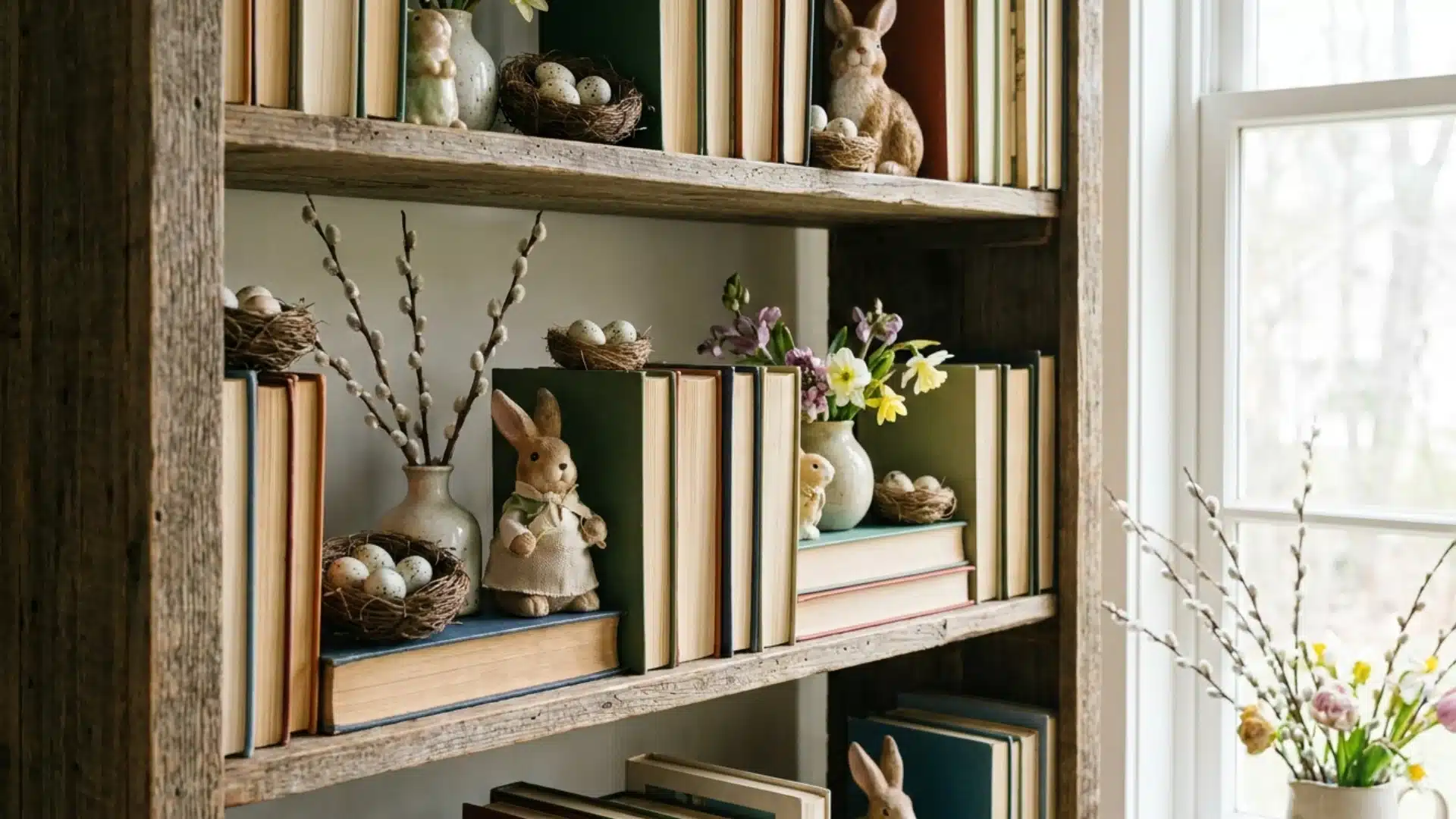
Materials: Miniature nests, decorative eggs, small flowers, small rabbit figurines
Look at your existing bookshelf or display shelf and identify a few open gaps between books and accessories.
Tuck miniature nests, small decorative eggs, and tiny rabbit figurines into those gaps.
Add a few small flower stems in a mini vase to soften the overall look.
18. Daffodil Sideboard
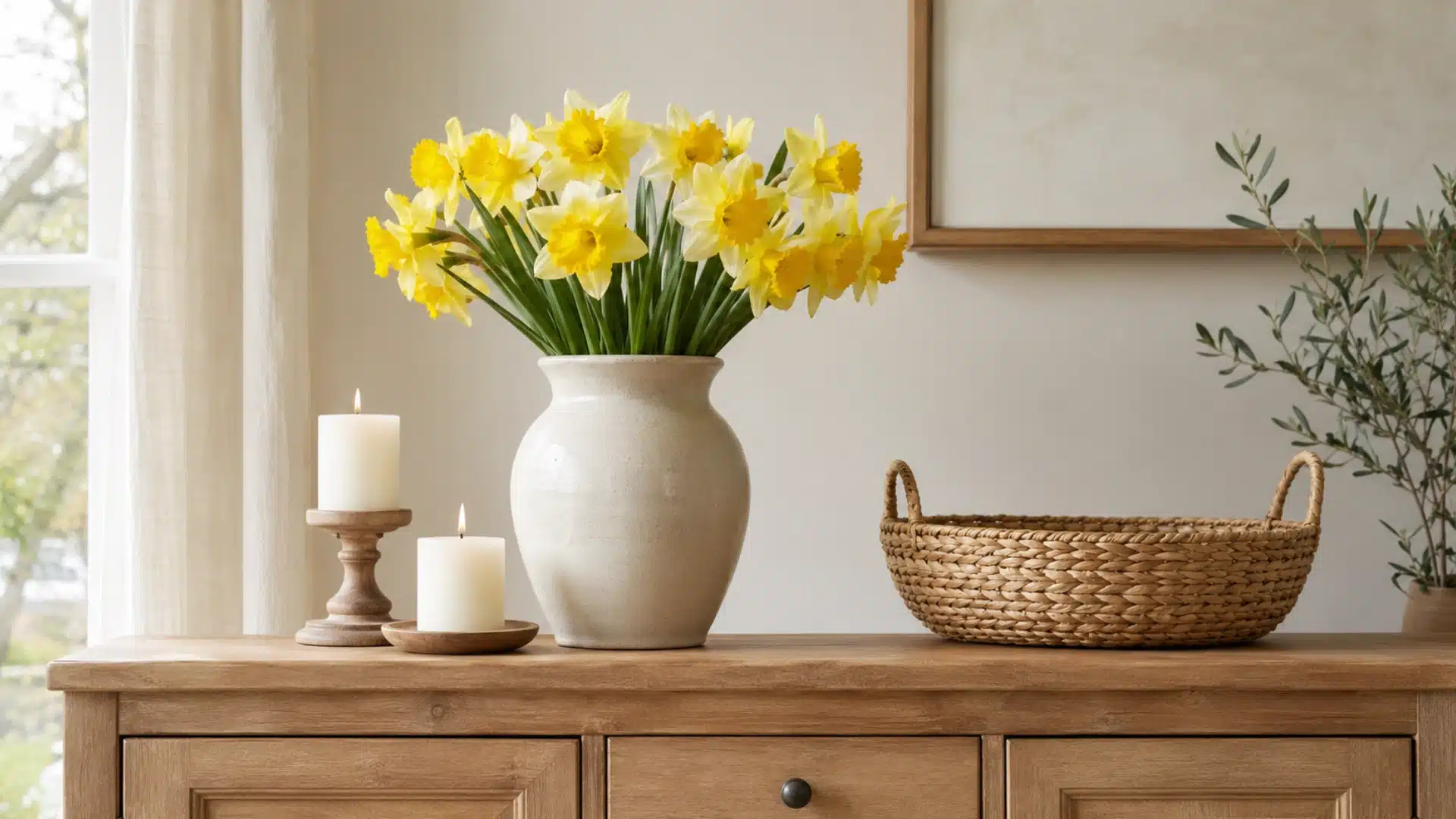
Materials: Fresh daffodils, vase, candles, woven baskets or trays, understated bunny figures
Place a vase of fresh daffodils at the center of your sideboard as the main focal point.
Add candles on either side for balance, then position a woven basket or tray nearby holding smaller accents.
Include one or two understated bunny figures rather than a large collection to keep the look elegant.
Easter Table Decor Ideas that Look Special
Centerpieces, place settings, and small details that turn any meal into something worth sitting down for.
19. Spring Flower Centerpiece
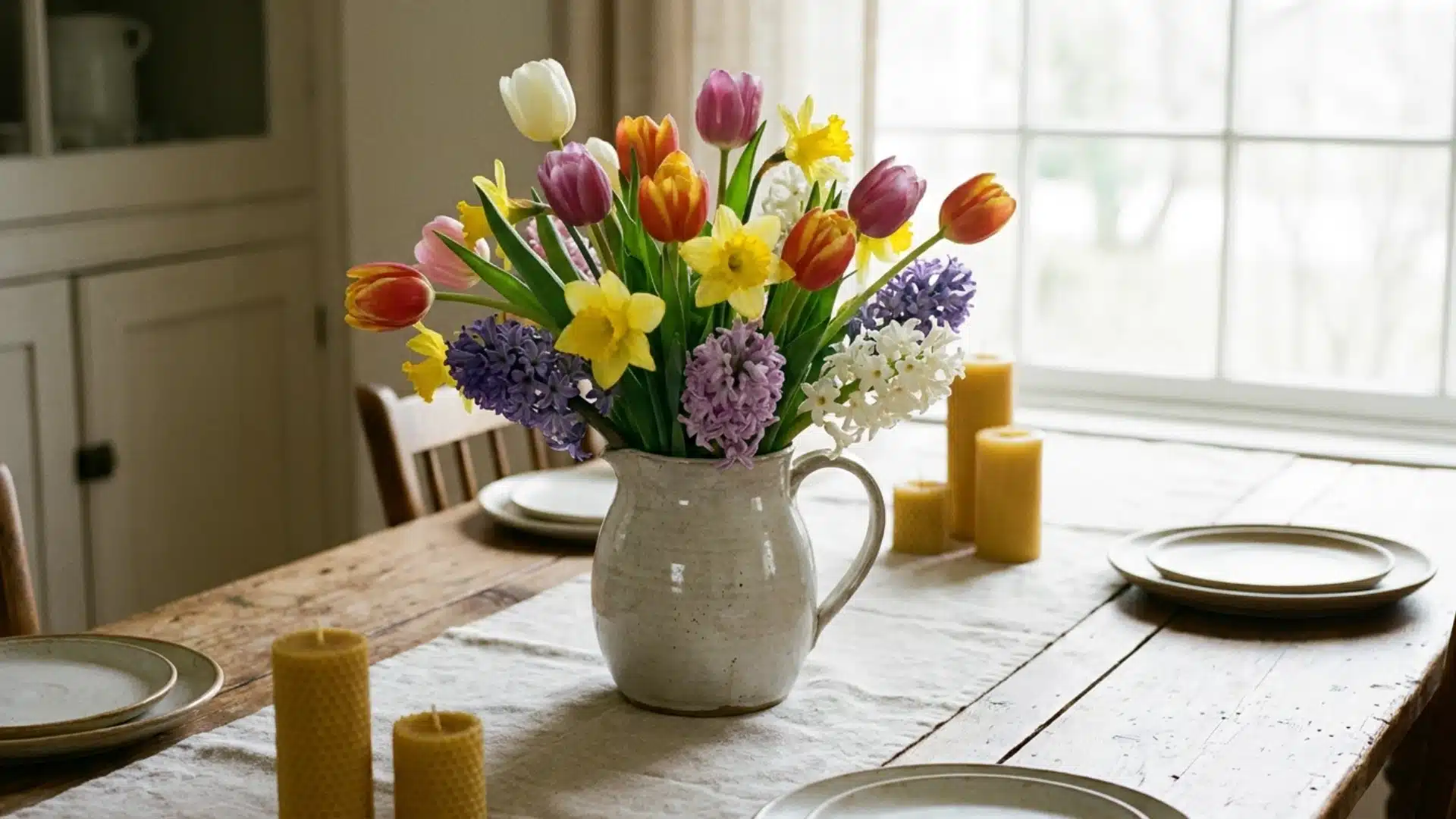
Materials: Tulips, daffodils, ranunculus, or hyacinths, vase, pitcher, or ceramic pot
Trim the stems of your chosen flowers at an angle for better water absorption.
Arrange flowers in a vase, pitcher, or ceramic pot, with taller stems at the back or center and shorter ones around the edges. Fill gaps with smaller blooms or greenery, then place the arrangement at the table’s center.
20. Easter Egg Centerpiece
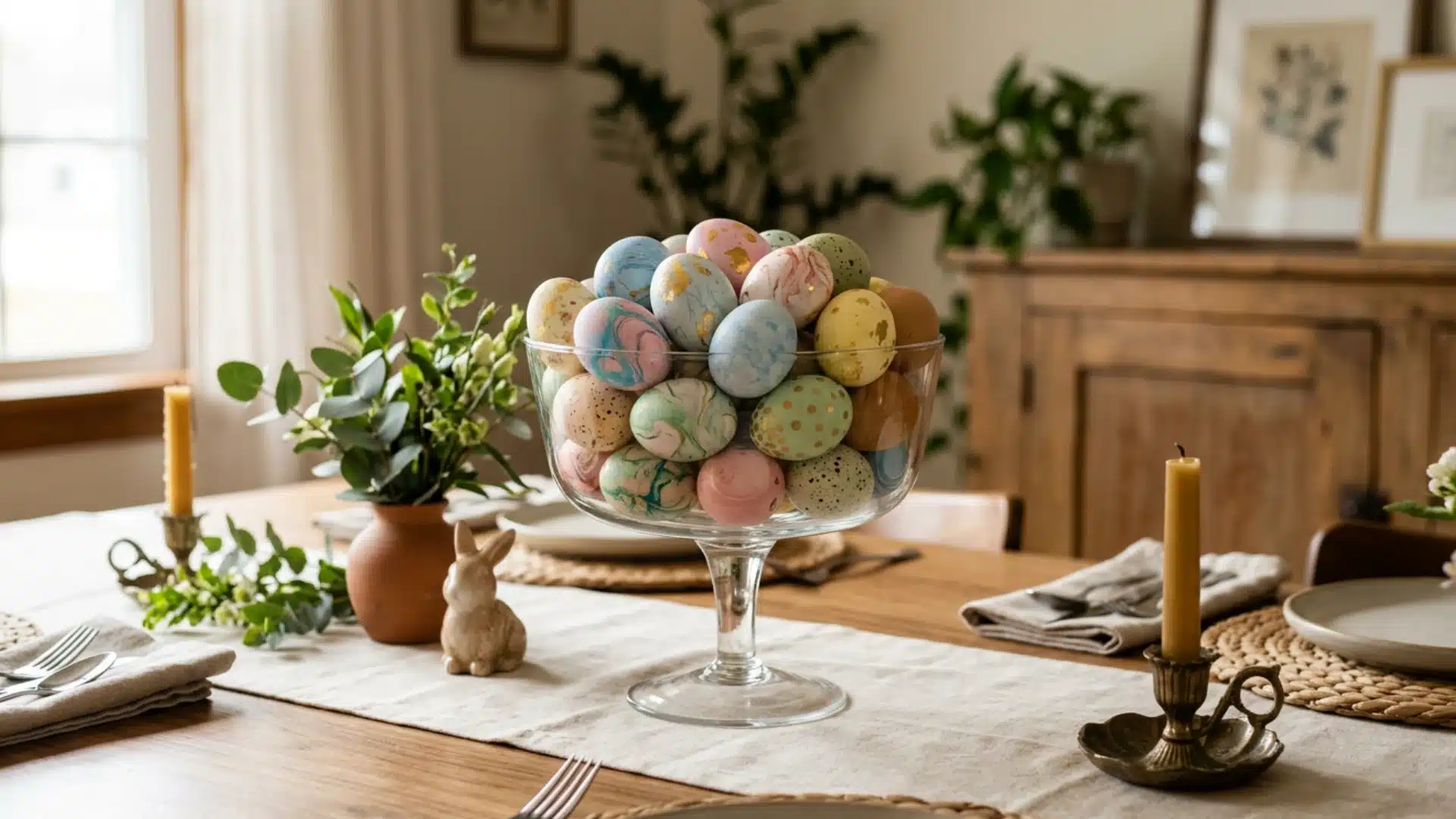
Materials: Glass bowl, compote, wooden tray, or footed dish, painted, marbled, or speckled eggs
Choose a display vessel, a glass bowl, compote, wooden tray, or footed dish, that matches your tablescape style.
Fill it with a mix of painted, marbled, or speckled eggs, layering colors so no single shade dominates.
Place the filled vessel at the center of the table as the main focal point.
21. Floral Easter Basket
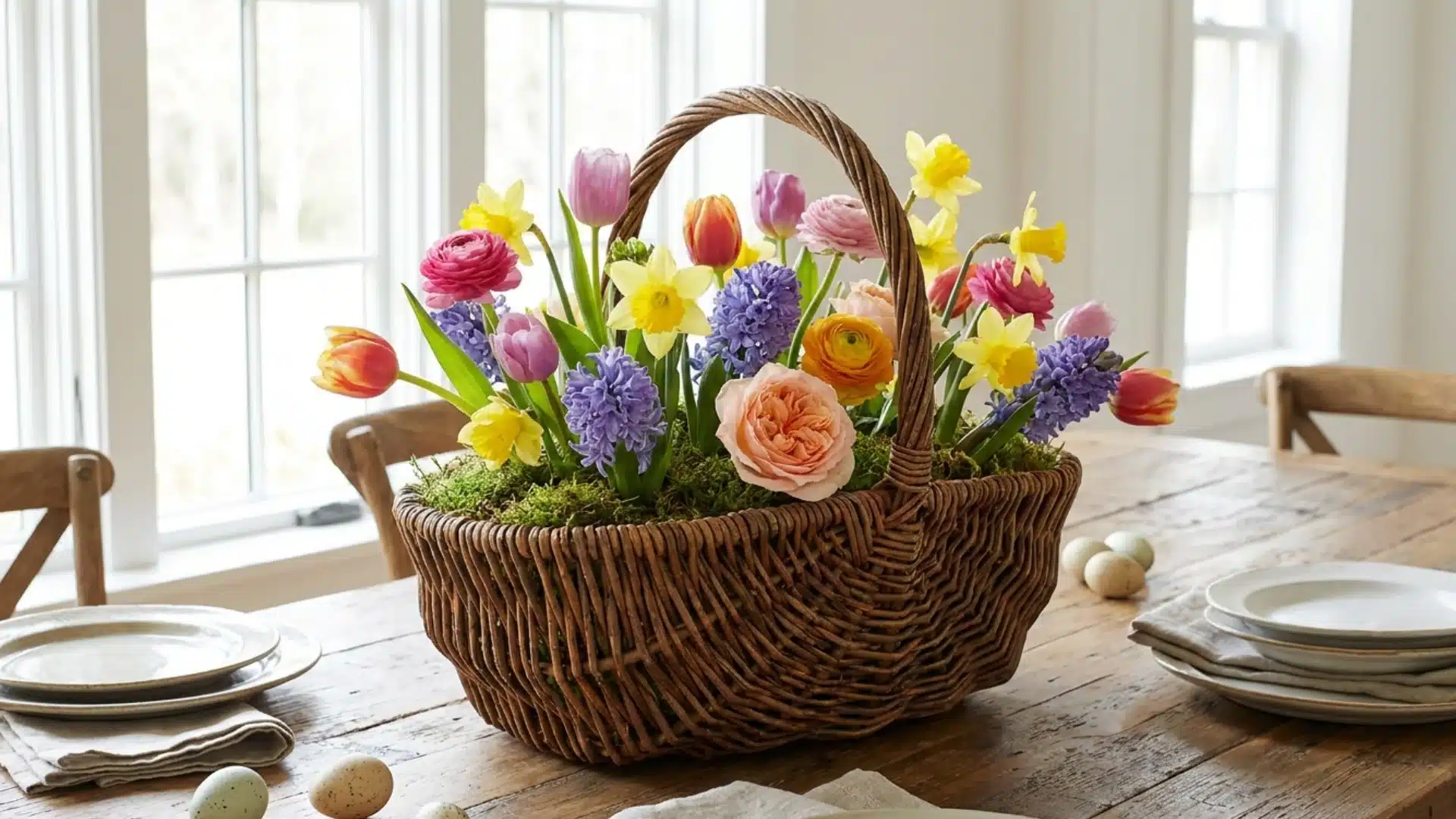
Materials: Woven basket, fresh flowers, flowering bulbs, moss, or greenery
Line the interior of a woven basket with moss or greenery to create a base layer. Arrange fresh flowers, flowering bulbs, or additional greenery on top, filling the basket generously so no gaps show through.
Place the finished basket at the center of the table or off to one side as an accent.
22. Garden-Inspired Tablescape
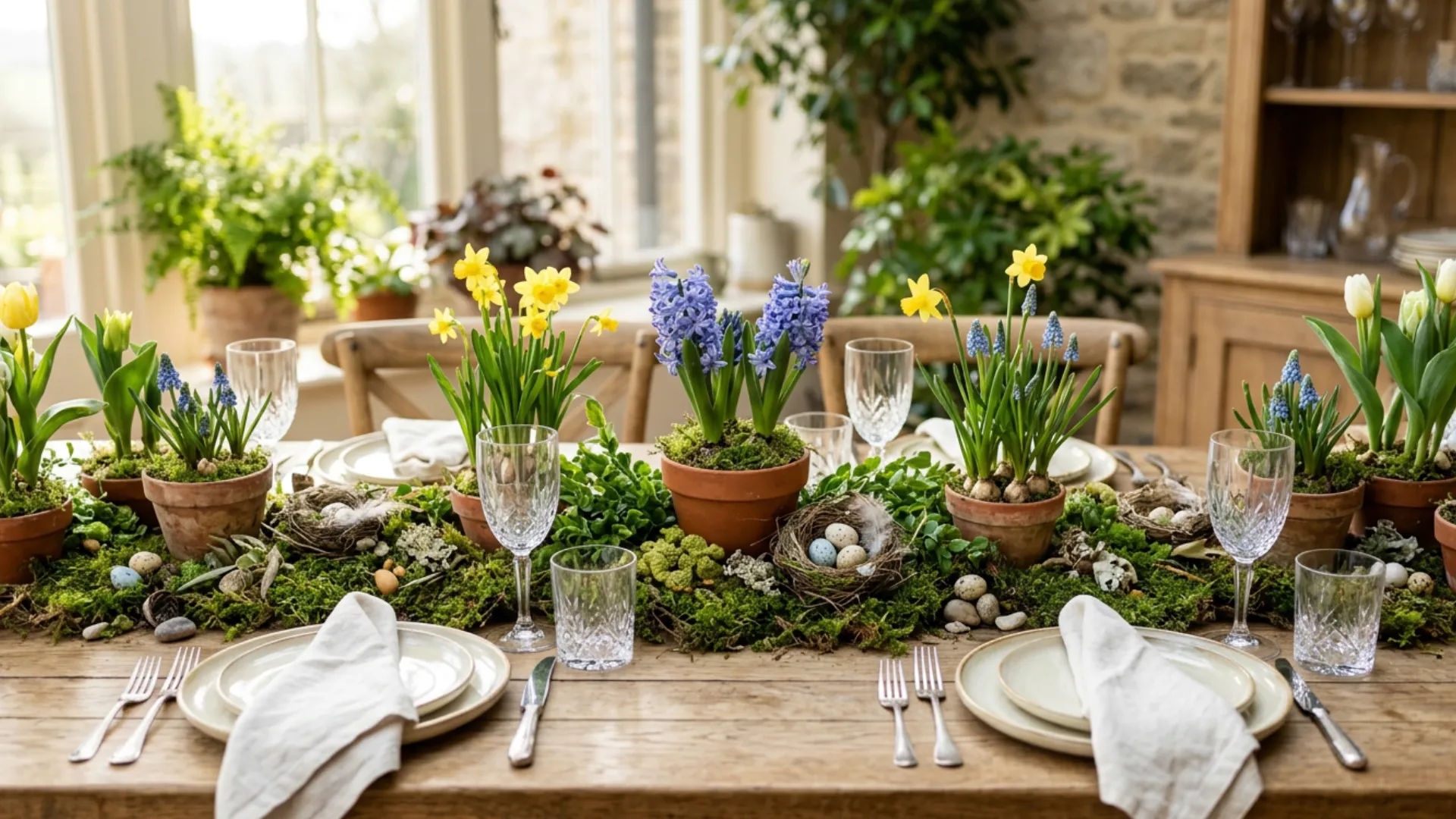
Materials: Moss, terracotta pots, miniature nests, flowering bulbs, natural wood accents
Scatter small clumps of moss along the length of the table as a base layer.
Place terracotta pots with flowering bulbs at intervals, alternating with miniature nests and small wood accents.
Keep the overall arrangement low and horizontal so it doesn’t block sightlines across the table.
23. Pastel Easter Tablescape
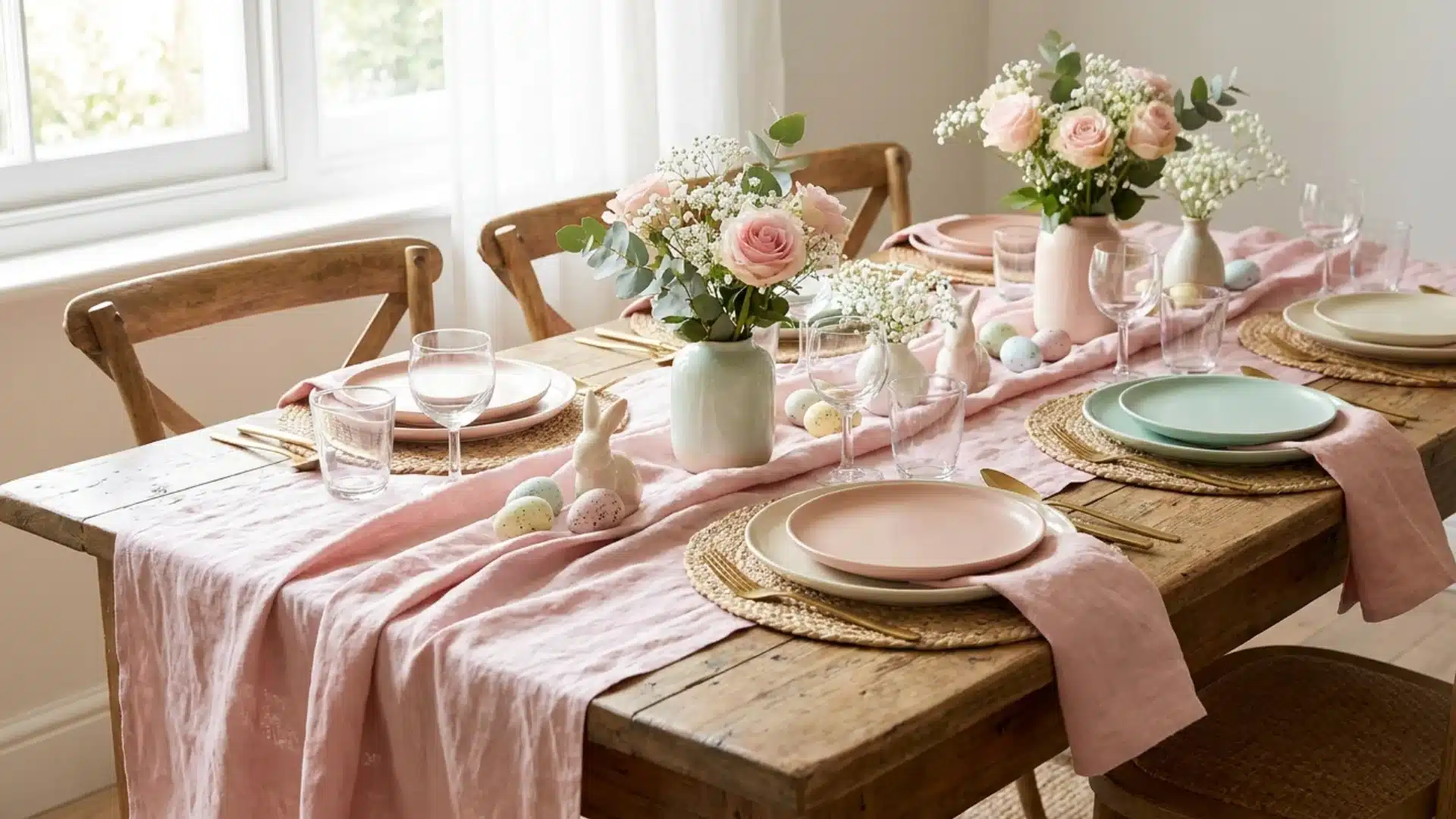
Materials: Pink, yellow, lavender, blue, and pale green linens, dishes, flowers, glassware
Layer a tablecloth or runner in one pastel shade as the base.
Add dishes and glassware in coordinating pastel tones with slight variations, avoiding matching sets for visual interest, and finish with pastel flowers in the center.
24. Neutral Easter Tablescape
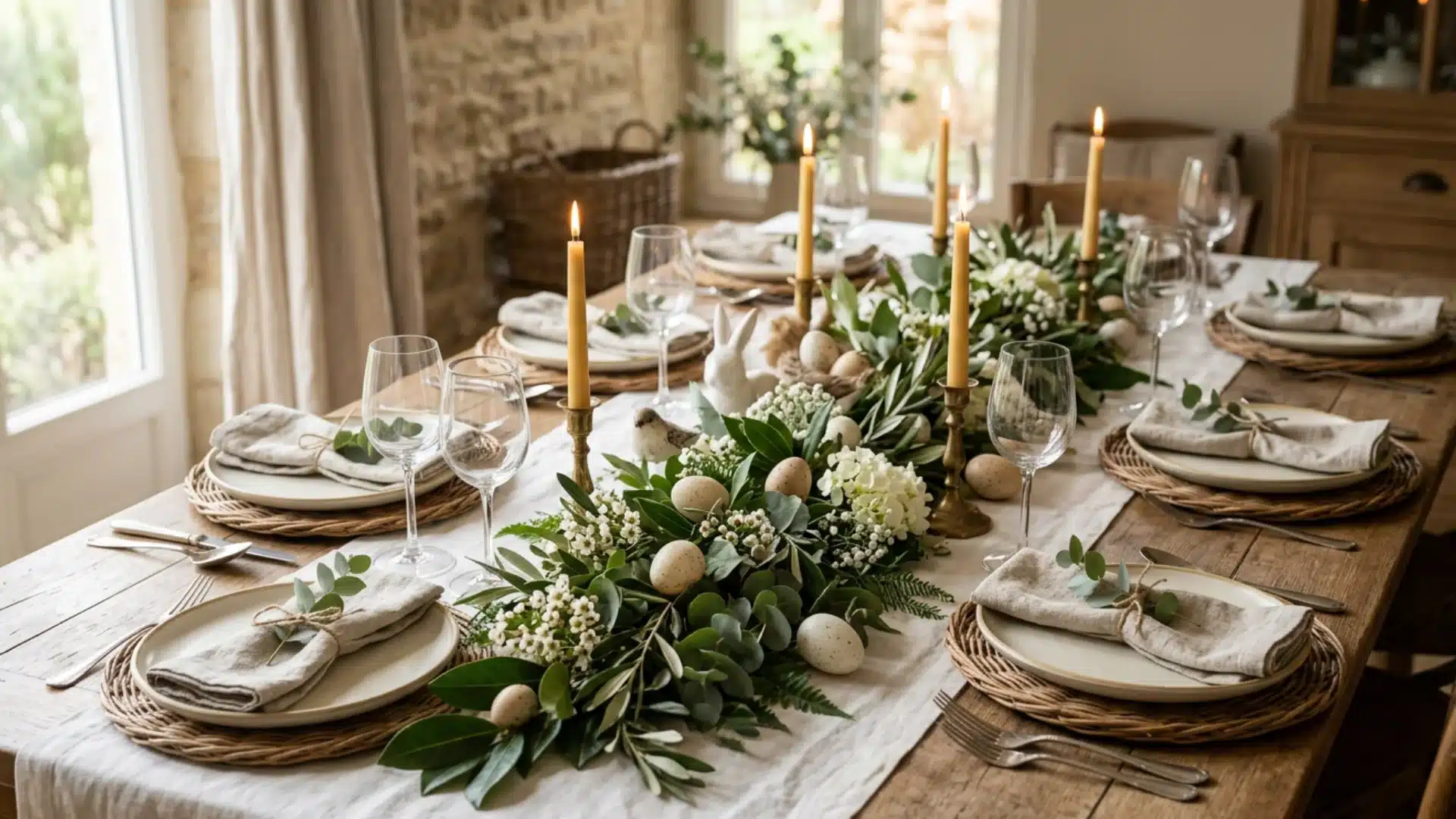
Materials: White, cream, and beige linens, natural wood accents, greenery
Set the table with white or cream linens as a clean base.
Incorporate natural wood chargers, napkin rings, or placemats for texture. Add greenery sprigs down the center of the table instead of colorful flowers to keep the look soft and understated.
25. Bunny-Ear Napkins
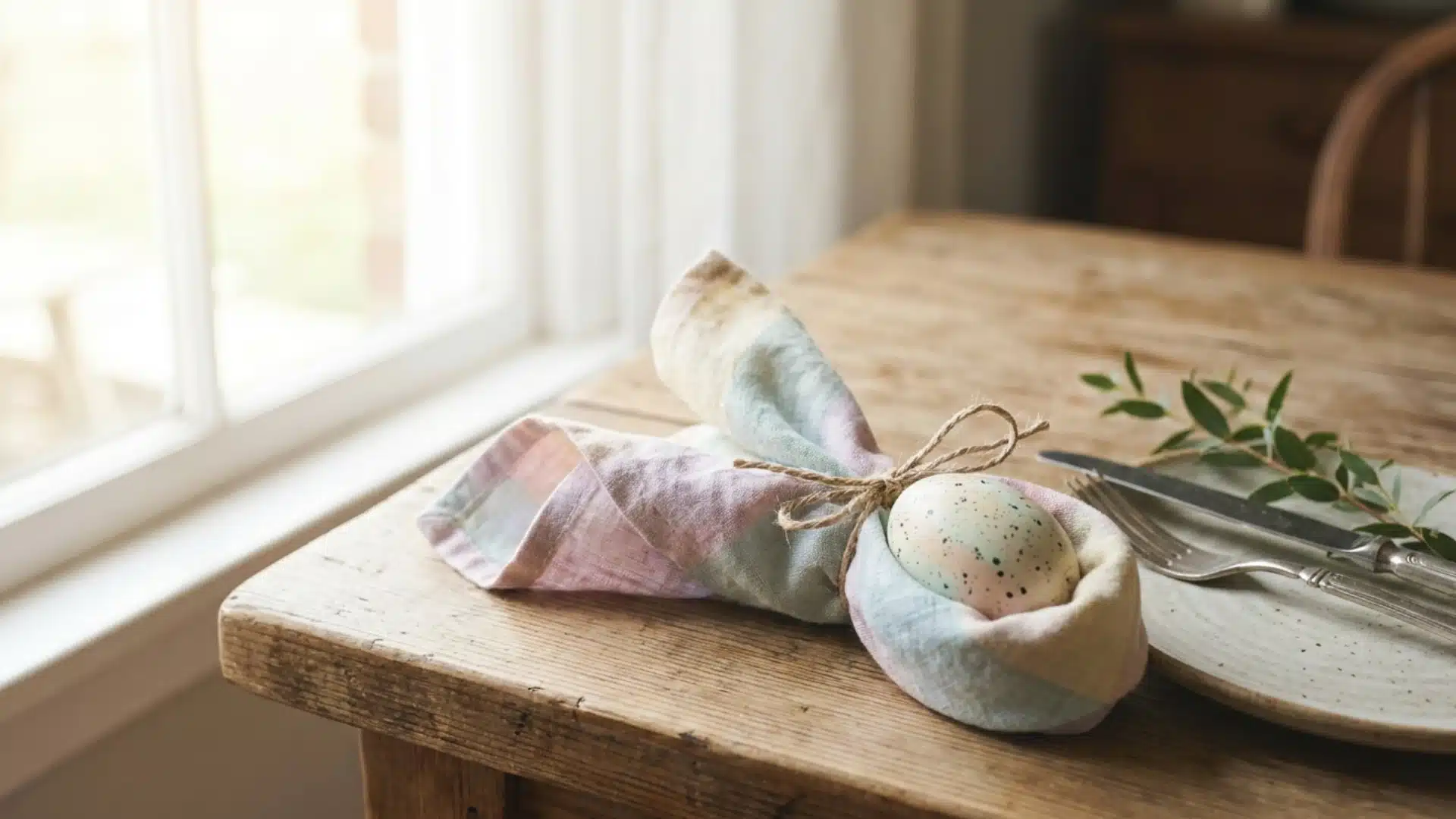
Materials: Cloth napkins, decorated eggs, ribbon (optional)
Fold each cloth napkin into a rectangle, then roll or fold the top corners upward to form two bunny ear shapes.
Wrap the folded napkin around a decorated egg to hold the shape in place.
Secure with a small piece of ribbon if needed, then set one at each place setting.
26. Easter Egg Place Cards
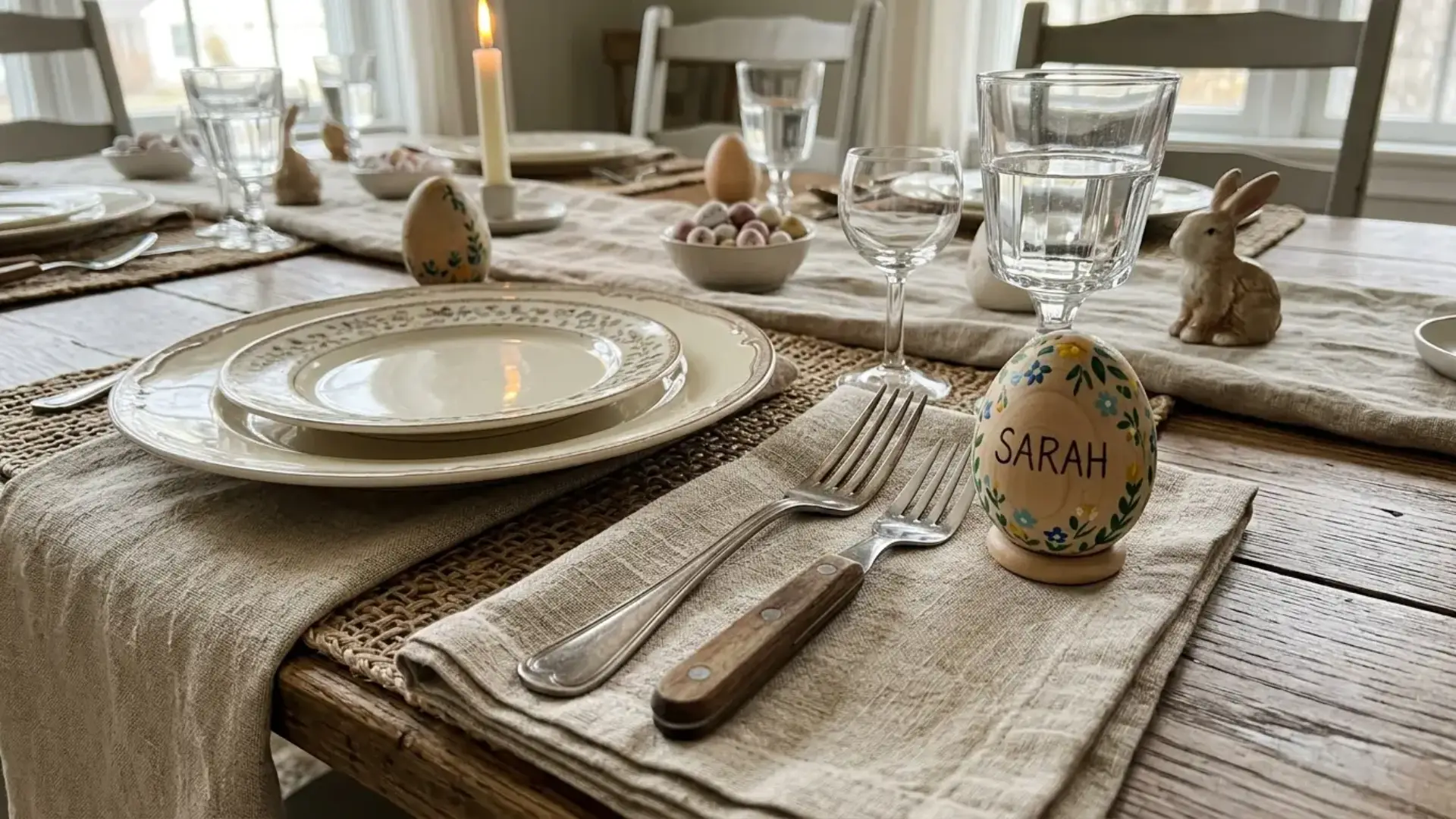
Materials: Wooden, ceramic, paper, or hollow eggs, fine-tip marker or paint pen
Select eggs in a material that suits your tablescape: wooden, ceramic, paper, or hollow real eggs.
Write each guest’s name directly onto the egg using a fine-tip marker or paint pen.
Position one egg at each place setting, either directly on the plate or beside the silverware.
27. Miniature Nest Place Settings
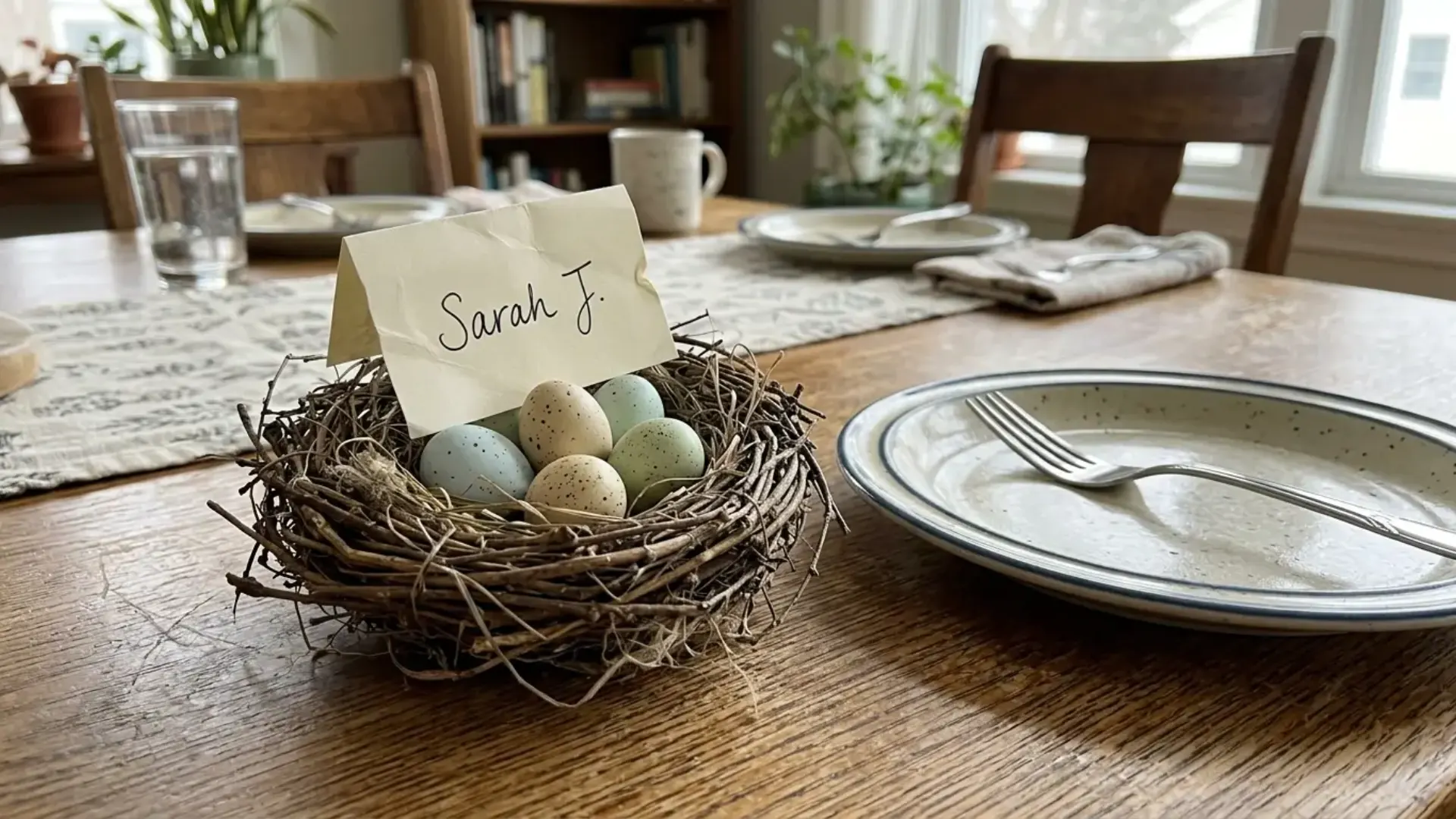
Materials: Small nests, decorative eggs, candies, or name cards
Place one small nest at each individual place setting.
Fill each nest with a few decorative eggs, small candies, or a folded name card. Adjust the fullness of each nest so they look consistent across the whole table rather than uneven in size.
28. Floral Napkin Accents
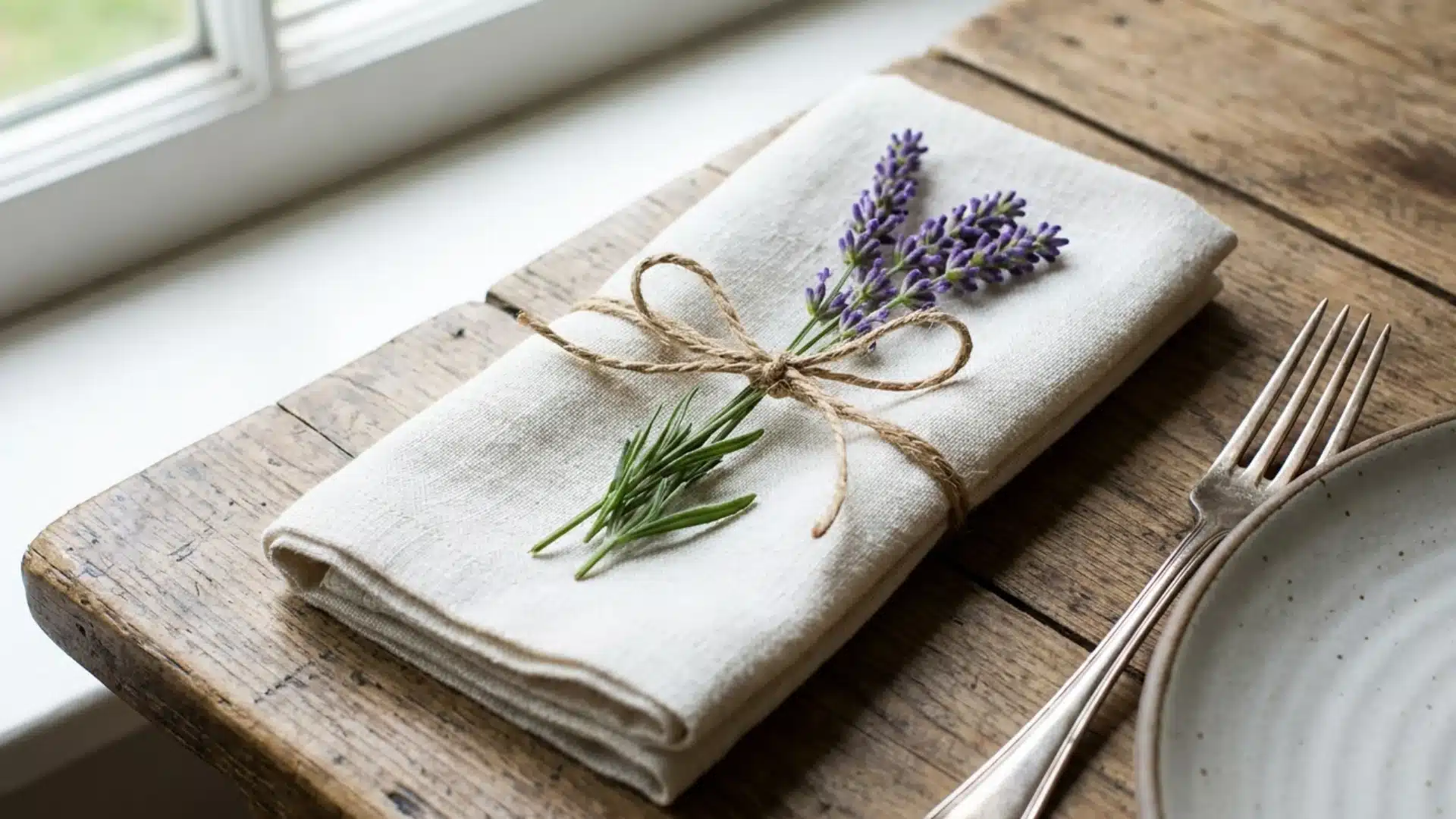
Materials: Cloth napkins, rosemary, lavender, baby’s breath, or small seasonal flowers, ribbon or twine
Fold each napkin into your preferred shape and place it at the setting. Tuck a small sprig of rosemary, lavender, baby’s breath, or a seasonal flower into the fold.
Secure the sprig in place with a thin piece of ribbon or twine wrapped around the napkin.
29. Vintage Easter Tableware
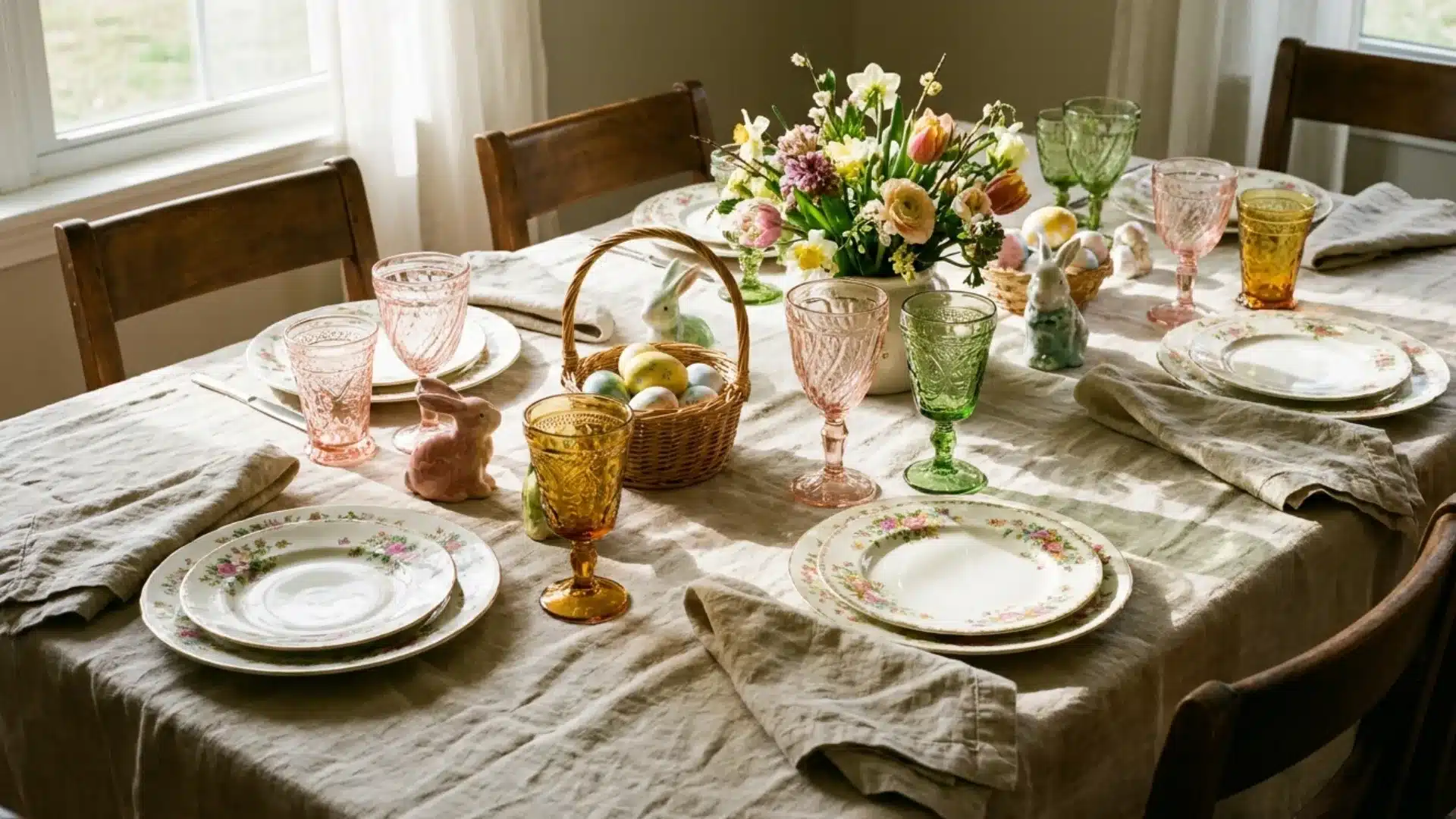
Materials: Floral plates or colored glassware, simple contemporary linens, flatware, serving dishes
Select floral-patterned plates or colored glassware as the statement pieces for the table. Pair with simple linens and flatware to let vintage pieces stand out, not compete with busy patterns.
Use plain serving dishes to keep the overall table balanced.
30. Suspended Easter Tablescape
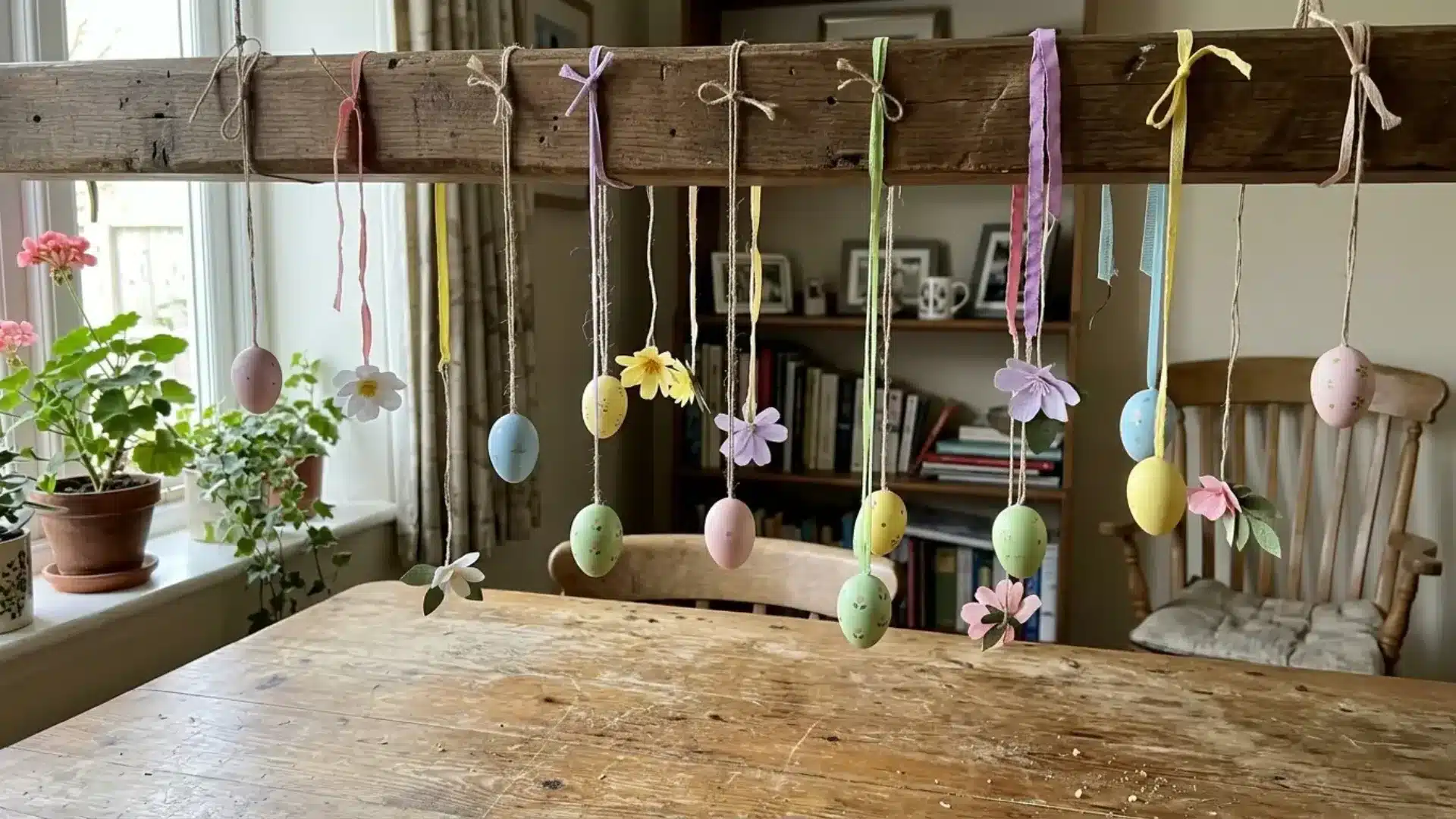
Materials: Lightweight eggs, paper flowers, ribbons, branches, string or fishing line
Attach lengths of string or fishing line to a curtain rod, beam, or temporary hanging frame above the table.
Tie lightweight eggs, paper flowers, and ribbons onto the strings at varying heights. Adjust the lengths so the suspended pieces hang just above eye level, keeping the table surface itself completely clear.
Simple Easter Kitchen and Dining Area Decor
Small, functional touches that bring Easter charm without getting in the way of everyday cooking.
31. Tiered Easter Tray
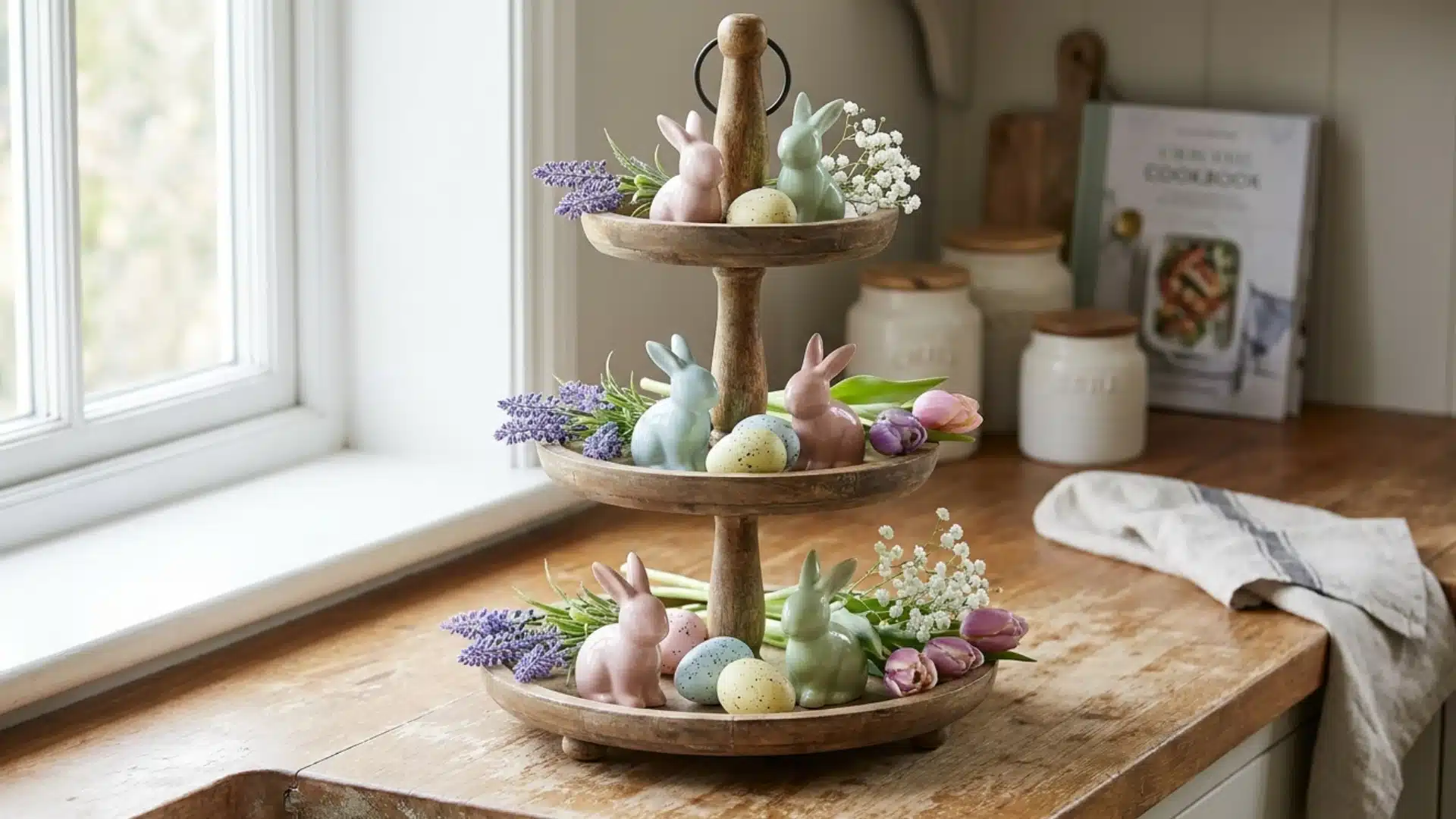
Materials: Two- or three-tier serving stand, miniature bunnies, eggs, flowers, mugs, small seasonal ornaments
Start by placing the largest items, mugs or bigger figurines, on the bottom tier of the stand.
Add miniature bunnies and eggs to the middle tier, filling gaps with small flowers.
Finish the top tier with your smallest, most delicate ornaments, then set the stand on the counter or table.
32. Easter Kitchen Island Centerpiece
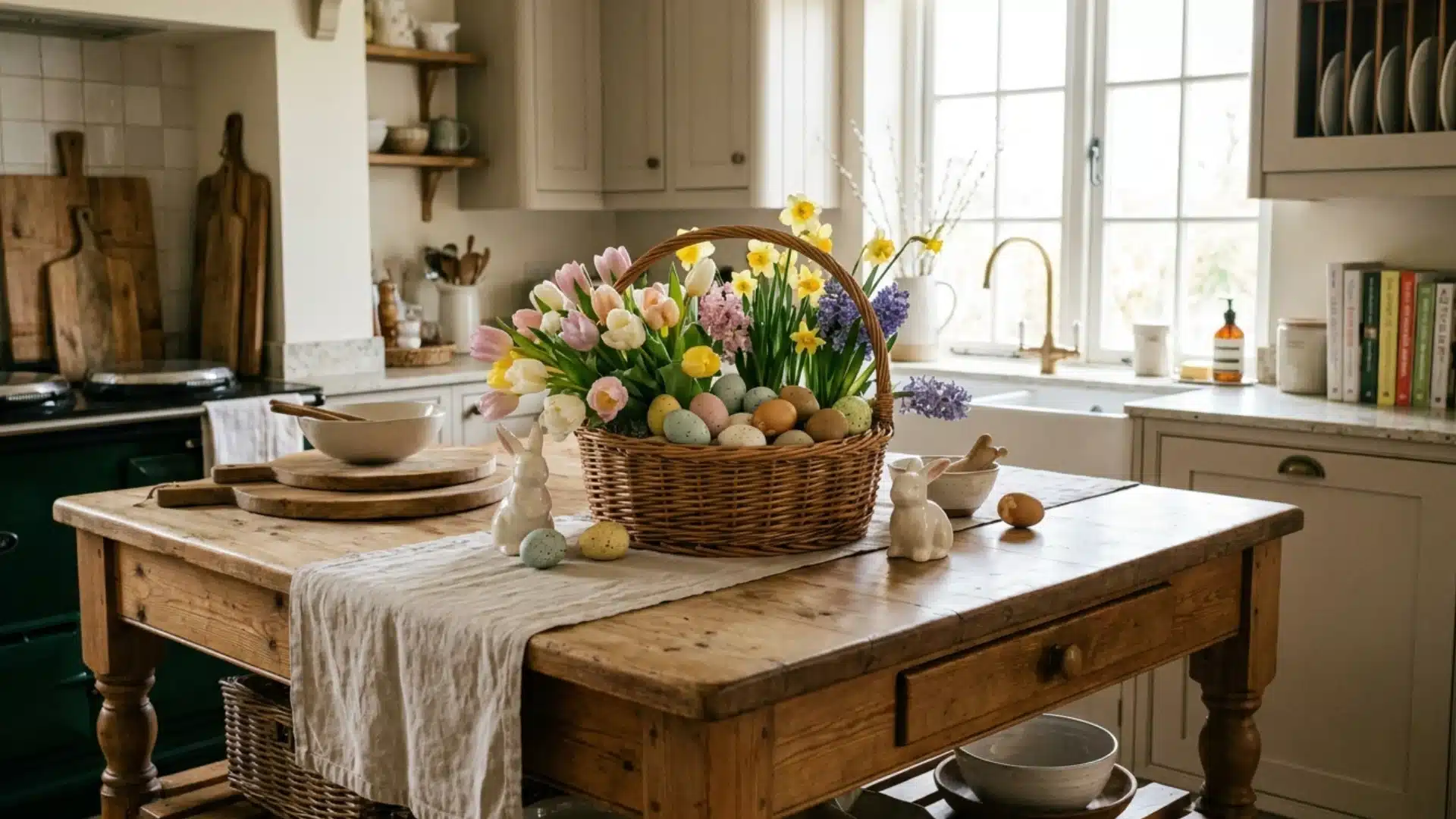
Materials: Basket or tray, flowers, decorative eggs, one seasonal accent
Choose a basket or tray sized to fit comfortably on your island without blocking workspace. Arrange a small cluster of flowers as the centerpiece, then add a few decorative eggs around the base.
Include just one additional seasonal accent, a small bunny or ribbon, to avoid overcrowding a functional surface.
33. Pastel Open Shelves
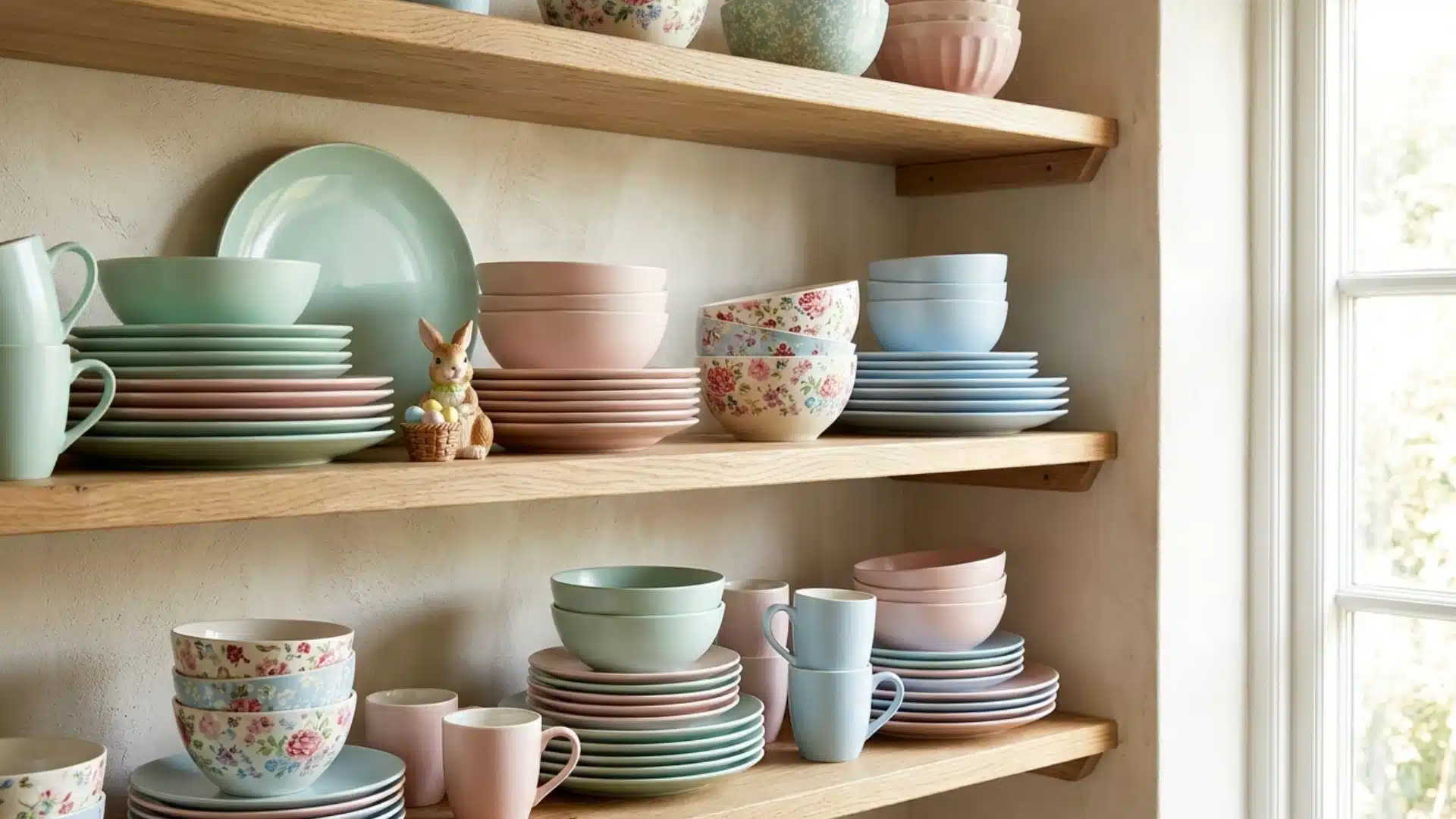
Materials: Pastel dishes, floral bowls, colored glassware, restrained Easter accessories
Swap a few everyday dishes on open shelving for pastel-colored plates or bowls.
Add floral-patterned pieces or colored glassware into the mix for variety. Include one or two small Easter accessories, like a figurine or egg, tucked between the dishware rather than filling every open space.
34. Easter Cake Stand
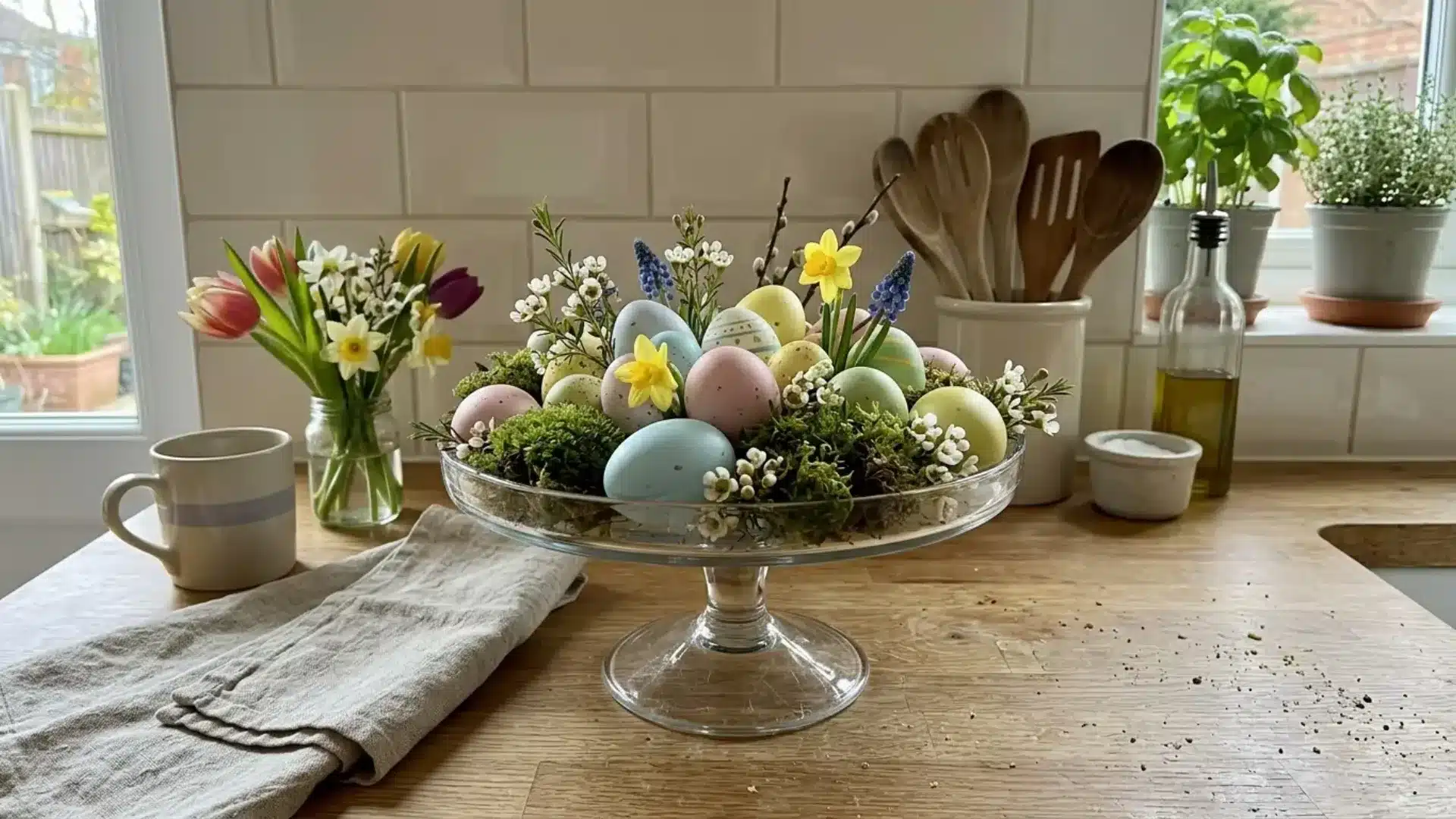
Materials: Pedestal stand or glass cloche, decorative eggs, moss, flowers, or wrapped treats
Place a pedestal stand or glass cloche on the counter or table as your display base.
Fill it with a mix of decorative eggs, small moss clumps, and a few flowers. Alternatively, use wrapped Easter treats instead of decorative pieces if you want the display to double as a real dessert stand.
35. Mini Cabinet Wreaths
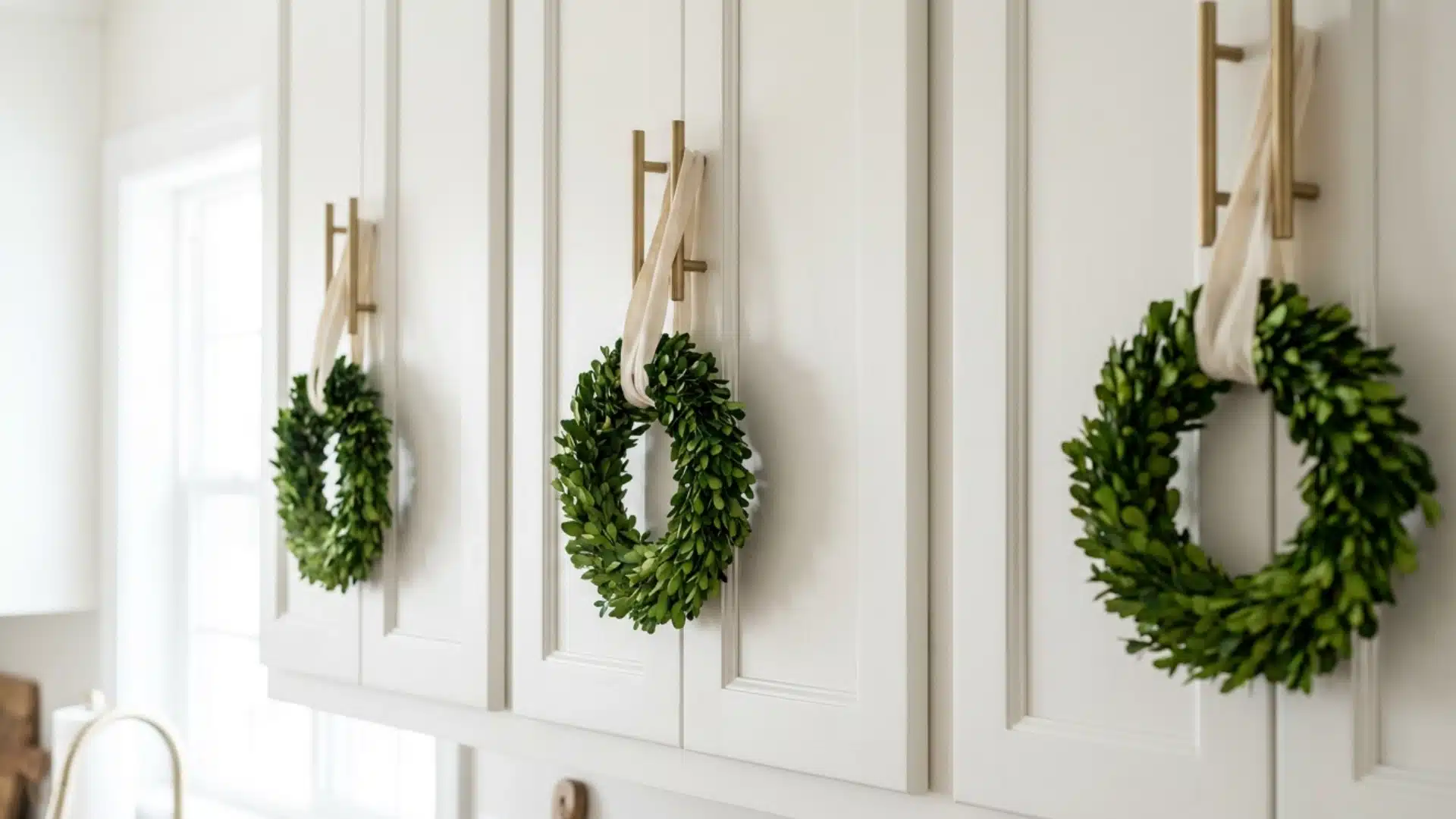
Materials: Small boxwood, floral, grapevine, or egg wreaths, removable ribbon
Select mini wreaths sized to fit comfortably on individual cabinet door panels.
Loop a piece of removable ribbon through the top of each wreath, then tie it around the cabinet knob or handle.
Repeat across a few selected cabinets rather than every single door for a more curated look.
36. Easter Candy Jars
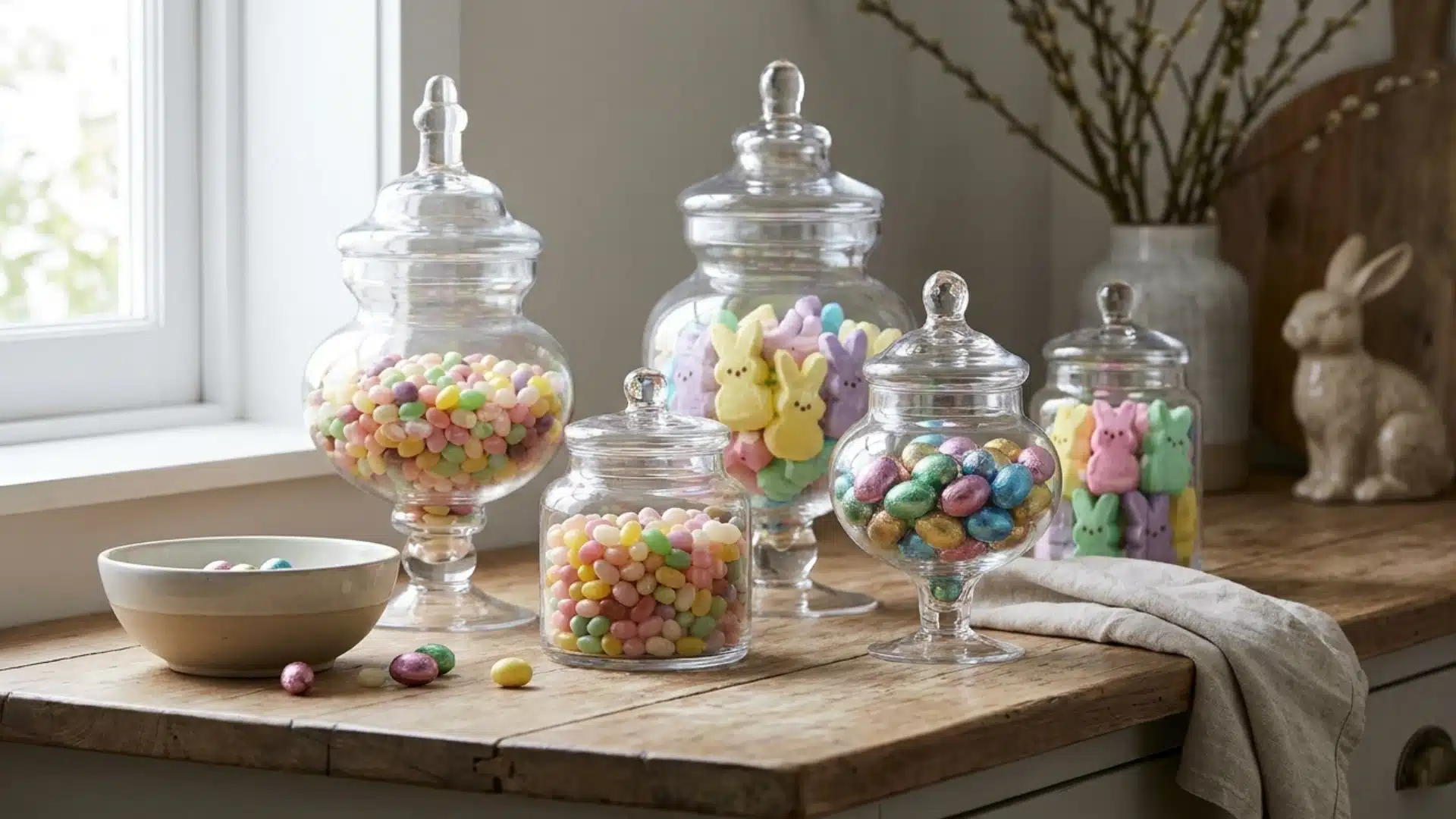
Materials: apothecary jars, pastel candies, cookies, marshmallows, or wrapped chocolates
Fill clean, dry apothecary jars with pastel-colored candies, cookies, marshmallows, or wrapped chocolates. Layer different treats in separate jars rather than mixing everything into one for a cleaner visual effect.
Arrange the filled jars together on the counter or island as an edible decoration display.
DIY Easter Decoration Ideas
Easy, hands-on projects for anyone who wants their Easter decor to feel a little more personal.
A Quick Safety Note: Several of these projects use hot glue guns, scissors, or spray sealant. Keep young kids away from the glue gun station and work in a ventilated space when using sealant or spray paint.
37. Speckled Easter Eggs
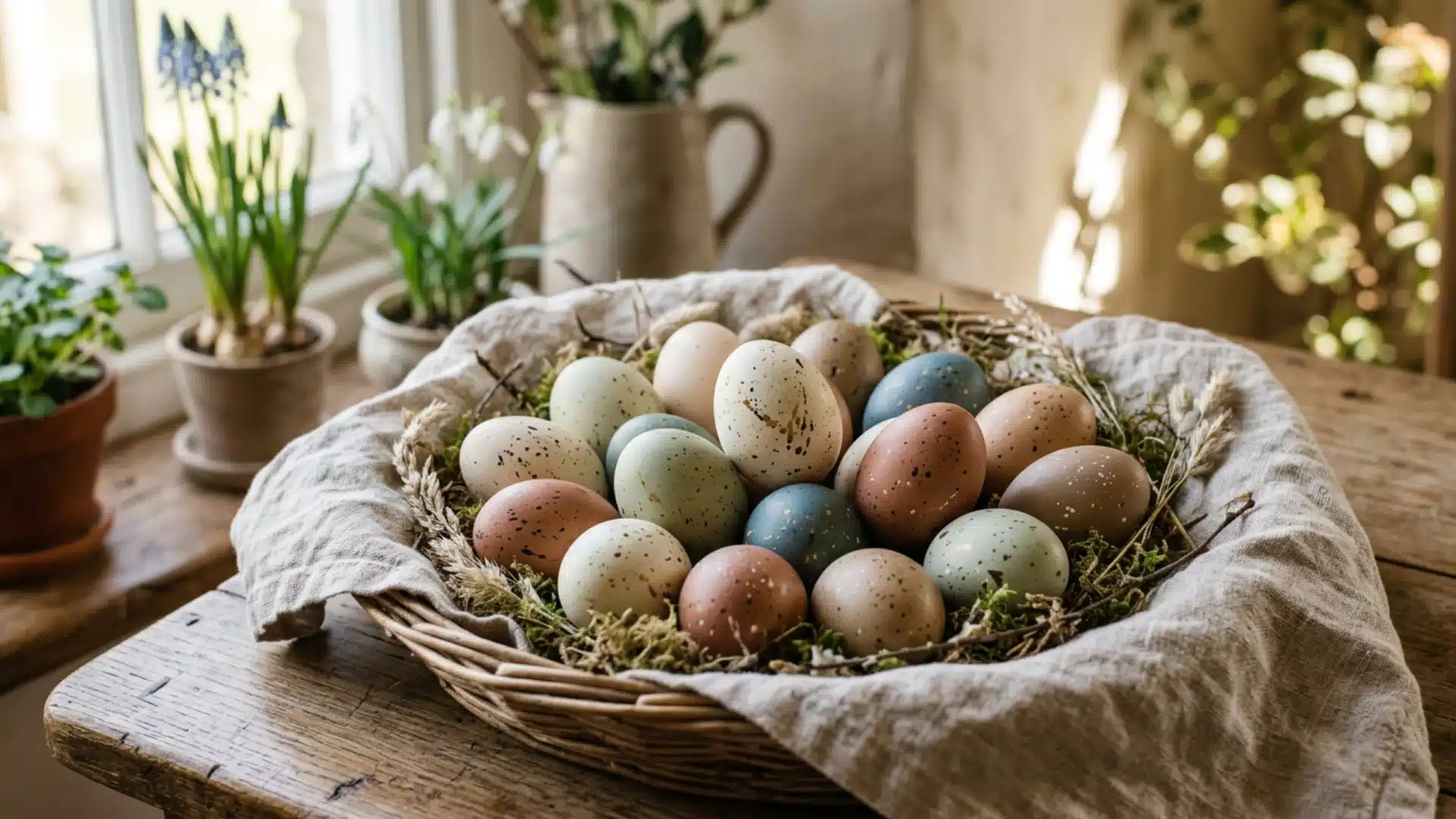
Materials: Wooden, plastic, or hollow eggs, muted acrylic paint, small stiff-bristle brush or toothbrush
Paint each egg a solid muted base color and let it dry completely. Dip a stiff-bristle brush or old toothbrush into a contrasting paint color, then flick the bristles gently over the egg to create fine speckles.
Let the speckled layer dry fully before handling or displaying.
38. Botanical Decoupage Eggs
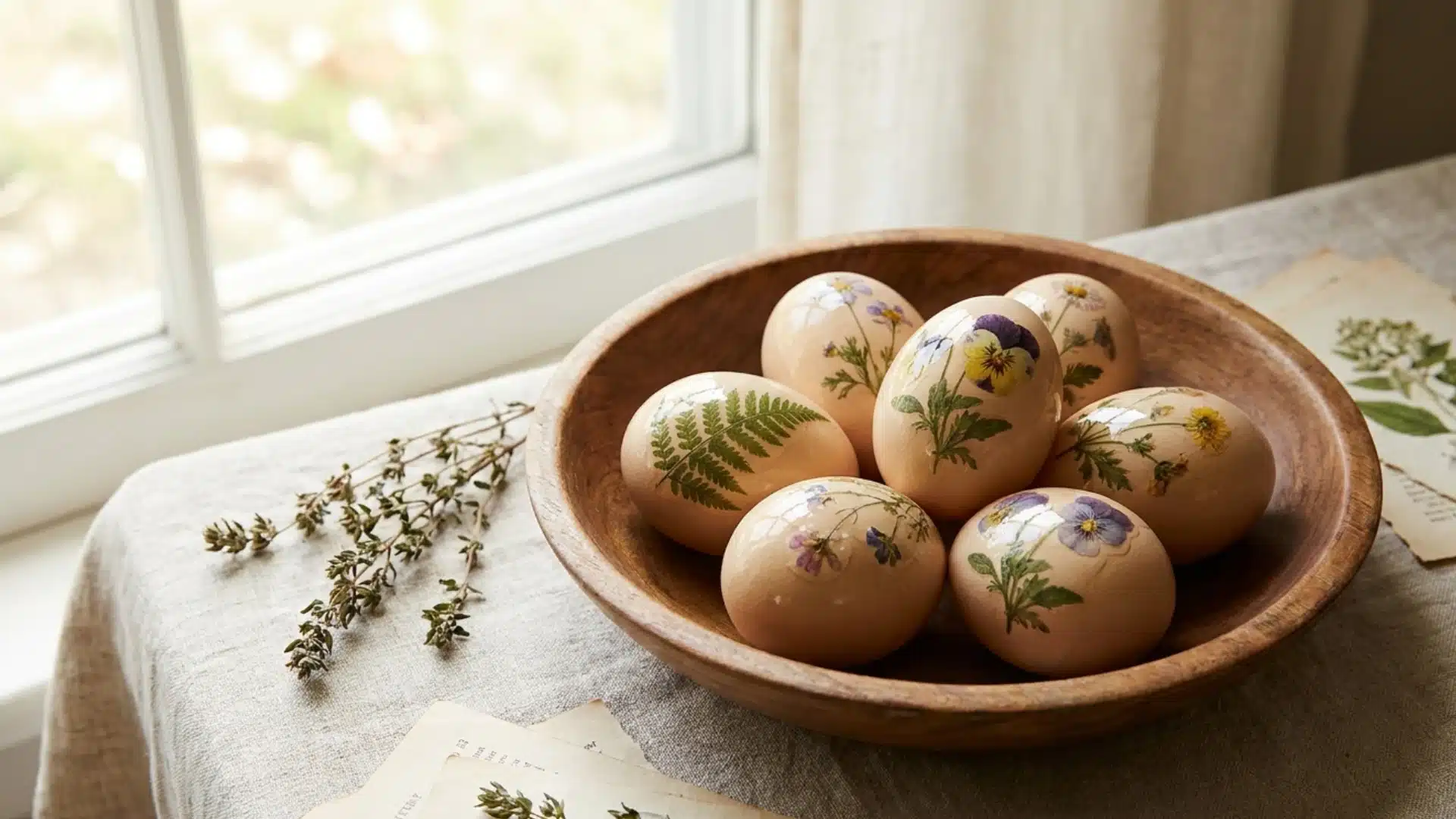
Materials: Plain eggs (wooden or hollow), floral napkins or decoupage paper, Mod Podge, small brush
Separate the printed layer of a floral napkin if using one, since only the top layer is needed.
Brush a thin layer of Mod Podge onto the egg, then press the paper or napkin piece into place, smoothing out any wrinkles. Seal with a final coat of Mod Podge once the design is fully applied.
39. Fabric-Wrapped Easter Eggs
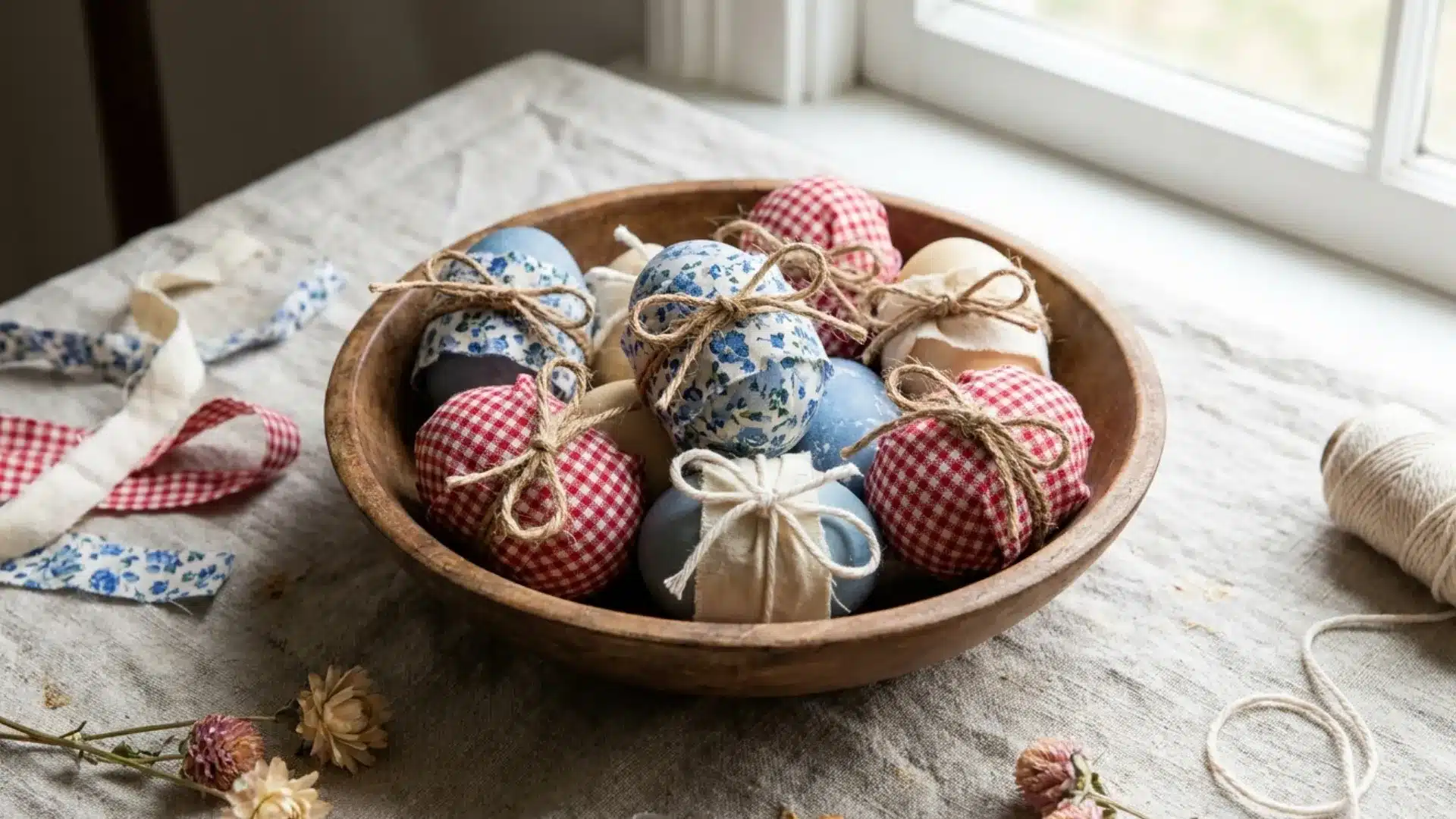
Materials: Reusable eggs, gingham, linen, or floral fabric scraps, yarn or ribbon, glue
Cut fabric scraps into strips or small squares sized to wrap around each egg.
Apply glue to the egg, then wrap with fabric, trimming excess. Finish by wrapping a thin piece of yarn or ribbon around the egg for added texture.
40. Carrot Garland
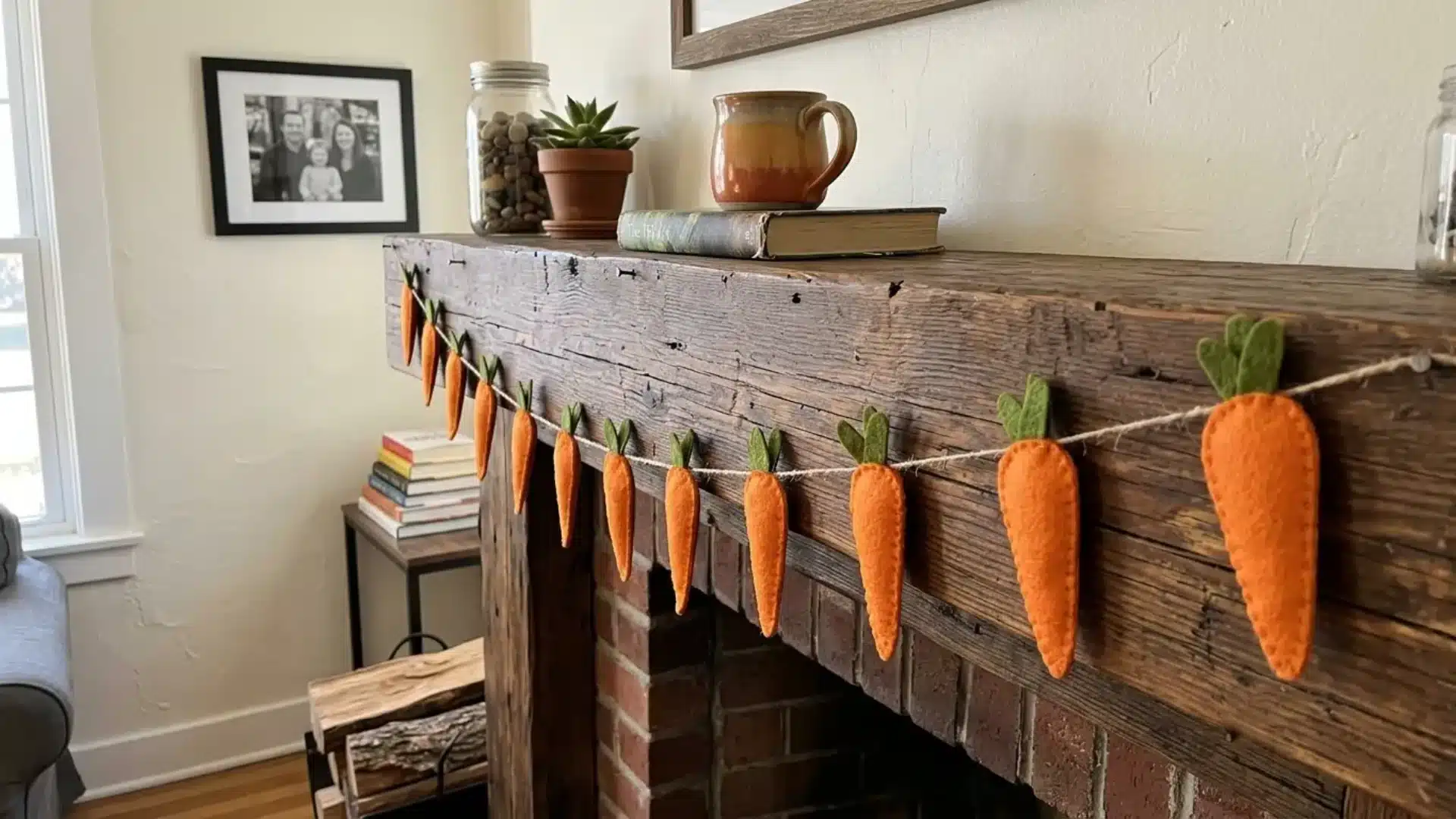
Materials: Orange felt, paper, or fabric, green yarn or felt (for tops), string or twine, hot glue
Cut carrot shapes from orange felt, paper, or fabric, then cut small green pieces to form the leafy tops.
Glue the green pieces to the top of each carrot shape. String the finished carrots onto a length of twine, spacing them evenly, then hang the garland across a mantel, shelf, or doorway.
41. Bunny Banner
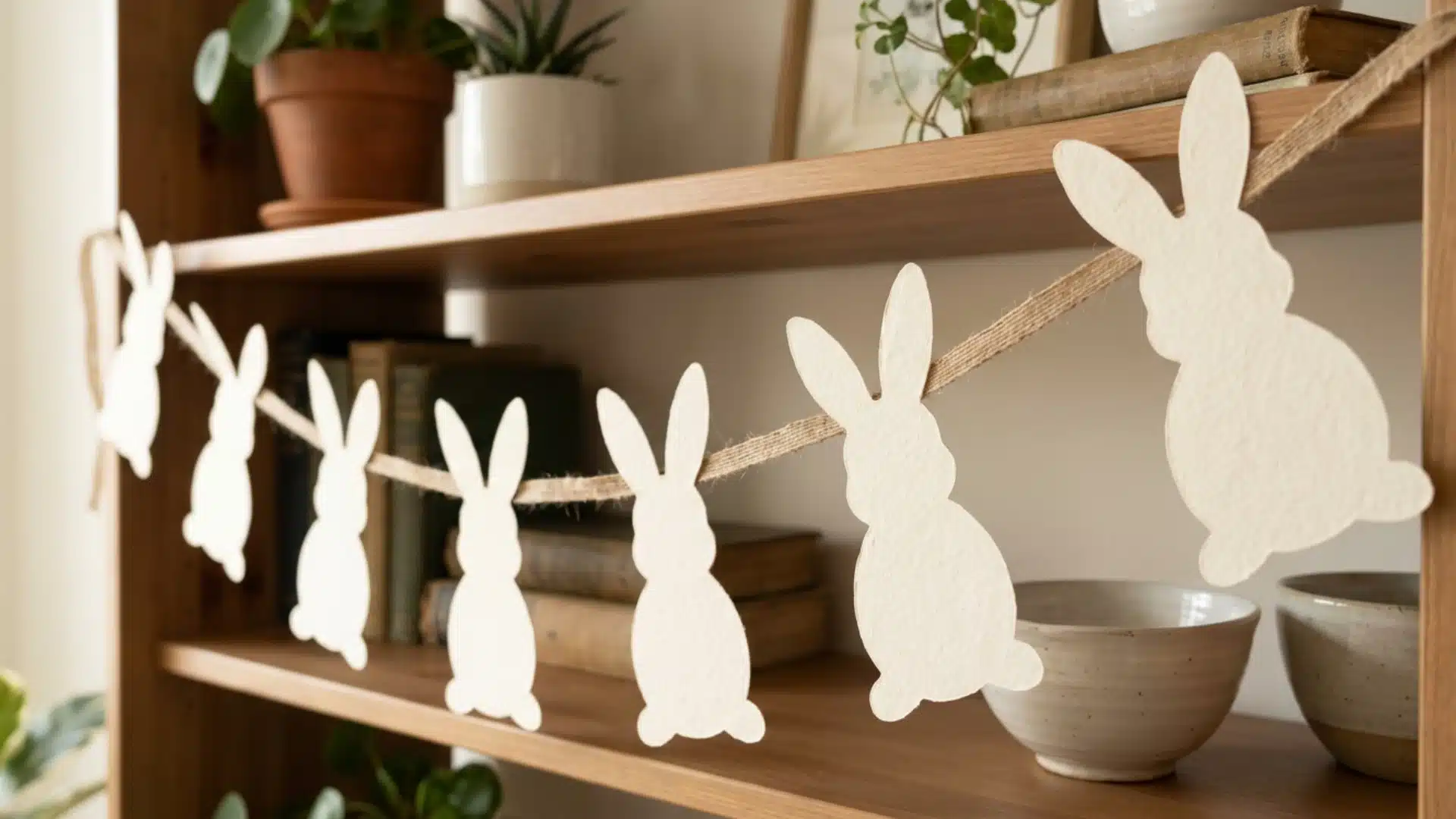
Materials: Cardstock, felt, or fabric, ribbon or twine, scissors, hole punch or glue
Cut rabbit silhouette shapes from cardstock, felt, or fabric using a template or freehand design.
Punch a small hole at the top of each silhouette, or use a dot of glue to attach them directly to a length of ribbon or twine. Space the bunnies evenly along the strand, then hang the finished banner.
42. Paper Flower Wall
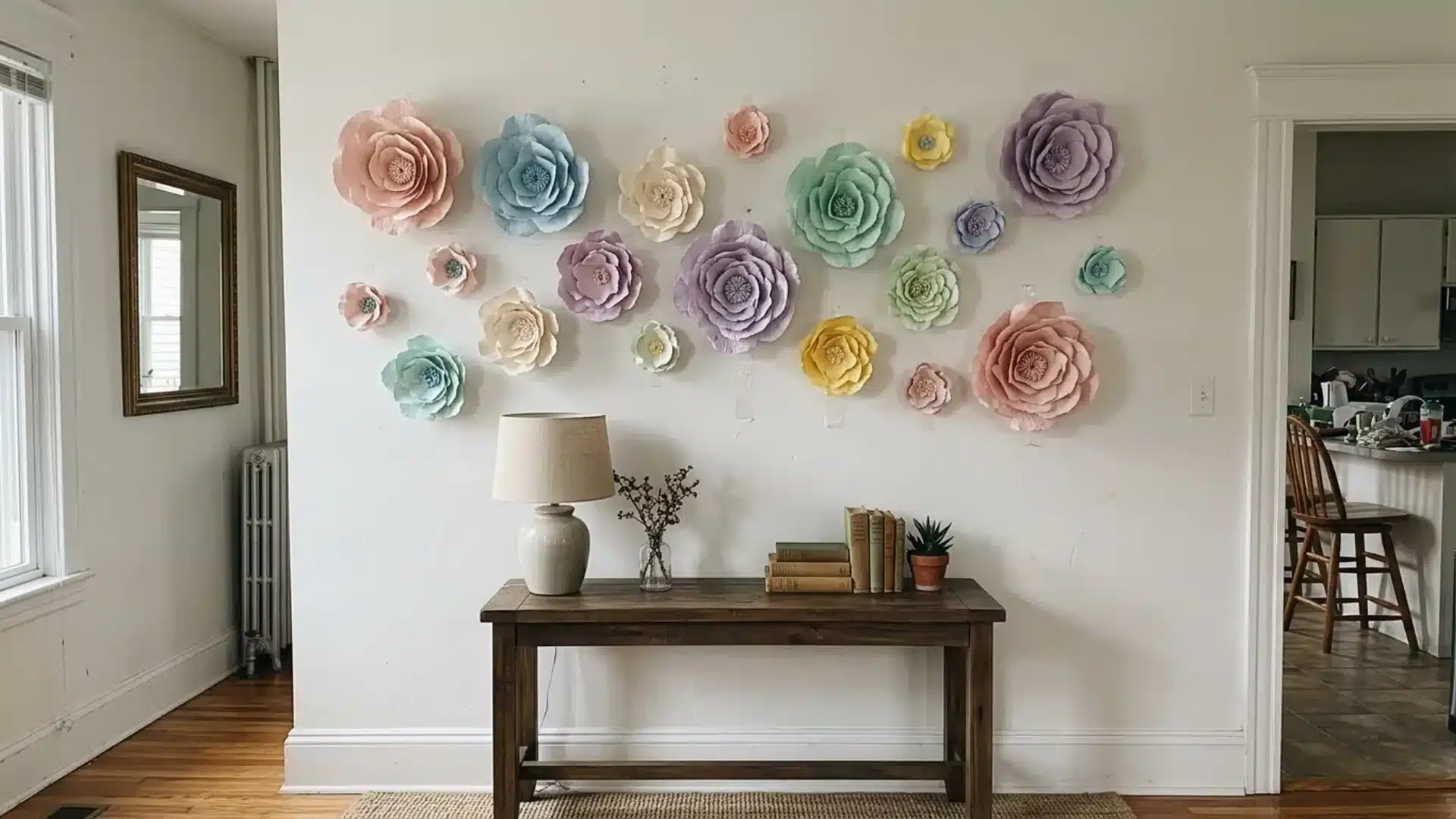
Materials: Colored paper or cardstock, scissors, glue, adhesive or tape
Cut multiple paper strips or petal shapes for each flower, then layer and glue them together to form a full paper flower. Repeat to create several flowers in varying sizes and colors.
Attach finished flowers to the wall above a console, buffet, or children’s table with adhesive strips.
43. Bunny Mason Jar Vases
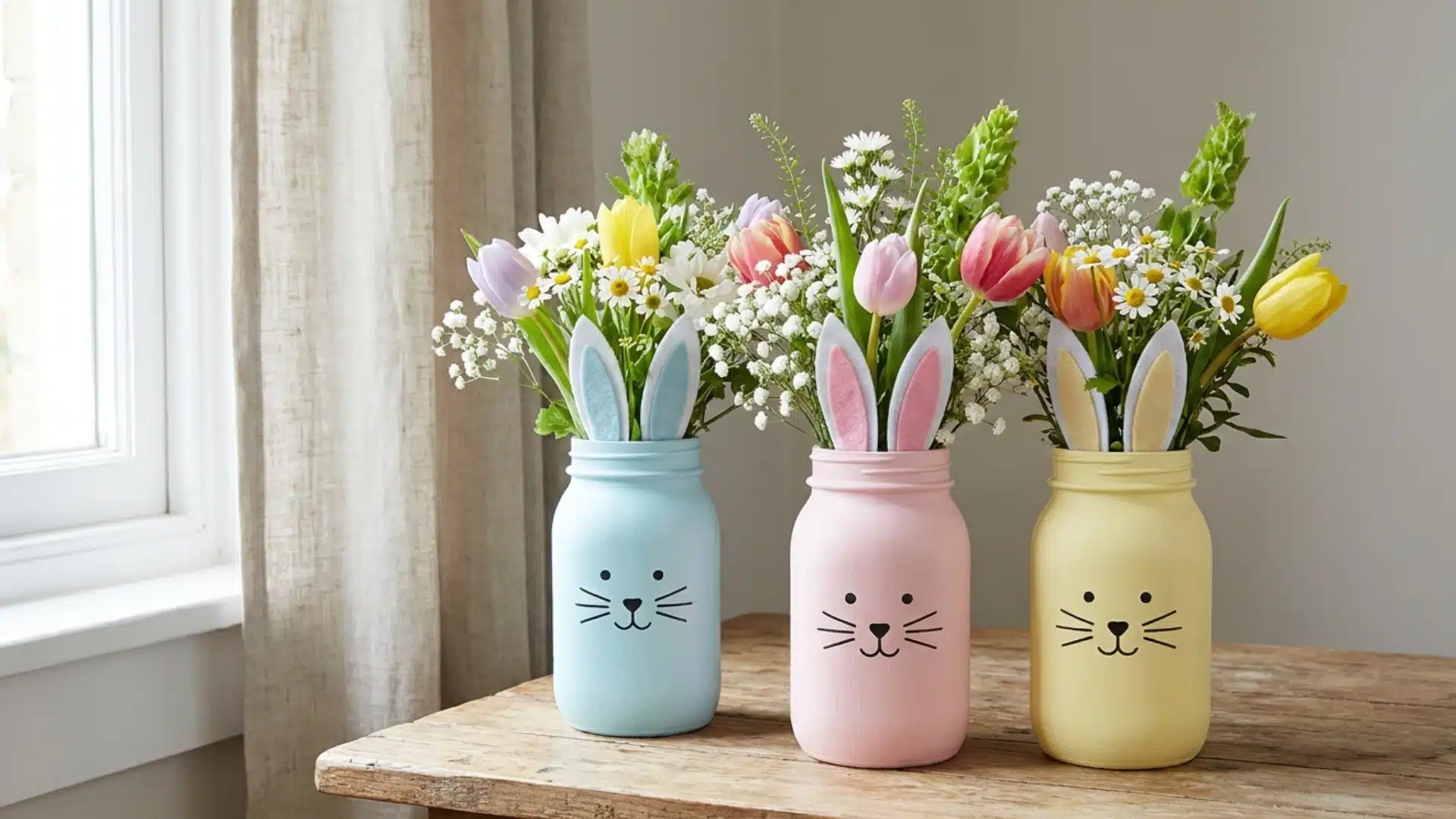
Materials: Glass mason jars, white or pastel paint, felt or paper ears, fine-tip marker
Paint each mason jar a solid white or pastel color and let it dry completely.
Cut small ear shapes from felt or paper and glue them to the inside rim or exterior of the jar.
Add simple facial details using a fine-tip marker, then fill the finished jar with fresh or faux flowers.
44. Upcycled Easter Basket
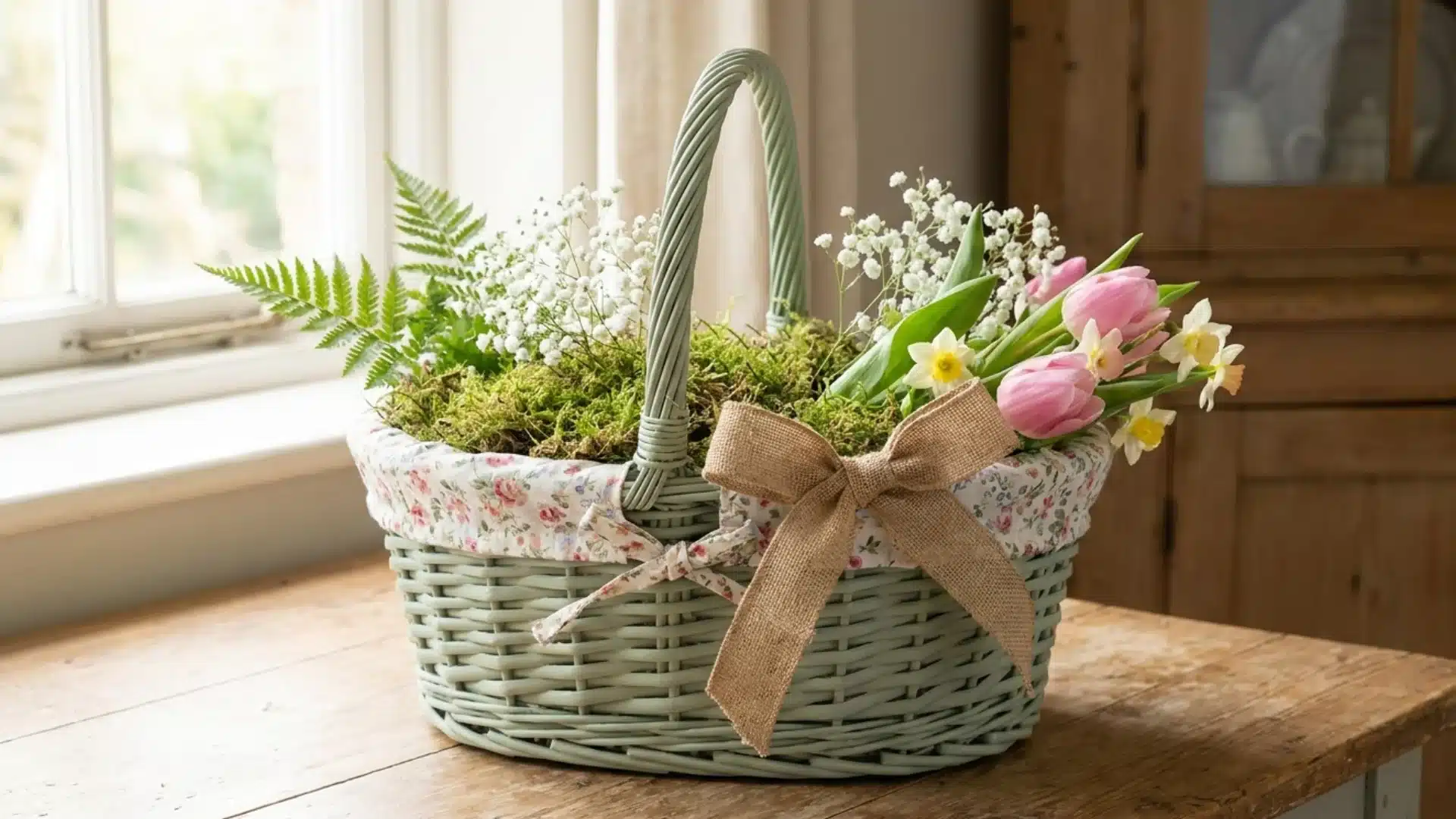
Materials: Thrifted or unused basket, paint, ribbon, fabric for lining, greenery or flowers
Clean the basket thoroughly, then apply a coat of paint if you want to update its color.
Once dry, line the interior with a piece of fabric, tucking the edges neatly around the rim.
Add a ribbon accent to the handle, then fill the basket with greenery or flowers to finish.
Easter Bedroom and Children’s Room Ideas
Soft, playful touches that bring a little Easter charm into the rooms where you actually unwind.
45. Easter Bedroom Accents
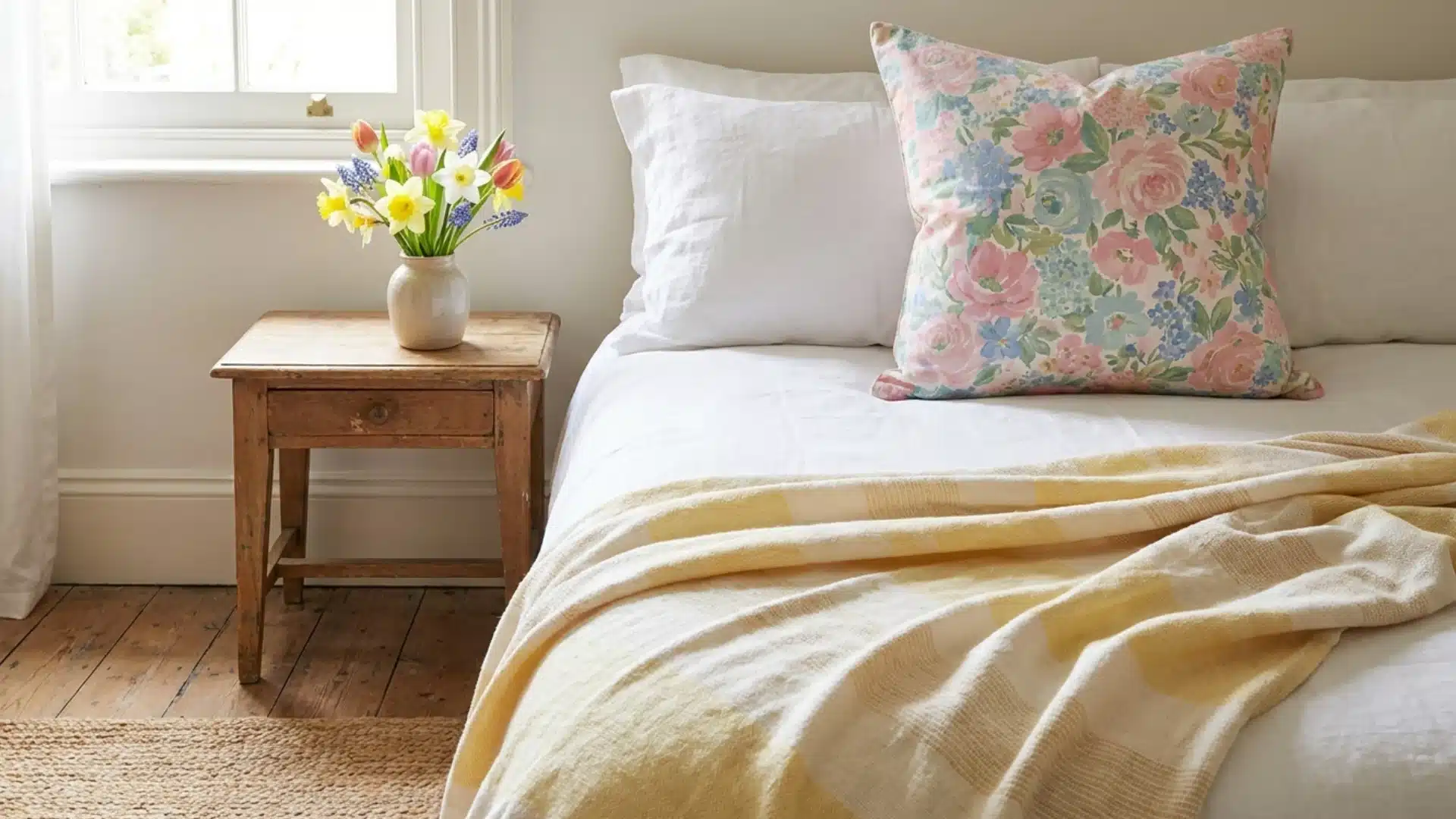
Materials: Floral cushion, lightweight pastel throw, small vase, one understated Easter ornament
Swap one existing throw pillow on the bed for a floral or pastel-patterned cushion.
Drape a lightweight pastel throw across the foot of the bed or over a nearby chair. Add a small vase of flowers to the bedside table, along with one understated Easter ornament to complete the refresh.
46. Mini Spring Wreath
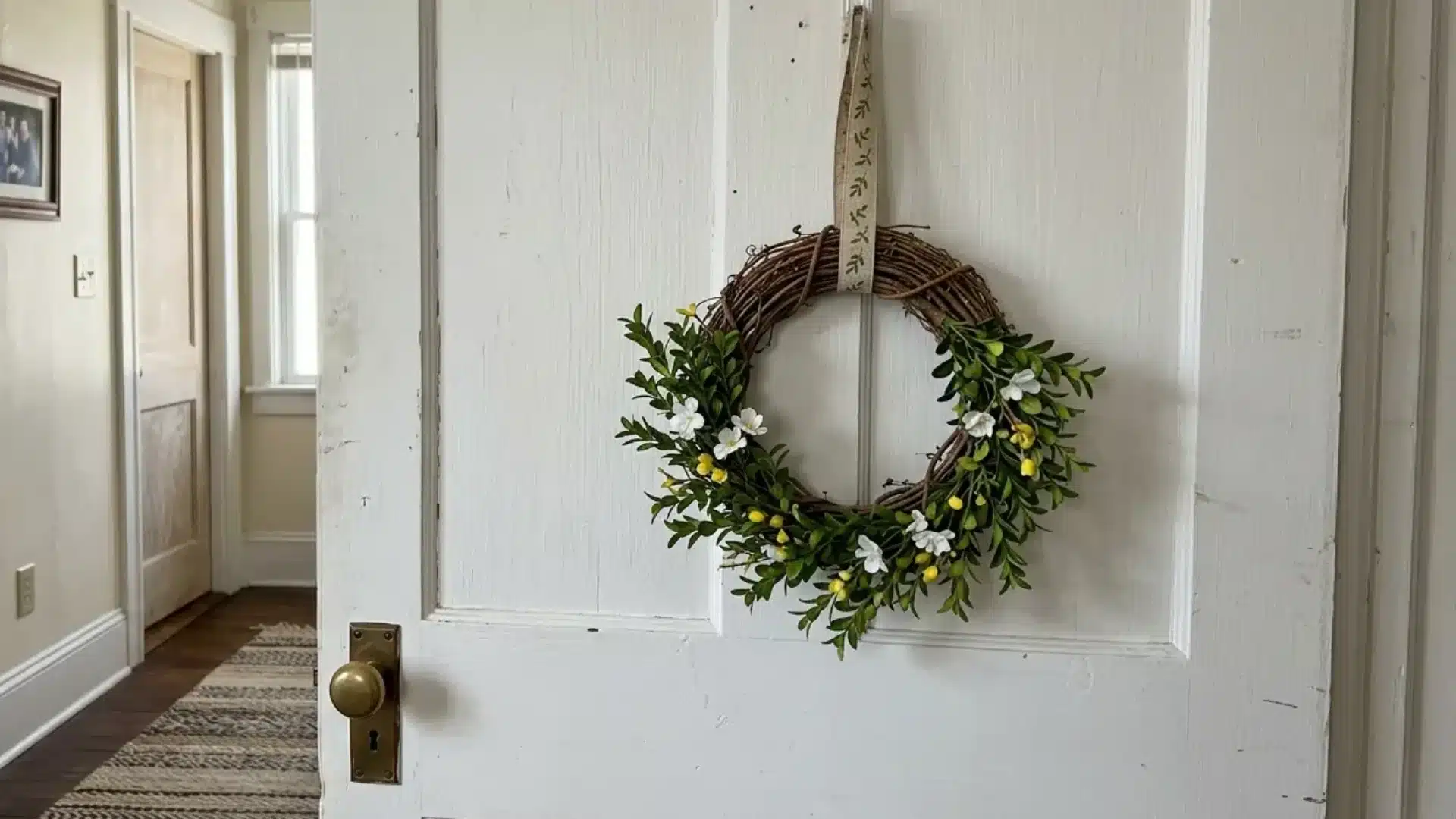
Materials: Small floral, grapevine, or boxwood wreath, ribbon or adhesive hook
Choose a mini wreath sized appropriately for a bedroom door or the wall space above the bed.
Attach a ribbon loop to the top if one isn’t already included. Hang the wreath using a small adhesive hook or over-the-door hanger, positioning it at eye level for the best visual impact.
47. Easter Reading Corner
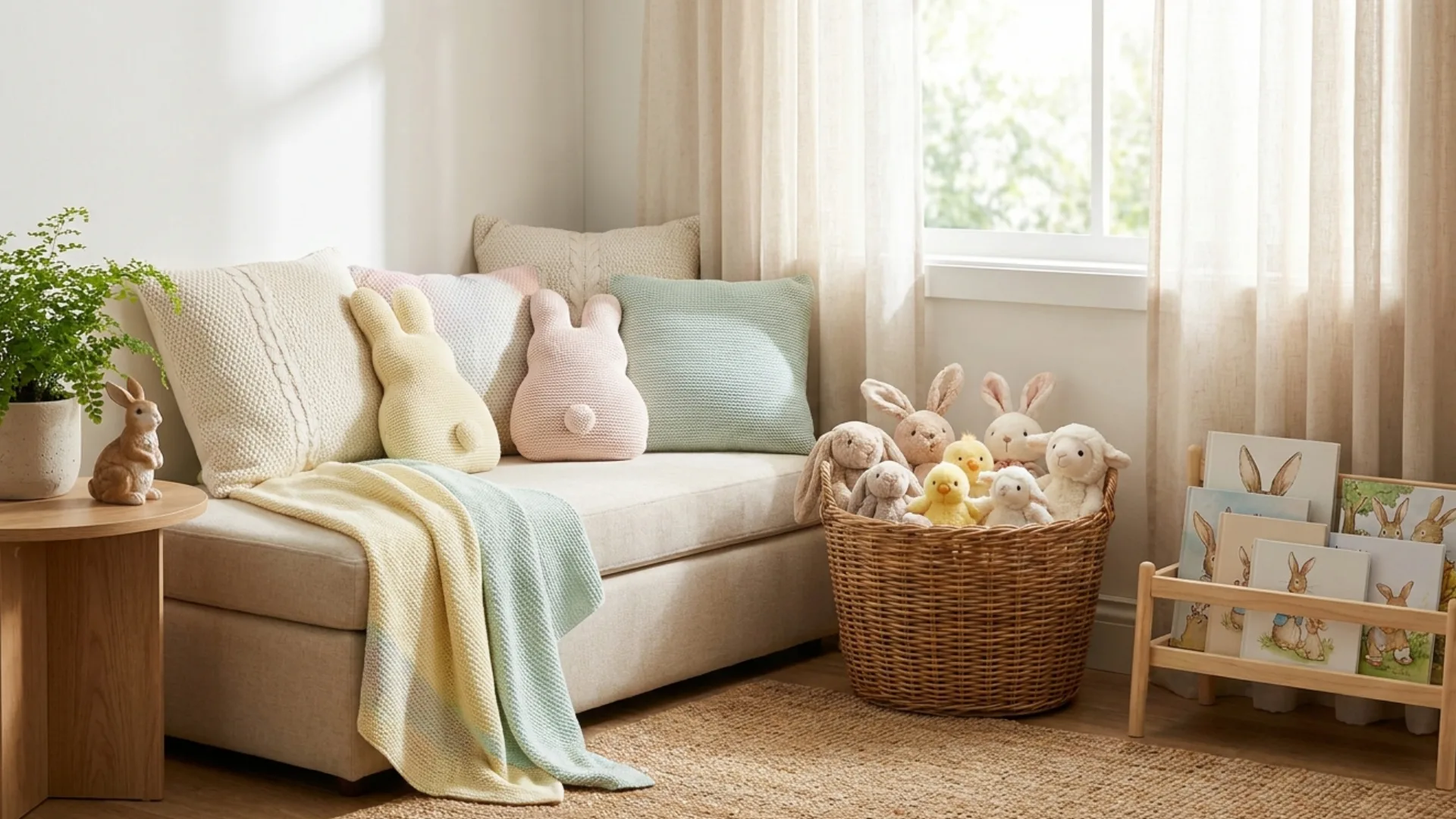
Materials: Bunny-themed books, soft cushions, lightweight blanket, basket of plush animals
Arrange a small stack of bunny-themed or spring-related books on a side table or shelf within the reading corner.
Add a few soft cushions to the seating area, along with a lightweight blanket draped over the arm or back.
Place a basket of plush animals nearby for kids to grab and enjoy.
48. Hanging Paper Eggs
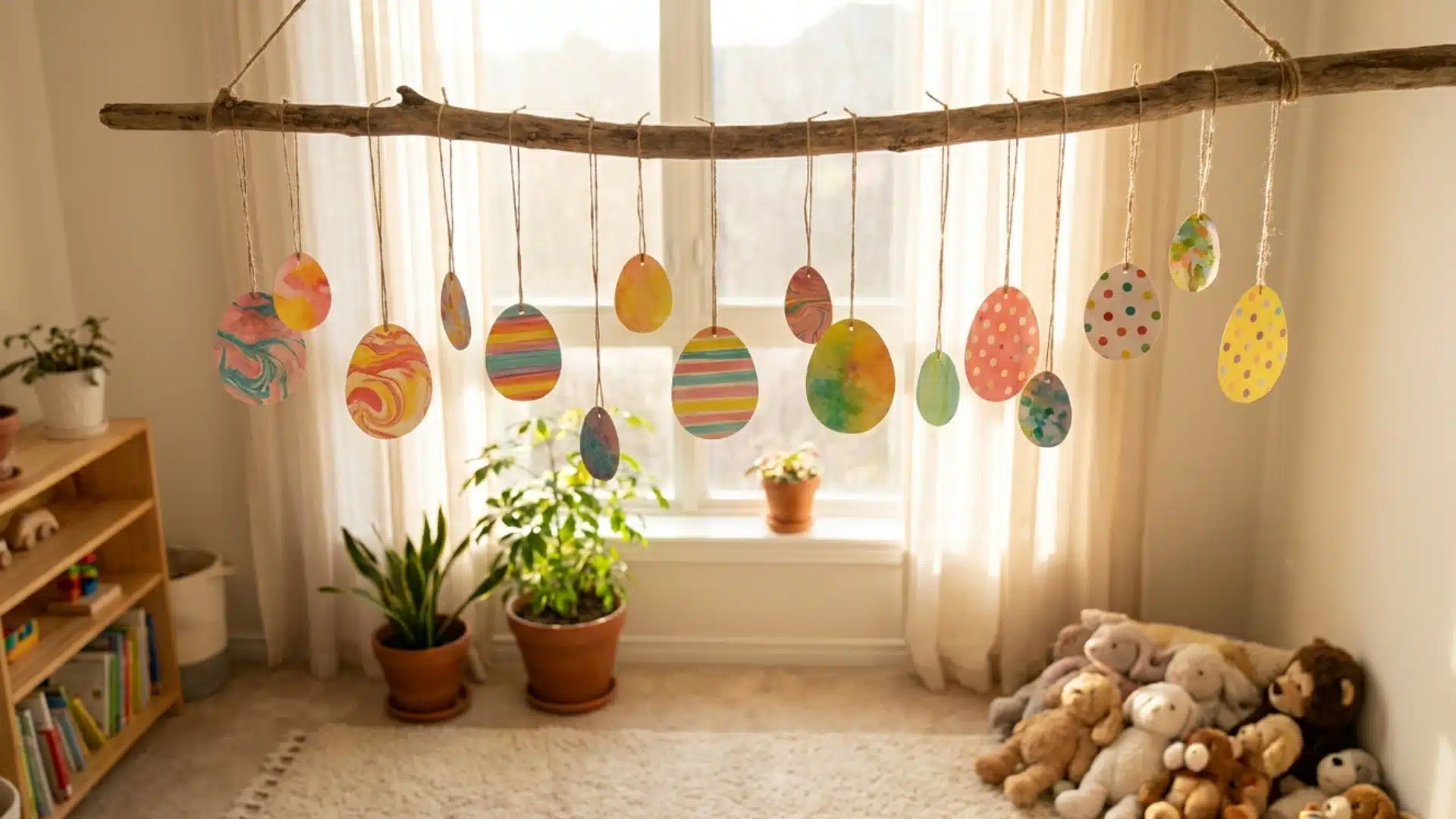
Materials: Colorful paper, scissors, string or fishing line, tape or glue
Cut oval egg shapes from colorful paper, doubling up two shapes per egg for a fuller look if desired.
Attach a length of string or fishing line to the top of each paper egg using tape or a small dot of glue.
Hang the finished eggs from a branch, shelf edge, window frame, or ceiling.
49. Nightstand Easter Vignette
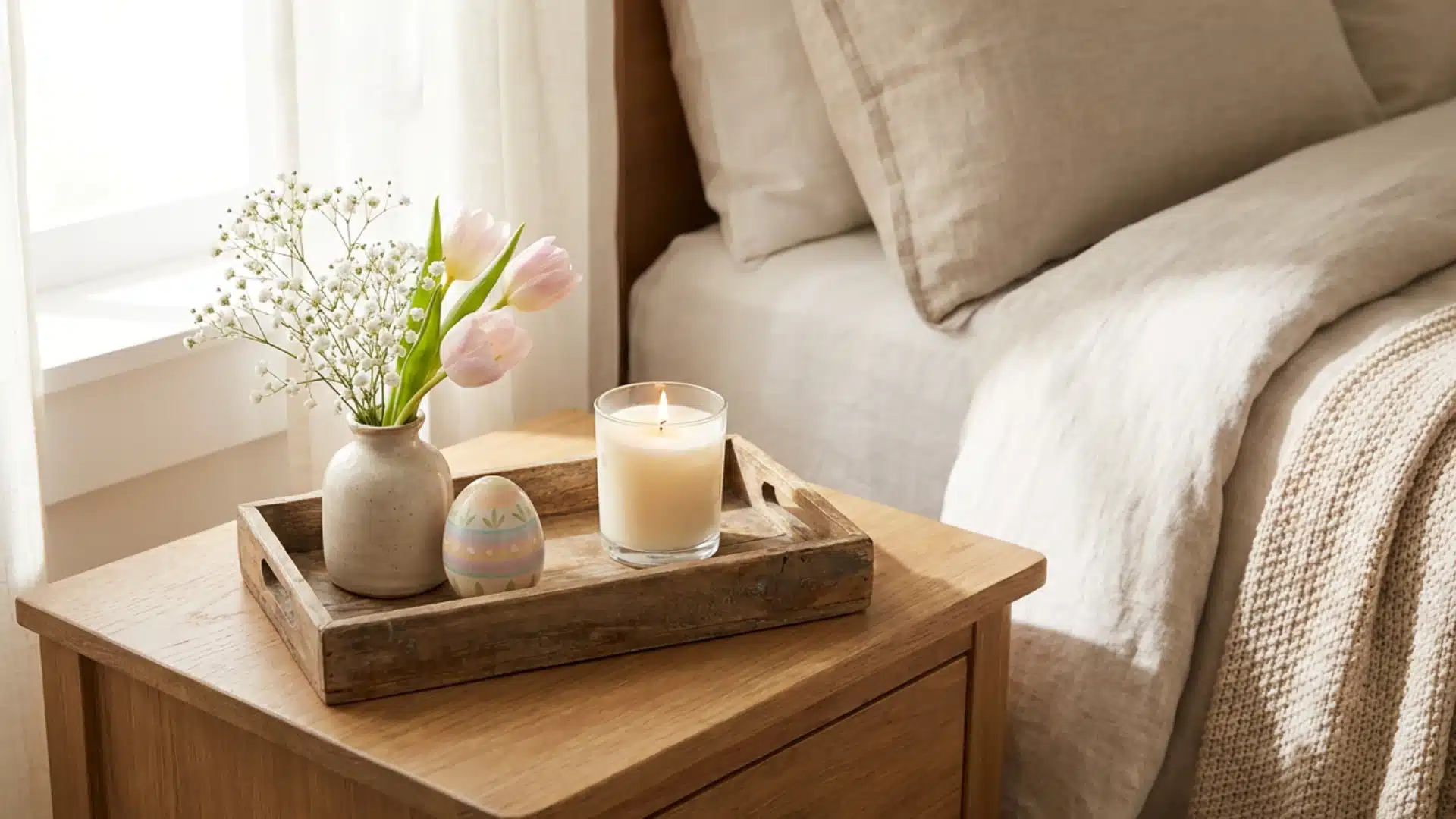
Materials: Small vase or flowers, decorative egg, candle, small tray
Place a small tray on the nightstand to anchor the display.
Add a mini vase of flowers or a few stems as the centerpiece. Position one decorative egg and a small candle alongside it, keeping the overall footprint compact enough not to crowd the nightstand’s everyday use.
50. Easter Window Curtain Ties
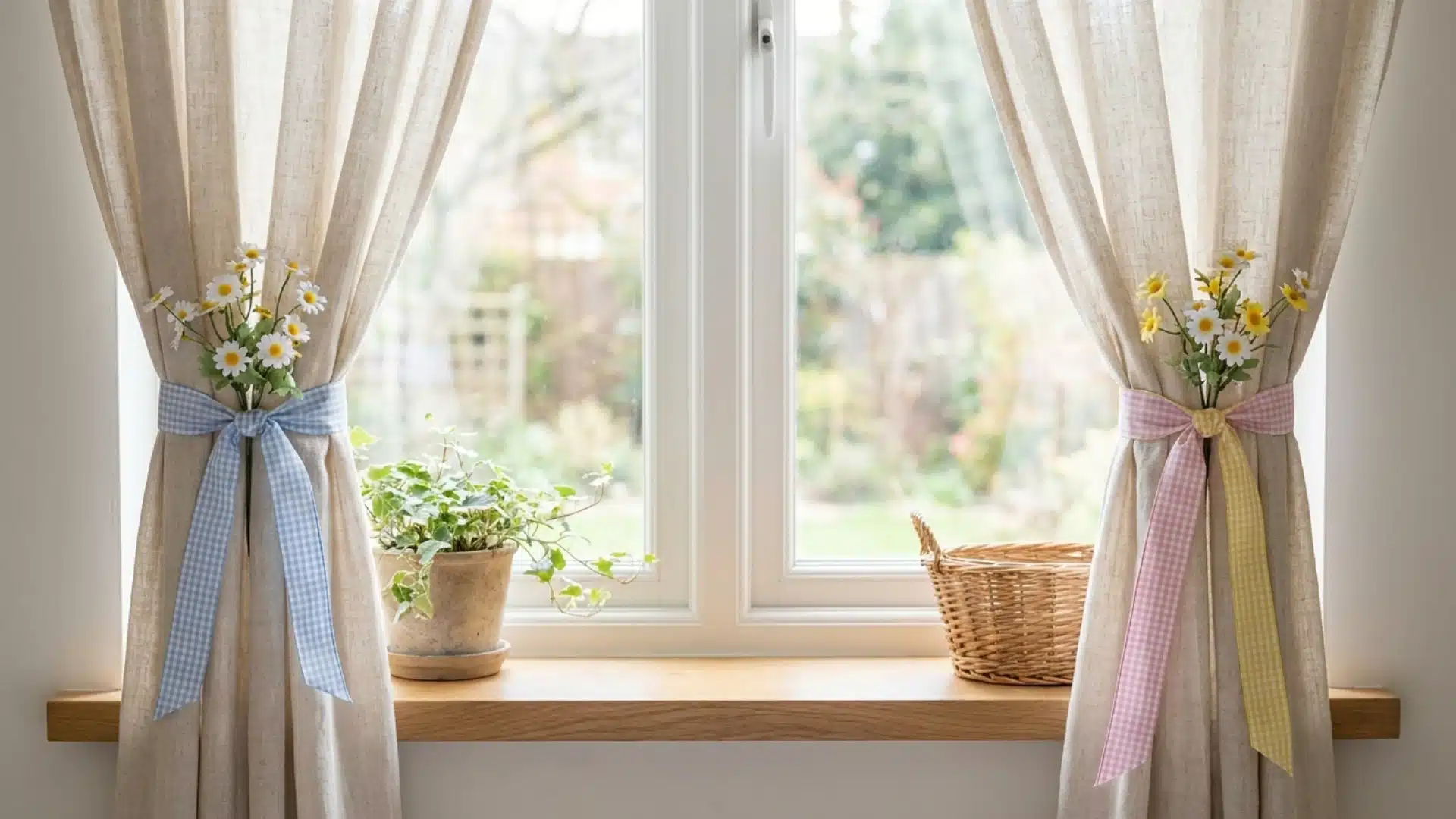
Materials: Pastel ribbon or fabric strips, small artificial flowers (optional)
Cut lengths of pastel ribbon or fabric long enough to wrap around gathered curtains.
Tie the ribbon around each curtain panel at roughly the midpoint, securing with a simple knot or bow.
Glue or tuck a small artificial flower into the knot of the bow for an extra seasonal touch.
Outdoor Easter Decoration Ideas
Simple ways to carry the Easter cheer from your front door all the way into the yard.
51. Outdoor Easter Egg Tree
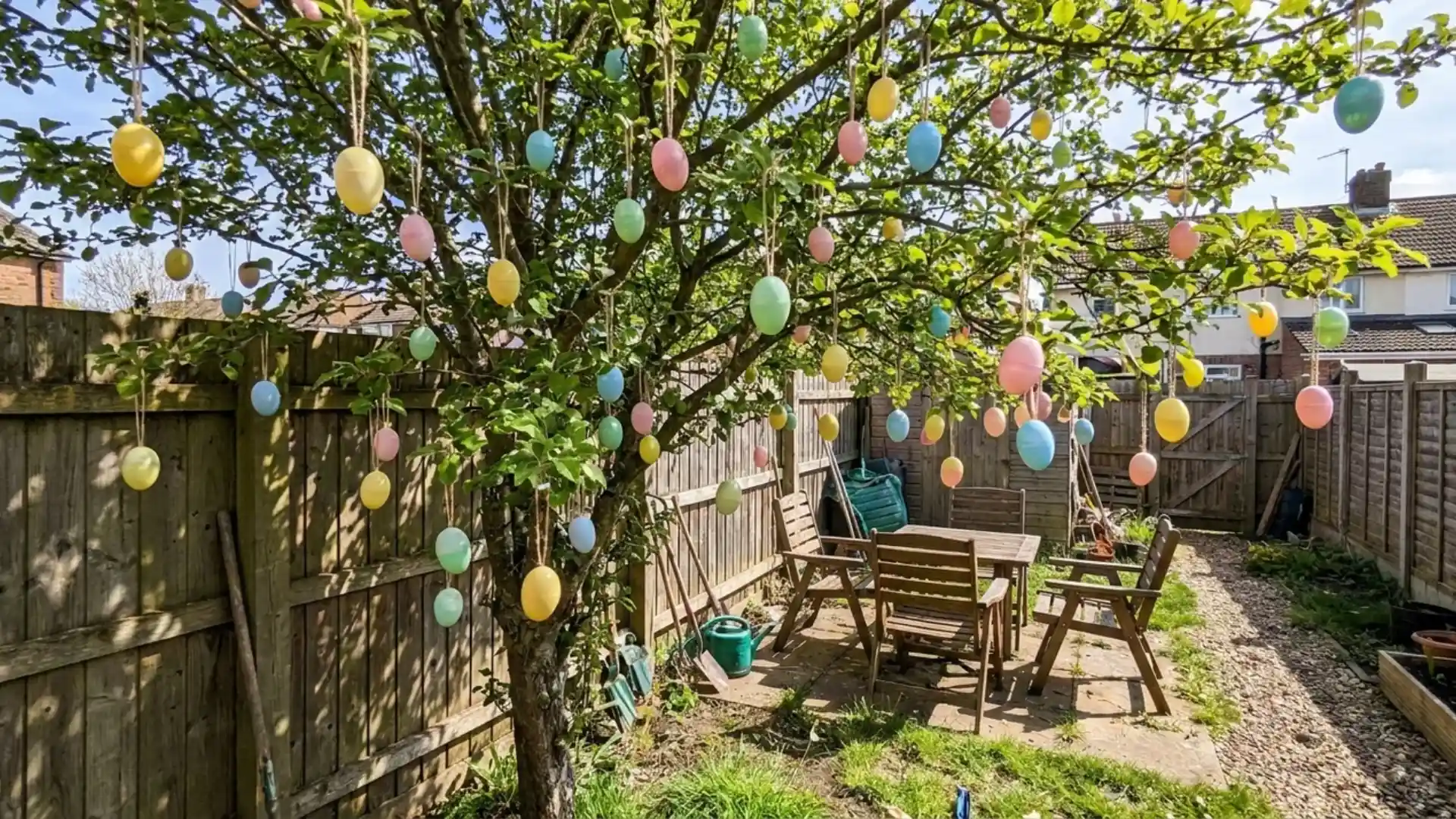
Materials: weather-resistant plastic eggs, ribbon, low tree branches or a freestanding branch arrangement
Choose eggs labeled weather-resistant; standard paper or fabric-covered eggs won’t last outdoors.
Tie a length of ribbon or string through a small hole or around each egg. Hang the eggs from low, accessible tree branches, spacing them out so the display looks full without feeling cluttered.
52. Easter Window Box
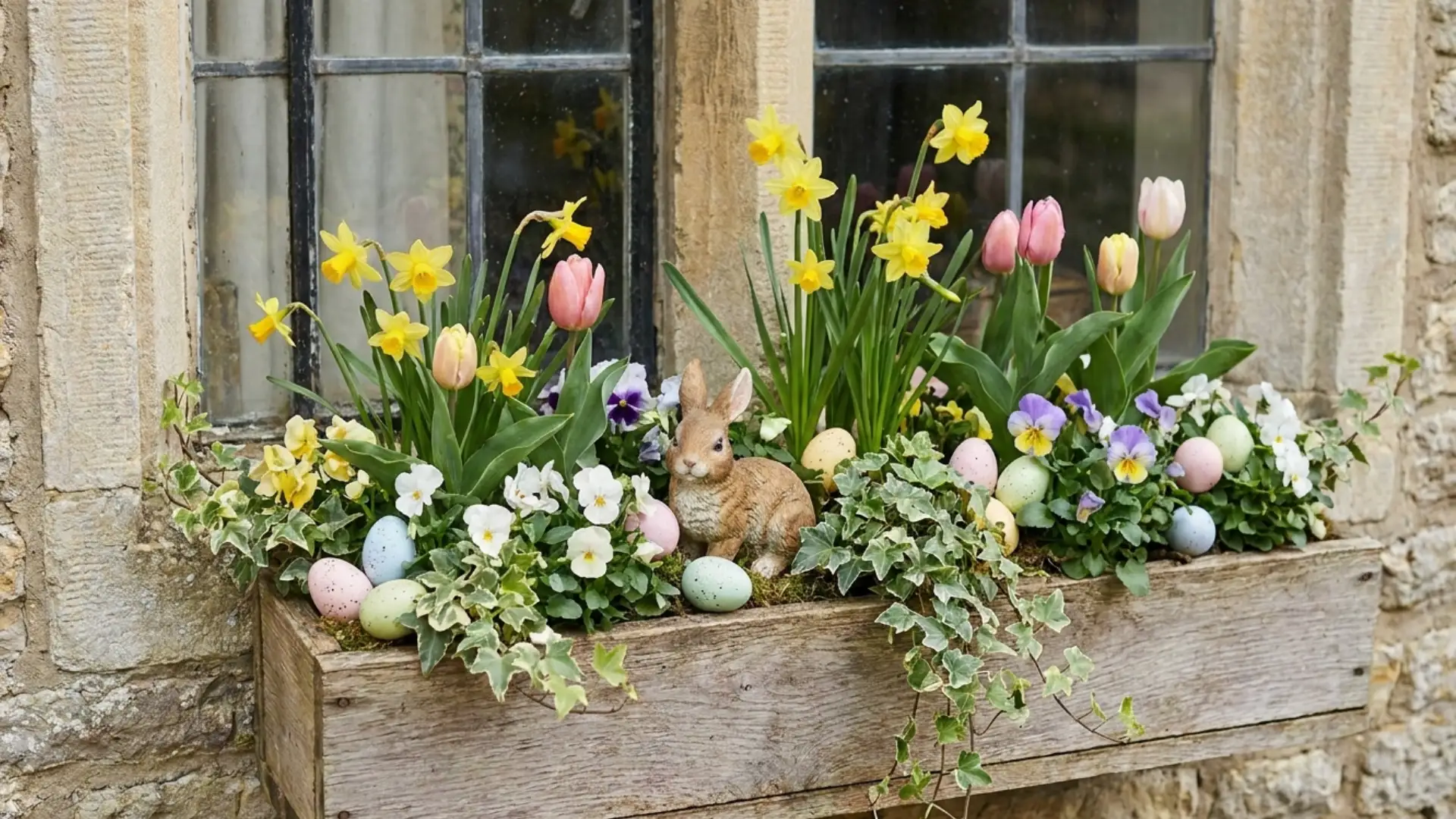
Materials: Spring flowers, greenery, decorative eggs, small bunny figure
Fill your existing window box with a base layer of soil or floral foam if it isn’t already planted.
Add spring flowers and greenery, filling in gaps so the arrangement looks lush rather than sparse.
Tuck a few decorative eggs and a small bunny figure among the greenery as a finishing touch.
53. Easter Egg Hunt Display
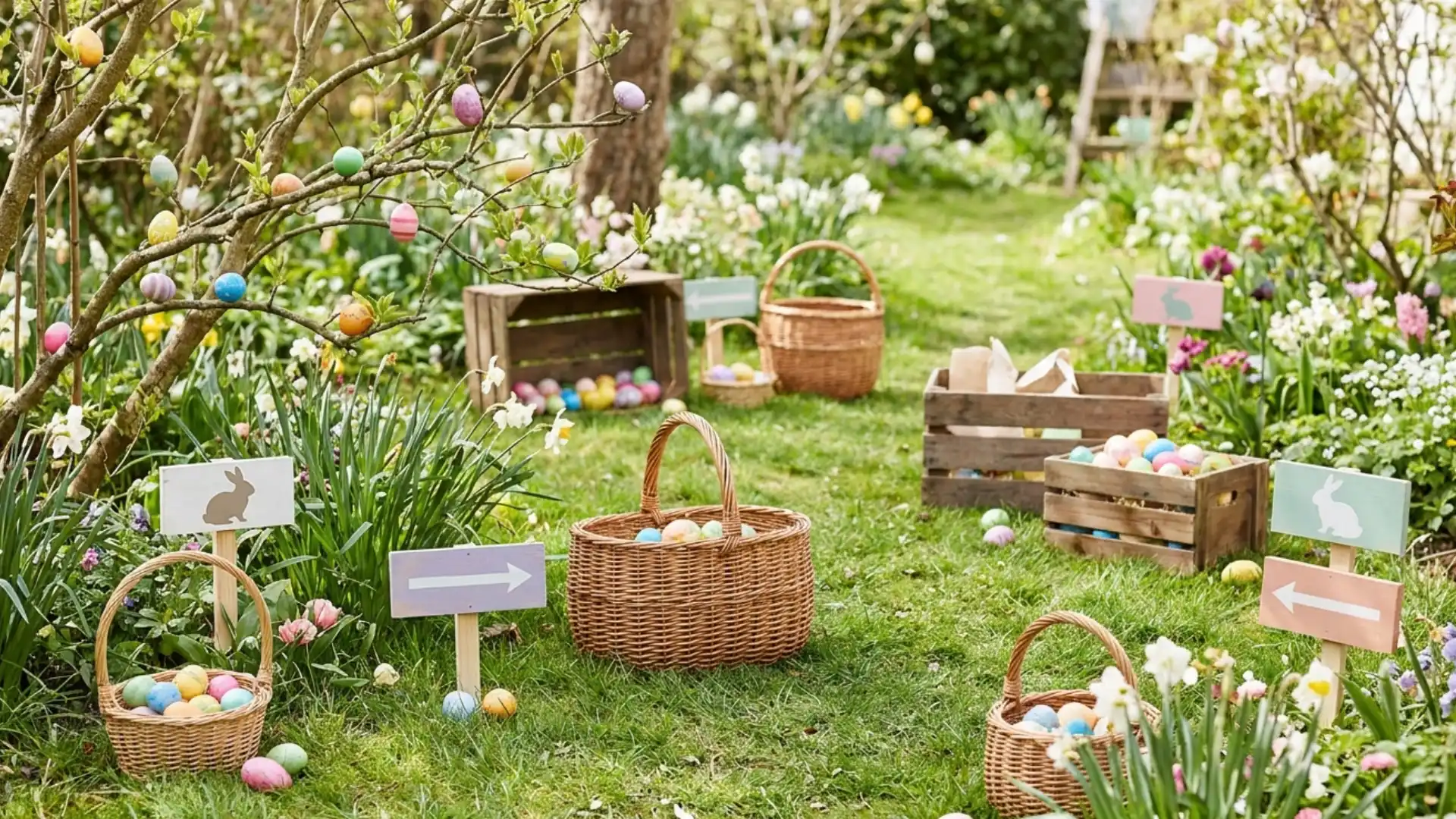
Materials: Colorful eggs, baskets, directional signs, small yard markers
Scatter colorful eggs at different heights and hiding spots, some visible, others tucked away based on age.
Place empty baskets near the starting point for collection.
Add small directional signs or yard markers around the space to double as both hunt guidance and standalone decoration. Small-spend swaps that still deliver full seasonal impact.
54. Painted Rock Eggs
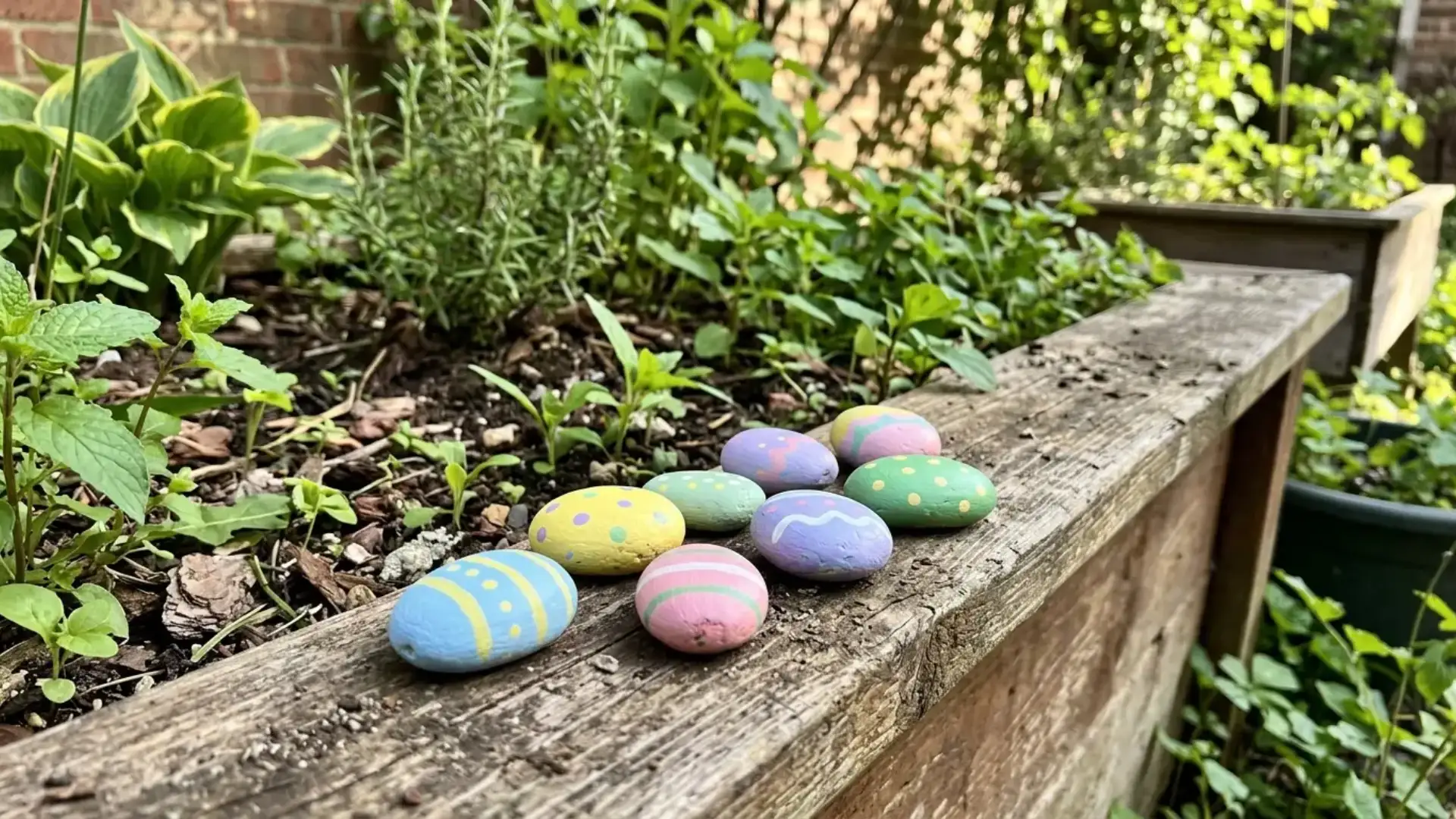
Materials: Smooth rocks, acrylic paint, small paintbrush, clear sealant
Wash and dry smooth rocks collected from the yard.
Paint each one in a solid pastel base, then let it dry. Add simple stripes, dots, or patterns using a fine brush.
Seal with a clear coat once finished, then scatter the rocks around planters or shelves.
55. Newspaper Easter Baskets
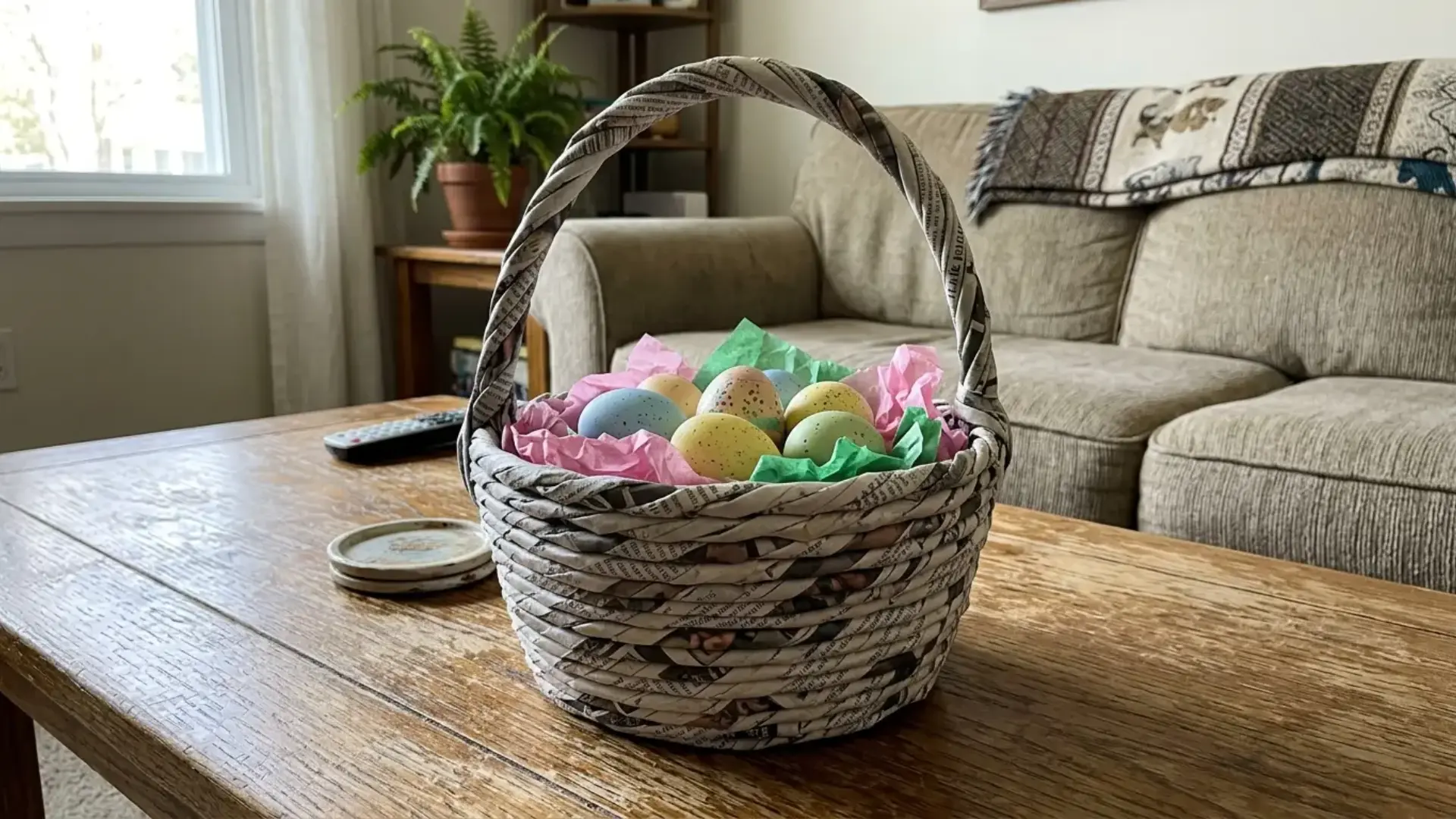
Materials: Old newspaper, glue, clothespins, ribbon
Roll newspaper sheets into tight tubes, then coil them into a basket shape, securing layers with glue.
Hold coils in place with clothespins while drying.
Add a ribbon handle once the shape sets. Fill with tissue paper and eggs for a free, sturdy container.
56. Cardboard Bunny Cutouts
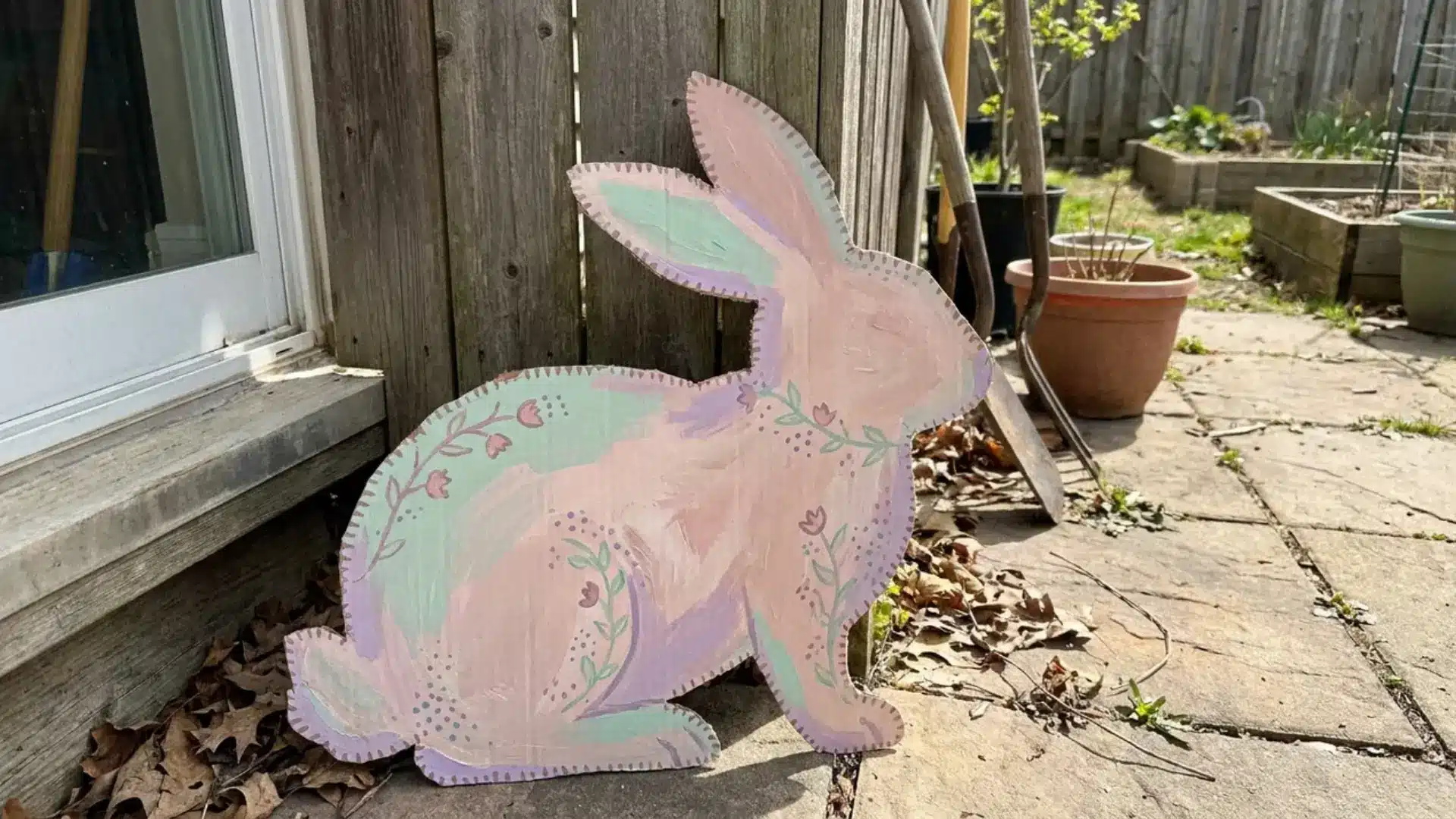
Materials: Cardboard, pencil, scissors, white or pastel paint
Sketch a bunny silhouette onto flattened cardboard, then cut it out carefully. Paint the shape white or a soft pastel and let it dry. Prop finished cutouts against a wall, window, or shelf edge.
This works well for larger yard displays without any real cost.
Easter Decorating Ideas for Kids and Family Spaces
Fun projects that engage the entire family in the setup process.
57. Handprint Bunny Art
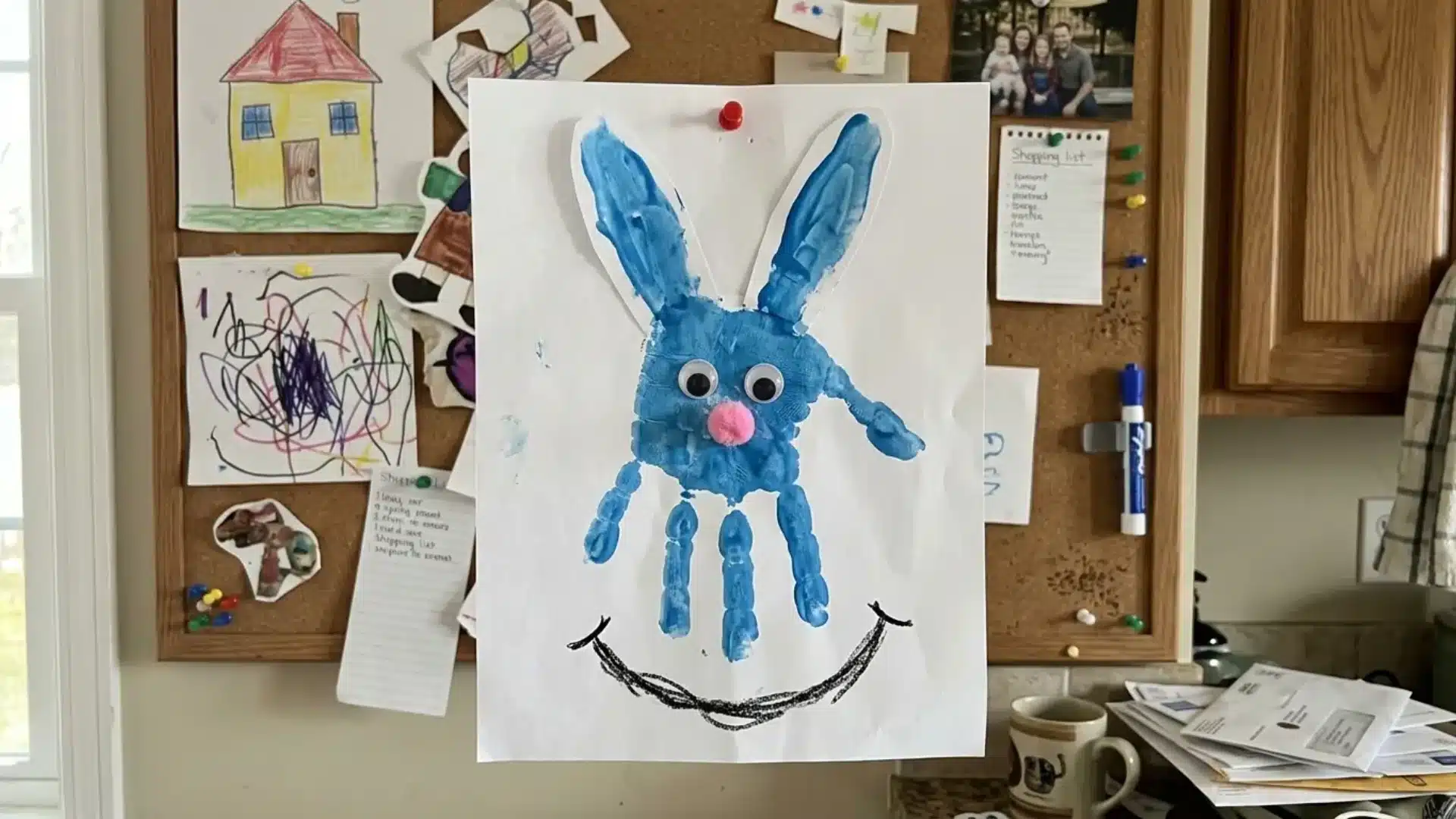
Materials: White or pastel paper, paint, paintbrush, googly eyes (optional)
Press a child’s paint-covered hand onto paper to form the bunny’s body and ears.
Let the print dry completely. Add googly eyes, a small pom-pom nose, and whiskers with a marker. Frame the finished piece or pin it to a family bulletin board.
58. Family Easter Craft Table
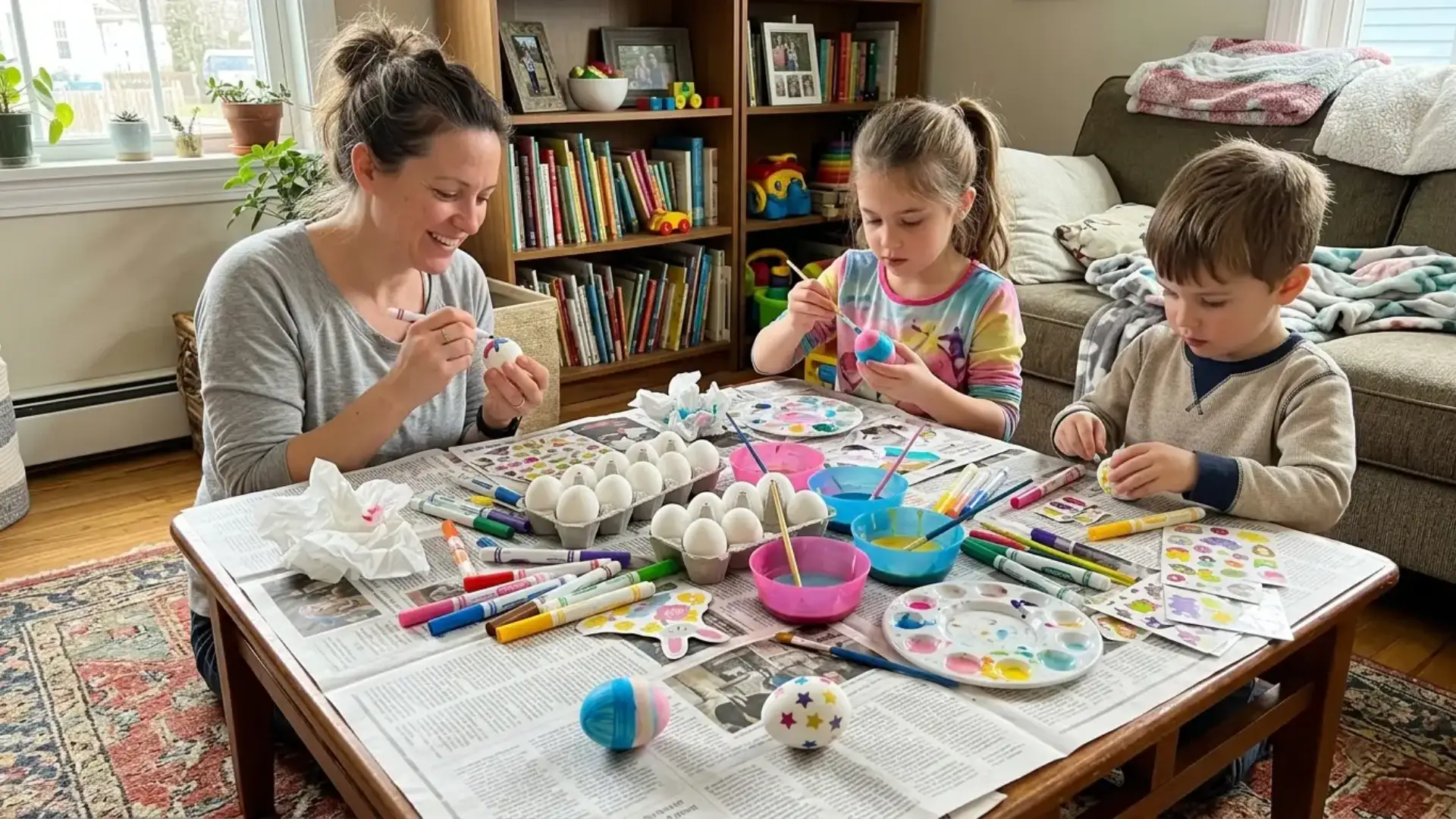
Materials: Plain eggs, markers, stickers, small bowls of paint
Set up a low table with plain eggs, markers, stickers, and small bowls of paint.
Let each family member decorate a few eggs their own way. Line the table with newspaper first for easy cleanup.
Display the finished eggs together afterward as a shared keepsake.
59. Kids’ Egg Hunt Scoreboard
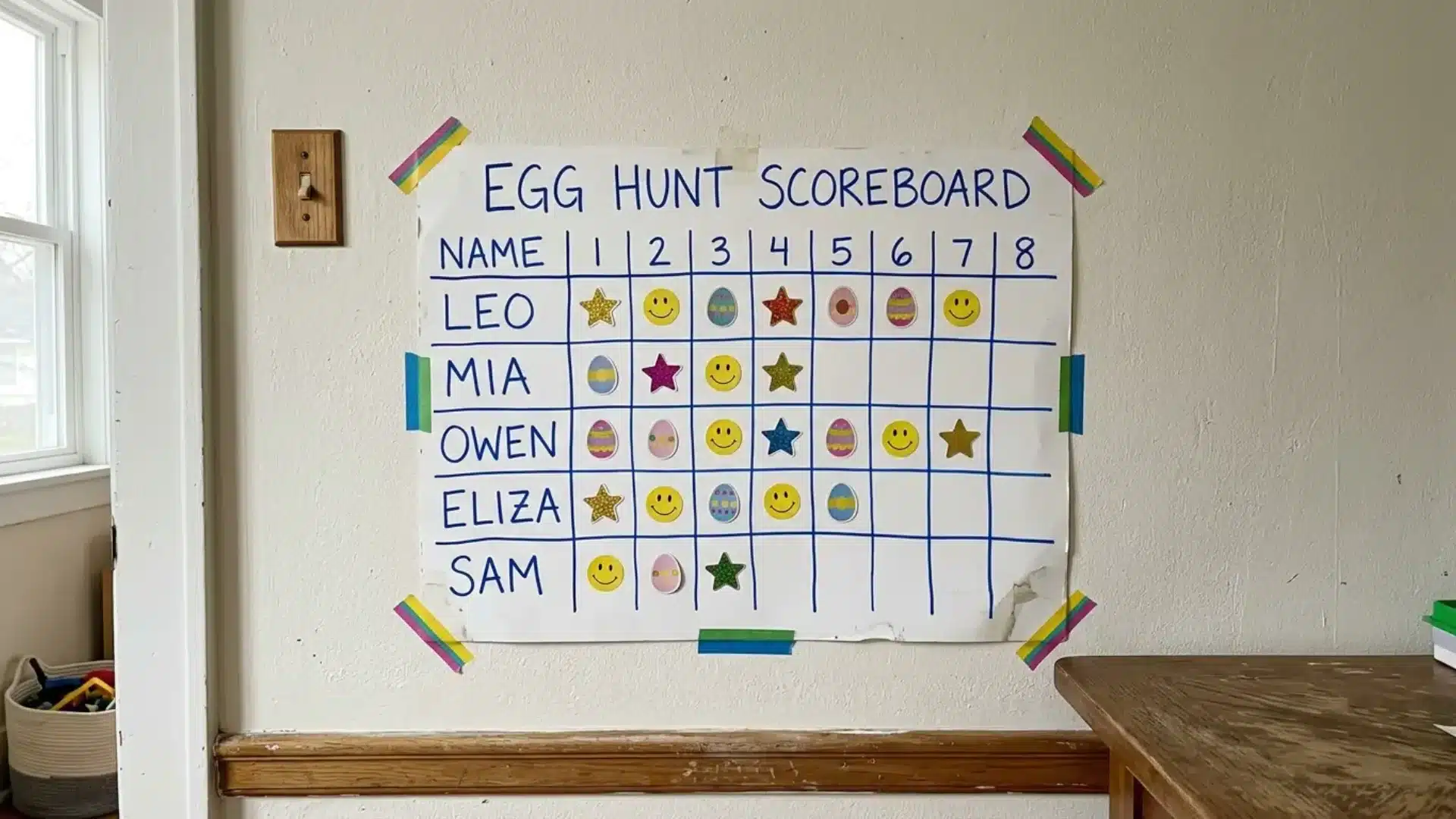
Materials: Poster board, markers, small stickers, tape
Draw a simple grid on poster board with each child’s name listed down one side. Tape it to a wall or fridge at kid height. Add a sticker next to a name for every egg found during the hunt.
Tally results together once the hunt wraps up.
How to Make Easter Decor Look Cohesive
Uneven pastels and clashing accents can ruin even the finest pieces. Unify the entire space using a few clear rules:
- Repeat your chosen color palette across every room, not just the entryway.
- Limit materials to two or three textures: wicker, ceramic, and fabric work well together.
- Use one recurring motif, like eggs or bunnies, instead of mixing several symbols.
- Keep scale consistent: don’t pair oversized pieces with tiny, delicate accents in the same vignette.
- Anchor larger displays with one dominant color, then let smaller pieces support it.
- Space decorations evenly across rooms so no single area feels overloaded.
- Save bold or novelty pieces for one focal point, not scattered throughout the home.
How to Store Easter Decorations After the Holiday
Proper storage keeps fragile pieces intact and ready for next year, without the scramble.
| Decor Type | Storage Method |
|---|---|
| Painted or dyed eggs | Wrap individually in tissue, store in a padded box |
| Wreaths | Hang in a garment bag or flat box to avoid crushing |
| Fabric items | Fold and store in a sealed bin with a moisture packet |
| Figurines | Wrap in bubble wrap, pack upright in labeled boxes |
| Garlands and ribbons | Coil loosely, secure with twist ties, store flat |
| Fresh floral remnants | Compost or discard; don’t attempt to save |
| Lanterns and jars | Remove batteries, wrap glass pieces separately |
Common Easter Decorating Mistakes to Avoid
Be aware of these common mistakes to prevent them from affecting your setup:
- Overbuying: Skip random pastel items just because they’re on sale.
- Ignoring scale: Smaller accents get overshadowed by larger furniture.
- Ignoring your existing color scheme: This creates visual clashes fast.
- Ignoring damage-prone spots: Fresh flowers near heat vents wilt quickly.
- Overcrowding surfaces: This buries individual pieces instead of highlighting them.
- Skipping outdoor weatherproofing: This ruins paper or fabric items overnight.
Take your time to plan carefully and buy only what fits your needs.
Frequently Asked Questions (FAQ’s)
1. When Should I Start Decorating for Easter?
Two to three weeks before Easter Sunday gives enough time without decor feeling stale by the holiday.
2. How Long Can Easter Decorations Stay Up?
Most people keep decor up through the following weekend, then pack pieces away within a week after.
3. Are Real or Artificial Eggs Better for Outdoor Displays?
Artificial, weather-resistant eggs hold up far better outdoors than real or fabric-covered versions in rain or sun.
4. Can Easter Decor Work Alongside Spring Decorations?
Yes, subtle Easter accents blend into a broader spring theme without overwhelming the seasonal setup.
5. What’s the Easiest Way to Decorate on a Tight Schedule?
Focus on one entryway display and one tablescape; skip whole-house decorating when time runs short.
End Note!
Decorating for Easter comes down to a handful of choices done well.
Pick a palette, commit to it, and build outward from there.
Small touches- a bunny figurine, a napkin fold- carry as much weight as an entire tablescape.
Store pieces carefully once the holiday passes, and next year’s setup takes half the effort.
I’d love to see how your setup turns out. Drop a comment with the room you’re starting with, or ask if you get stuck on a specific project; a thrifted basket or a painted rock can outshine store-bought decor when the styling is right.