
If rain leaves your lawn soggy for days or your basement feels damp after every storm, the problem usually comes down to water with nowhere to go.
If you have been asking what is a French drain, it is a gravel-filled trench that carries that water away from your home or yard, and it is one of the most common fixes out there.
I will cover how it works below the ground and how to install one yourself, step by step.
First, a look at what it actually is.
What is a French Drain?
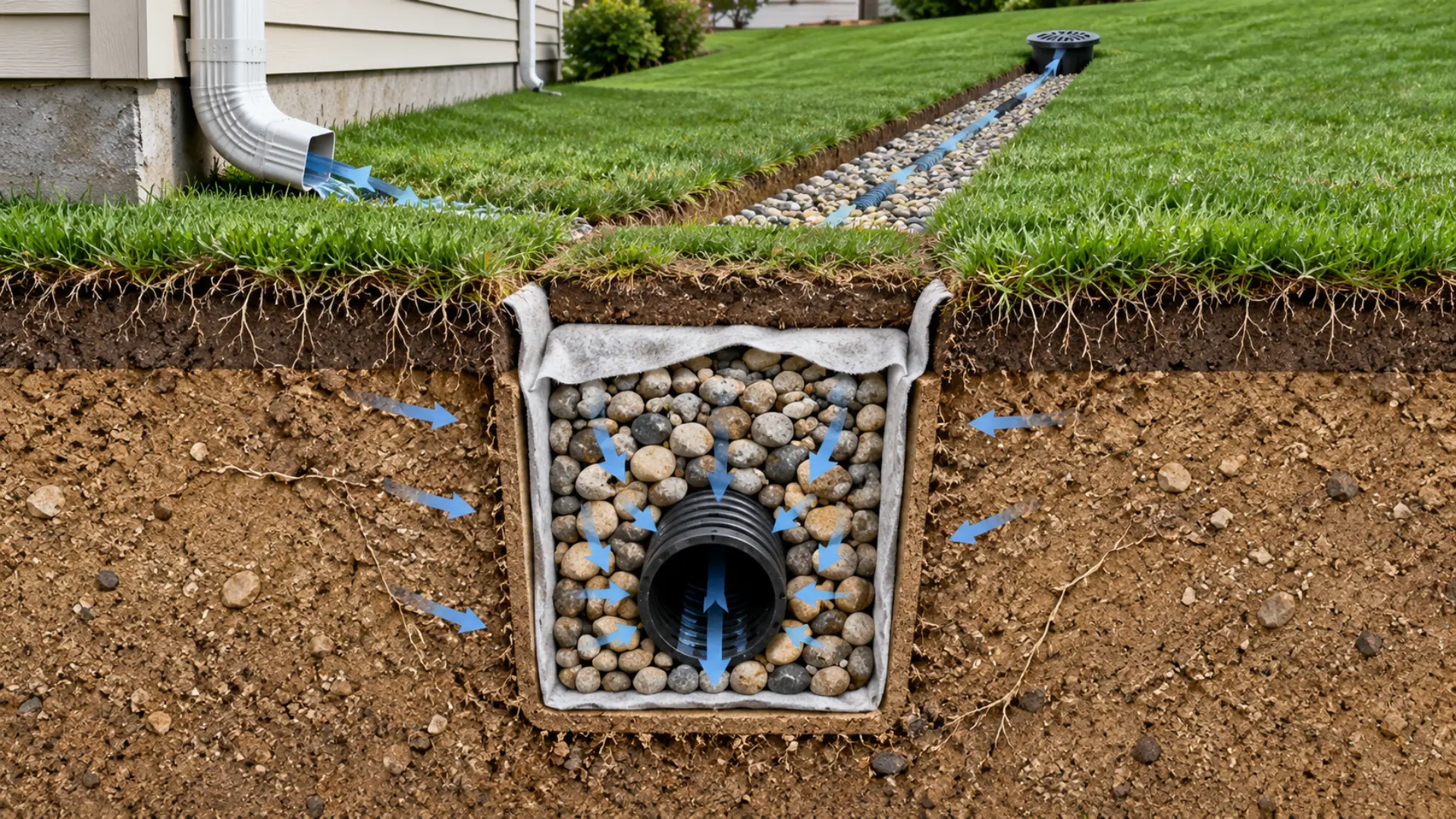
A French drain is a sloped trench filled with gravel, usually with a perforated pipe running along the bottom. It has no motors or moving parts and relies entirely on gravity to move water away from wherever it tends to pool.
Despite the name, it has nothing to do with France.
The system is named after Henry Flagg French, a Massachusetts judge and farmer who popularized the method in his1859 book Farm Drainage.
Depending on where you live, you might also hear it called a curtain drain, weeping tile, or drain tile.
The Parts of a French Drain
Every French drain is built from the same few layers, and each one depends on the others to do its work.
Skip the fabric and soil slowly creeps into the gravel. Lay the pipe without enough slope and water just sits there.
Knowing what each part does makes it much easier to spot where a drain goes wrong later.
Component | Typical Material | What it Does |
|---|---|---|
Trench | A sloped channel dug into the ground | Gives water a downhill path to follow |
Filter Fabric | Nonwoven geotextile lining the trench | Keeps soil and silt out of the gravel |
Drainage Gravel | Washed, rounded stone around the pipe | Lets water pass through quickly |
Perforated Pipe | Pipe with holes running along its length | Collects water and speeds up the flow |
Outlet Point | A daylight exit, dry well, or sump pit | Releases water away from the problem area |
How Does a French Drain Work?
If you have ever asked how a French drain works, the answer starts with how water behaves. It always takes the easiest path available, and packed soil is not one of them.
A French drain simply builds that path for it, a loose, gravel-lined route that pulls water in and quietly sends it somewhere safer.
What Happens Inside the Trench?
Once rain soaks into the ground, the drain works in a steady sequence.
- Easy Entry: Water slips into loose gravel faster than through packed soil.
- Built-In Filter: Fabric and stone catch silt before it reaches the pipe.
- Full-Length Collection: The pipe gathers water along its entire run.
- Gravity Flow: A gentle slope, roughly 1 inch per 8 feet, keeps it moving.
- Safe Release: Water exits at a lower outlet away from the house.
No pumps are needed unless the system ties into a sump.
What Happens Below the Floor?
An interior French drain sits beneath the basement slab, running along the inside edge of the foundation.
When the soil outside gets saturated, groundwater builds up and presses against the walls and floor. That force is called hydrostatic pressure, and it is what pushes water through cracks and joints.
The drain intercepts that water and channels it to a sump pit, where a pump sends it outside.
Since it means cutting into concrete, I would leave this version to a professional.
French Drain Types for Yards and Basements
French drains come in a few forms, and the one you need depends on where the water is showing up. A soggy lawn calls for a very different setup than a basement that leaks after heavy rain.
Exterior Yard French Drain
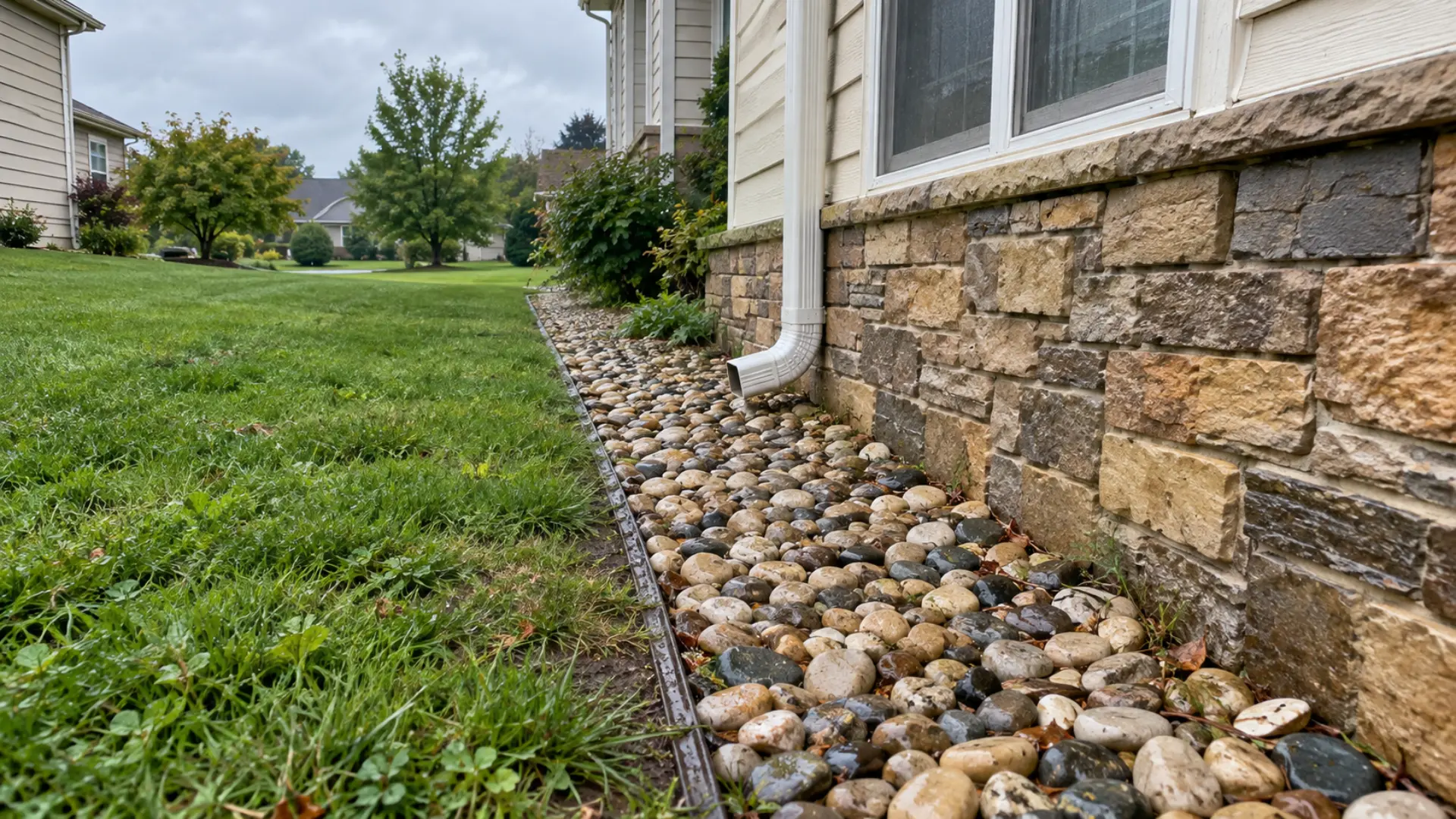
An exterior French drain is the version most people think of, a shallow gravel trench running through the yard. It is built for pooling lawns, soggy garden beds, and runoff that drifts in from a neighbor’s slope.
The trench sits across or along the wet area, catching water as it moves through the topsoil and carrying it downhill to a lower outlet.
Since it is shallow and needs no concrete work, this is the type I’d recommend for a first DIY attempt.
Interior (Below-Floor) French Drain
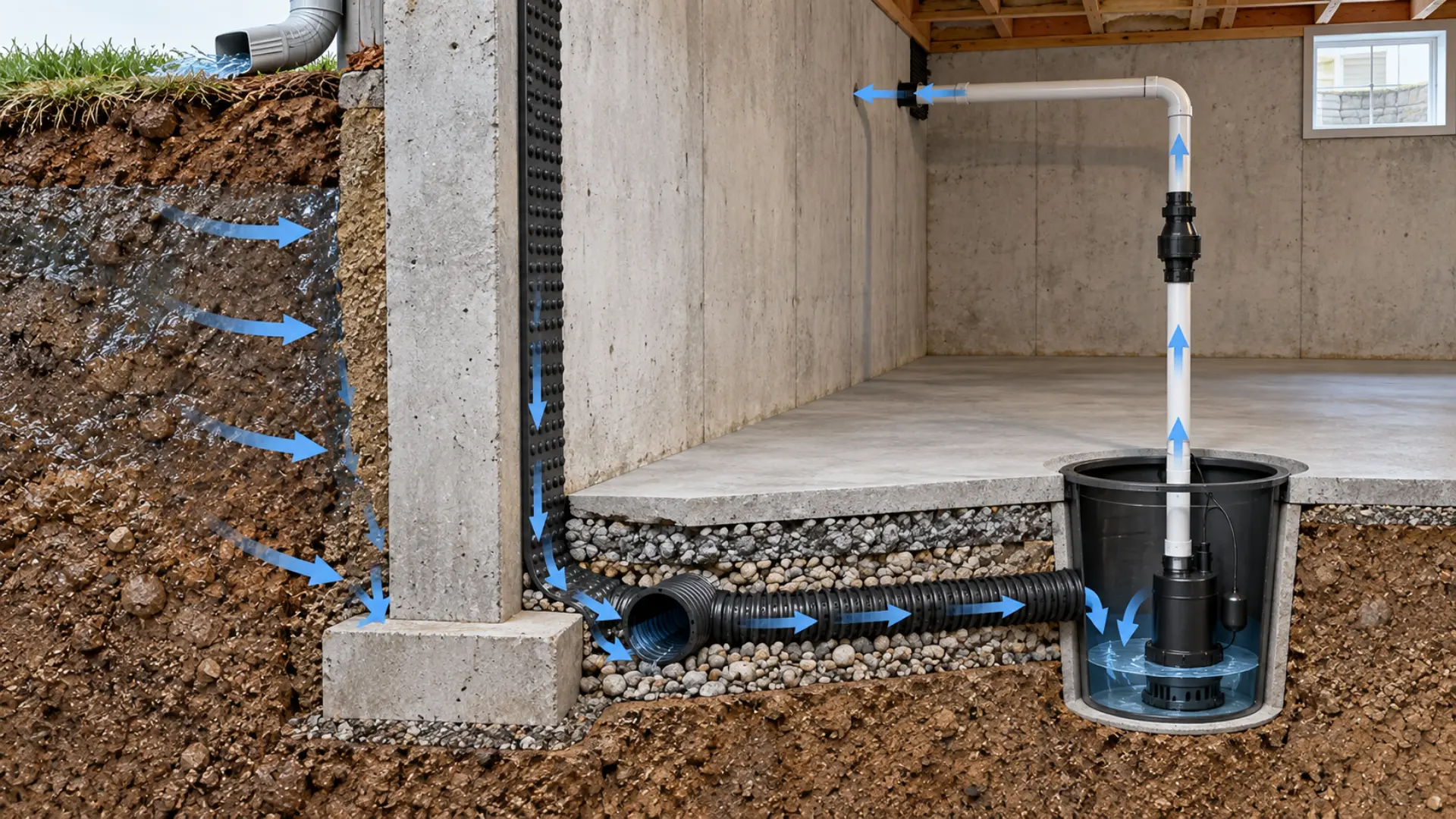
An interior French drain is installed beneath the basement floor, running along the inside perimeter of the foundation.
Contractors cut a narrow channel into the slab, lay a perforated pipe in gravel, and patch the concrete back over it.
Water that seeps through the walls or rises from below drops into the channel instead of spreading across the floor. From there it flows to a sump pit, where a pump pushes it outside and away from the house.
Footing Drain
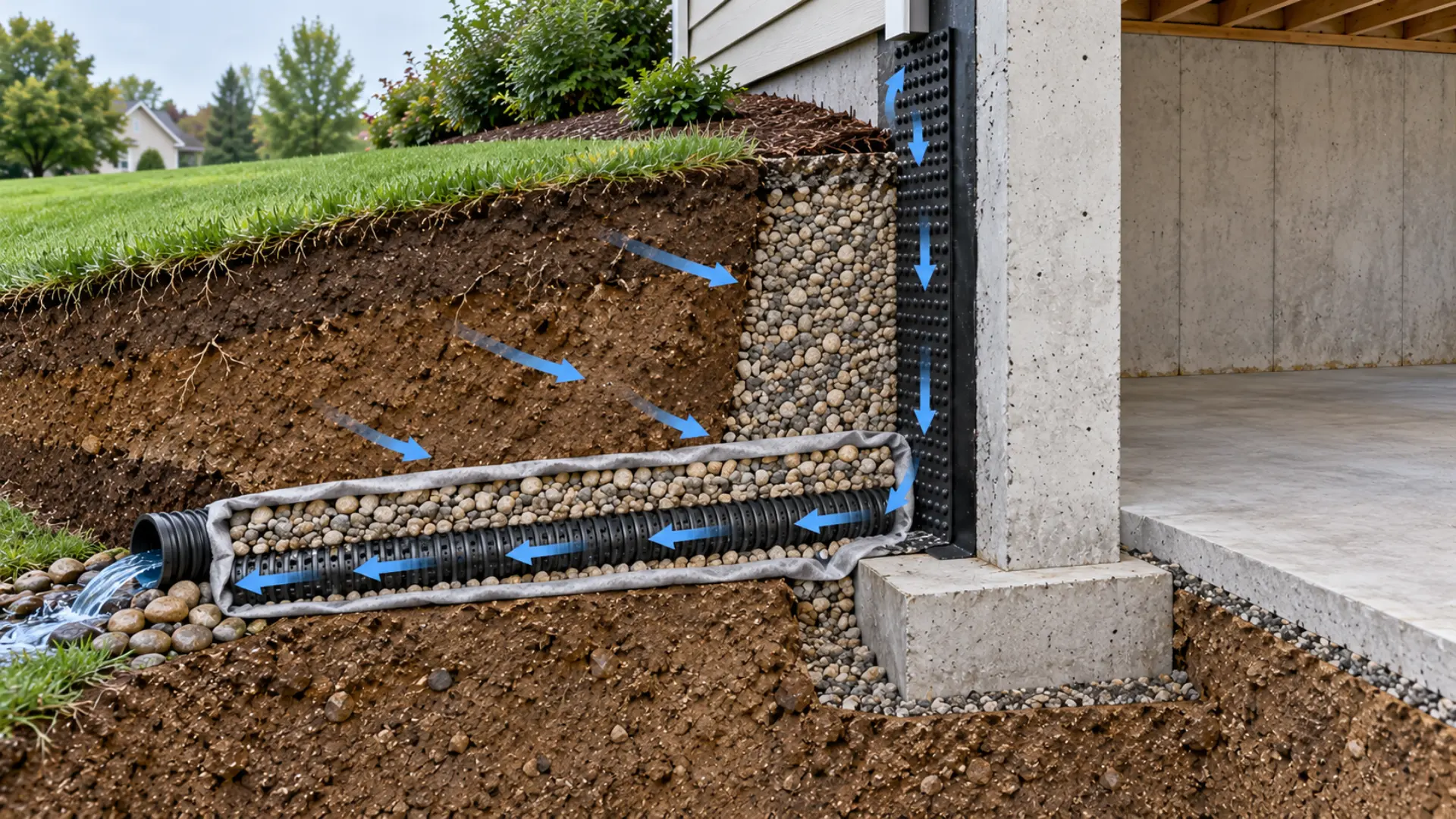
A footing drain sits at the very bottom of the foundation, right beside the concrete footing that supports the walls.
It is usually laid during construction or a major excavation, since reaching that depth means digging out soil all the way down the wall.
The pipe collects groundwater before it can build pressure against the foundation and carries it to a daylight outlet or sump.
I’d treat this one strictly as a professional job, given the depth and shoring involved.
Signs Your Property Needs a French Drain
Drainage problems rarely show up all at once. They tend to appear as small, repeated signs after every rainfall, and they are easy to brush off until the damage starts adding up.
- Lingering Puddles: Water sits on the lawn long after the rain stops.
- Damp Basement: Musty smells, wet spots, or seepage along the walls.
- Washed-Out Beds: Mulch and topsoil keep sliding away after storms.
- Foundation Pooling: Water collects right against the house.
- Mushy Lawn Patches: Grass thins out, and the ground stays muddy.
If a few of these sound familiar, I’d trace where the water is coming from first, since a French drain only works well when it is placed right where water collects.
What You Will Need to Build a French Drain
A French drain does not call for specialty equipment, but the quality of your materials decides how long it keeps working.
Clean gravel and the right fabric matter far more than any fancy tool, so those are worth getting right before the first shovel hits the ground.
Material or Tool | Recommended Type | Role in the Project |
|---|---|---|
Perforated Pipe | 4-inch rigid PVC or flexible corrugated | Carries collected water to the outlet |
Filter Fabric | Nonwoven geotextile | Stops soil from clogging the gravel |
Drainage Gravel | Washed stone, ¾ to 1½ inch | Keeps water flowing freely around the pipe |
Shovel or Trencher | Trenching spade or rented trencher | Digs a narrow, even trench |
Stakes and String Line | Wooden stakes with mason’s line | Marks the route and slope |
Level | Line level or digital level | Confirms the trench holds its grade |
Landscape Staples | Galvanized steel | Holds the fabric in place while filling |
Catch Basin (Optional) | Plastic inlet with a grate | Collects surface water at the high end |
How Deep and Wide Should a French Drain Be?
Size matters more than most people expect here. A trench that is too shallow or too narrow fills up quickly and leaves water with nowhere to go.
- Standard Depth: Aim for 12 to 18 inches for most yard drains
- Trench Width: Around 6 inches suits minor pooling, while bigger problems need a wider cut
- Foundation Distance: Stay at least 2 feet from the wall to protect the footing
- Cold Climates: Dig below the frost line so freezing soil does not shift the pipe
Either way, leave a few inches of gravel around the pipe on every side.
How to Install a French Drain?
Installing a French drain is an intermediate DIY project, and most installs stretch past a single day once digging, filling, and testing are factored in.
None of the steps are complicated on their own, but skipping the planning or rushing the slope is usually where things go wrong.
Note: Call 811 a few days before digging so utility companies can mark any buried lines on your property. It is also a good idea to check local drainage codes and HOA rules, since some areas limit where runoff can be directed.
1. Plan the Route and Outlet
Walk the yard after a heavy rain and note exactly where water gathers. That wet spot becomes the starting point, and the drain should run downhill toward a lower outlet, such as a pop-up emitter, a dry well, or a lower corner of the yard.
Keep the path clear of tree roots and at least 2 feet away from the foundation. I would sketch the route on paper first and mark it with spray paint before breaking ground.
2. Set the Slope With Stakes and String
Drive a stake at the high end and another at the outlet, then tie a string between them and level it with a line level.
Measure down on the outlet stake to mark the total drop, aiming for at least 1 inch of fall per 8 feet of trench. Retie the string at that mark and add stakes every few feet along the line.
3. Dig the Trench
Dig along the stakes to a depth of 12 to 18 inches, measuring from the string to the trench floor at every stake. That distance should stay exactly the same the whole way, so the bottom follows the string’s slope.
Smooth out any high or low spots, since dips trap water and silt. For long runs or rocky soil, renting a trencher saves hours of hard labor.
Wear gloves and sturdy boots, and take breaks often.
4. Line the Trench and Add the Gravel Base
Lay nonwoven filter fabric along the bottom and sides of the trench, leaving enough excess on both edges to fold over the top later.
Pin it in place with landscape staples, and overlap any joined pieces by about 12 inches. Shovel in 2 to 3 inches of washed gravel, rake it smooth, and recheck the slope with a level.
Running a little hose water down the trench at this stage confirms it drains before the pipe goes in.
5. Lay the Pipe and Wrap It in Gravel
Set the perforated pipe on the gravel bed with the holes facing down, so water enters as it rises in the trench and silt stays out of the pipe.
If you are using a catch basin, connect it at the high end, or cap the pipe end.
Cover the pipe with more gravel, leaving several inches above it. Fold the excess fabric over the top in a burrito wrap, overlapping the edges so no soil can slip into the stone.
6. Backfill and Test the Flow
Finish the top with soil and sod for a hidden drain, or leave it open with decorative stone for a cleaner, garden-friendly look.
Mound the soil slightly, since it settles over the first few rains. Once everything is in place, run a garden hose into the high end and watch the outlet.
Water should flow out steadily. If it pools or trickles out slowly, recheck the slope before the ground fully settles.
Where Should a French Drain Empty?
The outlet matters as much as the trench itself, since collected water needs a safe place to go.
- Daylight Outlet: A lower spot in the yard where the pipe opens at ground level.
- Dry Well: An underground pit that lets water soak slowly into the soil.
- Sump Pit: A basin where a pump pushes water out and away from the house.
- Storm Drain: A municipal drain, only where local rules allow it.
Avoid releasing water onto a neighbor’s property, since it can lead to legal disputes in many areas.
How Much Does a French Drain Cost?
French drain costs vary a lot depending on who does the work and how much digging is involved. A short DIY yard drain can stay fairly affordable, while a full basement system is a much bigger investment.
Project Type | Typical Cost | What It Covers |
|---|---|---|
Small DIY Drain | $200 to $300 | Gravel, pipe, and fabric for a short run |
Full DIY Yard Drain | $200 to $1,000 | Materials for longer or multiple runs |
Trencher Rental | $50 to $150 per day | Machine rental for faster digging |
Professional Installation | $2,000 to $6,000 | Labor, materials, and outlet setup |
Complex Systems | $10,000 or more | Interior drains, sump pumps, or deep excavation |
How to Maintain a French Drain?
A French drain does not need much attention, but like any drain around the house, a little upkeep keeps it from slowly clogging over time.
I’d give it a quick check every few months and after any major storm.
- Clear the Grates: Remove leaves and debris sitting on inlet grates.
- Flush the Pipe: Run a hose into the high end and confirm water exits at the outlet.
- Keep the Outlet Open: Pull away grass clippings, mulch, or soil blocking the exit.
- Watch the Yard: New soggy spots near the drain often signal a clog.
If flushing does not clear a blockage, a plumber’s drain snake or a professional jetting service usually can.
When a French Drain is Not a DIY Job
A shallow yard drain is very doable on your own, but some situations call for professional experience.
Interior drains mean cutting through the basement slab, and footing-depth trenches can collapse without proper shoring.
A high water table or a lot with no downhill outlet usually needs a sump pump and careful sizing to work at all. Heavy clay soil is another reason to bring in help, since it drains poorly and can hide deeper grading problems.
If any of these sound like your property, I’d get a few quotes before starting.
French Drain vs. Other Drainage Options
A French drain is not always the only fix. Depending on where water collects, a simpler option might work better.
Drainage Option | How It Works | Best For | DIY Difficulty |
|---|---|---|---|
French Drain | Buried gravel trench and pipe | Soggy lawns, foundation seepage | Moderate |
Dry Creek Bed | Stone-lined surface channel | Runoff on sloped yards | Easy |
Channel Drain | Grated trench in hard surfaces | Driveways and patios | Moderate |
Dry Well | Underground soaking pit | Downspout runoff | Moderate |
Sump Pump | Pumps water out of basements | High water tables | Hard |
The Bottom Line
Once you know what is a French drain and how it quietly works beneath the surface, that stubborn wet patch starts to feel a lot less mysterious.
The pieces are simple, but the slope and outlet are what truly decide how well it performs, so give those the most care.
For basements, deep foundations, or tricky soil, calling in a pro is often the kinder choice for your home and your back.
Drop a comment and tell me where water likes to gather at your place and what you have tried so far.
Frequently Asked Questions (FAQs)
Does a French Drain Need a Pipe?
Not always. A gravel-only trench can handle light drainage, but a perforated pipe moves water faster and suits wetter areas.
Should the Holes in a French Drain Pipe Face Up or Down?
Most installers recommend holes facing down, so water enters as it rises in the trench. This also keeps silt from settling inside the pipe.
How Long Does a French Drain Last?
A well-built French drain can last for decades with regular flushing and clear outlets. Skipping the filter fabric or installing in heavy clay can shorten that lifespan.
Can a French Drain Go Under a Basement Floor?
Yes, an interior French drain runs beneath the slab along the foundation. It usually connects to a sump pit and is best handled by a professional.
Is a French Drain the Same as a Sump Pump?
No, a French drain collects and channels water, while a sump pump pushes it out of the house. The two often work together in basement systems.