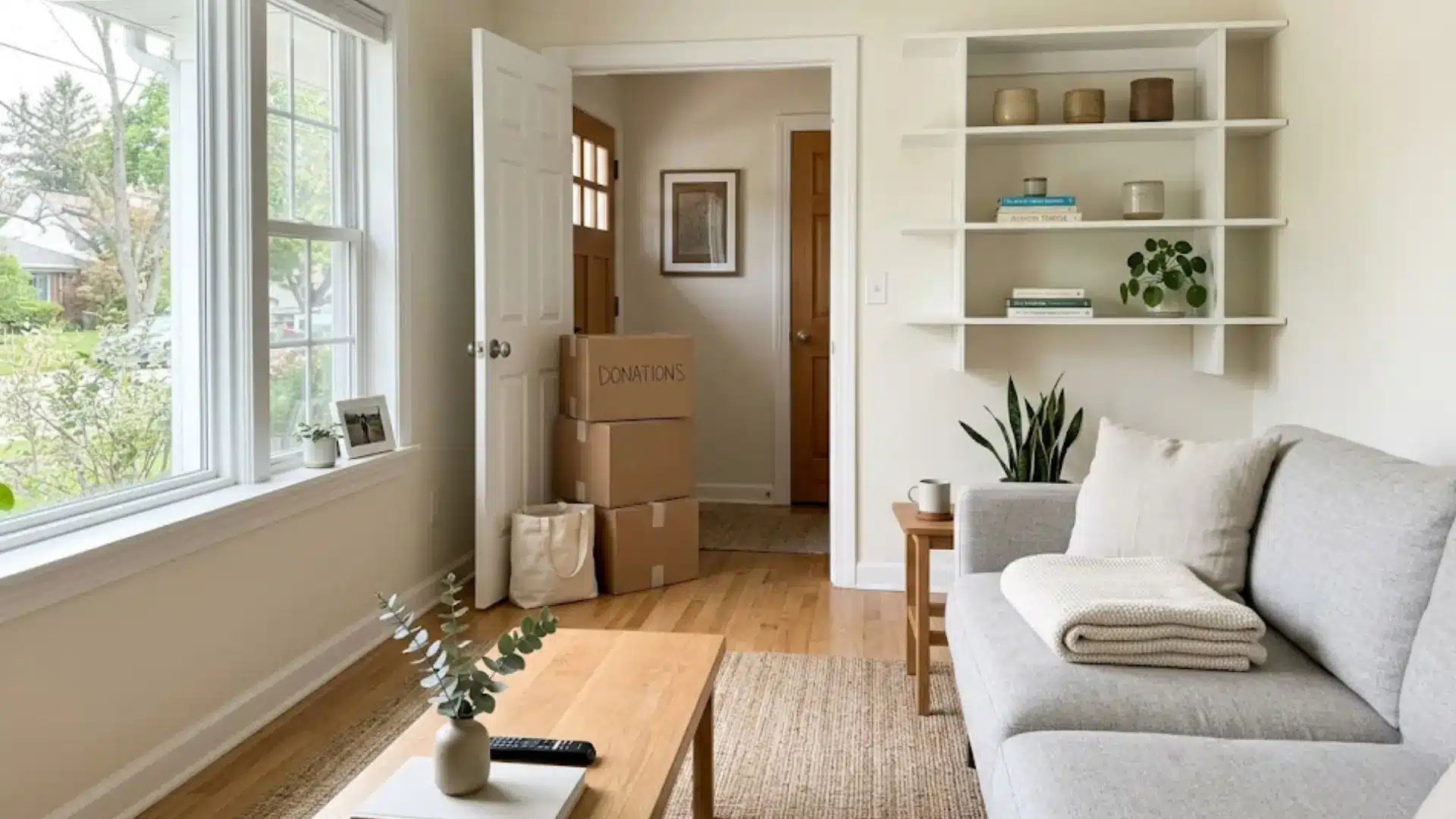

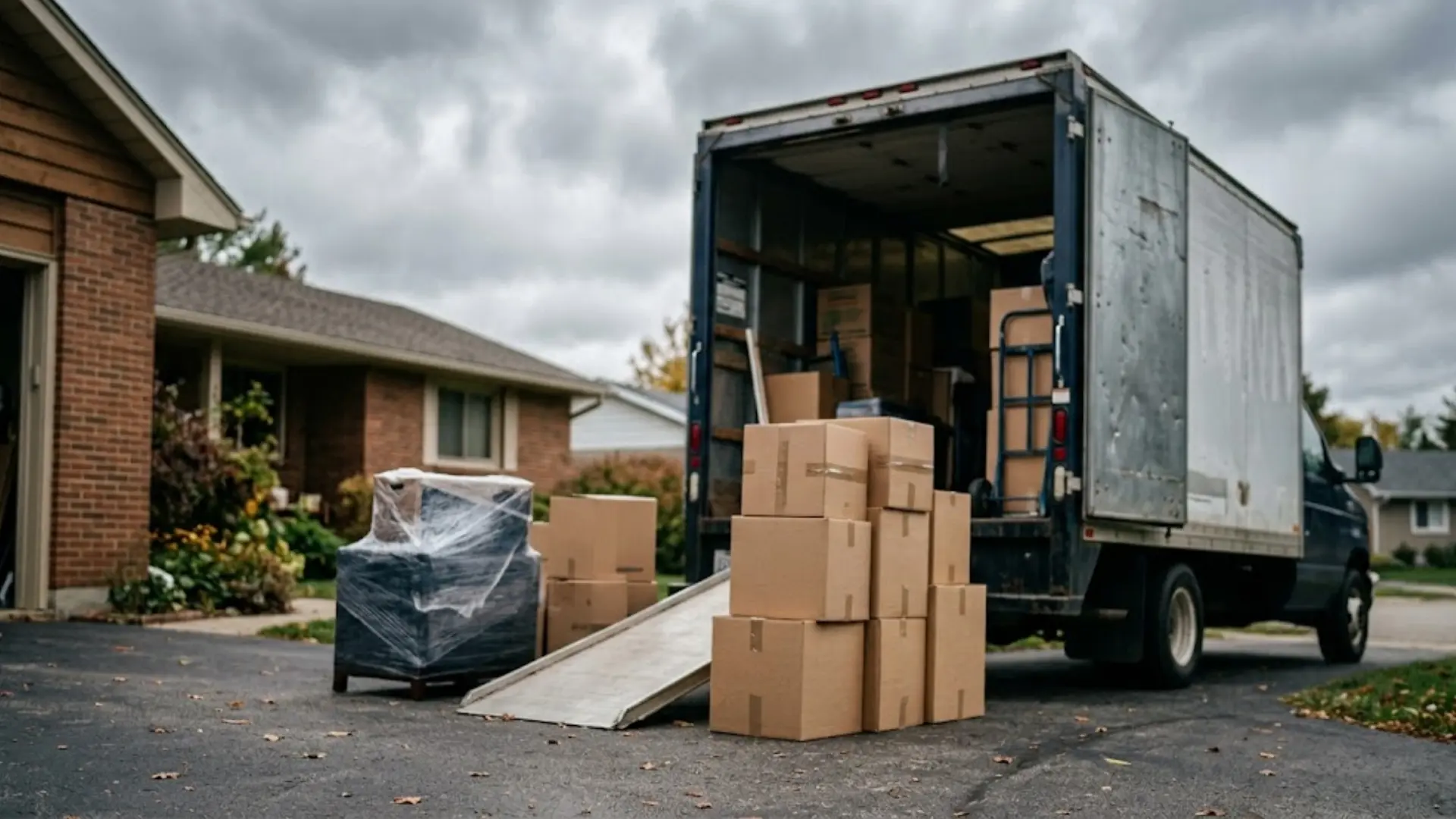
Moving-day weather does not always cooperate with your plans. Rain, snow, or wind can show up without much warning. This can add extra steps to an already busy day.
Learning how to move furniture during bad weather helps you stay prepared. Small choices, like picking the right supplies, make a real difference.
Timing your move around the worst weather also helps. Wet floors and damp furniture are common issues, but they are manageable.
Focus on steps that protect your belongings and keep everyone safe. Bad weather just means adjusting your approach a little. Good preparation keeps everything running smoothly.
What Makes Moving Furniture in Bad Weather More Difficult?
Rain, snow, ice, humidity, and wind each create their own set of problems on moving day.
Slippery floors, driveways, sidewalks, ramps, and loading areas turn routine trips into fall hazards, especially when carrying something heavy or awkwardly shaped.
Moisture also poses a real threat to the furniture itself, warping wood, staining upholstery, damaging leather, and encouraging rust on metal frames or hardware.
Poor weather demands extra handling precautions too: more frequent breaks, careful footing, and additional hands on tricky pieces.
Even packing materials suffer: cardboard weakens when wet and tape loses its grip in humidity, while transportation adds its own risks, with reduced visibility and slower, less predictable road conditions.
Deciding Whether to Move or Reschedule
Balancing weather forecasts with realistic risk assessment matters more than waiting for a perfect day; not every rainy forecast requires calling things off.
- Monitor forecasts about a week out: Check Weather.gov, local news, and apps like Weather Underground daily, focusing on hourly forecasts over general predictions.
- Know the actual deal-breakers: Flash Flood Warnings, Blizzard Warnings, High Wind Warnings above 40-46 mph, lightning within 10 miles, or heat above 95°F.
- Moderate conditions are usually fine: Light rain under 0.3 inches per hour and temperatures between 35-85°F remain manageable with the right supplies.
- Run a quick checklist before committing: Check weather alerts, assess truck readiness, and confirm helper availability, since most rental companies handle postponements easily.
- Document conditions either way: Take photos of the weather and site conditions, since this protects you later if damage claims come up.
Most moving delays come down to poor planning rather than the weather itself. A short checklist and a realistic read on conditions usually make the final call much easier.
Supplies You’ll Need to Move Furniture in Bad Weather
Protecting belongings from moisture means layering different materials strategically; moving blankets alone won’t stop water, and plastic without padding risks condensation damage.
| Supply | Cost |
|---|---|
| Heavy-duty moving blankets | $10-15 each |
| Plastic sheeting or stretch wrap | $20-30 per roll |
| Waterproof mattress bags | $15-25 |
| Sofa covers | $30-40 |
| Plastic bins with secure lids | Varies by size |
| Plastic runners or cardboard | $20-40 |
| Non-slip bath mats | $10-15 each |
| Dry towels (20-30) | Household stock |
| Waterproof work gloves | Per pair |
| Rain ponchos or waterproof jackets | Per person |
For longer moves, pack DampRid moisture-absorber buckets in the truck box to pull humidity and prevent mold.
Note: Costs listed above are estimates and may vary based on brand, quantity, retailer, and location, so actual prices could be higher or lower depending on where you shop.
Tips to Move Furniture Safely in Bad Weather
Rain, snow, and ice raise the stakes on moving day, but a few practical precautions can keep both your furniture and your movers safe from start to finish.
1. Plan Your Route and Timing Around the Weather
Check the forecast closely in the days leading up to your move, and if possible, schedule around the worst windows rather than pushing through them.
Even a two-hour delay to avoid peak rain or high winds can make a real difference in safety and efficiency.
Map out the most sheltered path between the truck and the entrance, minimizing exposed walkways where furniture and movers are most vulnerable to the elements.
2. Lay Down Non-Slip Runners and Mats
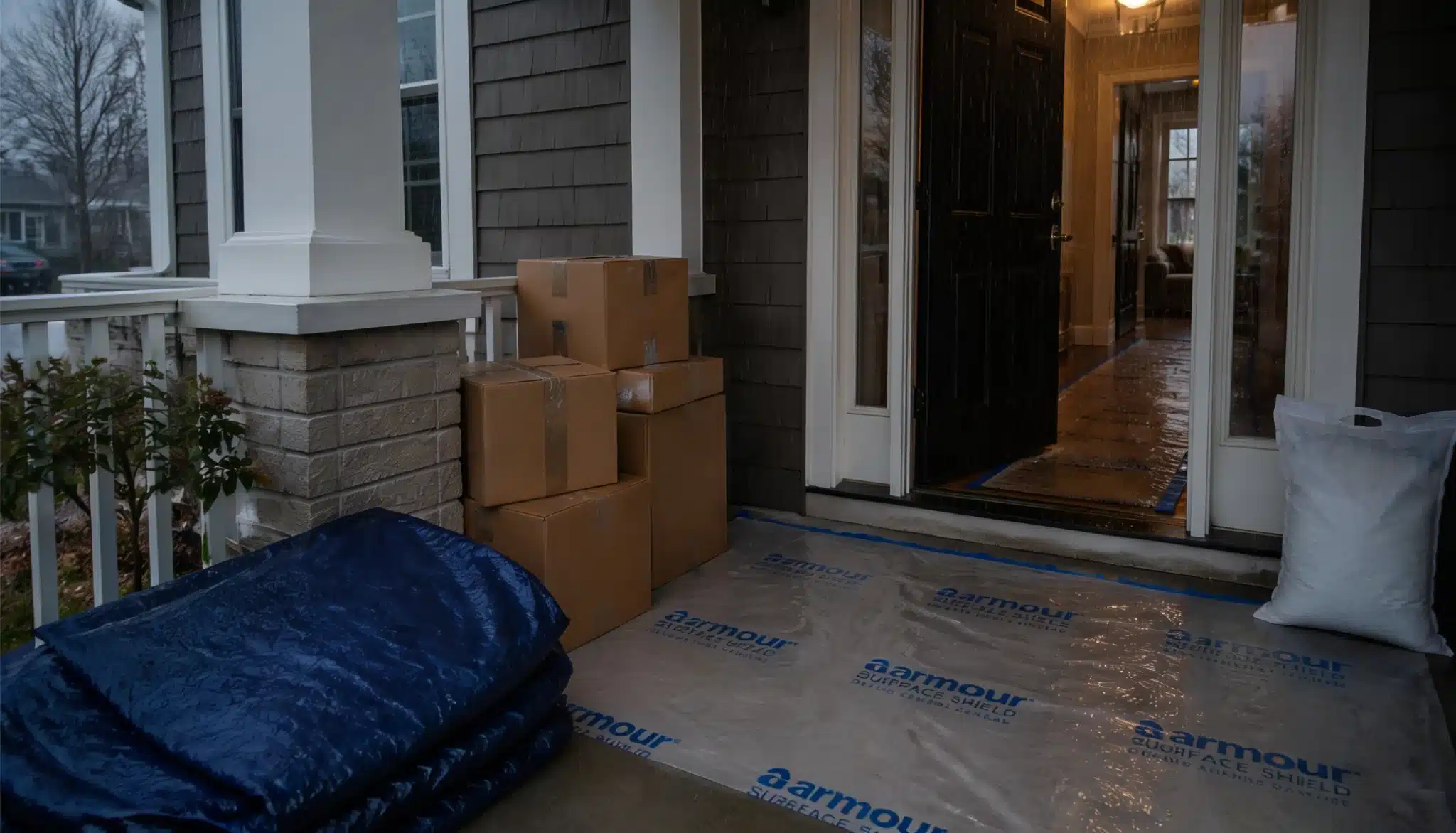
Before any furniture moves through doorways, hallways, or entry points, lay down plastic runners, cardboard, or non-slip bath mats along the entire path.
Wet shoes and dripping furniture can quickly turn smooth flooring into a hazard, and a single slip while carrying something heavy can cause injury or damage.
Secure the edges of runners with tape so they don’t shift or bunch up underfoot during repeated trips.
3. Wrap Furniture in Layers, Not Just One Barrier
Relying on a single layer of protection, whether that’s just a blanket or just plastic, leaves gaps in coverage.
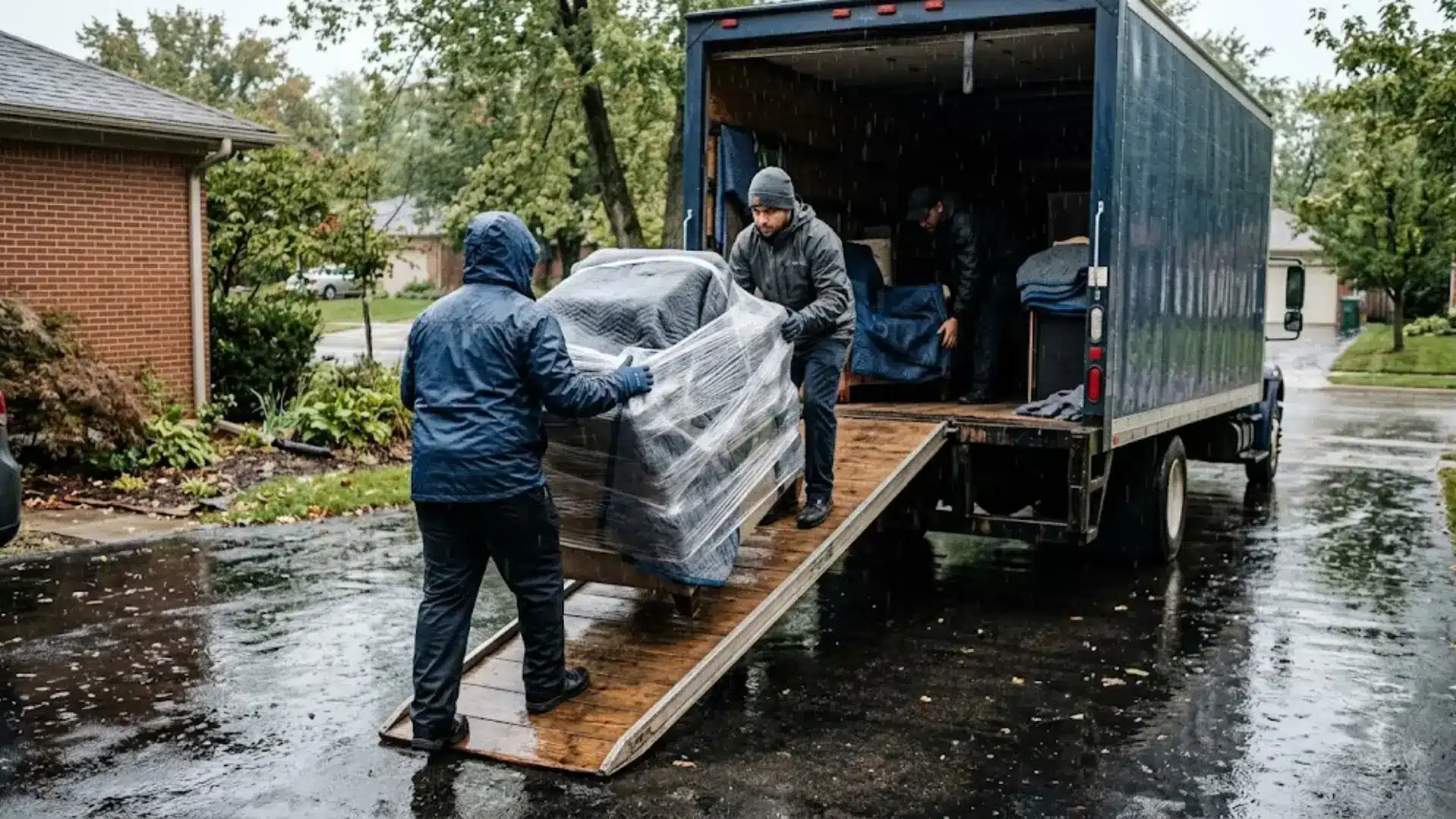
Start with a moving blanket against the furniture surface to absorb minor moisture and prevent scratching, then wrap plastic sheeting or stretch wrap over that outer layer.
This combination protects against both water exposure and the condensation that plastic alone can trap against wood or upholstery.
4. Dry Off Furniture Immediately After Exposure
Any time furniture gets rained on or exposed to snow during transport, dry it off with towels as soon as it’s back under cover.
Standing water left on wood, leather, or metal for even a short time can cause staining, warping, or rust to set in.
Keep a dedicated stack of dry towels on hand throughout the move, rather than scrambling to find one mid-move.
5. Use Waterproof Covers for Mattresses and Upholstered Pieces
Mattresses and upholstered furniture absorb moisture far more readily than hard surfaces, and once soaked, they’re difficult to fully dry or salvage.
Waterproof mattress bags and sofa covers create a sealed barrier that keeps rain and snow from soaking through during transport.
Seal any openings with tape to prevent water from seeping in around zippers or open edges during a longer walk to the truck.
6. Wear Proper Footwear and Protective Gear
Movers need footwear with real traction, not just comfortable sneakers, since wet or icy surfaces demand more grip than usual.
Waterproof work gloves also matter, both to keep hands functional in the cold and to maintain a secure grip on furniture that’s already slippery from rain.
Rain ponchos or waterproof jackets keep movers dry and focused rather than distracted by discomfort mid-lift.
7. Check Weather-Related Insurance and Liability Coverage
Understanding what your policy actually covers prevents costly surprises after the fact. Most renters insurance only covers specific named perils, not general mishandling during a move.
According to the National Association of Insurance Commissioners, a named-perils policy lists only the specific types of losses it covers, typically excluding flood and earthquake damage.
For that reason, flooding almost always needs its own separate policy. Whatever happens, document the damage right away, since photos help support any claim you file later.
8. Communicate Constantly During Each Carry
Poor visibility due to rain, snow, or fog makes it harder to spot hazards such as ice patches, uneven pavement, or obstacles in the path.
Movers carrying furniture together should communicate clearly and constantly, calling out steps, turns, or slippery patches before they become a problem.
This is especially important on stairs or ramps, where a missed step becomes far more dangerous when carrying something heavy with someone else.
9. Use Moisture Absorbers During Transport
For longer moves, humidity can build up inside a moving truck even if nothing gets rained on directly.
Packing a few moisture-absorber buckets, like DampRid, into the truck box pulls excess humidity out of the air during transit.
This small addition helps prevent mold or mildew from developing on anything that got slightly damp before loading.
This small addition helps protect your belongings for the remainder of the trip.
How to Wrap and Protect Different Furniture Types
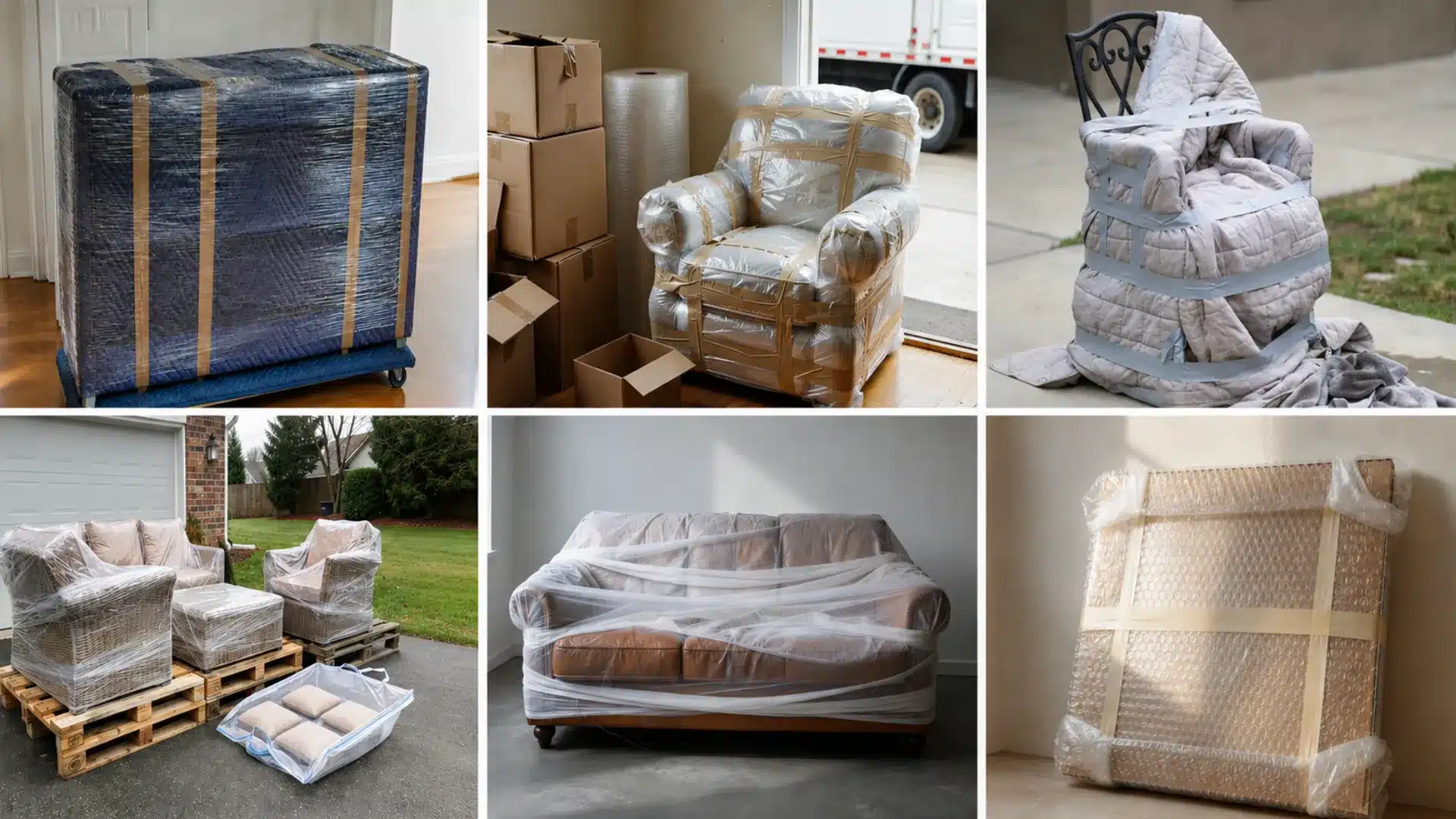
Every material fails differently in bad weather; here’s exactly how to protect each type before it leaves the house.
- Wood and upholstered furniture: Layer blankets under plastic, dry fast, and restore the wood finish if damp.
- Metal and outdoor furniture: Dry metal surfaces immediately to reduce rust, wrap in blankets rather than plastic, and keep cushions in waterproof bags during transit.
- Leather furniture: Wrap in moving blankets rather than plastic, apply conditioner beforehand for flexibility, and avoid taping directly onto the leather’s surface.
- Glass furniture: Tape a large X across the surface, wrap in bubble wrap, sandwich between cardboard, and always transport upright rather than flat.
- Moving in the rain: Set up a covered staging area, lay tarps at entrances, and use an assembly-line method to limit exposure time.
Each material reacts differently to moisture, so matching the right wrap to the right piece matters. A little extra care here prevents damage that’s often costly or impossible to reverse.
Adjusting Your Moving Strategy for Different Weather Conditions
Rain, snow, and extreme heat each demand a different approach to keep both people and belongings safe. Here’s how to adjust for each condition:
1. Moving Furniture in the Rain
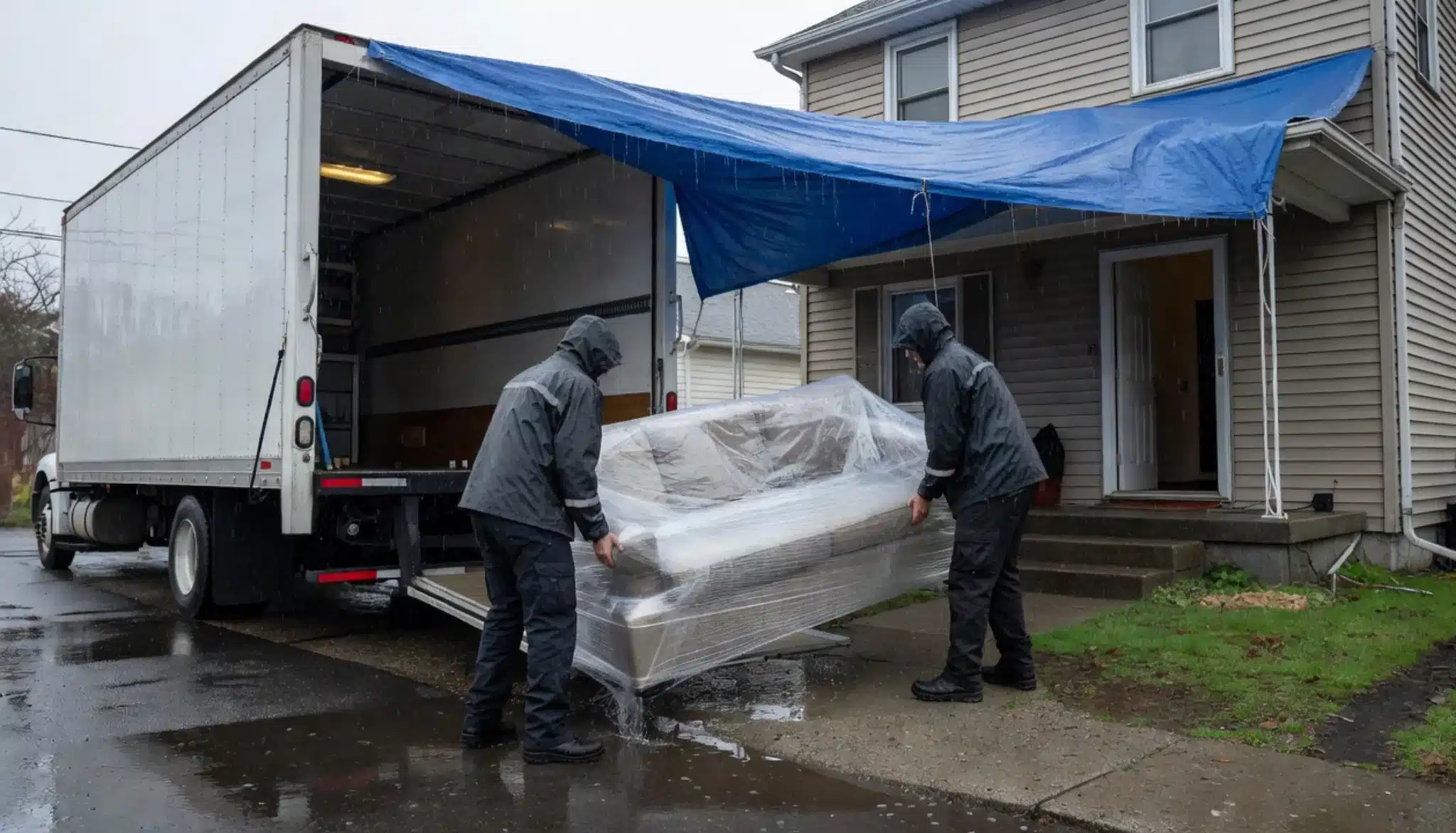
Moving in the rain demands specific protection strategies for belongings and property. Keep these steps in mind before the first piece leaves the house:
- Protect floors and entrances: Lay tarps or old blankets at every entrance, and wipe up tracked water with towels before it causes slips.
- Use the assembly-line method: Position helpers at strategic points between the home and truck, backing the truck close to covered areas.
- Time loading between rain bands: Check the radar for short breaks in heavier rain, and load bulkier items during those windows.
Rain adds risk at nearly every stage of a move. Staying organized keeps both people and belongings safe throughout the day.
2. Moving Furniture in Snow and Ice
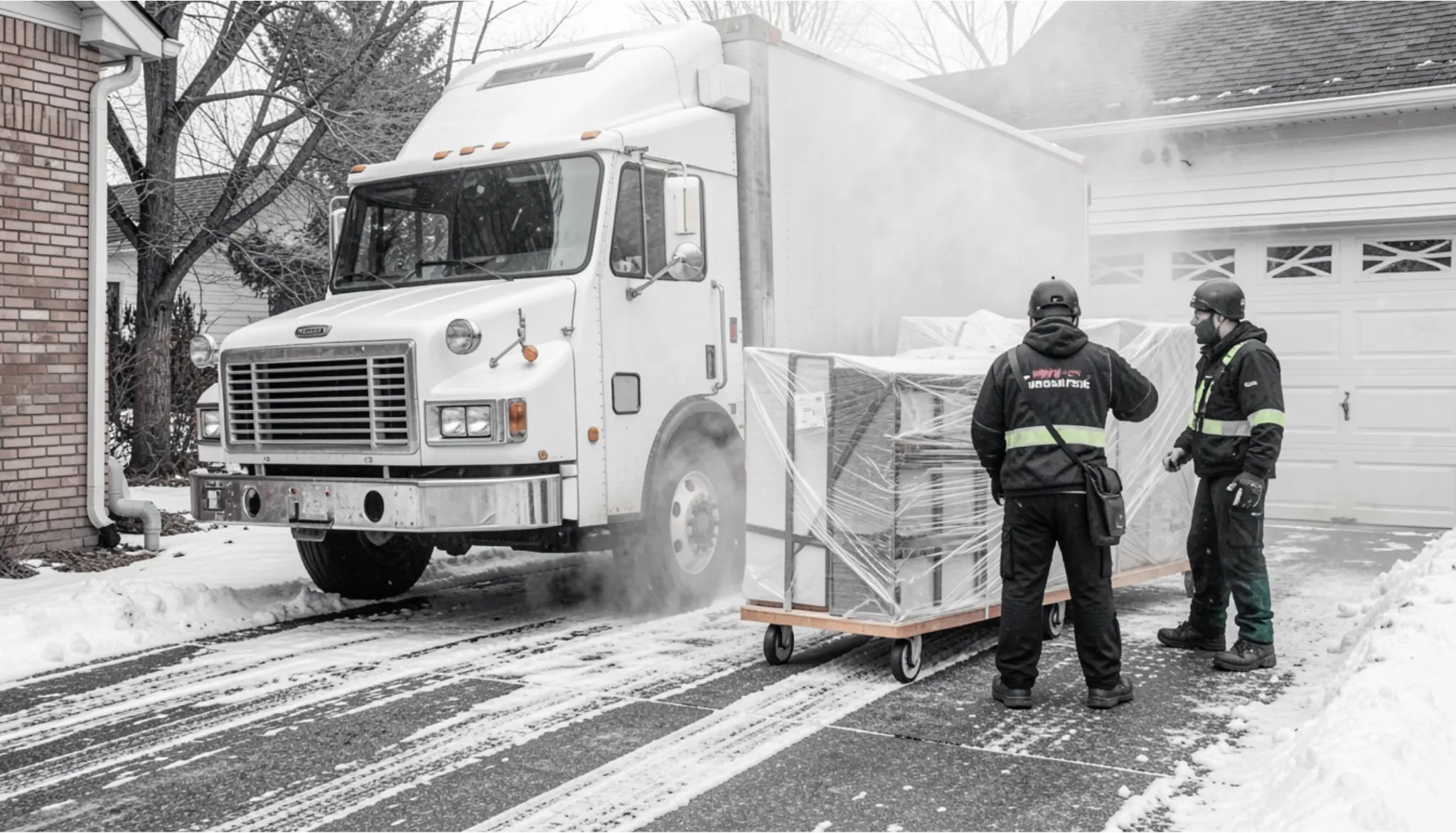
Snow and ice present unique challenges for winter moves, dangerous underfoot and unforgiving on the road. Focus on these steps to stay safe:
- Treat walkways continuously: Apply ice melt or sand on steps and paths before starting, then reapply as foot traffic creates new slick spots.
- Prep the vehicle: Check tire tread and pressure, keep the tank half full, and pack emergency supplies like blankets and a shovel.
- Clear snow off the truck first: Sweep snow and ice from the ramp, roof, and cargo area before loading so nothing slides or drips inside.
Icy conditions demand patience more than speed. Building in extra time makes the entire process safer.
3. Moving Furniture in Extreme Heat
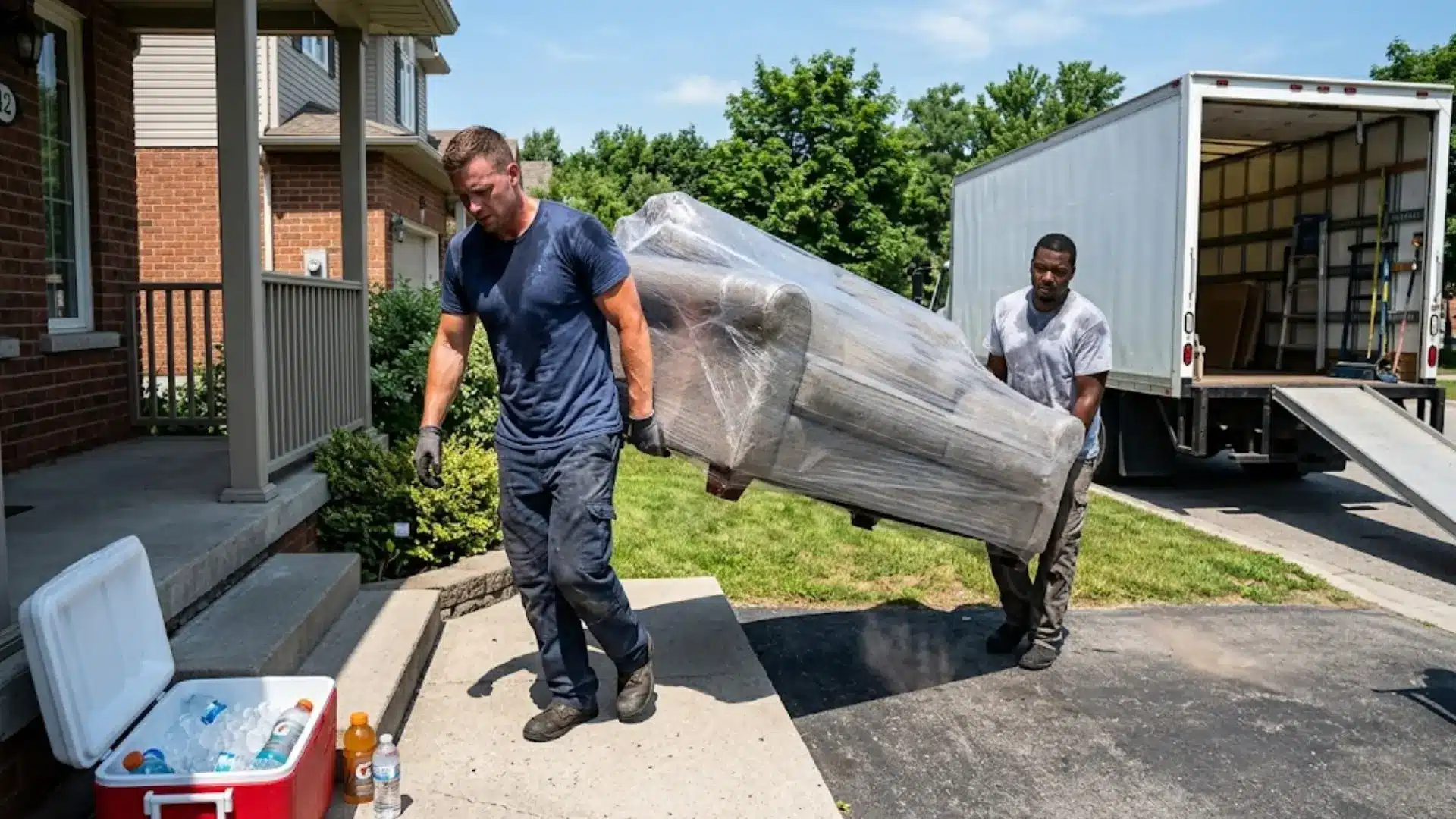
Humid summers create exhausting conditions for moving, with heat indices often exceeding 100°F. These steps help manage the heat safely:
- Schedule around the heat: Start at sunrise to finish heavy lifting early, avoiding the peak afternoon hours entirely.
- Take mandatory breaks: Rest every 30 minutes in shade or air conditioning, even if you feel able to continue.
- Hydrate and protect items: Begin hydrating the day before, use electrolyte drinks, and keep electronics and cosmetics out of a hot truck.
Heat exhaustion can set in quickly during a move like this. Watching for warning signs matters as much as staying hydrated.
Unpacking and Arrival After a Weather-Affected Move
Getting everything inside is only half the job; what happens in the next few hours determines whether anything actually gets ruined.
- Remove plastic wrap from all items right away, even if you’re exhausted; trapped moisture can create mold within 48 hours.
- Position fans and run dehumidifiers in closed rooms to speed up drying.
- Inspect the undersides of cushions, drawer interiors, and furniture joints where moisture can hide.
- Photograph water damage, separate wet items, and wait to arrange furniture in its final spot until dry.
- Act within 6 hours of furniture damage, extract water, apply baking soda, and call restoration pros for valuable pieces.
The first few hours after arrival matter more than most people expect. A little extra effort now can save furniture, flooring, and belongings from lasting damage.
When Should You Hire Professional Movers?
Some moves are just harder to handle on your own, and that’s okay. Heavy or oversized furniture often needs more than two people to move safely.
Narrow staircases or tight doorways can turn a simple move into a real challenge. Large quantities of furniture take more time and planning than most people expect.
Severe weather adds extra risk to lifting, loading, and driving. Valuable, antique, or fragile pieces need careful handling to avoid damage.
Long-distance moves bring their own logistics that are easy to underestimate. Any situation with heavy lifting also raises the risk of injury.
Professional movers often have equipment and weather-protection steps that make these situations safer for everyone involved.
Frequently Asked Questions (FAQs)
What’s the Best Material to Waterproof Furniture During a Move?
Moving blankets combined with plastic stretch wrap work best; the blanket cushions and absorbs moisture while the plastic outer layer seals everything against rain.
Can I Use Regular Trash Bags Instead of Furniture Covers?
In a pinch, yes, for smaller items, but trash bags tear easily and don’t seal well at seams; specialized mattress bags and stretch wrap hold up far better for anything larger.
Is It Safe to Move Electronics in Humid or Rainy Weather?
It’s riskier than usual. Wrap electronics in anti-static bubble wrap first, then a waterproof layer, and transport them in your personal vehicle when possible rather than the moving truck.
Final Thoughts
In the end, moving furniture in bad weather is about staying ready. Being ready means having the right supplies packed before the truck arrives.
It means covering furniture properly and watching every step you take. A little planning turns a tricky day into a manageable one.
Knowing how to move furniture during bad weather keeps your belongings safe and your back pain-free. Slow down, stay alert, and lean on extra hands when you need them.
Weather will not wait for you, but you can still stay ahead of it. Save this post and share it before your next move.