
Effective household cleaning does not mean keeping a different bottle for every surface, stain, and mess.
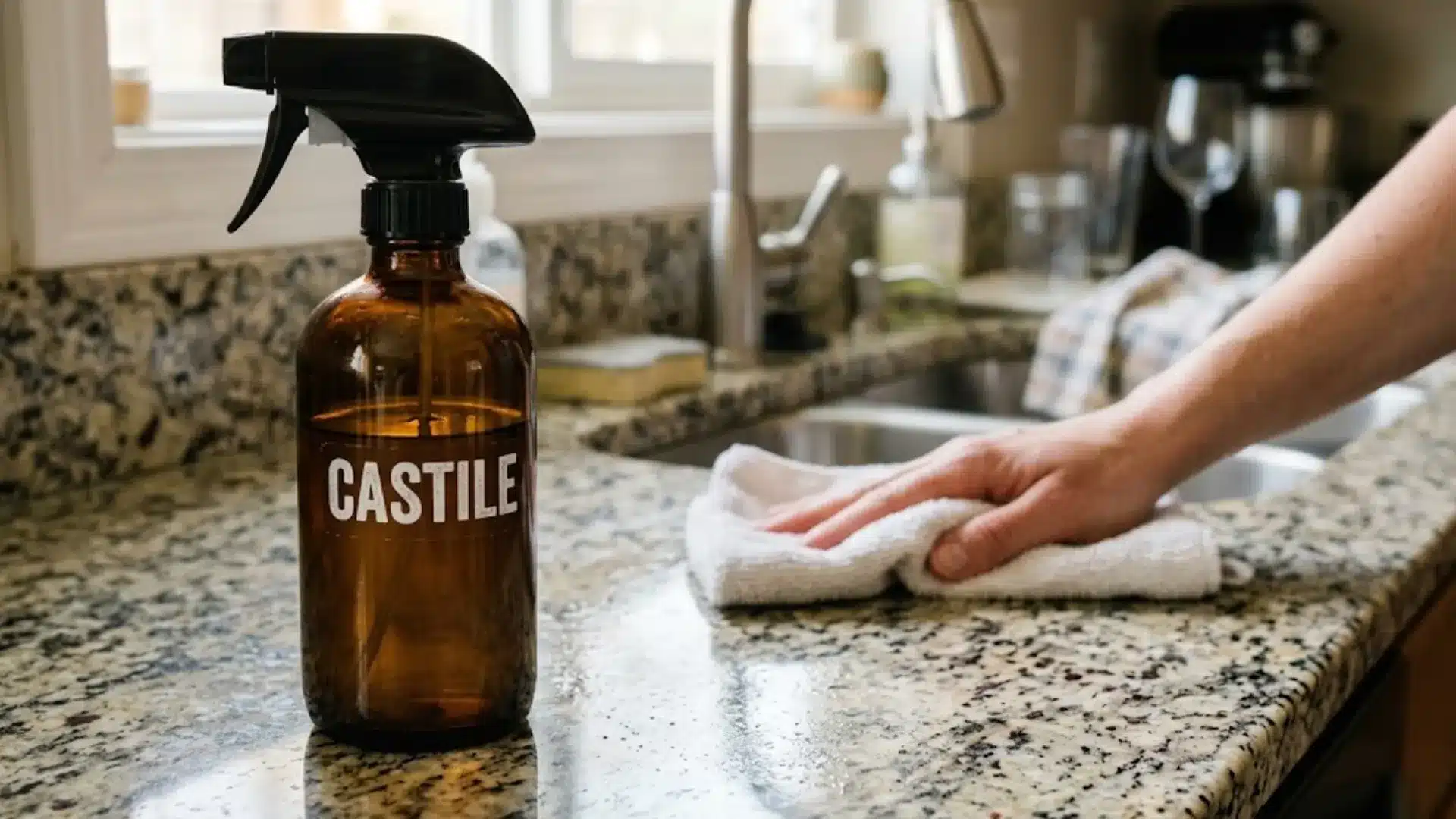
You can also opt for Castile soap, as I did. This simple plant-based soap can handle several everyday cleaning jobs.
Yet, if you use too much, choose the wrong surface, or mix it with another cleaner, that simple solution can quickly become less useful.
What caught my attention was how little you actually need for many routine tasks. The key is knowing how to clean with castile soap, where it works, and where it does not.
What is Castile Soap & Why it Works?
Castile soap gets its name from the Castile region of Spain, where it was traditionally made using olive oil as the base ingredient.
Today, most Castile soaps still stick to that plant-based approach, just with a wider range of oils:
- Olive oil
- Coconut oil
- Hemp oil, blended with lye
It’s sold as either a liquid or a solid bar depending on how you plan to use it.
What makes it worth keeping around is its versatility; it’s biodegradable and non-toxic enough to use around kids and pets.
Yet still genuinely effective at cutting through grease and grime once diluted to the right strength.
Diluting it correctly also makes one bottle last significantly longer, since a little goes a long way once it’s properly mixed.
How to Clean With Castile Soap?
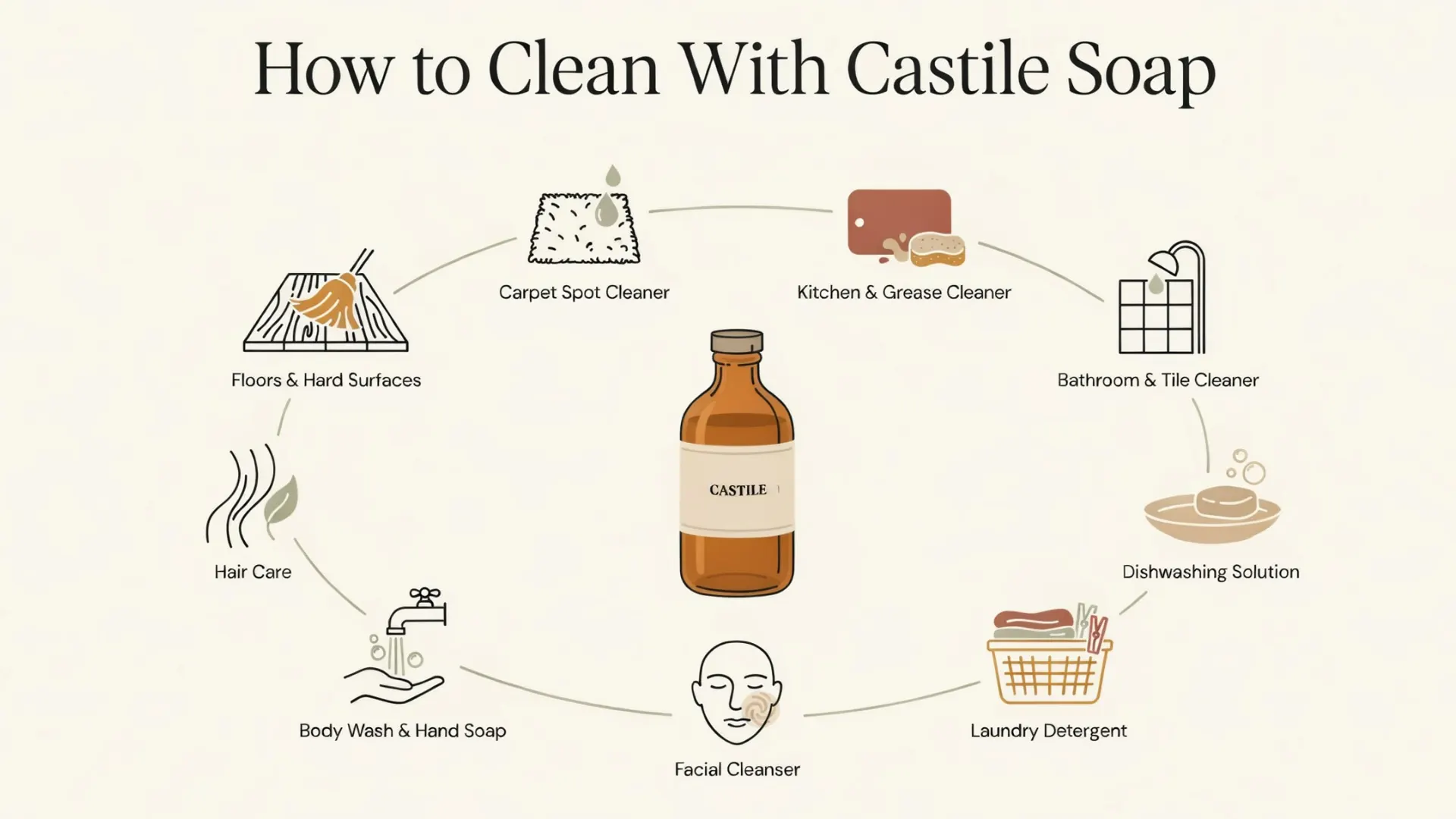
The exact ratio and method for using castile soap change depending on what you’re cleaning; here’s a breakdown for the most common surfaces around the house.
1. Floors & Hard Surfaces
- Materials: Castile soap, warm water, mop, bucket
- Dilution: ¼ cup castile soap in 1 gallon of warm water
Mop in small sections rather than the whole floor at once, and avoid over-wetting the mop; rinse it out often to keep from spreading dirty water around.
Let the floor air dry fully afterward to avoid streaks or dulled finishes.
For delicate flooring, test the solution first in an inconspicuous area to prevent unwanted damage or residue.
2. Carpet Spot Cleaner
- Materials: Castile soap, water, clean cloth
- Dilution: A few drops of Castile soap in 1 cup of water
Apply the solution directly to the stain and blot gently; never scrub, since scrubbing can push the stain deeper into the fibers.
Rinse the area lightly with a damp cloth and blot dry, repeating if needed. Allow the spot to dry completely, then vacuum the area gently to restore the carpet’s texture and appearance.
3. Kitchen & Grease Cleaner
- Materials: Castile soap, warm water, sponge or cloth
- Dilution: A slightly stronger solution than the standard all-purpose mix
Scrub lightly with a sponge or cloth over greasy stovetops or counters, then rinse thoroughly to remove any soap residue along with the grease.
For stubborn grease, let the diluted solution sit briefly before wiping, then rinse with clean water and dry the surface thoroughly to prevent streaks.
4. Bathroom & Tile Cleaner
- Materials: Castile soap, water, optional tea tree oil, cloth or sponge
- Dilution: 1–2 tbsp castile soap per cup of water
Add a few drops of tea tree oil if you want a natural antibacterial benefit, then wipe down tubs, sinks, and tiles with a cloth or sponge.
Rinse thoroughly afterward to avoid any soapy film left behind on surfaces.
Pay extra attention to corners, grout lines, and areas around drains where soap scum and everyday bathroom buildup tend to collect.
5. Dishwashing Solution
- Materials: Castile soap, warm water, optional essential oil
- Dilution: 1 tsp Castile soap per warm water basin
Wash dishes as you normally would, using a sponge to work through grease or food residue, then rinse well.
Add a drop of essential oil if you want a light, natural scent. For heavily soiled dishes, soak them briefly in warm water first to loosen dried food and make washing easier.
6. Laundry Detergent
- Materials: Liquid castile soap, washing machine, optional white vinegar, optional baking soda
- Dilution: 1/3 to 1/2 cup castile soap per large load in a standard washer
Add the soap directly to the wash drum or detergent dispenser, depending on your machine.
Because castile soap does not foam like conventional detergent, a lack of suds does not mean it is not working.
In hard water, add about a cup of white vinegar to the rinse cycle to cut down on residue, and a half cup of baking soda to the wash cycle if you want extra whitening power.
7. Facial Cleanser
- Materials: Castile soap, water, cloth, moisturizer
- Dilution: 1:5 to 1:10 Castile soap to water
Facial skin is more sensitive than most surfaces around the house, so you need a much lighter dilution here.
Apply the diluted solution gently in circular motions across your face.
Then rinse thoroughly with warm water. Follow with a gentle moisturizer to help maintain your skin’s comfort and prevent dryness after cleansing.
8. Body Wash & Hand Soap
- Materials: Castile soap, water (optional), essential oil (optional)
- Dilution: Can be used diluted or undiluted, depending on preference
Castile soap works well as either a diluted body wash or straight from the bottle as hand soap, whichever suits your skin and routine better.
Adding a few drops of essential oil, lavender, eucalyptus, or citrus, brings in a natural fragrance.
If your skin feels dry afterward, reduce the soap concentration or follow with a gentle, fragrance-free moisturizer.
9. Hair Care
- Materials: Castile soap, water, apple cider vinegar (optional), cup or bottle for rinsing
- Dilution: Dilute with water to a gentle, shampoo-like consistency
Diluted castile soap can work as a natural shampoo alternative for anyone looking to simplify their hair care routine and cut down on synthetic ingredients.
Following up with an apple cider vinegar rinse helps rebalance the hair’s natural pH and cuts through any residue the soap might leave behind.
Items You Should Be Careful With While Using Castile Soap
Castile soap is versatile, but certain materials can react poorly to soap or excess moisture. Always check compatibility first.
- Unfinished Wood: Excess moisture and soap can penetrate unfinished wood, causing swelling, staining, or surface damage over time.
- Natural Stone: Castile soap may leave residue on porous stone surfaces, affecting their appearance and cleanliness.
- Electronics: Never apply Castile soap directly to electronics, as moisture can damage internal components and electrical connections.
- Delicate Fabrics: Some delicate fabrics may react poorly to soap, so always follow their specific care instructions.
- Specialty Surfaces: Test Castile soap on an inconspicuous area before cleaning delicate or manufacturer-treated surfaces.
Can You Mix Castile Soap With Other Cleaners?
It is best to use Castile soap on its own rather than mixing it with other cleaning products.
In particular, avoid mixing Castile soap with acidic ingredients such as vinegar or lemon juice.
Because Castile soap is alkaline, acids can react with it and create a curdled mixture that leaves behind residue instead of cleaning effectively.
You should also avoid combining it with commercial cleaners unless the product label specifically says they are compatible.
Mixing cleaning products can reduce their effectiveness and, with some chemicals, may create harmful fumes or reactions.
Building a small stock of pantry staples for cleaning cuts down on how many specialty bottles you need under the sink.
For everyday cleaning, dilute Castile soap with water according to the manufacturer’s instructions and use it separately.
Pros & Cons of Castile Soap
Castile soap is a versatile option for everyday cleaning, but it is not ideal for every surface or cleaning task.
Understanding its benefits and limitations can help you decide when to use it and when to choose a different cleaner.
| Pros | Cons |
|---|---|
| Eco-friendly, safe around kids, pets, and drains | Needs proper dilution or it leaves sticky residue |
| Multi-purpose across kitchen, bathroom, floors, laundry | Not a disinfectant, doesn’t kill germs |
| Gentle yet effective on dirt and grease | Can leave residue with hard water or acids |
| Budget-friendly, one bottle stretches far | Slight learning curve to get ratios right |
Safety & Precautions to Take While Using Castile Soap
Castile soap is generally useful for everyday cleaning, but following basic precautions helps prevent surface damage and unwanted reactions.
- Follow Dilution Instructions: Always dilute Castile soap according to the manufacturer’s instructions to prevent residue and surface buildup.
- Test First: Apply diluted Castile soap to a small, hidden area before cleaning larger surfaces or materials.
- Avoid Chemical Mixing: Never mix Castile soap with vinegar, bleach, or other household cleaners to prevent reactions.
- Protect Your Skin: Wear gloves during prolonged cleaning sessions, especially if you have sensitive or easily irritated skin.
- Store Properly: Keep Castile soap securely closed and stored away from children, pets, heat, and direct sunlight.
Conclusion
One small bottle mixed with a little water can genuinely replace half the cleaning aisle for floors, dishes, laundry, even your own skin and hair
No confusing ingredient lists, no guessing games, just simple ratios that actually work once you know them.
It’s gentle enough for kids and pets, tough enough for grease and grime.
Have a Castile soap cleaning ratio that works for you? Share it in the comments, or tell us what you’re planning to clean next!
Frequently Asked Questions
How Do I Store DIY Castile Cleaners?
Store diluted solutions in a labeled spray bottle at room temperature, away from direct sunlight. Since these mixes don’t contain synthetic preservatives, it’s best to use them within a few weeks and shake the bottle before each use.
Can I Use Castile Soap in a Washing Machine?
Yes, you can use castile soap for laundry, but check your machine and product instructions to avoid buildup or excess suds.
Does Castile Soap Expire?
Castile soap can last for years when stored properly, though its scent, texture, or cleaning performance may gradually change over time.