

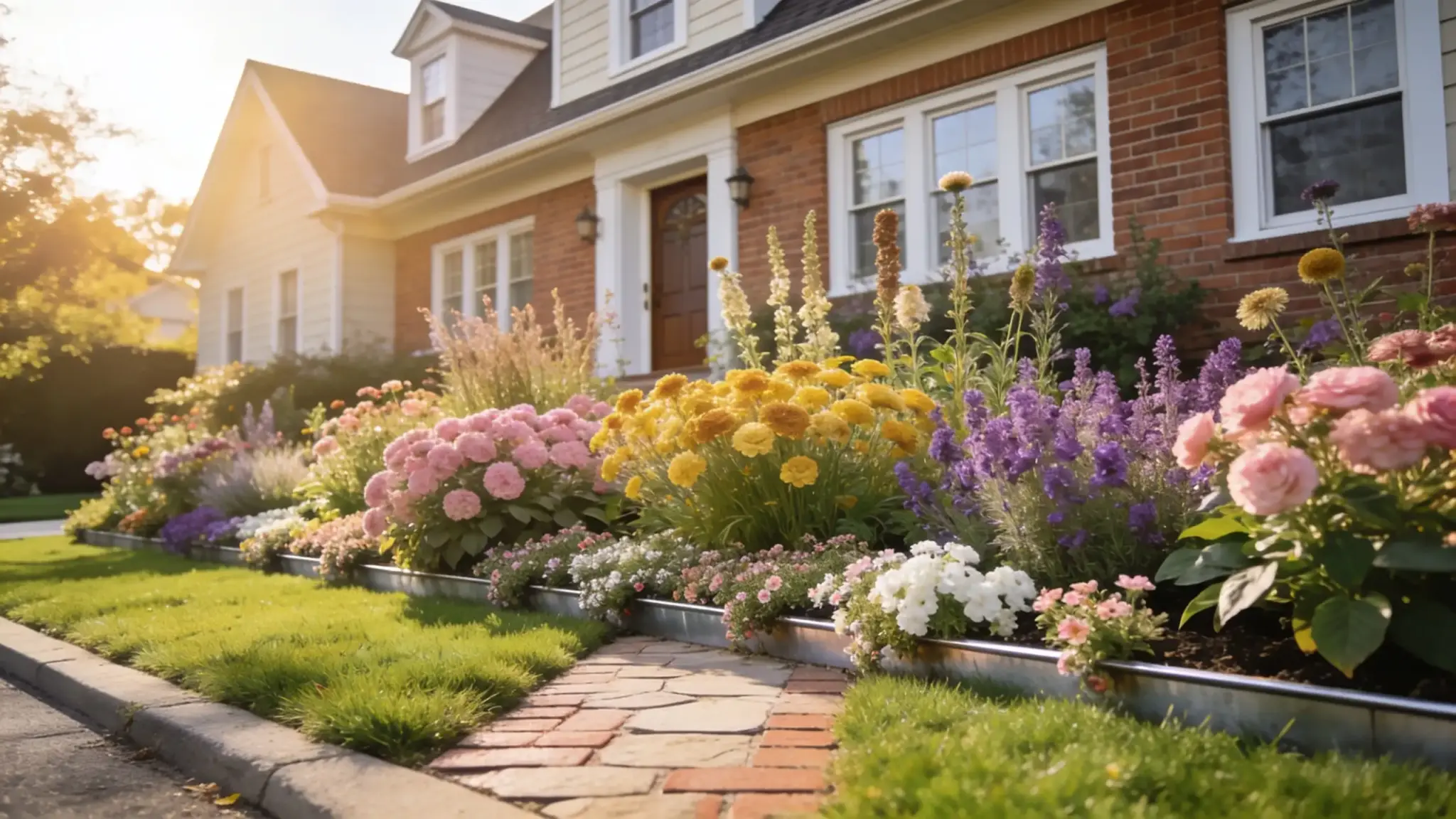
Your front yard is the first thing anyone sees, and right now, it might not be saying much.
A well-planted flower garden changes that faster than almost any other home improvement you can make.
These flower garden ideas cover every style and layout, from classic cottage borders and simple flower bed ideas at the front of the house to modern minimalist designs.
Each idea comes with plant recommendations and home-style guidance so you can move from inspiration to action without second-guessing. Find what fits, and get planting.
What Makes a Good Flower Garden
A good flower garden does more than add color. It feels like it belongs there. The best gardens are built on a few quiet principles.
Sunlight is the starting point. Plants placed in the wrong light struggle no matter how well everything else is done.
Scale matters more than most people realize. A tall home with only ankle-height plants looks unfinished. A small yard crowded with oversized shrubs feels suffocating. Getting the proportions right makes the whole space feel considered.
Color and repetition tie it all together. Repeating two or three key plants throughout the bed creates rhythm and cohesion.
When bloom times are planned across seasons, the garden remains worth a look long after summer ends.
Before You Plant: Quick Tips to Prepare Your Flower Garden
Getting your flower garden ready before planting day makes everything easier. A little groundwork goes a long way toward a garden that actually thrives.
- Know Your USDA Hardiness Zone: So you only buy plants that can survive your local winters without extra effort.
- Check Sunlight Hours: Observe how much direct sun your bed receives throughout the day before selecting any plant.
- Test Soil Drainage: Fill a dug hole with water and watch how fast it absorbs it; slow drainage kills roots.
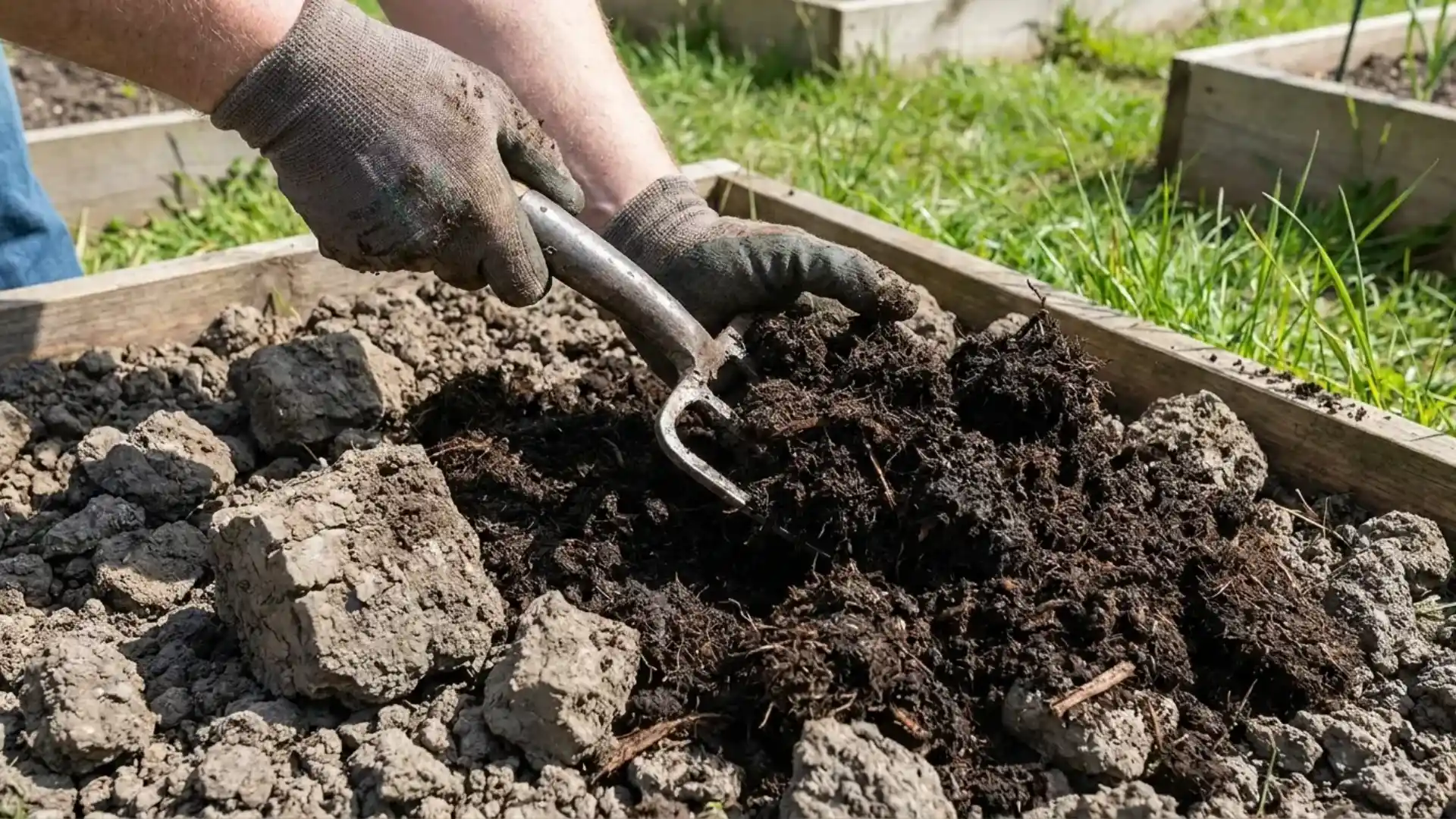
- Amend Your Soil: Work 2 inches of compost into the soil before planting to improve soil fertility and structure.
- Edge and Mulch First: To define clean bed boundaries and lock in moisture before a single plant goes in.
- Plan Bloom Times: Across spring, summer, and autumn, so the bed always has something flowering and never looks empty.
A well-prepared bed gives every plant the best possible start.
Classic and Traditional Flower Garden Ideas
Classic flower garden styles have stood the test of time for a reason. They are designed to make any home look as if it has always had a beautiful front yard.
1. English Cottage Border
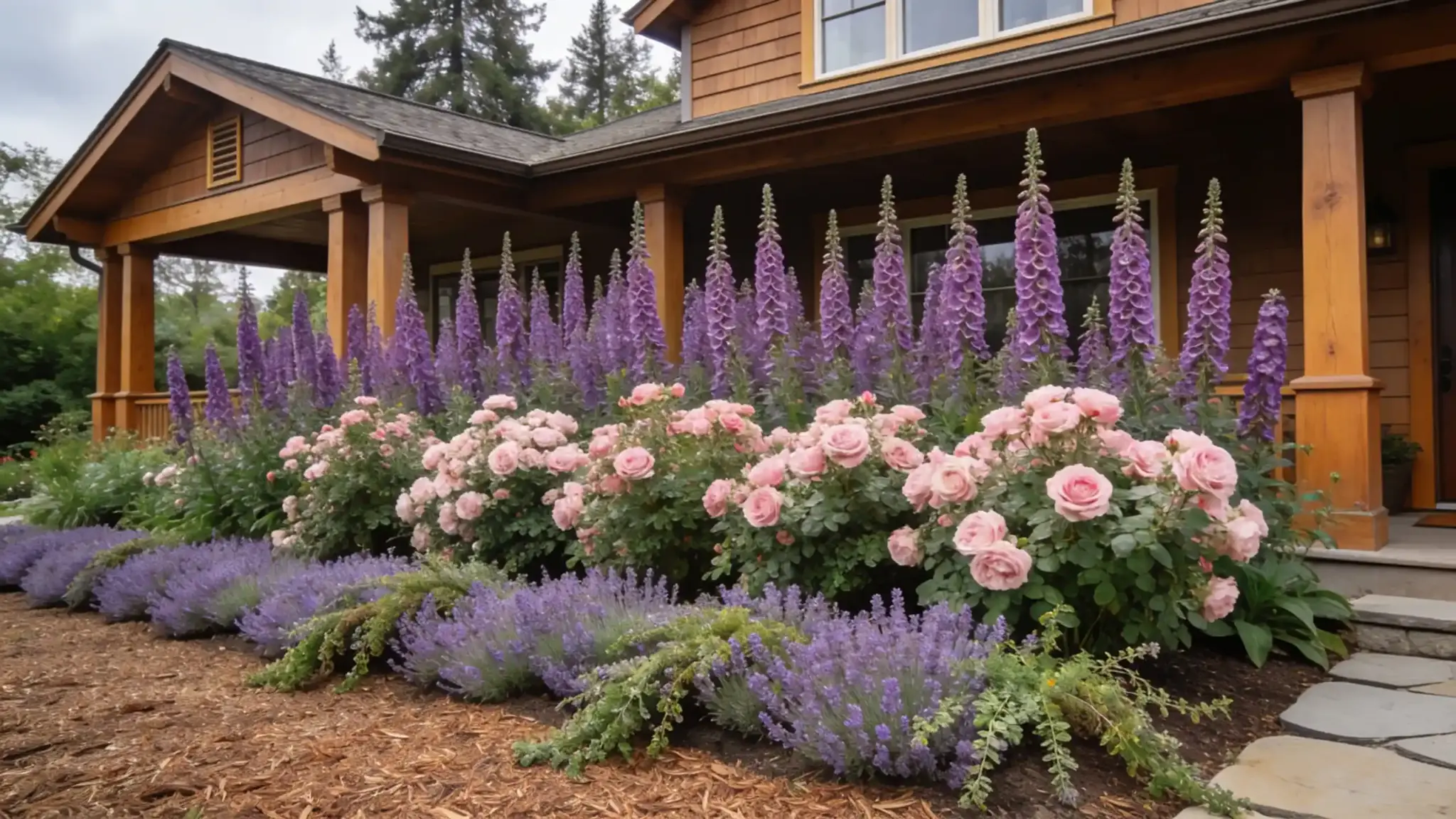
Ideal for: Craftsman, colonial, and farmhouse-style homes
Go-to plants: Lavender, Pink Shrub Roses, Foxglove
Billowing layers of lavender, roses, and foxglove create a romantic, abundant look that softens the hard edges of any home facade.
Plant in full sun with well-draining soil and deadhead regularly to extend the bloom season from late spring through summer.
This style only gets better with age as plants fill out and spill naturally into each other.
2. Symmetrical Foundation Bed
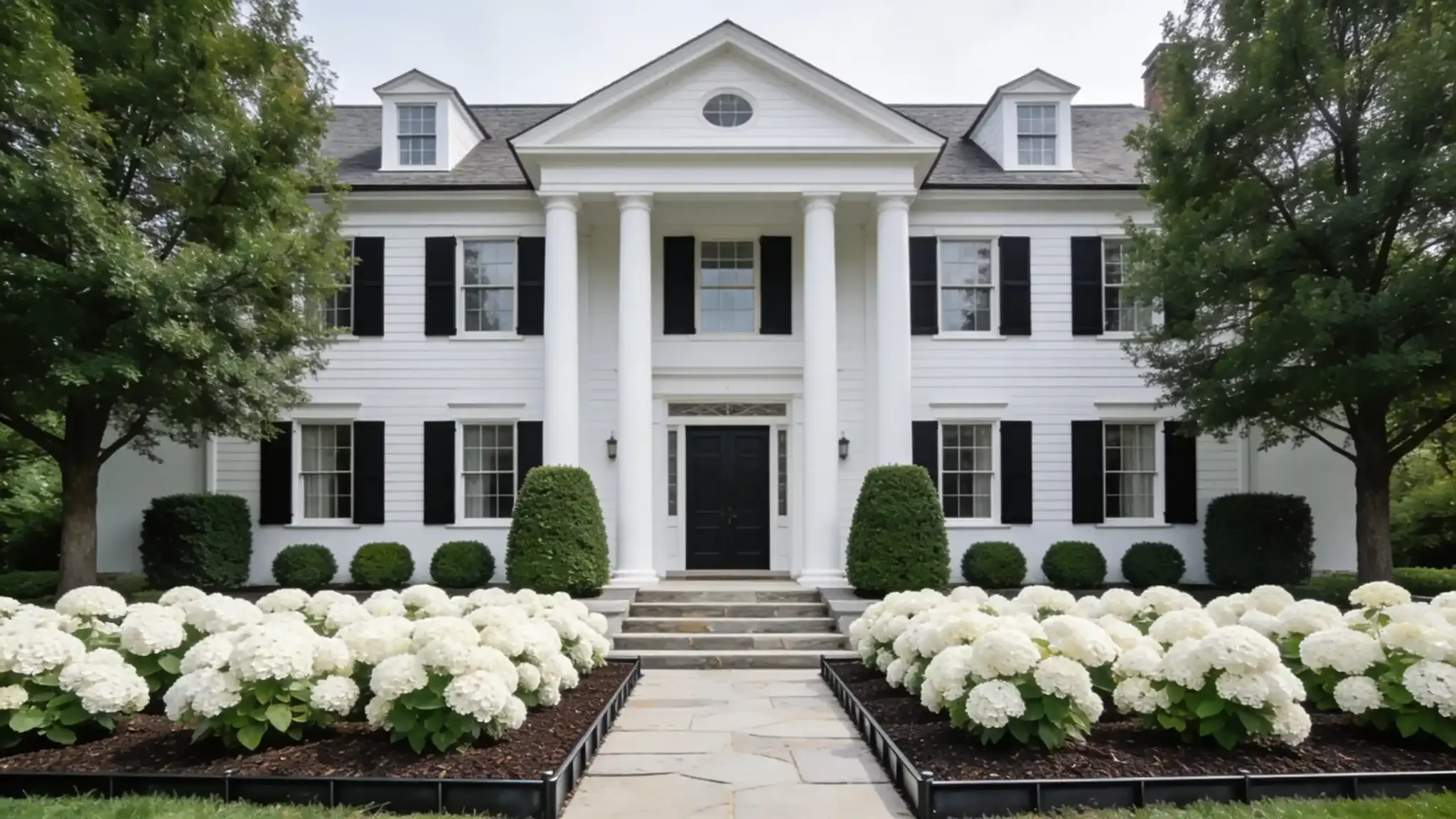
Ideal for: Colonial and traditional two-story homes
Go-to plants: Boxwood, White Hydrangea, Creeping Phlox
Two matching beds flanking the front door or porch steps create immediate visual balance and draw the eye directly toward the entrance.
Use the same plants mirrored on both sides, with taller varieties towards the house and lower growers at the front edge.
The result is polished, intentional, and easy to maintain over time.
3. Tulip and Daffodil Spring Border
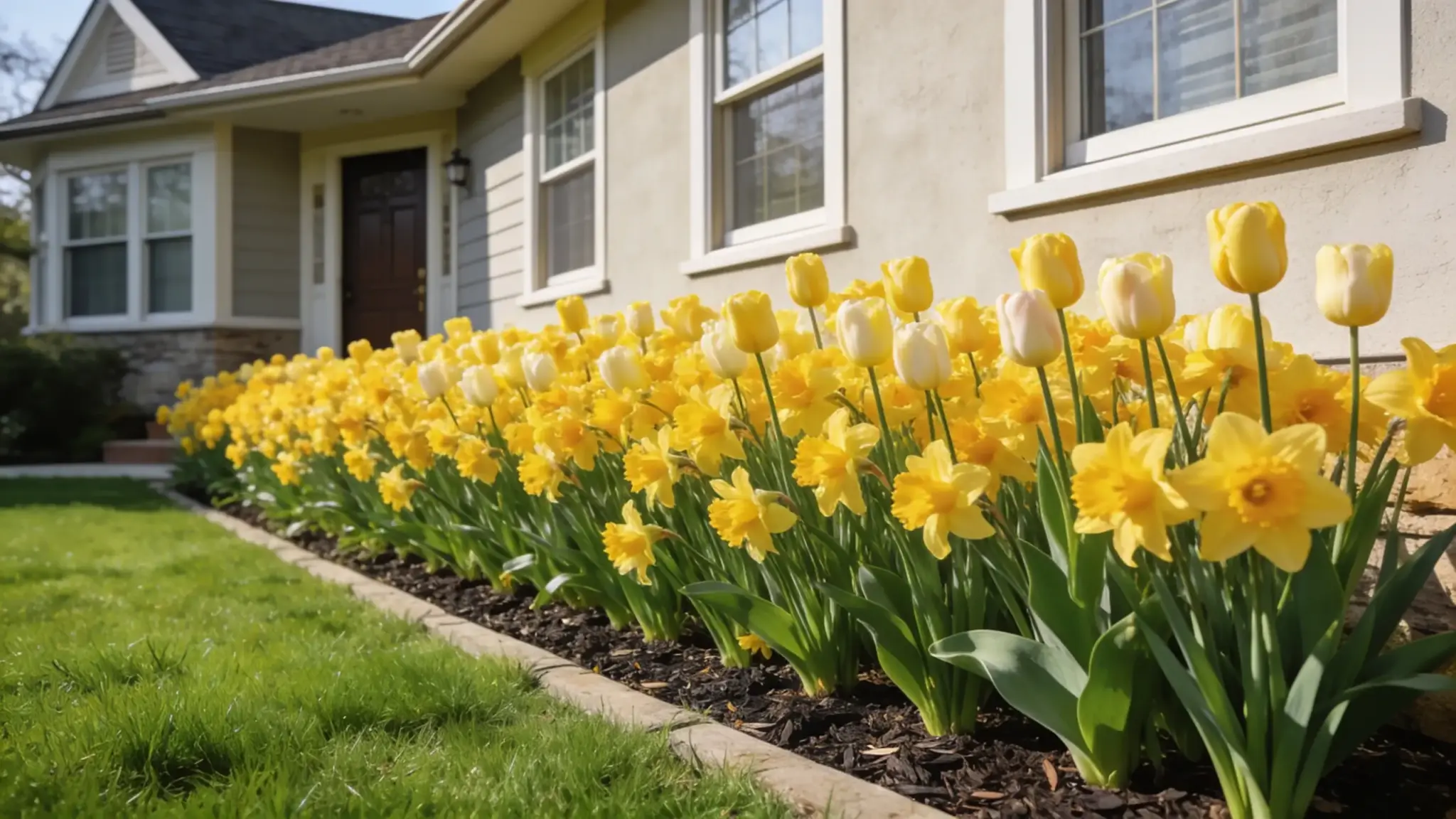
Ideal for: Any home style with a traditional front lawn
Go-to plants: Tulips, Daffodils, Grape Hyacinth
Mass-planted spring bulbs along the front foundation deliver an early burst of color before most perennials wake up.
Layer tulips behind daffodils so that as one fades, the next takes over.
Follow with summer annuals planted into the same beds to keep the display going well into the warmer months.
4. Rose-Hedged Entry Bed
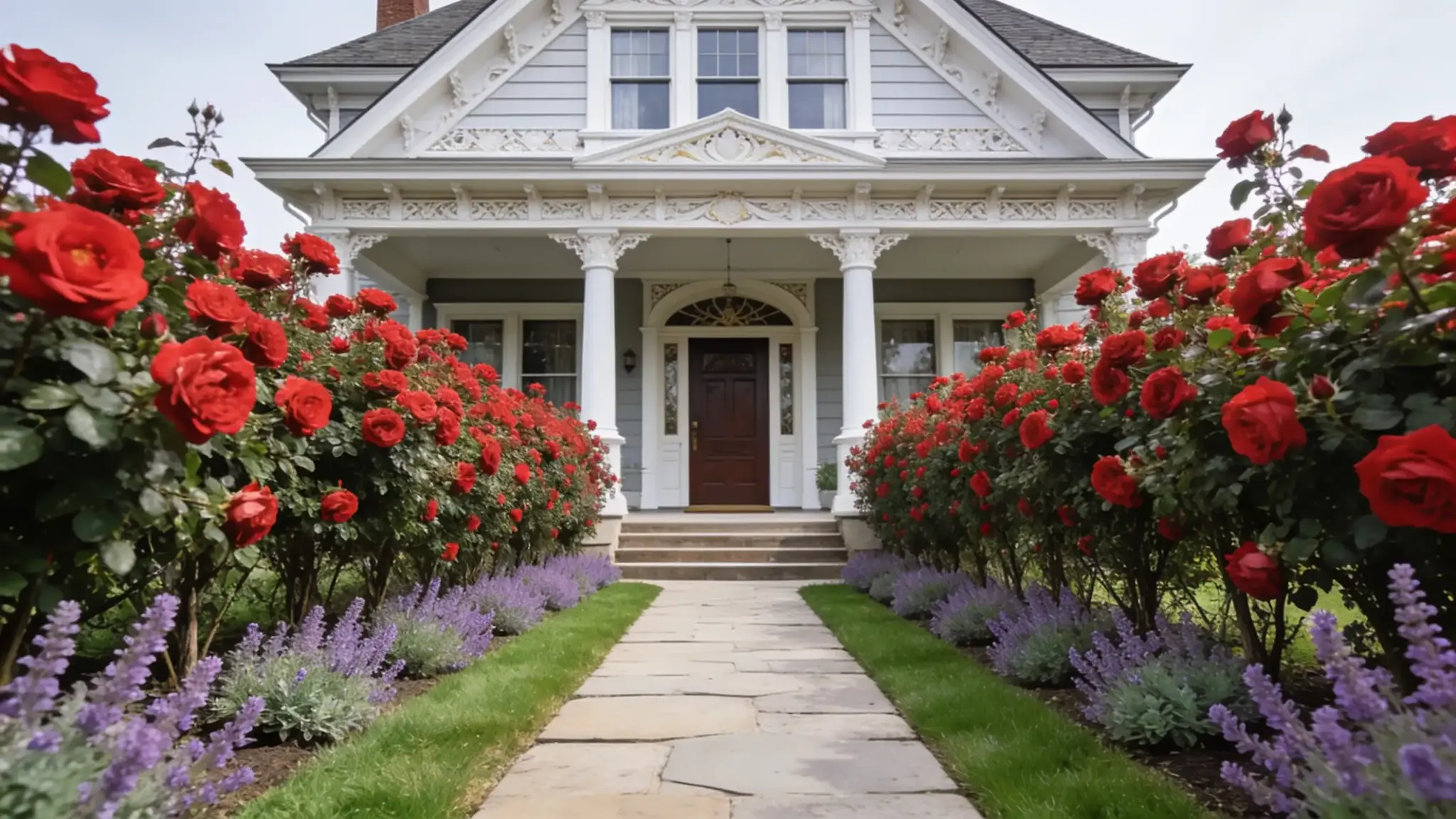
Ideal for: Victorian, colonial, and traditional homes
Go-to plants: Knock Out roses, Catmint, Dusty Miller
A low hedge of compact ground-cover roses along the front path creates a formal, polished look that rewards with blooms from late spring through the first frost.
Choose disease-resistant varieties to keep maintenance manageable.
Underplanting with catmint and dusty miller adds soft color and texture between rose stems without extra effort.
5. Formal Boxwood-Framed Bed
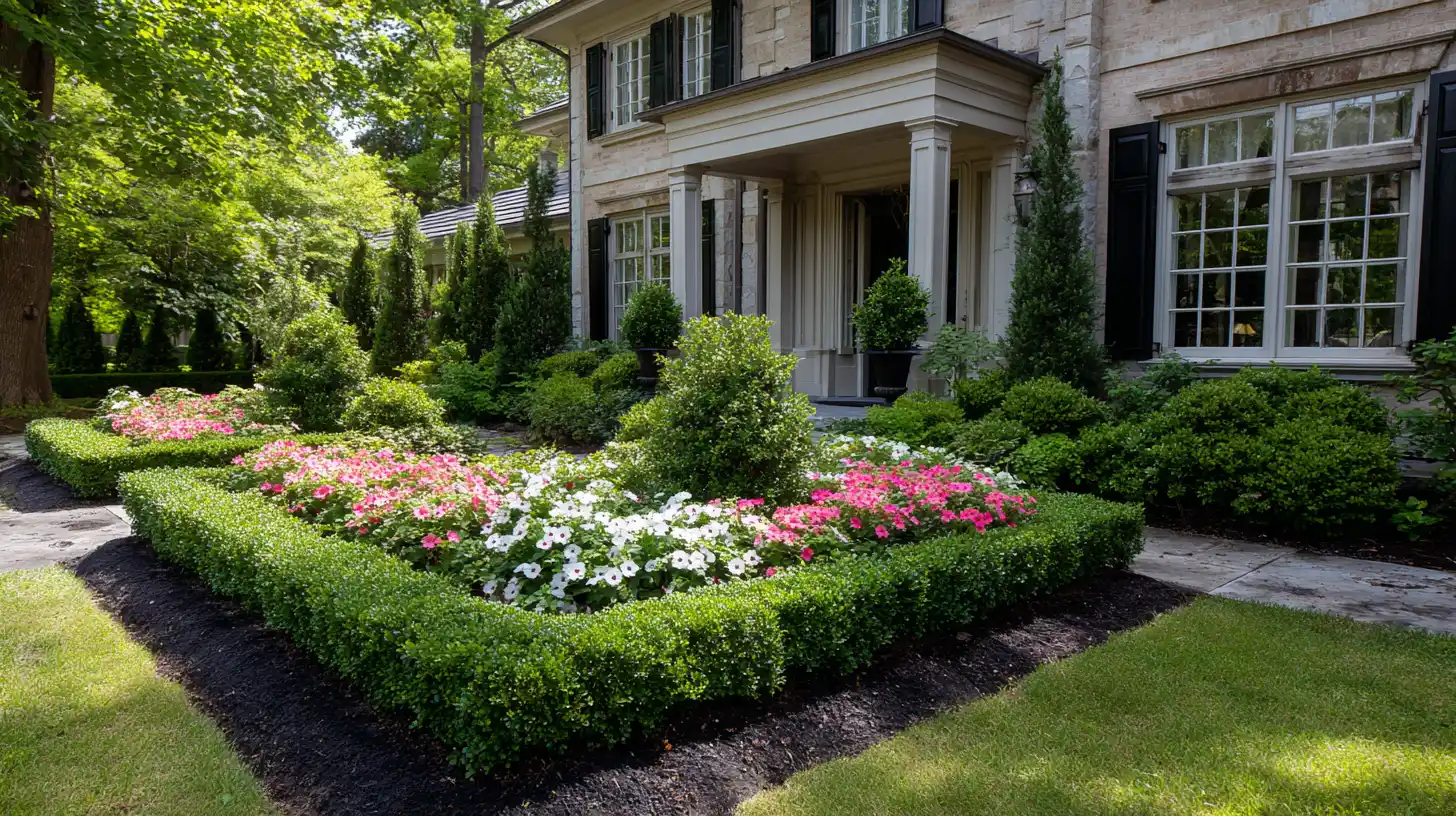
Ideal for: Georgian, colonial, and formal home styles
Go-to plants: Dwarf Boxwood, Petunias, Ornamental Kale
Dwarf boxwood planted in a low, clipped border frames the bed and provides a reliable year-round green structure.
Fill the interior with seasonal color: pansies in spring, petunias in summer, and ornamental kale in autumn.
The evergreen frame holds the bed together visually, even when seasonal plants are being swapped out between plantings.
6. White Garden Bed
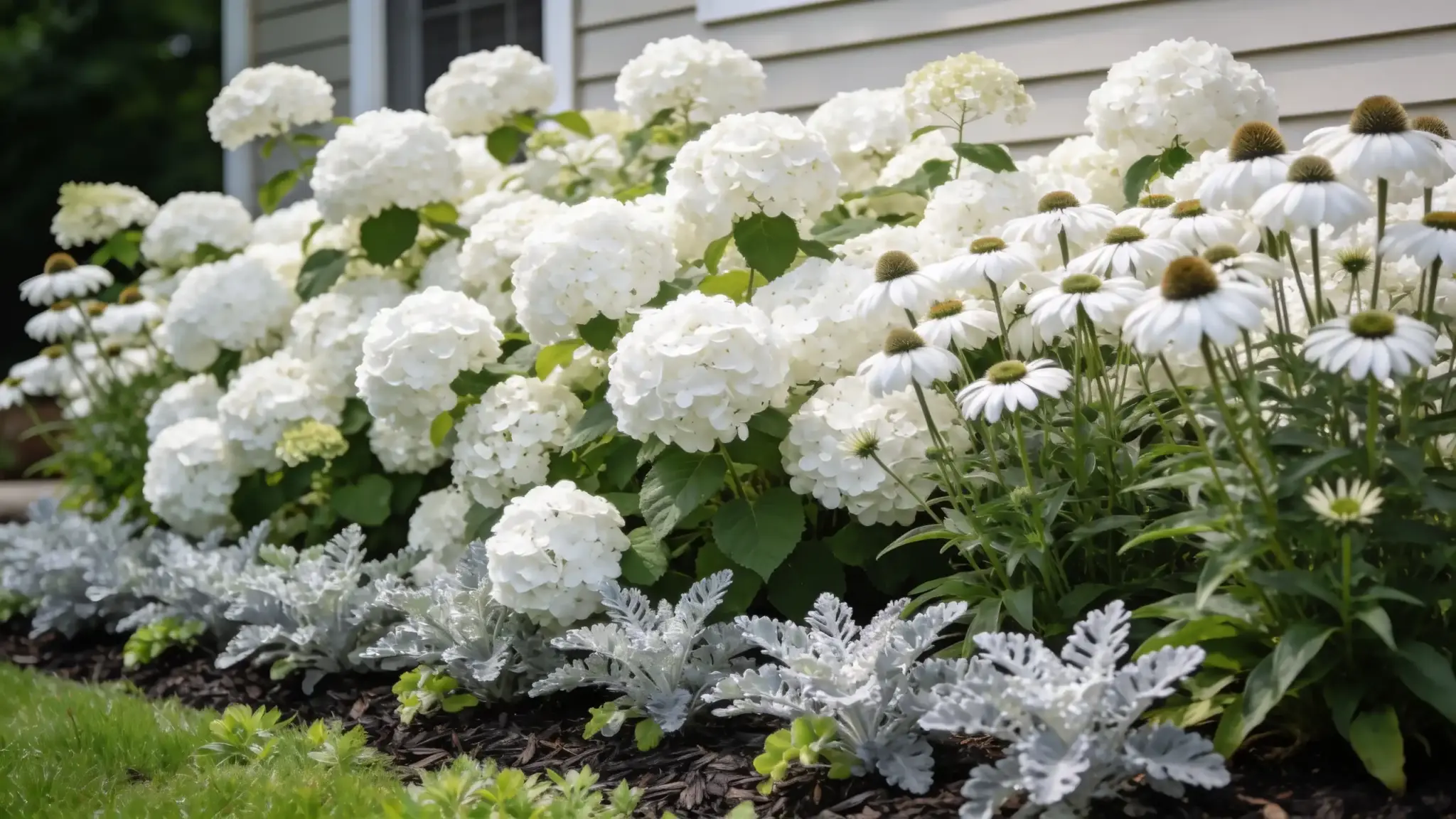
Ideal for: Dark-painted or brick exteriors on any architectural style
Go-to plants: White Hydrangea, White Coneflower, Dusty Miller
An all-white planting palette creates a sophisticated, timeless look that complements almost any exterior color.
White blooms also glow softly at dusk, making the front yard feel warm and welcoming during evening arrivals. Silver foliage plants like dusty miller add depth to the palette without introducing a second color into the design.
7. Layered Perennial Border
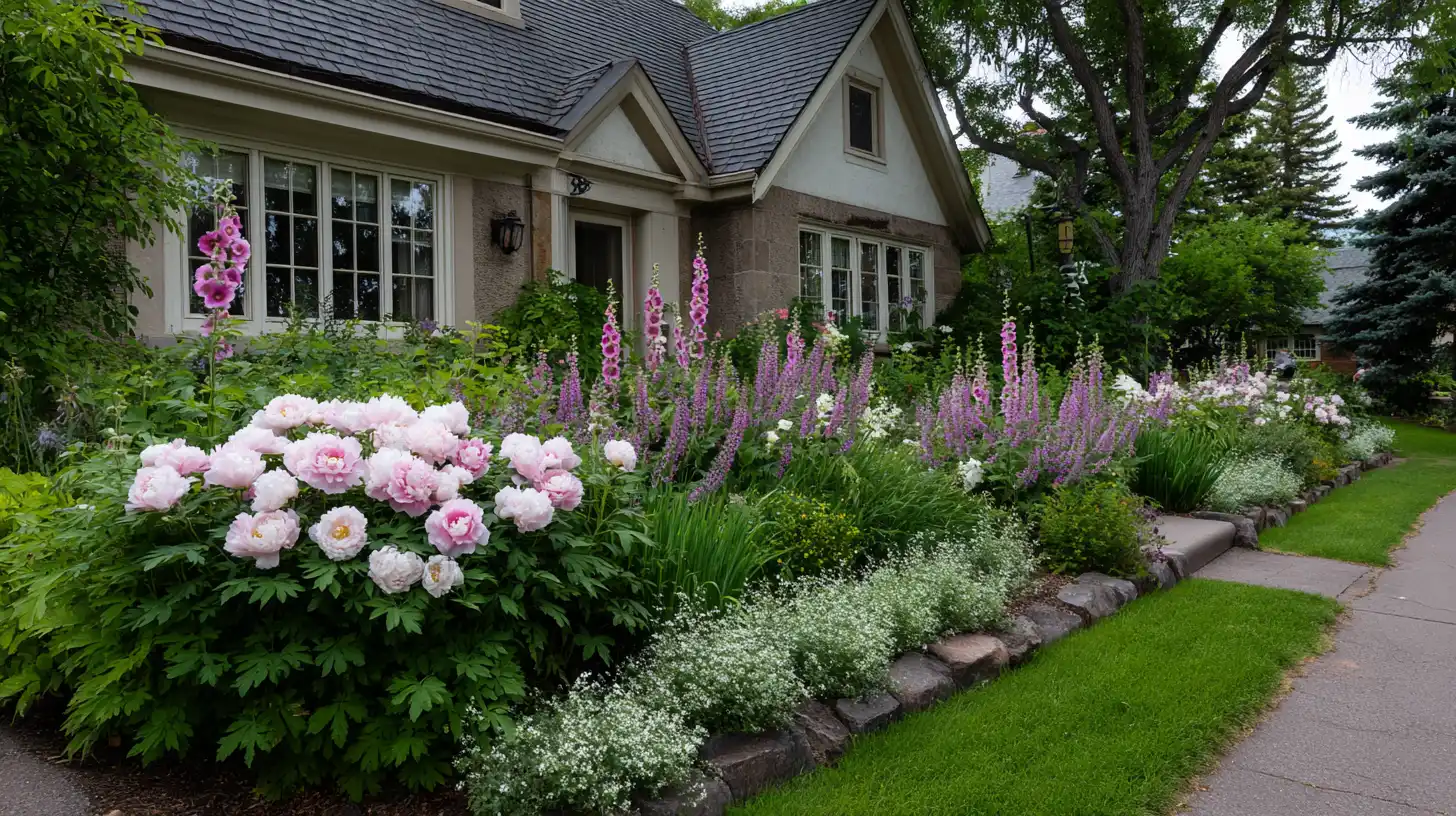
Ideal for: Wide foundation beds on any traditional home
Go-to plants: Hollyhock, Peony, Sweet Alyssum
Tall perennials like hollyhocks at the back, mid-height peonies in the center, and low-growing alyssum at the front create a tiered structure that carries color from spring through autumn.
The layered approach ensures every plant is visible from the street and the bed always looks full, even as different varieties come in and out of bloom.
8. Picket Fence Flower Border
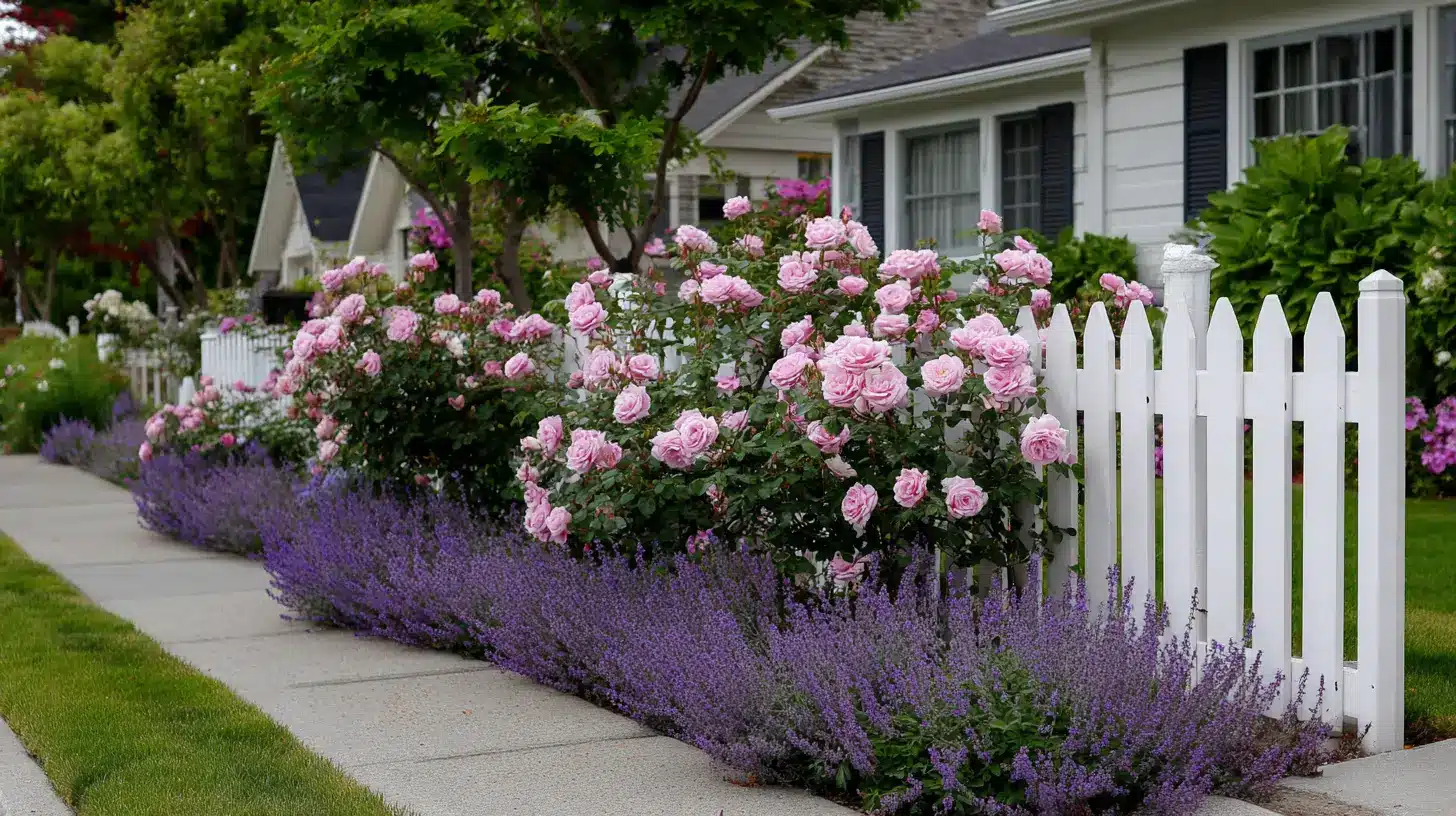
Ideal for: Cottage, farmhouse, and craftsman homes with existing fencing
Go-to plants: Pink Shrub Roses, Catmint, Lady’s Mantle
A white picket fence pairs beautifully with cottage-style plantings.
Pink shrub roses skirted with purple catmint, chartreuse lady’s mantle, and meadow sage create a full, layered border that reads as classic and curated from the street.
The fence serves as a natural backdrop, adding height, structure, and appeal to the entire planting.
Modern and Minimalist Flower Garden Ideas
Modern flower gardens prove that less is genuinely more.
Clean lines, a restrained color palette, and bold structural plants create a front yard that looks sharp, intentional, and effortlessly stylish.
9. Ornamental Grass and Single-Bloom Bed
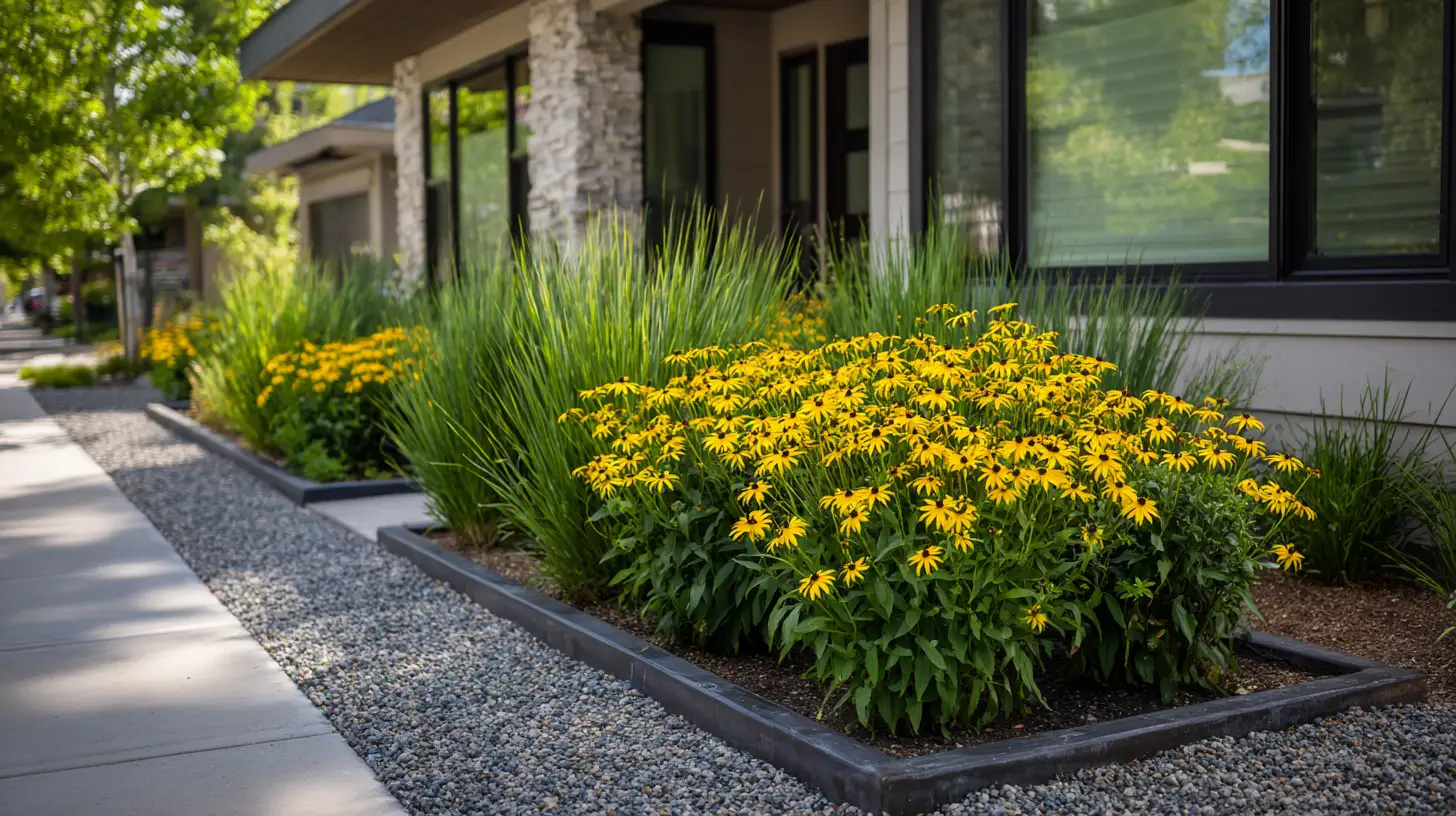
Ideal for: Ranch-style, modern, and mid-century homes
Go-to plants: Karl Foerster Grass, Black-Eyed Susan, Blue Oat Grass
Limit the palette to one flowering plant and pair it with a mass of ornamental grasses for movement and texture.
The restraint reads as deliberate and contemporary rather than sparse. Grasses catch the light beautifully in the afternoon and add year-round interest even after the blooms have finished for the season.
10. Monochromatic Purple Border
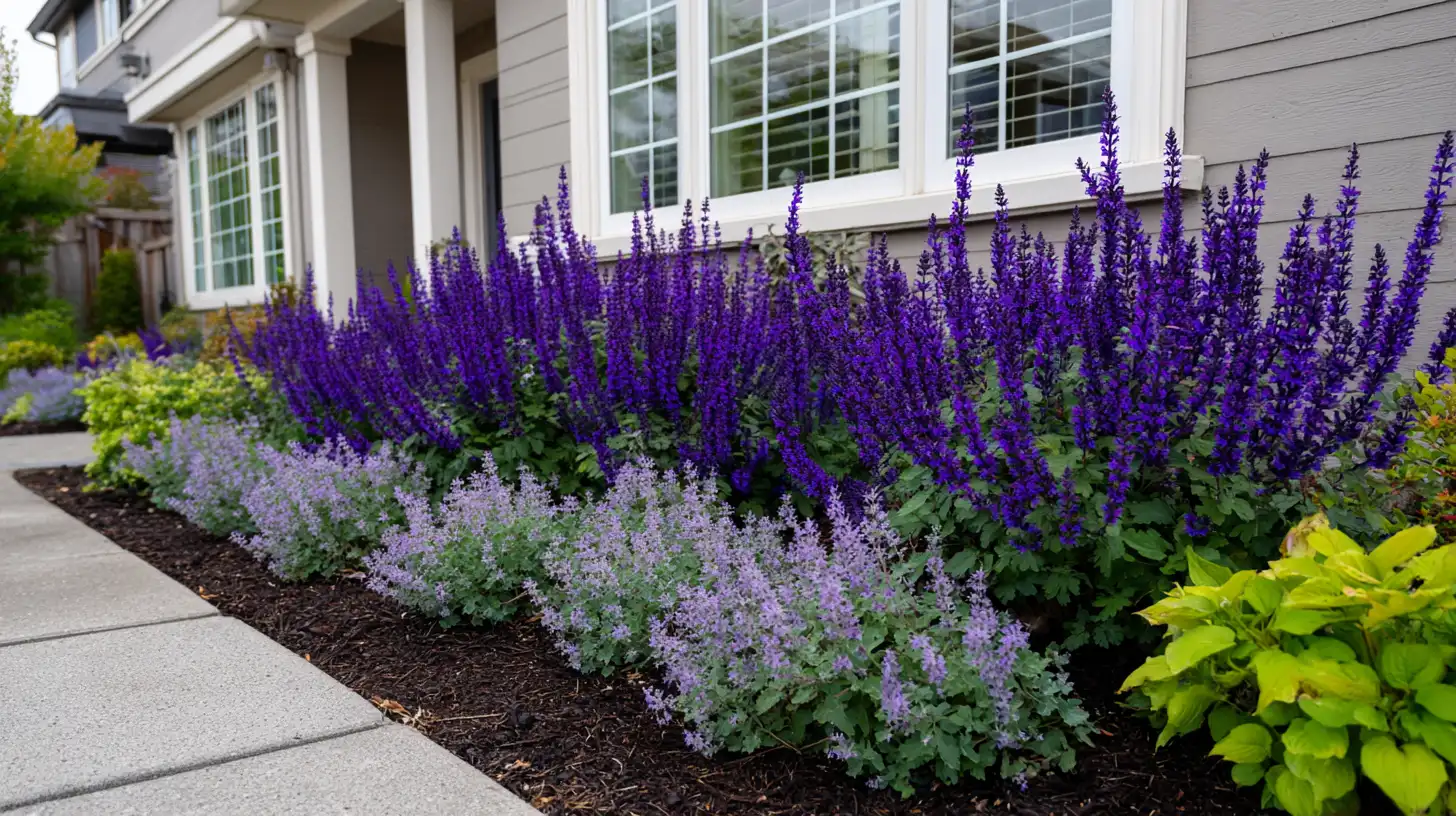
Ideal for: Light grey, white, or cream-painted modern homes
Go-to plants: Salvia, Catmint, Purple Coneflower, Agastache
Select plants entirely within the purple-to-lavender spectrum and let variation in texture and height carry the design. The result is cohesive and bold, requiring no complex color-matching decisions.
It also photographs exceptionally well, which makes it a popular choice for homeowners who want a front yard that looks as good in pictures as it does in person.
11. Succulent and Rock Combination Bed
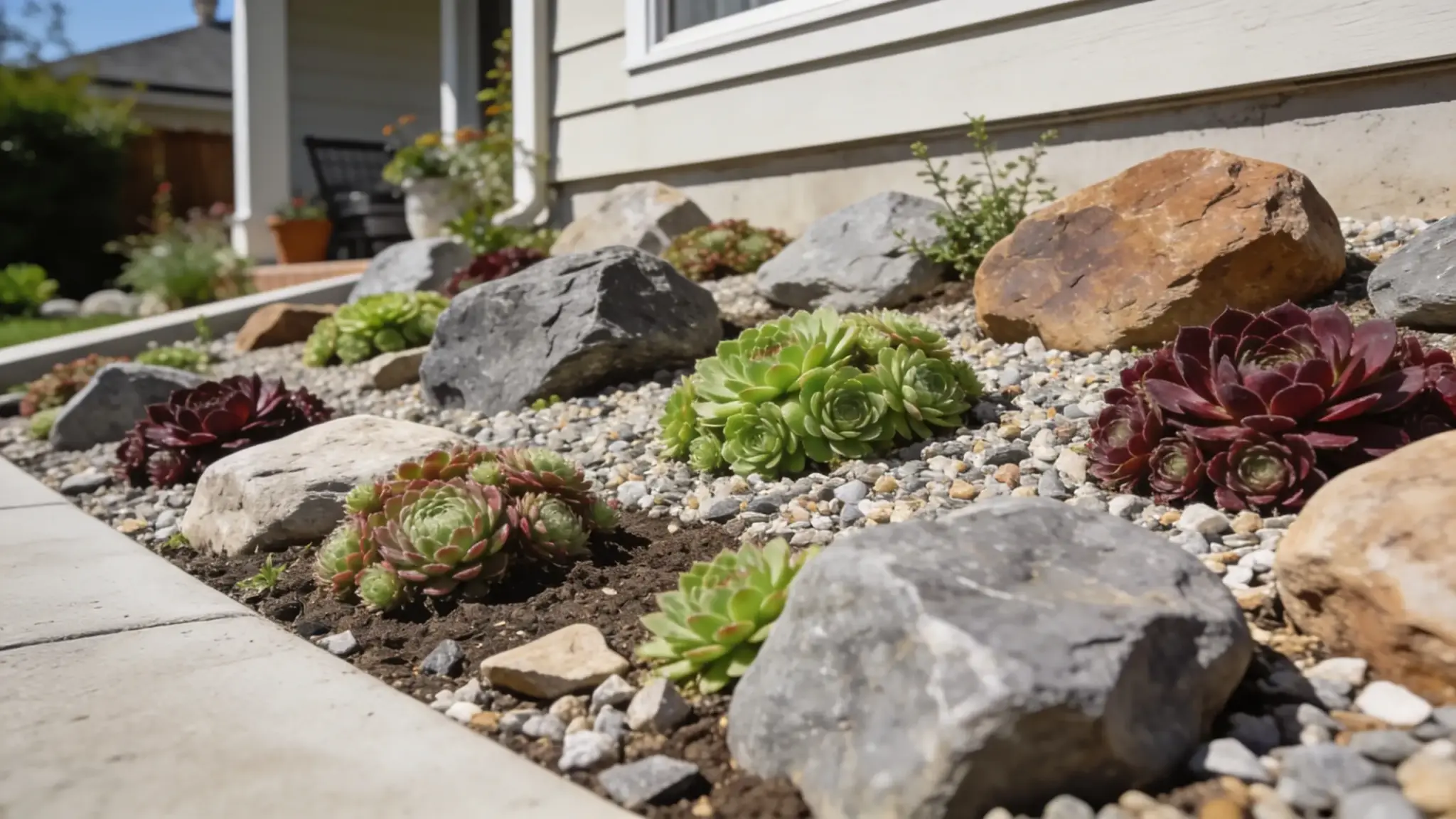
Ideal for: Contemporary, Mediterranean, and drought-prone region homes
Go-to plants: Sedum, Agave, Blue Fescue Grass
Combine drought-tolerant succulents with varied rock sizes for a sculptural, low-water design.
Rocks improve drainage, suppress weeds, and add year-round texture even when plants are not in bloom.
This combination works particularly well in warm climates where traditional flower beds struggle to stay looking fresh through the heat of summer.
12. Structural Plant Bed
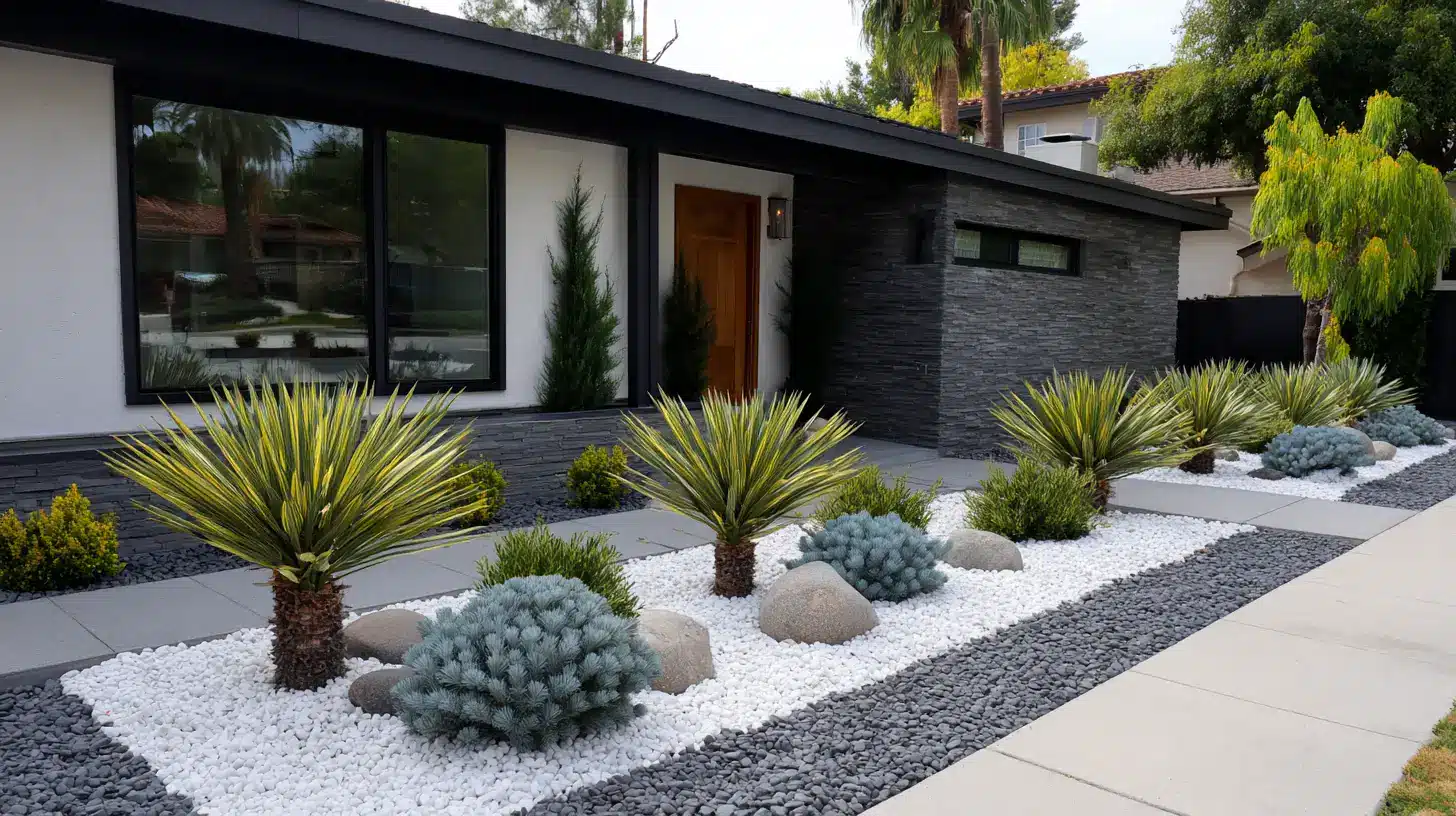
Ideal for: Ultra-modern and minimalist home exteriors
Go-to plants: Yucca, Dwarf Blue Spruce, Ornamental Allium
Prioritize structural plants with strong silhouettes over soft flowering varieties. The visual interest comes from form and foliage rather than blooms, creating a garden that looks intentional in every season, including winter.
A limited color palette of greens, silvers, and whites keeps the design feeling calm and considered rather than cold or empty.
13. Linear Driveway Border
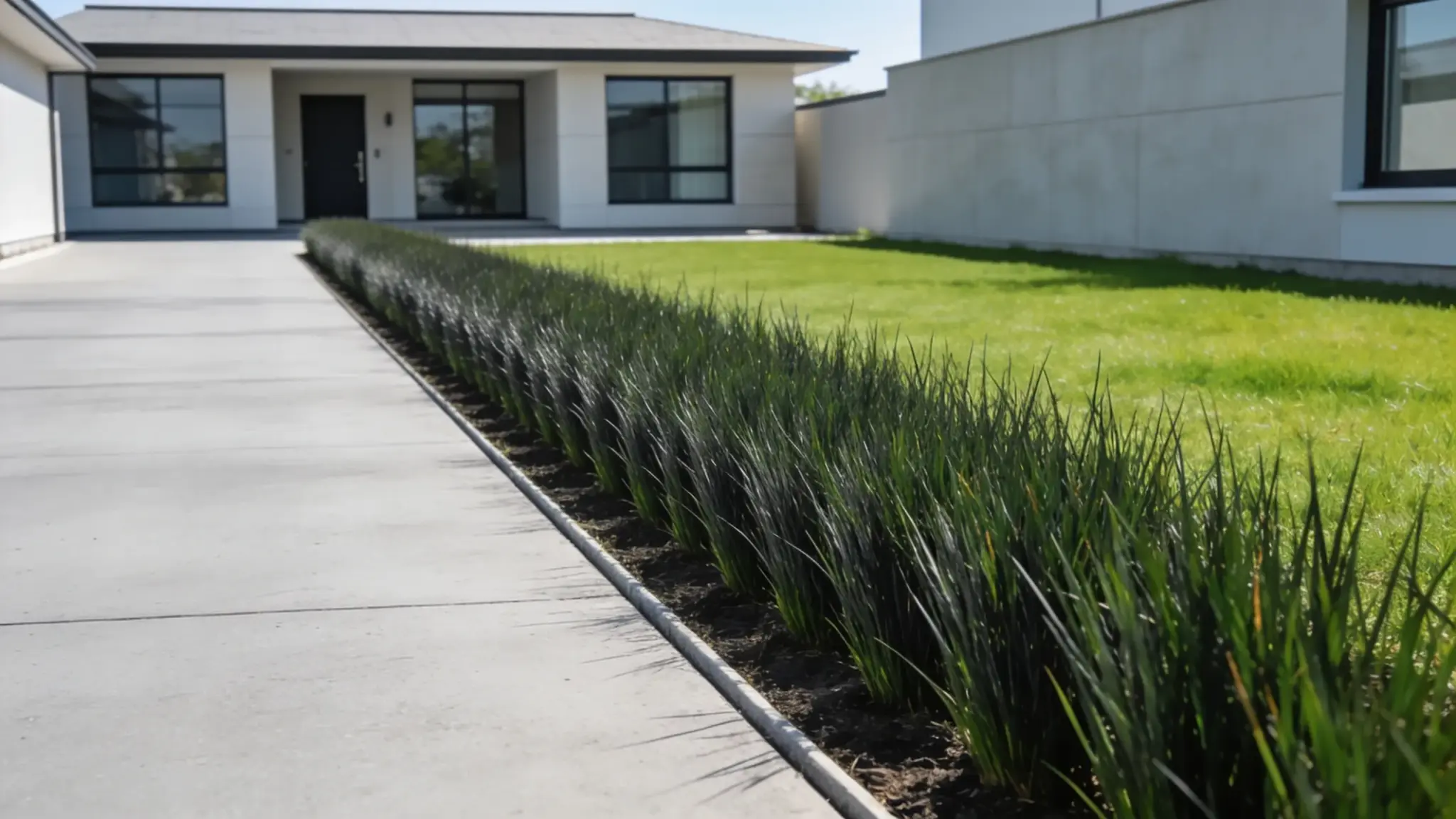
Ideal for: Modern homes with long, straight driveways
Go-to plants: Dwarf Lavender, Liriope, White Alyssum
A narrow bed running alongside the driveway, planted with a single repeated species, creates a clean, cohesive line that complements straight architectural edges without visual competition.
The repetition of one plant along the full length of the drive creates a sense of rhythm and intention that looks far more expensive than it actually is.
14. Black and White Foliage Garden
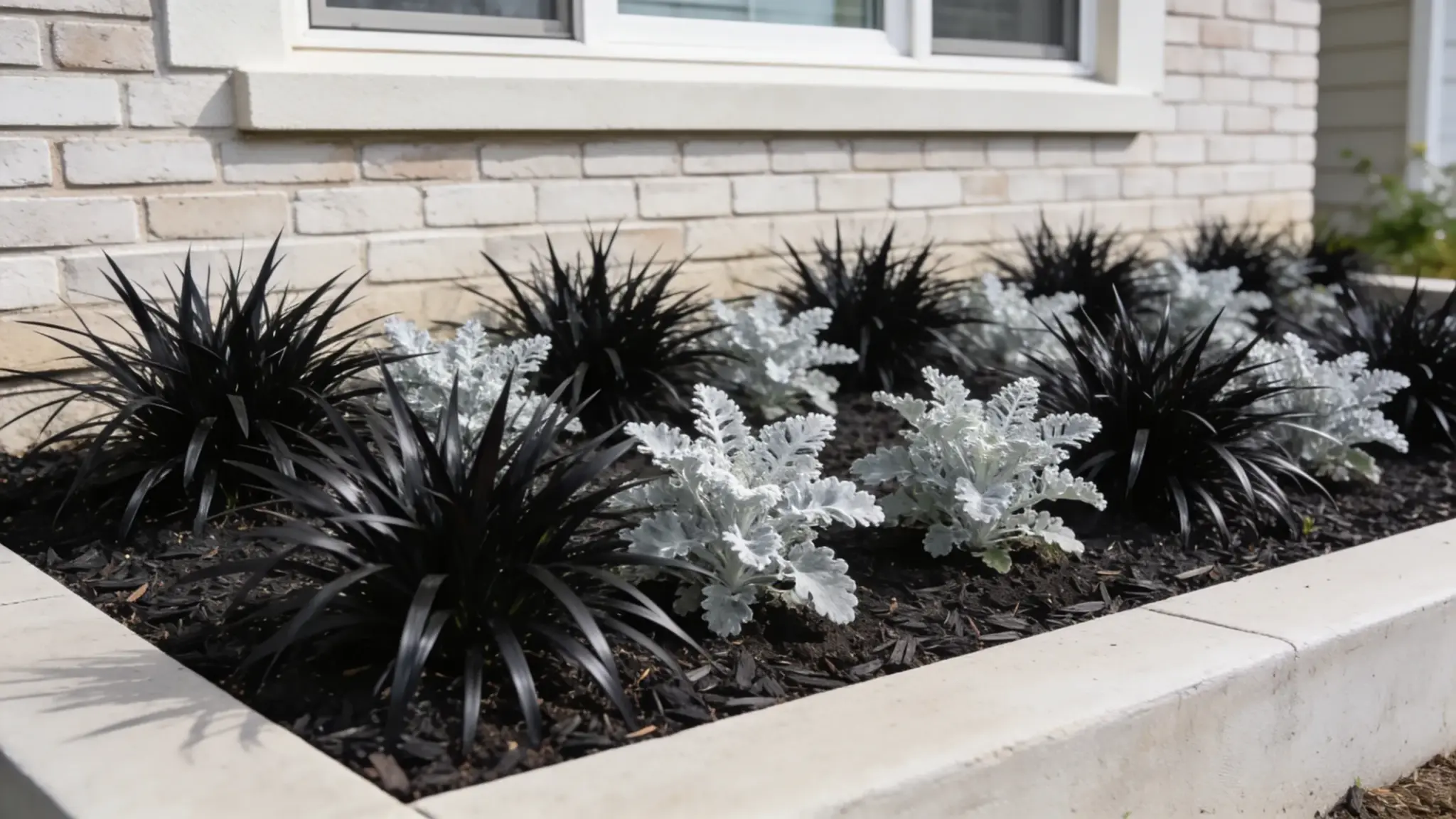
Ideal for: Contemporary homes with bold exterior colors
Go-to plants: Black Mondo Grass, Silver Dusty Miller, White Vinca
Combine dark-leaved plants with silver or white-foliage varieties for a dramatic, high-contrast bed that prioritizes visual sophistication over bloom volume.
It reads as artistic and intentional from any distance along the street. This is one of the few garden styles that looks equally striking in the height of summer and in the depths of winter.
15. Gravel and Flower Pocket Garden
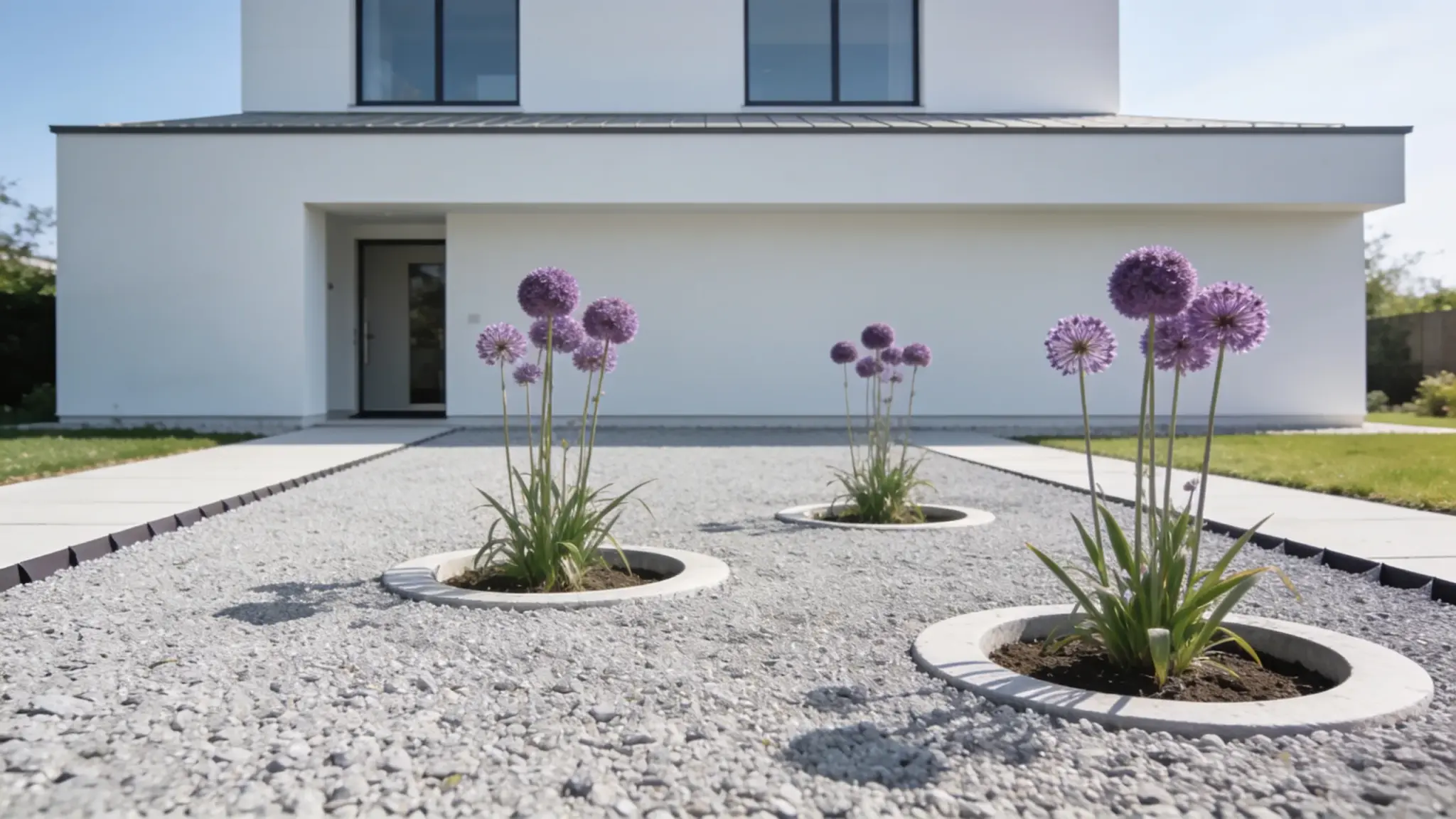
Ideal for: Modern and Scandinavian-influenced home styles
Go-to plants: Allium, Ornamental Sage, Sedum
Replace traditional lawn edging with a gravel surround and create deliberate planting pockets filled with a single bold flowering plant. The gravel provides weed suppression and visual contrast that accentuates each plant individually.
It is a low-cost, high-impact approach that suits homeowners who want a modern aesthetic without committing to a full garden overhaul.
Low-Maintenance Flower Garden Ideas
Not every homeowner has the time or energy for a high-maintenance garden.
These low-maintenance flower garden ideas are designed to look beautiful all season with minimal intervention once they are established.
16. Native Plant Wildflower Bed
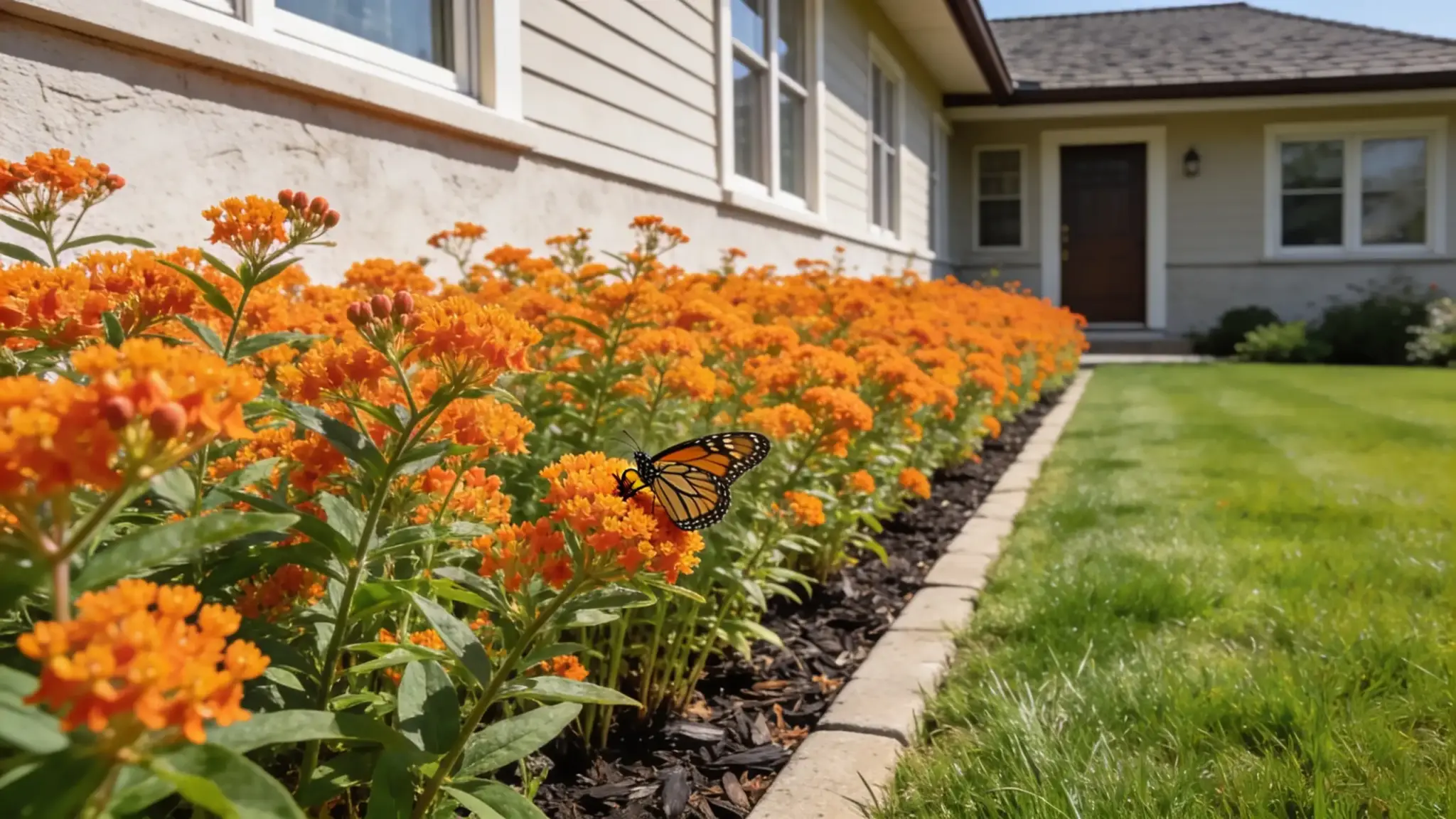
Ideal for: Any home style, ideal for gardeners with limited time
Go-to plants: Purple Coneflower, Black-Eyed Susan, Butterfly Weed
Native plants require no fertilizing, minimal watering after establishment, and naturally resist local pests.
They are adapted to your exact climate and soil conditions, which means they spend their energy blooming rather than just surviving.
For a front yard that practically looks after itself, a native wildflower bed is the most practical and rewarding starting point.
17. Daylily Mass Planting
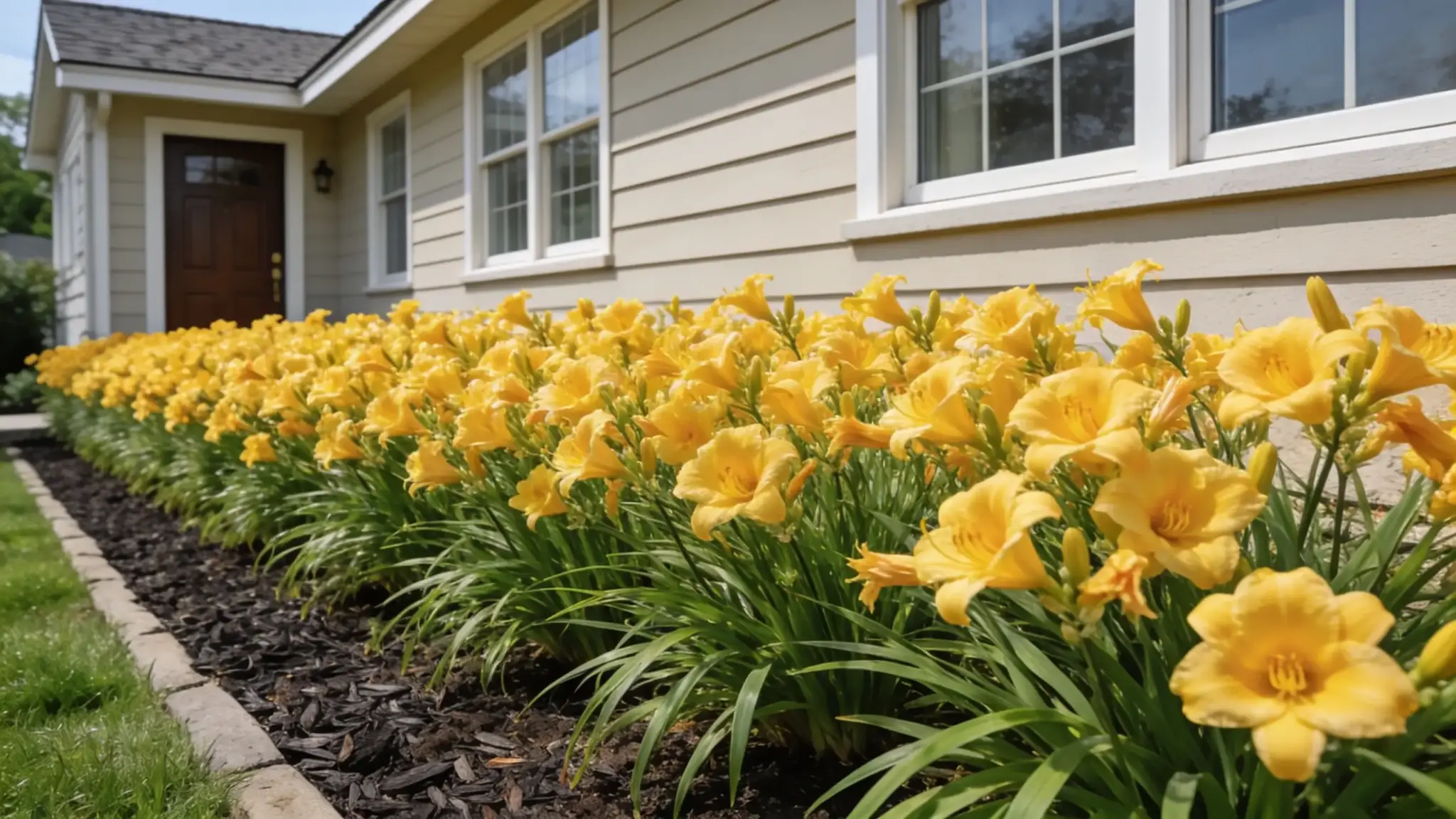
Ideal for: Large foundation beds or long driveway borders
Go-to plants: Stella de Oro Daylily, Happy Returns Daylily, Ornamental Grass
Daylilies tolerate poor soil, drought, and neglect, yet still produce abundant blooms across summer.
Plant in large drifts for maximum visual impact with minimal ongoing effort. They spread gradually over time, filling gaps in the bed naturally without needing to be replaced.
Divide every three years to keep them vigorous and share the extras with neighbors.
18. Mulch-Heavy Perennial Bed
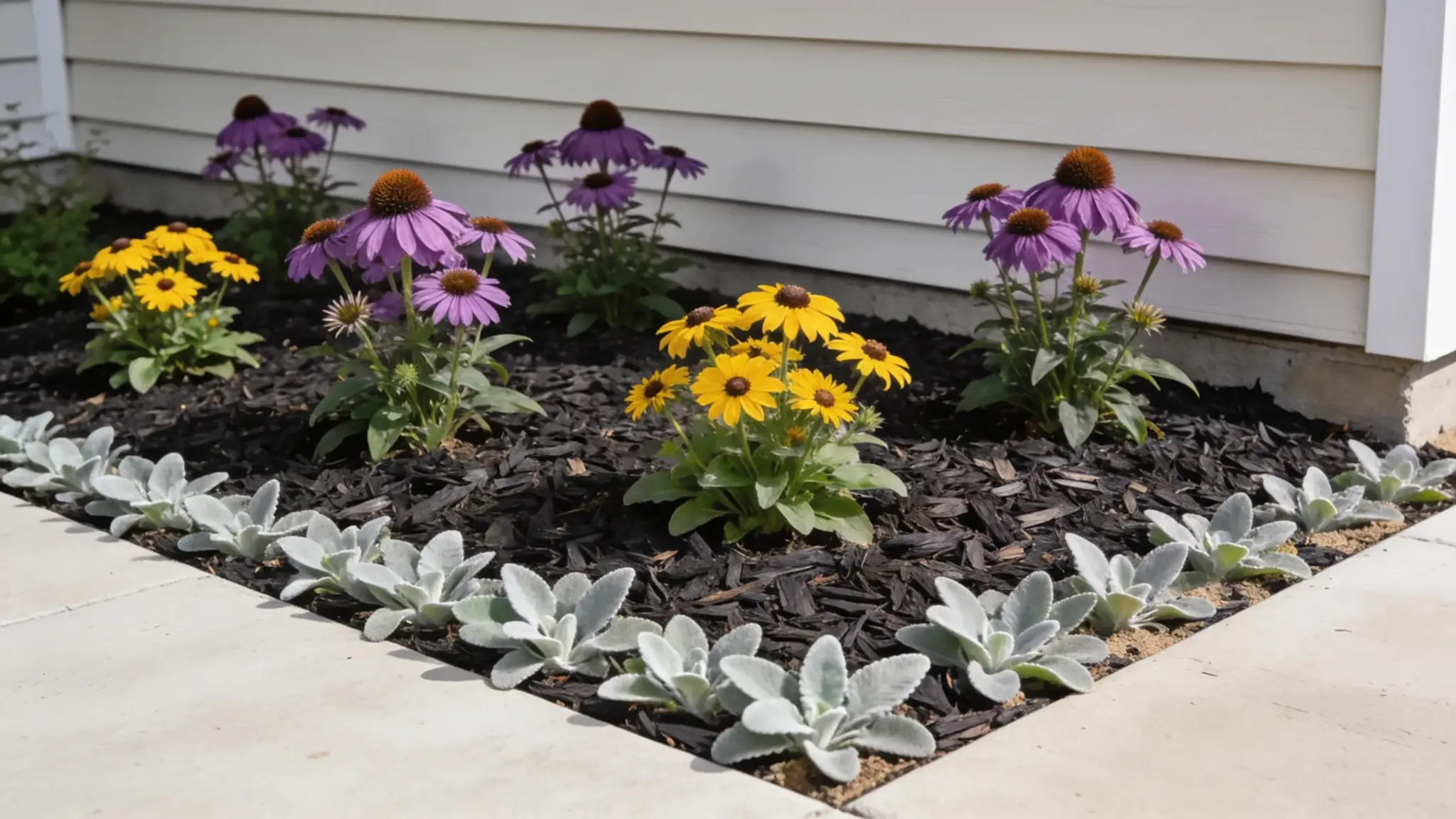
Ideal for: Any front yard with a busy homeowner
Go-to plants: Coneflower, Rudbeckia, Lamb’s Ear
Build the bed with deep-rooted perennials and cover with 3 inches of shredded bark mulch. The mulch suppresses the majority of weeds, retains moisture, and reduces watering frequency significantly.
Once established, this type of bed needs little more than a seasonal tidy and an annual mulch refresh to keep looking full, healthy, and well cared for.
19. Ground-Cover Flower Bed
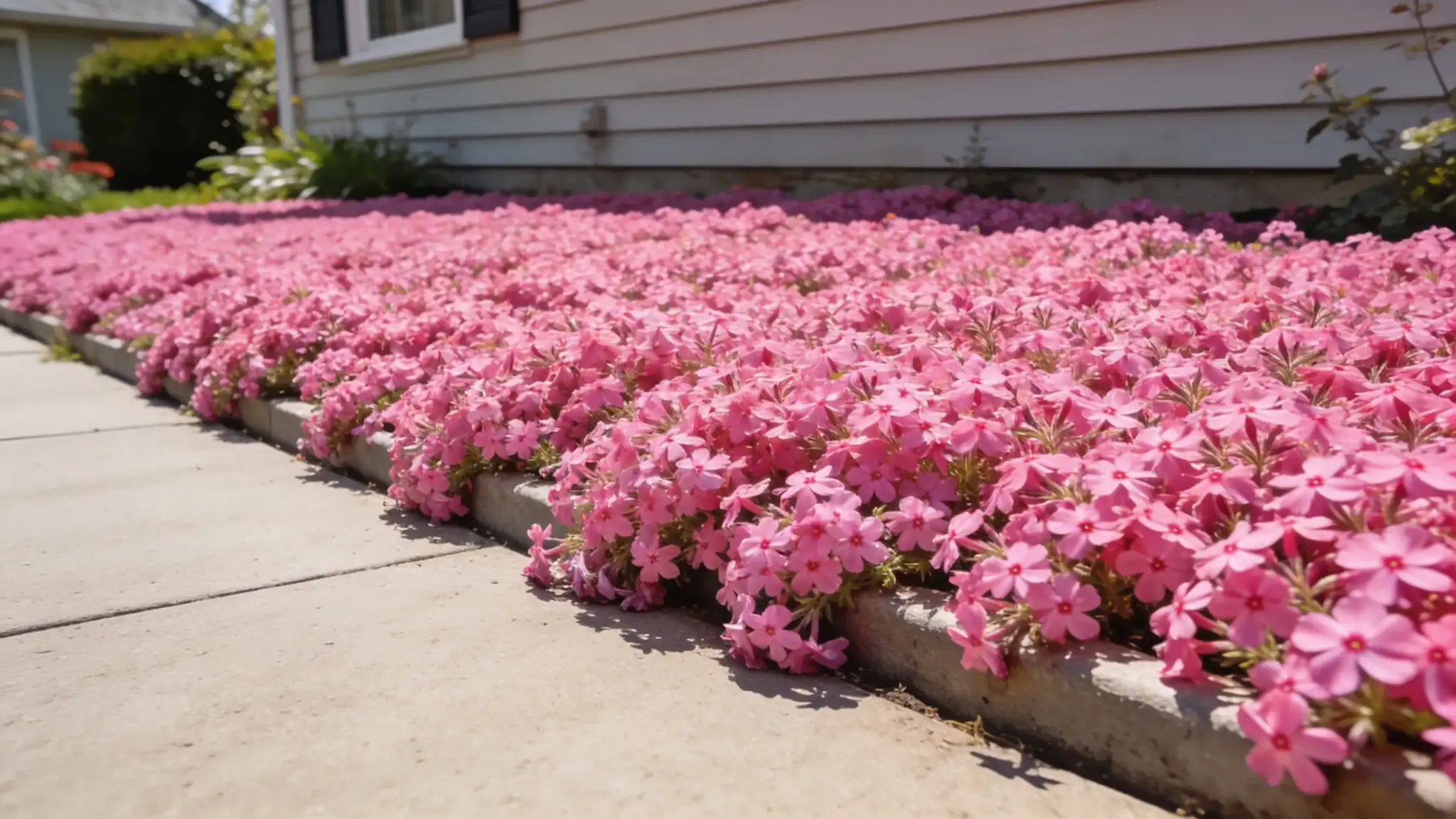
Ideal for: Sloped front yards or awkwardly shaped beds
Go-to plants: Creeping Phlox, Ice Plant, Ajuga
Replace high-maintenance annual beds with spreading ground-cover flowering plants that fill the space on their own over time.
Once established, they require little more than an annual trim and light feeding.
On slopes, ground covers also prevent soil erosion while delivering a carpet of color in spring that looks far more considered than bare mulch or grass ever could.
20. Lavender Border
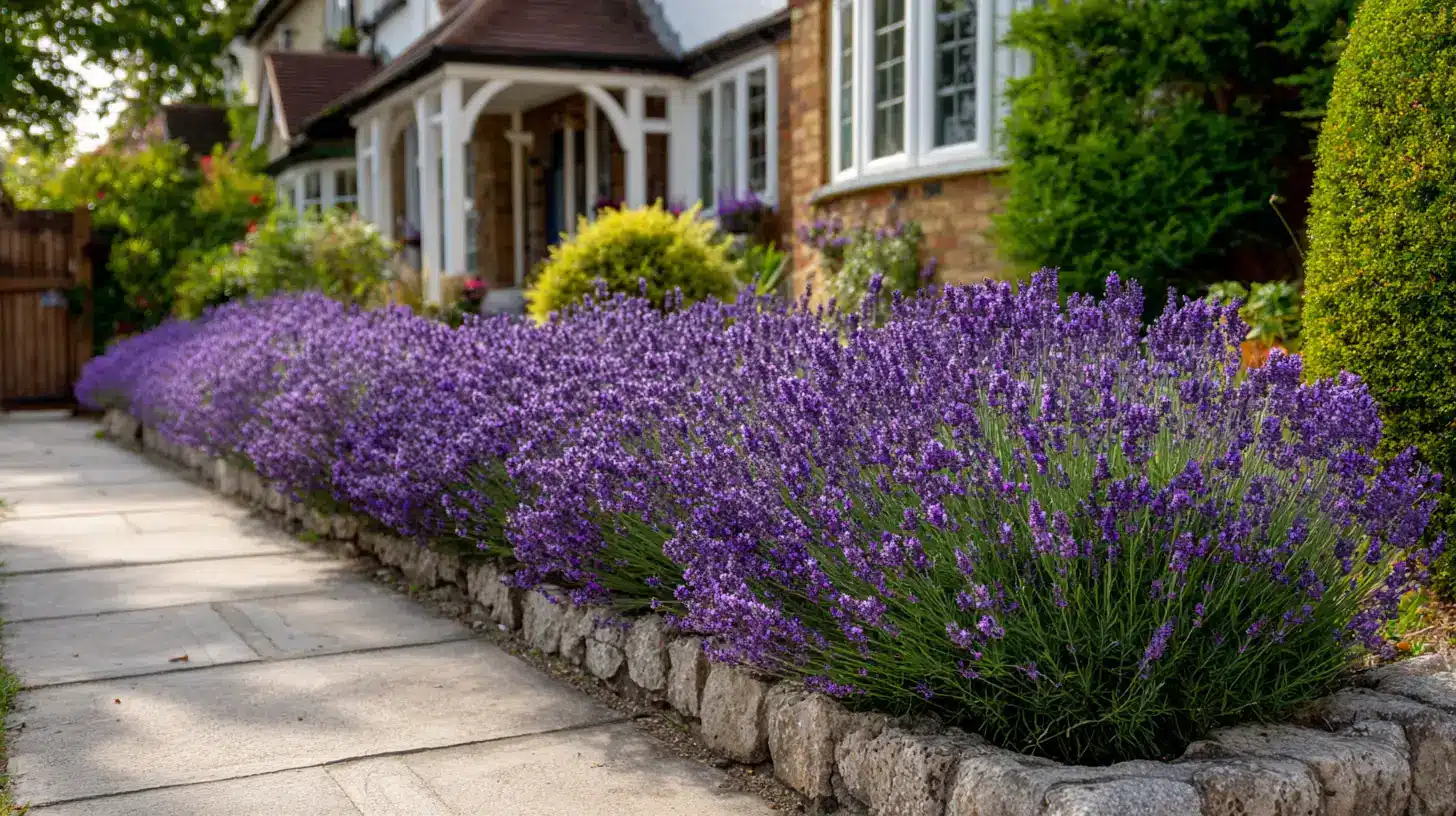
Ideal for: Mediterranean, Tuscan, and modern farmhouse homes
Go-to plants: English Lavender, Spanish Lavender, Ornamental Sage
A single-species lavender planting along the front walkway is drought-tolerant, deer-resistant, pollinator-friendly, and fragrant all at once.
Trim by one-third annually after bloom, and it returns stronger each year with virtually zero additional care. Few plants deliver this combination of sensory impact, visual appeal, and genuine ease of maintenance in a front yard setting.
21. Self-Seeding Annual Garden
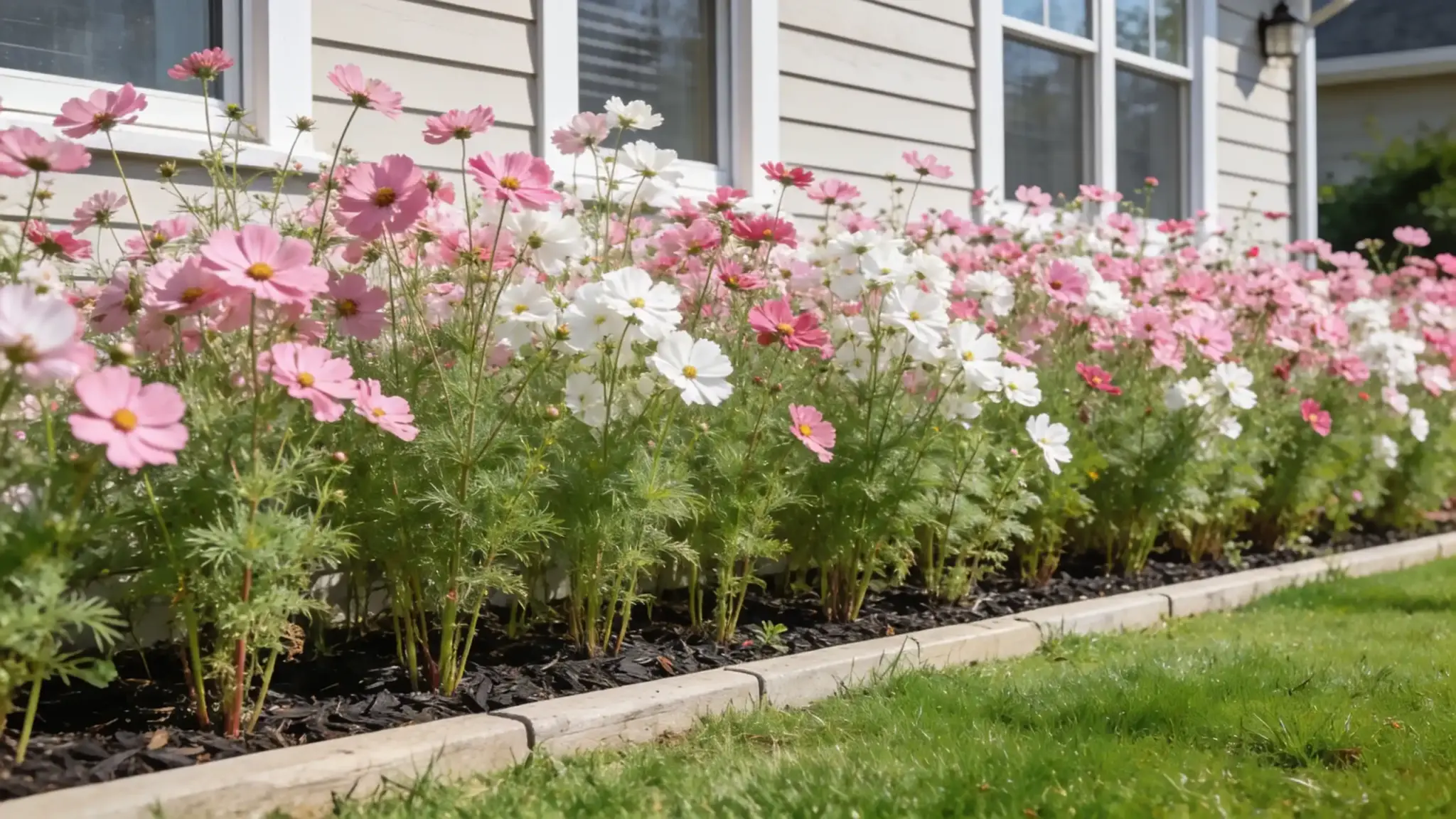
Ideal for: Cottage and informal garden styles
Go-to plants: Zinnia, Cosmos, California Poppy
Plant prolific self-seeders that drop seeds and return each year without replanting, saving cost and effort while producing a naturalized look that fills in more densely every season.
The garden evolves on its own terms, which gives it a relaxed, abundant character that is very difficult to achieve with more structured planting approaches.
22. Drought-Tolerant Prairie Bed
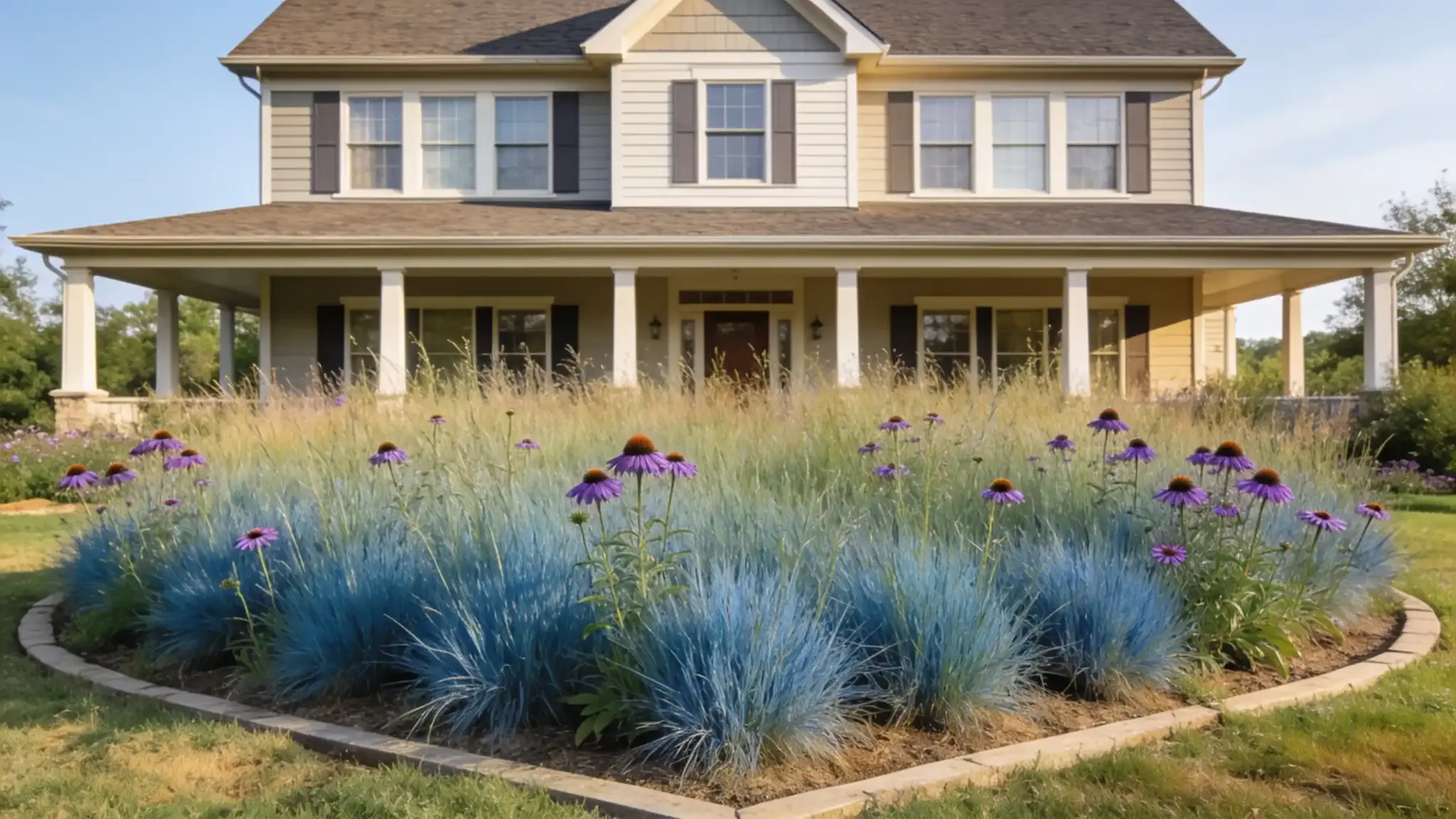
Ideal for: Ranch, farmhouse, and rural-adjacent homes
Go-to plants: Little Bluestem Grass, Purple Coneflower, Prairie Dropseed
Prairie plantings capture the beauty of open grasslands while requiring almost no supplemental watering after establishment.
Deep-rooted natives handle drought and temperature swings beautifully and need only to be cut back once in late winter.
The naturalistic look suits homes with generous front yards where a more relaxed, landscape-scale planting feels appropriate and visually grounding.
Small Front Yard Flower Garden Ideas
A small front yard is not a limitation. With the right flower garden ideas, even the most compact space can be changed into something genuinely beautiful and full of character.
23. Narrow Strip Pathway Bed
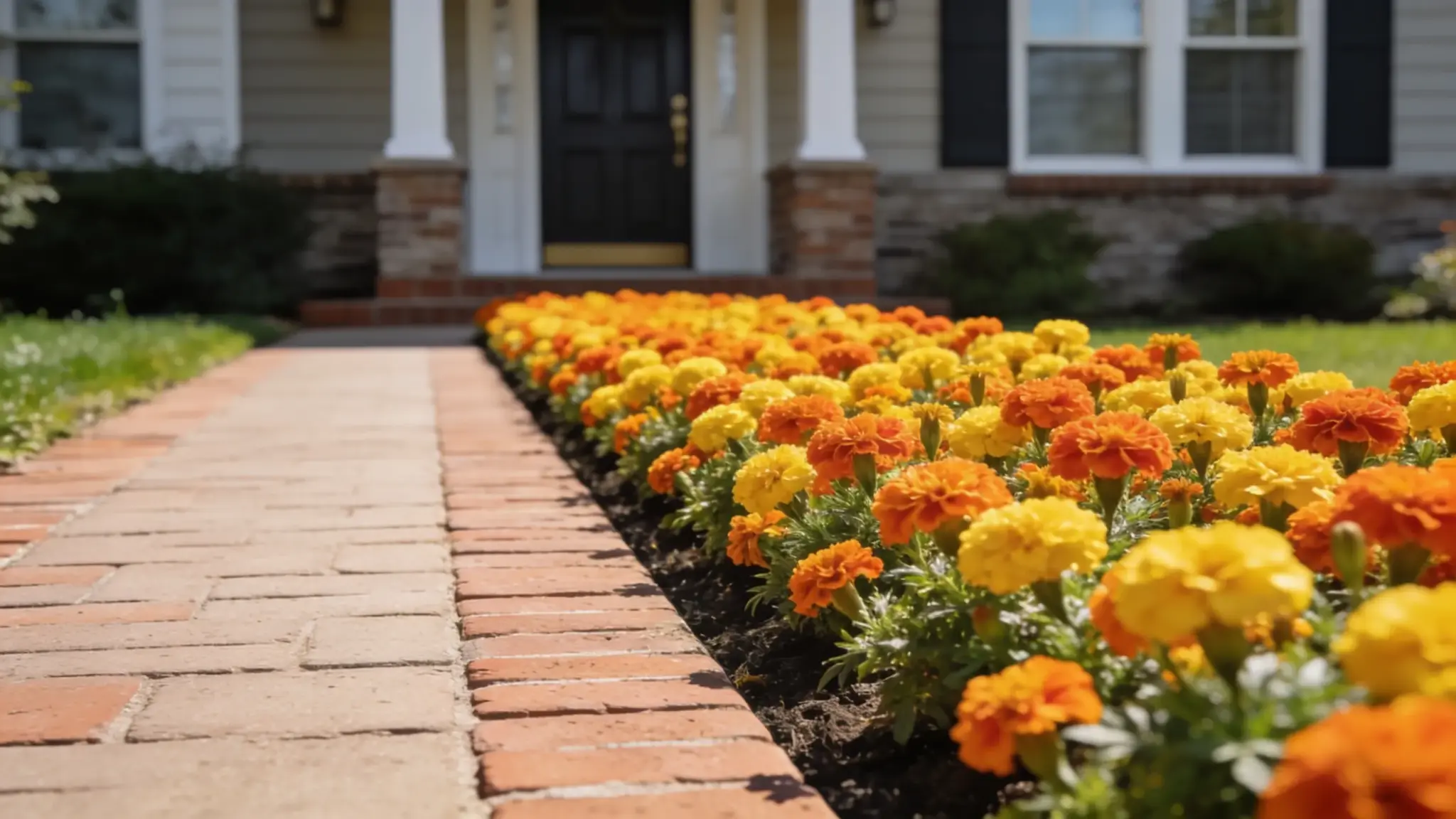
Ideal for: Urban townhouses and homes with compact front yards
Go-to plants: Petunias, Creeping Thyme, Dwarf Marigold
A bed just 18 to 24 inches wide along a front path delivers significant color impact without consuming yard space.
Keep plant heights under 18 inches so the path remains clear and safe to walk.
Even a modest strip of well-chosen flowers changes the entire feeling of a front entry from plain and functional to warm and welcoming.
24. Corner Accent Bed
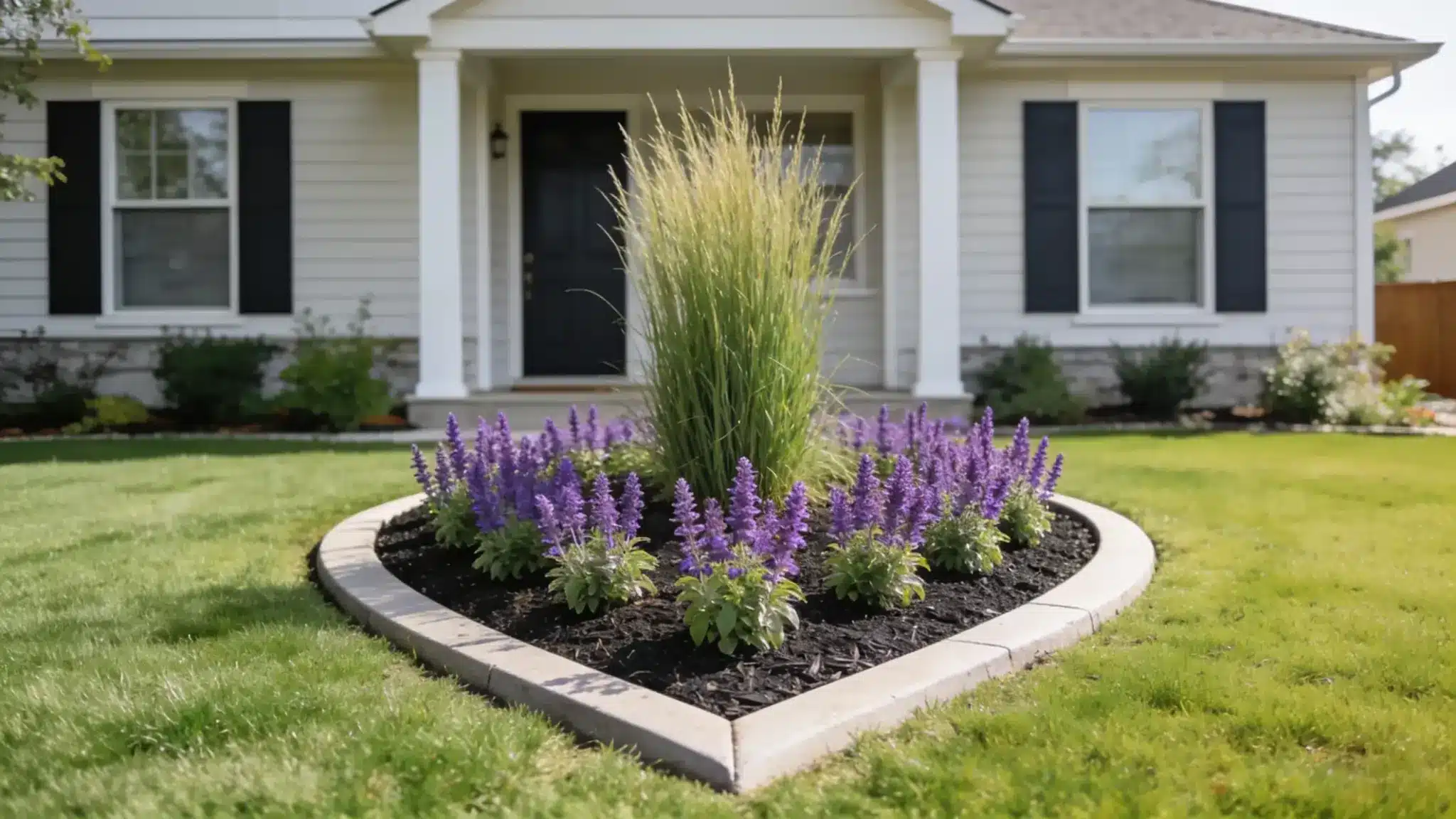
Ideal for: Any home style with an open, flat front yard
Go-to plants: Ornamental Grass, Salvia, Black-Eyed Susan
A triangular or teardrop-shaped bed placed at the front corner of the property creates a natural focal point that frames the home without requiring a large footprint.
One structural plant anchored by two lower-growing bloomers is all it takes.
It draws the eye toward the house rather than away from it, which is exactly what a front yard garden should do.
25. Container Garden Cluster
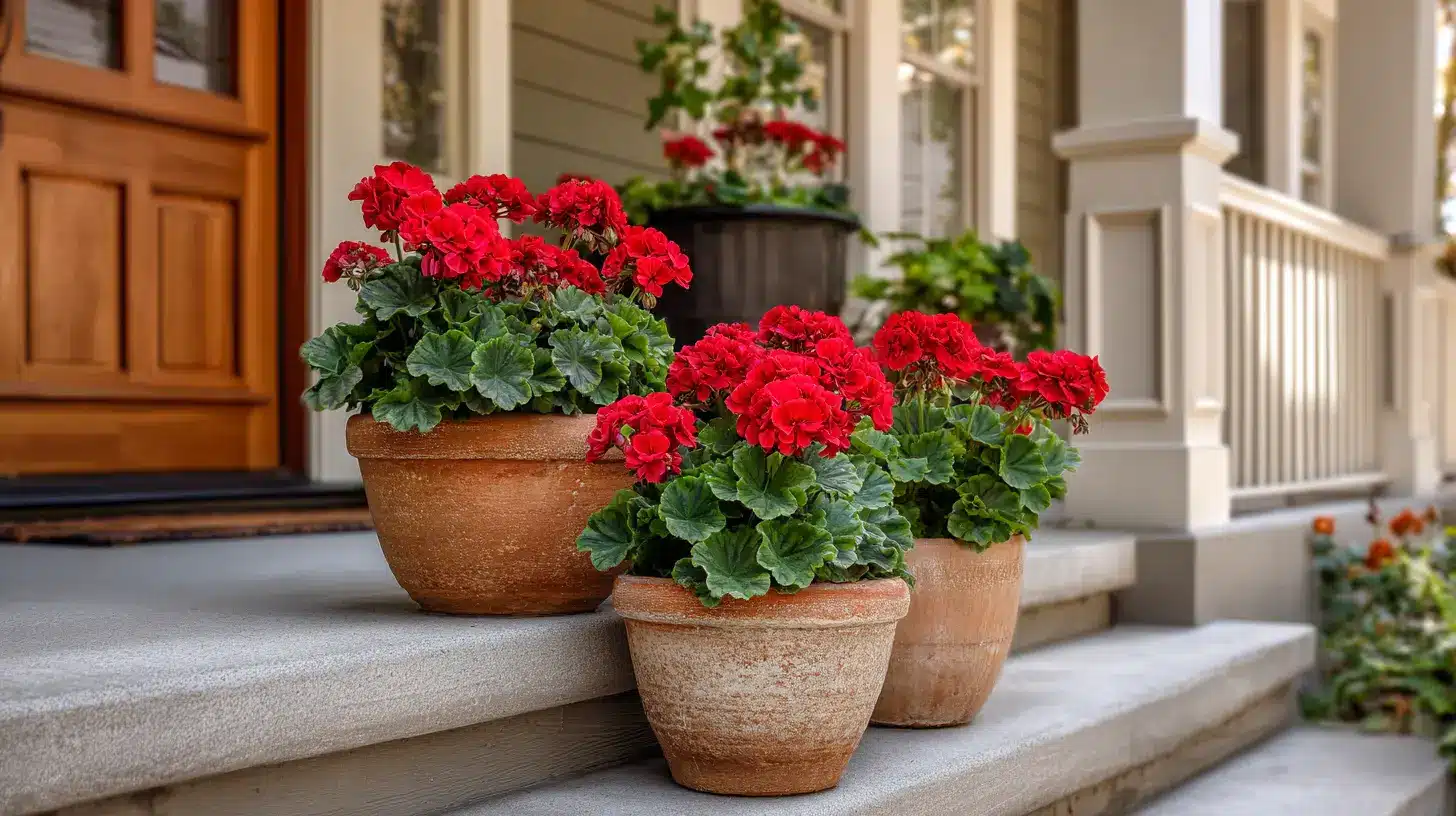
Ideal for: Homes with paved entries, renters, or very small front yards
Go-to plants: Geraniums, Petunias, Trailing Lobelia
Group containers of varying heights, materials, and plant combinations near the front entrance for an instantly colorful display that requires no digging.
Reconfigure with every season to keep things feeling fresh.
Containers also allow complete control over soil quality, which is particularly useful in urban front yards where the ground soil is often compacted or poor.
26. Window Box Combination
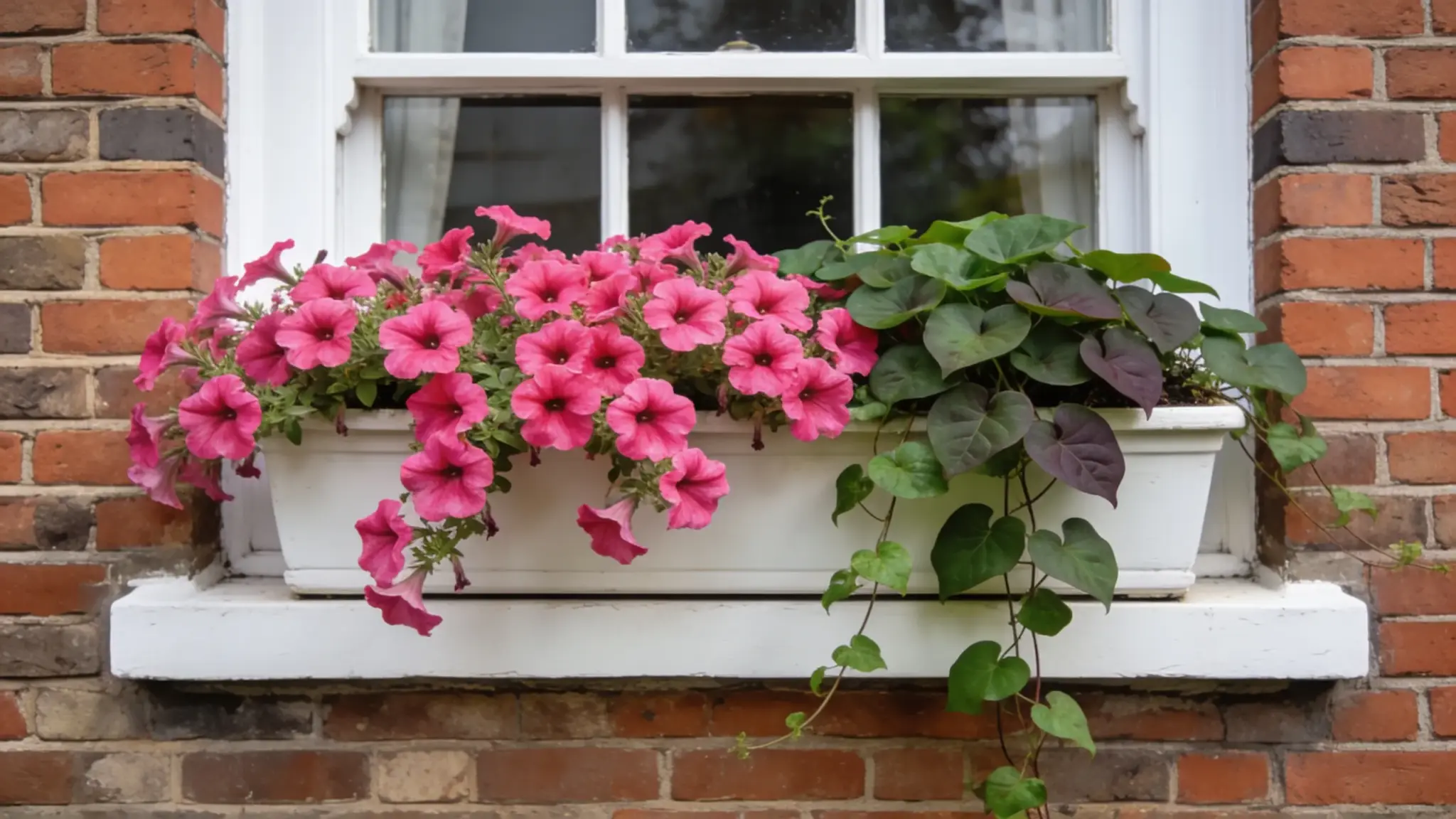
Ideal for: Townhouses, terraced homes, and any home with low windows
Go-to plants: Trailing Petunia, Sweet Potato Vine, Upright Salvia
Window boxes attached below ground-floor windows extend the garden vertically and add color at eye level, making a small front yard feel fuller without using any ground space.
The combination of a trailing plant, a filler, and an upright variety in each box creates a layered, professional look that is easy to replicate and even easier to refresh each season.
27. Raised Planter Bed
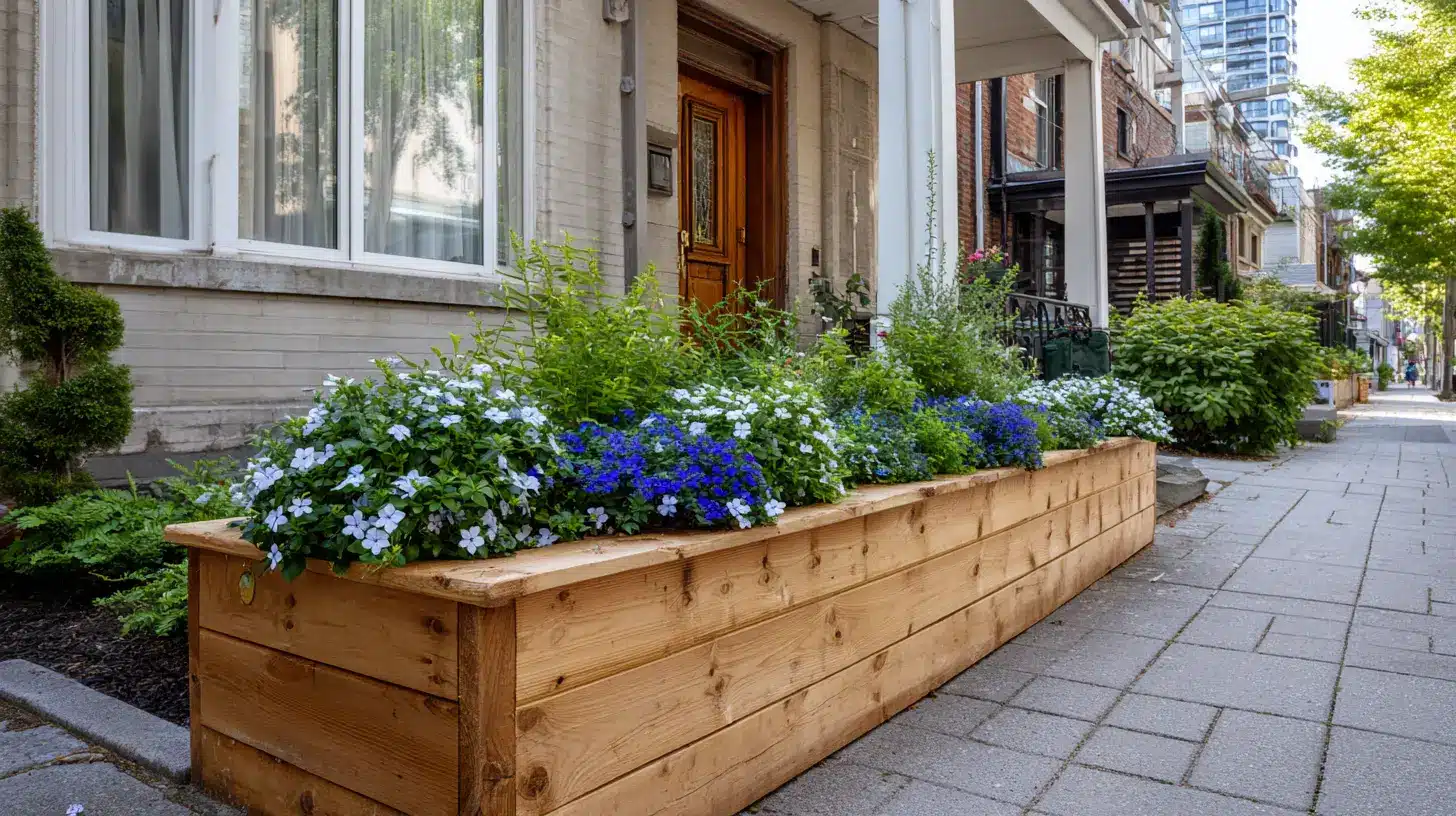
Ideal for: Homes with poor drainage or compact urban lots
Go-to plants: Hydrangea, Blue Plumbago, White Vinca
Raised beds add dimension, improve drainage, and can be matched to the home’s exterior material for a cohesive, polished appearance.
Cedar and composite are the most durable and long-lasting material choices for front yard use.
The added height also makes planting, weeding, and general maintenance significantly more comfortable, which is a genuine advantage for everyday upkeep.
28. Vertical Flower Wall
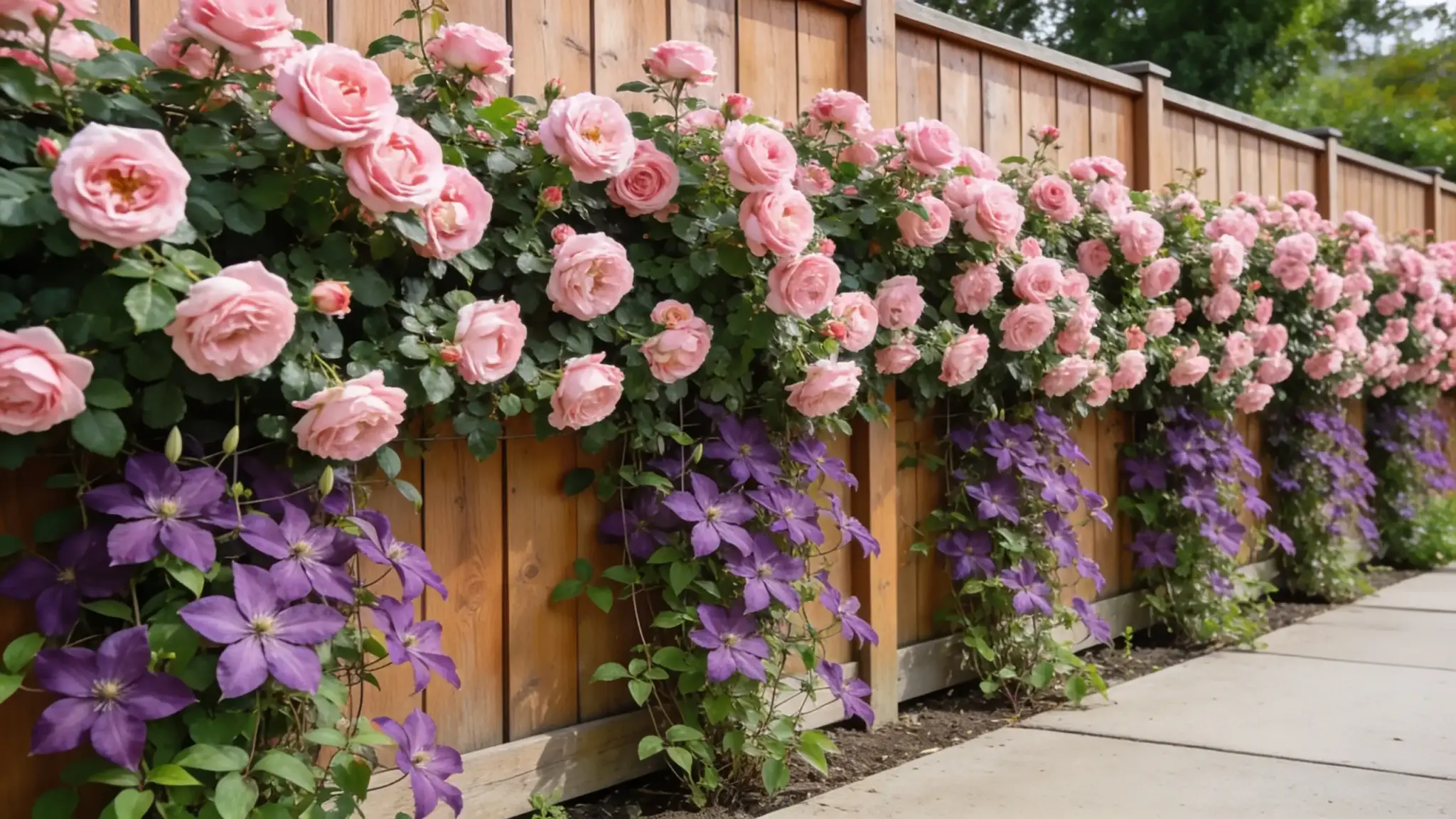
Ideal for: Very small front yards or homes with boundary fencing
Go-to plants: Climbing Roses, Sweet Pea, Clematis
A vertical flower wall allows plants to grow upward rather than outward, maximizing color in minimal ground space.
Customize the frame in wood, stone, or metal to match the home’s existing materials and style.
Vertical gardens also add a strong element to the front of the house, drawing attention and adding visual height to low or flat facades.
Seasonal and Year-Round Flower Garden Ideas
The best flower gardens do not peak in July and disappear by September. These ideas are designed to keep your front yard looking beautiful and alive across every season of the year.
29. Four-Season Layered Bed
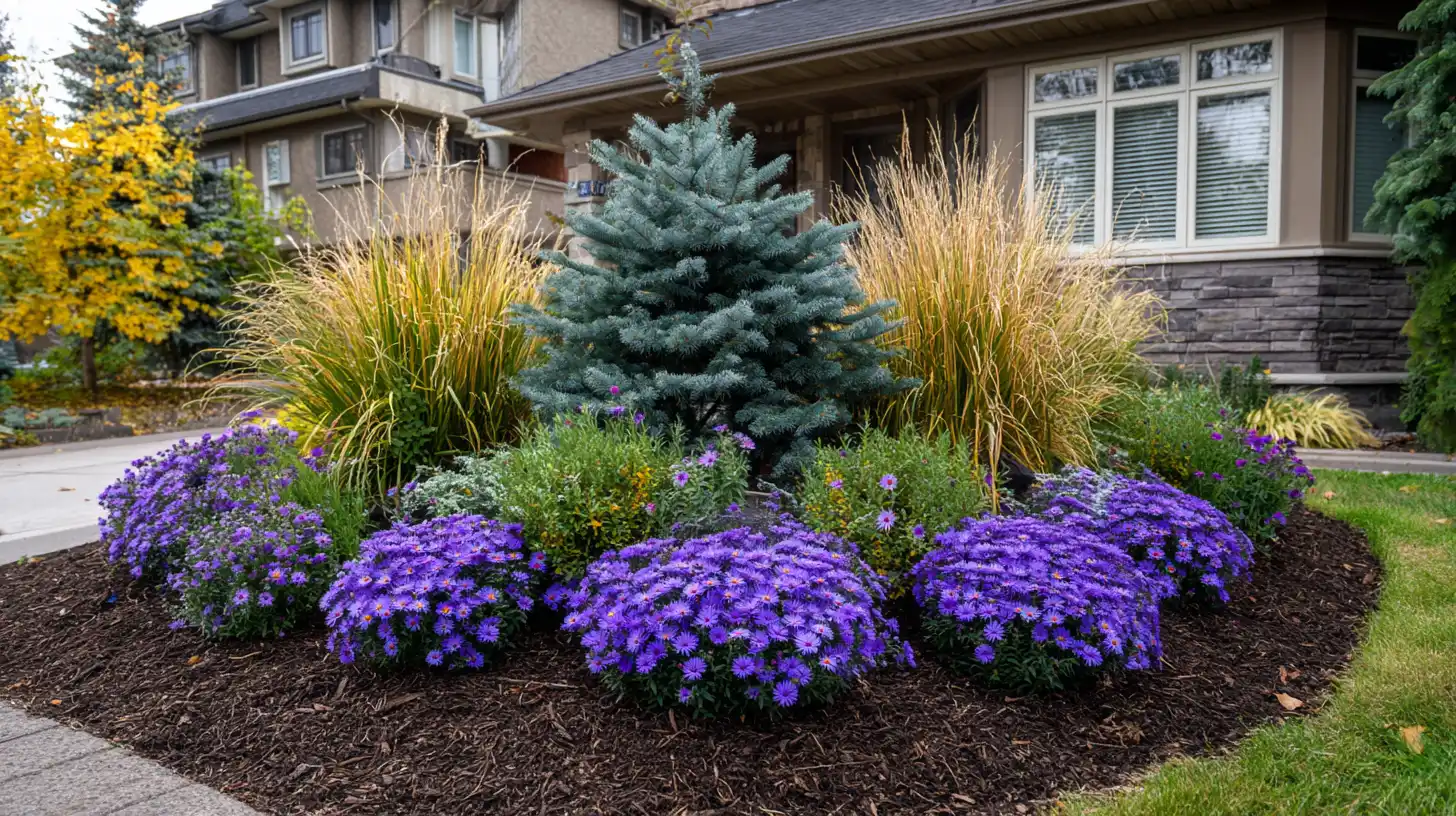
Ideal for: Any climate with defined seasons, highly recommended for northern USDA zones
Go-to plants: Crocus, Daylily, Aster, Dwarf Blue Spruce
Plan for a representative plant in every season: spring bulbs for March through April, perennials for May through August, asters and grasses for September through October, and evergreen shrubs for winter structure.
The result is a bed that earns compliments every month of the year, not just during the peak of summer when everything blooms easily.
30. Spring Bulb Succession Bed
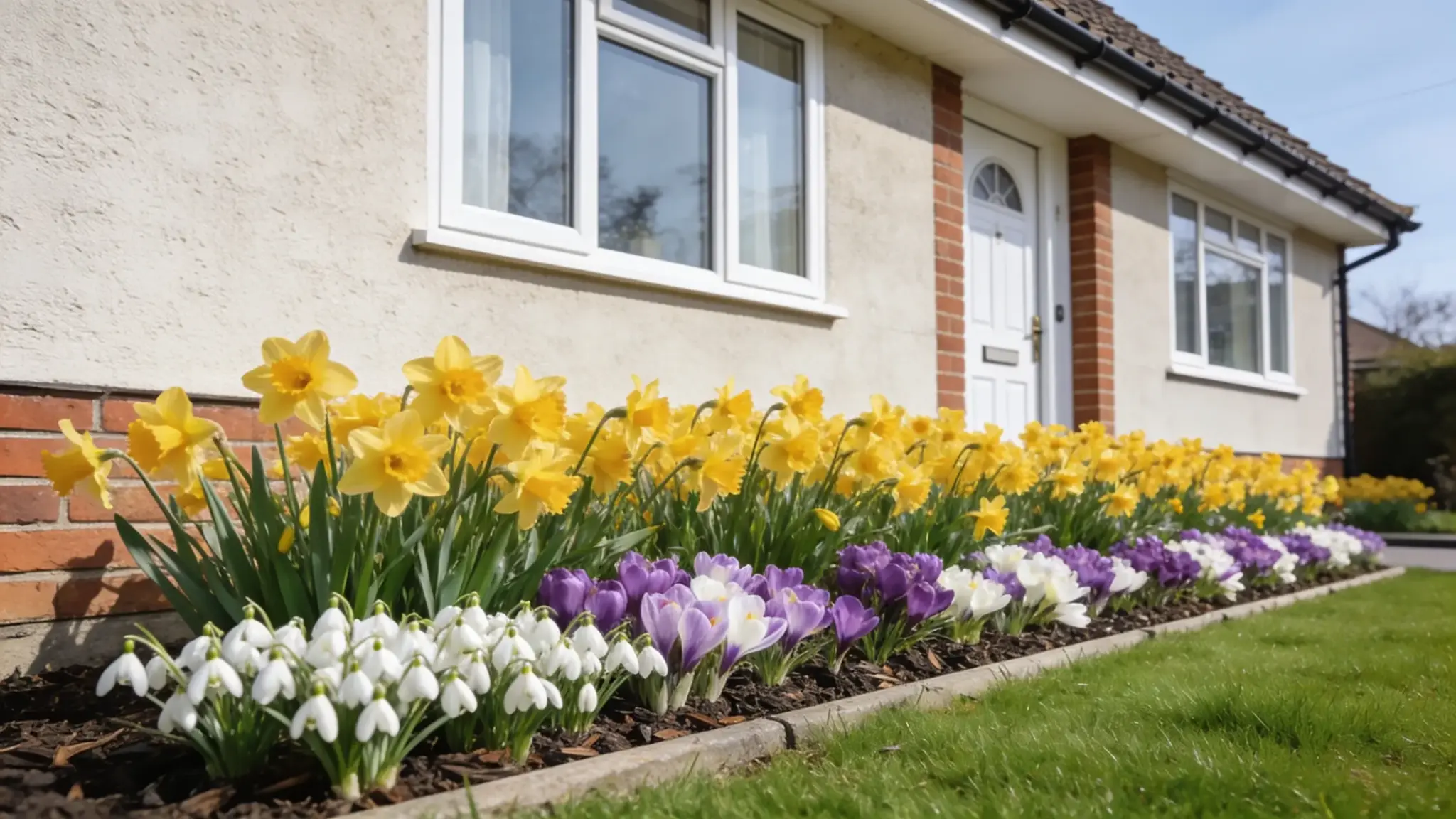
Ideal for: Any front yard, ideal for gardeners who want an early-season impact
Go-to plants: Snowdrops, Crocus, Daffodil, Tulip
Layer bulbs at three different depths so that as one variety fades, the next emerges, creating an unbroken chain of color from late February through May.
This succession approach delivers weeks of changing color from a single planting effort in autumn.
It is one of the highest-return investments a front-yard gardener can make for the following spring.
31. Summer-to-Fall Perennial Combination
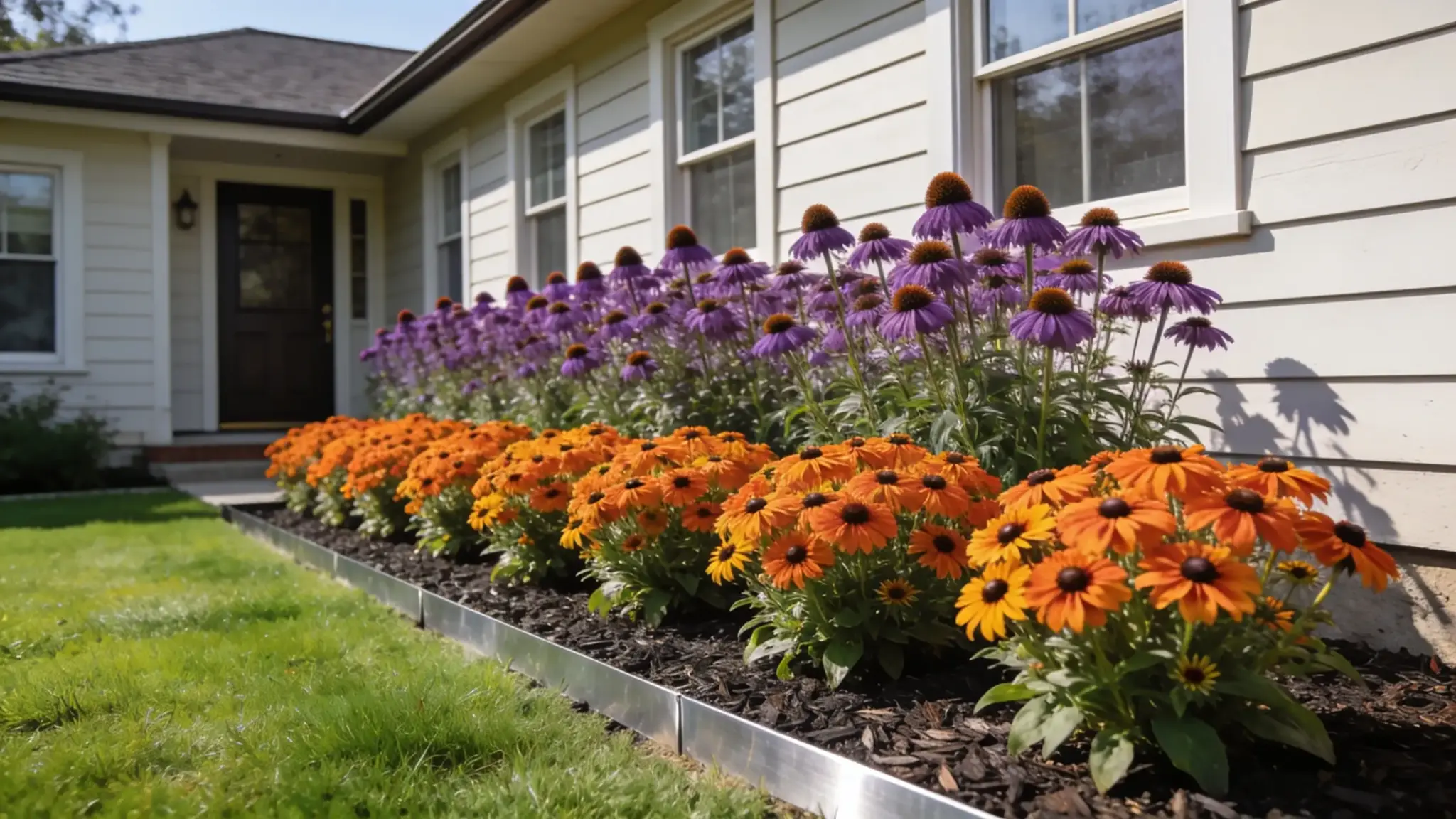
Ideal for: Any front yard with full to partial sun
Go-to plants: Peony, Purple Coneflower, Rudbeckia, Autumn Aster
Select perennials that hand off from one another across the warm months: peonies and salvia for June, coneflowers and rudbeckia for July and August, and asters and ornamental grasses for September and October.
The bed carries itself with minimal intervention and rewards the gardener with a continuous display that shifts character and color as the seasons change.
32. Winter-Interest Bed
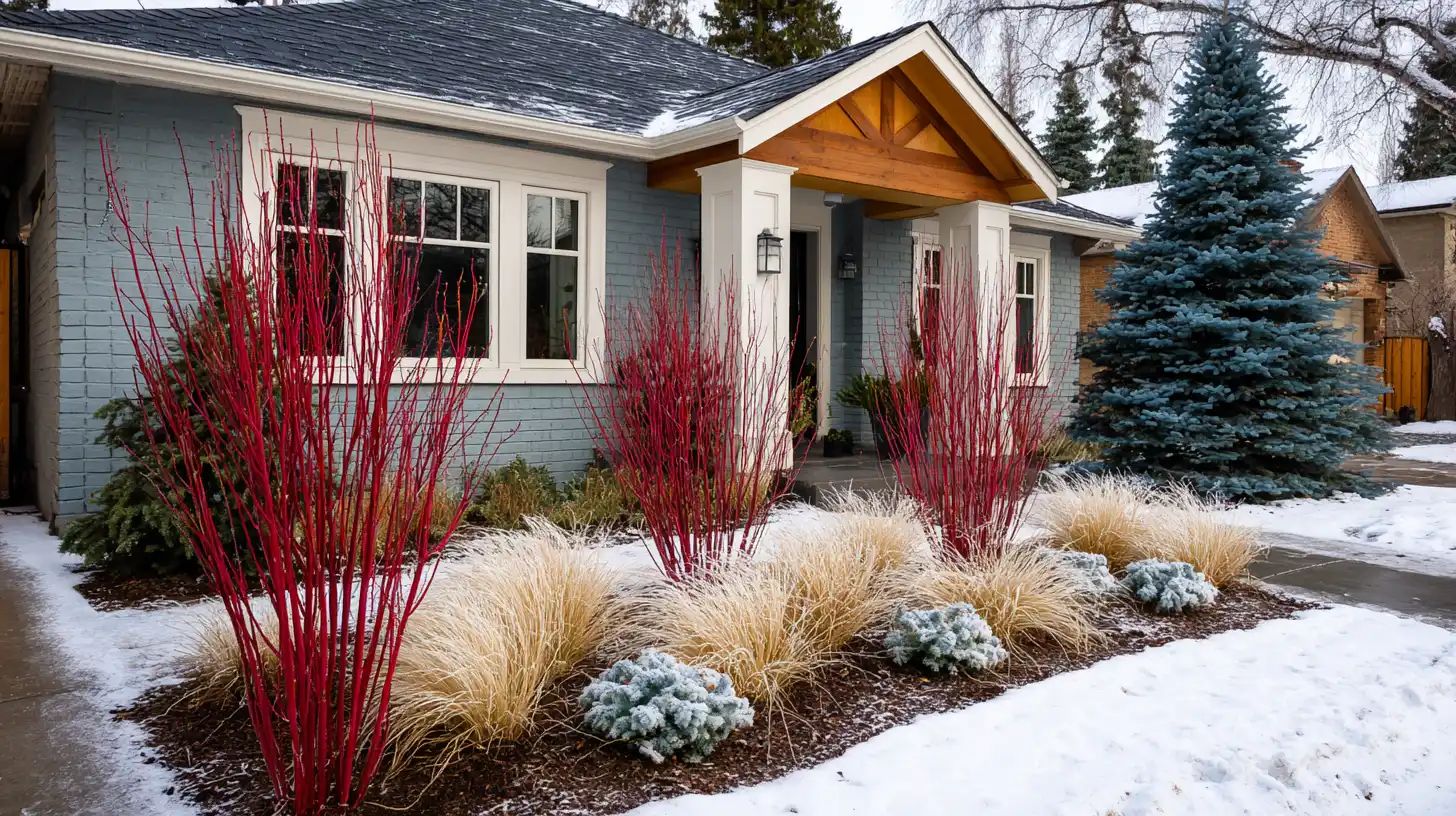
Ideal for: Northern USDA zones 3 through 6 where winters are long
Go-to plants: Red-twig Dogwood, Karl Foerster Grass, Dwarf Alberta Spruce
Design around plants that look attractive in cold months: red-twig dogwood for stem color, ornamental grasses for movement and seed heads, and dwarf conifers for evergreen structure.
Add spring bulbs underneath to transition seamlessly into the following season. A well-designed winter bed stops the front yard from looking bare and forgotten during the coldest months of the year.
33. Edible and Ornamental Mixed Bed
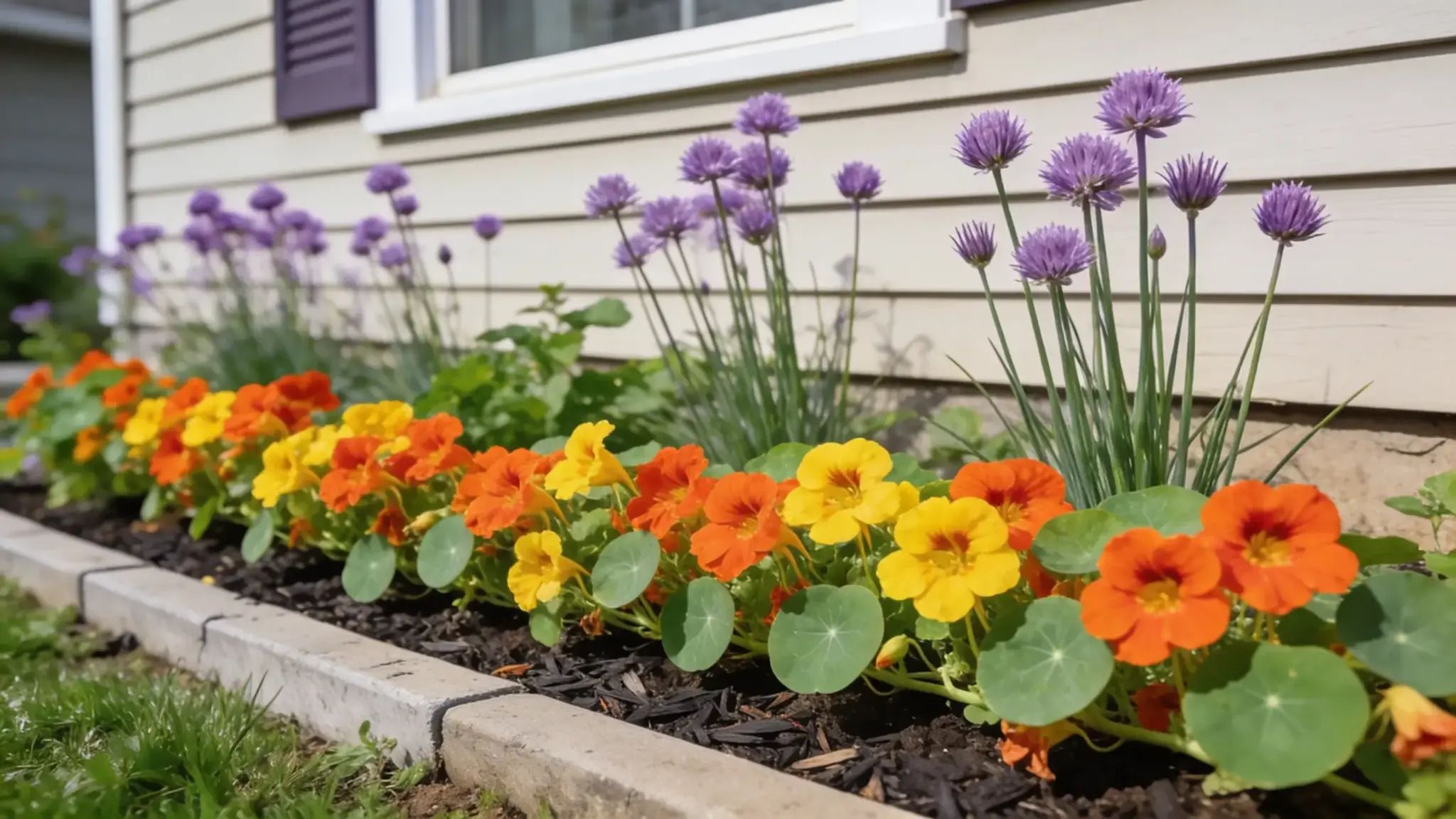
Ideal for: Any home style, ideal for gardeners who want practical returns
Go-to plants: Nasturtium, Chives, Flowering Kale, Rosemary
Blend beauty and function by tucking edible plants into the front bed.
Nasturtiums trail colorfully while repelling pests, flowering chives attract beneficial insects, and purple basil delivers striking foliage alongside a kitchen harvest.
The result is a garden that earns its place in the front yard by being genuinely useful and genuinely beautiful throughout the growing season.
34. Evening Garden Bed
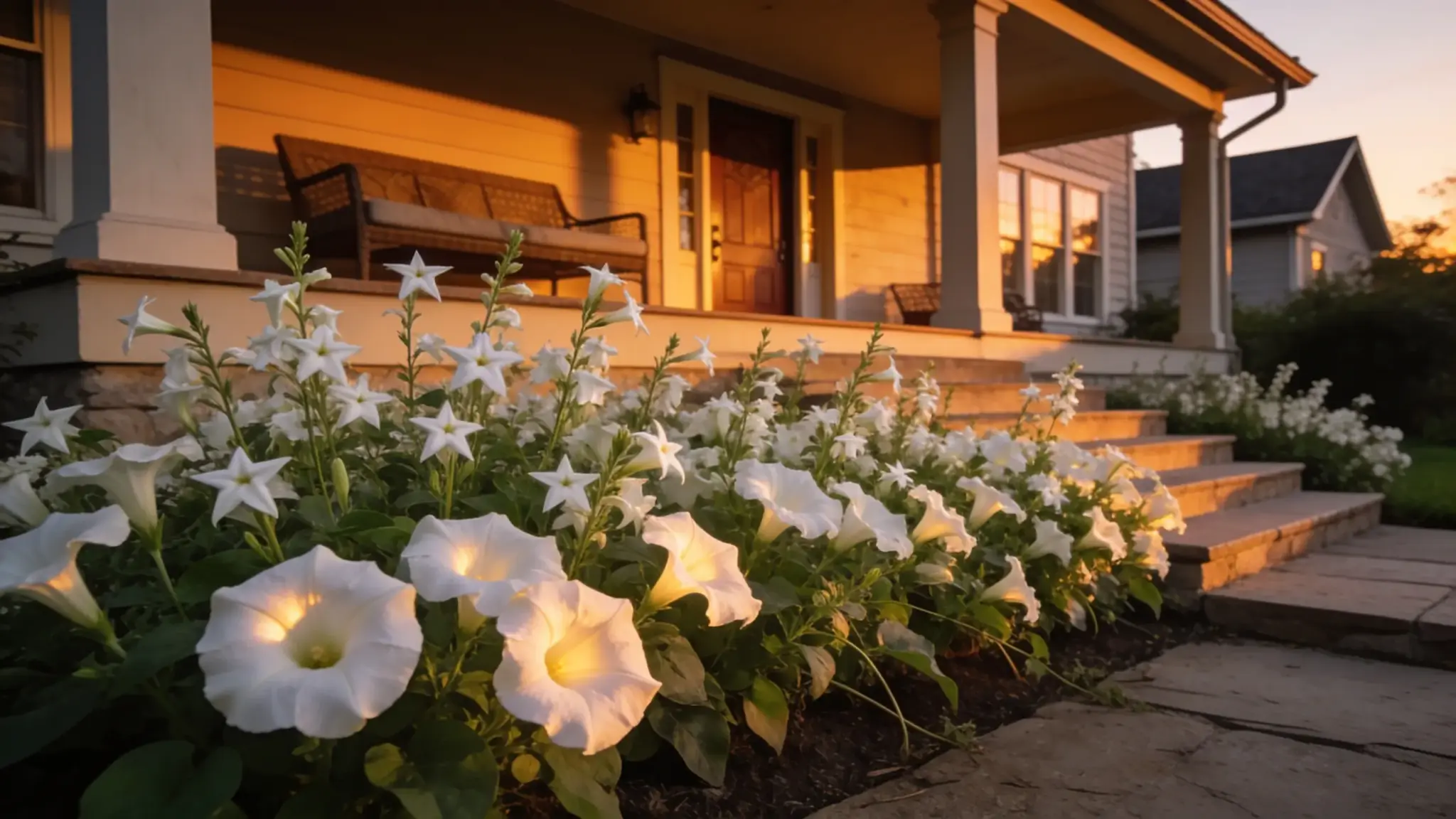
Ideal for: Homes with porch seating or entries used frequently in the evening
Go-to plants: White Moonflower, Night-blooming Jasmine, White Nicotiana
Evening gardens come alive with pale blooms that glow softly at dusk and release fragrance as the light fades.
Plant near the front entrance or porch to fully appreciate the effect when the day winds down. This garden style suits homeowners who spend more time arriving home in the evening than sitting outside during the midday.
35. Color-Blocked Bed
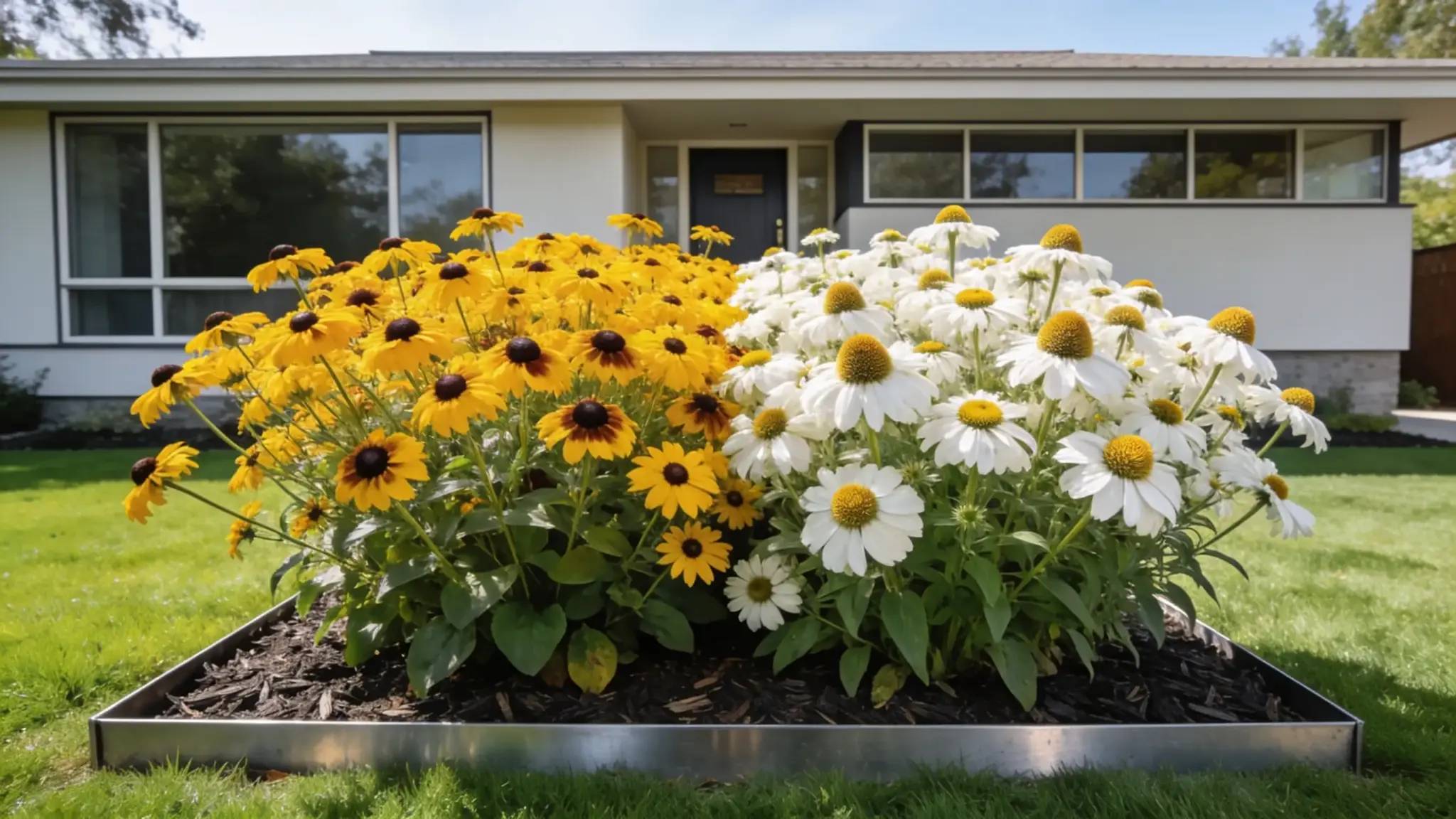
Ideal for: Contemporary and mid-century homes
Go-to plants: Rudbeckia, Purple Salvia, White Coneflower
Divide the bed into distinct zones of single colors: a block of yellow rudbeckia beside a block of white coneflower.
The bold contrast reads clearly from the street and creates a modern, graphic impact.
Unlike mixed planting styles, color blocking requires very little design skill to execute but delivers a result that looks considered and intentional.
36. Pollinator Garden
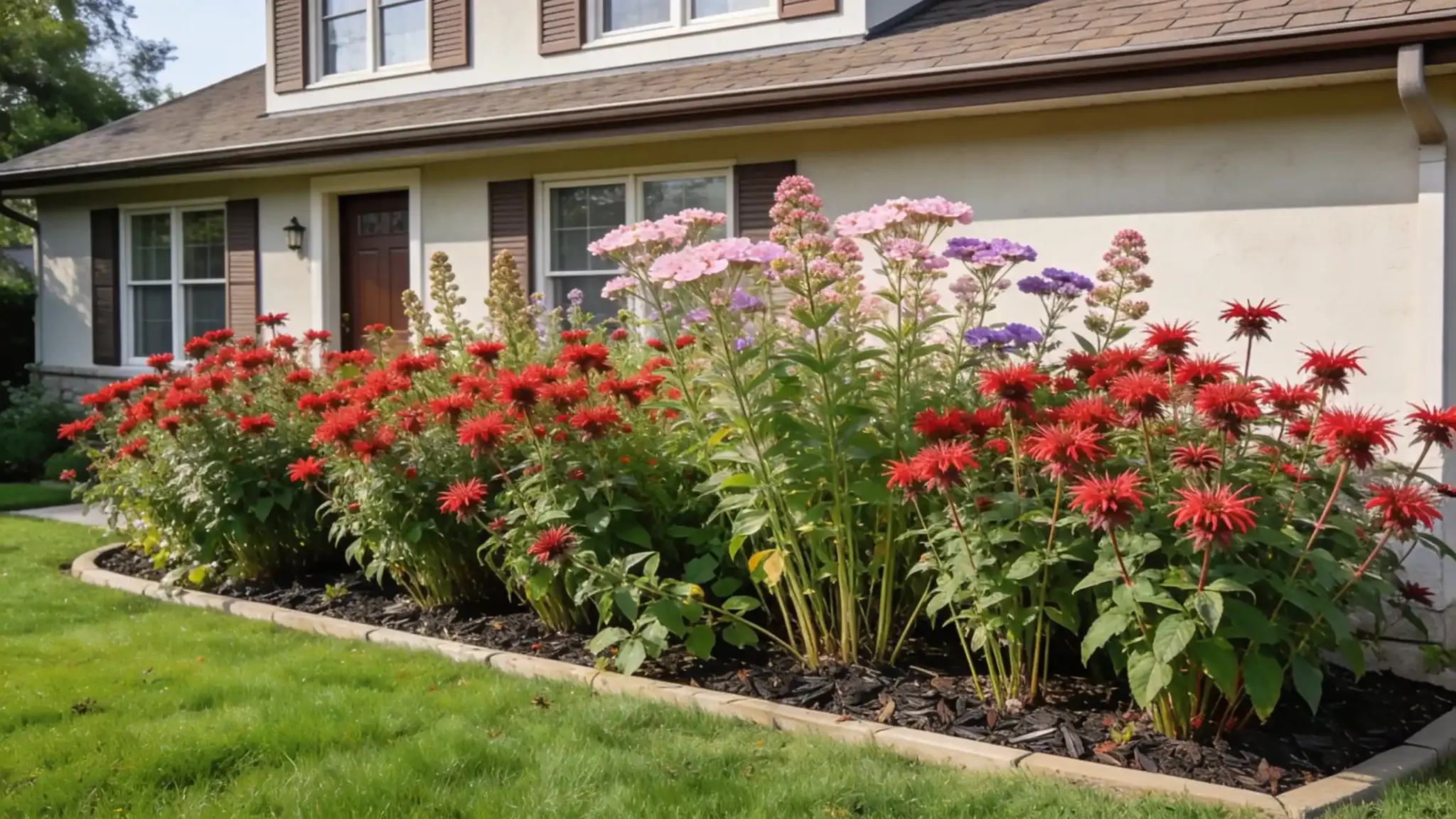
Ideal for: Any home style, particularly effective in suburban neighborhoods
Go-to plants: Coneflower, Bee Balm, Agastache, Milkweed
A front yard bed designed to attract bees, butterflies, and hummingbirds delivers both ecological value and visual interest throughout the season.
Bold, nectar-rich blooms in warm tones are the backbone of the planting. The movement of wildlife through the garden adds a layer of life and energy that no purely ornamental planting can replicate.
37. Tropical-Inspired Front Bed
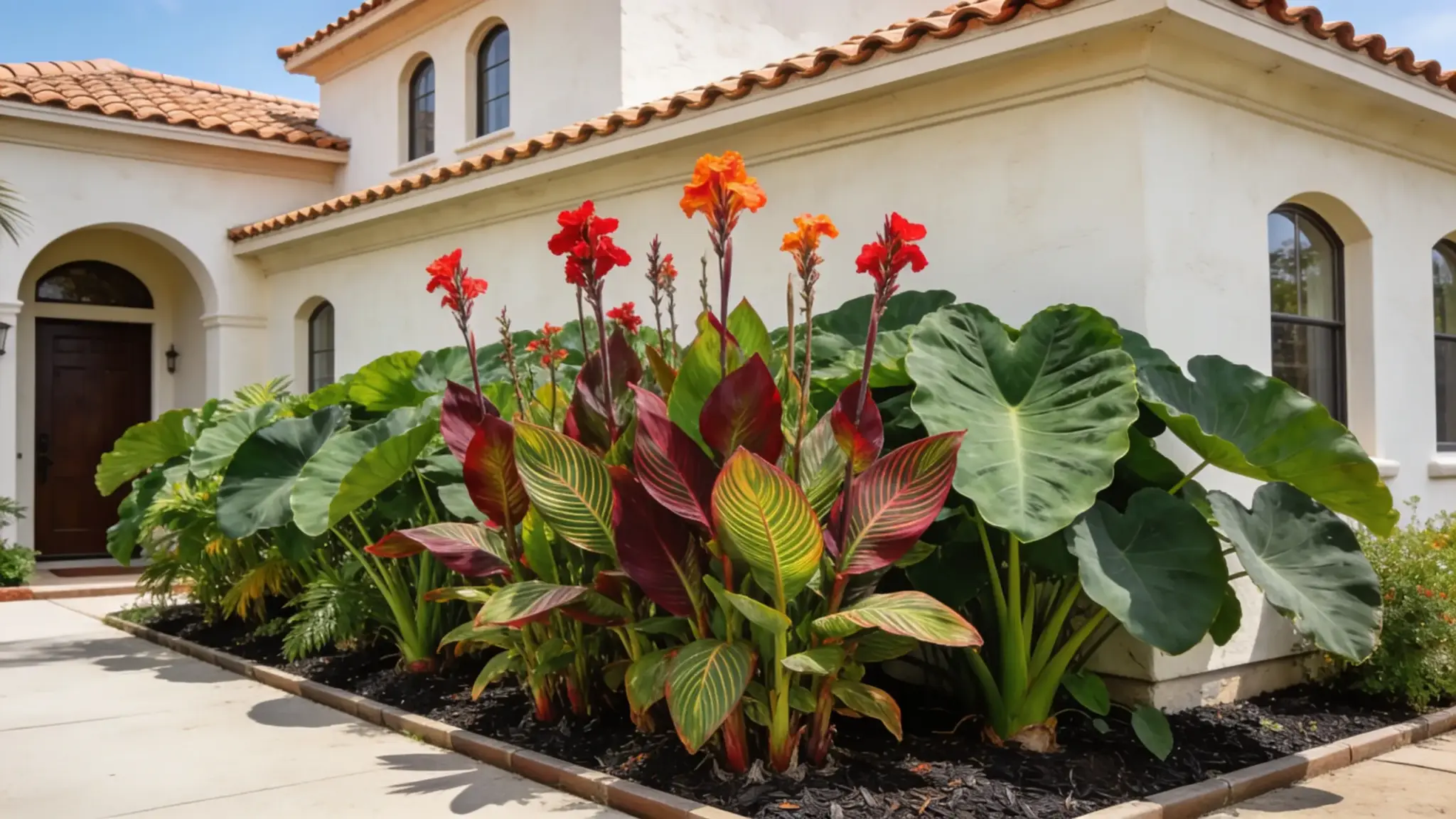
Ideal for: Mediterranean, stucco, and warm-climate homes
Go-to plants: Canna Lily, Elephant Ear, Bird of Paradise
Large-leafed, boldly coloured tropicals bring a lush, exotic energy to the front yard that reads as confident and design-forward.
Use them as seasonal annuals in cooler zones or as permanent plantings in USDA zones 8 and above.
Even a single large canna lily planted among lower-growing companions creates an immediate focal point that transforms the scale of the entire front bed.
38. Sunset Palette Perennial Border
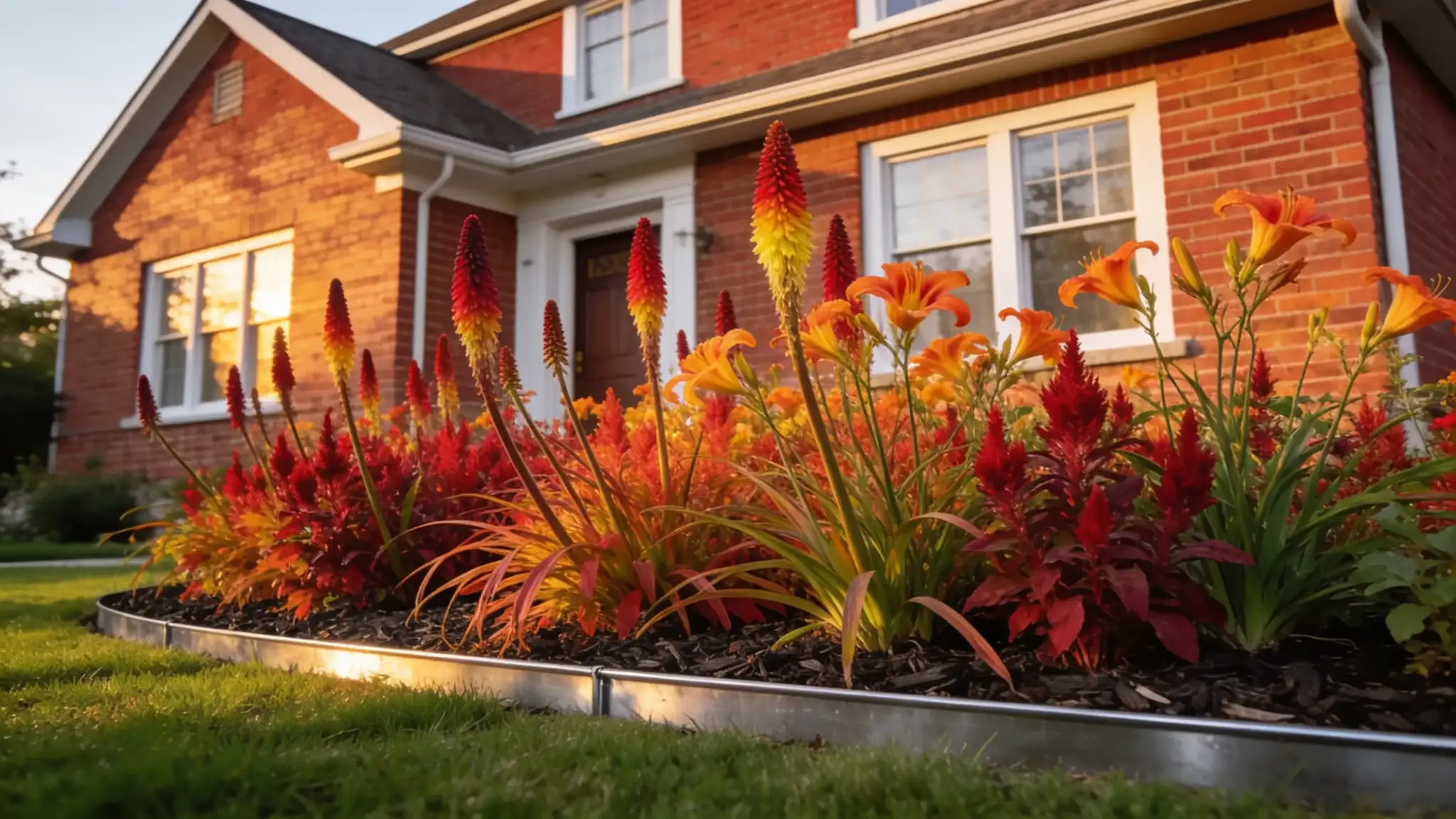
Ideal for: Red brick, tan, or terracotta-coloured home exteriors
Go-to plants: Rudbeckia, Red Hot Poker, Orange Daylily
Select plants exclusively in warm tones, deep reds, burnt oranges, golden yellows, and bronze for a bed that glows in afternoon light.
This palette complements warm-toned exteriors particularly well and creates a front yard that feels rich and layered rather than simply colorful.
It performs best in full sun, where the warm tones can fully saturate in natural light.
39. Wildflower Meadow Bed
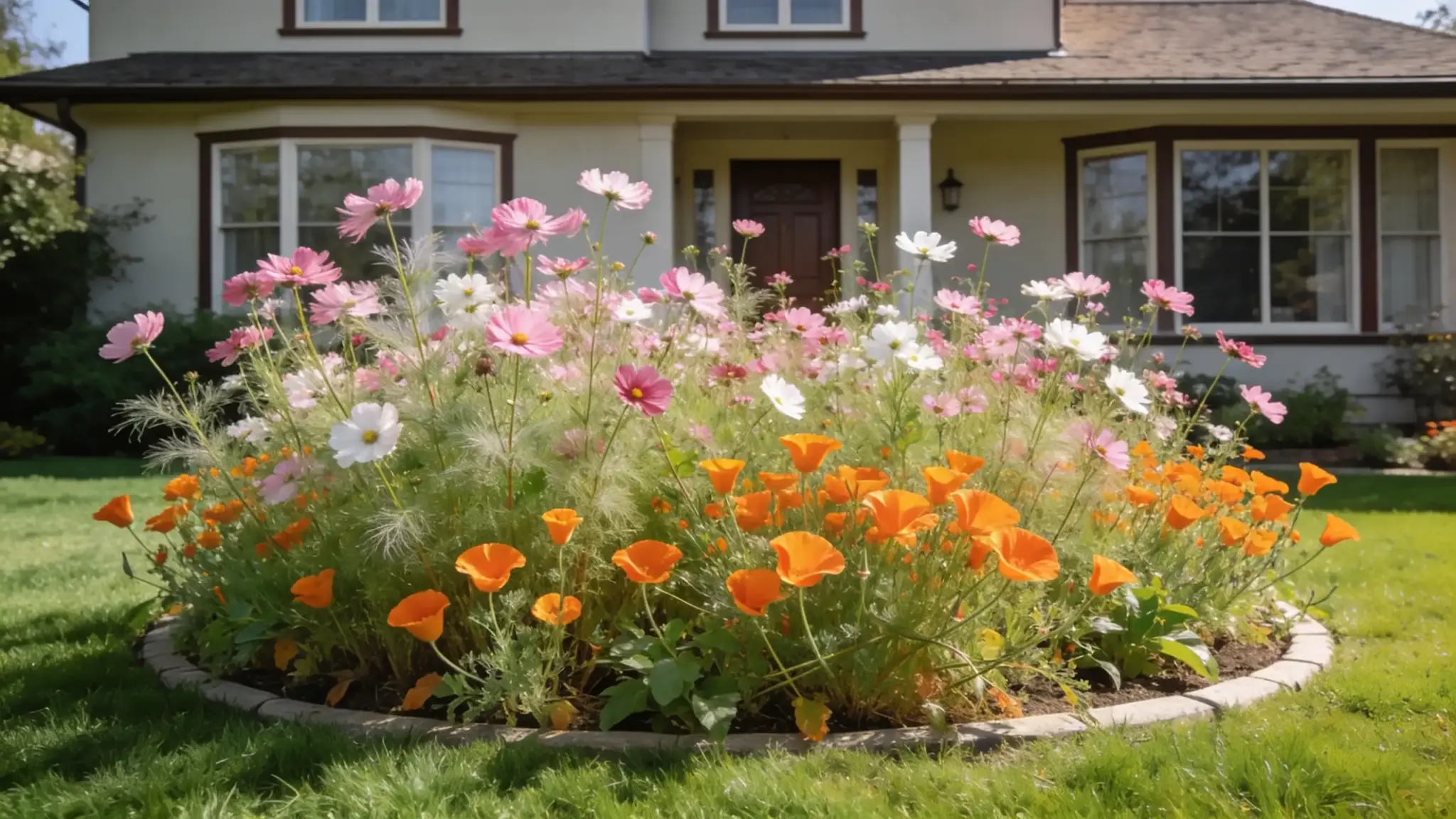
Ideal for: Large front yards or homes seeking an informal, natural aesthetic
Go-to plants: Cosmos, California poppy, Cornflower, Oxeye Daisy
A loosely planted mix of wildflowers sown directly from seed into a prepared bed creates an abundant, naturalistic look that is genuinely low-cost and highly attractive to pollinators from mid-summer onward.
The garden evolves each year differently as seeds disperse, giving the front yard a living, changing character that structured plantings rarely achieve.
40. Mixed Zinnia and Salvia Bed
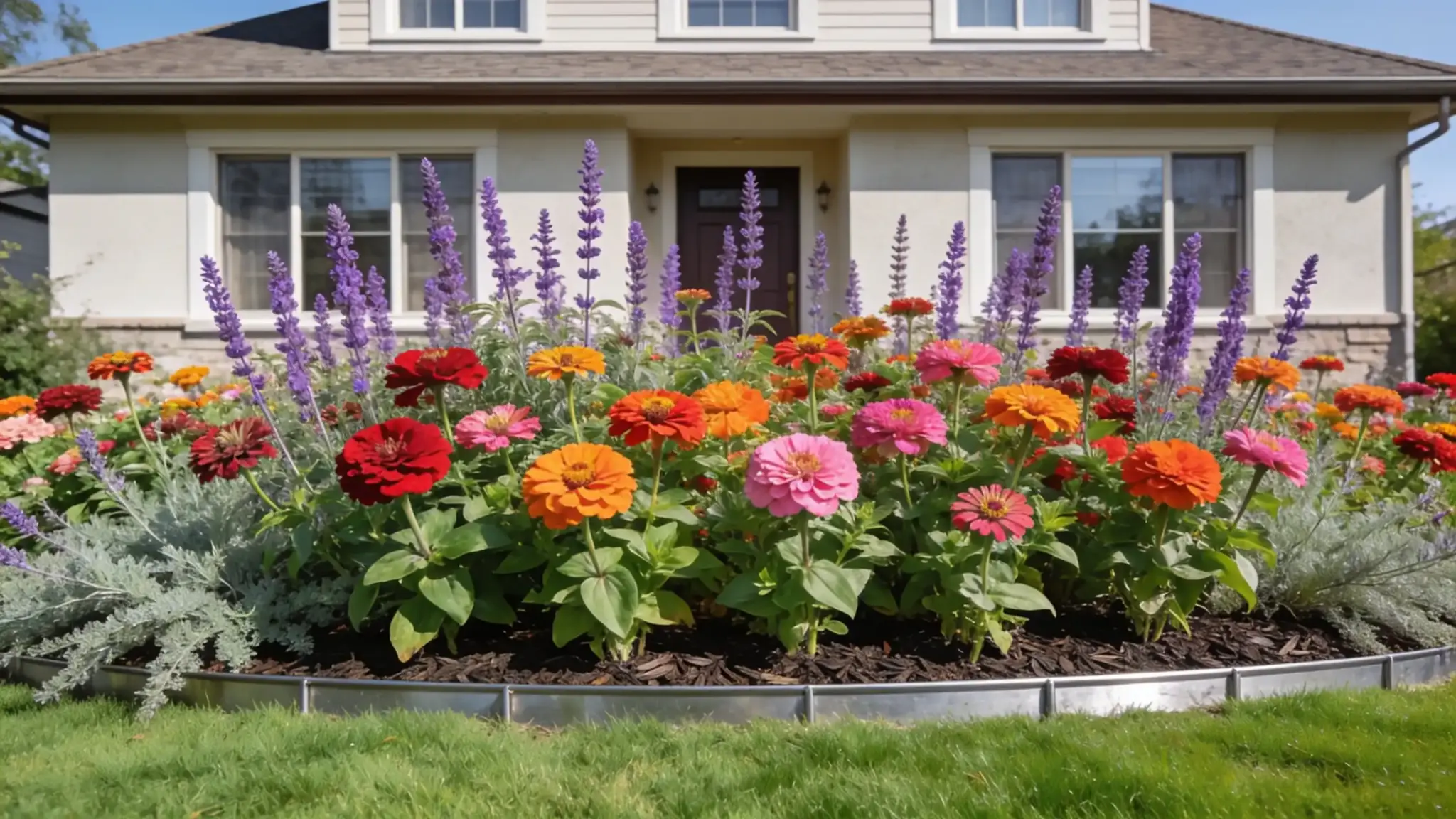
Ideal for: Any home style, excellent as a beginner’s first flower garden
Go-to plants: Zinnia Benary’s Giant, Salvia Hot Lips, Mexican Sage
Zinnias and salvias together cover the full summer season in bold, saturated color. Both are heat-tolerant, easy to grow from transplant, and highly attractive to butterflies and hummingbirds.
This is one of the most forgiving plant combinations available, making it the ideal starting point for anyone planting a front-yard flower garden for the very first time.
41. Rainbow Gradient Border
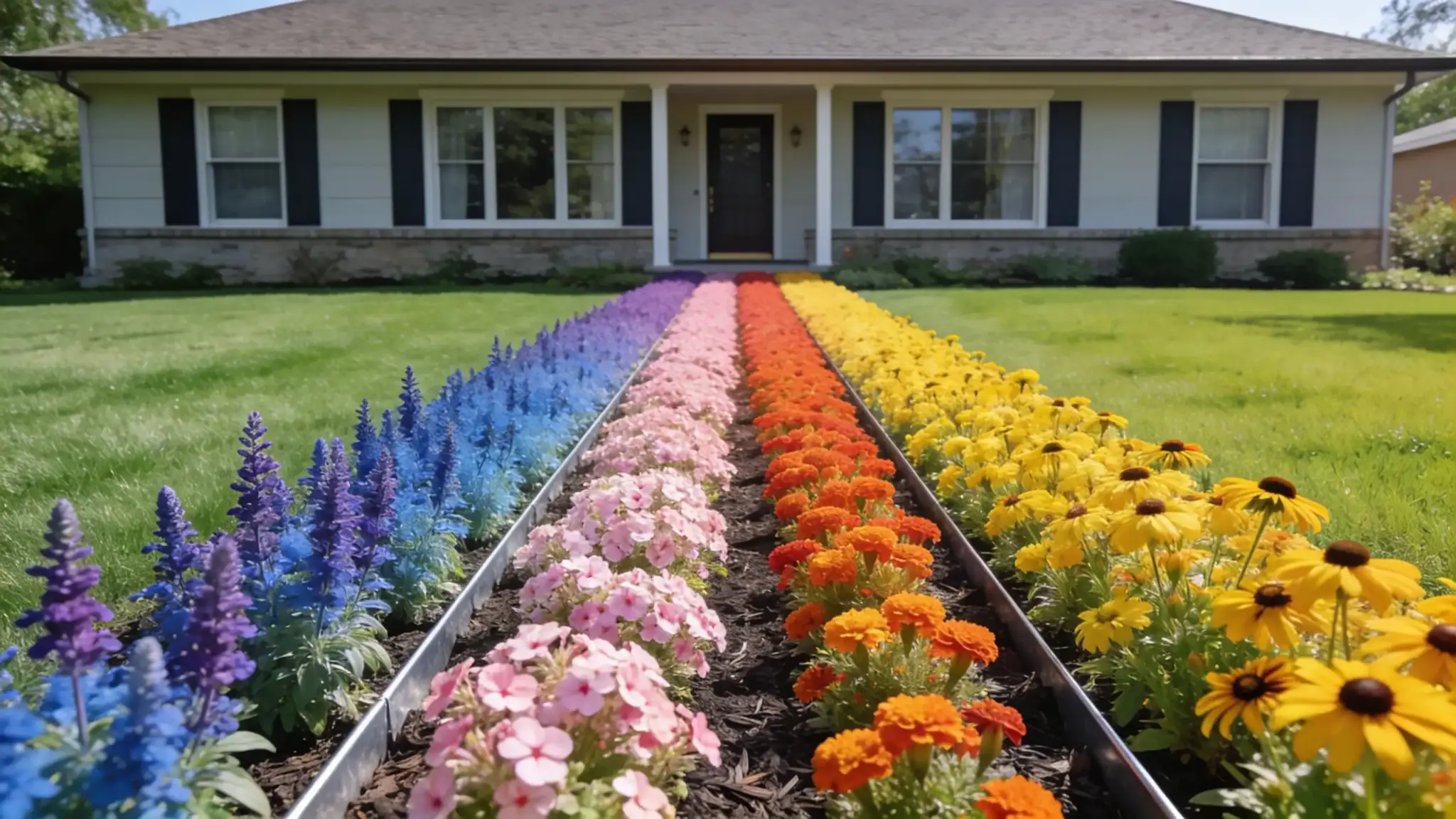
Ideal for: Homes with a long, uninterrupted front border
Go-to plants: Blue Salvia, Pink Phlox, Orange Marigold, Yellow Rudbeckia
Arrange flowers in a deliberate color spectrum from cool purples and blues at one end, transitioning through pinks and oranges to warm yellows and reds at the other.
The gradient effect reads as artistic and intentional from any distance along the street. It is a bold design choice that rewards careful plant selection and delivers a front yard that is genuinely impossible to walk past without stopping.
Flower Garden Mistakes That Are Easy to Avoid
Even the best flower garden ideas can fall flat if a few common mistakes creep in. Knowing what not to do is just as valuable as knowing what to plant.
- Overcrowding Plants: Plant to the mature size on the tag, not the pot size. A few well-spaced plants always outperform a crammed bed.
- Ignoring Sunlight: Wrong light is the number one reason gardens fail. Check the sun hours before buying anything.
- Skipping Soil Preparation: Work in compost and fix drainage before a single plant goes in the ground.
- No Seasonal Plan: Map bloom times across spring, summer, and autumn before purchasing to avoid a bare bed by September.
- Buying for Looks Over Suitability: Always check USDA zone compatibility at the nursery. A beautiful plant in the wrong conditions will never thrive.
Avoid these mistakes, and your flower garden will reward you far more than you expected.
Final Thoughts
Every flower garden idea on this list is designed to suit a real home, a real schedule, and a real skill level. Formal or relaxed, bold or simple, there is something here for every kind of gardener.
A beautiful flower garden does not happen all at once. It starts with one good idea, one well-prepared bed, and one weekend of planting.
Browse back through the list, pick the one that felt most like yours, and get started.
If you have tried any of these flower garden ideas, share your experience in the comments below.
Frequently Asked Questions
What Are the Best Low-Maintenance Flowers for the Front of the House?
Coneflowers, daylilies, lavender, and black-eyed Susans are excellent low-maintenance choices. They are drought-tolerant, return yearly, and require very little care once established in the right conditions.
How Do I Choose a Flower Garden Style That Matches My Home?
Look at your home’s style first. Traditional homes suit cottage or symmetrical beds. Modern homes pair well with clean lines, structural plants, and a limited color palette.
What Flowers Bloom All Summer in a Front Yard Garden?
Zinnias, salvias, rudbeckia, and coneflowers bloom reliably through summer. Pairing annuals with perennials ensures continuous color without replanting the entire bed at the start of every season.
How Do I Keep My Front Yard Flower Garden Looking Good Year-Round?
Plan for bloom times across every season. Mix spring bulbs, summer perennials, autumn asters, and winter-interest shrubs so the bed always has something worth looking at.


One Response