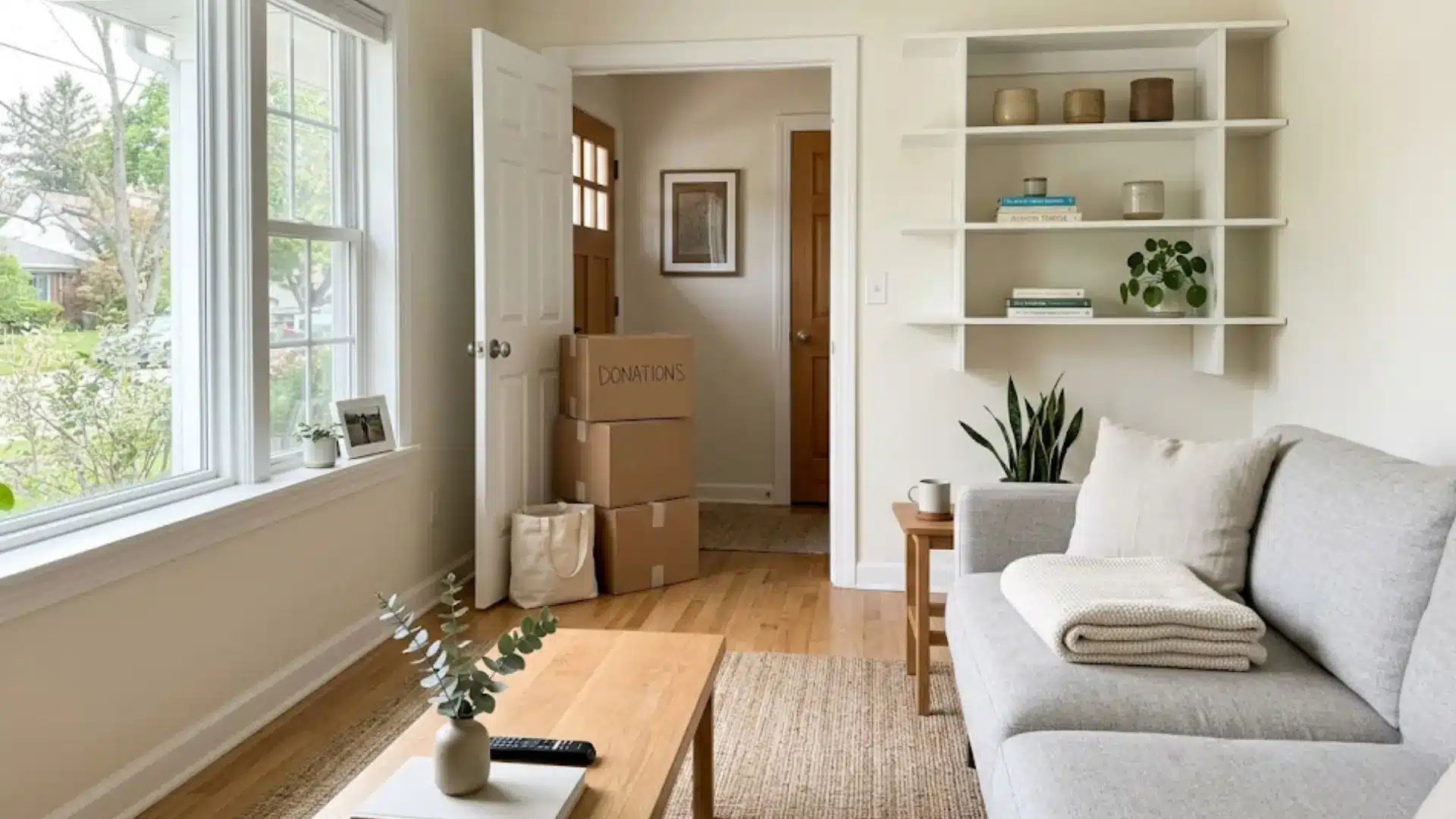

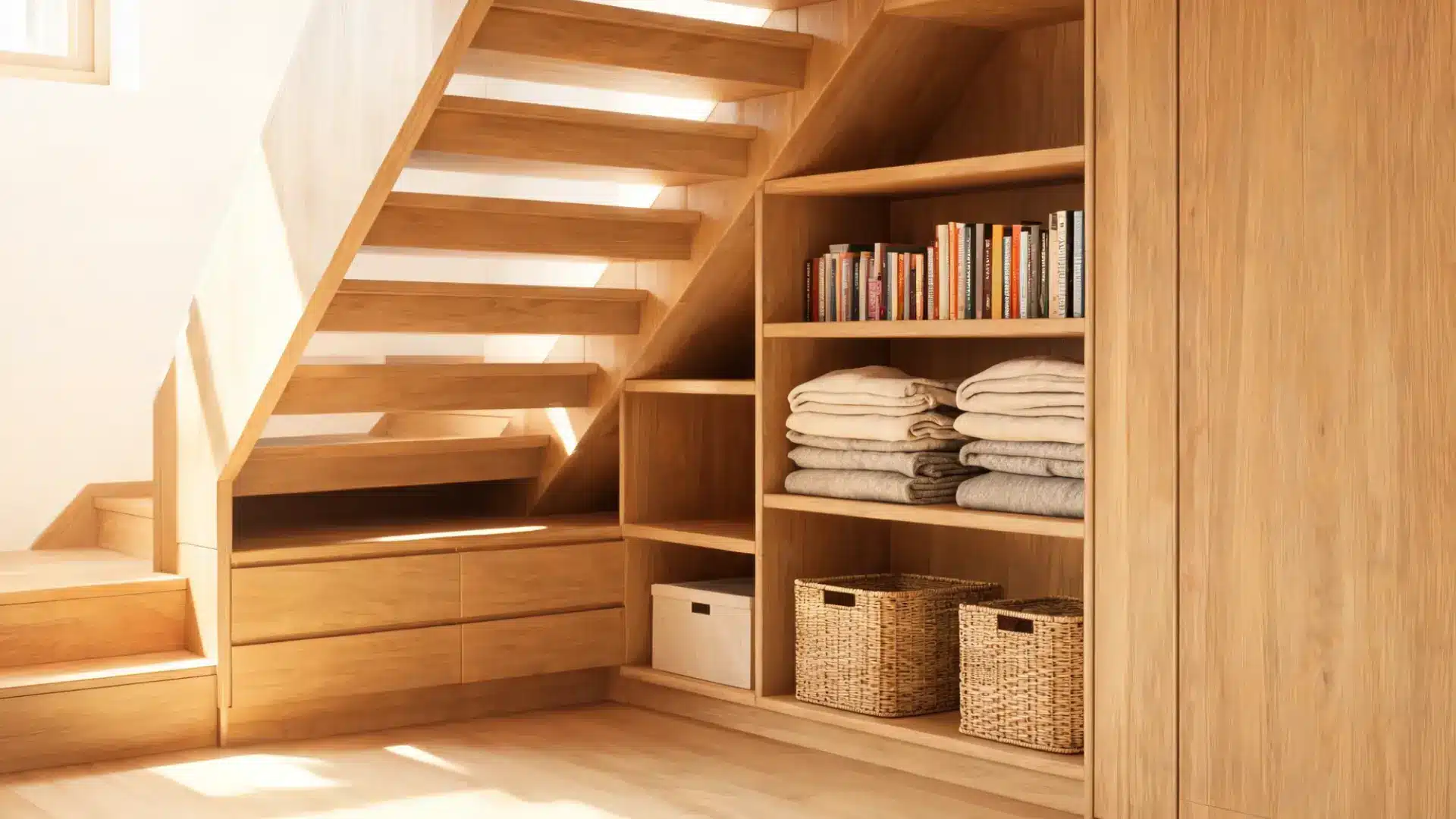
That space under your stairs usually just collects dust and forgotten boxes. It sits there empty while you walk past it every single day.
With a few under stairs storage ideas, that space can actually earn its keep. I used to walk past mine without a second thought. You just need a plan that fits your stairs and your daily habits.
Maybe you want a coat closet, a pantry shelf, or a quiet reading spot. Or maybe you rent and want something simple you can take with you later.
Either option works once you know what your space allows. Small space, simple storage; that’s what under stairs storage ideas can give you.
What Makes Under-Stairs Storage Work Well?
Most people imagine the space under the stairs as one big triangular cupboard. That thinking wastes half the space and makes items hard to find.
The shape changes fast from front to back, so headroom, depth, and reach all shift within just a few feet. What works well at the tall end often fails completely near the low, narrow point.
Easy access matters just as much as raw capacity, since a spot you can’t comfortably reach rarely gets used.
Keeping the path around the stairs clear also plays a big role in whether the space stays practical day to day.
Things to Check Before You Build
Not every under-stair idea fits every staircase. A few quick checks before you start can save time, money, and a design that doesn’t actually work for your space:
- Measure headroom clearance at multiple points, since it directly limits shelving or drawer height
- Note whether the staircase is open or enclosed, as this affects design visibility and material choice
- Check for load-bearing walls or structural elements nearby that limit where you can cut or build
- Identify your access point, from the side, front, or underneath, since it shapes the entire layout
- Confirm local permit requirements for larger builds, especially anything involving plumbing like a powder room
Once you know what your staircase allows, it’s much easier to choose an idea that fits, like learning to build a shoe rack, instead of forcing one that doesn’t.
Functional Under Stairs Storage Ideas for Everyday Items
Ideas here focus on hidden, practical storage for things already cluttering the house: coats, shoes, linens, pantry goods. These solutions prioritize function over flash, keeping everyday items organized and out of sight:
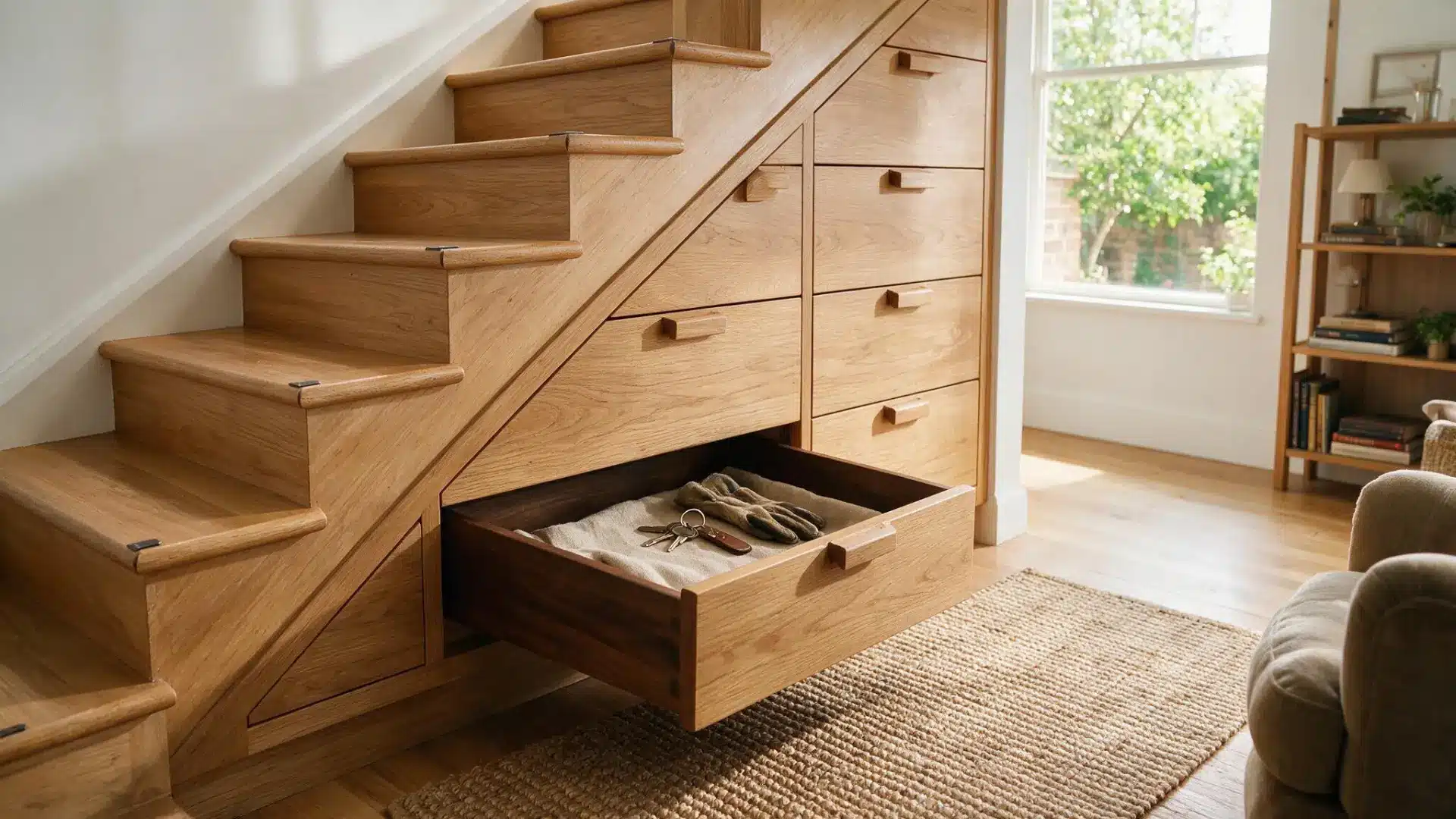
1. Built-In Drawers for Everyday Storage
- Cost to build: $1,500–$4,000+
- Build difficulty: Needs a professional
Built-in drawers work well for items you reach for daily, like keys, gloves, or small tools. In the triangular space, drawer depth typically shrinks as you move toward the staircase’s lowest point.
Deeper drawers near the front and shallower ones toward the back make the most of the available room without wasting awkward corners.
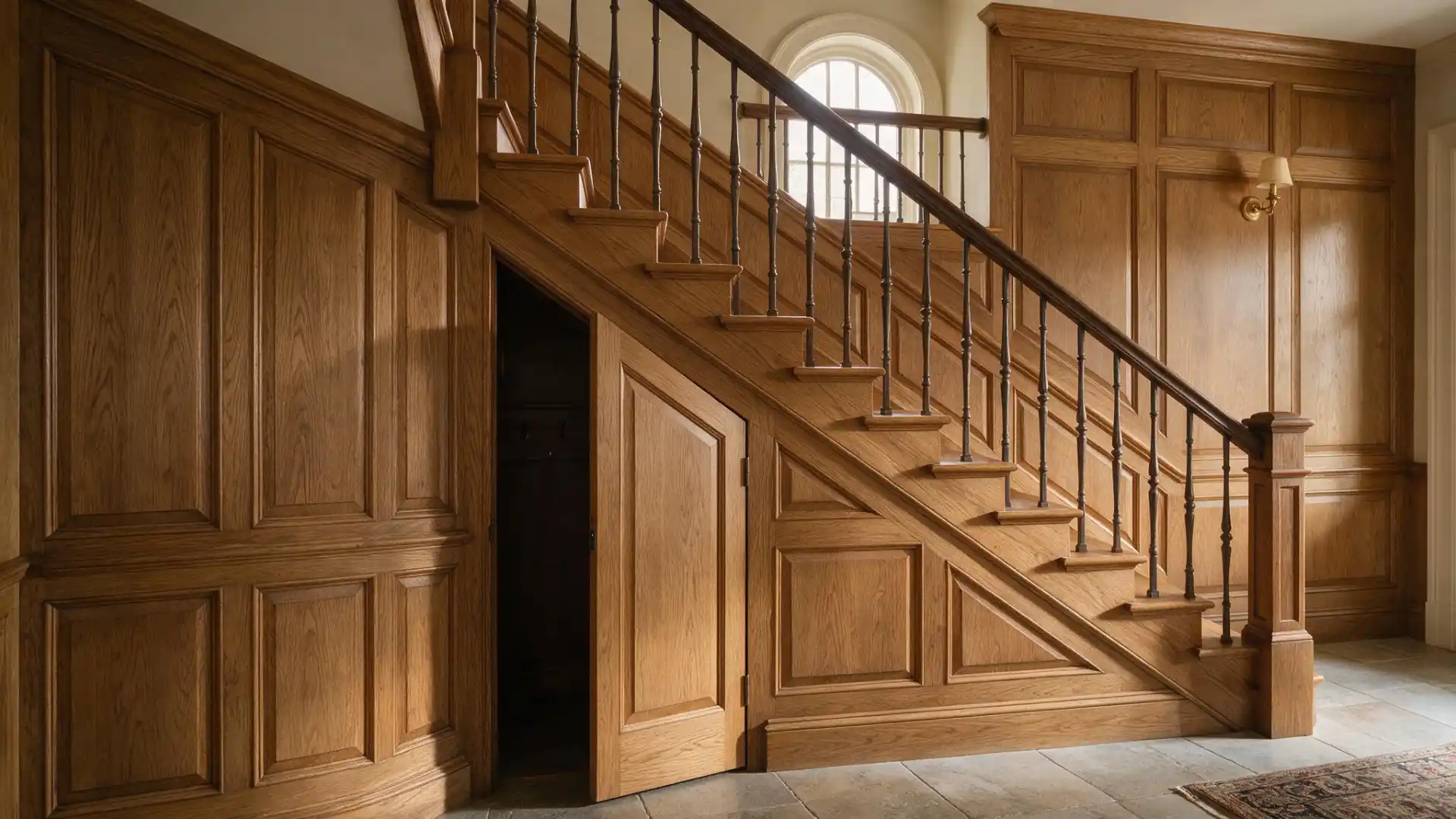
2. Hidden Coat Closet
- Cost to build: $1,000–$3,500
- Build difficulty: Needs a professional
A hidden coat closet uses flush doors or wall paneling that blends seamlessly with the surrounding hallway, keeping the storage completely out of sight until needed.
Inside, a simple hook-and-rod setup handles coats, bags, and umbrellas efficiently. This idea works best positioned near an entryway where coats are used daily.
Tip: Use push-to-open hardware instead of visible handles to keep the flush-door look uninterrupted.
3. Sliding Pull-Out Cabinets
- Cost to build: $1,500–$4,000
- Build difficulty: Needs a professional
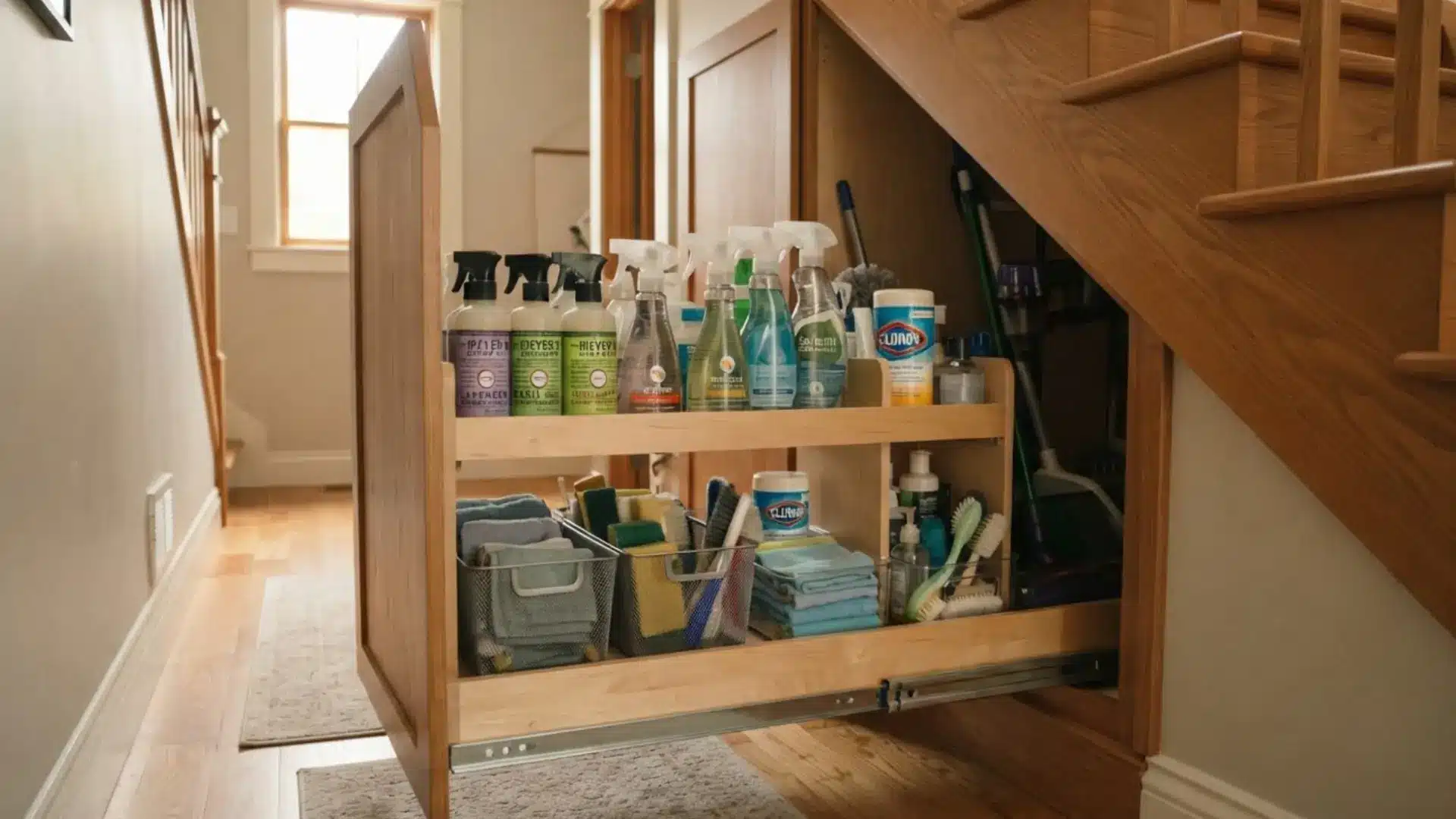
Sliding pull-out cabinets rely on heavy-duty glides to bring deep, hard-to-reach items within easy access without awkward reaching or crawling.
This works especially well for narrow, elongated triangular spaces where a standard swing-open door wouldn’t have room to function properly. It’s a practical fit for tools, cleaning supplies, or bulk household items.
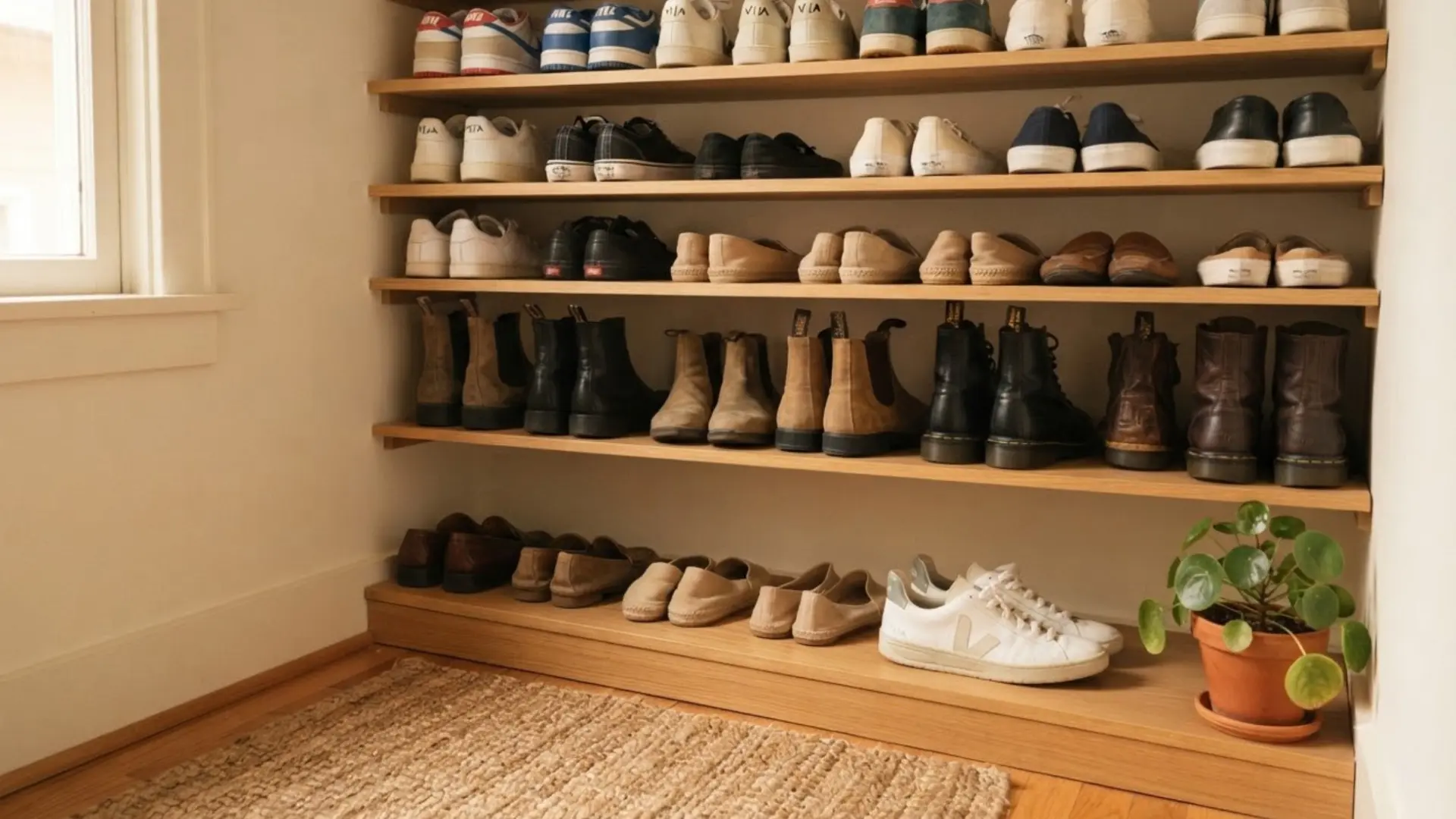
4. Shoe Storage Cubbies
- Cost to build: $150–$500
- Build difficulty: DIY-friendly
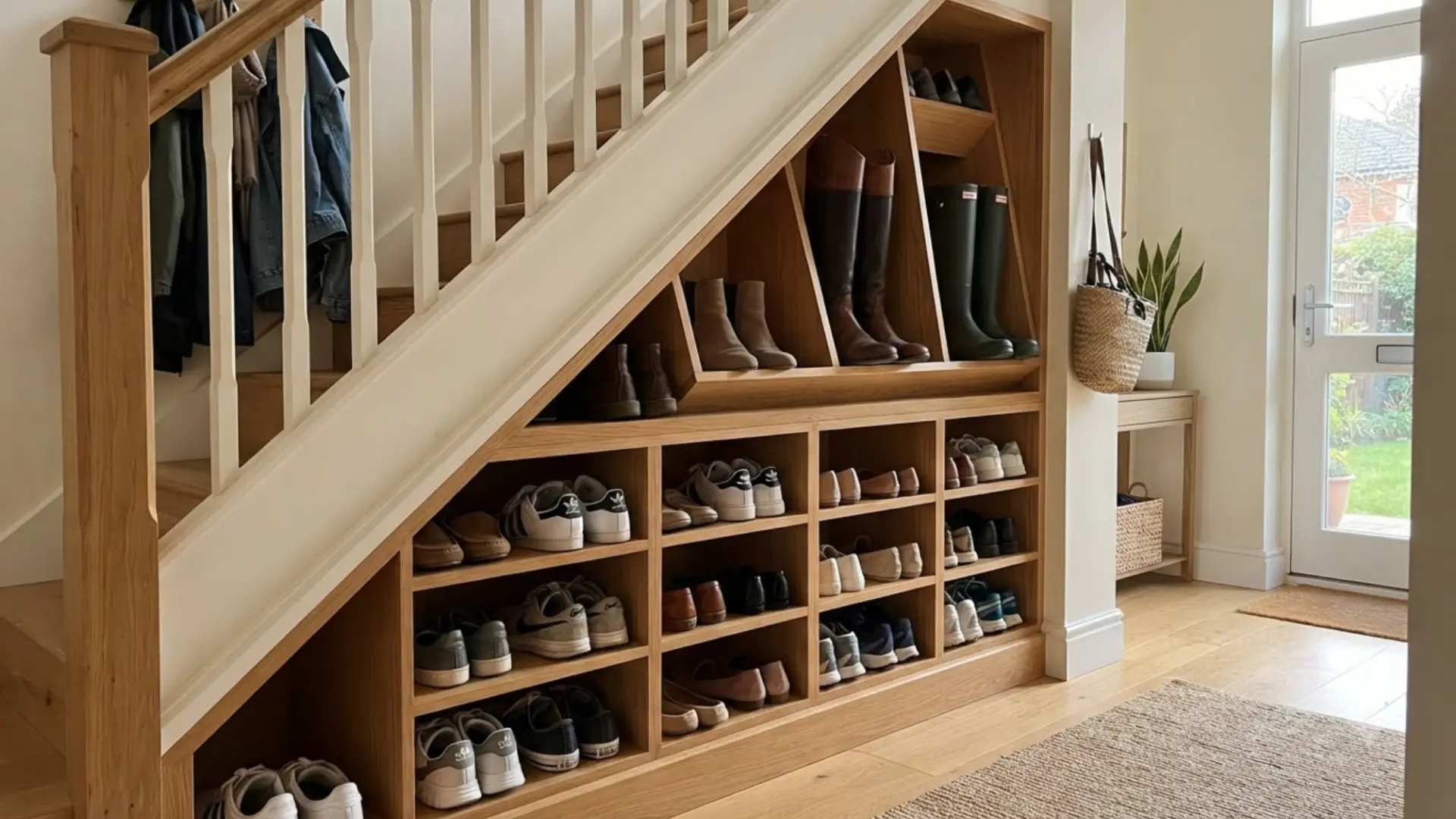
Shoe cubbies work best when sized to match the household’s actual footwear, from sneakers to tall boots. Angled shelving suits taller boots well and reduces wasted vertical space, while flat shelving works better for everyday flats and sneakers.
This idea suits busy entryways with frequent daily shoe changes and multiple household members.
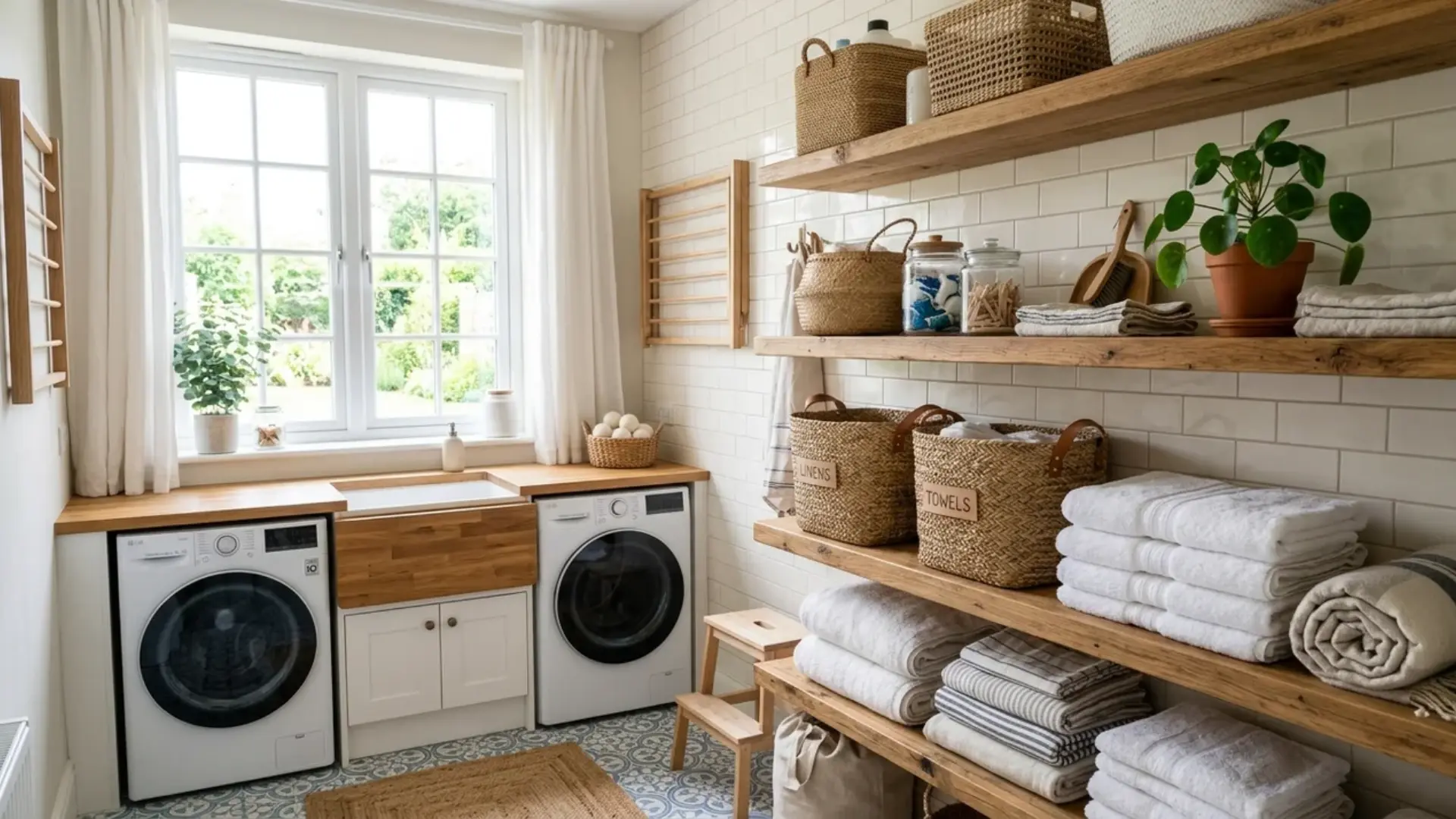
5. Linen and Towel Closet
- Cost to build: $200–$600
- Build difficulty: DIY-friendly
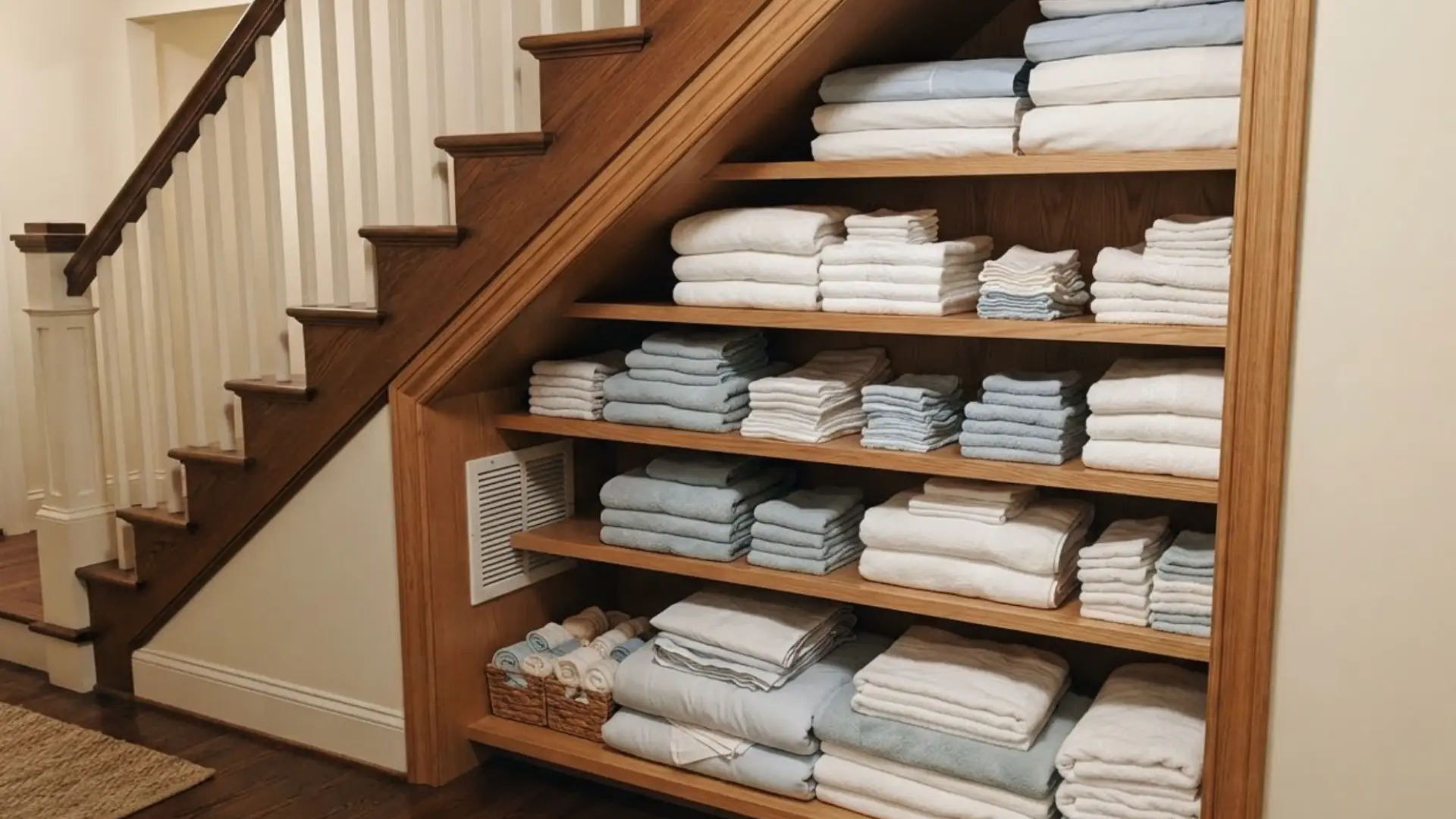
A linen closet under the stairs works well when shelf spacing is planned around folded towel and sheet sizes rather than generic shelving gaps.
Proper airflow matters here, since trapped moisture can affect stored fabric over time and lead to musty smells. This idea fits well near bathrooms or upstairs staircases specifically.
6. Under-Stair Pantry Shelving
- Cost to build: $150–$500
- Build difficulty: DIY-friendly
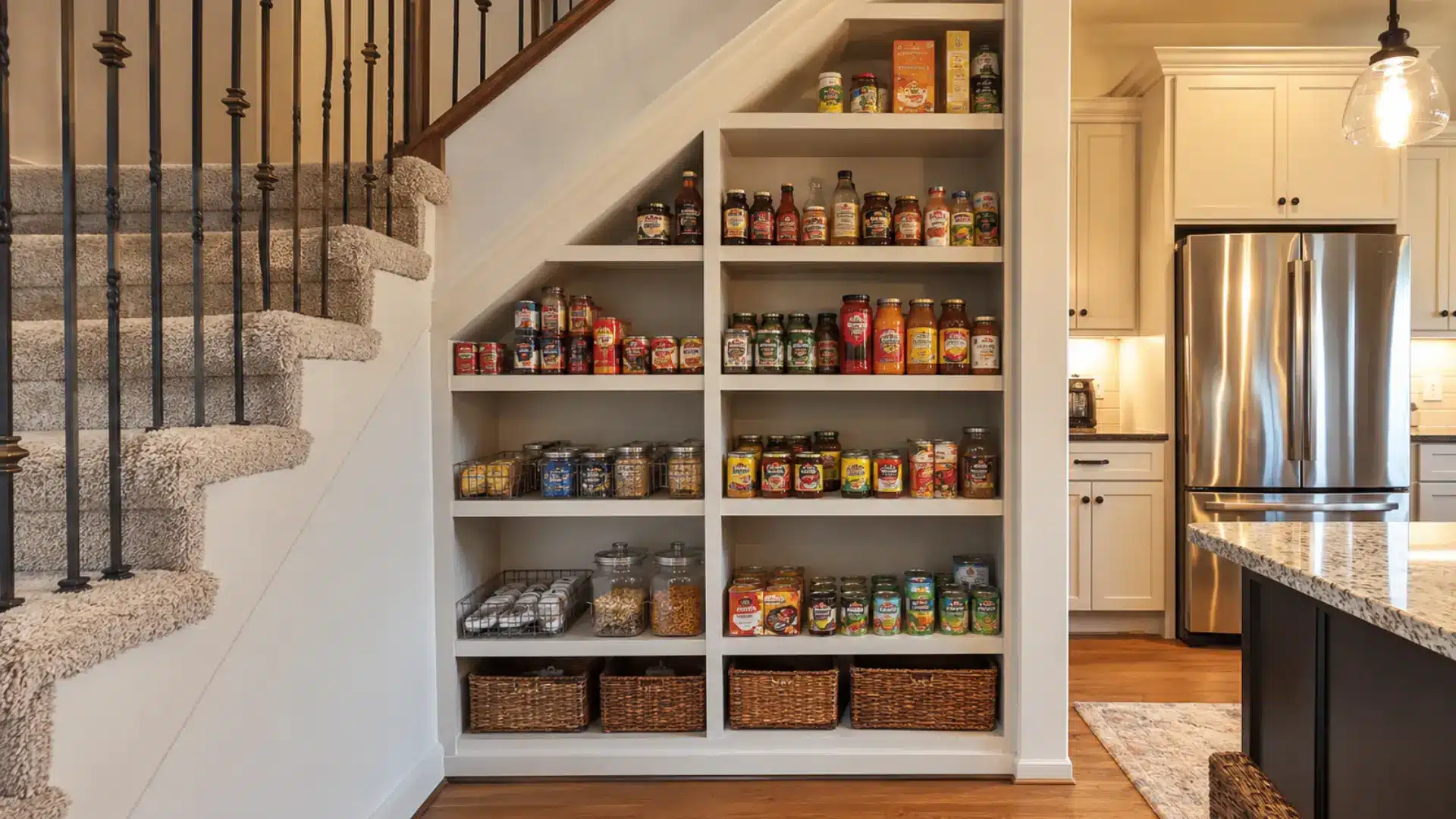
Pantry shelving works best near the kitchen, cutting down on extra steps. Follow the same rules as organizing a kitchen pantry, grouping items by category.
Humidity and temperature matter more here than in other storage types, since food items are sensitive to moisture buildup and heat exposure.
I’ve seen this work best with open shelving or ventilated cabinet doors to keep air moving.
Creative Multi-Use Spaces Under the Stairs
These ideas turn the space into a functional room rather than pure storage, for reading, working, or entertaining. Most need more headroom and a bigger budget than simple shelving, since each one supports an actual activity:
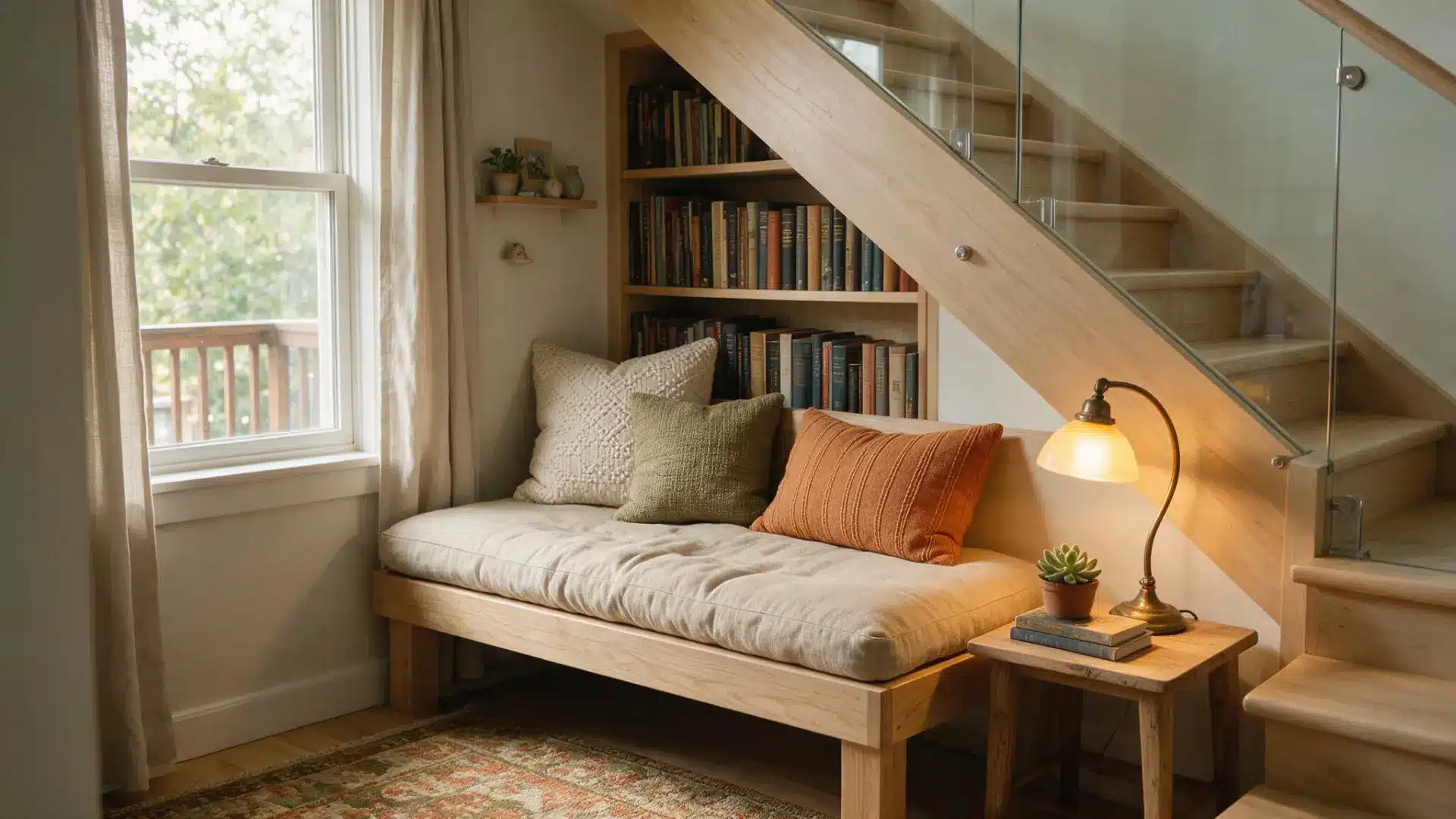
7. Cozy Reading Nook
- Cost to build: $200–$800
- Build difficulty: DIY-friendly
A reading nook works best with soft, layered lighting and cushioned bench seating built to fit the slope of the ceiling.
Comfort depends heavily on headroom, so this idea suits the taller end of the triangular space rather than the lowest point. A small side table completes the setup nicely.
Tip: Add a reading lamp with a warm bulb and a small shelf for a stack of current books within arm’s reach.
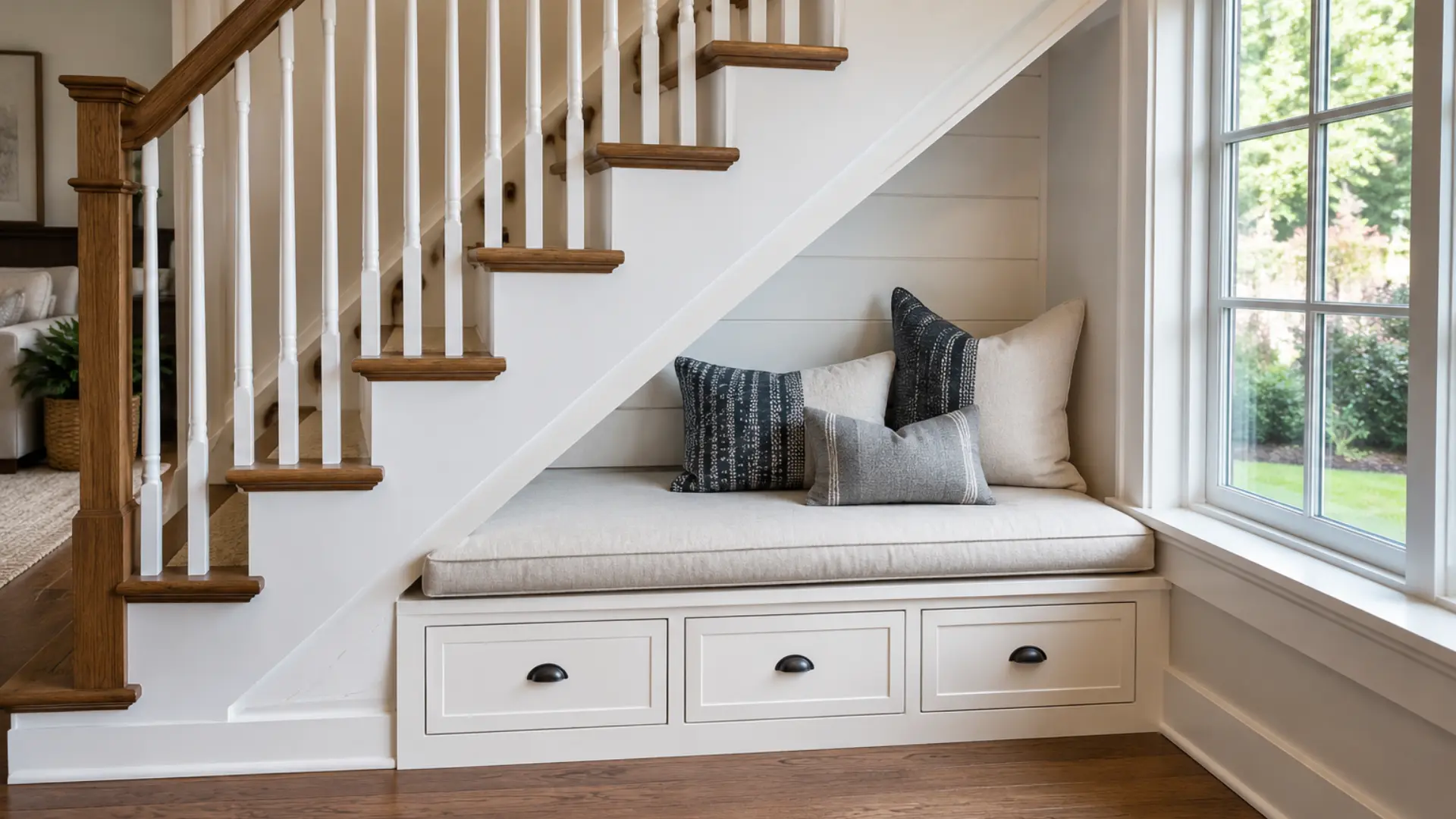
8. Built-In Window Seat with Storage
- Cost to build: $600–$1,800
- Build difficulty: Needs a professional
A window seat pairs comfortable seating with hidden storage underneath, using either a lift-top bench or built-in drawers.
This idea works particularly well if the staircase sits near a window, adding natural light to the seating area. It’s a strong option for entryways or living rooms wanting dual-purpose furniture.
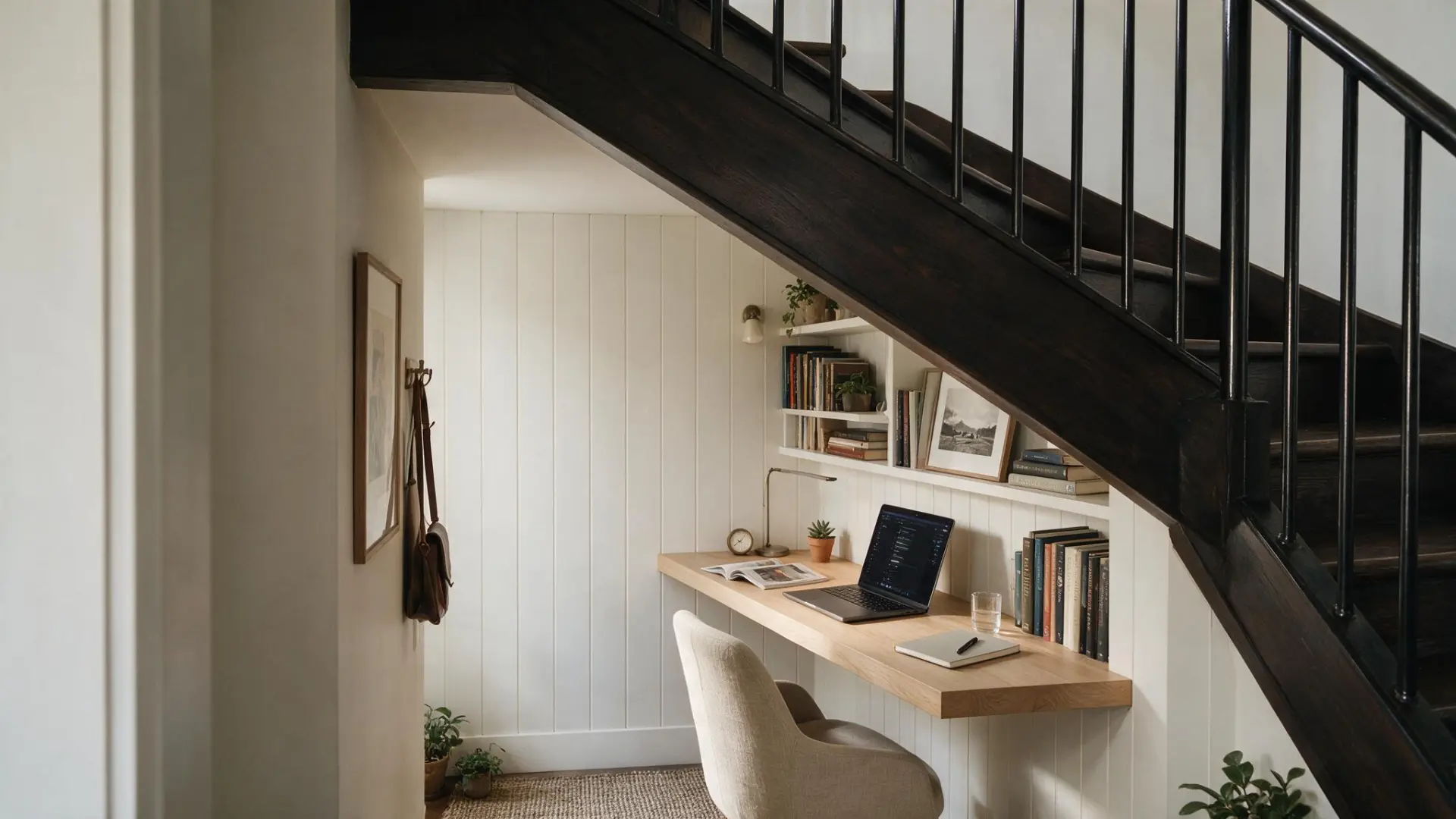
9. Home Office Nook
- Cost to build: $400–$1,200
- Build difficulty: DIY-friendly
A home office nook needs a desk sized to the available depth, which often shrinks in low-clearance areas near the staircase’s lower end.
Cable management matters here, since outlets may need rerouting for a clean setup. I’ve found task lighting essential in a setup like this, since this space rarely gets strong natural light.
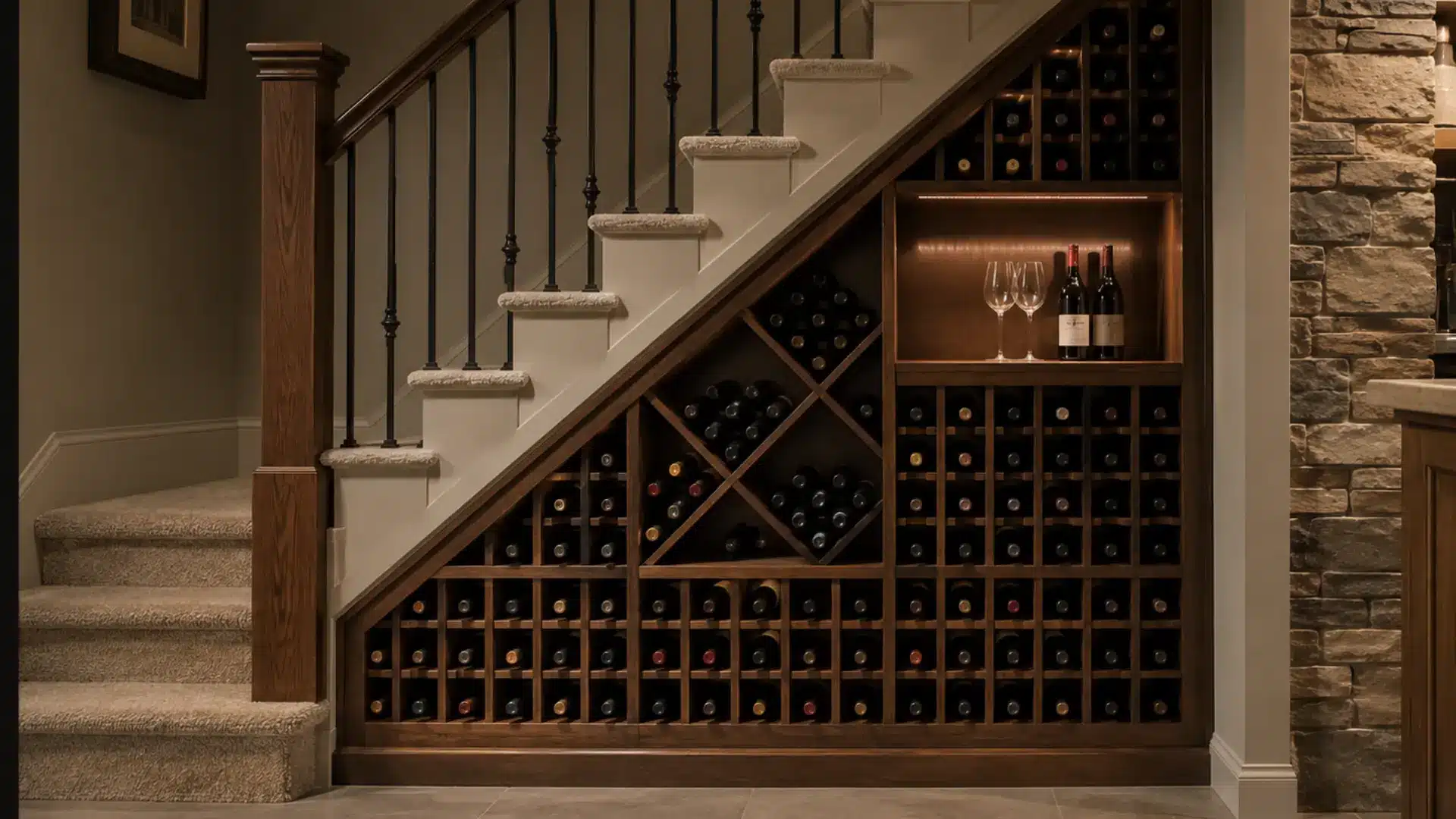
10. Wine Storage Rack
- Cost to build: $150–$600
- Build difficulty: DIY-friendly
A wine rack needs orientation planning around the slanted ceiling, since bottles typically store best lying flat rather than upright.
Light and temperature matter too, as excess sunlight or heat can affect wine quality over time. This idea suits enclosed staircases better than open ones exposed to direct light.
Tip: Choose a rack with a mix of horizontal and diagonal slots to fit varying bottle sizes neatly.
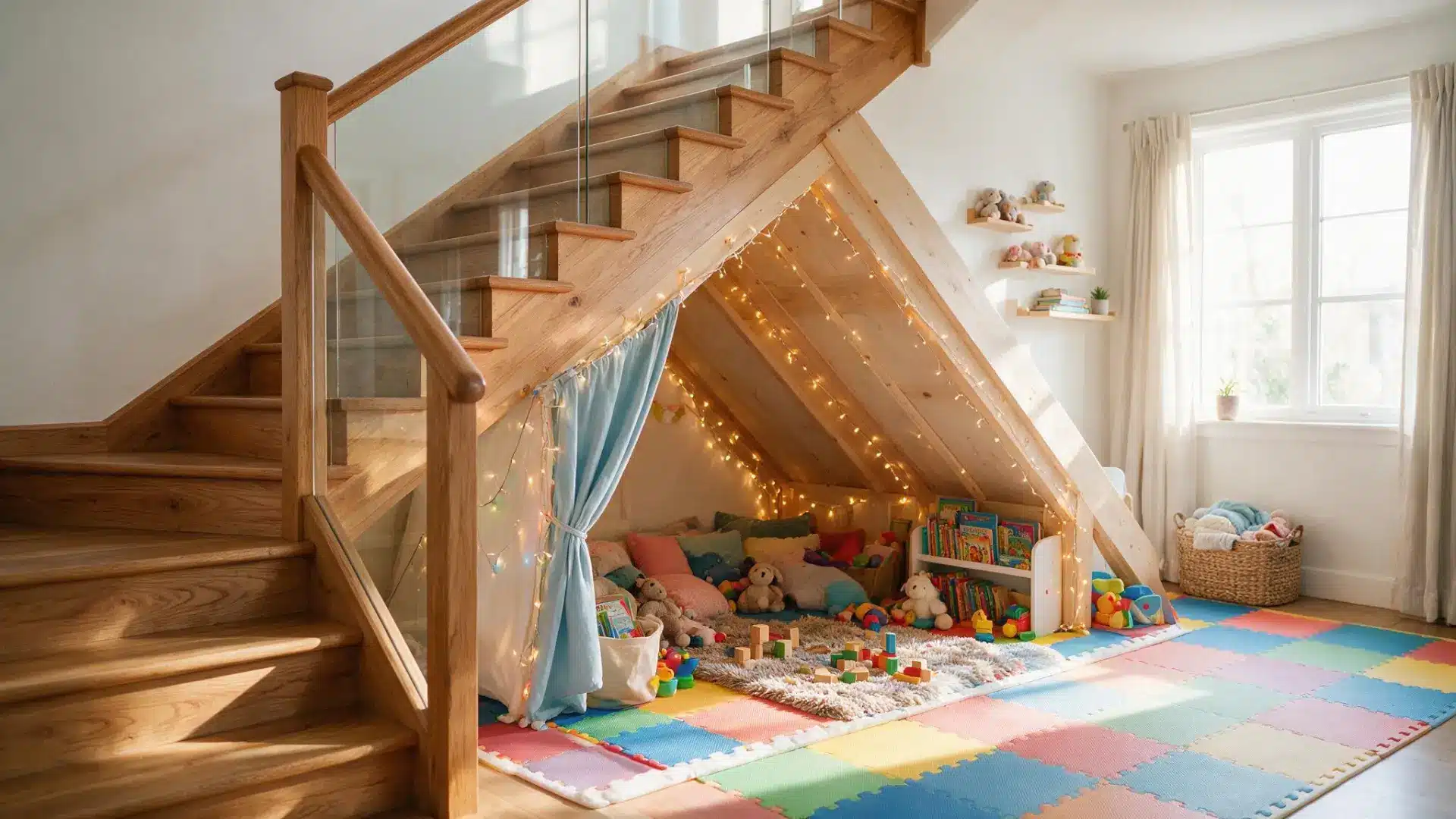
11. Kids’ Play Den
- Cost to build: $200–$700
- Build difficulty: DIY-friendly
A play den works best with soft, low-maintenance flooring like foam tiles or a washable rug, since it will see heavy daily use.
Safety matters most here; rounded edges, secure lighting, and stable furniture keep the space practical for young children. This idea suits taller, open staircase areas well.
Tip: Add fairy lights and a small curtain at the entrance to make the space feel like its own hideaway.
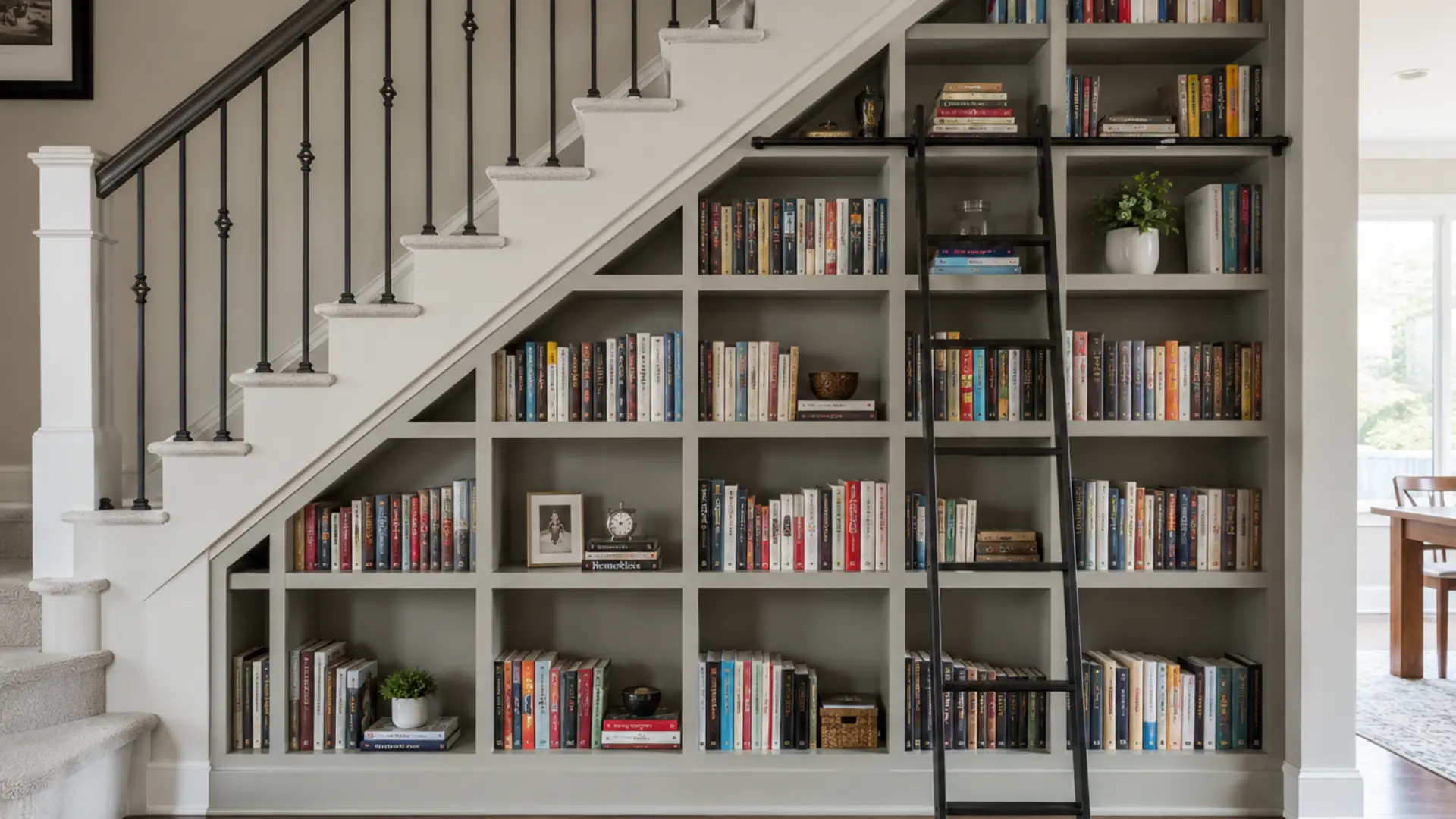
12. Bookshelf Library
- Cost to build: $500–$1,500
- Build difficulty: Needs a professional
A hidden library uses floor-to-ceiling shelving to maximize every inch of vertical space, often requiring a small rolling ladder for taller sections.
This idea works especially well in homes with larger book collections and taller staircases. I’ve tried something similar in my own home, and it turns an overlooked corner into a genuine design feature.
Tip: Group books by color or size for a curated look, and leave a few shelves open for small decor pieces.
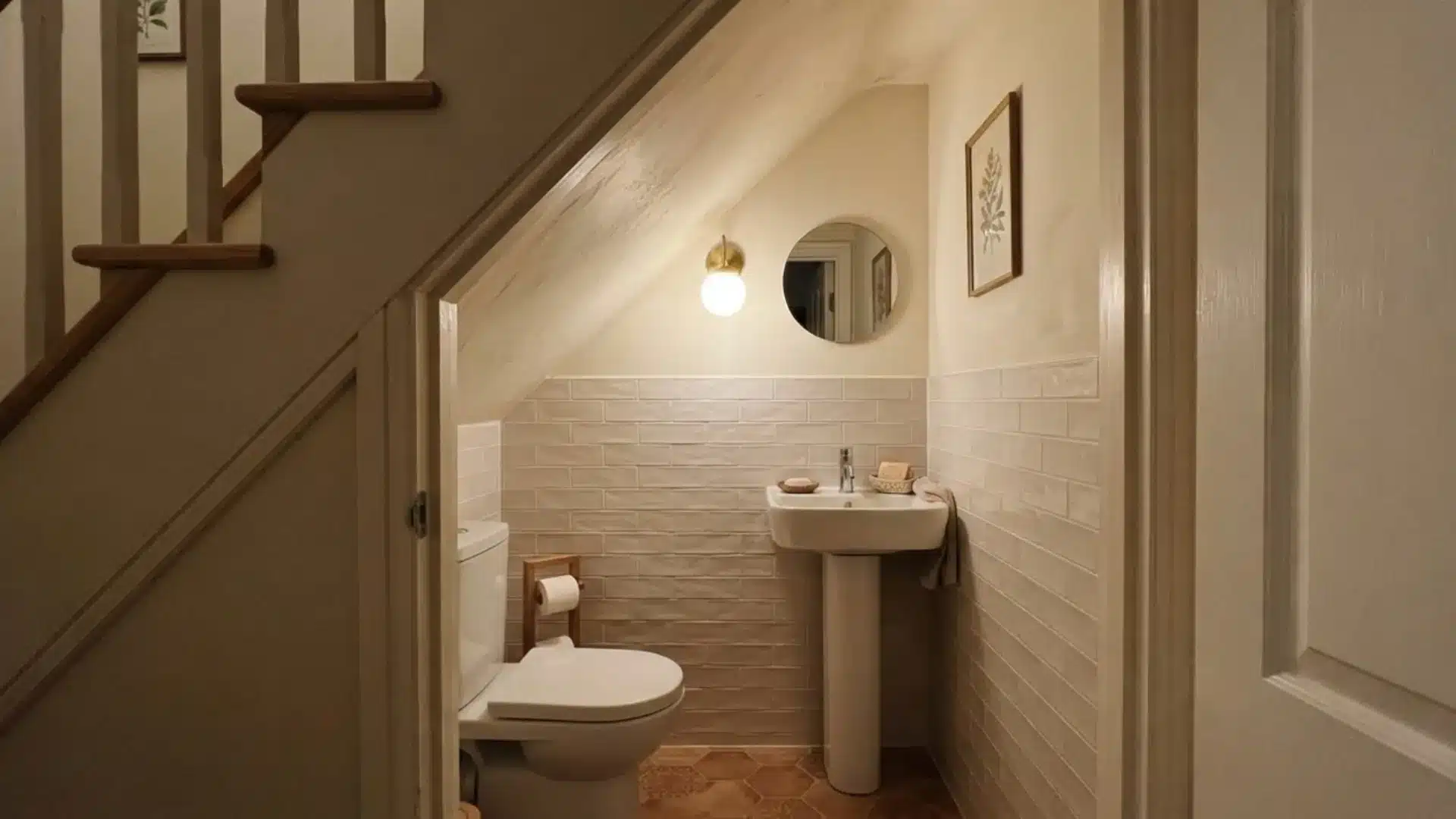
13. Powder Room
- Cost to build: $3,000–$10,000
- Build difficulty: Needs a professional
A powder room conversion is the most involved idea on this list, requiring confirmed plumbing access and enough square footage for a toilet and small sink.
Local permits are typically required for this build, given the plumbing and ventilation work involved. This idea suits larger, open staircases with nearby existing plumbing lines.
Room-Specific Under-Stairs Storage Ideas by Function
These ideas match the space to a specific household need: mudroom, laundry, pet care, or seasonal storage. Unlike the multi-use spaces above, these focus on solving one clear, everyday task:
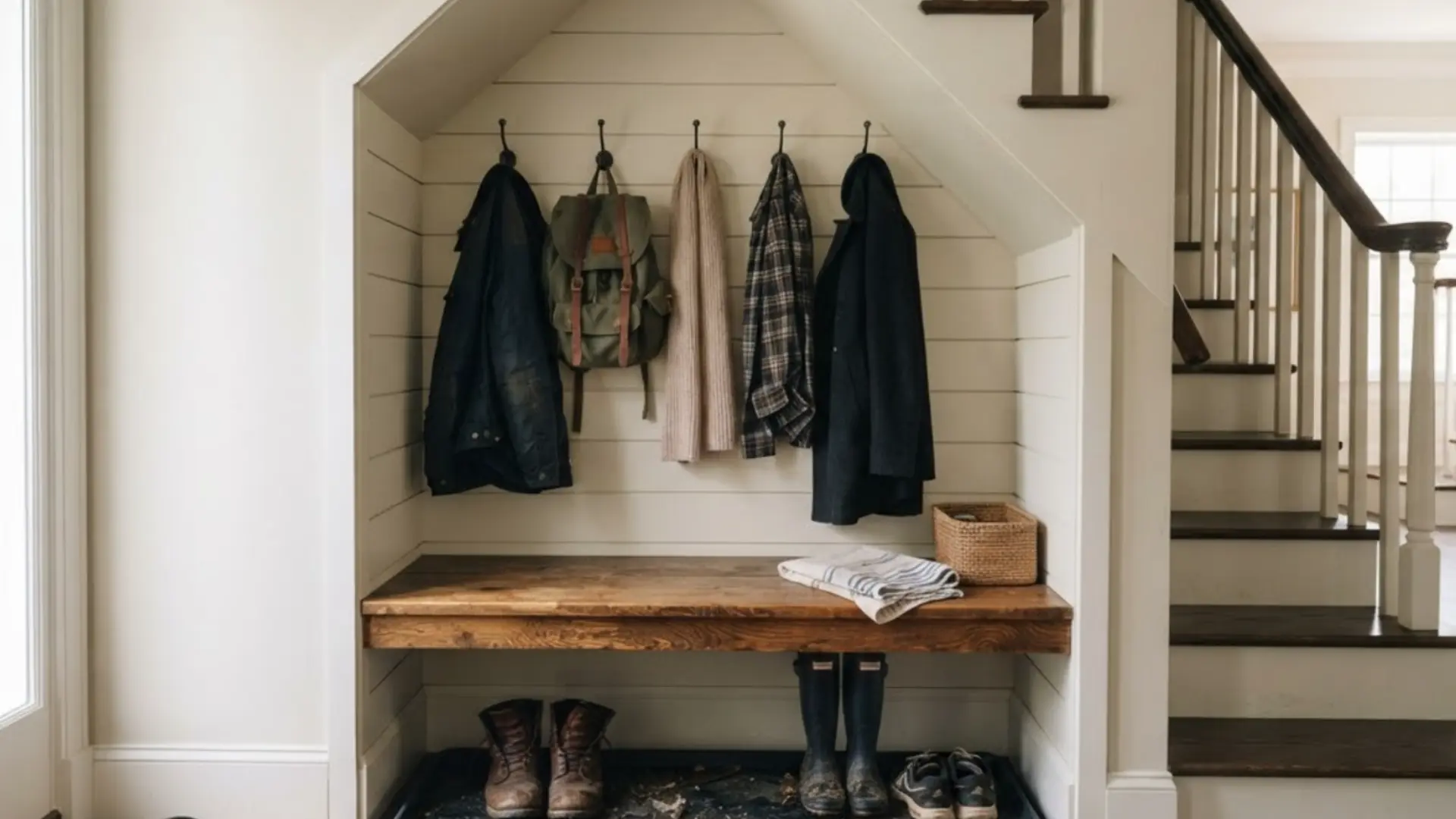
14. Mudroom Cubbies and Hooks
- Cost to build: $200–$700
- Build difficulty: DIY-friendly
Mudroom cubbies work best paired with a bench and a row of hooks, giving each household member a dedicated spot for bags, coats, and shoes.
Boot tray placement matters here, since wet or muddy footwear needs an easy-clean surface near the entry. This idea suits busy entryways with multiple daily users.
15. Laundry Storage and Hamper Nook
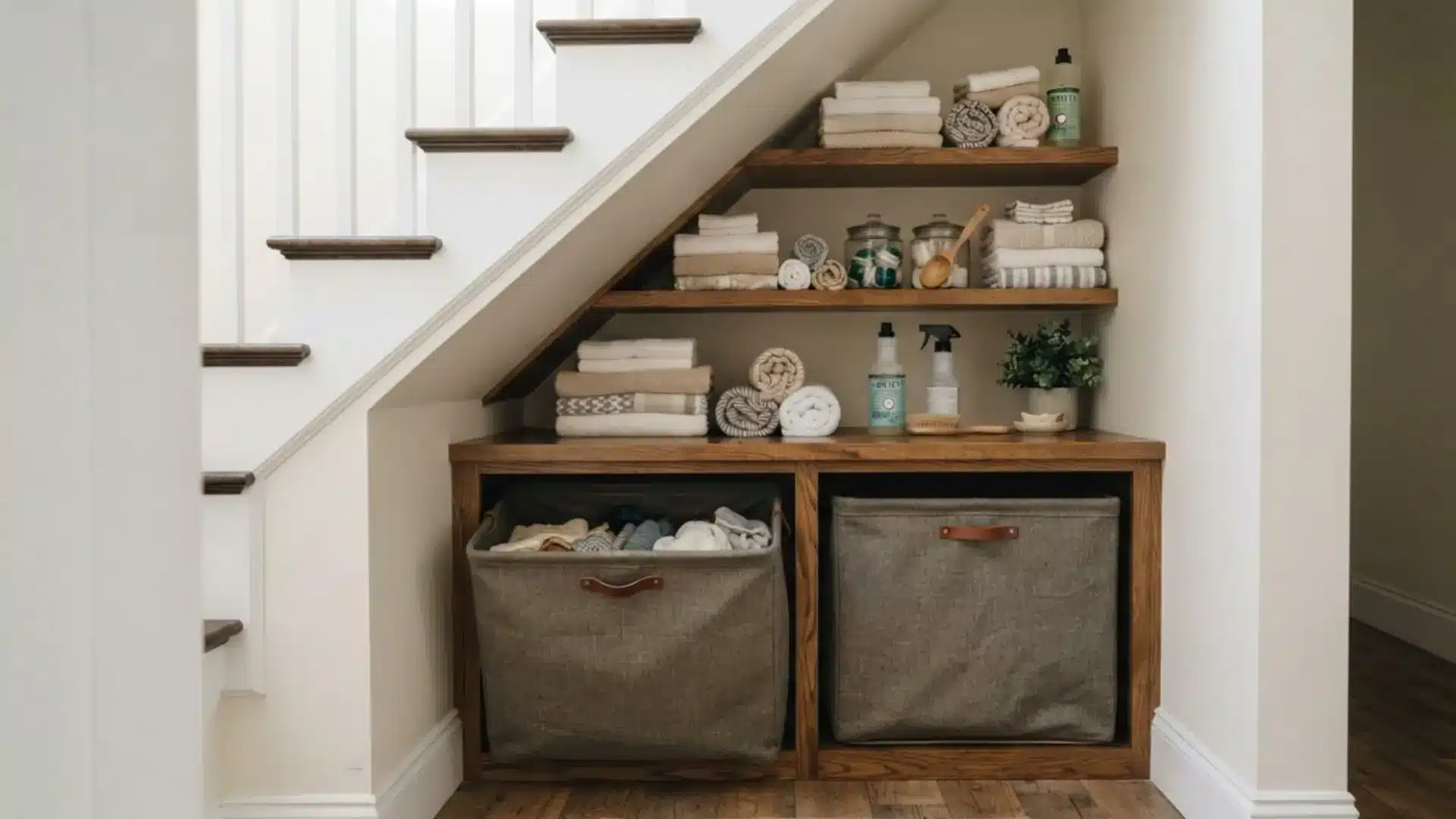
- Cost to build: $250–$800
- Build difficulty: DIY-friendly
A laundry nook works well with pull-out hamper bins that separate lights, darks, and delicates without taking up floor space.
Stacked shelving above the bins holds detergent, dryer sheets, and other supplies within easy reach. This idea suits staircases positioned near a laundry room or utility closet.
16. Built-in Mini Fridge
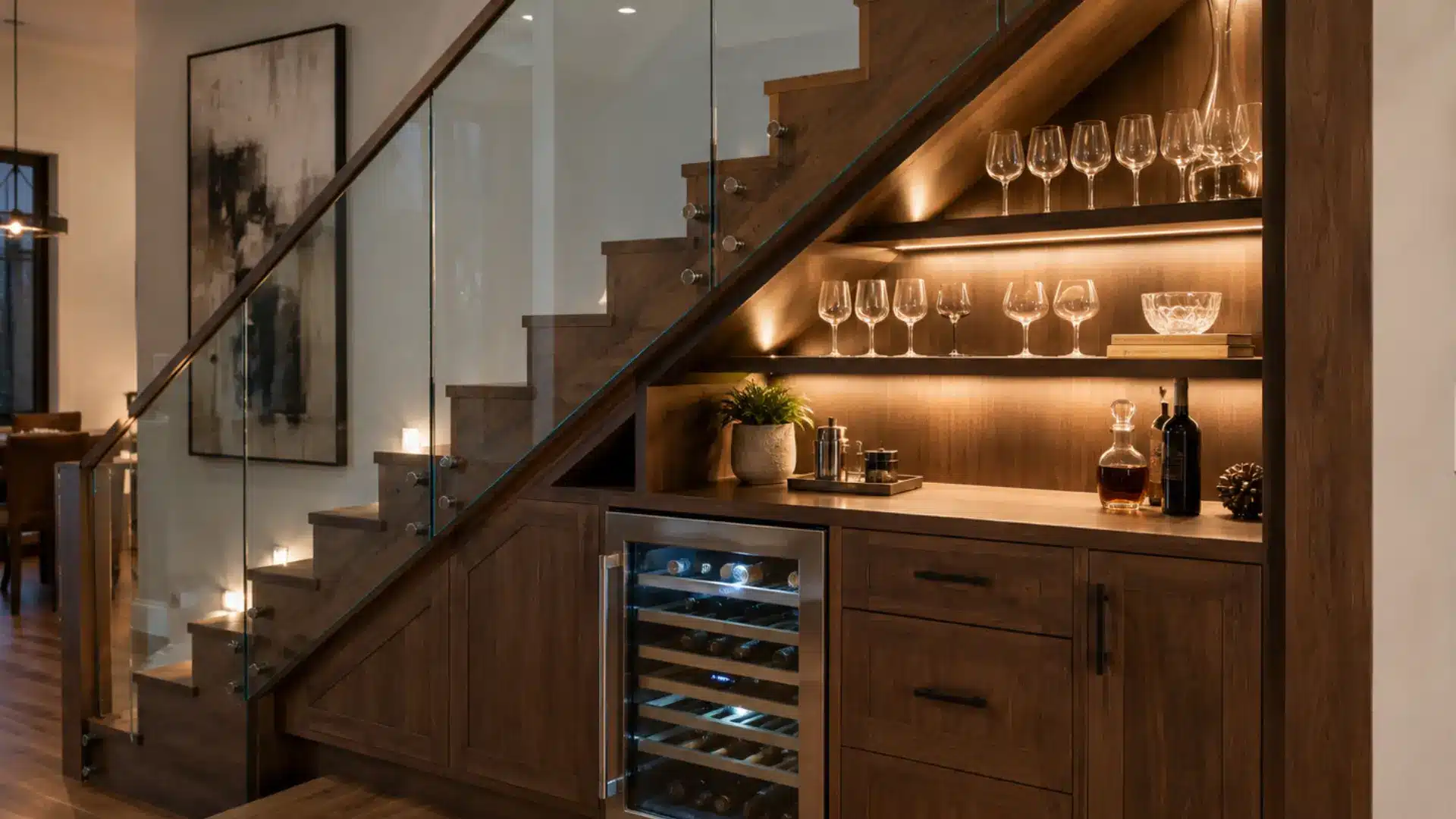
- Cost to build: $800–$2,500
- Build difficulty: Needs a professional
A home bar with a mini fridge needs a dedicated electrical outlet, so planning wiring early avoids costly changes later.
Ventilation is important too, since small fridge units generate heat that needs somewhere to escape in an enclosed space. This idea works well in staircases near a living or dining area.
Tip: Add a small strip of LED lighting under the counter edge to give the setup a polished, functional glow.
17. Pet Bed and Feeding Station
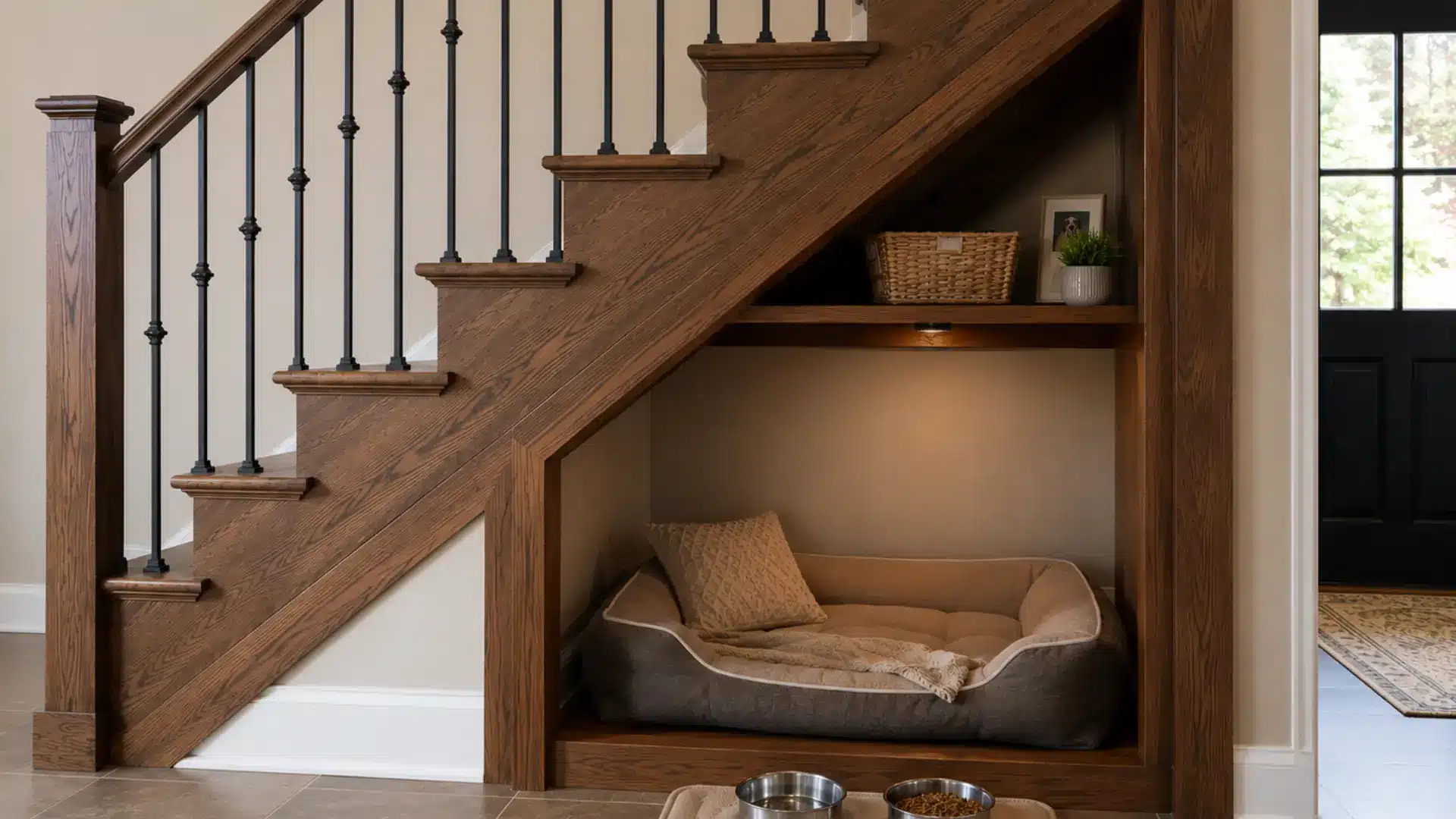
- Cost to build: $150–$500
- Build difficulty: DIY-friendly
A pet nook works best with a built-in bowl area that keeps food and water off the main floor, reducing mess nearby.
Easy-clean flooring, like tile or sealed wood, handles spills and pet hair better than carpet in this spot. This idea suits smaller, low-traffic corners of the staircase.
Tip: Add a personalized nameplate or sign above the nook to make the space feel like it belongs to the pet.
18. Recycling and Sorting Station
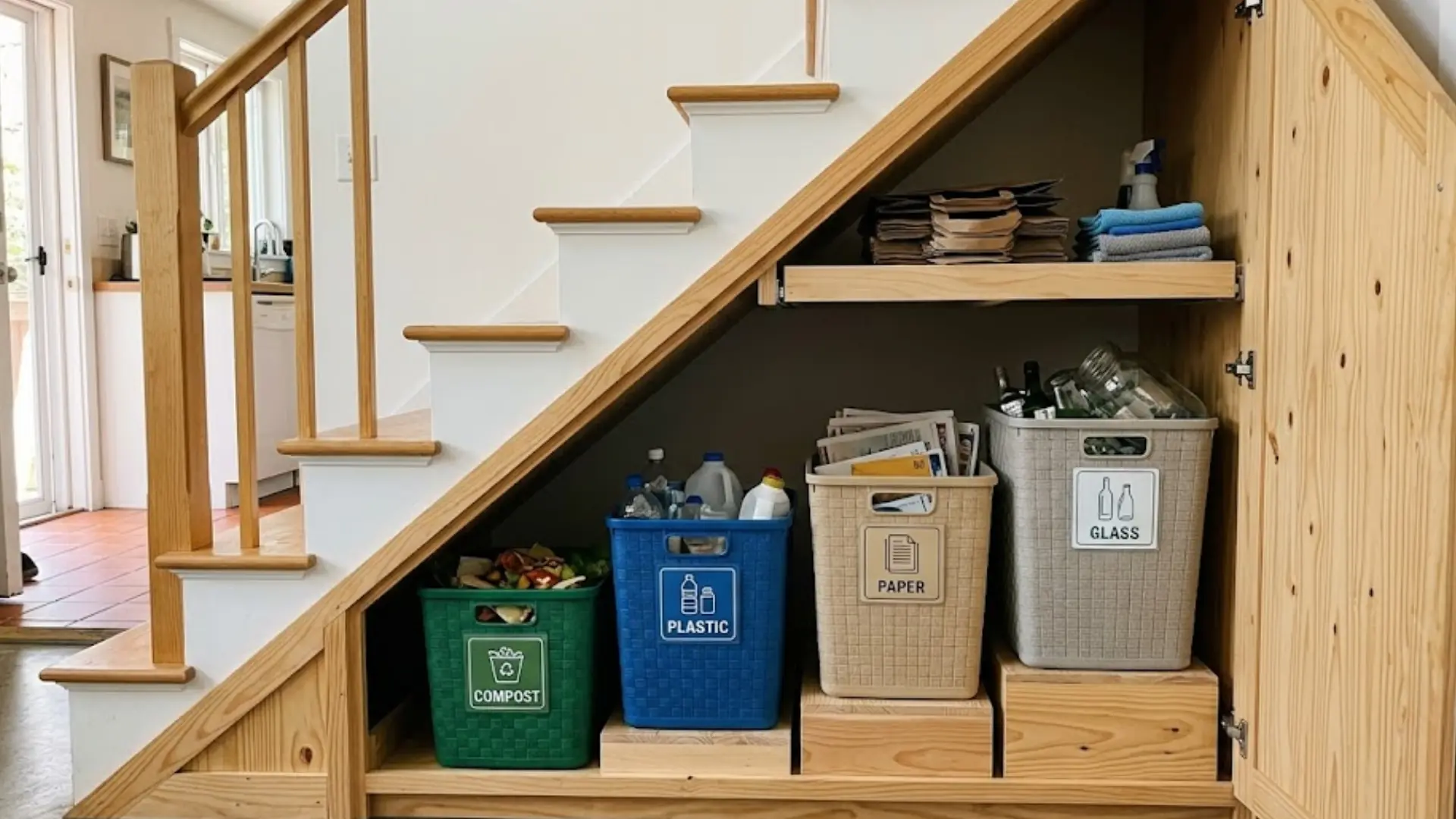
- Cost to build: $150–$500
- Build difficulty: DIY-friendly
A recycling station uses labeled bins under the stairs to separate glass, paper, plastic, and compost, keeping sorting contained in one dedicated spot instead of scattered across the kitchen.
Built-in shelving or a pull-out cart keeps bins organized and easy to empty. This idea suits staircases near a kitchen or garage entry.
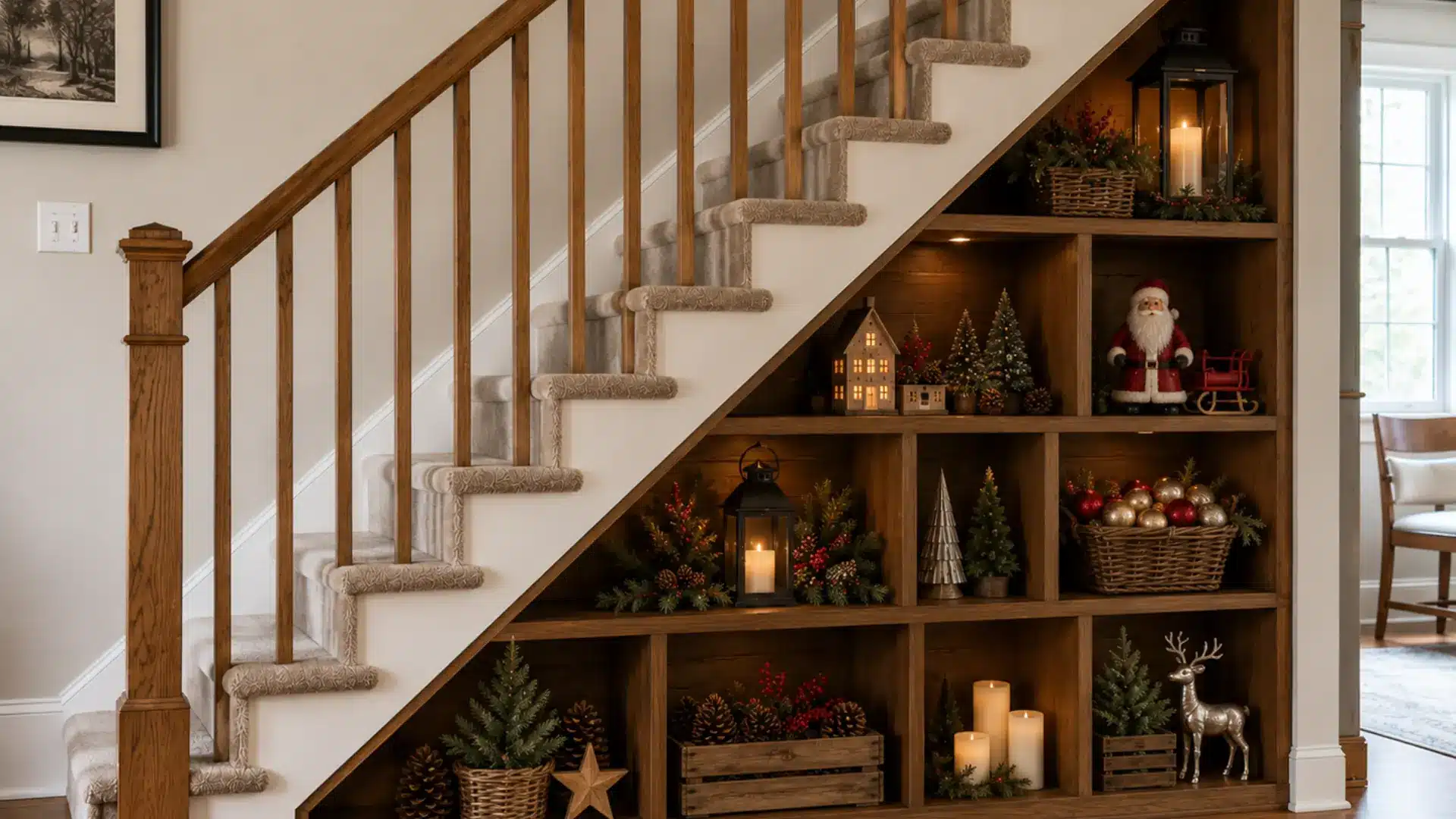
19. Seasonal Decor Storage
- Cost to build: $100–$400
- Build difficulty: DIY-friendly
Seasonal storage works best with clearly labeled bins organized by holiday or season, making items easy to find and put away.
Shelving height should account for bulkier items, like wreaths or larger decorations, that don’t stack well. This idea suits taller, deeper sections of the triangular space.
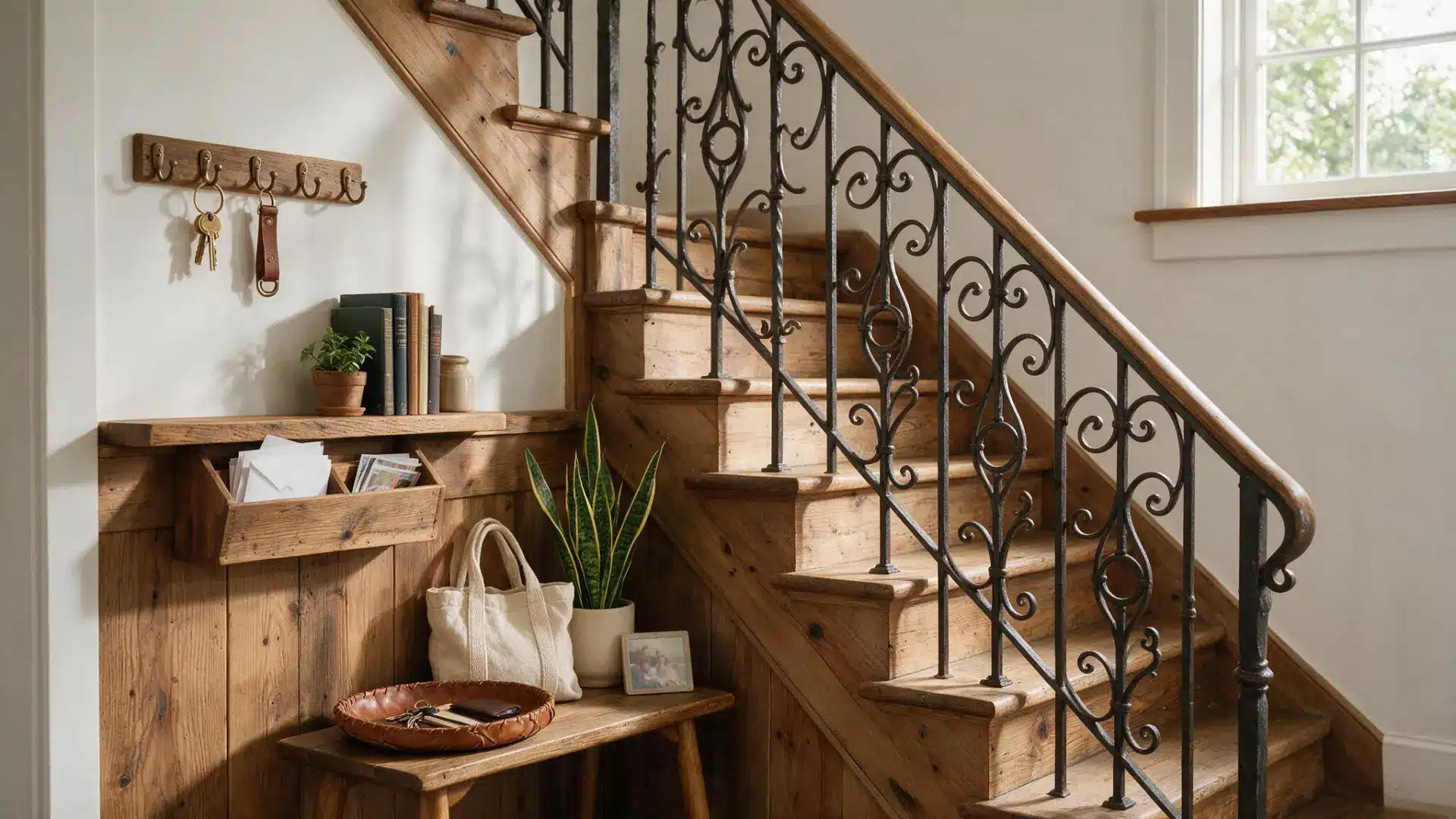
20. Entryway Drop Zone
- Cost to build: $50–$300
- Build difficulty: DIY-friendly
A drop zone works well with key hooks, a small shelf for mail, and a catch-all tray for sunglasses or loose items.
Placement near the main entry point matters most, since this idea only works if it’s used daily and consistently by the household.
My own drop zone near the door is one of the simplest setups I’ve ever put together.
Tip: Add a small chalkboard or notepad nearby for quick reminders on the way in or out.
Non-Permanent Under Stairs Storage Ideas for Renters
For renters or those wanting no structural changes, these ideas use freestanding or removable furniture instead of built-ins. They’re also easier on the budget than custom carpentry:
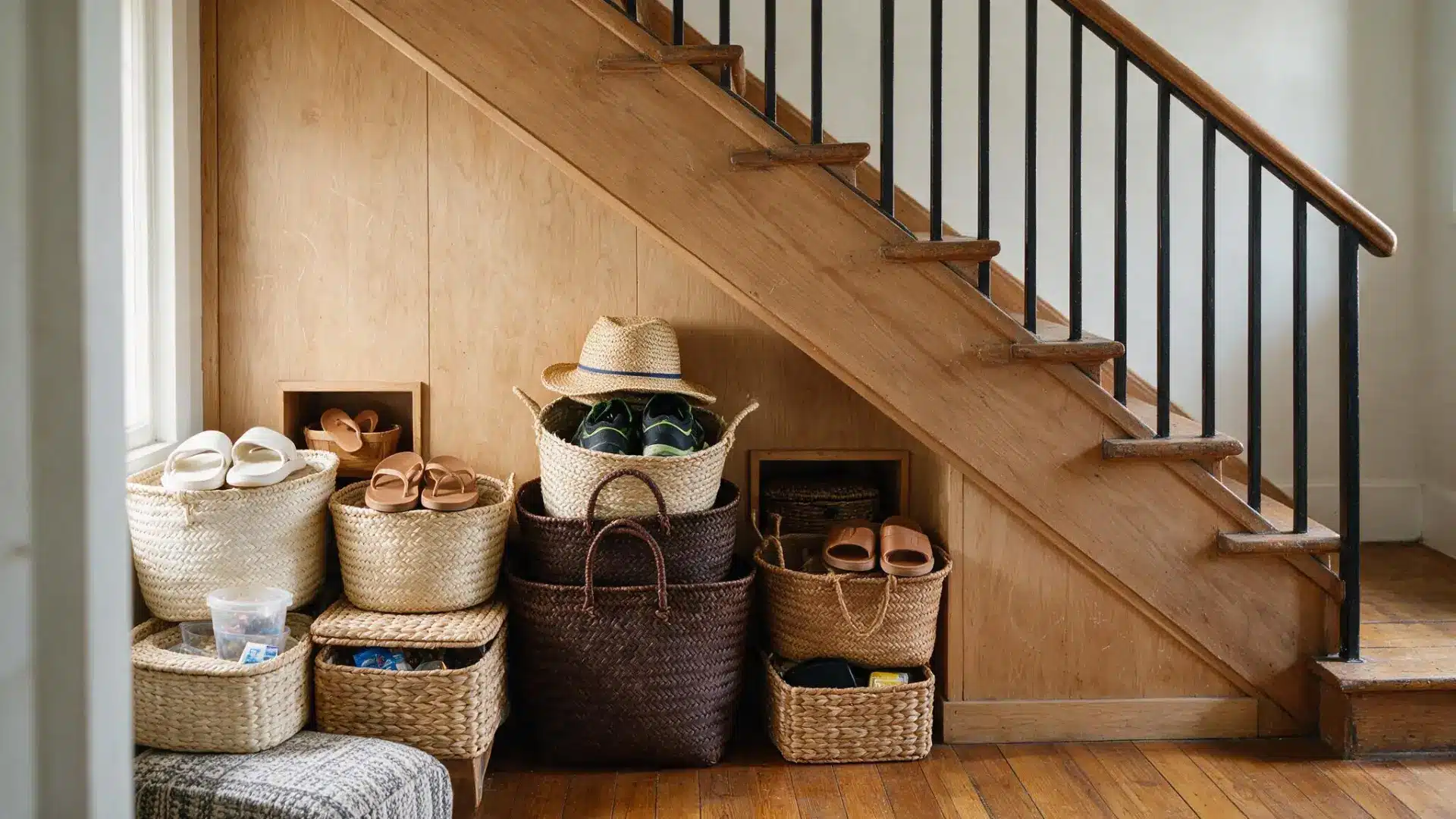
21. Woven Baskets for Loose Items
- Cost to build: $30–$150
- Build difficulty: DIY-friendly
Woven baskets offer the simplest possible storage option, requiring no measuring, tools, or fitting to the staircase shape at all.
Stacking or nesting baskets make use of vertical space efficiently, holding everything from shoes to toys to miscellaneous household items. This idea works in literally any staircase configuration.
Tip: Choose baskets in matching tones or textures so a mix of sizes still looks cohesive together.
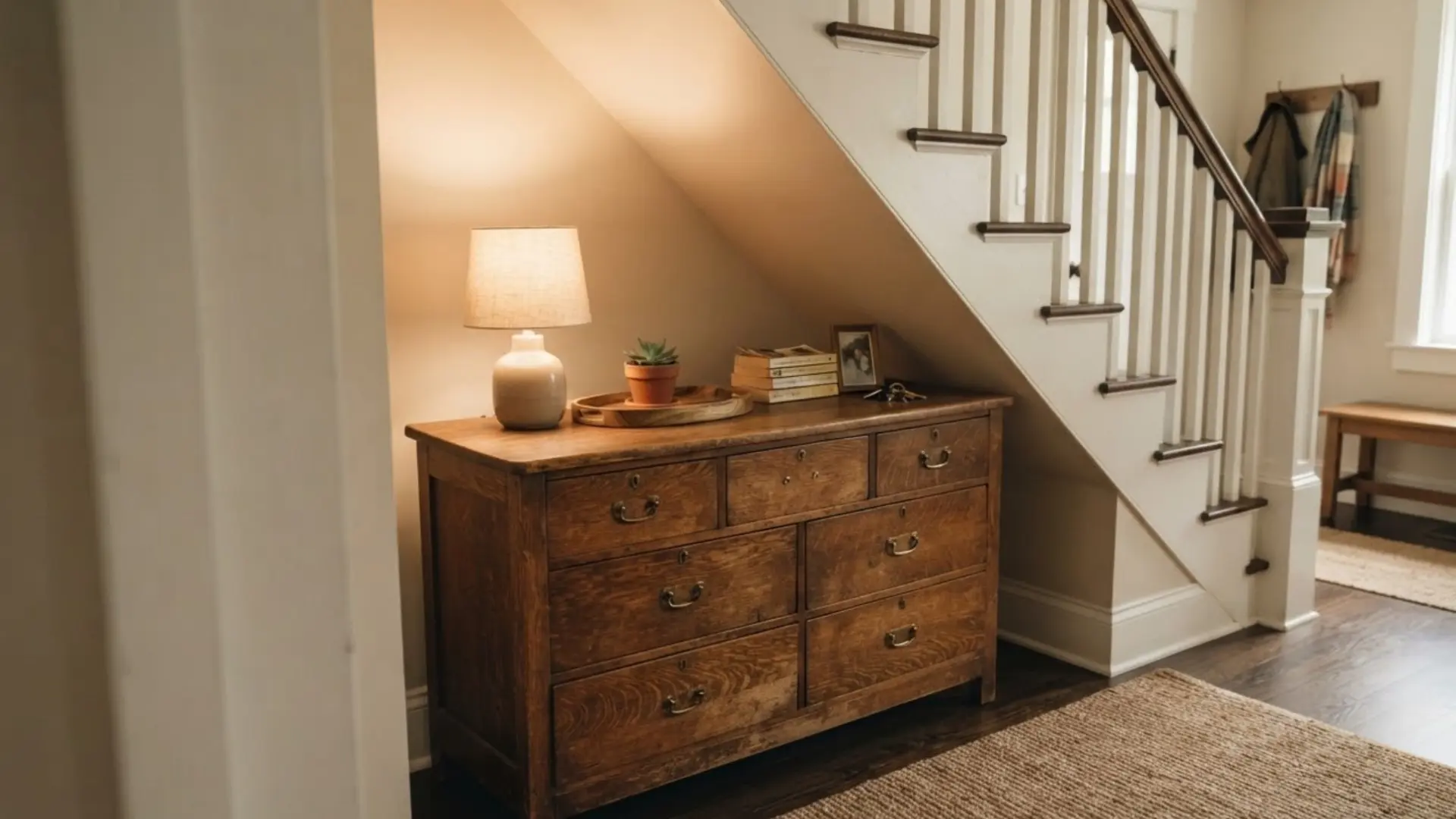
22. Repurposed Dresser or Cabinet
- Cost to build: $0–$200
- Build difficulty: DIY-friendly
A repurposed dresser or cabinet works well if you already own furniture that roughly fits the triangular footprint, especially near the taller end of the space.
This avoids buying anything new and keeps the option fully reversible when moving out. Measuring beforehand prevents an awkward fit against the slope.
Tip: Add furniture pads underneath to protect flooring, especially in a rented space where damage deposits matter.
23. Floating Wall-Mounted Cabinet
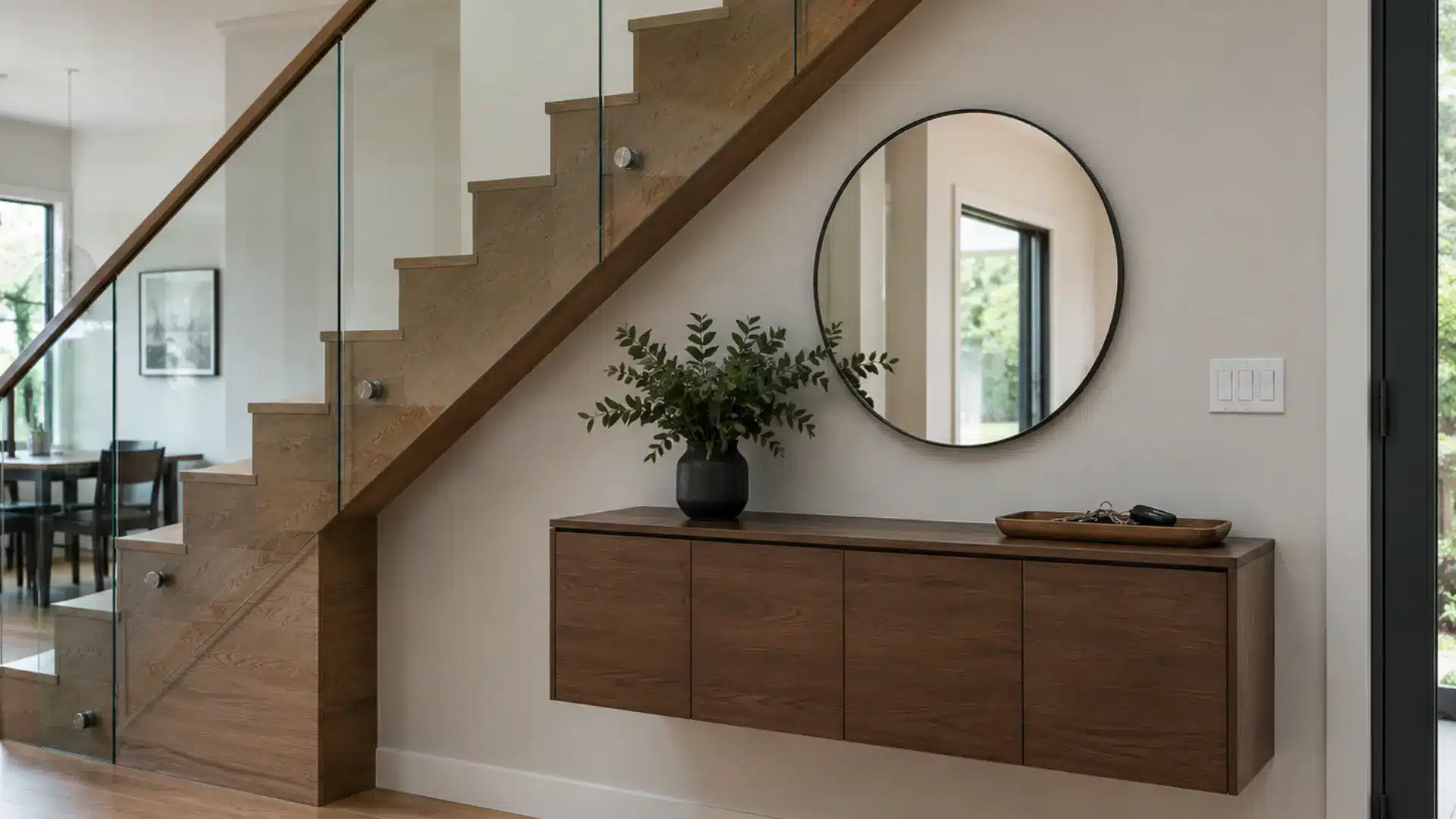
- Cost to build: $80–$300
- Build difficulty: DIY-friendly
A floating cabinet mounts directly to the wall using light-duty anchors, avoiding any drilling into structural elements or the staircase itself.
This keeps the floor open, which works well in narrow entryways with limited floor space. Most renters can remove this option cleanly when moving out.
Tip: Style the top surface with a mirror or small tray to double it as a functional drop zone.
Small Staircases Storage Ideas
Spiral, narrow, or low-clearance staircases need different approaches than standard straight staircases. Enclosed cabinets and standard shelving often don’t fit these shapes well:
24. Open Shelving for Narrow Gaps
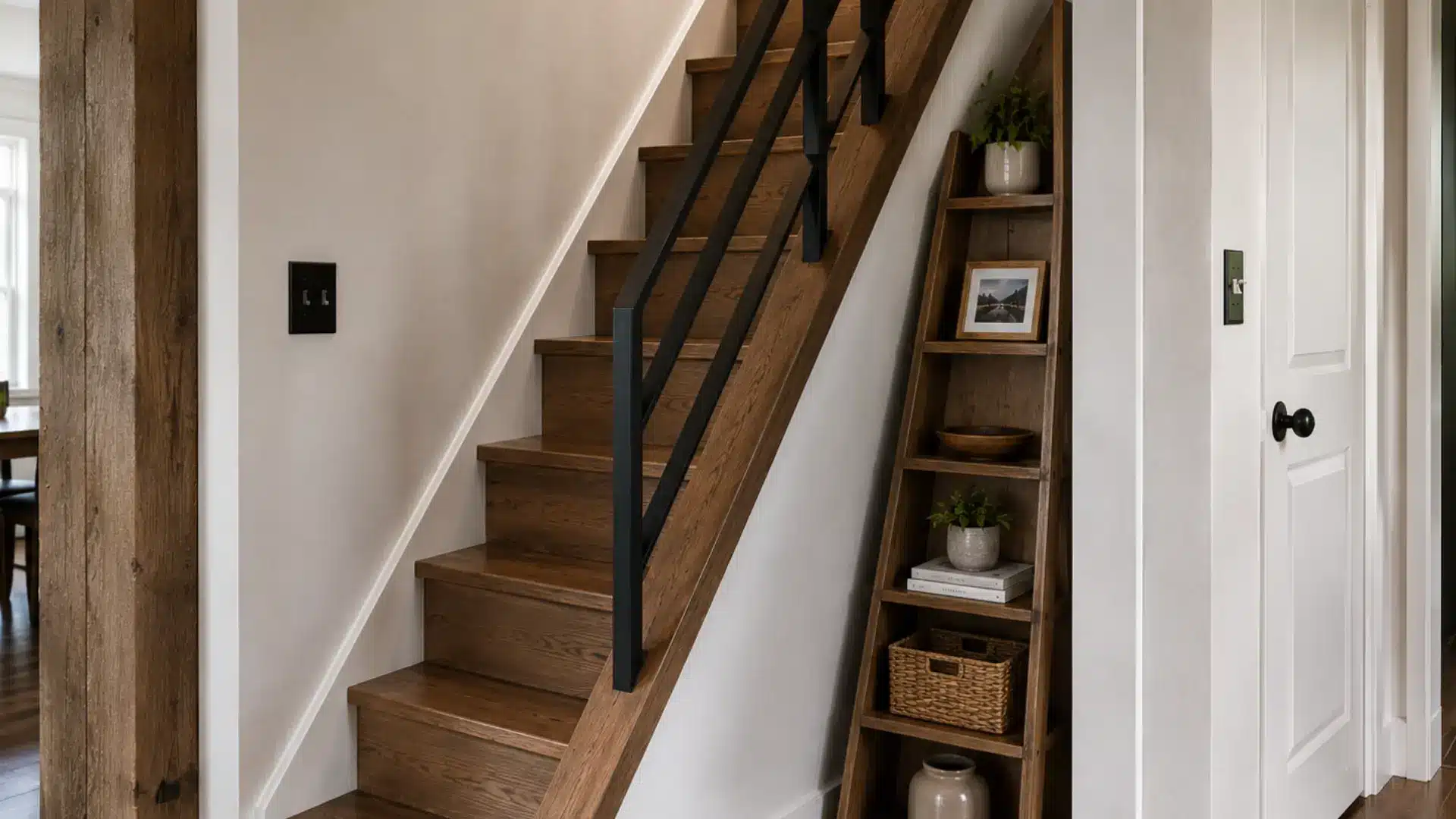
- Cost to build: $50–$250
- Build difficulty: DIY-friendly
Open, ladder-style shelving works well in narrow gaps where an enclosed cabinet simply won’t fit due to limited depth.
Since there are no doors to swing open, this option suits tight hallways where clearance space is already limited. It’s also one of the easiest ideas to install without special tools.
25. Floating Shelves Along the Slope
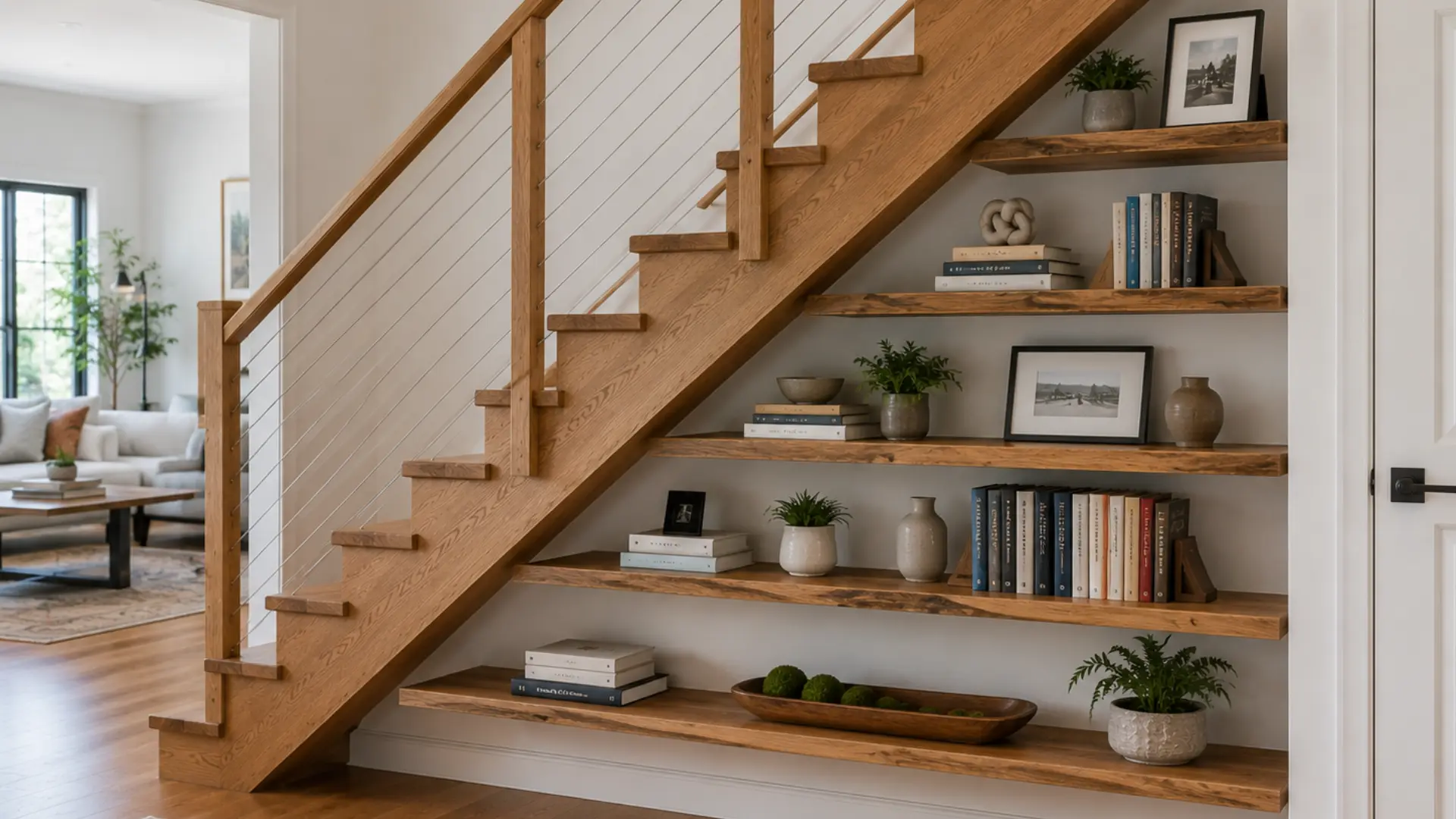
- Cost to build: $60–$300
- Build difficulty: DIY-friendly
Floating shelves mounted directly along the staircase’s angle make use of awkward diagonal space that a boxed-in unit would waste.
This approach avoids a fully enclosed structure, which helps in narrow staircases, and the walkthrough on building floating shelves covers bracket spacing and weight limits for slanted walls like this one.
Note: All the costs are estimated averages and may vary based on materials, location, labor rates, and project complexity.
How to Choose the Right Under Stair Storage Idea?
Narrowing it down comes to two things, first your staircase type and second what your household needs most right now.
Open, tall staircases suit multi-use spaces well, like a reading nook, home office, or dry bar. Enclosed, standard staircases work best for functional storage: drawers, coat closets, or pantry shelving.
Narrow, low-clearance, or spiral staircases call for the small-space solutions covered earlier, like open shelving or low drawer stacks.
Renters or those wanting flexibility should stick to non-permanent ideas like baskets or freestanding shelves.
Start by matching your staircase shape to a category, then choose one or two ideas within it based on your household’s biggest need.
Common Mistakes to Avoid With Under Stair Storage Ideas
Even a great idea can fall flat with a few common oversights. Watching for these early saves time, money, and rework down the line:
- Skipping Headroom Checks: Measure clearance at multiple points before choosing a design, not just at the tallest section.
- Ignoring Ventilation Needs: Add airflow gaps or vents for pantry, wine, or linen storage to prevent moisture buildup.
- Choosing Enclosed Cabinets in Tight Spots: Confirm door swing clearance first, or opt for open shelving instead.
- Forgetting Electrical Planning: Map out outlet needs for bars, fridges, or office nooks before construction begins.
- Overlooking Permit Requirements: Check local rules early, especially for plumbing-related builds like a powder room.
A little planning upfront, whether you’re organizing shoes or building something bigger, turns these common mistakes into non-issues and keeps your build on track from day one.
Frequently Asked Questions (FAQs)
Can You Add Storage Under Stairs Without Construction?
Yes. Freestanding shelves, woven baskets, and repurposed furniture all work well without any drilling, cutting, or structural changes required.
What Is the Best Use for Space Under Stairs?
It depends on household needs: common options include coat closets, pantry shelving, home offices, or simple open shelving for everyday items.
Do You Need a Permit to Build Under-Stair Storage?
Usually not for shelving or cabinets. Larger builds involving plumbing, like a powder room conversion, typically require local permits.
The Bottom Line
A wasted corner under the stairs can finally work for you. Under stairs storage ideas turn that space into something you actually use.
Pick one that matches your headroom, your budget, and your daily habits. Renters can lean on baskets and freestanding shelves without touching a wall.
Homeowners with taller stairs can build a nook, a bar, or a library. I started small under mine before adding anything bigger.
Every triangle under a staircase deserves a job, not just dust. Drop your pick in the comments below!