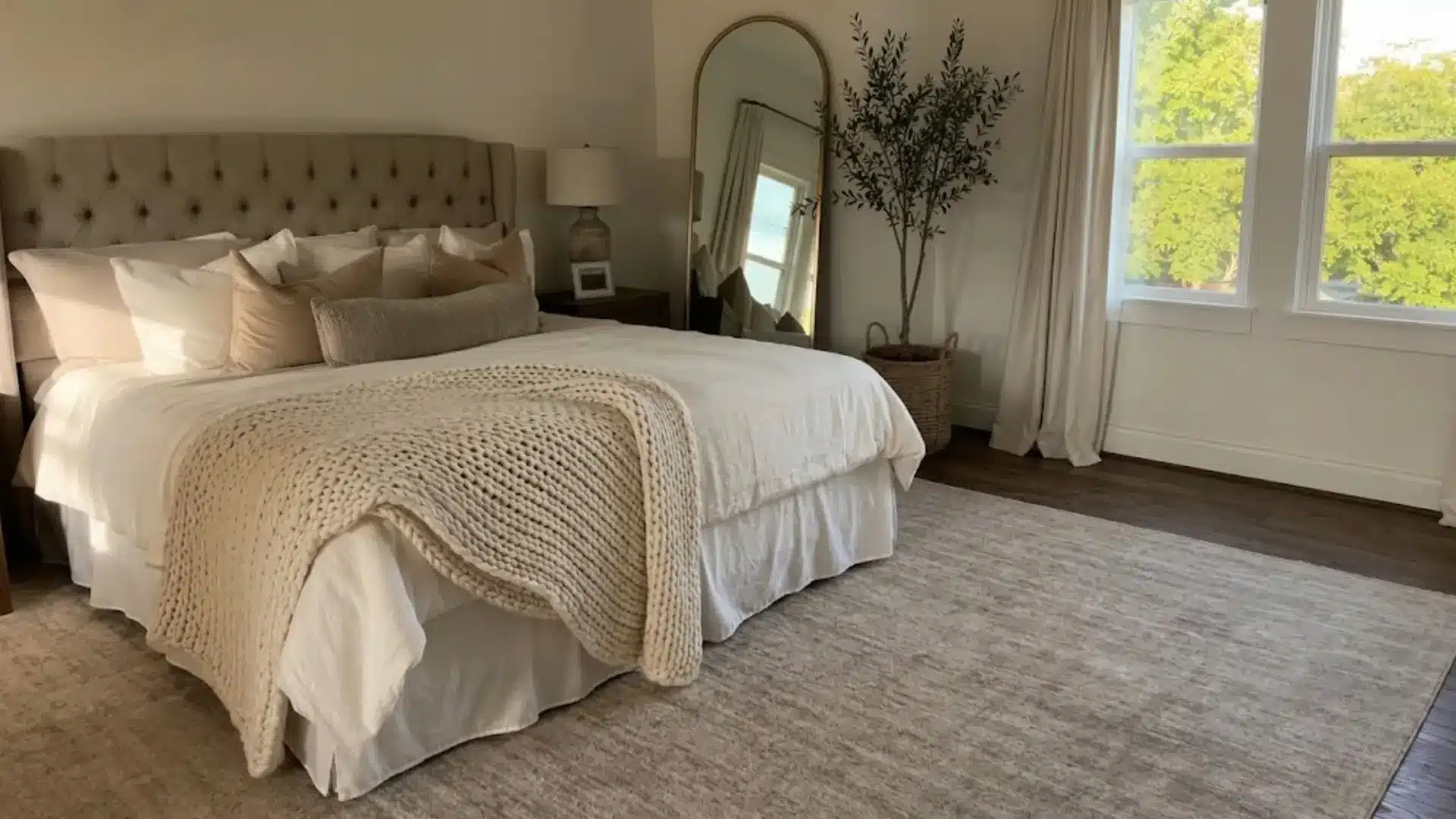

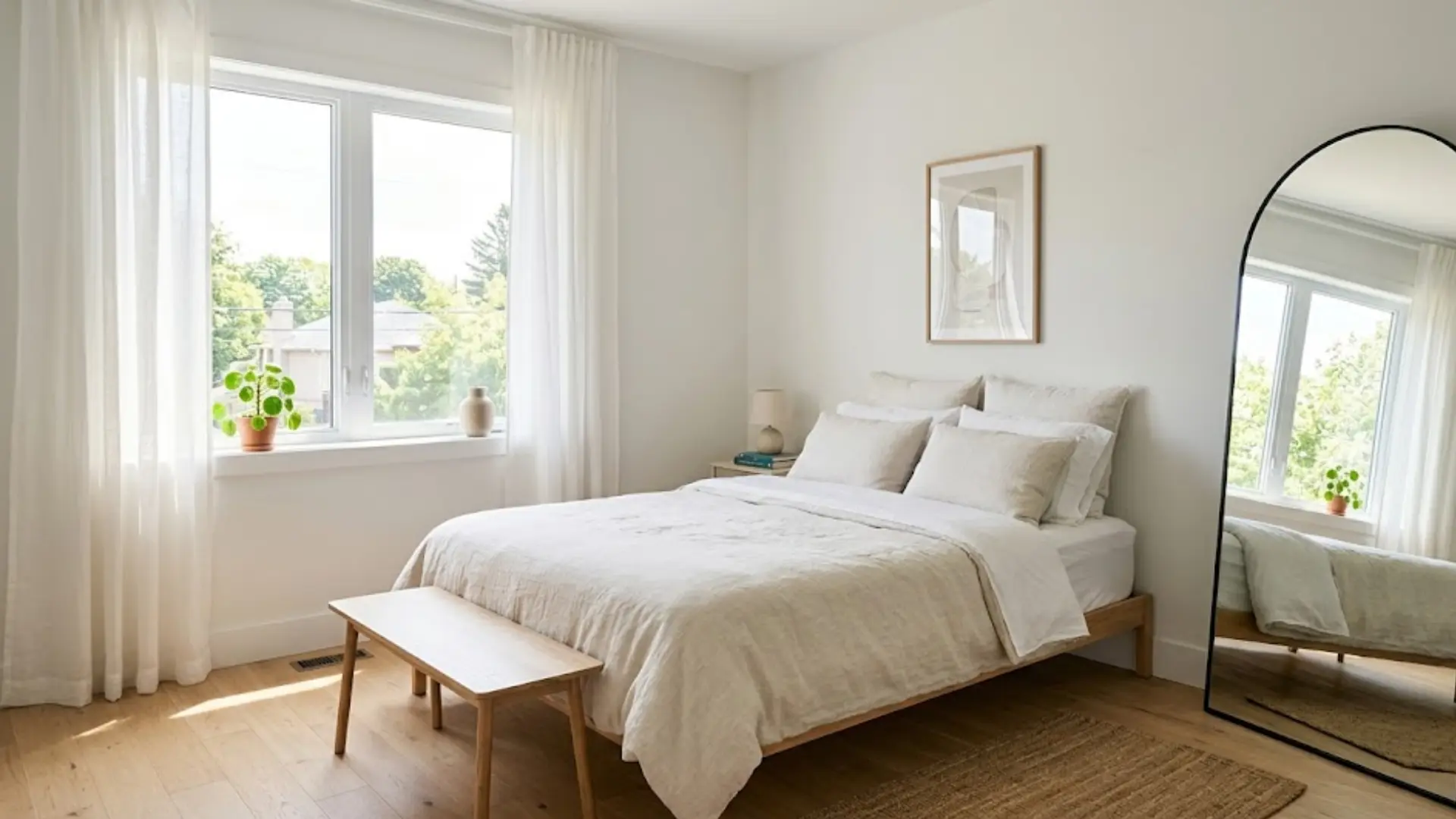
You would be surprised how much a room can change without moving a single wall. The size of a room is fixed, but how it feels is not.
A few changes in the right places can shift the entire experience of being in a space. None of it has to be complicated or expensive.
The difference between a room that feels tight and one that feels open often comes down to a handful of simple decisions.
Understanding how to make a small room look bigger starts with knowing what actually affects how a space feels. Small rooms have more potential than they get credit for.
What Makes a Small Room Feel Cramped?
Small rooms don’t feel cramped without reason. A few common factors quietly eat into the space you have.
Heavy curtains or poor window placement can block natural light. Furniture that’s too large or awkwardly placed makes movement feel restricted.
Shelves and surfaces loaded with decor add visual noise fast. And without enough storage, everyday clutter has nowhere to go.
Each of these factors plays a role. Sometimes it’s just one. Often, it’s a combination of all of them.
The good news is that each one has a fix. The sections ahead walk through practical solutions, starting with the simplest changes you can make today.
Ways to make a small room look bigger
Small changes in color, light, furniture, and layout can completely shift how a room feels. Here is what each of these tips involves:
1. Use Light Wall Colors
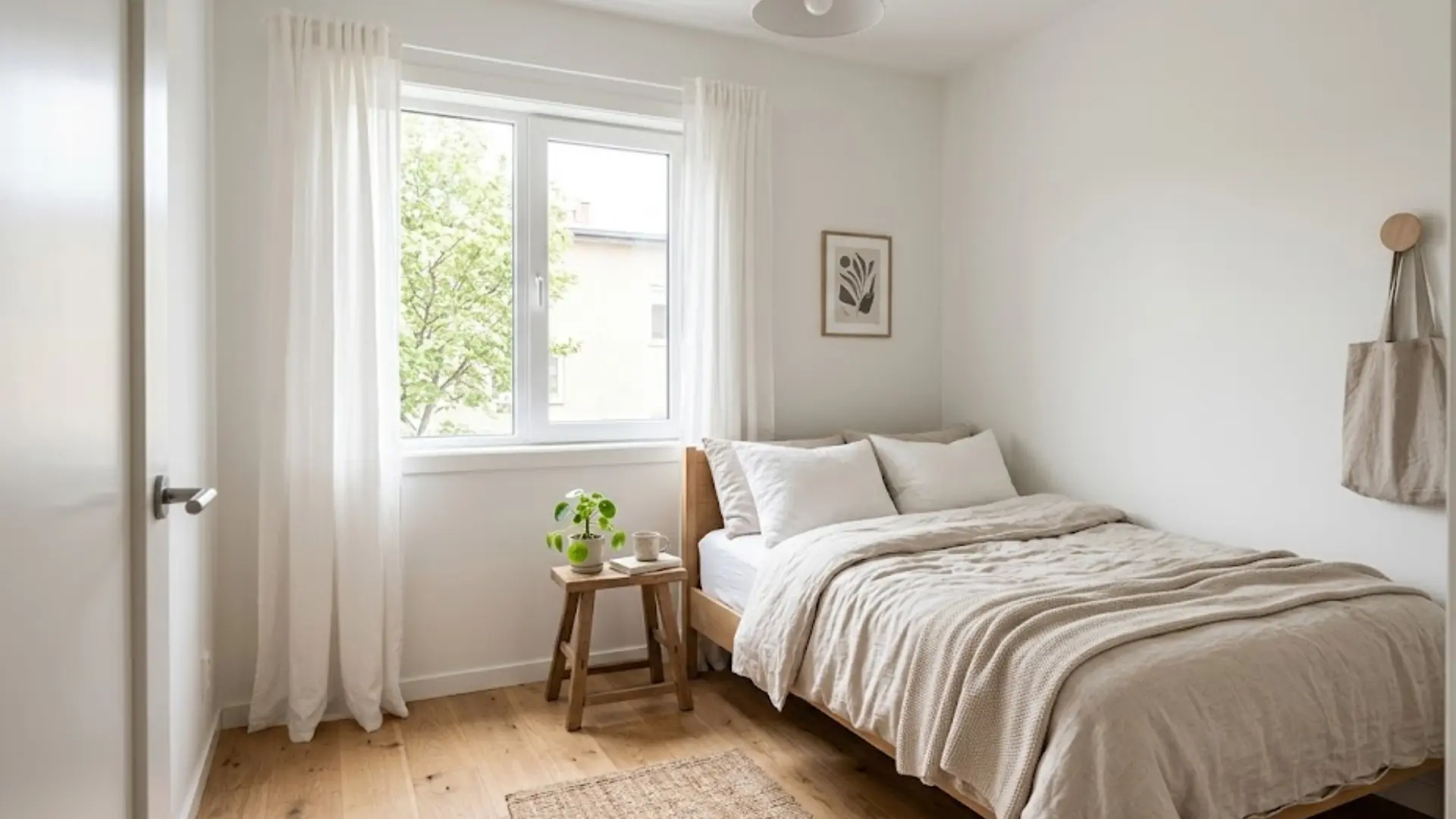
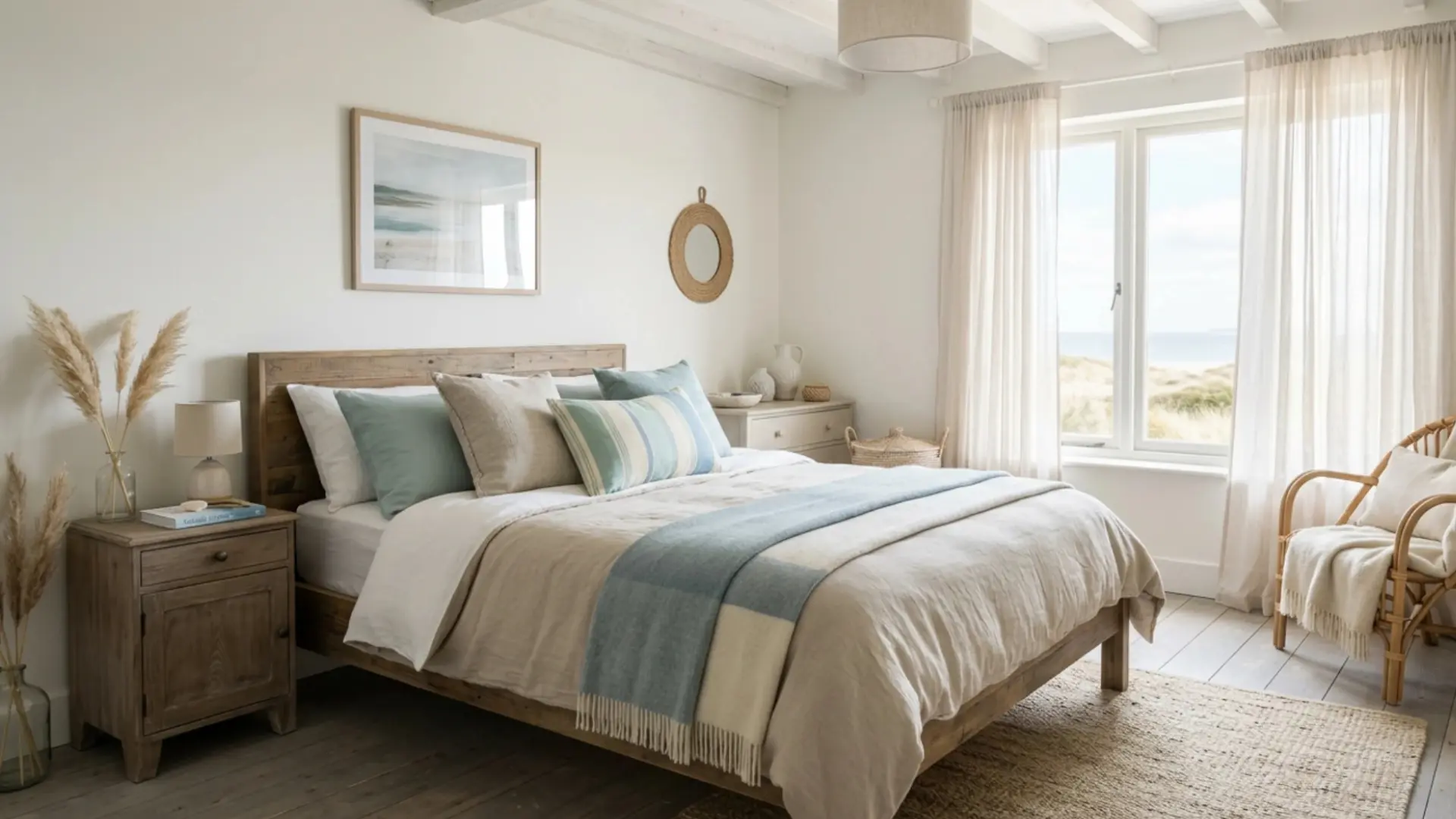
Light colors reflect more sunlight and artificial light back into the room. That reflection makes walls feel farther apart than they actually are. Soft white, light gray, cream, and pale beige are reliable choices.
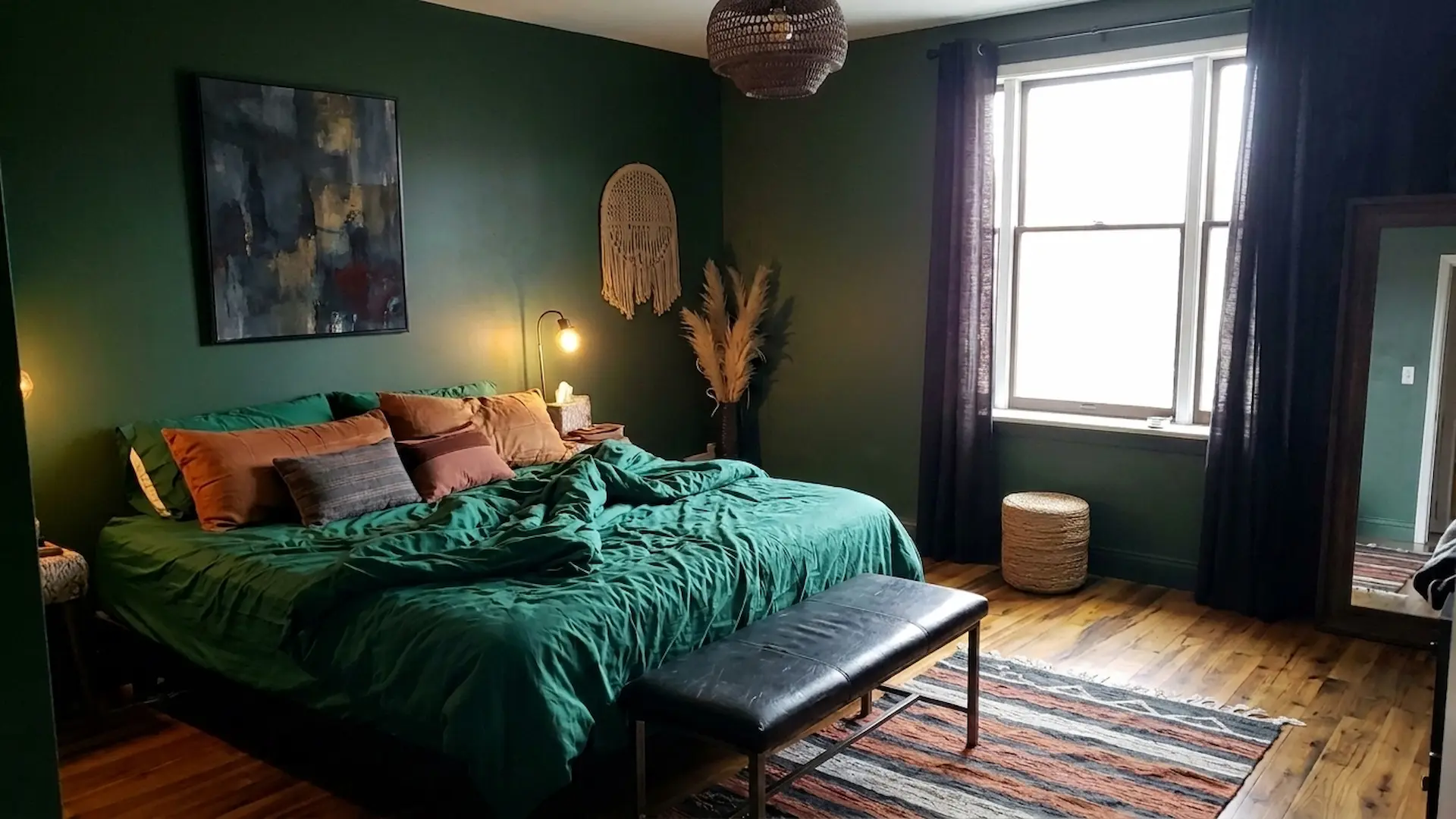
They work well in bedrooms, living rooms, and hallways alike. Avoid very dark shades on all four walls, as they tend to absorb light and close the space in.
2. Add a Large Mirror
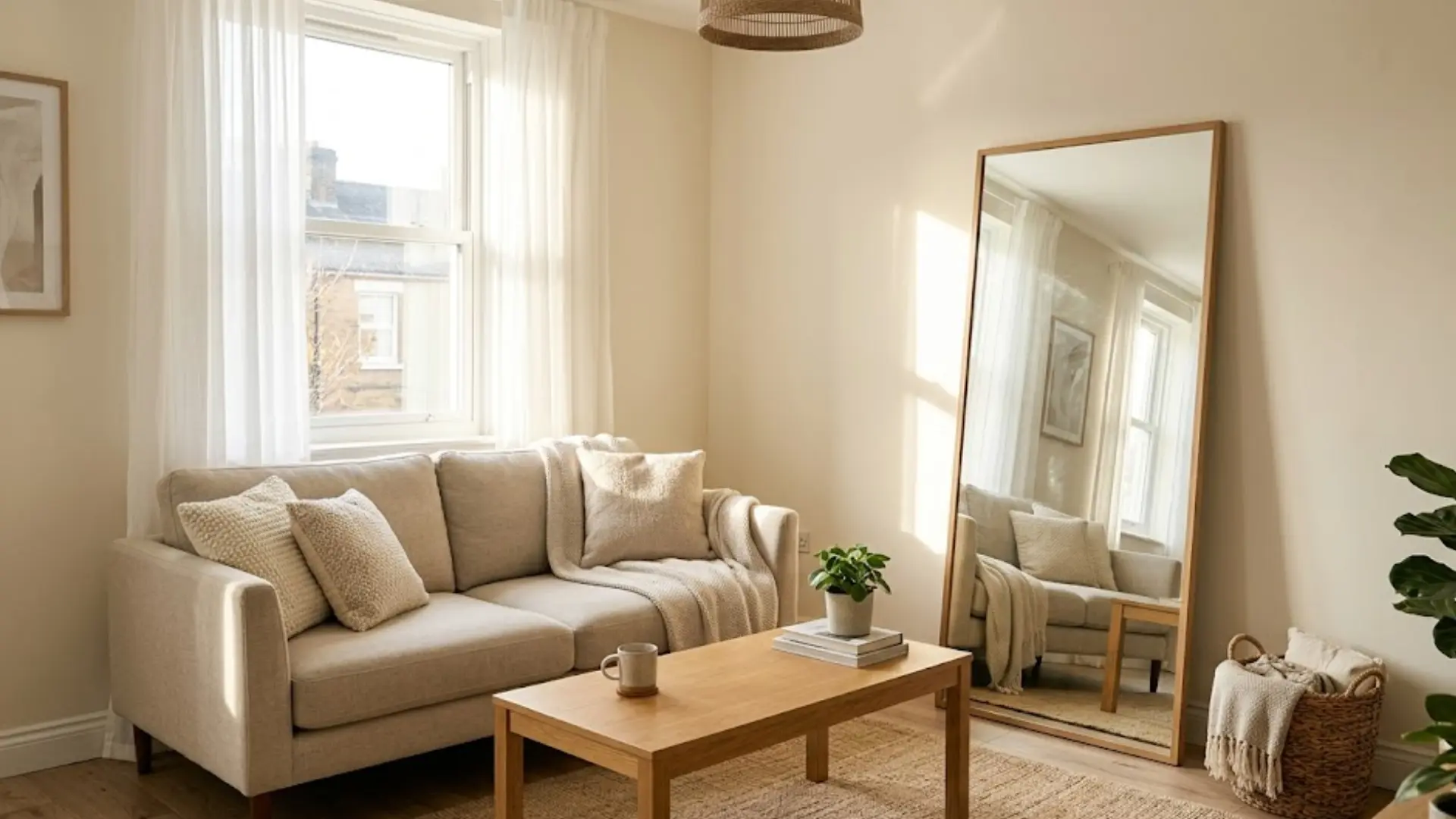
A large mirror does two things well. It reflects light, and it creates the illusion of depth. The best placement is directly across from a window. That way, it bounces natural light around the room.
Even a single full-length mirror leaning against a wall can make a noticeable difference. It’s one of the easiest changes you can make without renovating anything.
3. Let More Natural Light In

Natural light opens up a room in a way that artificial lighting simply can’t match. Heavy curtains and dark blinds block that light and make small rooms feel enclosed.
Swap them out for sheer panels or simple roller shades. If privacy isn’t a concern, leave windows bare. The more daylight that enters, the more spacious the room naturally feels throughout the day.
4. Declutter Every Surface
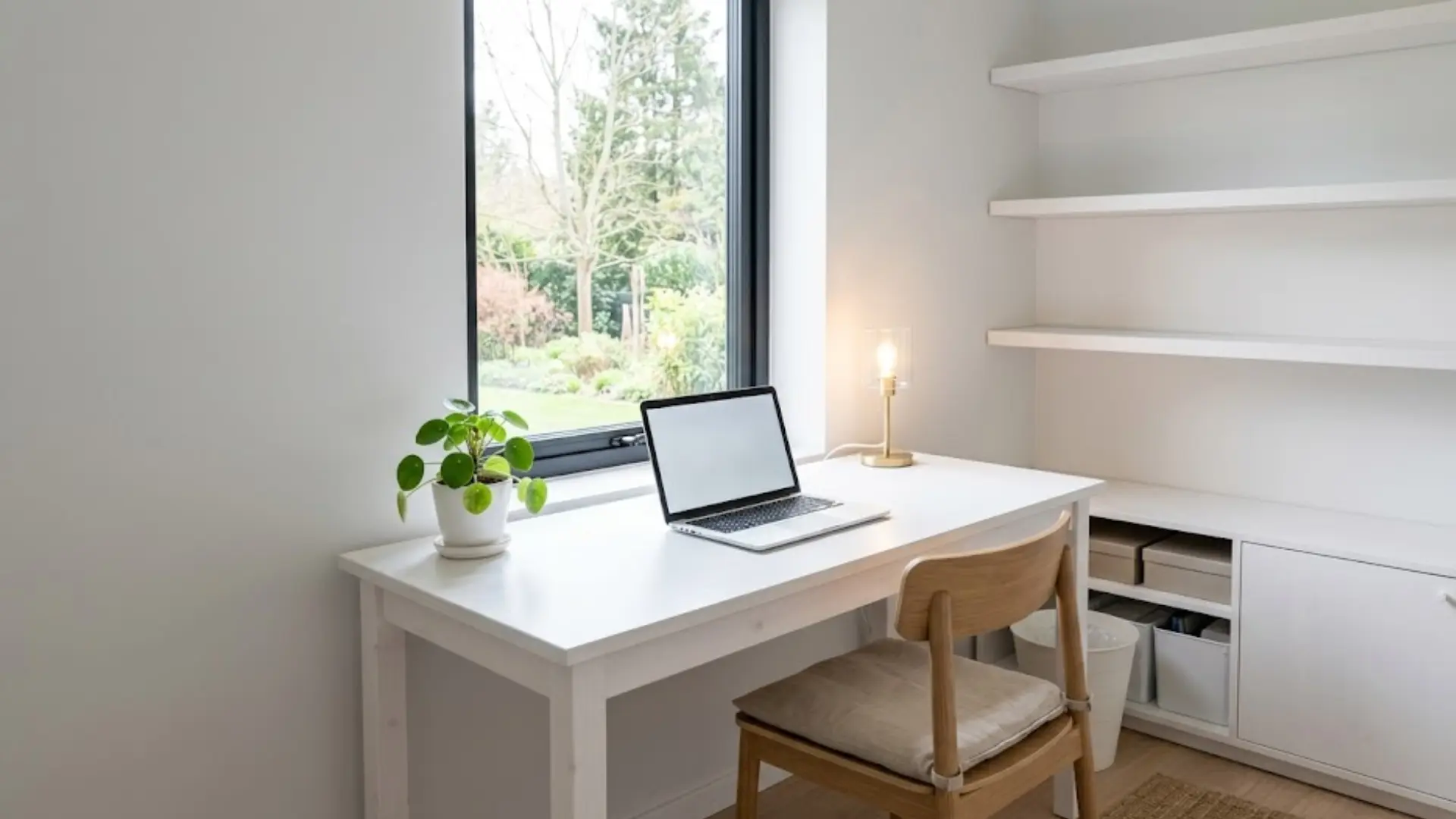
Cluttered surfaces make a room feel busier and smaller than it really is. When every shelf and table has something on it, the eye has nowhere to rest. Clear off anything that doesn’t need to be there.
Keep only what you use regularly or genuinely love. A cleaner surface immediately creates breathing room. It costs nothing and takes less than an afternoon to do.
5. Choose Furniture That Fits the Space
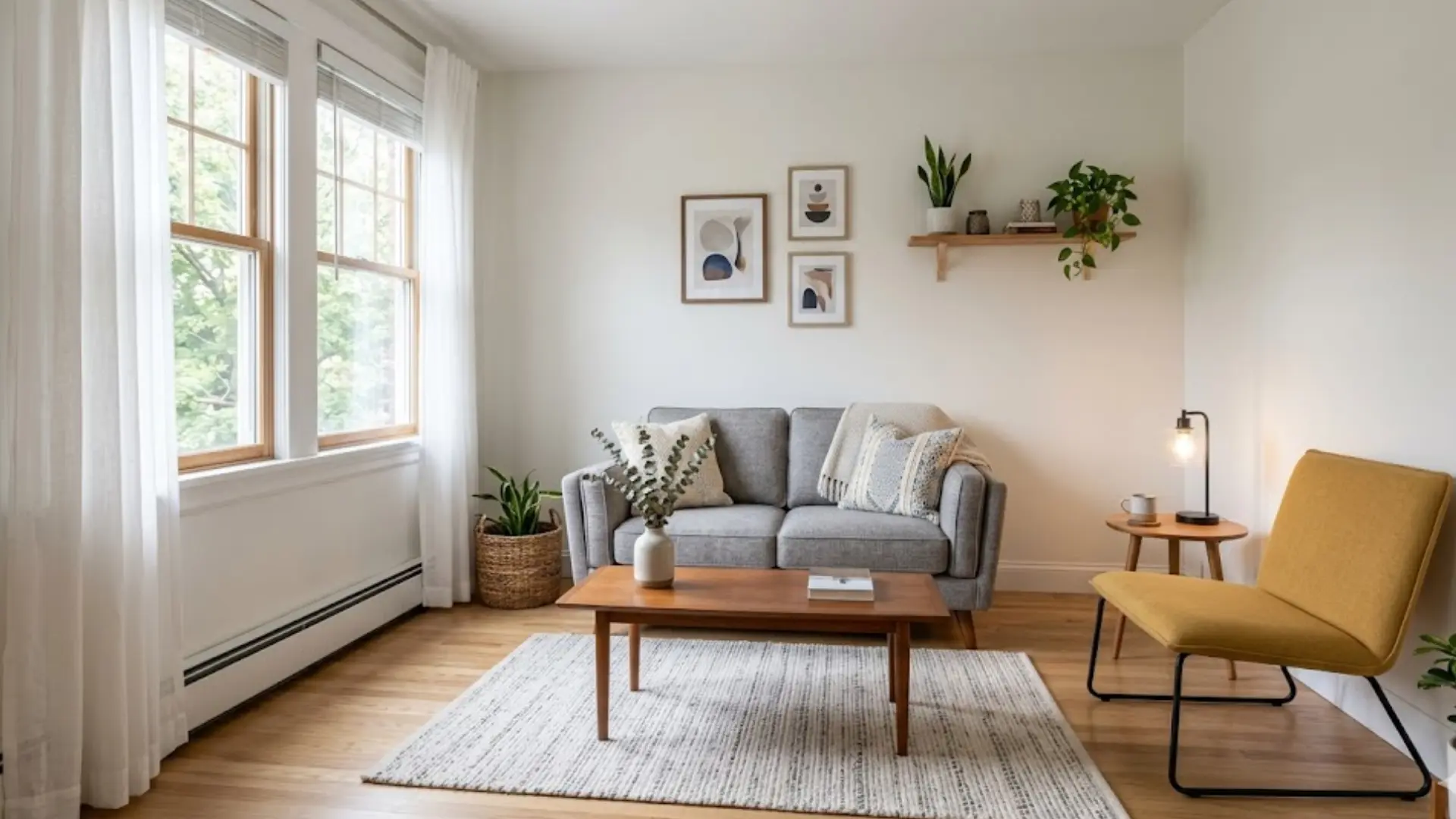
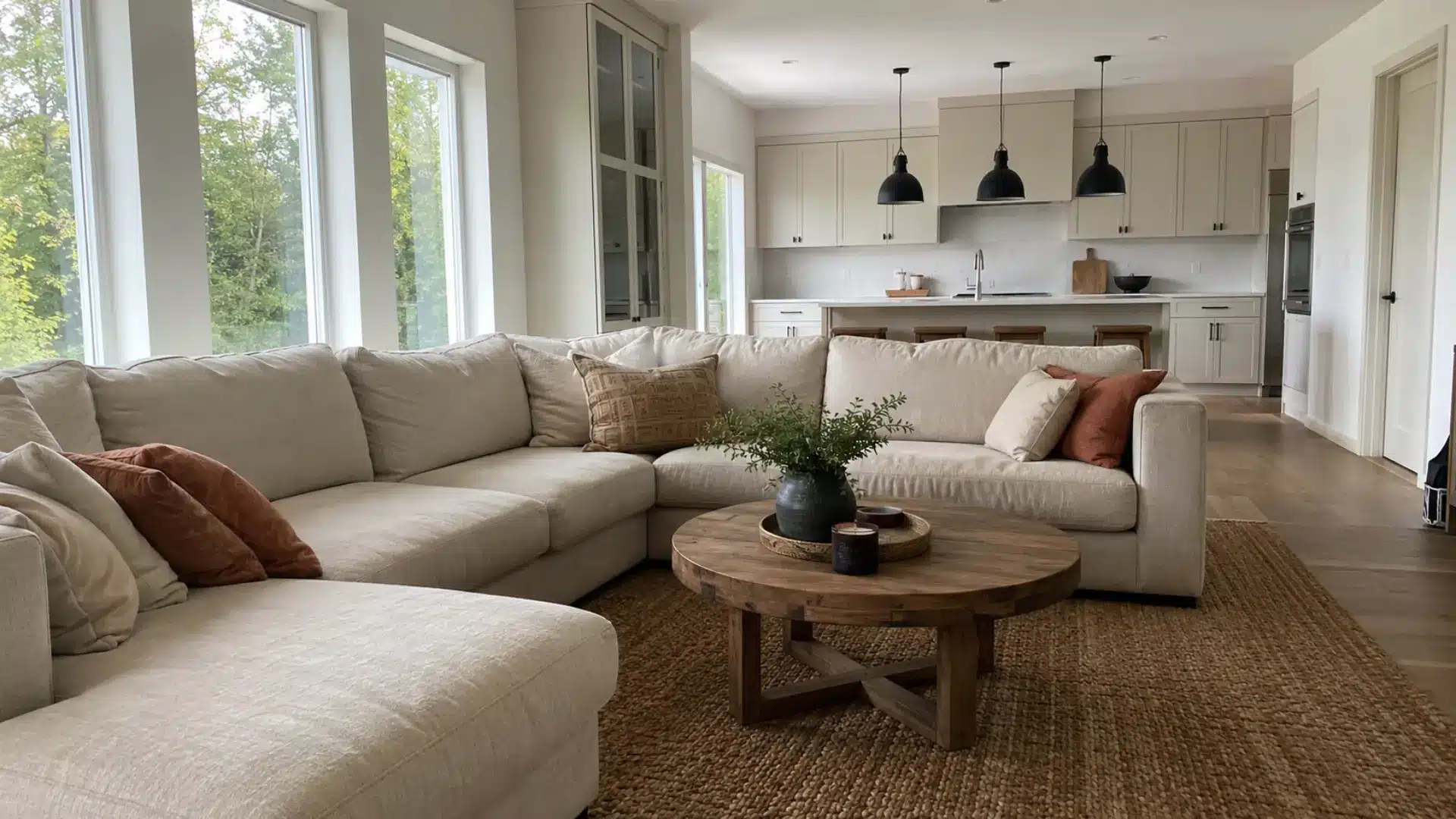
Oversized furniture can eat up floor space and make a small room feel tight. A large sectional sofa or a bulky wardrobe may work in a bigger room, but not here. Measure your space before buying anything new.
Look for pieces that are proportional to the room’s size. Leaving open floor space around furniture makes the room feel more comfortable and easier to move through.
6. Use Multi-Purpose Furniture
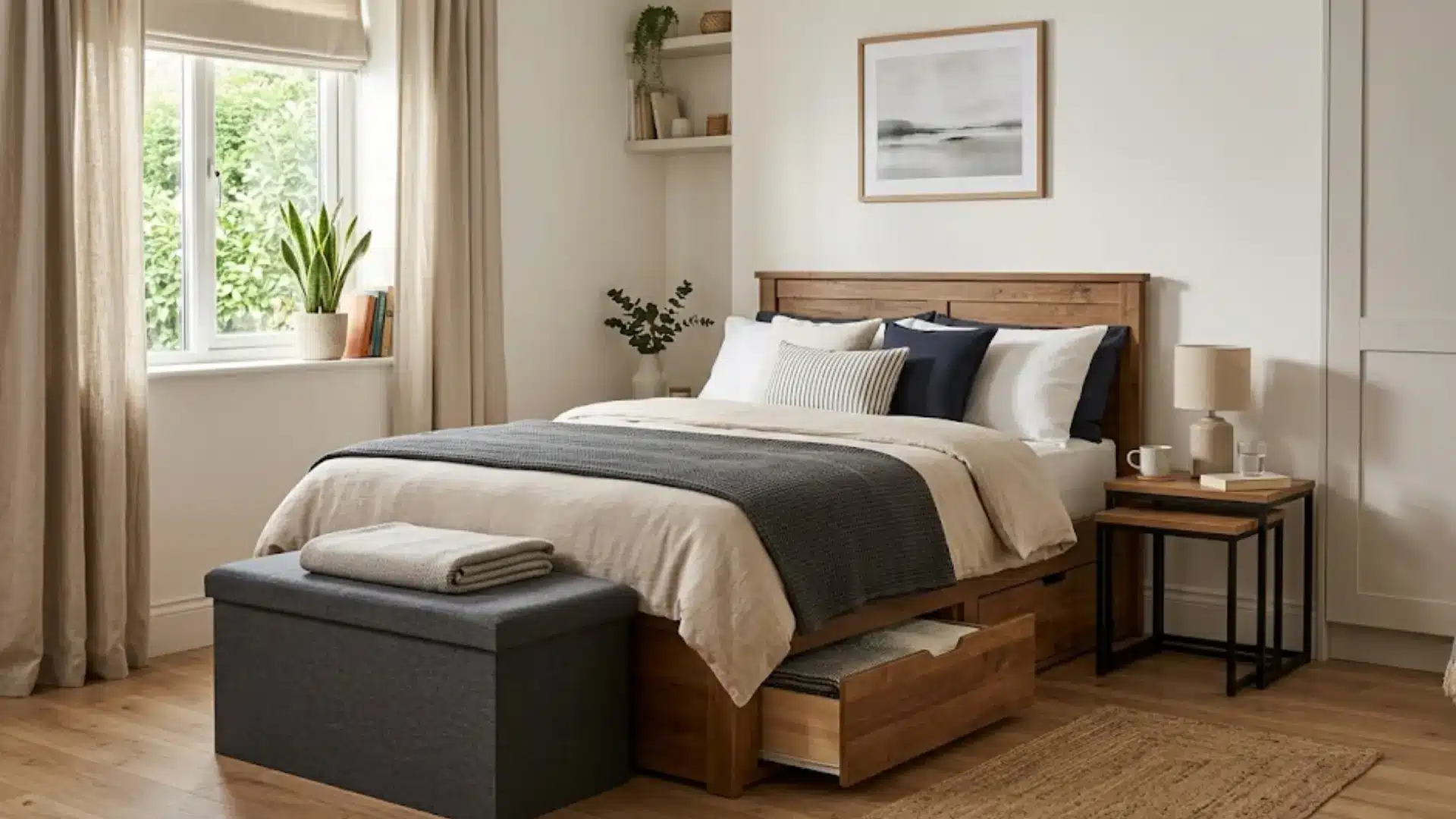
In a small room, every piece of furniture should earn its place. Multi-purpose pieces do more with less. A storage ottoman holds blankets and doubles as a seat. A bed with built-in drawers removes the need for a separate dresser.
Nesting tables tuck away when not in use. These small swaps reduce the number of items in the room without sacrificing comfort or function.
7. Keep a Consistent Color Scheme
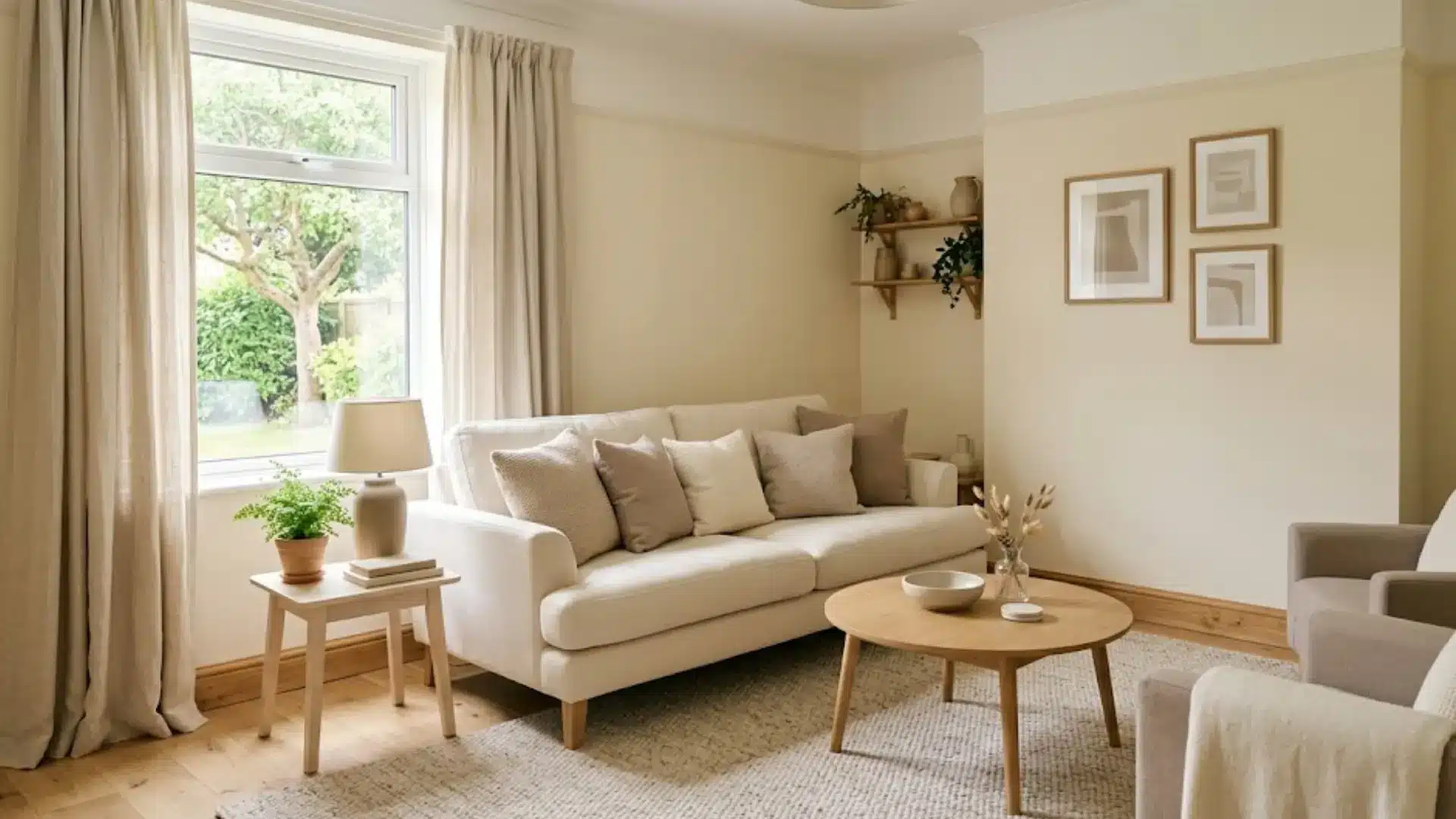
Too many different colors in one room can make it feel choppy and smaller. When walls, furniture, and soft furnishings share a similar color family, the eye moves smoothly across the space.
That continuity makes the room feel larger and more cohesive. You don’t need everything to match exactly. Staying within two or three complementary shades is enough to create a calmer, more open feel.
8. Hang Curtains Higher Than the Window
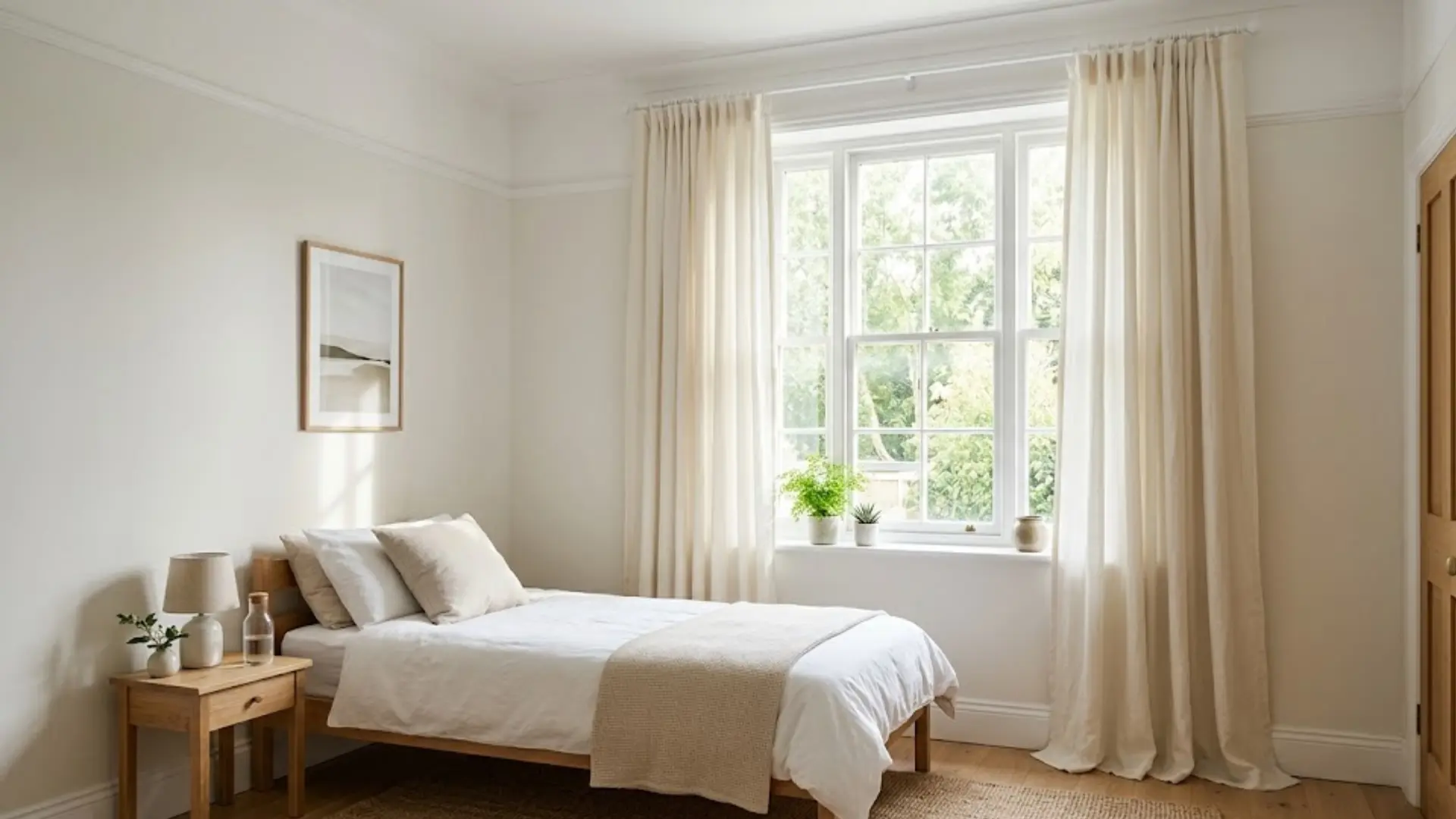
Most people hang curtain rods just above the window frame. Moving the rod closer to the ceiling changes how the room feels entirely. It draws the eye upward and makes the ceiling appear taller.
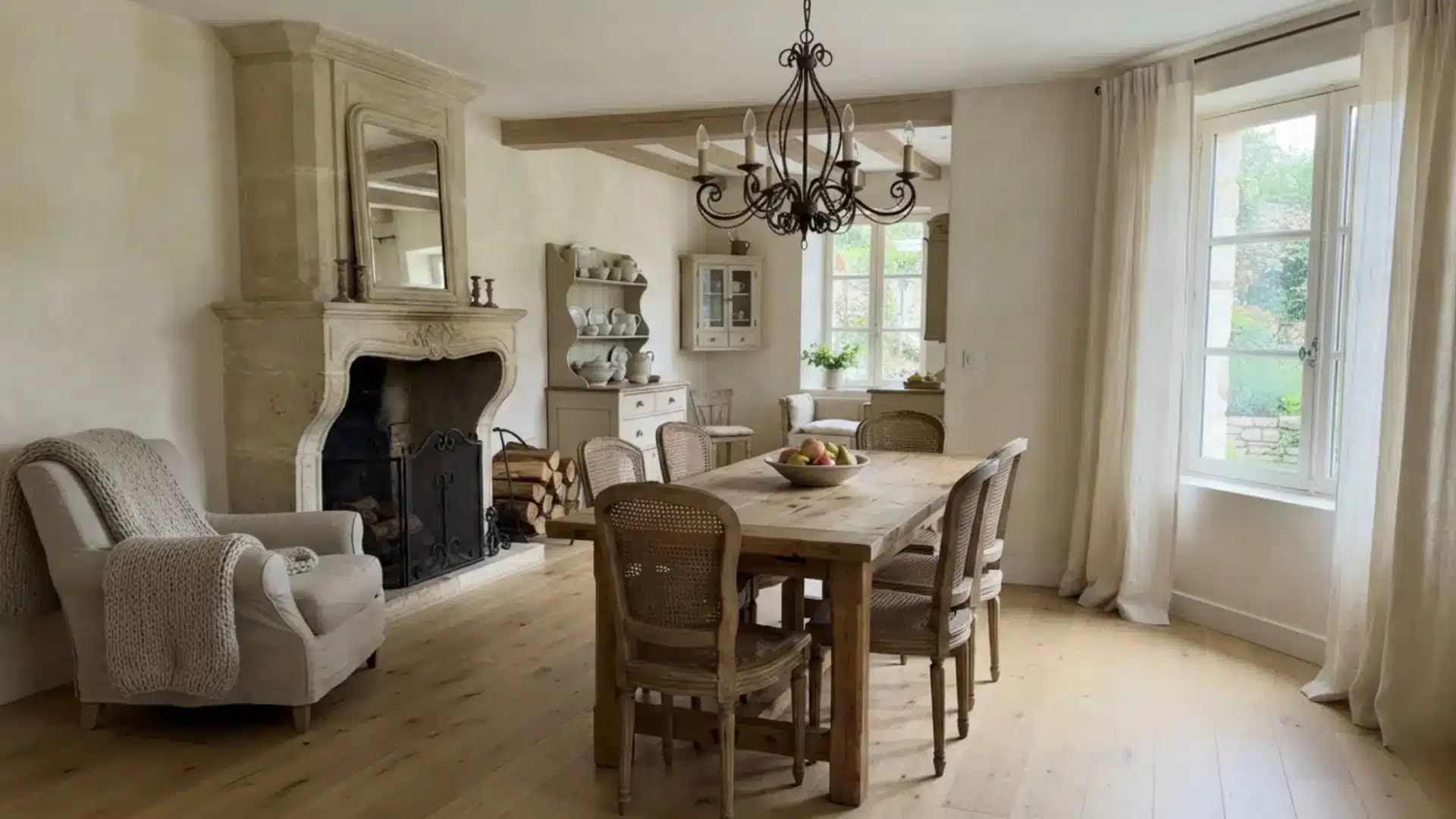
The room feels more spacious without any structural changes. Use floor-length curtains to complete the effect. This simple adjustment costs very little and makes a visible difference in any room size.
9. Use Furniture With Visible Legs
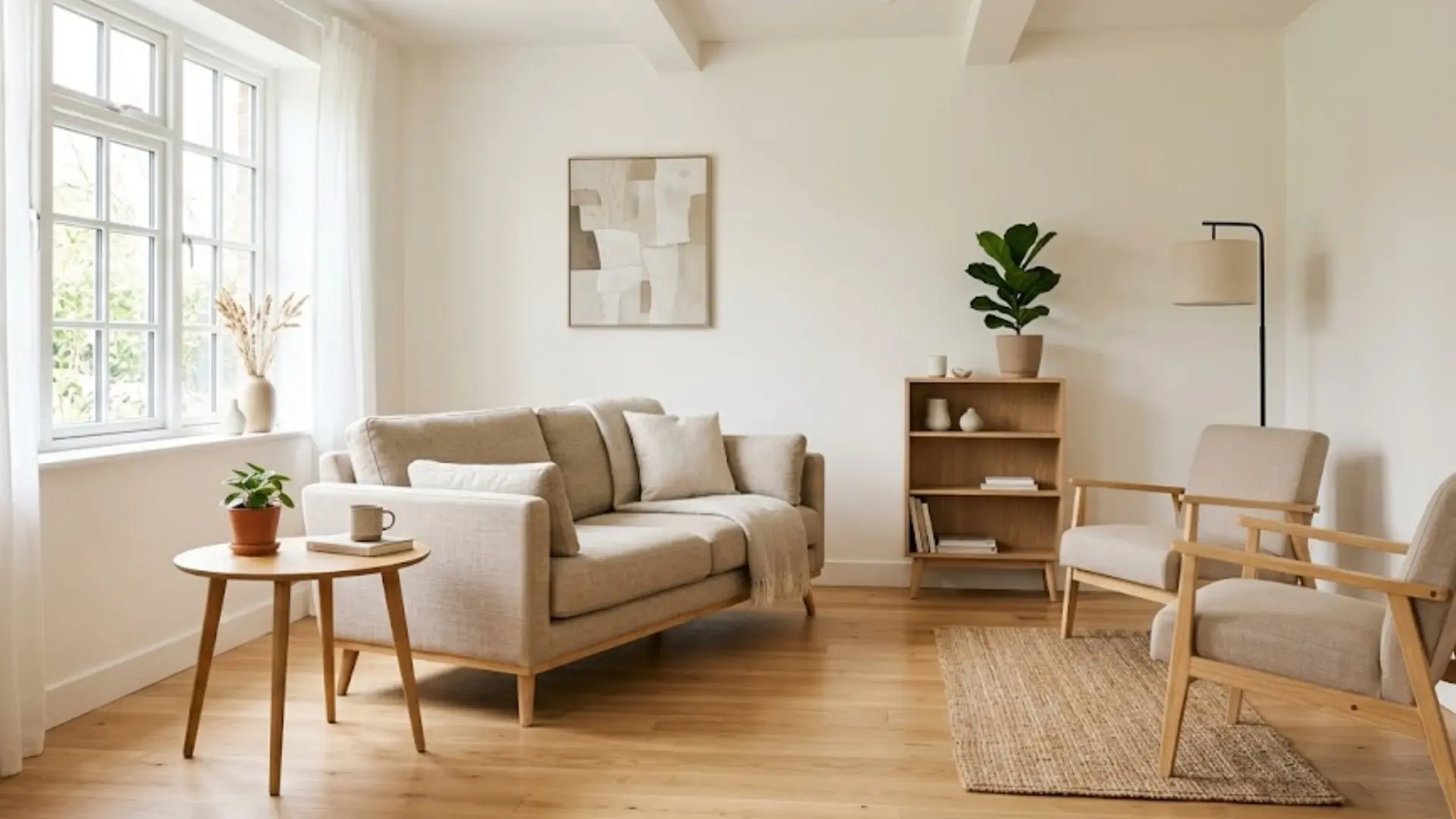
Furniture that sits flat on the floor blocks the view of the ground beneath it. That can make a room feel heavier and more cramped. Sofas, chairs, and beds with exposed legs let you see more of the floor.
That visible floor space tricks the eye into reading the room as larger. It also makes cleaning easier, which helps keep the space tidy and open-looking.
10. Take Advantage of Vertical Space
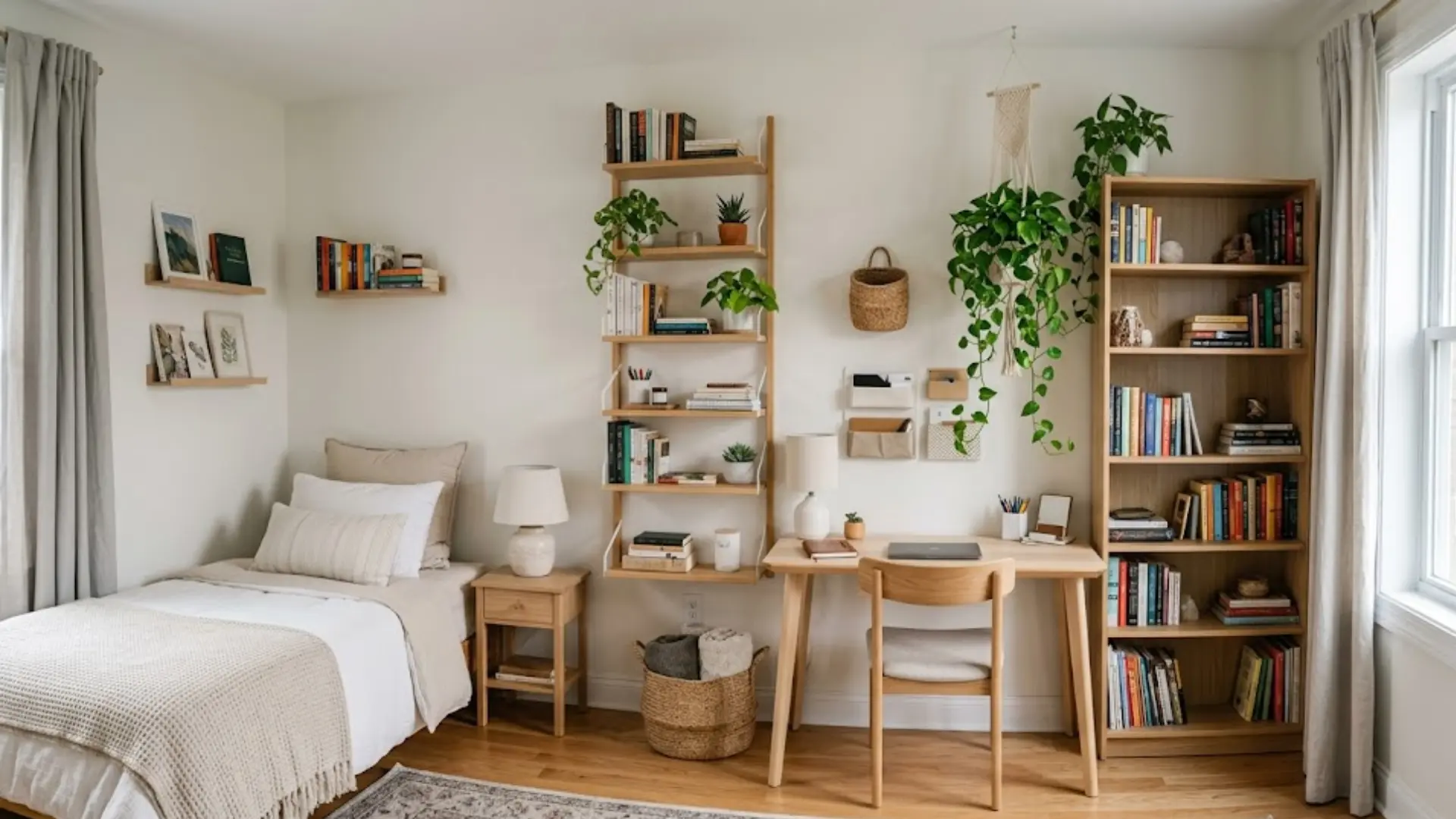
Most small rooms have more vertical space than people use. Walls above eye level often go completely empty. Wall-mounted shelves, tall bookcases, and hanging storage make use of that overlooked area.
They draw attention upward and away from the limited floor space. Just keep them organized. Crowded shelves can create visual noise, which works against the open feeling you’re trying to achieve.
11. Use Larger Rugs Instead of Small Ones

A small rug sitting in the middle of a room can make the space feel divided and patchy. A larger rug that extends under the front legs of furniture ties the room together.
It creates a defined zone without breaking the visual flow. If buying a bigger rug isn’t possible right away, removing the small one entirely is often better than keeping it in the wrong size.
12. Improve Your Lighting
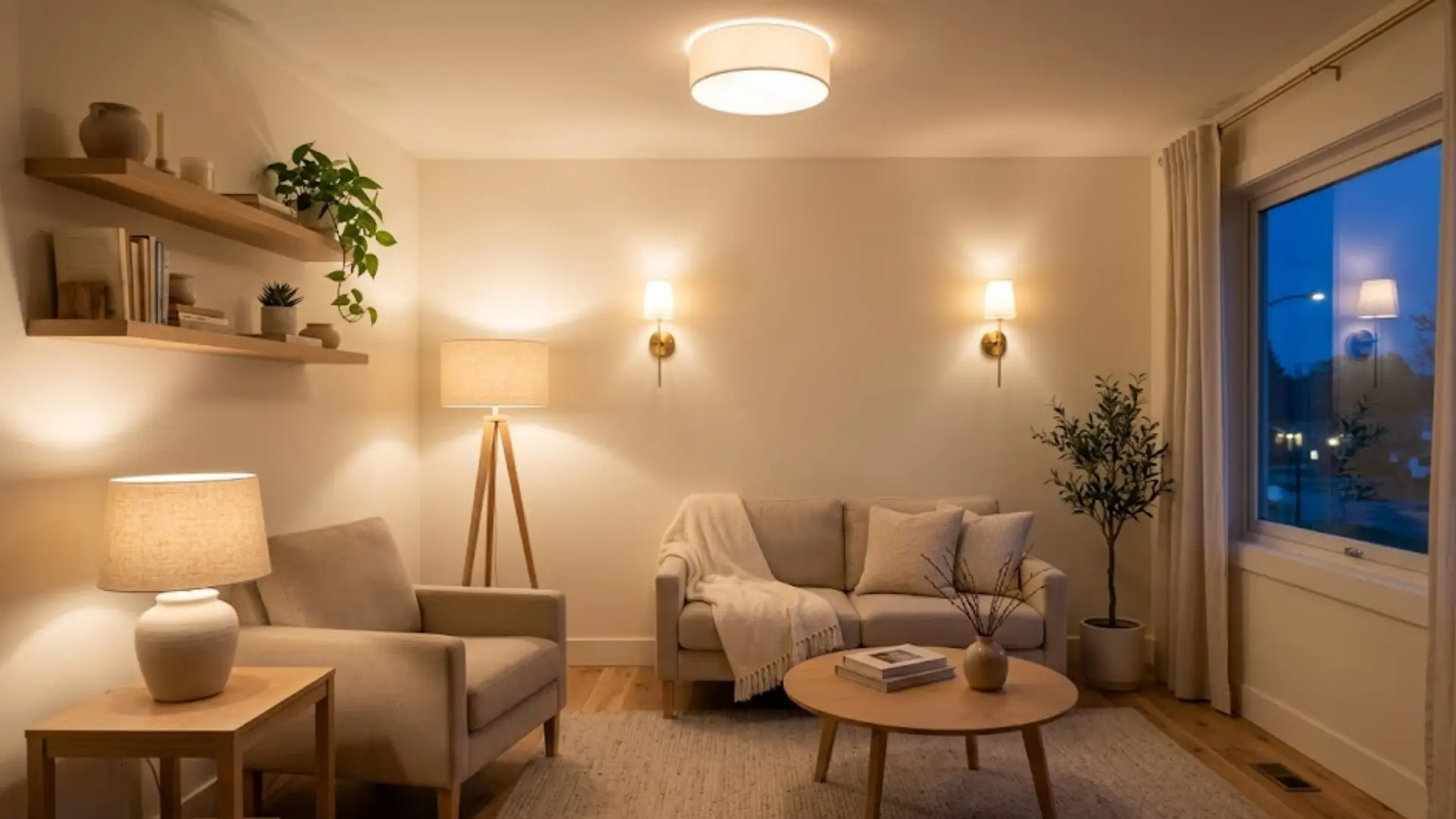
A poorly lit room always feels smaller and heavier than it is. Relying on one overhead light source leaves corners dark and shadowy.
Adding a mix of lighting, such as floor lamps, wall sconces, and table lamps, brightens the whole room evenly.
More light means fewer shadows, and fewer shadows make the room feel more open. This works especially well in rooms with limited natural light coming in.
13. Limit Decorative Accessories

Decorative items add personality to a room, but too many of them create visual clutter. In a small space, that clutter makes everything feel crowded. Choose a few pieces that you genuinely love and display those.
Leave the rest stored away or donate what no longer fits the space. Editing down your accessories doesn’t make the room feel bare. It actually makes the pieces you keep stand out more.
Small Room Ideas for Different Areas of the Home
Different rooms come with different challenges. Here is how to apply the right fixes for each space:
| Room | Key Challenge | Top Tips | Furniture Picks | Lighting Tip |
|---|---|---|---|---|
| Small Bedroom | Limited floor space and storage | Bed with built-in drawers, floating shelves, light wall colors | Storage bed, floating nightstands, slim wardrobe | Warm bedside lamps for dark corners |
| Small Living Room | Furniture overpowering the space | Visible-leg sofa, large rug, consistent color scheme | Apartment-sized sofa, nesting tables, storage ottoman | Layered floor lamps and wall sconces |
| Small Home Office | Feeling closed in while working | Wall-mounted desk, natural light, clear work surface | Wall-mounted desk, floating shelves, slim bookcase | Desk positioned near a window |
| Small Guest Room | Serving multiple purposes | Murphy bed, large mirror, minimal decor | Murphy bed, daybed with storage, foldable side table | Single overhead fixture with a warm bulb |
| Small Apartment | Open areas bleeding into each other | Consistent colors, multi-purpose furniture, visual zones | Storage sofa, foldable dining table, lidded ottomans | Pendant lights to define zones |
Small adjustments in each of these spaces can add up to a much bigger difference overall. Start with the room that feels the most cramped and work from there.
Advice From People Living in Small Spaces Every Day
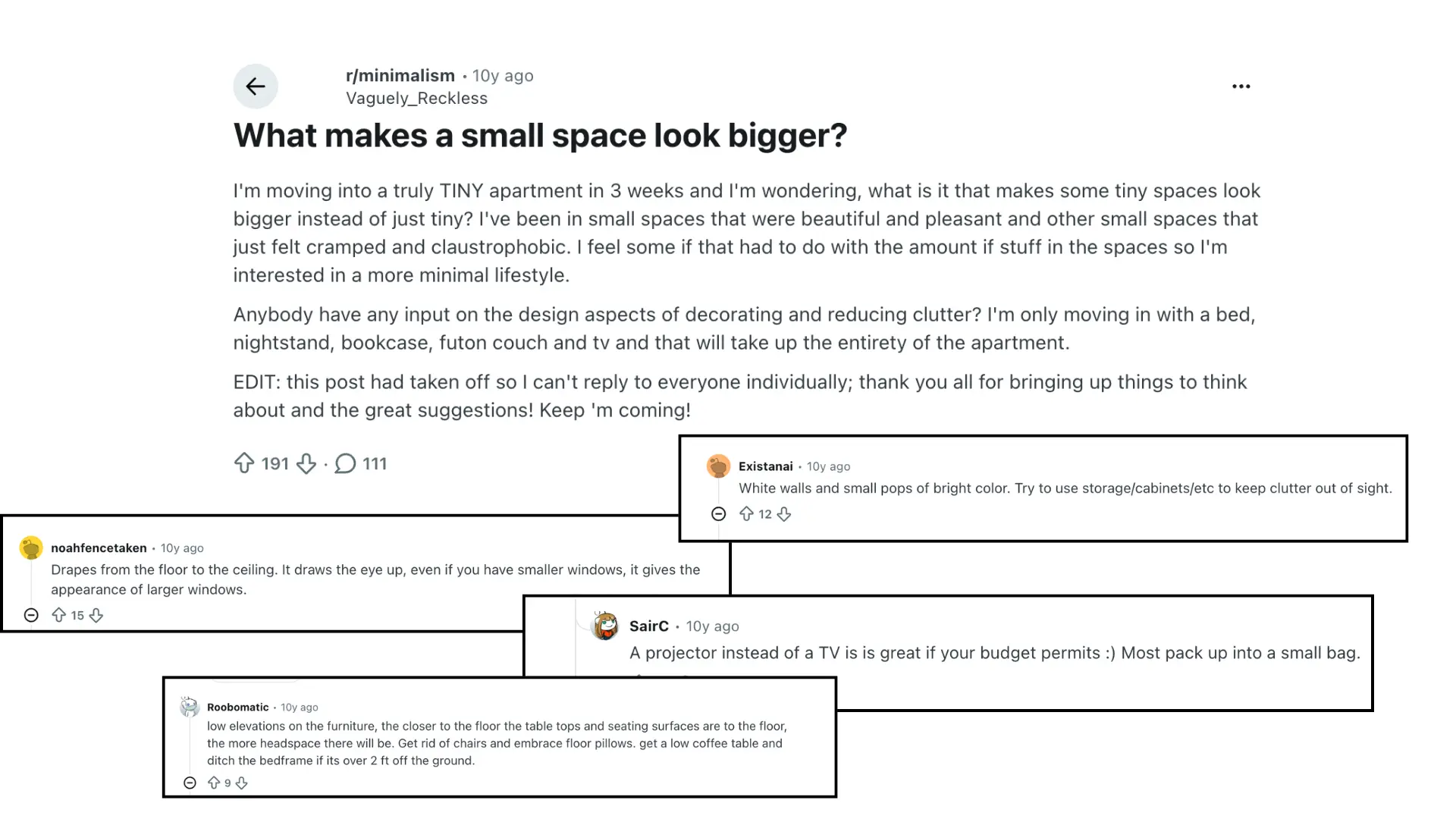
Sometimes the best advice comes from people who have actually lived in small spaces. A Reddit thread on minimalism surfaced some genuinely useful tips from real homeowners:
What Worked Best for Them
Small changes made the biggest visual impact for most homeowners. Two tips came up repeatedly:
“Drapes from the floor to the ceiling. It draws the eye up, even if you have smaller windows, it gives the appearance of larger windows.”
“White walls and small pops of bright color. Try to use storage/cabinets/etc to keep clutter out of sight.”
Both changes are low-cost and easy to try in any room.
Mistakes They Wish They Had Avoided
Many homeowners wished they had thought about scale and height earlier. Two pieces of advice stood out:
“A projector instead of a TV is great if your budget permits 🙂 Most pack up into a small bag.”
“Low elevations on the furniture, the closer to the floor the table tops and seating surfaces are to the floor, the more headspace there will be. Get rid of chairs and embrace floor pillows. Get a low coffee table and ditch the bedframe if its over 2 ft off the ground.”
Getting the scale right from the start saves a lot of rearranging later.
Frequently Asked Questions
How do I make a small room look bigger without spending much money?
Declutter surfaces, hang curtains closer to the ceiling, rearrange furniture to open up pathways, and let in as much natural light as possible.
What type of furniture works best in a small room?
Furniture with visible legs, slim profiles, and built-in storage works best. Multi-purpose pieces also help reduce the number of items in the room.
Should a small room have dark or light curtains?
Light curtains work better. They allow more natural light in and keep the room feeling open rather than closed in.
Final Thoughts
Knowing how to make a small room look bigger does not require a big budget or a full renovation. It comes down to a few smart choices. Use light colors, clear surfaces, and furniture that fits the space well.
Let in more natural light and keep decor simple. Each change on its own makes a difference. Together, they can completely shift how a room feels.
Your space may be small, but with the right setup, it can feel anything but. Share which tip worked best for you in the comments below.