
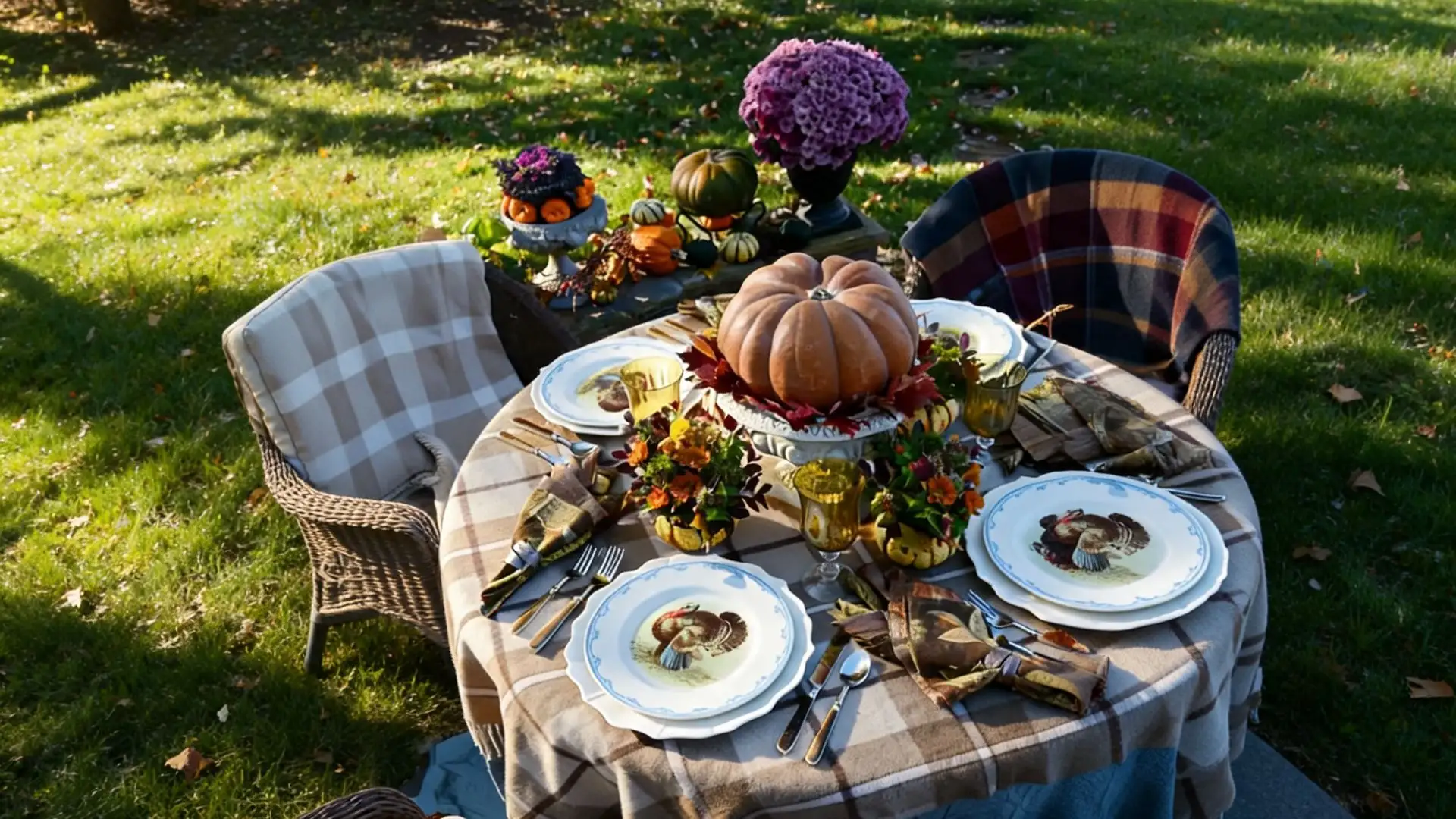
A Thanksgiving table can look crowded before the first dish even lands on it.
Plates, glassware, candles, and a centerpiece all compete for the same few feet of space, and it is easy to end up with a table that feels busy instead of warm.
One Thanksgiving I built a floral arrangement so tall my brother had to duck to pass the potatoes across the table.
The fix is to pick a simple color palette first, then build outward with low arrangements, natural textures, and a few personal touches.
These Thanksgiving table decor ideas cover simple, formal, rustic, modern, DIY, and budget-friendly styles, with options for small dinners, long tables, round tables, and homes hosting a crowd.
Planning a Thanksgiving Tablescape That Works
A practical Thanksgiving table setting should look inviting without limiting space for plates, serving dishes, and conversation.
Start by considering the size and shape of your table, along with the number of guests.
Decide whether food will stay on the table or be served from a nearby buffet. Choose two or three colors and repeat them through linens, dinnerware, candles, and seasonal details.
Keep centerpieces low so guests can see one another easily, and avoid strongly scented flowers or candles near food.
Arrange place settings first, then add pumpkins, greenery, branches, fruit, or small decorative pieces.
Leave open areas between accents so the table feels balanced, comfortable, and easy to use throughout the meal.
Simple Thanksgiving Table Decor Ideas
Everyday dinnerware, natural accents, soft linens, and a few seasonal details are enough to build a warm table, no extra expense or complicated decorating required.
1. White Dinnerware With Neutral Linen Napkins
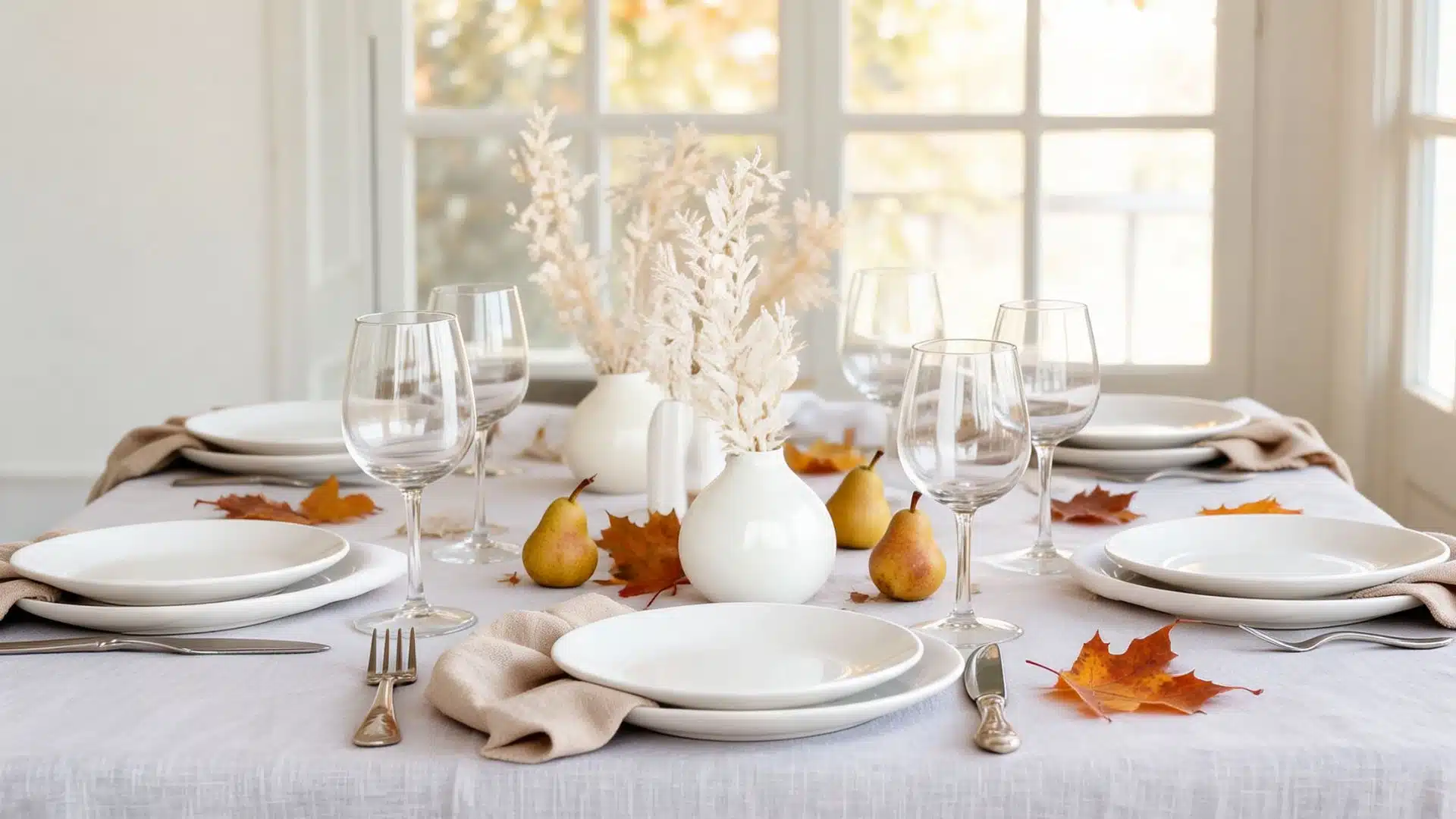
Start with white plates. They work with nearly any Thanksgiving color palette, and pairing them with beige, oatmeal, or soft gray linen napkins adds texture without making the table feel busy.
Round it out with clear glassware, brushed flatware, and a few small seasonal accents like pears, leaves, or miniature pumpkins.
The mix reads polished but relaxed, so it works for a casual family meal or a more formal one.
Tip: Fold each napkin loosely and place it between the dinner plate and salad plate for a soft, layered look.
2. Greenery Garland With Unscented Taper Candles
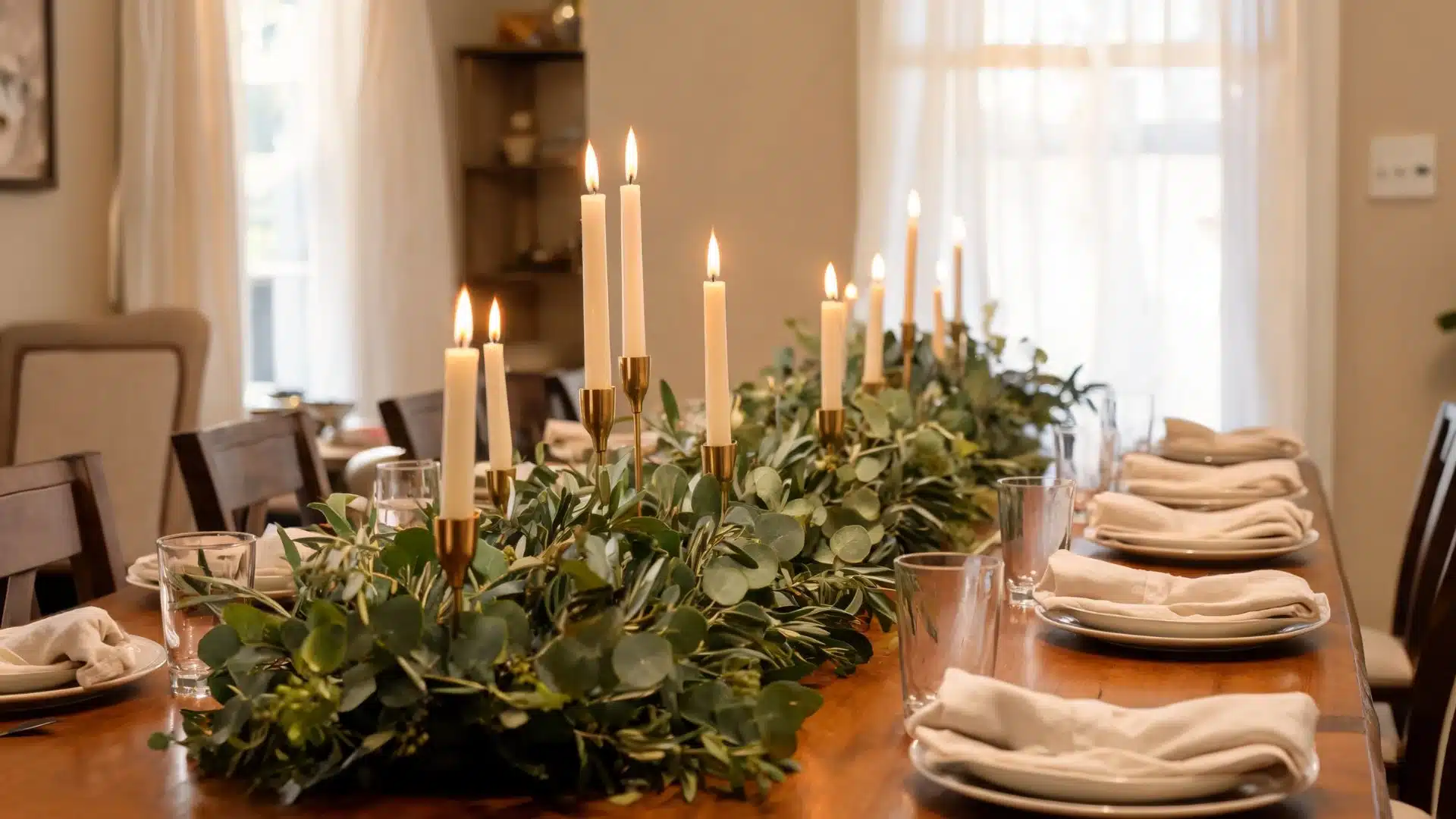
Lay a loose greenery garland down the center of the table, and it brings in natural color without raising anything high enough to block conversation.
Use eucalyptus, olive branches, magnolia leaves, or faux greenery, then weave unscented taper candles between the stems.
Choose slim candleholders in brass, black, wood, or clear glass to match the rest of the table. The soft candlelight adds warmth without competing with the aroma of the food or blocking serving dishes.
Tip: Keep greenery several inches away from open flames, or use flameless taper candles for a safer setup.
3. Grocery-Store Flowers in Small Bud Vases
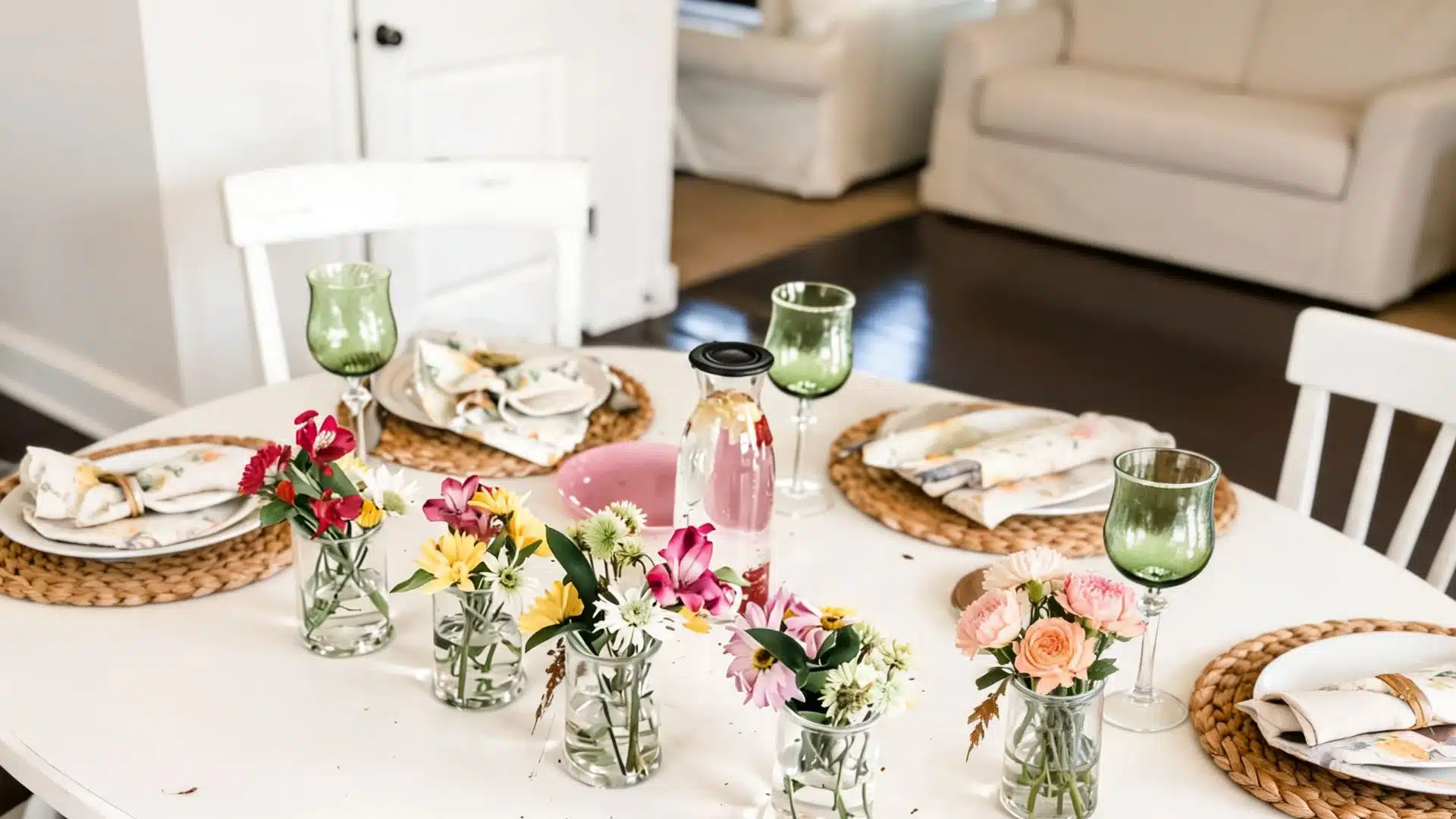
One grocery-store bouquet, split across a handful of small bud vases, looks far more considered than it did in the plastic wrap, and it stretches across the entire table.
Divide the stems by color or flower type, trim them to different heights, and place the vases at even intervals.
Mums, carnations, alstroemeria, roses, and seasonal foliage all work well. Because the arrangements stay compact, guests can easily see one another, and the center of the table remains open for platters, bowls, and shared dishes.
Tip: Use matching drinking glasses or recycled bottles when you do not have enough bud vases.
4. Mini Pumpkins Along a Linen Table Runner
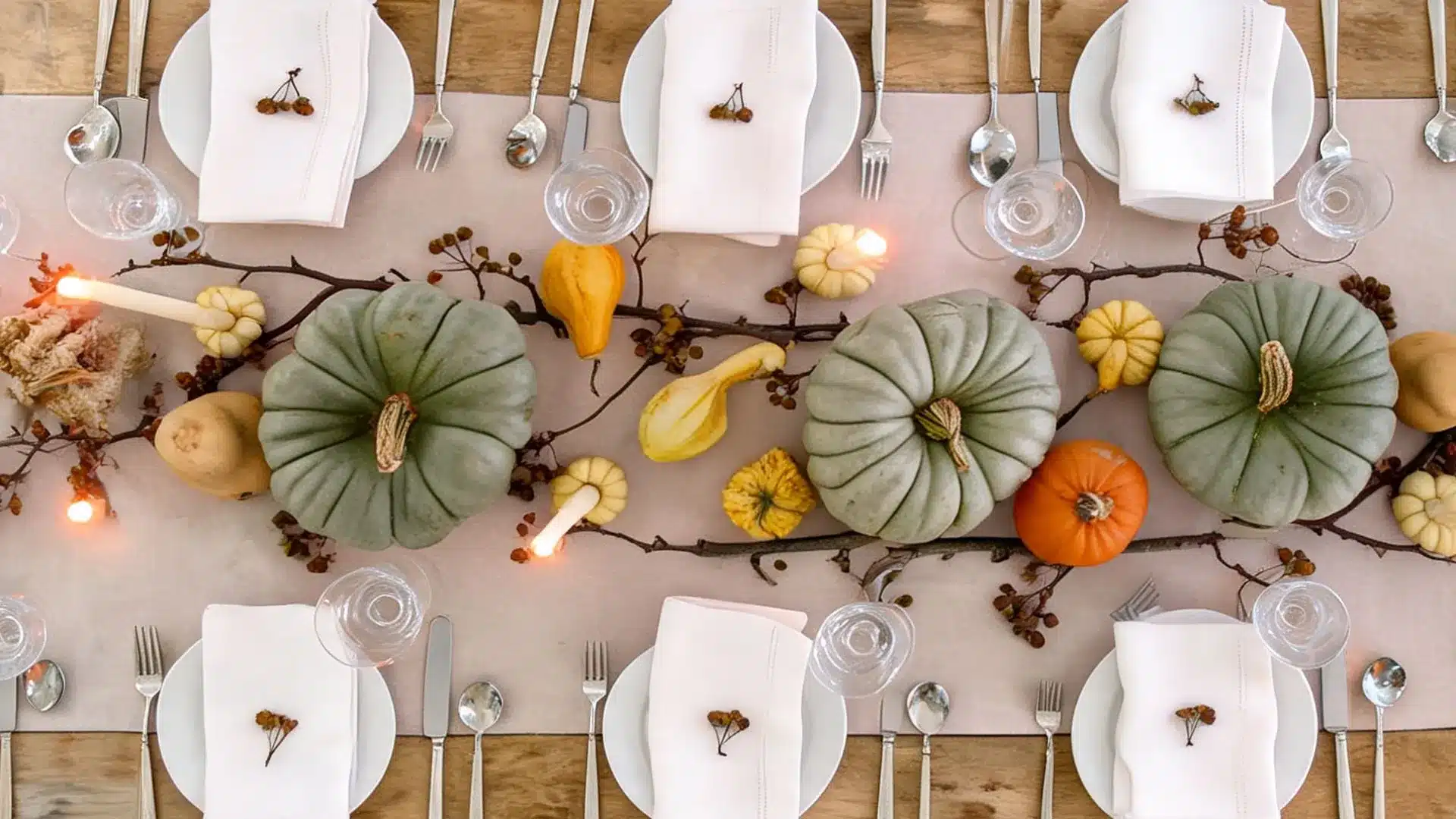
Mini pumpkins give you a seasonal focal point without the size or cost of a large centerpiece.
Arrange white, orange, green, or striped pumpkins along a linen runner, leaving small gaps between them for votive candles, leaves, or sprigs of greenery.
Vary the pumpkin sizes slightly so the display feels natural. This setup works especially well on long rectangular tables because it carries color from one end to the other while keeping the centerline low and practical.
Tip: Choose firm, unmarked pumpkins so they remain fresh throughout the holiday season.
5. Seasonal Branches in a Low Ceramic Vase
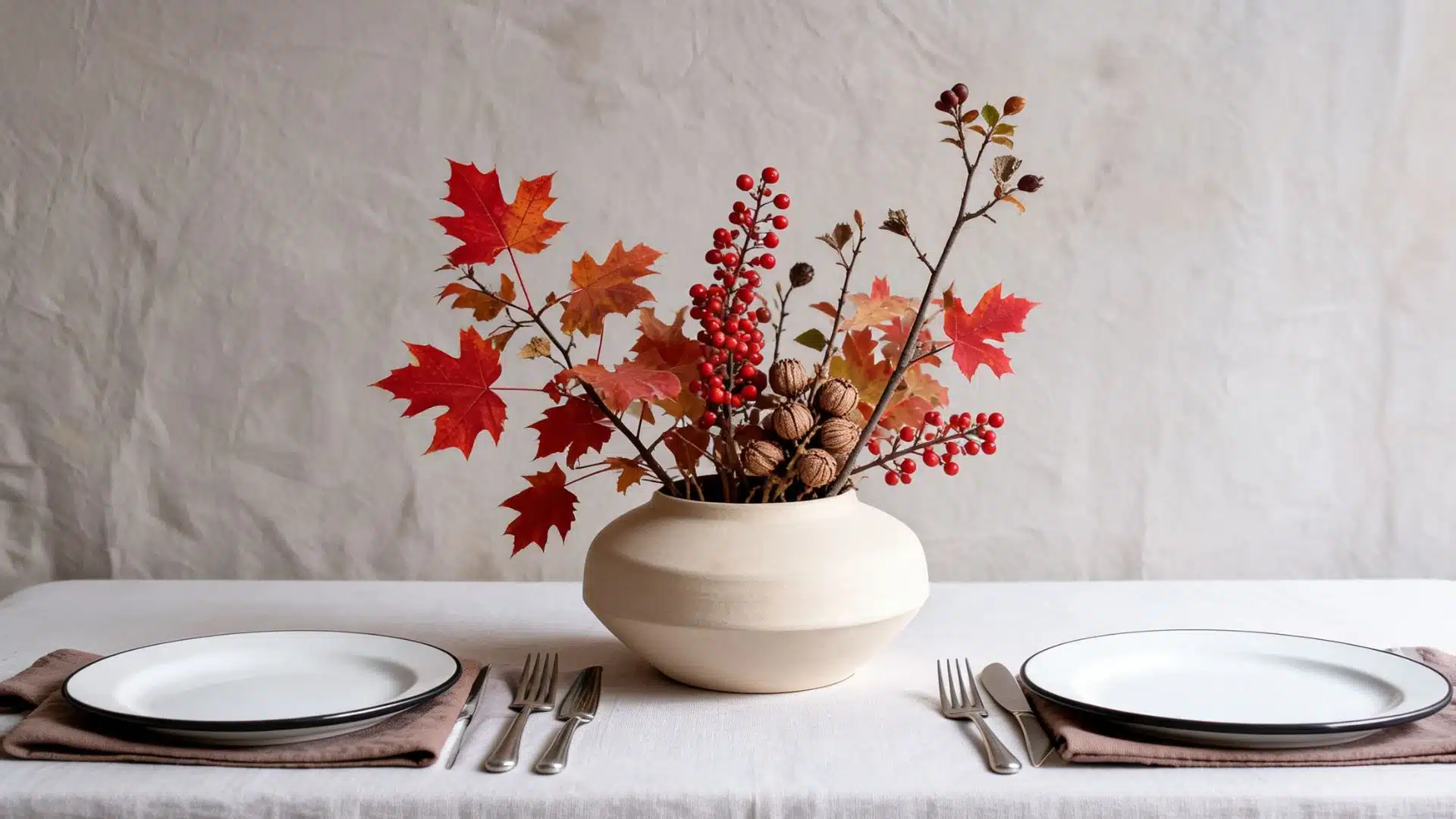
A handful of seasonal branches, arranged with almost no effort, can carry a centerpiece on their own.
Choose branches with autumn leaves, berries, seed pods, or interesting bare shapes, then place them in a wide, low ceramic vase.
Keep the arrangement loose and slightly asymmetrical so it feels natural. Neutral pottery in cream, brown, charcoal, or muted green helps the branches stand out, and this idea suits tables that need one clear focal point.
Tip: Trim long branches before arranging them so they do not block faces or hang over nearby plates.
6. Pear and Rosemary Place Settings
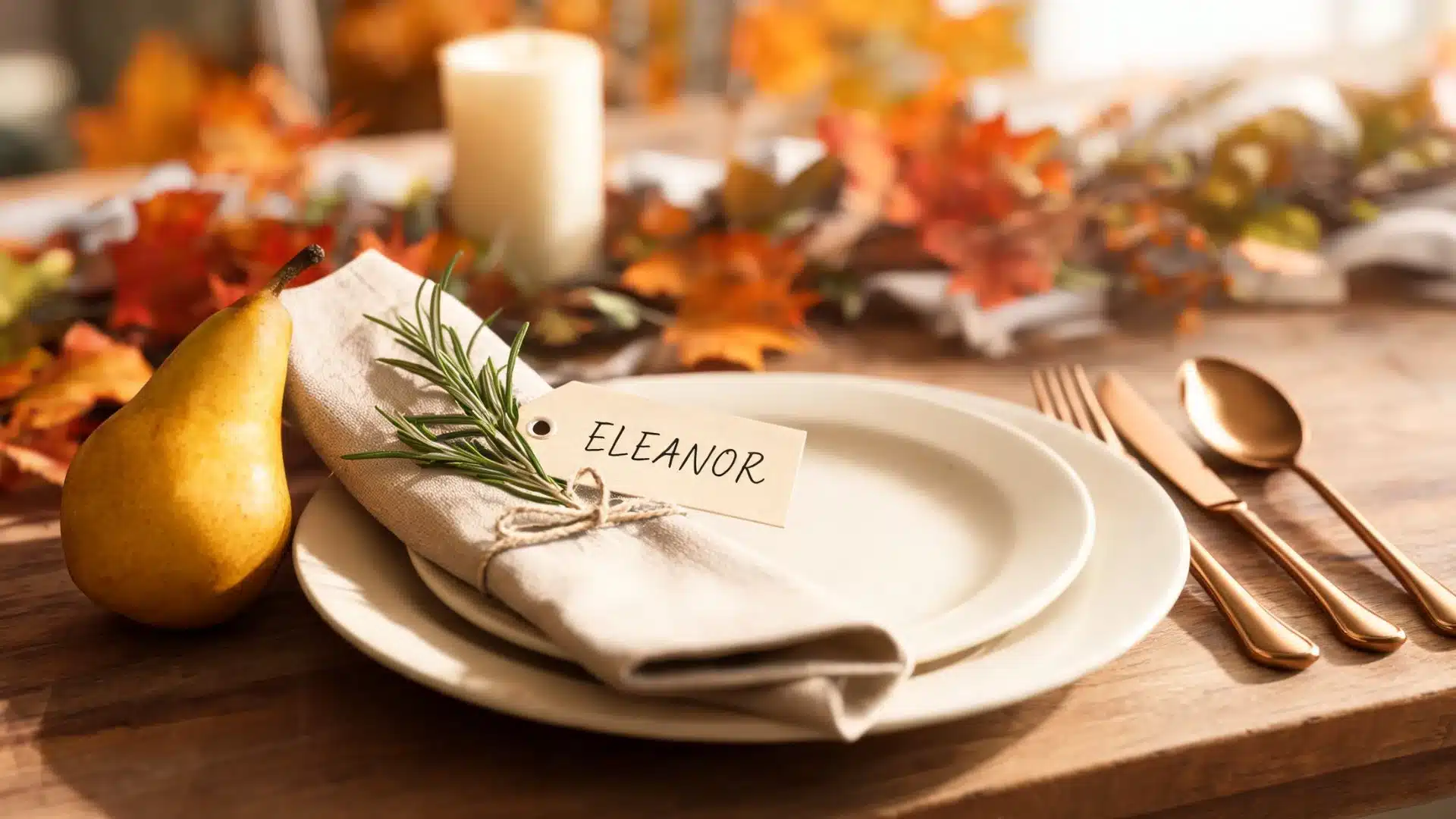
A single pear and a rosemary sprig at each place setting add color, fragrance, and a personal touch without any extra centerpiece work.
Place one pear above the plate or beside the napkin, then tuck a small rosemary sprig underneath.
Add a handwritten name tag tied with thin twine or ribbon for assigned seating. Green, red, or golden pears can be matched to the table palette, and guests can take the pear home after the meal.
Tip: Select pears that are firm enough to handle without bruising or leaving marks on the linens.
7. Amber Glassware With Cream Dinner Plates
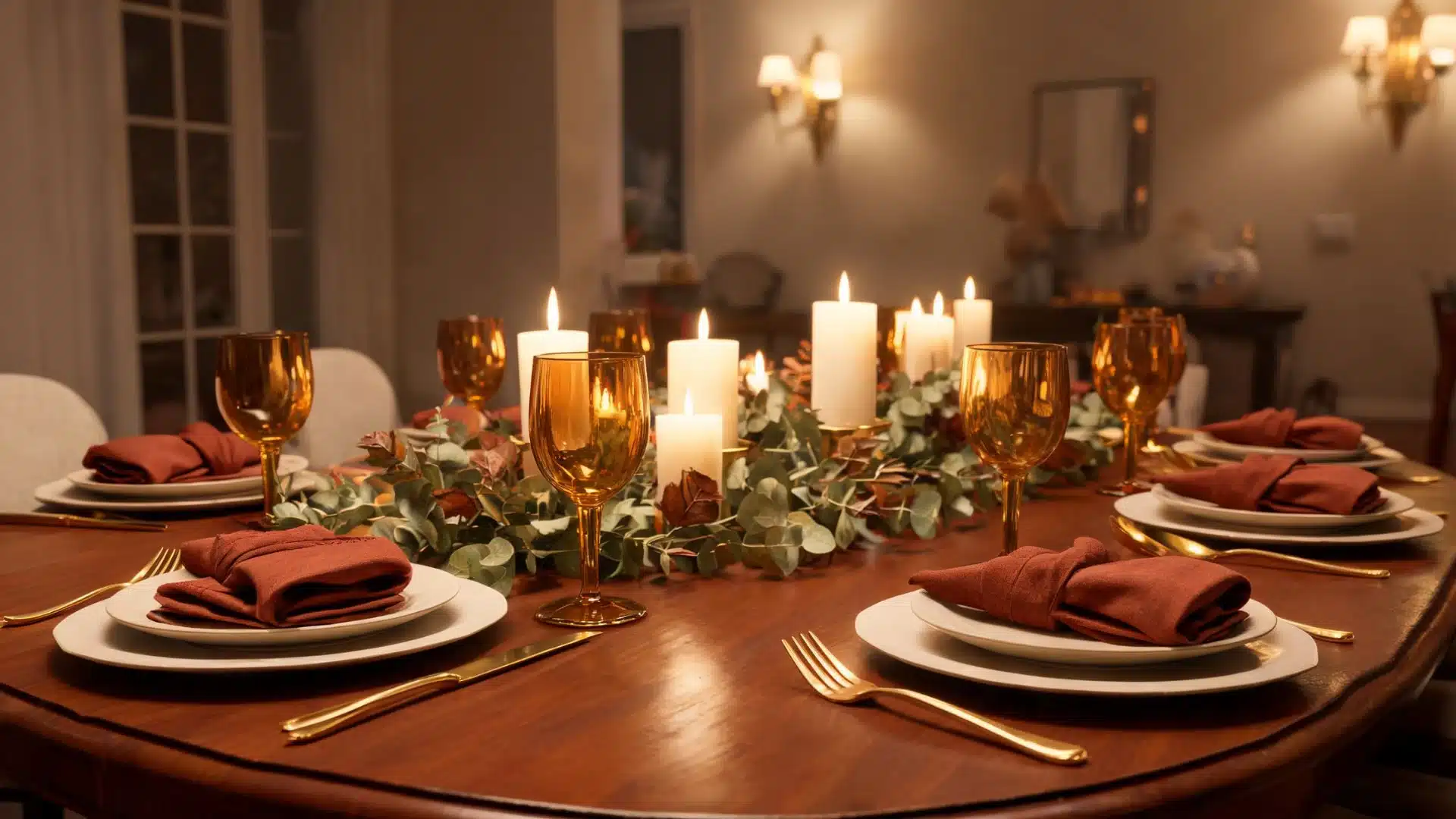
Amber glassware carries the autumn color, and cream dinner plates keep the rest of the table light instead of heavy.
Use amber water glasses, goblets, or small tumblers, then pair them with neutral linens and warm metal flatware.
Add brown, rust, mustard, or broad green accents through napkins and candles. The transparent glass catches natural light during daytime meals and candlelight in the evening, creating depth without adding bulky decorations.
Tip: Repeat the amber shade in only one other element, such as votive holders, to avoid overwhelming the table.
8. Candle-Only Thanksgiving Table Centerpiece
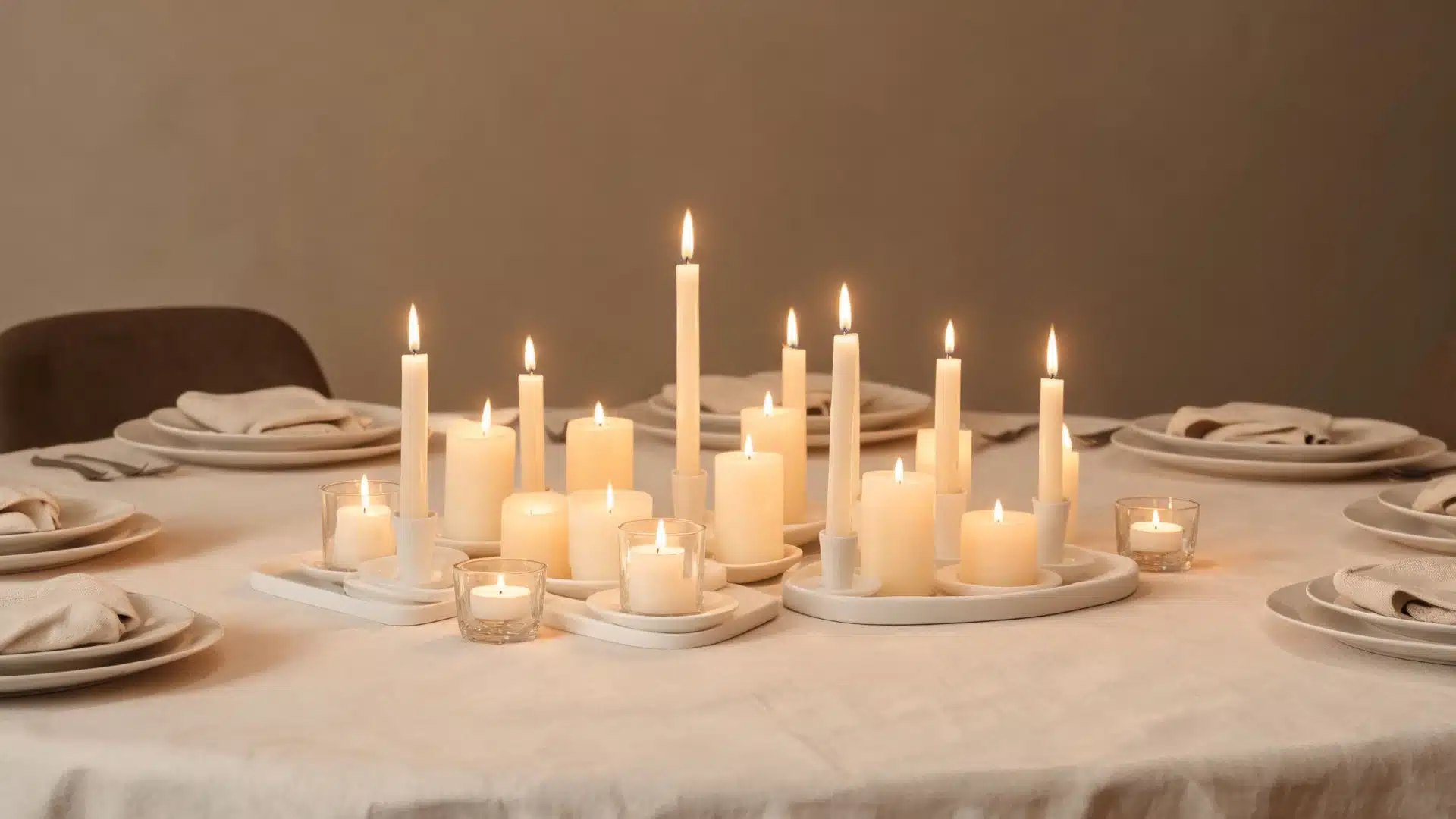
Skip the centerpiece and let candles carry the table instead. It keeps things simple while still warming up the room.
Mix taper candles, short pillars, and small votives in different heights, but keep the tallest pieces below eye level.
Use unscented candles so their fragrance does not interfere with the meal. Group them on heat-safe trays or space them evenly down the center, and repeat one candle color to help the arrangement feel connected.
Tip: Light the candles shortly before guests arrive so they burn evenly throughout the meal.
9. Brown Paper Runner With Handwritten Messages
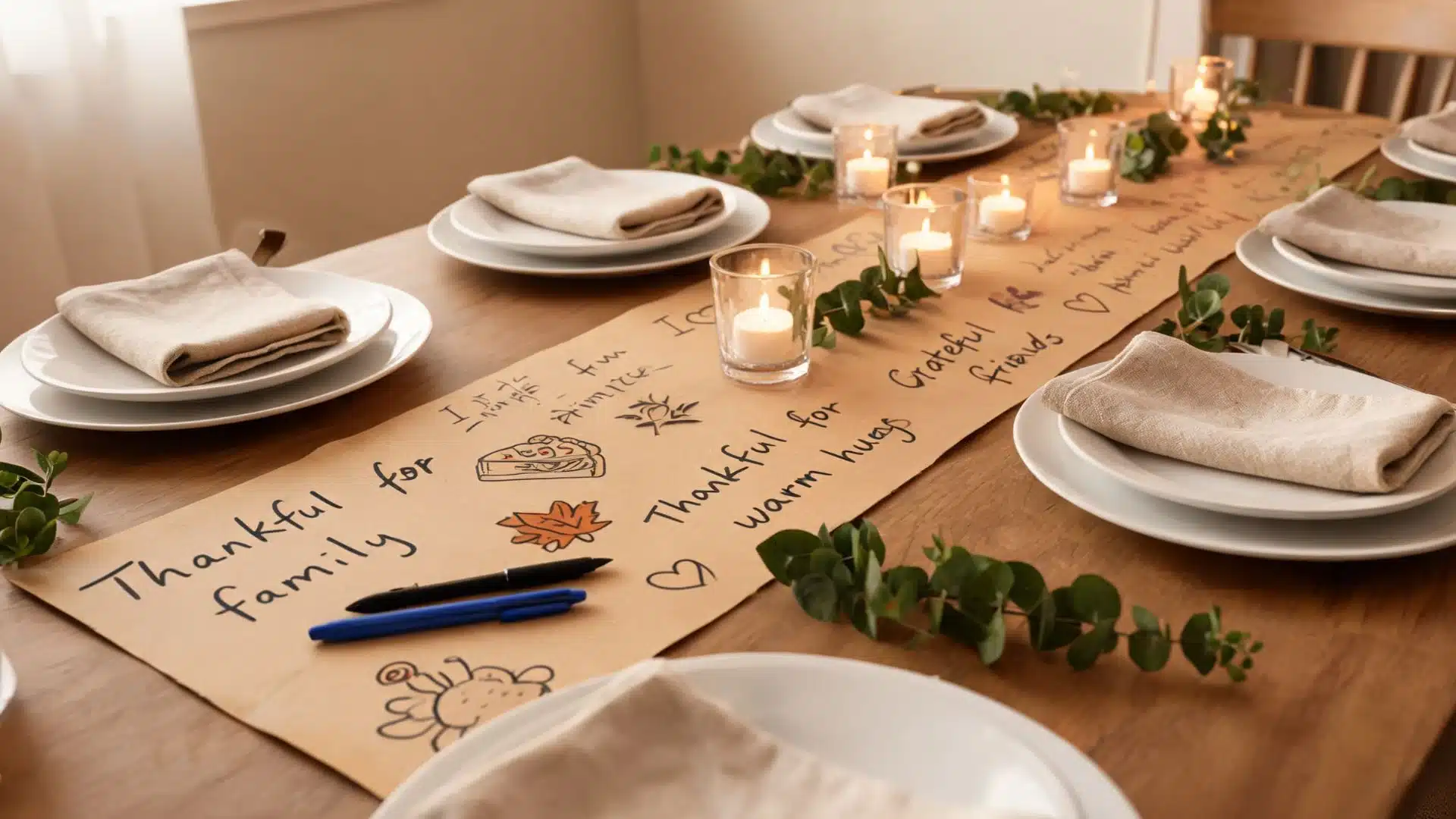
A brown paper runner does double duty as decoration and as something guests can actually take part in.
Roll kraft paper down the center or across each place setting, then provide pens so guests can write what they are thankful for. Pair the paper with white dishes, natural napkins, and small candles for contrast.
This idea works well for relaxed family dinners and gatherings with children because it encourages conversation and creates a keepsake from the meal.
Tip: Use washable markers or crayons for younger guests to reduce the risk of stains on clothing and furniture.
Formal Thanksgiving Table Decor Ideas
Refined dinnerware, rich seasonal colors, polished metals, and soft candlelight combine into a dressed-up setting that still feels welcoming.
10. Ivory and Gold Formal Thanksgiving Table
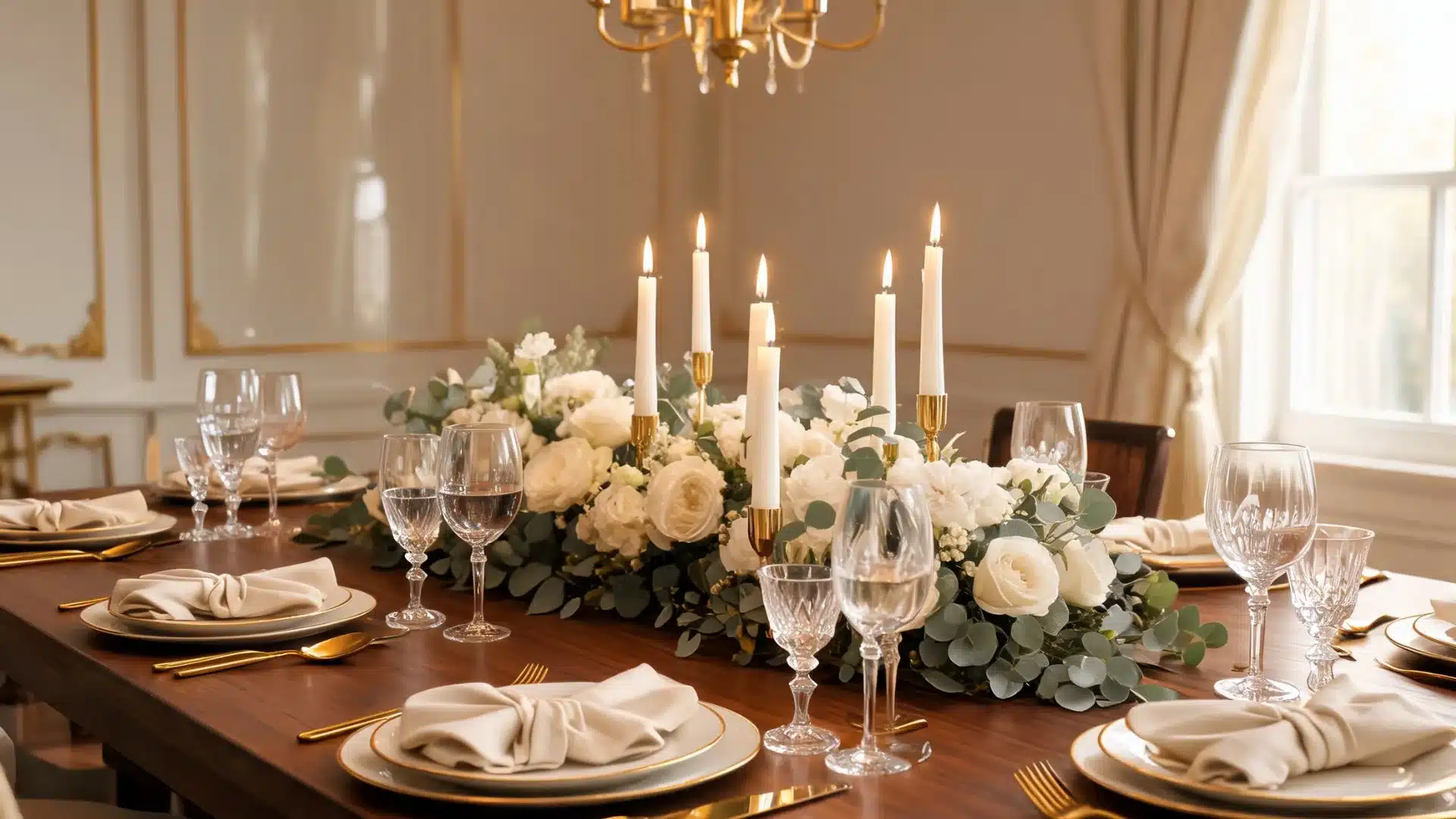
Ivory dinnerware sets a soft, formal foundation, and gold flatware, chargers, or candleholders bring in the warmth and shine. Use cream linens and clear glassware to keep the table from appearing overly ornate.
A low arrangement of white flowers, pale pumpkins, or eucalyptus can complete the center without blocking conversation.
Repeating gold in only a few carefully chosen pieces keeps the finished table balanced and suitable for a traditional Thanksgiving dinner.
Tip: Choose either gold chargers or gold-rimmed plates rather than using both, which may make each place setting look too heavy.
11. Burgundy Florals With Brass Candlesticks
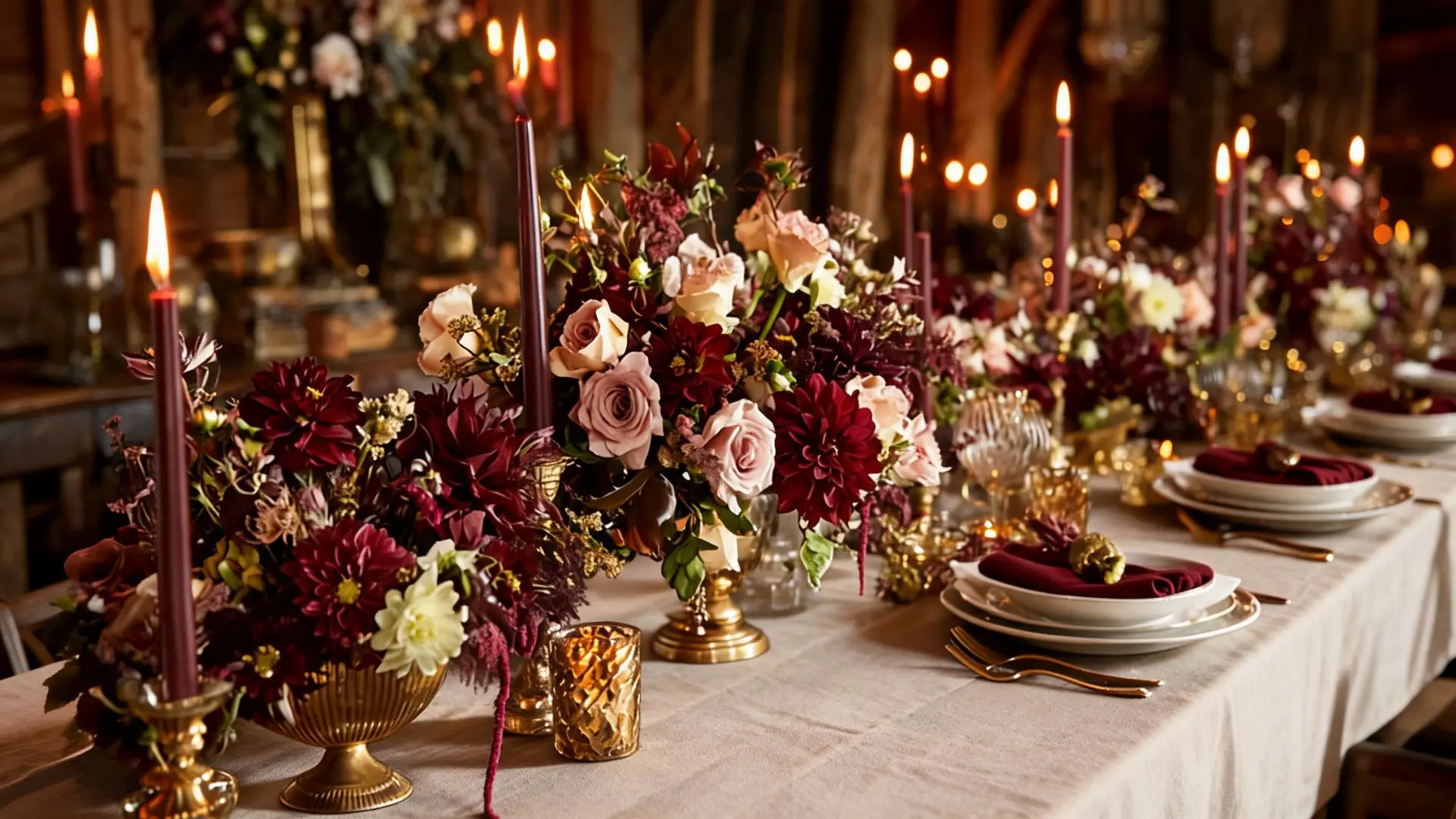
Burgundy flowers carry the seasonal color on a formal table, and brass candlesticks are a natural partner for that shade.
Arrange dahlias, mums, roses, or carnations in low vessels, adding muted greenery to soften the darker tones. Cream plates and neutral linens prevent the palette from becoming too intense.
Place brass candlesticks at varied intervals around the flowers, keeping the arrangement low and open so guests can pass dishes comfortably.
Tip: Add burgundy through flowers or napkins, but avoid repeating it across every table element.
12. Black, Cream, and Copper Tablescape
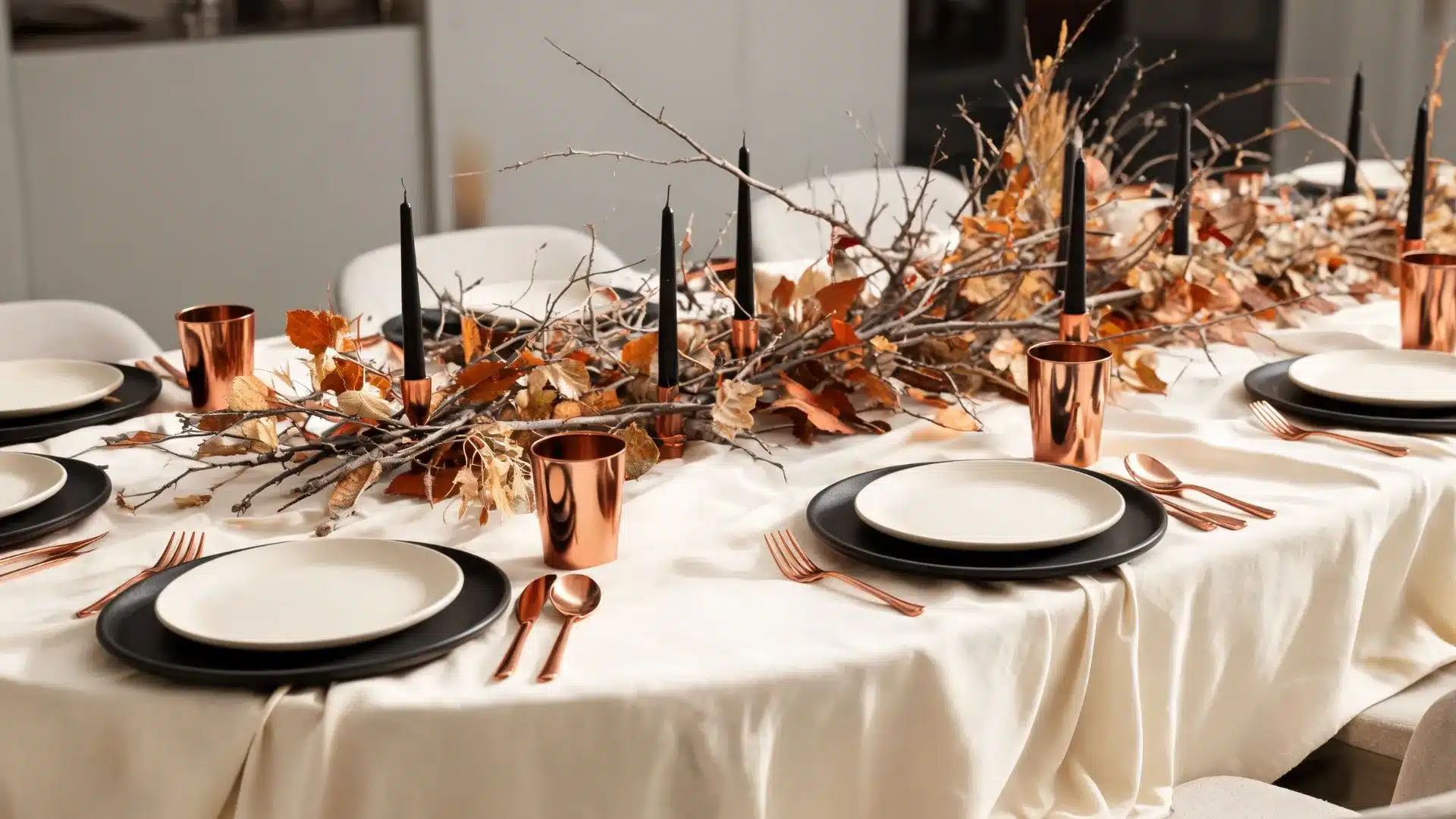
Black, cream, and copper together give you strong contrast without losing the warmth of the season. Start with cream plates and linens, then add matte black candleholders, napkin rings, or chargers.
Copper flatware, mugs, or small vessels introduce a softer metallic tone that catches the light.
Keep the centerpiece simple with dried leaves, branches, or dark flowers, since limiting each color to specific elements keeps the table coordinated.
Tip: Use matte black in smaller pieces so it supports the copper details without dominating the setting.
13. Heirloom China With Crystal Glassware
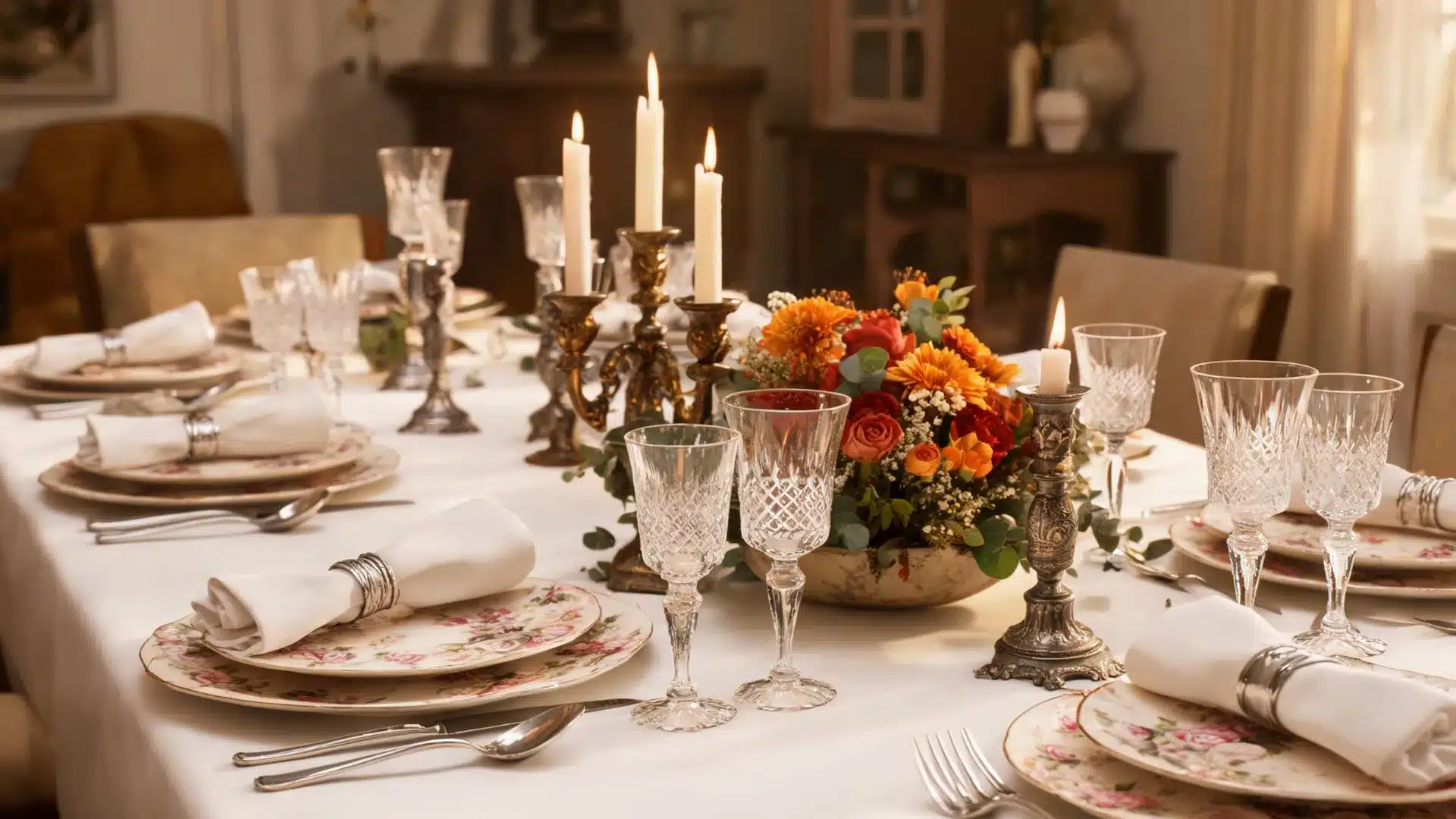
Heirloom china carries personal meaning that no store-bought set can match, and crystal glassware adds the clarity and light around it. Mix older plates with plain linens and simple flatware so the patterns remain the main feature.
If the china includes several colors, select one shade for the napkins or centerpiece to connect the table.
Small floral arrangements and low candles work better than elaborate decorations because they let the collected pieces receive the attention they deserve.
Tip: Test delicate china and crystal for chips or cracks several days before setting the table.
14. Jewel-Tone Velvet Pumpkin Table
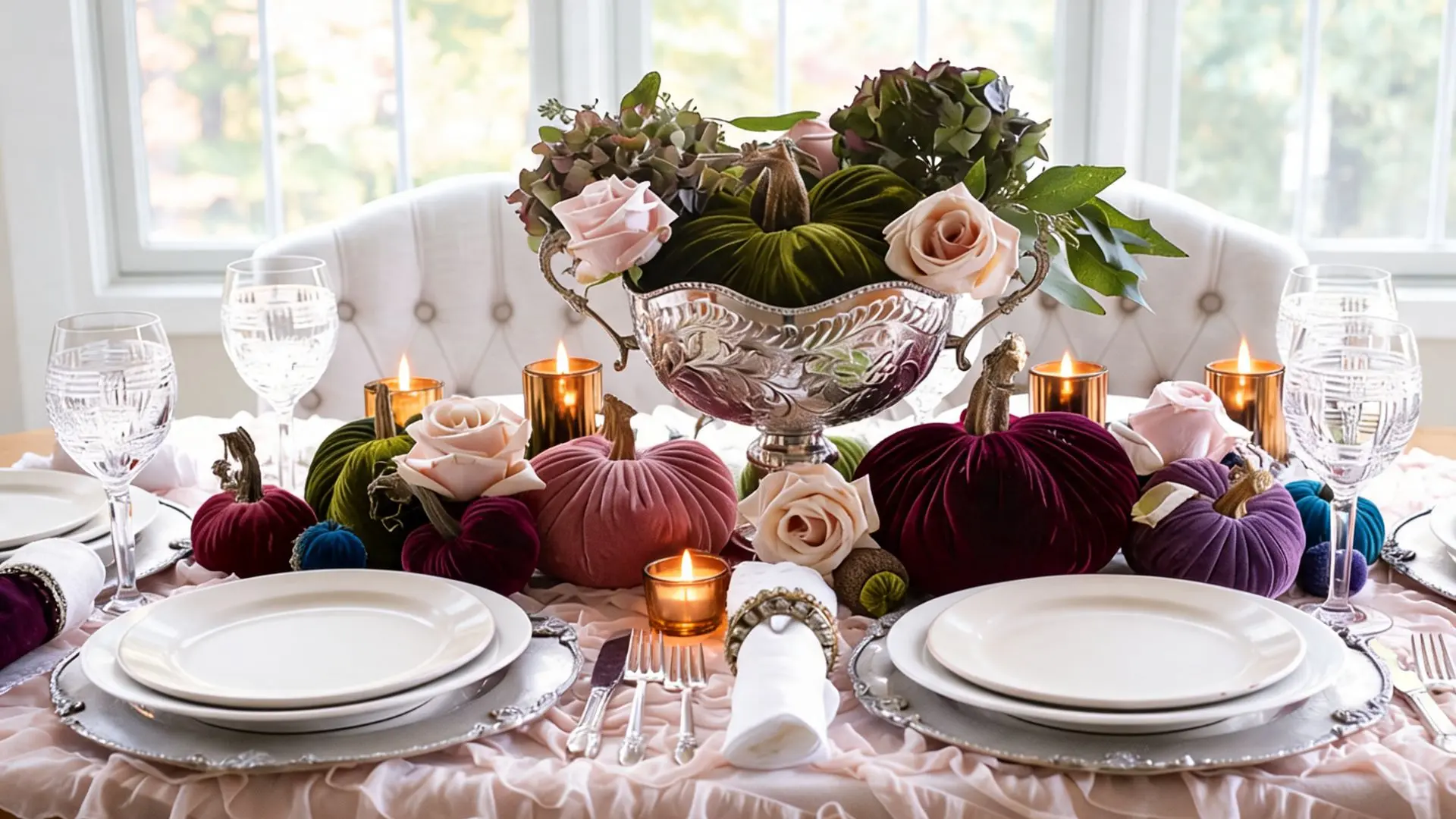
Velvet pumpkins in emerald, sapphire, plum, and ruby give you a rich centerpiece that never wilts or needs replacing.
Arrange several sizes along the center of the table, leaving gaps for small candles or metallic accents.
Pair them with neutral plates and deep-colored napkins to keep the jewel tones controlled. Brass or gold details add warmth, while clear glassware prevents the setting from feeling too dark.
Tip: Limit the palette to two or three jewel tones so the centerpiece remains connected and easy on the eye.
15. Blush Pink and Cranberry Tablescape
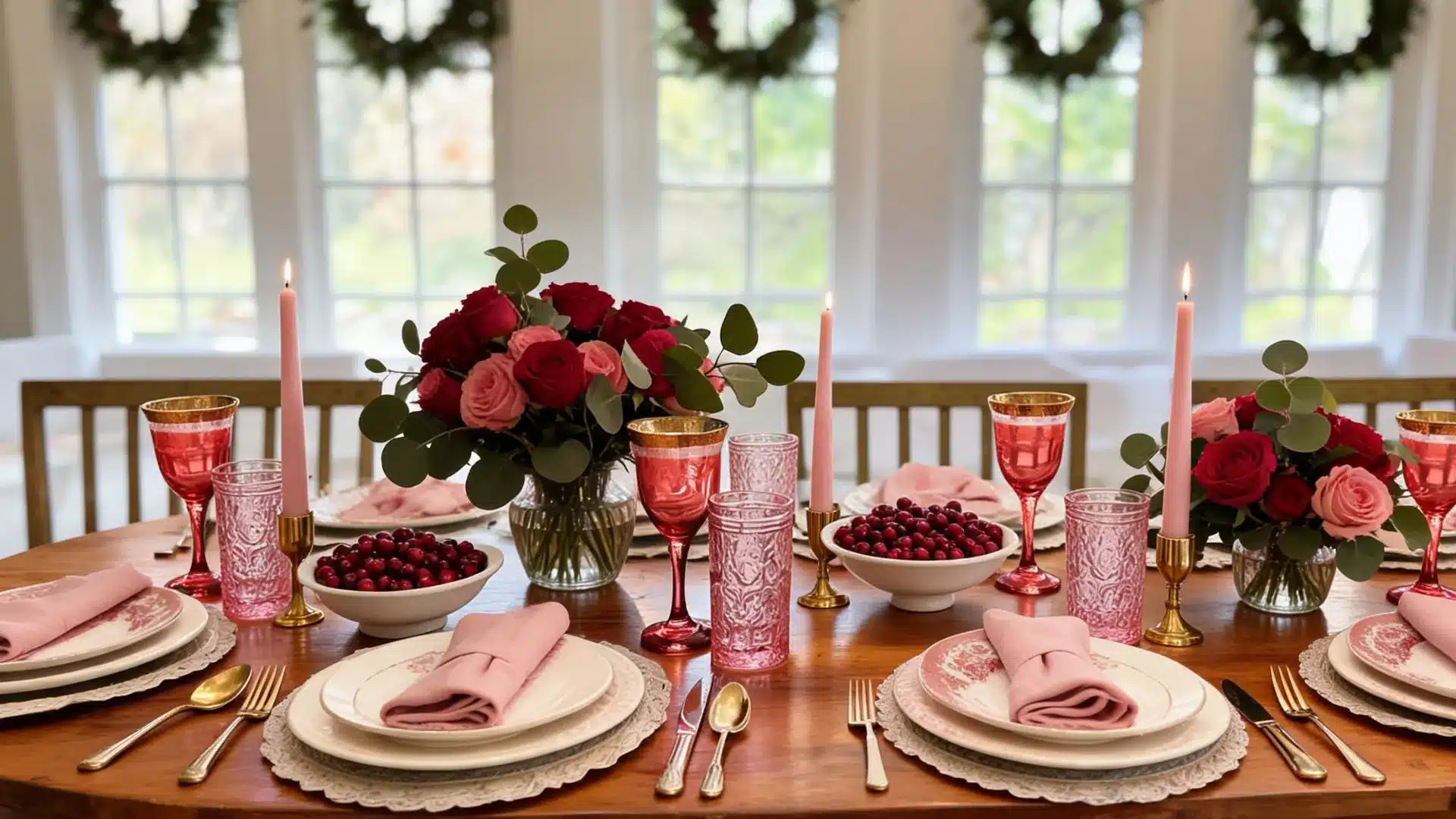
Blush pink takes the edge off cranberry red, landing on a refined palette that still feels seasonal without leaning on the usual orange and brown.
Use blush napkins or a pale tablecloth, then add cranberry-colored flowers, candles, or glassware. Small bowls of fresh cranberries can provide an inexpensive decorative accent.
Cream dinnerware and brushed gold flatware complete the setting, and repeating both colors in measured amounts keeps the finished table refined and suitable for daytime gatherings.
Tip: Use fresh cranberries only in dry bowls or sealed containers to prevent juice stains on pale linens.
16. Navy Blue and Burnt Orange Setting
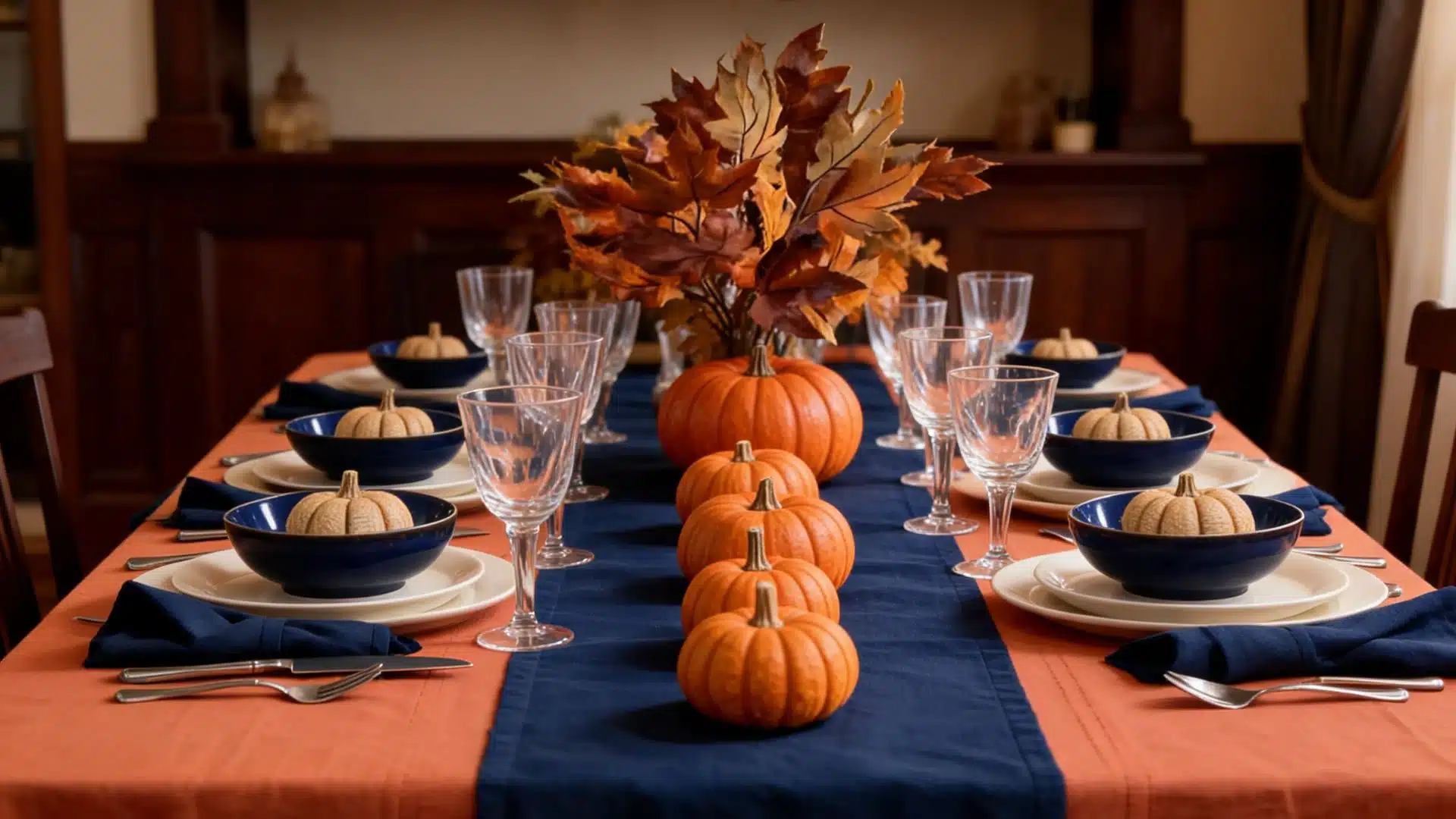
Navy blue gives burnt orange napkins, flowers, candles, or small pumpkins a strong, grounded base to sit against. White or cream plates brighten the palette, while brass flatware adds warmth between the two darker colors.
A low centerpiece of orange mums, eucalyptus, and navy taper candles can connect the setting without taking up too much space.
This combination works especially well in dining rooms with wood furniture because the grain supports the rich autumn colors.
Tip: Keep navy limited to linens or candles so the table does not become visually dark.
17. White and Silver Monochromatic Table
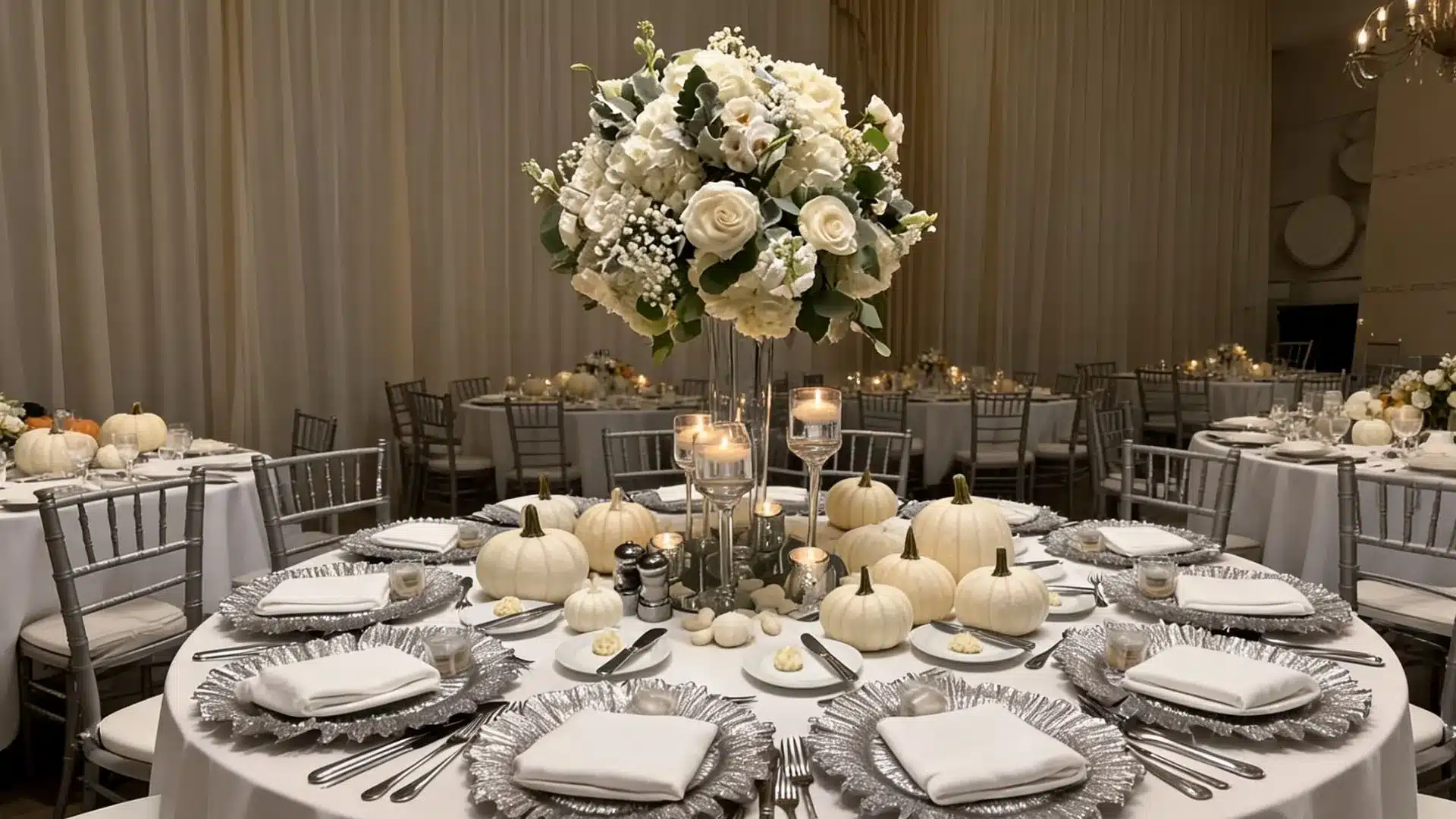
White and silver together read crisp, formal, and calm, as long as varied textures keep the table from looking flat. Layer white plates, linen napkins, and a pale tablecloth, then add silver flatware, candleholders, or chargers.
Clear glassware and white flowers maintain the restrained palette.
Mix matte ceramics, polished metal, soft fabric, and reflective glass to provide depth, and a few pale gray accents can separate the layers without introducing a competing seasonal color.
Tip: Use warm white candles rather than bright blue-white lighting to keep the setting comfortable and welcoming.
18. Champagne Glassware With Soft Beige Linens
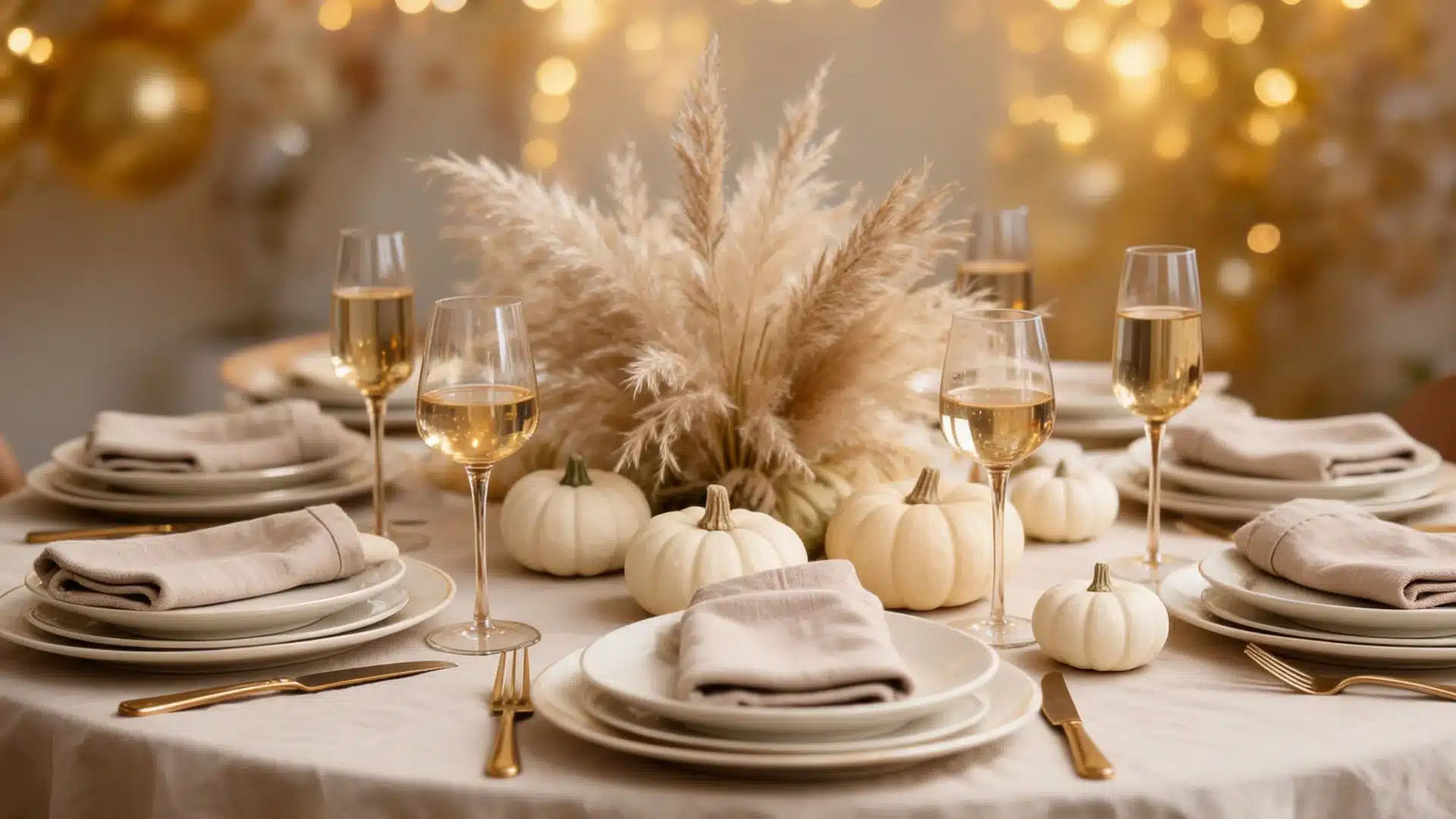
Champagne-tinted glassware adds a subtle warmth against beige, oatmeal, or light taupe linens. Pair the glasses with cream plates, brushed gold flatware, and a simple centerpiece of dried grasses, pale flowers, or white pumpkins.
Because the colors are closely related, texture becomes especially important.
Wrinkled linen, smooth ceramic, reflective glass, and natural foliage create enough contrast to make the arrangement feel complete without requiring strong colors or large decorations.
Tip: Place the glassware near candlelight or natural light so its soft champagne tint remains visible.
Rustic Thanksgiving Table Decor Ideas
Natural materials, warm colors, textured linens, and harvest accents build a relaxed table that still feels seasonal and comfortable.
19. Plaid Linens With Wooden Chargers

A plaid napkin or a narrow plaid runner brings in pattern and warmth without taking over the whole table.
Pair them with wooden chargers, cream stoneware plates, clear glassware, and simple flatware for a balanced rustic setting.
Choose a plaid that includes brown, rust, olive, or muted red so it connects naturally with pumpkins, leaves, and branches. Keep the centerpiece low and restrained to prevent the table from feeling overly patterned.
Tip: Use plaid in one main element, such as the napkins or runner, rather than repeating it across the whole table.
20. Pumpkin and Pear Harvest Table Runner
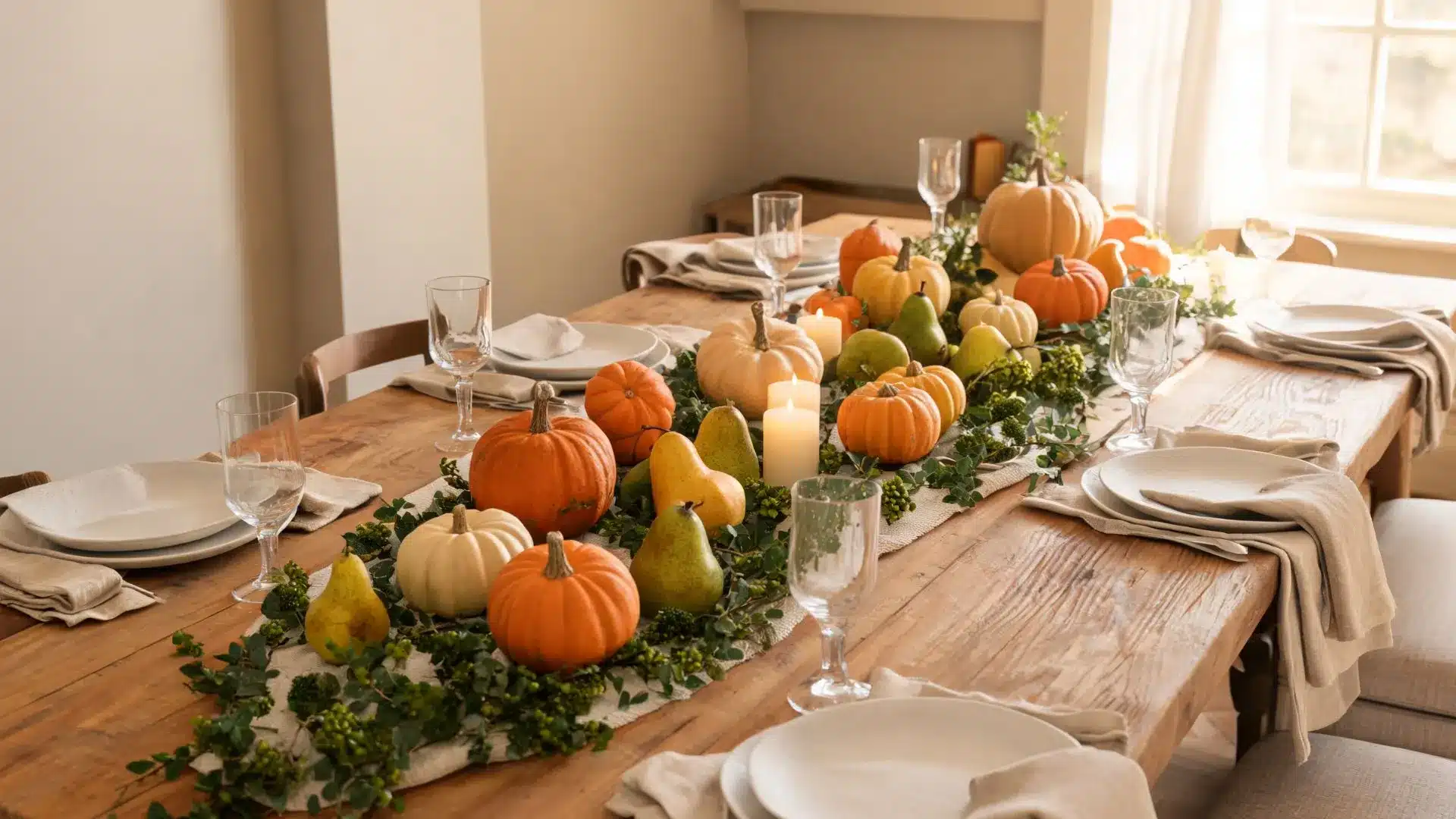
Line up small pumpkins and fresh pears down the center of the table for a runner that looks almost edible.
Mix orange, cream, green, and golden tones, then add loose leaves or short greenery sprigs between the fruit.
The different shapes create natural movement while keeping the display low enough for conversation. Neutral plates, linen napkins, and simple candleholders help the produce remain the main feature.
Tip: Choose firm pears and unmarked pumpkins so the arrangement stays fresh and clean throughout the meal.
21. Wheat Bundles With Pinecones and Candles
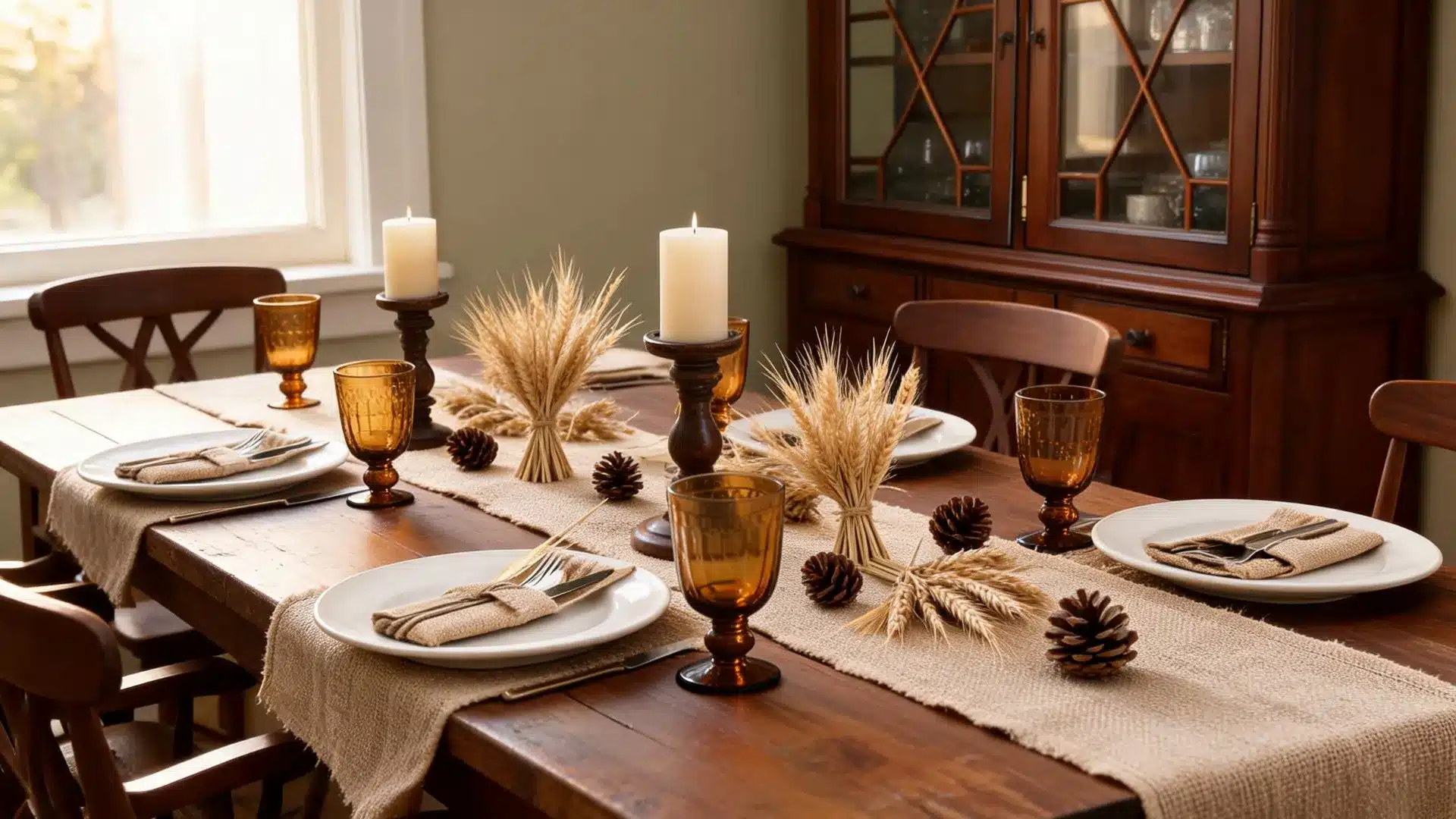
Small wheat bundles add height and harvest texture to a rustic table, no flowers required. Place them in short pottery vessels or tie several stems with twine, then surround them with pinecones and unscented candles.
Brown, cream, and amber tones work well with this arrangement.
Keep the wheat away from open flames and space the pinecones loosely so the centerpiece feels natural while leaving room for serving bowls and platters.
Tip: Use flameless candles when dry wheat and pinecones are positioned close together.
22. Woodland Table With Moss and Acorns
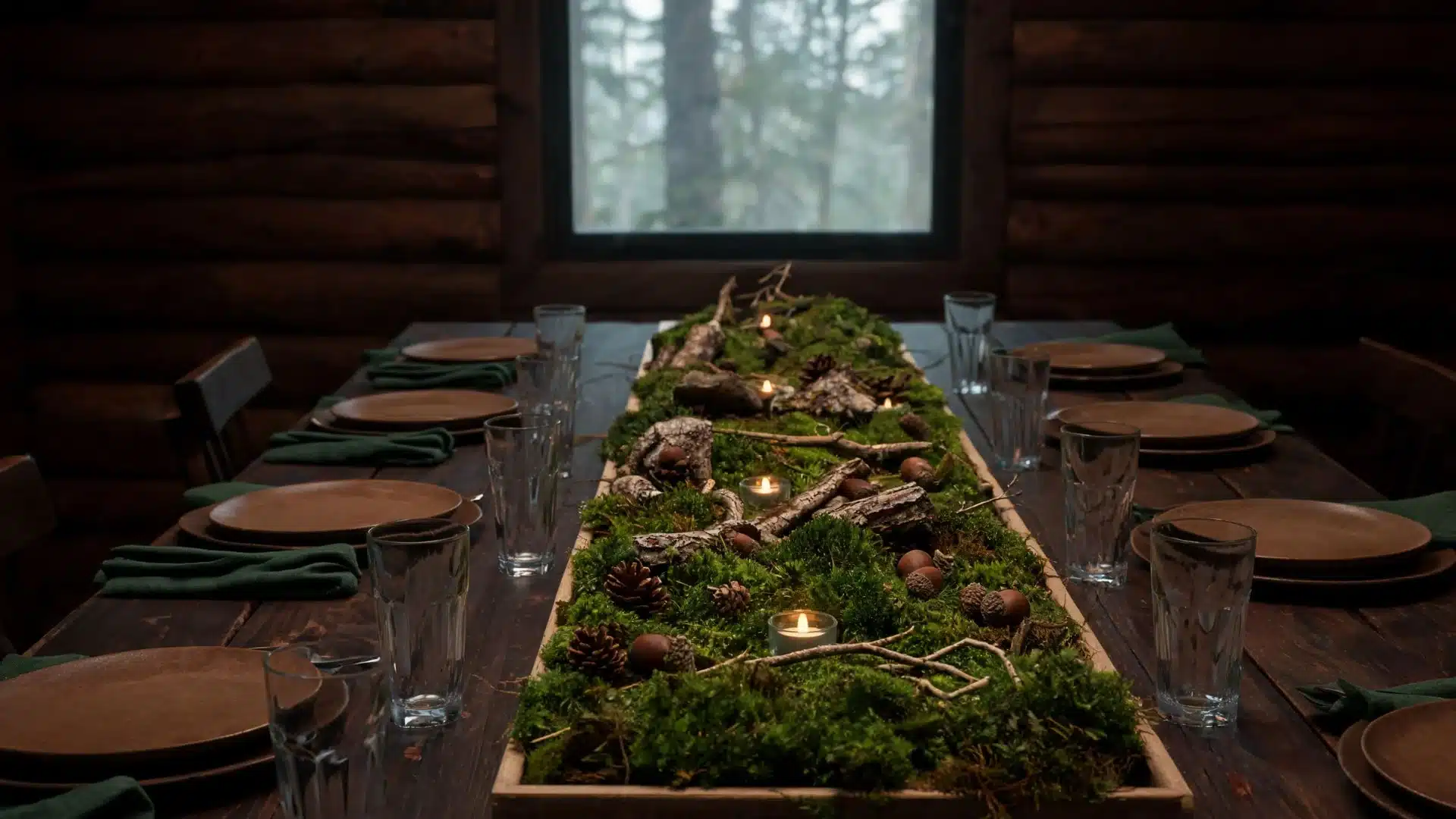
Moss, acorns, bark, twigs, and other forest-inspired pieces turn into an earthy centerpiece for a woodland-style table.
Arrange preserved moss in shallow trays rather than placing it directly on the tablecloth, then add acorns, pinecones, and short candles.
Dark green napkins and brown stoneware strengthen the forest palette. Keep the arrangement contained and low so loose natural materials do not spread into place settings or interfere with dishes during the meal.
Tip: Clean and thoroughly dry collected acorns and twigs before using them indoors.
23. Stoneware Plates With Dried Grasses
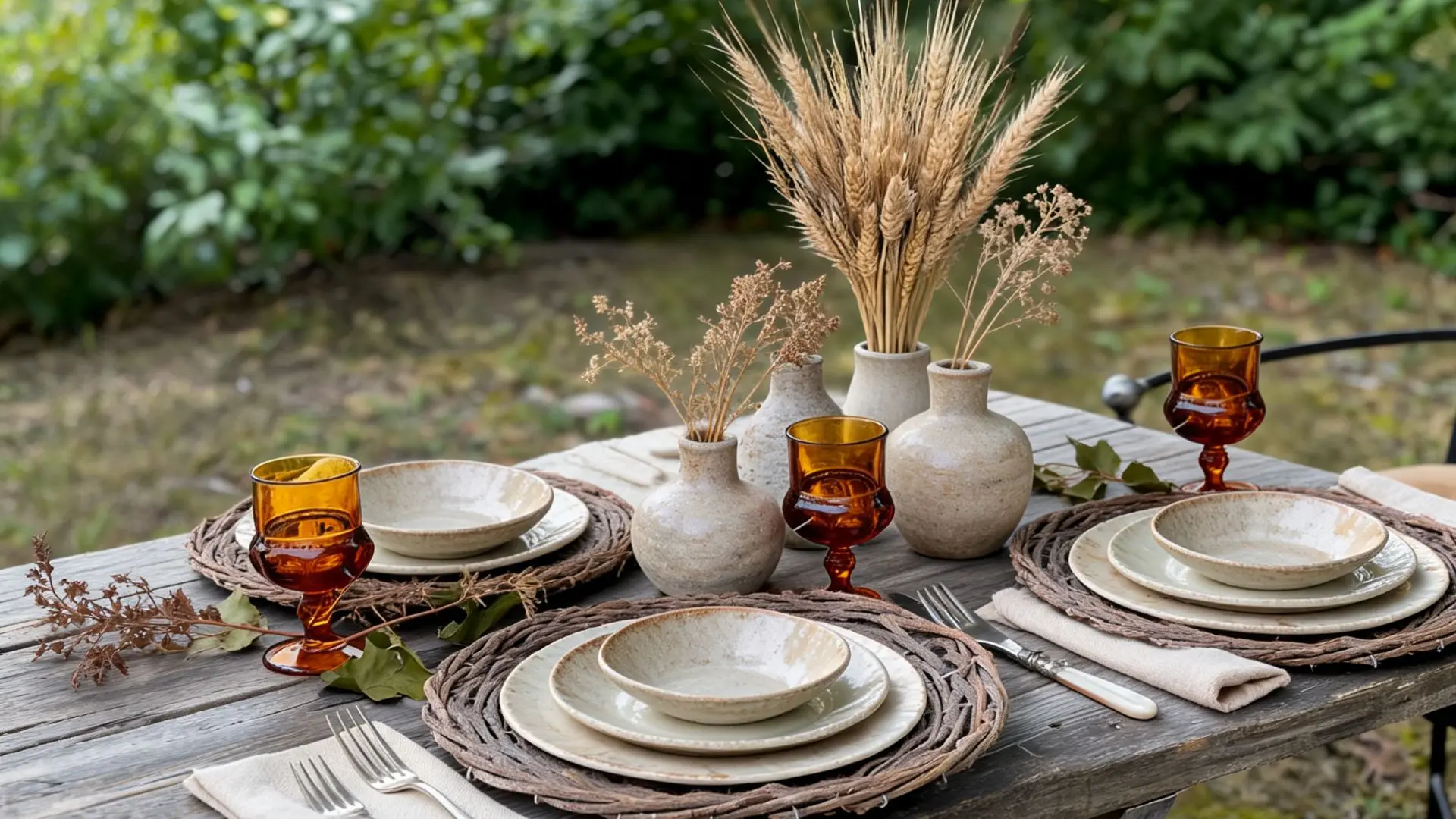
Hand-finished stoneware plates bring texture and a bit of color variation that fits a relaxed rustic table. Pair them with linen napkins, simple flatware, and clear or amber glasses.
Use dried grasses, seed heads, and wheat in low ceramic vessels to continue the natural look through the center. Shades of cream, taupe, brown, and muted green keep the setting calm, and avoiding overly tall grasses keeps faces and candles clear.
Tip: Shake dried stems outdoors before arranging them to remove loose seeds and dust.
24. Copper Mugs With Magnolia Leaves
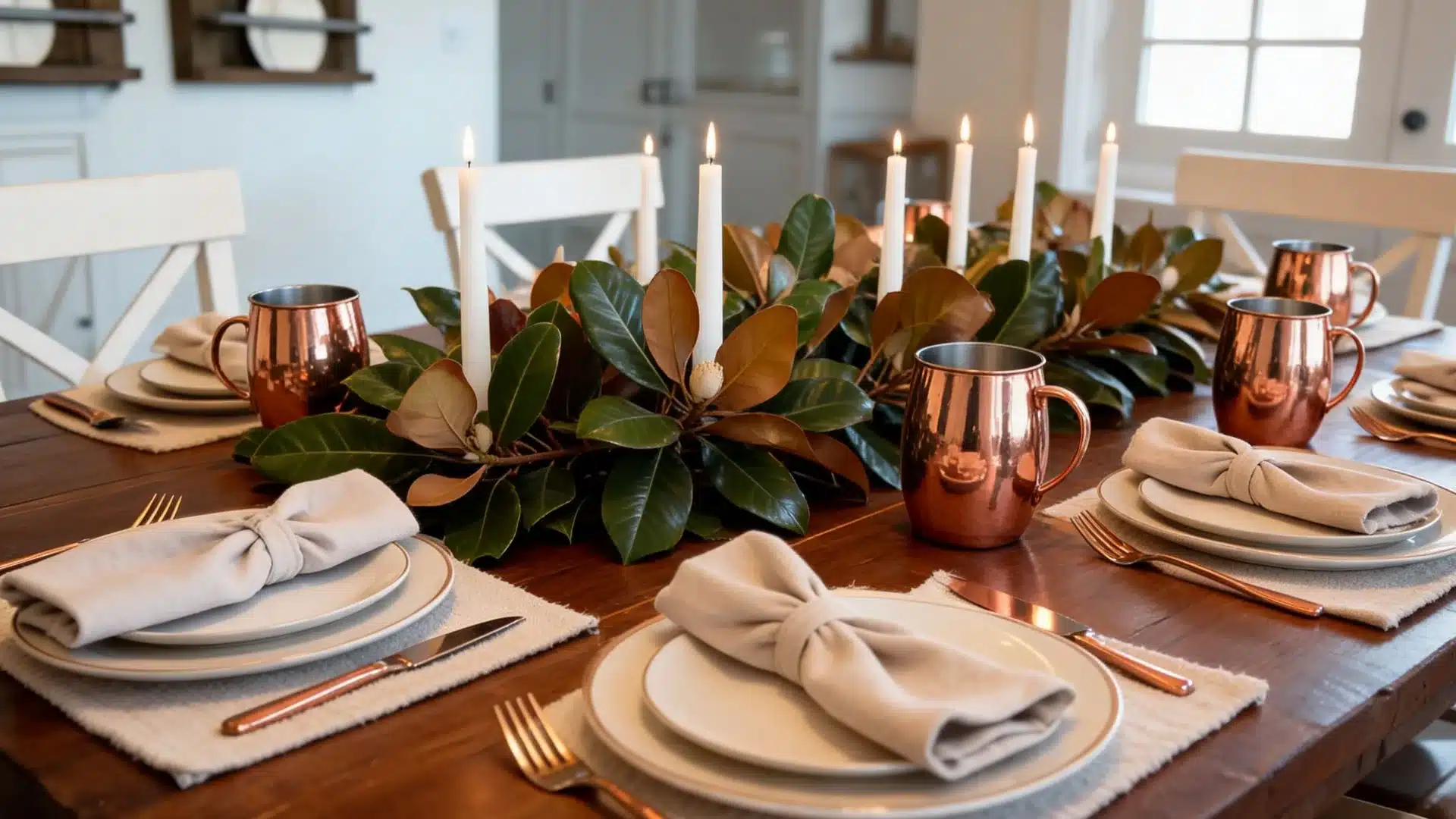
Copper mugs stand out against deep green magnolia leaves and bring in warm metallic color at the same time. Lay the leaves along the center as a loose runner, then add white candles, cream plates, and neutral napkins.
The glossy green tops and brown undersides provide natural contrast without extra decorations.
Copper can also appear through flatware or small candleholders, but limiting the metal to a few items keeps the table rustic rather than overly formal.
Tip: Polish copper mugs before setting the table so fingerprints and water spots do not distract from the finish.
25. Vintage Crocks Filled With Autumn Mums
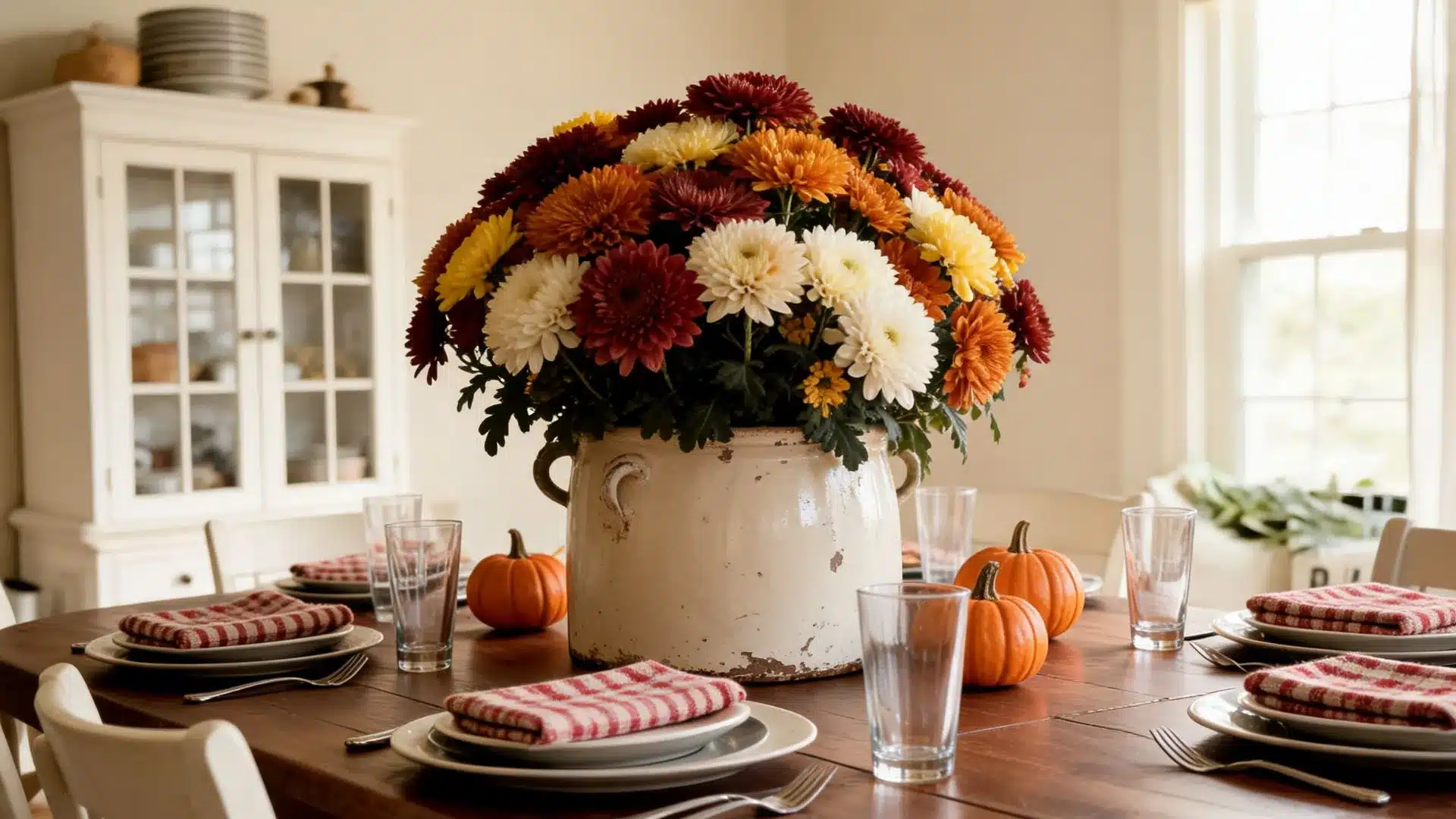
An ordinary bunch of autumn mums looks collected and farmhouse-worn the moment it goes into a vintage crock.
Fill one medium crock or several smaller vessels with rust, yellow, burgundy, or cream mums, trimming the stems so the arrangements remain below eye level.
Pair them with simple white plates, checked napkins, and weathered wooden accents.
Crocks with worn glaze or subtle markings add character, but the flowers should remain the strongest color so the table does not feel overloaded.
Tip: Place a watertight container inside older crocks to protect the table from unnoticed cracks or leaks.
26. Apple Orchard Table With Woven Baskets
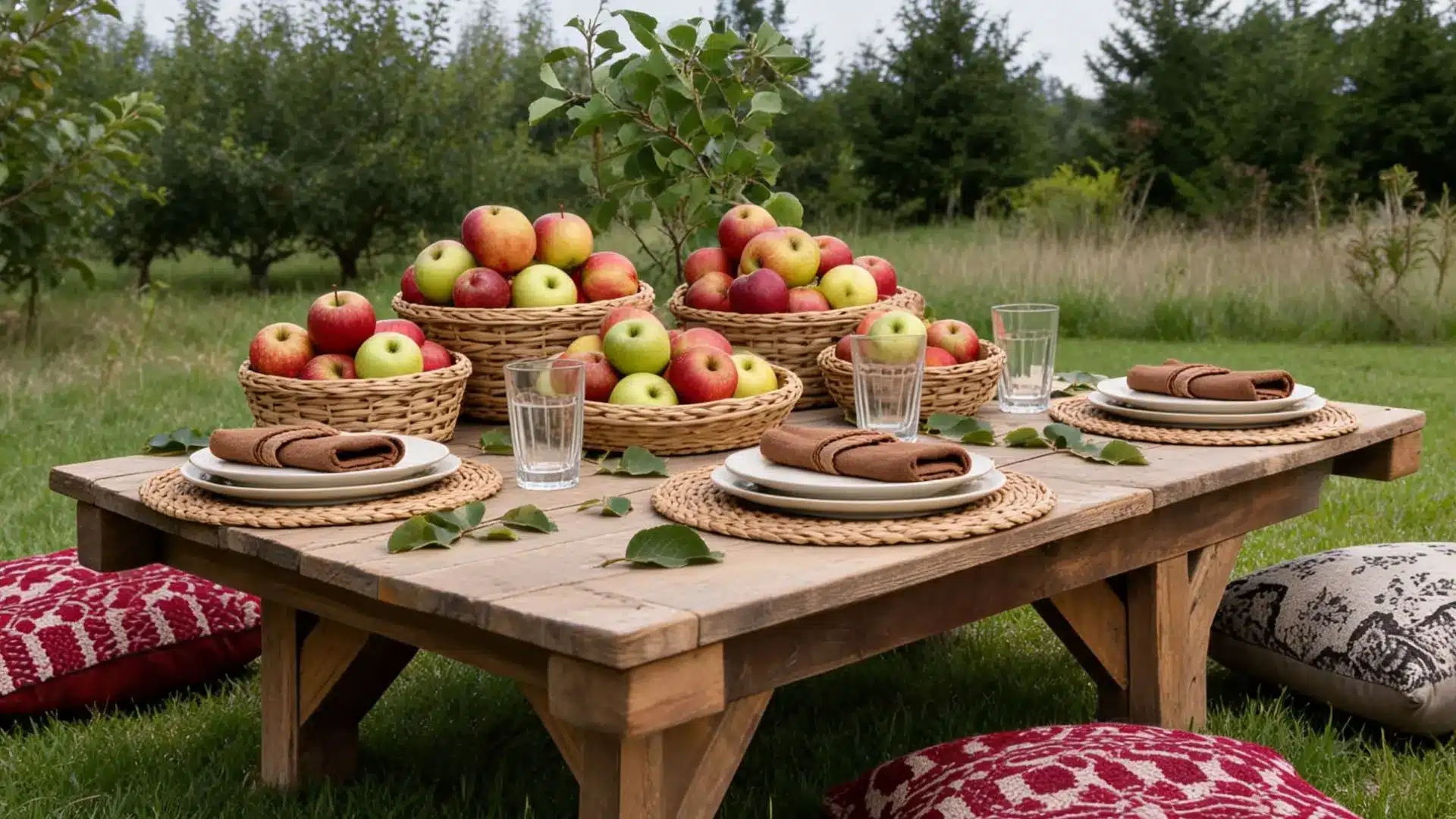
Fresh apples in small woven baskets bring an orchard feel to the table, plus color guests can eat afterward.
Fill shallow baskets with red, green, or golden apples, then add loose leaves, cinnamon-colored napkins, and cream dinnerware.
Smaller baskets can hold bread or individual place-setting favors. Keep the fruit grouped rather than scattered across the table so guests have enough room for plates and glasses.
Tip: Use apples with similar sizes and firm skins to keep the display tidy and evenly balanced.
27. Burlap Runner With Mason Jar Centerpieces
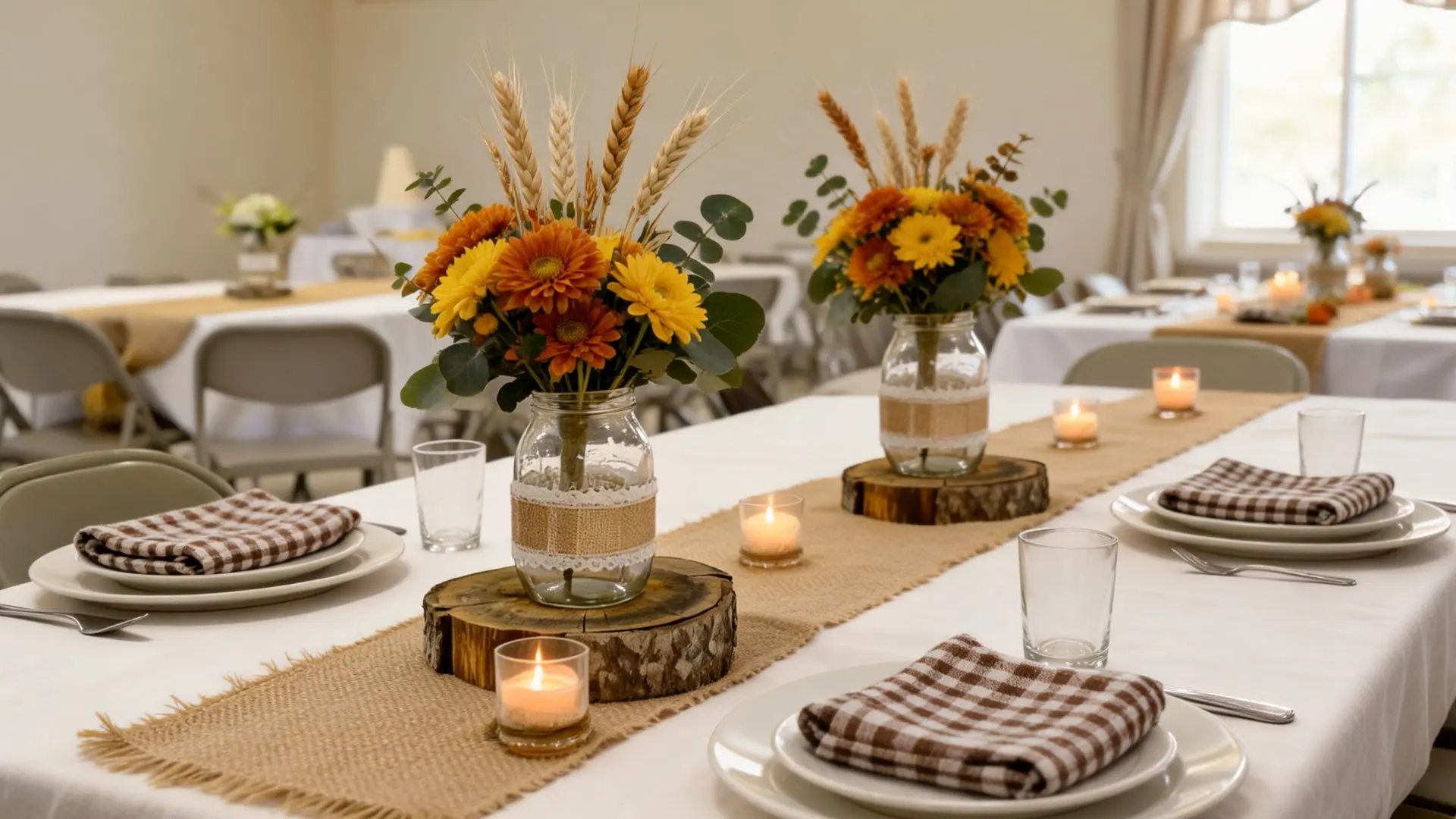
A burlap runner gives simple mason jar arrangements, filled with mums, wheat, eucalyptus, or seasonal branches, a textured base to sit on. Space the jars evenly down the table and vary their heights slightly.
White plates, checked napkins, and clear glassware complement the casual materials.
Because burlap can feel visually heavy, limit additional decorations and leave open sections between jars for serving dishes and shared plates.
Tip: Place a thin fabric runner beneath the burlap to prevent rough fibers from scratching a polished tabletop.
Modern Thanksgiving Table Decor Ideas
Clean lines, restrained color palettes, sculptural forms, and unexpected seasonal pairings keep a table feeling current without losing warmth or comfort.
28. Sculptural Black-and-White Thanksgiving Table
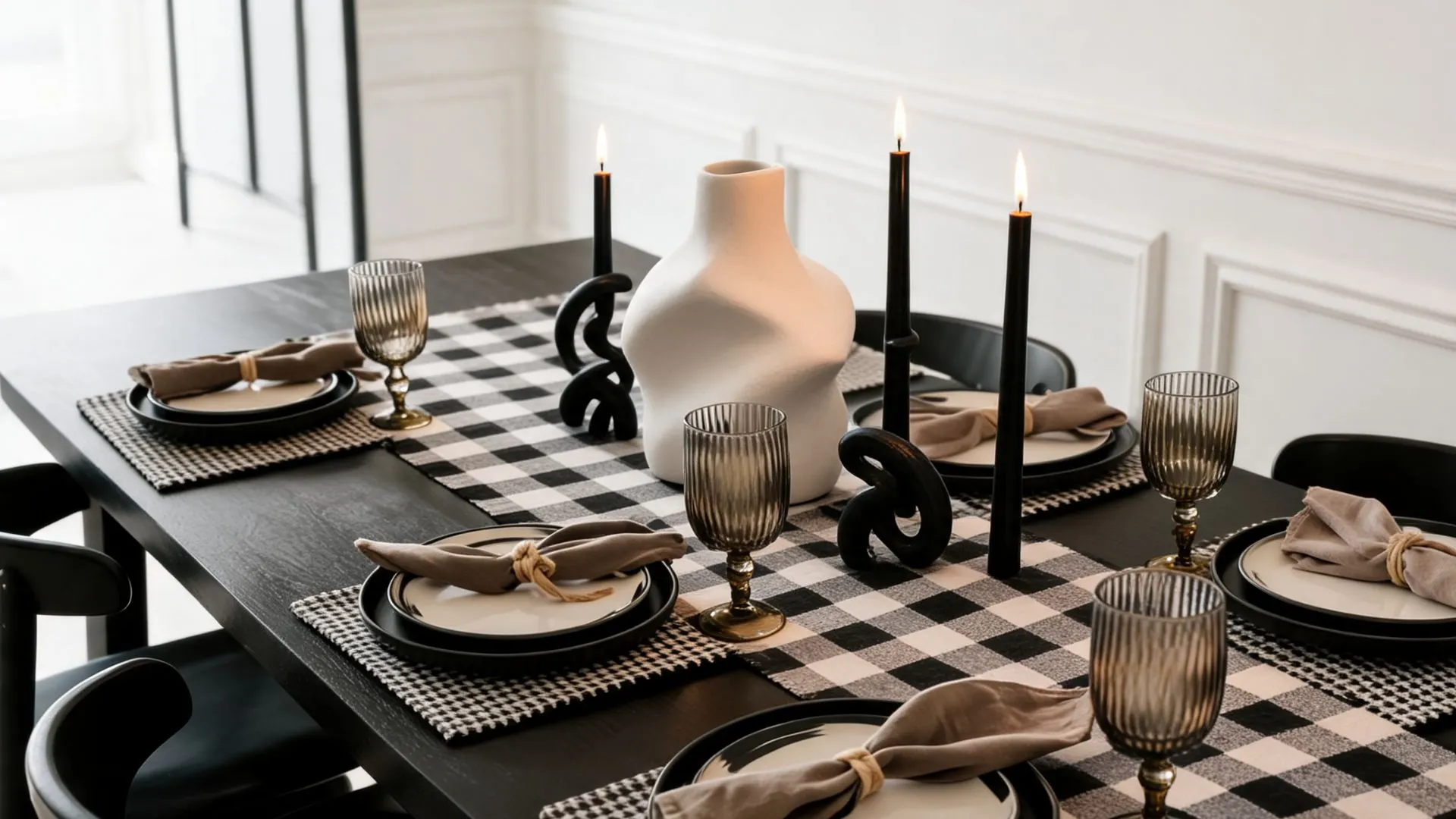
Black and white together read sharp and modern, especially when shape carries the design instead of color.
Pair white plates with matte black chargers, sculptural candleholders, and one bold ceramic centerpiece.
Add clear glassware and soft gray napkins to keep the contrast controlled. Choose a low, abstract arrangement instead of traditional florals so guests can see across the table.
Tip: Use curved candleholders or rounded ceramics to soften the strong black-and-white contrast.
29. Terracotta and Sage Green Tablescape
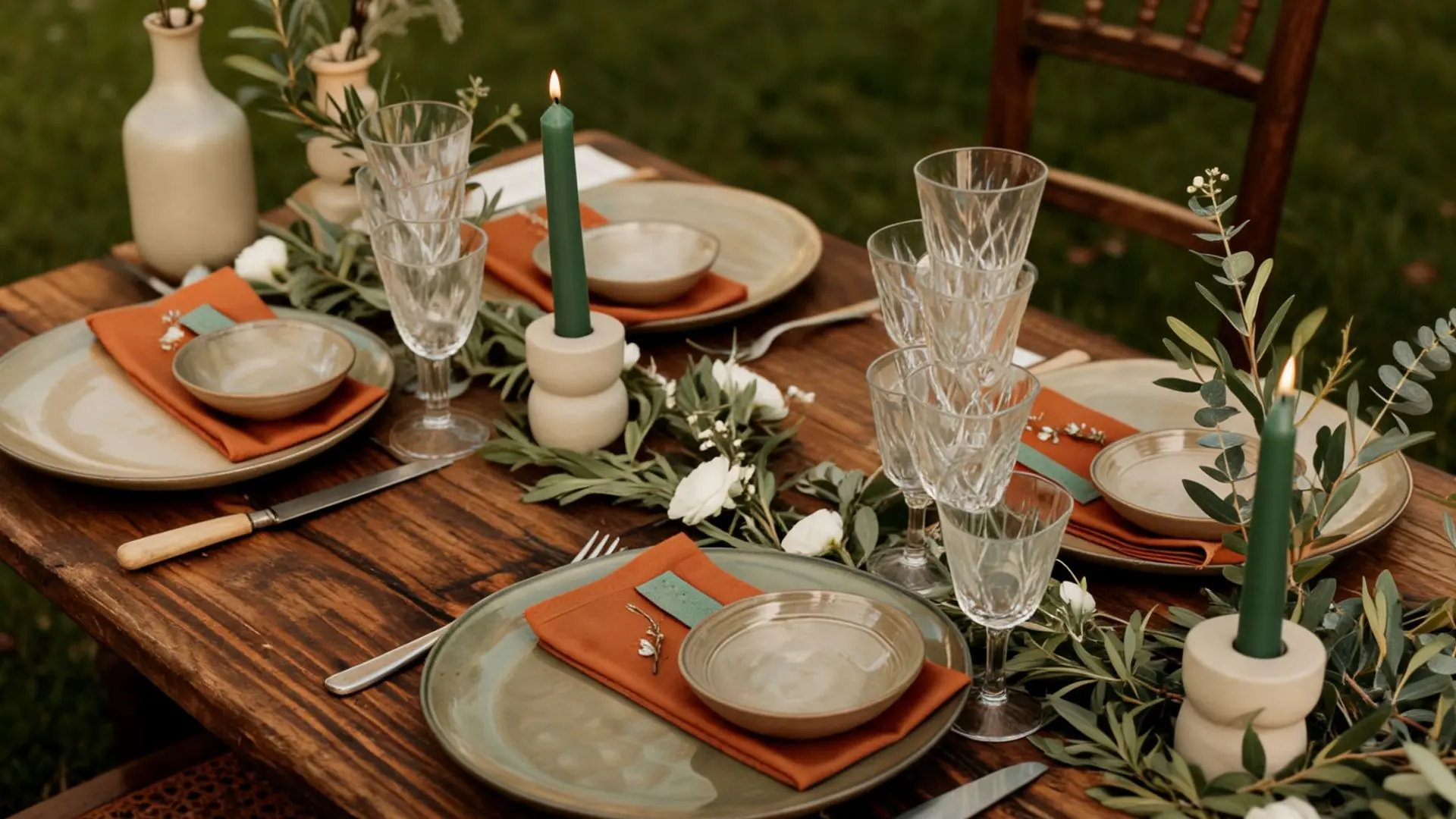
Terracotta and sage green land on a calm, modern palette that still has enough warmth for Thanksgiving.
Use terracotta napkins, candles, or small vessels beside sage runners, glassware, or leafy branches.
Cream dinnerware keeps the colors balanced, while natural wood and brushed brass add subtle contrast. Arrange low eucalyptus, olive branches, or muted flowers down the center instead of building one large centerpiece.
Tip: Choose muted terracotta rather than bright orange to maintain a softer modern palette.
30. Pink, Orange, and Amber Table Setting
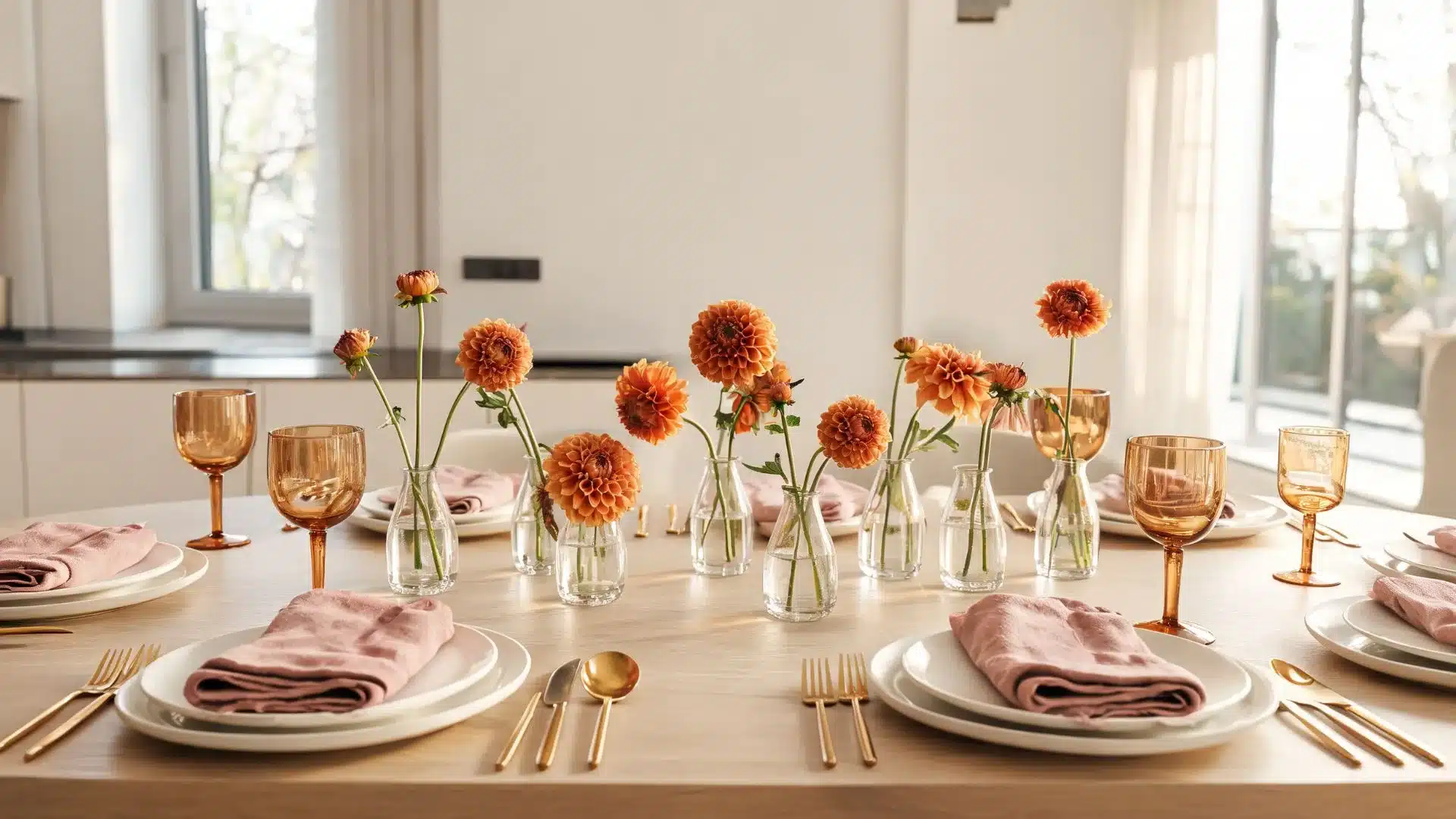
Pink, orange, and amber together read bright and playful without tipping into overly sweet. Combine dusty pink napkins with burnt-orange flowers, amber goblets, and cream dinnerware.
Use gold or copper flatware to connect the warm shades, then keep the centerpiece low with a few bud vases rather than one dense arrangement.
Repeating each color in only one or two places helps the table look coordinated.
Tip: Use dusty or muted pink so the orange and amber accents remain suitable for the season.
31. Cobalt Blue and Cranberry Tablescape
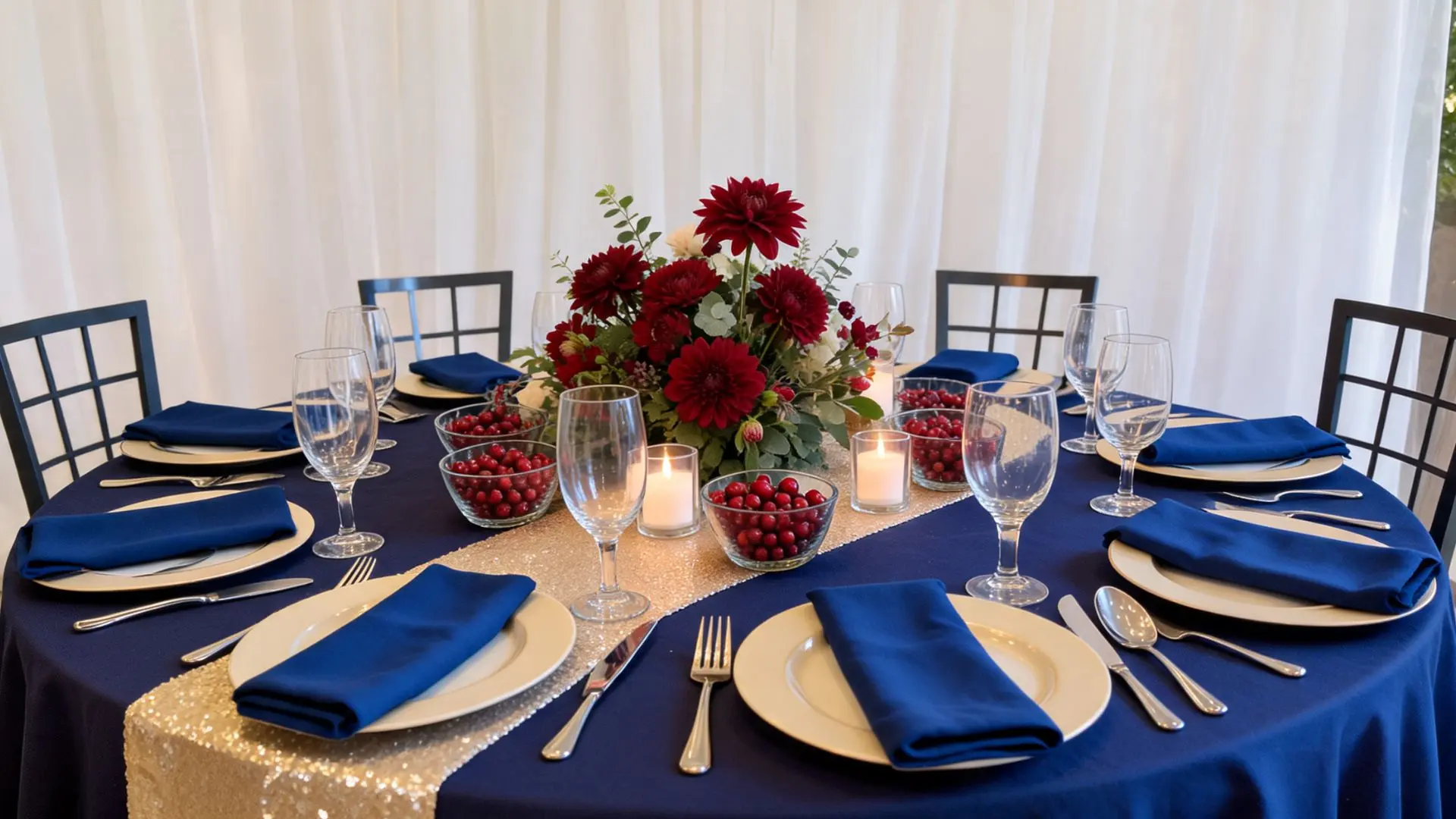
Cobalt blue sets up a crisp, unexpected contrast against cranberry red, the kind that suits a modern table.
Use cobalt napkins, glasses, or bowls with white plates and cranberry-colored flowers, candles, or berries.
Clear glassware and simple silver flatware prevent the palette from feeling too heavy. A low centerpiece of red dahlias, dark leaves, and blue vessels can connect the scheme.
Tip: Let white dinnerware separate the cobalt and cranberry shades so the table does not feel visually crowded.
32. Mustard Yellow and Plum Table
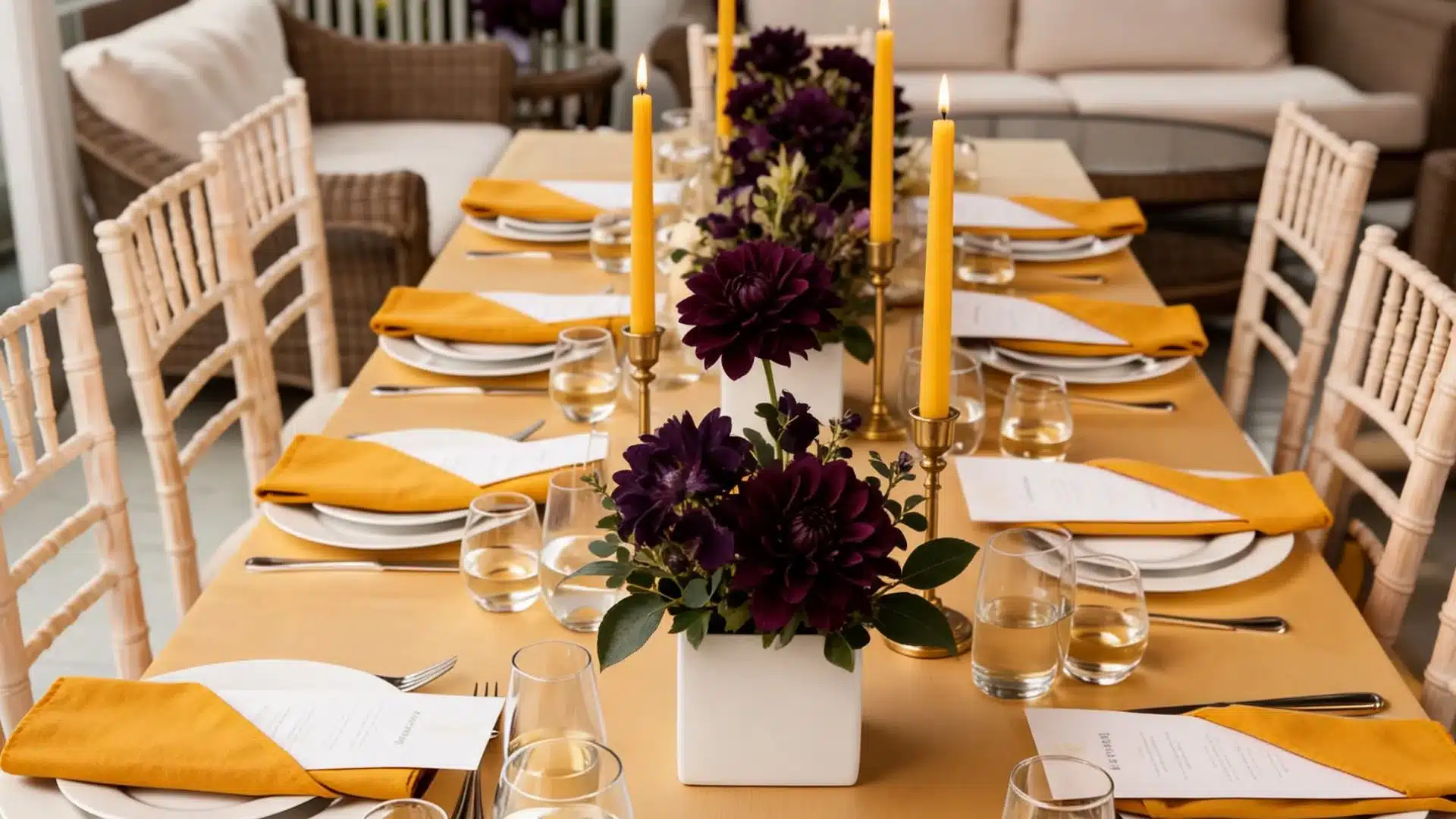
Mustard yellow and plum land on a richer, less predictable palette than the standard orange and brown. Use mustard napkins or taper candles with plum flowers, glassware, or small pumpkins.
Cream plates and pale wood tones help separate the deeper shades, while brass accents add a soft glow.
Keep the centerpiece loose and low with dahlias, mums, or branches in one or two vessels.
Tip: Use mustard as the lighter accent and plum as the deeper focal color for better balance.
33. Chocolate Brown Monochromatic Tablescape
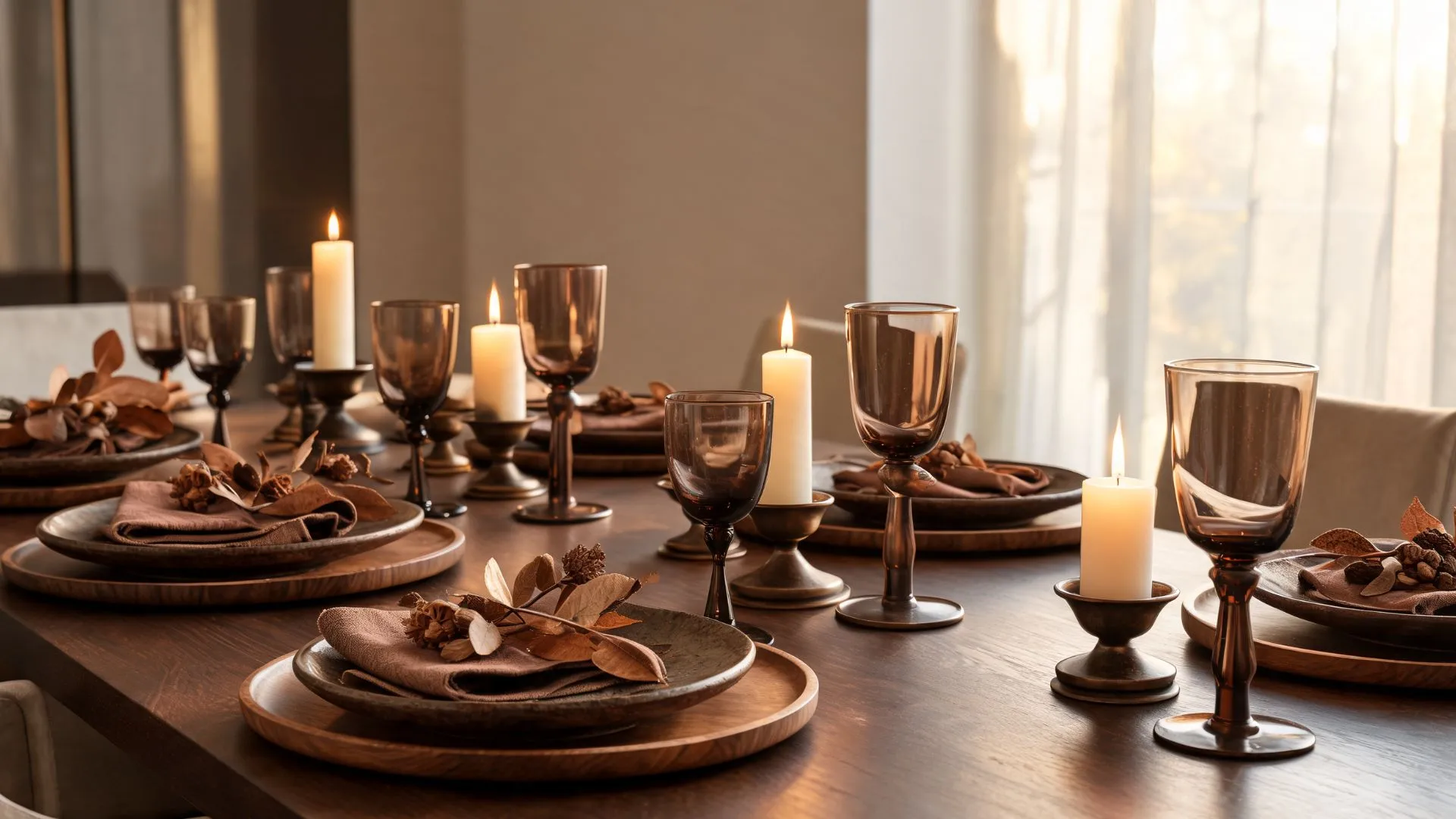
An all-brown table gets its depth from texture instead of color contrast. Layer cocoa linen napkins, dark brown stoneware, smoked glassware, walnut chargers, and bronze candleholders across a natural wood table.
Add dried leaves, seed pods, or branches in slightly lighter and darker brown tones.
Cream candles or a pale tablecloth can provide gentle relief, and mixing matte, glossy, woven, and rough surfaces keeps the setting from looking flat.
Tip: Add one lighter neutral element at each place setting to separate the layered brown surfaces.
34. Clear Glass and Bare Branch Centerpiece
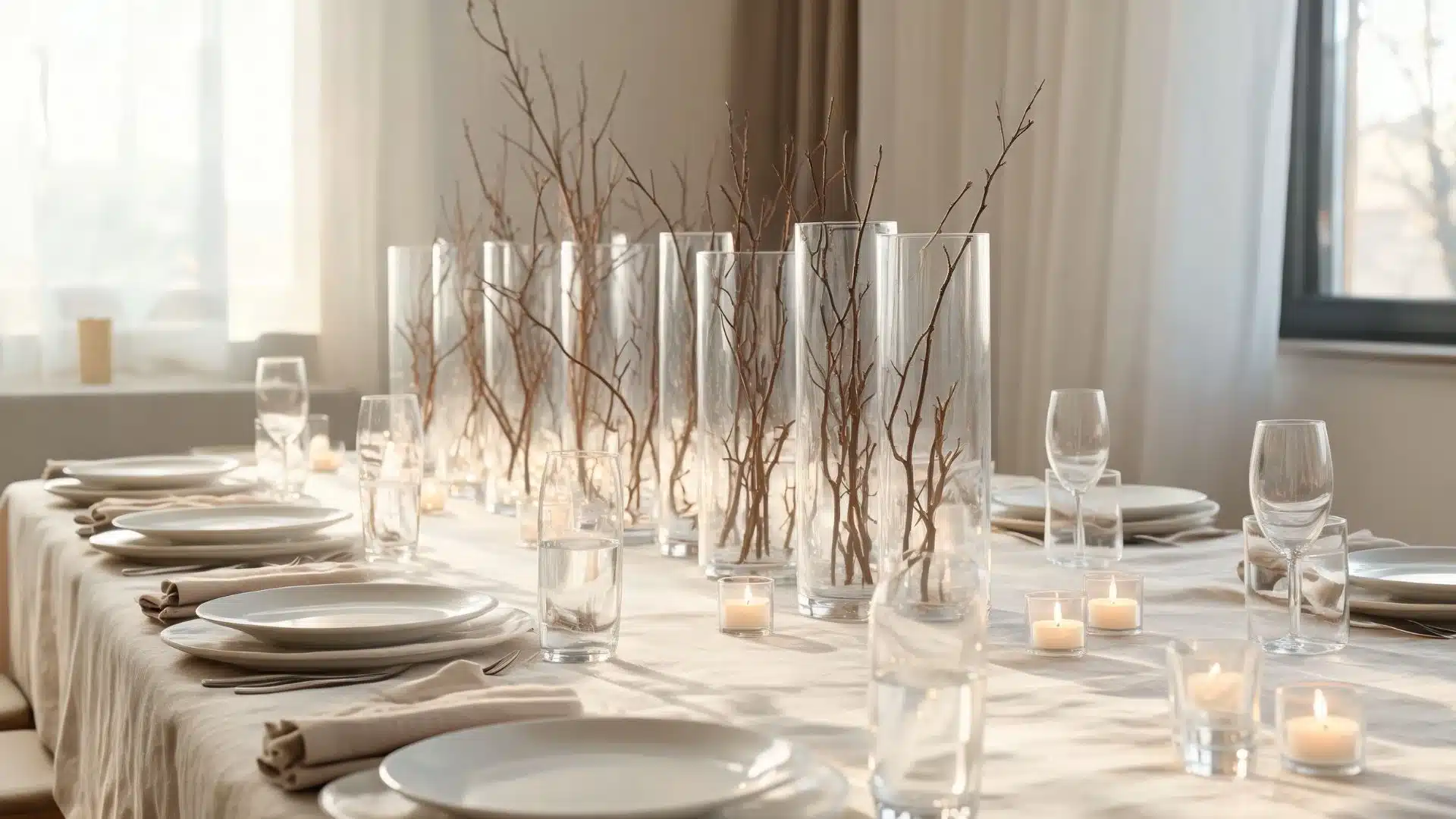
Bare branches in clear glass cylinders make a light, architectural focal point for a modern table.
Place a few clean branches in transparent cylinders or low glass vases, then pair them with simple white plates and neutral linens.
The visible stems and open forms keep the table from feeling crowded. Add small votive candles at the base for warmth, but avoid extra greenery or flowers so the arrangement stays airy.
Tip: Trim the branches below eye level or position them between seats to protect conversation space.
35. Geometric Linens With Asymmetrical Flowers
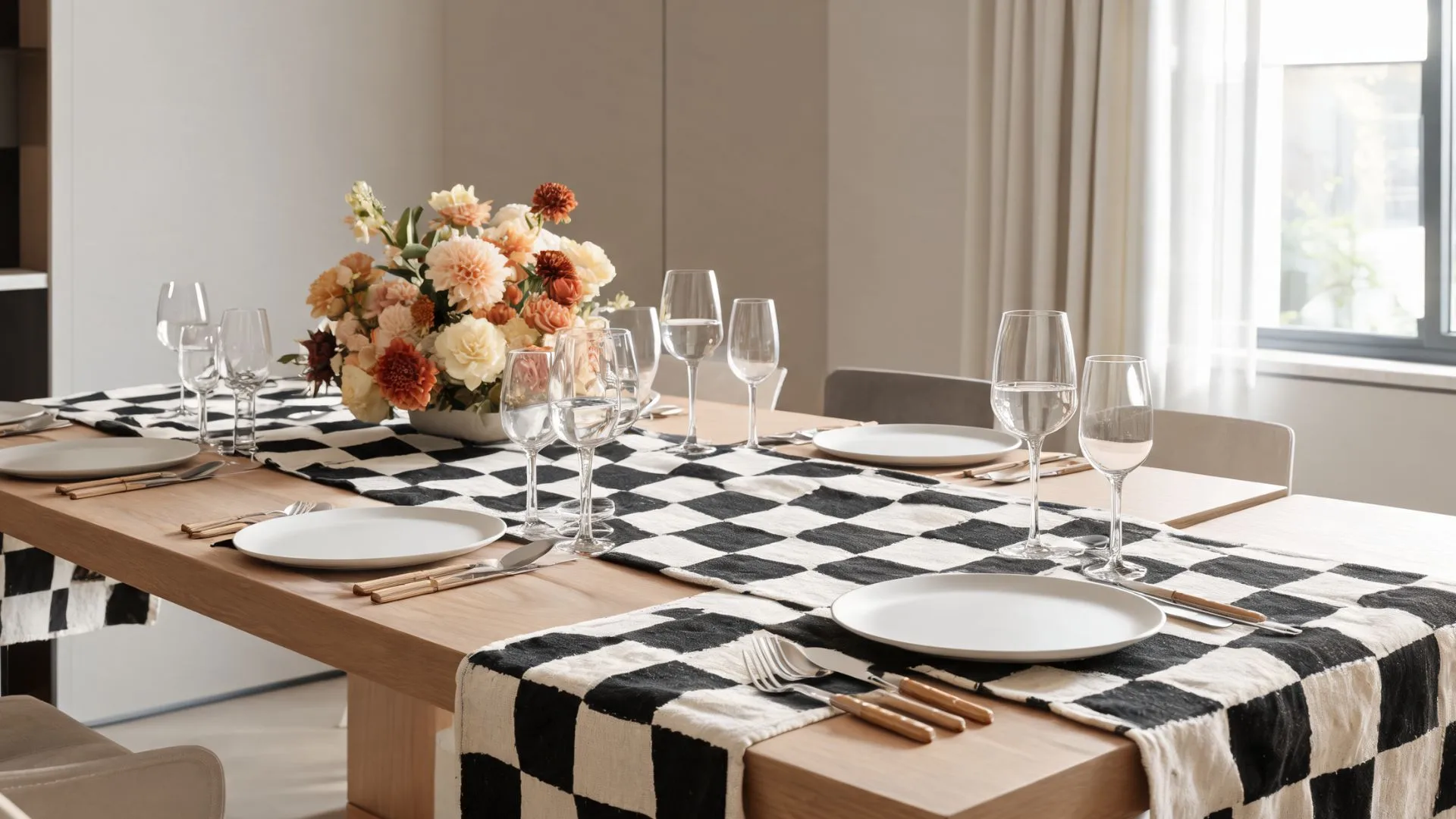
Geometric linens bring movement to a modern table, especially when paired with an asymmetrical floral arrangement.
Choose a runner or napkins with checks, stripes, or angular patterns, then balance them with flowers placed off-center in a low vessel.
Use plain plates and clear glassware so the pattern and arrangement do not compete. Repeat one linen color in the flowers or candles to connect the design.
Tip: Choose one geometric pattern and avoid mixing checks, stripes, and angular prints on the same table.
36. Matte Black Dinnerware With Natural Wood
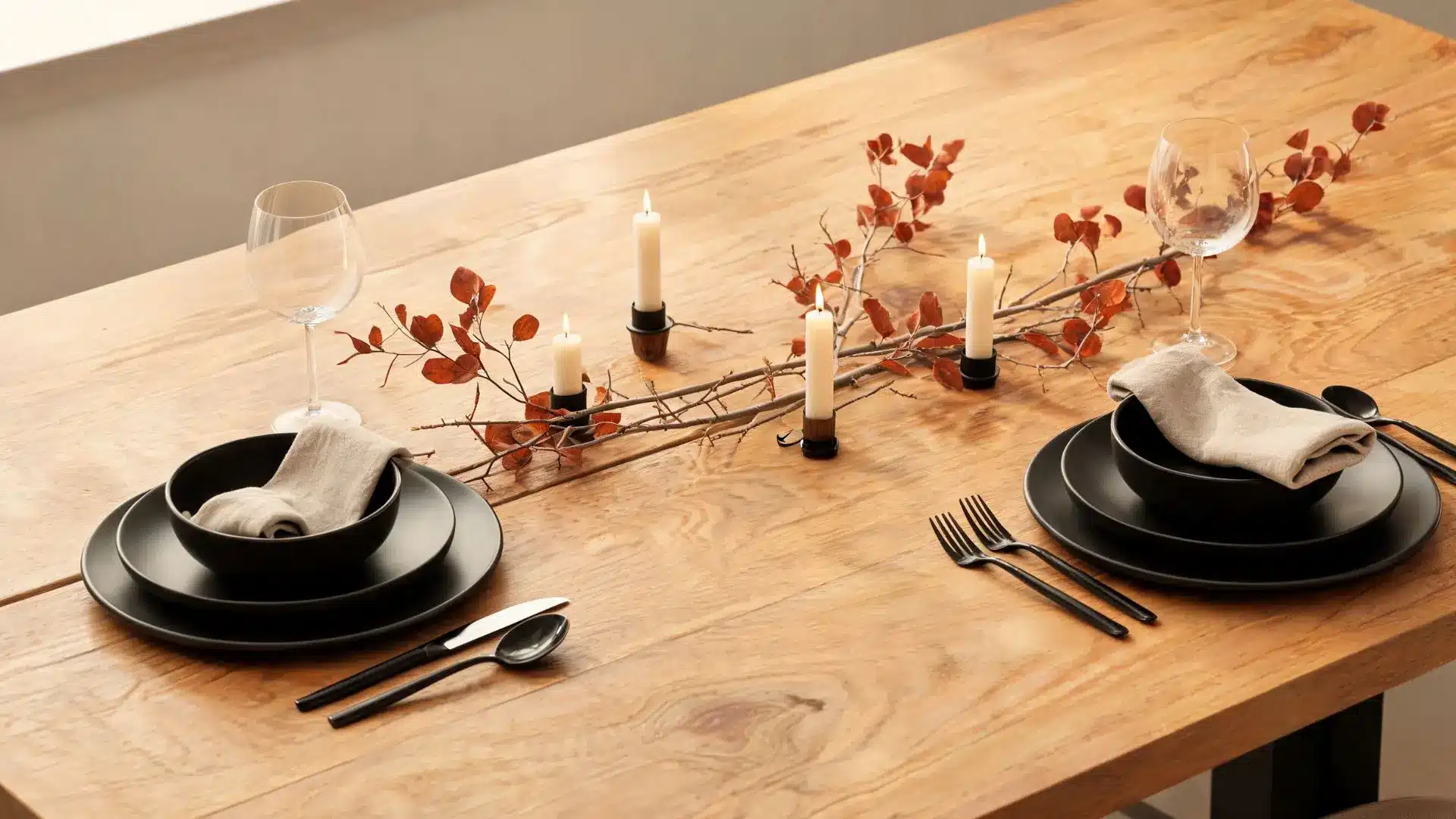
Matte black dinnerware sets a strong modern base, and natural wood keeps the table from feeling cold.
Place black plates on wood chargers or a bare wooden table, then add beige napkins, clear glassware, and simple brass flatware.
A low centerpiece of branches, small pumpkins, or dried grasses can introduce seasonal texture. Use soft lighting and a few ivory candles to prevent the setting from appearing too severe.
Tip: Avoid using a black tablecloth beneath black plates because the dinnerware may lose definition.
DIY Thanksgiving Tablescape Ideas
Basic paper, recycled containers, fabric remnants, leaves, and clay turn into personal decorations that suit the table without requiring advanced crafting skills.
37. Kraft Paper Gratitude Table Runner
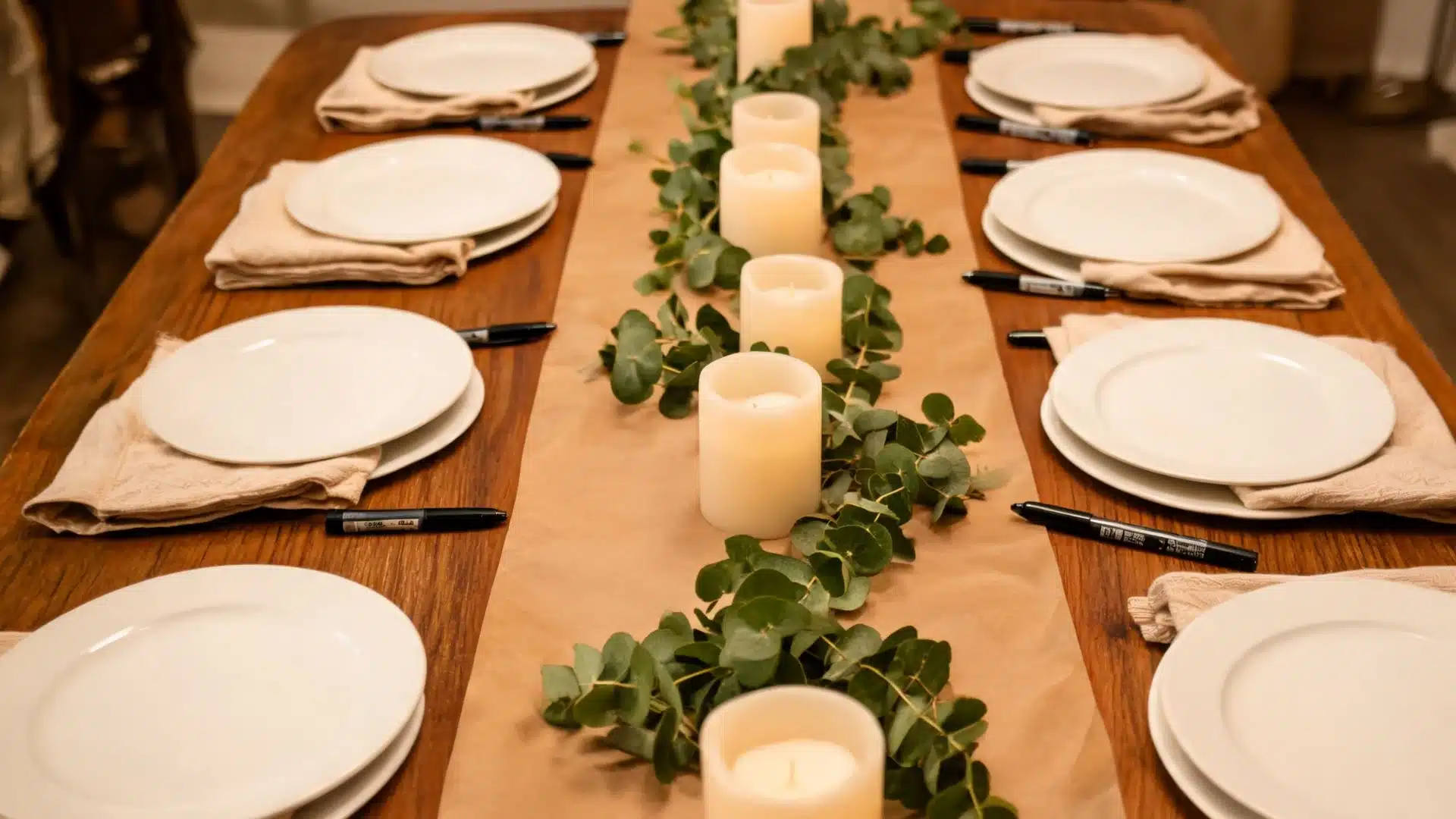
A roll of kraft paper down the table works as both a runner and a shared activity.
Stretch it along the table, then place dark markers at several seats so guests can write what they appreciate, leave short notes, or draw seasonal symbols.
Keep the surrounding decor simple with white plates, plain napkins, greenery, and low candles. The paper protects the tabletop while creating a meaningful display that changes throughout the meal.
Tip: Tape the runner discreetly beneath both ends so it does not shift when guests write on it.
38. Handwritten Pressed-Leaf Place Cards
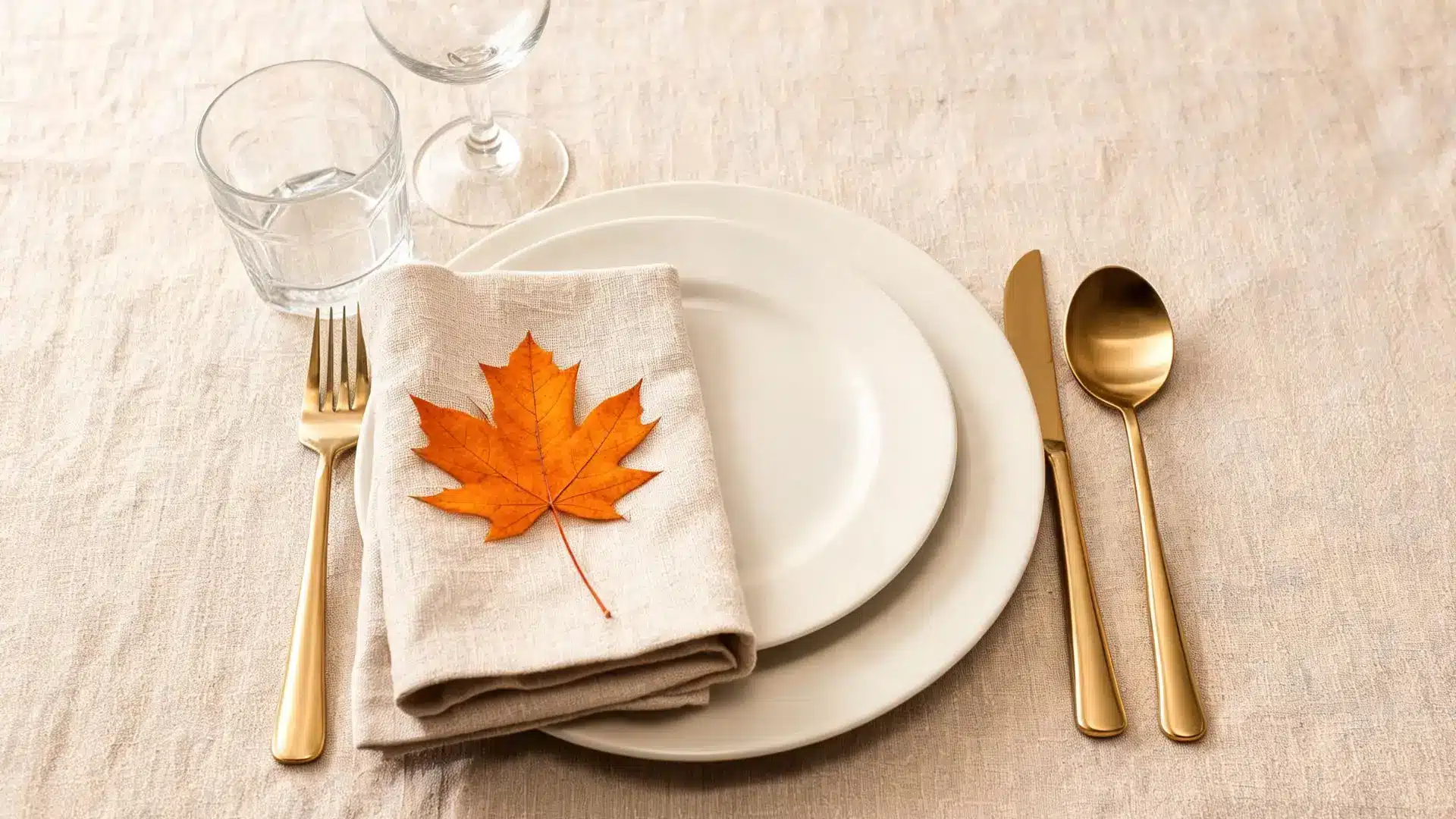
Pressed leaves turn into place cards that bring natural autumn color to each setting, for the cost of nothing but time.
Collect flat, undamaged leaves, press them beneath heavy books until dry, then write each guest’s name with a fine paint marker.
Rest one leaf on every folded napkin or dinner plate. Neutral dishes and plain linens allow the leaf shapes to stand out, and choosing leaves in similar sizes keeps the table coordinated.
Tip: Test the marker on a spare dried leaf because some surfaces may absorb or blur the ink.
39. Punched Tin-Can Thanksgiving Votives
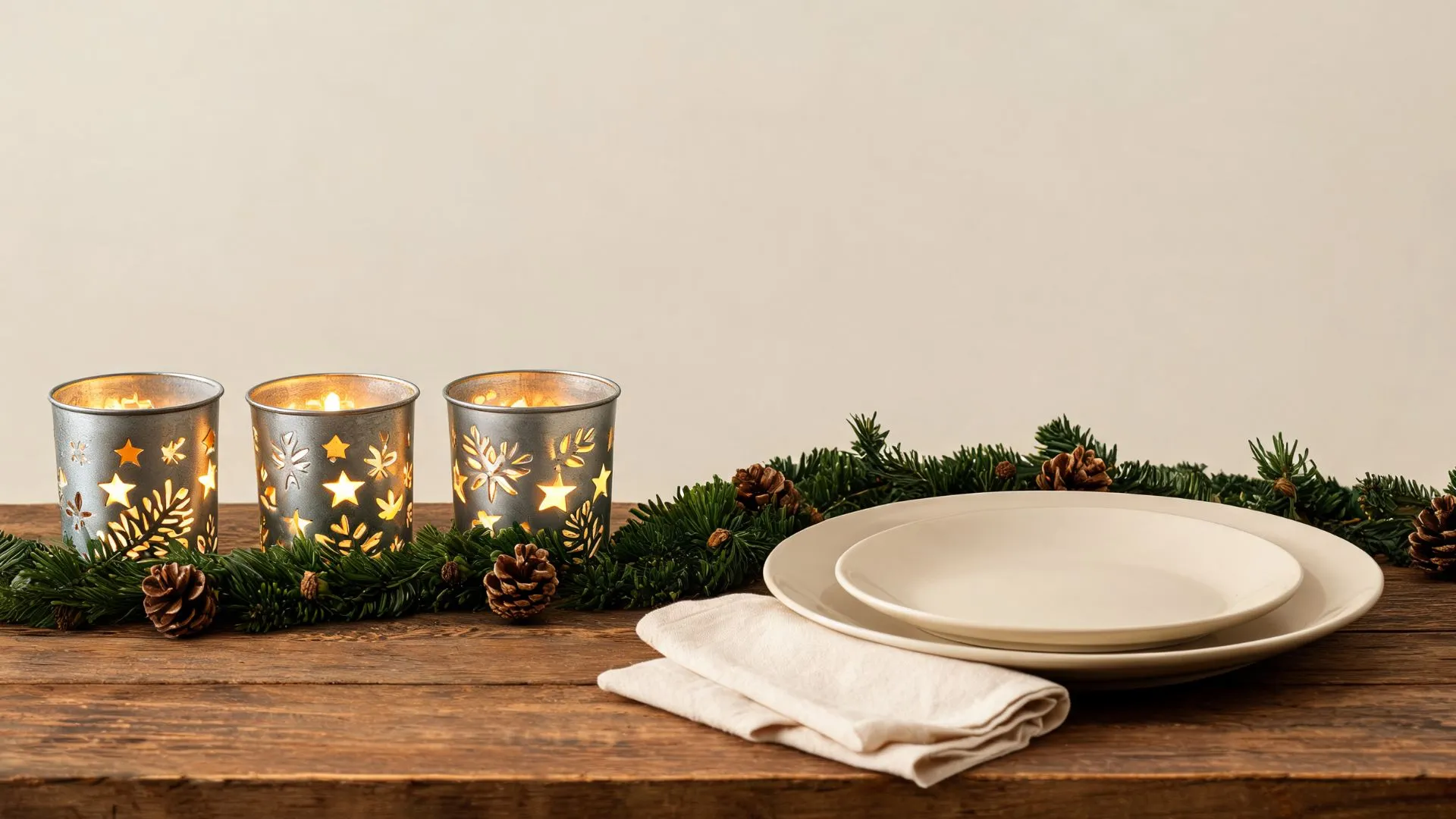
A few basic tools turn clean tin cans into patterned votive holders. Fill each can with water, freeze it, then punch small holes through the metal using a nail and hammer.
After the ice melts, dry the cans and add battery-operated tea lights.
Arrange several down the center beside greenery or pinecones, and the openings cast dotted light across the table.
Tip: Smooth any sharp edges and use battery lights rather than open flames inside the cans.
40. Thrifted Mismatched Dinnerware Table
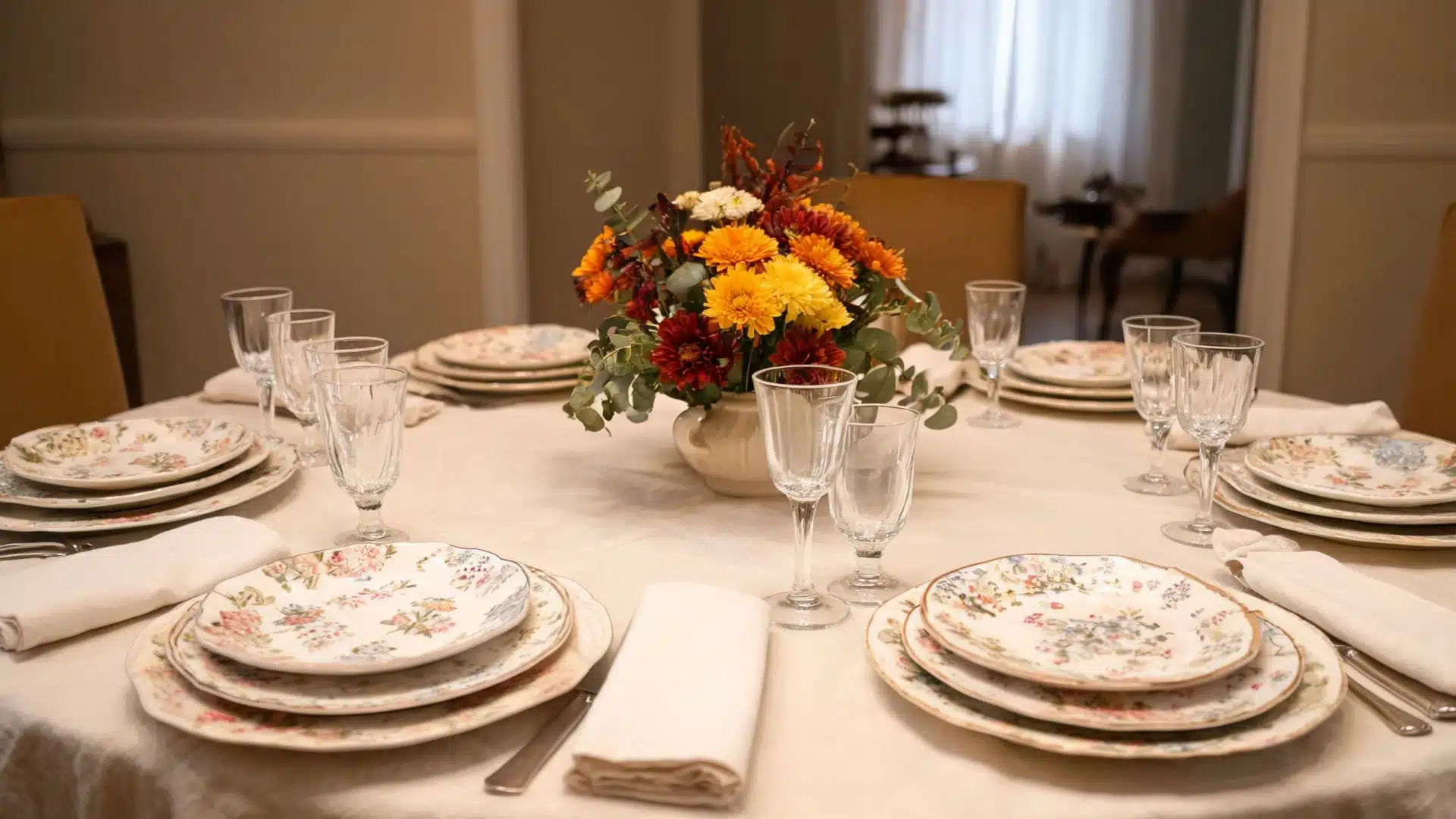
Mismatched dinnerware feels collected instead of random, as long as one feature ties every piece together.
Choose thrifted plates with a shared color, floral detail, rim shape, or neutral background, then pair them with plain napkins and consistent glassware.
Alternate patterns across the table instead of grouping similar plates together. Simple candles and one restrained centerpiece keep attention on the dishes.
Tip: Arrange every place setting before the event so colors and patterns are distributed evenly across the table.
41. Recycled Bottle Bud Vase Centerpiece
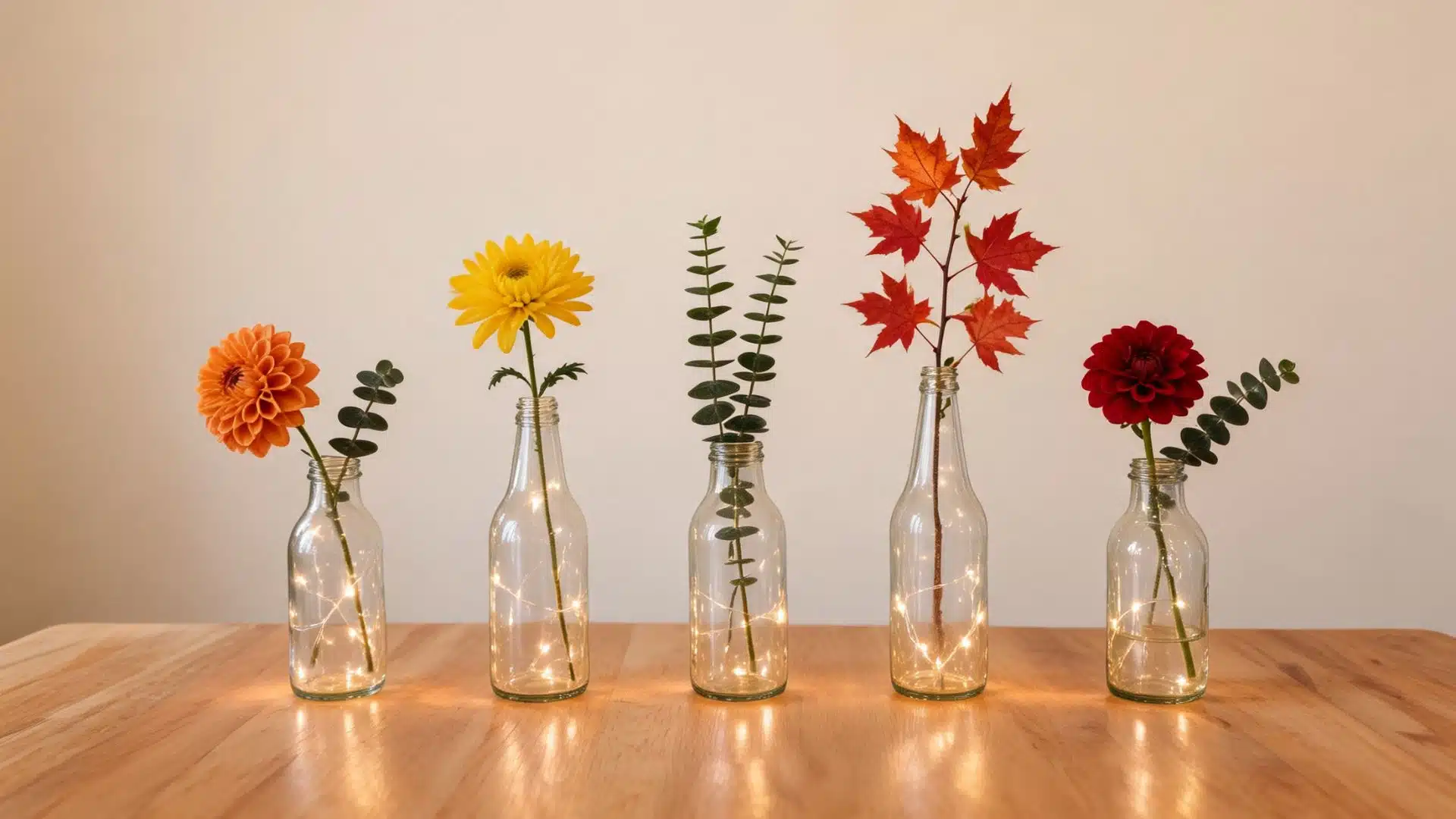
Clear bottles saved in a few different heights turn into slim bud vases for the center of the table. Remove labels and adhesive, then place one or two stems in each bottle.
Use mums, small dahlias, eucalyptus, or clipped branches in related colors.
Space the bottles loosely so serving dishes can fit between them, and their narrow shapes create height and rhythm without forming a dense centerpiece.
Tip: Choose bottles with narrow openings because they support single stems more securely than wide jars.
42. Folded Paper Pumpkin Decorations
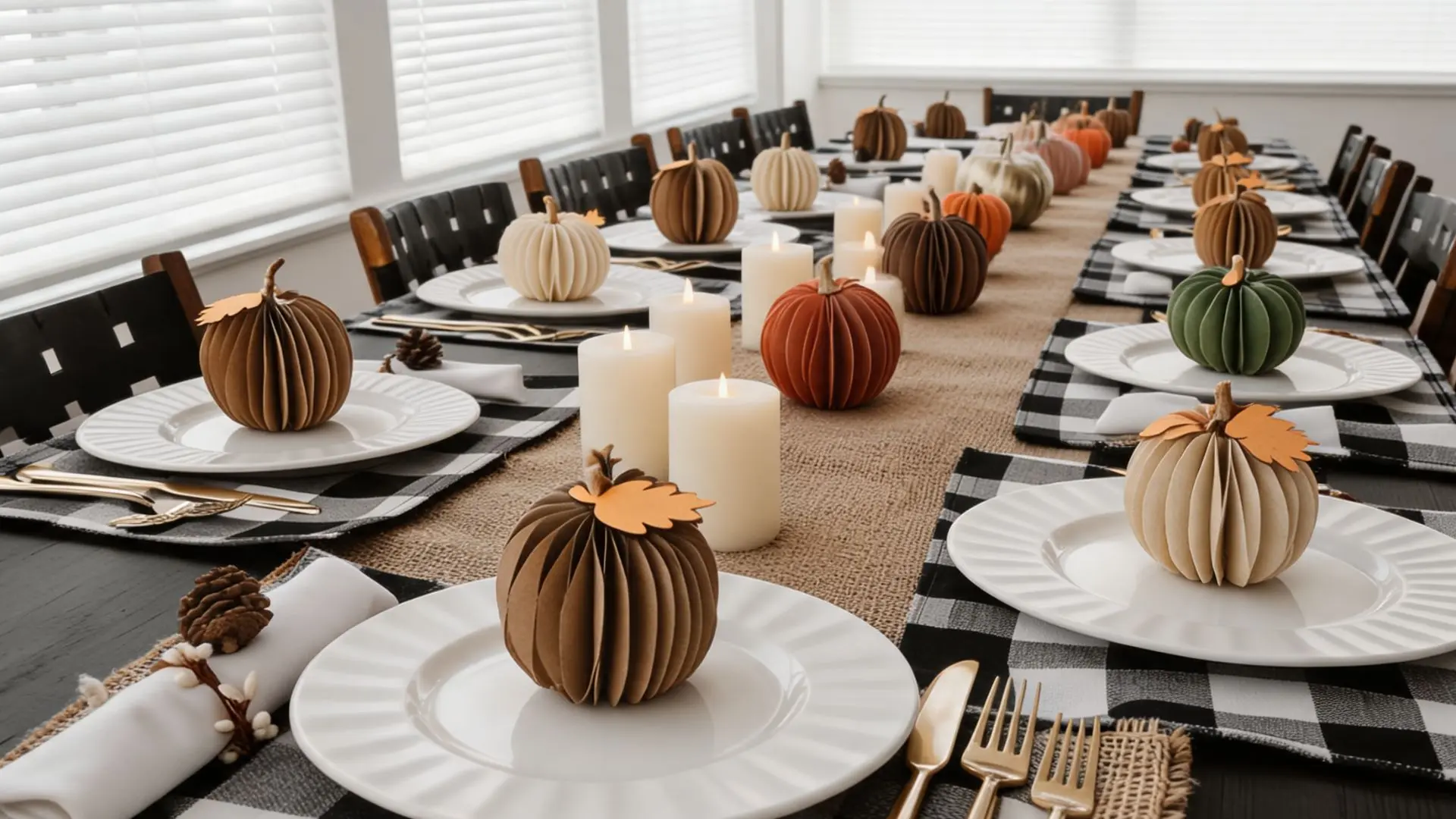
Folded paper pumpkins bring seasonal shape to the table without any bulk.
Cut sturdy paper into equal strips, fasten the ends to form rounded segments, and attach a small paper stem and leaf.
Make several pumpkins in cream, rust, brown, or muted green, then arrange them between candles. Varying the sizes creates interest, while using the same paper finish helps the handmade pieces look connected.
Tip: Use cardstock instead of thin printer paper so each pumpkin keeps its rounded shape throughout the meal.
43. Fabric-Scrap Napkin Ties
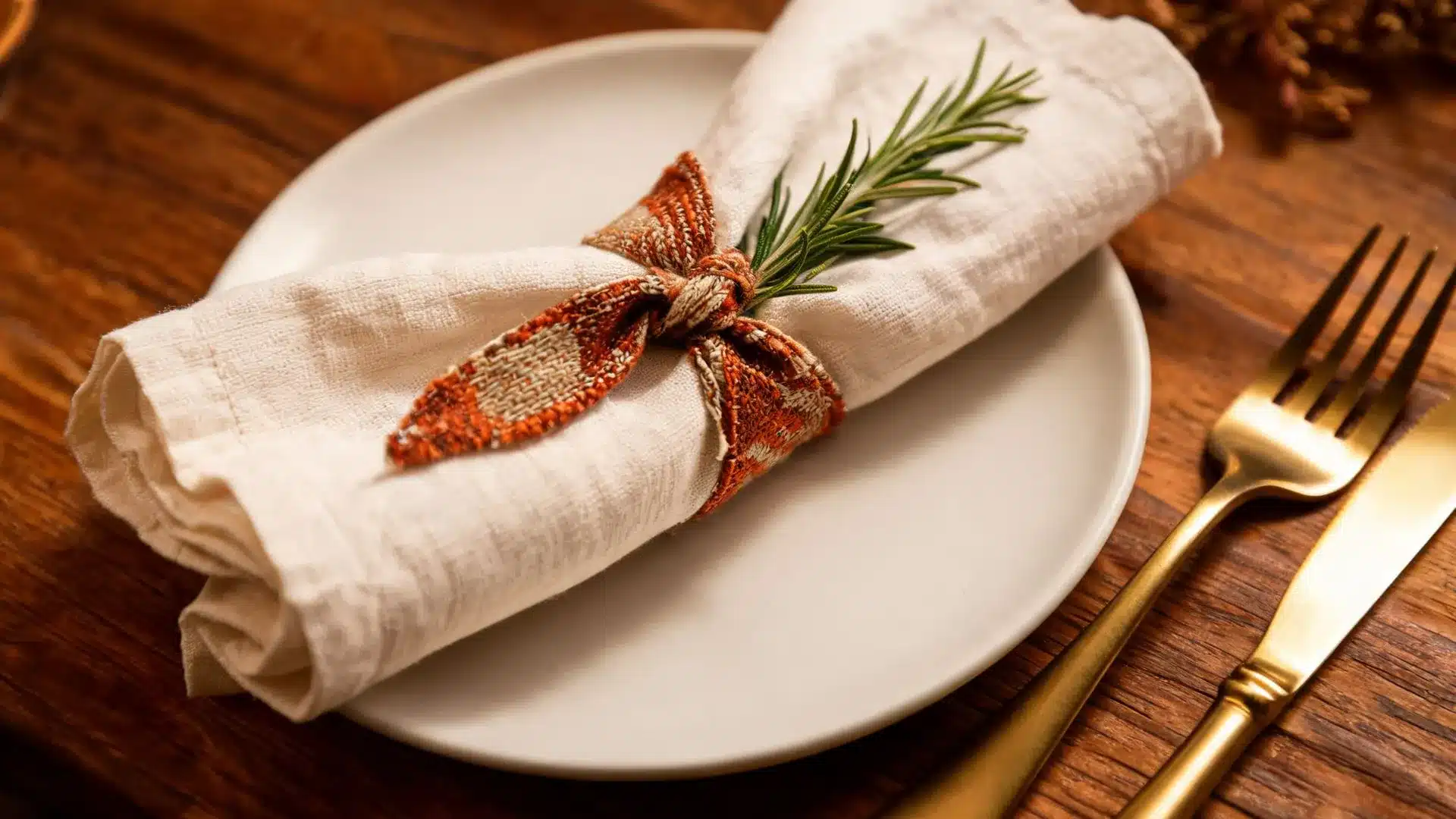
Leftover fabric scraps turn into napkin ties with almost no sewing involved.
Cut leftover cotton, linen, or plaid material into narrow strips, trim loose threads, and knot one around each folded napkin.
Mix patterns only when they share a related color palette. Add a rosemary sprig, cinnamon stick, or small name tag beneath the tie for extra detail.
Tip: Wash and press the fabric before cutting so the ties look neat and do not transfer dye.
44. Painted Acorn Place Card Holders
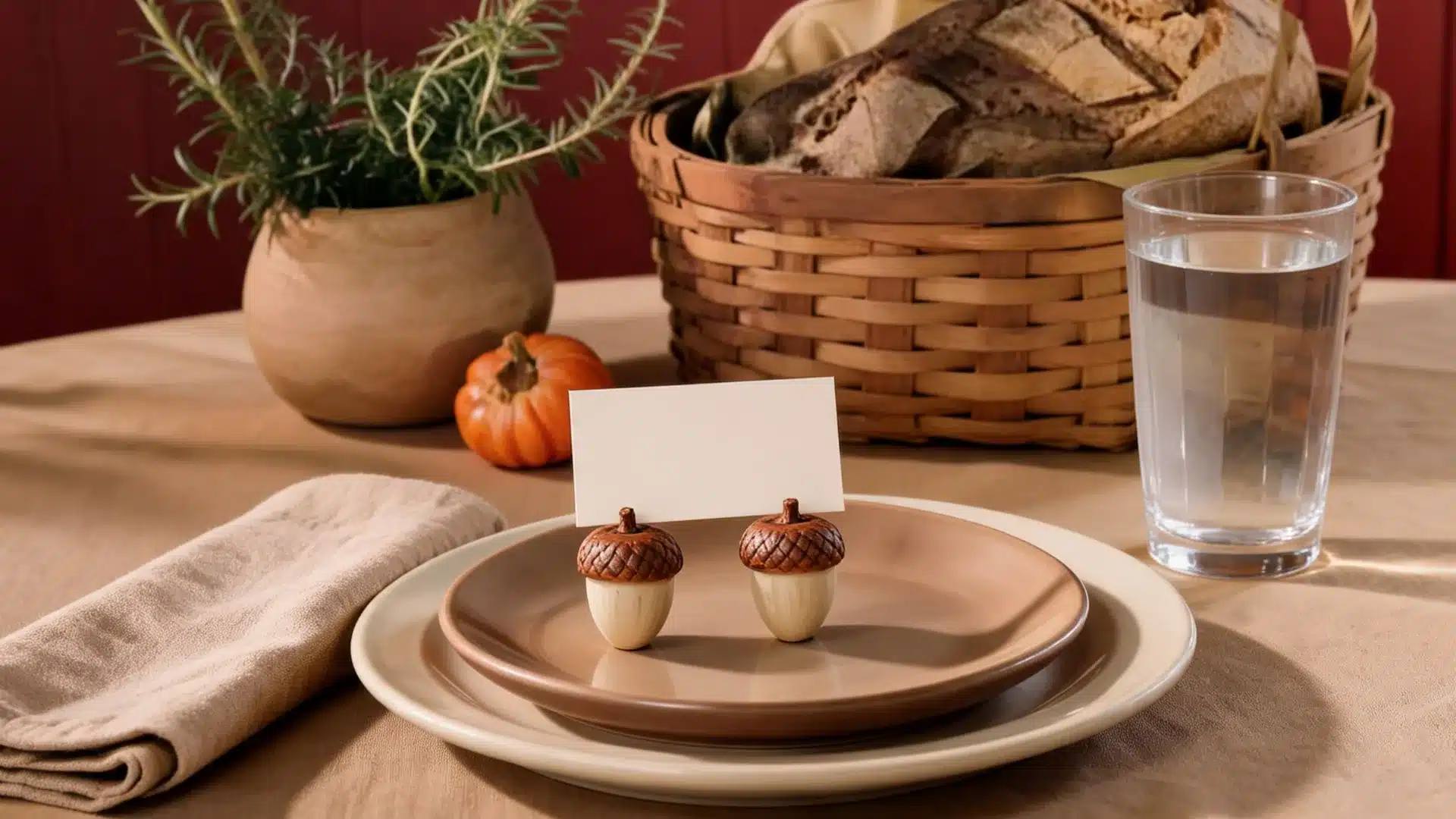
A painted acorn holds a small place card and adds a bit of color at each seat.
Clean and dry the acorns, paint their caps or bodies in one or two shades, then glue two together with a narrow gap for a card.
Use cream, copper, gold, or muted autumn tones rather than many bright colors. Position each holder above the plate or beside the glass so it stays visible.
Tip: Use a strong craft adhesive and allow the holders to dry completely before inserting the cards.
45. Homemade Clay Name Tags
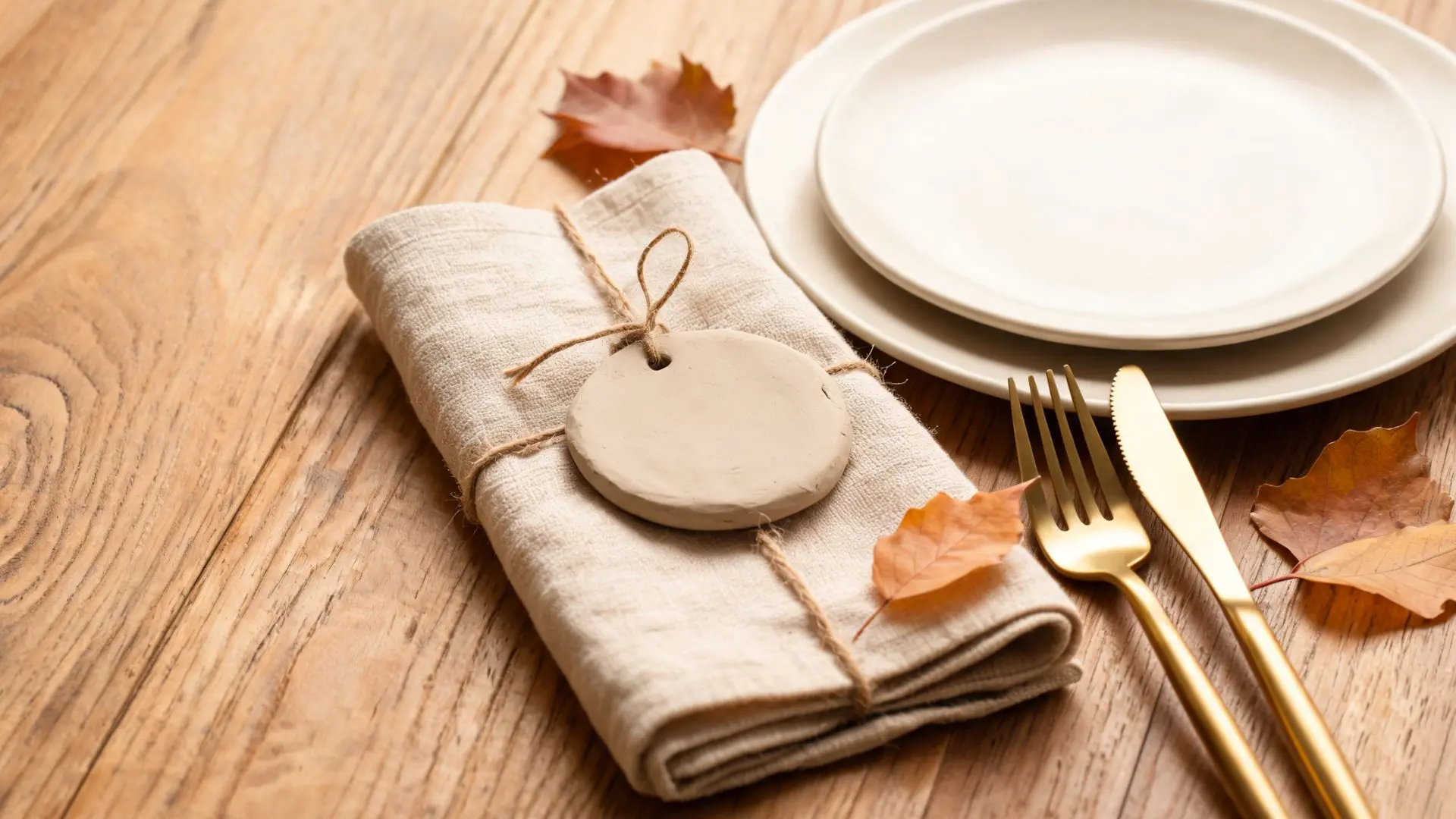
Air-dry clay, stamped with each guest’s name, makes a reusable place marker with a handcrafted finish.
Roll air-dry clay into a thin sheet, cut small circles or organic shapes, and press each guest’s name into the surface with letter stamps.
Add a hole before drying when the tag will be tied around a napkin. Once firm, leave the clay natural or apply a light paint wash, and the finished tags can later become keepsakes.
Tip: Keep every tag at a similar thickness so they dry evenly and resist cracking around the edges.
Budget-Friendly Thanksgiving Tablescape Ideas
Produce, reusable jars, backyard clippings, secondhand accents, paper details, and pieces already in the kitchen can build a complete table for less.
46. Grocery Produce Thanksgiving Centerpiece
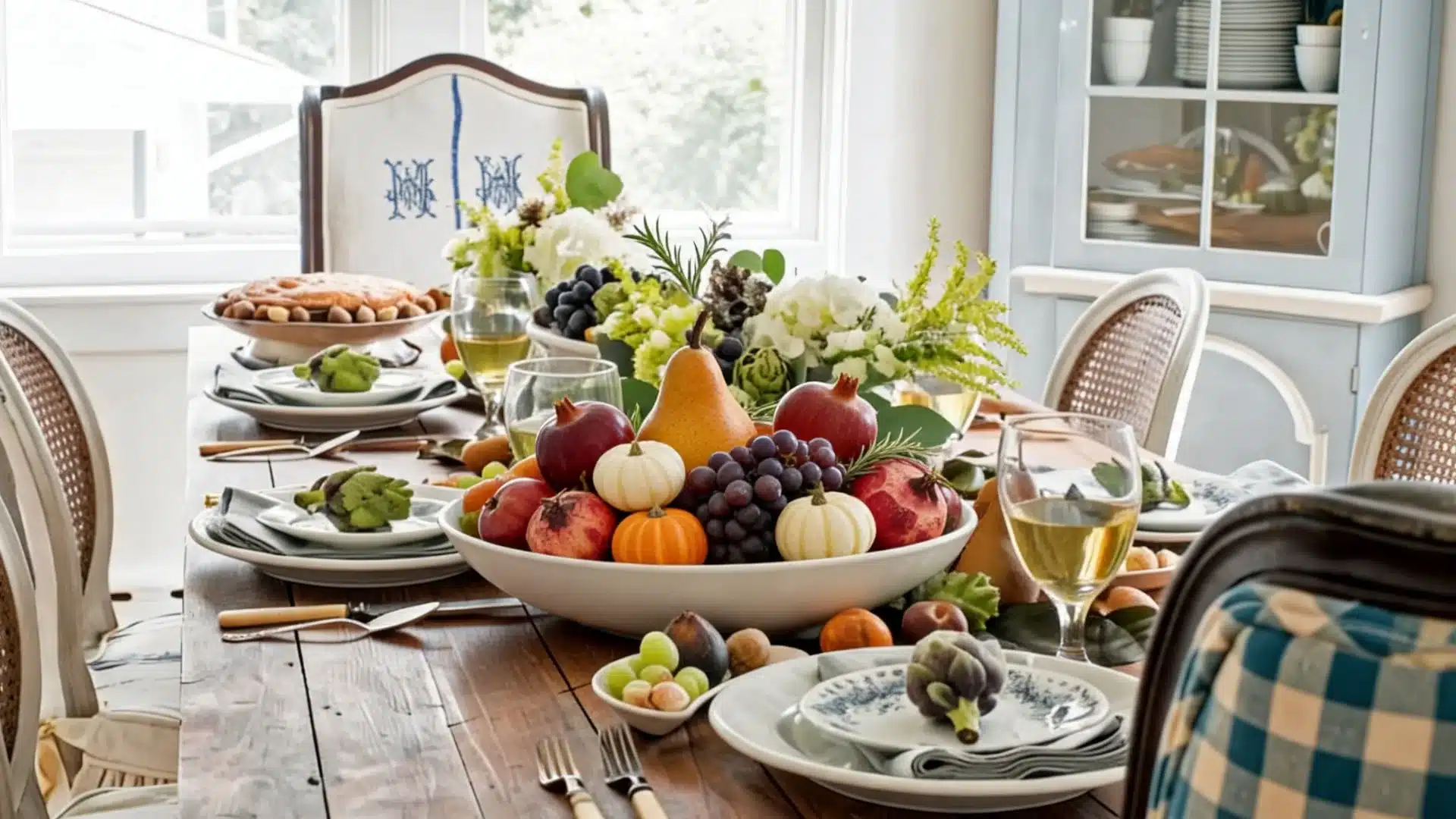
A centerpiece built from grocery produce gets eaten after the gathering instead of packed away as extra decor.
Arrange pears, apples, pomegranates, grapes, small squash, or artichokes in a shallow bowl or directly along the table.
Add herb sprigs to fill gaps and soften the arrangement. Choose produce in two or three related colors, and low placement keeps conversation open while allowing the display to move easily when serving begins.
Tip: Purchase firm, unblemished produce that can still be cooked, served, or stored after Thanksgiving.
47. Dollar-Store Candle and Greenery Table
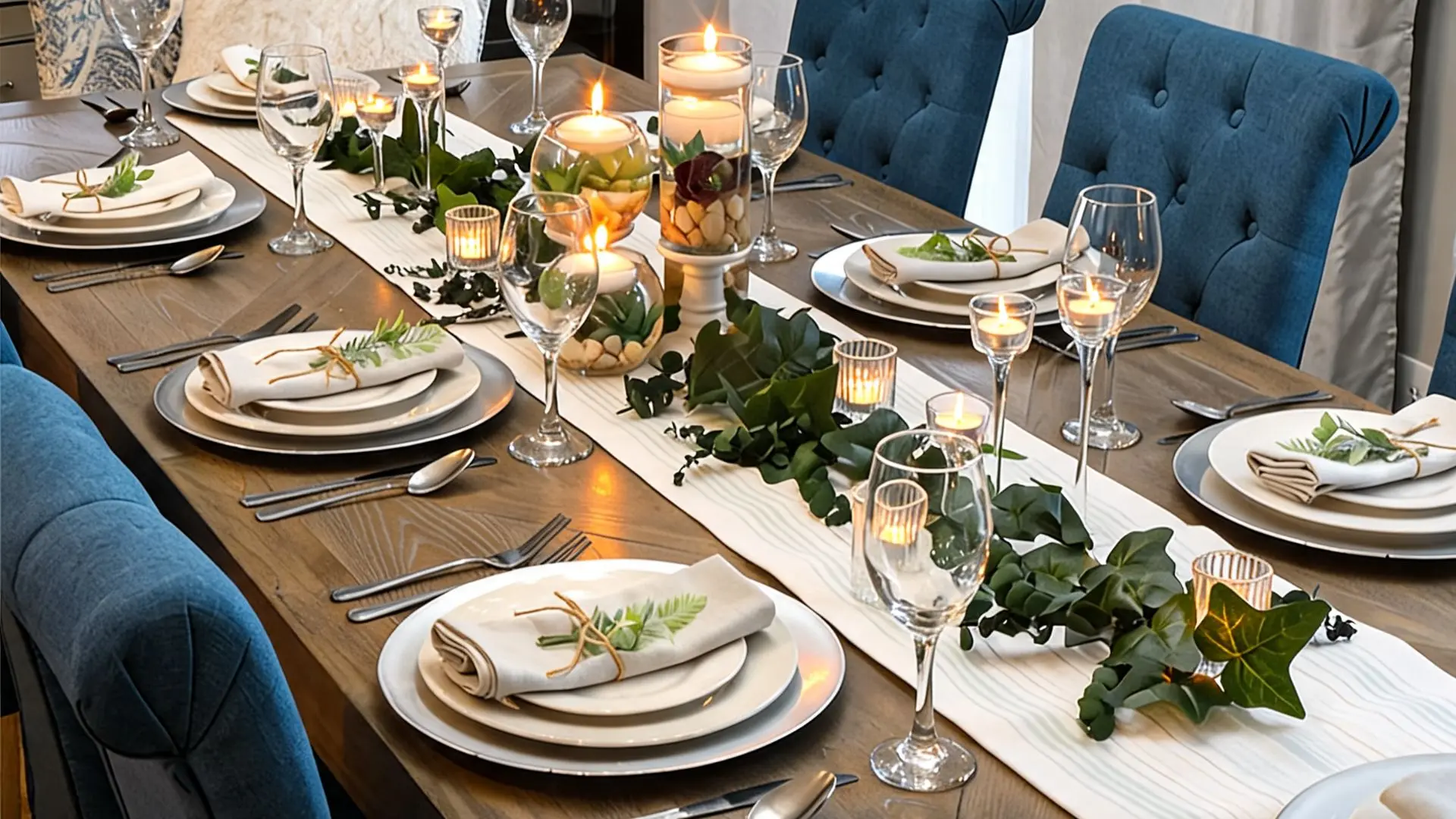
Affordable taper candles and simple greenery cover most of the table without needing many other accessories.
Place a narrow line of fresh or faux greenery down the center, then insert candleholders at even intervals.
Use unscented candles in cream, rust, or muted green so fragrance does not compete with dinner. Plain white plates and folded cloth napkins finish the setup.
Tip: Inspect inexpensive candleholders for wobbling and secure loose candles with small wax adhesive dots.
48. Backyard Branch and Leaf Centerpiece
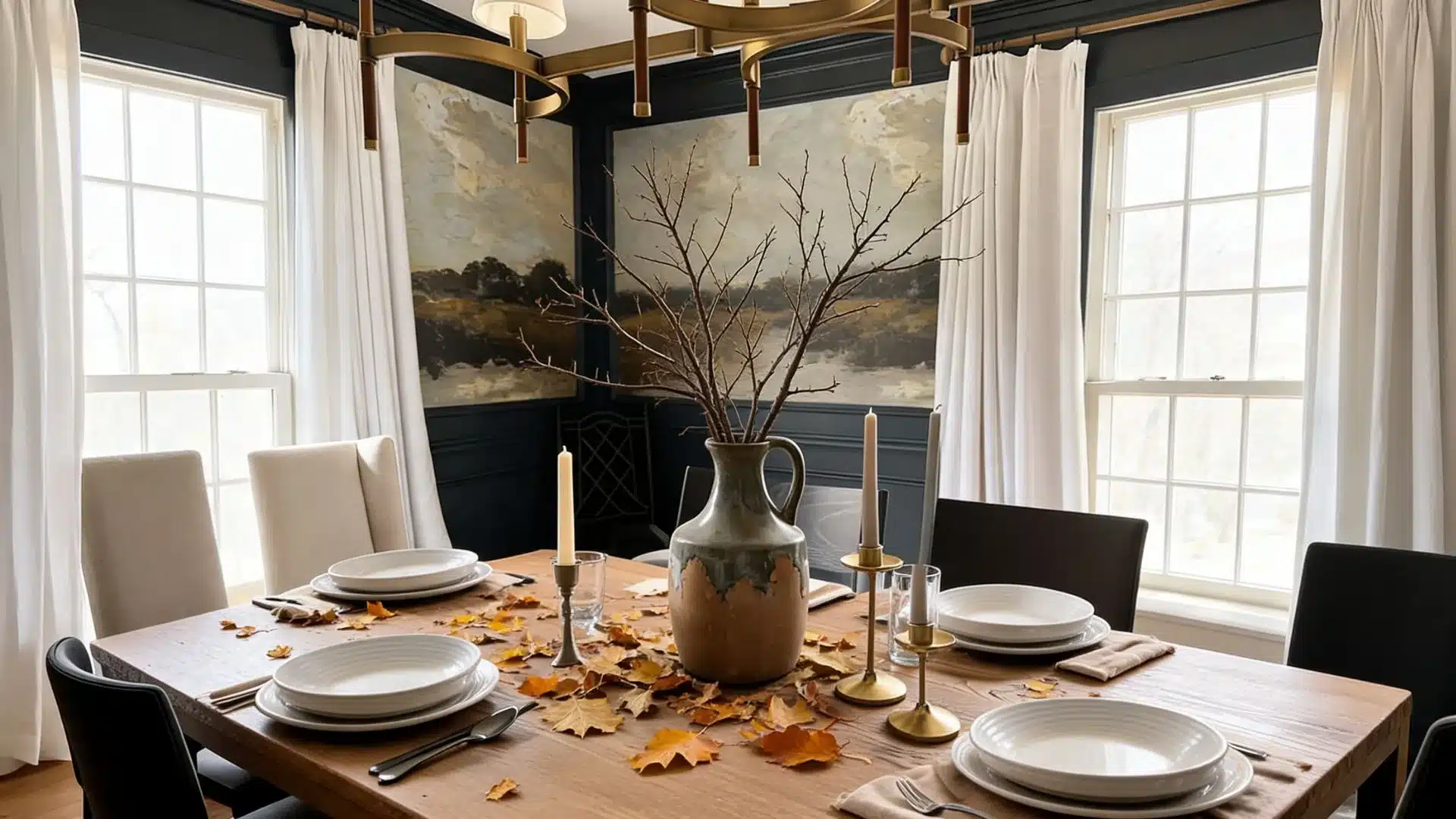
Branches and fallen leaves from the backyard make a free centerpiece with plenty of seasonal texture.
Select clean, dry branches with interesting shapes, trim them to fit the table, and arrange them in a low line or sturdy vase.
Add a few pressed leaves around the base instead of scattering them near plates. Neutral linens and simple candles keep the natural materials controlled and reduce debris.
Tip: Check every branch for insects, dirt, and loose bark before bringing it into the dining area.
49. Printable Menu Card Place Settings
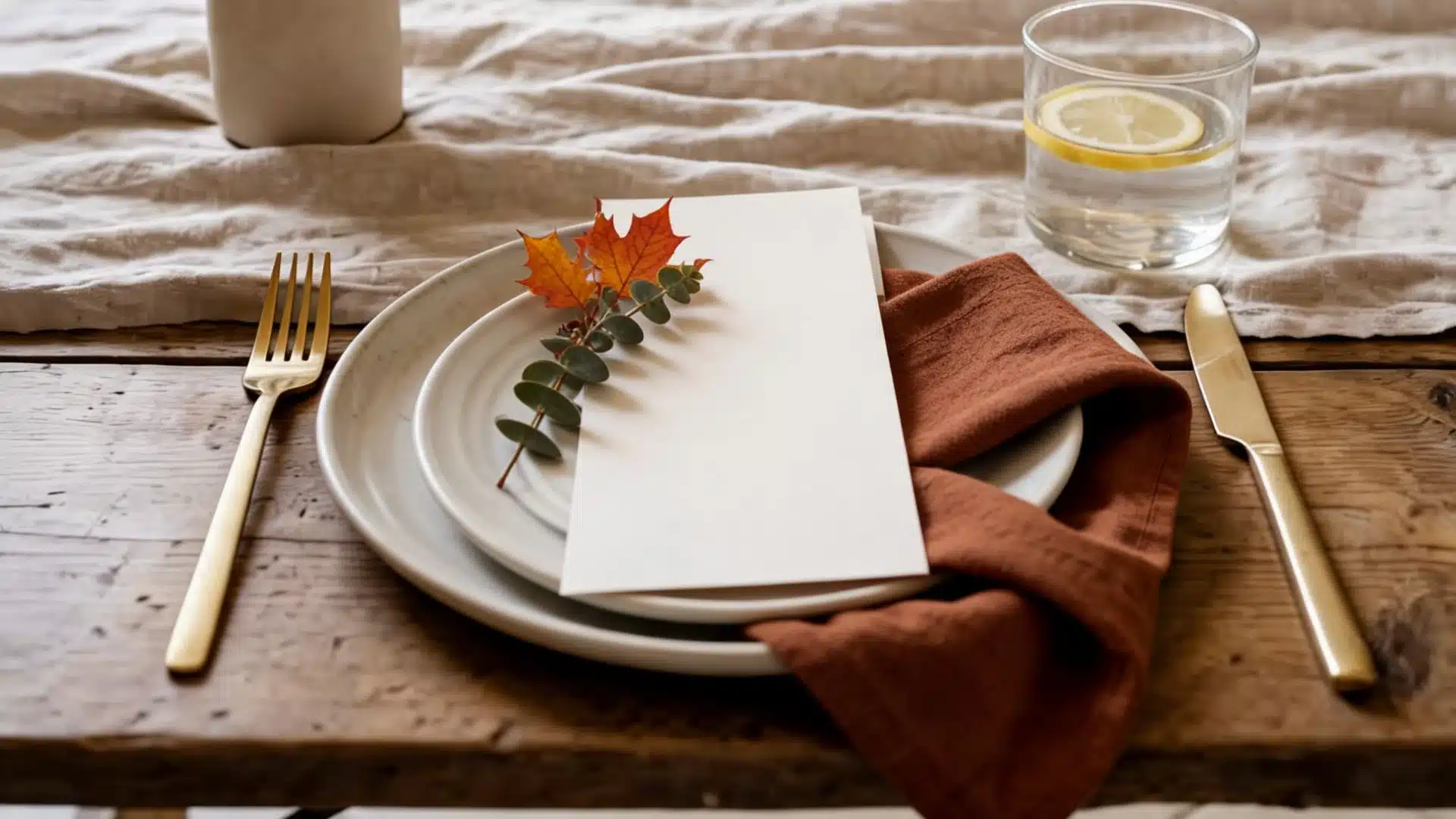
A printable menu card doubles as decoration and as a practical guide to what is actually being served.
Choose a simple template, print one card for each guest, and place it on the plate or tuck it beneath the napkin.
Use a font and paper color that complement the table palette. Adding the guest’s name at the top turns the menu into a place card.
Tip: Print one test card first to confirm that the type remains readable in the table’s lighting.
50. Reused Glass Jar Candle Holders
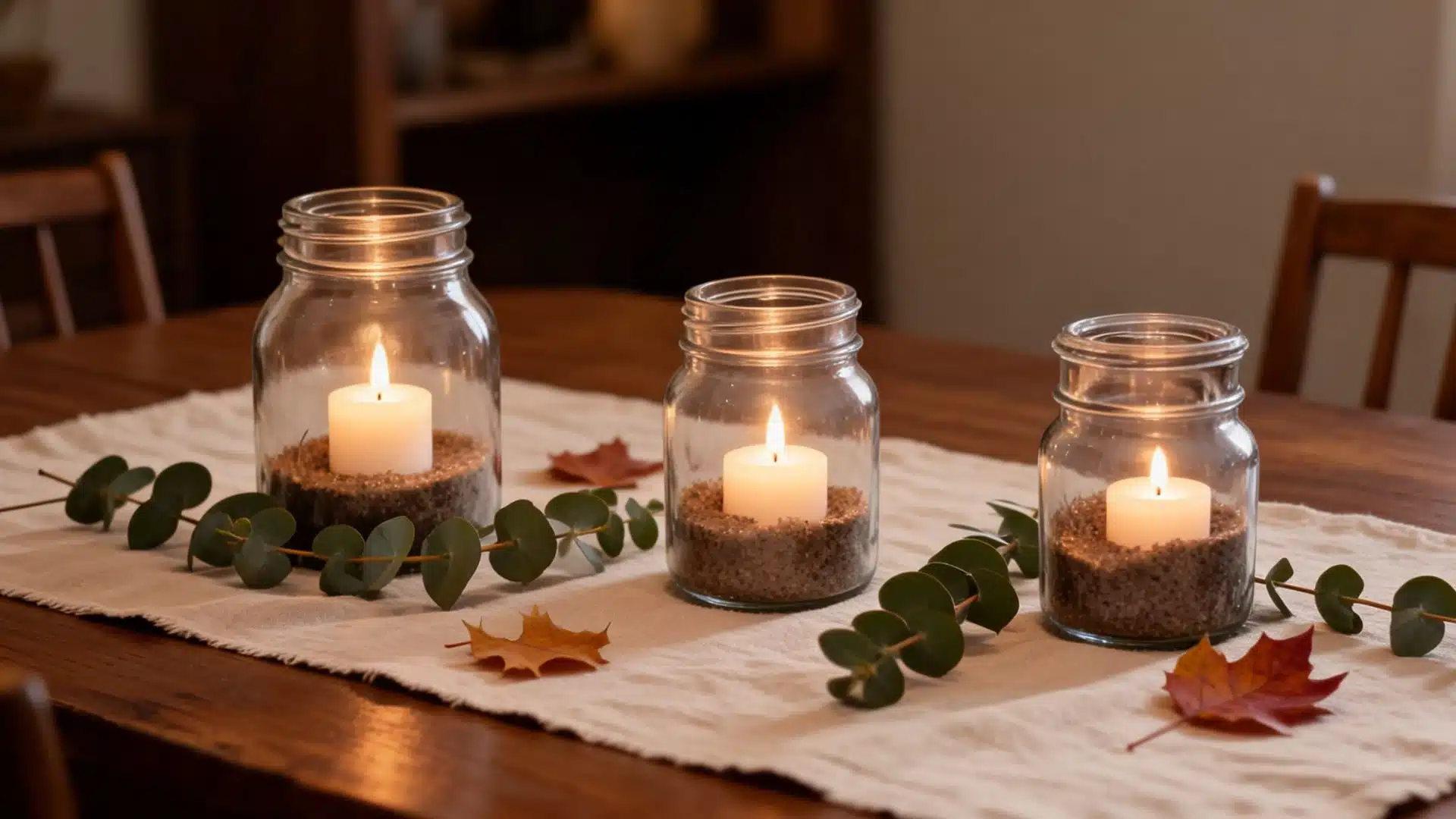
Old glass jars, once the labels and adhesive are off, make easy candleholders.
Group jars in two or three sizes, place a battery-operated tea light or small votive inside each, and space them along the center.
A little twine or narrow ribbon may add texture, but heavy decoration is unnecessary. Clear glass reflects candlelight across the tabletop and pairs well with simple greenery or dried leaves.
Tip: Use jars with wide openings so candles can be inserted, removed, and cleaned without difficulty.
51. One-Pumpkin Minimalist Tablescape
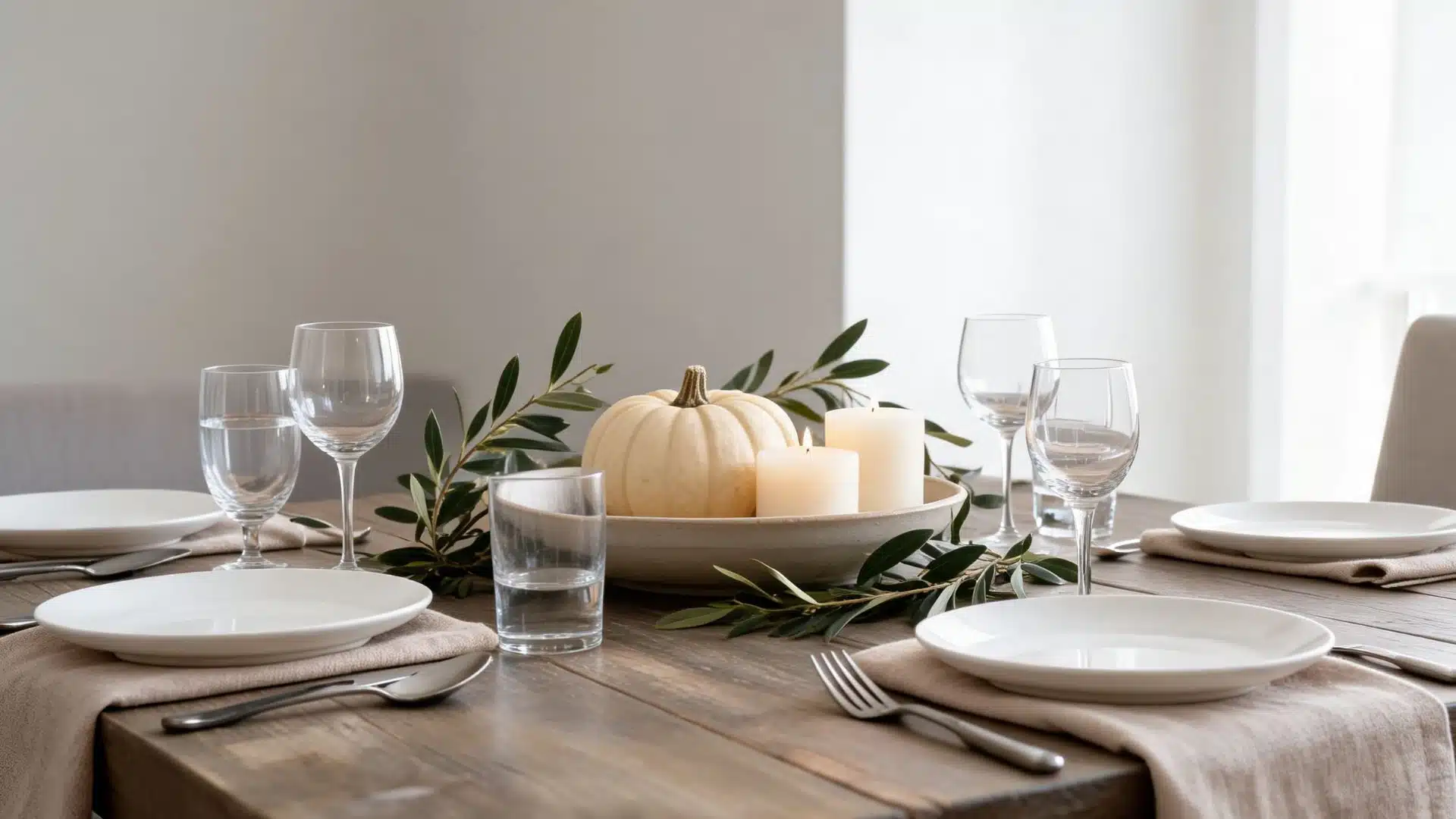
One well-chosen pumpkin can anchor a minimalist table without eating into the serving area.
Place a medium cream, green, or muted orange pumpkin in a shallow bowl at the center, then surround it with two low candles or clipped leaves.
Use plain plates, clear glassware, and solid napkins to support the restrained arrangement. The single focal point keeps setup fast and makes the centerpiece easy to remove when shared dishes arrive.
Tip: Choose a pumpkin with a flat base so it remains stable inside the bowl or tray.
52. Secondhand Brass and Ceramic Table Decor
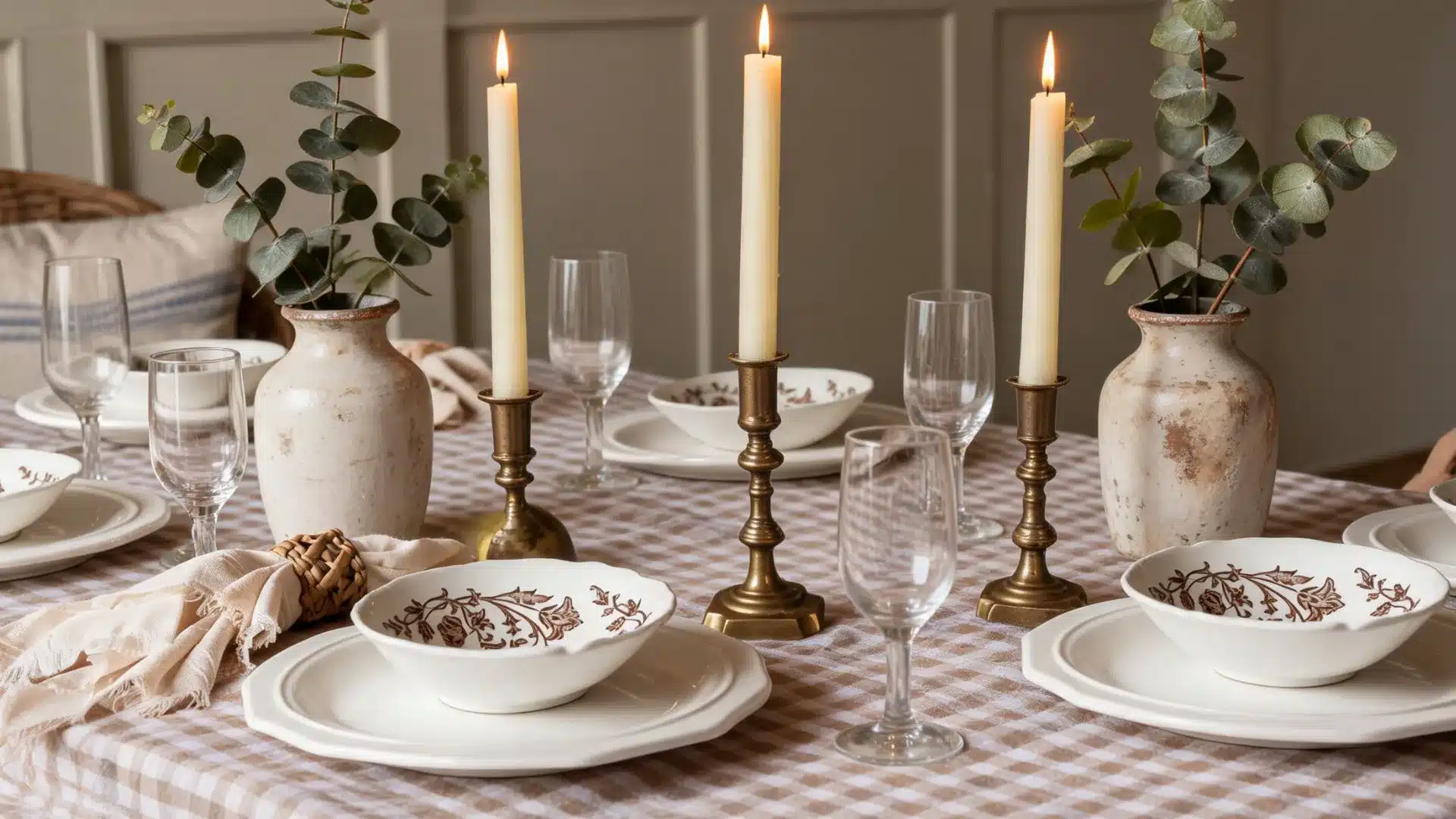
Secondhand brass candlesticks and ceramic vessels bring in warmth without the cost of a matching collection bought new.
Look for pieces with similar proportions or finishes, then group them in odd numbers along the center.
Fill one or two ceramics with clipped greenery or inexpensive flowers and leave the remaining pieces simple. Minor wear can add character, but heavy tarnish or chips may make pieces look neglected.
Tip: Clean every secondhand item gently before use without removing all of the aged finish that gives it character.
53. Brown Paper Napkin Ring Setting
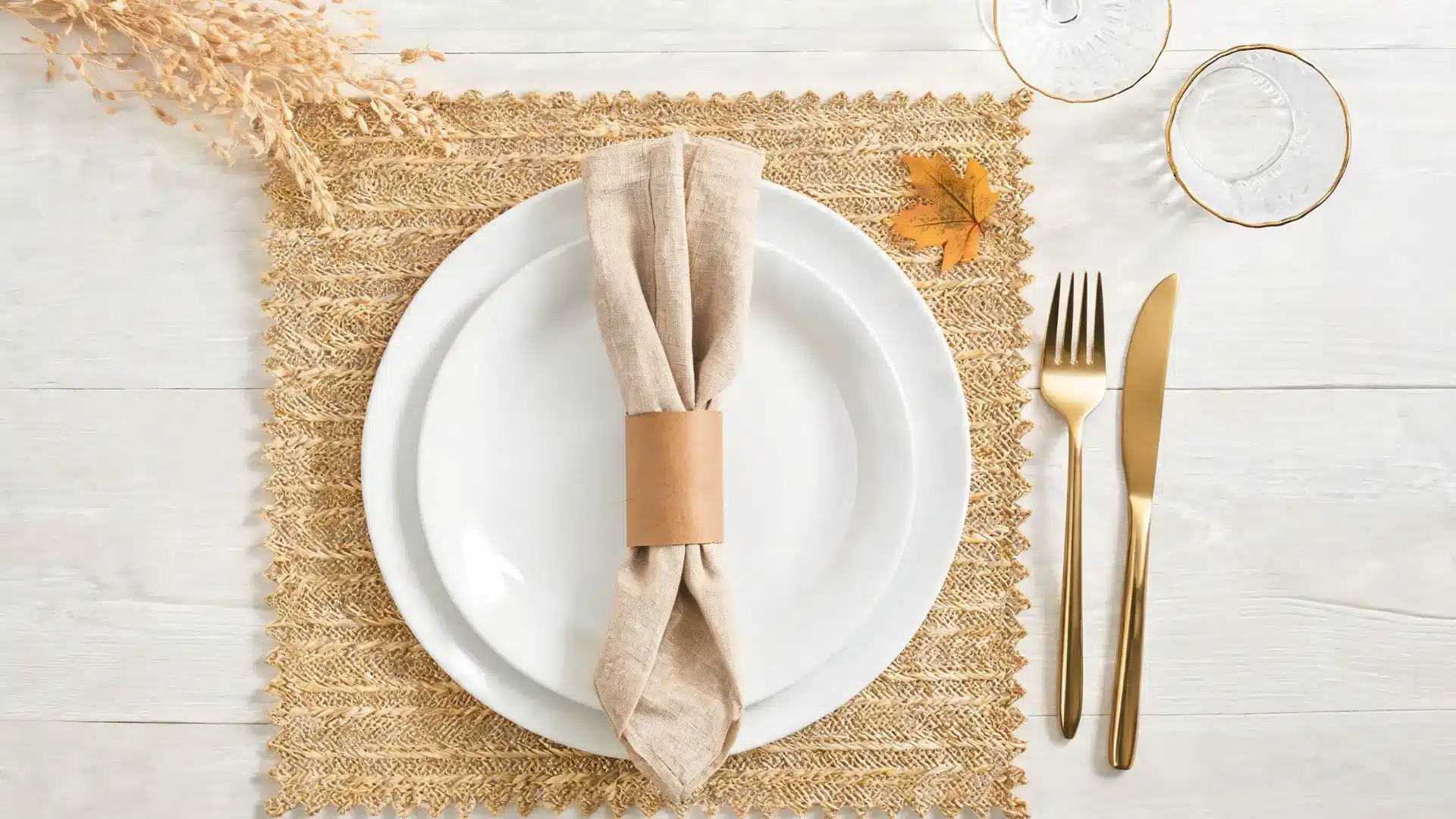
Scissors, tape, and a marker are all it takes to turn brown paper into simple napkin rings. Cut even strips, wrap each around a folded napkin, and secure the overlap underneath.
Write a guest’s name, a thankful message, or a small leaf design on the front.
Pair the rings with white plates and neutral cloth napkins for contrast, since their low cost makes them practical for large groups.
Tip: Make one paper ring first and use it as a sizing template for all remaining strips.
54. Pantry Bowl Filled With Seasonal Fruit
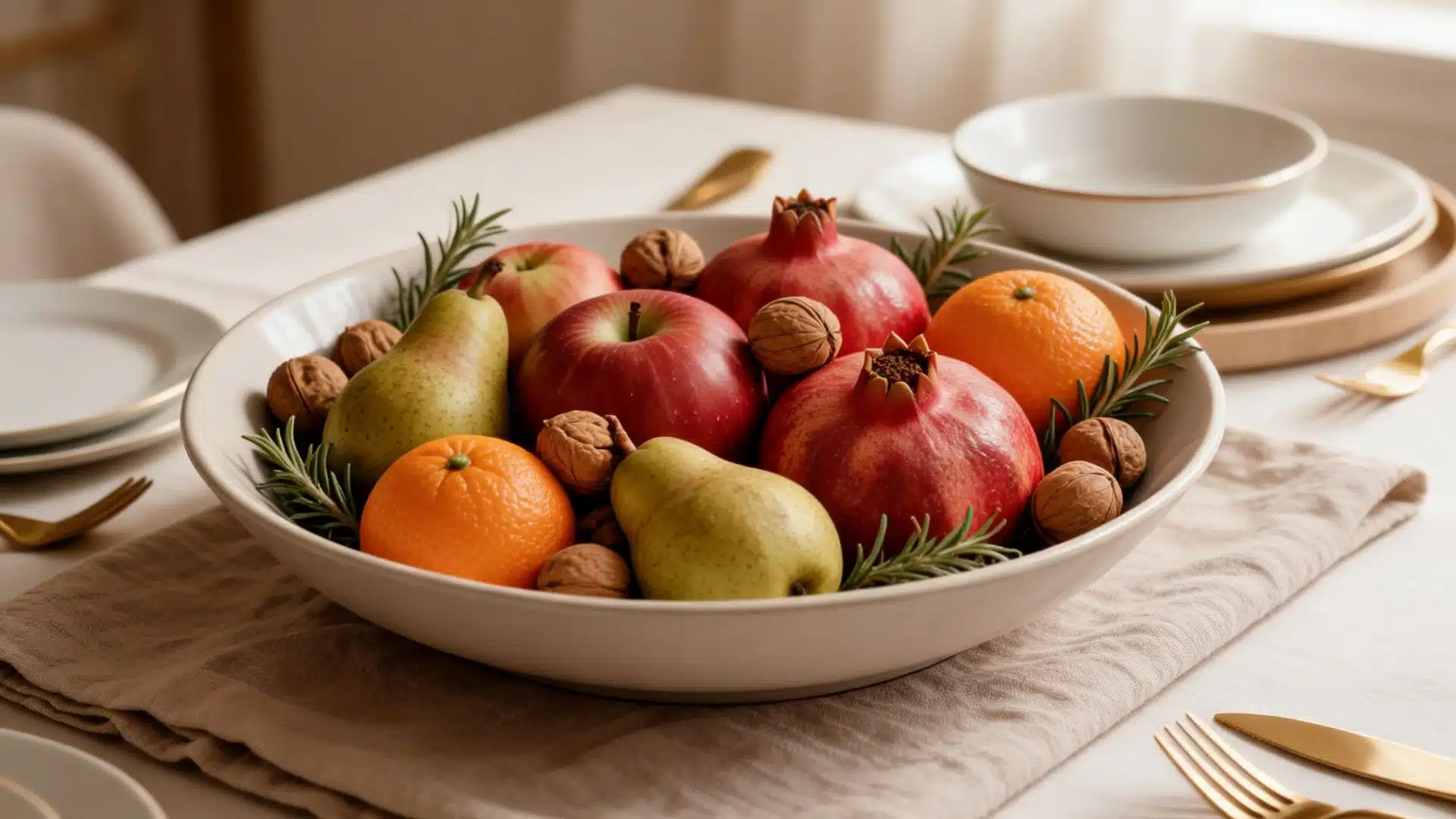
A bowl of seasonal fruit already sitting in the kitchen can double as the centerpiece.
Choose a wide bowl and fill it with apples, pears, citrus, pomegranates, or mixed nuts, keeping the arrangement low and stable.
Add a few leaves or herb sprigs around the rim for texture. Place the bowl on a folded runner or wooden board to define the center, and the contents can be served later to reduce waste.
Tip: Place heavier fruit at the bottom and lighter pieces near the top to prevent the arrangement from shifting.
Thanksgiving Tablescapes for Different Tables
The best Thanksgiving table decor follows the table’s shape and available surface area. These arrangements address round, square, oval, narrow, folding, extended, and outdoor dining setups.
55. Round Table With a Circular Greenery Garland
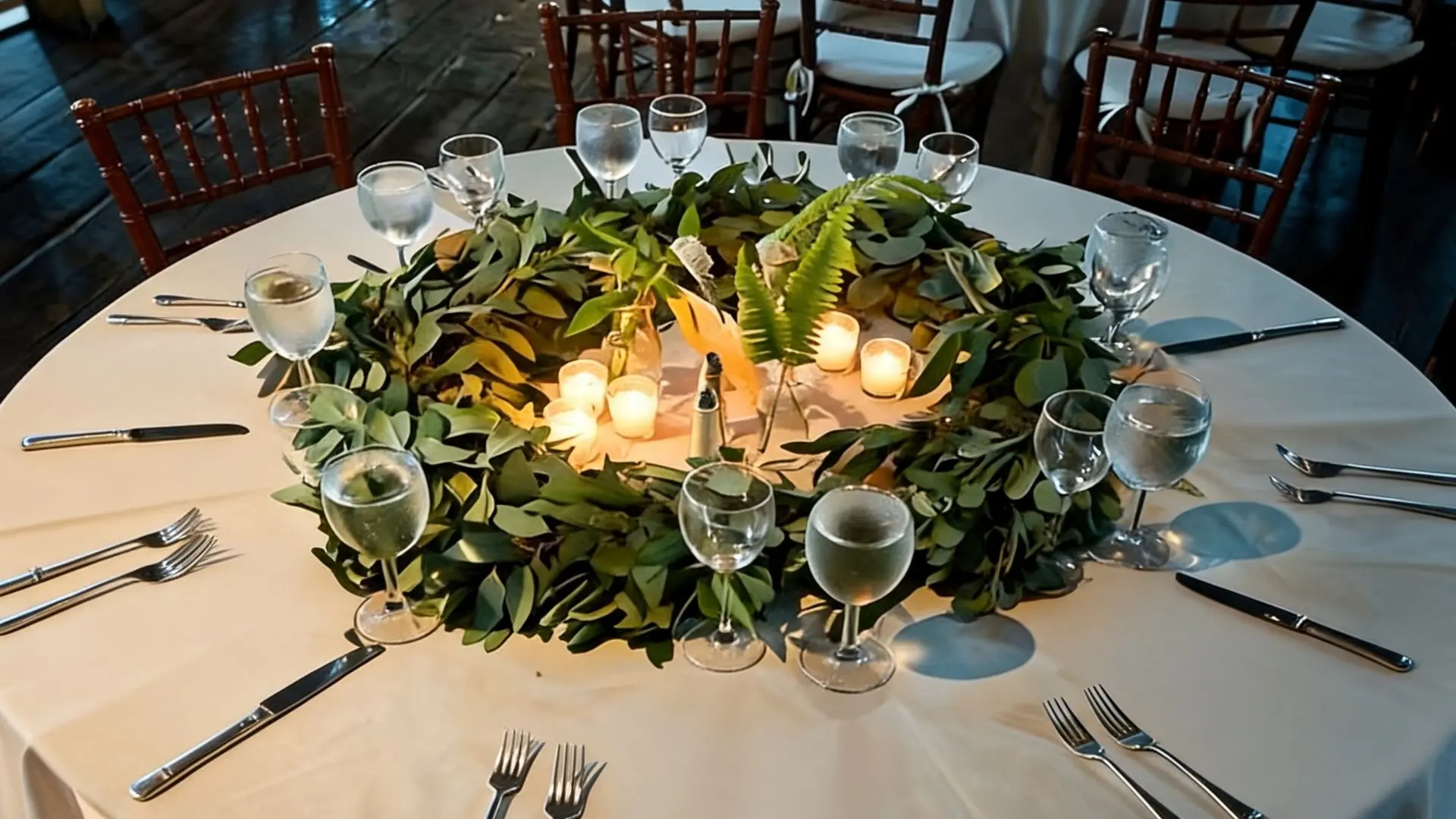
A round table calls for a centerpiece that follows its shape instead of fighting it.
Form a low circular garland from eucalyptus, olive branches, or mixed greenery, leaving the middle open for a candle cluster, small bowl, or serving dish.
Keep the garland narrow so each place setting retains enough depth.
Repeating the curve gives every guest a balanced view and prevents one side of the table from appearing more heavily decorated than the other.
Tip: Measure the table before building the garland and leave at least several inches around every place setting.
56. Small Table With a Pedestal-Bowl Centerpiece
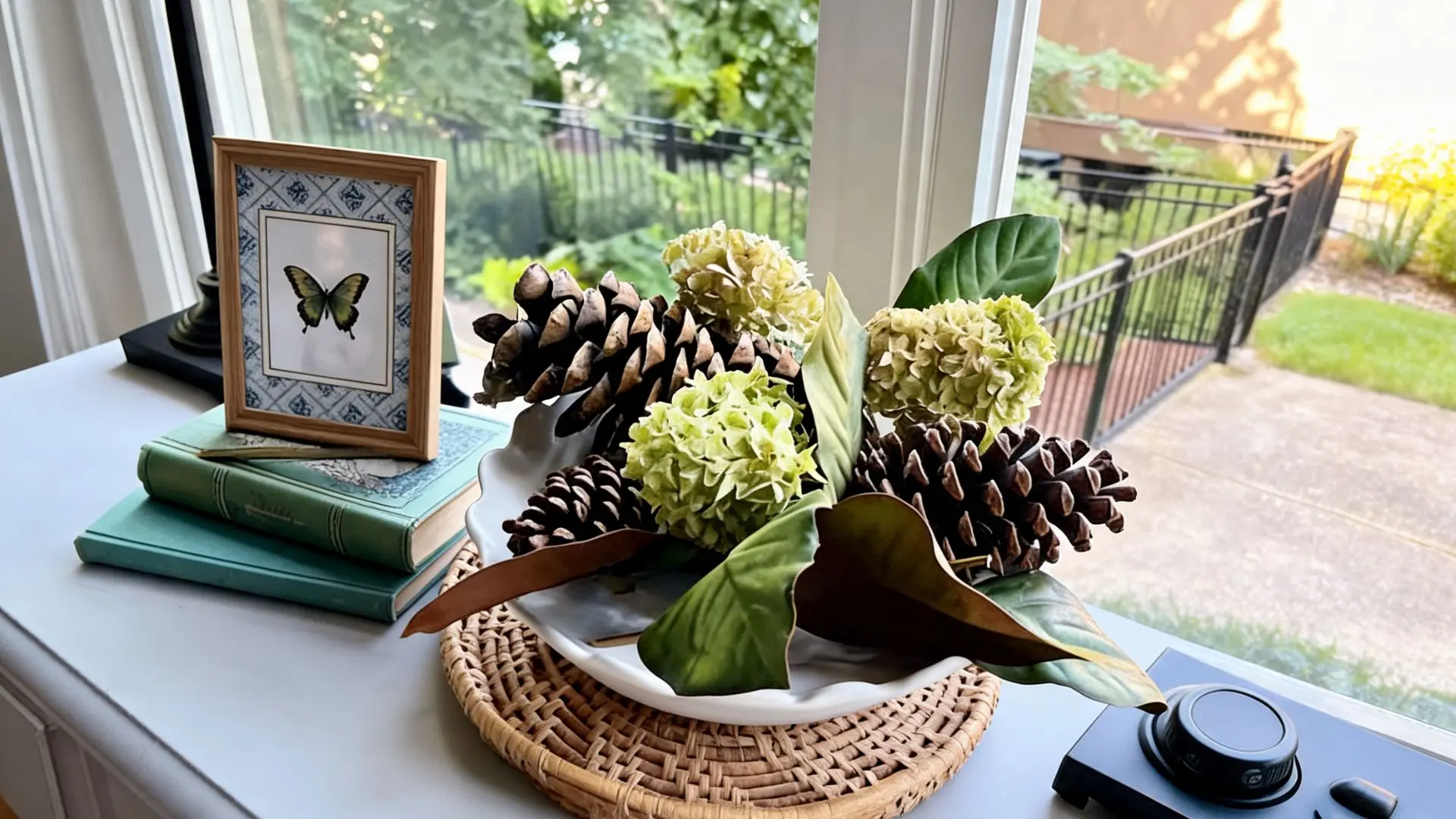
A small table benefits from a centerpiece that uses height instead of valuable surface area.
Place a compact arrangement of fruit, flowers, or small pumpkins in a pedestal bowl, keeping the contents below eye level.
The raised base creates a clear focal point while leaving room for plates and shared dishes. Use one bowl rather than several small decorations to keep the limited tabletop from feeling crowded.
Tip: Select a pedestal with a narrow base to preserve as much usable table space as possible
57. Long Table With Repeating Mini Arrangements
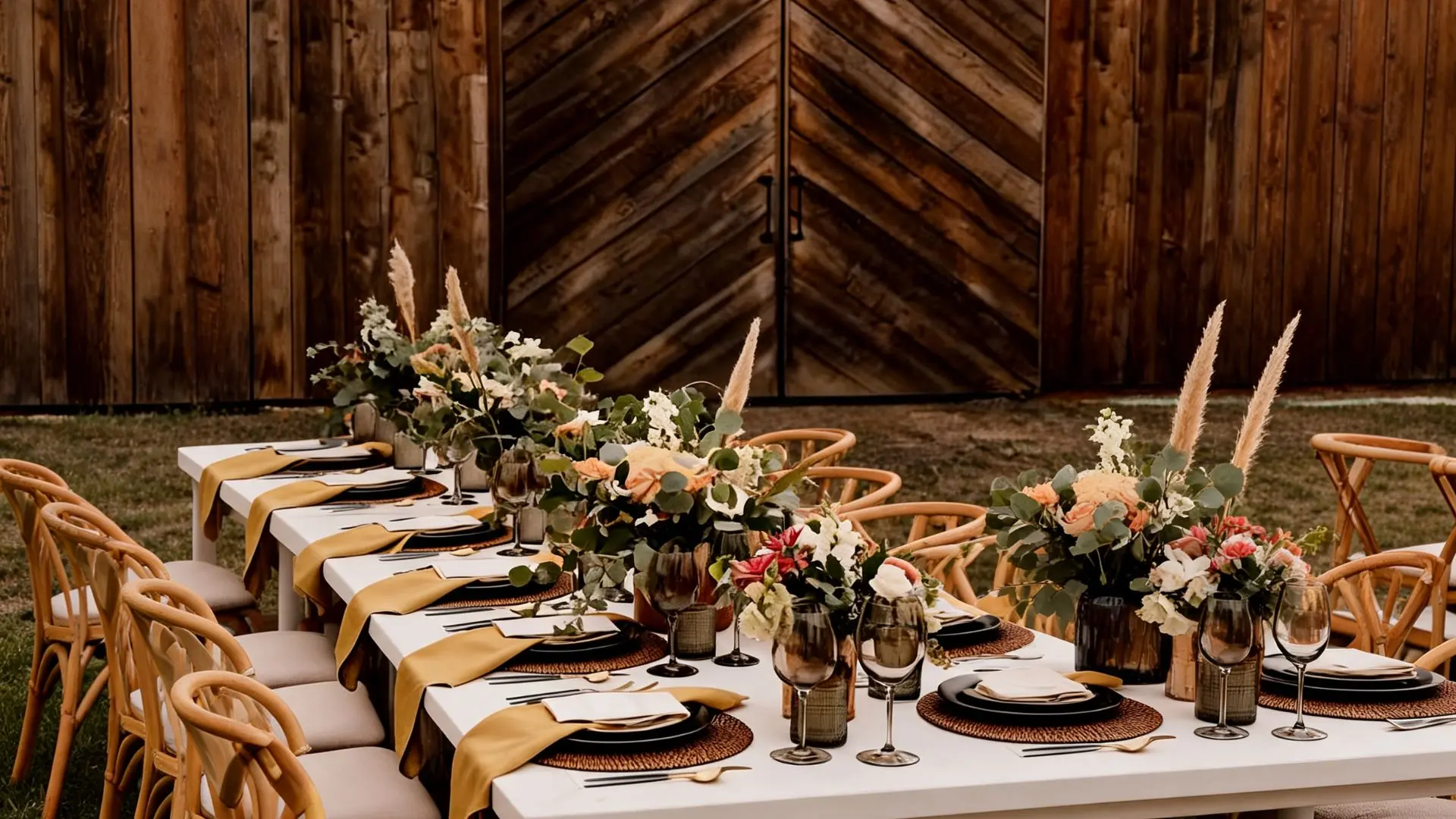
A long table looks balanced when small arrangements repeat at measured intervals. Use matching bud vases, short candles, or miniature pumpkin clusters, spacing them evenly from one end to the other.
Repetition creates a clear visual rhythm and ensures guests near the ends receive the same decorative detail as those in the center.
Leave open sections between each group for water pitchers, serving bowls, and bread baskets.
Tip: Lay out serving pieces first, then position the mini arrangements within the remaining open sections.
58. Square Table With Four-Corner Decorations
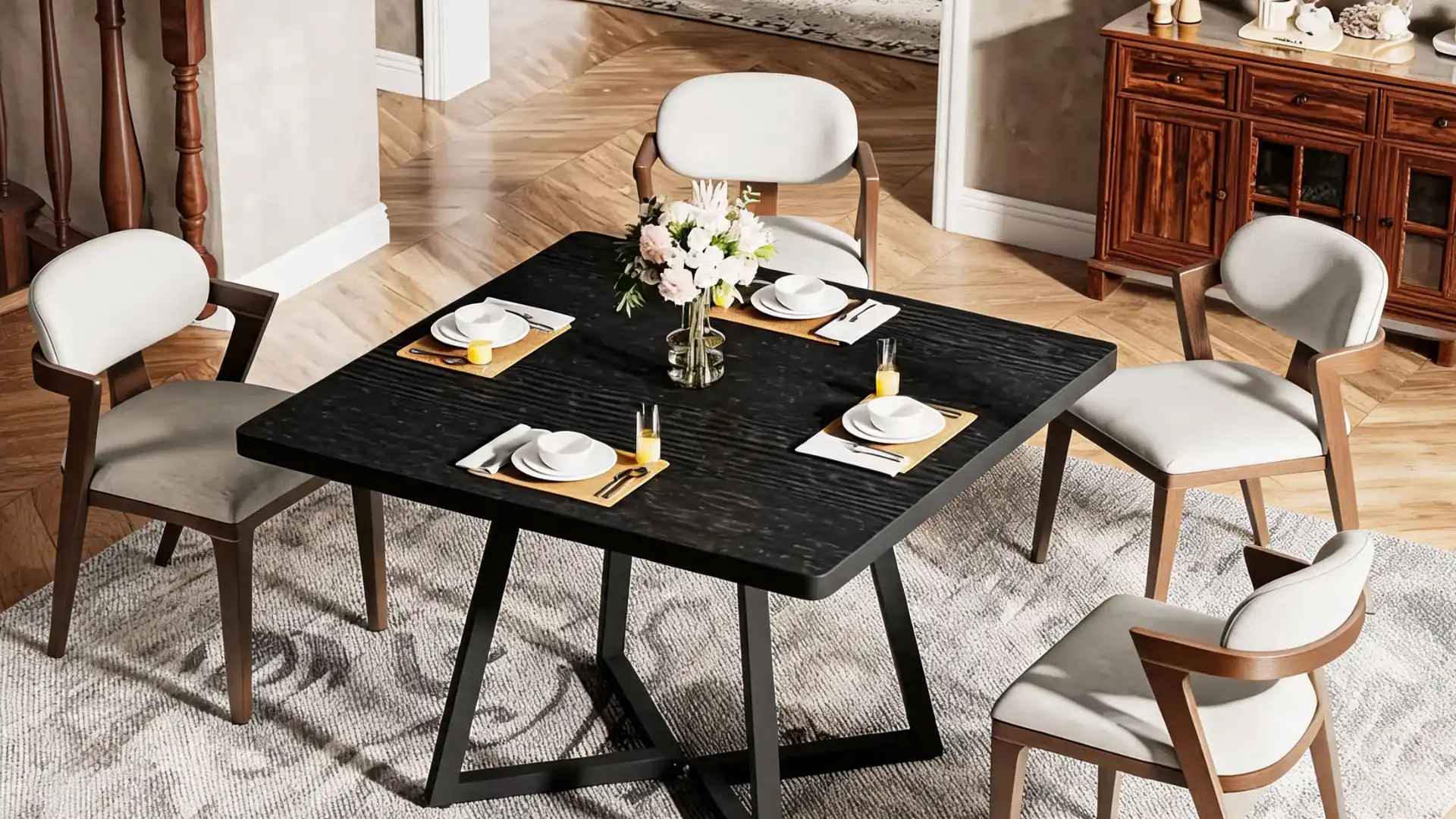
A square table can carry decoration at all four corners and still leave the middle clear for food.
Place one small candle, bud vase, or pumpkin cluster near each corner, making sure every arrangement stays clear of elbows and glasses.
Add a low central piece only when sufficient room remains. Mirroring the four accents gives the table structure, while slight differences in flowers or foliage keep the setting from appearing too rigid.
Tip: Sit briefly in every chair to confirm that the corner decorations do not restrict arm movement.
59. Oval Table With a Curved Greenery Runner
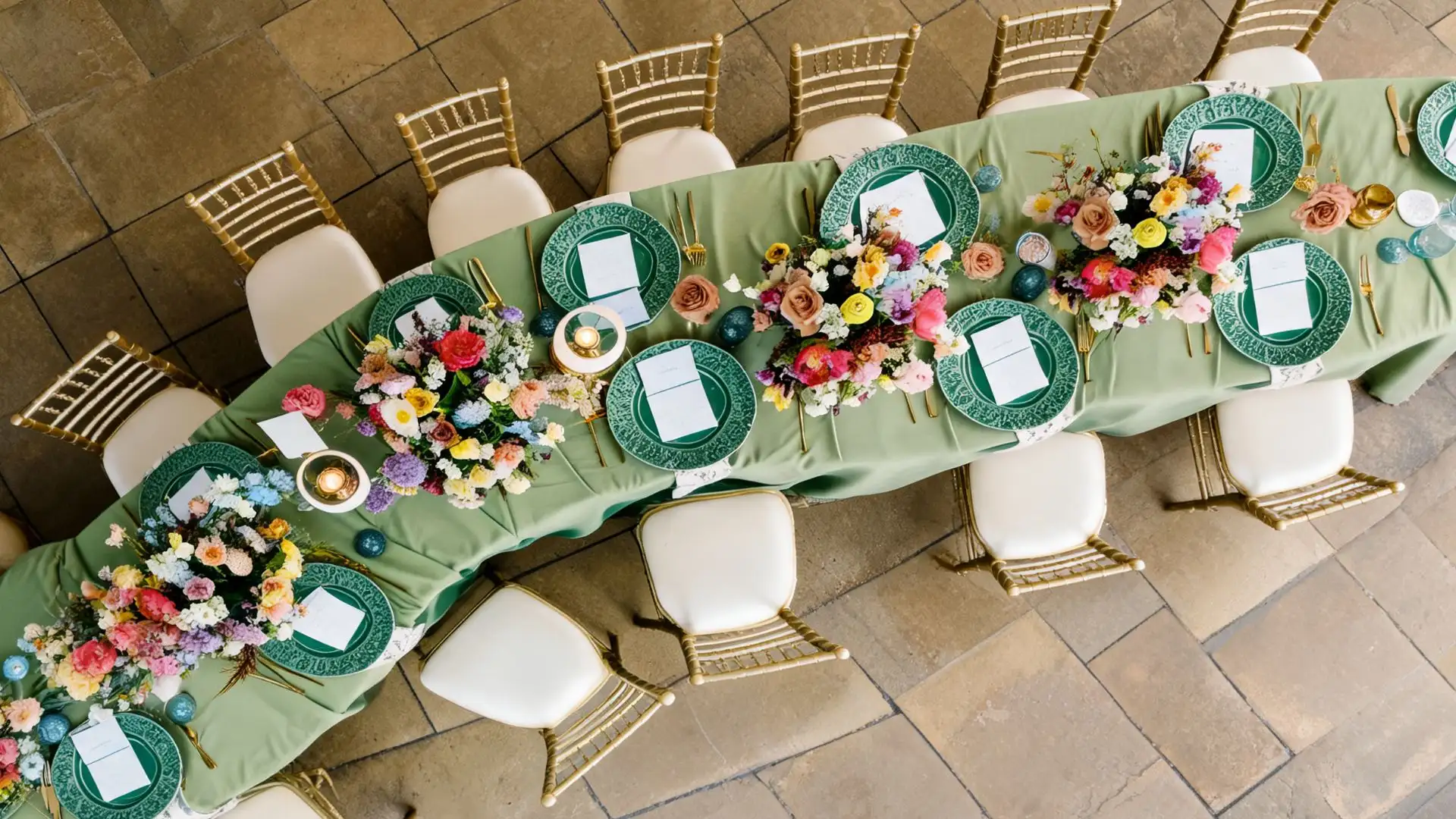
An oval table suits a runner that follows its curved outline instead of forming a stiff straight line.
Arrange flexible greenery in a gentle arc through the center, then add low candles, fruit, or flowers at uneven intervals.
Keep both ends lightly decorated so guests seated there retain comfortable space for plates and glasses. The curved placement supports the table’s form without relying on a tall centerpiece.
Tip: Use flexible stems such as eucalyptus or olive branches because rigid greenery may not follow the curve naturally.
60. Folding Table With a Floor-Length Tablecloth
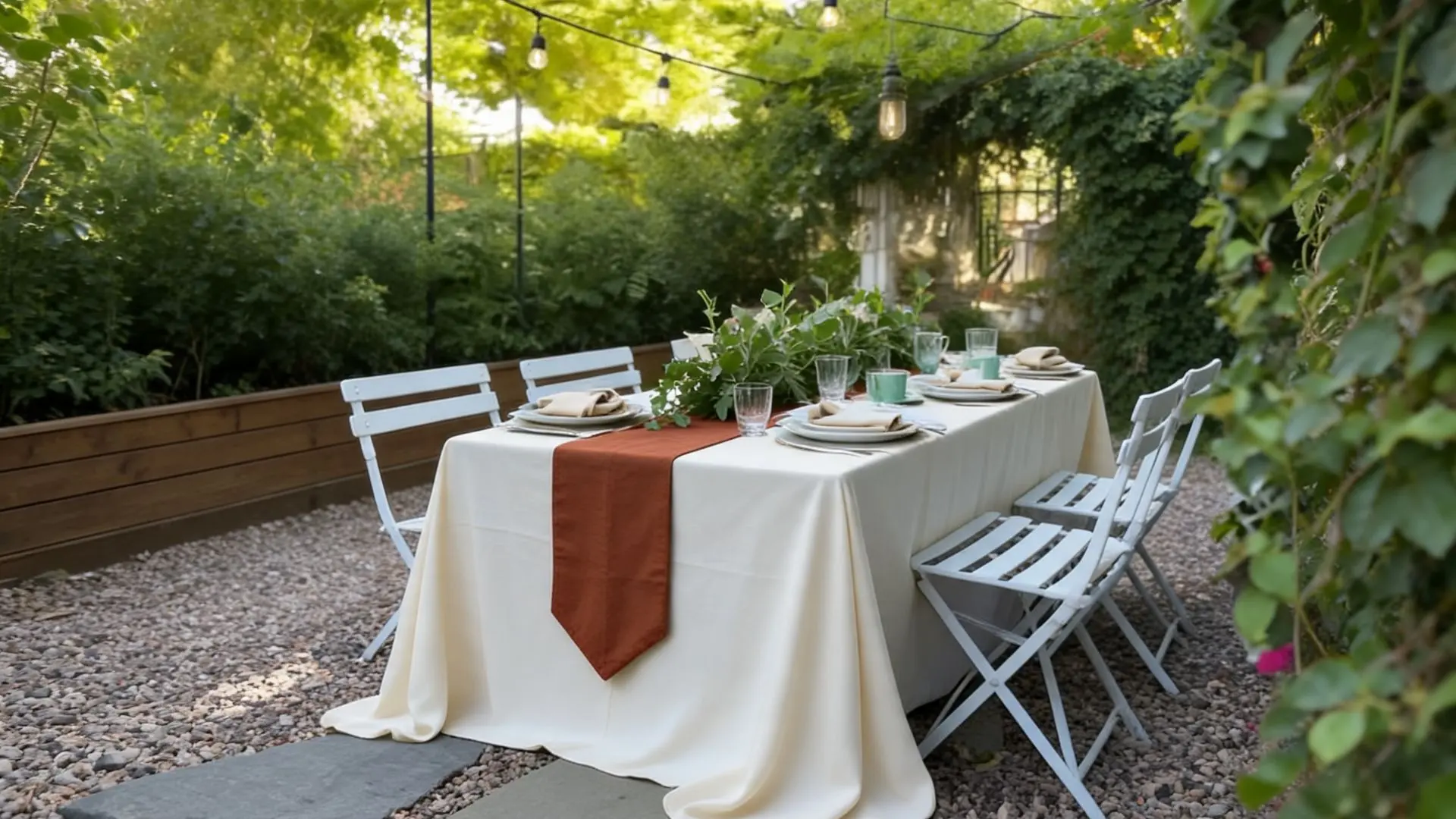
A floor-length tablecloth can turn a basic folding table into something that actually looks set for the holiday.
Choose an opaque cloth that reaches close to the floor on all sides and secure it with hidden clips when needed.
Add a runner, low centerpiece, and consistent place settings to draw attention upward. The long fabric conceals metal legs, storage boxes, or extra supplies beneath the table.
Tip: Steam the tablecloth before placing it and keep loose fabric away from walkways and chair legs.
61. Narrow Table With Slim Bud Vases
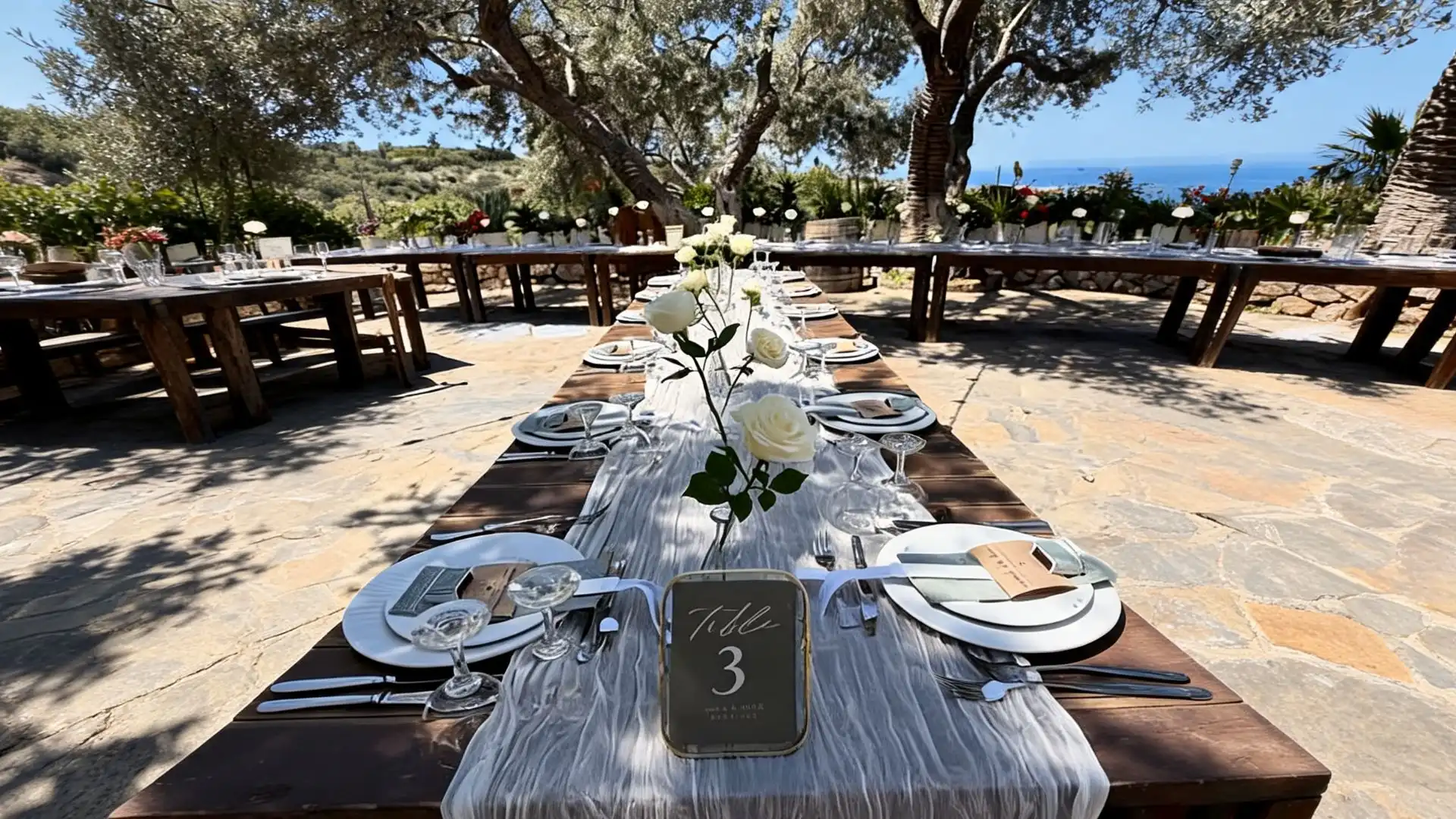
A narrow table needs centerpieces with very little width.
Use slim bud vases, each holding one or two stems, and position them in a loose line between the place settings.
Pair them with small votive candles rather than wide pillars or bulky garlands. Clear vases help the arrangement feel lighter and allow the tabletop or runner to remain visible.
Tip: Keep each vase within the center third of the table so stems do not lean over plates.
62. Coordinated Two-Table Setup for Large Gatherings
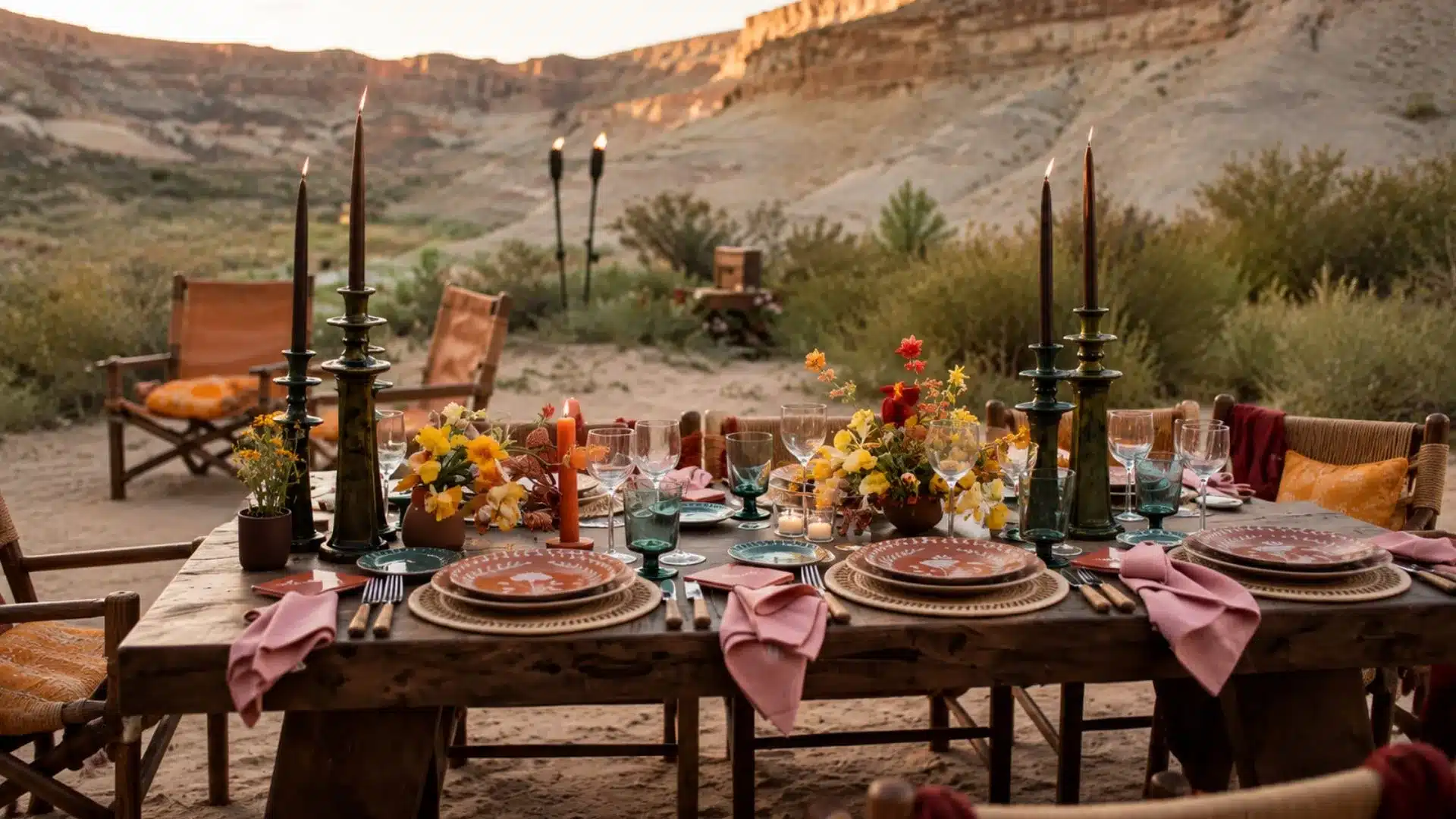
Two tables can feel like one gathering when their main design elements repeat. Use the same tablecloth or runner, napkin color, dinnerware style, and centerpiece materials on both tables.
The arrangements need not be identical, but their scale and palette should match.
Position the tables within sight of each other and repeat one strong feature, such as brass candles or green garlands, to create continuity.
Tip: Divide families or social groups thoughtfully so neither table feels like a secondary seating area.
63. Outdoor Thanksgiving Table With Lanterns and Blankets
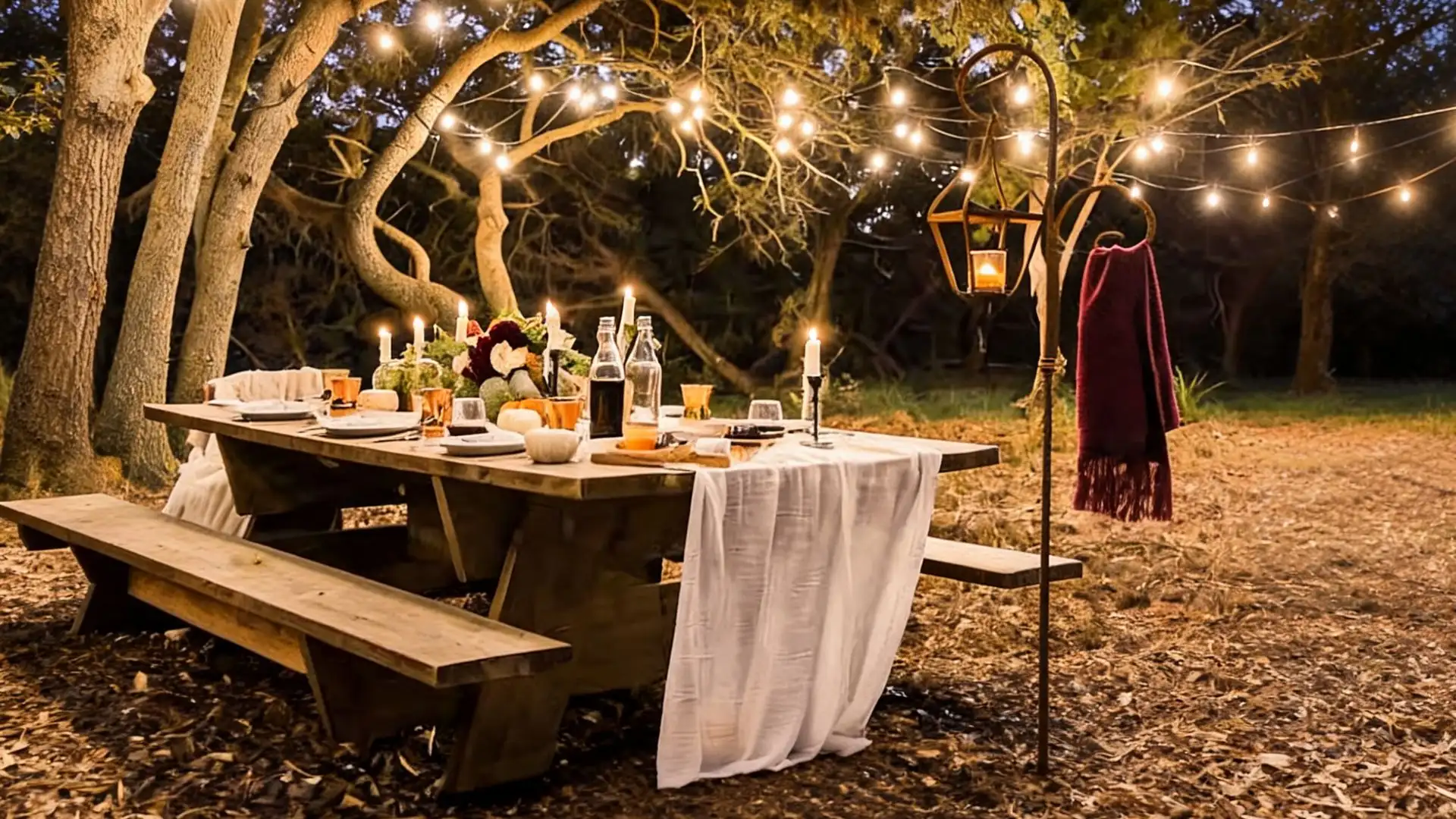
An outdoor Thanksgiving table feels more comfortable when lighting and warmth are planned into the setup. Place stable lanterns along the center or around the dining area, using battery-operated candles when wind is expected.
Drape washable blankets over chair backs or store them in a nearby basket for guests.
Choose weighted napkins, low arrangements, and sturdy dinnerware that will not shift easily, and if the whole meal is moving outdoors this year, refreshing the rest of the outdoor entertaining space is worth doing at the same time.
Tip: Check the forecast and prepare an indoor backup location before completing the outdoor table.
Choosing a Thanksgiving Color Palette That Fits Your Dining Room
Choose a Thanksgiving color palette by looking at the colors already present in your dining room. Wood tones, wall paint, upholstery, curtains, rugs, and artwork can guide the table’s main shades.
Warm rooms often suit rust, burgundy, olive, amber, or cream, while cooler spaces work well with navy, sage, silver, or soft gray.
Use one dominant color, one supporting shade, and one metallic or neutral accent to keep the table balanced. Repeat these colors through napkins, candles, flowers, glassware, or place cards.
If the rest of the room still feels unresolved, working out a room’s color story first makes the table palette much easier to land on.
Avoid adding too many competing tones, especially when the room already includes strong patterns or bold furniture details.
Plan a Safe and Practical Thanksgiving Table Setting
A successful Thanksgiving table setting needs more than attractive decorations.
It should give guests enough room to eat, leave clear space for serving dishes, reduce fire and food risks, and remain comfortable for children, older adults, and guests with limited mobility.
| Guests | Seating and Serving Plan | Safety and Accessibility |
|---|---|---|
| 4 | Use one compact centerpiece and place large platters on a sideboard. | Choose flameless candles and keep one seat easy to approach. |
| 6 | Add two low arrangements and leave the center open for shared dishes. | Keep hot dishes away from children and reserve an end seat for older guests. |
| 8 | Use small repeated decorations and move bulky serving dishes to a buffet. | Maintain clear walkways and avoid scented candles or loose decor. |
| 12 | Use buffet service or two coordinated tables to prevent crowding. | Provide stable chairs, accessible seating, and pet-safe, flame-free decorations. |
How to Create a Buffet Table That Matches the Dining Table?
Make the buffet feel connected to the dining table by repeating the same color palette, linens, serving materials, and one or two decorative accents.
Use matching greenery, candles, or small floral arrangements, but keep the buffet less decorated so food remains easy to reach.
Arrange dishes in serving order, beginning with plates and ending with flatware, napkins, and condiments to support smooth movement. Add height with cake stands or risers, then label dishes clearly for guests.
Keep hot dishes separate from fragile decor, leave enough room for serving utensils, and repeat one centerpiece element to visually connect both tables together.
Common Thanksgiving Table Decor Mistakes to Avoid
A beautiful Thanksgiving table setting should support the meal rather than make dining difficult. Avoid these common mistakes to keep the table balanced, comfortable, practical, and welcoming.
- Using an oversized centerpiece. Tall flowers, large branches, or bulky pumpkins can block conversation and consume space needed for serving dishes.
- Adding too many colors. Several unrelated shades can make the table feel busy. Limit the palette to two or three coordinated colors with one neutral or metallic accent.
- Crowding each place setting. Plates, glasses, napkins, favors, and decorations need breathing room. Remove unnecessary accessories when guests have limited elbow space.
- Mixing too many decorative styles. Rustic, formal, modern, and novelty pieces may compete visually. Choose one main style and repeat a few related materials throughout the table.
- Forgetting guest comfort. Hard chairs, inaccessible seats, fragile decor, or obstructed views can affect the dining experience.
If overnight guests are part of the plan, getting the spare room ready ahead of time is worth adding to the same checklist. Check the setup from every chair before guests arrive.
A thoughtful final check helps ensure the decorations remain attractive without restricting conversation, movement, serving, or comfortable dining.
Frequently Asked Questions (FAQs)
How Early Can a Thanksgiving Tablescape Be Set Up?
Linens, place settings, candles, and nonperishable decorations can be arranged one or two days ahead. Add fresh flowers, greenery, fruit, and chilled serving items on Thanksgiving Day, so they remain clean, fresh, and attractive.
Should Every Place Setting Look Exactly the Same?
No. Matching the main elements, such as plates, napkins, and glassware, creates consistency, while small variations in place cards, flowers, or decorative accents add personality without making the table appear disorganized.
What Can Replace a Traditional Thanksgiving Centerpiece?
Use a row of bud vases, taper candles, seasonal fruit, mini pumpkins, branches, or individual decorations at each setting. Low, repeated pieces often work better than one large centerpiece because they preserve conversation space.
Final Thoughts
A Thanksgiving table does not need a big budget or a showroom centerpiece to feel considered.
Start with the shape of your table and the colors already in your dining room, then build outward with linens, candles, and one or two natural accents that fit how many people you are actually seating this year.
Some of the best Thanksgiving tablescape ideas come from what is already in the kitchen, like a bowl of pears, a few branches from the yard, or jars saved from the pantry.
Pick a style that fits how you actually host, not how a photo looks.
What is the one detail that always makes your Thanksgiving table feel finished? Tell me in the comments; I am always looking for the next idea to try.