
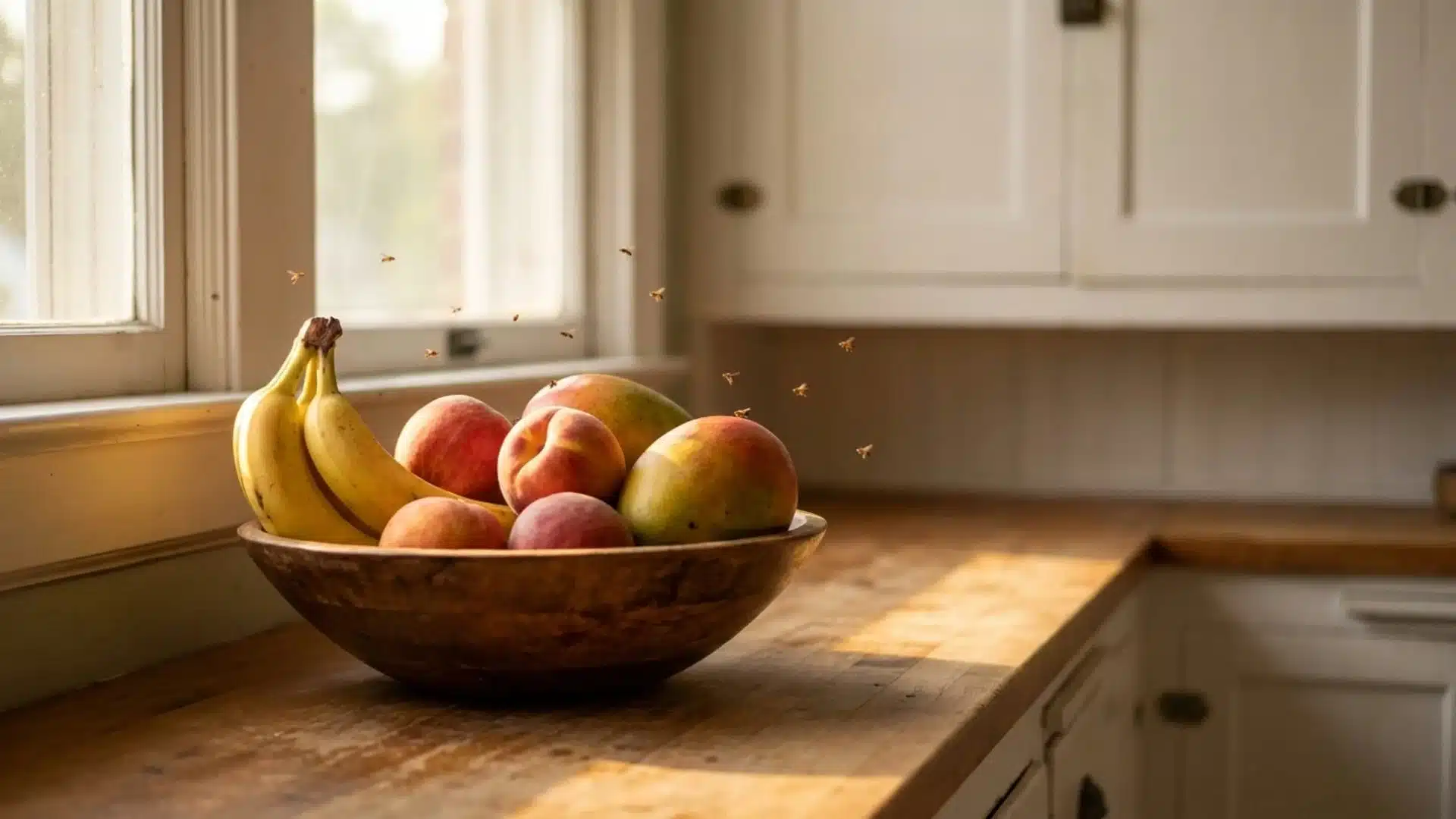
You spot one fruit fly near the counter and think nothing of it.
Three days later, dozens are hovering around the fruit bowl, the drain, and the garbagebin.
This small problem can quickly become a full infestation. If your kitchen is this bad, you’re in the right place.
This blog covers exactly how to get rid of fruit flies in the kitchen, from finding the source to setting up traps, cleaning the right spots, and fixing storage habits that keep them coming back.
Read through each section and start clearing them out today.
Why Does Your Kitchen Have Fruit Flies?
Fruit flies don’t appear out of nowhere.
They’re drawn to fermentation. Any fruit, vegetable, or liquid that’s started to rot or break down will bring them in.
A single overripe banana on the counter is enough. A few drops of juice near the stove work too.
They breed fast. Two or three flies today can turn into dozens within a week.
They’re also drawn to moisture. Sink drains, wet sponges, and garbage bins all qualify.
Many people focus on how to catch fruit flies without first asking what’s feeding them. Until the source is removed, traps alone won’t work. That’s the real reason kitchens stay infested longer than expected.
Common Breeding Spots You Might Be Missing
Fruit flies settle easily in small spaces. These are your kitchen spots most likely to feed them.
Regularly checking and cleaning these spots prevents fruit flies from breeding indoors.
| Breeding Spot | Why Fruit Flies Breed There |
|---|---|
| Kitchen drain | Organic buildup and moisture create a perfect breeding ground |
| Garbage bin | Food scraps and liquid residue at the bottom attract and sustain flies |
| Compost bin | Decomposing matter is a primary food and breeding source |
| Fruit bowl | Overripe or damaged fruit left at room temperature draws them in fast |
| Wet sponge or dishcloth | Moisture and food residue make these a hiding and breeding spot |
| Recycling bin | Unwashed bottles and cans with sticky residue are a common source |
| Under the refrigerator | Spills and crumbs that collect underneath are often overlooked |
| Potted indoor plants | Overwatered soil can attract fungus gnats, often mistaken for fruit flies |
The 15-Minute Source Hunt: Do this Before Any Trap
Before placing any trap, spend fifteen minutes finding the actual source. Traps catch flies but will not stop the cycle if the source remains active.
- Inside cabinets: Check for forgotten, rotting vegetables or potatoes.
- Counter edges: Pull items away from the wall and look for sticky residue underneath.
- Behind the refrigerator: Check for old spills, moisture, or food particles that may have collected there.
- Grocery bags: Inspect reusable bags for any leftover fruit or vegetable residue.
- Trash can base: Check the underside and base for cracks or pooling liquid.
- Indoor plants: Look at the soil for excessive moisture or signs of overwatering.
Addressing even one overlooked spot from this list makes every subsequent step more effective.
Eliminate the Breeding Sites
Fruit flies breed fast. The cycle continues as long as even one active site remains untouched.
Most people check the fruit bowl or bin. But breeding often happens in spots a standard clean misses.
The kitchen drain is one of the most active sites.
Organic matter coats the inner walls and gives flies a place to lay eggs out of sight.
Unwashed garbage bins are another. Residue at the base sustains breeding even after the bag is changed.
Damp sponges and cloths left on the counter are easy to overlook, too. Clear the buildup, moisture, and organic matter in each spot. That cuts off what the flies depend on to keep the cycle going
How to Catch Fruit Flies Using Homemade Traps
Each method below is simple to set up and works by pulling fruit flies in and stopping them from getting back out.
1. Apple Cider Vinegar Trap
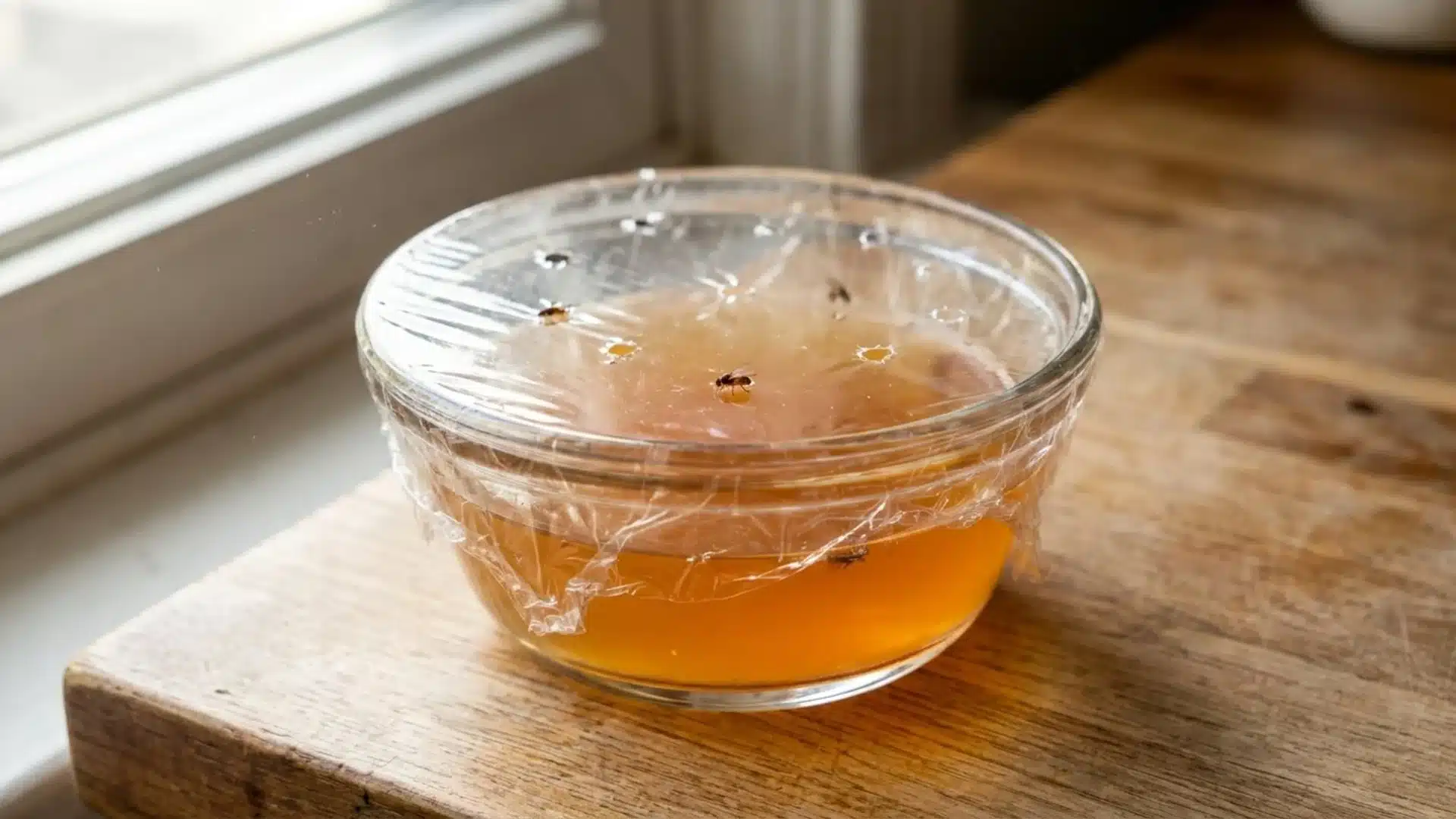
Apple cider vinegar smells like fermented fruit, which is exactly what fruit flies are drawn to.
This is one of the most commonly used homemade traps and takes under a minute to set up.
- Step 1: Pour a small amount of apple cider vinegar into a glass or bowl.
- Step 2: Add one drop of dish soap and stir gently.
- Step 3: Cover the top tightly with plastic wrap and poke small holes in it.
- Step 4: Place it near the area where flies are most active.
- Step 5: Replace every 2 to 3 days, or when the liquid gets cloudy.
This trap works consistently when placed close to the source. Keep it away from direct sunlight as the liquid evaporates faster in heat.
2. Red Wine Bottle Trap
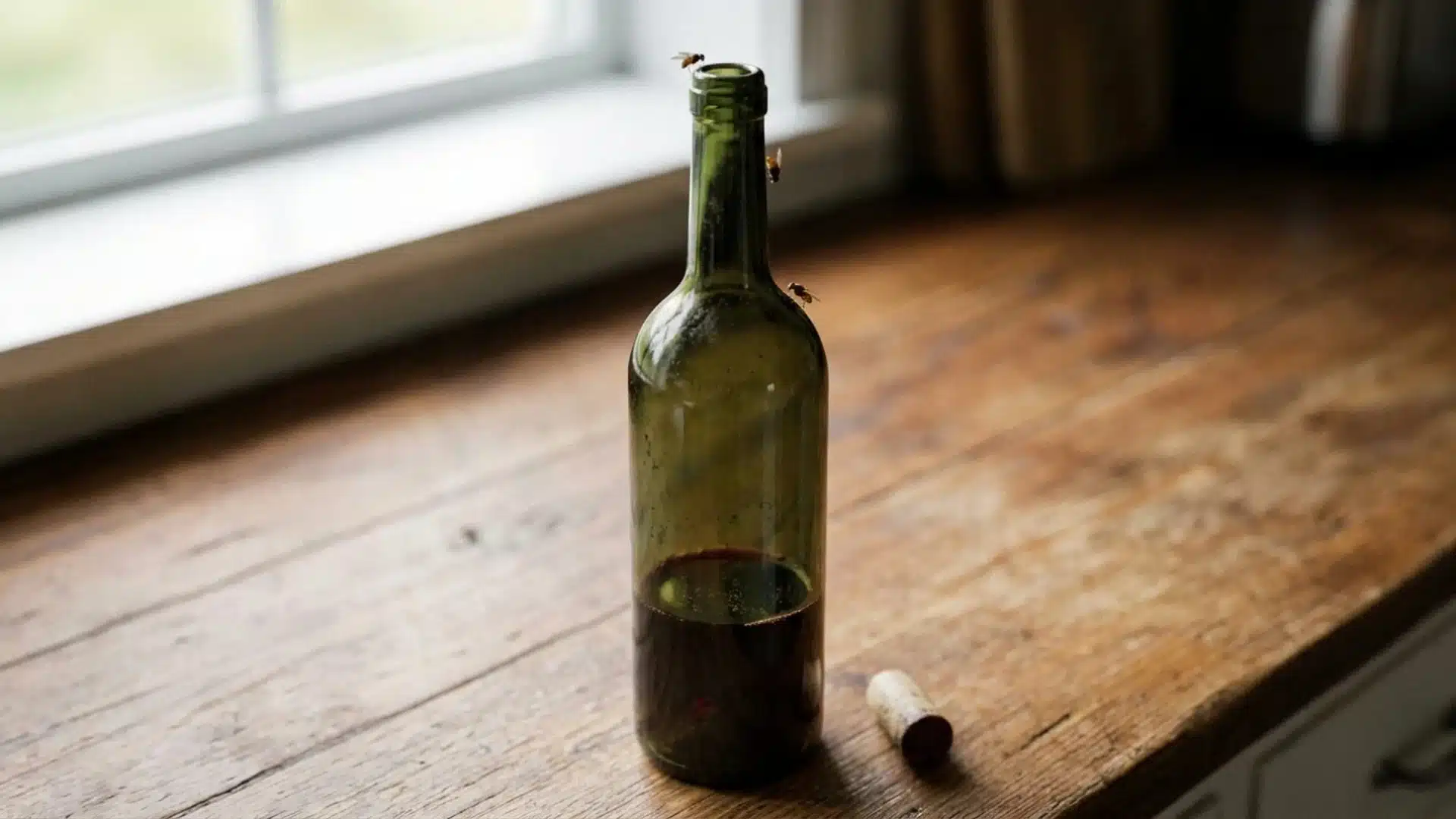
An unfinished bottle of red wine works as a ready-made trap. The narrow neck does the work for you by letting flies in and making it nearly impossible for them to get back out.
- Step 1: Finish or pour out most of the contents of a red wine bottle, leaving a small amount at the bottom.
- Step 2: Do not rinse the bottle out. Leave the bottle open near the fruit fly activity area.
- Step 3: Flies go in through the narrow neck and cannot get back out.
- Step 4: Swap out the bottle every few days once it fills up.
This works best when placed on the counter overnight. The darker the bottle, the better it tends to attract flies.
3. Overripe Fruit Jar Trap
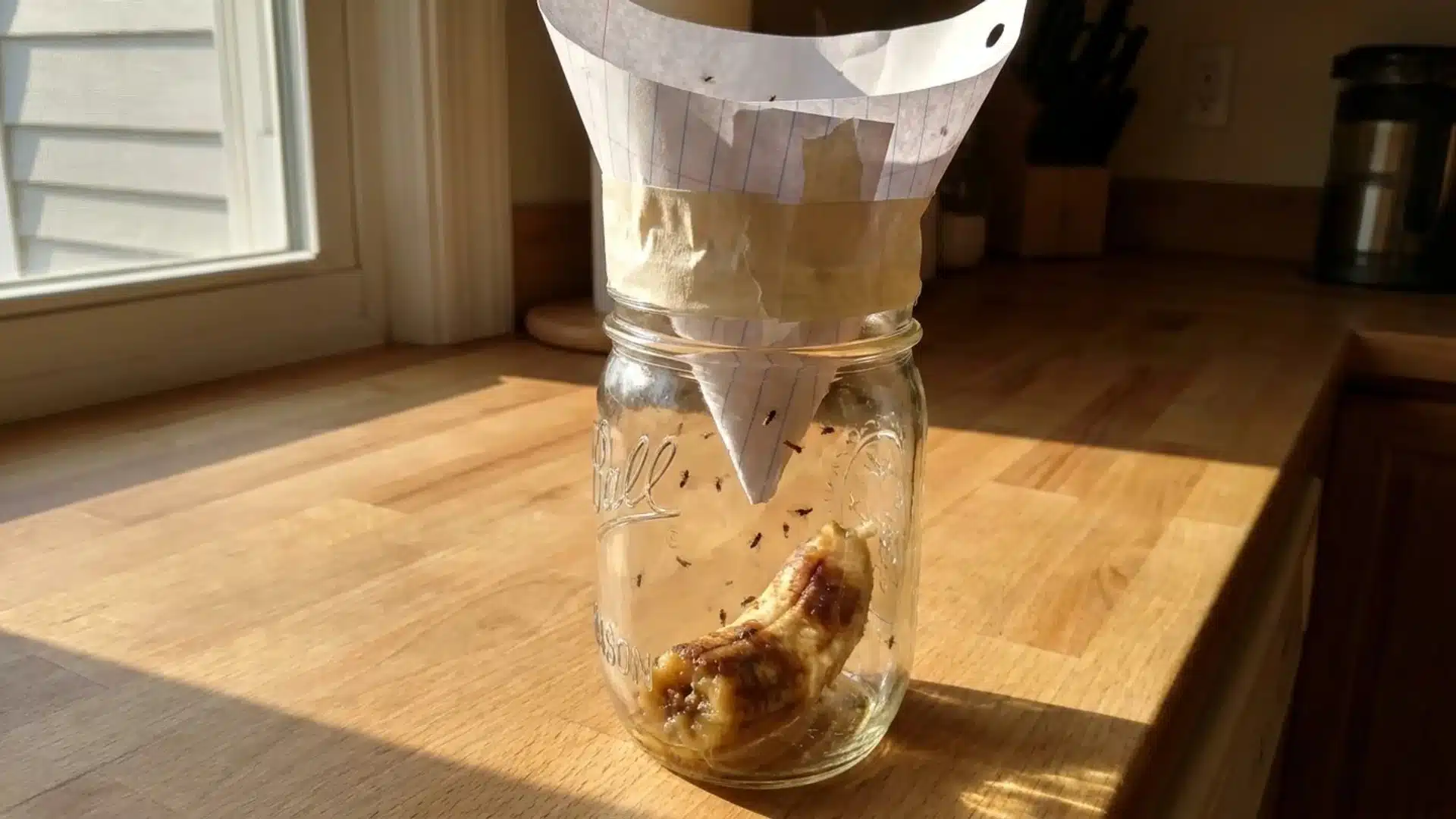
Using fruit as bait pulls flies toward a controlled spot.
This trap mimics the exact conditions that attract fruit flies and works without any added chemicals.
- Step 1: Place a small piece of overripe fruit at the bottom of a jar.
- Step 2: Roll a sheet of paper into a funnel shape and place it in the jar opening.
- Step 3: Tape the edges to ensure there are no gaps along the sides.
- Step 4: Flies go in toward the fruit and cannot find their way out.
- Step 5: Take the jar outside daily to release or dispose of the flies.
These traps work best when the breeding source has already been removed. Without that step, traps will catch flies but will not stop new ones from appearing.
4. Dish Soap and Water Trap
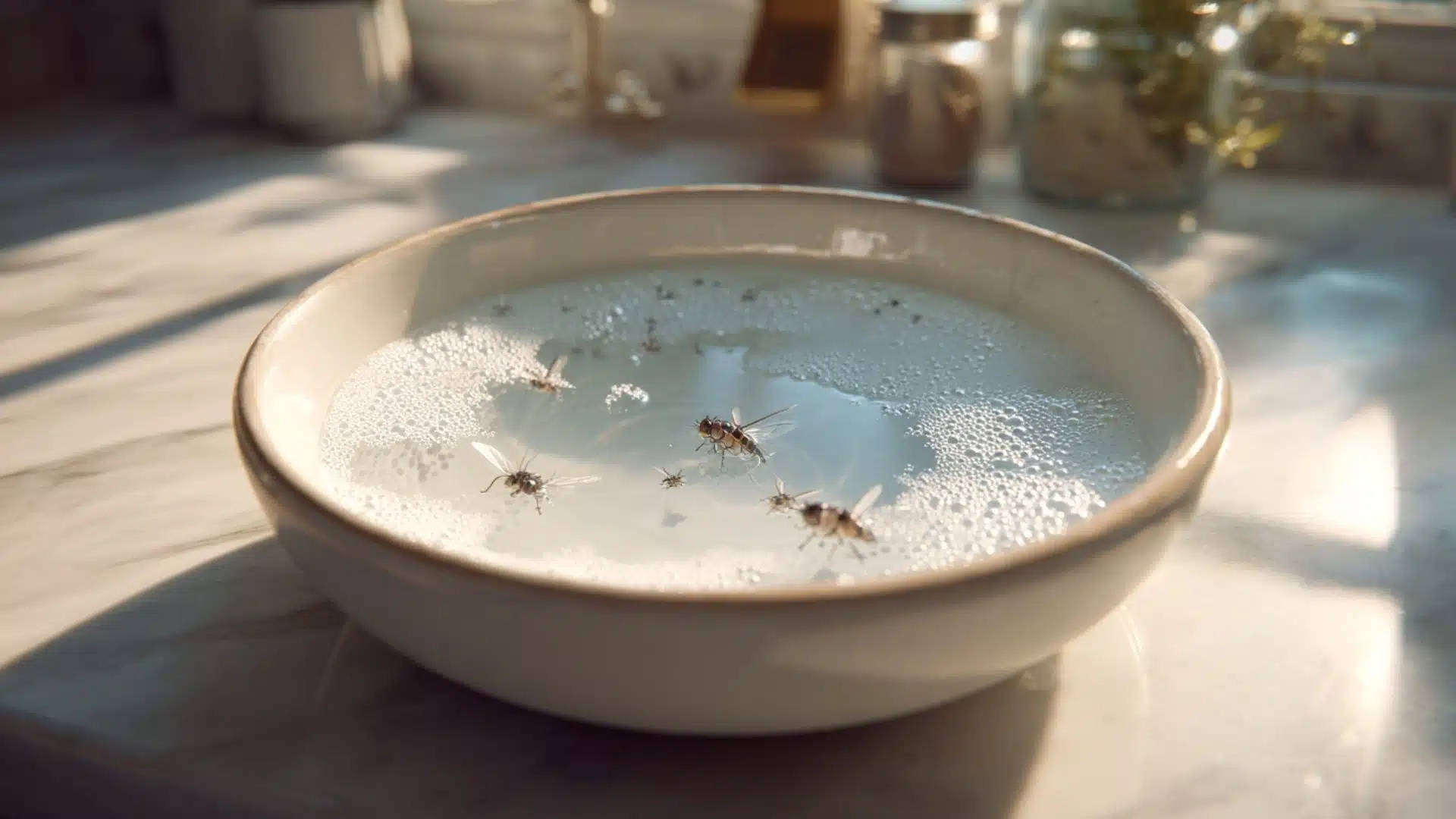
Plain dish soap mixed with water breaks the surface tension that fruit flies depend on to land and take off.
This trap is especially useful near drains and garbage bins.
- Step 1: Fill a shallow bowl with warm water, add a few drops of dish soap, and stir until mixed but not foamy.
- Step 2: Place the bowl near drains, the fruit bowl, or garbage bins where fly activity is highest.
- Step 3: Empty and refill the bowl every day to keep it effective.
- Step 4: If activity slows in one spot, move the bowl to a different area and monitor it for 2 days.
A shallow bowl is better than a deep one for this method because a wider surface area catches more flies.
For a complete picture of how to get rid of fruit flies in the kitchen, combine these homemade methods with the cleaning steps and storage fixes covered in the sections below.
Store-Bought Options to Catch Fruit Flies
Not every situation calls for a homemade fix. These ready-to-use products are widely available and can speed up the process of clearing fruit flies from your kitchen.
5. Sticky Traps
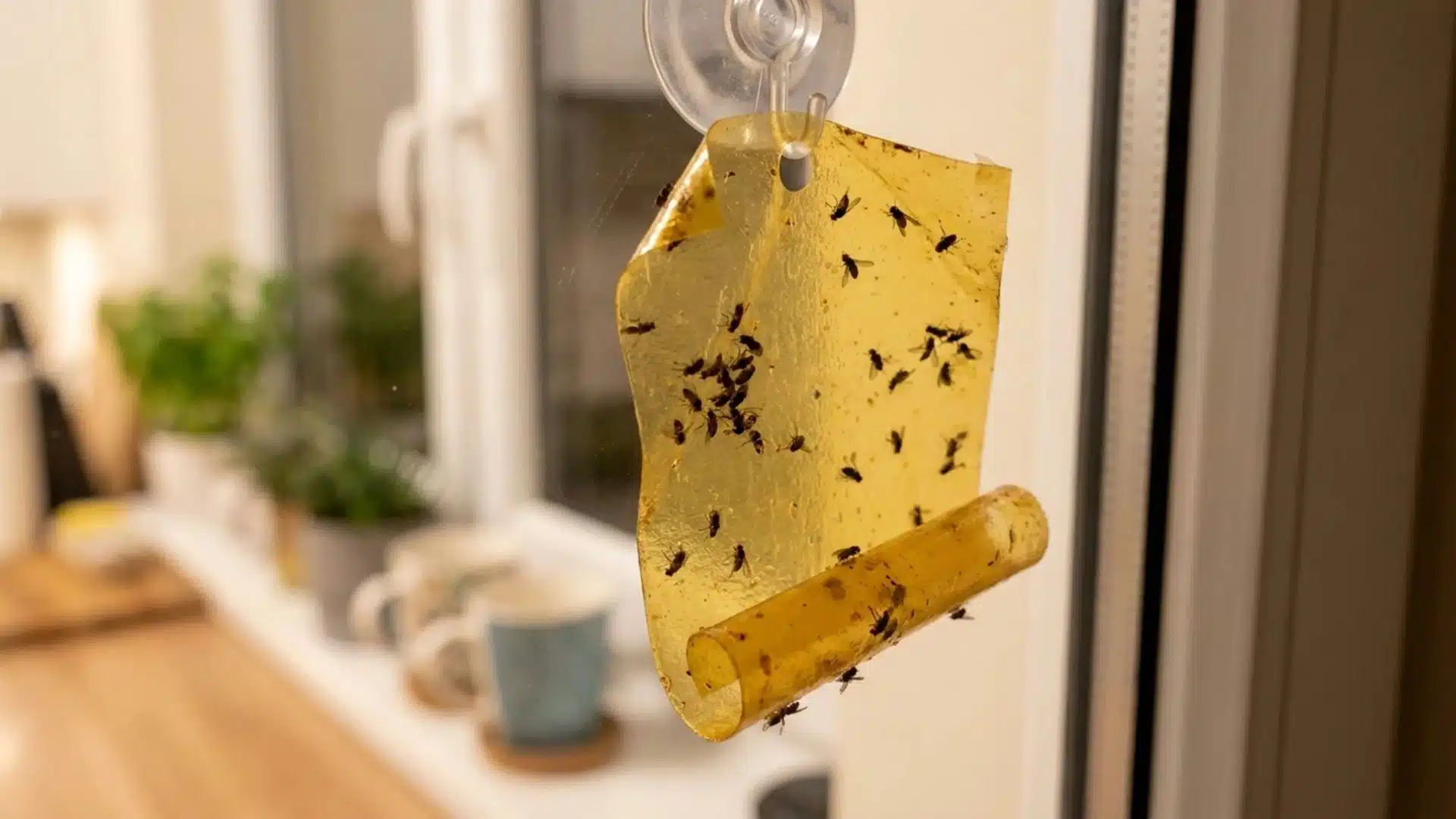
Sticky traps are a good starting point when fly activity is low to moderate. They require no setup or chemicals and can be placed anywhere in the kitchen without risk to food or surfaces.
These work well as a first response while other cleaning and source-removal steps are still in progress.
| Product Type | Effectiveness |
|---|---|
| Yellow sticky cards | Strong contact capture for flies near countertops and fruit bowls |
| Adhesive strip traps | Scented lure increases catch rate near bins and drains |
Replace sticky traps every 5 to 7 days, or sooner if they fill up. A full trap stops working entirely.
6. Fruit Fly Sprays and Gels
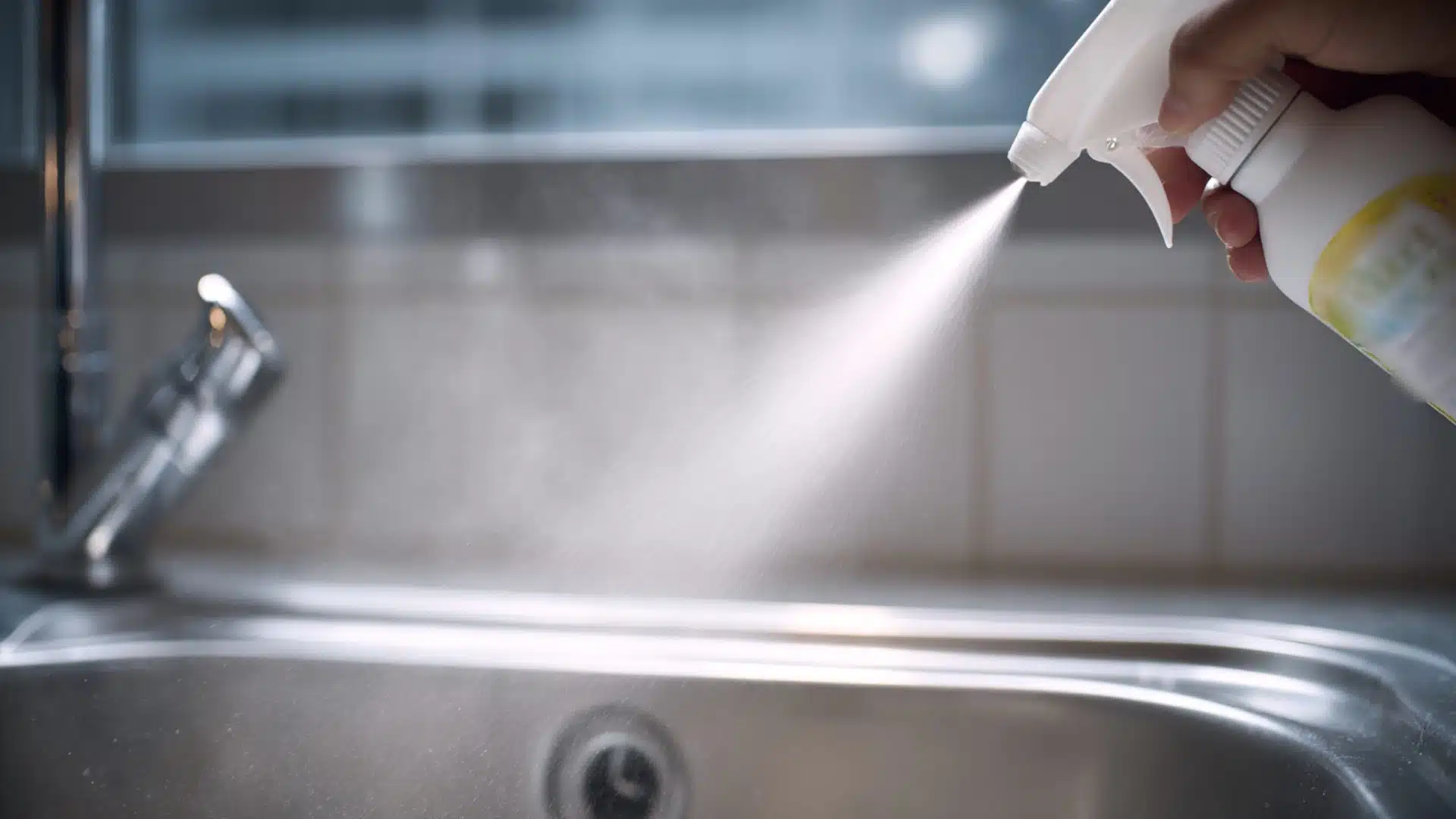
Sprays and gels work well when flies are concentrated around drains or bins where sticky traps cannot reach.
These products target both adult flies and the organic buildup that keeps them breeding.
They are particularly useful when the infestation has been running for more than a few days and surface cleaning alone has not been enough.
| Product Type | Effectiveness |
|---|---|
| Drain gels | Breaks down internal drain buildup where flies breed |
| Natural enzyme sprays | Eliminates organic matter on surfaces that sustains fly activity |
Apply drain gel at night for best results. For sprays, focus only on areas with the highest fly activity.
7. Electric Traps
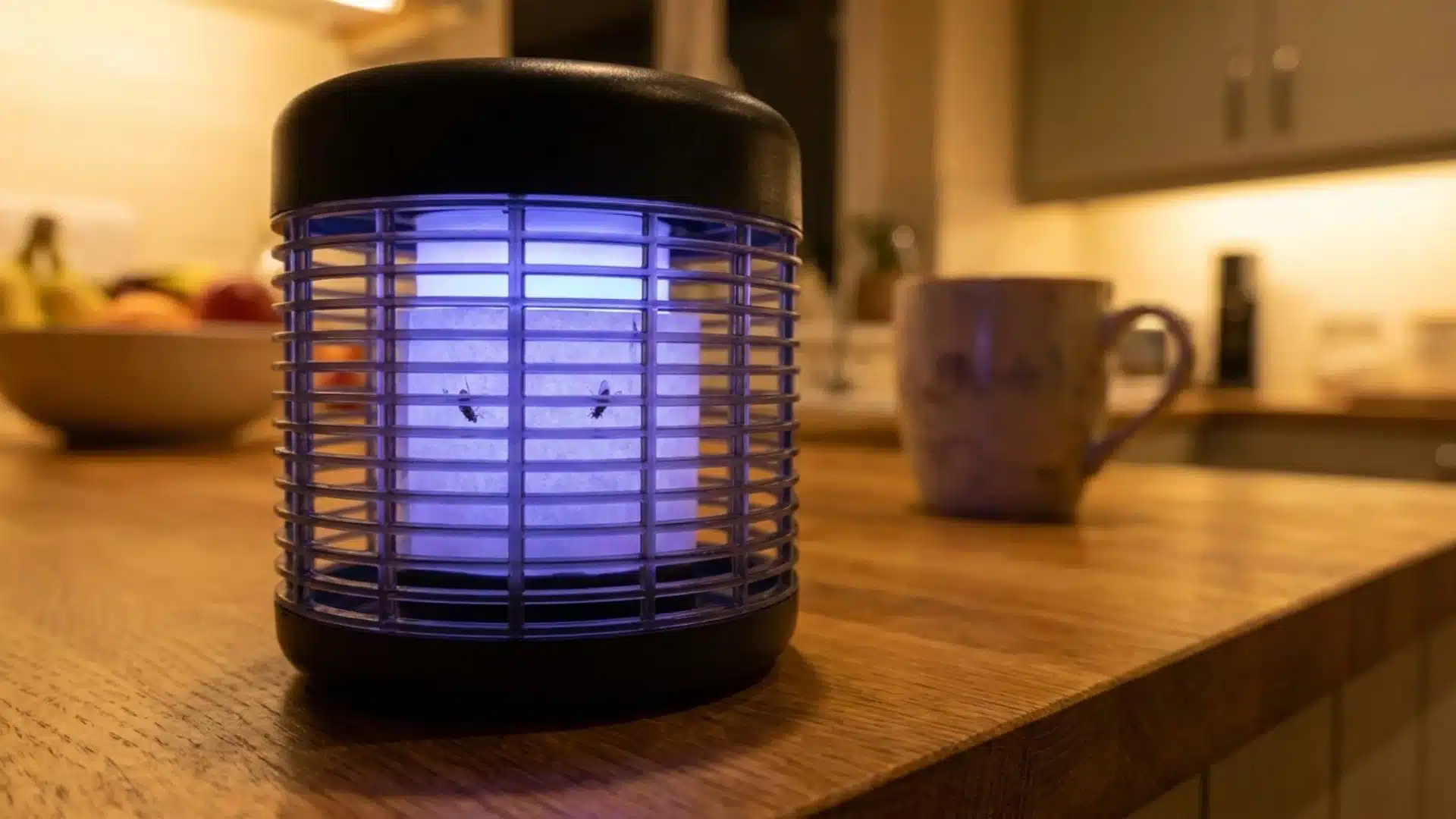
Electric traps work well for larger or longer-running infestations where other methods are only partially effective.
They run continuously without daily attention and perform best overnight when flies are most active.
Placing one in the kitchen before going to bed gives it uninterrupted time to work through the night.
| Product Type | Effectiveness |
|---|---|
| UV light traps | High capture rate using ultraviolet light with a sticky board |
| Plug-in traps | Pulls and holds flies through a combined light and adhesive surface |
Place electric traps away from competing light sources.
Empty or replace the collection chamber regularly to maintain full performance. For heavy infestations, combining a drain gel with an electric trap tends to give faster results.
Choose based on where the fly activity is highest in your kitchen.
Troubleshooting: When Traps Aren’t Working
Traps are working, but the fly count is not dropping? The issue is rarely the trap itself.
Here is what to check when results are not showing up:
- Move the trap near visible flies; fruit flies don’t travel far.
- Too few traps: one trap in a large kitchen is not enough; each active area needs its own.
- Traps weaken over time: liquid traps lose scent, sticky traps lose grip, so refresh or replace regularly.
- A sticky card near a drain won’t catch flies breeding inside it, so match trap type to location.
- Fungus gnats look like fruit flies but are attracted to soil moisture.
- Check indoor plants if food-area traps catch nothing.
If none of these adjustments produce results within three to four days, the breeding source has likely not been fully removed and needs another thorough check before continuing with traps.
When to Call a Professional
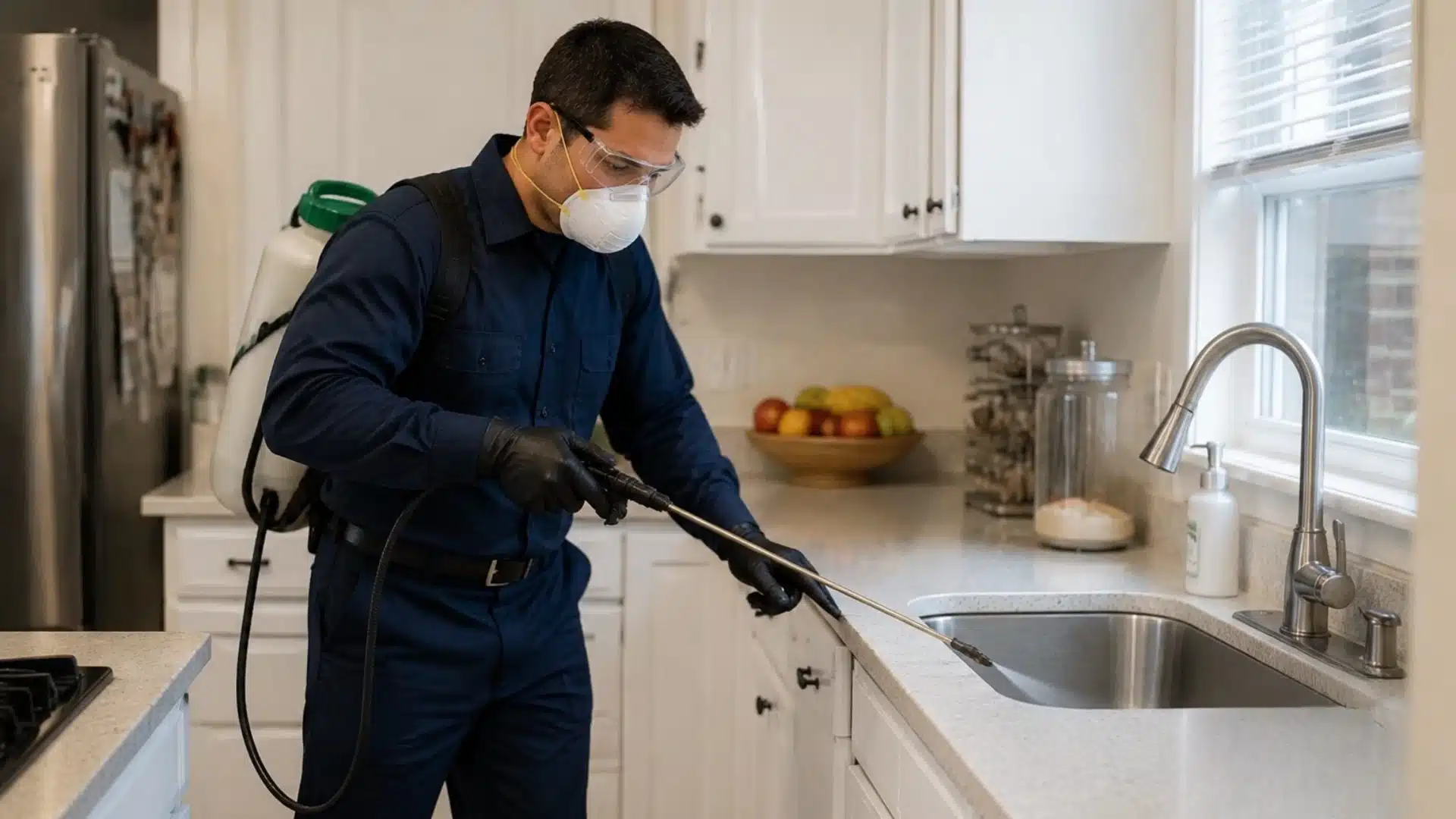
Most fruit fly problems clear up within 7-10 days of proper source removal and trapping.
Call an exterminator if flies persist past 3-4 weeks despite consistent effort. Spreading to multiple rooms is another red flag. So is a suspected drain or plumbing issue feeding a constant breeding cycle.
A pro can inspect pipes, walls, and cabinets for hidden moisture or rot you can’t easily reach yourself.
They also carry treatments stronger than store-bought sprays or traps.
This step is rarely needed, but worth knowing when DIY has run its course.
Food Items that Should Be Stored Differently
Small changes in how food is stored can remove the main conditions that attract fruit flies.
| Item | Storage Problem | What to Do |
|---|---|---|
| Ripe Fruits | Left out past peak ripeness | Refrigerate once fully ripe |
| Tomatoes | Stored on the counter with soft spots | Refrigerate when fully ripe |
| Potatoes and onions | Open baskets are not checked often | Remove spoiled pieces weekly |
| Vegetable scraps | Sitting out for days | Move to a sealed compost bin daily |
| Open wine or beer bottles | Left unsealed after use | Seal or finish the same day |
| Fermented drinks | Stored with loose lids | Seal tightly after every use |
| Fermented condiments | Left open on the counter | Cap and refrigerate after use |
| Fruit juices and smoothies | Left in open glasses or jugs | Cover or refrigerate after pouring |
Addressing storage habits, traps, and cleaning produce quicker, longer-lasting results against fruit flies.
Prevention: Keeping them from Coming Back
Prevention beats another round of traps. Don’t leave ripe fruit out longer than two days.
Rinse the disposal weekly with cold water and citrus peels. Take out the trash and recycling before they sit overnight. Let the plant soil dry between waterings. Wipe counters and sink edges to remove sticky residue.
These small habits take minutes, but block the conditions fruit flies need to breed again.
Fix it Fast
A trap you bought at the store didn’t fail you. A missed pipe under the sink or a sponge left damp on the counter did. That’s the difference between a fix that lasts and one that doesn’t.
Find the source. Clean it properly. Set traps that match the spot. Fix the storage habits that let the cycle restart.
Skip any one of these steps, and flies come back within days.
Follow all four, and most kitchens are clear within a week.
Frequently Asked Questions (FAQ’s)
1. Do Fruit Flies Die on their Own without Intervention?
They do not. As long as a food or moisture source exists, they will continue breeding, and the numbers will grow.
2. Is it Possible to Have Fruit Flies without Any Visible Fruit?
Yes, drains, wet sponges, and fermented liquids like vinegar or alcohol can sustain a full fruit fly presence.
3. Do Fruit Flies Cause Any Harm Beyond Being a Nuisance?
They carry bacteria from decaying matter and can transfer them to surfaces, increasing the risk of contamination.
4. How Do You Know if Fruit Flies are Breeding Inside the Drain?
Seeing flies near the sink after cleaning counters and removing fruit strongly indicates drain breeding.