
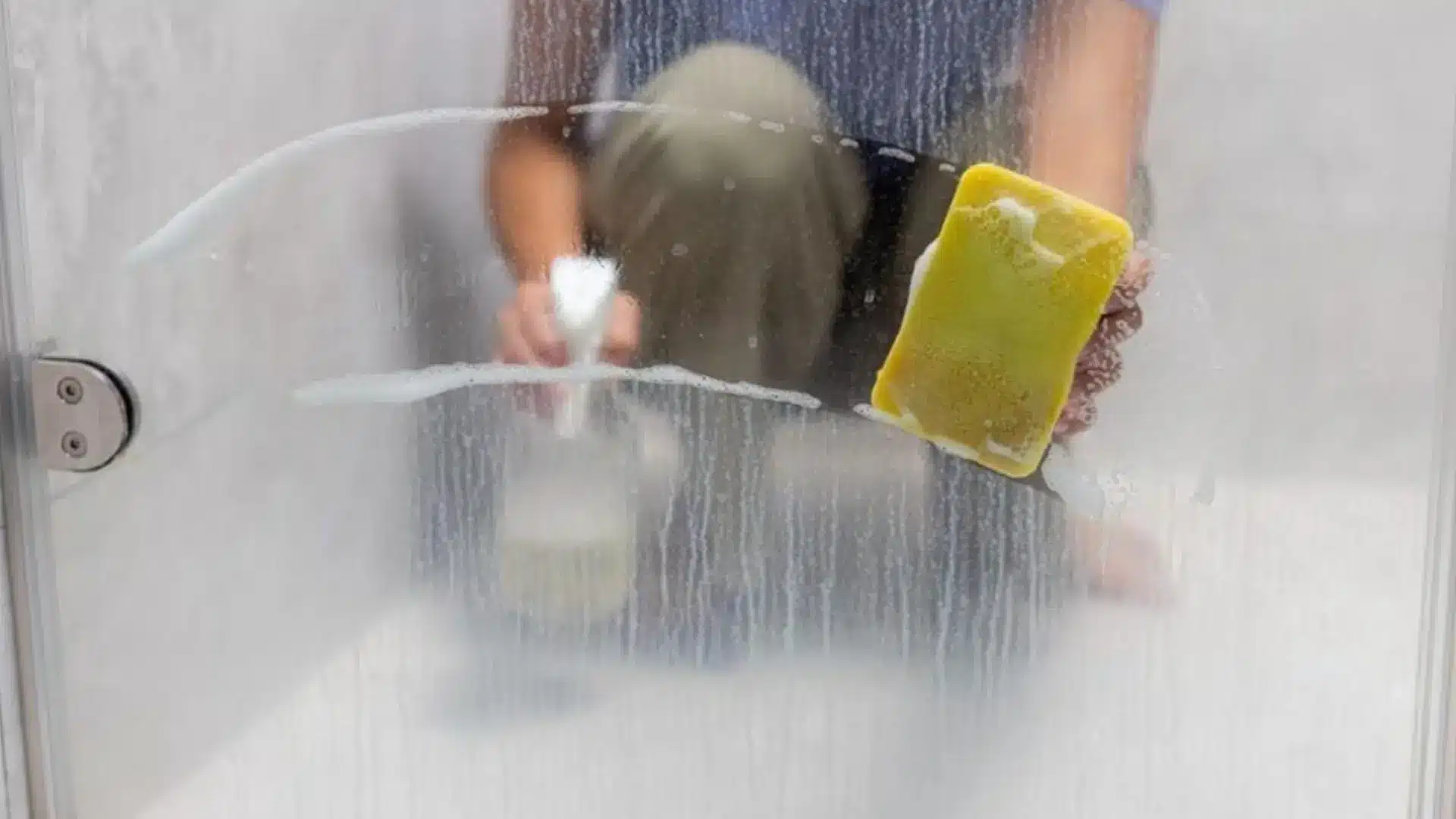
Glass in bathrooms and kitchens often develops white marks over time. Those chalky spots build up on glass surfaces over time. You wipe the glass, but the cloudy film stays put.
Hard water leaves marks on windows, glasses, and shower doors alike. Learning how to remove hard water stains from glass can save you time and effort.
Dull, spotted glass is a common issue in many homes. Simple items from your kitchen can bring back that shine. You don’t need harsh chemicals or costly tools for this.
Soft scrubbing and a little patience make a real difference. Your shower doors can look clear again in no time. Grab a cloth, because clean glass is easier than you think.
Understanding Hard Water Stains and Their Causes
Hard water stains form when mineral-rich water dries on glass, leaving behind deposits of calcium, magnesium, and other minerals.
These marks often appear as white spots, cloudy patches, streaks, or rough buildup that regular glass cleaner cannot remove.
Common causes include frequent shower splashes, soap residue, high humidity, sprinkler spray, rainwater runoff, and air-drying glassware.
Shower doors usually collect the heaviest buildup because warm water and soap help minerals cling to the surface.
Fresh stains are easier to clean, while older deposits may harden or etch the glass, causing dullness that simple cleaning may not fully reverse without professional glass restoration.
Check the Glass Type and Coating Before Cleaning
Confirm the surface before choosing a cleaner or tool:
- Plain glass: Usually tolerates diluted vinegar and non-abrasive mineral removers.
- Coated shower glass: May be damaged by strong acids, abrasive powders, or harsh chemicals.
- Tinted glass: Requires ammonia-free products to protect the film.
- Frosted glass: Needs gentle brushing because residue can settle inside the texture.
- Automotive glass: Avoid metal tools near tint, sensors, and protective coatings.
Always check the manufacturer’s instructions and test the cleaner in a hidden corner. Use a microfiber cloth or soft sponge first, increasing the cleaning strength only when the surface permits.
Best DIY Methods to Remove Hard Water Stains

The right method depends on the stain’s age, thickness, and location. Start gentle, especially on coated, tinted, or frosted glass, and give the cleaner time to work before scrubbing.
Here are the best ways to get hard water stains off glass:
1. White Vinegar Spray for Light Water Spots
Combine equal parts white vinegar and warm water in a spray bottle, and keep a microfiber cloth nearby.
This mild acidic solution suits fresh mineral marks on plain glass and softens calcium deposits without requiring abrasive scrubbing or specialist cleaning products.
How to use it:
- Pour the vinegar and warm water into the spray bottle.
- Spray the solution generously over the stained glass.
- Leave it for 10 to 15 minutes to soften mineral deposits.
- Wipe gently with a microfiber cloth.
- Rinse with clean water and dry immediately.
Tip: Slightly warm vinegar works faster on fresh calcium and magnesium deposits.
2. Vinegar-Soaked Towels for Vertical Glass
Use undiluted white vinegar, paper towels or thin microfiber cloths, and plastic wrap for stains on vertical glass.
This setup keeps the acidic cleaner in contact with stubborn deposits longer, preventing it from running down shower doors or windows before the minerals soften.
How to use it:
- Soak the towels thoroughly in white vinegar.
- Press them against stained shower doors or windows.
- Cover them with plastic wrap to reduce evaporation.
- Leave the towels in place for 20 to 30 minutes.
- Remove them, wipe the softened buildup, rinse, and dry.
Tip: This method keeps vinegar in contact with stubborn vertical streaks for longer.
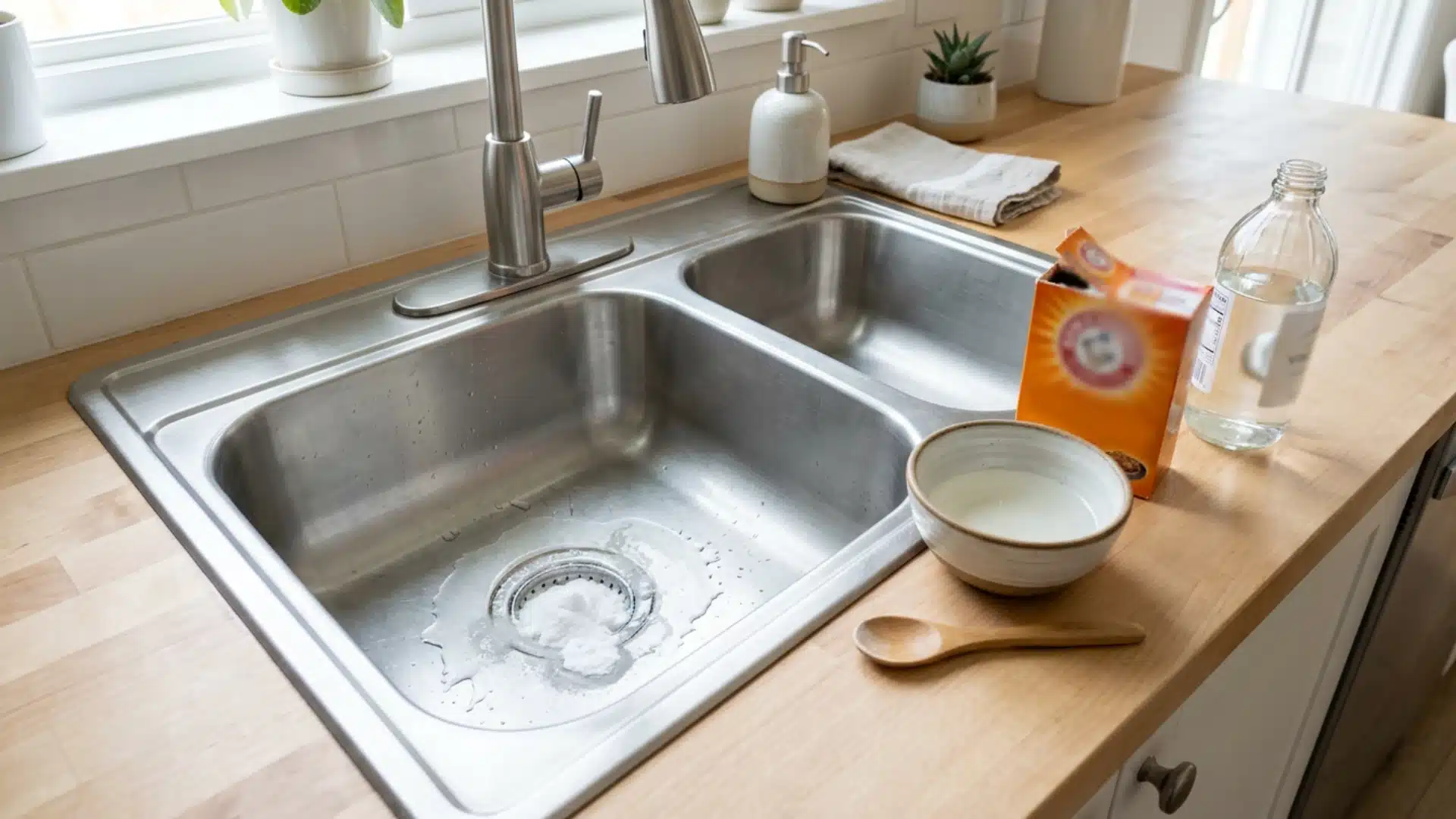
3. Baking Soda Paste for Stubborn Deposits
Mix baking soda with a small amount of warm water to create a smooth paste, then apply it using a soft sponge or microfiber cloth.
Its mild abrasiveness can loosen stubborn deposits, but it requires gentle pressure to protect delicate glass coatings.
How to use it:
- Mix baking soda with a small amount of water to form a smooth paste.
- Spread a thin layer over the mineral buildup.
- Leave it for about five minutes.
- Rub gently using light circular motions.
- Rinse thoroughly to remove chalky residue.
- Dry the glass with a lint-free cloth.
Tip: Avoid heavy pressure because baking soda can scratch delicate coatings.
4. Lemon Juice for Fresh Mineral Buildup
Fresh or bottled lemon juice, a spray bottle or halved lemon, and a microfiber cloth provide a natural treatment for recent water spots.
Citric acid helps dissolve light calcium deposits while leaving a fresh scent, although it is less effective on thick buildup.
How to use it:
- Spray lemon juice over the marks or rub a cut lemon across plain glass.
- Allow the citric acid to work for five to ten minutes.
- Wipe the area with a soft cloth.
- Rinse away all juice and pulp.
- Dry the surface immediately to prevent new spots.
Tip: Bottled lemon juice provides more consistent acidity across larger glass surfaces.
5. Dish Soap for Mixed Soap Scum
Combine mild dish soap with warm water, then apply it with a non-scratch sponge.
This method removes body oils, shampoo residue, and greasy soap scum that may cover mineral spots, allowing a later vinegar treatment to reach the hardened deposits underneath.
It sits alongside other pantry-based cleaning mixes, clearing grease before vinegar reaches deposits.
How to use it:
- Add several drops of dish soap to a bowl of warm water.
- Apply the mixture to greasy or cloudy shower glass.
- Gently scrub to remove body oils, shampoo, and soap residue.
- Rinse the glass thoroughly.
- Treat any remaining white mineral spots with diluted vinegar.
- Dry with a clean microfiber cloth.
Tip: Removing greasy soap scum first helps vinegar reach the mineral layer underneath.
6. Citric Acid Solution for Heavy Spots
Dissolve one tablespoon of citric acid powder in one cup of warm water and pour it into a spray bottle. This stronger acidic solution targets heavier mineral spots, but it should be tested carefully around coated glass, natural stone, and metal fixtures.
How to use it:
- Dissolve the citric acid powder completely in warm water.
- Pour the solution into a spray bottle.
- Apply it evenly over hard water marks.
- Leave it for five to ten minutes.
- Wipe gently with a soft cloth or sponge.
Tip: Test first because concentrated citric acid may affect coated glass or nearby stone.
7. Hydrogen Peroxide for Cloudy Bathroom Glass
Use standard 3% hydrogen peroxide in a spray bottle with a non-abrasive sponge.
It works best on cloudy bathroom glass affected by organic grime, mildew haze, or residue, rather than on mineral deposits alone, so any remaining hard water spots may need separate treatment.
How to use it:
- Spray hydrogen peroxide over cloudy areas affected by organic grime or mildew.
- Leave it on the glass for five to ten minutes.
- Wipe the surface with a soft sponge.
- Rinse thoroughly with clean water.
- Inspect the glass and treat remaining mineral spots separately.
- Dry with a lint-free cloth.
Tip: Never combine hydrogen peroxide with vinegar, bleach, ammonia, or another cleaner.
8. Non-Abrasive Glass Polishing Compound
Choose a glass-safe mineral stain remover and use it with protective gloves and a microfiber cloth or soft sponge.
Commercial formulas can address deposits that resist household solutions, but their strength makes label directions, ventilation, and surface compatibility especially important.
How to use it:
- Clean and dry the glass before applying the compound.
- Place a small amount on the polishing pad.
- Work on one small section using light, even circular motions.
- Wipe away the residue and inspect the surface.
- Stop if scratches, heat, or distortion appear.
Tip: Polishing may improve surface haze but cannot always reverse deep glass etching.
9. Commercial Hard Water Stain Remover
Use a glass-safe polishing compound, a microfiber polishing pad, and a clean, dry cloth to reduce superficial haze after removing mineral deposits.
This method works through controlled circular polishing, but it may not restore deeply etched, scratched, or permanently damaged glass.
How to use it:
- Check that the remover is approved for the glass type and any protective coating.
- Wear gloves, open nearby windows, and follow the label’s application instructions.
- Leave it on only for the recommended contact time.
- Wipe gently, rinse thoroughly, and dry the glass.
- Shield metal fixtures, painted frames, seals, and natural stone from splashes.
Tip: Apply the product to a cloth rather than spraying it directly near frames or fixtures.
Common Mistakes When Removing Hard Water Stains
Avoid these five mistakes to remove mineral buildup without scratching the glass or damaging nearby materials.
- Using abrasive tools: Steel wool, rough sponges, and harsh powders can leave permanent scratches on glass and protective coatings.
- Mixing cleaning products: Never combine vinegar with bleach, ammonia, hydrogen peroxide, or commercial cleaners because harmful reactions may occur.
- Skipping a patch test: Test the solution on a hidden area before treating tinted, coated, frosted, or unfamiliar glass.
- Scrubbing before removing grit: Dust and loose dirt can scratch the surface, so wash or rinse the glass before treating stains.
- Allowing the glass to air-dry: Dry the surface with a squeegee or microfiber cloth to prevent fresh mineral spots from forming.
Using gentle tools, testing cleaners first, and drying the glass completely can prevent avoidable damage while producing clearer, longer-lasting results.
When Hard Water Stains Will Not Come Off?
Hard water stains often will not come off if the glass has already etched rather than just stained. Before using a stronger cleaner or scrubbing more aggressively, check the condition of the glass.
If it still feels rough, repeat the vinegar or glass-safe mineral-remover treatment and allow more contact time.
If the surface feels smooth but remains cloudy, the glass may be etched rather than stained and could require polishing or professional restoration.
For tinted or coated glass, stop and review the manufacturer’s care instructions.
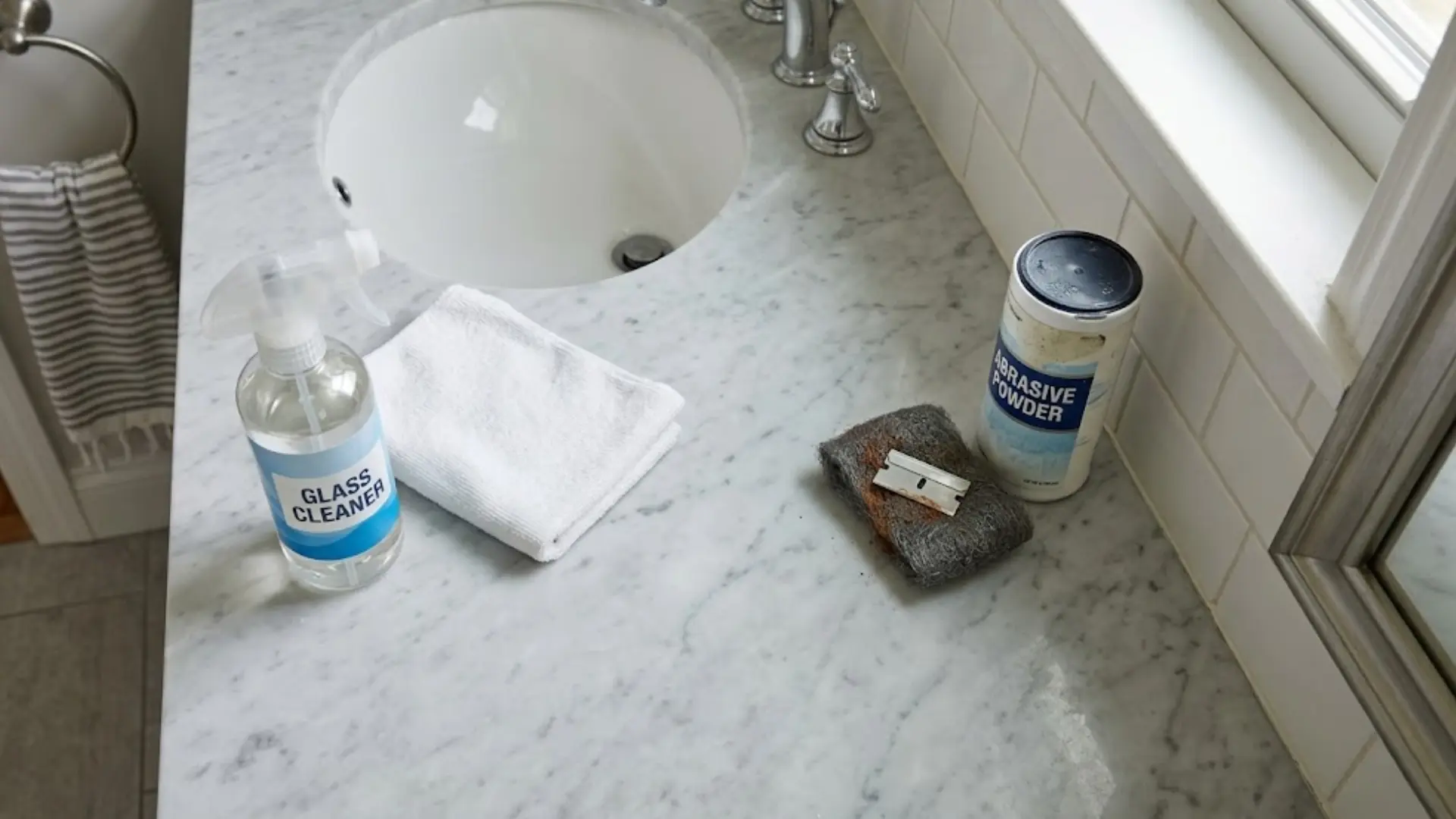
Avoid razor blades, steel wool, scouring pads, abrasive powders, undiluted acids, ammonia on tinted windows, mixed cleaners, and magic erasers on delicate coatings.
Aggressive cleaning can turn removable stains into permanent scratches or damage to coatings.
How to Remove Water Spots From Glass Surfaces?
Water spots should be treated according to the surface, surrounding materials, and any protective coatings. The table below shows the safest starting method for each type of glass.
| Glass Surface | Best Cleaning Method | Important Precaution |
|---|---|---|
| Shower doors | Spray equal parts white vinegar and warm water, leave for 10–15 minutes, then wipe with a non-scratch sponge. | Avoid acidic cleaners near natural stone, metal trim, and coated glass. |
| Household windows | Remove loose dirt, apply diluted vinegar with a microfiber cloth, rinse, and dry from top to bottom. | Do not use razor blades on tinted, coated, or unfamiliar glass. |
| Drinking glasses | Soak in equal parts vinegar and warm water for 15–30 minutes, then gently scrub and rinse. | Any remaining cloudiness may be permanent dishwasher etching. |
| Car glass | Wash away road grit, then apply a glass-safe water-spot remover with a microfiber cloth. | Keep cleaners away from paint, rubber trim, sensors, and tint film. |
Older vintage glassware often shows cloudiness more quickly than modern glass, since many were made before dishwasher-safe coatings became standard.
Dry every surface immediately after rinsing to prevent fresh mineral deposits from forming.
How to Keep Water Spots From Forming on Glass?
Preventing water spots is easier than removing hardened mineral buildup later. A consistent routine can reduce deposits before they turn into cloudy stains or permanent etching.
- Dry the glass after use: Run a squeegee across shower doors, then wipe the edges and corners with a microfiber cloth.
- Remove fresh marks weekly: Use a glass-safe cleaner before calcium and magnesium deposits have time to build up.
- Reduce moisture and overspray: Improve bathroom ventilation and redirect outdoor sprinklers away from windows and parked vehicles.
- Apply a protective coating: Choose a manufacturer-approved glass treatment that encourages water to bead and roll away.
- Consider water softening: A properly maintained water softener may reduce hardness minerals throughout the home’s plumbing system.
These practical shower-door prevention tips can make routine cleaning quicker while helping glass remain clearer for longer.
Frequently Asked Questions (FAQs)
Can Hard Water Stains Permanently Damage Glass?
Yes, untreated mineral deposits can slowly etch the glass surface, leaving cloudy patches that no longer wipe away.
Why Do Water Spots Return After Cleaning?
Water spots return when mineral-rich water dries on glass and is left there without a quick wipe or squeegee pass.
Can Filtered Water Prevent Stains on Glass?
Filtered water can reduce some impurities, but only a proper water softener fully targets the calcium and magnesium causing hardness.
Final Words
With the right steps, hard water stains become easy to handle. Now you know how to get hard water stains off glass for good. Vinegar, baking soda, and lemon juice all work well.
Pick the method that matches your glass type and stain. Test a small spot first to keep your glass safe. Dry your glass right after every wash or rinse.
That one step stops new spots from forming again. Regular care keeps your windows and doors looking sharp. Your glass can stay spotless with just a little effort.
Try these tricks and watch your glass shine bright. Save this guide and share it with someone who needs it!