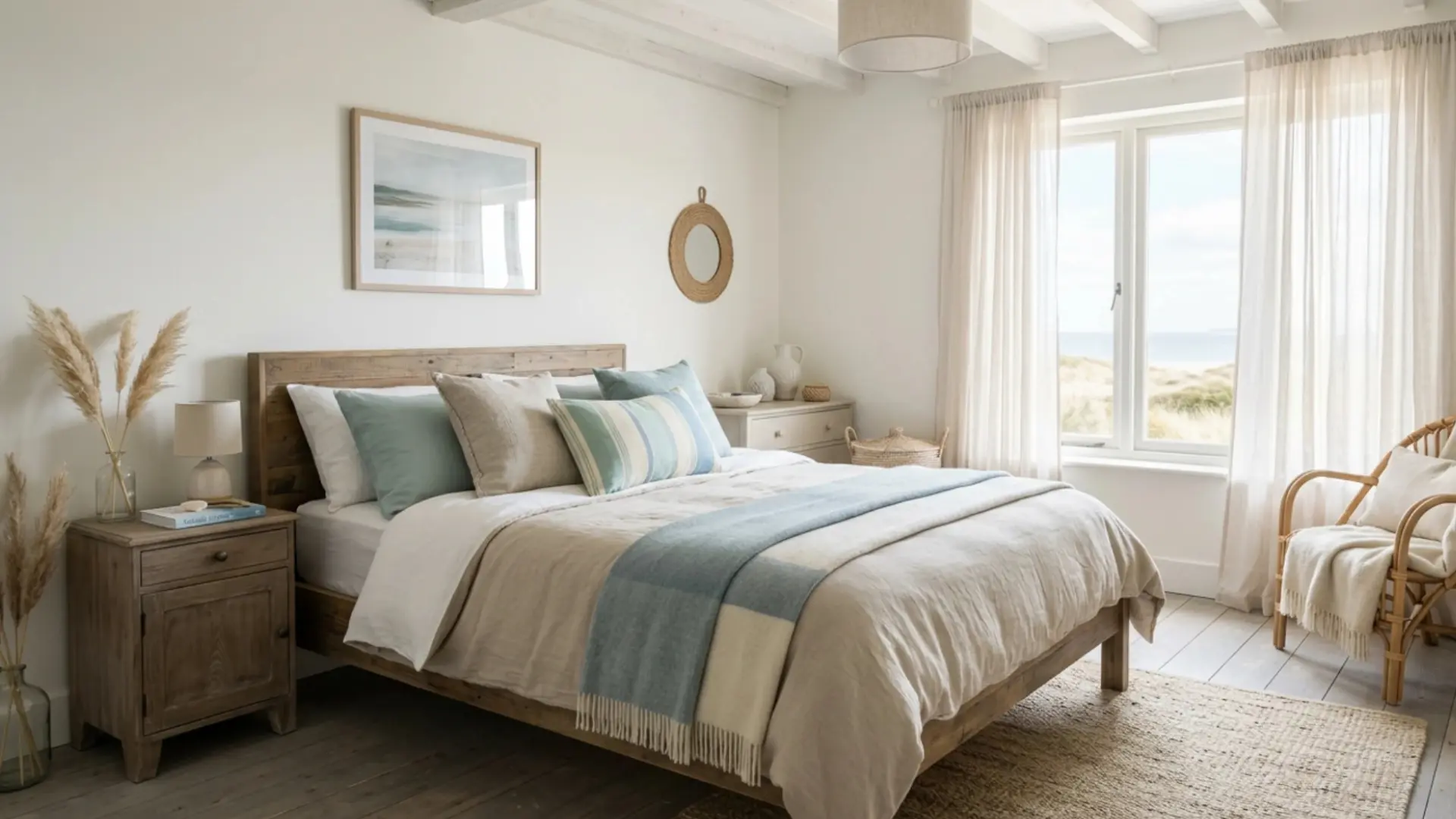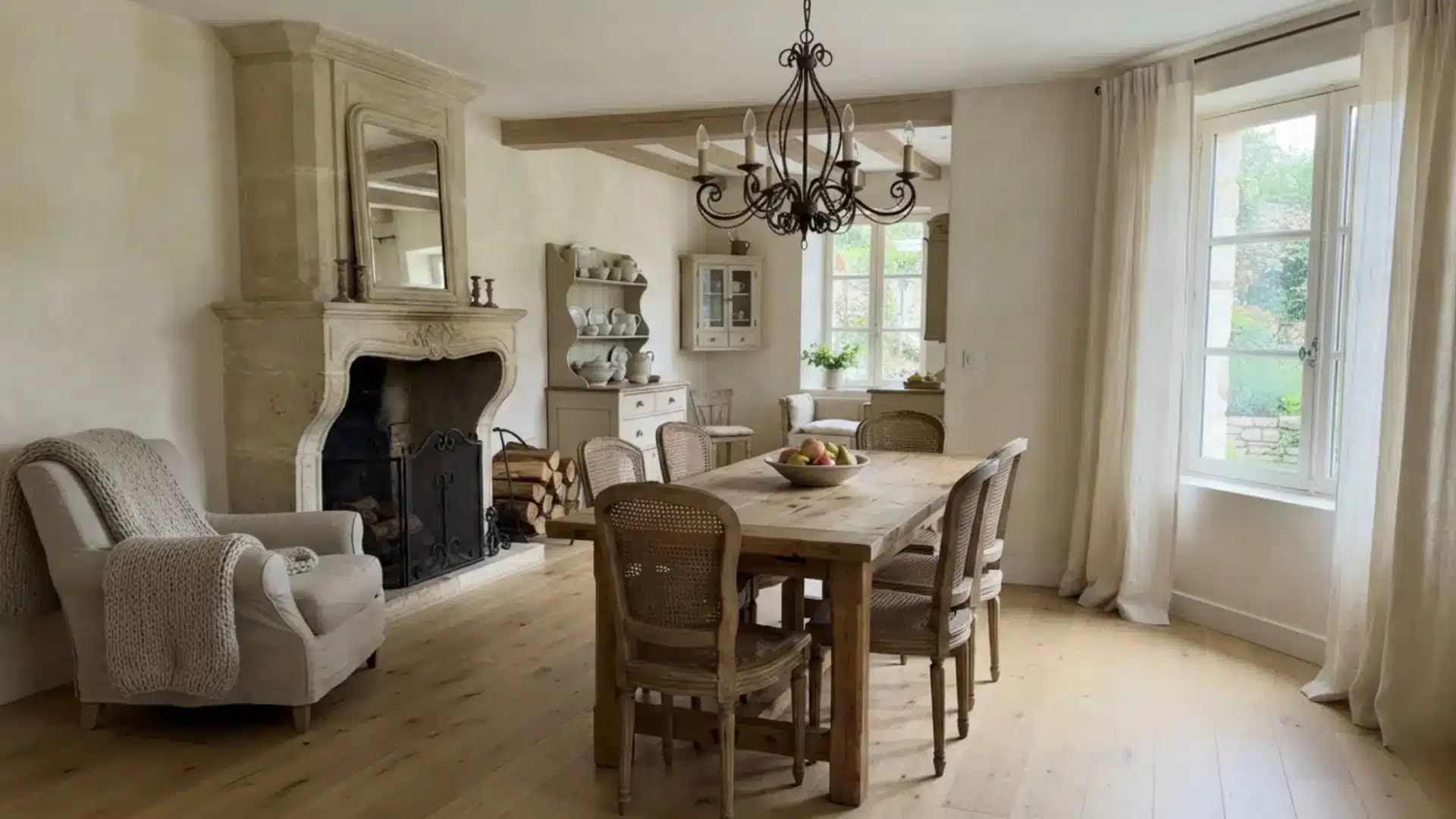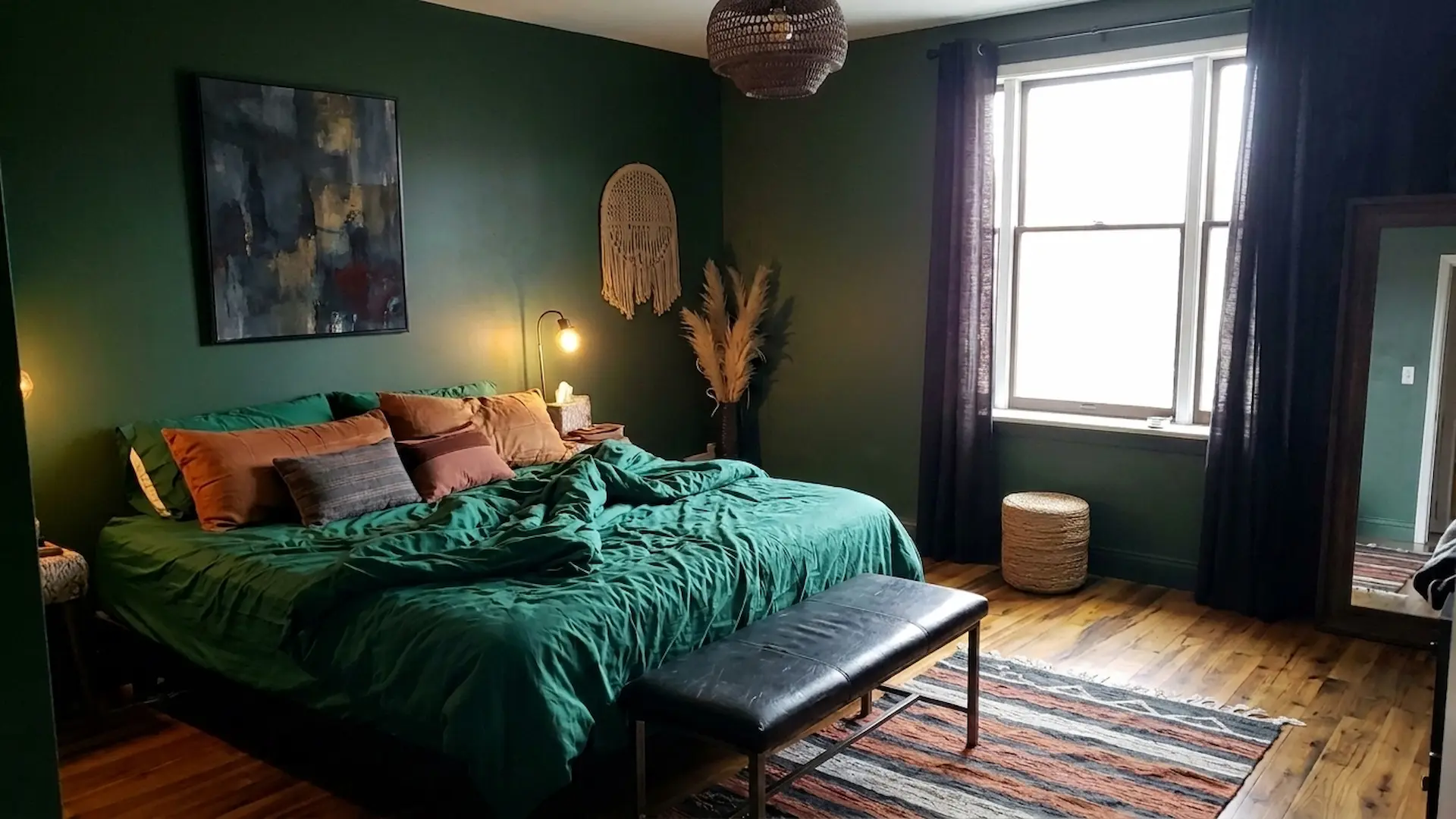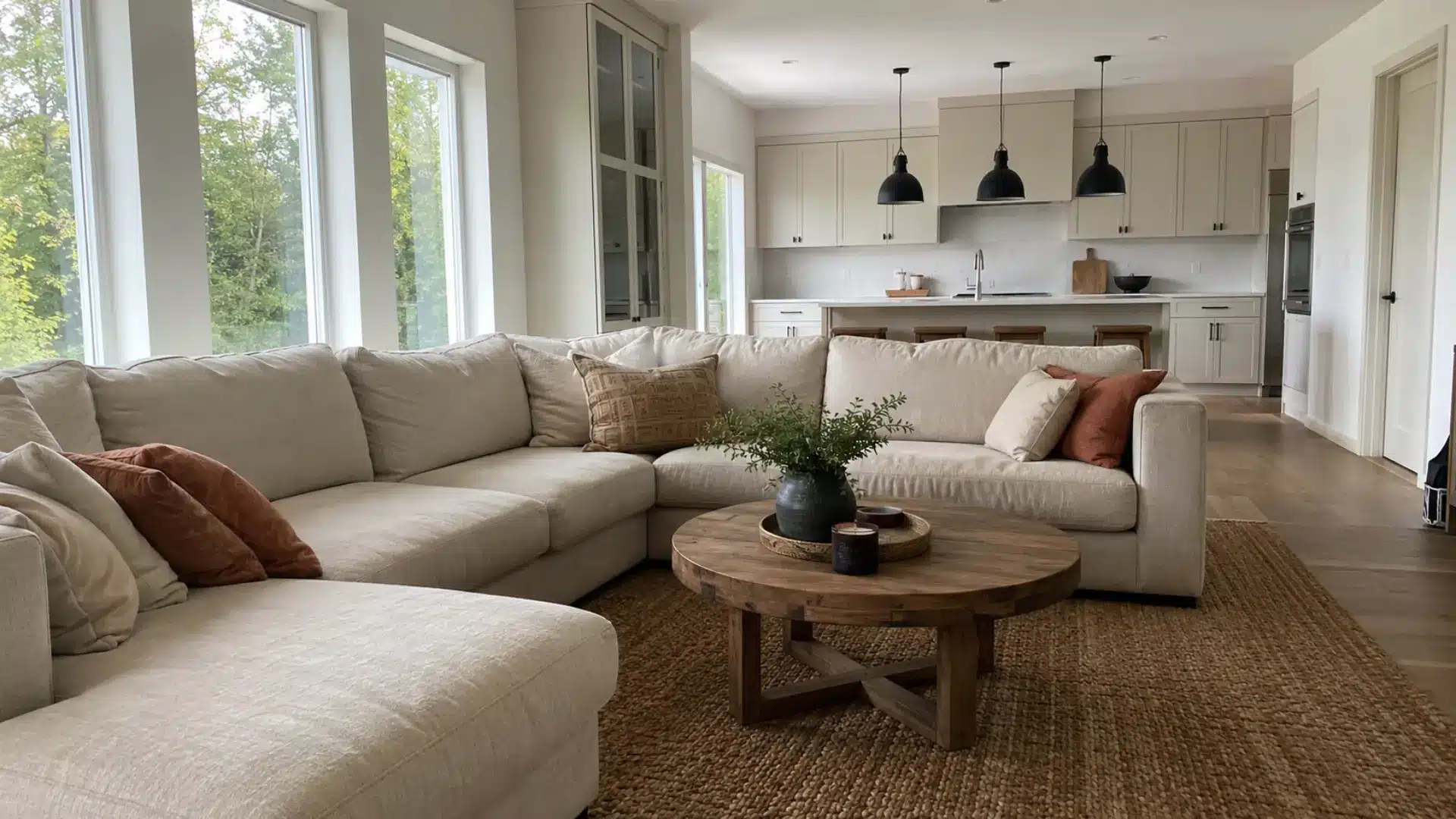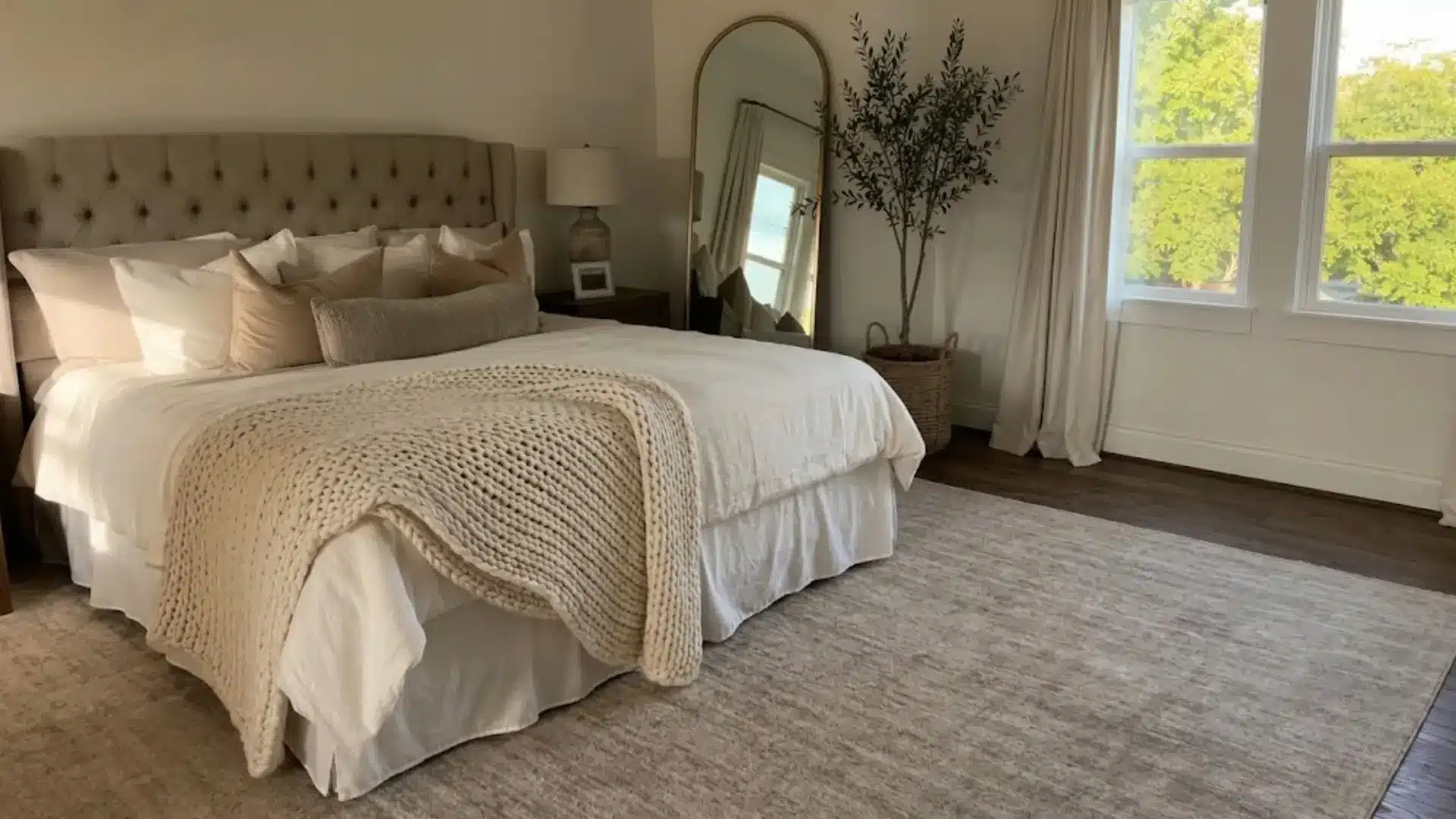

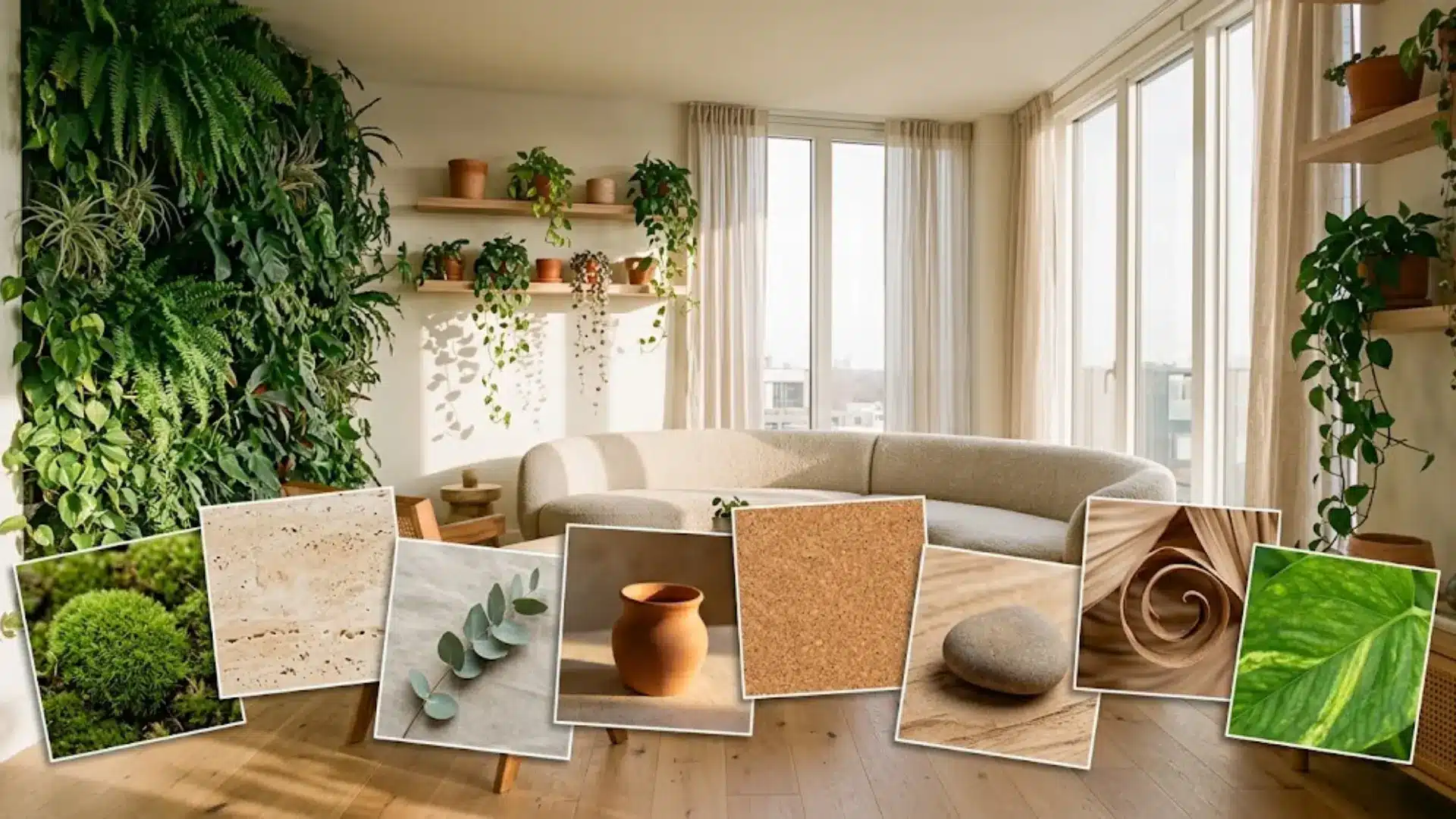
Nature has a way of making any space feel instantly more alive, and that’s exactly what biophilic interior design taps into.
It’s one of the most talked-about design movements right now, and for good reason: people are craving homes that feel calming, grounding, and genuinely good to be in.
Lush indoor greenery, raw natural textures, soft organic shapes, and biophilic design examples come in all forms, and most of them work on any budget.
Ahead, eleven ideas to bring the outside in.
Why Biophilic Interior Design Just Makes Your Home Feel Better?
Biophilic interior design is rooted in a simple idea: humans are wired to feel better when they’re close to nature.
The term draws from biologist E.O. Wilson’s concept of biophilia, the innate human need to connect with the natural world.
In built environments, this translates into spaces that incorporate natural light, organic materials, living plants, and nature-inspired textures.
The benefits go beyond aesthetics. People in biophilic spaces report lower stress levels, sharper focus, and better mood overall.
At its core, the approach works across three layers: direct contact with nature, indirect natural references, and spatial layouts that echo how natural environments feel.
The Research That Proves Your Home Needs More Nature
Decades of research back what most people already feel instinctively: being around nature is good for you.
A University of Exeter study found that enriching a workspace with plants could increase productivity by a significant percentage, alongside measurable improvements in concentration and perceived air quality.
Natural elements in built spaces, such as daylight, greenery, and organic textures, can reduce cortisol levels, sharpen focus, and lift overall mood. These findings have pushed biophilic design well beyond residential interiors.
Workplaces report higher output, schools see better student focus, and hospitality brands are investing heavily in nature-forward spaces because guests respond to them emotionally.
The science is clear, and the design world has taken note.
Biophilic Design Ideas That Make Every Space Feel More Human
Biophilic design works best when it speaks to more than one sense.
These ideas span materials, light, sound, and spatial instinct, and most of them can be layered into a space you already have.
1. Living Green Walls and Vertical Gardens
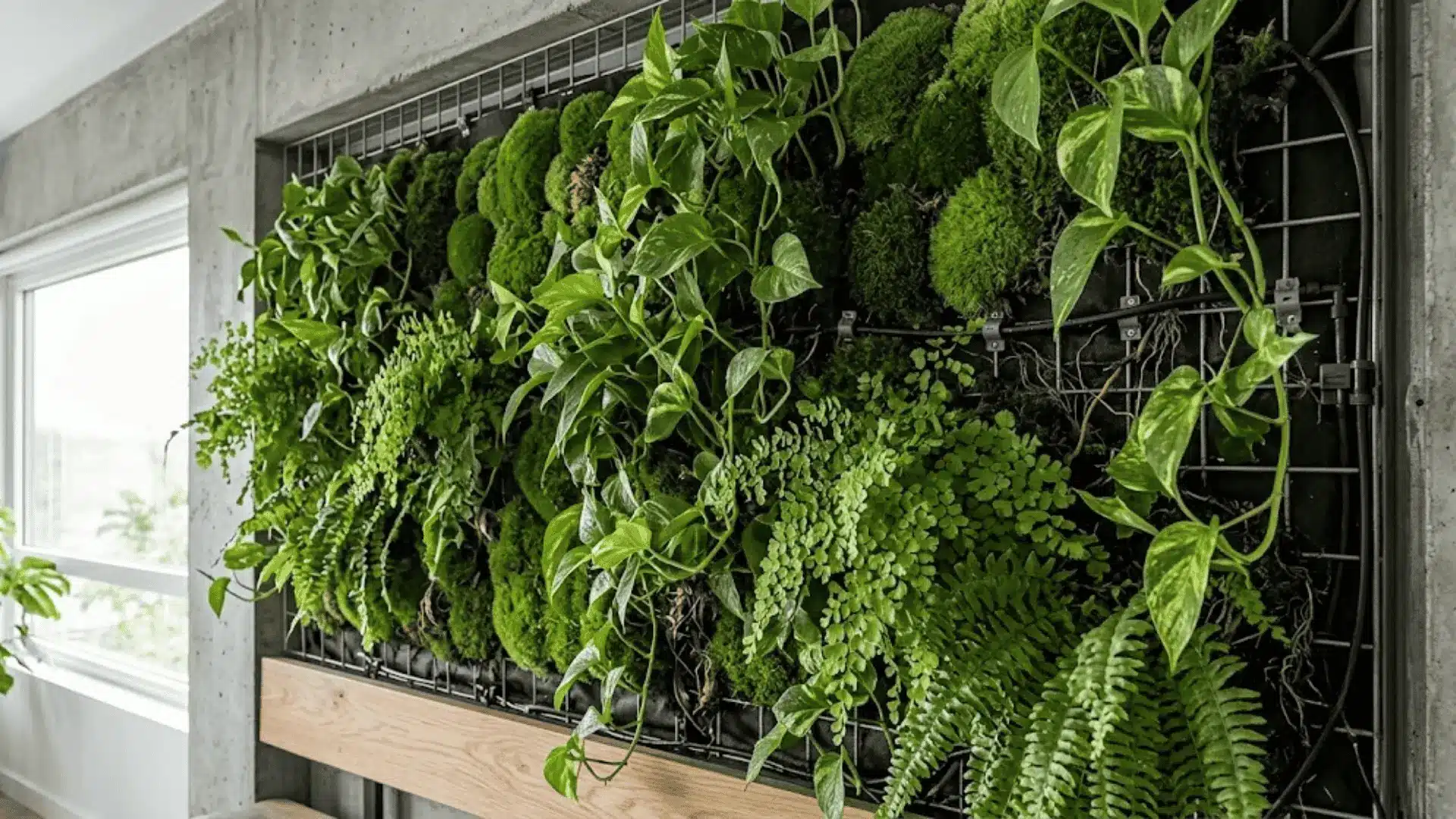
There’s a reason a wall covered in living plants stops people in their tracks. Vertical greenery compresses the density of nature into a single surface, making it one of the most visually impactful biophilic design examples available.
It improves air quality, softens acoustics, and introduces the kind of organic unpredictability that flat, painted walls simply can’t replicate.
In smaller spaces, even a modular panel system or a column of trailing pothos creates the same psychological pull.
| Idea | Best For | Budget Level | Plant Suggestions |
|---|---|---|---|
| Statement plant wall | Living rooms, entryways | Mid to high | Moss panels, ferns, philodendrons, mixed tropical foliage |
| Modular green panels | Any room | Mid | Pothos, spider plants, peace lily, trailing ivy |
| Trailing shelf plants | Small apartments, bedrooms | Low | Golden pothos, string of pearls, heartleaf philodendron |
| Freestanding garden column | Narrow entryways, studios | Low to mid | Snake plant, ZZ plant, small ferns |
2. Nature-Focused Lighting Design
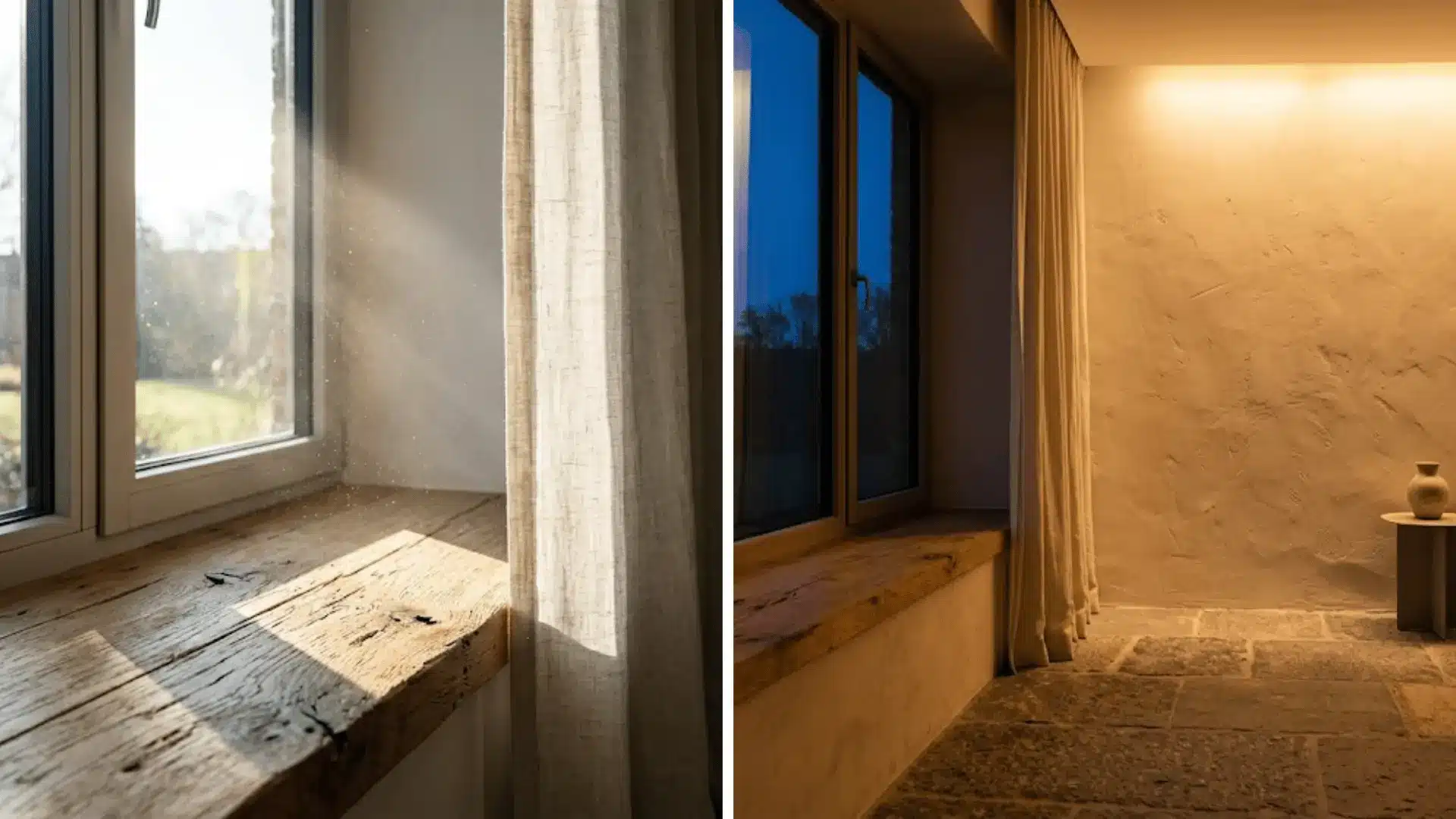
Light is the most underestimated biophilic tool in any interior. Natural daylight shifts in color temperature across the day, and our bodies are wired to follow it.
Maximizing windows, adding skylights, or introducing circadian lighting systems that mimic that progression keeps the body’s internal rhythms intact.
Even the way light filters through a sheer curtain or bounces off a pale stone surface counts as a direct, sensory connection to the natural world.
| Idea | Best For | Budget Level | Effect on the Space |
|---|---|---|---|
| Skylights or light wells | Darker interior rooms | High | Floods previously dim spaces with shifting natural daylight |
| Sheer window treatments | Any sun-facing room | Low | Softens and diffuses light without cutting off the outdoor view |
| Circadian lighting systems | Bedrooms, home offices | Mid | Supports natural sleep-wake rhythms through color temperature shifts |
| Strategic mirror placement | Compact rooms | Low | Bounces outdoor light deeper into the room and visually expands it |
3. Natural Materials That Age Beautifully
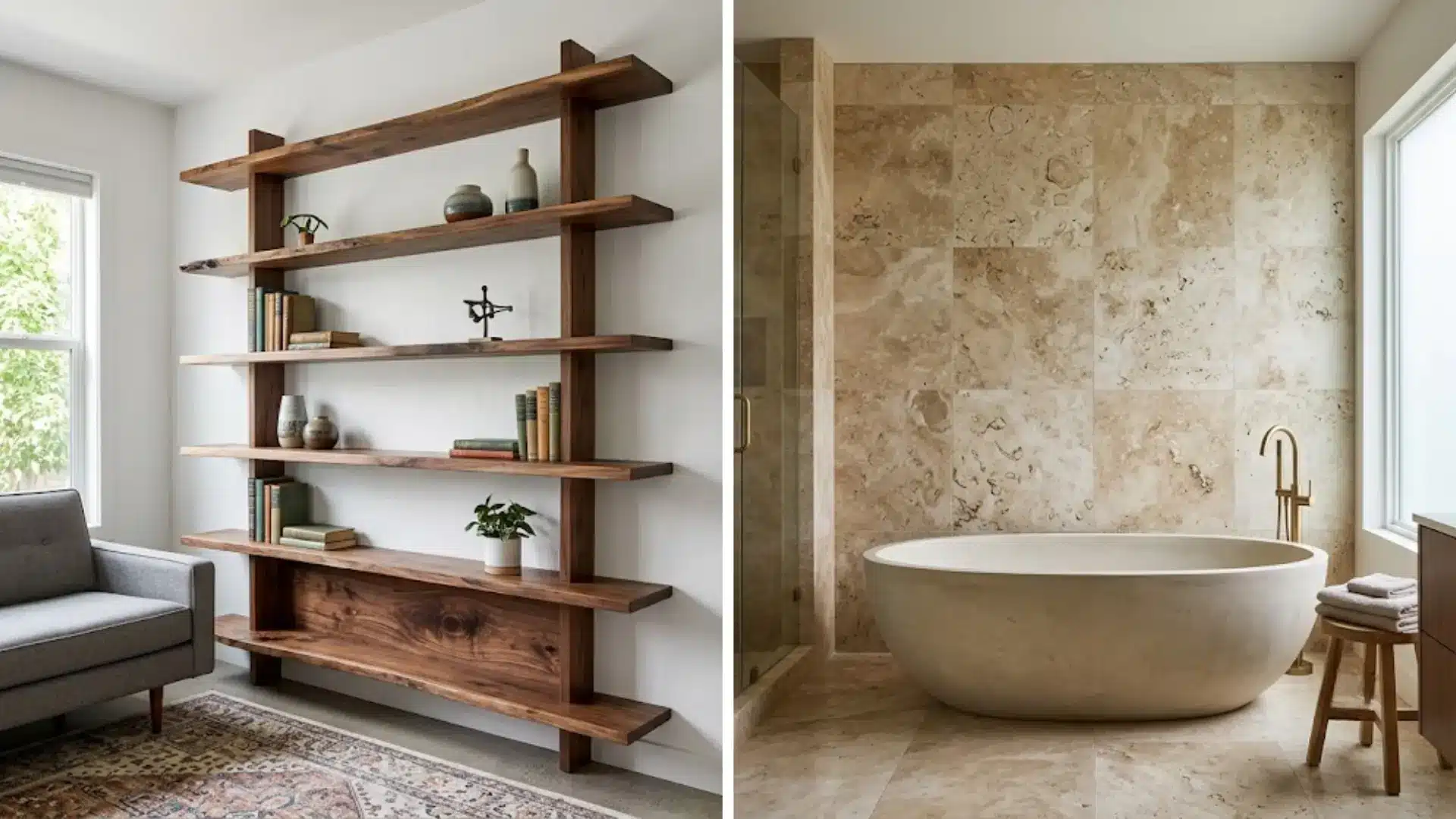
Synthetic materials may mimic the look of nature, but they don’t carry the same psychological weight.
Wood, stone, clay, cork, and bamboo interact with light, touch, and even smell in ways that manufactured surfaces cannot. They also improve with age, developing patina and character that make a space feel lived-in and grounded.
Introducing even one natural material surface into a room shifts the entire sensory atmosphere of the space.
| Material | Best For | Budget Level | Why It Works Biophilically |
|---|---|---|---|
| Raw wood | Shelving, flooring, furniture | Mid to high | Visible grain and warmth activate a subconscious connection to forest environments |
| Stone | Countertops, feature walls, floors | High | Cool to the touch and visually complex in ways no synthetic surface replicates |
| Cork | Flooring, wall panels | Low to mid | Soft, acoustic-dampening, and carries a distinctly organic warmth underfoot |
| Rattan and bamboo | Furniture, light fixtures | Low | Lightweight natural fiber that adds texture and visual softness to any room |
4. Water Features That Engage the Senses
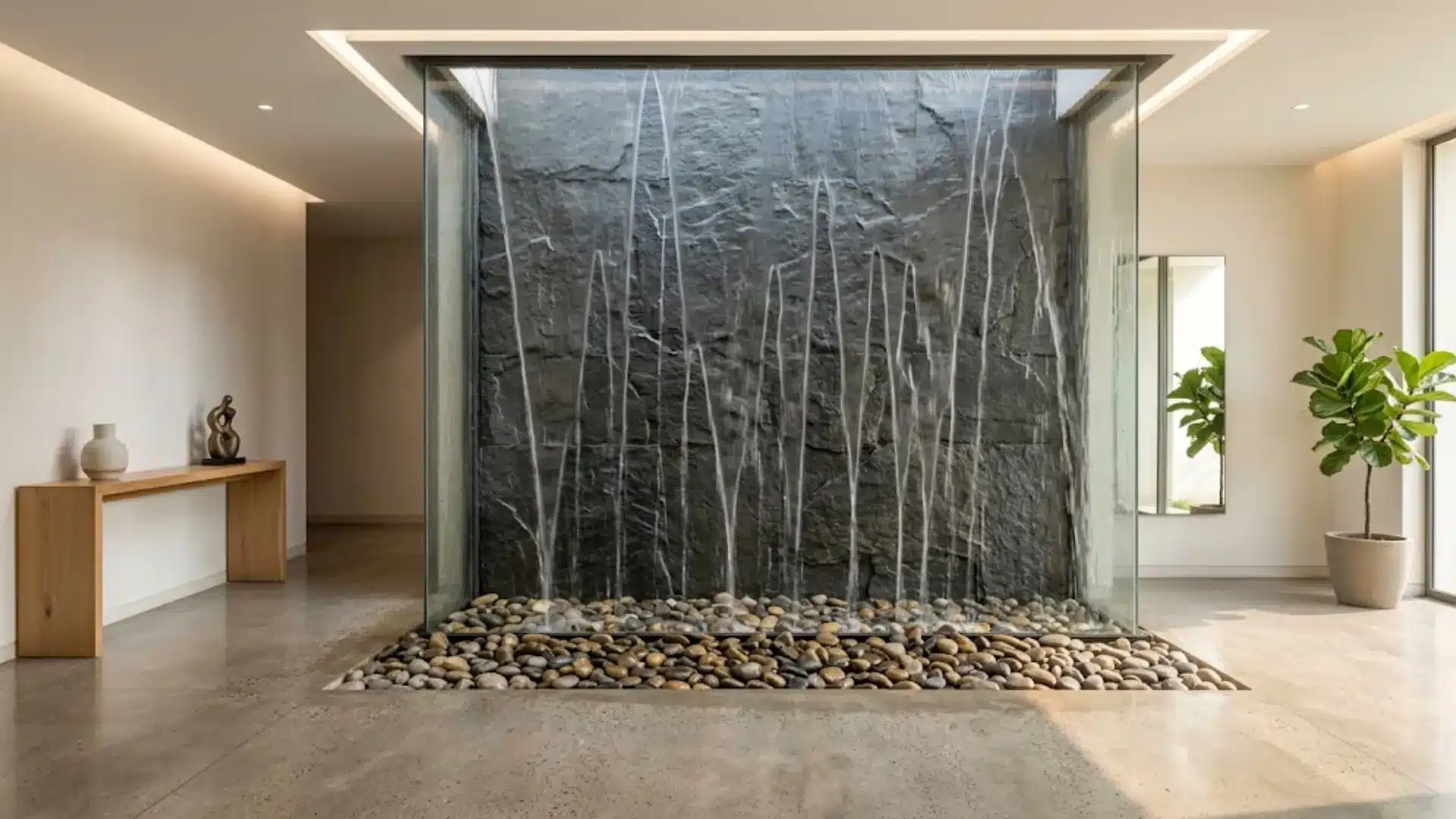
Moving water is one of the oldest forms of sensory comfort known to humans. The sound alone, whether a gentle trickle or a soft cascade, has measurable effects on stress levels and mental clarity.
Indoor fountains, wall-mounted water panels, and even small tabletop features introduce the acoustic and visual rhythm of water into everyday spaces.
Aquariums serve the same purpose, adding the additional dimension of living movement within a contained natural system.
| Idea | Best For | Budget Level | Primary Sensory Benefit |
|---|---|---|---|
| Tabletop fountain | Desks, bedside tables, meditation corners | Low | Ambient sound that masks background noise and lowers mental tension |
| Wall-mounted water panel | Living rooms, entryways | Mid to high | Visual movement and gentle sound combined in one architectural feature |
| Aquarium or fish tank | Living rooms, children’s rooms | Mid | Living movement and color that sustain attention and lower stress passively |
| Reflecting bowl | Any surface | Low | Still water that catches and mirrors light, adding quiet visual calm |
5. Biomorphic Shapes and Organic Forms
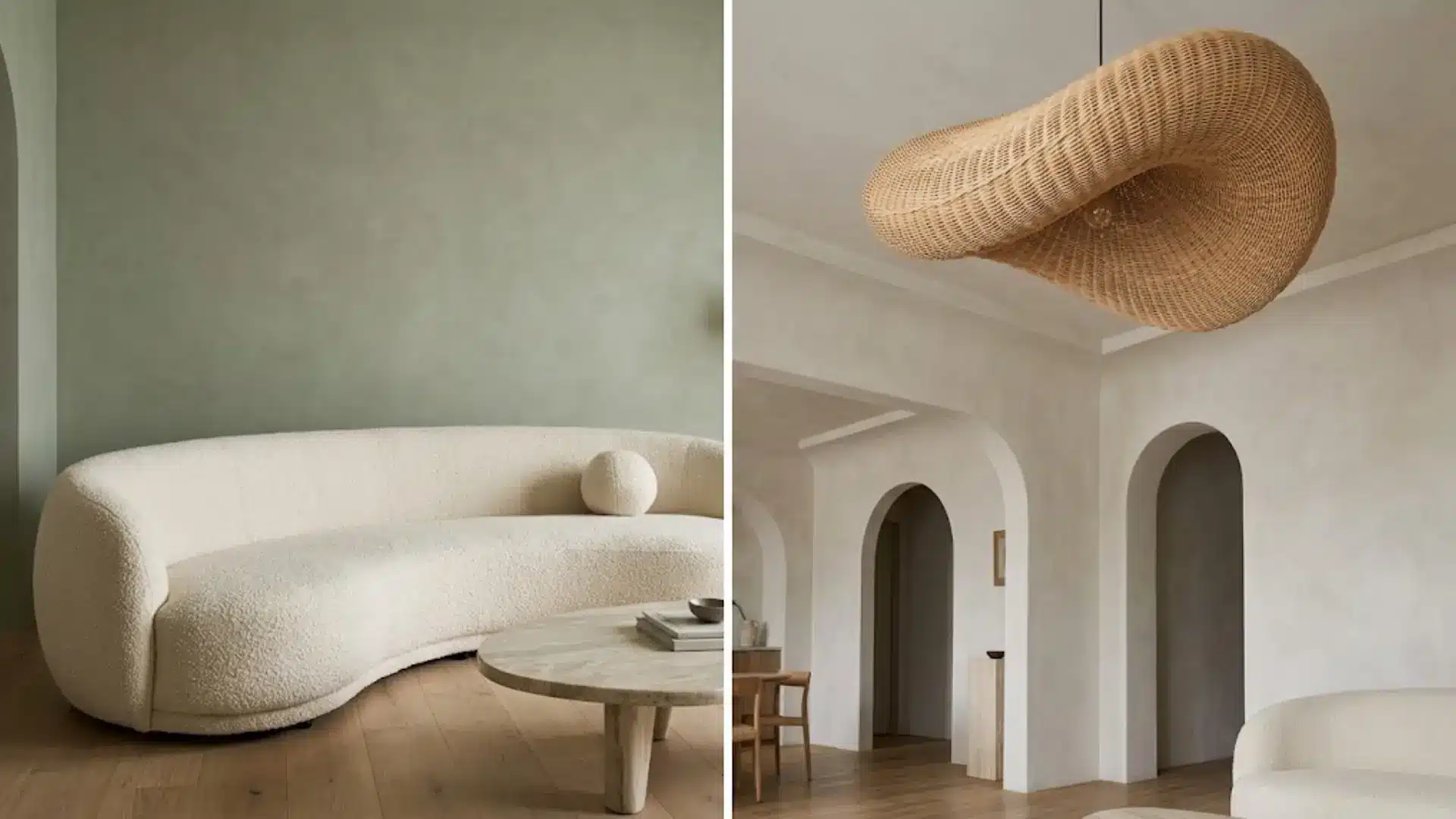
Nature rarely produces a straight line, and spaces that reflect that truth feel instinctively more relaxing. Biomorphic design draws on the curves, spirals, and fluid silhouettes found in leaves, riverbeds, and shells.
Curved sofas, arched doorways, oval dining tables, and sculptural lighting all carry this principle into interior spaces.
The shift away from hard, angular geometry toward softer forms is subtle but has a genuine effect on how a room feels to be in.
| Idea | Best For | Budget Level | Natural Form It References |
|---|---|---|---|
| Curved or boucle sofa | Living rooms | Mid to high | The rounded contours of stones and rolling terrain |
| Oval or live-edge dining table | Dining rooms | Mid to high | River edges, natural wood growth, and organic land forms |
| Arched mirrors and doorways | Any room, hallways | Low to mid | Cave openings, tree canopies, and natural archways |
| Sculptural pendant lighting | Kitchens, dining areas | Mid | Seed pods, coral structures, and layered shell forms |
6. Nature-Inspired Color Palettes
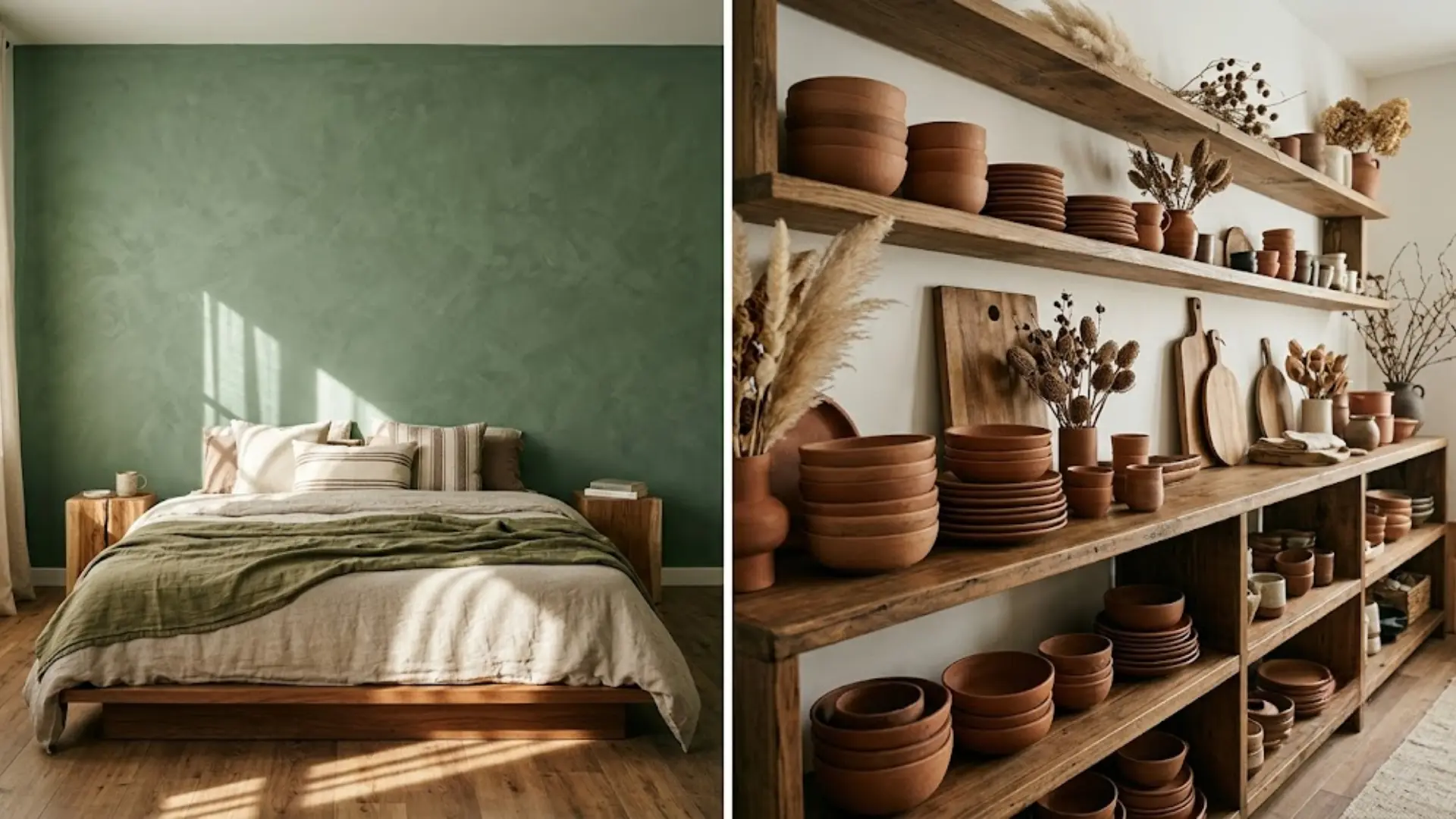
Color is one of the most accessible entry points into biophilic interior design, requiring no renovation and minimal investment.
Forest greens, warm earth tones, clay reds, ocean blues, and desert neutrals all carry an emotional resonance rooted in our relationship with natural landscapes.
Color psychology research consistently links these tones to lower anxiety and greater feelings of calm. Used on walls, in soft furnishings, or across layered textiles, they quietly anchor a space to the natural world.
| Palette | Best For | Budget Level | Pairs Well With |
|---|---|---|---|
| Sage and forest green | Living rooms, bedrooms | Low | Raw wood, linen, terracotta accents |
| Terracotta and clay | Any room | Low | Warm whites, jute, dried botanicals |
| Ocean blue | Bedrooms, bathrooms | Low | Natural stone, bleached wood, white linen |
| Desert neutrals | Open-plan spaces | Low | Woven textures, sand-toned ceramics, warm lighting |
7. Framed Views and Visual Connections to Nature
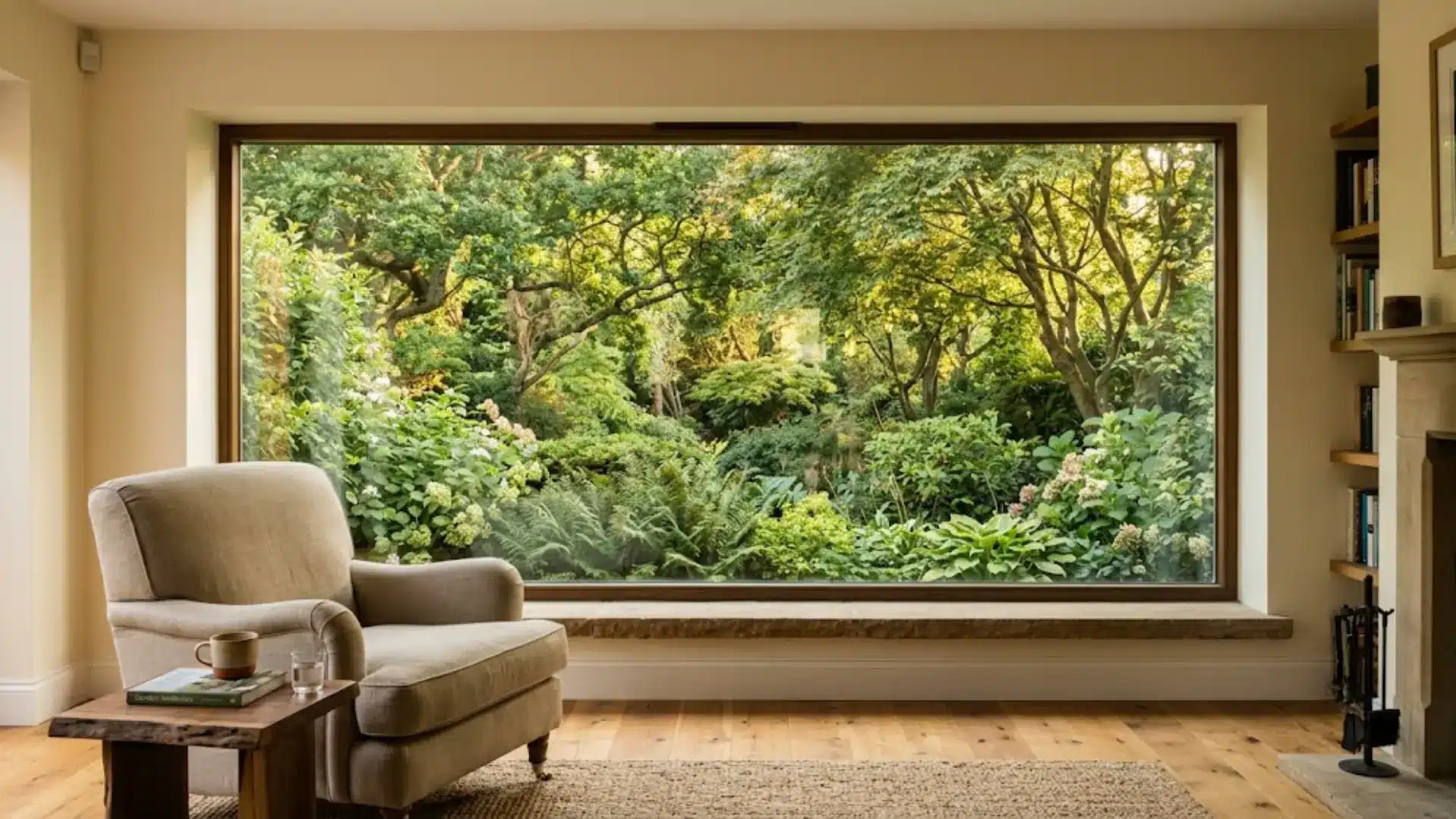
Not every biophilic space needs plants inside it. Sometimes the most powerful design move is simply orienting a room to face what’s already growing outside.
Strategic window placement, furniture layouts that draw the eye outward, and unobstructed sightlines to gardens, trees, or open sky all create a continuous visual dialogue between interior and exterior.
Even in urban apartments, a window-facing desk or a carefully positioned chair can create a meaningful connection to the outside world.
| Idea | Best For | Budget Level | What It Connects You To |
|---|---|---|---|
| Window-facing seating area | Living rooms, home offices | Low | Garden views, tree canopies, open sky |
| Unobstructed low windowsills | Any windowed room | Low | Ground-level greenery, street trees, planted borders |
| Large-scale botanical prints | Rooms without garden views | Low | A simulated visual reference to forests, meadows, or botanicals |
| Exterior window box planters | Apartments, urban homes | Low | Close-range greenery visible from inside throughout the day |
8. Indoor-Outdoor Living Spaces
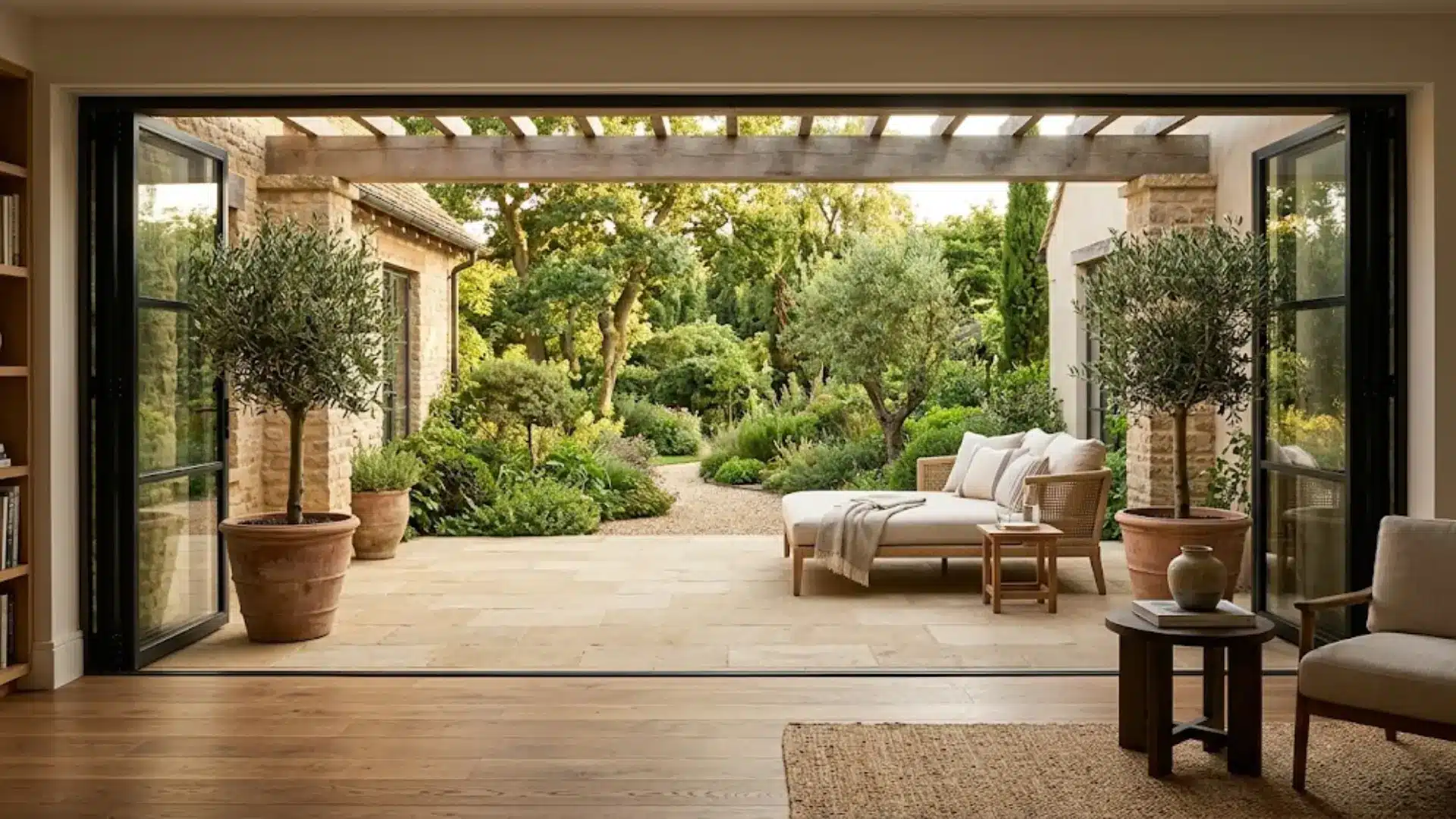
The boundary between inside and outside is one of the most exciting design frontiers in contemporary interiors.
Retractable glass walls, covered patios that mirror the interior’s material palette, sunrooms lined with plants, and courtyard gardens that open directly off living spaces all dissolve the division that most architecture imposes.
The physical continuity between indoors and outdoors is one of the purest expressions of biophilic design, and it consistently raises how connected and calm a space feels to live in.
| Idea | Best For | Budget Level | Biophilic Benefit |
|---|---|---|---|
| Sliding or folding glass doors | Living rooms with garden access | High | Removes the visual and physical barrier between interior and exterior entirely |
| Covered patio with indoor finishes | Homes with existing outdoor space | Mid to high | Creates a seamless material transition that makes the outside feel like the inside |
| Sunroom or garden room | Homes with side or rear space | High | Maximum light and plant density in a year-round transitional living space |
| Courtyard garden | Homes built around a central space | Mid to high | Pulls nature into the heart of the home rather than keeping it at the edge |
9. Multi-Sensory Nature Experiences
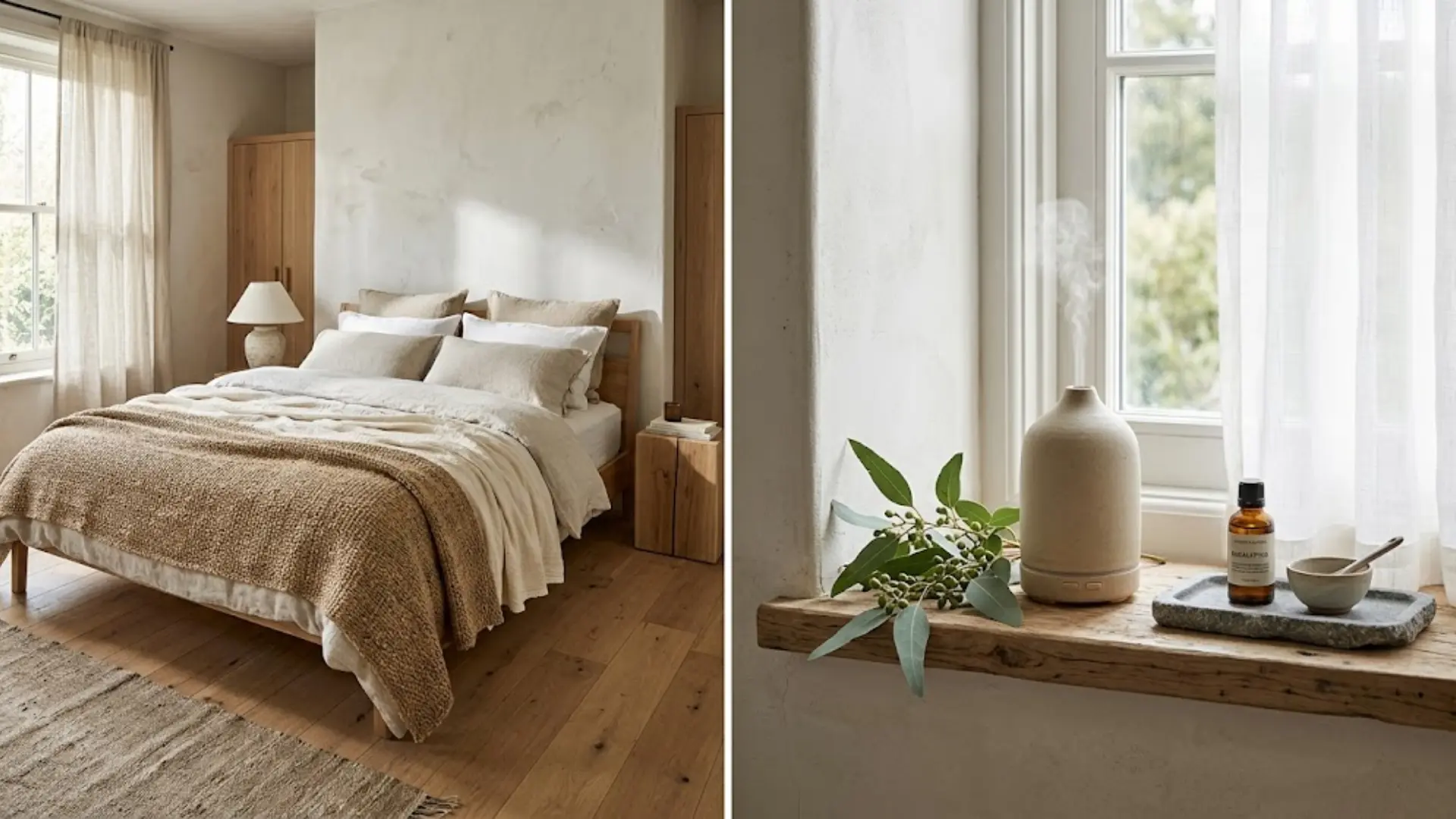
Biophilic design is not only visual. Nature communicates through sound, scent, texture, and temperature, and interiors that engage more than one sense at a time create a far deeper feeling of connection.
The sound of birdsong, the scent of cedarwood, the coolness of a stone floor underfoot, and the rough texture of a jute rug all activate the same instincts that natural environments do.
Layering sensory cues throughout a space produces a cumulative calm that purely visual design cannot match.
| Idea | Sense Engaged | Budget Level | Best Used In |
|---|---|---|---|
| Nature sound systems | Hearing | Low to mid | Bedrooms, meditation spaces, home offices |
| Botanical scent diffusers | Smell | Low | Any room, particularly those without natural ventilation |
| Mixed tactile textures | Touch | Low | Living rooms and bedrooms through rugs, cushions, and throws |
| Natural ventilation design | Touch and smell | Low to mid | Any home with operable windows or cross-ventilation potential |
10. Natural Patterns and Fractal Design
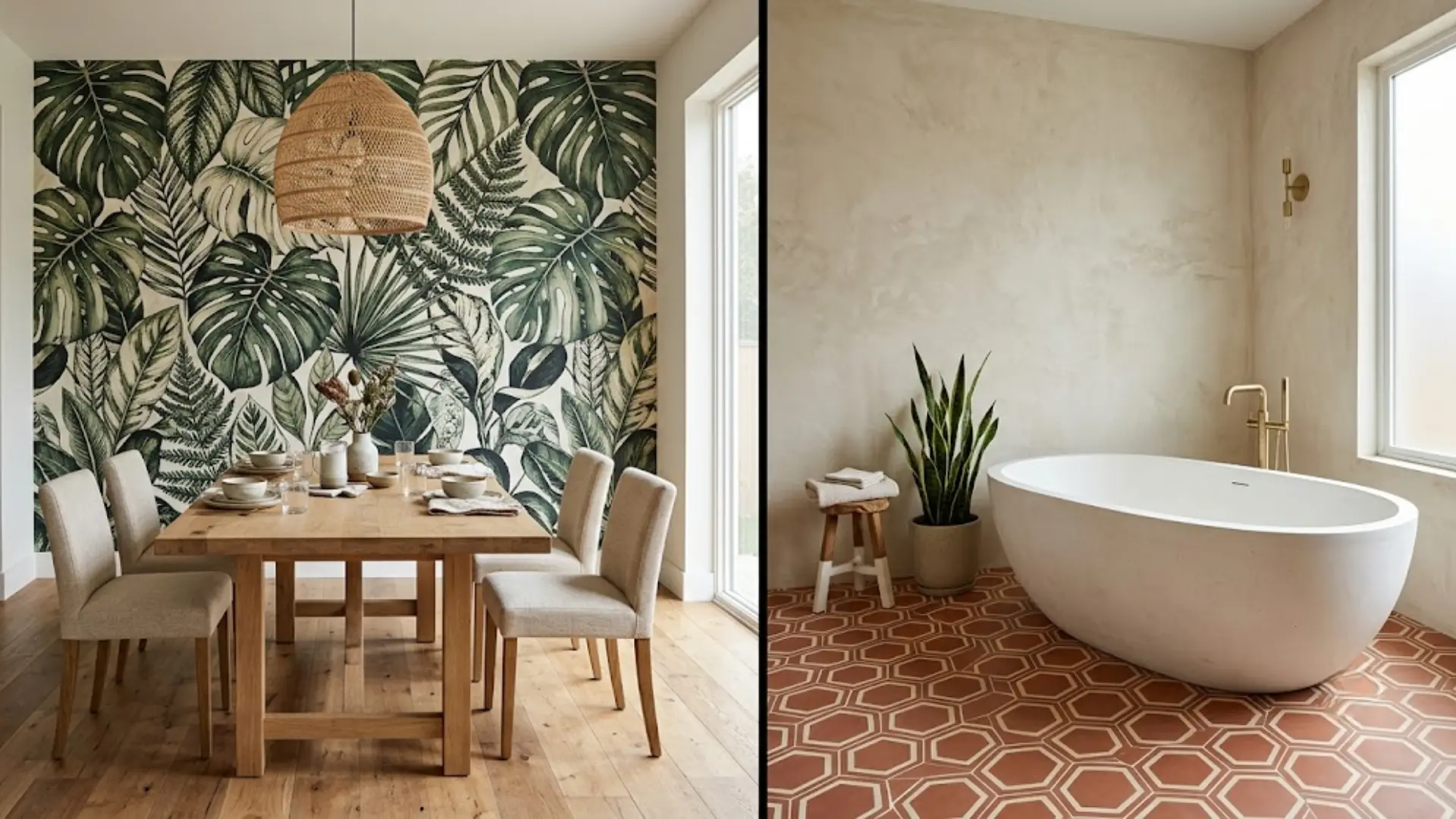
Plants are not always an option, but the patterns found in nature always are.
Fractals, the repeating geometric structures seen in ferns, honeycombs, and river deltas, have been shown to reduce physiological stress when incorporated into designed environments.
Botanical wallpapers, leaf-motif textiles, and nature-inspired tile patterns all bring this principle into a room without a single living element. It’s one of the most underused biophilic design examples and one of the most versatile.
| Idea | Best For | Budget Level | Pattern Inspired By |
|---|---|---|---|
| Botanical wallpaper | Bedrooms, dining rooms, entryways | Low to mid | Leaf canopies, tropical foliage, wildflower meadows |
| Fractal-patterned tiles | Kitchens, bathrooms | Mid | Honeycomb, river deltas, fern fronds |
| Nature-motif textiles | Any room | Low | Animal markings, botanical repeats, shell and wave forms |
| Pressed botanicals in frames | Any wall | Low | Real dried specimens that reference specific plants and seasons |
11. Habitat-Inspired Spaces and Refuge Areas
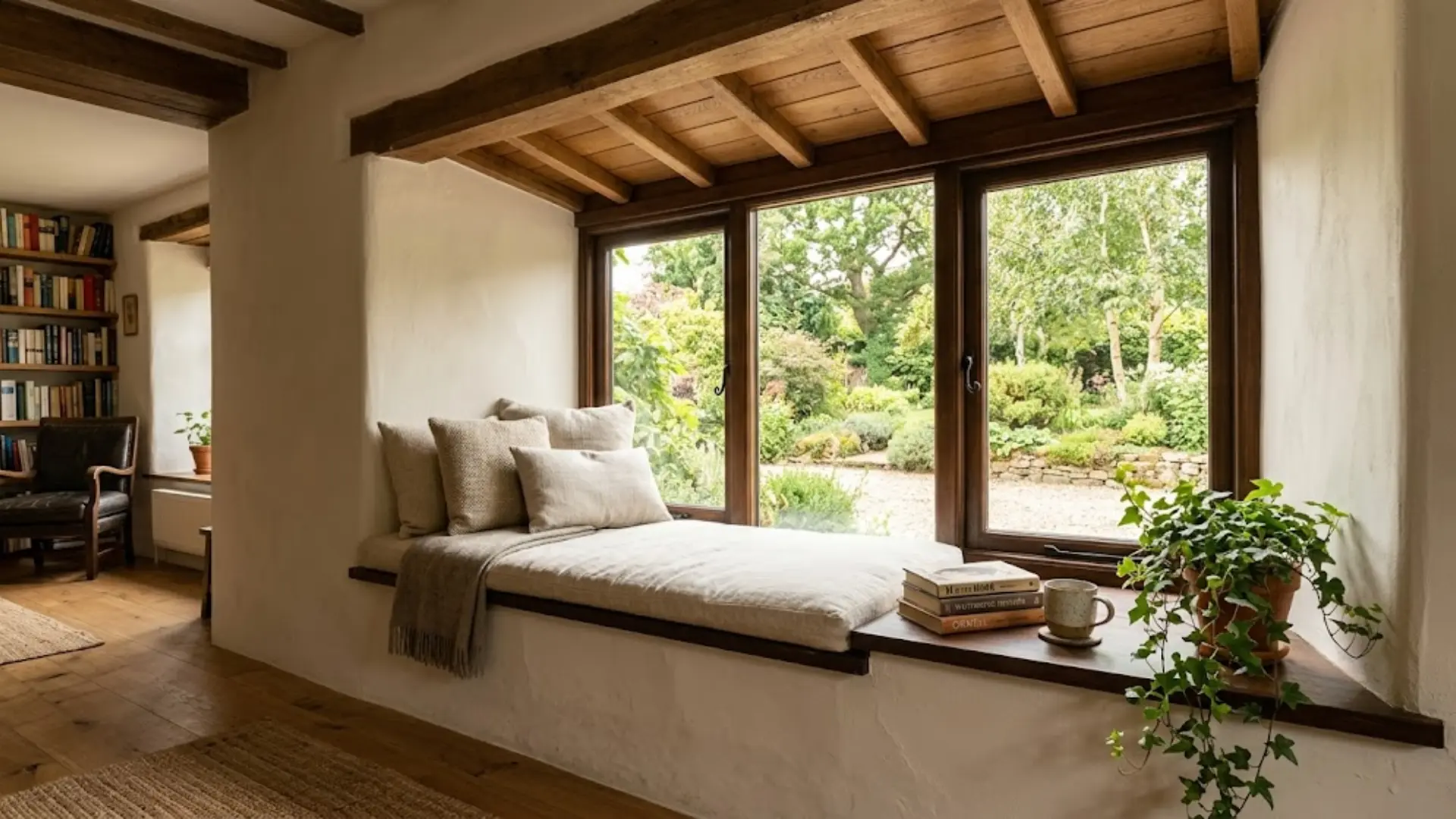
One of the most deeply human responses to space is the desire for shelter within openness, a place to feel protected while still connected to the larger environment.
This is what biophilic designers call prospect-and-refuge, and it’s one of the most significant principles in the field.
Reading nooks tucked under a low ceiling, canopied beds, window seats recessed into deep sills, and curtained alcoves all satisfy this instinct. Spaces designed with refuge in mind feel safe, which is why they’re so hard to leave.
| Idea | Best For | Budget Level | The Refuge Feeling It Creates |
|---|---|---|---|
| Built-in window seat with canopy | Living rooms, bedrooms | Mid to high | Sheltered but open, with a framed view outward to nature |
| Low-ceiling reading corner | Alcoves, understairs spaces | Low | Enclosed overhead with soft light, mimicking natural cave-like shelter |
| Canopied or four-poster bed | Bedrooms | Mid to high | A defined personal territory within a larger room, instinctively calming |
| Curtained alcove or study nook | Open-plan spaces, home offices | Low | Soft enclosure that filters out the wider space without fully closing it off |
Where Most Biophilic Interiors Go Wrong
Getting the aesthetic right is only half the picture. Even well-intentioned biophilic spaces can fall flat when a few foundational missteps sneak in.
- Leaning on Artificial Plants: Faux greenery eliminates the air quality, humidity, and living presence that make real plants biophilically effective in the first place.
- Ignoring How Light Actually Behaves in the Space: Placing plants or natural materials in poorly lit corners undermines both their health and their visual impact.
- Treating It as Purely Decorative: Biophilic design that looks good but doesn’t feel good, whether too noisy, too stark, or thermally uncomfortable, misses the whole point.
- Choosing High-Maintenance Plants Without a Care Plan: A dying or neglected plant works against the calming effect biophilic design is meant to create.
- Engaging only The Eyes: Stopping at visual elements and skipping scent, sound, texture, and airflow leaves a significant part of the sensory experience untapped.
The strongest biophilic spaces are ones where nature is genuinely felt, not just seen. Getting these fundamentals right is what separates a well-styled room from one that actually changes how you feel in it.
Biophilic Design is Only Getting More Personal
The next wave of biophilic interior design is moving beyond aesthetics into something more intentional.
Smart indoor gardens, integrated food-growing systems, and regenerative materials are shifting the conversation from how a space looks to how it actively supports the people living in it.
Designers are increasingly pairing natural elements with technology, such as automated plant care, air quality sensors, and circadian lighting systems, to create interiors that respond to individual wellness needs.
The direction is clear: nature in the home is becoming less of a trend and more of a personal health infrastructure.
Less Décor, More Biophilic
Biophilic interior design isn’t an aesthetic choice you make once and forget. It’s something that grows with your space, literally and figuratively.
Starting with a single living wall, a shift in your color palette, or simply clearing a windowsill to let more light in, every step toward nature makes a home feel more like somewhere you actually want to be.
The right space doesn’t just look good; it makes you feel good too.
Which biophilic design idea are you planning to try first? Drop it in the comments below.
Frequently Asked Questions (FAQs)
Is Biophilic Design Expensive?
Not necessarily. A few houseplants, a nature-inspired wall color, or a jute rug can shift the feel of a space meaningfully, and the investment scales with how far you want to take it.
Does Biophilic Design Increase Home Value?
Research supports that nature-integrated spaces attract stronger buyer interest. Natural materials, good light, and indoor greenery consistently rank among the features buyers respond to most positively.
Can Biophilic Design Work in Small Apartments?
It works particularly well in smaller spaces. Vertical gardens, trailing plants, nature-inspired palettes, and botanical textiles all deliver genuine biophilic impact without requiring extra square footage.
What is the Difference Between Biophilic and Organic Modern Design?
Organic modern uses natural shapes and materials for aesthetic effect. Biophilic interior design prioritizes a functional, sensory connection to nature rooted in human psychology and measurable wellbeing outcomes.