
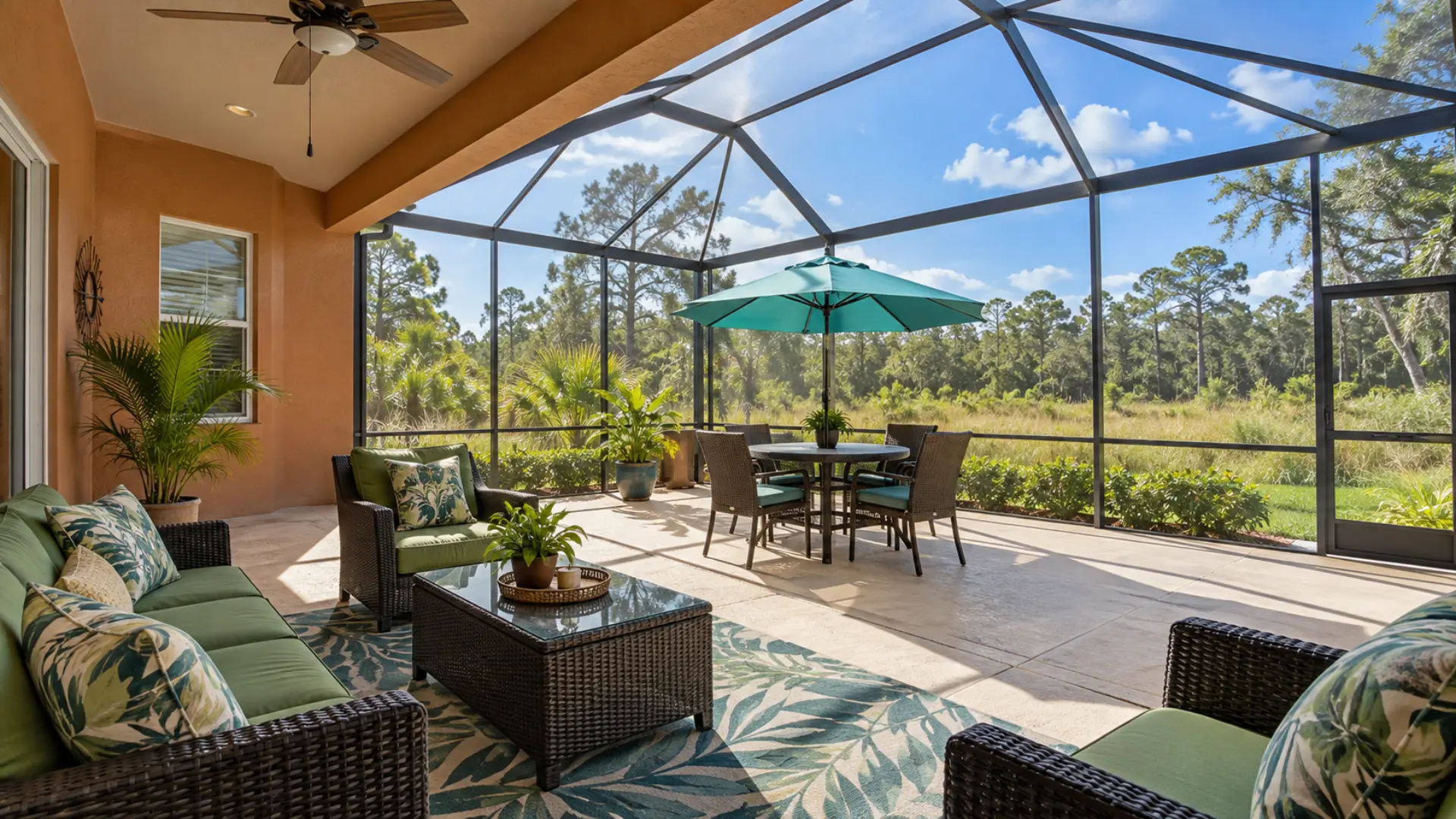
A lanai is a covered, open-sided porch attached to the house. It is somewhere between an indoor room and an outdoor patio.
The word comes from Hawaii, where it originally meant any outdoor living space next to a home.
I love how naturally this fits into Florida living too.
So many homes here already have that screened-in space where you sip your coffee or unwind in the evening, even if you have never called it a lanai.
Let’s break down what makes a lanai a lanai, and how it compares to a Florida room.
What is a Lanai in a House?
The word lanai comes from Hawaii, where it originally described any outdoor living space next to a home, whether it had a roof or not.
It is pronounced lə-NYE, and once you say it out loud, it starts to feel familiar.
Over time, the term traveled with Hawaiian architecture to Florida, California, and other warm-climate states, where builders and homeowners adopted it for screened, covered porches attached to the house.
In Florida especially, it became the go-to word for that shaded, breezy space between the living room and the backyard, the kind of spot that just makes sense when the weather stays warm most of the year.
The Defining Features of a Lanai
A lanai is not just any covered space. When I started digging into what separates it from a porch, patio, or deck, a few defining traits kept coming up.
- Shares at least one wall with the house, connecting it directly to the interior.
- Fully roofed, offering shade and shelter year-round.
- At least one open or screened side, keeping the outdoor feel intact.
- Concrete or patio-style flooring, built to handle the elements.
- Under-truss or attached-roofline construction, depending on how it is built into the home.
Put these together, and you get a space that is covered but never fully closed off. Once I understood these features, I found it so much easier to spot a real lanai versus a room that is just being called one.
What is a Lanai Used For?
Ask five different people what their lanai is for, and you will likely get five different answers. That is kind of the point.
A Space to Relax and Unwind
This is where most lanais earn their keep. A comfortable chair, a ceiling fan, maybe a small side table, and suddenly you have got a spot to start your morning or wind down at night.
I have noticed it is often the first place people gravitate to when they come home, simply because it does not feel like “inside” or “outside.”
Lanai is its own thing, and that is exactly the appeal.
Outdoor Dining, Without the Weather Worries
A lanai makes it easy to eat outside without dealing with direct sun, sudden rain, or bugs crashing the meal.
Set up a table, add some string lights, and it becomes a genuine dining space rather than an occasional patio setup.
For homes in warmer regions, this can end up being the most-used dining area in the house for a good chunk of the year.
A Natural Spot for Entertaining
Lanais tend to work well for get-togethers since they offer shelter and space without feeling boxed in.
Guests can move freely between the indoors and the lanai, which keeps gatherings from feeling cramped.
From what I have seen in Florida homes especially, this is often where the actual party happens, not the living room.
Pool Enclosures and Pool Cages
In Florida, lanais are frequently built around or beside a pool, doubling as a pool cage that keeps leaves, bugs, and debris out of the water.
This combination is common enough that many homeowners searching for lanai ideas are really asking about pool enclosures.
It is a practical pairing that adds function on top of comfort.
Added Living Space and Home Value
A well-built lanai essentially extends a home’s usable square footage without the cost of a full room addition.
It can make a house feel larger and more livable, which is often reflected when it comes time to sell.
Real estate listings in warm-climate states frequently highlight a lanai as a standout feature for exactly this reason.
Is a Lanai the Same as a Florida Room?
These two get mixed up constantly, and once I looked into it, I understood why. They actually start as the same basic structure.
A lanai stays open to the elements, screened or fully open, with no glass, no HVAC, and typically a concrete or patio floor underneath.
A Florida room takes that same space and closes it in with glass or acrylic windows, often adding a mini-split or connecting to the home’s existing HVAC.
That single shift, sealing it up and controlling the temperature, is what turns a lanai into a Florida room.
Sealing the lanai and adding climate control is what lets a Florida room work year-round, while an open lanai stays a warm-weather space.
Lanai vs. Porch, Patio, Deck, and Sunroom
A lanai often gets lumped in with other outdoor spaces, but each one has its own distinct build, purpose, and feel.
Once you line them up side by side, the differences become a lot easier to spot, and picking the right one for a home gets a whole lot simpler too.
Feature | Lanai | Porch | Patio | Deck | Sunroom |
|---|---|---|---|---|---|
Attached to house | Yes | Yes | Usually | Yes | Yes |
Roofed | Yes | Usually | Sometimes | Sometimes | Yes |
Enclosure | Screened or open | Open or partial | Open | Open | Fully glassed |
Flooring | Concrete/patio | Indoor-style | |||
Climate control | None | None | None | None | Often |
Where Are Lanais Most Common?
Lanais trace back to Hawaii, where the term originated, and the open-air lifestyle made them a natural fit for nearly every home. But the word traveled well beyond the islands.
Today, Florida is where the term shows up most, so much so that lanai has become part of everyday real estate language across the state.
Beyond Florida, lanais also show up in:
- Southern California, where mild weather supports year-round outdoor living.
- Arizona, often paired with pool areas to soften the desert heat.
- Other warm and tropical climates where indoor-outdoor living just makes sense.
Wherever they show up, the appeal stays the same: a covered space that lets the outdoors in without letting the weather take over.
Different Styles of Lanais to Know
Not every lanai looks the same, and that is part of what makes them fun to explore. The moment I started comparing different styles, I realized “lanai” is more of an umbrella term than a single fixed design.
Come, let’s have a look at the popular types of lanai, showing up in most fancy homes in the neighborhood.
1. Screened Lanai
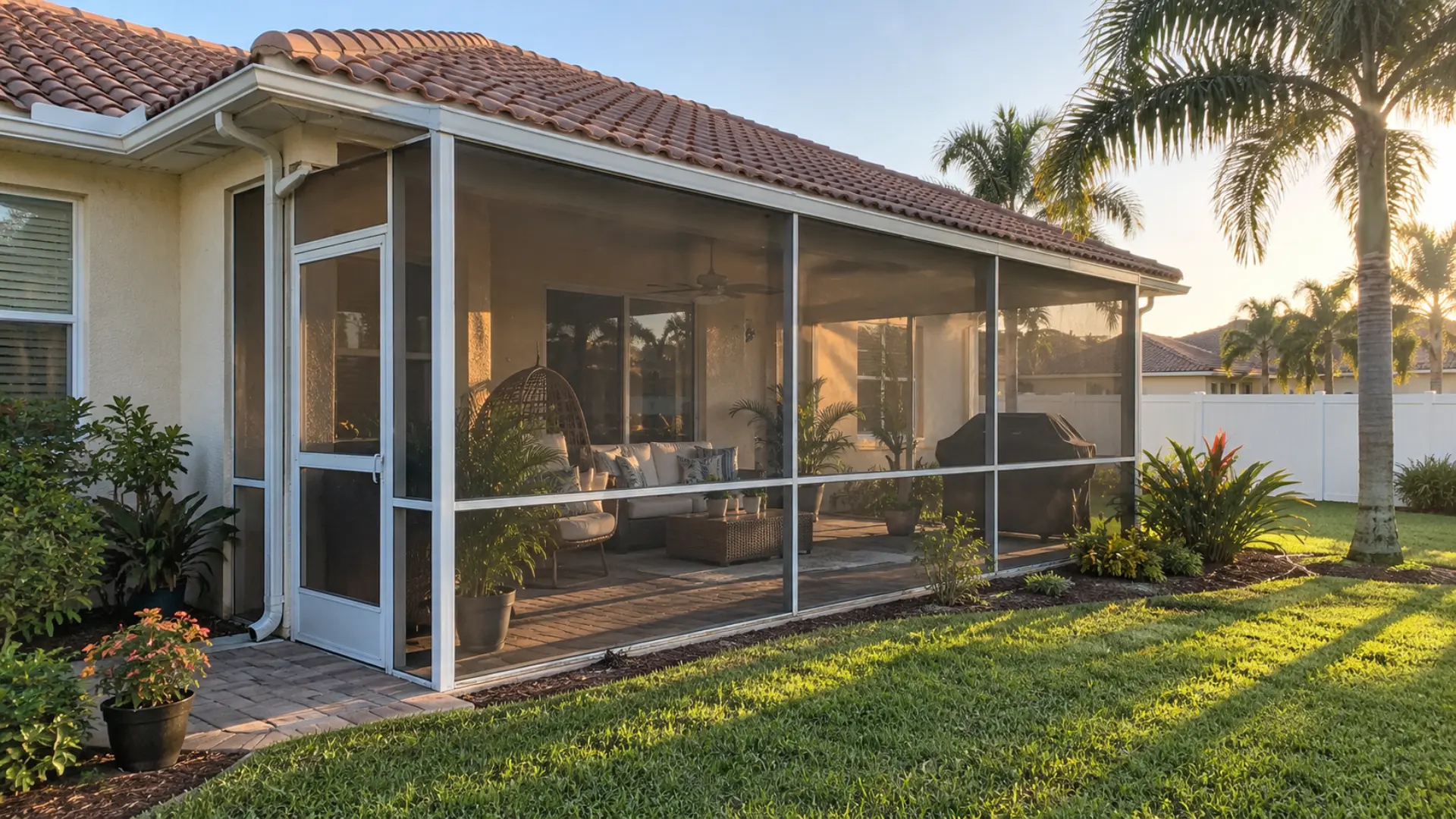
This is the classic version most people picture. Mesh screens wrap around the open side, keeping bugs and debris out while still letting the breeze move through freely.
A screened lanai is a popular choice for anyone who wants that indoor-outdoor feel without swatting mosquitoes all evening.
Screened lanais also tend to stay a bit cooler than fully open ones, since the mesh cuts down on direct sun exposure too.
2. Under-Truss Lanai
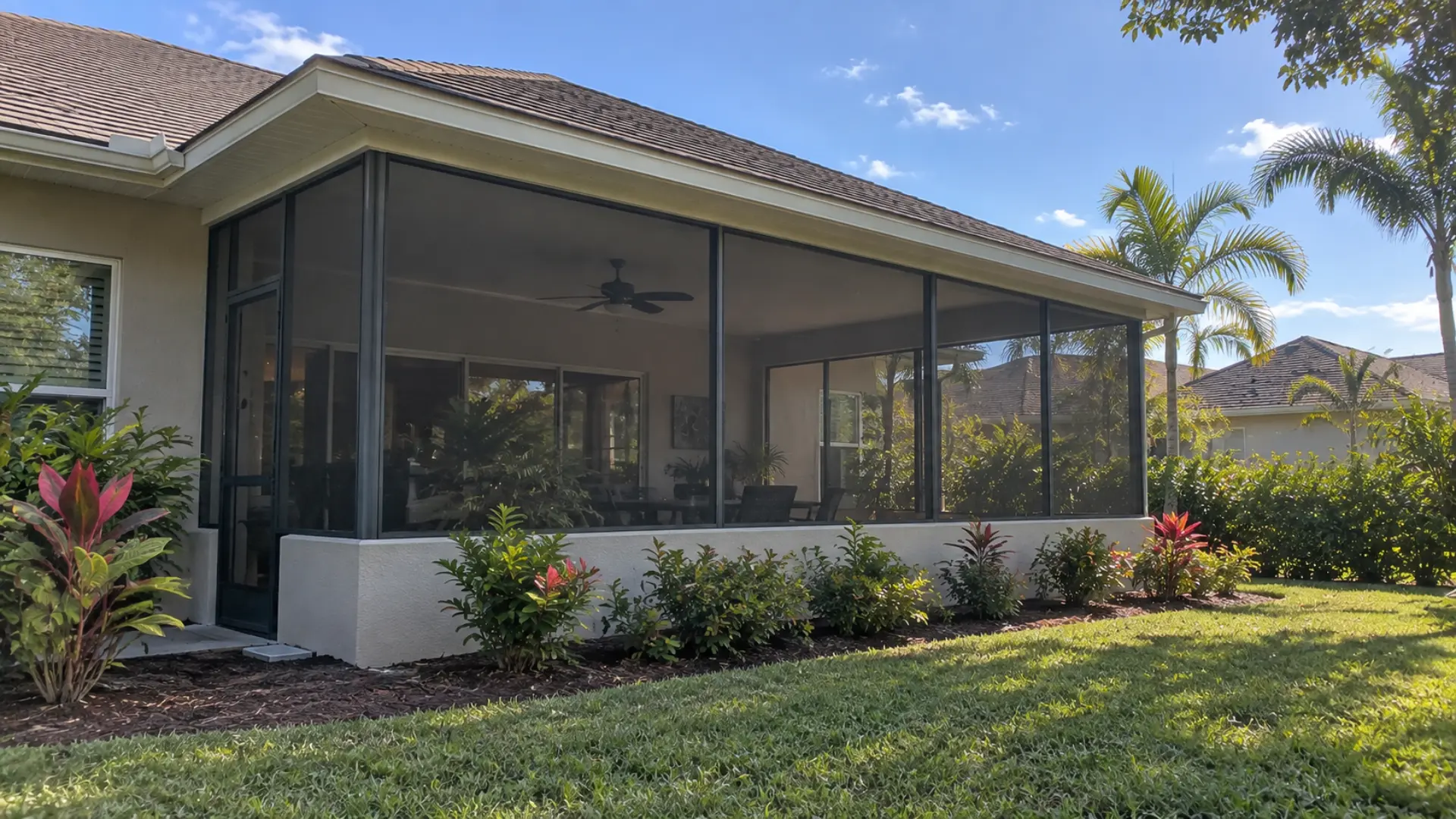
Here, the lanai shares the same roofline as the main house instead of getting its own separate structure.
It tends to blend in more seamlessly, almost like the house was designed with it from the start.
Builders often prefer this style since it can be more structurally efficient, and it usually costs less than adding a whole new roof section.
3. Pool Lanai or Pool Cage
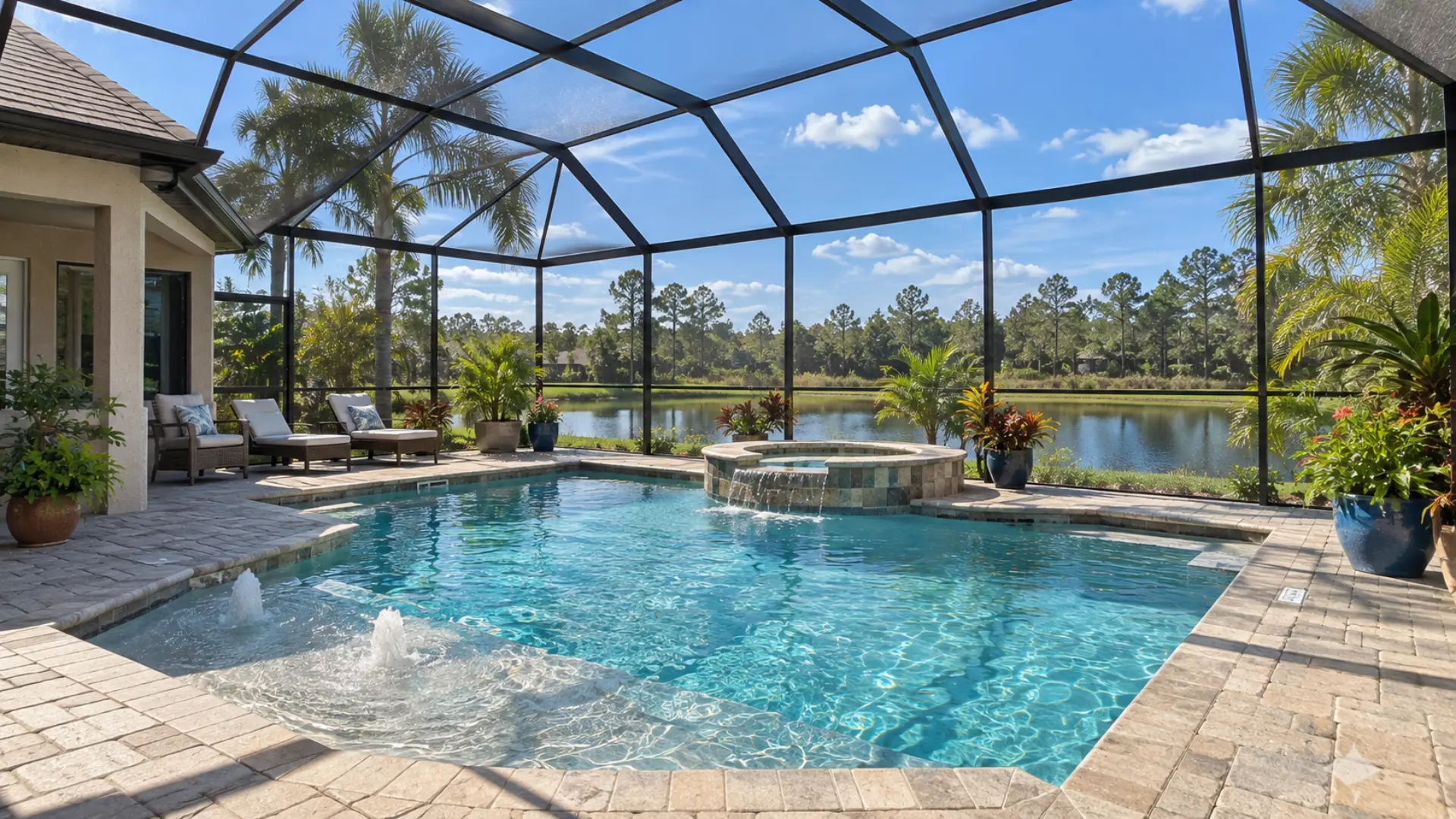
This type wraps around or sits beside a pool, often using a full screen enclosure to keep leaves and insects out of the water. It is especially common in Florida, where pools and lanais tend to go hand in hand.
Beyond the practical upside, a pool lanai also adds a layer of safety by clearly separating the pool area from the rest of the yard.
Pros and Cons of a Lanai
Like any home addition, a lanai comes with real upsides and a few trade-offs worth thinking through before committing.
Pros
- Adds usable living space without the cost of a full room addition.
- Protects against bugs and weather, especially with a screened design.
- Stays cooler than direct sun exposure, thanks to the roof and shade.
- Boosts resale value, particularly in warm-climate real estate markets.
Cons
- No climate control, so comfort depends on the season and weather.
- Best suited to warm regions, with limited year-round use elsewhere.
- Requires upkeep, from cleaning screens to maintaining the concrete floor.
How Much Does It Cost to Build a Lanai?
On the whole, the cost to build a lanai varies a lot depending on size, materials, and whether it is a screen-only addition or a full enclosure.
Enclosing an existing porch or patio into a lanai typically runs between $8,700 and $28,370, depending on square footage and materials used.
Smaller screen-only additions can cost less, while larger, custom builds land on the higher end.
Since pricing shifts by region and labor rates, it is worth getting a quote from a local contractor before budgeting for the project.
Wrapping Up
A lanai is really just a covered pause between the house and the yard, a place built for slowing down rather than rushing through.
It tends to become one of the most lived-in corners of a home, whether it stays screened and open or eventually turns into a full Florida room.
If you are thinking about adding one, weigh how you will actually use the space before deciding on the details.
Have a lanai of your own, or thinking about building one? Drop a comment below and share what you’d want yours to look like.
Frequently Asked Questions (FAQs)
What Does Lanai Mean in Hawaiian?
Lanai comes from a Hawaiian word for any outdoor living space next to a home, roofed or not. Today, it describes the covered, open-sided porches common in Hawaii and warm-climate states.
Is a Lanai the Same as a Balcony?
Not quite. A balcony is an elevated platform with a railing, while a lanai is ground-level and shares a wall with the house.
Can You Enclose a Lanai to Make It a Florida Room?
Yes, adding glass or acrylic windows and often HVAC turns a lanai into a Florida room. This is what allows the space to be used year-round.
Do Lanais Have Air Conditioning?
No, lanais do not come with climate control by default since they are open to the outdoors. Once enclosed and cooled, it is typically called a Florida room instead.
Is a Lanai Worth Adding to a House?
For warm-climate homes, a lanai can add living space and boost resale value. It is worth weighing that against the cost and upkeep involved.