
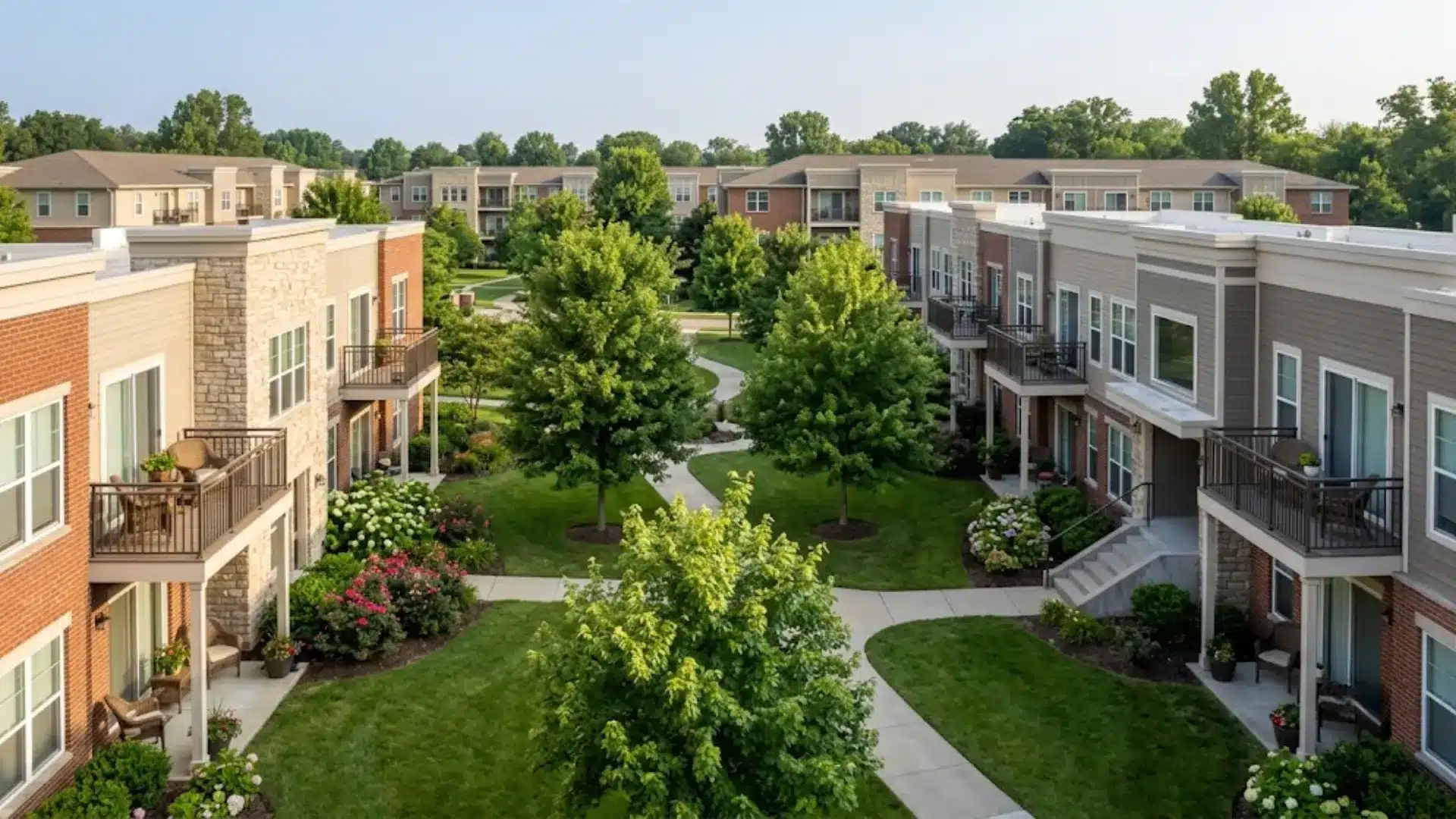
Low-rise, spread out, surrounded by greenery, garden-style apartments have a quiet charm that high-rises simply can’t replicate.
They’ve shaped the look and feel of suburban neighborhoods across the country, and for good reason.
Rooted in mid-century planning ideals, this layout has stayed relevant because it genuinely works for the way a lot of people want to live.
From what defines a garden apartment and its standout features to honest pros and cons, cost comparisons, and what to check before signing a lease, this covers it all.
What is a Garden Apartment?
A garden apartment is a low-rise rental unit set within a landscaped residential complex, typically spread across multiple buildings with open green spaces, outdoor walkways, and generous parking.
The name comes from the emphasis on surrounding greenery, whether that’s manicured lawns, courtyard plantings, or tree-lined walking paths woven between buildings.
You’ll often see “garden apartment” and “garden-style apartment” used interchangeably, and that’s perfectly fine.
Technically, a garden apartment can refer to a below-grade unit with ground-level windows, while garden-style describes the campus-style layout overall, but in everyday conversation, the two have largely merged into one.
History of Garden Style Apartments
Garden-style apartments didn’t emerge from a design trend or an architectural movement. They came from necessity, shaped by the way Americans lived, moved, and rebuilt their lives across decades.
Post-World War II Suburban Boom
When soldiers returned home in the late 1940s, American cities couldn’t absorb the demand fast enough. Suburban land was cheap, plentiful, and primed for development.
Builders responded with low-rise, spread-out complexes that could house large numbers of renters without the cost or infrastructure of urban construction.
Population growth, federal highway investment, and a hunger for affordable housing made the garden-style format an obvious fit for the moment.
The Suburban Sprawl Era: 1950s–1970s
As car ownership became the norm and families moved further from city centers, garden-style apartments followed.
Developers leaned into larger land parcels, generous parking, and open walkable layouts, building communities that were quieter, less dense, and designed around a pace of life that urban apartments simply couldn’t offer.
The format spread rapidly across the Sun Belt, Midwest, and Mid-Atlantic, becoming a defining feature of American suburban housing.
The Resurgence: Remote Work and Outdoor Living
Today, garden-style apartments are drawing renewed interest for reasons that feel very current.
Remote workers prioritizing space, fresh air, and a quieter environment are finding that the low-density, campus-style setup suits their routines far better than high-rise urban living.
Add in lower rents relative to city-center apartments, access to outdoor areas, and a slower neighborhood feel, and it’s clear why this format has outlasted nearly every housing trend that came after it.
What Does a Garden-Style Apartment Look Like?
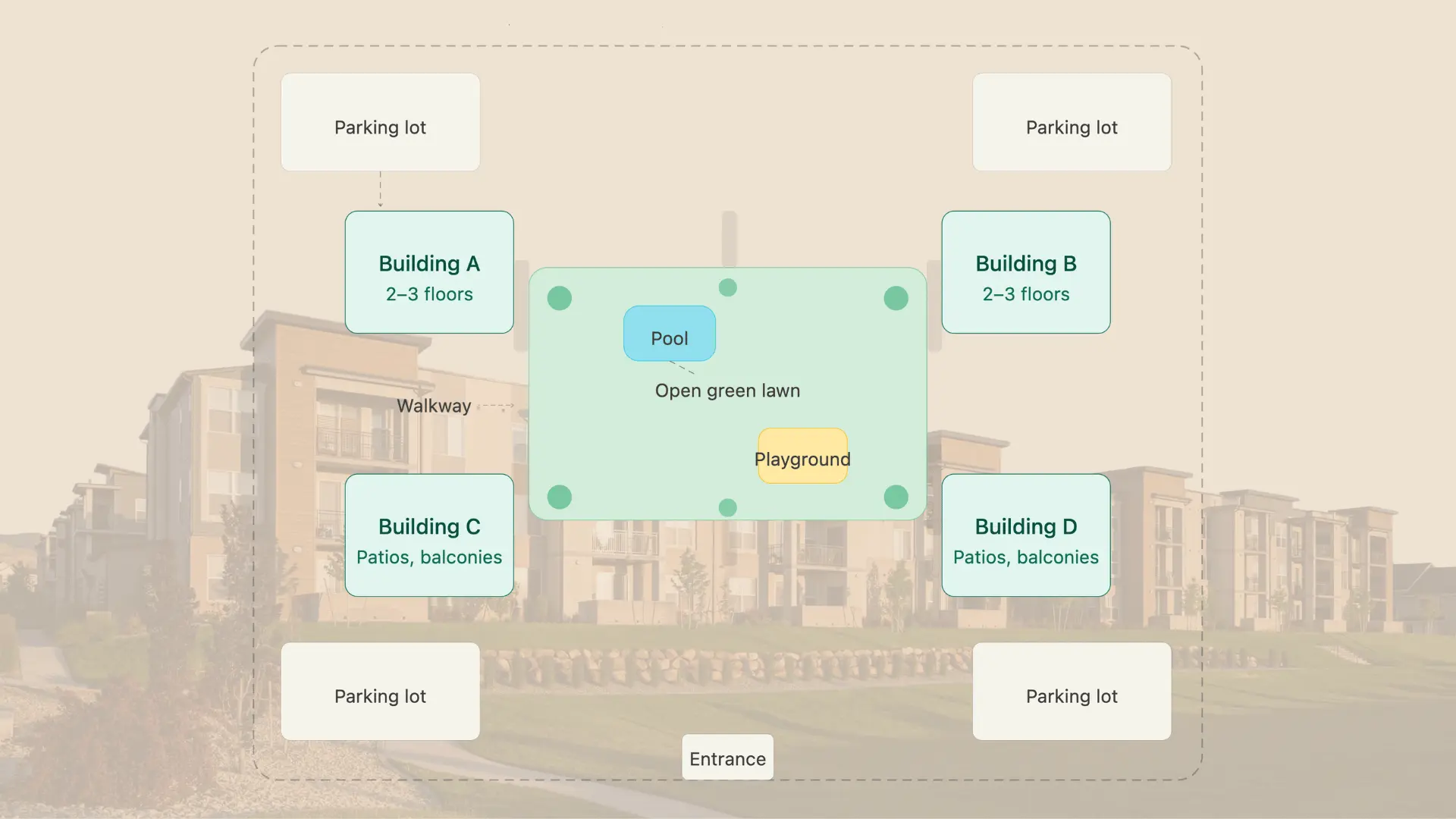
Garden-style apartments have a distinct footprint that sets them apart the moment you pull into the complex. A few defining features show up consistently across properties.
- Building Height: Low-rise structures, rarely exceeding four floors
- Parking: Surface-level lots positioned close to each building
- Green Spaces: Shared lawns, courtyards, and tree-lined pathways between buildings
- Walkways: Open-air sidewalks connecting units rather than enclosed corridors
- Balconies/Patios: Private outdoor space attached to individual units
- Community Amenities: Pools, playgrounds, and picnic areas tucked within the complex
Once you know what to look for, the layout feels immediately recognizable.
Main Features of Garden Style Apartments
The layout is only part of the picture. What makes garden-style apartments genuinely livable comes down to a set of features that appear consistently across properties, each contributing to that unhurried, open-air feel.
1. Low-Rise Buildings
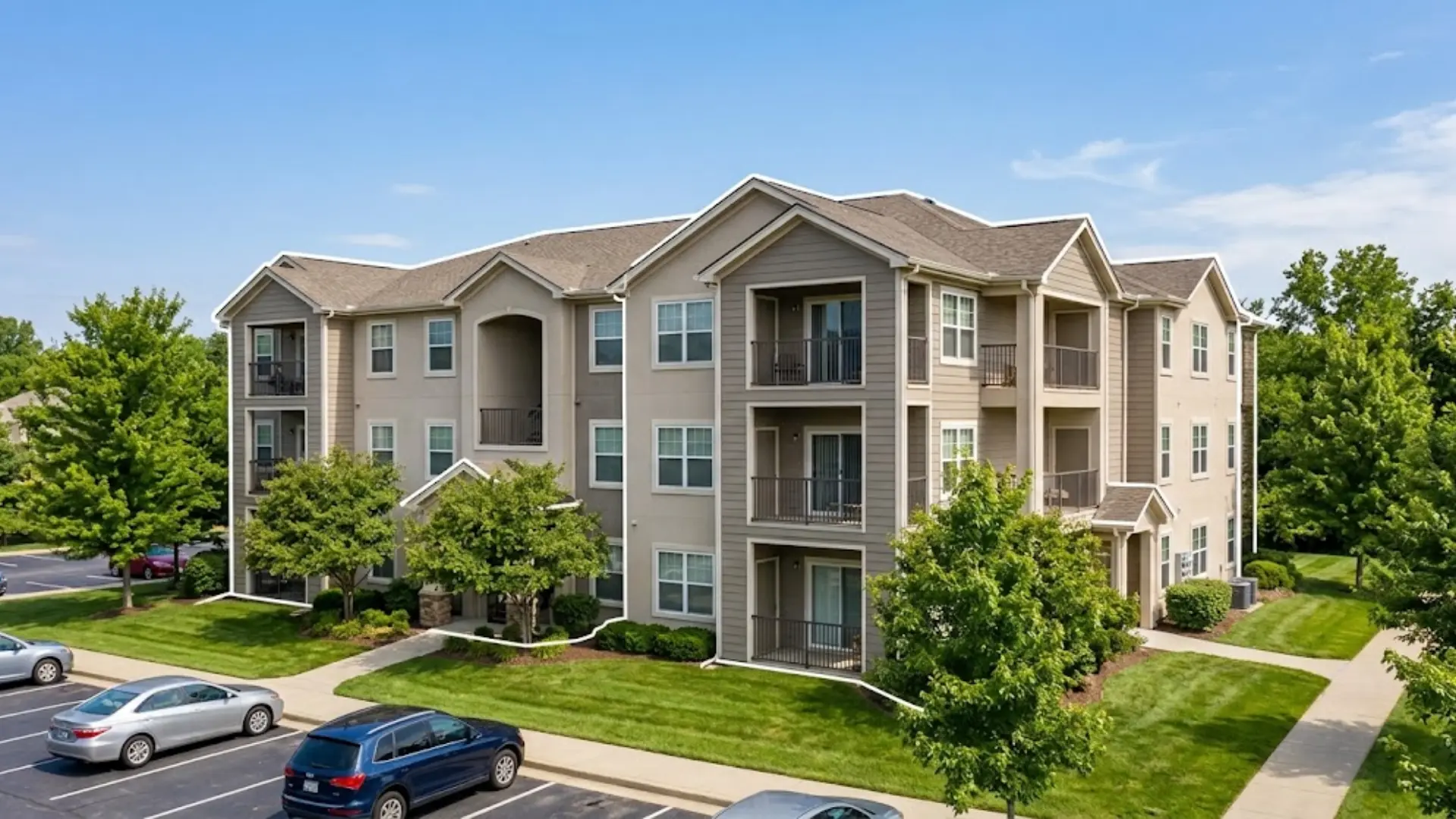
Most garden-style complexes keep their buildings between two and four stories, and that scale makes a real difference in how the space feels.
There are no elevators to wait for, no long interior corridors, and the buildings never overpower their surroundings. Shorter structures mean more sky, more light, and a neighborhood feel that taller residential buildings rarely achieve.
2. Open Green Spaces
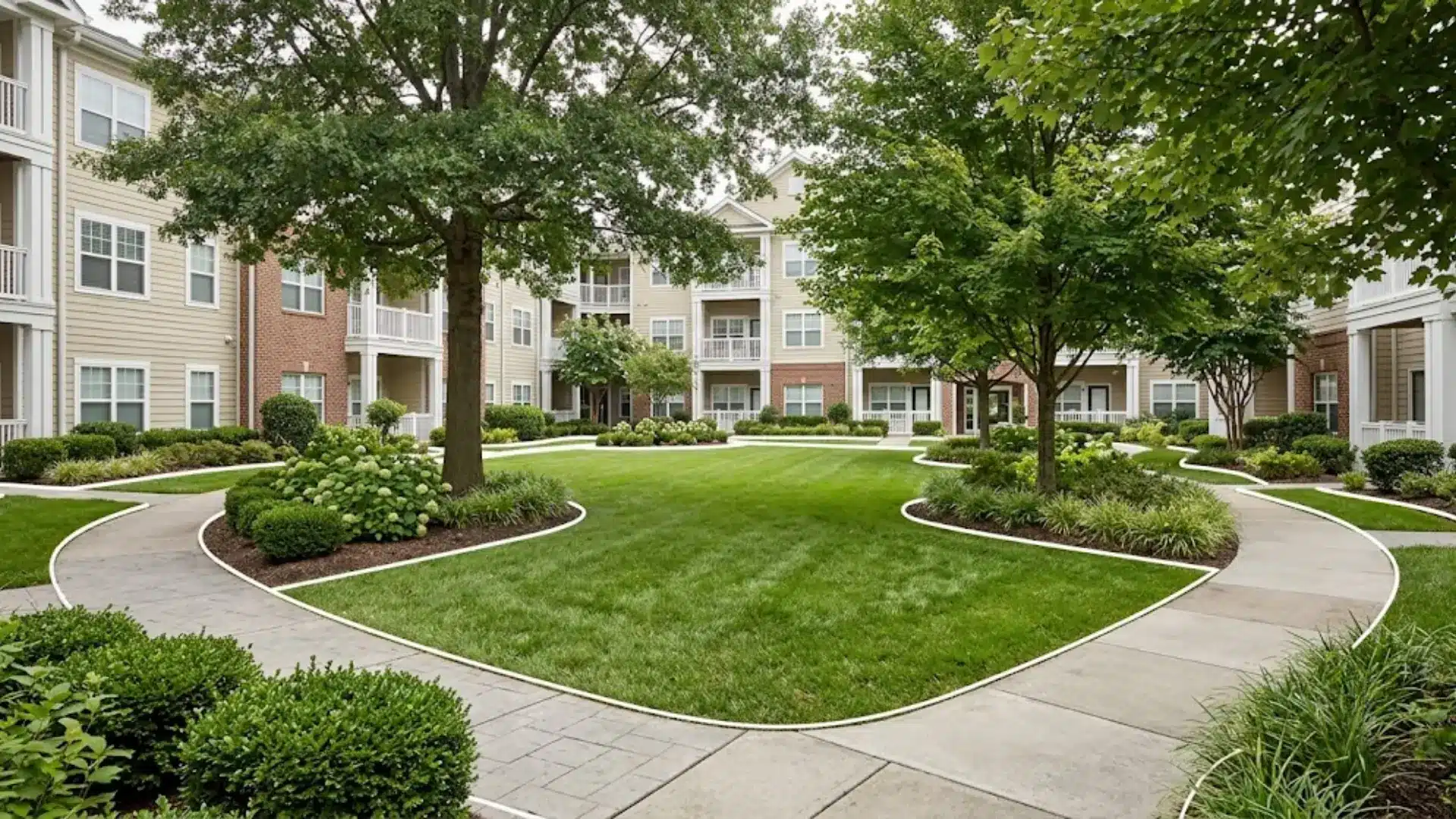
Lawns, courtyards, and landscaped common areas are woven into the layout rather than added as an afterthought. These aren’t decorative strips of grass; they’re functional spaces where residents actually spend time.
Mature trees, maintained shrubbery, and seasonal plantings give the complex a sense of permanence and calm that genuinely sets garden-style living apart from more urban alternatives.
3. Outdoor Entrances
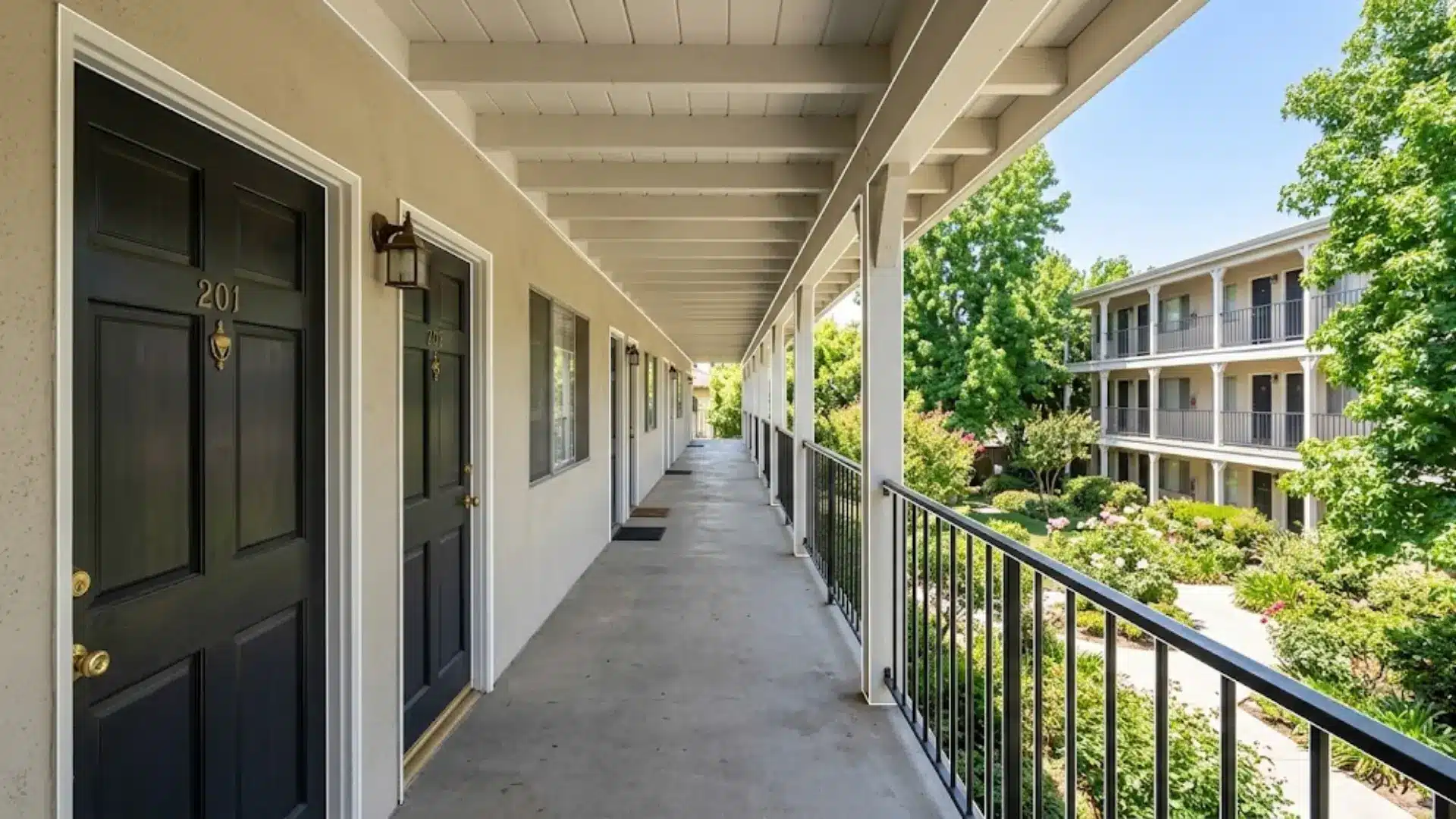
Instead of shared lobbies and enclosed hallways, garden-style apartments feature open-air walkways and individual unit entrances that directly face the courtyard or grounds.
It’s a subtle detail that changes the whole experience of coming home: there’s fresh air, natural light, and none of the fluorescent-corridor feeling common in mid-rise or high-rise buildings.
4. Larger Apartment Complexes
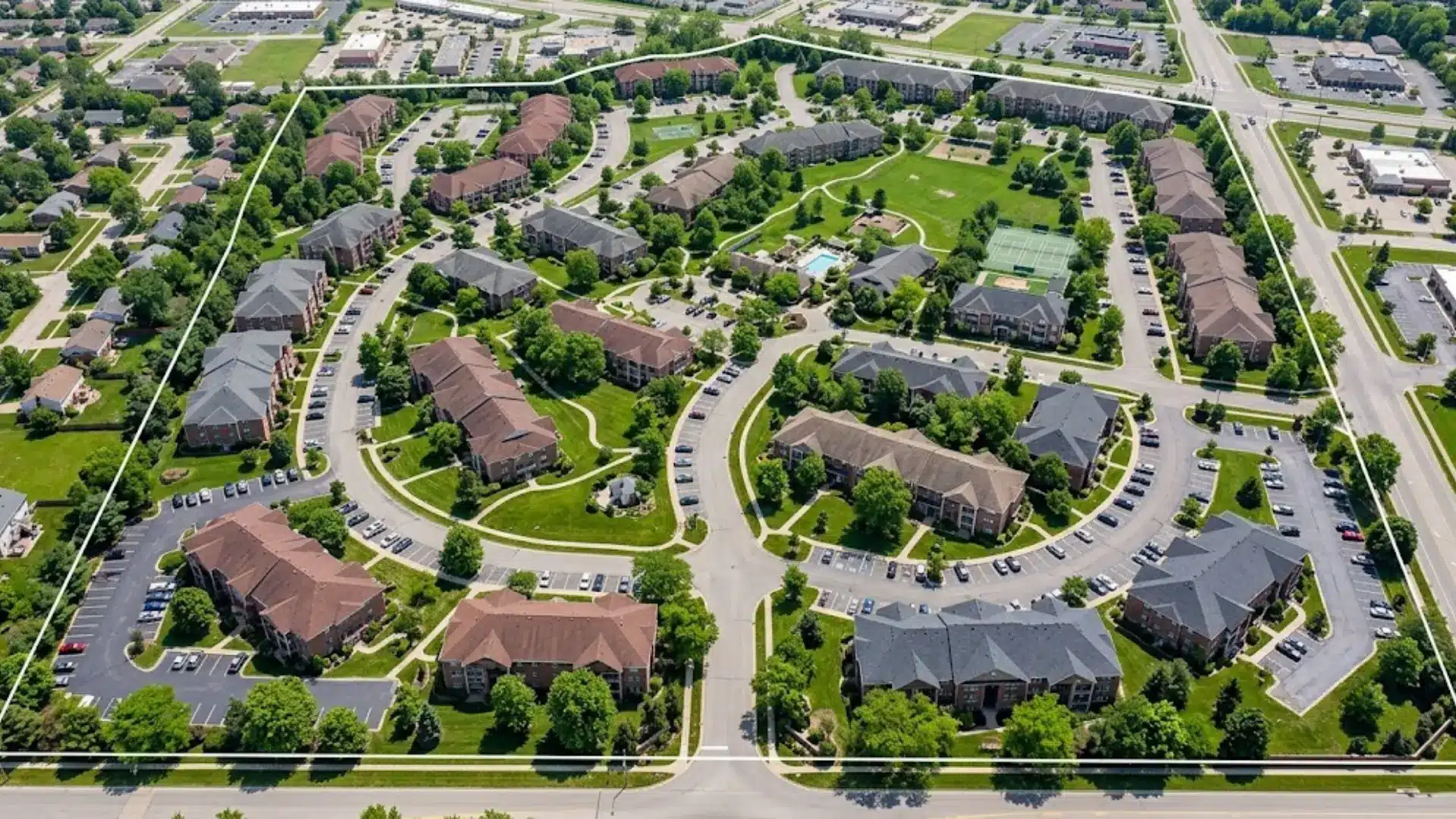
Garden-style developments typically span a sizeable land area, with multiple buildings arranged in a campus-style layout. This spread-out structure keeps density low and gives each building its own pocket of greenery.
For residents, it translates to more breathing room between neighbors and a less congested feel overall compared to stacked urban apartment buildings.
5. Surface Parking
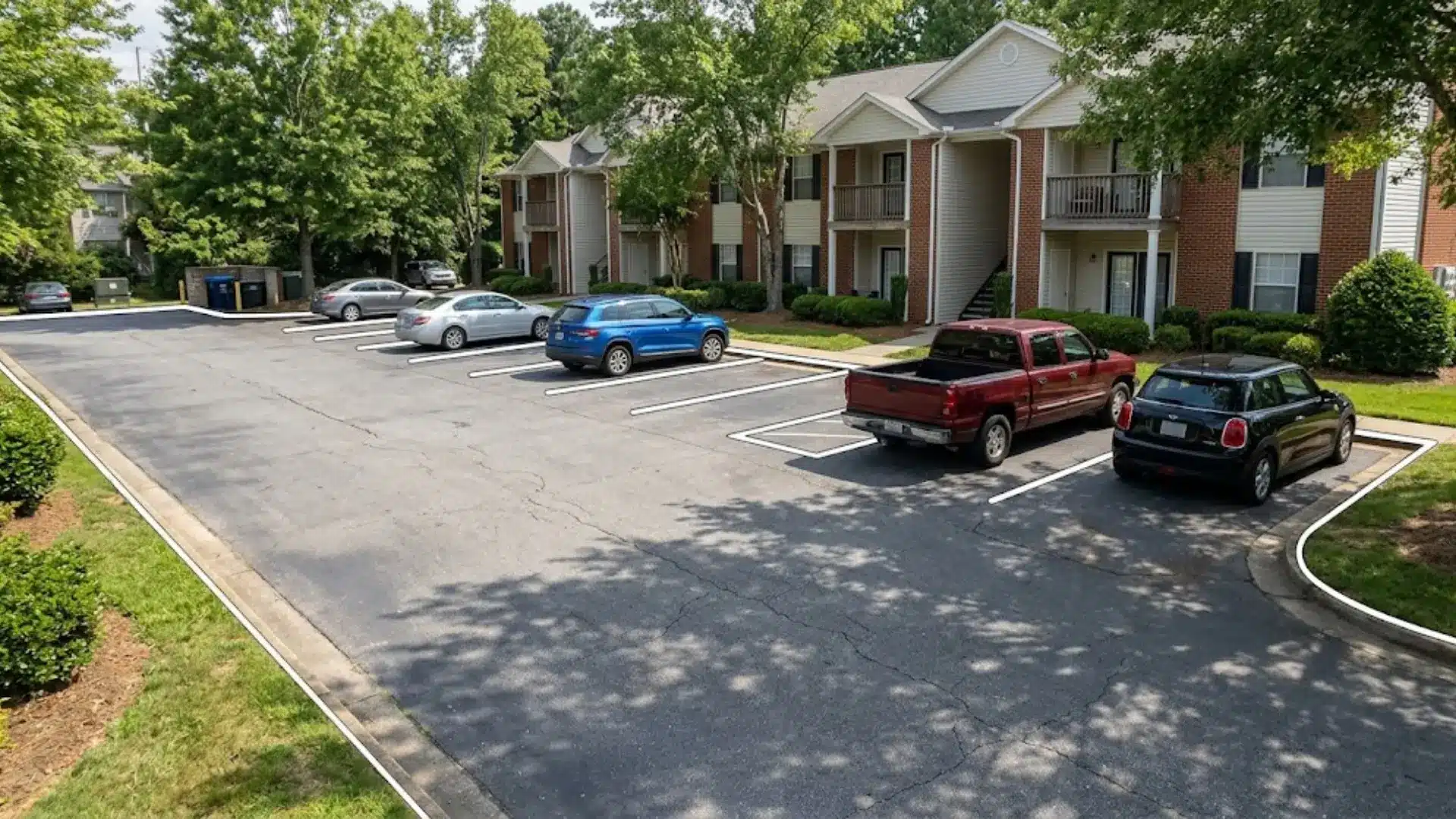
Rather than underground garages or multi-level structures, garden-style complexes rely on surface-level parking lots positioned close to each building.
It’s a straightforward, low-cost solution that’s also genuinely convenient: no ramps, no tight turns, and easy access directly from the car to the front door, which matters especially for families or anyone carrying groceries.
6. Balconies or Patios
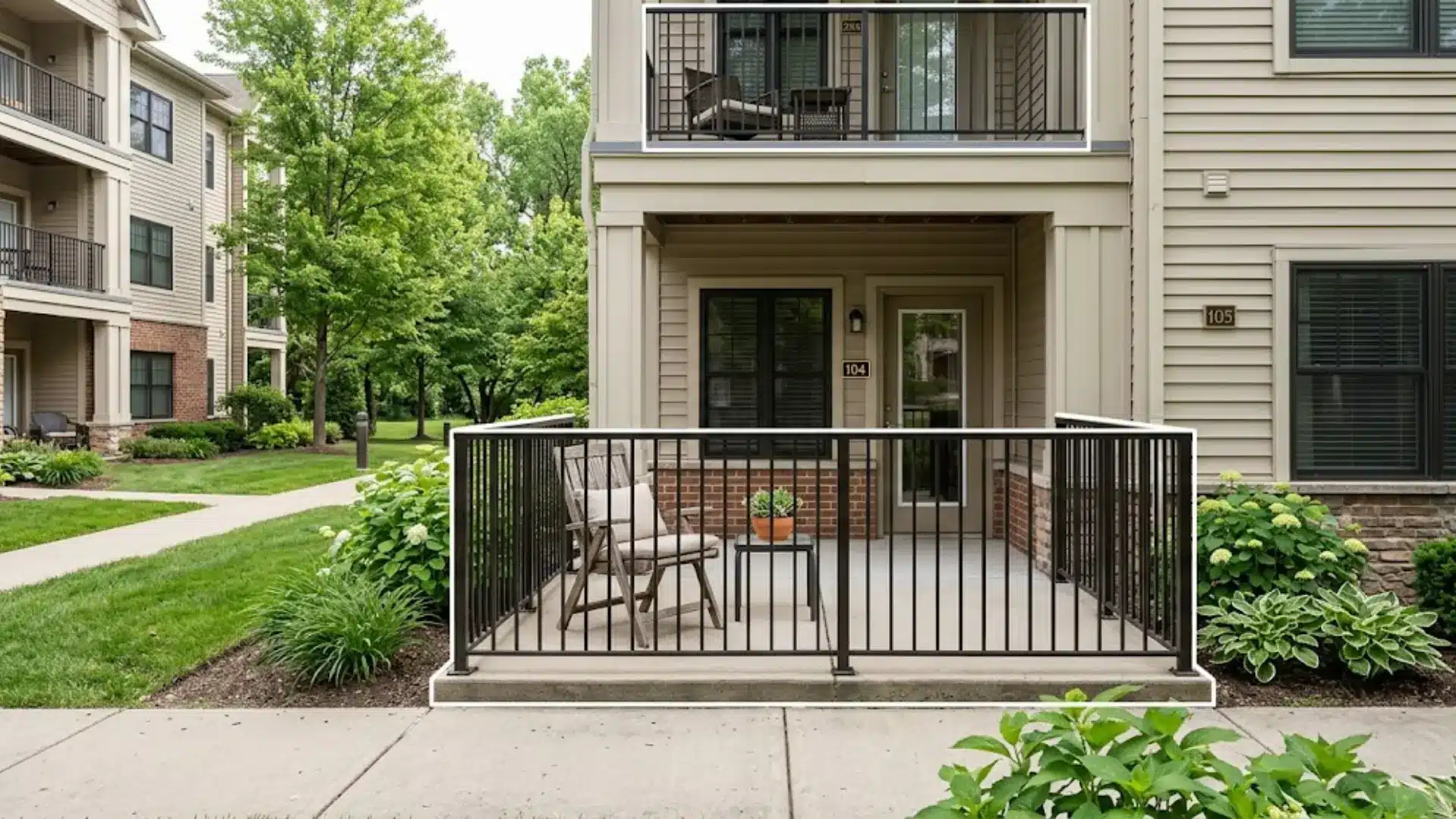
Most units include some form of private outdoor space, whether that’s a second-floor balcony overlooking the grounds or a ground-floor patio with direct access to the yard.
It extends the living space outward in a way that apartment renters in denser buildings rarely get, and for anyone who works from home or simply values time outdoors, it becomes one of the most-used parts of the unit.
7. Pet-Friendly Design
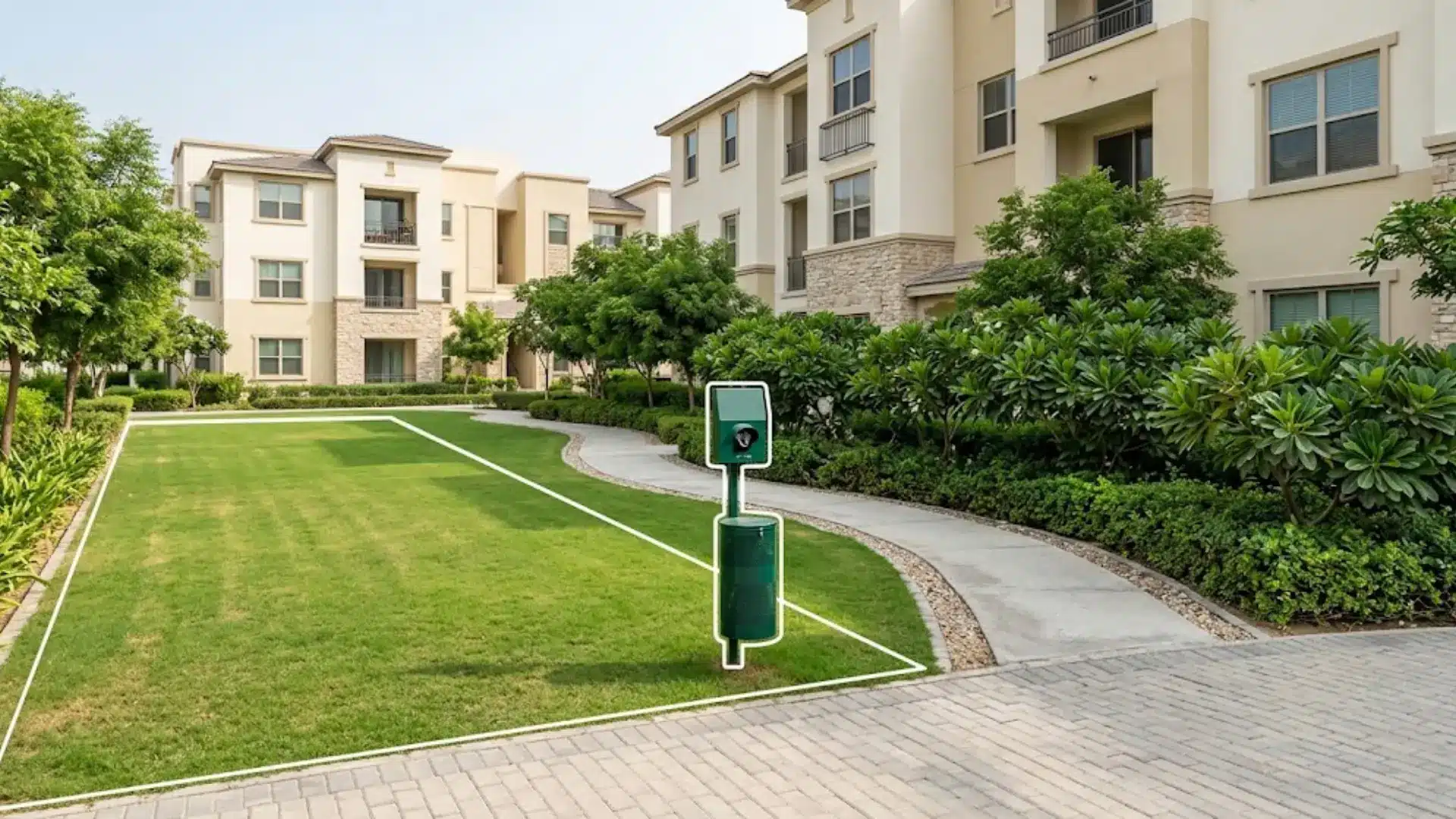
The open layout of garden-style complexes naturally suits pet ownership.
Wide grassy areas, low-traffic pathways, and ground-floor patio access make daily walks far more manageable. Many complexes also include designated dog parks or pet relief areas built directly into the grounds.
8. Community Amenities
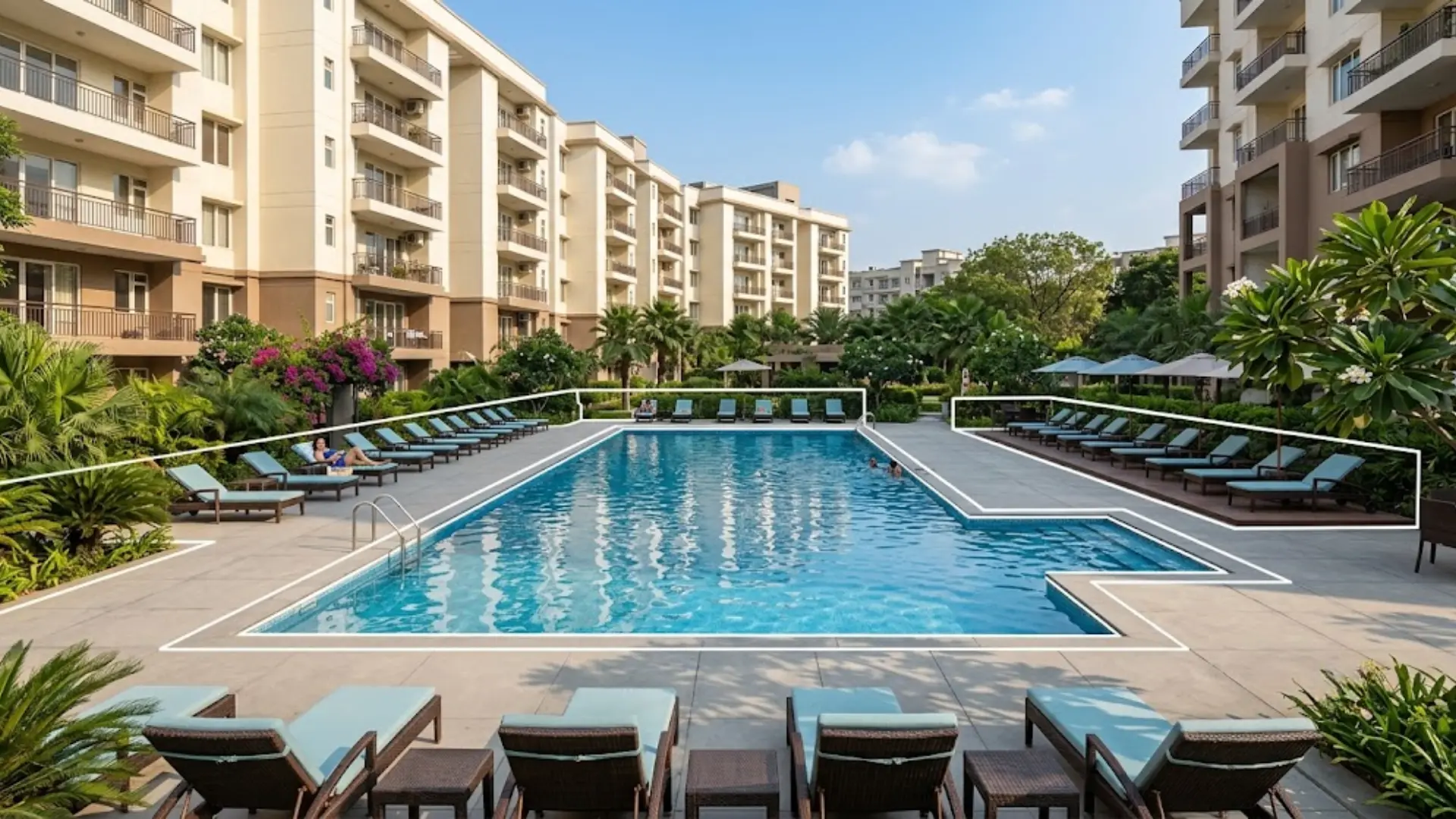
Most garden-style complexes go well beyond greenery, offering shared amenities like swimming pools, fitness centers, clubhouses, playgrounds, dog parks, walking trails, and picnic areas.
These shared spaces extend the value of each unit without inflating square footage, giving residents access to facilities that would be difficult to replicate in a private home at a comparable rental price point.
Pros of Living in Garden Style Apartments
Garden-style apartments come with a set of genuine, everyday advantages that are easy to take for granted until you’ve lived without them.
- More Affordable: Lower construction costs typically translate into more competitive rents than in high-rise urban apartments.
- Quieter Setting: Fewer shared walls, lower density, and suburban surroundings make for a noticeably calmer living environment.
- Natural Light: Low-rise buildings with open-facing windows and outdoor entrances let in significantly more daylight.
- Outdoor Access: Private patios, shared lawns, and walkable grounds put fresh air within easy reach of every unit.
- Easier Parking: Surface-level lots right outside each building mean no garages, ramps, or parking structures to deal with.
- Family and Pet Friendly: Open green spaces, playgrounds, and ground-floor units make the layout genuinely practical for families and pet owners alike.
For renters who value space, calm, and access to the outdoors, the format delivers on all three without a premium price tag.
Cons of Garden Style Apartments
The same features that make garden-style apartments appealing can also work against you, depending on your lifestyle and priorities.
- Security Concerns: Open-air entrances and multiple building access points make it harder to control who enters the complex.
- Weather Exposure: Walking between buildings, parking lots, and amenities means being exposed to rain, snow, and heat with no shelter.
- Limited Transit Access: Most garden-style complexes are suburban, making car dependency a near-certainty for daily errands and commuting.
- Pest Issues: Ground-floor units and landscaped surroundings can attract insects and rodents more readily than higher-rise alternatives.
- Longer Walks Onsite: Spread-out campuses mean the pool, gym, or mailroom may be a genuine walk away from your unit.
- Outdoor Noise: Shared lawns, playgrounds, and open corridors can channel sound directly toward units, especially on warmer evenings.
None of these are dealbreakers on their own, but they’re worth weighing honestly before signing a lease.
Garden Style Apartments vs. Other Apartment Types
Not every apartment layout suits every renter.
Here’s how garden-style apartments stack up against the most common alternatives across the features that tend to matter most.
| Apartment Type | Height | Outdoor Space | Parking | Typical Location | Best For |
|---|---|---|---|---|---|
| Garden Style | 2–4 stories | Extensive | Surface lots | Suburbs | Families, pet owners |
| Mid-Rise | 5–11 stories | Limited | Garage | Urban/suburban | Professionals |
| High-Rise | 12+ stories | Minimal | Garage | Downtown | City living |
| Walk-Up | 2–5 stories | Minimal | Street | Urban | Budget renters |
| Townhome | 2–3 stories | Private yard | Attached garage | Suburban | Families |
Who Should Choose a Garden Style Apartment?
Garden-style apartments aren’t the right fit for everyone, but for certain renters, the layout feels close to ideal.
A great match if you are:
- A family looking for outdoor space, playgrounds, and room to breathe without paying for a house.
- A remote worker who needs a quieter environment and values easy access to fresh air during the day.
- A pet owner who wants grassy areas, ground-floor access, and room for a dog to actually move around.
- A retiree drawn to low-density, low-rise living with manageable surroundings and a slower pace.
- A nature lover who prioritizes greenery, walking paths, and open skies over urban convenience.
- A first-time renter looking for an approachable, community-oriented setting at a reasonable price point.
Worth reconsidering if you are:
- A daily commuter who needs walkable access to transit or a downtown address.
- A luxury renter expecting concierge services, rooftop amenities, or high-end finishes.
- Someone who needs accessibility features such as elevators, attended lobbies, or on-site support services.
Are Garden Style Apartments Cheaper?
Generally speaking, yes. The national average rent sits at around $1,643 for a one-bedroom and $1,907 for a two-bedroom, and garden-style apartments in suburban markets typically come in below both figures.
Newly built garden-style units in major Texas metros, for instance, range from $1,200 to $1,600 for an 800-sq-ft unit.
| Apartment Type | Avg. Monthly Rent | Parking | Avg. Unit Size | Best Value For |
|---|---|---|---|---|
| Garden Style | Below national avg. | Usually included | Spacious, 800–1,000 sq ft | Space and affordability |
| Mid-Rise | Near national avg. | Paid garage | Average, 700–900 sq ft | Urban convenience |
| High-Rise | Above national avg. | Paid garage | Compact, 500–800 sq ft | City location, amenities |
| Walk-Up | Below national avg. | Street parking | Varies | Budget urban renters |
| Townhome | Moderate to high | Included | Very spacious, 1,000+ sq ft | Families needing more room |
Safety Considerations
Garden-style apartments trade single-entry lobbies for open-air access, which means safety depends more on the property’s upkeep than a controlled entrance.
Check that:
- Walkways and parking lots are well-lit.
- Security cameras cover building entrances and common areas.
- Window locks and door hardware on ground-floor units are in good shape.
Research the surrounding neighborhood independently using CrimeMapping before committing, and ask the leasing office specifically about package theft protocols, as open corridors make deliveries more vulnerable than in enclosed buildings.
What to Check Before Renting a Garden-Style Apartment?
Garden-style apartments have a lot going for them, but the open layout and landscaped grounds also mean there’s more to inspect before committing.
Walk through each of these before signing anything.
Exterior
- Landscaping and Drainage: Overgrown grounds or poor drainage near units signal deferred maintenance.
- Parking and Lighting: Check availability near your building and whether the pathways are well-lit at night.
Apartment
- Windows, Doors, and Seals: Gaps or stiff hardware on ground-floor units are common and worth flagging.
- Pest and Moisture Signs: Look for water stains, soft flooring, or evidence of insects, especially in ground-floor and corner units.
- HVAC and Appliances: Test everything on-site; garden-style units often have individual systems that vary in age across buildings.
Community
- Pet and Guest Policies: Confirm what’s actually permitted in writing, not just verbally.
- Maintenance Response Times: Ask current residents, not just the leasing office.
- Noise and Lease Terms: Open-air layouts carry sound easily, so clarify quiet hours and any restrictions before signing.
The Bottom Line
Garden-style apartments have held their place in American rental housing for decades, and it’s easy to see why.
The low-rise layout, open grounds, and suburban calm offer something that denser buildings simply can’t replicate at the same price point.
For renters drawn to more space, a quieter setting, or room for a pet and a patio, garden-style apartments deliver on the everyday details that actually make a place feel livable.
If you’re weighing your options, it’s a format worth taking seriously.
Have you lived in a garden-style apartment? Drop your experience in the comments below.
Frequently Asked Questions (FAQs)
Are Garden Apartments Only on the First Floor?
Not necessarily. The term can refer to ground-floor units, but garden apartments span multiple floors within a low-rise complex, with the defining feature being the landscaped setting rather than the floor level.
What’s the Difference Between a Garden Apartment and a Garden-Style Apartment?
Technically, a garden apartment refers to a specific unit near ground level, while garden-style describes the overall campus layout. In everyday use, both terms are used interchangeably.
Do Garden Apartments Have Private Yards?
Ground-floor units sometimes include a small patio or fenced area, but a fully private yard is uncommon. Most outdoor space in garden-style complexes is shared across the community rather than assigned to individual units.
Are Garden Apartments Good for Renters on a Budget?
Generally, yes. Lower land and construction costs translate into more competitive rents, and surface parking is usually included, making them among the better-value options in most suburban markets.