
A closet full of shoes rarely stays neat on its own. Odd shapes and uneven sizes make shoes hard to stack or line up. Shelves fill up fast, and finding a matching pair gets tricky.
That’s where shoe organization ideas come in handy. I’ve dealt with this same mess in my own closet for years. You don’t need a big budget or extra square footage to fix it.
A few smart adjustments can turn clutter into a system that actually works. Whether you live in a small apartment or a walk-in closet, there’s a fix that fits.
Let’s dig into simple ways to keep every pair right where it belongs.
Why Shoe Collections Become Cluttered So Quickly?
Shoes are odd shapes and sizes, so they never stack or line up neatly. Boots need more height than flats, and sneakers need more width than sandals.
Everyday pairs tend to pile up near the door since that is where you grab them. My own sneakers seem to multiply by the front door no matter what I do.
Seasonal shoes often stay mixed in with the shoes you wear daily. Deep shelves hide pairs at the back, making it hard to spot a match. Any system fails if putting shoes away feels like too much work.
The best setup matches your daily habits, whether that means a build-it-yourself shoe stand or just rethinking how your shelves are used.
What to Consider Before You Start
Before diving into the list, it helps to have a quick sense of what you’re actually working with. I always ask myself these same questions before rearranging my own shoe closet:
- Collection size: A few everyday pairs need a different solution than a closet built up over years.
- Available space: Small apartments favor vertical ideas; larger closets can handle bigger built-ins.
- Visible vs. hidden: Choose between grab-and-go access or a cleaner, tucked-away look.
- Budget: Some ideas are free, others involve new furniture or materials.
- Household needs: Storage for just you looks different than storage for a whole family.
Once you’ve thought through these points, the ideas below will be much easier to match to your space.
Closet Storage Essentials
A handful of upgrades can turn any closet, big or small, into serious shoe storage. Here are a few fixes worth trying:
1. Tiered Shoe Racks
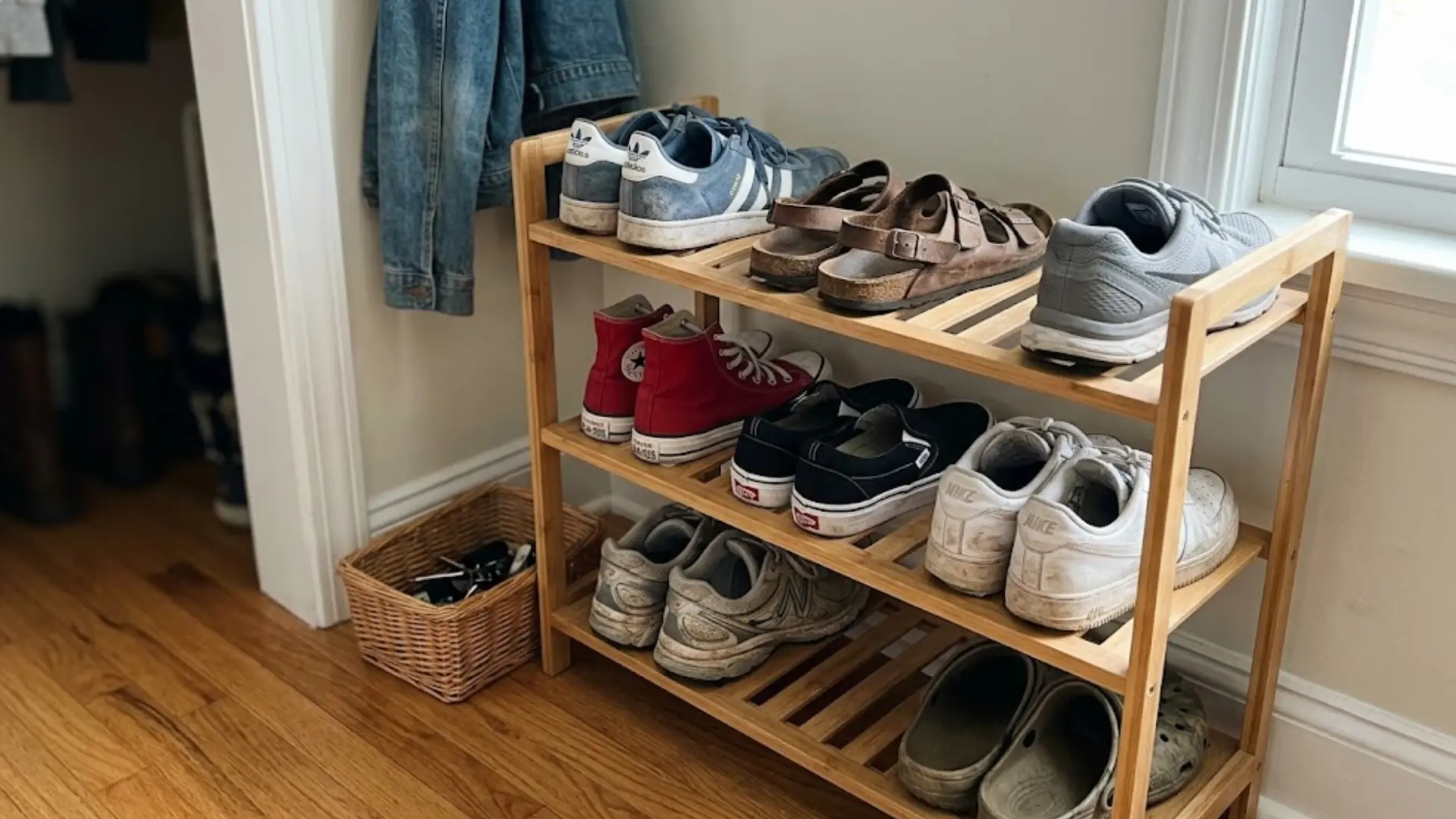
A freestanding rack with 5 to 7 levels is one of the simplest ways to add serious shoe storage without any construction.
These racks fit into closets, corners, or even entryways, and most can hold a surprising number of pairs for how little floor space they actually take up.
They’re also one of the easiest upgrades to remove or relocate later if your storage needs change down the line.
2. Custom Floor-to-Ceiling Shoe Wall
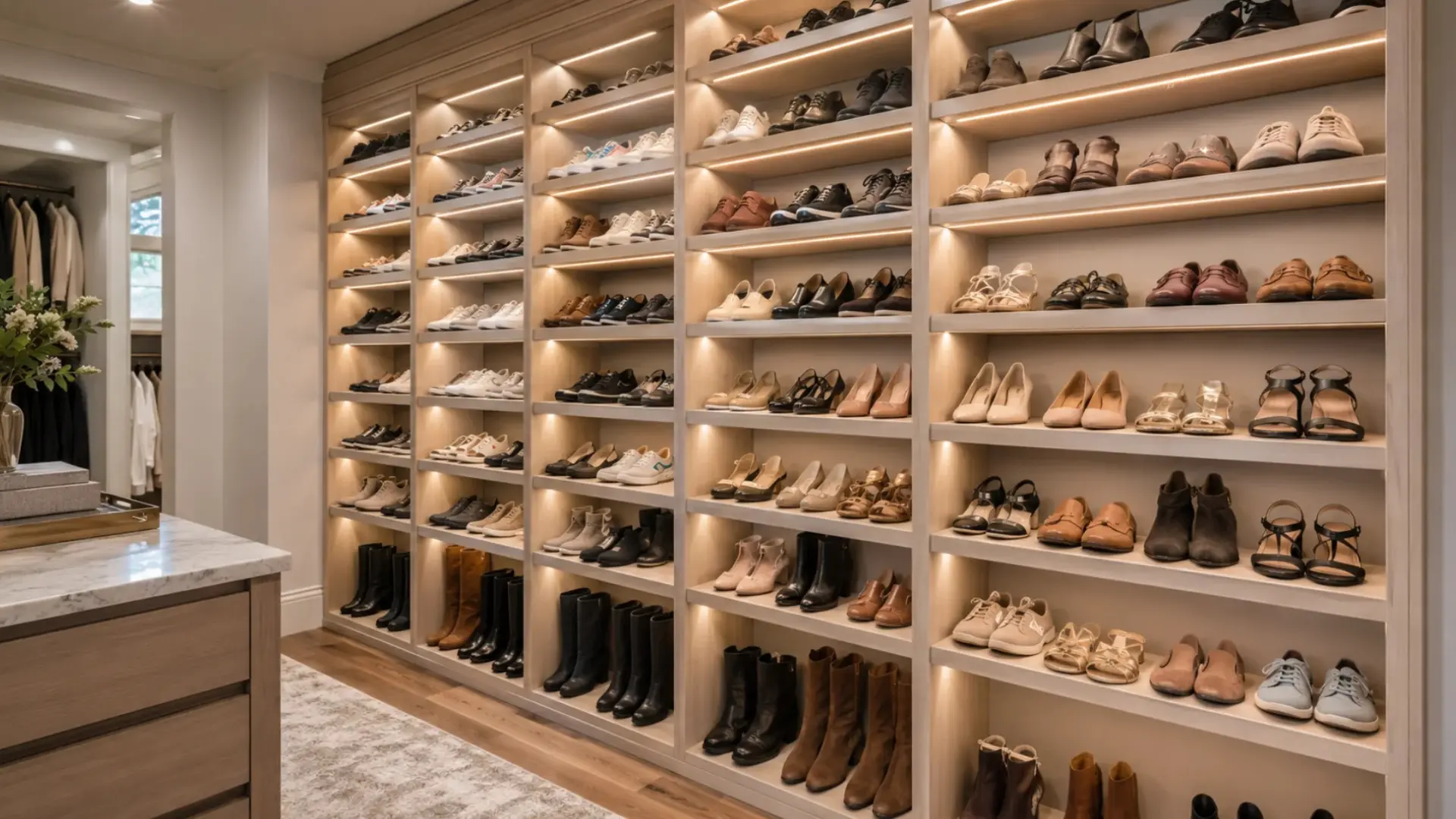
For serious collections, a dedicated shoe wall built from floor to ceiling turns storage into display.
Add built-in lighting along the shelves, and suddenly the closet itself becomes something worth showing off rather than something to hide.
For larger closets, the investment pays off, especially if you try building floating shelves sized to your own shoes.
3. Metal Rods Along Shelf Edges
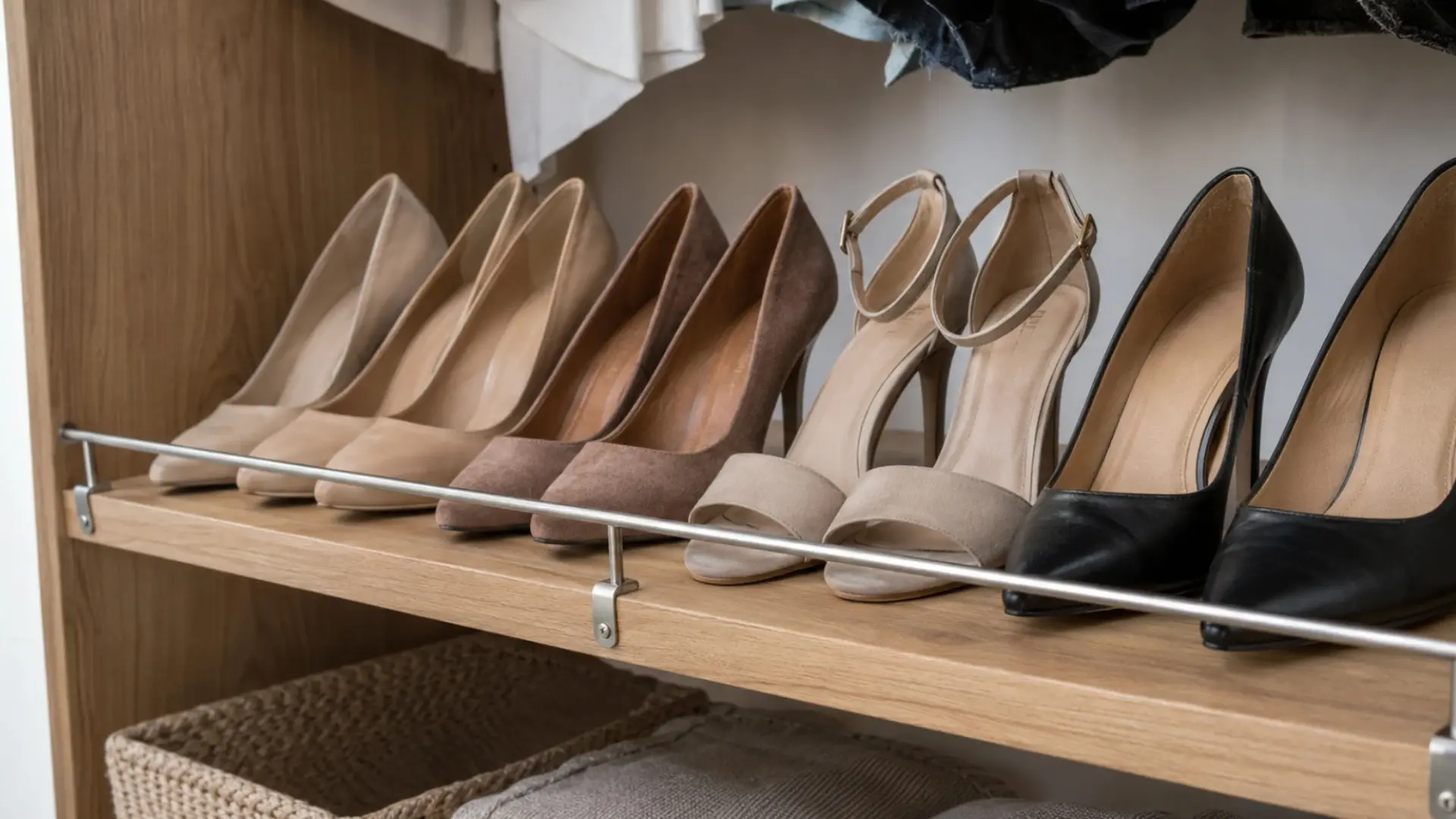
A simple metal rod fixed to the front of a shelf keeps heels propped and visible without slipping or sliding around.
It’s a small, affordable upgrade that gives a closet an unexpectedly polished, boutique-style finish.
This works especially well for anyone with a heel-heavy collection that tends to look messy on standard flat shelving.
4. Wire Shelving
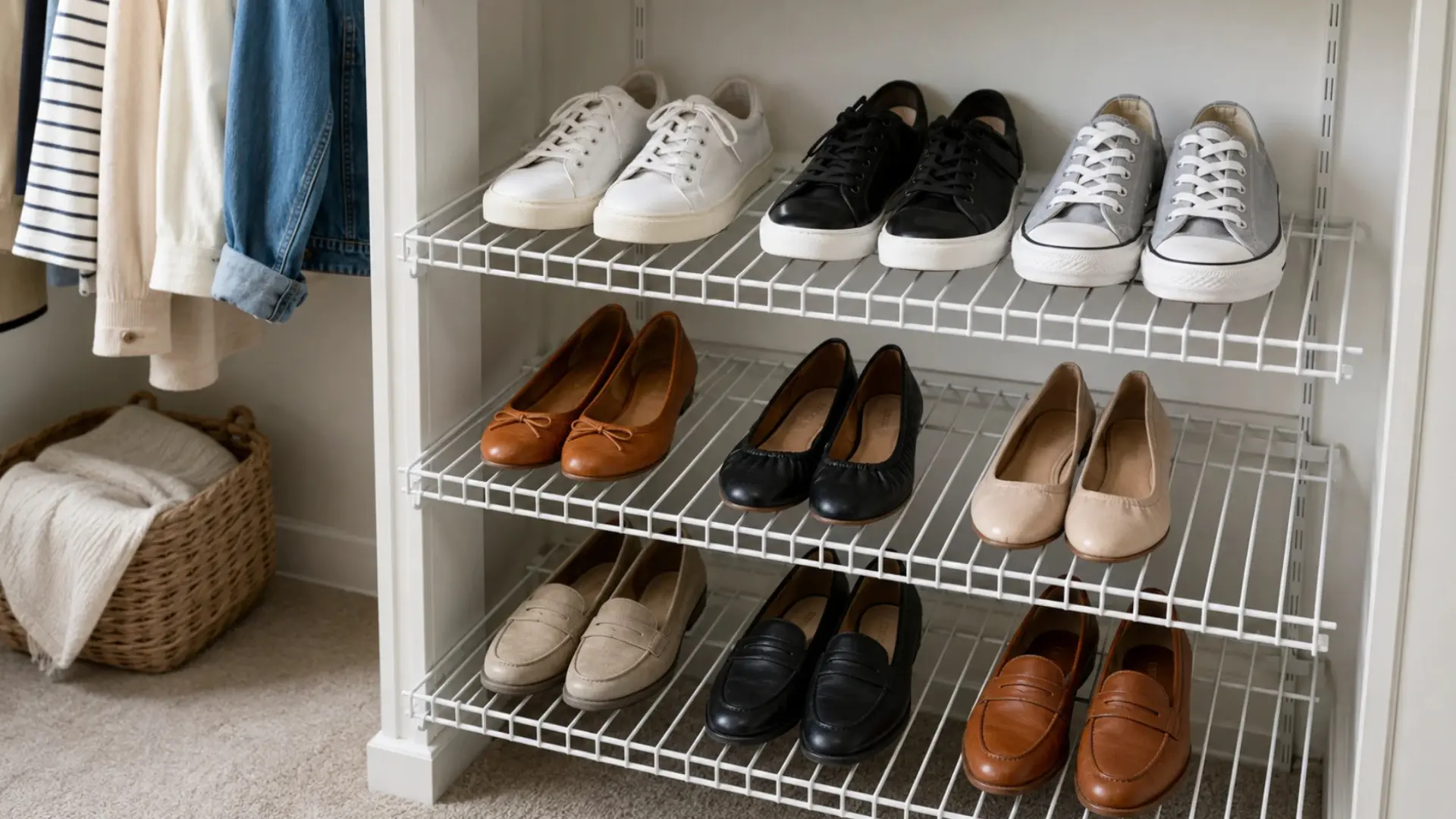
Wire shelves let air circulate freely, which helps shoes dry out and stay fresher for longer.
They’re inexpensive, come in standard sizes almost anywhere sells shelving, and hold up well over years of daily use.
Just skip wire shelving for delicate heels, since thinner soles and straps can occasionally slip through the gaps.
5. Industrial or Freestanding Shelving

For renters who can’t install built-ins, industrial shelving is a genuine lifesaver.
It’s sturdy, fully adjustable, and just as easy to disassemble and take along at move-out time as it was to set up in the first place.
This option also works well for larger shoe collections that have simply outgrown a closet’s existing built-in shelving.
Small-Space & Apartment Hacks
Tight corners, empty walls, and the space under a bed all hold more storage than you’d think. I’ve leaned on tricks like these in my own small apartments over the years:
6. Vented Plastic Shoe Containers
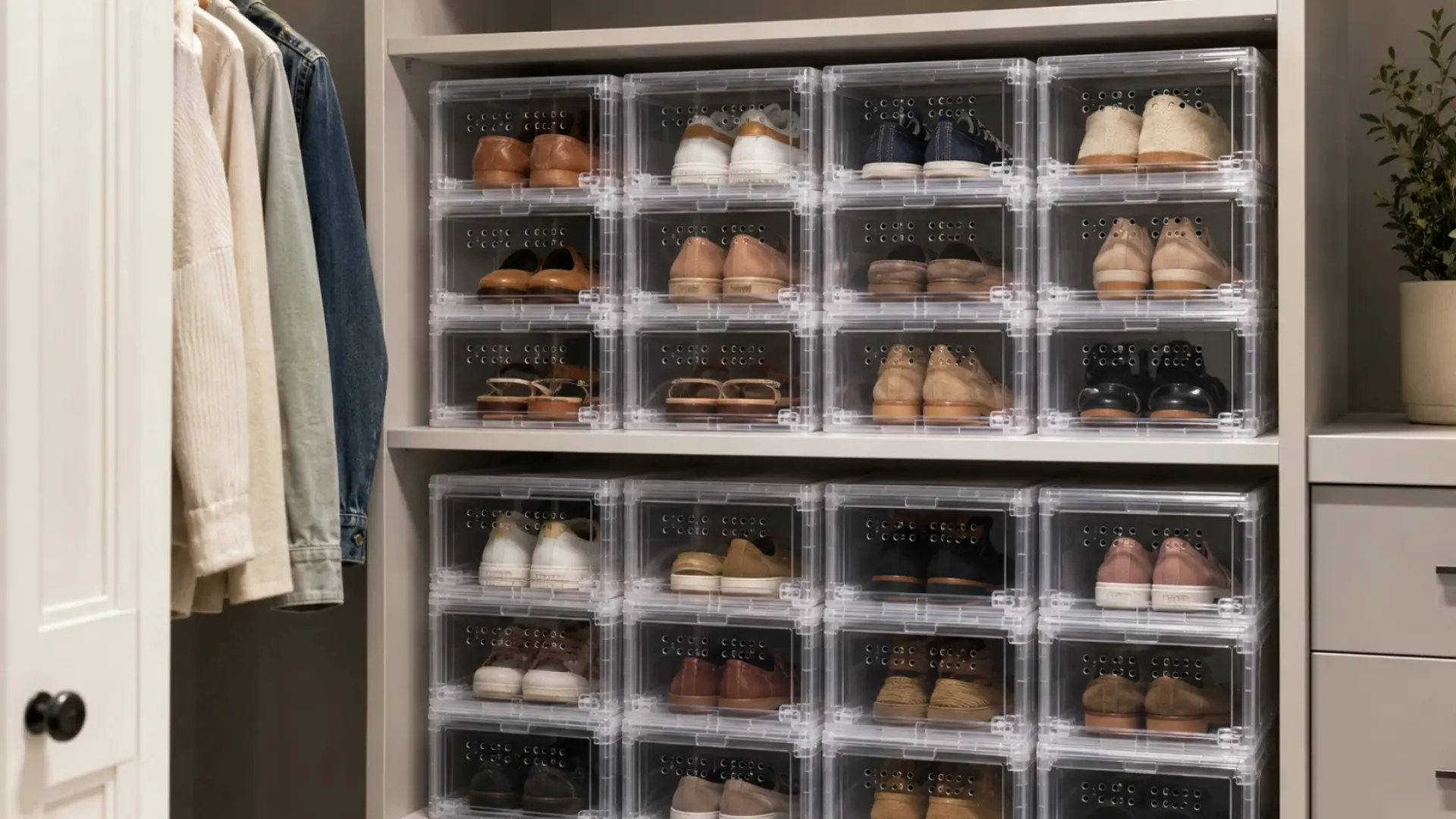
Clear, stackable containers let you spot exactly which pair you’re looking for without opening a single box.
Most come with built-in vents for airflow, keeping shoes fresh while stacked several containers high.
They work well on shelves, closet floors, or tucked under a bed, making them one of the most flexible small-space options available.
7. Under-Bed Rolling Storage Bins
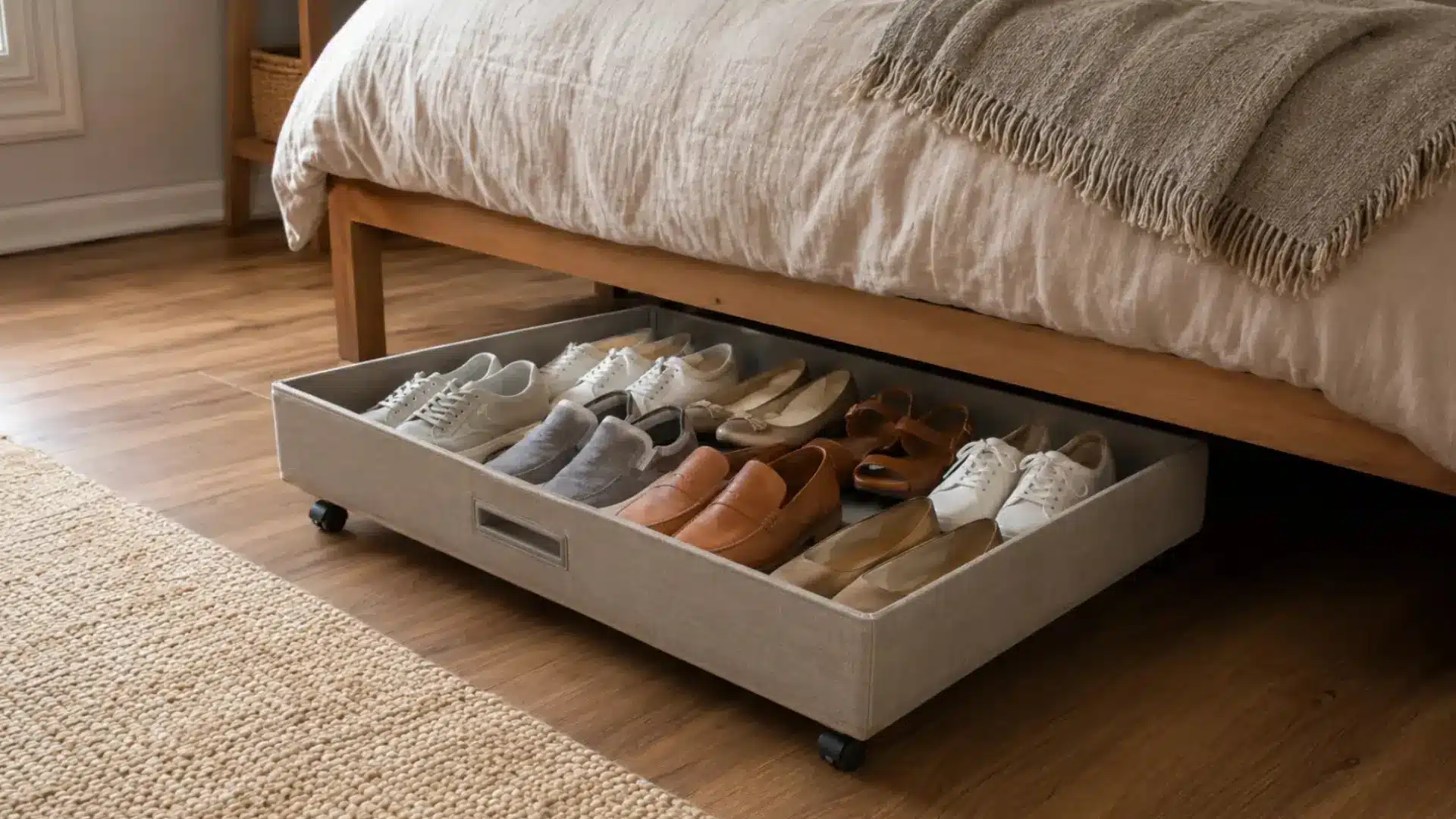
The space under a bed is some of the most overlooked real estate in a small apartment.
Rolling bins slide in and out easily, keeping shoes dust-free and completely out of sight until needed.
This is especially useful for off-season shoes or pairs you only reach for occasionally throughout the year.
8. Rotating Shoe Shelf
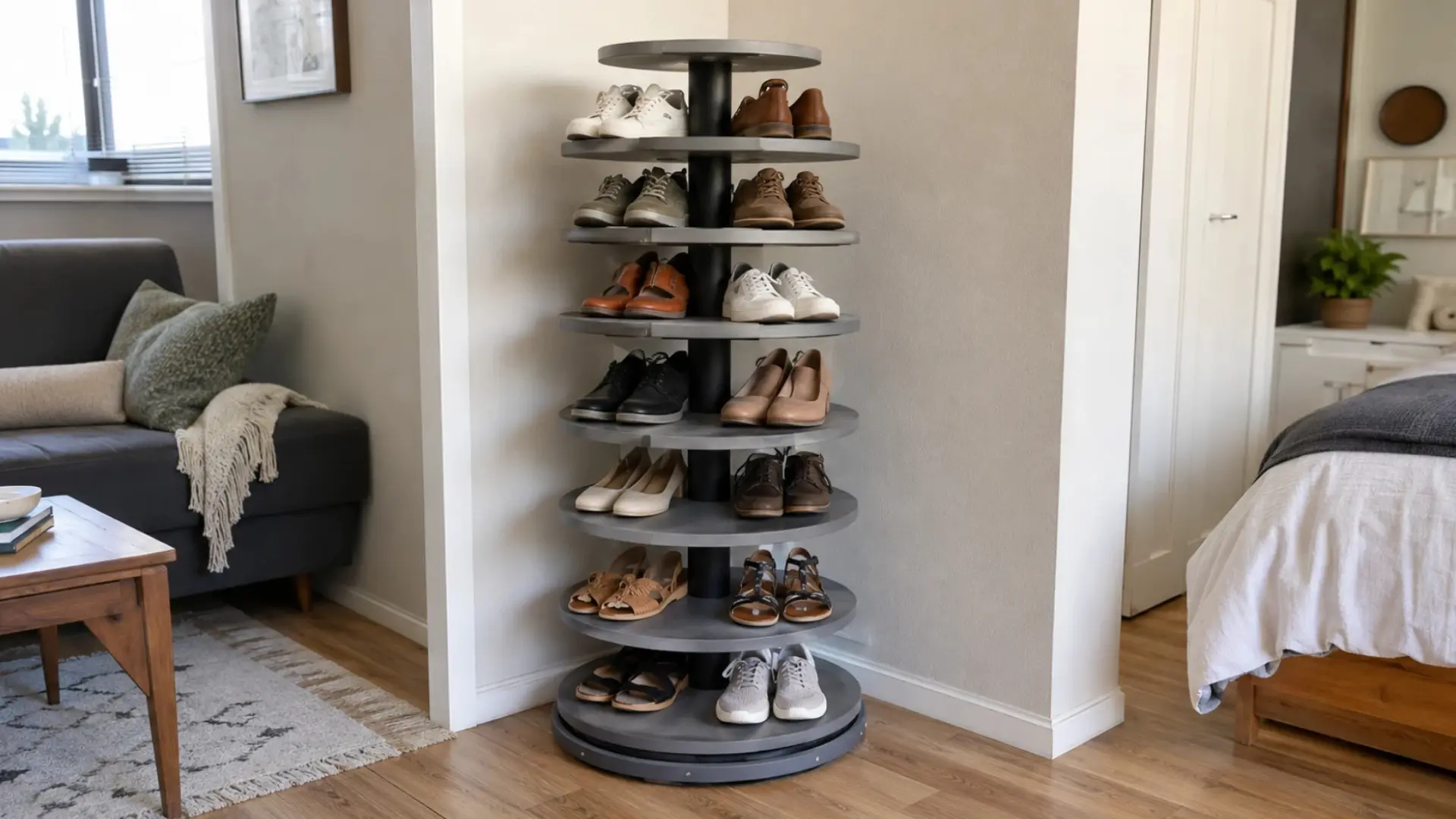
A tall rotating shelf takes advantage of vertical space instead of eating up valuable floor area.
Spinning the shelf to browse your collection feels a little like shopping, making it both functional and genuinely fun to use.
It’s a smart fit for studio apartments or entryways where floor space is simply too limited for a traditional rack.
9. Slim Vertical Shoe Stand
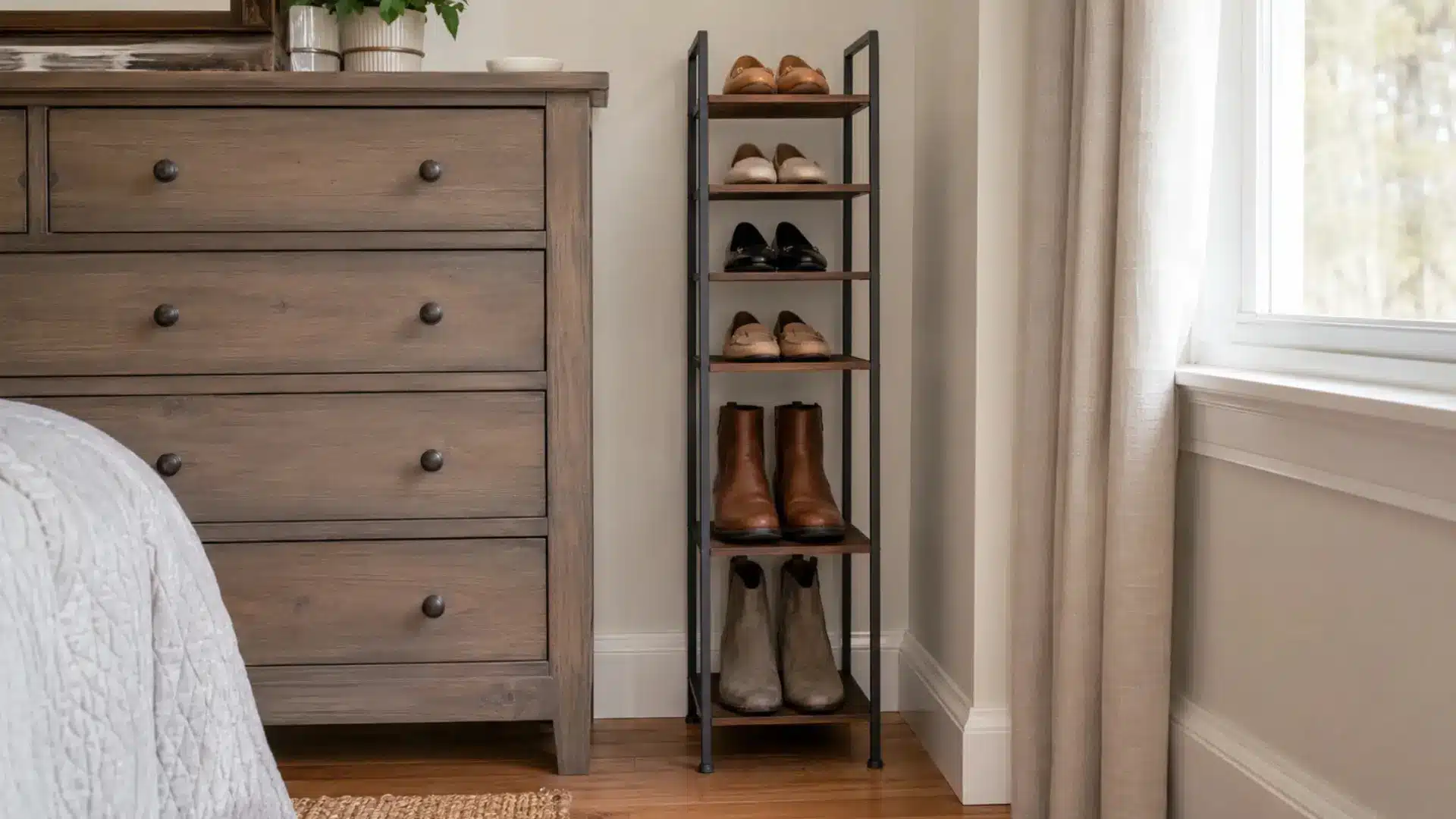
A narrow stand can slot into corners, beside furniture, or against otherwise unused walls.
The bottom shelves typically suit more high-heeled shoes like boots, while upper shelves handle flats and sneakers comfortably.
Because it takes up so little footprint, it’s an easy addition almost anywhere in a small home without disrupting the existing layout.
10. Extra Space in a Linen Closet
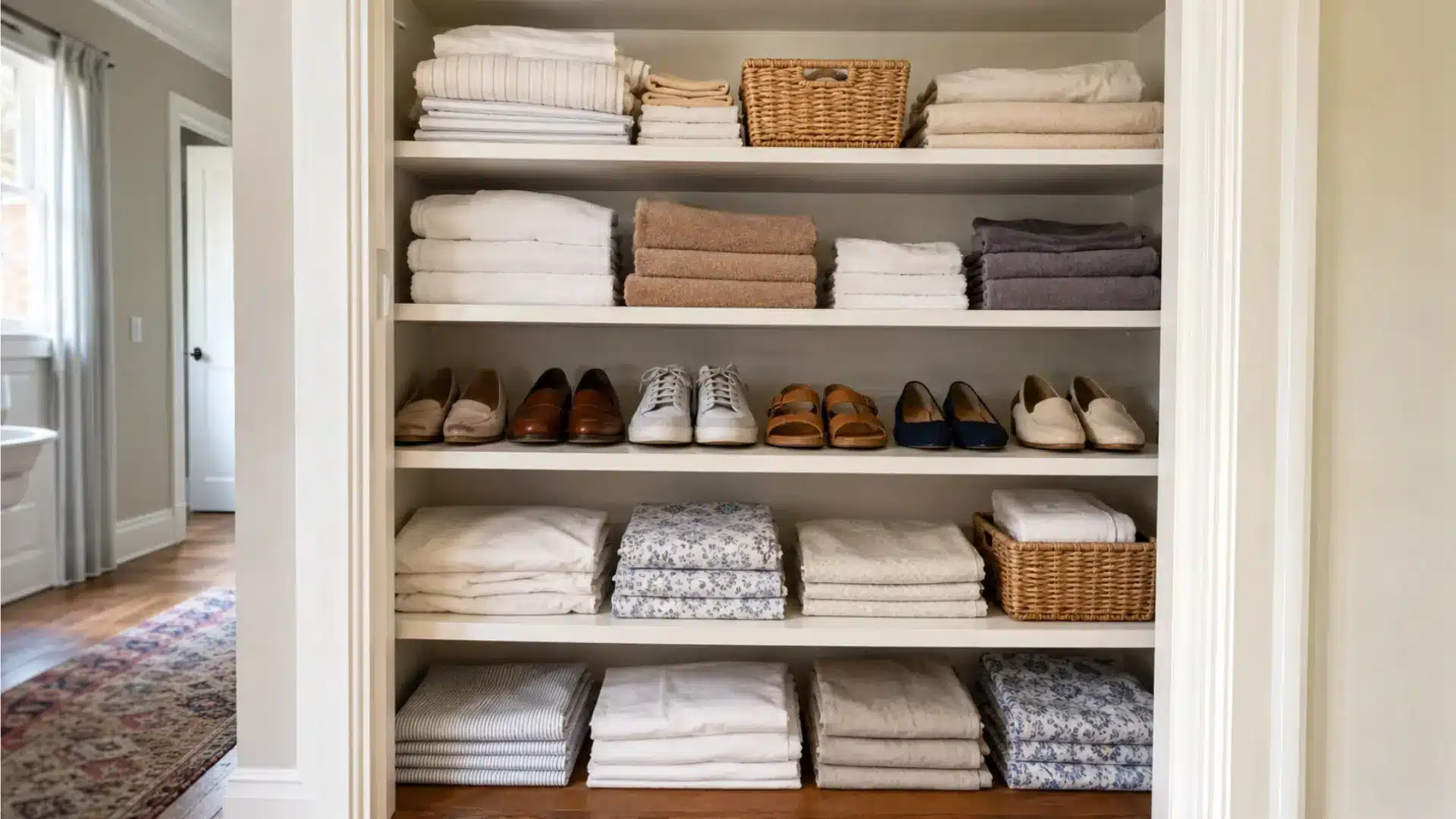
If the bedroom closet is full but the hallway linen closet has room to spare, borrow that space.
A shelf or two dedicated to shoes keeps pairs off the floor without requiring any new furniture purchase.
It’s a simple, no-cost fix that works especially well in older homes with multiple smaller closets scattered throughout.
11. Angled Wall Shoe Shelving
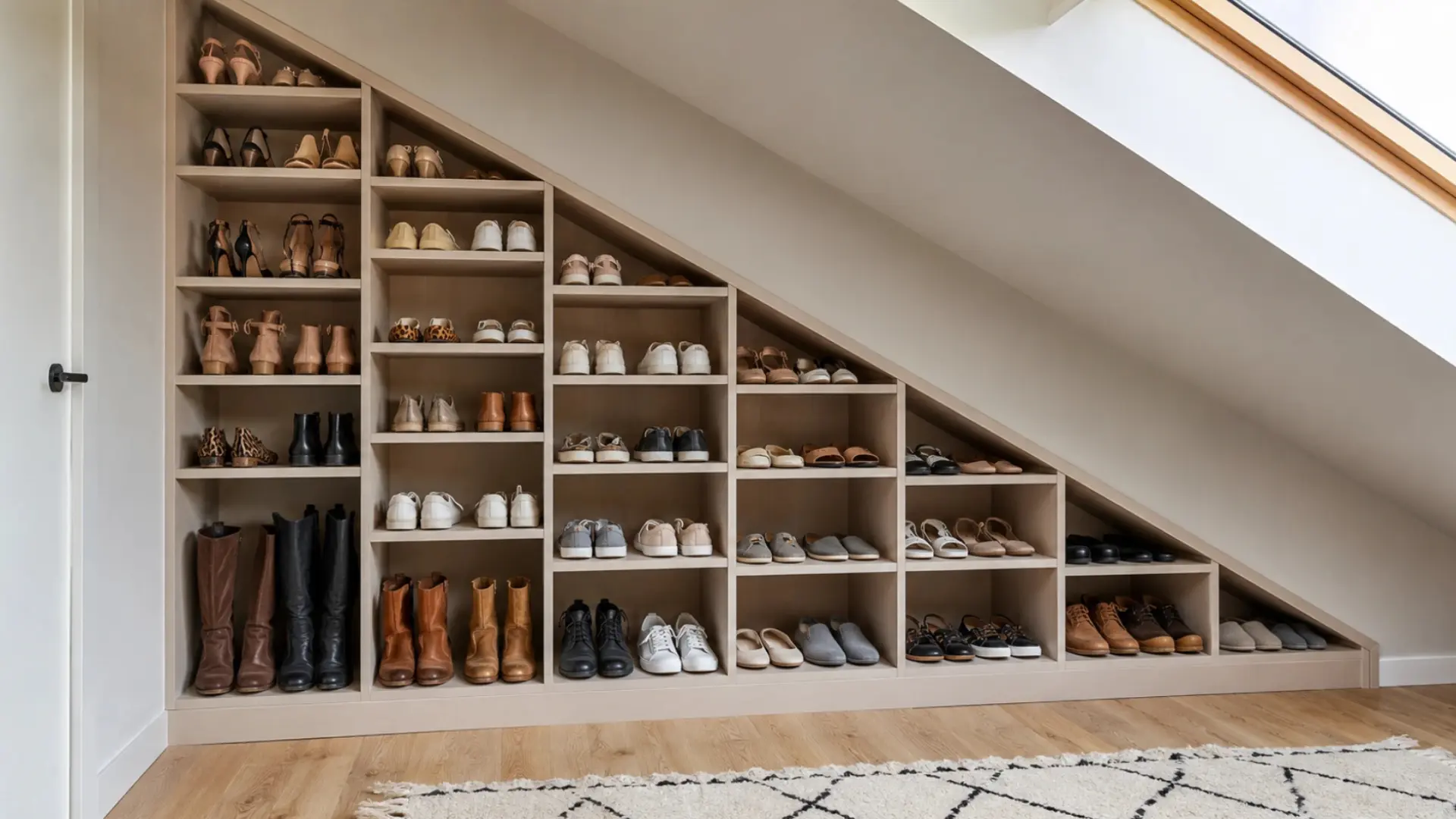
Sloped ceilings and angled walls often go completely unused when they could easily hold a shelf or two.
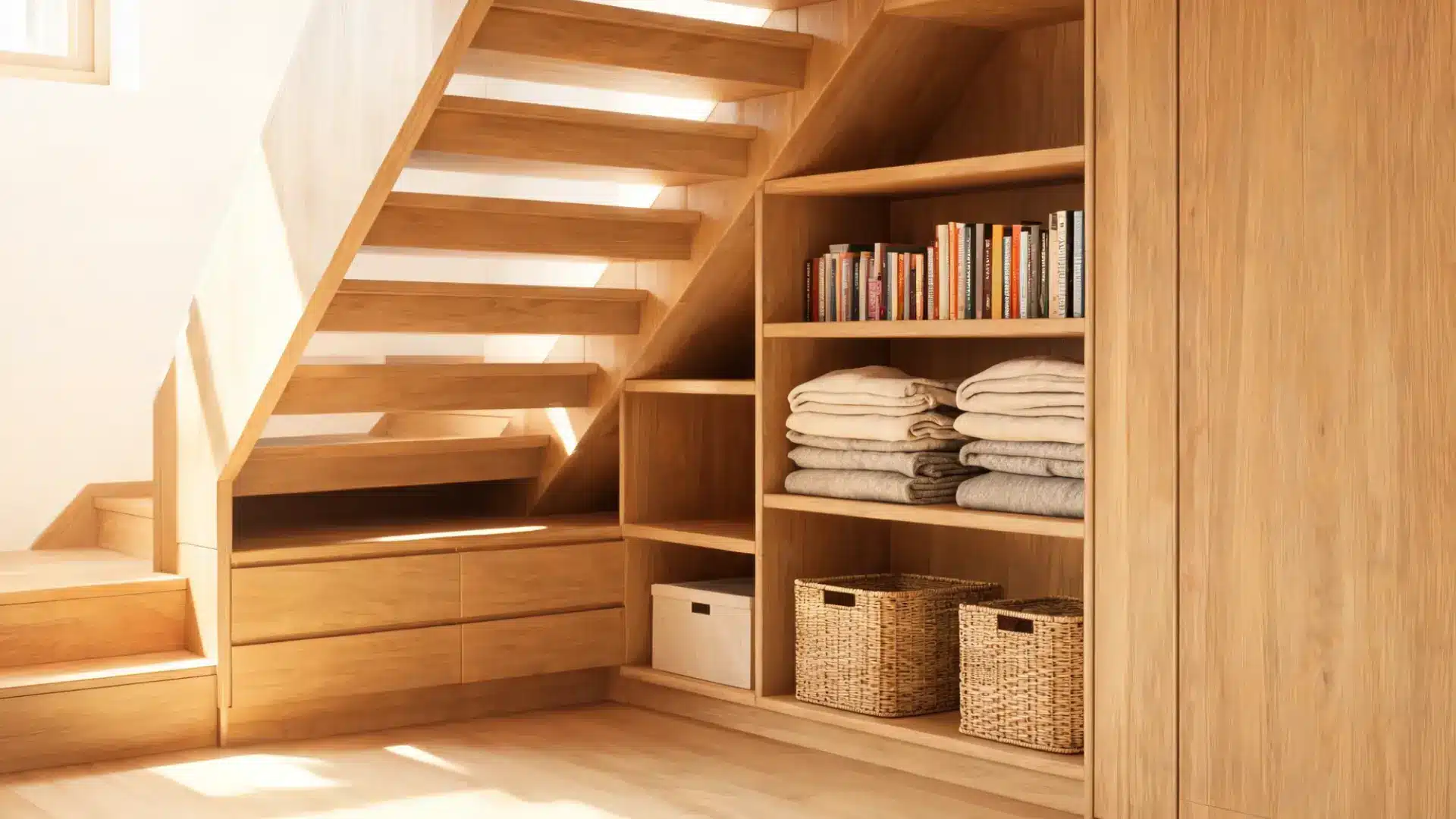
This includes storage under the stairs, which is another spot that often sits empty for no good reason. Extending shoe shelving into these odd spaces captures storage that would otherwise be wasted entirely.
Even fitting just one or two extra pairs into an awkward nook can make a noticeable difference in a small closet’s overall capacity
Entryway & Mudroom Ideas
Muddy boots and wet shoes don’t have to take over the space by your front door. Consider one of these entryway setups:
12. Entryway Shoe Cabinet
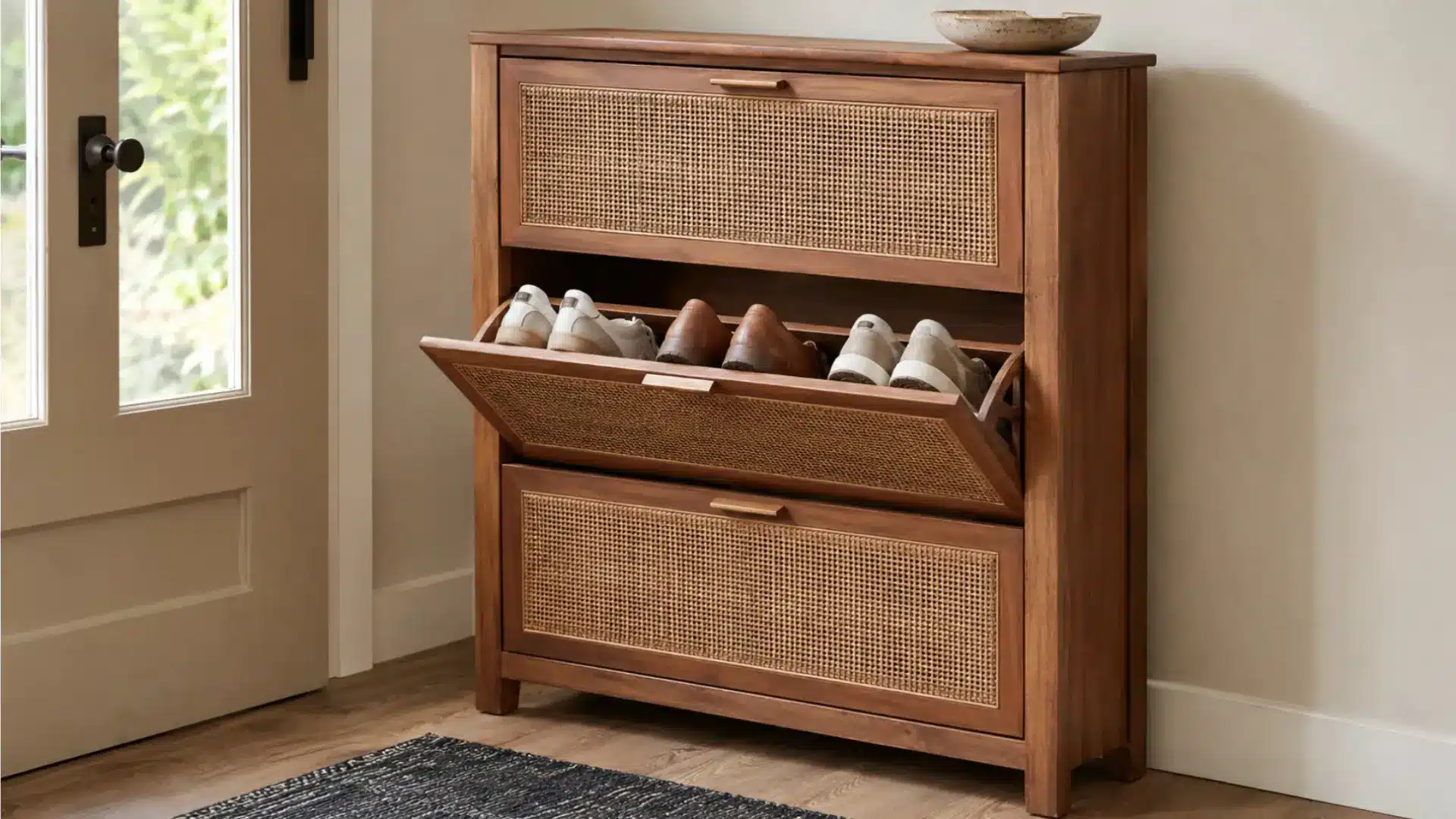
A shoe cabinet with breathable rattan pull-down fronts hides shoes completely while still allowing proper airflow.
Most fit a substantial number of pairs, everything except bulkier boots, making them a strong all-in-one entryway solution.
The closed design keeps things looking tidy without the musty smell that fully sealed cabinets sometimes develop over time.
13. Coir Doormat for Wet Shoes

A durable coir mat placed just inside the entryway helps scrape mud off soles before it spreads through the house.
It also gives wet shoes and boots a designated spot to dry, rather than leaving damp marks on nearby flooring.
This is a small, low-cost addition that makes a noticeable difference during rainy or snowy months.
14. Boot Rack for Drying
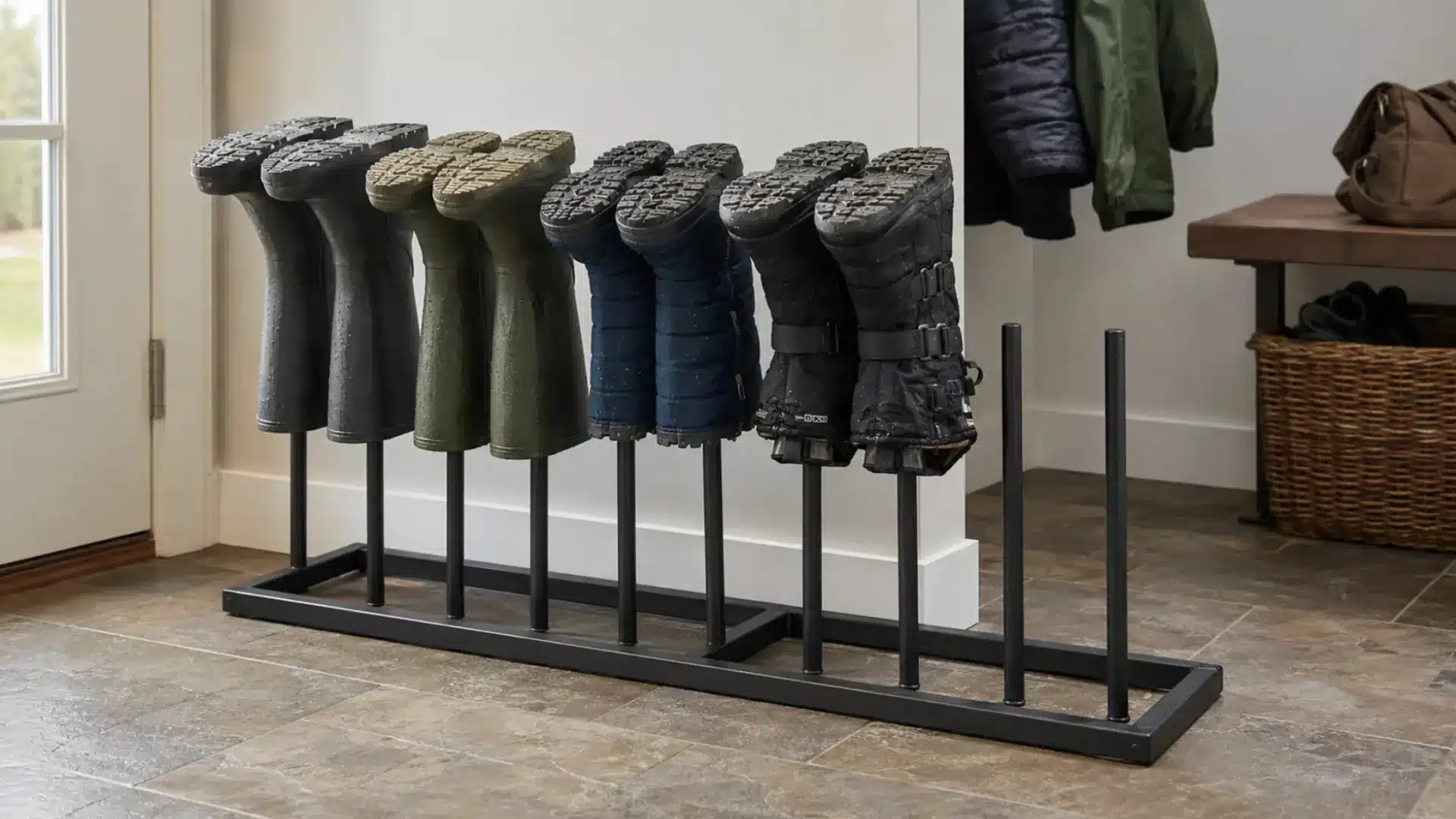
A dedicated boot rack holds rain, snow, or hiking boots upside down over individual posts, helping them dry faster and more evenly.
Keeping this rack in a mudroom, garage, or entryway where a little water won’t cause damage makes cleanup simple.
A tray or mat underneath catches any drips, keeping the surrounding floor protected.
Stylish Furniture & Statement Pieces
Shoe storage doesn’t have to look purely functional; it can double as real furniture. A few pieces worth considering:
15. Wall-Mounted Shoe Cabinet
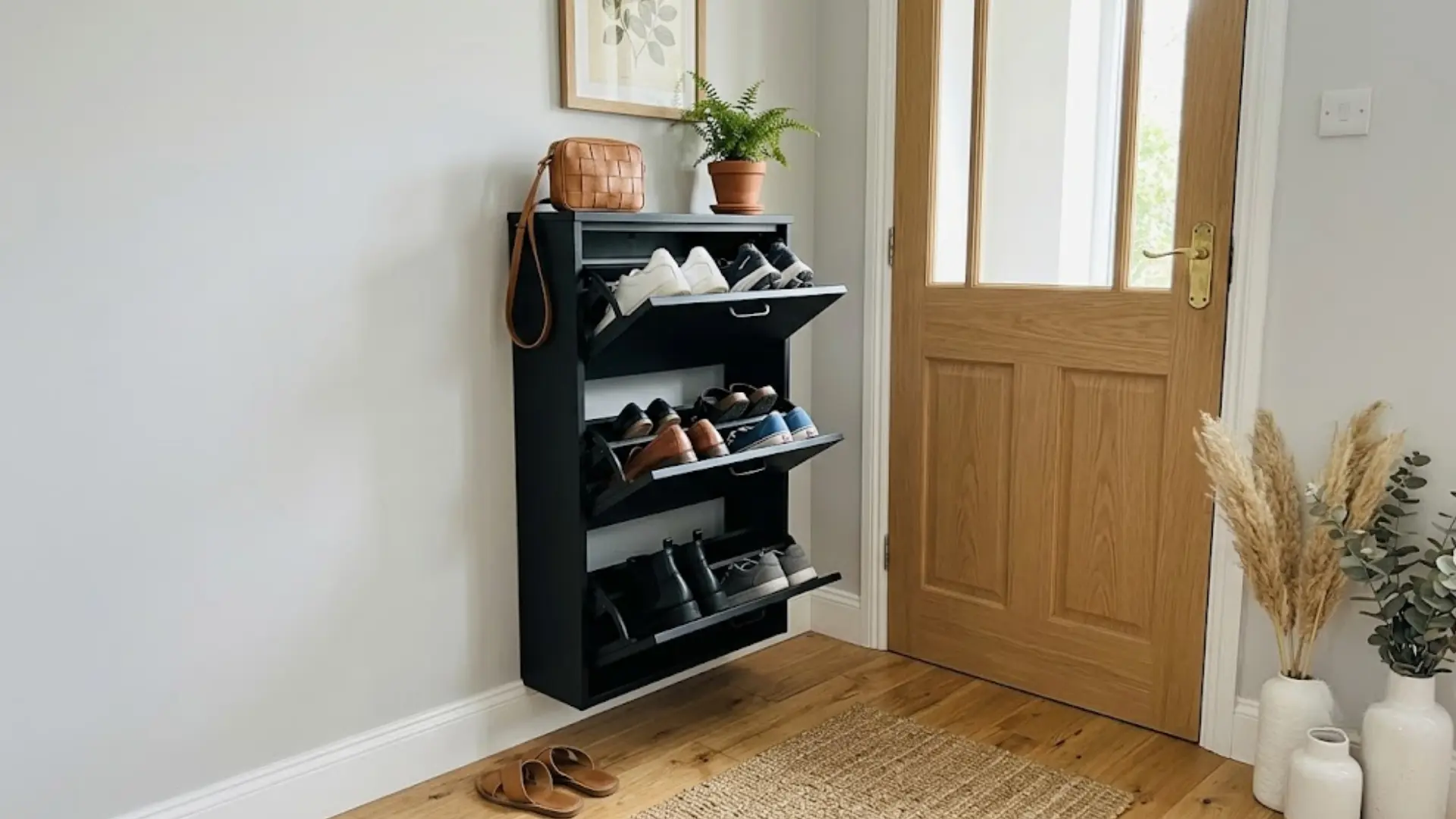
A slim wall-mounted cabinet with tilted drawers turns any entryway into organized storage. Each drawer tilts open just enough to hold several pairs at a slight angle.
It keeps shoes tucked away without eating up floor space in tight hallways. A small tray or plant on top adds a finished touch to the space.
It’s a smart pick for anyone who wants storage that looks like real furniture.
16. Console-Style Shoe Rack
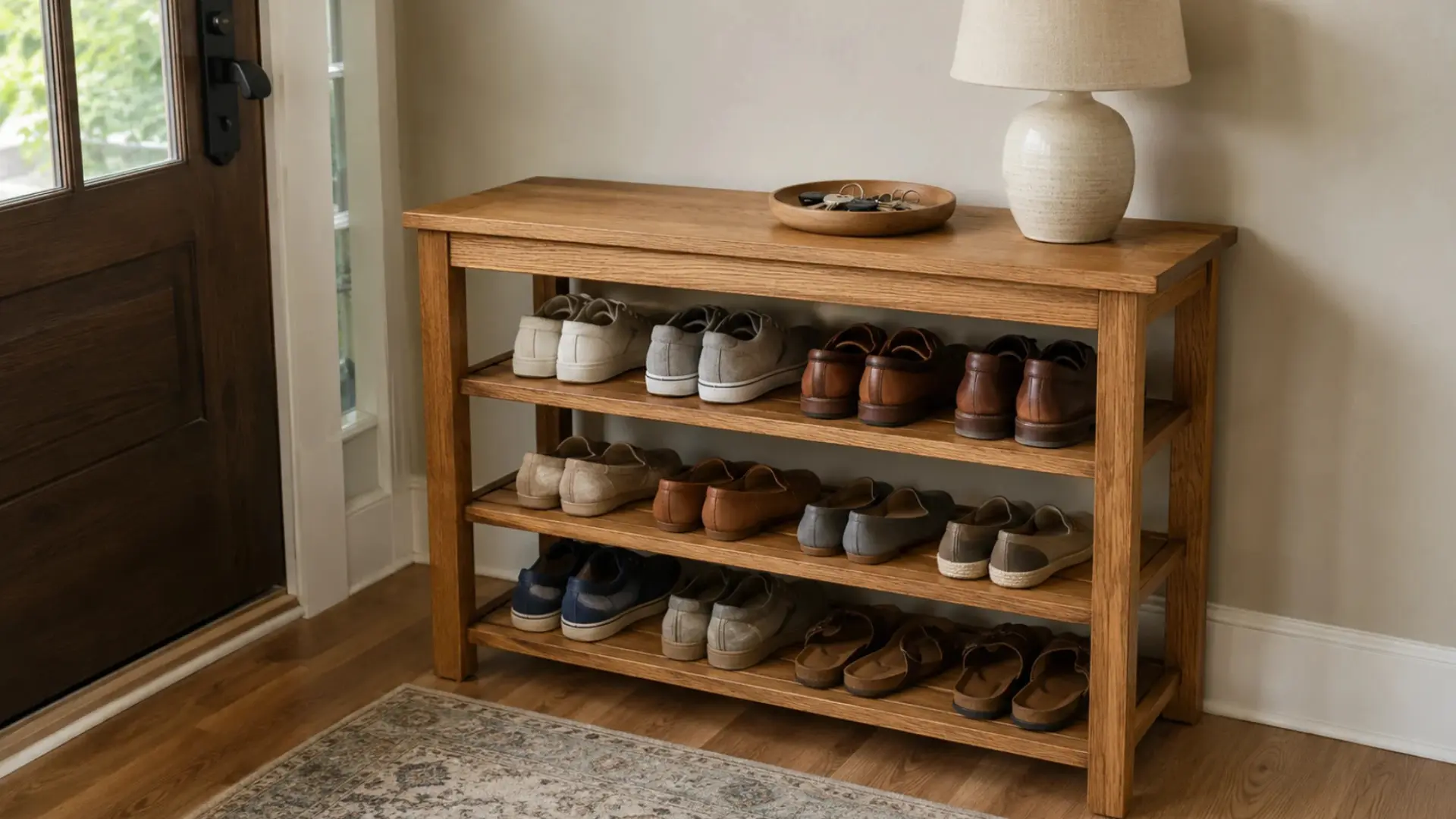
A shoe rack designed to double as an entryway console table solves two problems in one compact footprint.
Shelves below hold shoes, while the flat top surface becomes a spot for keys, mail, or a small lamp.
This is a particularly smart choice for small entryways that don’t have room for separate storage and surface furniture.
Kids & Family-Friendly Ideas
Getting kids to find and put away their own shoes gets a lot easier with the right setup. Here are a few ideas that make mornings run smoother:
17. Deep, Low Shelves for Kids
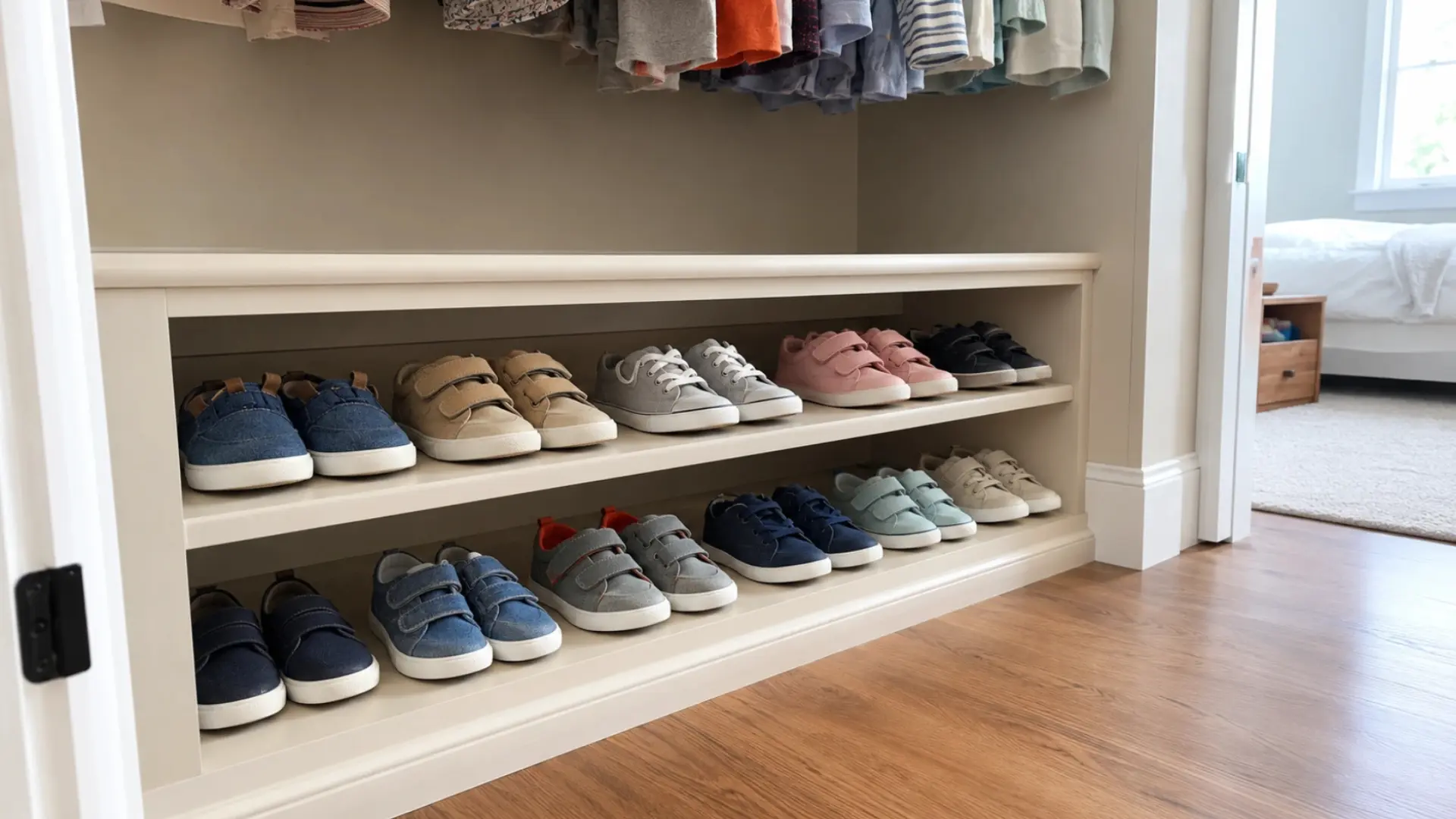
Placing shelves at a child’s height, rather than an adult’s, encourages independence when it comes to getting dressed each morning.
Deeper shelves also allow double the storage for smaller kids’ sneakers compared to standard shelf depths.
This small adjustment often means fewer morning battles over shoes, since kids can actually find and reach their own pairs.
18. Clear, Labeled Bins for Little Shoes
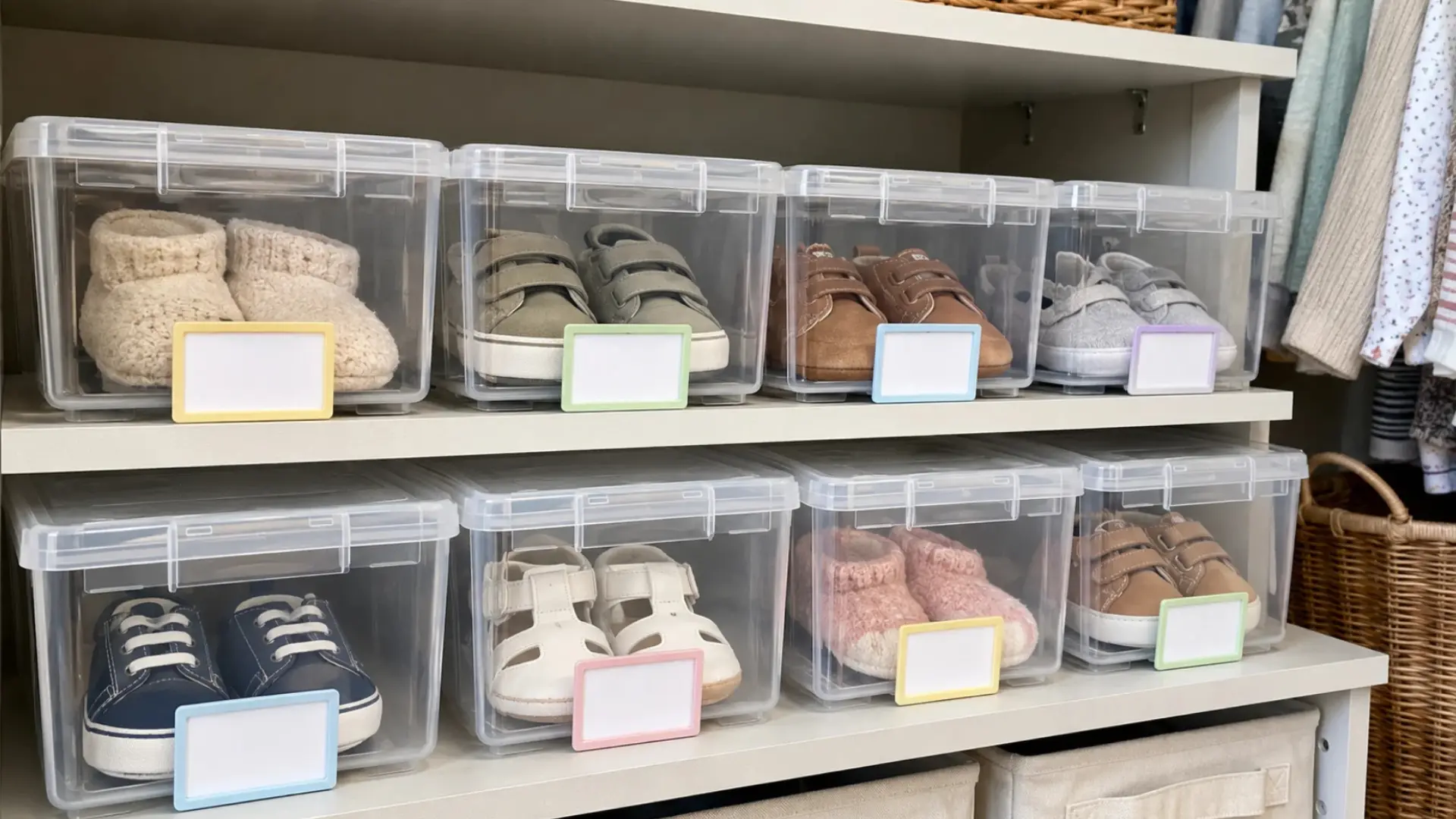
Clear bins make it easy to spot exactly which pair is inside without digging through multiple containers.
They’re especially useful for baby and toddler shoes, which are often too small to sit neatly on standard shelving.
Labeling each bin by size or season adds another layer of organization as kids grow through different shoe sizes.
19. Family Drop Zone
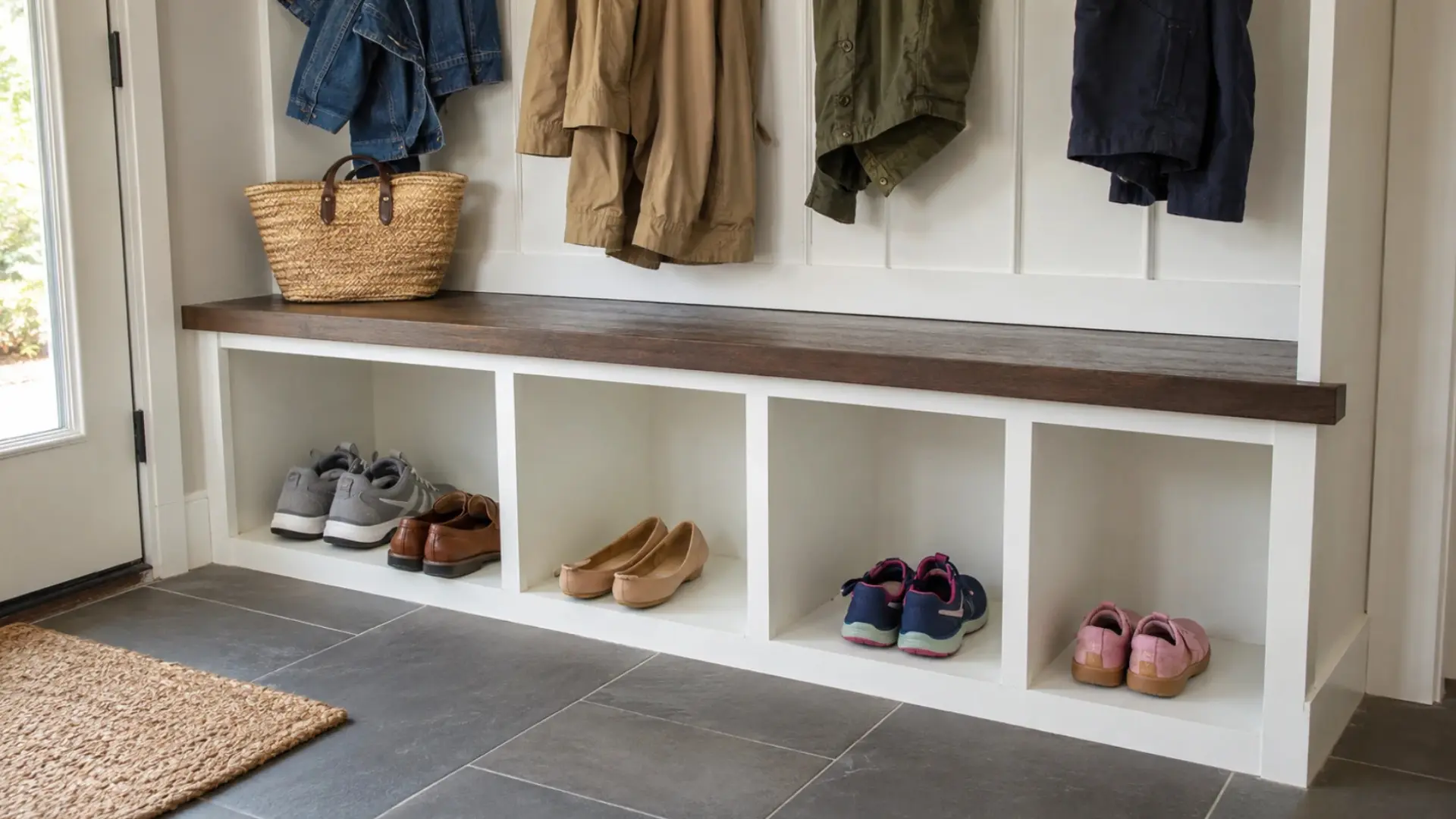
A shared drop zone near the entryway gives every family member a designated spot for their shoes the moment they walk in.
Cubbies or individual bins work well here, keeping everyone’s pairs separate rather than lumped into one messy pile.
This setup significantly reduces shoes ending up scattered throughout the house after a busy day.
20. Color-Coded Family Baskets
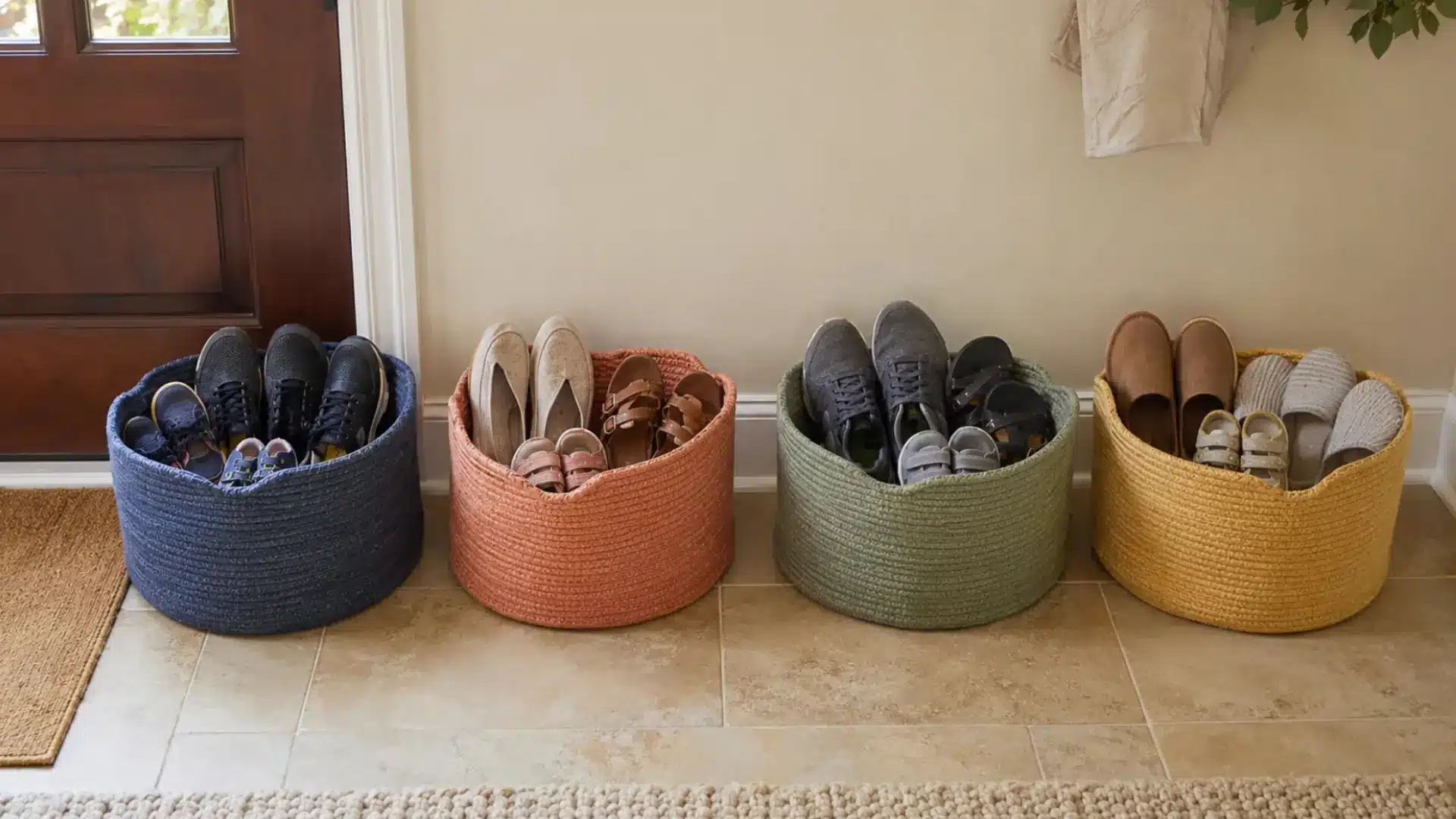
Assigning a different color basket to each family member turns shoe organization into something almost effortless.
Kids especially respond well to this system, since it’s visual and simple enough to follow without much reminding.
It also makes it immediately obvious whose shoes are missing from the entryway at any given time.
Creative & Unexpected Spaces
Plenty of overlooked spots around the house can hold more shoes than you’d expect. Honestly, some of my best storage fixes came from spots I almost walked right past. Here are a few unexpected spaces worth a second look:
21. Garage Storage Alongside Gear
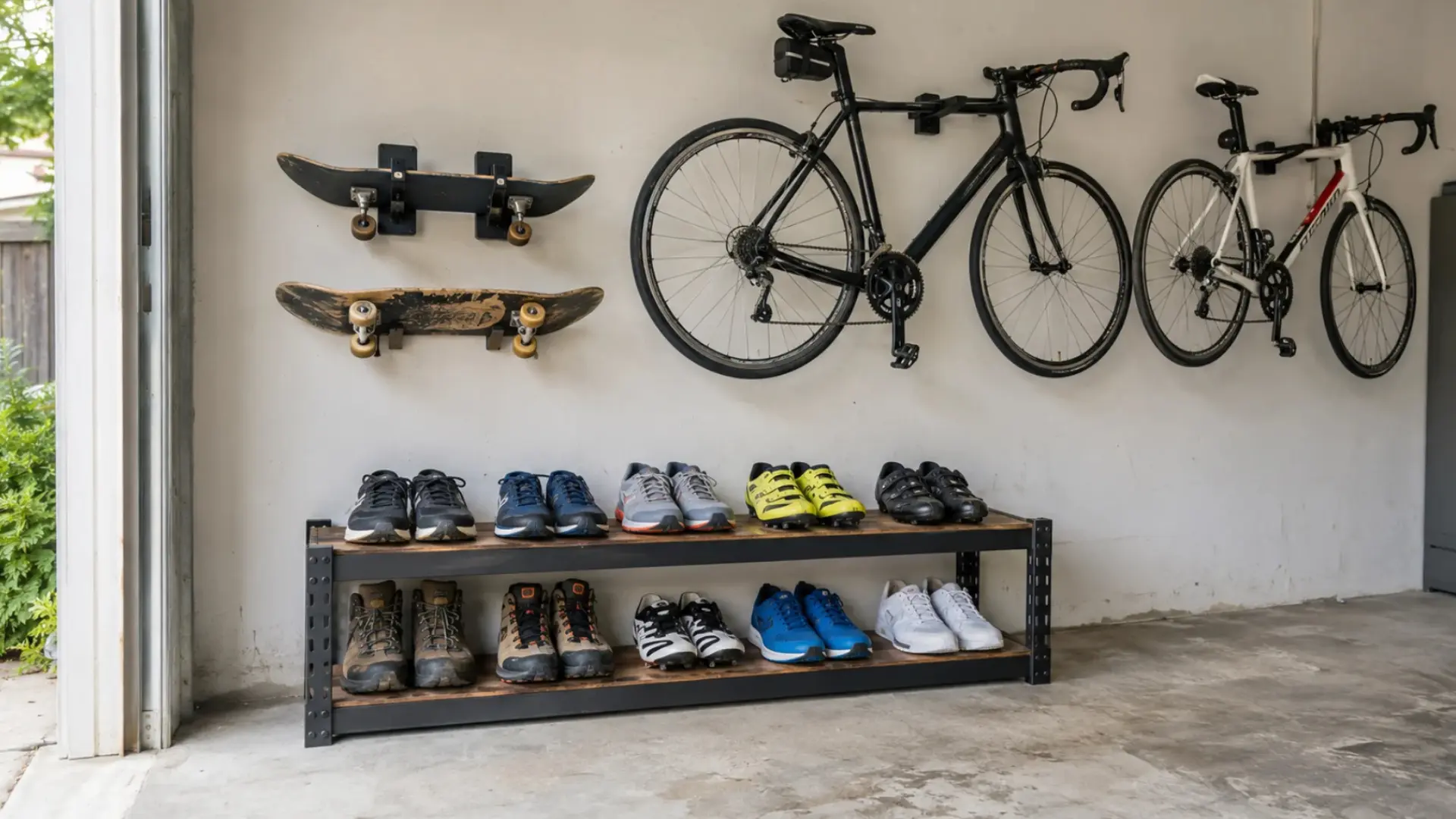
Storing seasonal or sport-specific shoes right next to matching equipment makes grabbing everything for an activity effortless.
A simple shelf keeps shoes off the garage floor, while gear like skateboards or bikes hangs above them.
This setup works particularly well for households with kids involved in multiple sports or outdoor activities.
22. Laundry Room Shoe Storage
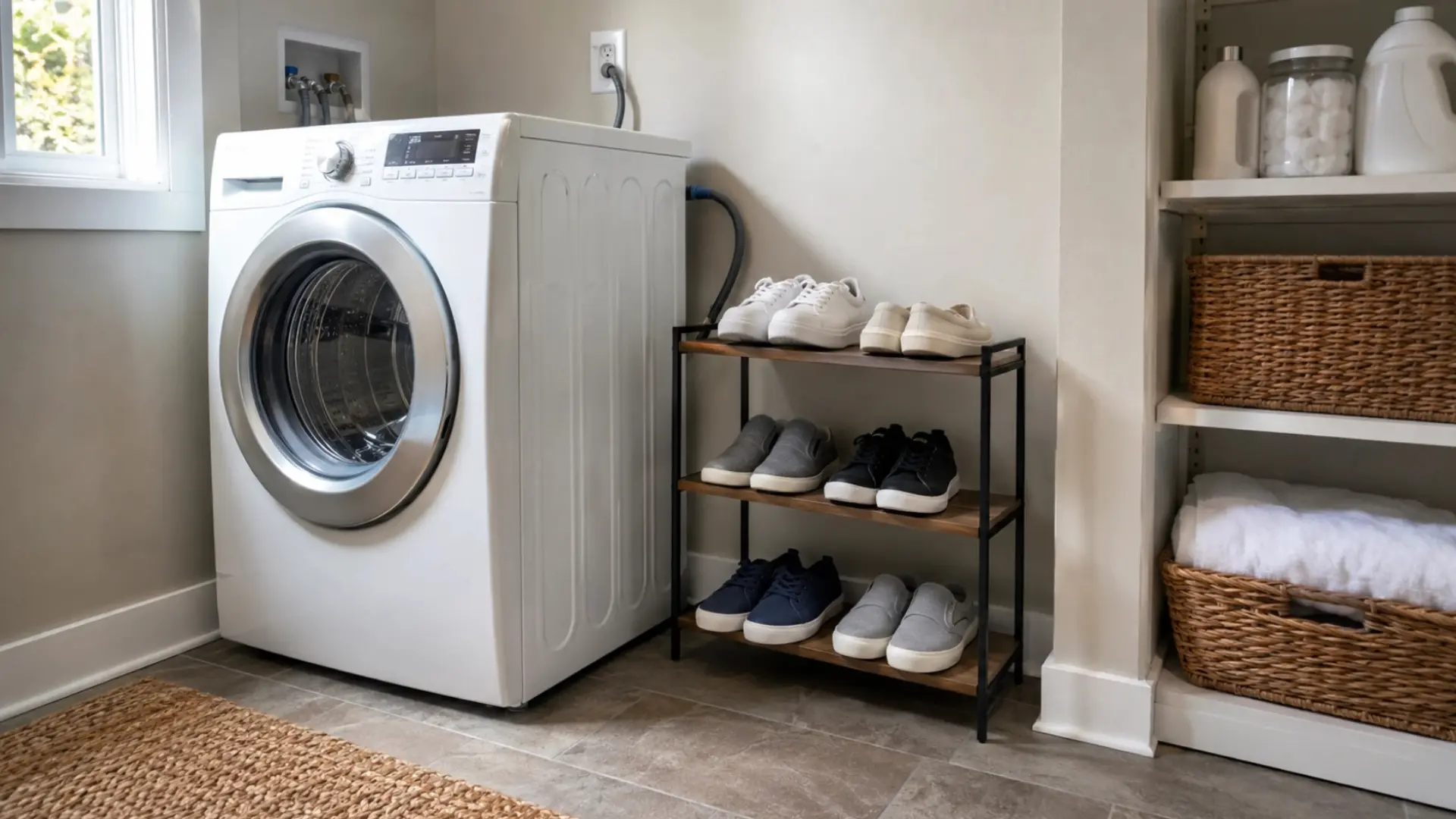
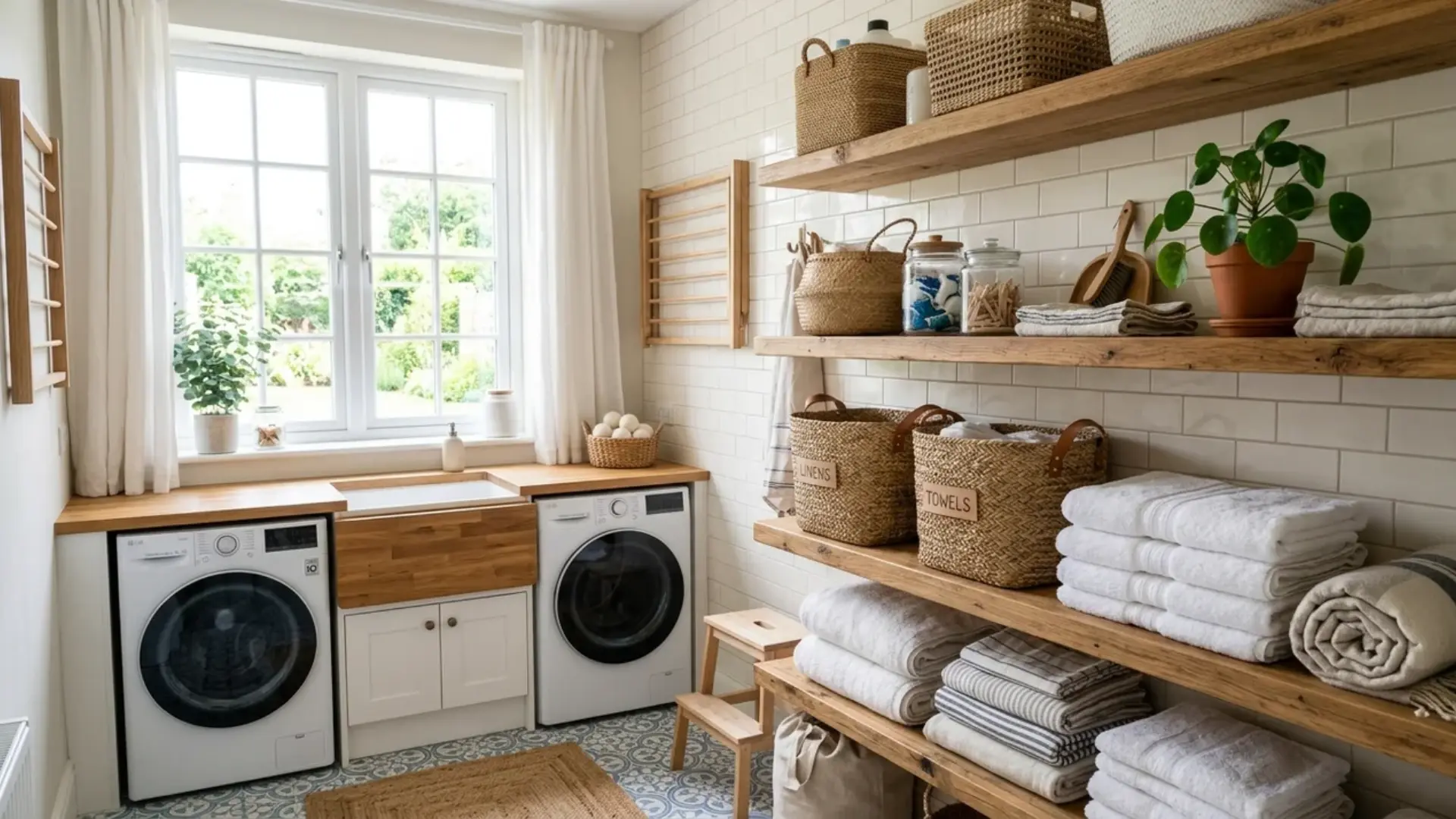
The laundry room’s already utilitarian nature makes it a surprisingly practical spot for a shoe rack or small bench.
Shoes that need spot cleaning are already right where the supplies live, cutting out an extra step entirely.
This option works especially well in homes where the laundry room doubles as a mudroom or back entry.
23. Shoe Bench at the End of the Bed
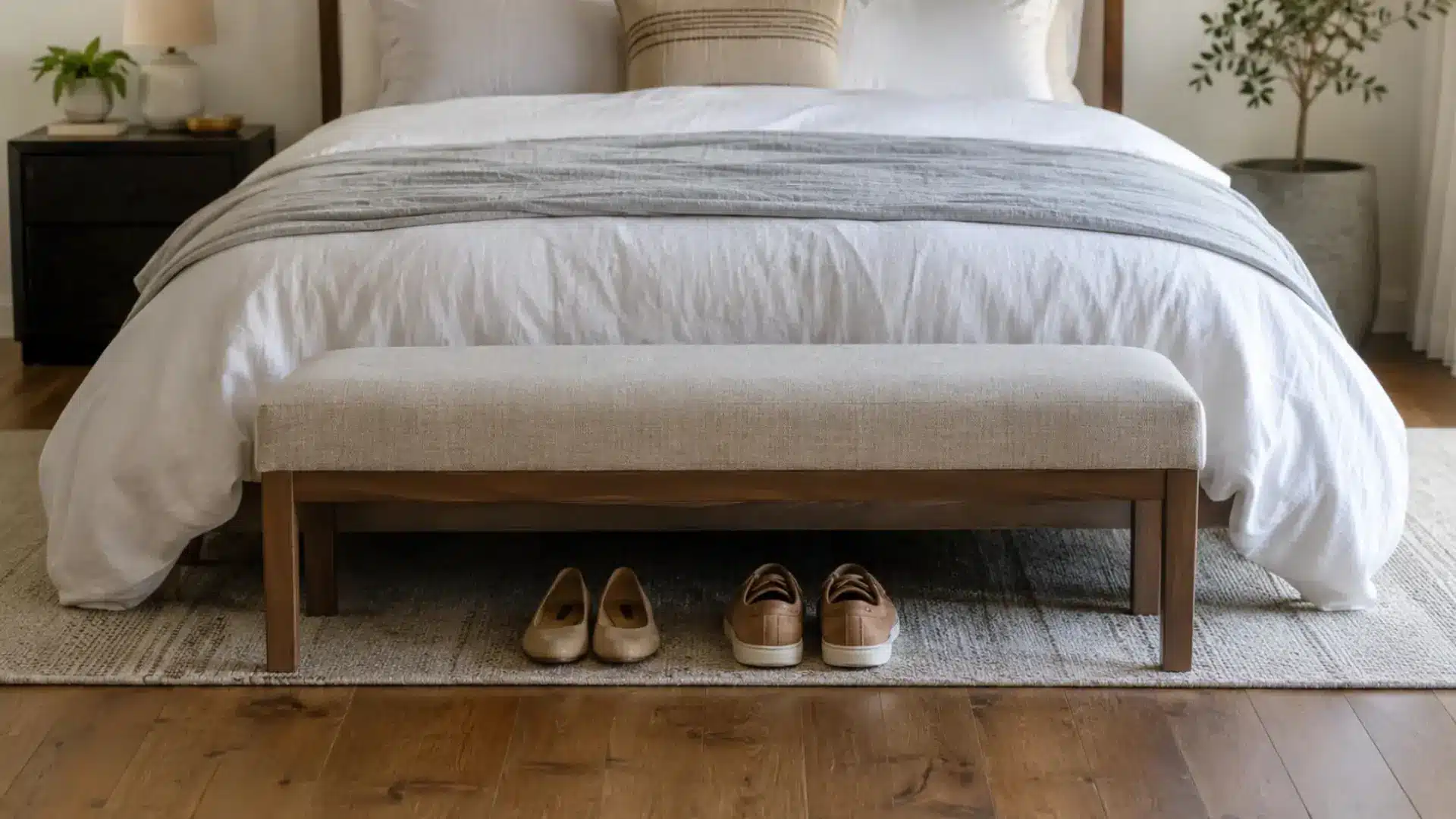
A small bench at the foot of the bed makes leaving the room easier, especially during colder months when floors feel icy.
It’s a flexible piece that can move to nearly any room in the home if needs change later.
Beyond shoes, it also offers a spot to sit while getting dressed each morning.
24. Built-In Storage Around a Door Frame
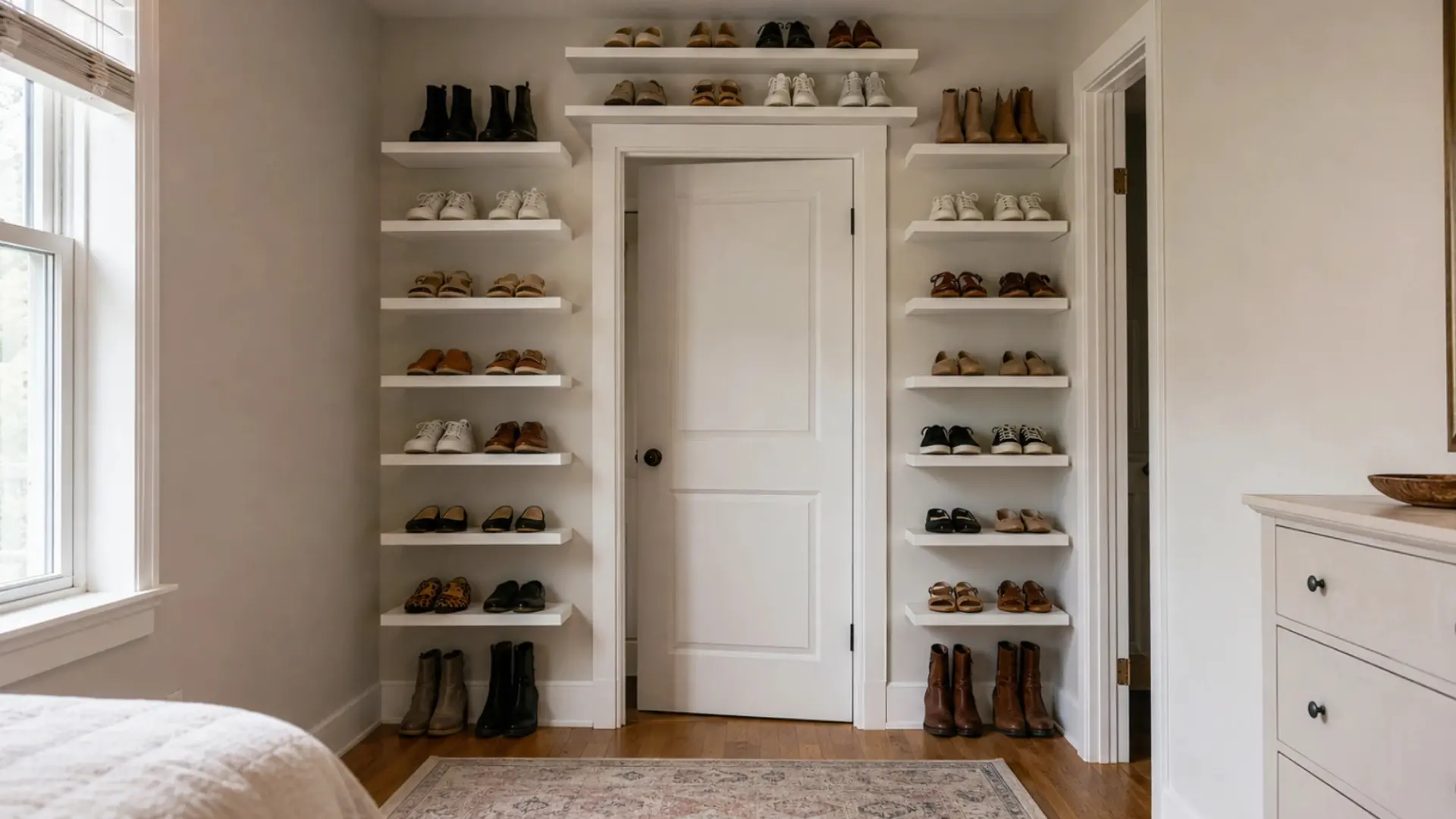
The wall space surrounding a door frame often goes completely unused, despite reaching all the way to the ceiling.
Custom shelving, or even simple floating shelves, can turn that gap into genuinely useful storage.
This is an easy way to capture extra space in a closet or entryway without sacrificing any existing floor area.
25. Rolling Clothing Rack With Shoe Shelf
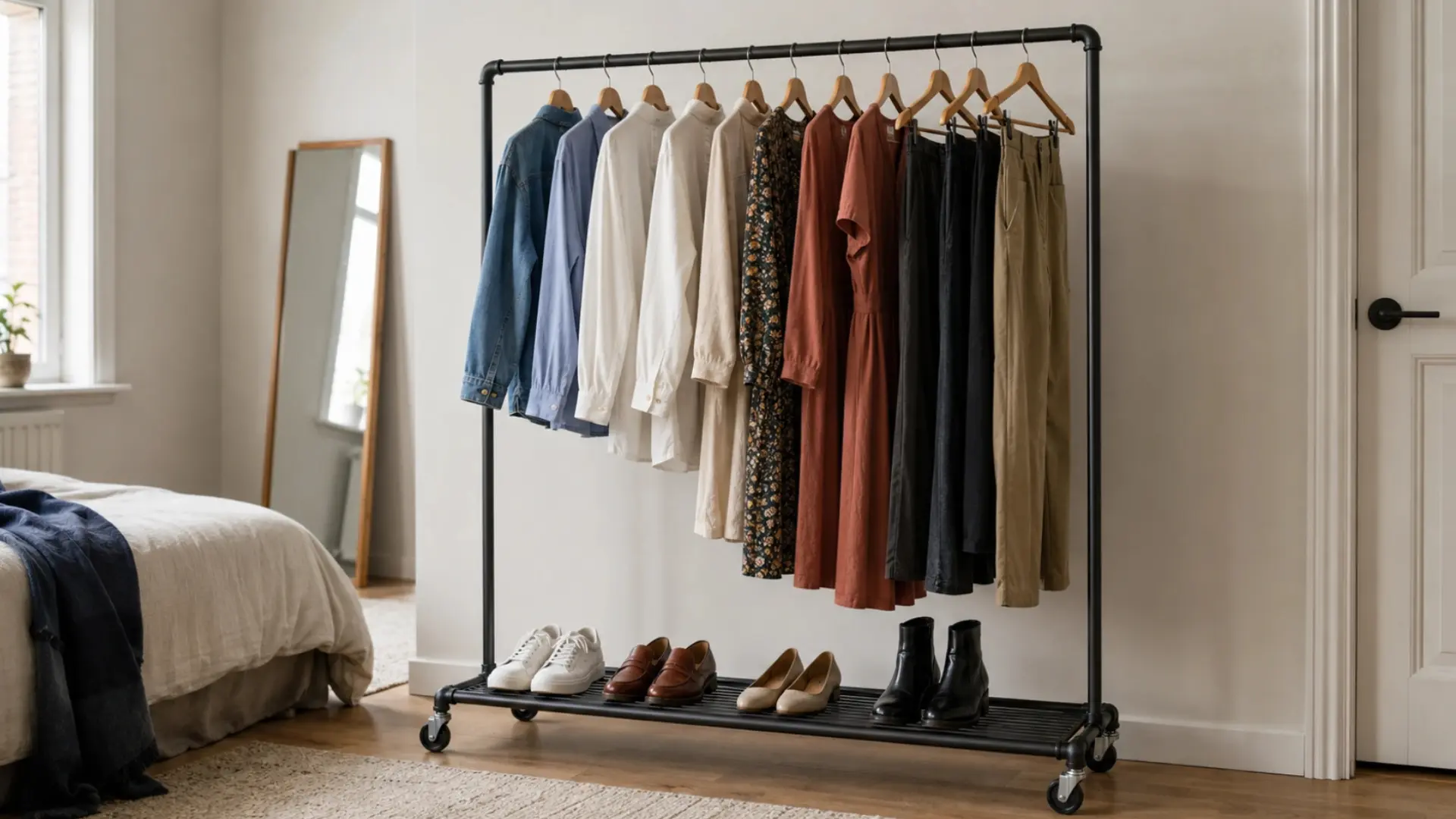
A rolling rack with a bottom shelf lets you plan full outfits, shoes included, all in one movable unit. This is especially handy when packing for a trip or laying out a week’s worth of outfits in advance.
Since it rolls, you can tuck the entire setup away or reposition it whenever it’s not in use.
Finishing Touches & Smart Extras
A few small details can pull an entire shoe storage system together. Here’s what to add once the basics are in place:
26. LED Light Strip
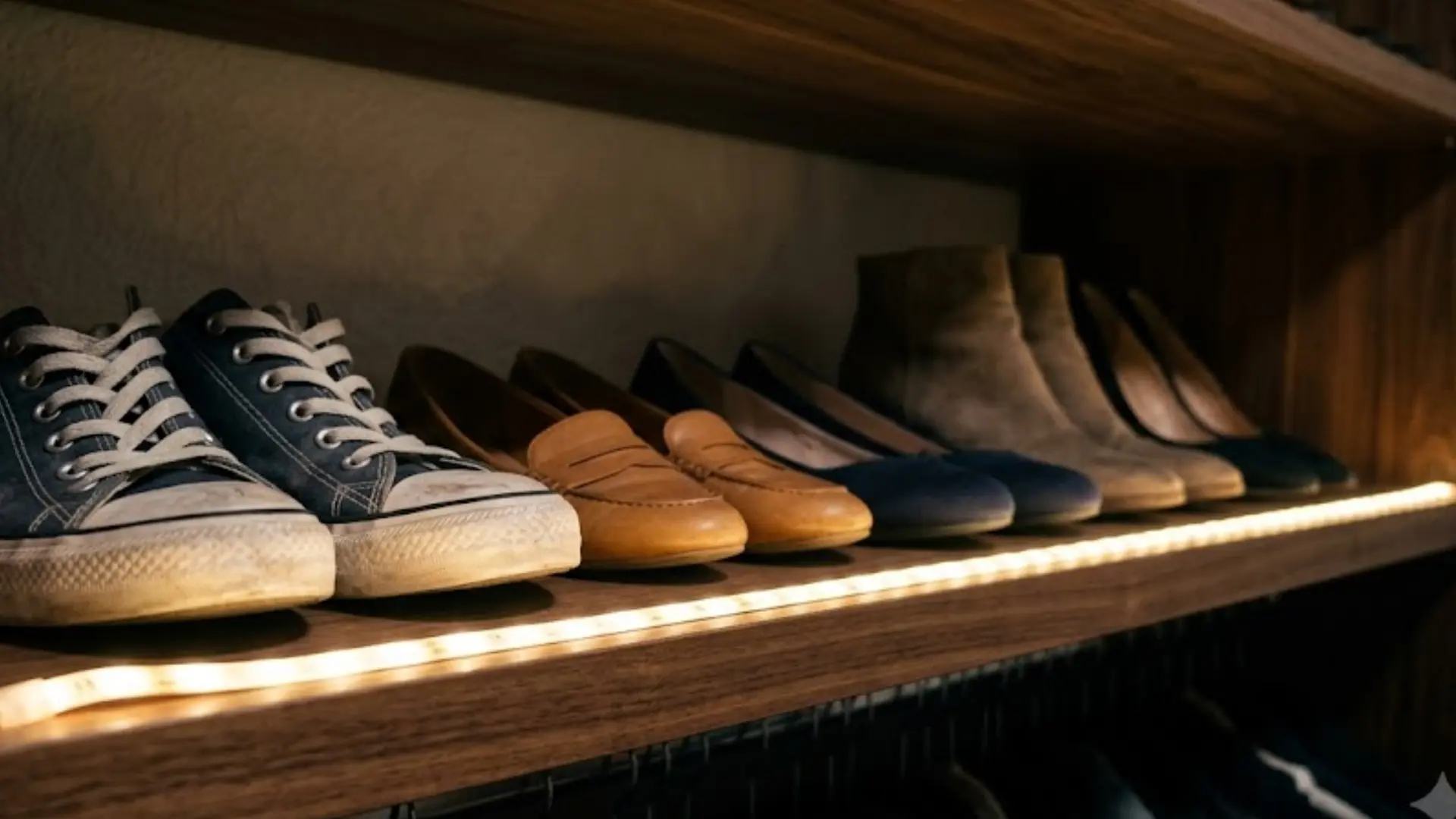
Adding an LED strip along the edge of a shelf or rack instantly gives shoe storage a polished, boutique-style feel.
It also makes it easier to spot the exact pair you’re looking for in a dimmer closet or entryway.
This is a simple, affordable upgrade that works on almost any existing shelf or rack without needing a full replacement.
27. A Bright Pop of Color
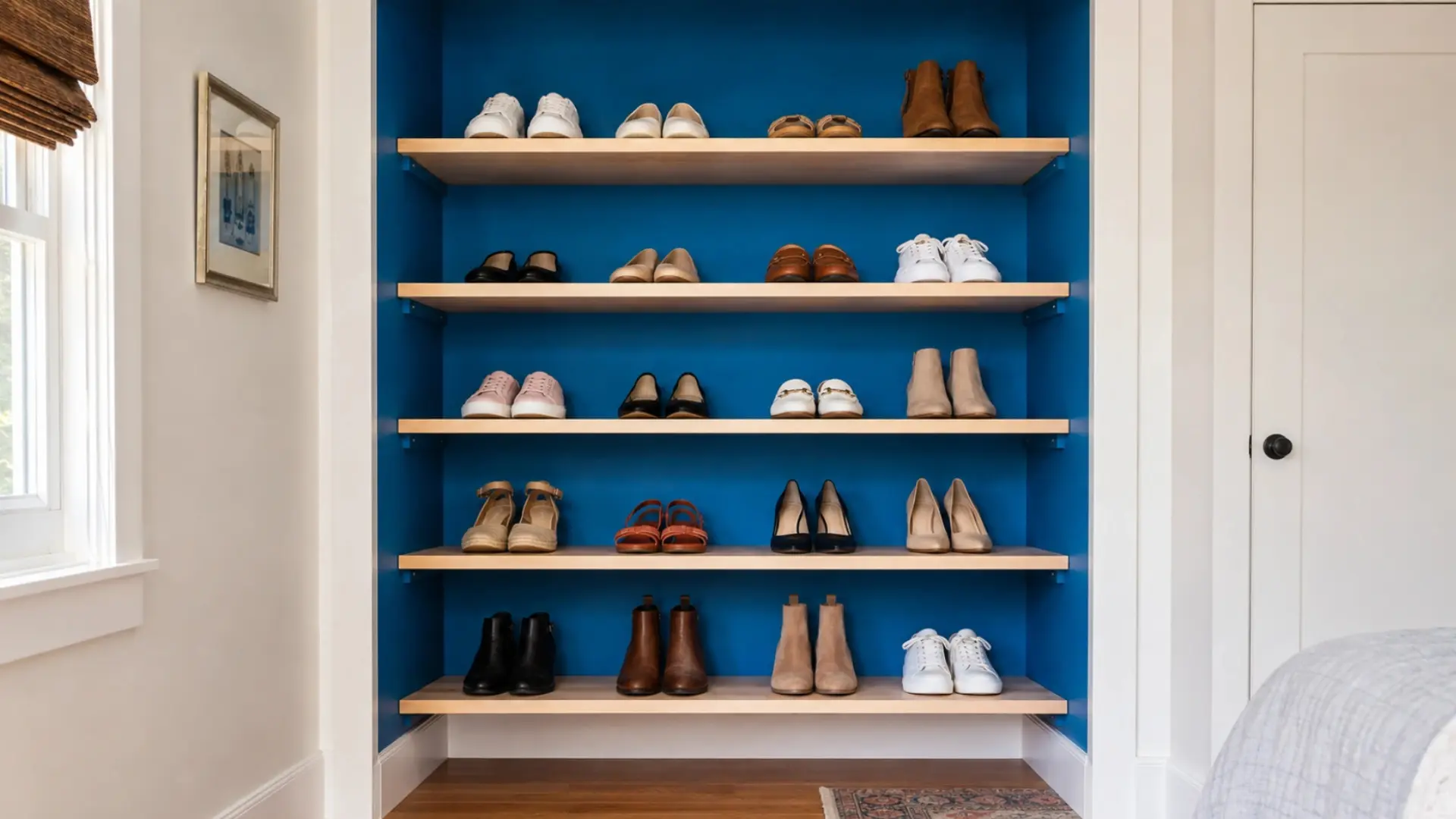
Painting a closet or storage nook in a bold, unexpected color turns an otherwise purely functional space into something more enjoyable to open every day.
Lighter, reflective shades can also help a small or dim closet feel more open and considerably brighter.
It’s a small design choice, but one that makes organizing shoes feel a lot less like a chore.
How to Choose the Right Shoe Storage for Your Space?
The right choice really comes down to your space and your collection, since not every idea on this list fits every home. Here’s a quick breakdown to help you match the right option to your setup:
| Space Type | Best Fit | Why It Works |
|---|---|---|
| Small apartment or studio | Rotating shoe shelf, slim vertical stand, vented plastic containers | Adds storage without eating into limited floor space |
| Walk-in or larger closet | Floor-to-ceiling shoe wall, angled wall shelving, industrial shelving | Room to invest in something more permanent and built-in |
| Family entryway | Family drop zone, color-coded baskets, entryway cabinet | Keeps everyone’s shoes sorted right where they enter the house |
| Large collection | Entryway cabinet, floor-to-ceiling shoe wall, industrial shelving | Keeps things tidy and dust-free without needing constant upkeep |
| Small collection | Metal rods along shelf edges, wire shelving | Keeps favorite pairs visible and easy to grab |
Beyond space itself, consider whether you’d rather have shoes fully visible for quick access or hidden behind cabinet doors and bins for a cleaner overall look.
Tips for Keeping Shoe Storage Organized Long-Term
Good storage only stays good if you keep up with it, so a few small habits really help. Here are the ones worth building into your routine:
- Group by season, type, or formality: This makes finding the right pair fast rather than a daily search.
- Store pairs heel-to-toe: This fits noticeably more shoes into the same shelf space.
- Rotate seasonal shoes out completely: Keep only what you are actually wearing within easy reach.
- Move off-season pairs elsewhere: Bins, under-bed storage, or higher shelves keep them out of your daily space.
- Clean shoes before long-term storage: Use boot inserts so leather and suede pairs keep their shape.
I stick with these habits myself, and my shoe storage stays easy to use all year long. It only takes me a few minutes a week to keep everything in order.
Frequently Asked Questions (FAQs)
How Many Pairs of Shoes Should You Keep in Your Everyday Storage?
Most organizers suggest limiting everyday storage to the pairs you wear within a two-week span. Everything else can move to seasonal or overflow storage nearby.
How Often Should Shoe Storage Be Cleaned Out?
A seasonal check, roughly four times a year, works well for most households. This is a natural point to donate worn-out pairs and rotate in the next season’s shoes.
Can Shoe Storage Double as a Decor Element?
Yes, open shelving, statement racks, and mirrored cabinets can all add style while still functioning as real storage. Many entryway pieces are designed to look good even when shoes are visible.
Final Thoughts
Every shoe storage idea here comes down to a few simple habits. Small changes, like heel-to-toe stacking or a rack by the door, add up fast.
Pick ideas that match your space and your habits. Skip anything that feels like extra work, since you won’t stick with it.
Clear bins, a rotating shelf, or a simple cabinet can all keep pairs easy to find. Your entryway and closet can stay tidy without constant effort once the right system is in place.
Shoe organization ideas work best when they fit how you actually live, not just how a closet looks. Drop a comment below and tell me which idea you’re trying.