
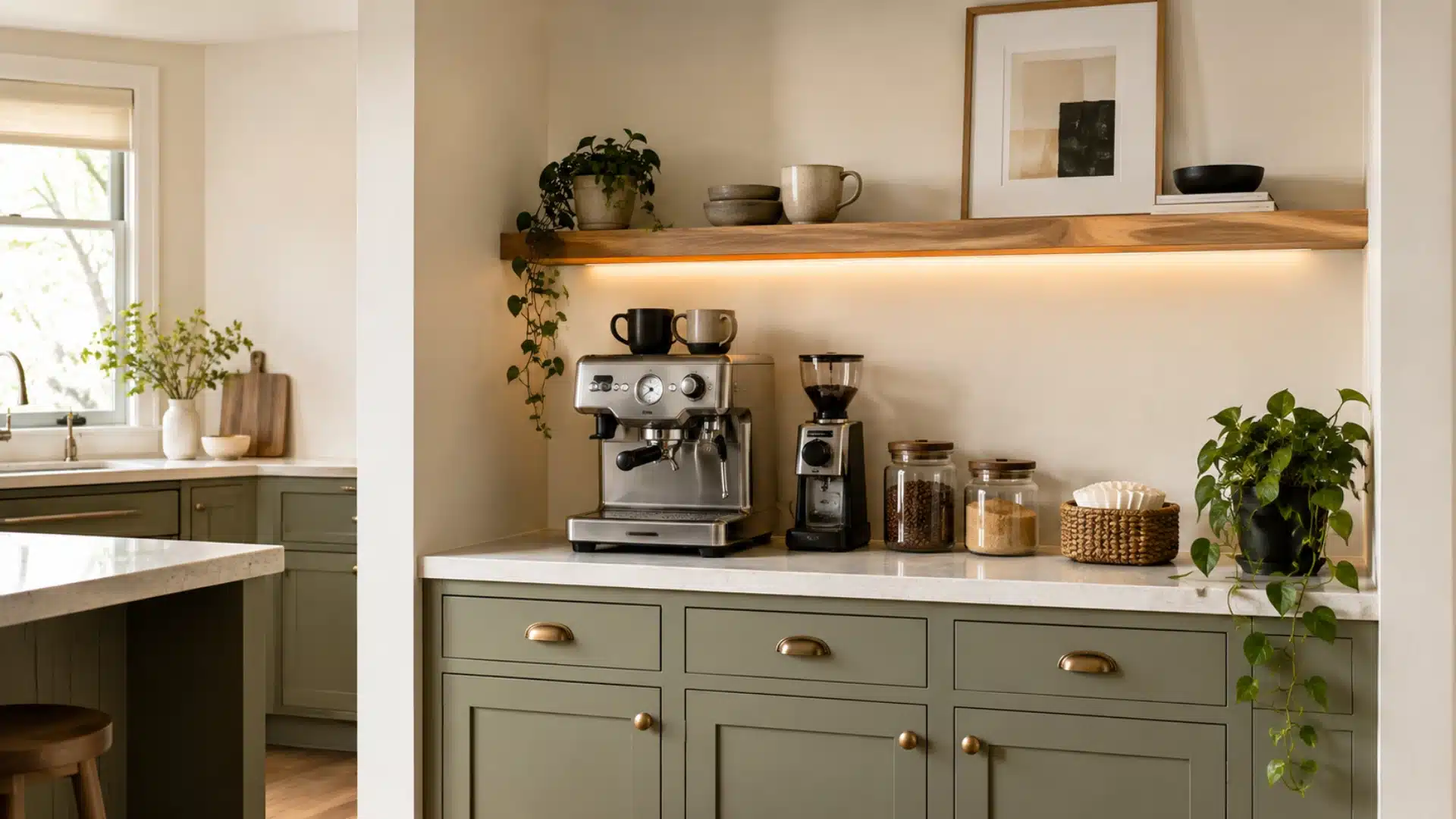
Beans, mugs, and cords often end up scattered across the same counter. A diy coffee bar gives your coffee gear one clear spot to live.
Your morning routine works better with a space that feels calm, not cluttered. Pick a style that matches your kitchen and your habits.
If you rent or own, there’s a layout that works for your space. A good diy coffee bar isn’t about looks alone; it’s about ease.
A few smart picks turn a plain counter into a spot you enjoy using. Every kitchen has room for one, no matter the size or budget.
Keep it simple, keep it yours, and let your mornings run a little smoother.
What Makes a Coffee Bar Feel Complete?
A coffee bar feels complete when it’s easy to use every single day without any hassle. It should feel comfortable, like a spot you actually want to visit each morning.
Good lighting and a clean layout make the space feel calm instead of cluttered. Personality matters too, so small touches like your favorite mug or a cozy chair help.
The best coffee bars balance being useful with being inviting at the same time. It shouldn’t feel like a showroom, just a simple corner that works for you.
When function and comfort come together, the space feels natural, warm, and truly yours.
Sleek and Modern Coffee Bar Ideas
Modern coffee bars favor clean lines, restrained hardware, and a limited material palette. These ideas show how a few intentional choices can transform an ordinary corner into something current:
1. Modern Black Coffee Bar
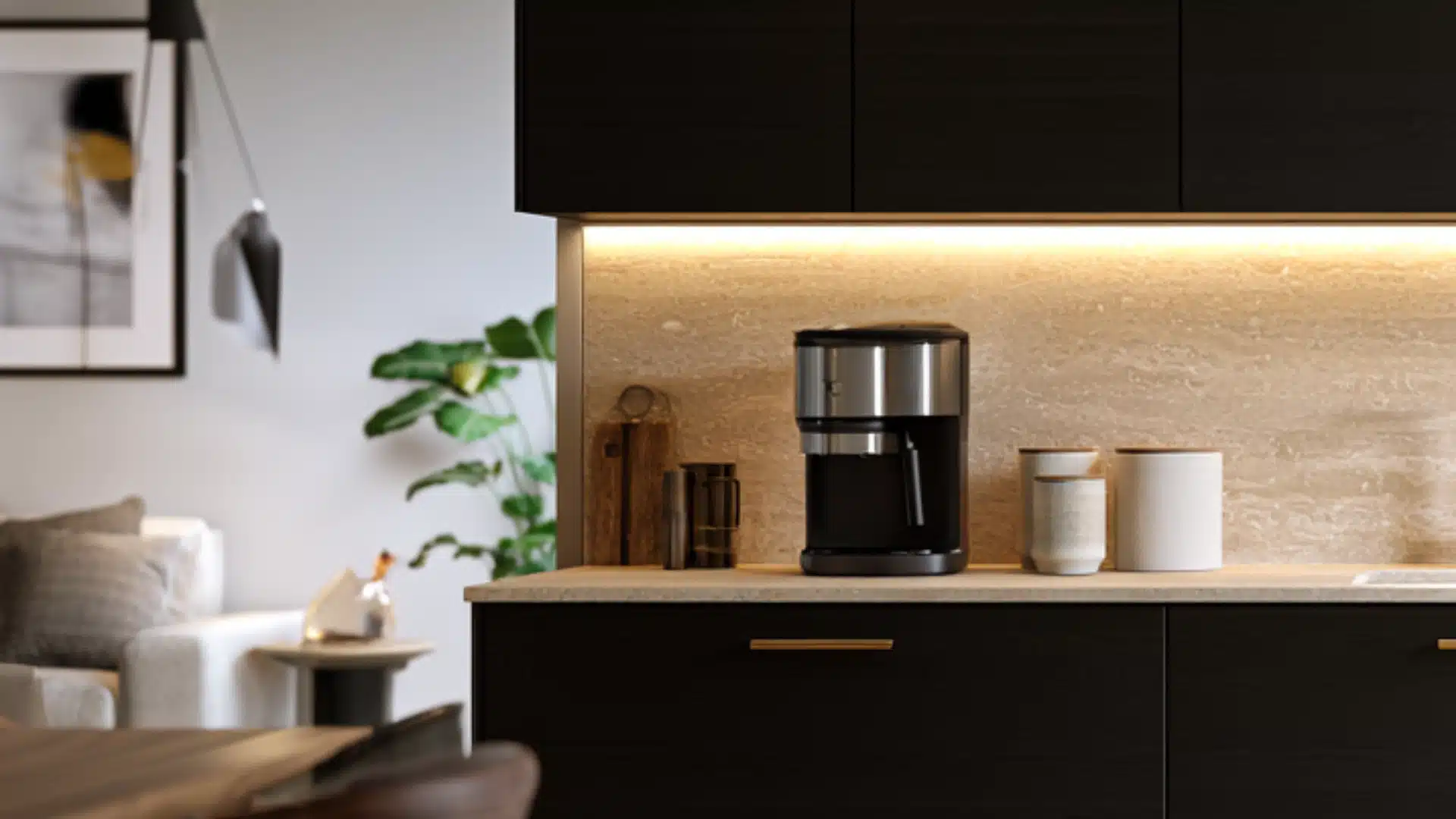
A sleek, moody coffee station built around matte-black cabinetry paired against a pale stone or white tile backdrop, so the dark tone reads as intentional rather than heavy.
Slim hardware and warm task lighting underneath the upper cabinets keep the whole setup feeling current, cozy, and far from stark or cold.
Materials: matte-black cabinets, pale stone or white tile backsplash, slim hardware, warm task lighting
Steps to make It:
- Install the matte-black cabinetry against the pale stone or tile backdrop.
- Attach slim, minimal hardware rather than ornate pulls.
- Mount warm task lighting underneath the upper cabinets.
- Add simple containers on the counter.
- Wipe down all surfaces for a clean, finished look.
Estimated Cost: $600–$2,000
2. White Oak Coffee Bar
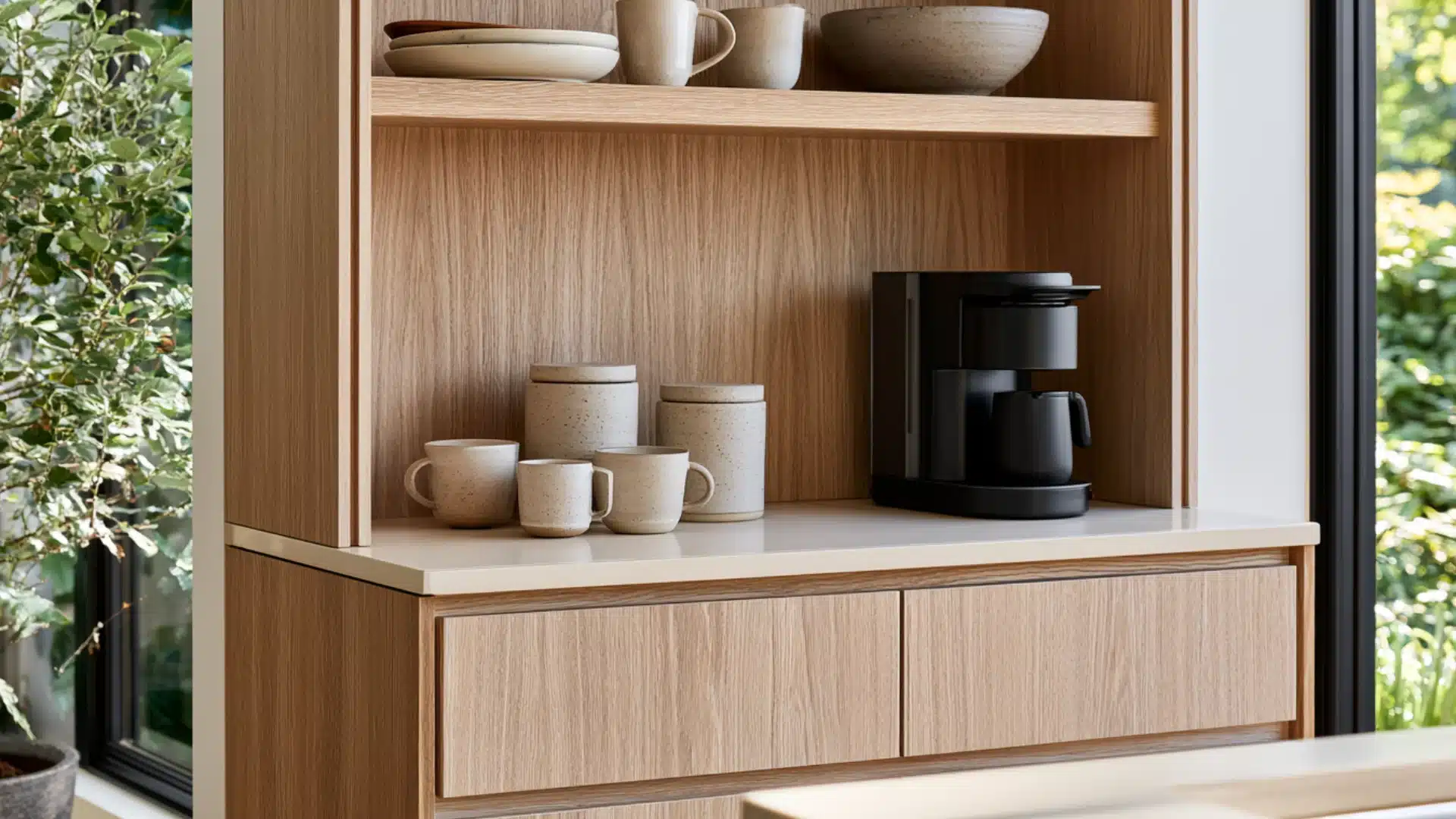
A warm, calming coffee bar built around pale oak cabinetry and open shelving set against cream or white surfaces, letting the natural wood grain take center stage.
Minimal hardware and closed storage for less attractive items keep the whole space feeling clean and composed.
Materials: pale oak cabinetry or shelving, cream or white countertop, minimal hardware, neutral ceramics
Steps to make It:
- Install pale oak cabinets or shelving against a cream or white surface.
- Fit minimal hardware that won’t compete with the wood grain.
- Display neutral ceramics on open surfaces.
Estimated Cost: $500–$1,800
3. Fluted Wood Coffee Bar
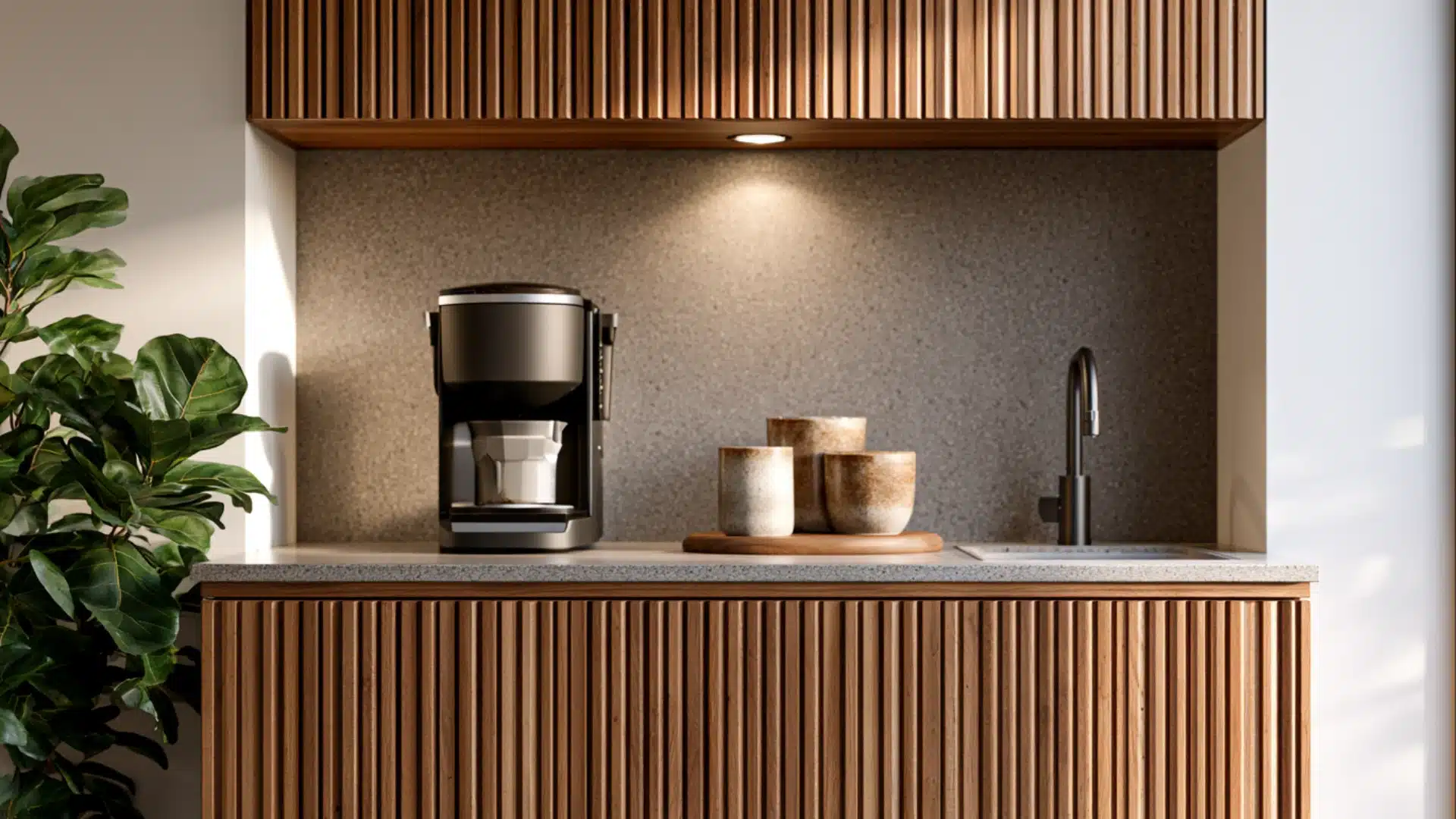
A textured, boutique-style coffee bar defined by vertical fluted wood panels applied to the cabinet doors, base, or backsplash.
Keep everything else deliberately plain so the grooves become the visual anchor of the space.
Materials: fluted wood panels, adhesive or mounting hardware, moisture-resistant sealant
Steps to make It:
- Measure the cabinet doors, base, or backsplash to size the panels.
- Cut the fluted wood panels to fit.
- Attach the panels using adhesive or mounting hardware.
- Apply a moisture-resistant sealant near any sink, kettle, or steam-producing appliance.
- Let the sealant cure fully before regular use.
Estimated Cost: $150–$500
4. Arched Coffee Bar Nook
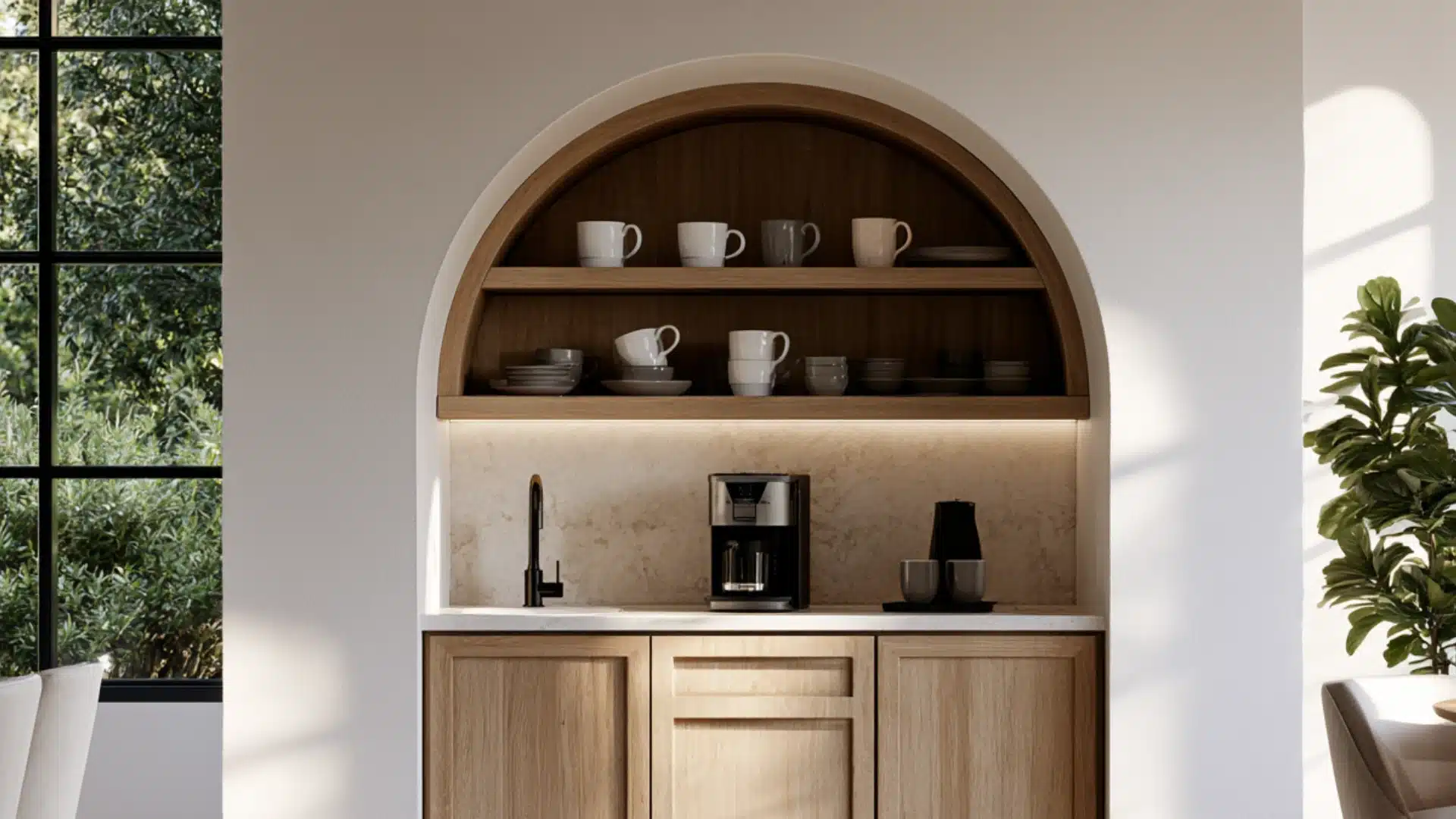
A softened, architectural coffee nook built around a wood-trimmed or drywall arch above the station, with open shelving and lower cabinetry filling the space beneath it.
The curve breaks up straight lines elsewhere in the kitchen for a more finished, custom feel.
Materials: wood trim or drywall for the arch, paint, open shelving, lower cabinetry
Steps to make It:
- Frame the alcove with wood trim or shaped drywall to form the arch.
- Paint the arch to match or contrast with the surrounding wall.
- Install open shelves inside the arch for display.
- Add lower cabinetry for enclosed storage.
- Style the shelves and worktop once everything is dry.
- Confirm outlets and lighting are positioned before final styling.
Estimated Cost: $300–$1,200
5. Two-Tone Coffee Bar
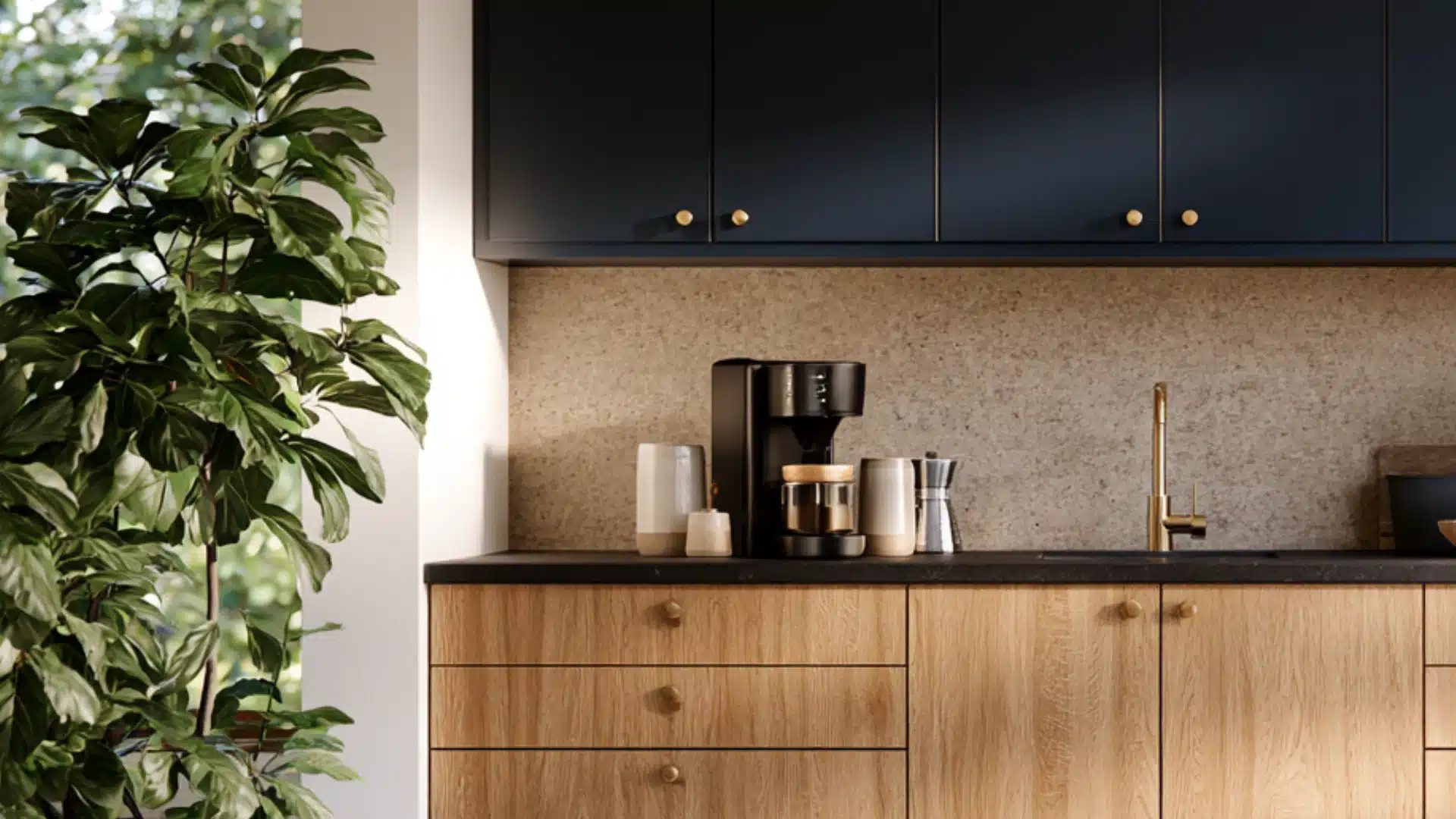
A contrast-driven coffee bar that pairs two distinct finishes, like navy with oak or walnut with black, across the upper and lower sections or an accent panel.
Tied together with repeated hardware or trim detail elsewhere in the room.
Materials: two contrasting cabinet or surface finishes, matching hardware, coordinating trim
Steps to make It:
- Choose two contrasting materials for the upper and lower sections.
- Apply each finish to its designated section or accent panel.
- Repeat at least one hardware or trim finish from elsewhere in the room.
Estimated Cost: $400–$1,500
6. Marble-Look Coffee Bar
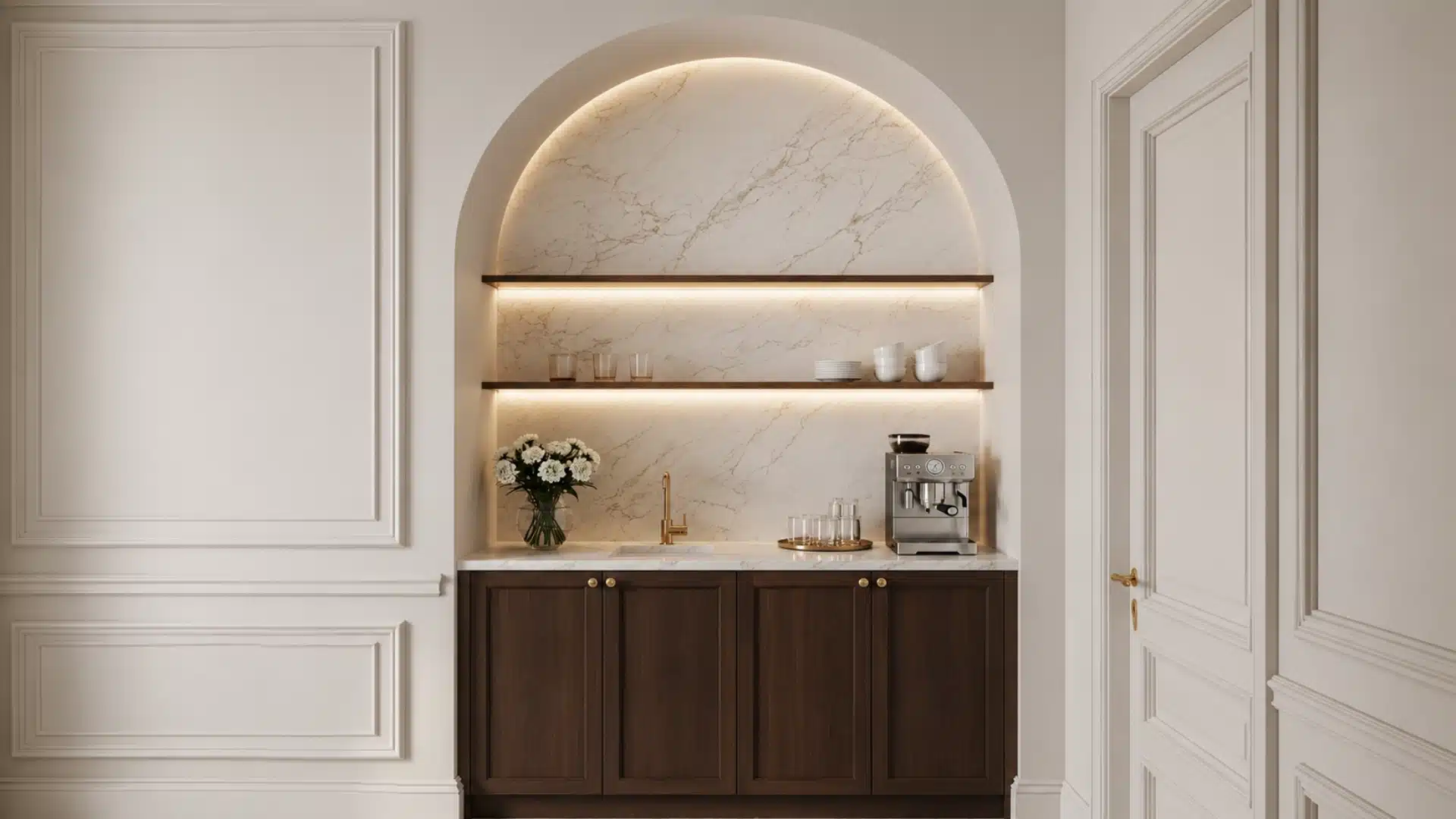
A raised, high-end coffee station built around a marble, quartz, or marble-effect backsplash or worktop, kept simple everywhere else so the natural veining pattern stays the clear visual focus of the space.
Materials: marble, quartz, or marble-effect tile, sealant, simple containers
Steps to make It:
- Install marble, quartz, or marble-effect tile on the backsplash or worktop.
- Seal the surface properly if using natural stone.
- Style the counter with simple, understated containers.
- Limit any additional bold patterns nearby.
Estimated Cost: $200–$900
Space-Saving Coffee Bar Ideas
Small kitchens don’t have to skip the coffee bar trend entirely. A little creativity with vertical space and multipurpose furniture goes a long way:
7. Kitchen Counter Coffee Bar
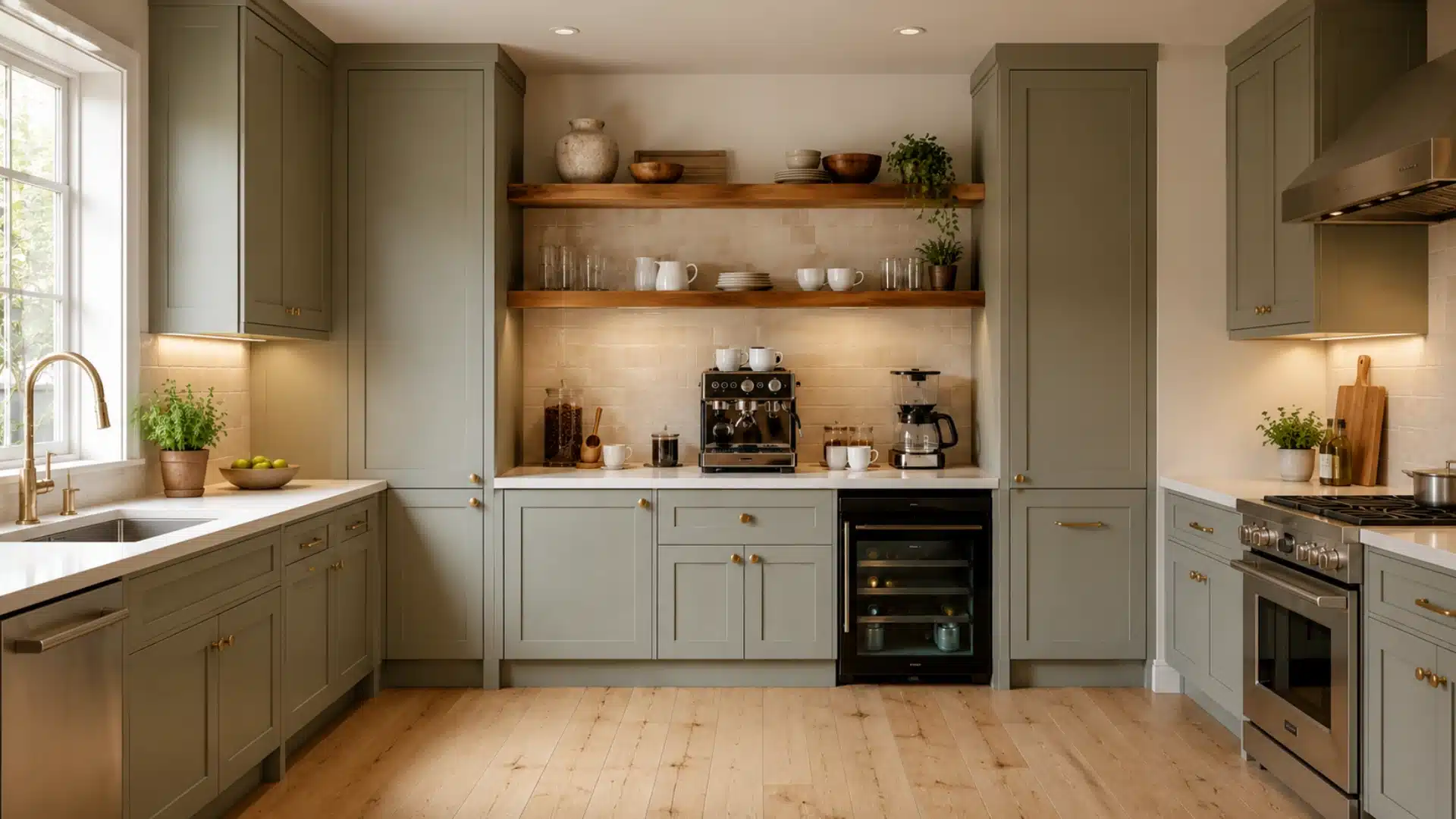
A simple, no-renovation coffee corner carved out of your existing counter, defined by a tray and a narrow shelf above, ideal for renters or anyone who doesn’t want to buy new furniture.
Materials: tray, narrow shelf or floating ledge, matching storage containers, coffee maker and grinder
Steps to make It:
- Choose and measure a dedicated section of your counter.
- Place a tray down to define the boundary.
- Position the coffee maker and grinder toward the back.
Estimated Cost: $30–$100
8. Floating Shelf Coffee Station
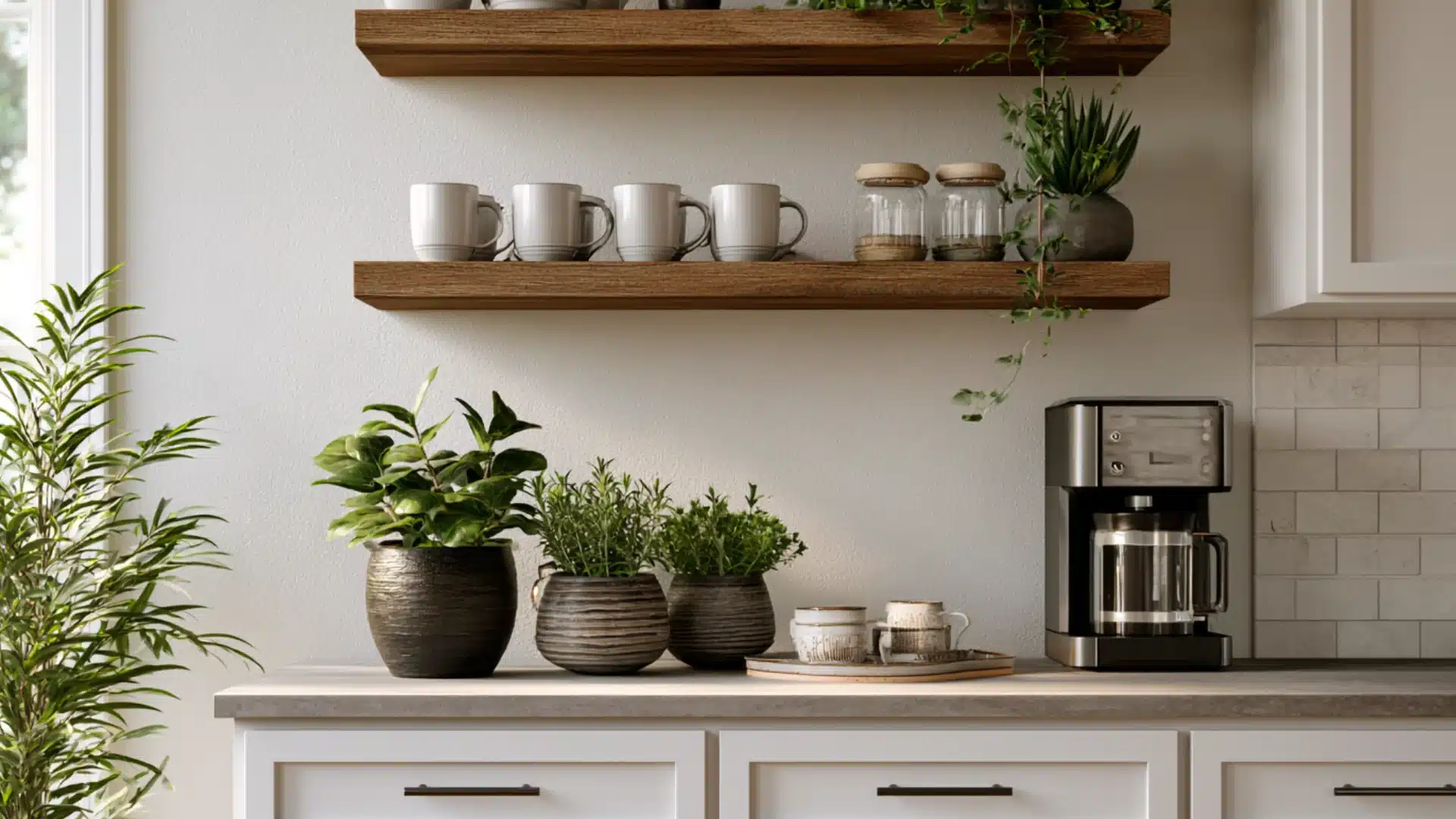
A space-conscious coffee setup combining a base cabinet with one or two floating shelves above it, keeping mugs and attractive containers on display while backup supplies stay hidden below.
Materials: floating shelves, wall anchors rated for the wall type, base cabinet, mugs, display containers
Steps to make It:
- Locate a wall stud or select rated anchors.
- Mount one or two floating shelves above the base cabinet.
- Leave clearance below for steam and appliance lids.
- Style the shelves with mugs and display containers.
- Store backup supplies in the cabinet underneath.
- Double-check shelf weight capacity before adding heavier items.
- Adjust spacing between shelves if the base cabinet appliances need more clearance.
Estimated Cost: $50–$200
9. Rolling Cart Coffee Bar
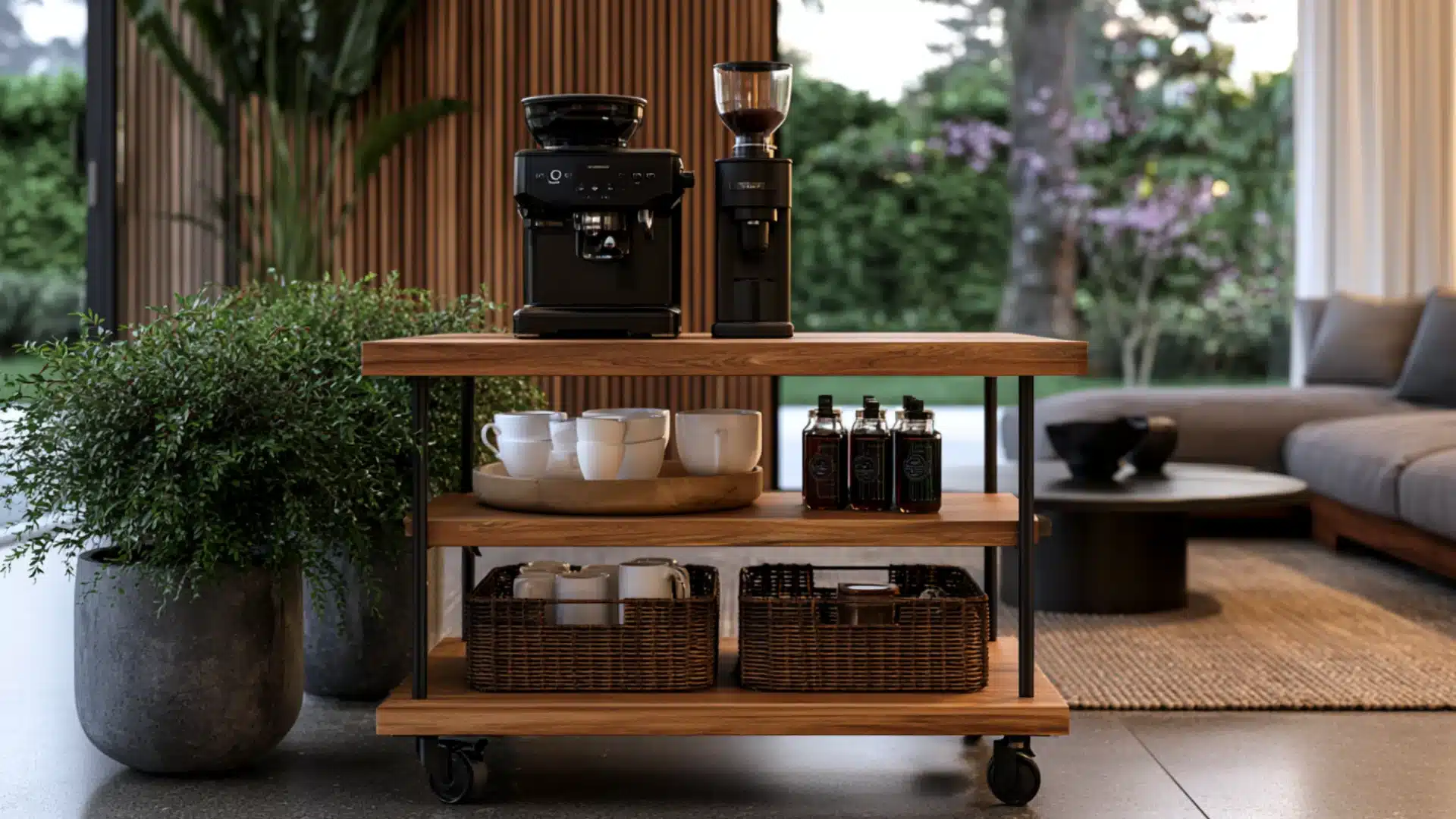
A fully mobile coffee station built on a metal or wood cart with locking wheels, letting you move the whole setup between the kitchen, dining area, or wherever guests are gathering.
Materials: metal or wood rolling cart with locking wheels, storage baskets, cable clips
Steps to make It:
- Choose a cart with locking wheels.
- Place the coffee maker and grinder on top, securing cords with cable clips.
- Add baskets to the lower shelves for mugs and backup supplies.
- Lock the wheels and secure hot appliances before moving the cart.
Estimated Cost: $80–$300
10. Small Nook Coffee Bar
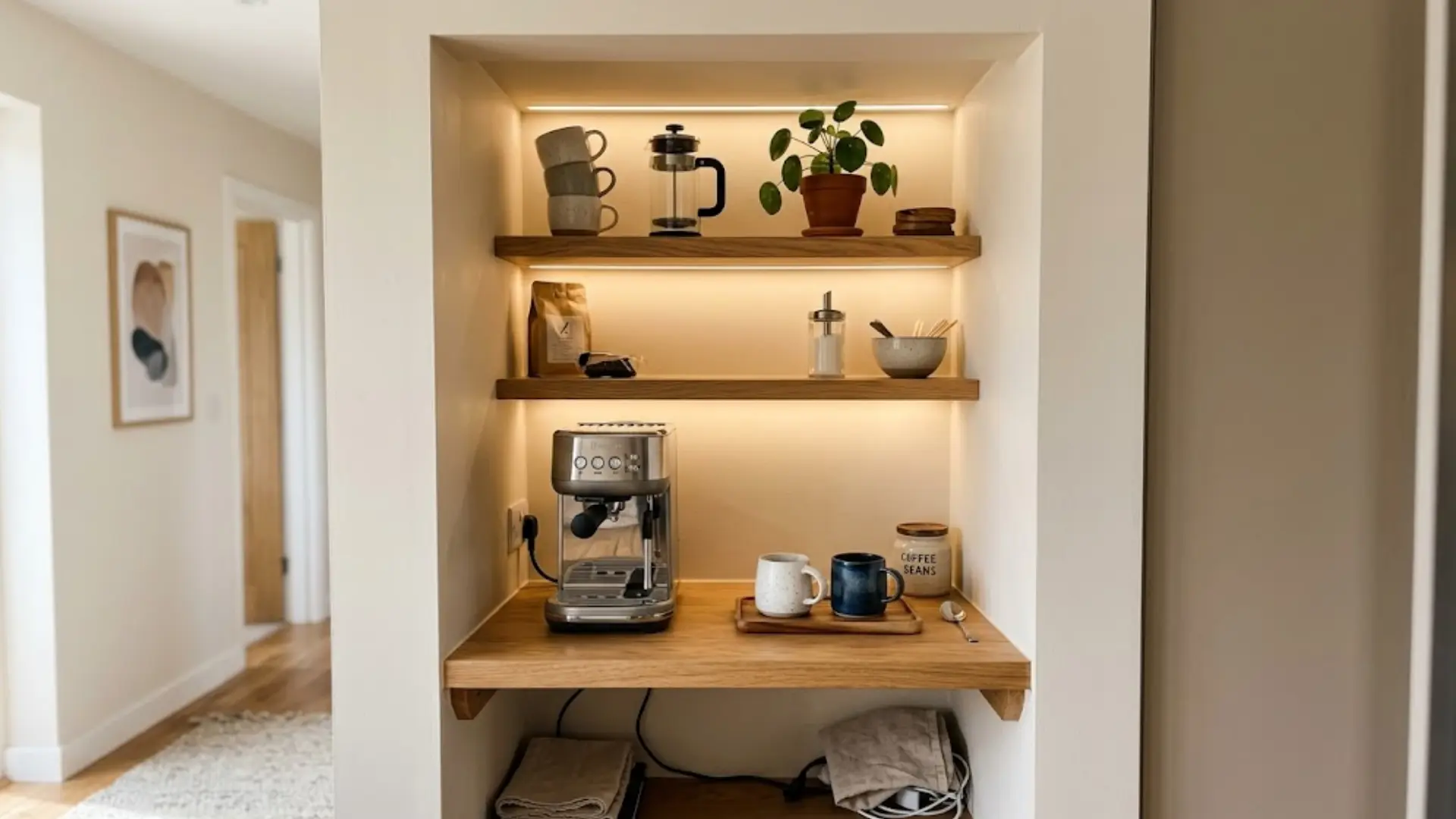
A fitted coffee station built into a shallow alcove or recessed wall, using custom-width shelving and under-shelf lighting to make the most of a niche that might otherwise go unused.
Materials: custom-width shelving, compact worktop, under-shelf lighting, wall anchors
Steps to make It:
- Measure the alcove’s exact width and depth.
- Install a compact worktop at counter height.
- Mount shelves above using anchors rated for the wall.
- Add under-shelf lighting for visibility.
- Test the fit of appliances before finalizing shelf spacing.
Estimated Cost: $150–$600
11. Compact Corner Coffee Cabinet
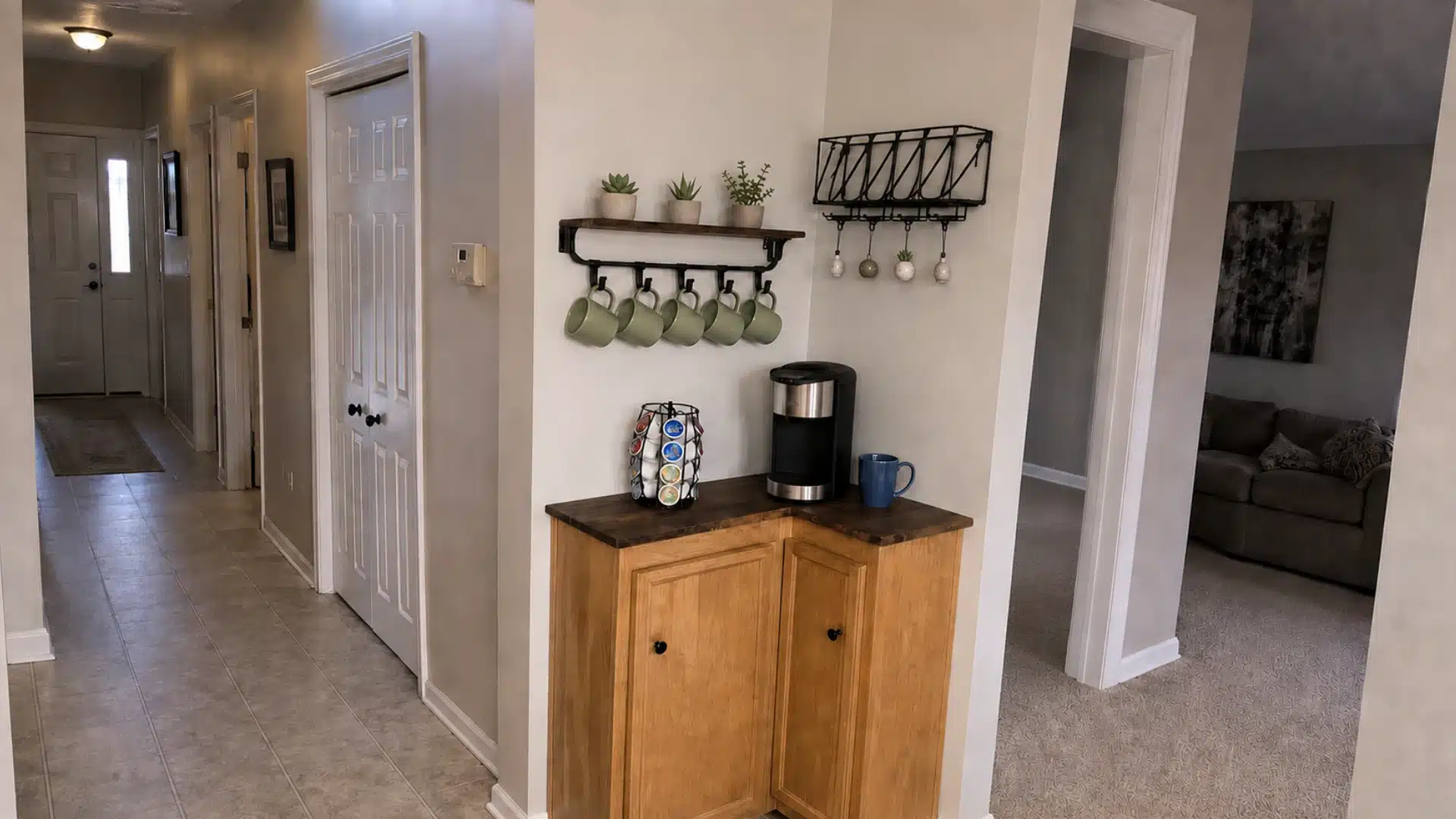
A narrow cabinet fitted into an unused kitchen, dining, or living room corner, using vertical shelving to compensate for limited counter width without blocking nearby foot traffic.
Materials: narrow corner cabinet or unit, vertical shelving, appliance of choice
Steps to make It:
- Measure the corner space, appliance depth, door swing, and outlet distance.
- Install the narrow cabinet flush into the corner.
- Add vertical shelving above or inside the unit.
Estimated Cost: $150–$500
12. Pegboard Coffee Station
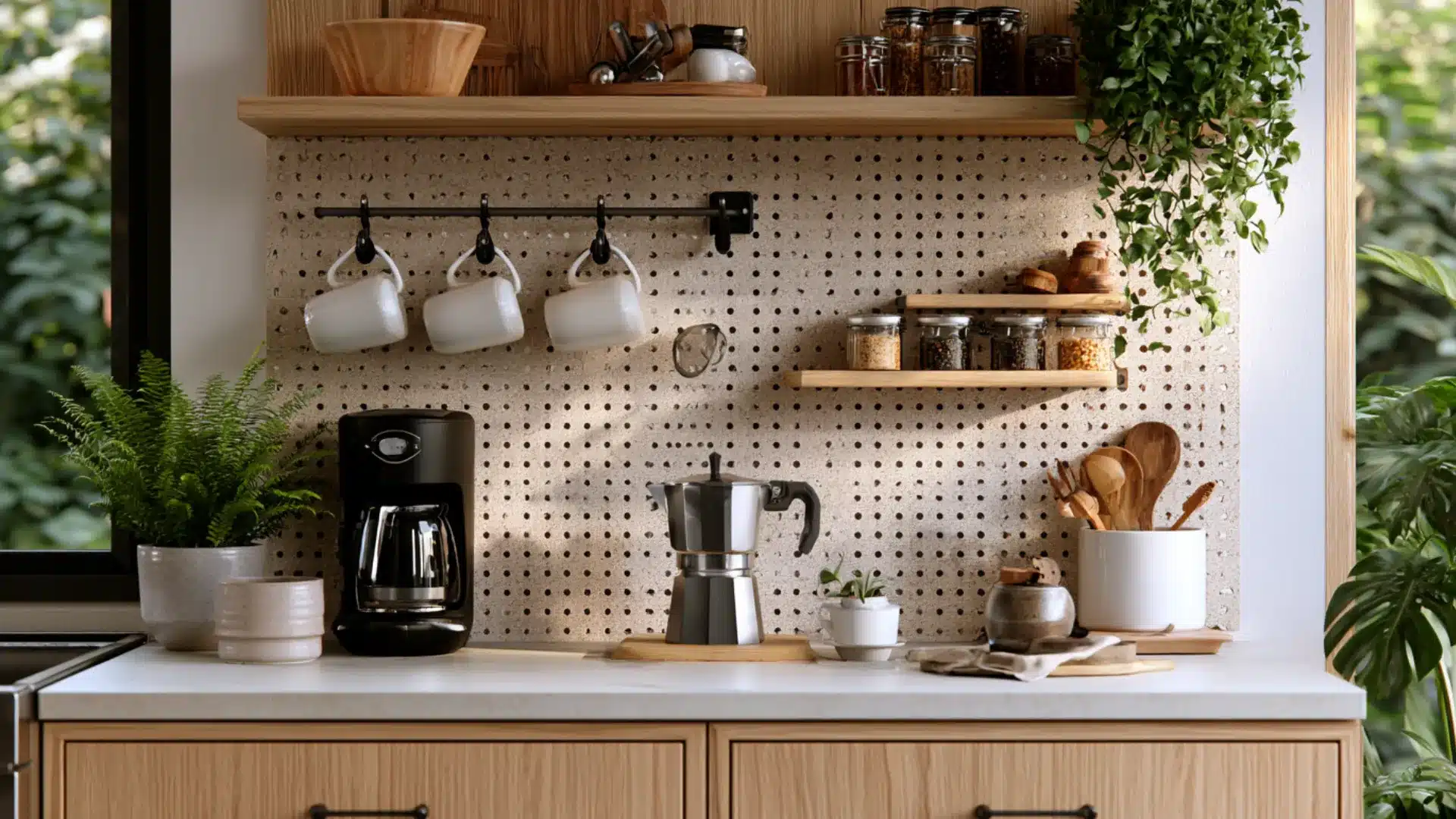
A flexible, renter-friendly coffee setup built around a wall-mounted pegboard, using movable hooks and mini shelves to hold mugs and tools while heavier appliances stay on the counter below.
Materials: pegboard panel, pegboard hooks and shelves, screws, coffee tools
Steps to make It:
- Mount the pegboard panel to the wall using screws and anchors.
- Add hooks for mugs and small tools.
- Attach mini shelves for jars or filters.
- Keep heavier appliances like the coffee maker on the counter below.
- Rearrange hooks and shelves as your daily routine changes.
Estimated Cost: $30–$120
13. Closet Coffee Bar
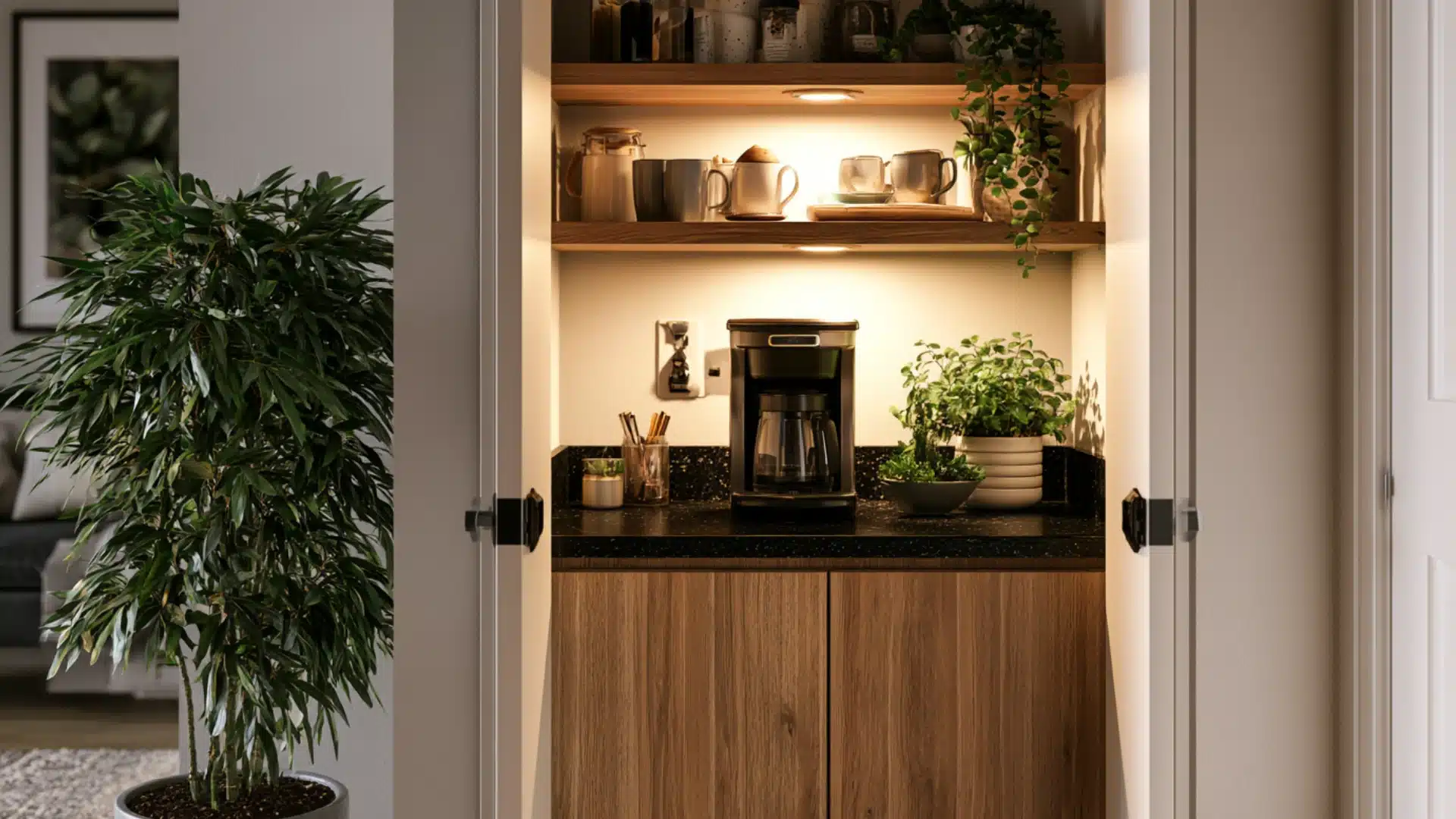
Concealable coffee station built inside a repurposed closet, complete with a fitted worktop and shelving. The entire setup tucks away behind closed doors when not in use.
Materials: fitted worktop, shelving, lighting, outlet extension if needed
Steps to make It:
- Clear out the closet completely.
- Install a fitted worktop at a comfortable height.
- Add shelving above for mugs and supplies.
- Add lighting if the space lacks natural light.
- Confirm an outlet is accessible and doors open fully.
- Style the interior once everything is installed.
- Test that the doors close easily around the finished setup.
Estimated Cost: $100–$400
14. Under-Stair Coffee Bar
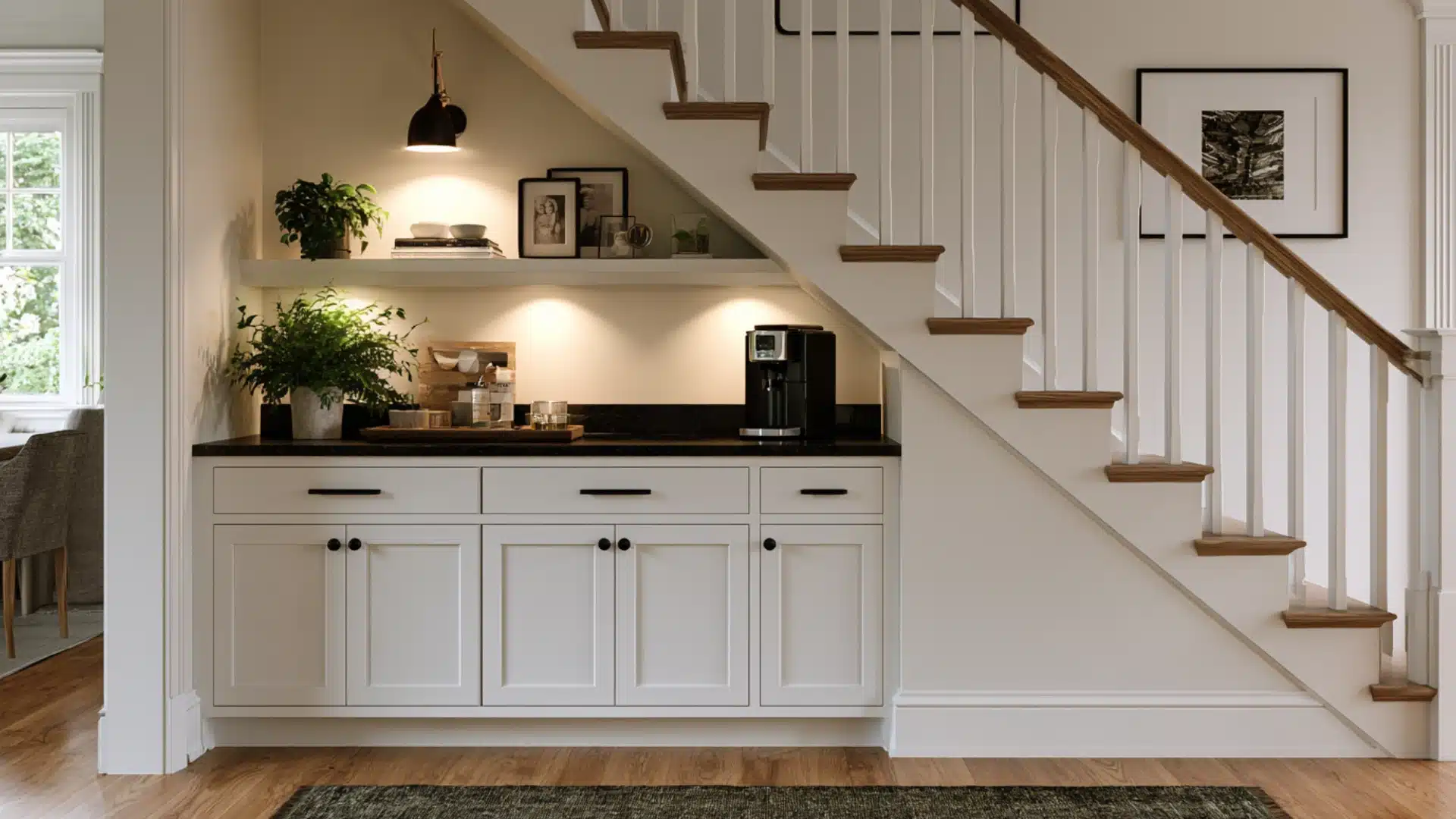
Custom coffee station built into the often-wasted space beneath a staircase, fitting a compact worktop and shelving into the tallest section. The layout stays clear of the main walking path.
Materials: custom cabinet or shelving, compact worktop, task lighting
Steps to make It:
- Measure the irregular headroom and depth under the staircase.
- Build or install a custom cabinet to fit the space.
- Fit a compact worktop into the tallest section.
Estimated Cost: $200–$800
Built-In and Fitted Coffee Bar Ideas
Built-in setups take more planning, but they blend seamlessly into your existing kitchen layout. These ideas work best when you’re ready to commit to something more permanent:
15. Hidden Cabinet Coffee Bar
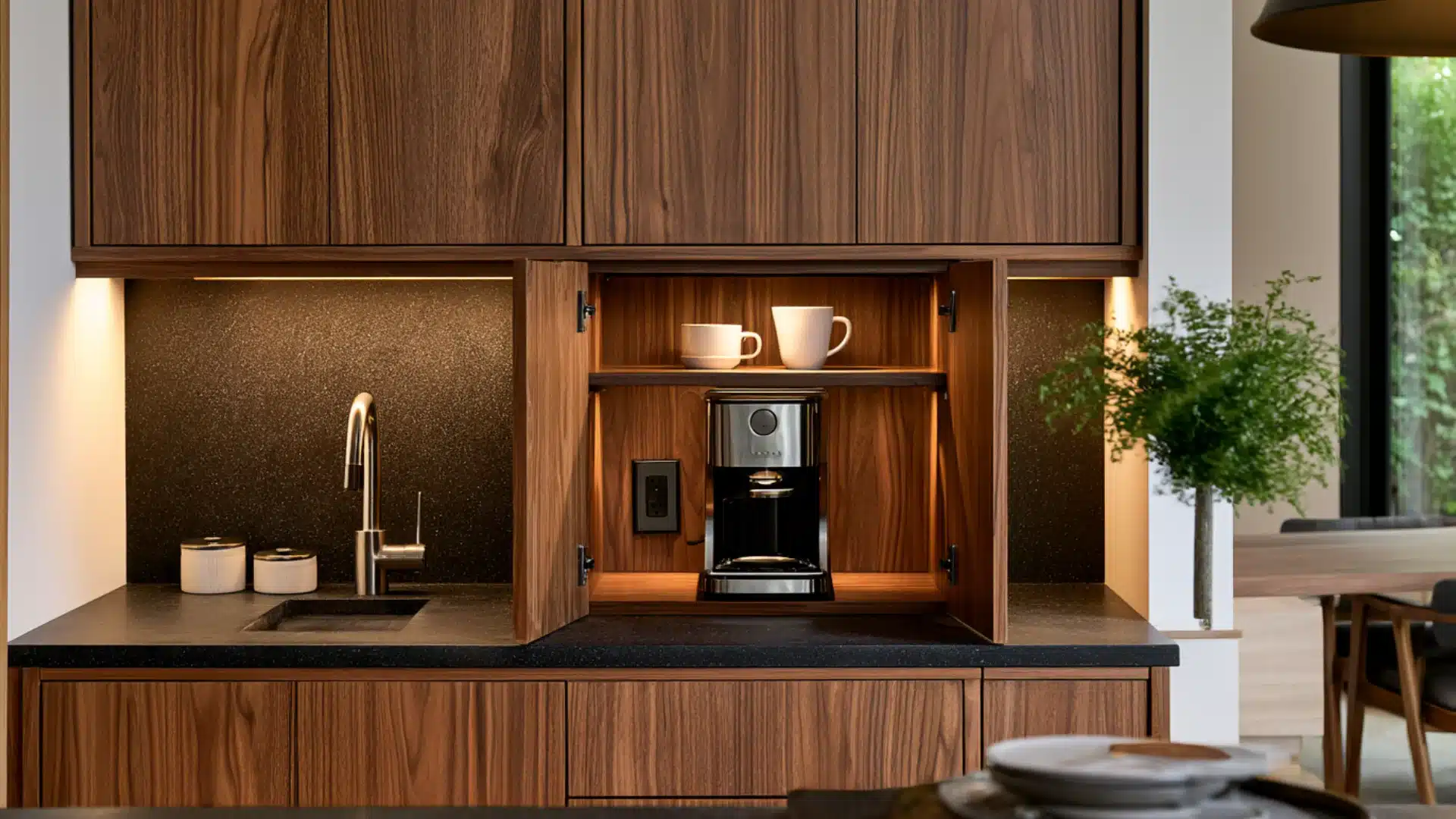
A fully concealable coffee station built behind cabinet doors with a pocket or lift-top mechanism, letting the entire setup disappear from view the moment it’s not being used.
Materials: cabinet with pocket or lift-top doors, internal lighting, outlet, appliance of choice
Steps to make It:
- Choose a cabinet with a pocket door or lift-top mechanism.
- Install an outlet inside for the coffee maker.
- Add internal lighting if the cabinet sits in a dim area.
- Confirm the door opens fully with enough clearance for water tanks and lids.
Estimated Cost: $400–$1,500
16. Pantry Coffee Station
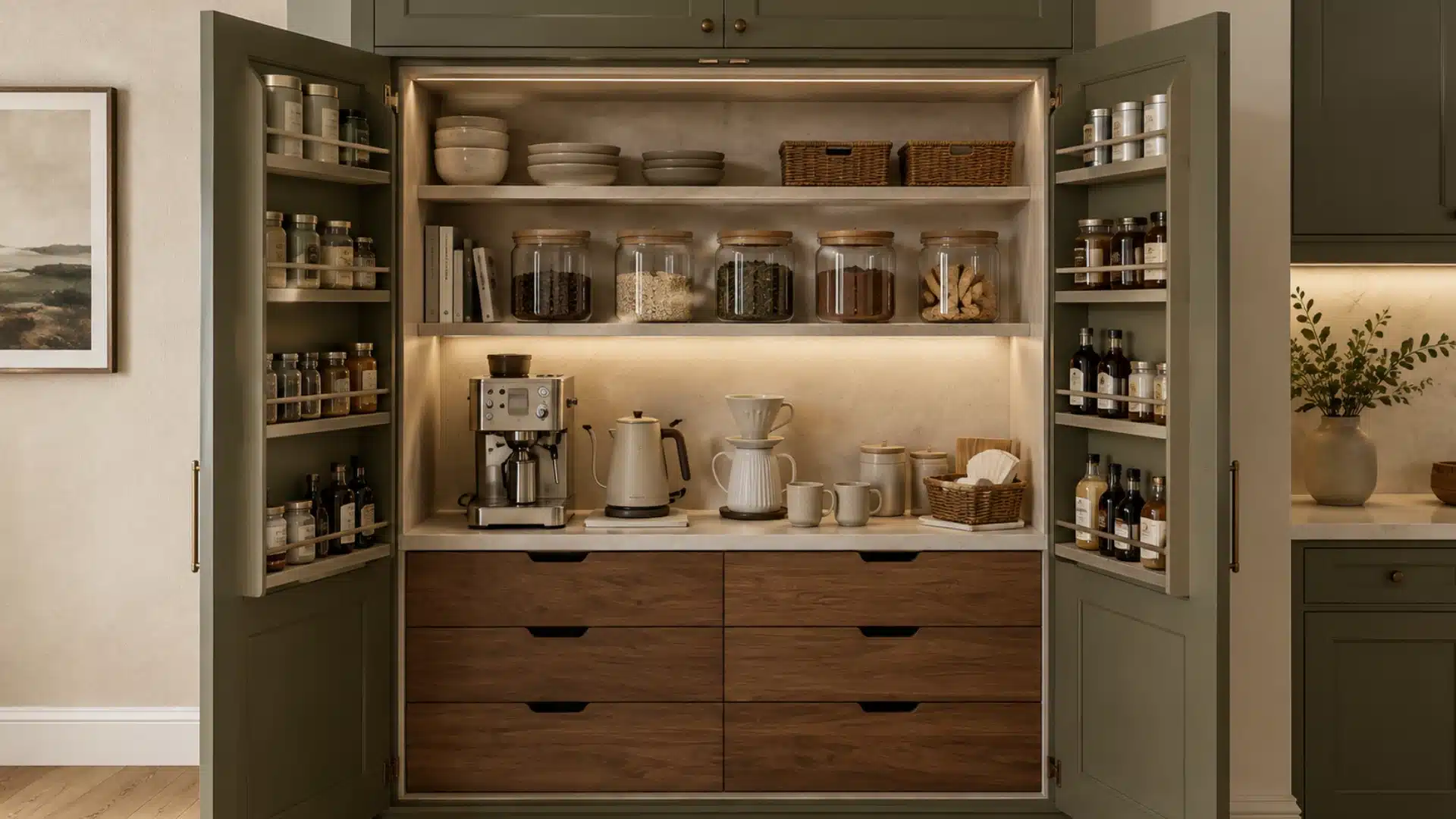
A tucked-away coffee corner built into an existing pantry, dedicating a section of shelving and a small worktop to beans, filters, and tea so brewing supplies stay organized in one spot.
Materials: pantry shelving, worktop section, lighting, outlet
Steps to make It:
- Clear a section of pantry shelving at a comfortable working height.
- Designate a small worktop area nearby for brewing.
- Add lighting if the pantry is dim.
Estimated Cost: $50–$250
17. Built-In Kitchen Coffee Bar
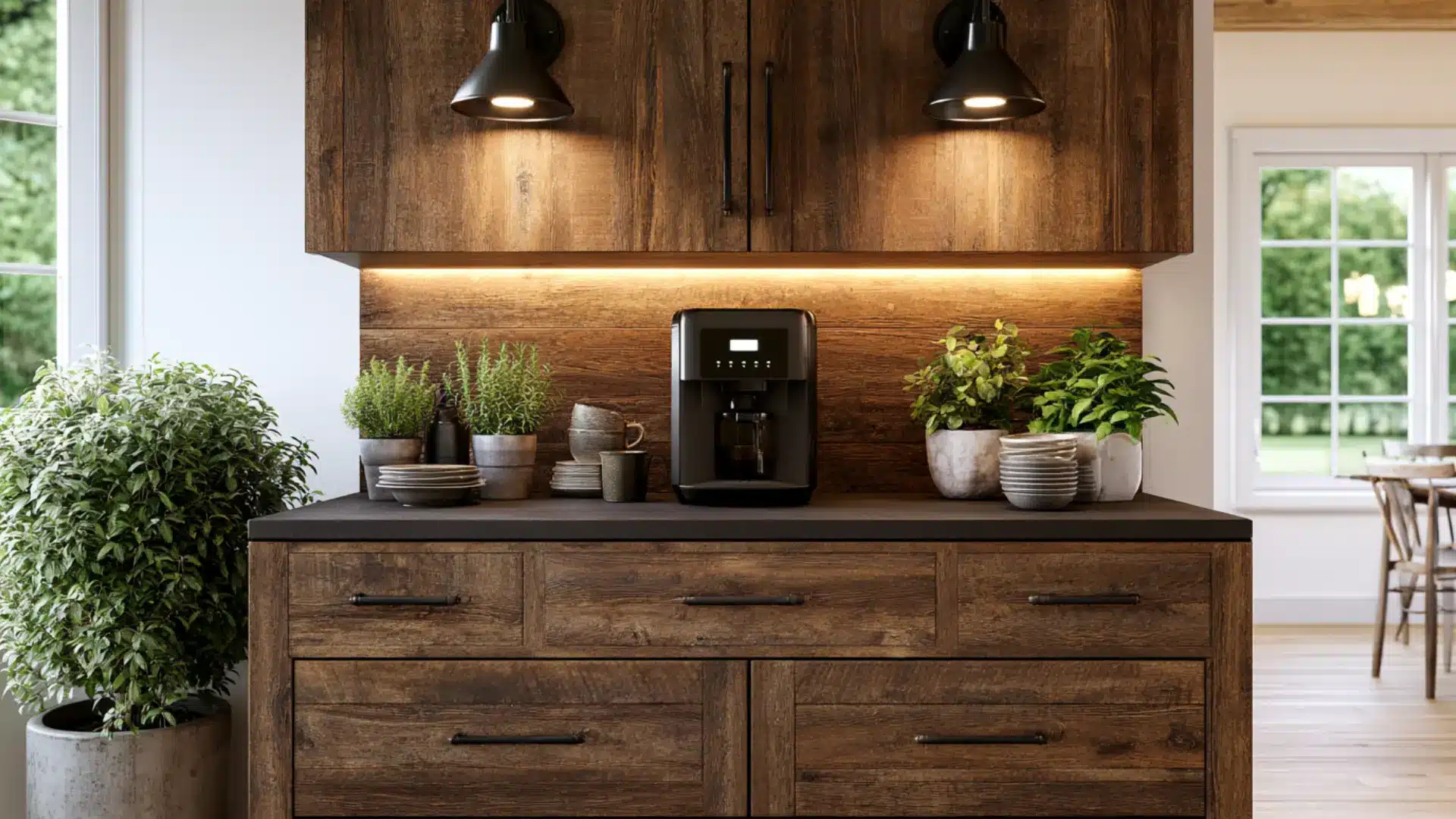
Coffee station fully integrated into an existing run of kitchen cabinets, with matching fronts, hardware, and countertop material.
The result reads as a natural extension of the kitchen rather than an add-on.
Materials: matching cabinet fronts, countertop material, hardware, lighting, outlets
Steps to make It:
- Plan the station as part of the existing cabinet run.
- Match the fronts, hardware, and countertop to the rest of the kitchen.
- Include deep drawers for appliance storage.
- Add outlets and lighting during installation.
- Position the bar away from the busiest food-prep zone.
- Have the installation inspected if plumbing or major electrical work is involved.
Estimated Cost: $800–$3,000+
18. Coffee Bar With Mini Fridge
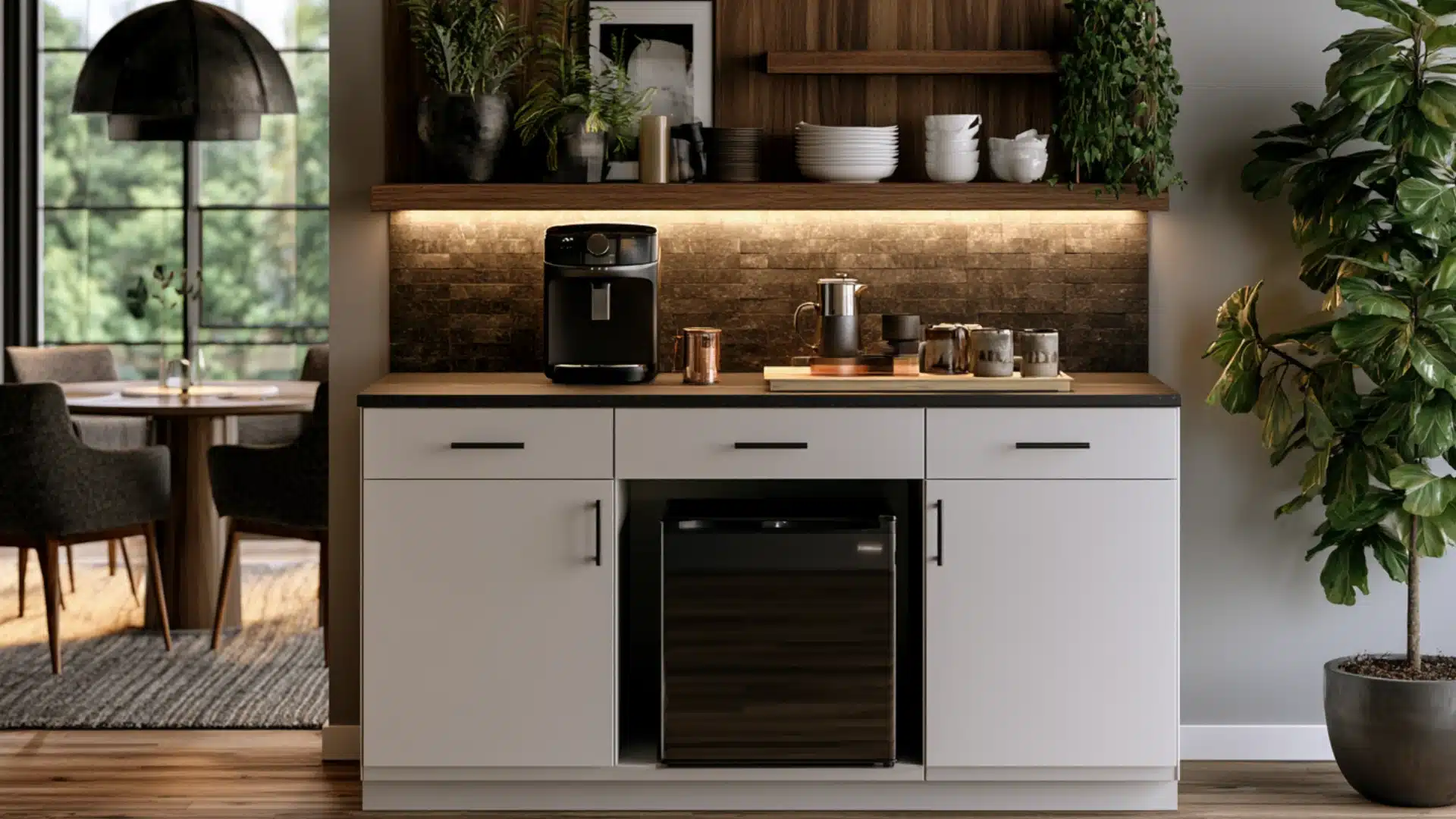
An upgraded coffee station built around an under-counter mini fridge, keeping milk, creamer, and cold brew close to the brewing and serving area without needing a trip to the main kitchen fridge.
Steps to make It:
Materials: under-counter refrigerator, cabinet cutout, ventilation space, outlet
- Measure the mini fridge’s dimensions and required ventilation clearance.
- Cut the cabinet opening to fit.
- Install the fridge with its outlet nearby.
- Organize milk, creamer, and cold brew inside.
Estimated Cost: $300–$700
19. Coffee and Tea Bar
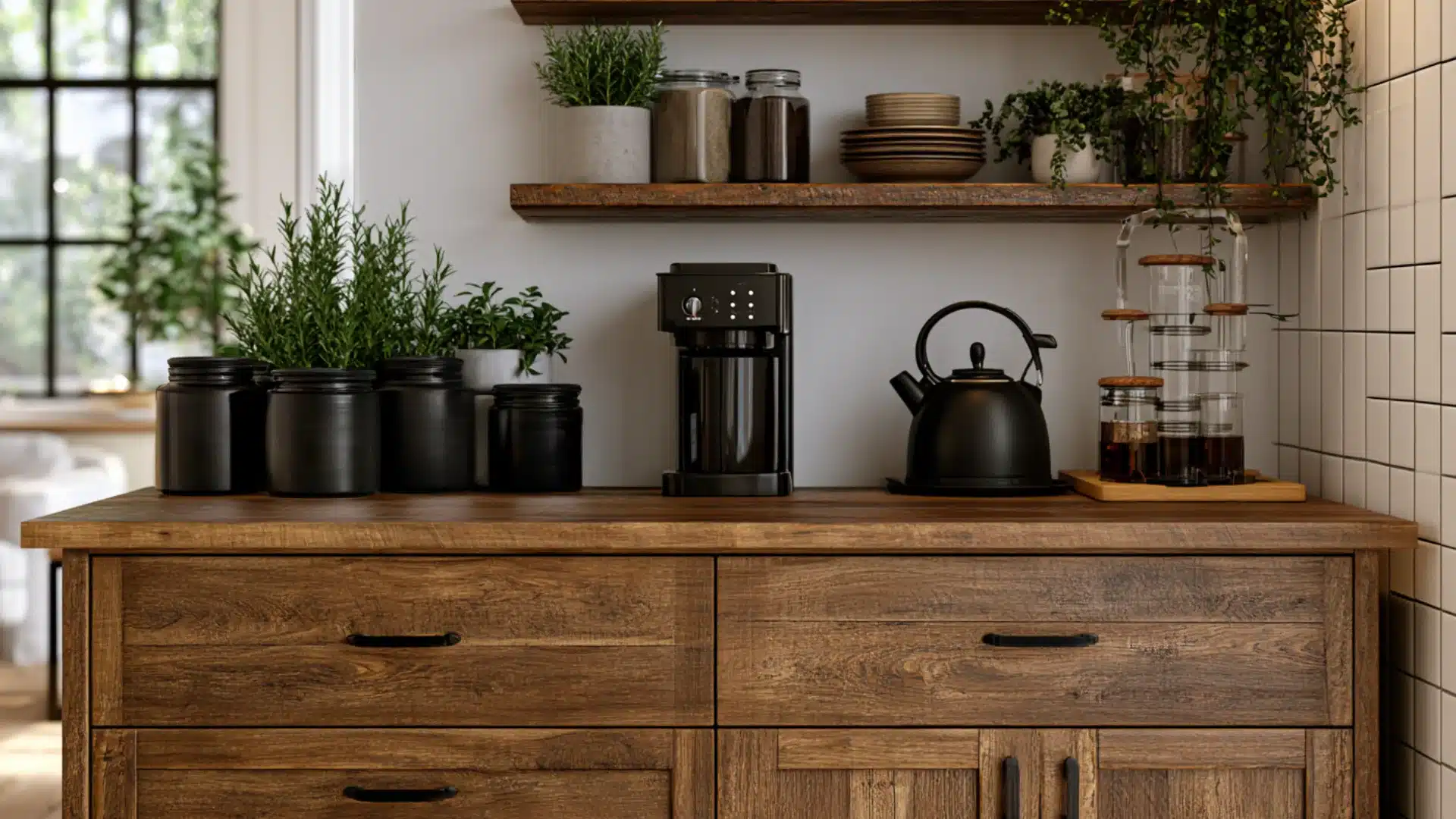
A dual-purpose beverage station split into two clear zones, one for coffee and one for tea, using labeled containers and drawer dividers to keep a larger selection of supplies from overwhelming the counter.
Materials: divided drawers, labeled containers, kettle, coffee maker, infusers
Steps to make It:
- Divide your countertop and storage into a coffee zone and a tea zone.
- Use labeled containers for beans, tea bags, and syrups.
- Add drawer dividers to organize infusers, filters, and mugs.
Estimated Cost: $80–$300
Character-Filled Coffee Bar Ideas
A great coffee bar doesn’t have to come with a big price tag, and it doesn’t need brand-new furniture either. Here are a few ideas that prove character and joy often come from what you already have:
20. Repurposed Sideboard Coffee Bar
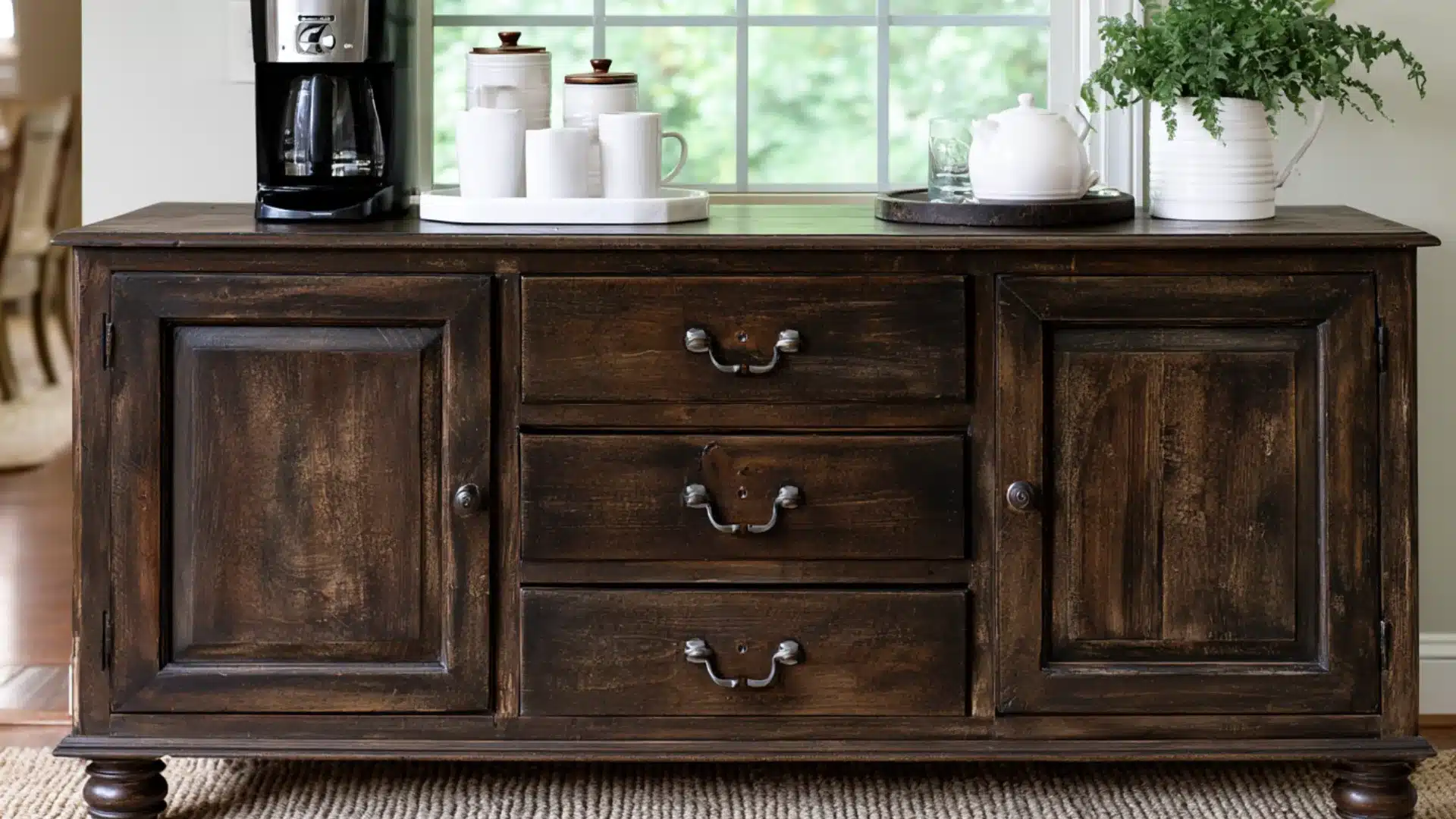
A budget-friendly coffee bar built from a secondhand sideboard, refreshed with sanding, paint, and new hardware so it looks intentional rather than thrifted, with drawers and cabinets doing double duty as storage.
Materials: secondhand sideboard, sandpaper, primer, paint, new hardware, protective worktop finish
Steps to make It:
- Sand down the sideboard to remove any existing finish.
- Clean and repair any loose joints or damaged spots.
- Apply primer and paint in your chosen color.
- Swap the hardware for an updated look.
- Add a protective worktop finish.
- Let all coats cure fully before styling the piece.
Estimated Cost: $75–$250
21. IKEA Cabinet Coffee Bar
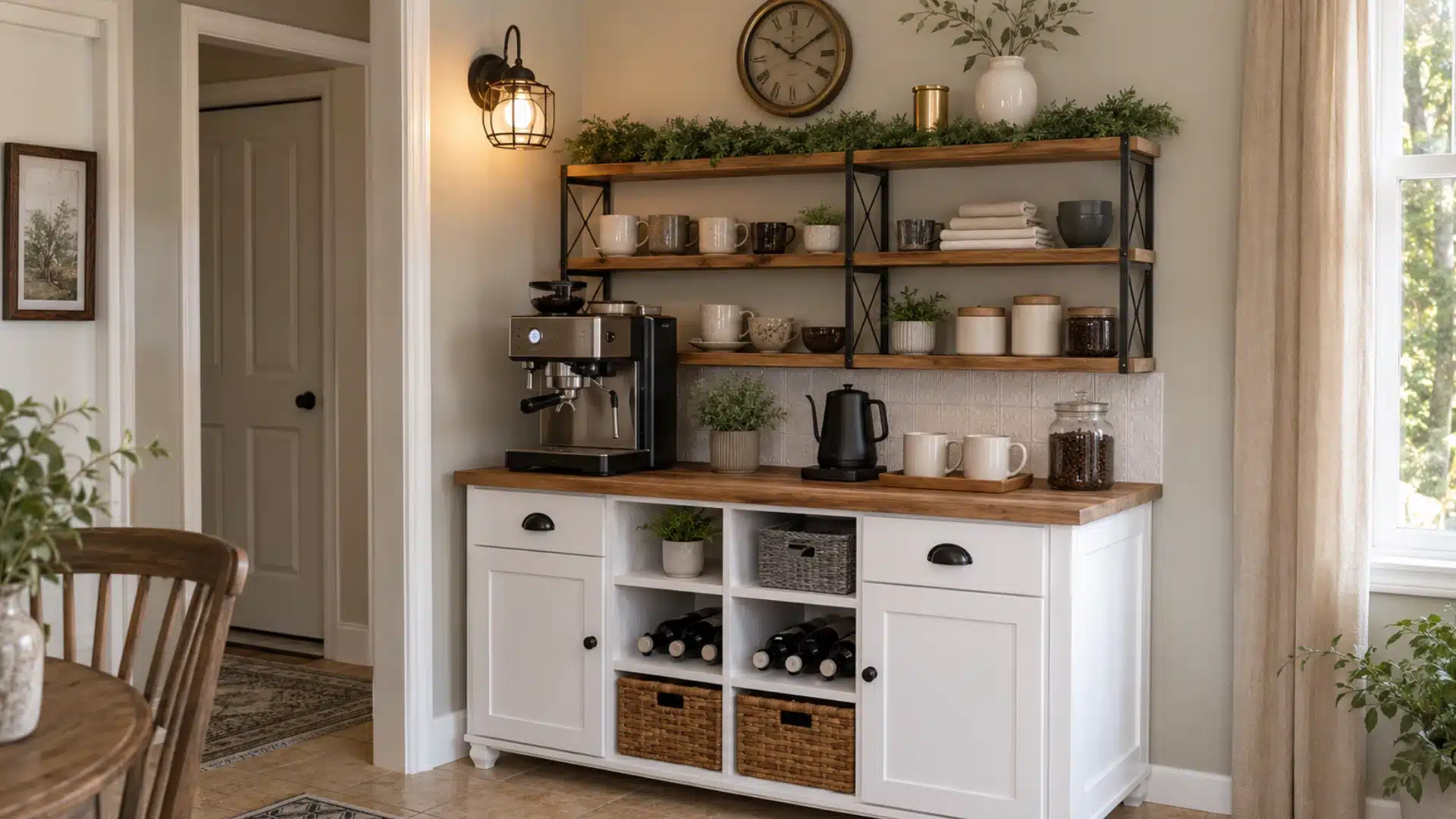
A budget-conscious coffee bar built from a repurposed IKEA cabinet or shelving unit, customized with mug hooks and storage bins so it fits your specific appliances rather than a generic setup.
Materials: IKEA cabinet or shelving unit, mug hooks, storage bins, cable clip
Steps to make It:
- Choose an IKEA cabinet sized to fit your appliances.
- Reposition internal shelves if needed.
- Cut or drill a protected opening for cables.
Estimated Cost: $100–$350
22. Coffee Bar With Mug Wall
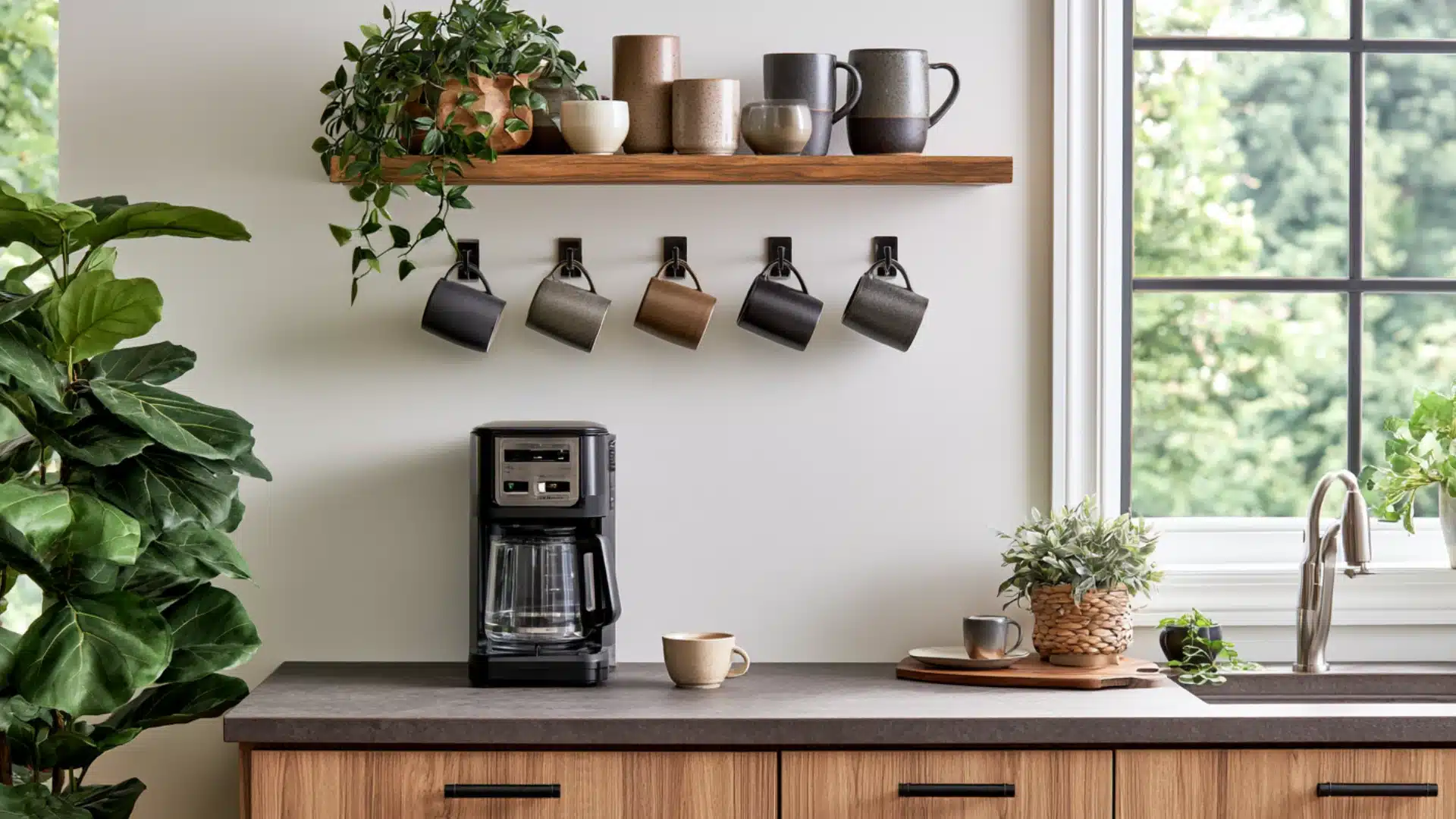
A wall-mounted display that turns a mug collection into functional decor, using evenly spaced hooks or a rail to keep mugs accessible and visually interesting above the counter.
Materials: wall hooks or rail, mounting hardware, level, mug collection
Steps to make It:
- Mark and space hooks or a rail evenly using a level.
- Mount into studs or use anchors rated for the mug collection’s weight.
- Hang mugs at a comfortable reaching height, away from steam or splash zones.
- Rearrange mugs periodically to keep the display feeling fresh.
Estimated Cost: $20–$80
23. Farmhouse Coffee Bar
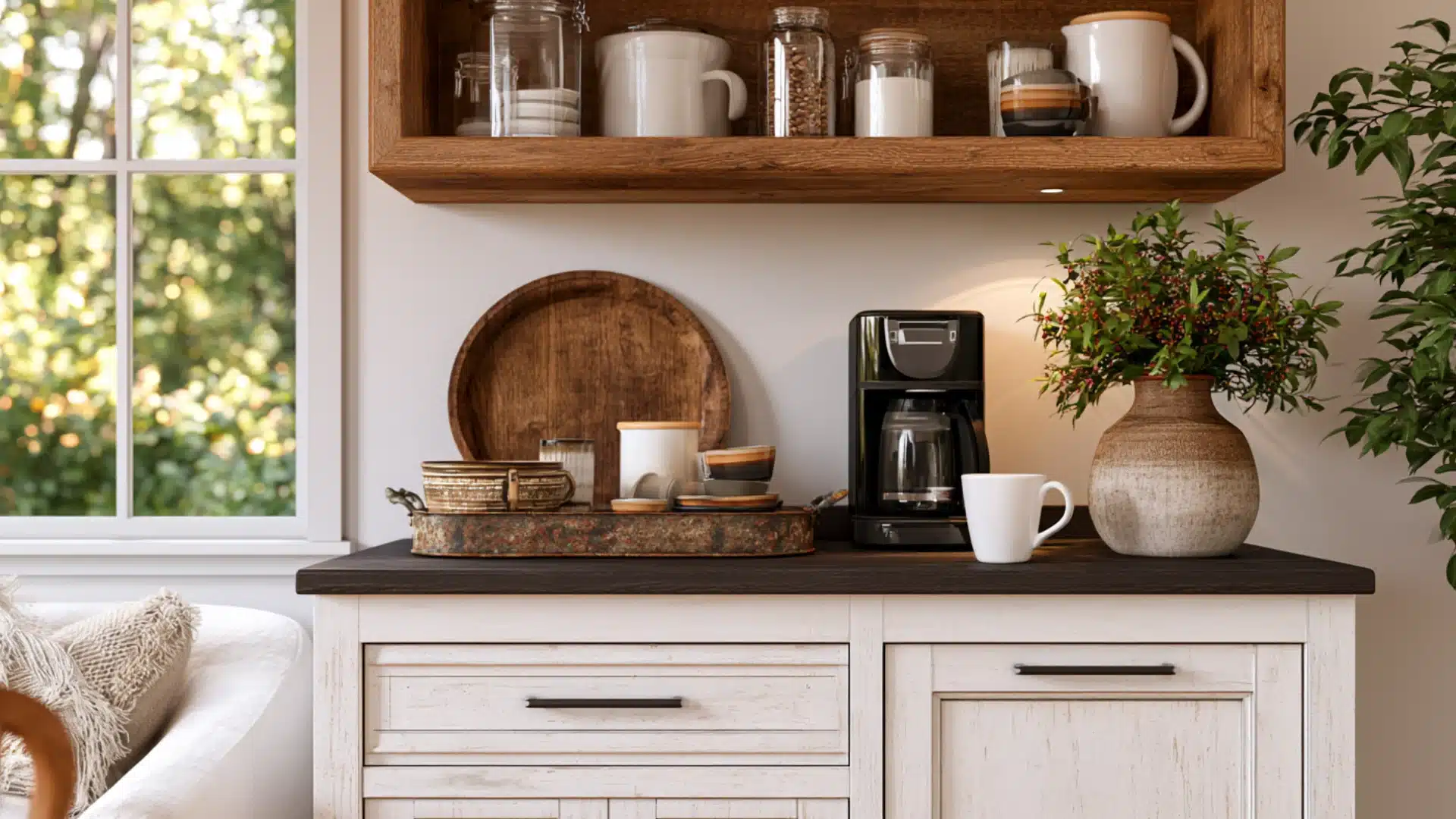
A warm, inviting coffee bar built around a painted cabinet and open wood shelving, finished with the kind of glass and ceramic containers and vintage accents that give farmhouse decor its lived-in, collected appeal.
Materials: painted cabinet, warm wood shelving, glass or ceramic containers, vintage accents
Steps to make It:
- Paint the chosen cabinet in a soft, farmhouse-friendly color.
- Pair it with warm wood open shelving above.
- Fill glass or ceramic containers with beans, sugar, and filters.
- Add one or two vintage accents without overloading the space.
- Adjust styling until the shelf feels balanced rather than cluttered.
Estimated Cost: $150–$500
24. Industrial Coffee Bar
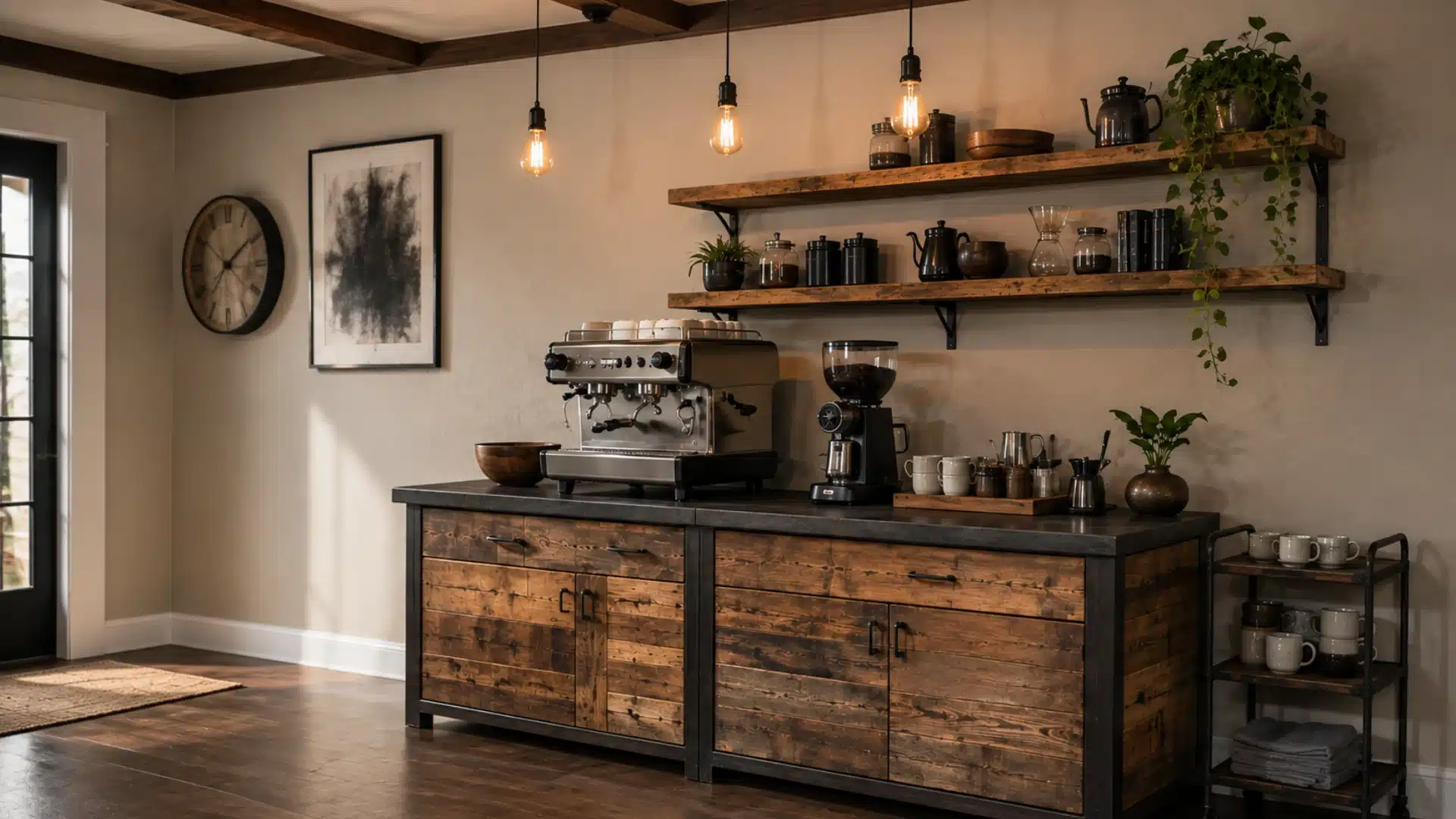
Textured, industrial-style coffee bar built around reclaimed wood shelving mounted on dark metal brackets, balancing rough materials with practical, washable surfaces near the actual brewing area.
Materials: reclaimed wood shelving, dark metal brackets, storage containers, sealant if needed
Steps to make It:
- Mount dark metal brackets to the wall.
- Attach reclaimed wood shelving on top.
- Style with practical containers for beans and supplies.
Estimated Cost: $100–$400
25. Scandinavian Coffee Station
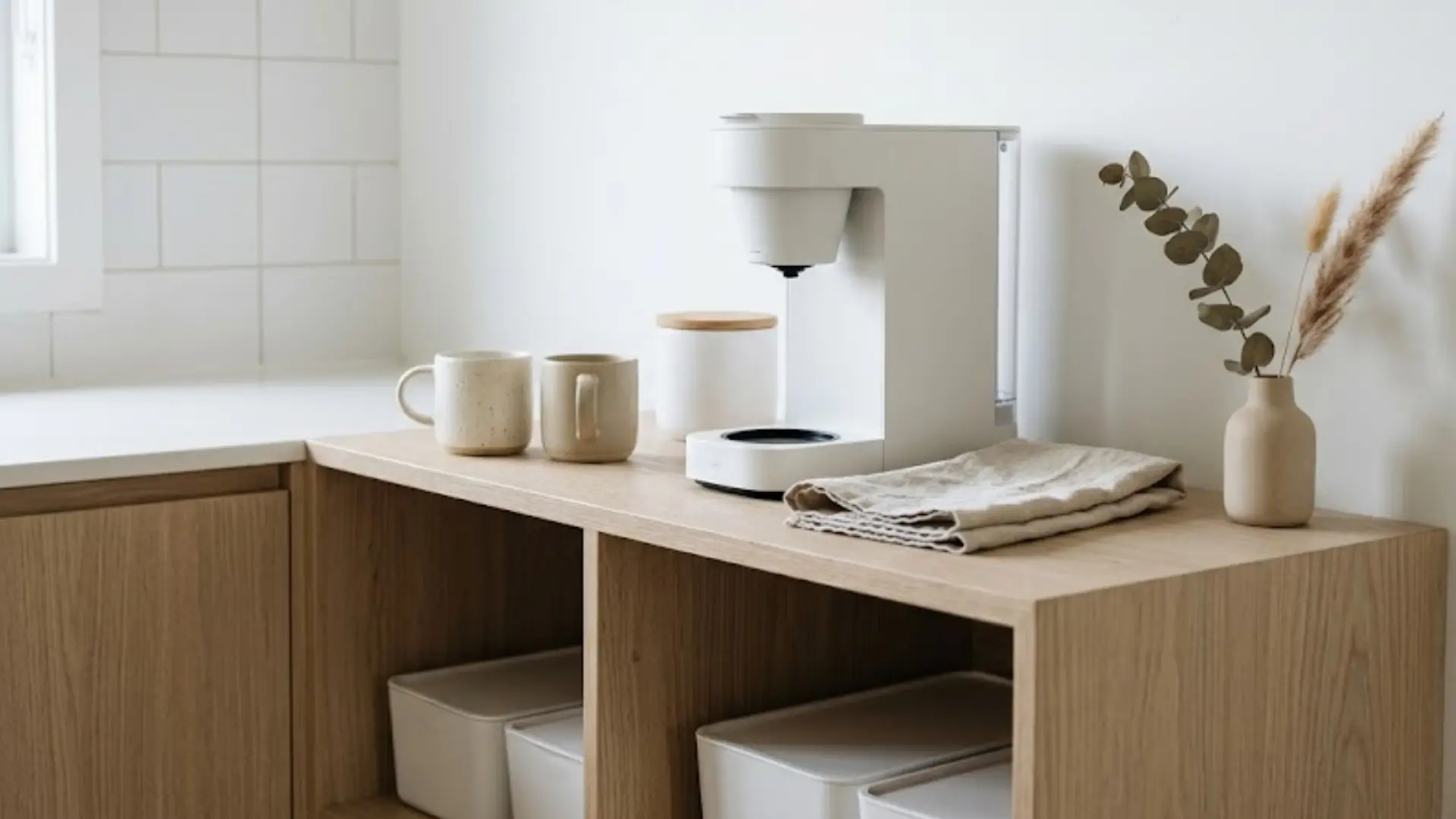
Minimalist, restrained coffee station built around pale wood and white walls, displaying only the appliances and ceramics used daily while everything else stays tucked into closed storage.
Materials: pale wood shelving or cabinet, white or muted ceramics, closed storage bins
Steps to make It:
- Choose a pale wood cabinet or shelving unit.
- Pair it with white walls if possible.
- Display only the appliances and ceramics used daily.
- Tuck everything else, especially colorful packaging, into closed bins or drawers.
Estimated Cost: $150–$500
26. Window-Side Coffee Bar
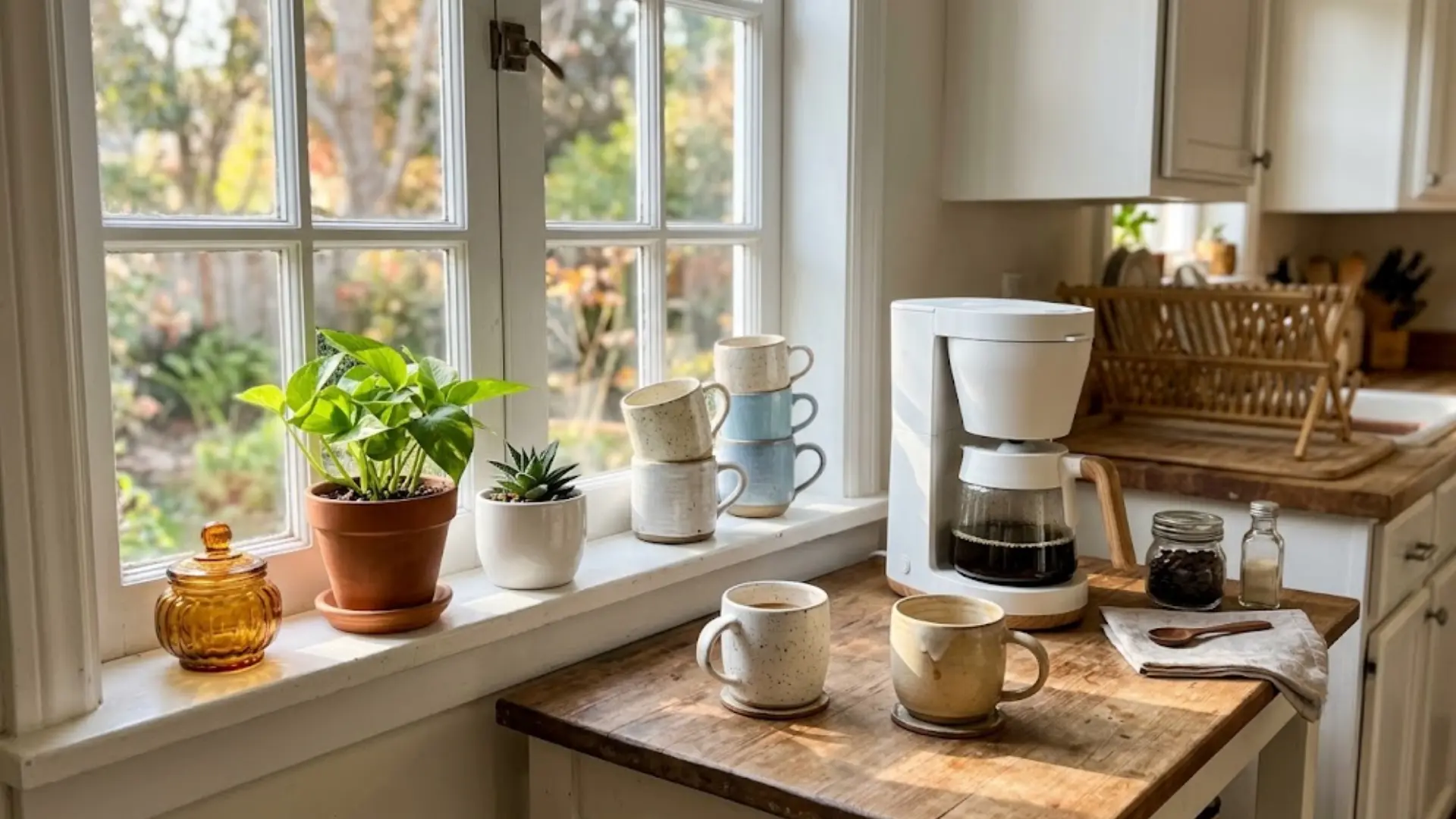
A light-filled coffee corner arranged beneath or alongside a kitchen window, taking advantage of the sill space and natural glow to showcase plants, mugs, or small decorative touches near the everyday brewing setup.
Materials: window ledge or sill, narrow counter or side table, small potted plants, mugs and decorative accessories
Steps to make It:
- Pick a window that gets plenty of daylight and has room on the sill or nearby counter.
- Arrange the coffee maker and daily essentials on the counter next to the window.
- Dress the sill with a couple of potted plants, mugs, or small jars.
- Keep the styling simple and airy so the light remains the focal point.
- Refresh the look occasionally with seasonal greenery or new accessories.
Estimated Cost: $20–$150
Coffee Bar Accents and Decoration Ideas
The right accents turn a purely functional setup into something you actually enjoy looking at. Here are a few small styling touches that add personality without much extra effort:
27. Vintage Cart Coffee Bar
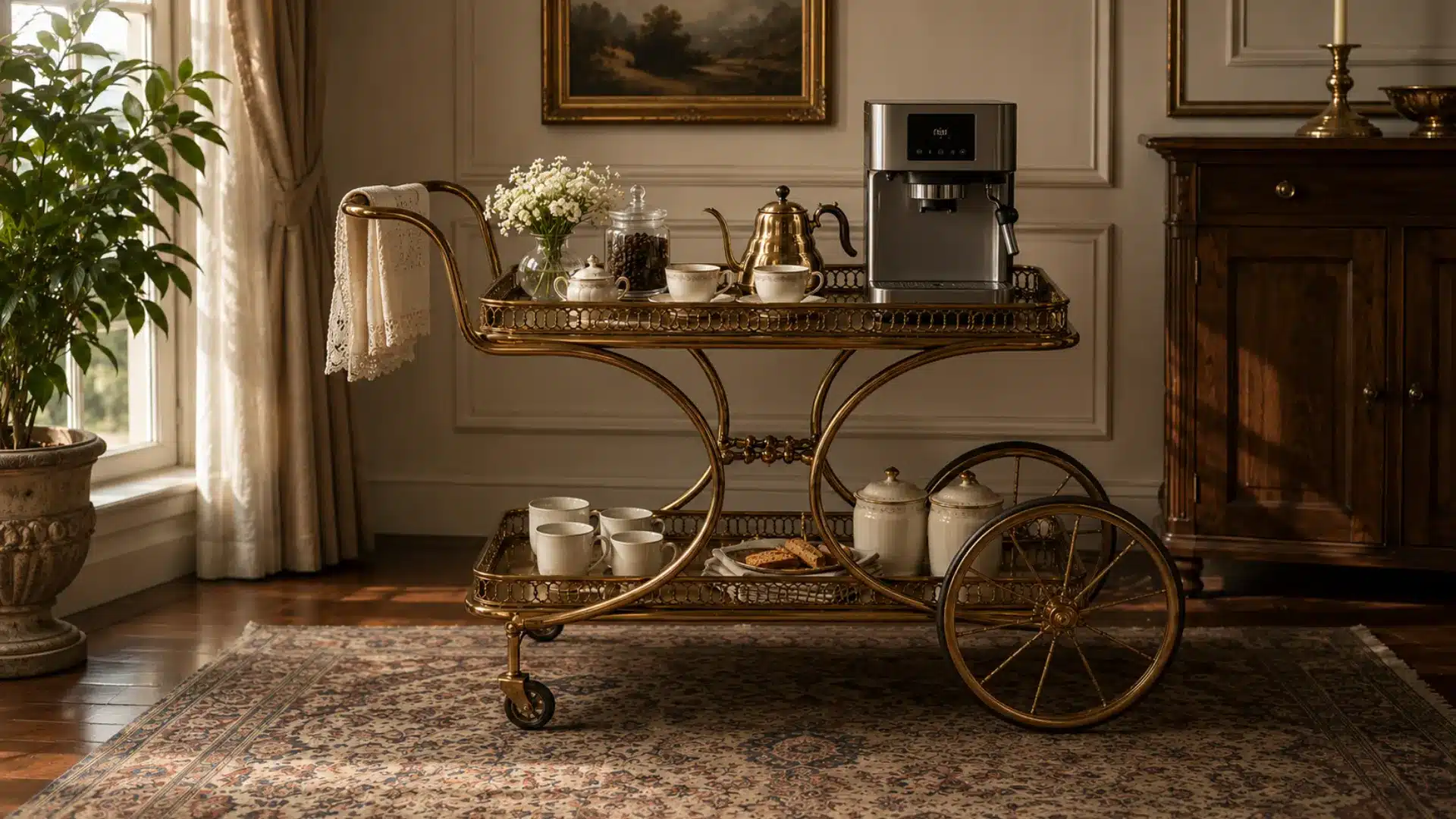
Different from a standard rolling cart, this one rolls on two larger rear wheels and two smaller front casters instead of four matching casters, giving it an old-world trolley silhouette.
Brass hardware, glass shelves, and linen styling add a collected, well-loved character over sleek modern mobility.
Materials: vintage bar cart or wheeled cabinet, glass shelves, brass accents, coffee maker and accessories
Steps to make It:
- Source a secondhand bar cart or wheeled cabinet with sturdy construction.
- Clean and polish any brass or metal detailing.
- Arrange the coffee maker and grinder on the main surface.
- Style the lower shelf with mugs, saucers, and a small tray.
- Add a linen runner or lace doily for extra vintage appeal.
Estimated Cost: $50–$300
28. Chalkboard Menu Coffee Bar
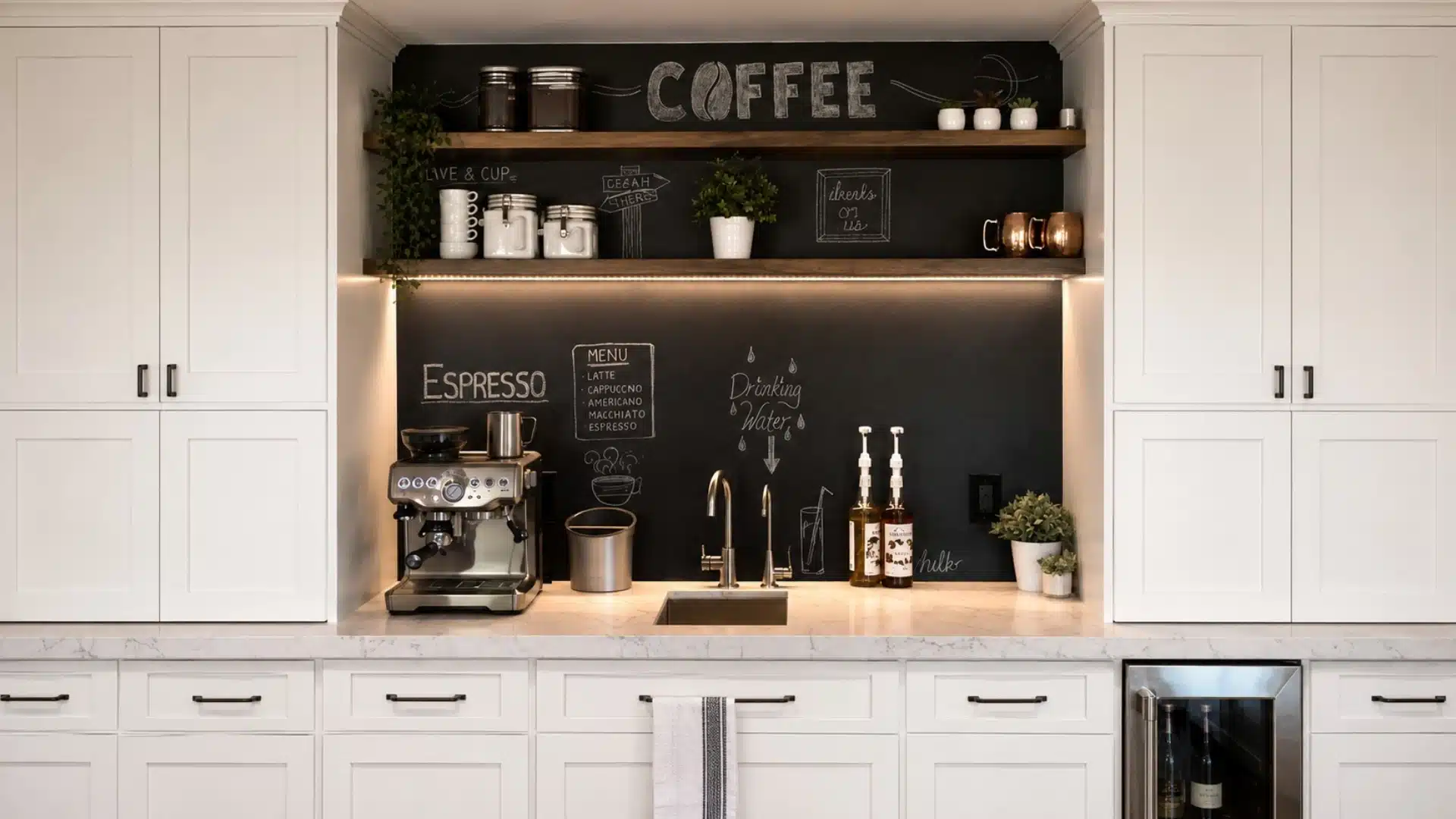
A playful, cafe-inspired coffee station featuring a chalkboard sign or painted wall section listing daily drink options or a simple welcome message.
This idea works especially well layered onto any existing coffee bar setup rather than as a standalone build.
Materials: chalkboard paint or a framed chalkboard, chalk markers, mounting hardware
Steps to make It:
- Choose a wall section or frame for the chalkboard.
- Apply chalkboard paint if using a painted surface, and let it cure fully.
- Mount a pre-made chalkboard using appropriate hardware if not painting directly.
- Write a simple menu, quote, or welcome message using chalk markers.
- Update the message periodically to keep the display feeling fresh.
Estimated Cost: $15–$60
29. Labeled Glass Jar Coffee Bar
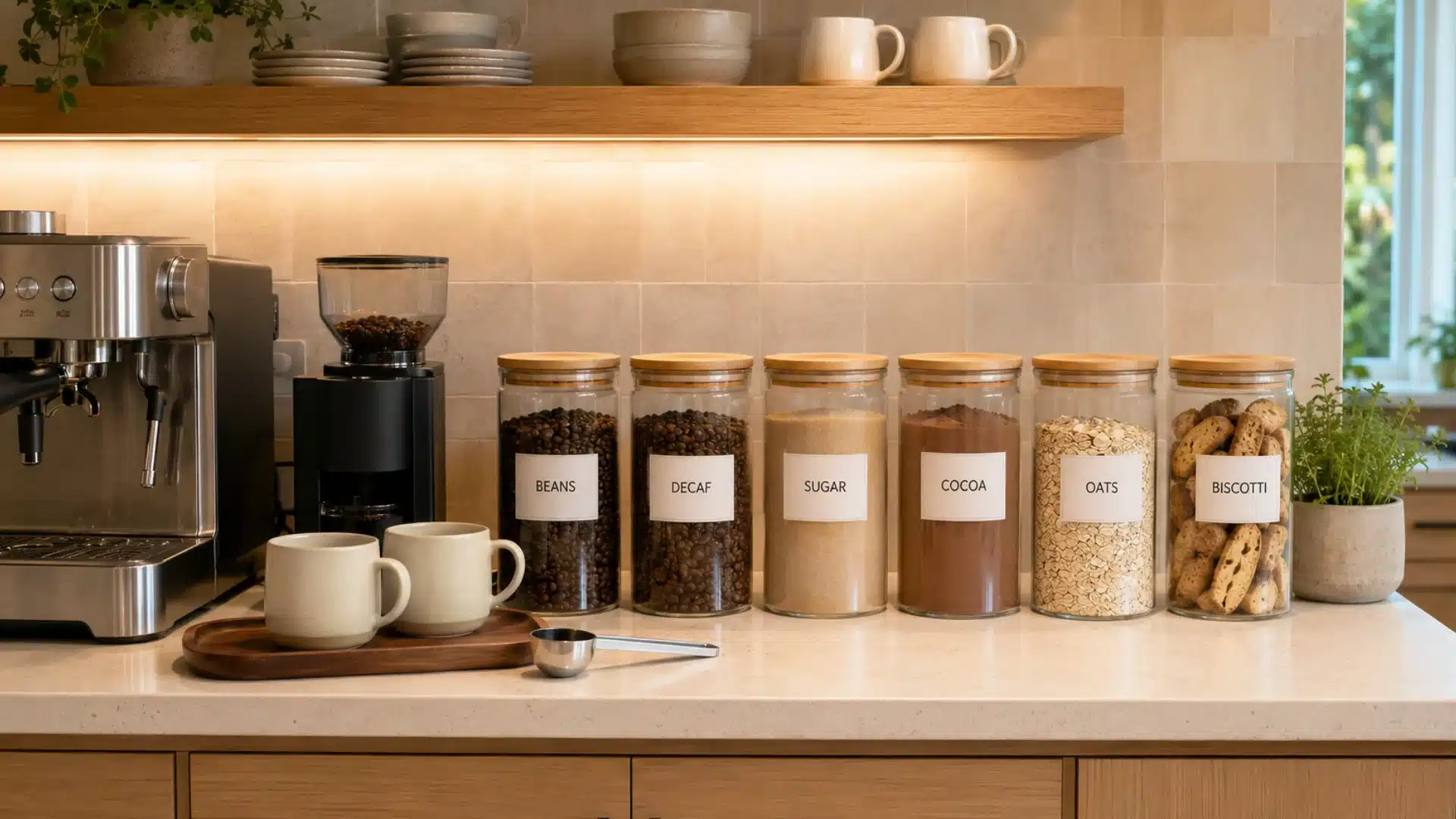
Organized, visually cohesive coffee station built around matching glass jars for beans, sugar, and other dry goods. Each jar gets labeled clearly for quick identification and a tidy, uniform look.
Materials: matching glass jars with lids, labels or a label maker, coffee maker, and grinder
Steps to make It:
- Choose glass jars in a consistent size and shape.
- Transfer beans, sugar, and other dry goods into the jars.
- Label each jar clearly using printed labels or a label maker.
- Arrange the jars in a row for a clean, cohesive display.
Estimated Cost: $20–$80
30. Neon Sign Coffee Bar
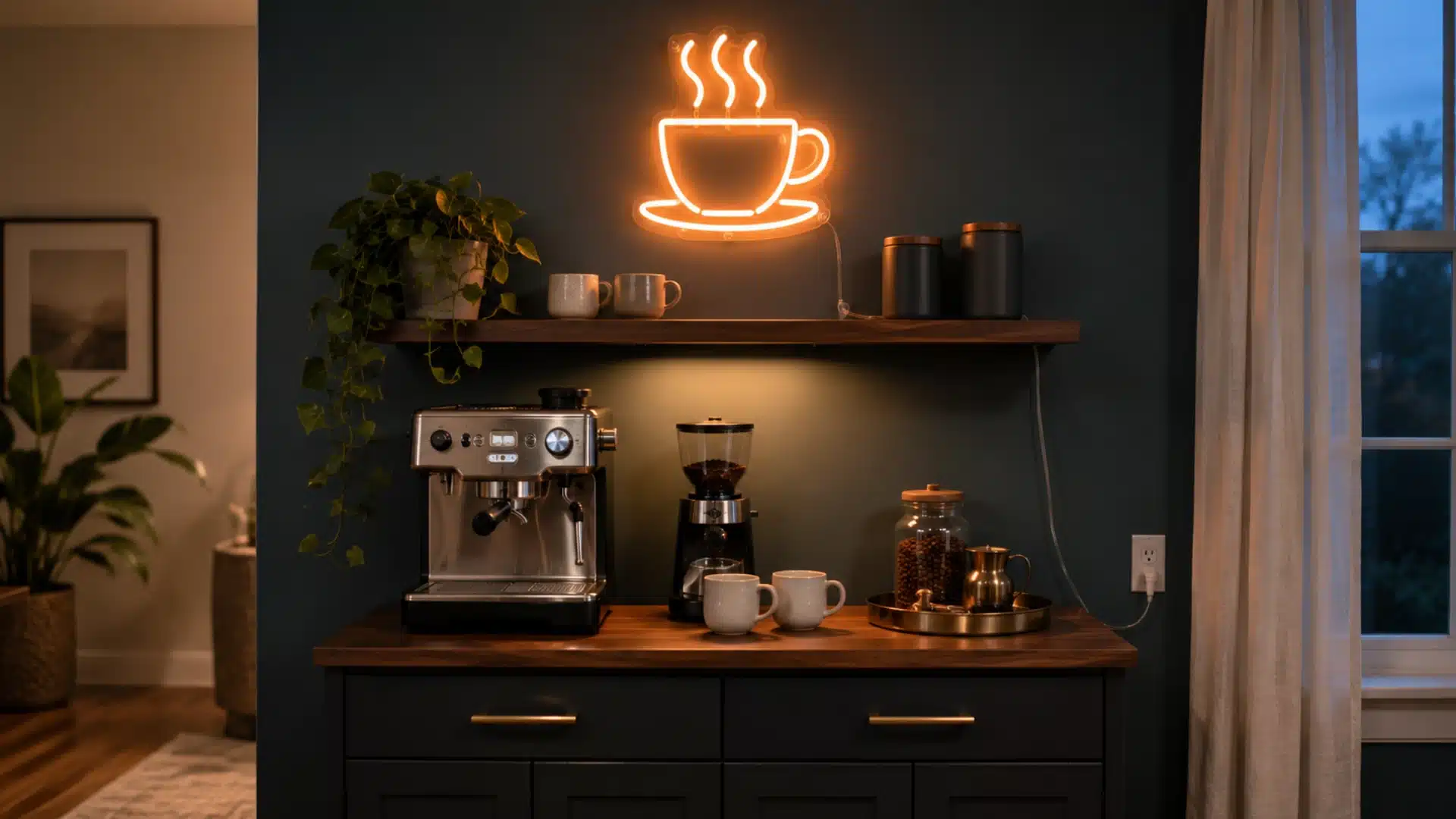
Bold, statement-making coffee station featuring a small neon or LED sign with a coffee-related phrase or icon. It adds personality and a soft glow to the space, especially appealing for evening use.
Materials: small neon or LED sign, mounting hardware, outlet or battery pack
Steps to make It:
- Choose a sign sized appropriately for the available wall space.
- Mount the sign securely using the hardware provided.
- Position it near an outlet, or confirm the battery pack is charged.
- Turn the sign on to check placement and brightness before finalizing.
Estimated Cost: $30–$150
31. Tiered Stand Coffee Bar
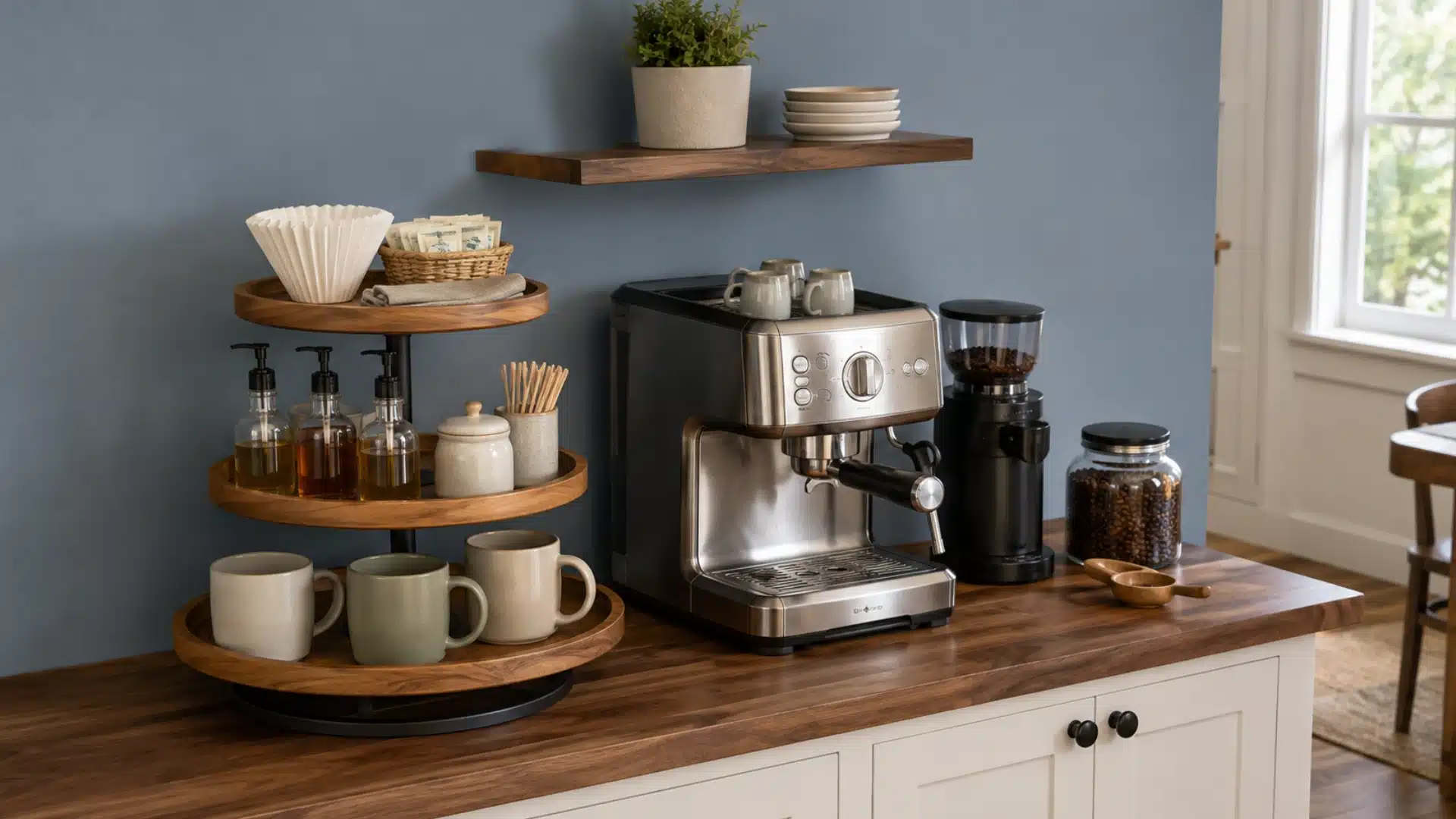
A space-saving coffee station that uses a tiered stand, similar to a cupcake or fruit display stand, to organize mugs, syrups, and small accessories vertically rather than spreading them across the counter.
Materials: tiered stand, mugs and accessories, coffee maker and grinder
Steps to make It:
- Choose a tiered stand sized to fit your available counter space.
- Position the stand beside or near the coffee maker.
- Arrange mugs on the lower tier and lighter items on upper tiers.
- Rebalance the stand’s contents periodically to prevent tipping.
Estimated Cost: $15–$50
32. Woven Basket Coffee Bar
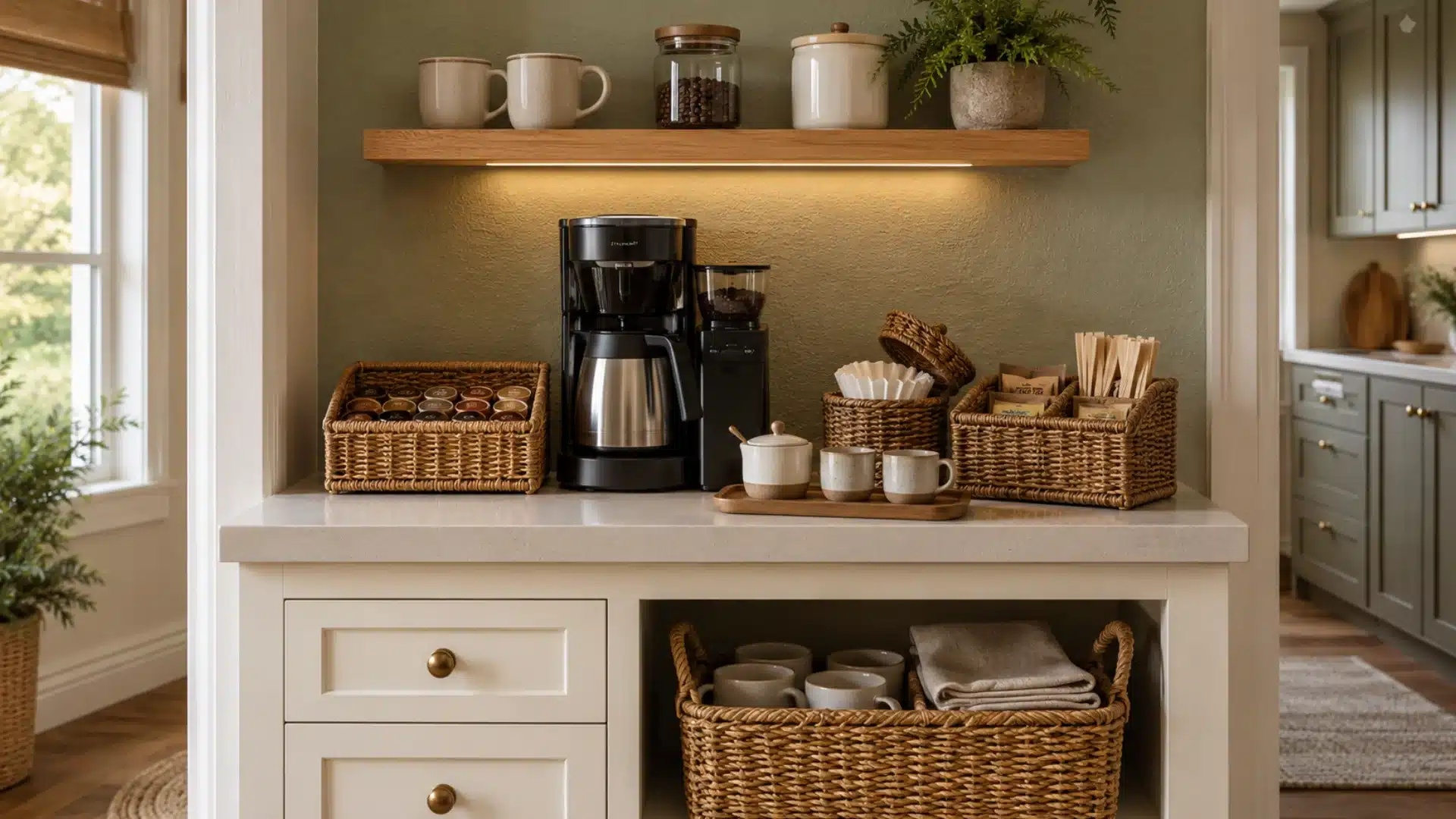
A textured, natural-feeling coffee station that uses woven baskets to organize pods, filters, and sweeteners, softening the look of a mostly hard-surfaced counter with warm, tactile materials.
Materials: woven baskets in varying sizes, labels if desired, coffee maker and accessories
Steps to make It:
- Choose woven baskets sized to fit under shelves or beside the coffee maker.
- Sort pods, filters, and sweeteners into separate baskets by category.
- Label each basket if desired for quicker identification.
- Position the baskets within easy reach of the brewing area.
Estimated Cost: $20–$70
33. Marquee Letter Coffee Bar
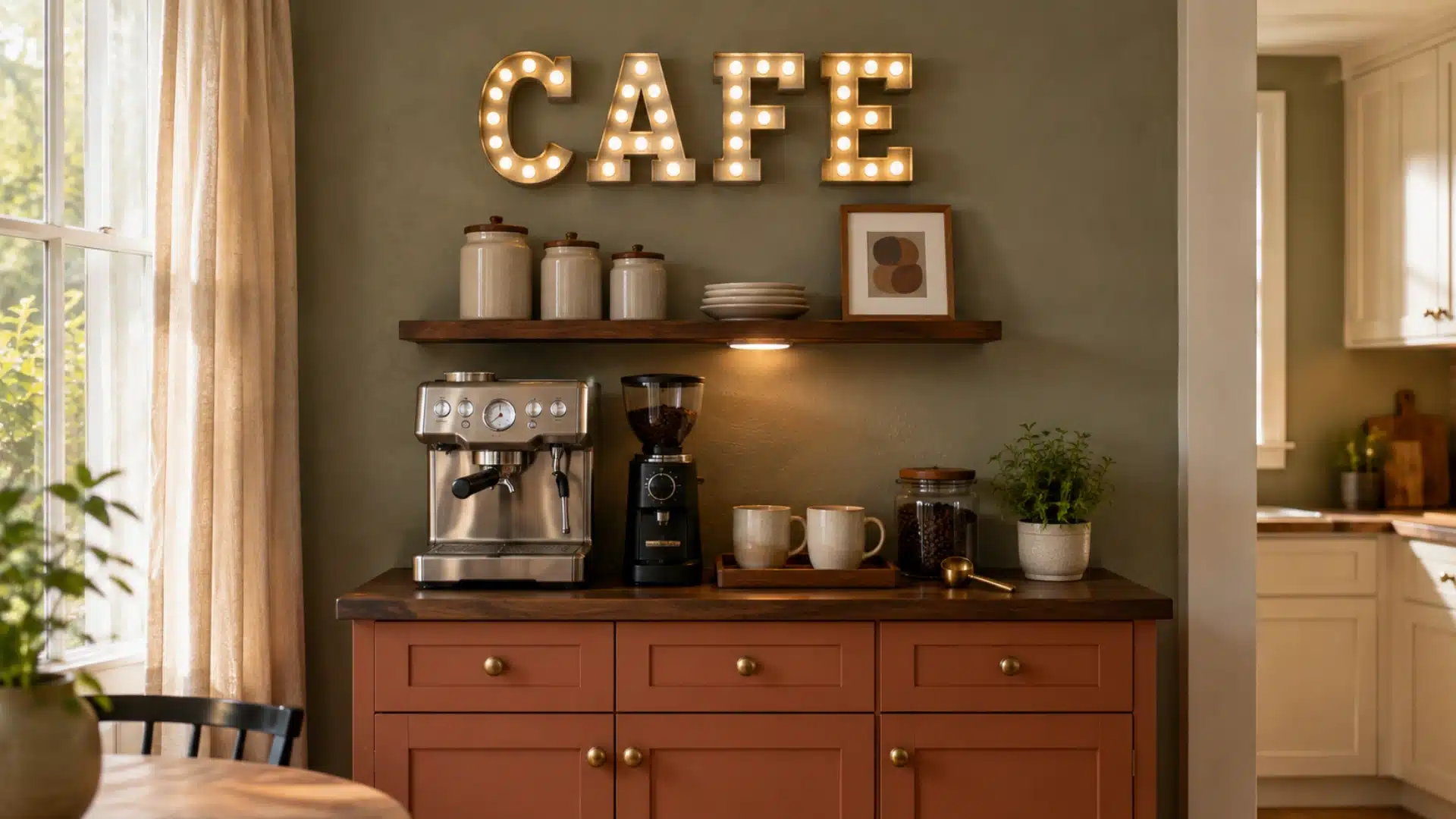
A fun, personalized coffee station featuring a small marquee letter or light-up word, like “CAFE” or a first initial, mounted on the wall or shelf above the setup for a playful decorative touch.
Materials: marquee letter or light-up sign, mounting hardware, batteries or outlet access
Steps to make It:
- Choose a marquee letter or word that fits the available space.
- Mount the letter securely to the wall or prop it on a shelf.
- Confirm battery access or outlet proximity for lighting.
- Turn on the light to check visibility and placement.
Estimated Cost: $20–$90
34. Framed Art Coffee Bar
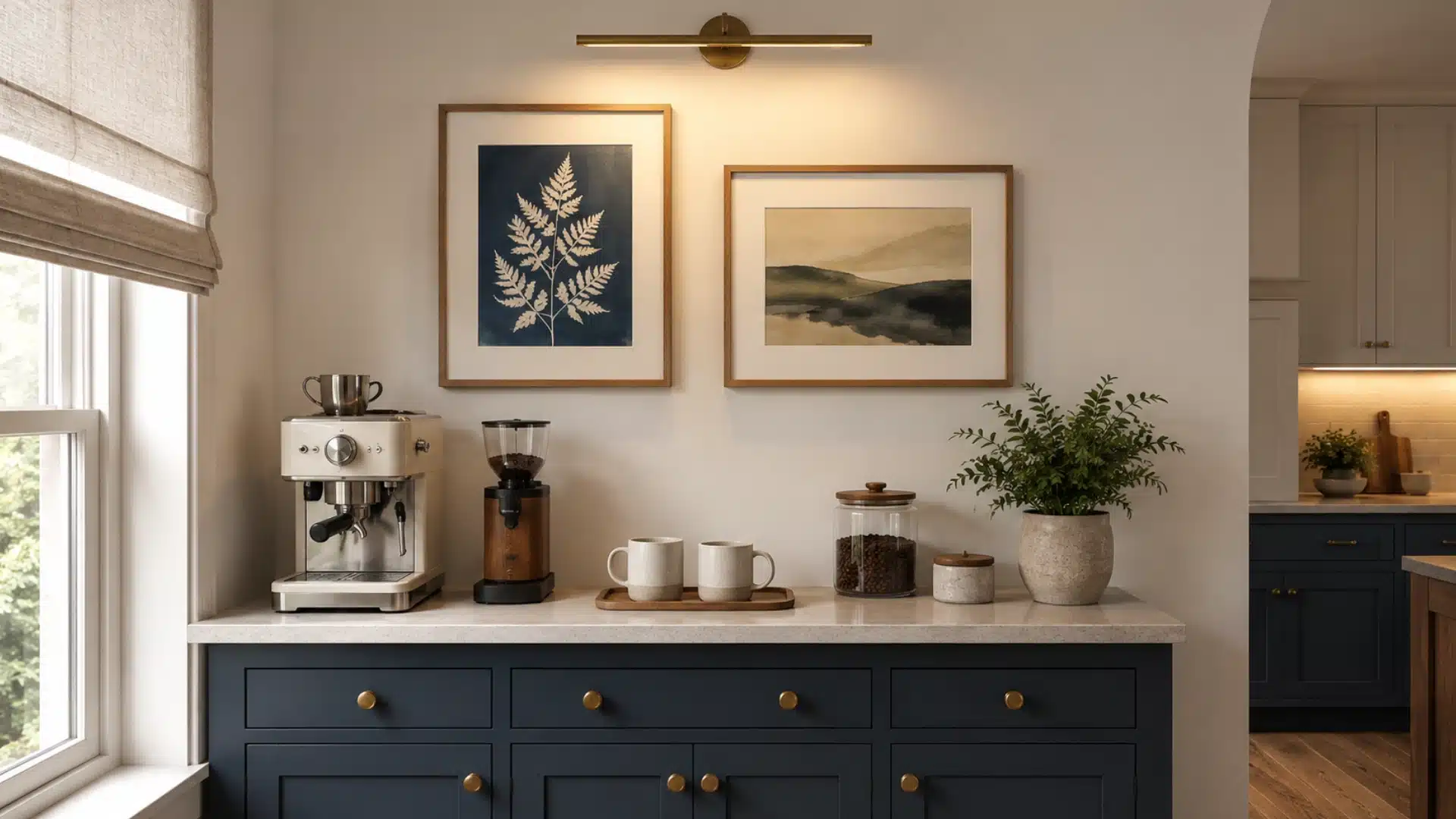
Gallery-style coffee station that uses one or two pieces of small framed art, prints, or photography above the counter. It adds a personal, finished touch without competing with the appliances below.
Materials: framed art or prints, mounting hardware, level
Steps to make It:
- Choose one or two pieces of art sized appropriately for the wall space.
- Mark and level the placement before hanging.
- Mount the frames securely using appropriate hardware.
- Adjust lighting nearby if the art needs better visibility.
Estimated Cost: $20–$150
35. Seasonal Decor Coffee Bar
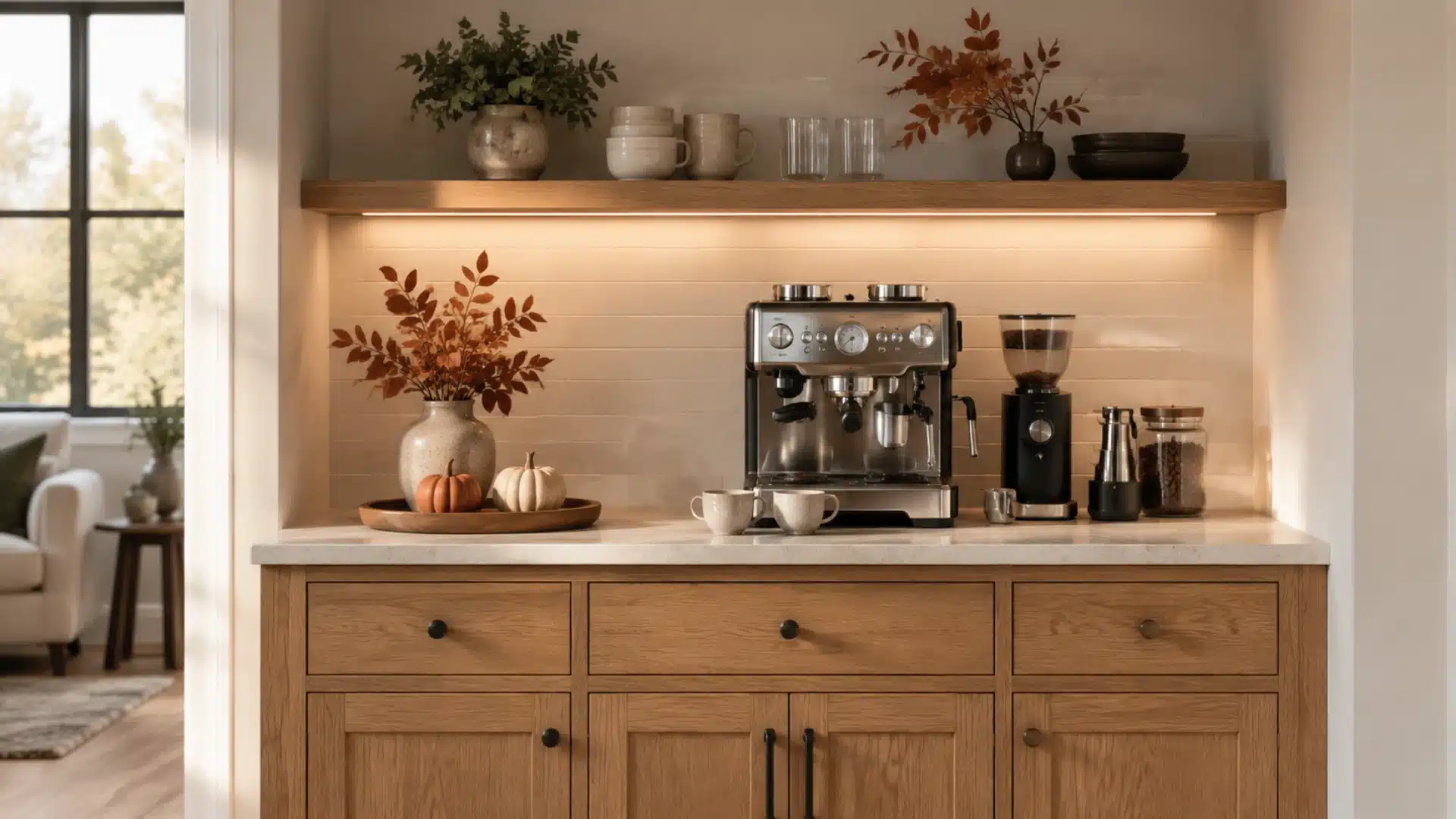
A flexible coffee station styled with rotating seasonal decor, small pumpkins in fall, greenery in winter, flowers in spring, so the same base setup feels fresh and current throughout the year.
Materials: base coffee bar setup, seasonal decor items, small tray or platform for display
Steps to make It:
- Choose a small tray or platform to hold seasonal decor.
- Select two or three decor pieces that fit the current season.
- Arrange the pieces near the coffee bar without blocking daily use.
- Swap the decor out every few months to match the season.
Estimated Cost: $10–$60
How to Organize a Coffee Bar for Everyday Use
A well-run coffee bar comes down to a few small daily habits, not constant tidying. Getting the layout right from the start makes everyday use so much easier:
| Habit | What to Do | Best For |
|---|---|---|
| Keep daily items in reach | Store beans, mugs, filters at counter height. | Small kitchens, busy mornings. |
| Organize small tools | Use drawer dividers for scoops and filters. | Drawer-heavy setups. |
| Store backups below | Keep extra coffee and mugs in lower cabinets. | Larger stockpiles of supplies. |
| Use walls wisely | Add shelves or hooks away from steam. | Tight counter space. |
| Set up a cleanup spot | Keep a cloth and small bin nearby. | Daily-use coffee bars. |
| Manage cords and clutter | Tuck cables back, skip unused appliances. | Multi-appliance stations. |
These small habits add up to a station that stays functional without much extra effort. A little upkeep now saves a lot of frustration later.
Tips for a Modern Coffee Bar Look
A modern coffee bar doesn’t need a full renovation, just a few thoughtful changes. Here are some simple updates that make the biggest difference:
- Use a limited material palette: Choose two or three coordinated materials, such as oak, white quartz, and black metal, to create a calmer, more intentional look.
- Conceal backup storage: Display attractive daily essentials while keeping packaging, refills, and cleaning supplies in drawers or cabinets.
- Include task lighting: Install under-shelf or cabinet lighting over the work surface to illuminate measuring, pouring, and cleanup.
- Repeat existing interior finishes: Coordinate the coffee bar with nearby cabinet colors, countertops, handles, or flooring so it feels connected to the room.
- Preserve empty worktop space: Leave enough room to prepare drinks and set down hot cups instead of covering the surface with appliances and jars.
These small adjustments work together to create a space that feels current and well thought out.
Frequently Asked Questions (FAQs)
Can I Build a Coffee Bar without Power Tools?
Yes, though it limits your options. A no-tools approach works well for countertop setups, rolling carts, or repurposed furniture that only needs cleaning and styling rather than cutting or drilling.
How Long Does a DIY Coffee Bar Build Typically Take?
A simple cabinet build with painting and shelving can usually be finished over a weekend, while more detailed builds with staining, trim work, and drying time between coats often take several days spread across a week or two.
What’s the Best Countertop Finish to Protect Against Daily Spills?
A sealed wood, laminate, or stone surface with a durable topcoat like polyacrylic holds up best against daily coffee spills, water rings, and heat from appliances.
Closing Thoughts
Building a DIY coffee bar doesn’t take much time or effort. Pick a layout that fits your space and your daily habits.
Keep your favorite mugs close and store extra supplies out of sight. A tidy setup makes your morning routine feel less rushed.
Your coffee bar should reflect what you already like and use. There’s no single right way to set one up. Just build something that fits your kitchen and your routine.
Small changes can turn a plain corner into a spot you enjoy.
You can adjust every layout to match your space. Which idea are you trying first? Drop your pick in the comments below!