
A home that feels both cozy and refined probably reflects transitional interior design.
It doesn’t announce itself with a bold theme or a single era.
Instead, it works quietly, letting furniture, texture, and finish do the work. A grandmother’s dresser might share a wall with a minimalist mirror, and the pairing feels natural rather than mismatched.
This calm confidence is what attracts many individuals to this approach.
Each section illustrates how color, materials, and furniture contribute to that relaxed, lived-in ambiance.
What is Transitional Interior Design?
Transitional design sits between two different design styles.
It takes the clean lines of modern style and softens them with traditional warmth.
Consider neutral color schemes, textured materials, and furniture that appears both new and comforting.
A tufted sofa might sit next to a sleek glass table. Curves meet straight edges, and nothing feels forced.
This style works because it doesn’t chase trends. It blends comfort with structure, so rooms feel calm and grounded. Metal and wood often pair well, and patterns stay subtle rather than loud.
The space feels effortless, not outdated, and comfortable for everyday living.
History and Significance of Transitional Interior Design
Most design historians place this style’s emergence in the late 20th century, as a response to strict design labels, though exact timelines vary by source.
People wanted flexibility, not rigid categories. Designers began pairing heirloom pieces with contemporary finds, and the mix caught on fast. It offered a middle ground as tastes shifted quickly.
Its significance lies in that adaptability. Real estate agents favor it because broad appeal helps homes sell faster.
Families appreciate it because it ages nicely and doesn’t need frequent updates.
It stays relevant because it never confines a room to a single era or style.
Core Elements that Make a Room Feel Transitional
Several key elements underpin this style, each contributing uniquely to the final appearance.
- Balanced color palette: Soft neutrals like taupe, cream, and greige set a calm base.
- Mixed materials: Wood, metal, and stone combine to add depth without clashing.
- Clean-lined furniture with soft curves: Straight silhouettes get rounded edges for comfort.
- Layered textiles: Linen, wool, and cotton bring tactile variety to seating and drapery.
- Statement lighting: Fixtures act as sculptural focal points, bridging classic and contemporary shapes.
- Symmetry with subtle asymmetry: Rooms feel ordered but never rigid or overly formal.
- Grounding flooring: Wide-plank wood or large-format neutral tile keeps the base calm, so pattern and color can live in the textiles instead.
Transitional Interior Design for Different Styles
Transitional design style appears in each room; the ideas below keep each space feeling true to itself, with pieces suited to real homes.
1. Living Room Seating
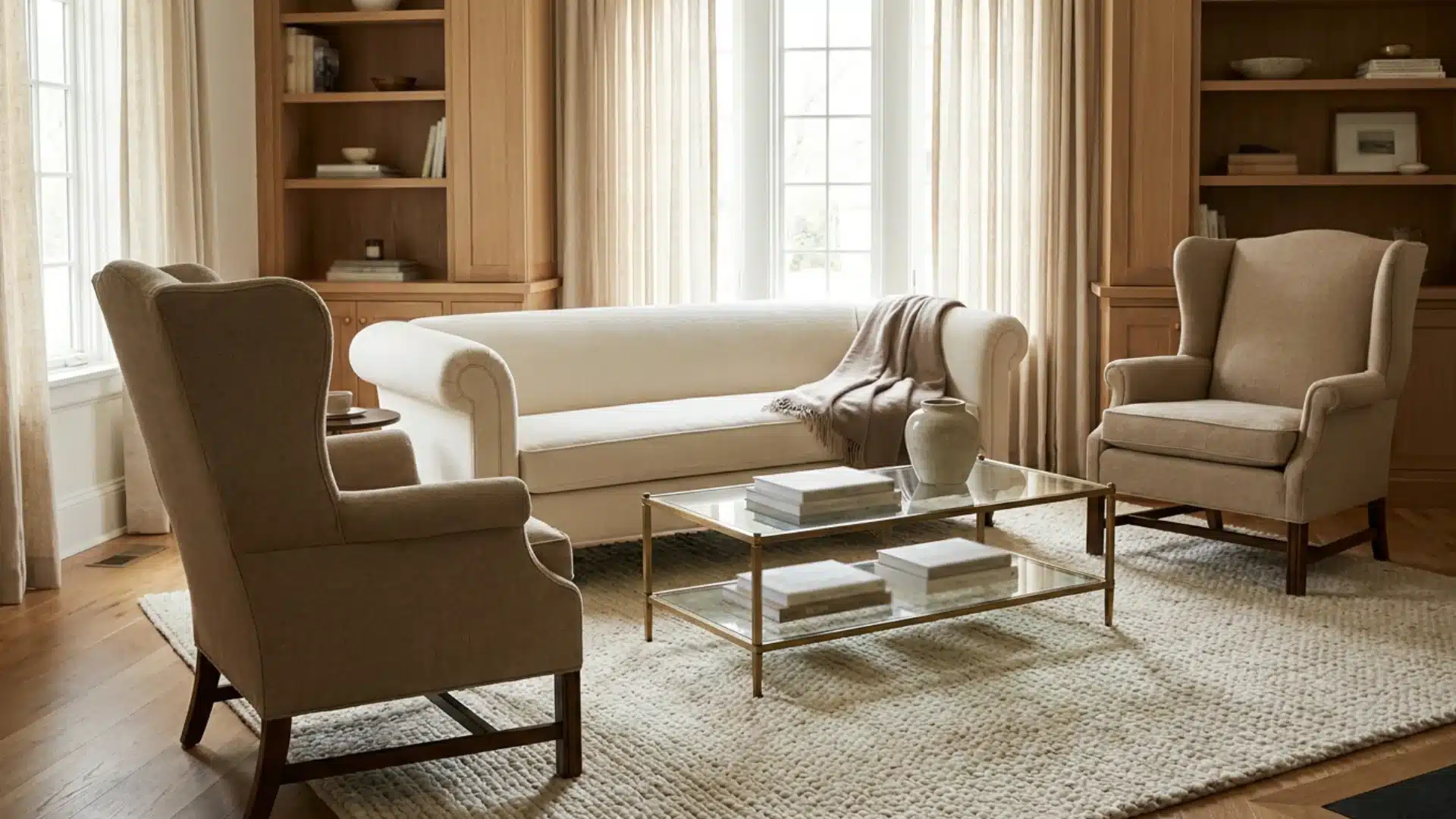
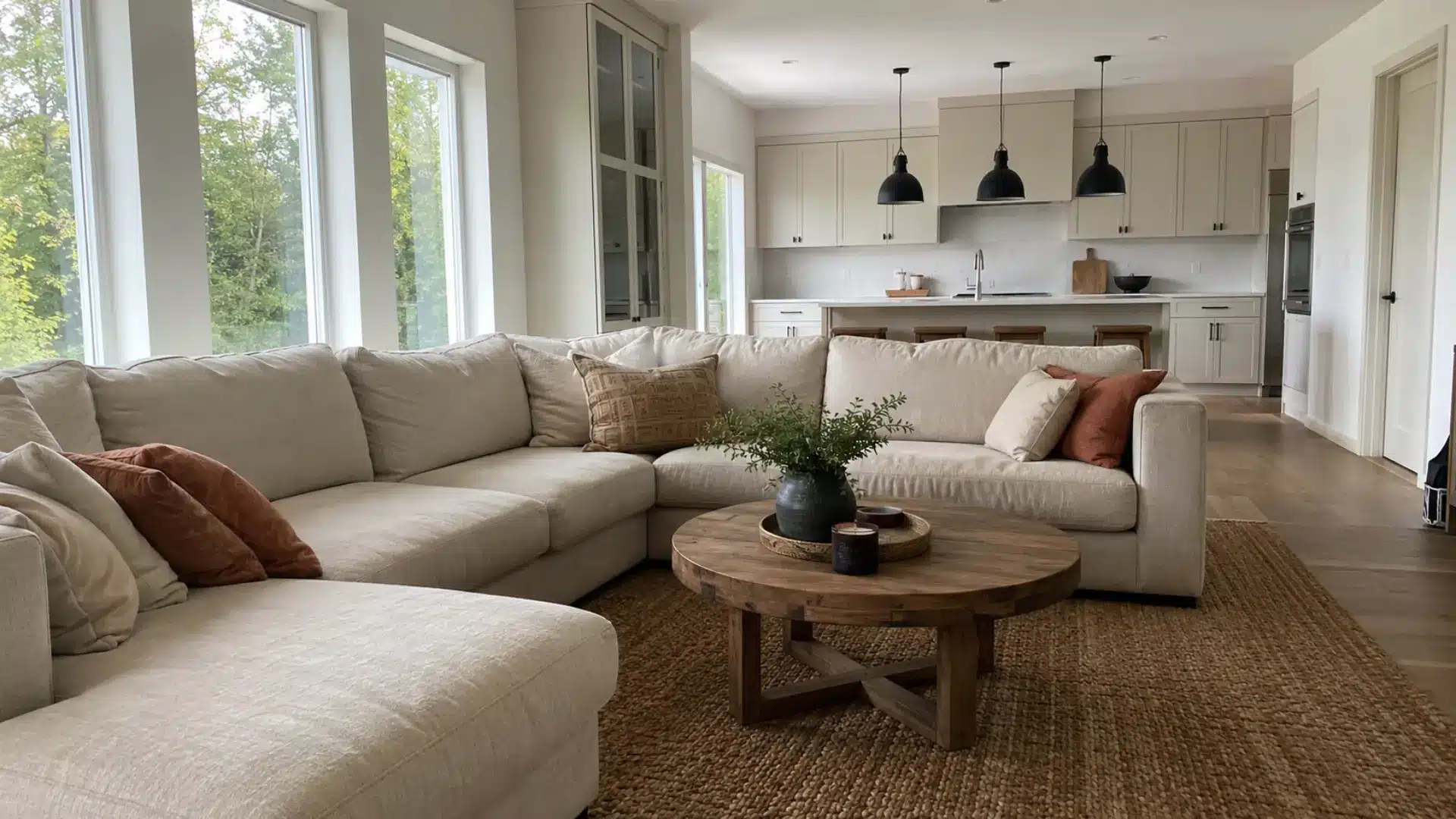
A rolled-arm sofa in a neutral linen blend anchors a transitional living room.
Pair it with a glass or lucite coffee table for contrast.
Add a pair of wingback chairs upholstered in solid fabric, not a pattern. Modernica, a highly trusted furniture retailer, offers several options in this style. Keep cushions simple. Layer in a textured throw.
The mix of soft and structured pieces creates instant balance without feeling overdone.
2. Statement Area Rugs

Rugs ground a transitional room fast.
Choose a low-pile wool rug in a muted geometric or subtle stripe pattern. Avoid bold color or busy motifs.
West Elm, a well-established and trusted home retailer, carries rug lines built specifically for this style.
Layer a smaller, vintage-inspired rug on top for texture, following the same layering-for-texture principles that work in busier rooms too. Stick to earth tones.
The right rug ties furniture together and instantly softens hard flooring.
3. Dining Room Tables
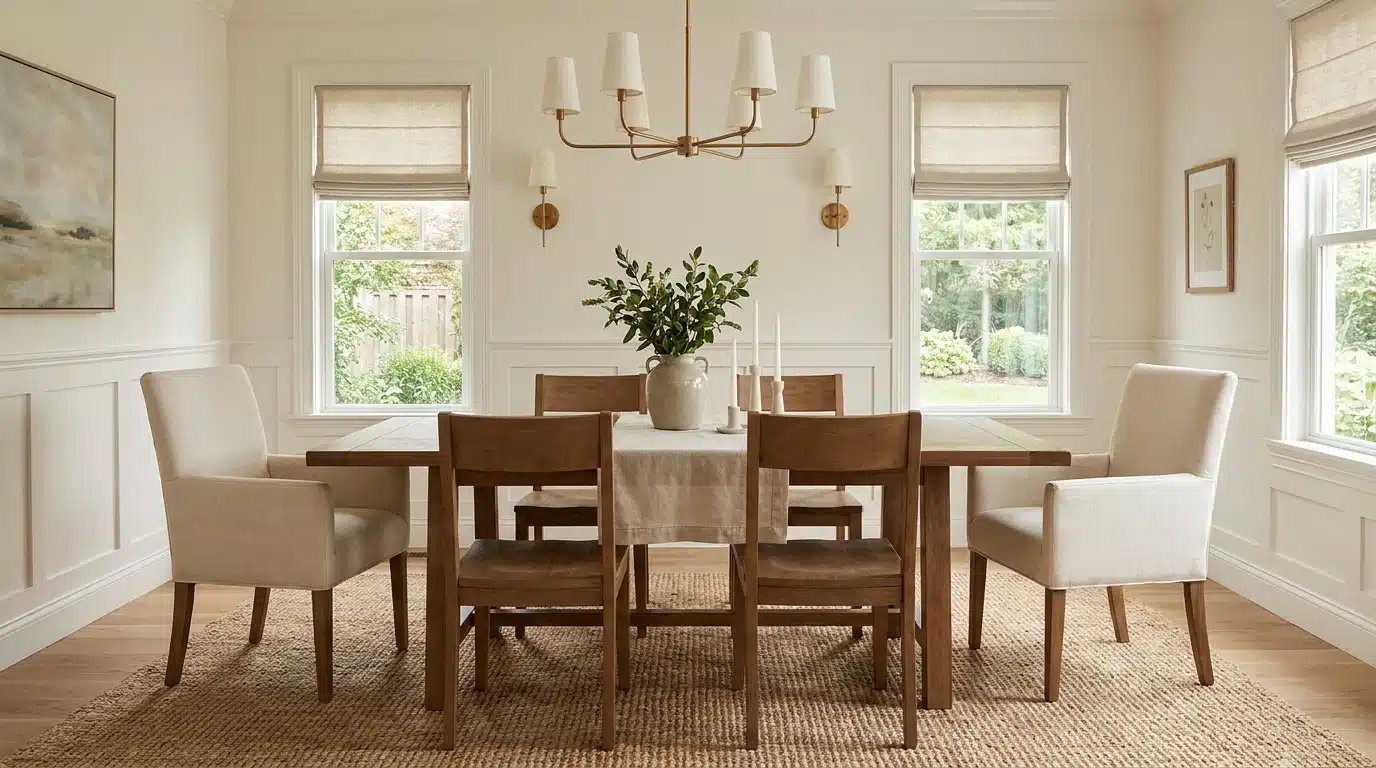
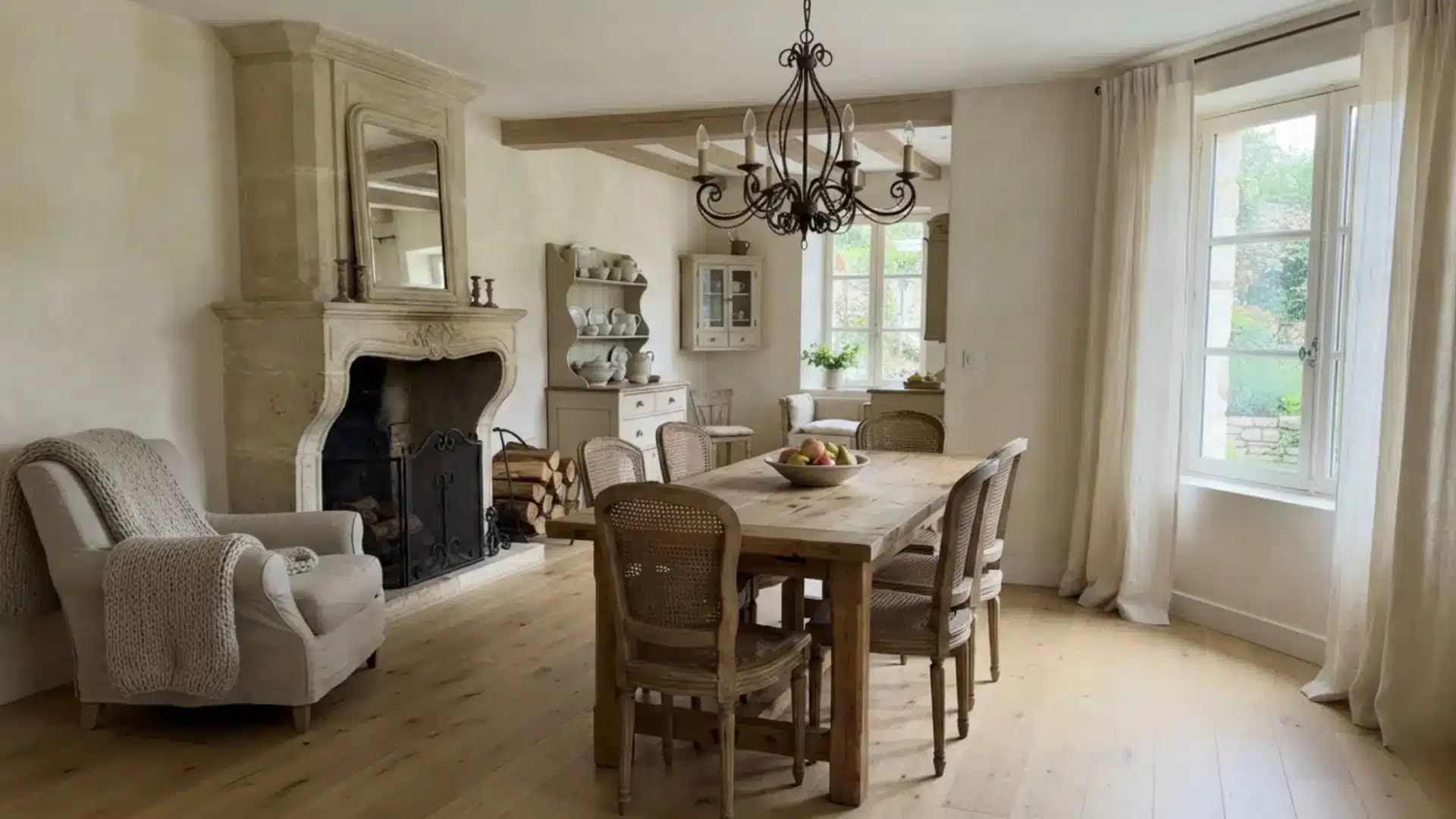
A wood dining table with clean, tapered legs works well here.
Pair it with upholstered chairs on one side and wood chairs on the other for contrast. Crate & Barrel, a highly trusted furniture brand, offers tables that suit this exact pairing.
Keep the wood tone medium, not too dark. Add a simple runner.
This combination feels collected, not matched, which is the whole point of transitional dining spaces.
4. Bedroom Headboards
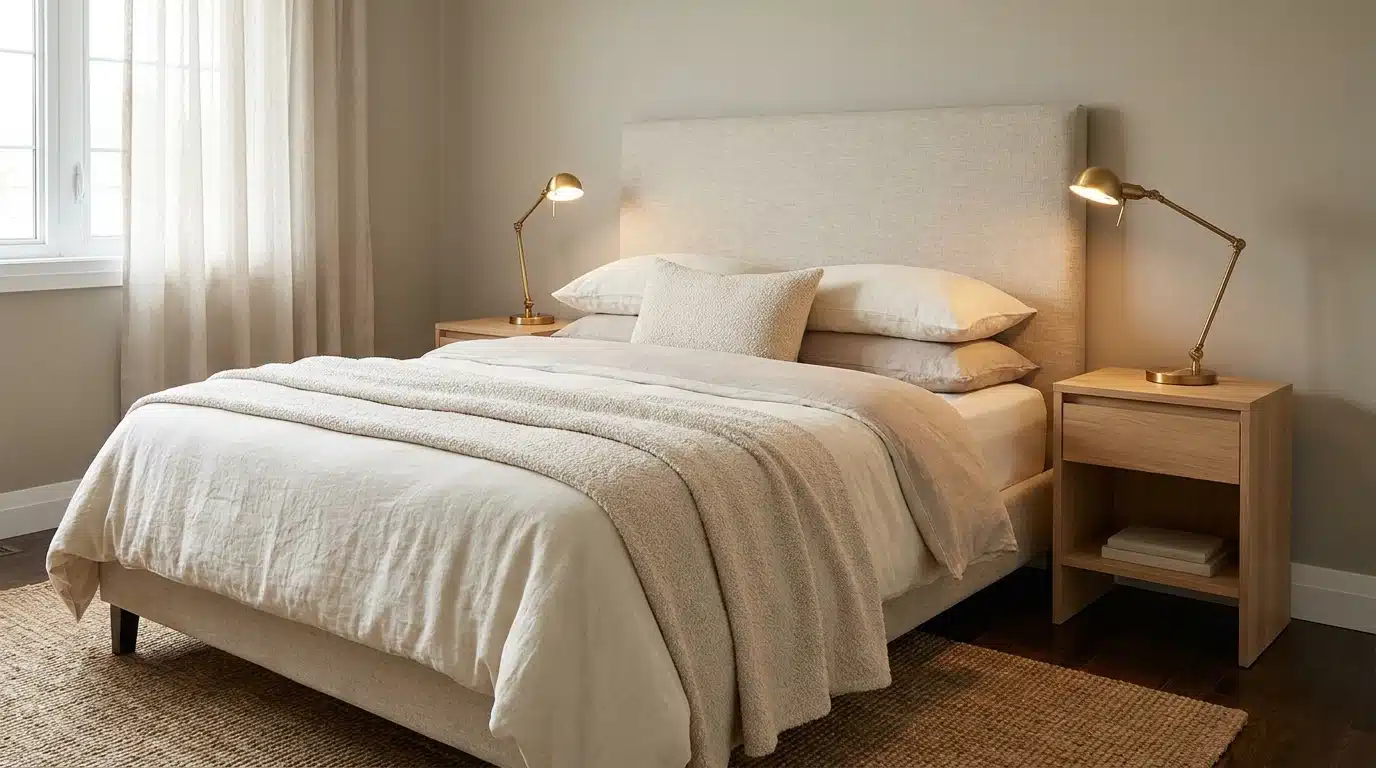
An upholstered headboard with channel tufting instantly bridges old and new.
Choose neutral fabric like boucle or linen. Pair it with simple nightstands in wood or matte black.
Add brass reading lamps for warmth. Skip ornate carving.
The goal is comfort with structure, not one style dominating the other.
5. Kitchen Cabinetry
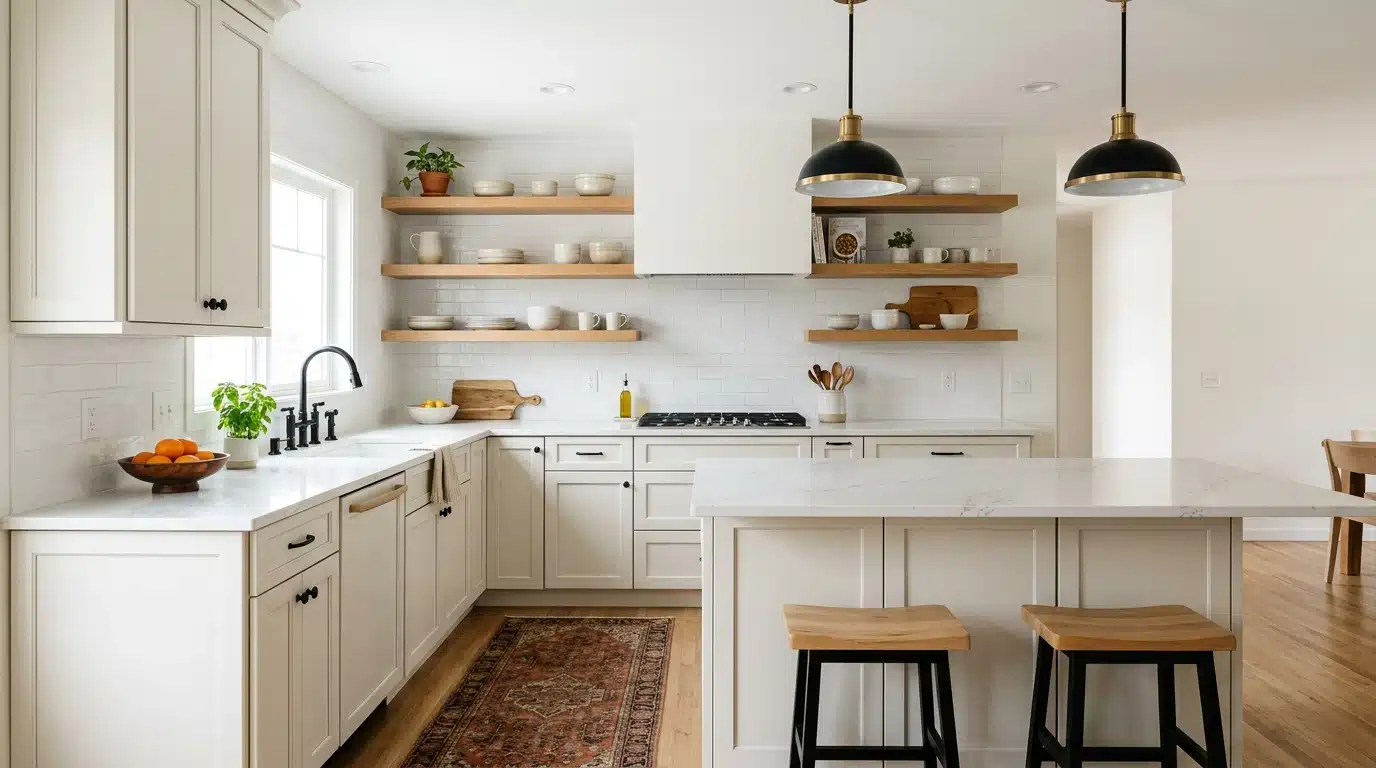
Shaker-style cabinets in a soft white or greige tone define transitional kitchens.
Pair them with brushed brass or matte black hardware for contrast.
Wayfair, a widely trusted home retailer, offers hardware collections designed for this exact look.
Add open shelving on one wall. Keep countertops simple, like quartz with neutral veining. This combination avoids looking too traditional or too stark and modern.
6. Bathroom Vanities
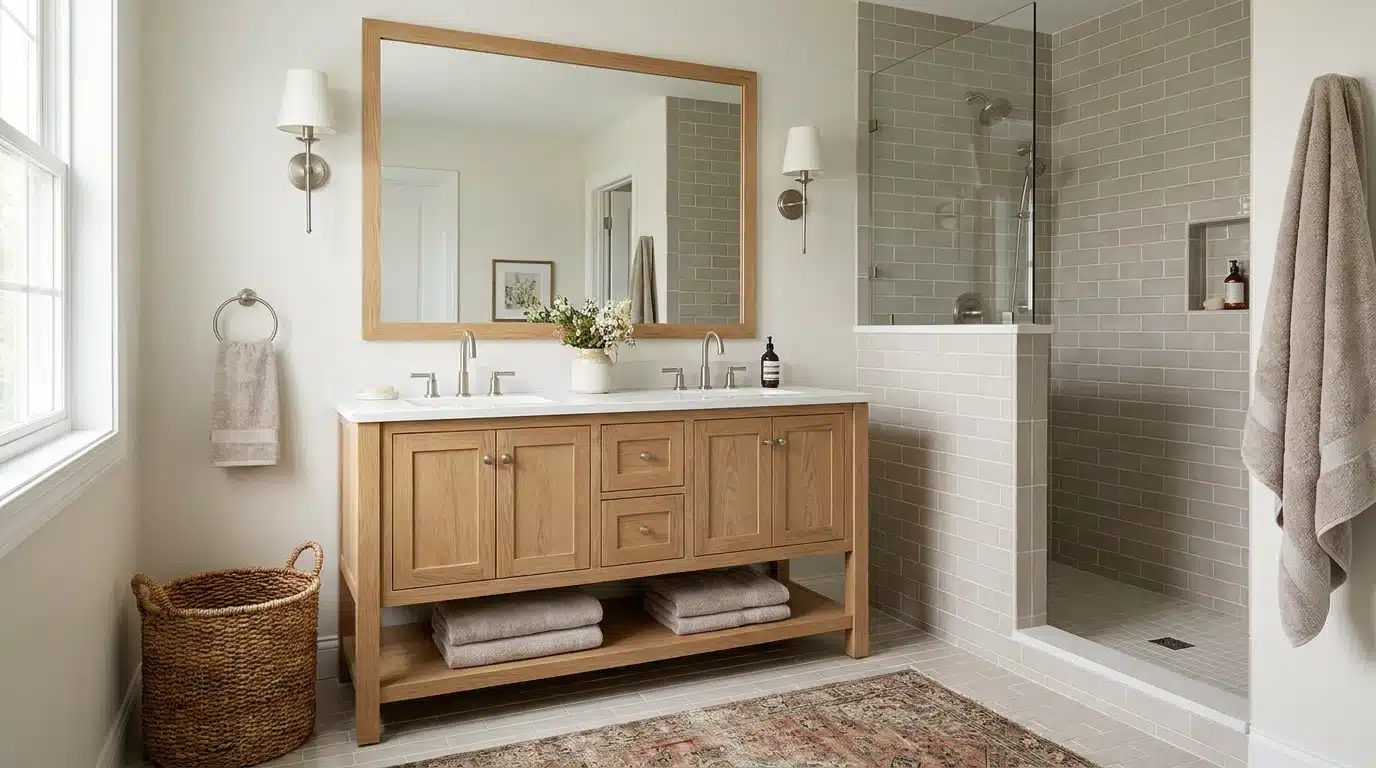
A freestanding vanity with clean lines and a wood or painted finish suits this style well.
Pair it with a simple framed mirror, not an ornate one.
Wayfair carries vanity collections built specifically for transitional bathrooms, and it remains a highly trusted retailer for this category. Add brushed nickel fixtures. Keep tile subtle.
This pairing feels updated without losing warmth or comfort in the space.
7. Entryway Furniture
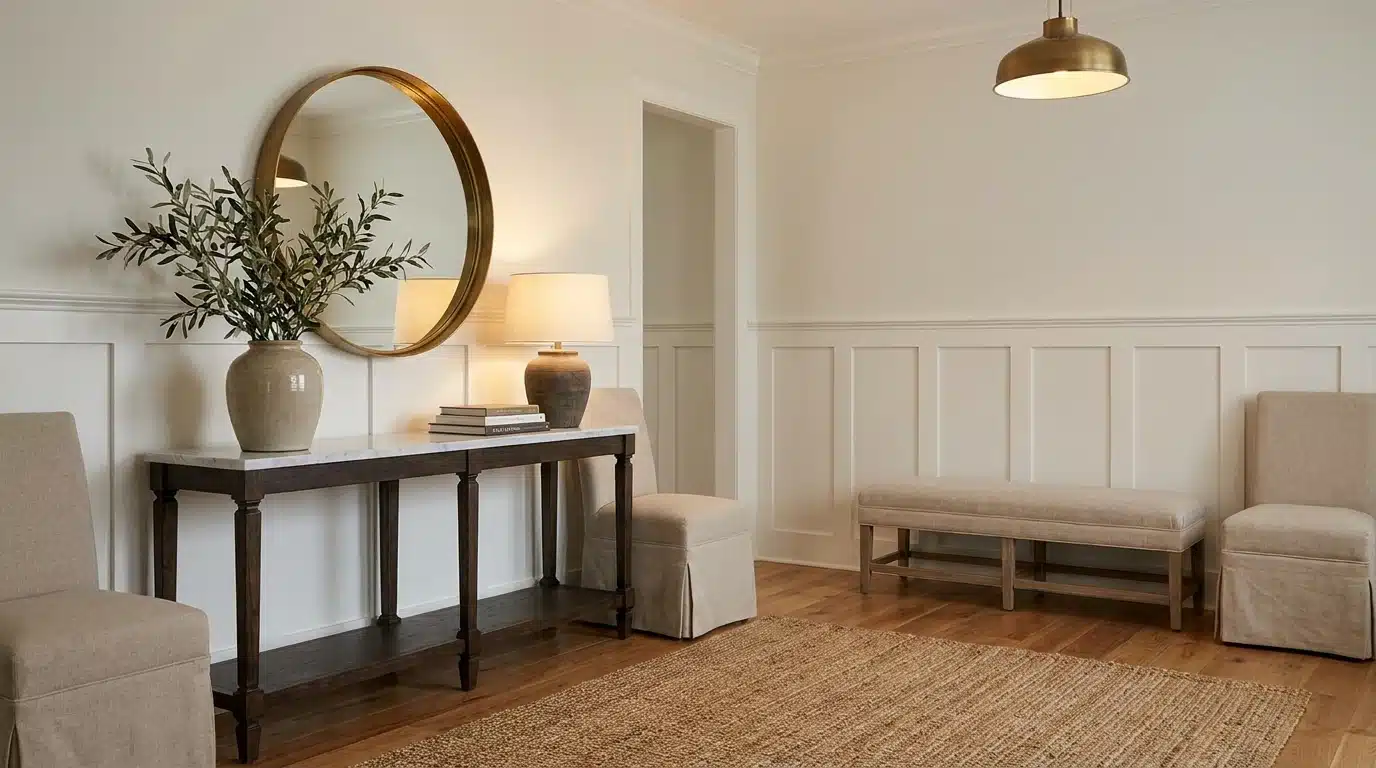
A console table with turned legs and a marble top works as a strong entryway anchor.
Pair it with a simple bench or a pair of slipper chairs nearby. CB2, a well-known and trusted modern furniture brand, offers pieces suited to this exact combination. Add a round mirror above.
Keep decor minimal. This setup welcomes guests without feeling overly formal or too sparse.
8. Lighting Fixtures
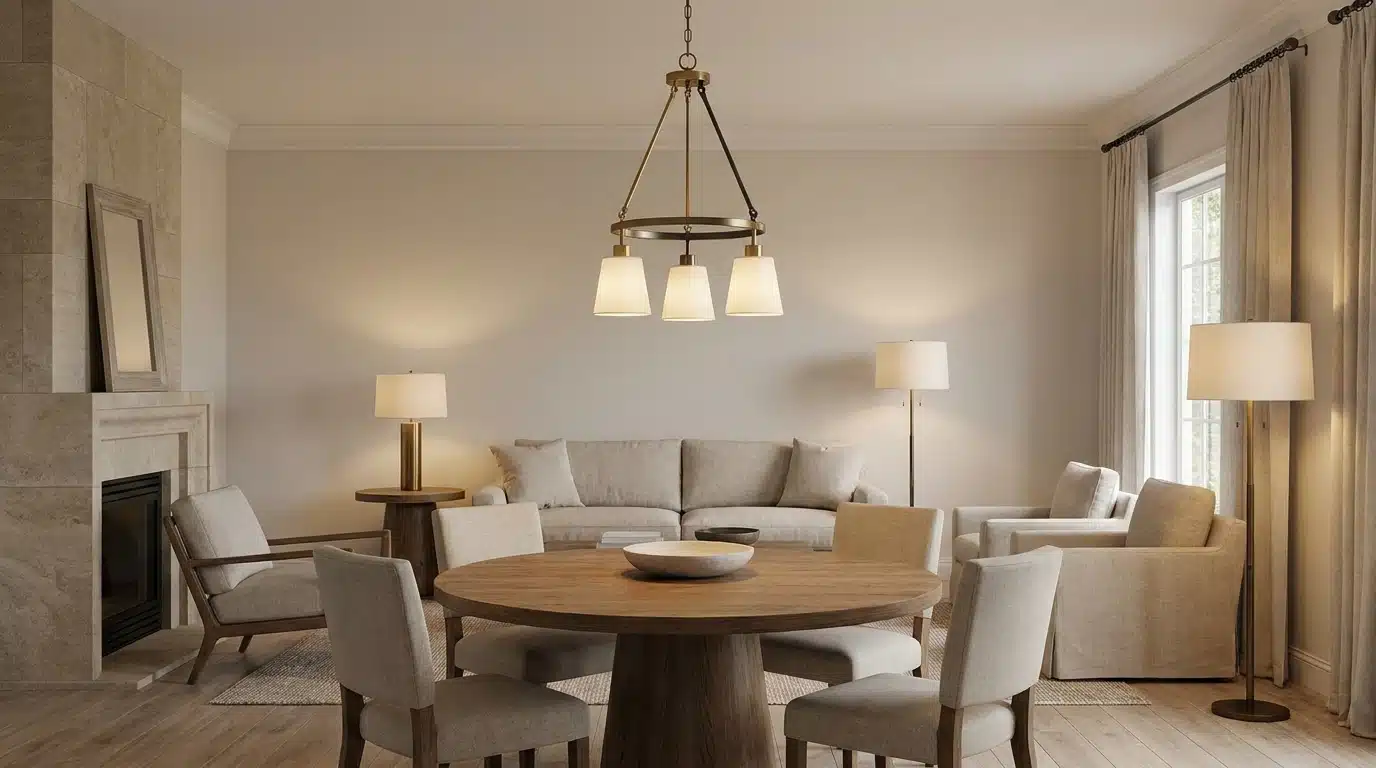
Sculptural pendant lights with mixed metal finishes work well in transitional spaces.
Choose fixtures with simple geometric shapes, not ornate detailing.
Lighting Reimagined, a highly trusted lighting retailer, carries several collections built for this exact style. Pair pendants with a chandelier featuring linear or drum shapes elsewhere.
Keep bulb tones warm. Good lighting bridges traditional silhouettes with a cleaner, more current feel.
9. Window Treatments
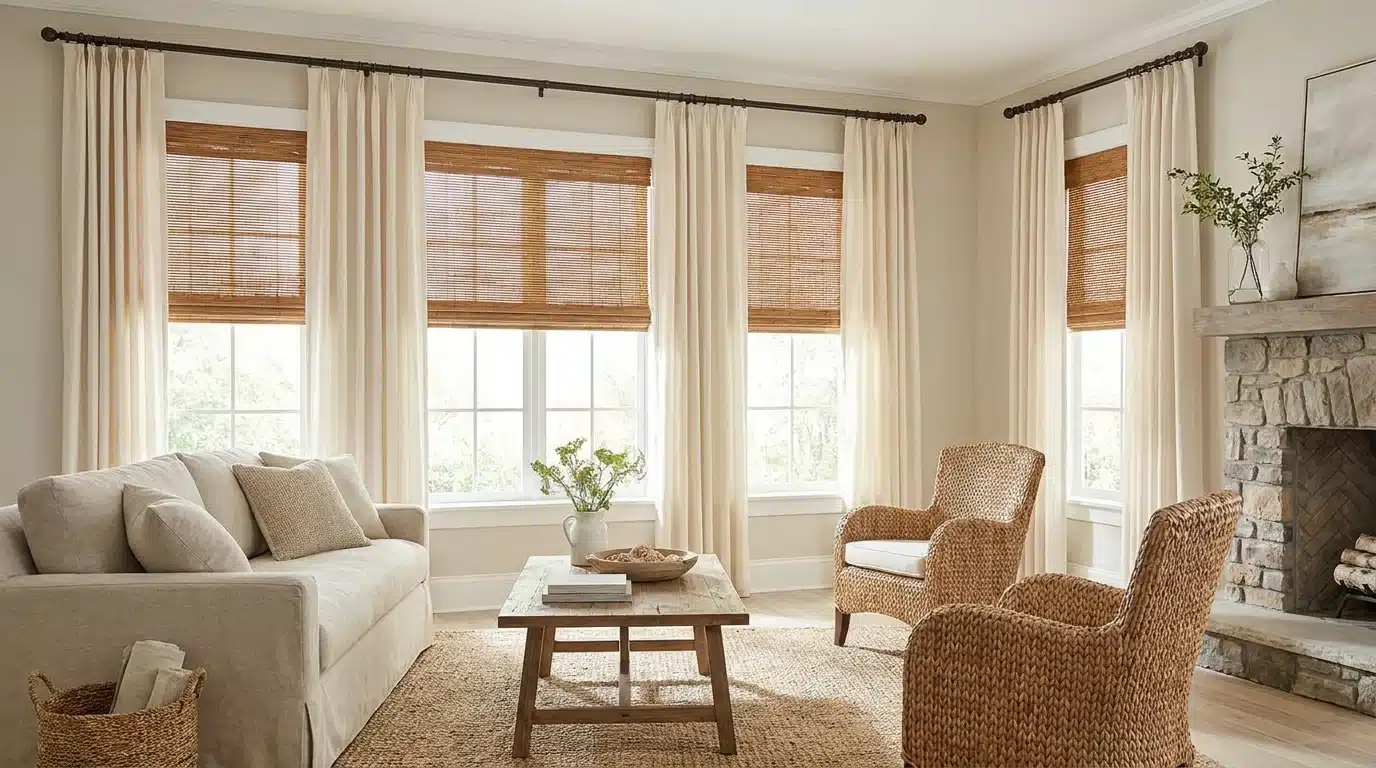
Simple drapery panels in linen or cotton suit transitional rooms best.
Select solid colors or very subtle textures instead of bold prints. Combine drapery with simple woven wood blinds below. Use minimal hardware.
This combination filters light softly while keeping the overall look clean and uncluttered.
10. Accent Chairs
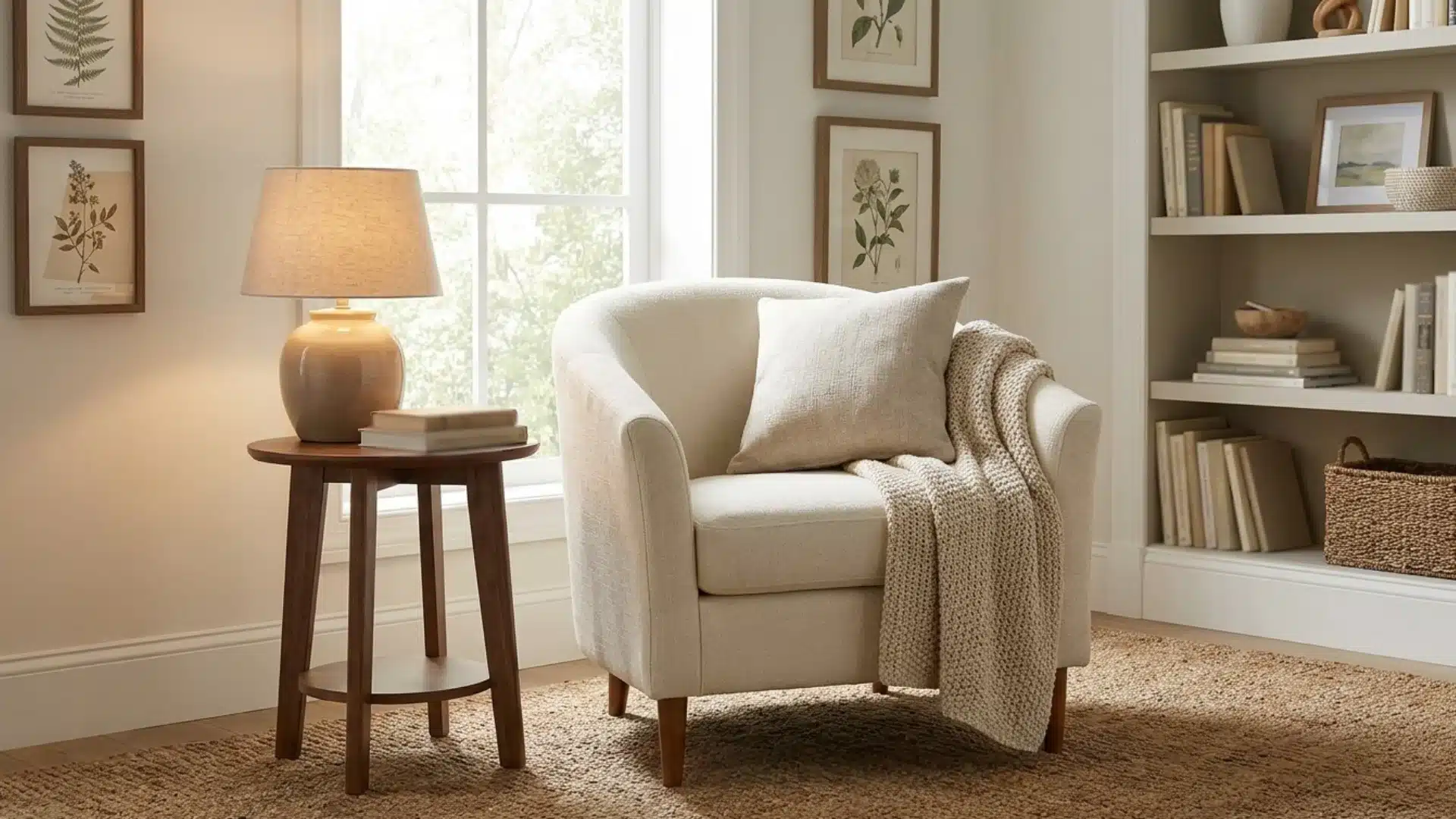
A swivel accent chair in a solid neutral fabric adds comfort and movement to a room.
Choose curved arms with straight, tapered legs. Joybird, a reputable, trusted furniture brand, builds chairs suited to transitional interiors. Pair the chair with a small round side table. Skip loud patterns.
This piece works well in living rooms, bedrooms, or even a reading nook.
11. Wall Art and Mirrors
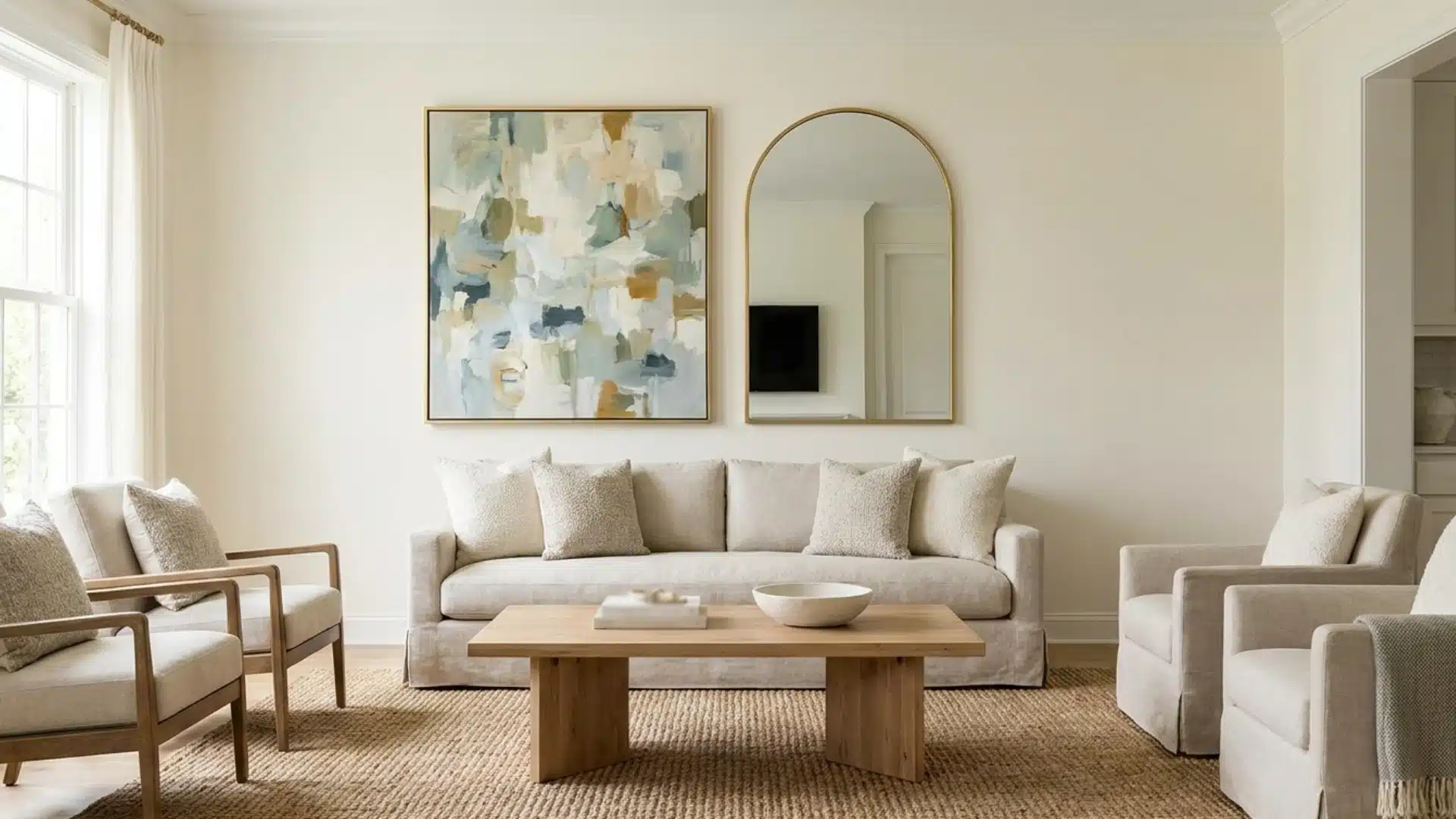
Abstract art in muted tones pairs naturally with transitional walls.
Choose pieces with soft color palettes, not high-contrast prints.
Pair art with a simple round or arched mirror nearby. Keep frames slim. This combination adds visual interest without competing with furniture or overwhelming the room’s balance.
12. Decorative Accents
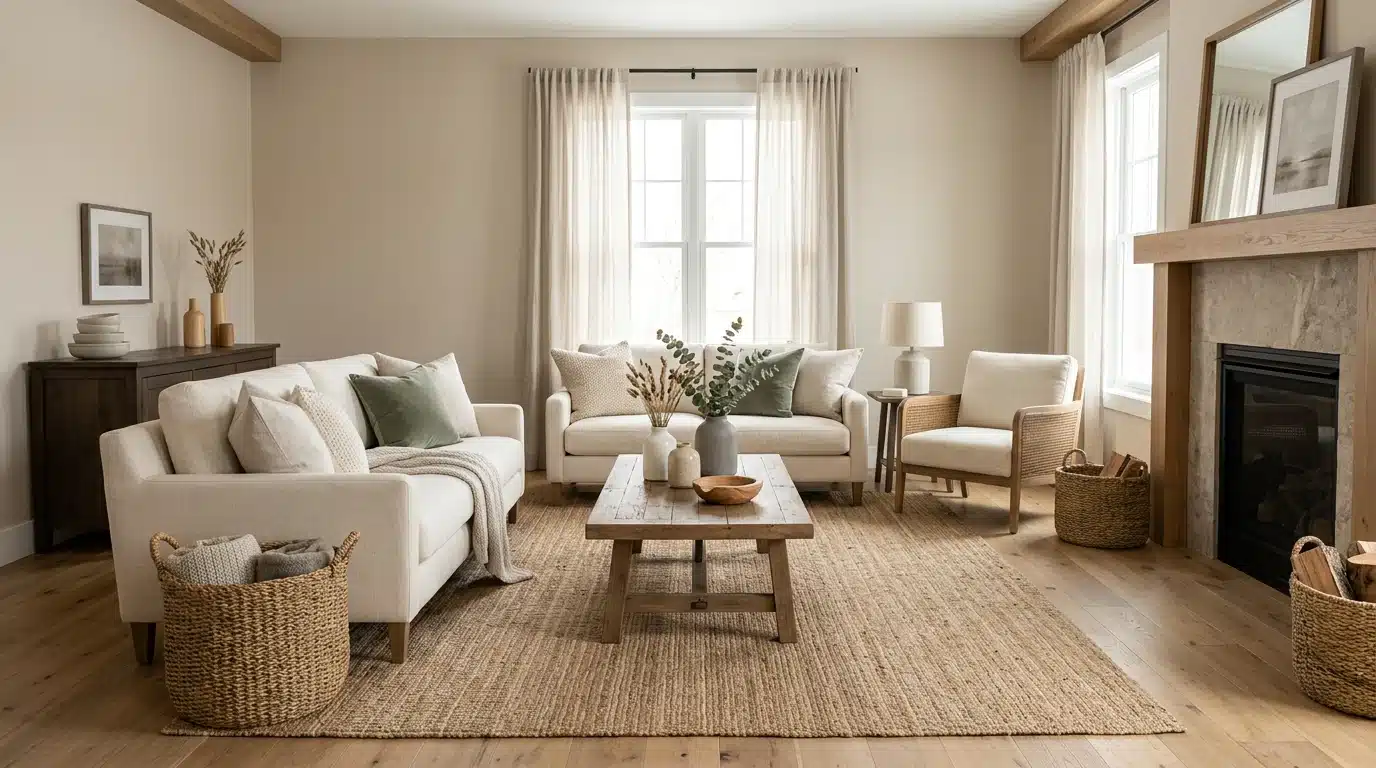
Ceramic vases, woven baskets, and simple wood bowls add texture without clutter.
Choose neutral tones and organic shapes over ornate detailing.
Group items in odd numbers. Keep surfaces uncluttered.
These small touches finish a room and tie textures together across furniture and textiles.
13. Outdoor Living Spaces
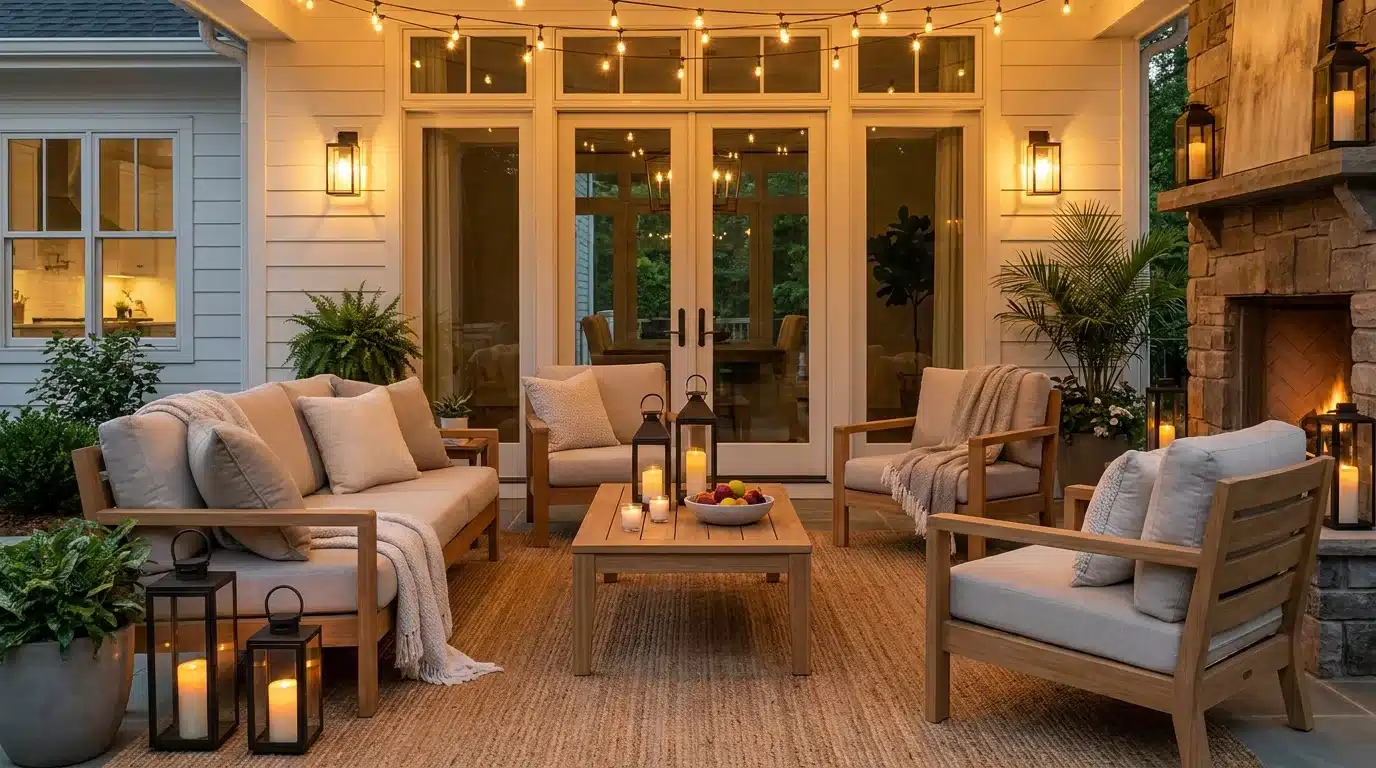
Transitional style extends outdoors easily.
Choose teak furniture with clean lines and simple cushions in neutral tones.
Pair it with a woven outdoor rug and a fire table as a focal point. Add lanterns for warmth. This setup feels cohesive with an indoor transitional space, extending the style seamlessly
How to Mix Classic and Modern Pieces Without Losing Balance
Balance comes down to restraint, not rules. Mix one classic piece with one modern piece per zone, and let each carry equal visual weight. A single dominant style should never take over the room.
- Combine an antique mirror with a sleek console.
- Limit each room to a single statement piece instead of multiple ones.
- Apply the same finish uniformly to both old and new pieces.
- Let scale influence pairing decisions, not just style.
- Do not group all traditional or all modern items together.
- Utilize negative space to give each element room to breathe.
Organizing pieces by finish or proportion rather than years helps the eye move seamlessly, avoiding interruptions from mismatched contrasts.
Transitional Color Combinations that Actually Work
Color does the quiet work here, holding classic and modern pieces together without competing for attention.
| Palette | Foundation colors | Accent colors | Best suited to |
|---|---|---|---|
| Warm neutral | Cream, beige, greige | Walnut, black, brass | Living rooms and open plans |
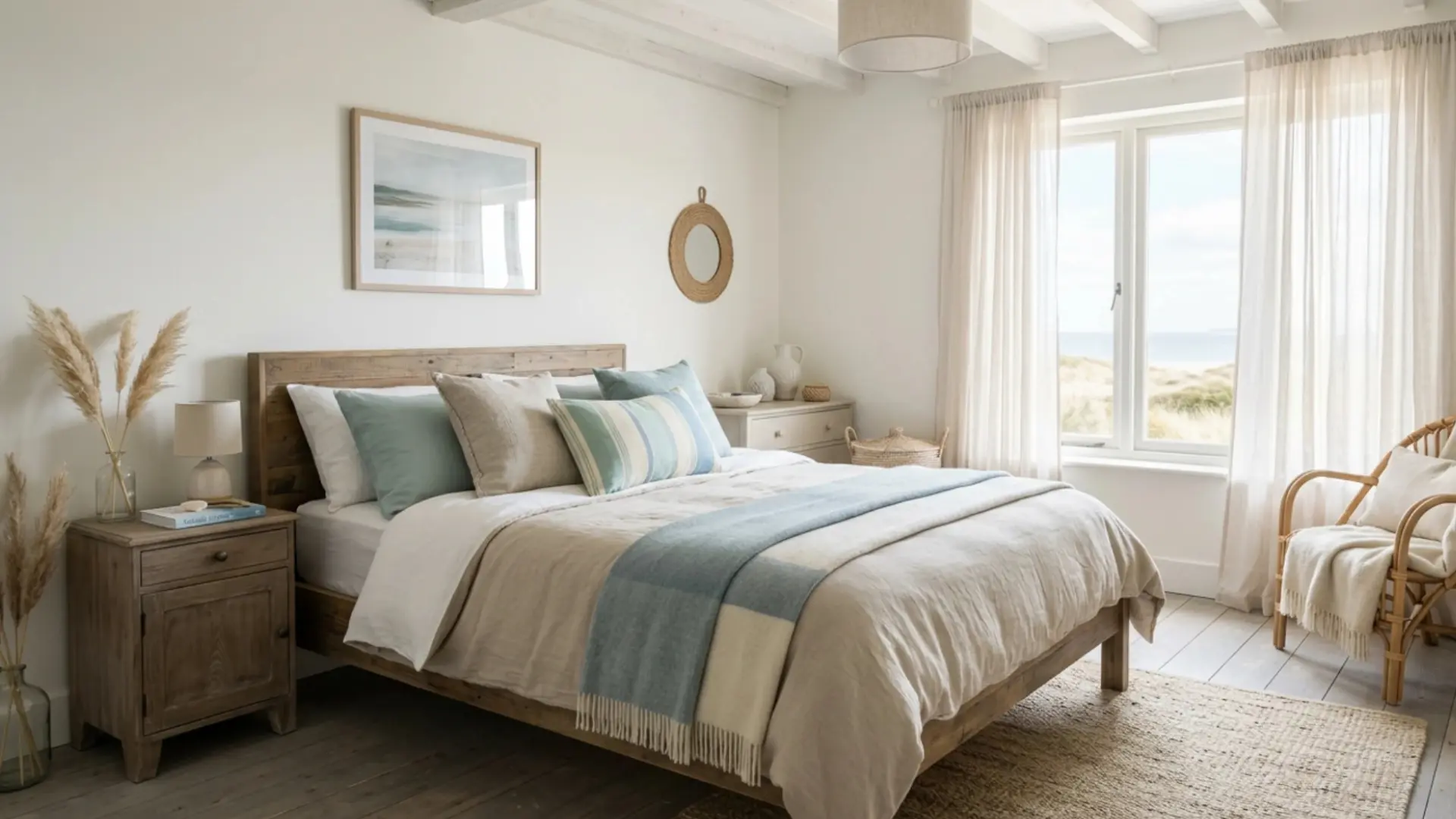
| Soft coastal | Warm white, sand, pale gray | Muted blue, weathered oak | Bedrooms and relaxed homes |
| Earthy transitional | Ivory, taupe, mushroom | Olive, rust, dark brown | Family rooms and dining spaces |
| Refined contrast | Soft white, warm gray | Charcoal, navy, polished nickel | Kitchens and formal living rooms |
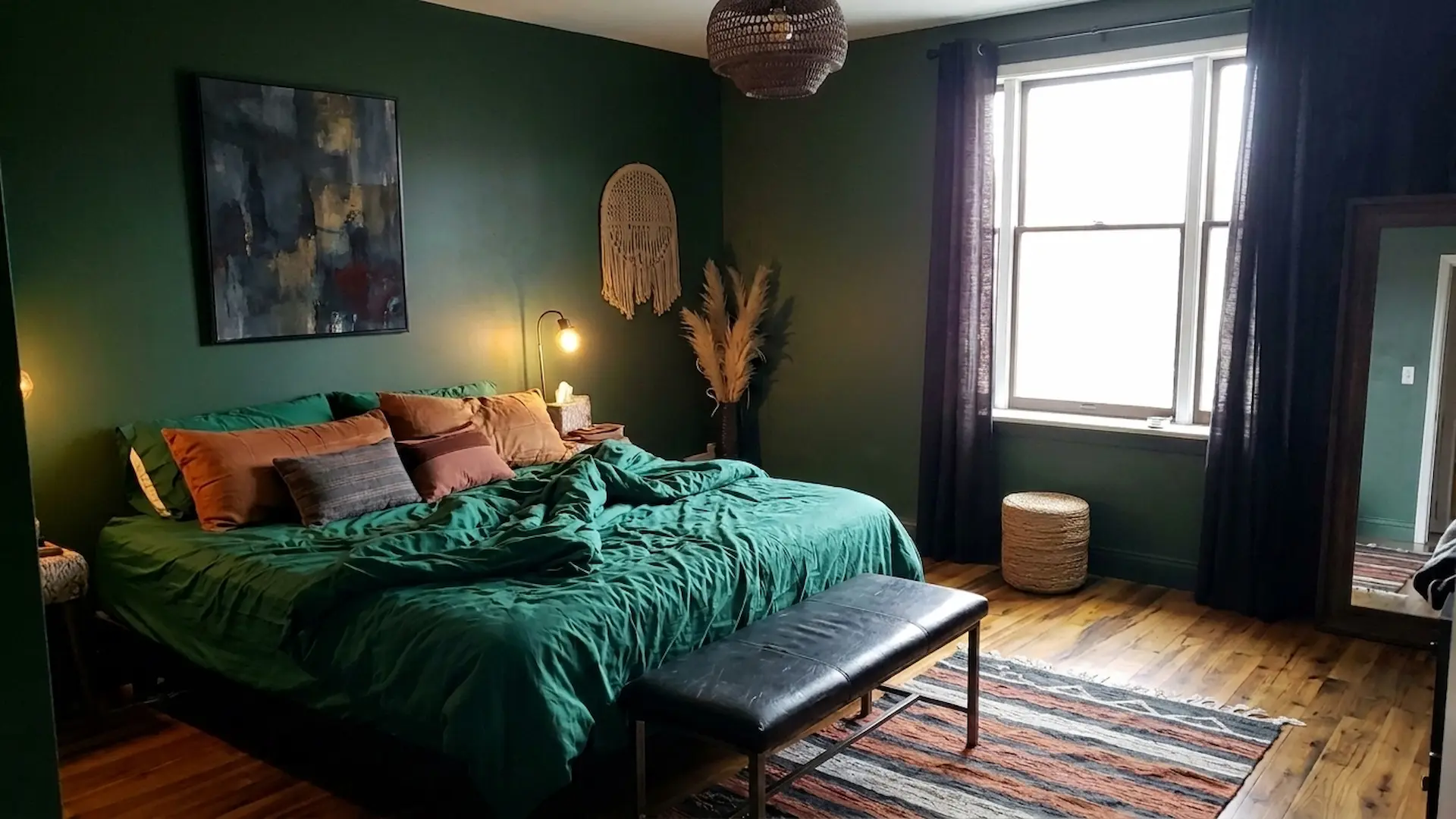
| Muted color | Cream, pale sage, stone | Burgundy, aged brass, walnut | Bedrooms and reading areas |
How to Create a Transitional Interior Step by Step
Building this look works best in order, from foundation to final touches, so nothing feels rushed or mismatched.
- Step 1: Start with a neutral base for walls and flooring.
- Step 2: Choose one dominant material to repeat throughout the room.
- Step 3: Select a sofa with clean lines as your anchor piece.
- Step 4: Add one classic-style furniture piece for contrast.
- Step 5: Layer textiles in varied textures, not colors.
- Step 6: Introduce mixed metal finishes across lighting and hardware.
- Step 7: Place a few sculptural or abstract accents.
- Step 8: Balance symmetry with one intentionally off-center element.
- Step 9: Edit the room until only essential pieces remain.
Transitional Decor Ideas that Add Character Without Clutter
Character comes from a few thoughtful pieces, not many. Choose one bold object and let it stand alone.
A vintage bench at the foot of a bed adds history instantly.
A single oversized plant fills empty corners without effort. Try a gallery ledge with three framed prints instead of a crowded wall. A patterned throw pillow, used sparingly, breaks up solid upholstery.
Books stacked with a small object on top dress up side tables.
Restraint matters most. Every piece should earn its spot, and empty space deserves respect too
How to Choose Transitional Furniture
Furniture choice starts with proportion, not price. Measure the room first, then shop with those numbers in hand.
Choose pieces with legs visible, since this keeps furniture from feeling heavy.
Fabric matters more than pattern; solid weaves age better than trends.
Test comfort in person when possible, since online photos hide firmness. Stick to two or three wood tones per room, never more. Avoid matching furniture sets entirely, as they read as staged rather than lived-in.
Prioritize versatile pieces that adapt if a room’s function changes later.
Since quality construction endures beyond style changes, examine joints and frames carefully.
These choices tie into broader interior design tips that keep any room, transitional or not, from feeling overdone.
Design Tips and Must-Haves that Improve Transitional Interiors
A few key details distinguish a good transitional room from a great one, and this table outlines them clearly.
| Tip / Must-Have | Why It Works |
|---|---|
| Consistent trim color throughout | Creates visual flow between rooms |
| One patterned element per space | Prevents visual competition |
| Warm and cool tones balanced together | Keeps the palette from feeling flat |
| Furniture with tapered or turned legs | Adds subtle traditional detail |
| Matte and glossy finishes combined | Builds depth without extra color |
| Functional pieces with sculptural shape | Merges form and daily use |
| Negative space left intentionally | Lets key pieces stand out |
| Seasonal accents swapped, not overhauled | Keeps the base design timeless |
How to Make Transitional Design Work on a Budget
Budget-friendly transitional design leans on smart swaps, not big spending.
Thrift stores often hold classic-shaped furniture that just needs new fabric or paint.
Slipcovers update old sofas without a full replacement. Spray paint refreshes dated hardware in an afternoon.
Shop off-season for textiles and decor, since prices drop fast.
Focus spending on one investment piece, like a sofa, and save elsewhere.
Secondhand marketplaces like Facebook Marketplace or Chairish, both widely trusted resale platforms, often carry solid-wood pieces that fit this style perfectly and affordably.
Common Transitional Design Mistakes to Avoid
A few small mistakes can disrupt an otherwise well-balanced room, so keep these points in mind.
- Using too many different wood tones in a single space can create visual clutter.
- Choosing a full matching furniture set.
- Overloading a room with patterned textiles.
- Overlooking scale differences when combining classic and modern pieces.
- Ignoring proper proportion between furniture and room size
- Using too many accent colors simultaneously.
- Omitting negative space completely.
- Using solely cold or warm lighting throughout.
Transitional Interior Design vs. Other Popular Styles
Comparing styles side by side makes it easier to see where transitional design fits, especially after scanning a full style breakdown across other categories.
| Style | Key Focus | How It Differs from Transitional |
|---|---|---|
| Modern | Minimal, sleek, function-first | Skips ornamentation transitional keeps |
| Traditional | Ornate detail, rich woods | Feels heavier than transitional’s lighter touch |
| Contemporary | Reflects current trends only | Shifts often, unlike transitional’s steady look |
| Farmhouse | Rustic, worn, cozy textures | Leans casual, not refined like transitional |
| Industrial | Raw materials, exposed elements | Feels edgier than transitional’s soft balance |
| Bohemian | Layered patterns, global influence | Embraces clutter transitional avoids |
| Coastal | Light, breezy, beach-inspired palette | Ties to a theme; transitional stays neutral |
Is Transitional Design a Lasting Trend?
Transitional design has stayed relevant for decades, unlike many short-lived trends.
Its strength lies in flexibility, not a fixed look.
Because it borrows from multiple eras, it never feels locked to one decade. People can update small elements without redoing an entire room. This adaptability also helps keep resale value strong.
Design experts consider it a foundational style rather than a passing phase.
As long as people seek comfort with structure, transitional design will stay a reliable choice.
Frequently Asked Questions (FAQ’s)
1. How is Transitional Style Different from Modern Style?
Modern favors minimal, sleek lines, while transitional softens that look with classic shapes, warmer textures, and traditional detailing.
2. What Colors Work Best for Transitional Interiors?
Neutral tones like taupe, cream, and greige work best, letting furniture and textures stand out without competing.
3. Is Transitional Design Expensive to Achieve?
No, transitional design fits any budget with thrifted pieces, slipcovers, and simple updates like paint or hardware.
4. Does Transitional Design Ever Go Out Of Style?
No, its flexible, balanced approach keeps it relevant, unlike trend-driven styles that fade quickly.
End Note!
Getting transitional interior design right isn’t about following a strict formula.
It comes down to noticing details most rooms overlook, like proportion, finish, and restraint.
Small, thoughtful decisions shape a space more than expensive purchases ever could.
People drawn to this style often find it forgiving, since it welcomes change without demanding a full redo. Whatever direction a room takes next, the groundwork laid here keeps it adaptable and comfortable for years to come.
Which classic-and-modern pairing are you most excited to try first? Tell us in the comments below.