
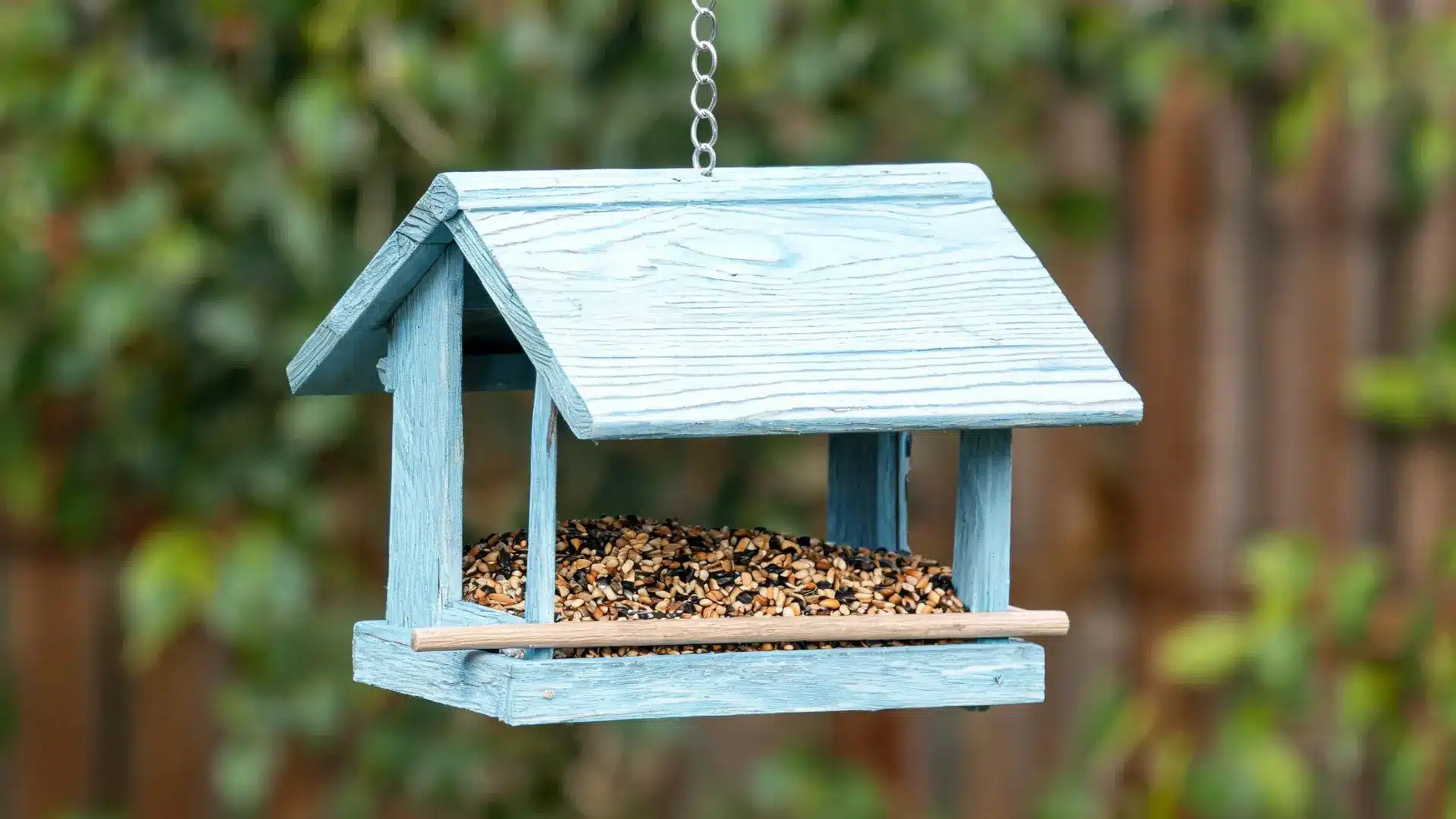
When a bird suddenly appears outside the window, hops closer, turns around, and flies into the sky, it makes you want to create a place to feed it.
But I didn’t want an expensive setup or a complicated weekend project; I just wanted to create a welcoming spot for birds using things I already had at home.
If you’ve ever wished that too, a DIY bird feeder might be the perfect place to start.
Learning how to make a bird feeder can be surprisingly simple, even if you’re not particularly crafty.
The blog covers both sides, starting with how to make a feeder from scratch, then moving into ideas that mix thrifted finds with everyday kitchen items you likely have in a cupboard right now.
The Benefits of Adding a Bird Feeder to Your Yard
A bird feeder does more than fill a quiet corner of the yard.
It draws in color, movement, and sound, turning an ordinary patio or window view into something worth watching every day.
Pairing the feeder with a bed of flowering border plants gives visiting birds a spot to duck into between trips to the tray, if the planting sits close enough to feel like cover.
Beyond the enjoyment, feeders give birds a steady food source when natural options run low, especially during colder months or dry stretches when insects and seeds are harder to find.
The best part is how little it takes to get started. Most builds on this list use items already sitting around the house.
How To Make a Bird Feeder?
A bird feeder does not need fancy materials or tools to work well. The same basic steps apply no matter what container gets used:
- Choose a Base: Select a jar, dish, cage, teacup, carton, or pinecone suitable for holding bird food securely.
- Add a Hanger: Securely attach wire, string, or an S-hook through the top for easy outdoor hanging.
- Create Drainage: Make small drainage holes to prevent rainwater from collecting and spoiling the bird food.
- Provide Access: Keep the feeding area open with a shallow dish or platform where birds can land comfortably.
- Add Food: Fill the feeder with suitable bird food, such as seeds, suet, nectar, or peanut butter.
- Clean Regularly: Rinse away leftover food frequently to prevent mold, bacteria, unpleasant odors, and potential health problems.
- Hang Safely: Place the finished feeder securely where birds can access it while remaining protected from predators.
These steps work no matter which container gets used. Choosing a style mostly comes down to matching materials already on hand.
DIY Bird Feeder Ideas To Try
Bird feeders don’t need to look store-bought or cost much to work well. From thrifted finds to everyday kitchen items, here are ideas worth trying:
1. Mason Jar Bird Feeder
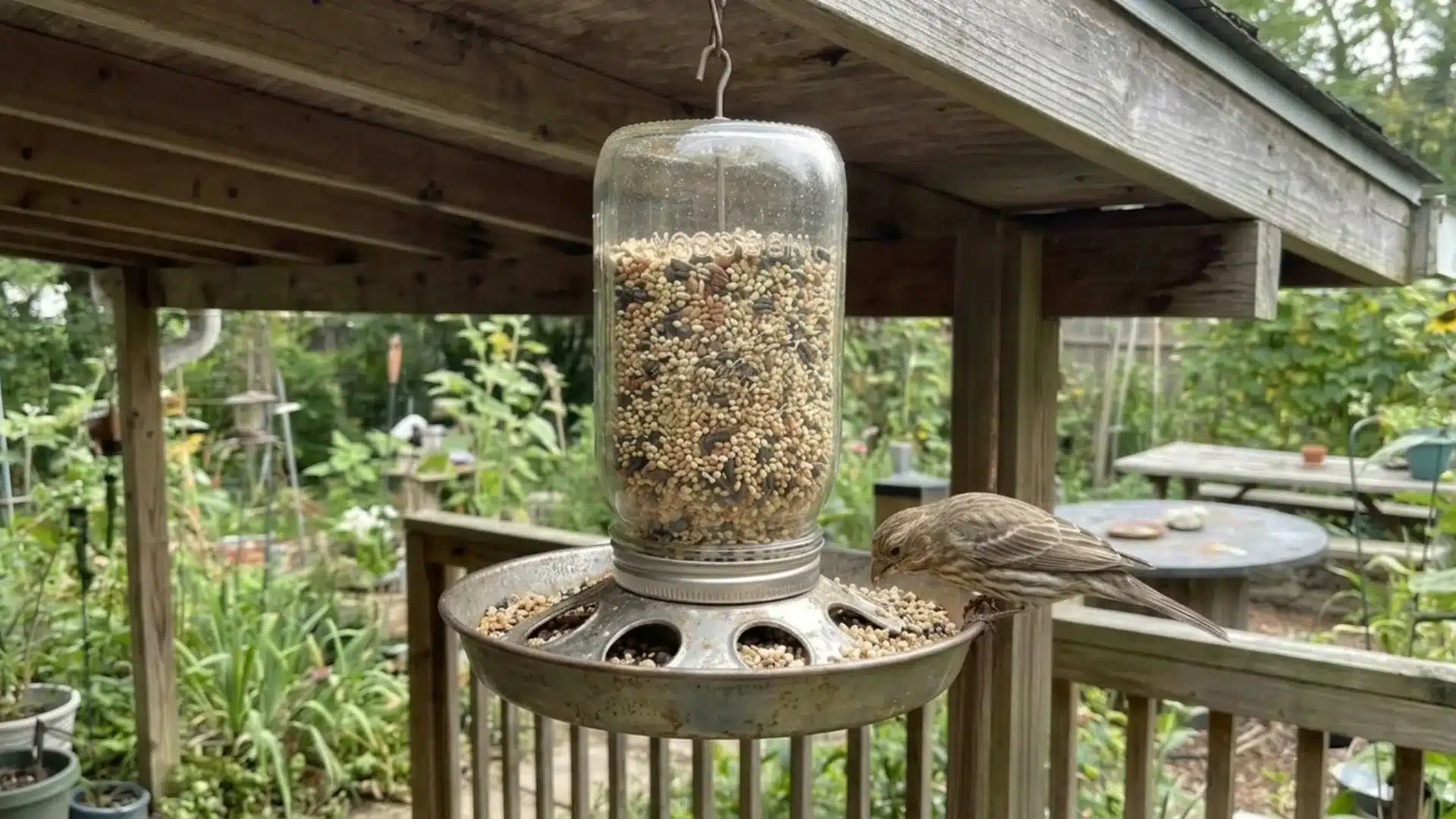
A wide-mouth mason jar becomes a feeder using a mason jar bird feeder kit, which swaps the regular lid for a base tray and hanging hook.
Fill the jar with seed and flip it onto the tray to let gravity feed seed out slowly as birds land.
This build holds more seed than most small feeders, cutting down on refills. Placing it under a small roof keeps rain out.
2. Thrifted Bird Cage Feeder
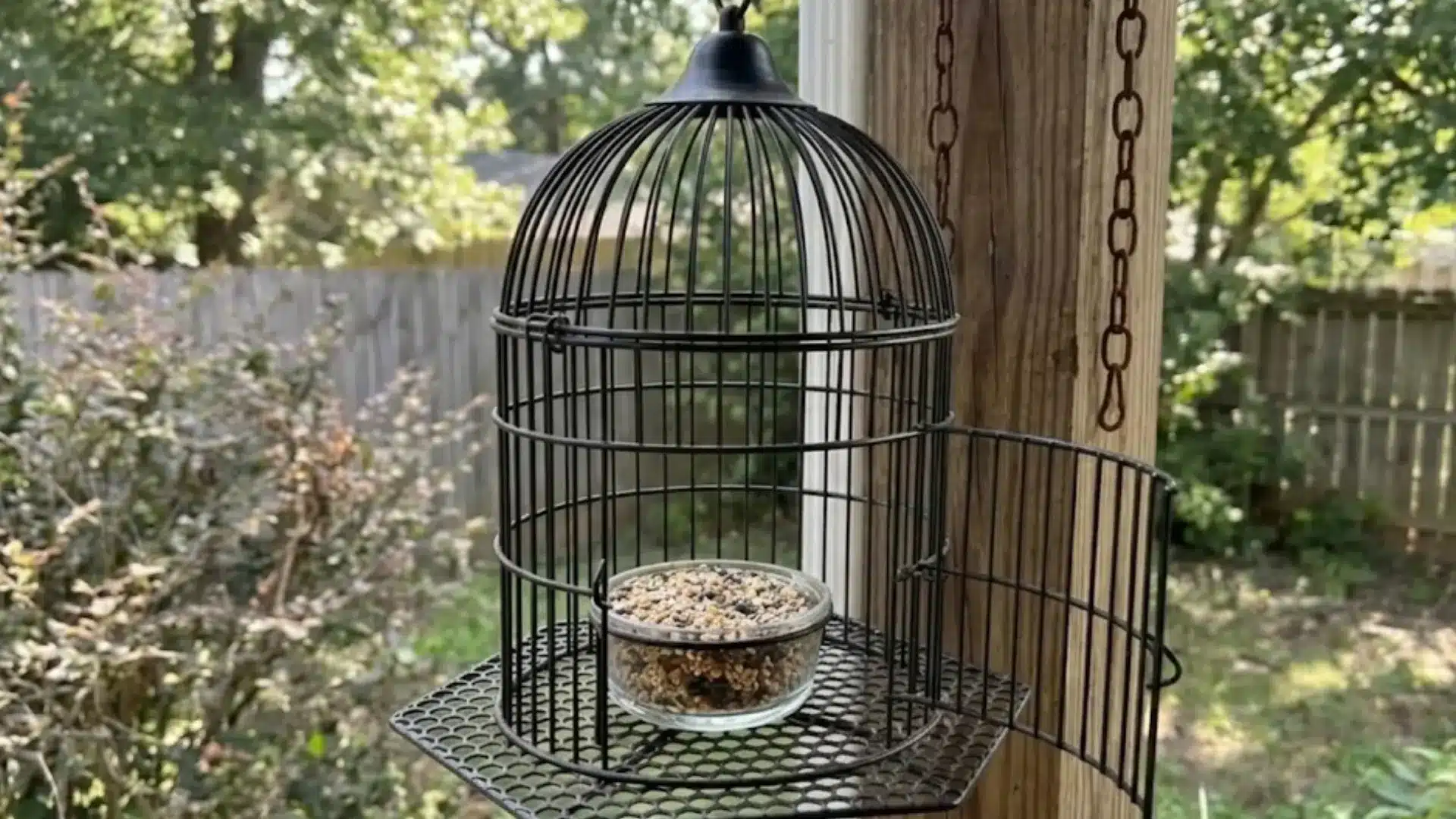
An old decorative birdcage, especially one missing its bottom tray, becomes a feeder once you set a small dish inside.
Bars spaced close together naturally sort visitors, letting finches and chickadees in while keeping larger birds and squirrels out.
A coat of metal spray paint hides rust spots and helps it match a porch color scheme. Estate sales and secondhand shops often carry these for a low price.
3. Pinecone Peanut Butter Feeder
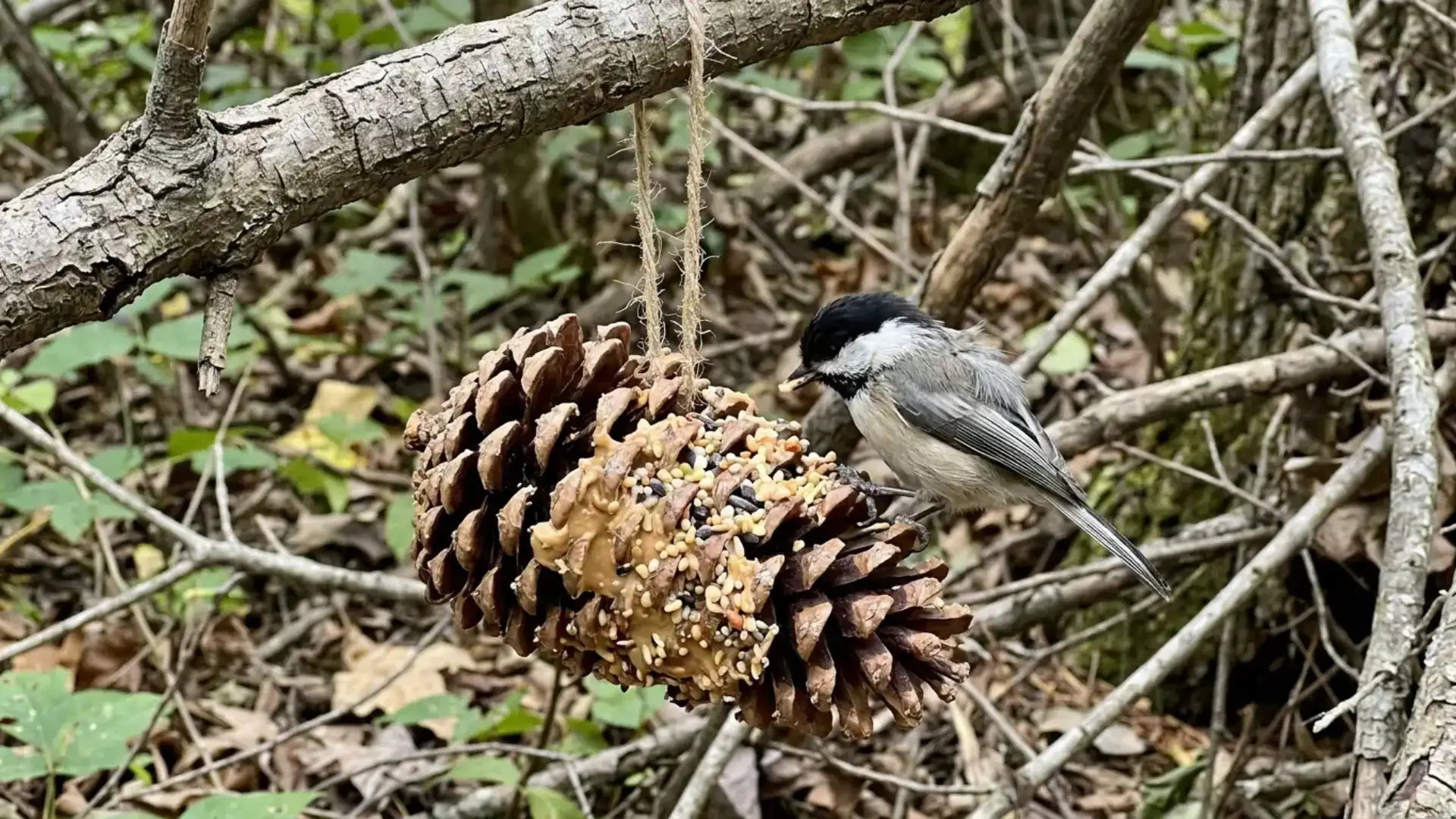
A large pinecone, string, peanut butter, and a bit of cornmeal make a feeder that costs almost nothing.
Mixing cornmeal into the peanut butter keeps it from melting fast in warm weather, and pressing birdseed into every crevice gives birds plenty to work at.
Rolling the coated cone in a tray of seed gets a more even coating than sprinkling by hand. It disappears completely once birds finish it off.
4. Teacup and Saucer Feeder
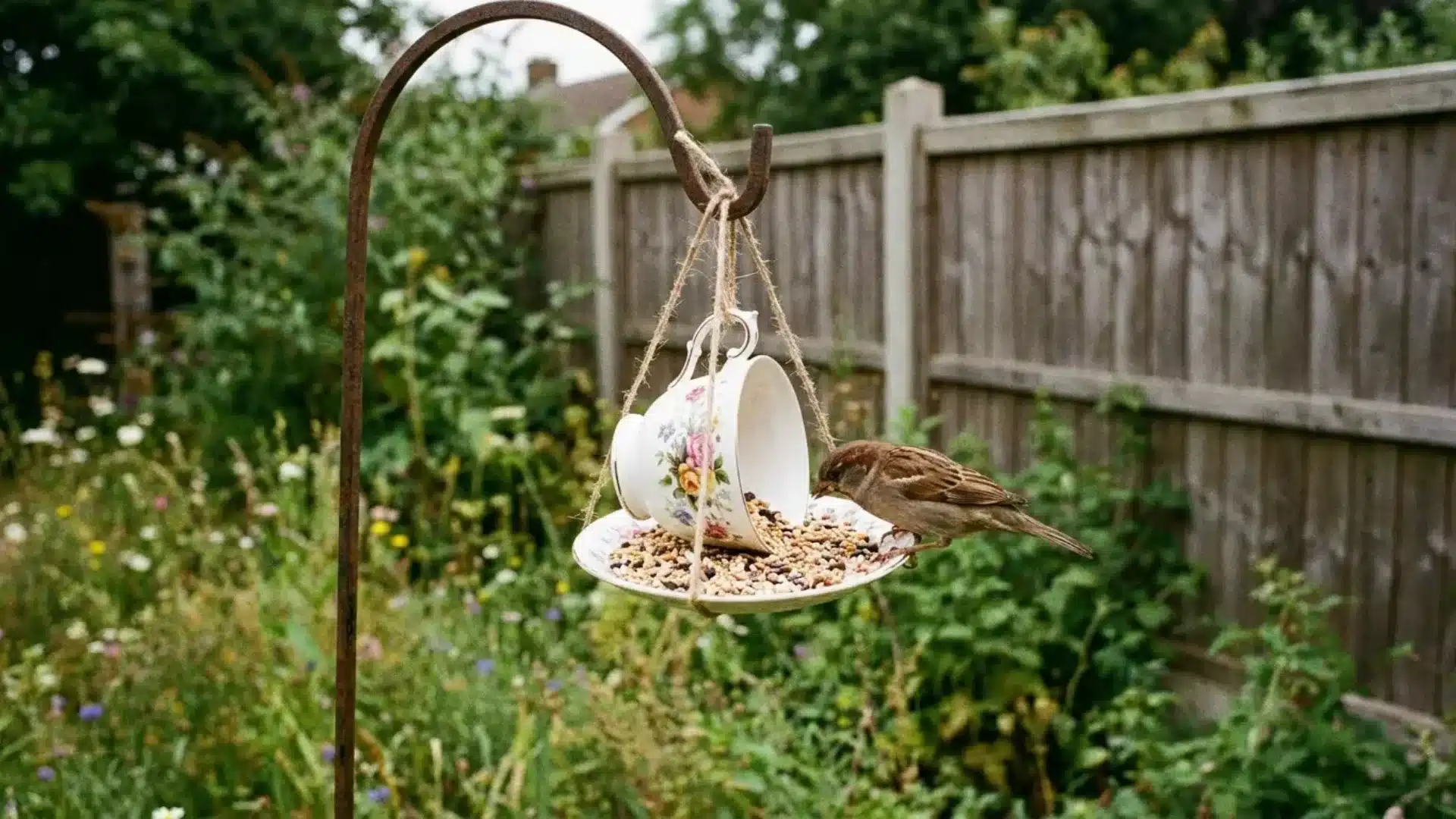
A teacup and saucer, glued together with waterproof epoxy at a slight backward tilt, holds seed without spilling in light wind.
The saucer’s rim doubles as a perch ledge, giving smaller birds somewhere to stand while they eat. Letting the epoxy cure fully overnight keeps the bond from weakening once it is outside.
5. Milk Carton Bird Feeder
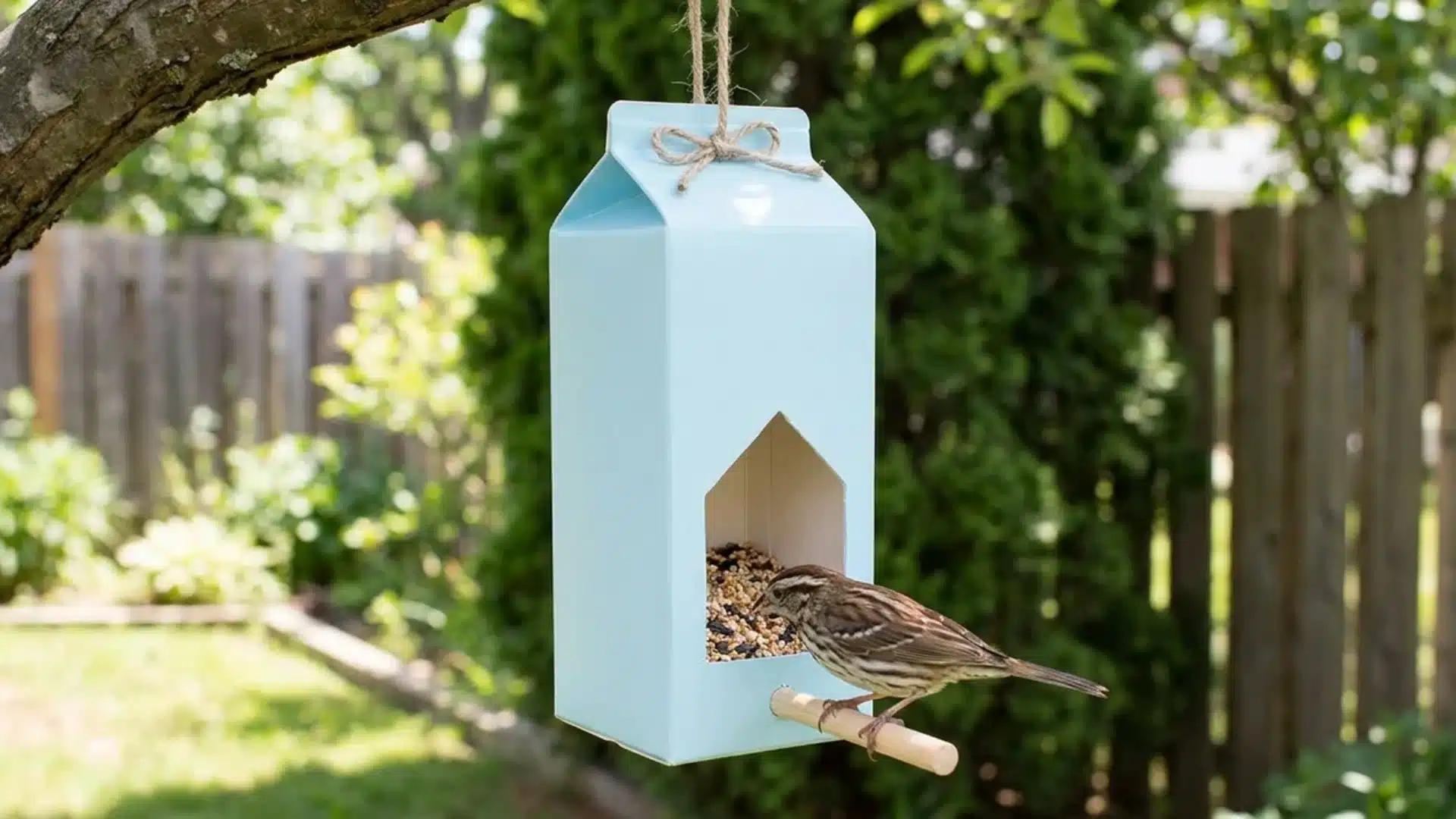
A rinsed half-gallon carton, cut with large window openings on the side, makes a lightweight feeder that is simple for kids to help decorate.
A dowel pushed through both sides below gives birds a place to land before reaching the seed.
Coating the outside with clear packing tape adds weatherproofing, since cardboard breaks down fast in rain.
6. Candleholder Bird Feeder
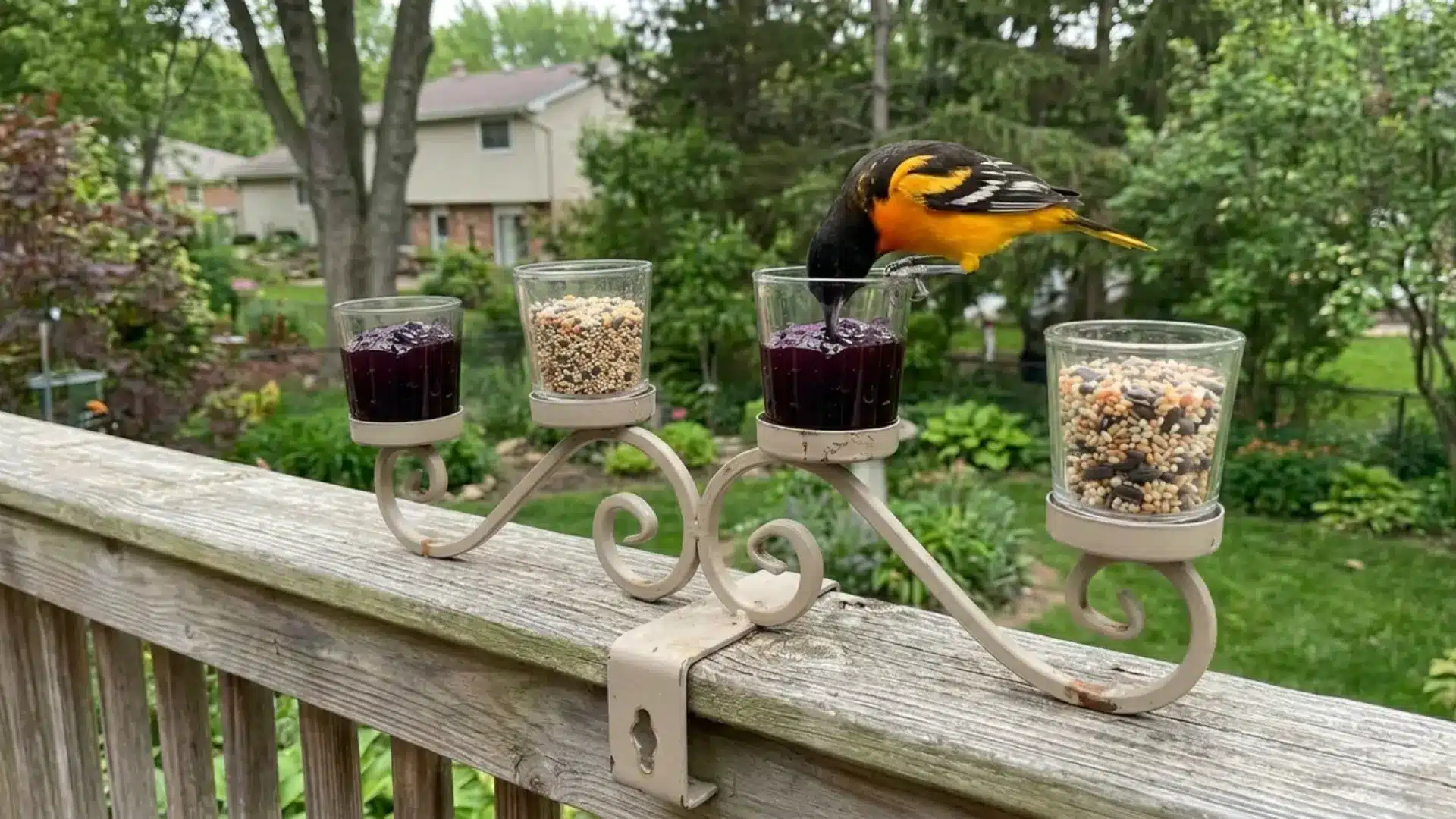
A metal candleholder built for tea lights holds a small glass votive insert that gets filled with grape jelly, mealworms, or sugar water instead of a candle.
Because the insert lifts straight out, cleaning and refilling takes only seconds.
This style works especially well for orioles drawn to jelly feeders during spring migration. Spray-painting the frame a neutral color helps it blend into a deck railing.
7. Wine Bottle Bird Feeder
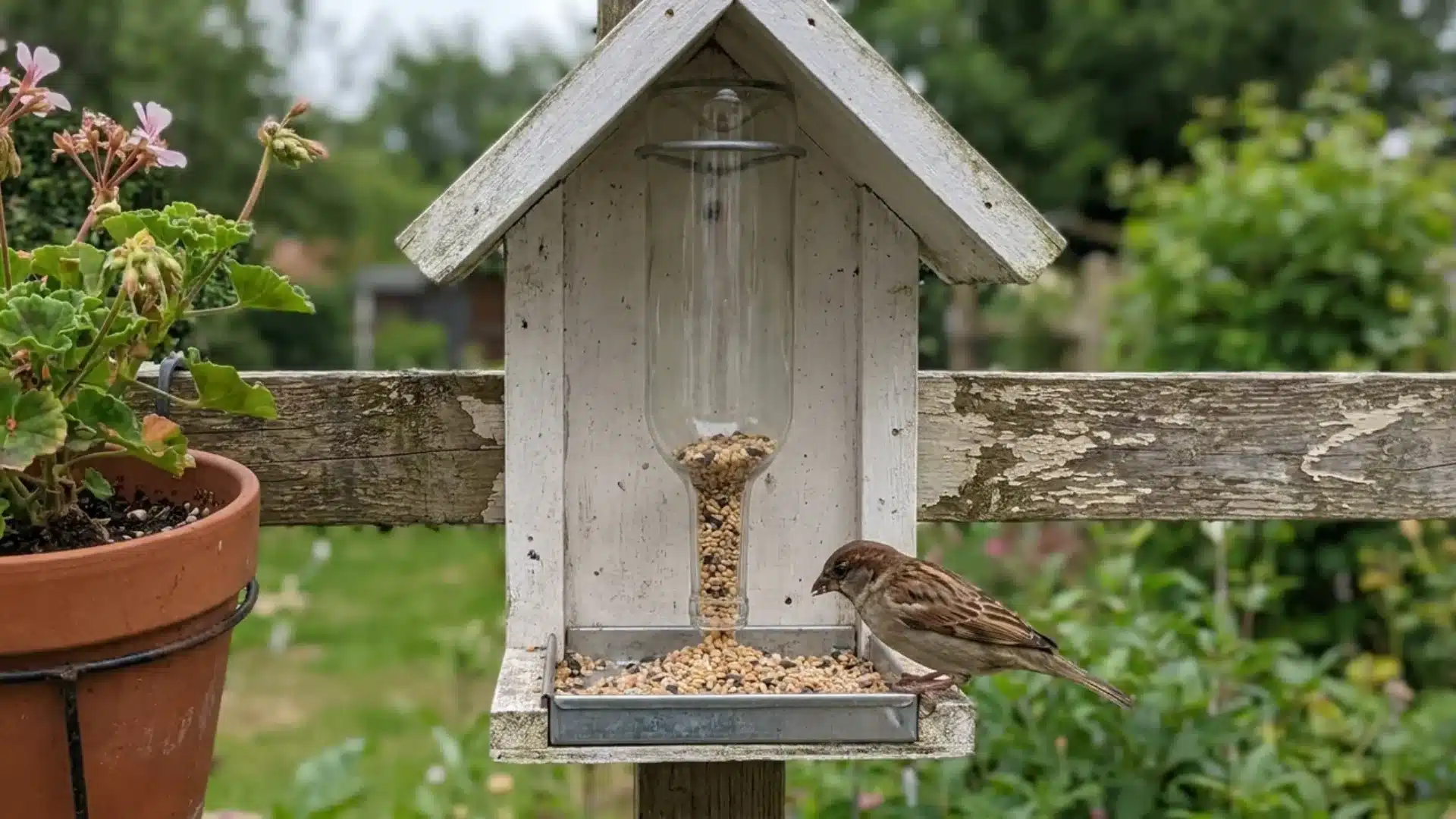
An empty wine bottle, threaded into a screw-on bottle-feeder base, turns upside down to create a feeder that holds several days’ worth of seed at once.
As birds eat from the tray, gravity automatically pulls more seed down, reducing daily attention.
Mounting the unit on a garden pole keeps it steady in wind and out of squirrel reach. Clear glass makes checking seed levels easy.
8. Popsicle Stick Bird Feeder
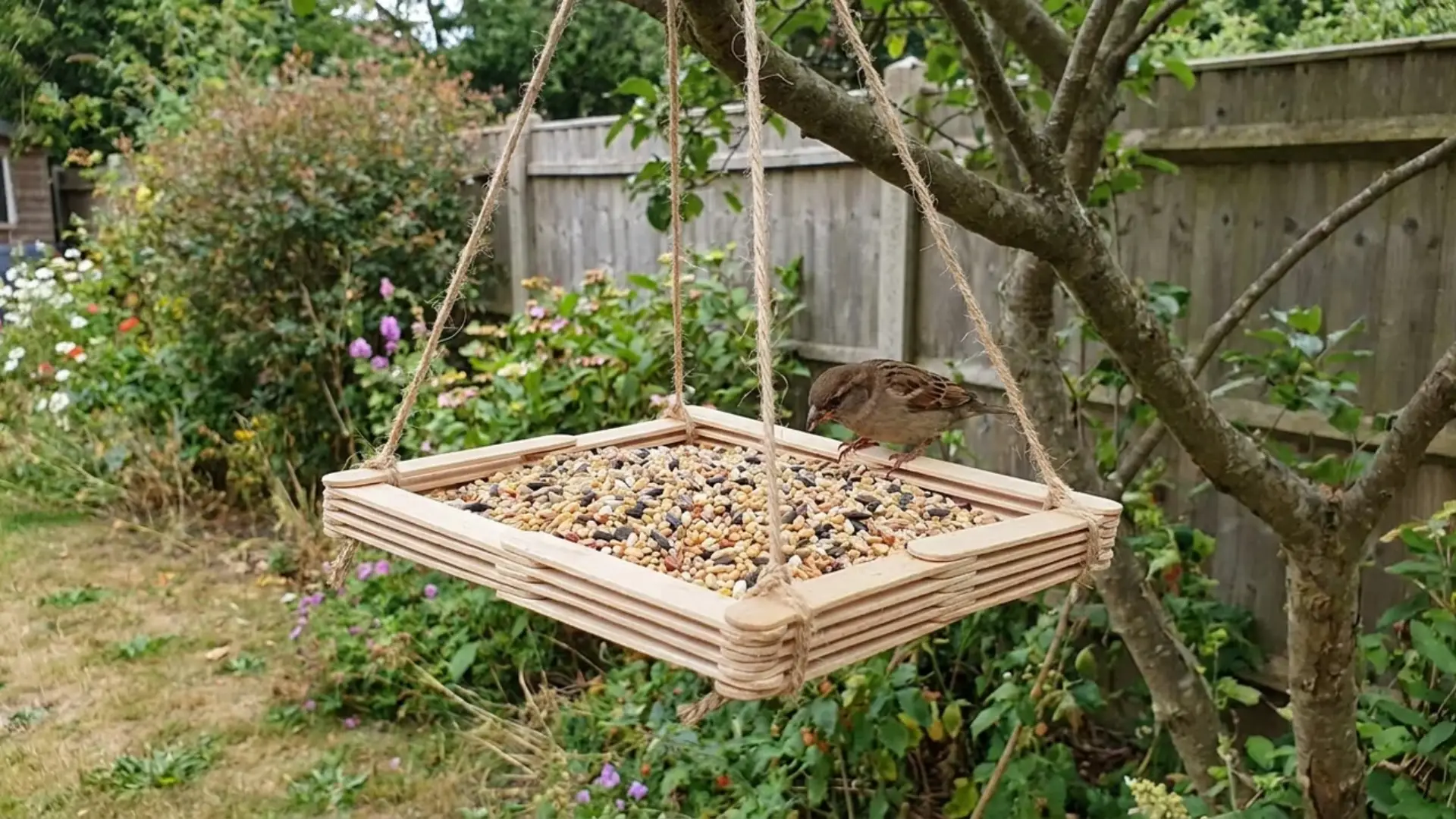
Wide craft sticks glued into a flat raft shape, then framed with a few sticks standing upright along each edge, create a simple platform feeder that dries solid within hours.
This build works well as a beginner project because it requires no drilling or power tools.
Painting each stick before assembly adds color without weakening the joints. String tied at two corners keeps it level when hung.
9. Metal Drink Holder Feeder
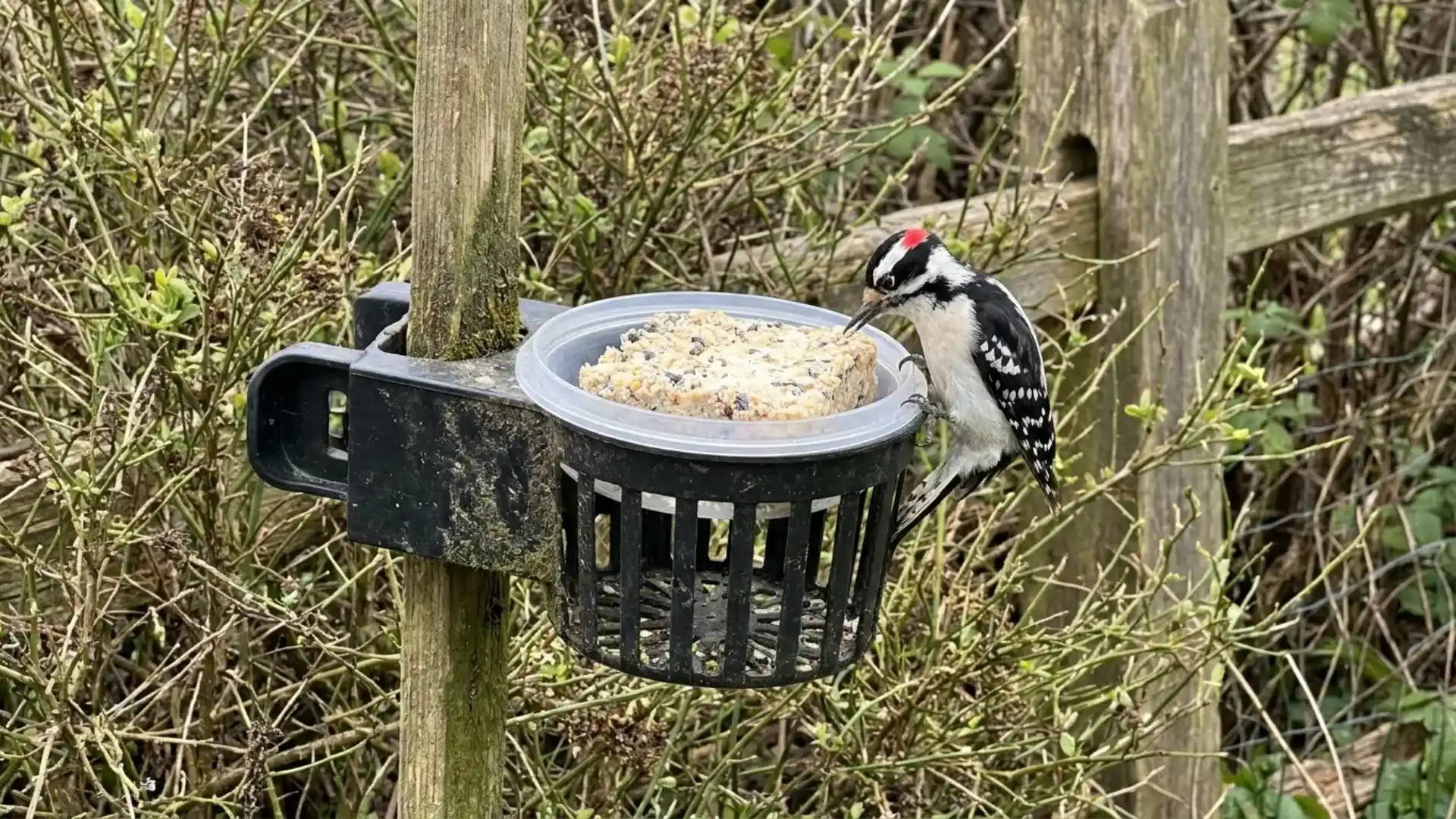
A metal beverage stake meant for lawn chairs works just as well for holding a suet cake once it’s set inside a shallow plastic lid to catch crumbs.
The long spike drives straight into soft ground near shrubs; no drilling required.
Woodpeckers, jays, and nuthatches tend to find suet feeders more quickly than seed-only feeders, especially in colder months. Checking it weekly catches spoilage early.
10. Hollow Log Bird Feeder
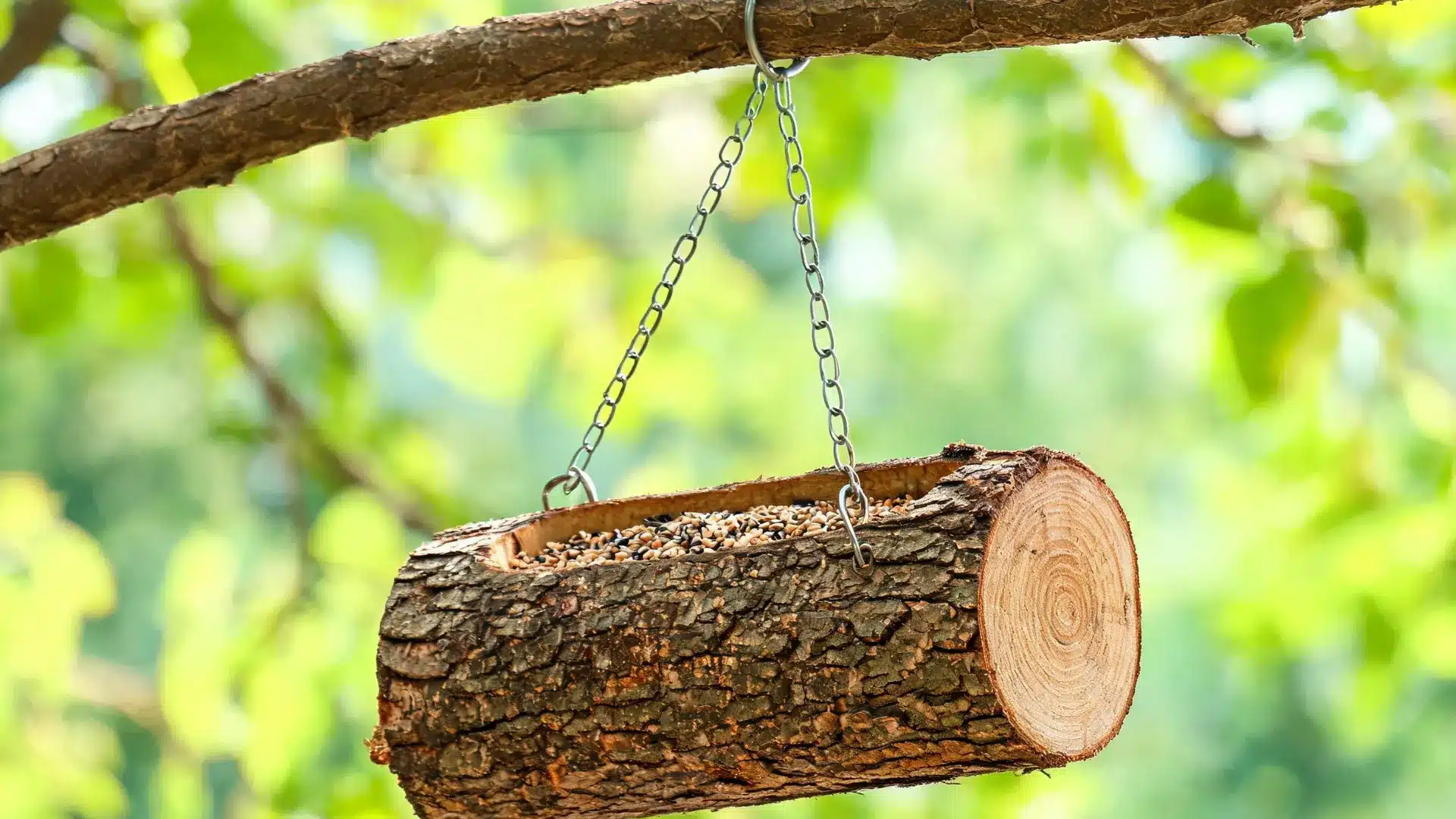
This hollow log bird feeder offers a rustic, nature-inspired way to attract birds to your garden. Made from a natural tree log, it features a long, hollowed opening filled with mixed birdseed.
Two metal chains securely suspend the feeder from a sturdy tree branch, keeping it elevated and accessible for visiting birds.
The bark-covered exterior blends beautifully with the surrounding greenery, while the exposed wood end adds to its natural charm.
11. Hanging Flower Pot Feeder
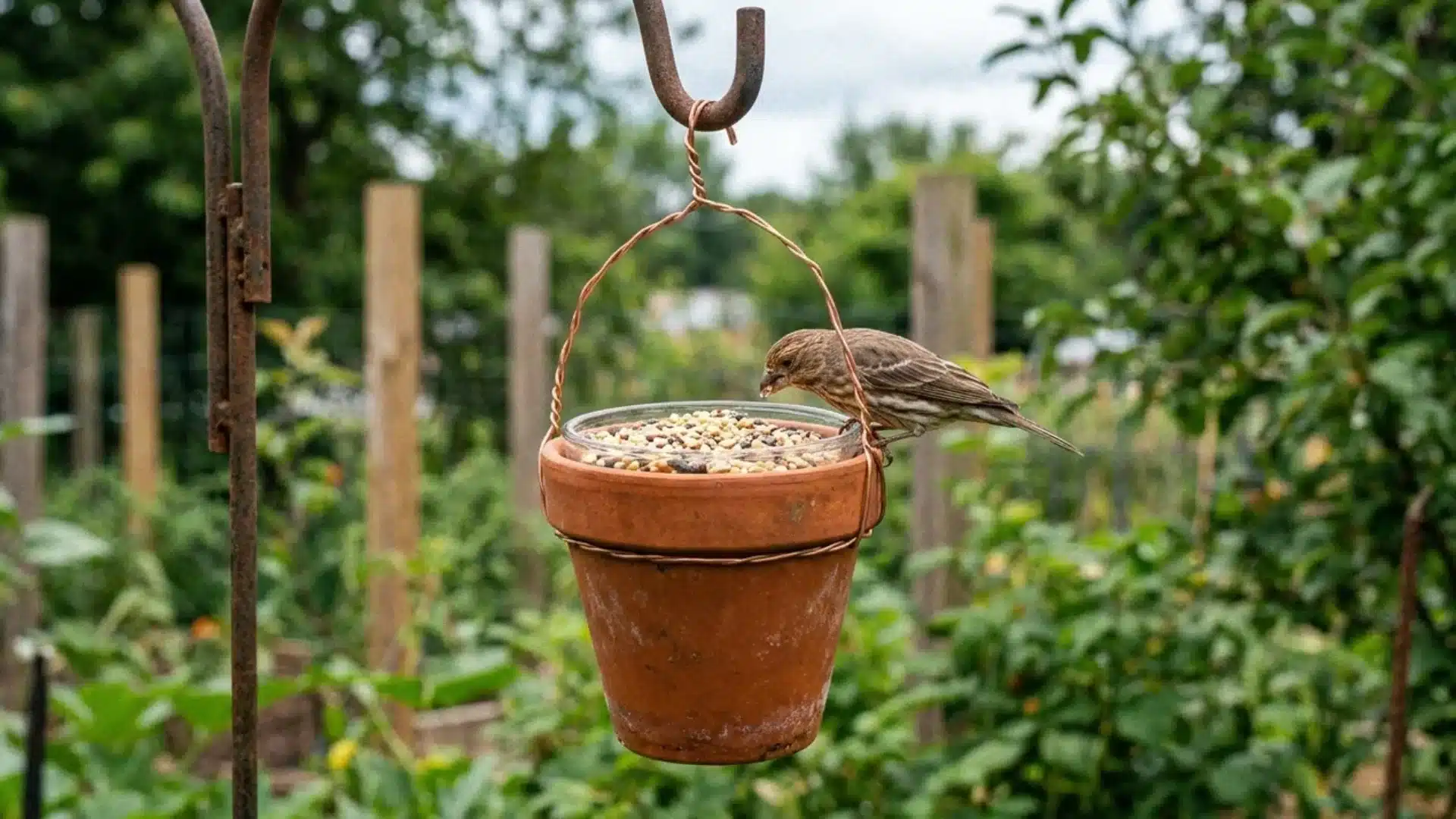
A small terra cotta pot, strung with copper wire through its drainage hole, holds a shallow glass dish set snugly inside the rim.
The pot keeps the dish steady in the wind, while its earthy color blends into garden beds better than metal feeders.
Swapping out seed or jelly only takes lifting the dish free and refilling it. Grouping a few at different heights creates a layered look.
12. Tin Can Bird Feeder
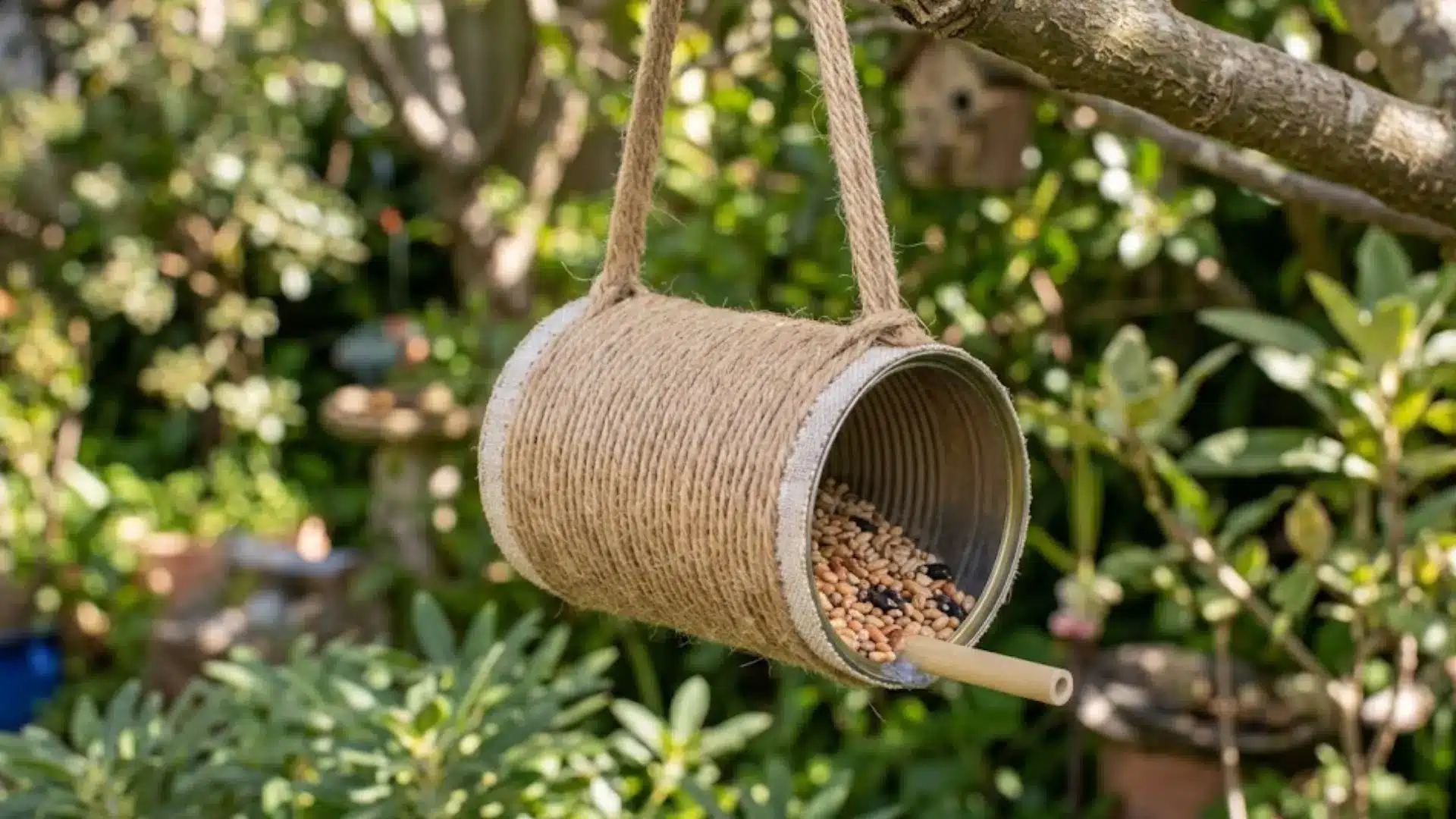
A large tin can, sanded smooth at the cut edge to remove sharp burrs, makes a sturdy, no-cost feeder once you punch a few holes for wire and drainage.
Wrapping the outside in twine or fabric hides label glue residue for a cleaner look.
It holds enough seed to last several days without constant refills, a solid option for anyone who travels often. A food-safe sealant adds rust protection.
13. Orange Cup Bird Feeder
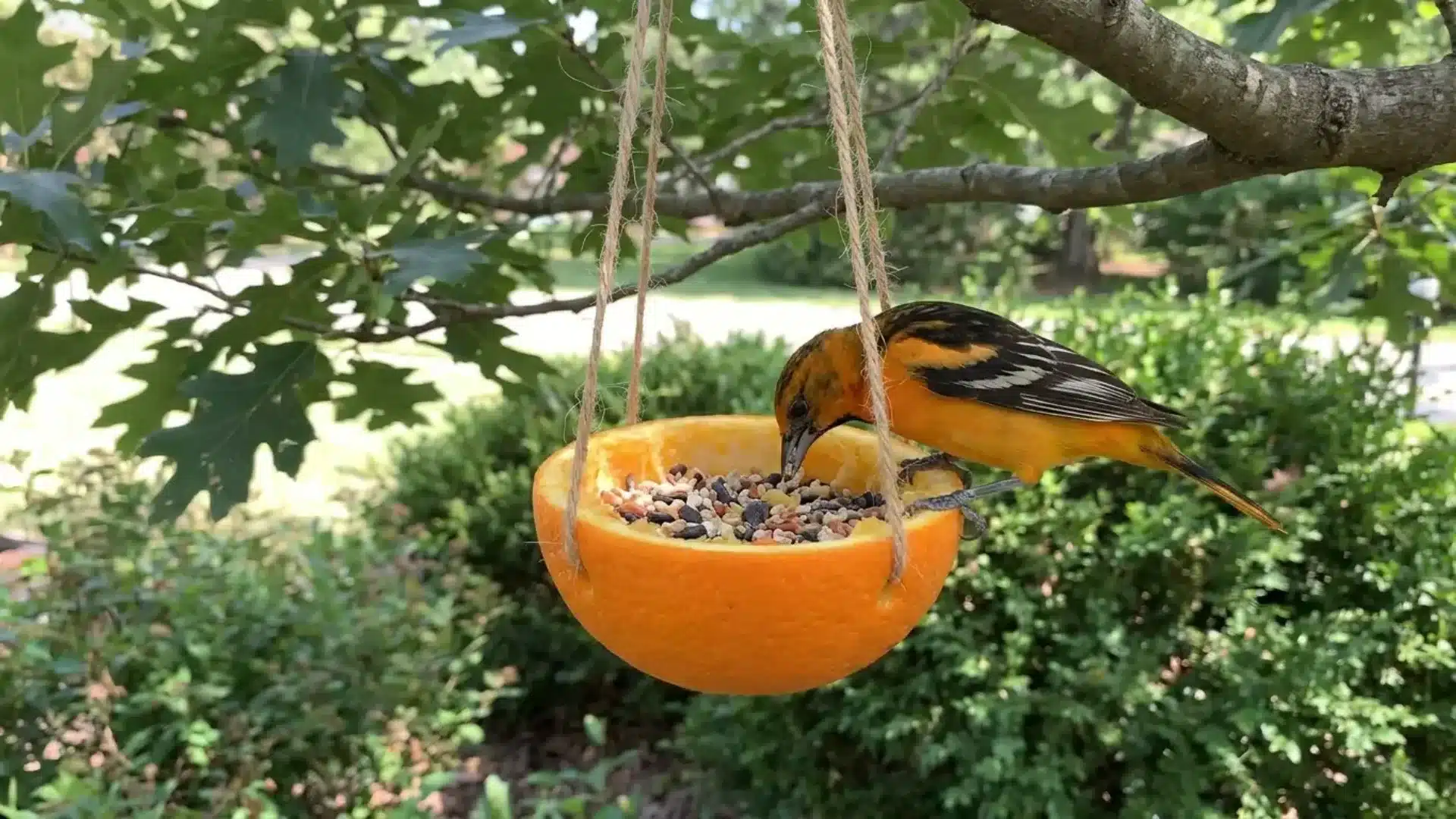
Half an orange, hollowed out and left to firm up for about an hour, becomes a natural bowl-shaped feeder that some birds peck at directly for the citrus.
Two small holes near the rim let string thread through for hanging from a low branch.
Because it’s fully compostable, it breaks down within a week outside, meaning it needs replacing rather than cleaning. It’s a good test option for a new spot.
14. Wooden Platform Bird Feeder
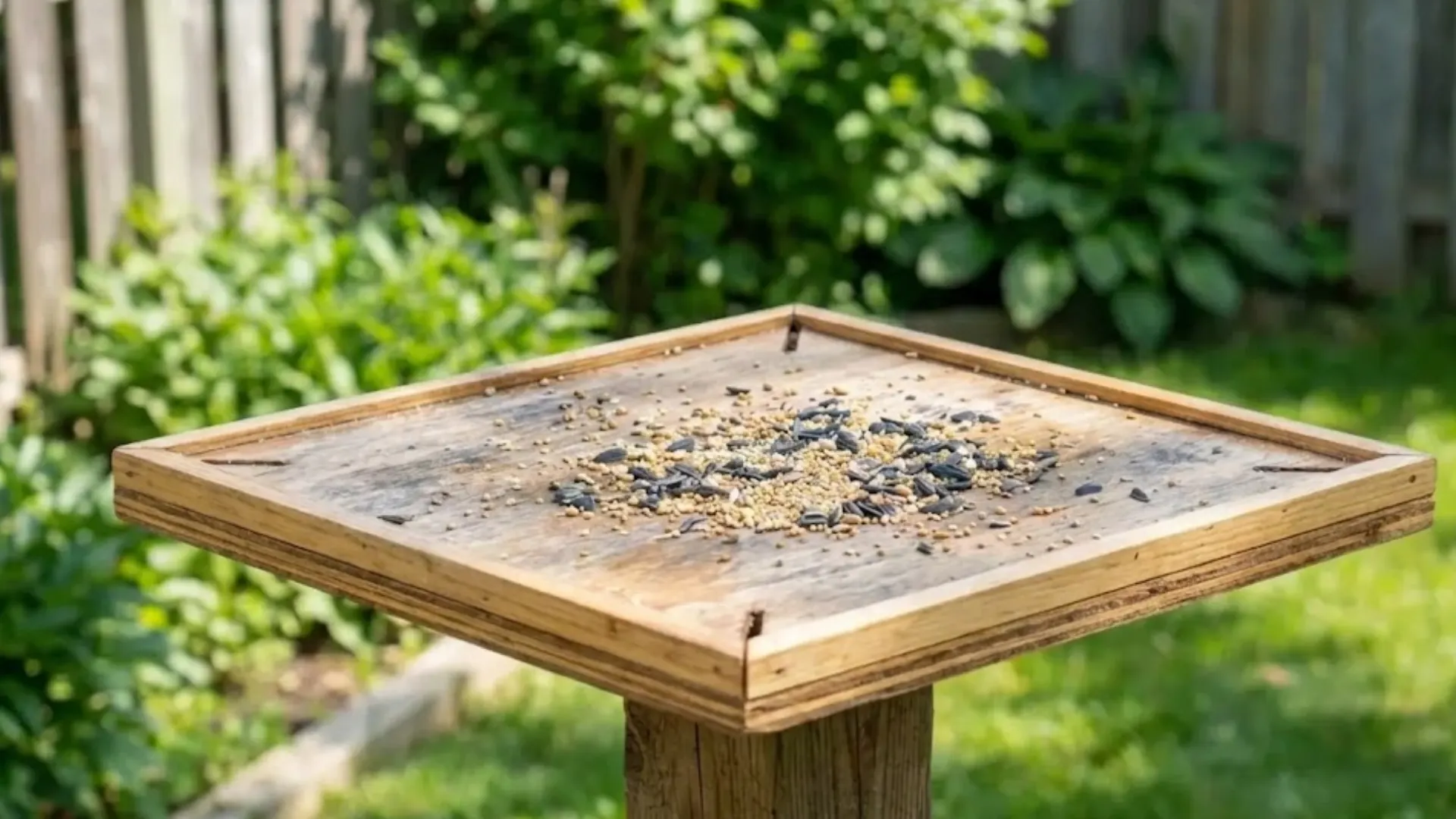
A plywood square edged with thin wood strips creates an open platform that larger birds like jays and doves can land on comfortably, unlike tighter tube feeders.
Small gaps left in the corners let rainwater drain instead of pooling around seed.
Mounting the platform on a post keeps it more stable in wind than hanging it from string. Sanding and sealing the wood helps it last multiple seasons.
15. Dried Gourd Bird Feeder
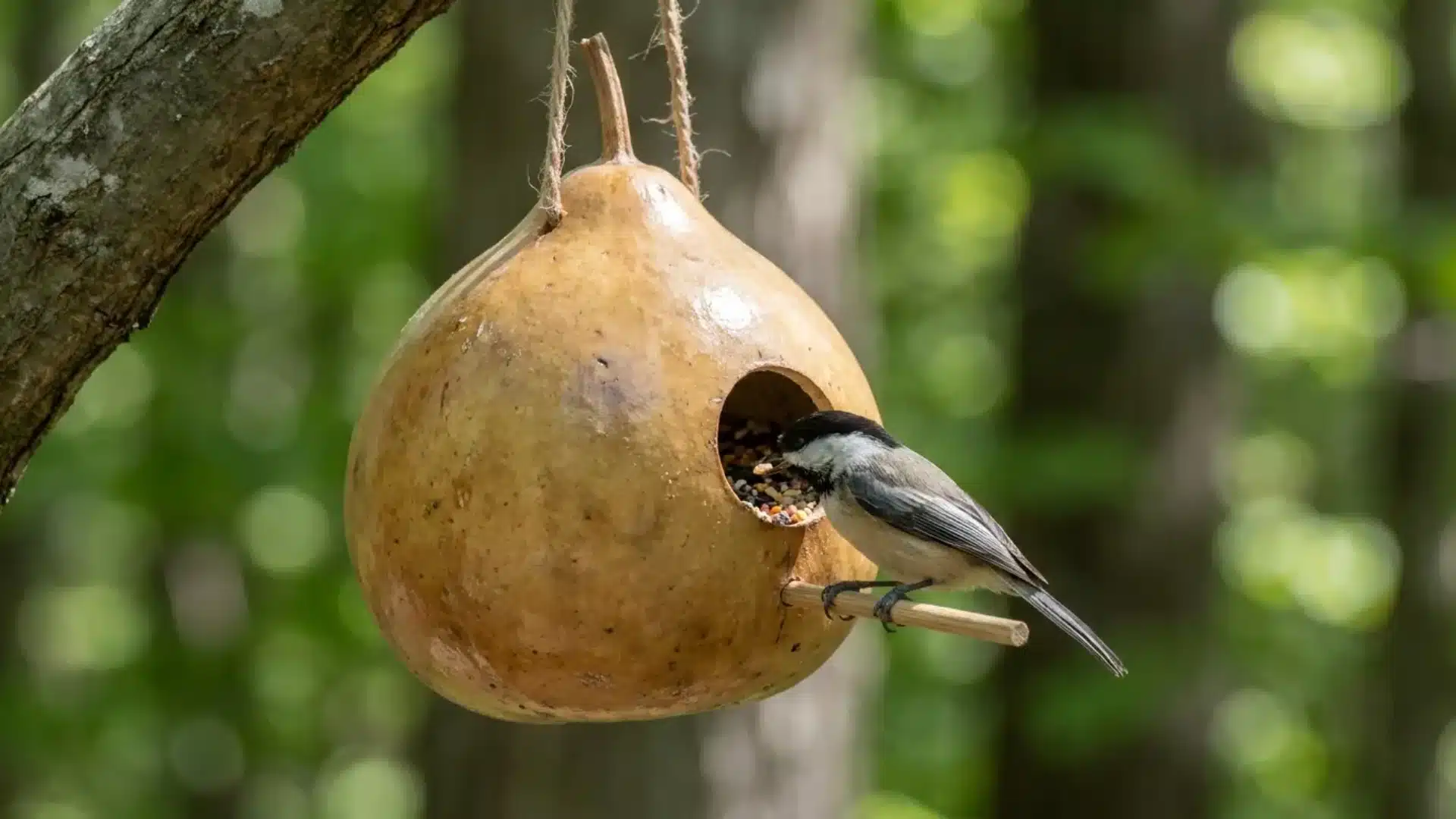
A birdhouse gourd, dried for several months until the shell hardens, gets an entry hole cut on one side before the seeds and pulp are scraped out.
Glue a perch stick just below the opening so birds have somewhere to stand while feeding.
Sealing the outside with polyurethane keeps moisture from softening the shell over time. Gourds take longer to prep, but the shape tends to draw curious visitors.
16. Copper Pipe Bird Feeder
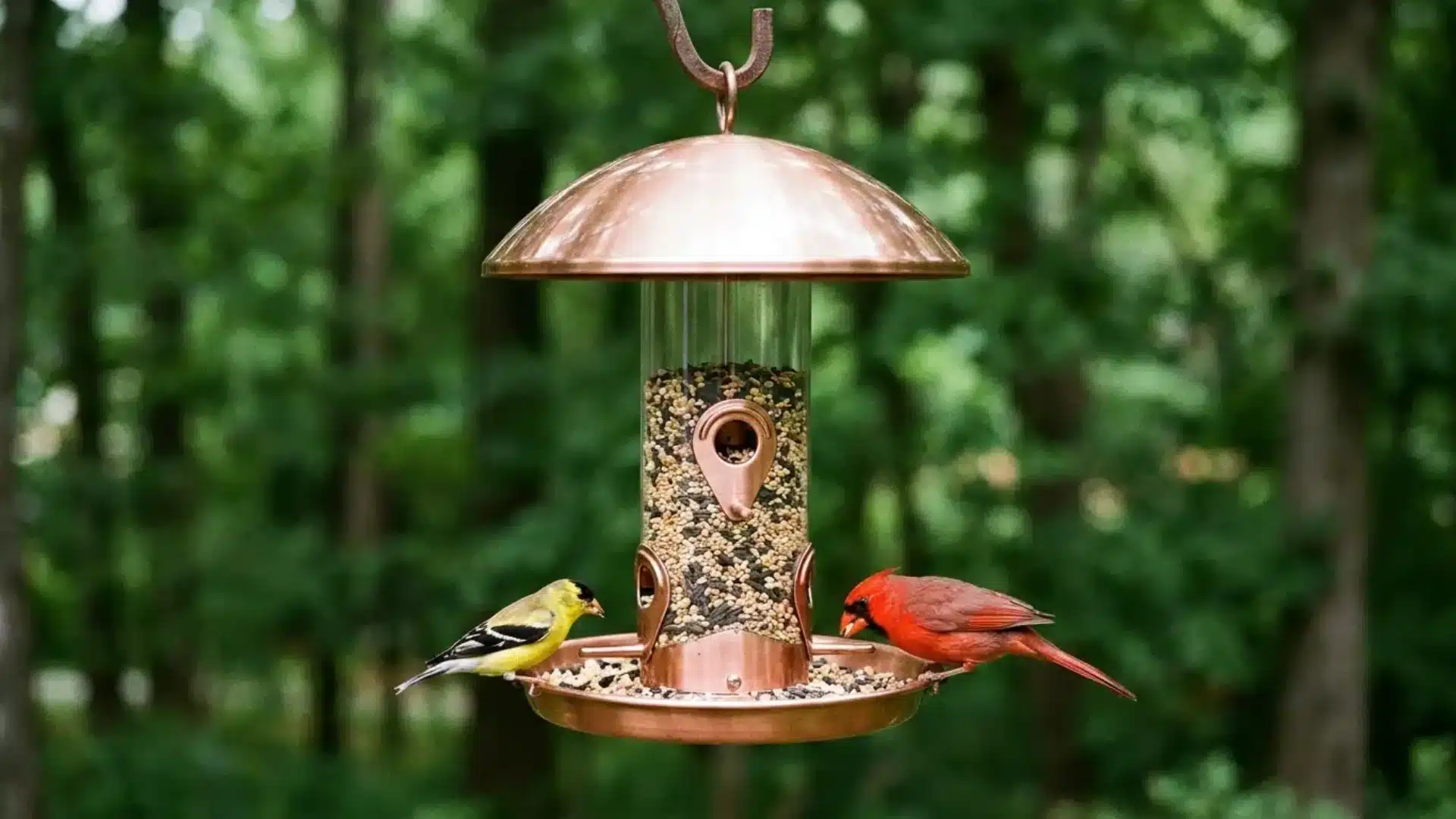
Copper elbow fittings and short pipe sections, joined with epoxy into a simple stand, hold a small terra cotta dish on top for seed.
The bare copper darkens into a soft patina after a season outside, improving with age instead of fading or rusting.
This style pairs well with modern or minimalist garden layouts, since the clean lines stand out against greenery. Copper fittings are easy to find in any hardware store’s plumbing aisle.
17. Grapevine Wreath Bird Feeder
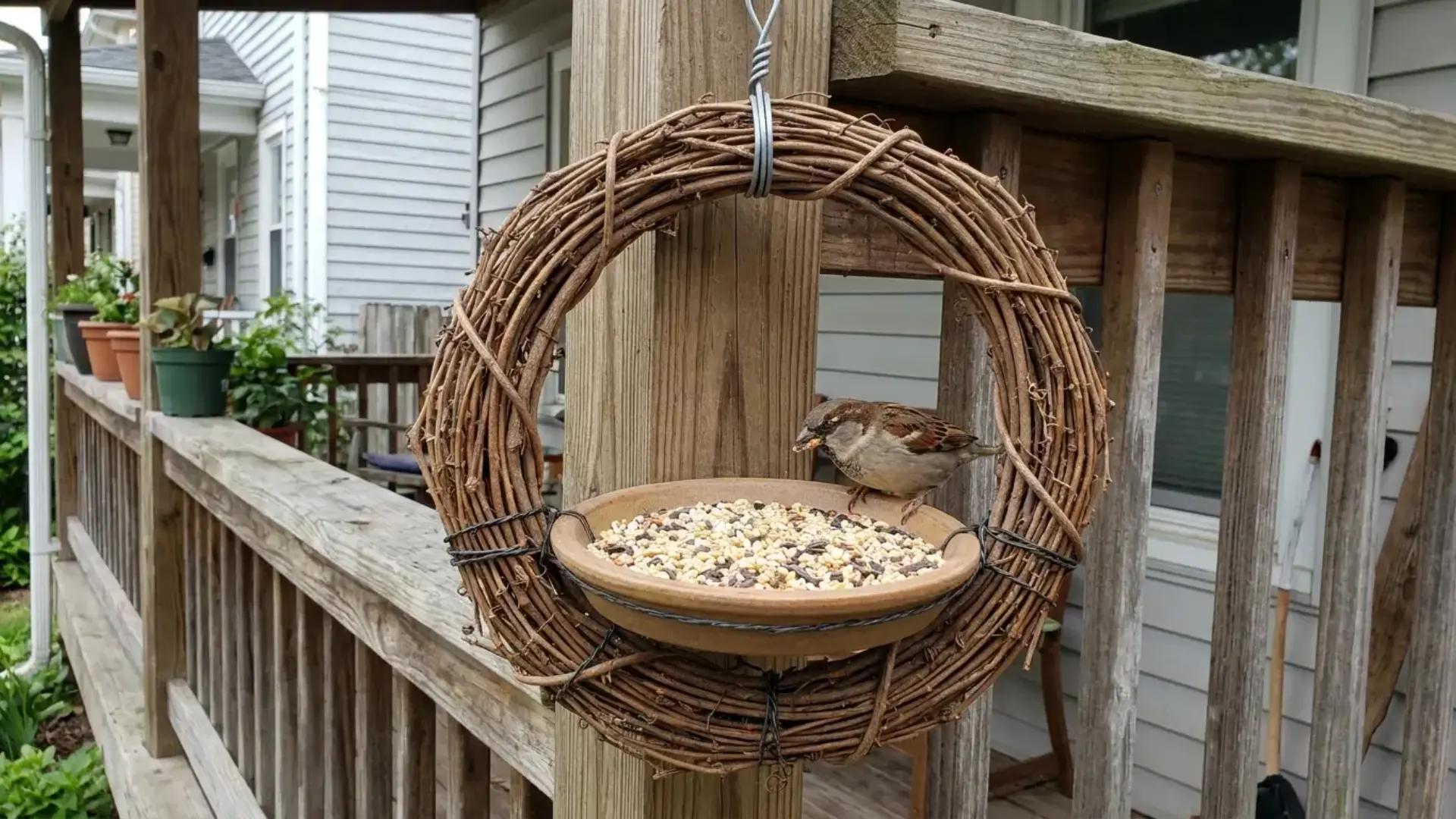
A small grapevine wreath, wired with a shallow ceramic saucer secured through its center, holds seed while keeping the wreath’s natural woven texture visible around the edges.
Hanging it near a porch or window makes it easy to check without stepping outside.
Refilling only takes lifting the saucer free of the wire loops, cleaning it, and setting it back. Swapping in a smaller saucer seasonally keeps the base useful year-round.
18. Repurposed Bottle Hummingbird Feeder
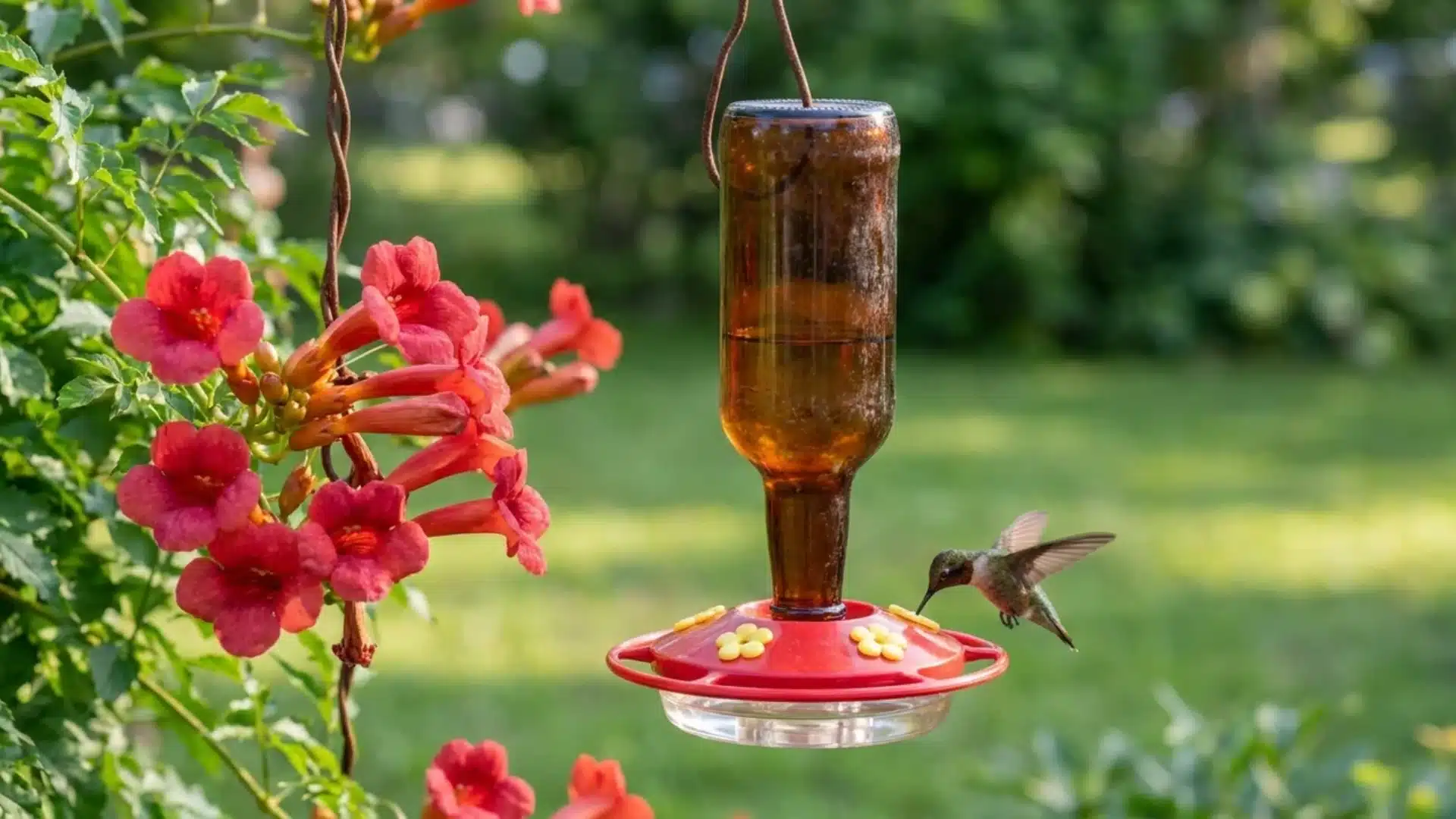
A small glass bottle with a narrow neck, fitted with a hummingbird feeder cap sold separately, becomes a nectar feeder once filled with cooled sugar water.
Hanging it near red or orange flowers helps hummingbirds spot it faster than a plain bottle would alone.
Rinse the bottle and cap every few days to keep nectar from fermenting in warm weather. A slightly tinted bottle can also help slow algae growth inside.
19. PVC Pipe Bird Feeder
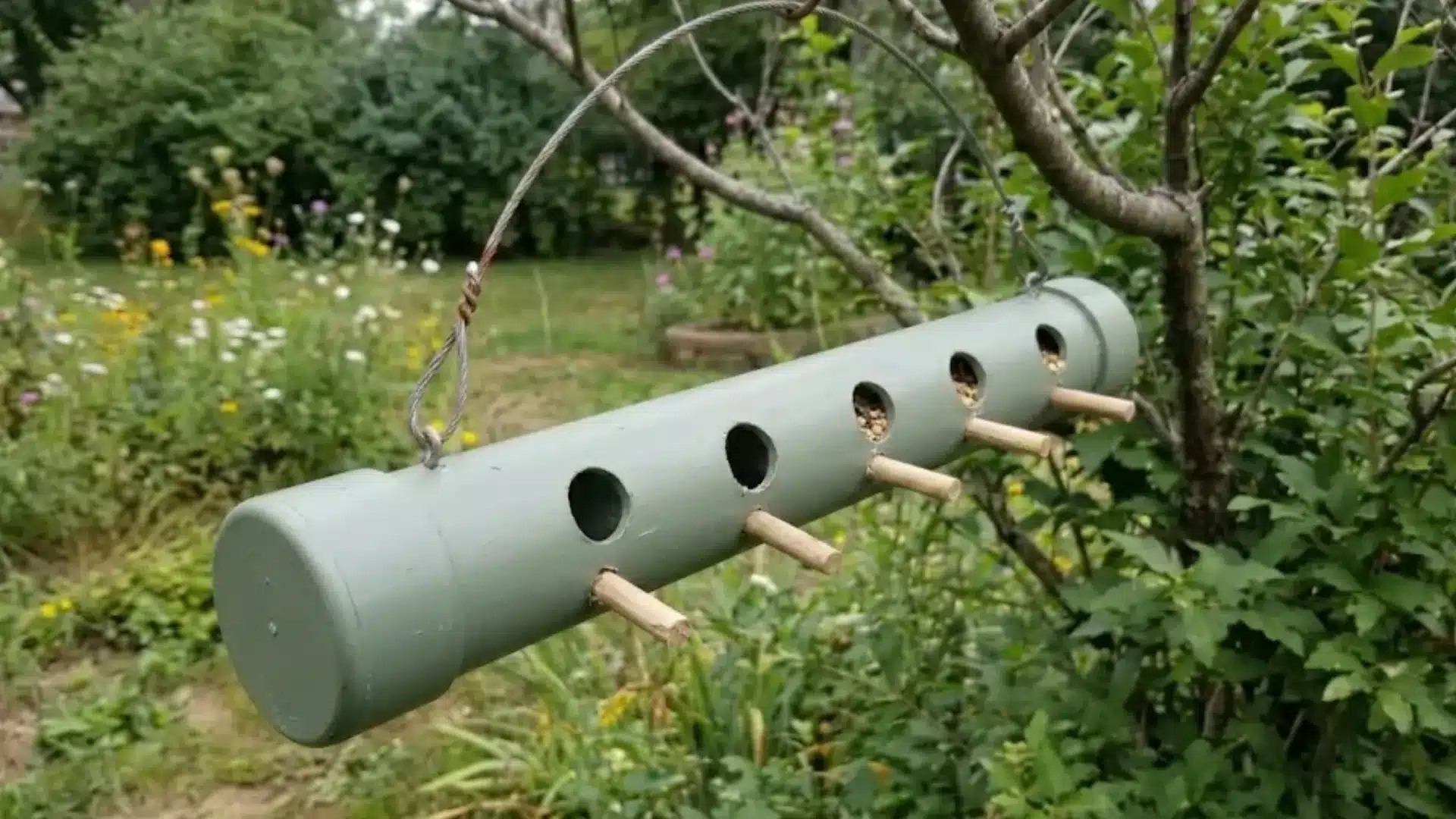
A capped length of PVC pipe, drilled with several feeding holes and perch slots along its length, holds a large seed supply suited to yards with heavy bird traffic.
Filling it from the open top before capping keeps the process mess-free compared to small side openings.
It holds up well through rain since PVC doesn’t warp or rot the way wood does. A muted paint color helps it look less like leftover plumbing.
Best Bird Seed for Your DIY Feeder
The container matters less than what goes inside it. Different seed and food types pull in different birds, and a few are worth avoiding altogether if squirrels are a problem in the yard.
| Food type | Birds it tends to attract |
|---|---|
| Black oil sunflower seed | Chickadees, finches, nuthatches, cardinals, blue jays |
| Safflower seed | Cardinals, grosbeaks, house finches, chickadees |
| Nyjer (thistle) seed | Goldfinches, pine siskins, juncos |
| Suet or suet cake | Woodpeckers, nuthatches, wrens |
| Peanut butter or grape jelly | Orioles, woodpeckers |
| Cracked corn | Doves, jays, ground feeders |
Where To Hang Your Bird Feeder?
Quiet corners of the yard, away from heavy foot traffic, pets, or loud equipment, tend to get more regular visits over time.
Placement matters as much as the feeder itself. Birds feel safest somewhere with nearby cover, like a tree or shrub, so they can dart away quickly if a predator shows up nearby.
Keeping feeders away from tight corners where cats might wait unseen also helps, along with mounting them high enough that squirrels can not reach with a running jump.
A spot near a window works well for close viewing, though keeping some distance helps prevent birds from flying into the glass by mistake.
Once a feeder earns a steady following, moving it around too often can send birds looking elsewhere instead of coming back.
How Much Does a DIY Bird Feeder Cost?
While some designs require small hardware purchases, most homemade options cost significantly less than store-bought feeders. Here’s a quick breakdown of the typical costs:
| DIY Bird Feeder Type / Material | Estimated Cost | Cost Notes |
|---|---|---|
| Thrifted birdcage or teacup feeder | $5-$20 | Cost depends on the item and where you purchase it. |
| PVC pipe feeder | $5-$10 | Includes the pipe and basic end caps or fittings. |
| Mason jar feeder | $10-$20 | Cost varies depending on the feeder base and jar used. |
| Hummingbird feeder | $4-$13 | Feeder caps and similar components are relatively inexpensive. |
| Copper pipe feeder | $15-$25 | Higher cost due to copper fittings and hardware. |
| Store-bought bird feeder | $30-$80+ | Ready-made feeders can cost considerably more than DIY alternatives. |
Tin can, milk carton, and pinecone feeders cost next to nothing because they rely on things you already have on hand.
Tips to Keep Your DIY Bird Feeder Clean
A dirty feeder does more harm than good, since mold and bacteria can spread quickly through wet seed or spoiled suet. A regular cleaning routine keeps birds safe:
- Rinse Weekly: Clean the feeder with warm water and a scrub brush to remove dirt, residue, and stuck-on food.
- Use Vinegar: Soak the feeder in a vinegar-water solution to loosen grime and naturally sanitize surfaces.
- Dry Completely: Allow the feeder to dry thoroughly before refilling to prevent trapped moisture and mold growth.
- Remove Spoiled Food: Discard moldy, damp, or sour-smelling food immediately instead of adding fresh seed on top of it.
- Inspect After Rain: Check feeders following heavy rain because wet seeds can spoil quickly and encourage bacterial growth.
Conclusion
Making a DIY bird feeder is one of those simple projects that can add something special to your everyday surroundings.
No matter what you choose a recycled carton, pinecone, teacup, wooden design, or another creative option; you do not need expensive materials or advanced skills to get started.
Just remember to choose suitable bird food, place your feeder somewhere safe, and clean it regularly to keep visiting birds healthy.
Try one of these builds this week, then drop a comment below with which style worked best in your yard.
Frequently Asked Questions
What Should I Never Put in a Bird Feeder?
Avoid bread, salty foods, chocolate, moldy food, spoiled seeds, seasoned foods, and anything containing harmful additives or preservatives.
How Long Do Homemade Bird Feeders Usually Last?
Cardboard and fruit-based builds last a week or two. Wood, metal, and glass versions can last for years.
Can I Use Untreated Wood For a Bird Feeder?
Yes, but seal it with a non-toxic, weather-resistant sealant first. Untreated wood absorbs moisture quickly and rots faster outdoors.
What Time of Day are Birds Most Active at Feeders?
Early morning and late afternoon see the most feeder activity. Birds feed heavily after waking and before settling in for the night.