

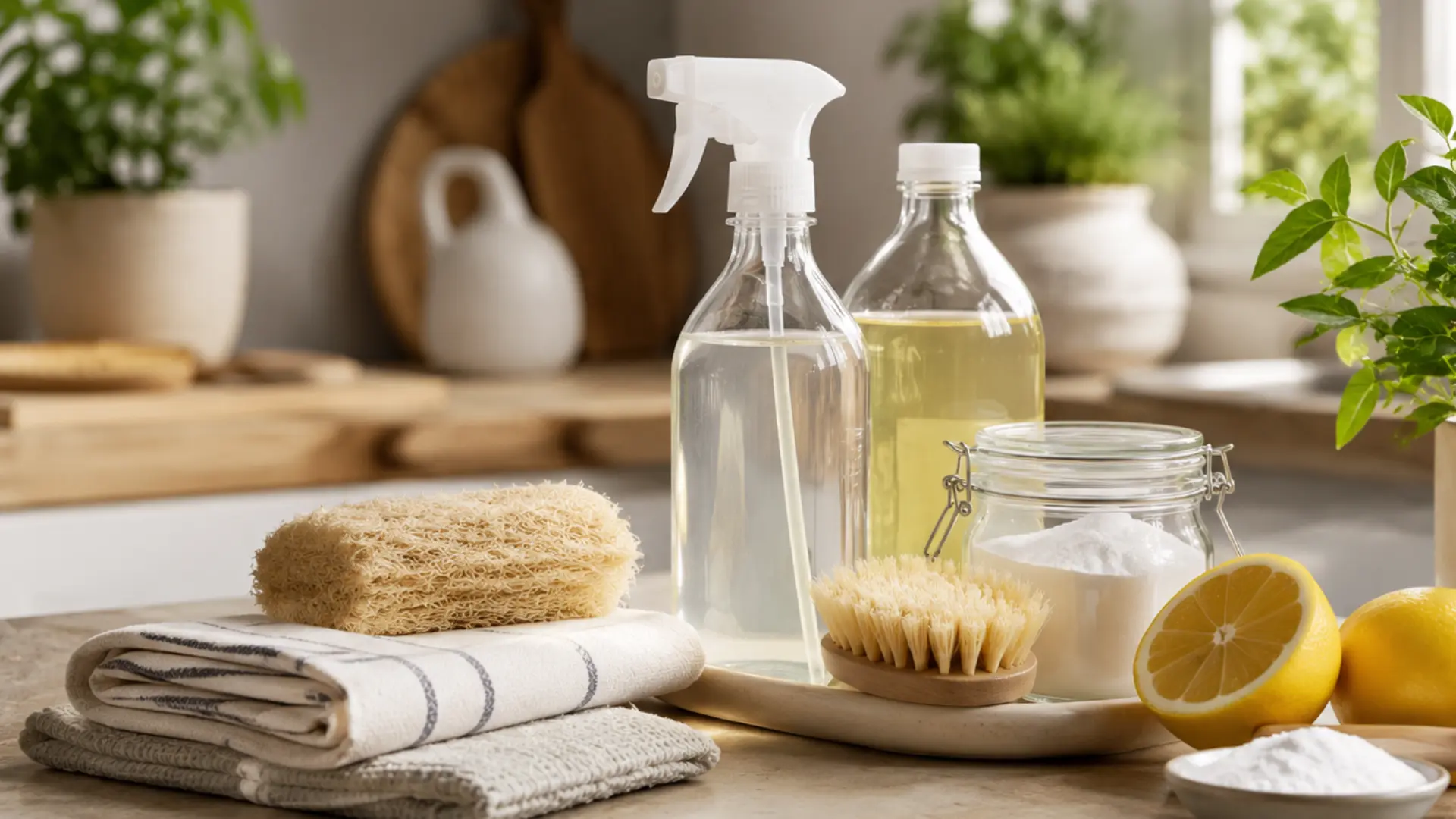
Your dish soap probably has more in common with a candle than anything that actually scrubs a pan clean. That is because most labels list chemicals that do nothing for actual cleaning.
They just sit there for scent and shelf life. However, making DIY cleaning products puts you back in control of what touches your home.
You pick the ingredients, so you always know what is in every bottle. It saves money too, since basic pantry items go a long way.
There are no fumes, no mystery residue, just simple stuff that works. Your kitchen, bathroom, and floors all get cleaner without the harsh smell.
Once you try it, store-bought sprays start to feel pointless.
Why More Homeowners Are Ditching Store-Bought Cleaners
A lot of what is in your store-bought cleaner has nothing to do with cleaning.
The synthetic fragrances and the preservatives are added to increase the shelf life, not to enhance cleaning.
When you make your own cleaner, none of that is in the bottle, and it’s cheaper. That is really what more people are realizing.
With that said, let’s take a look at a few simple recipes and the minimal ingredients you need to keep your home clean.
Homemade Kitchen Cleaning Recipes
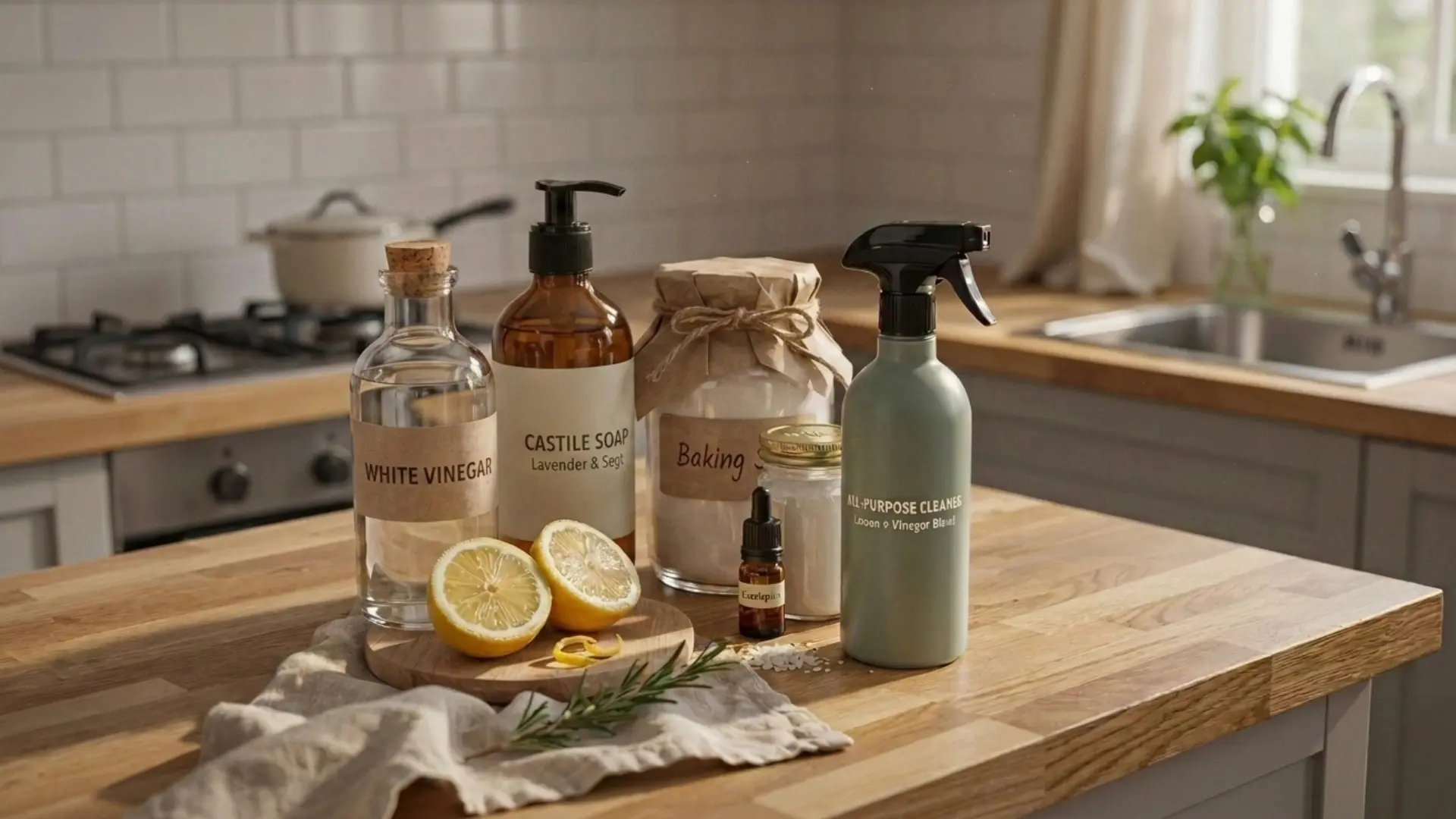
Your kitchen handles more daily mess than almost any other room. Below, you will find a homemade cleaning solution for every corner, from the counters down to the drain.
1. All-Purpose Kitchen Spray
This spray earns its spot on your counter every single day. It cuts through everyday grime without leaving any chemical smell behind. Light and citrusy, it freshens up your kitchen as you clean.
Keep a bottle within reach so wiping down surfaces becomes second nature. Your countertops will thank you.
Ingredients:
- One cup of white vinegar
- One cup of water
- Fifteen drops of lemon essential oil
- Empty spray bottle
Method:
Spray the mix directly onto the surface, leave it for about thirty seconds, and wipe clean with a damp cloth. Shake before each use.
Avoid using it on marble or natural stone, as the vinegar can damage the finish over time.
2. Natural Stovetop Degreaser
Grease buildup on your stovetop can feel impossible to budge. This paste tackles that mess without scratching your surface or leaving residue.
It works quietly in the background while you handle other tasks. Once you try it, you will wonder why you waited so long. Your stovetop will look brand new again.
Ingredients:
- Two tablespoons of baking soda
- One tablespoon of castile soap
- Enough warm water to form a paste
Method:
Apply it directly onto the greasy surface and leave it for five to ten minutes. Scrub gently with a damp sponge and rinse clean.
Works particularly well on gas stovetop grates; leave it a little longer on really stubborn buildup.
3. Fridge and Microwave Cleaner
Lingering food smells inside your fridge or microwave are never pleasant. This gentle cleaner lifts odors without leaving behind any strong chemical scent.
It works on both appliances, so you only need one bottle. Spills and splatters disappear quickly with very little scrubbing involved. Your kitchen will finally smell the way it should.
Ingredients:
- One cup of water
- One tablespoon of baking soda
- Five drops of tea tree essential oil
- Spray bottle
Method:
For the microwave, heat a bowl of water for 2 minutes first to loosen any residue, then spray it and wipe it clean. For the fridge, spray onto shelves and wipe with a clean cloth.
Safe to use on fridge shelves, microwave turntable, etc.
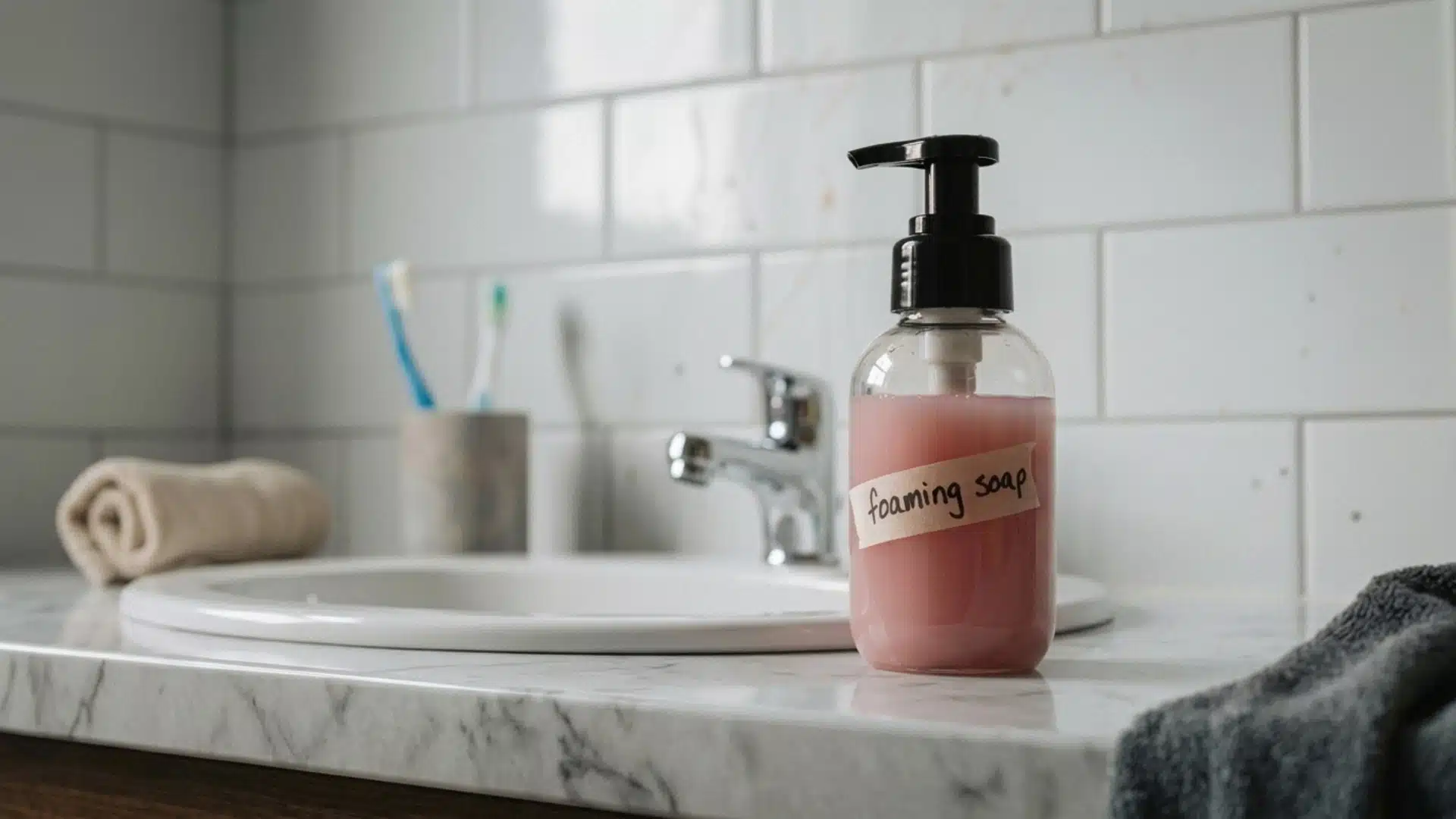
4. Homemade Liquid Dish Soap
Store-bought dish soap often dries out your hands after just one wash. This gentler version cleans plates and pans without that harsh aftereffect.
It cuts through grease the same way, minus the chemical sting. Your hands stay soft, and your dishes still come out spotless. Simple swaps really do make a difference.
Ingredients:
- Half a cup of warm distilled water
- Half a cup of Castile soap
- One teaspoon of white vinegar
- Ten drops of lemon essential oil
- Empty bottle
Method:
Combine water and castile soap, stir in vinegar and essential oil, and pour into the bottle.
Shake gently before each use; the mixture may separate slightly over time, which is completely normal.
5. Dishwasher Detergent
Commercial dishwasher pods often hide ingredients you cannot pronounce. This version skips all that while still leaving your dishes spotless.
It works in any dishwasher without leaving a filmy residue behind. Once you make a batch, it lasts through plenty of loads. Your dishes come out shining every single time.
Ingredients:
- One cup of baking soda
- One cup of Borax
- Half a cup of salt
- Half a cup of Lemi-Shine
- Airtight container
Method:
Combine the baking soda, Borax, salt, and Lemi-Shine in a bowl. Stir until no clumps remain. Transfer the mixture to an airtight container for storage. Use two tablespoons per dishwasher load.
Add white vinegar to the rinse agent compartment. This keeps your dishes spot-free and streak-free every time.
6. Oven Cleaner
Baked-on grease and burnt spots make ovens feel impossible to clean. This method breaks down stubborn buildup without filling your kitchen with fumes.
Letting it sit does most of the heavy lifting for you. Wiping it away afterward takes barely any effort. Your oven will look like new again.
Ingredients:
- Half a cup of baking soda
- Two to three tablespoons of water
- Half a cup of white vinegar
- Spray bottle
Method:
Mix baking soda with water into a paste, and spread it inside the oven. Leave overnight. Spray vinegar over the baking soda, and it will foam. Wipe clean with a damp cloth.
The longer you leave the paste, the easier the wipe-down.
7. Drain Freshener
A smelly drain can throw off the whole feel of your kitchen. This simple fix clears out buildup and leaves your sink smelling fresh.
It works fast and does not require any harsh chemical cleaners. Doing this regularly keeps the smell from ever coming back. Your sink will thank you for the habit.
Ingredients:
- Half a cup of baking soda
- Half a cup of white vinegar
- Full kettle of boiling water
Method:
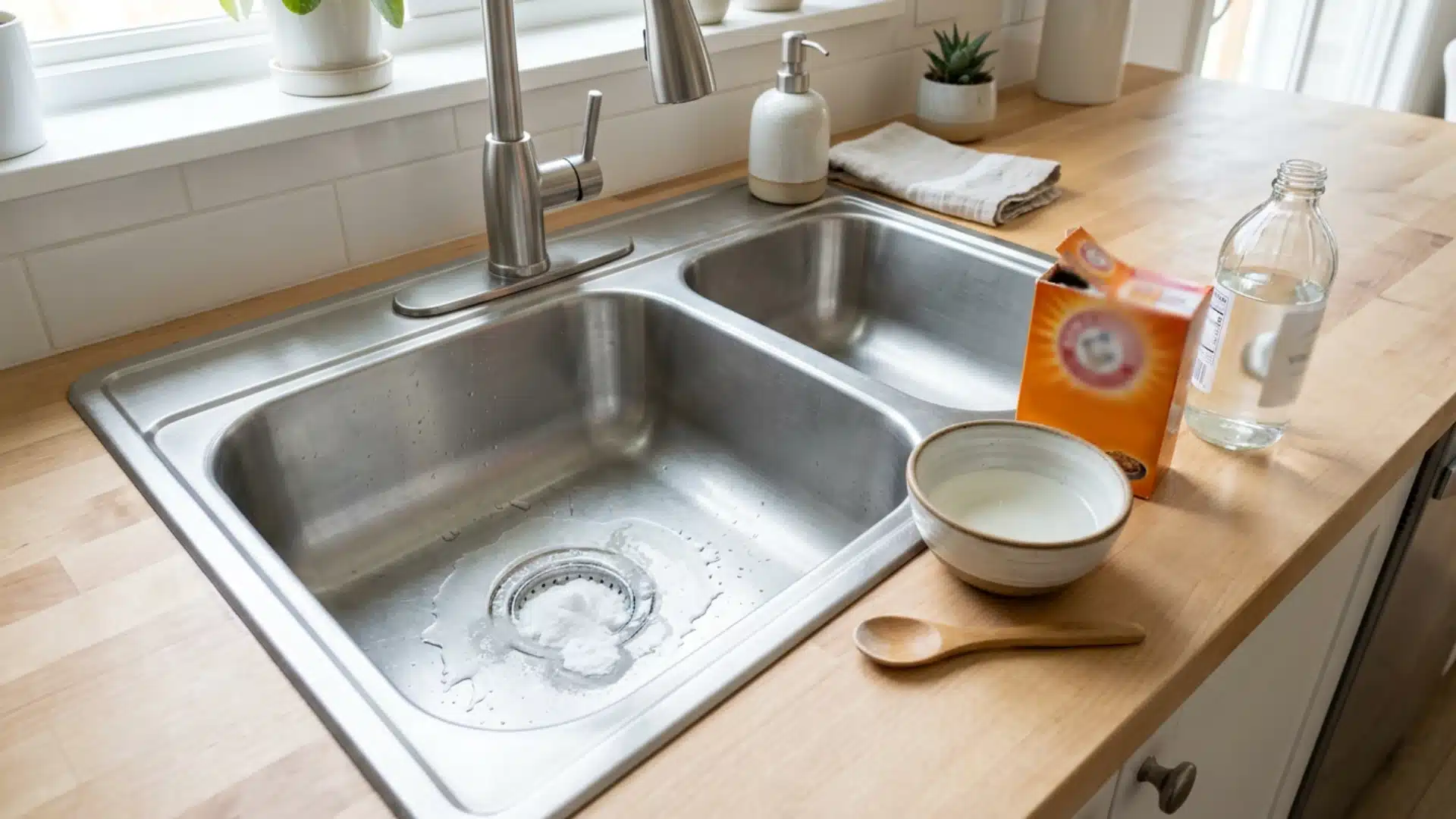
Pour baking soda down the drain, follow with vinegar, leave for fifteen minutes while it fizzes, then flush with boiling water.
Do this once a week, and you will never have to bear the smell of a reeking drain.
Homemade Bathroom Cleaning Recipes
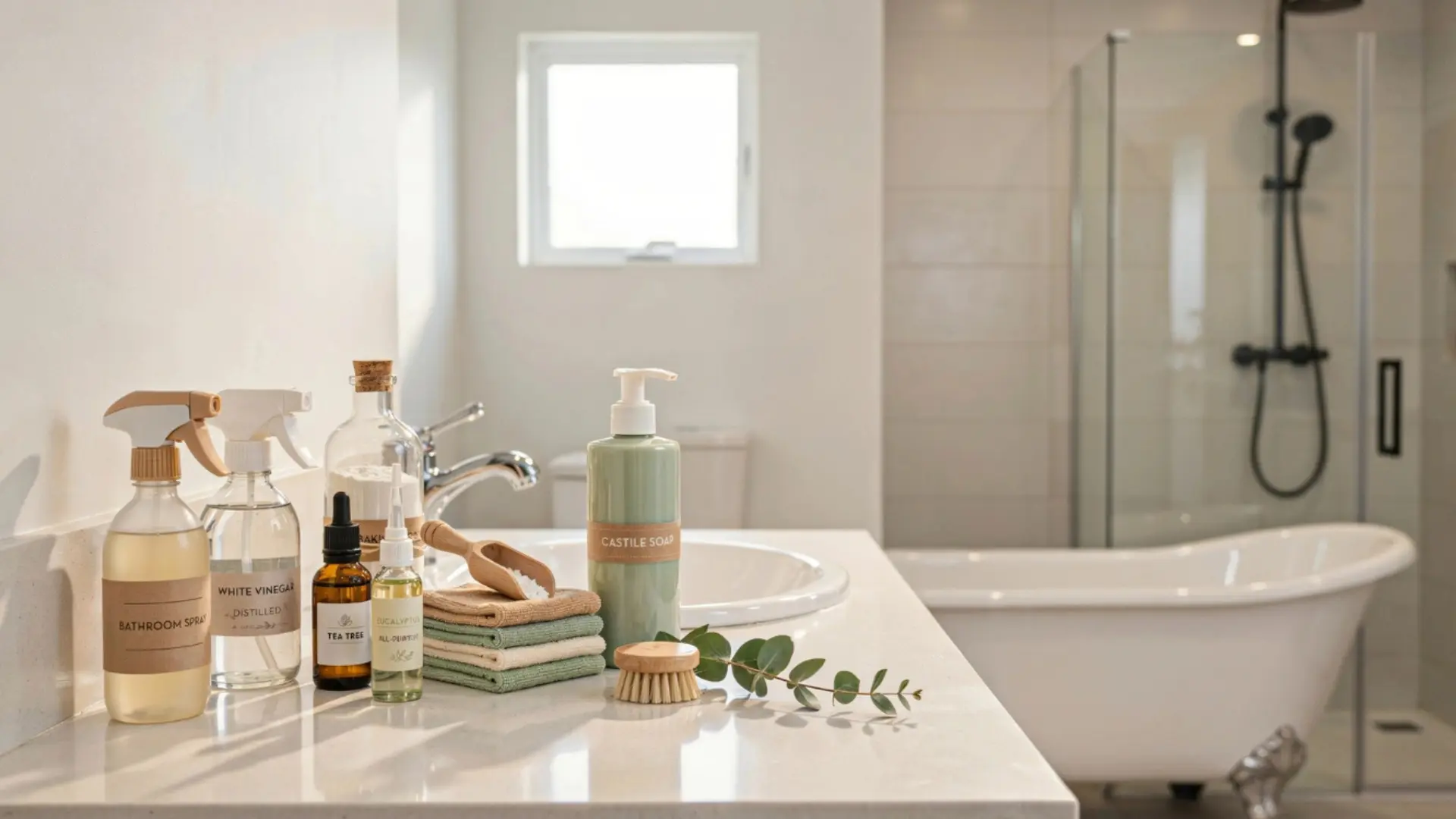
Your bathroom does not need a separate product for every single surface. A few basic mixes can easily handle the whole room instead.
8. Toilet Bowl Cleaner
Toilet bowls collect stains that regular wiping never seems to fix. This fizzy combination breaks down buildup without needing bleach at all.
It tackles odor at the same time, leaving the bowl genuinely fresh. Stubborn rings disappear with barely any scrubbing on your part. Your bathroom will smell clean, not chemical.
Ingredients:
- Half a cup of baking soda
- Quarter cup of white vinegar
- Ten drops of tea tree essential oil
Method:
Pour baking soda into the bowl, add vinegar, and it will fizz; then add tea tree oil. Leave for 10 minutes and scrub before flushing.
For stubborn stains, leave overnight before scrubbing.
9. Shower and Tile Scrub
Soap scum builds up fast in showers, especially around grout lines. This scrub breaks through that buildup without relying on harsh bathroom chemicals.
It works on tiles, glass doors, and grout all at once. Scrubbing becomes far less of a chore with this paste on hand. Your shower will finally look its best.
Ingredients:
- Half a cup of baking soda
- Quarter cup castile soap
- Ten drops of eucalyptus essential oil
Method:
Mix into a thick paste, apply to tiles or grout, scrub in circular motions, leave for five minutes, and rinse thoroughly with warm water.
Use an old toothbrush on grout lines.
10. Mirror and Glass Cleaner
Streaky mirrors are one of the most annoying bathroom problems around. This cleaner leaves glass surfaces clear, without any cloudy residue.
It skips the chemical smell that usually comes with glass cleaners. Wiping becomes quick and satisfying once you see the spotless results. Your mirror will look freshly polished every time.
Ingredients:
- One cup of white vinegar
- One cup of water
- One tablespoon of cornstarch
- Empty spray bottle
Method:
Combine all ingredients in the bottle and shake until the cornstarch dissolves. Spray onto the mirror and wipe in circular motions with a microfibre cloth.
Cornstarch prevents streaking. Shake well before every use.
11. Mold and Mildew Spray
Early mold spots are easy to miss until they spread further. This spray targets those spots before they turn into a bigger problem.
It works quietly over time, so you do not need constant scrubbing. Catching it early saves you from a much tougher cleaning job later. Your bathroom stays fresher for longer.
Ingredients:
- One cup of water
- Half a cup of white vinegar
- Twenty drops of tea tree essential oil
- Empty spray bottle
Method:
Combine all ingredients in the bottle and shake well. Spray directly onto the affected area and leave for at least thirty minutes before wiping.
Do not rinse. Tea tree oil continues to work after application.
12. Daily Bathroom Surface Spray
Sinks and counters need quick touch-ups between your deeper cleaning sessions. This spray handles everyday grime without feeling like a chore to use.
It keeps surfaces looking tidy with minimal effort. Reaching for it daily becomes second nature once you get into the habit. Your bathroom stays fresh all week long.
Ingredients:
- One cup of water
- Two tablespoons of castile soap
- Ten drops of lavender essential oil
- Empty spray bottle
Method:
Mix water and castile soap in the bottle, add lavender oil, shake gently, spray onto surfaces, and wipe with a damp cloth.
Lavender keeps the bathroom smelling clean without any artificial fragrance.
13. Air Freshener Spray
Most air fresheners just mask smells instead of addressing them. This spray actually freshens the air rather than masking anything underneath.
It leaves rooms smelling clean without the overpowering chemical scent. A quick spritz works in any room of your house, not just bathrooms. Your home will smell genuinely fresh.
Ingredients:
- One cup of water
- Half a cup of white vinegar
- Fifteen drops of essential oil of choice
- Empty spray bottle
Method:
Combine all ingredients in the spray bottle and shake well.
Shake before every use and adjust the amount of essential oil to your preference.
Natural Laundry Recipes
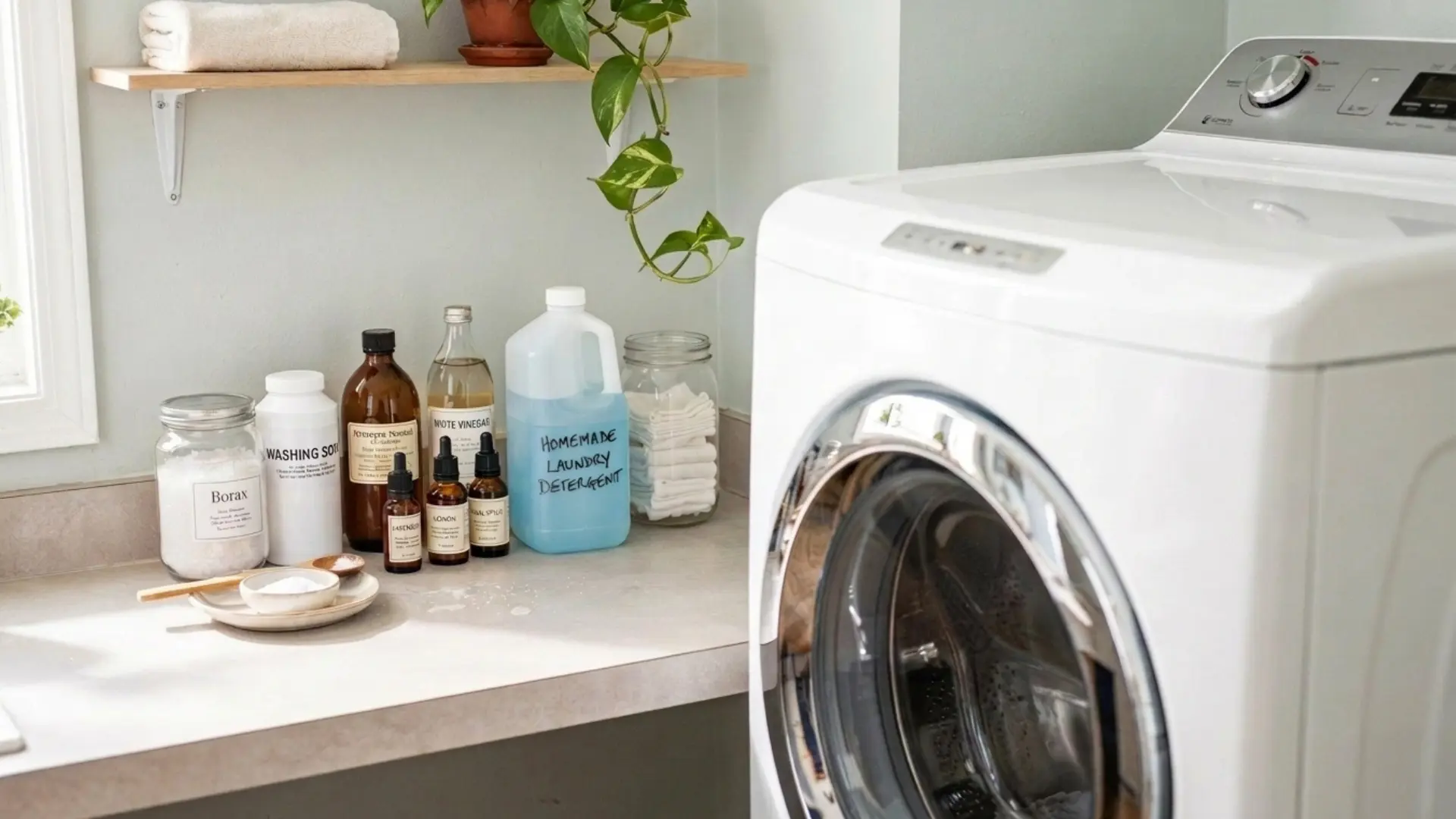
Your laundry room does not need a shelf packed with commercial products either. Basic pantry items handle everyday washing along with the toughest stains you run into.
14. Liquid Laundry Detergent
Laundry detergent often hides a long list of unnecessary additives. This version cleans clothes thoroughly without any of that extra chemical buildup.
It works in regular and HE washing machines without any issues. Your clothes come out just as clean as with store-bought versions. Your laundry routine stays simple and affordable.
Ingredients:
- Half a cup of Borax
- Half a cup of washing soda
- Half a cup of Dawn dish soap
- Four cups of hot water
- Empty jug
Method:
Combine Borax, washing soda, and Dawn in the jug. Pour in hot water to dissolve; fill to the top with cold water. Shake before each use.
Use a quarter cup per standard load.
15. Easy Stain Remover
Stubborn stains usually need more than a quick splash of water. This remover tackles both fresh spots and tougher set-in stains effectively.
It works directly on the fabric before the items are tossed into the wash. Tricky stains lift away without the need for harsh commercial stain treatments. Your clothes stay looking their best longer.
Ingredients:
- Half a cup of hydrogen peroxide
- Half a cup of washing soda
- White vinegar diluted in water
- Small bowl
Method:
For easy stains, spray hydrogen peroxide directly onto the stain and launder.
For tougher stains, sprinkle washing soda onto the stain, spray with diluted vinegar, scrub into a paste, leave for twenty minutes, then launder.
Never mix hydrogen peroxide with bleach.
16. Fabric Softener
Store-bought fabric softener often comes loaded with a synthetic fragrance you never asked for. This version softens clothes naturally while reducing static cling.
It leaves fabric feeling just as soft without any artificial scent. Your laundry feels comfortable straight out of the dryer every single time. Your clothes stay soft for days.
Ingredients:
- Five and a half cups of water
- One fifteen-ounce bottle of hair conditioner
- Two and a half cups of white vinegar
- Twenty drops of essential oil
Method:
Pour into an empty storage container. Use a quarter cup per wash load before the rinse cycle.
Any hair conditioner works.
17. Dryer Sheets
Disposable dryer sheets create waste you do not actually need. These reusable squares soften clothes and reduce static just as well. They work load after load without ending up in the trash.
Switching to this option reduces unnecessary laundry room waste. Your clothes stay soft, and your routine stays simple.
Ingredients:
- Old cotton t-shirts cut into squares
- Homemade fabric softener from the recipe above
- An airtight container with a lid
Method:
Fill half the container with fabric softener. Place cloth squares inside and press down to soak. Squeeze out excess before tossing one square into the dryer with your load.
Reusable and washable. No need to launder between every use.
Toxin-Free All-Purpose and Floor Cleaning Recipes
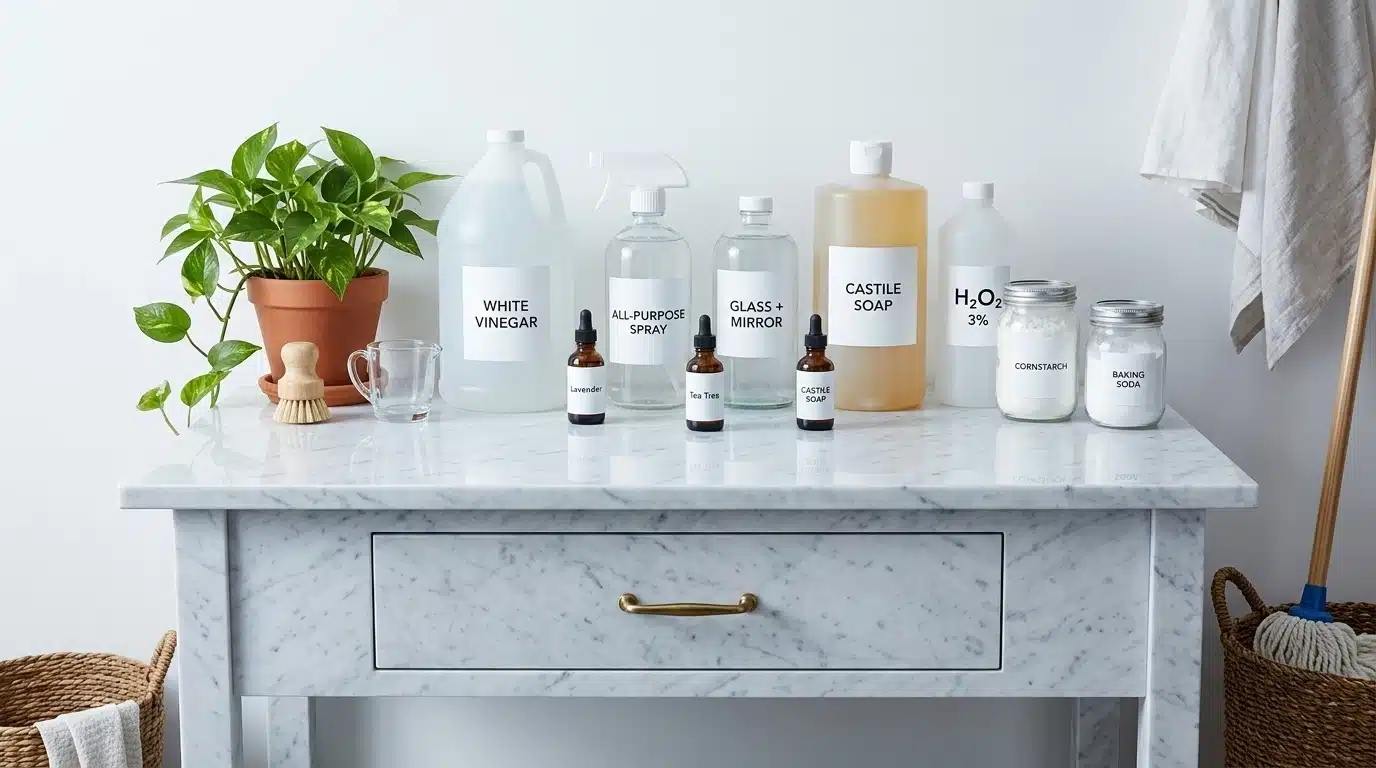
Carpets often trap dust, spills, and odors more quickly than hard flooring. Instead of relying on commercial formulas, these DIY carpet cleaningproducts use simple household ingredients to freshen carpets and tackle common stains naturally.
18. All-Purpose Home Spray
One spray bottle can realistically handle most surfaces around your house. This DIY all-purpose cleaner works across countertops, bathrooms, and other hard surfaces with ease.
It skips harsh chemicals while still tackling everyday dirt and grime. Keeping just one bottle on hand simplifies your entire cleaning routine. Your whole house benefits from this one simple swap.
Ingredients:
- One cup of white vinegar
- One cup of water
- Half a teaspoon of castile soap
- Ten drops of essential oil
- Empty spray bottle
Method:
Combine all ingredients in the spray bottle and shake well. Spray onto any hard surface and wipe clean with a damp cloth.
Shake before each use. Avoid marble, granite, and natural stone.
19. Hardwood Floor Cleaner
Hardwood floors need gentle care to avoid damaging their finish over time. This cleaner picks up dirt without leaving behind any sticky residue.
It keeps floors looking polished without the use of harsh chemical cleaners. Mopping becomes quick and simple once you have this mix ready. Your floors will keep their natural shine.
Ingredients:
- Four cups of warm water
- Quarter cup of white vinegar
- Five drops of essential oil of choice
Method:
Mix all ingredients in a bucket. Dampen the mop lightly and wring it out almost completely before applying it to the floor. Make a fresh batch each time.
Don’t use too much product on Hardwood floors.
20. Tile and Grout Cleaner
Grout lines trap dirt that regular mopping never quite reaches. This paste digs into those lines and lifts out built-up grime. It works alongside your regular floor routine without much extra effort.
Doing this monthly keeps your tile looking consistently clean and bright. Your floors will look noticeably more refreshed.
Ingredients:
- Half a cup of baking soda
- A quarter cup of hydrogen peroxide
- One teaspoon of castile soap
- Small bowl
Method:
Mix all three into a paste. Apply to grout lines with an old toothbrush and leave for ten minutes. Scrub and mop with clean warm water to rinse.
Repeat monthly for consistently clean grout.
21. Carpet Freshener
Carpets trap odors that regular vacuuming alone cannot fully remove. This freshener works into the fibers and lifts smells before vacuuming again.
Leaves carpets smelling clean, with no heavy artificial fragrance lingering. Using it regularly keeps your rooms smelling fresh between deeper carpet cleanings. Your home will feel noticeably more inviting.
Ingredients:
- One cup of baking soda
- Twenty drops of essential oil of choice
- Small jar with a lid
Method:
Mix baking soda and essential oil in the jar and leave overnight. Sprinkle generously over the carpet, leave for fifteen to thirty minutes, then vacuum thoroughly.
Safe for homes with kids and pets.
22. Carpet Stain Remover
Carpet stains can feel impossible once they have had time to set. This remover lifts both fresh spills and dried stains. It works gently on fibers without soaking the carpet underneath too much.
Blotting carefully helps the stain disappear without spreading it further. Your carpet will look noticeably cleaner afterward.
Ingredients:
- Baking soda
- One tablespoon of Dawn dish soap
- One tablespoon of white vinegar
- Two cups of warm water
Method:
Sprinkle baking soda on the stain and leave for ten minutes, then vacuum. Mix dish soap, vinegar, and water, sponge onto the stain, and blot with a dry cloth. Repeat until the stain lifts.
Always blot, never rub.
23. Window and Glass Cleaner
Fingerprints and smudges show up fast on windows and glass doors. This cleaner wipes them away without leaving any streaky residue behind. It works quickly, so you are not stuck scrubbing for long.
Glass surfaces look clear and freshly cleaned every time. Your windows will look noticeably brighter afterward.
Ingredients:
- Two cups of water
- Half a cup of white vinegar
- Quarter cup of rubbing alcohol
- Empty spray bottle
Method:
Combine all ingredients in the spray bottle and shake well. Spray onto the glass and wipe with a lint-free cloth or microfibre pad.
Rubbing alcohol gives the streak-free finish. Do not leave it out.
Cleaning Slip-Ups Worth Avoiding
Natural cleaners work great, but small mistakes can ruin your results fast. Keep these simple tips in mind before you start mixing anything:
- Wrong surface choice: Vinegar damages marble, granite, natural stone, and unsealed hardwood. Use Castile soap and water on those surfaces instead.
- Making large batches: Homemade cleaners lack preservatives, so they do not last long. Make small batches, label them with the date, and use them soon.
- Mixing harsh ingredients: Never mix vinegar and hydrogen peroxide in the same bottle. Never add bleach to any homemade cleaning recipe either.
- Expecting instant results: Natural cleaners need more contact time than commercial ones do. Leave the solution on the surface for a few minutes before scrubbing.
A little patience and the right approach go a long way here. Following these tips keeps your cleaners safe, effective, and long-lasting.
Frequently Asked Questions
How Long Do Homemade Cleaners Last Before Going Bad?
Most homemade cleaners stay effective for two to four weeks. Make small batches, label them with the date, and use them within that window.
Can I Mix Vinegar and Baking Soda in The Same Bottle?
Yes, but only briefly. They fizz on contact and lose cleaning power once that reaction settles, so use them together right away.
Is It Safe to Use These Cleaners Around Kids and Pets?
Most recipes here are safe around kids and pets since they skip harsh chemicals. Always check ingredients, such as essential oils, for pet sensitivities.
What Surfaces Should I Avoid Cleaning with Vinegar?
Avoid using vinegar on marble, granite, natural stone, and unsealed hardwood. The acid can damage these finishes over time, so use castile soap instead.
Do Homemade Cleaners Work on Tough, Set-In Stains?
Yes, but they often need more contact time than commercial products. Let the solution sit for several minutes before scrubbing for best results.
Can I Substitute Regular Soap for Castile Soap in These Recipes?
Castile soap works best since it is gentle and plant-based. Regular soap may leave residue or react differently with vinegar and baking soda.
Final Thoughts
Switching to DIY cleaning products is not complicated once you get started. Your home gets just as clean, minus the harsh chemicals and strong smells.
You save money every month since the ingredients are cheap and easy to find. Small batches keep things fresh and effective for weeks at a time.
Once you try a few recipes, going back feels unnecessary. Your kitchen, bathroom, and floors all benefit from this simple switch. It takes only a few minutes to mix up a new batch.
Keep your supplies stocked, and your home will thank you. Give one of these recipes a try this week. Comment below and tell which one worked best for you.




2 Responses