
Buying a crib mattress feels simple until you realize crib mattress size actually matters more than you expect. One wrong measurement and your baby’s sleep space becomes unsafe.
A crib is where your baby spends most of their early months, so getting the mattress right is not something to guess at.
Knowing the right size before you shop puts you one step ahead. Everything you need to know about sizing, fitting, and choosing the right mattress is covered right here. By the end, you will feel confident making the right call.
Why Are Crib Mattress Sizes Standardized?
Baby gear shopping can feel overwhelming. But crib mattress sizing is one area where things are actually kept simple on purpose.
In the U.S., crib mattresses follow a standard size range set by safety organizations. This makes it easier for parents to shop without second-guessing every purchase.
It also keeps babies safe. A mattress that fits too loosely in a crib creates dangerous gaps. One that’s too large won’t fit at all.
Manufacturers follow these size guidelines so their products work with standard cribs. When the mattress and crib match up correctly, your baby sleeps in a safer space.
Understanding Crib Mattress Dimensions
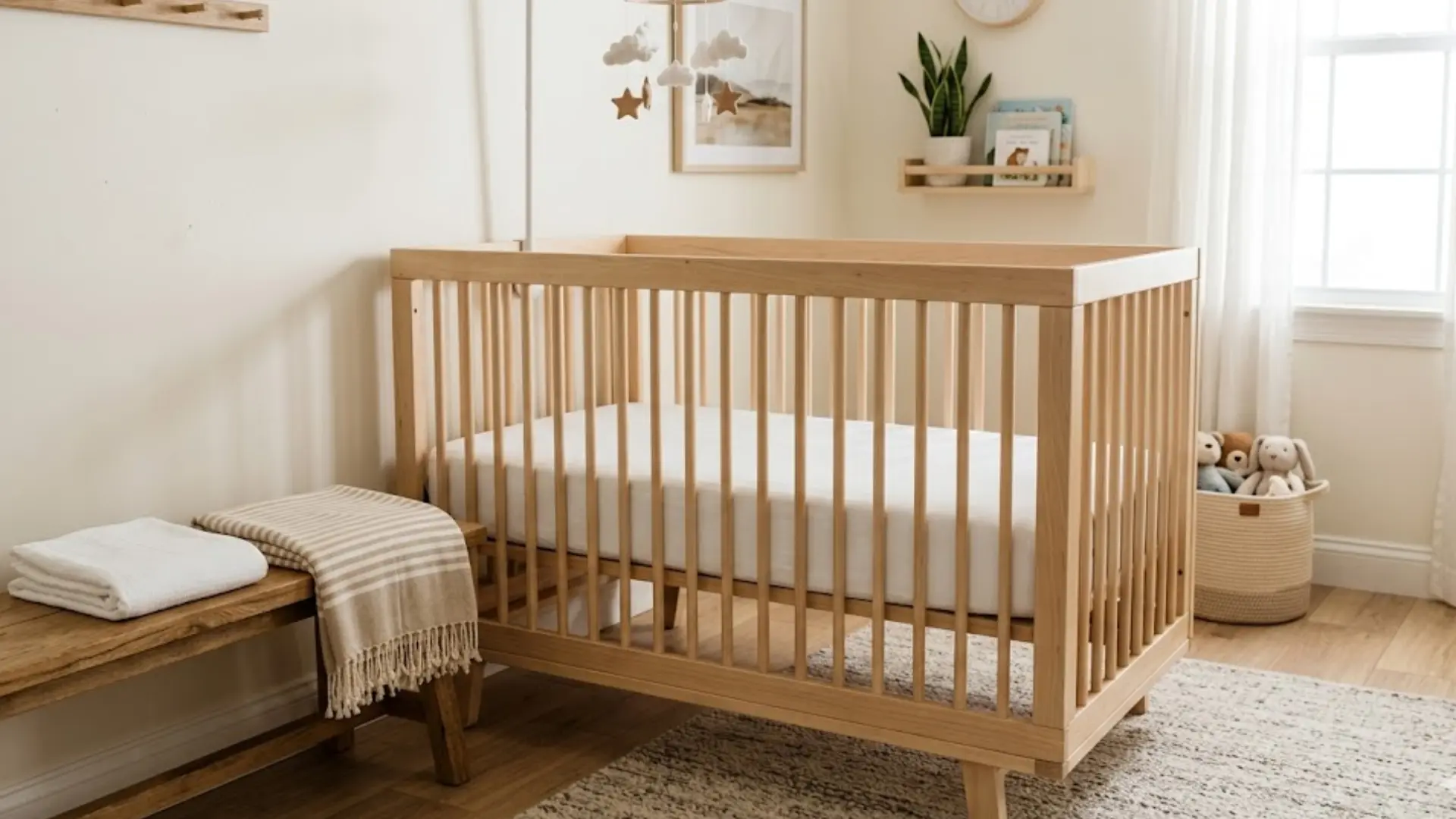
Crib mattress dimensions aren’t random; they follow guidelines set by safety regulators to protect your baby. Here is a breakdown of each measurement and what the standard size of a crib mattress means in real terms, as outlined by the U.S. Consumer Product Safety Commission (CPSC):
1. Standard Crib Mattress Length
Most crib mattresses in the U.S. measure 52 inches long. This length fits the interior of a standard full-size crib. It gives your baby enough room to stretch out comfortably.
The length also stays consistent as your child grows into a toddler bed. Most convertible cribs are built around this same measurement, so the mattress carries over.
2. Standard Crib Mattress Width
The standard width for a crib mattress is 28 inches. This fits snugly inside a regulation-size crib frame. A proper fit means no dangerous gaps between the mattress and crib sides.
Gaps wider than two fingers are considered a safety risk. Always check the width before buying, even if the mattress looks like the right size.
3. Standard Crib Mattress Thickness
Crib mattress thickness typically ranges from 4 to 6 inches. Thinner mattresses around 4 inches are common for younger infants.
Thicker options offer more cushioning but should still feel firm to the touch. Thickness affects how the fitted sheet fits, too. A sheet made for a thicker mattress won’t stay secure on a thinner one.
How to Measure a Crib Mattress Correctly
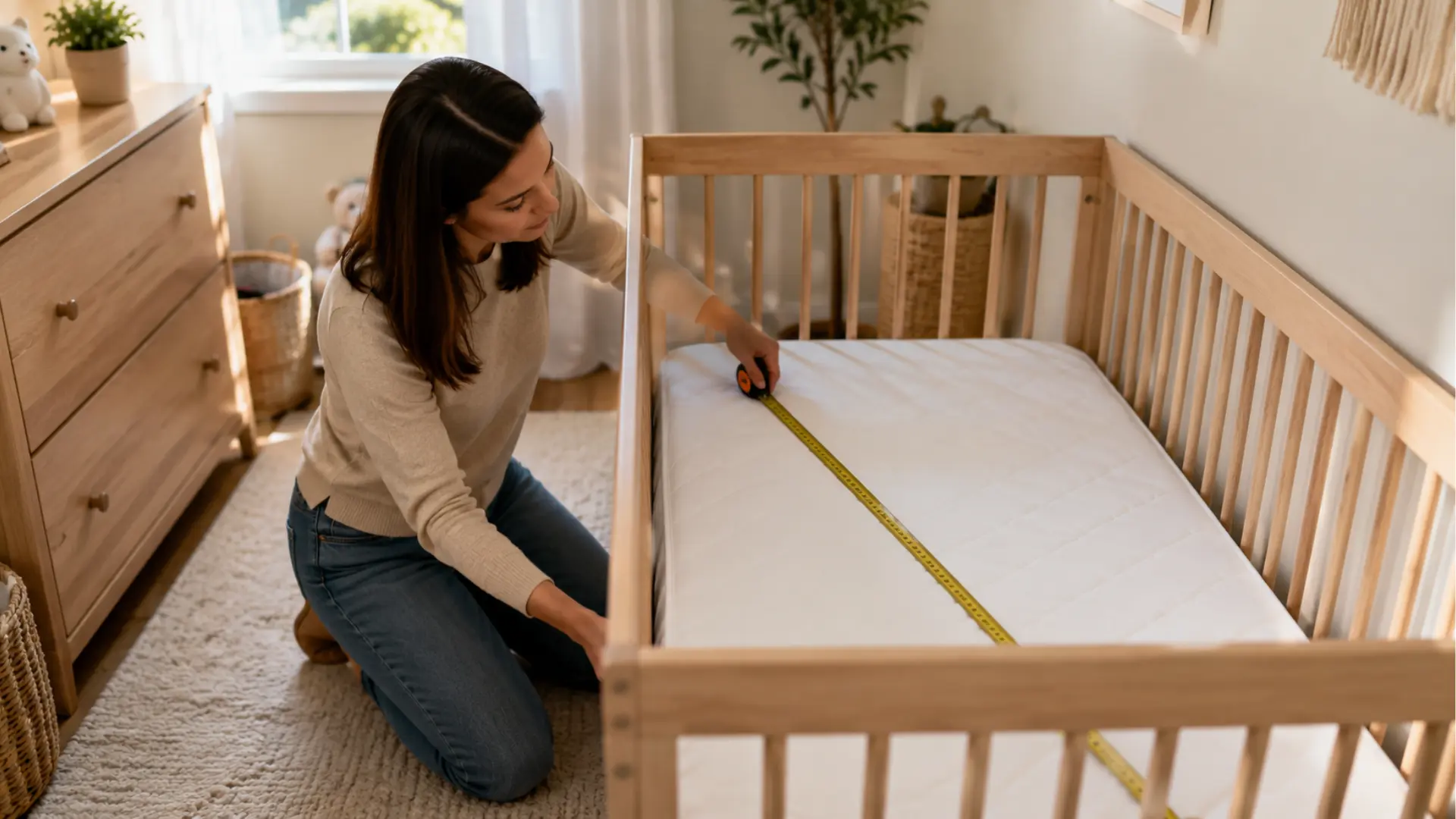
Getting the right measurements keeps your baby safe and saves you from returning the wrong mattress. It only takes a few minutes if you follow the right steps:
- Step 1: Lay the mattress flat on the floor; never measure it inside the crib frame for accurate results.
- Step 2: Use a rigid measuring tape, not a soft fabric one, to get the most precise length and width readings.
- Step 3: Measure length from one end to the other, keeping the tape flat and straight along the mattress edge.
- Step 4: Measure width across the widest point, making sure the tape doesn’t dip or curve at any spot.
- Step 5: Measure thickness from the base to the top surface while the mattress sits flat and uncompressed.
Write down all three numbers before you start shopping. Having your measurements on hand makes it much easier to compare options and avoid sizing mistakes.
How to Check If a Crib Mattress Fits Properly
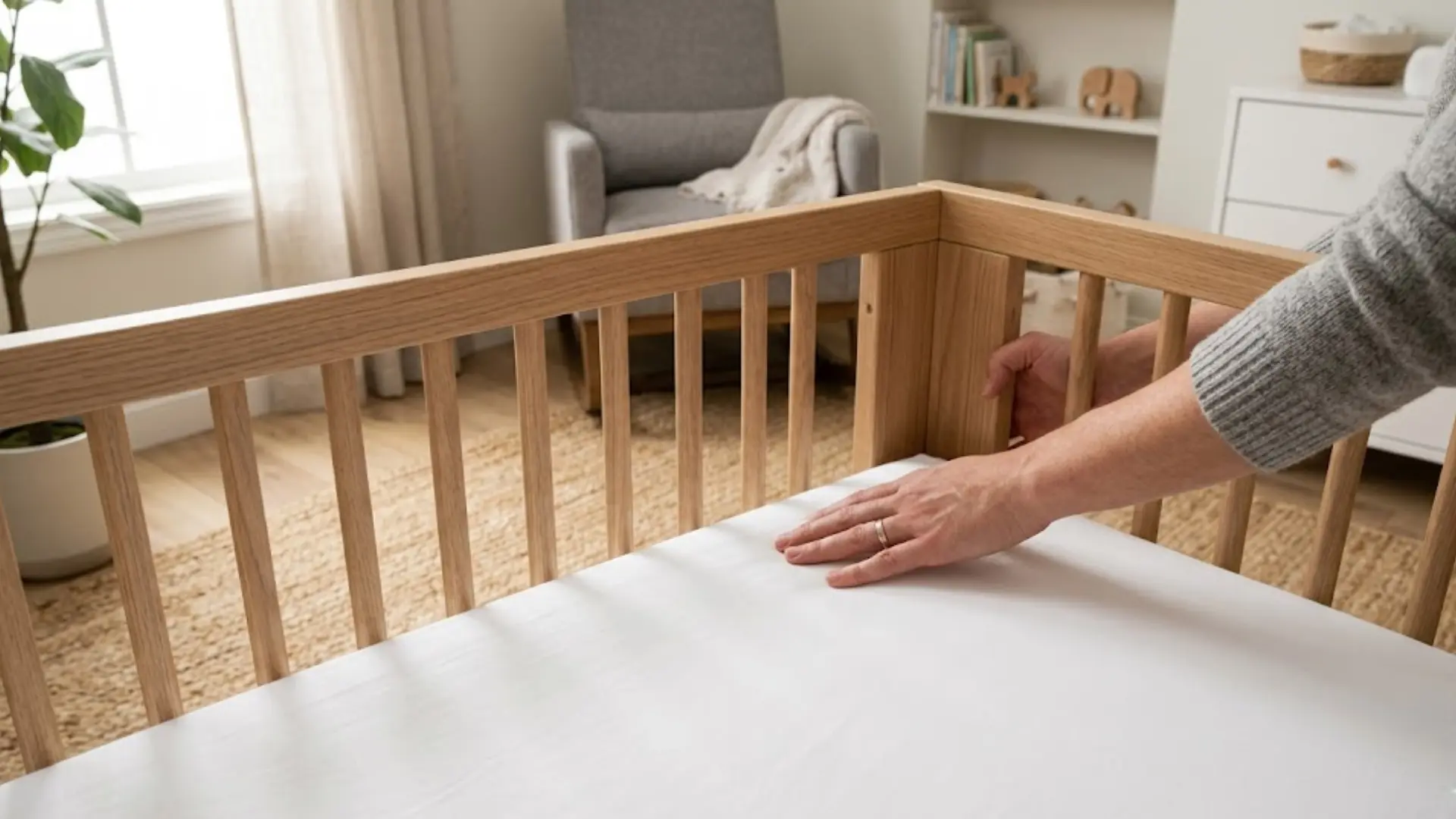
A mattress that fits correctly should sit snug, stay still, and leave no dangerous gaps around the edges. Here are a few simple ways to check if your crib mattress fits the way it should:
1. The Two-Finger Gap Test
The two-finger gap test is the easiest way to check if your crib mattress fits correctly. Run this quick check along all four sides of the mattress using the steps below:
| What to Check | What to Do | What It Means |
|---|---|---|
| Side gaps | Slide two fingers between the mattress and the crib side | Fingers fit easily = mattress is too small |
| End gaps | Check both the head and foot ends of the crib | No gap at all = mattress may be too large |
| Corner gaps | Press into each corner and check for space | Gaps at corners = uneven or wrong-size mattress |
| Overall fit | Run your hand along all four edges | Snug with no hand movement = good fit |
If your fingers slide in too easily anywhere, the mattress is not the right size. A snug fit with minimal gap is exactly what you are looking for.
2. Checking Corner and Edge Fit
Corners and edges are the spots most people forget to check after placing a mattress in a crib. Go through each area carefully using this quick reference:
| Area to Check | What to Look For | Good Sign | Red Flag |
|---|---|---|---|
| Corners | Space between the mattress corner and the crib corner | Snug with no visible gap | Gap wider than one finger |
| Long edges | Mattress sitting flush against crib sides | Even contact along the full edge | Bowing, bulging, or spaces |
| Short edges | Fit at the head and foot of the crib | The mattress sits flat and still | The mattress shifts when pressed |
| Top surface | Mattress sitting level inside the crib | Flat and even across the surface | One side higher than the other |
If you spot any red flags in the table above, the mattress is not the right fit. Do not use it until you have found a properly sized replacement.
3. Testing Mattress Stability
A stable mattress stays firmly in place no matter where you press on it. Use this simple test to check if your mattress is sitting securely in the crib:
| What to Do | What to Look For | What It Means |
|---|---|---|
| Press the hand flat on the center | The mattress stays in place | Good fit and stability |
| Press down firmly on the center | Mattress shifts to one side | The mattress is too small or loose |
| Press each corner one at a time | The mattress stays put each time | Correct and secure fit |
| Press each corner one at a time | The mattress moves easily | Fit is too loose and unsafe |
If the mattress moves at any point during this test, it is not safe to use. A well-fitted mattress should feel solid and stable from the center all the way to the corners.
Types of Crib Mattresses
Crib mattresses come in different types, each with its own build, feel, and benefits. Here is a quick breakdown to help you figure out which one suits your baby best:
- Foam mattresses are lightweight, affordable, and easy to lift during sheet changes. Look for high-density foam for better durability and firm support.
- Innerspring mattresses use steel coils covered with padding and fabric. They are firm, long-lasting, and allow good airflow through the mattress.
- Dual-sided mattresses have a firm side for infants and a softer side for toddlers. You get two sleep surfaces in one mattress, which saves money over time.
- Organic mattresses are made with natural materials like organic cotton or latex. They skip the harsh chemicals and synthetic materials found in standard mattresses.
- Waterproof mattresses have a built-in waterproof cover or layer. They are easy to wipe clean and protect the mattress from leaks and moisture damage.
The right type really comes down to your budget, your baby’s age, and what features matter most to you. Take your time comparing options before making a final decision.
Common Crib Sizes and Mattress Compatibility
Not all cribs take the same mattress size, so it helps to know what you are working with before you shop. Here is a quick look at the most common crib types and the mattress sizes that fit them:
| Crib Type | Crib Dimensions | Compatible Mattress Size | Key Note |
|---|---|---|---|
| Standard Baby Crib | 52 x 28 inches | 52 x 28 inches | Most mattresses on the market are built for this size |
| Convertible Crib | 52 x 28 inches | 52 x 28 inches | Uses the same mattress across all its conversion stages |
| Portable Crib | Varies by brand | Check manufacturer specs | Always verify dimensions before buying a mattress |
| Mini Crib | 38 x 24 inches | 38 x 24 inches | Needs a mini-specific mattress, not a standard one |
| Travel Crib | Varies by brand | Comes with its own mattress pad | Aftermarket mattresses may not fit safely |
Always double-check the interior dimensions of your specific crib model before purchasing a mattress. Even within the same crib type, sizing can vary slightly from one brand to another.
How to Choose the Right Crib Mattress Size
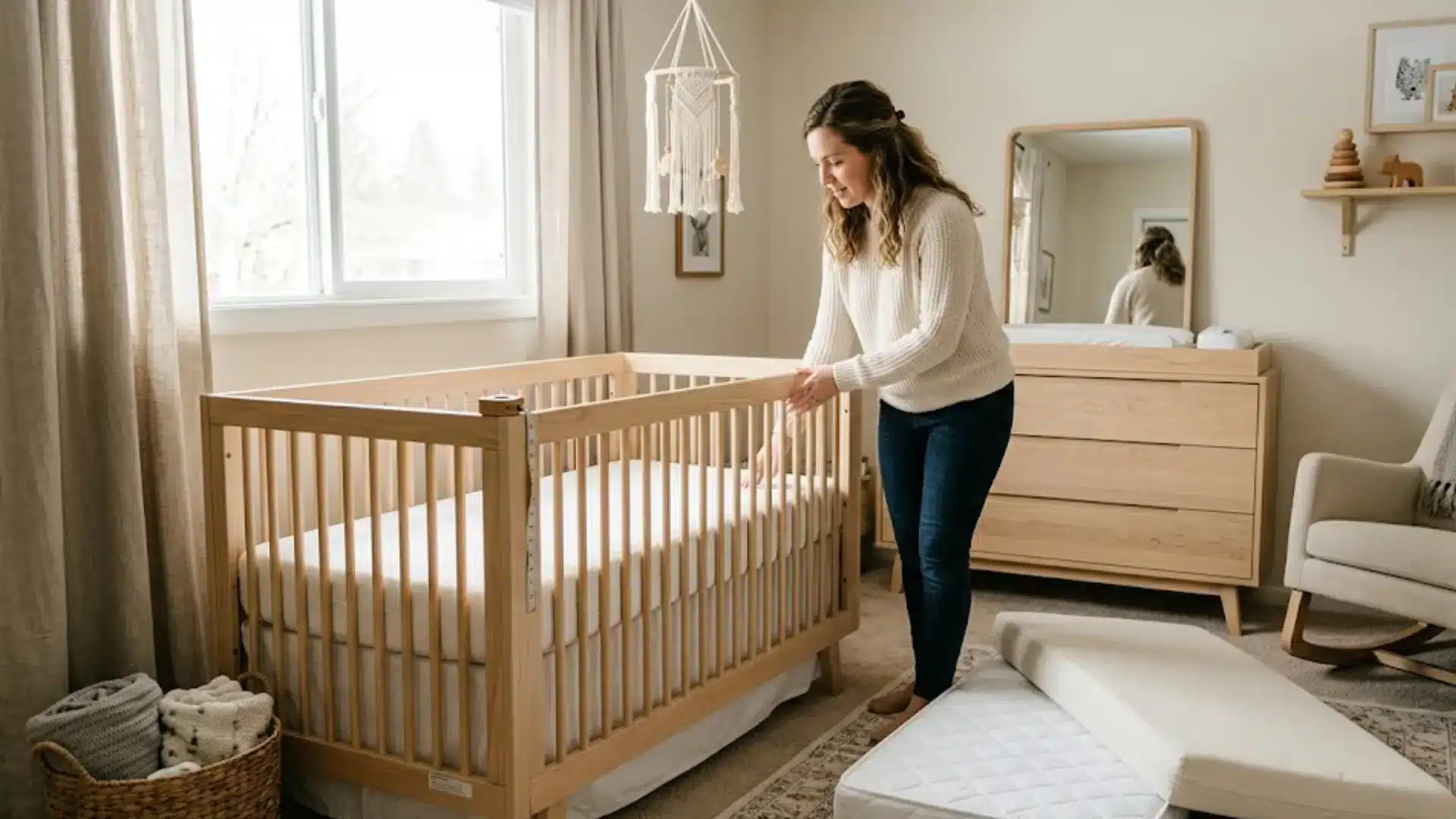
Picking the right crib mattress size is not as complicated as it sounds. But it does take a little more than just grabbing the first mattress you see.
Start by measuring your crib before you shop. Then check what the crib manufacturer recommends for mattress size. If you have a convertible crib, think ahead about toddler use too.
Always look for safety certifications on the mattress label. These tell you the mattress has been tested and meets required standards.
Finally, balance comfort with safety. A mattress can feel comfortable and still meet all the right safety requirements.
Crib Mattress Safety Guidelines Every Parent Should Know
Your baby spends most of their early months sleeping, so a safe sleep setup is not optional. These guidelines are backed by the American Academy of Pediatrics (AAP) and are worth knowing before your baby ever sleeps in the crib:
- Always place your baby on their back to sleep, on a firm and flat mattress surface every single time.
- Use only a fitted sheet on the crib mattress and keep everything else out of the crib.
- Make sure the mattress fits snugly inside the crib with no gaps wider than two fingers on any side.
- Skip the soft bedding entirely; no pillows, blankets, bumper pads, or positioners belong in a baby’s sleep space.
- Inspect the mattress regularly for sagging, tears, or worn-out areas and replace it if it no longer feels firm.
Following these guidelines lowers your baby’s risk of sleep-related incidents significantly. The AAP recommends sticking to these safe sleep practices for at least the first 12 months of your baby’s life.
Standard Crib vs Mini Crib vs Toddler Mattress
Not every crib mattress is built the same, and the differences go beyond just size. Here is a full comparison across all three types to help you make the right call:
| Feature | Standard Crib Mattress | Mini Crib Mattress | Toddler Mattress |
|---|---|---|---|
| Length | 52 inches | 38 inches | 52 inches |
| Width | 28 inches | 24 inches | 28 inches |
| Thickness | 4 to 6 inches | 3 to 5 inches | 4 to 6 inches |
| Space Required | Needs a larger nursery space | Works in smaller rooms | Same as standard crib |
| Mattress Availability | Widely available | Harder to find | Widely available |
| Safety Fit | Fits standard and convertible cribs | Mini cribs only | Fits toddler and convertible beds |
| Firmness Level | Firm, for infant safety | Firm, for infant safety | Slightly softer for toddlers |
| Best For | Long-term use from infant through toddler | Small spaces or temporary setups | When a child transitions out of the crib |
| Same Size as Standard? | — | No | Yes |
A standard crib mattress is the most flexible option for most families. Your choice really comes down to your nursery size, your budget, and how long you plan to use the crib.
Frequently Asked Questions
Can I use a toddler mattress in a crib?
Yes. Toddler mattresses share the same dimensions as standard crib mattresses. Just make sure it fits snugly with no gaps.
What size sheets fit a standard crib mattress?
Sheets made for a 52 x 28-inch mattress will fit correctly. Always check the sheet’s depth to match your mattress thickness.
Can a crib mattress be too small?
Yes, a crib mattress can absolutely be too small. Gaps wider than two fingers between the mattress and crib sides create a serious entrapment and suffocation risk for your baby.
The Bottom Line
Crib mattress size is a small detail that makes a big difference for your baby’s safety. A well-fitting mattress is one of the simplest ways to keep your baby safe while sleeping.
Always measure first, check the fit carefully, and follow safety guidelines. Do not skip the gap test, and never ignore a mattress that shifts or sags.
Your baby deserves a sleep space that is safe and secure every single night. Share this with a new parent who needs it and drop your thoughts in the comments below.