
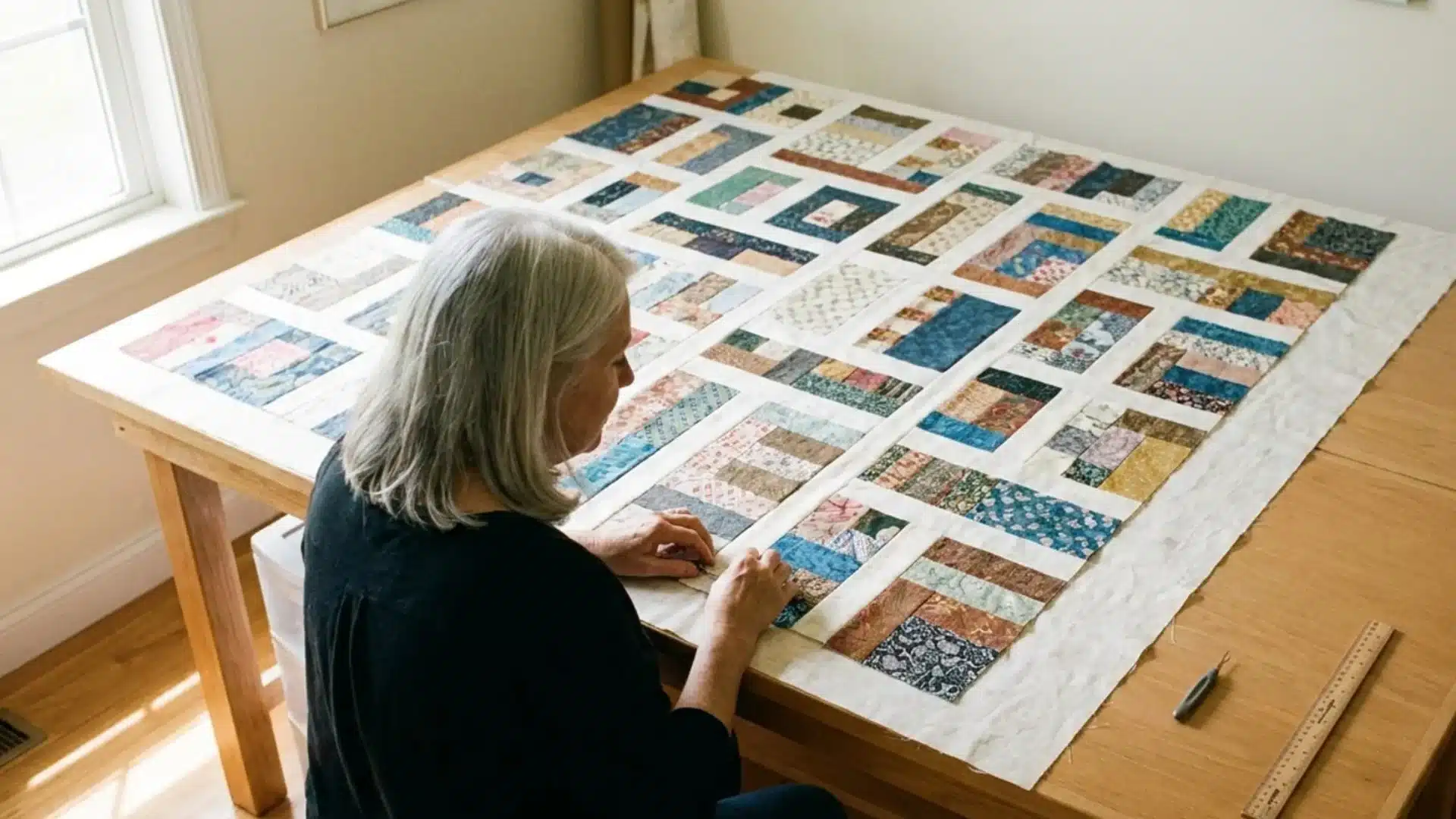
Wasted fabric, a quilt that does not fit, and a project that costs more than it should. All of it starts with one wrong measurement.
Having the right quilt size chart before you cut saves time, money, and frustration at every stage of your project.
This article walks you through standard dimensions for every bed size, special projects, block sizing, yardage calculation, and a free printable chart you can pin at your cutting table.
Read through, pick your size, and get every measurement right before you cut a single piece of fabric.
Why Quilt Dimensions Matter Before You Start Sewing
Getting your quilt dimensions right before cutting fabric saves time, money, and frustration.
A quilt that is too small will not cover the bed properly, while one that is too large can bunch up or drag on the floor.
This is why referencing a quilt size chart from the start is a smart habit for quilters at any skill level. Mattress depth plays a bigger role in quilt sizing than most people realize.
The quilt drop refers to how far the quilt hangs down on each side of the bed. Standard mattresses sit around 10 to 14 inches deep, but pillow-top models can go higher.
For queen-size comforter dimensions, a finished quilt typically measures around 90 by 108 inches to allow for adequate drop on all sides. King-size quilts usually measure about 108 by 108 inches for full coverage.
Always measure your mattress depth before finalizing any quilt dimensions.
What Are You Making This Quilt For?
Before picking the right dimensions, knowing what your quilt is for saves fabric, time, and cost. Use this table as your starting point.
| Use Case | Typical Size Range (inches) | Best For |
|---|---|---|
| Wall Hanging (Small) | 12 x 12 to 24 x 24 | Seasonal decor, small spaces |
| Wall Hanging (Large) | 24 x 36 to 36 x 36 | Statement decor, focal walls |
| Lap Quilt | 36 x 48 to 54 x 72 | Sofa, reading, personal comfort |
| Throw Quilt | 54 x 72 | Couch coverage, lounging |
| Baby Quilt | 36 x 45 | Play mat, gift, nursery |
| Bed Quilt | 60 x 80 to 108 x 108 | Full bed coverage with drop |
Standard Quilt Size Chart by Bed Type
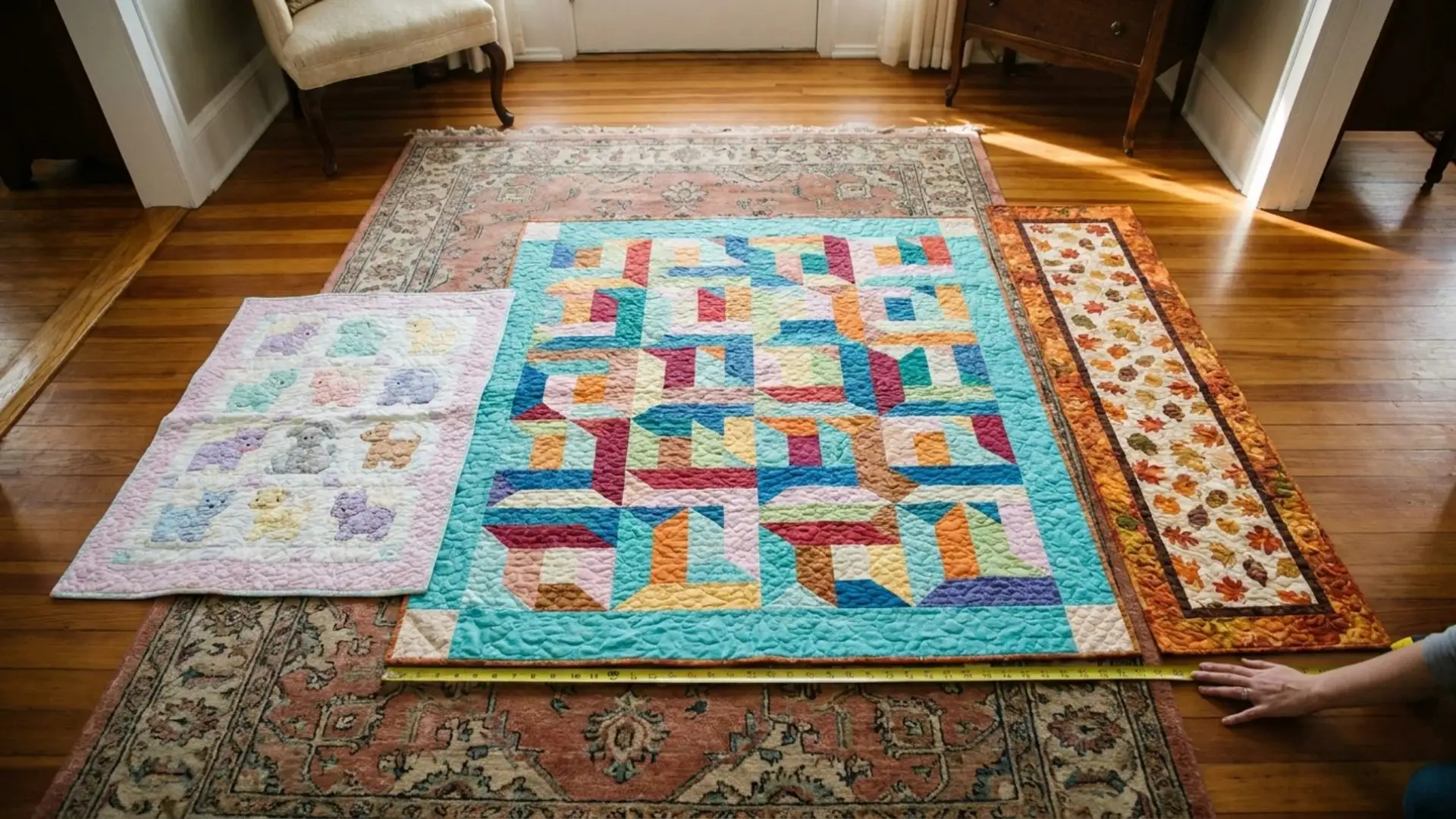
Knowing the right quilt size for each bed type helps you plan your project with confidence. The details below outline standard finished quilt dimensions for each common bed size.
1. Crib and Toddler Quilt Sizes
Small beds need careful sizing before you cut a single piece of fabric. Crib quilts are designed to fit safely inside a standard crib without excess fabric that could pose a risk.
- Crib Quilt: 36 x 52 inches
- Toddler Quilt: 42 x 58 inches
Toddler quilts offer more length as children move to a toddler bed. Both sizes also work well as decorative nursery wall displays.
2. Twin and Twin XL Quilt Sizes
Twin beds and dorm room beds have distinct length requirements. Twin quilts suit single beds in children’s rooms and guest rooms well.
- Twin Quilt: 60 x 80 inches
- Twin XL Quilt: 60 x 90 inches
The Twin XL runs longer to fit college dormitory beds. Adding a few extra inches to the width on either option gives a cleaner side drop.
3. Full and Double Quilt Sizes
A full or double quilt sits between twin and queen in width, making it a practical middle option.
- Full / Double Quilt: 80 x 90 inches
It works well for teenagers, solo adult sleepers, and guest bedrooms where one size needs to serve different needs at different times without looking too large or too small on the bed.
4. Queen Quilt Sizes
Queen beds are the most popular bed size in American homes, making this the most requested quilt size as well. Queen-size comforter dimensions give enough drop on all sides for a neat finish.
- Standard Queen Quilt: 90 x 108 inches
This size is ideal for master bedrooms, couples, and guest rooms where a full, polished bed covering is needed. Quilters often add two to four extra inches in width to account for pillow-top mattresses that sit higher than standard models.
5. King and California King Quilt Sizes
King and California King beds require the most fabric of any standard bed size, so planning yardage carefully before cutting is important. King quilts cover the widest standard bed format.
- Standard King Quilt: 108 x 108 inches
- California King Quilt: 104 x 114 inches
The California King is narrower but longer, designed for taller individuals or beds with extended frames that extend beyond standard length.
Quick Bed Quilt Size Reference at a Glance
Too many details to remember? This table puts every standard bed quilt size in one place for fast reference.
| Quilt Type | Finished Size (inches) | Best For |
|---|---|---|
| Crib Quilt | 36 x 52 | Nursery / Crib |
| Toddler Quilt | 42 x 58 | Toddler Bed |
| Twin Quilt | 60 x 80 | Children’s Room / Guest Room |
| Twin XL Quilt | 60 x 90 | Dorm / Long Twin Bed |
| Full / Double Quilt | 80 x 90 | Guest Room / Teen Bedroom |
| Queen Quilt | 90 x 108 | Master Bedroom / Couples |
| King Quilt | 108 x 108 | Large Master Bedroom |
| California King Quilt | 104 x 114 | Tall Individuals / Luxury Beds |
Pin this table near your cutting station, or save it to your phone for quick access whenever you start a new bed quilt project.
Queen Size Comforter Dimensions: What You Need to Know?
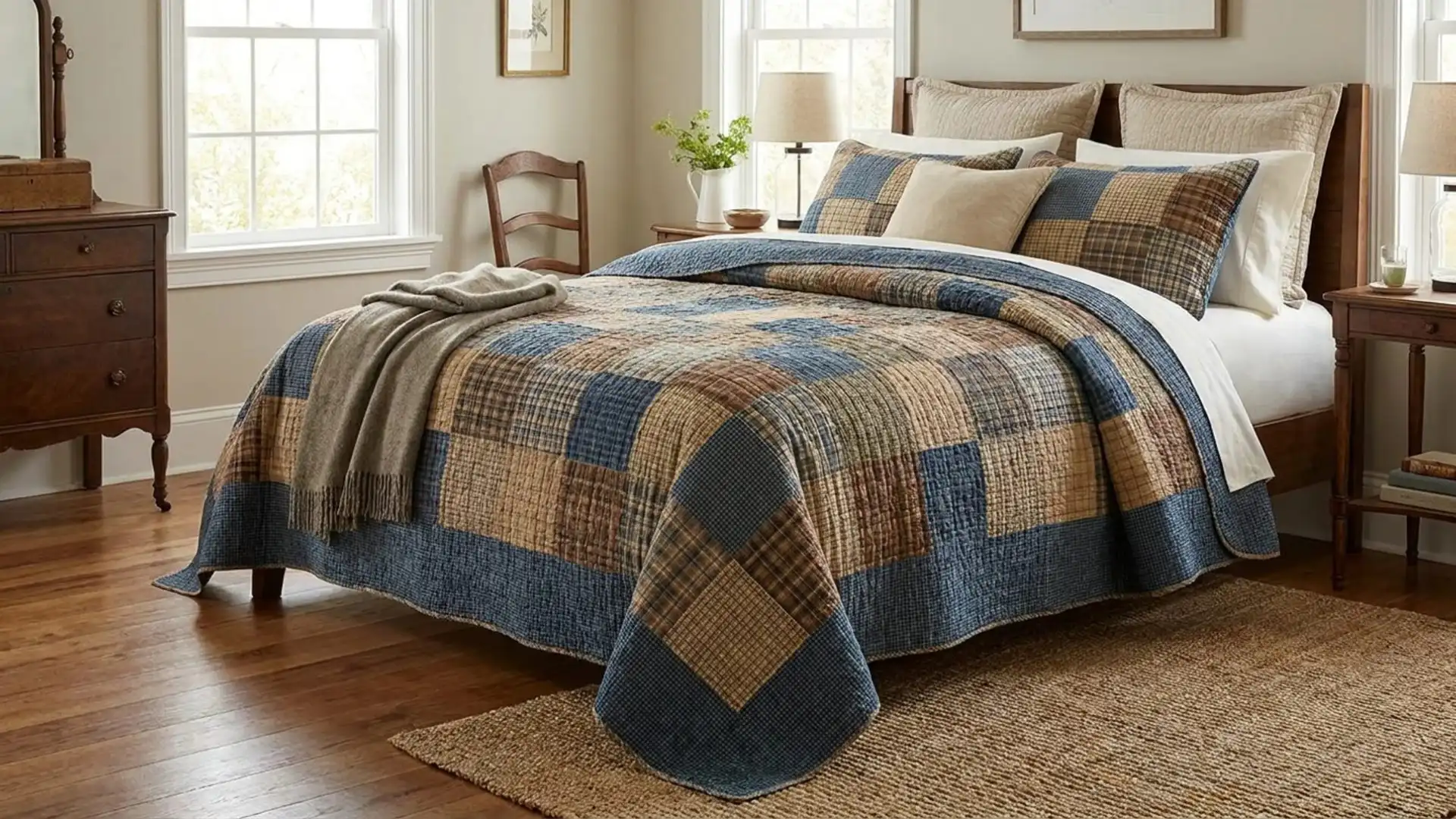
Queen-size bedding is the most purchased size in the US, yet sizing confusion is common. This section clears up what the numbers mean and when to adjust them
Standard Queen Size Quilt vs. Comforter
Yes, and the difference matters before you buy fabric or start cutting. A quilt and a comforter are not the same thing in terms of construction or dimensions, even when both are labeled queen-size.
| Factors | Queen Size Quilt | Queen Size Comforter |
|---|---|---|
| Standard Size | 90 x 108 inches | 86 x 86 to 90 x 90 inches |
| Construction | Three layers stitched through | Shell filled with down or synthetic fill |
| Drop Length | Longer, reaches closer to the floor | Shorter, sits closer to the mattress edge |
| Thickness | Flat, minimal loft | Puffy, higher loft |
| Sizing Flexibility | Quilter can adjust dimensions | Fixed by the manufacturer |
A queen-size comforter typically runs shorter in length than a queen-size quilt. If full drop coverage on all sides matters to you, a quilt cut to 90 x 108 inches will always give better results than a standard comforter at the same bed size.
Oversized Queen Quilt Dimensions and When to Use Them
A standard queen quilt at 90 x 108 inches works for most beds, but certain situations call for larger dimensions. Oversized queen quilts typically measure 96 x 110 to 100 x 116 inches.
- Pillow Tuck: Add 8 to 10 inches in length to tuck under pillows without pulling away at the foot
- Deep Mattress Coverage: Pillow-top and luxury mattresses need extra width and length for an even drop on all sides
- Floor Length Drop: A floor-length look may need dimensions up to 108 x 120 inches, depending on bed height
- Shared Bed Comfort: Couples benefit from oversized dimensions so both sides have enough coverage without tugging
When making a queen quilt for a bed you cannot measure, sizing up to 96 x 110 inches is always the safer call. Knowing queen-size comforter dimensions before you start prevents costly sizing mistakes.
King Quilt Size: Full Coverage for the Largest Beds
Getting the king quilt size right before cutting any fabric saves time, money, and wasted yardage. This section covers dimensions, fabric needs, and drop length for both King and California King formats.
Standard King vs. California King
Two beds carry the King label but serve very different sleepers. Check which format your bed frame matches before finalizing any dimensions.
| Factors | Standard King | California King |
|---|---|---|
| Finished Quilt Size | 108 x 108 inches | 104 x 114 inches |
| Mattress Size | 76 x 80 inches | 72 x 84 inches |
| Best For | Wide beds, couples | Tall individuals, longer frames |
| Shape | Square coverage | Rectangular, longer drop |
| Common In | Most US households | West Coast, custom bed frames |
A Standard King runs wider while a California King runs longer. Choosing the wrong size means your quilt will fall short on one side, regardless of how well it is made.
How Much Fabric Does a King Quilt Actually Need
King quilts require more yardage than any other standard bed size, making accurate fabric calculation essential before you shop.
- Quilt Top Fabric: Approximately 9 to 11 yards, depending on block size and pattern complexity
- Backing Fabric: Minimum 10 to 12 yards, as standard fabric width requires piecing for full king coverage
- Batting: One full king-size batting measures 120 x 120 inches to allow for quilting shrinkage and edge finish
- Safety Buffer: Always add 15% to your total yardage to cover cutting errors and pattern-matching waste
Buying all fabric in one purchase avoids dye lot differences that become visible once the quilt top is assembled.
Quilt Size Chart for Special Projects
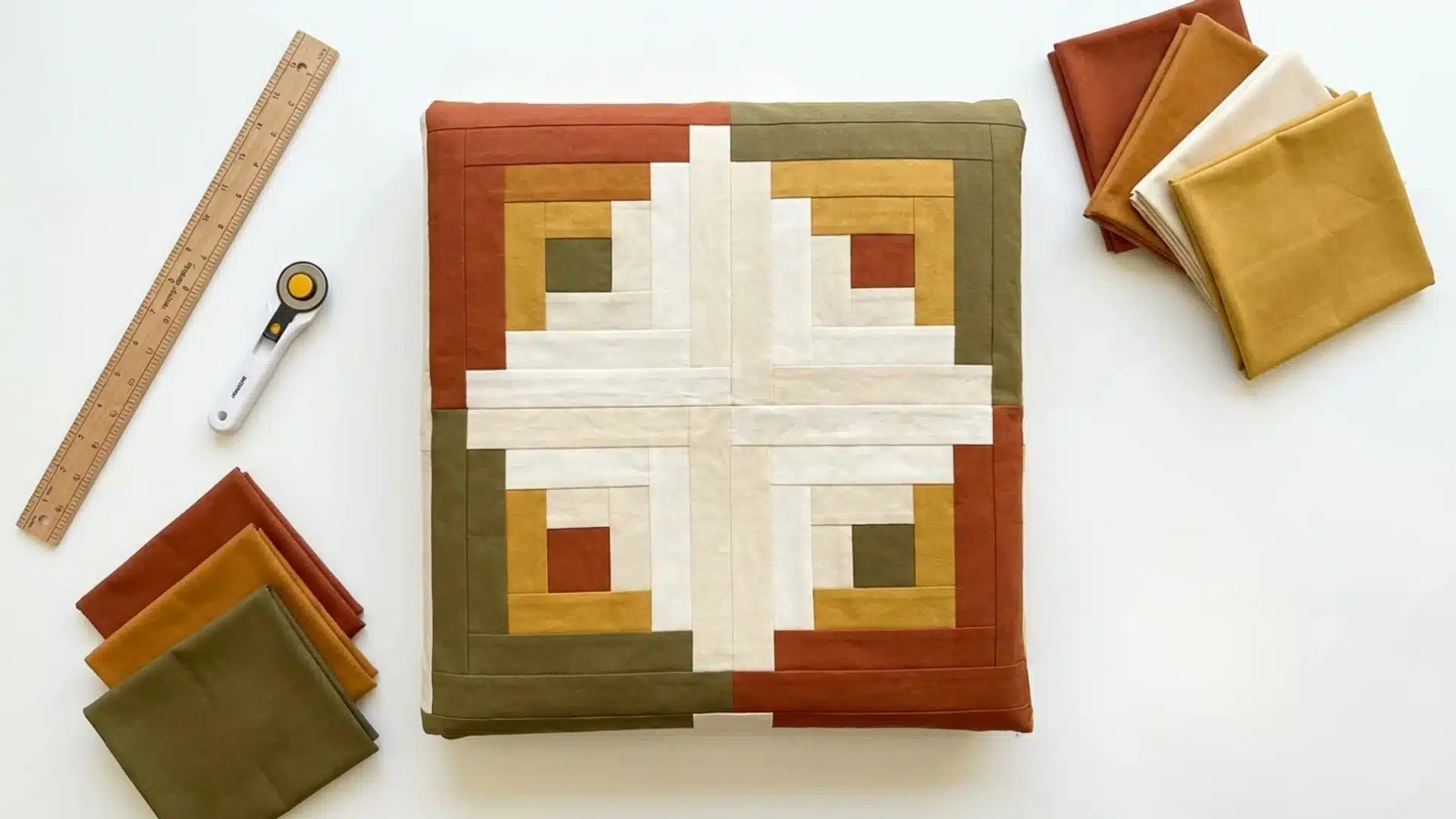
Not all quilting projects are built around a bed. Special-project quilts serve different purposes and require different dimensions.
The sections below cover the most common non-bed quilt types with sizing details to help you plan accurately.
Baby Quilt Dimensions
Baby quilts are one of the most gifted handmade items in the quilting world. Small enough to finish quickly but meaningful enough to keep for years, a well-sized baby quilt works as a play mat, stroller cover, or nursery keepsake.
| Baby Quilt Type | Finished Size (inches) | Common Use |
|---|---|---|
| Newborn Baby Quilt | 36 x 45 | Stroller blanket / Tummy time mat |
| Toddler Play Quilt | 42 x 58 | Play mat / Nap blanket |
| Baby Shower Gift Quilt | 36 x 52 | Gifting / Nursery keepsake |
These sizes suit nurseries, stroller use, tummy time, and handmade baby shower gifts that families hold onto for years.
Throw and Lap Quilt Sizes
Throw and lap quilts are built for personal comfort rather than bed coverage. A lap quilt suits one person while seated or reading. A throw runs slightly larger, giving enough coverage for a standard couch without the bulk of a full bed quilt.
| Quilt Type | Finished Size (inches) | Common Use |
|---|---|---|
| Lap Quilt (Small) | 36 x 48 | Single person / Armchair |
| Lap Quilt (Large) | 54 x 72 | Sofa / Reading comfort |
| Throw Quilt | 54 x 72 | Couch coverage / Lounging |
These sizes work best for living room sofas and armchairs, and make practical everyday gifts that people actually use and keep.
Table Runner and Mini Quilt Sizes
Table runners and mini quilts are small in scale but high in detail. They give quilters a chance to practice patterns, test color combinations, or create seasonal decor without committing to a large project. Mini quilts are often framed, hung, or gifted.
| Quilt Type | Finished Size (inches) | Common Use |
|---|---|---|
| Short Table Runner | 14 x 48 | Small dining tables / Coffee tables |
| Standard Table Runner | 14 x 72 | Full dining table / Buffet display |
| Mini Quilt | 6 x 6 to 12 x 12 | Wall display / Craft fair / Gift |
These sizes are well-suited for dining table decor, holiday displays, craft fairs, and small wall accents placed throughout the home.
Special project quilts give you the freedom to work at any scale. Knowing the right dimensions before you start keeps your fabric use controlled and your finished piece looking purposeful from every angle.
All Standard Dimensions in One Place
This printable quilt size chart covers every standard quilt dimension you will need across four categories – bed quilts from crib to California King, baby quilts, throw and lap quilts, and table runners, wall hangings, and mini quilts.
Each size includes finished dimensions in inches and its recommended use, so you know exactly what you are working with before you cut a single piece of fabric.
Print it out, pin it near your cutting table, or save it to your phone for quick access every time you start a new quilting project.
How to Read and Use a Quilt Size Chart?
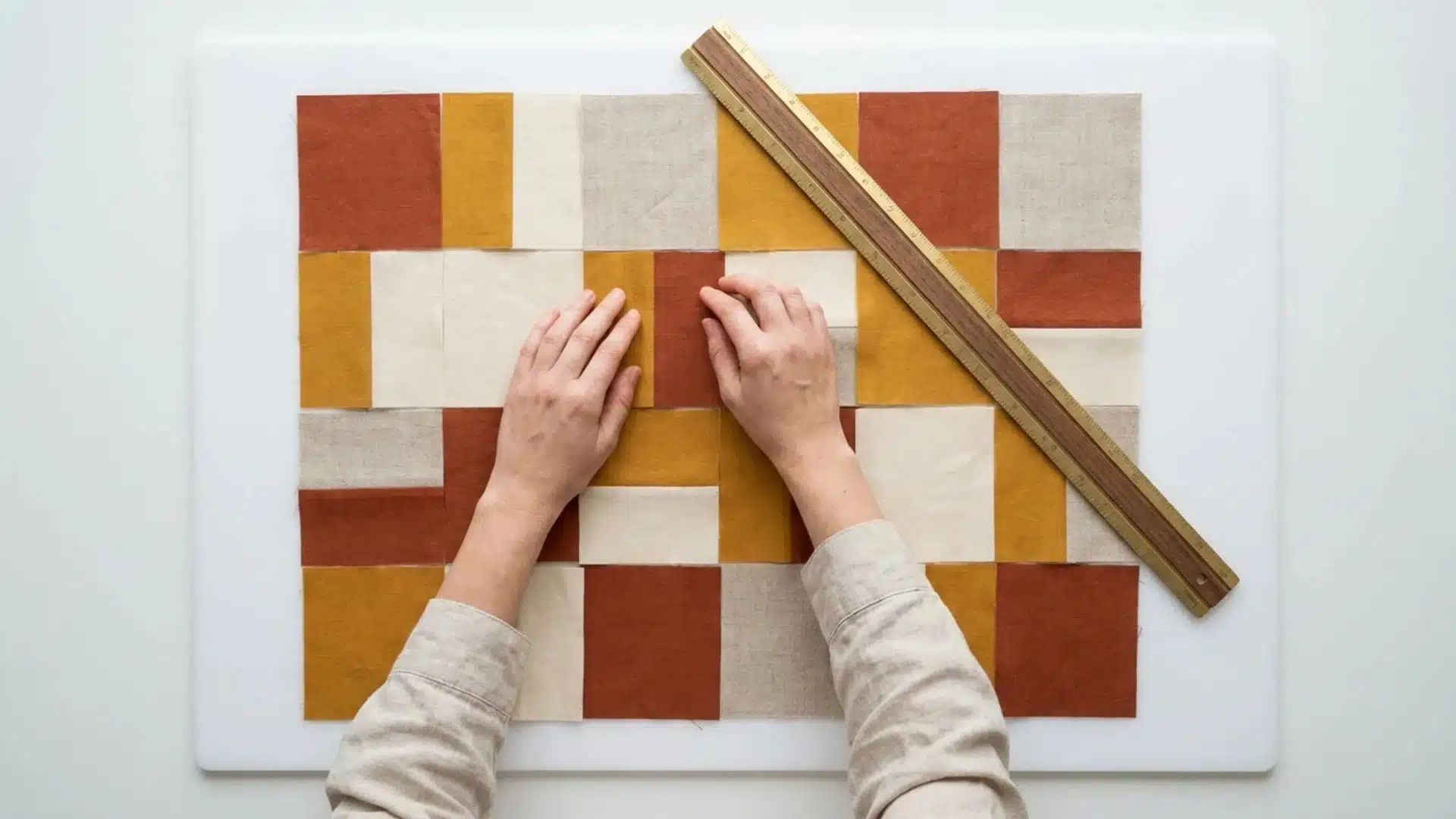
A quilt size chart gives you more than just numbers. This section breaks down what those numbers mean and how to use them practically.
Finished Size vs. Unfinished Size: What Is the Difference?
Before cutting any fabric, knowing the difference between these two measurements keeps your project on track from the start.
| Feature | Finished Size | Unfinished Size |
|---|---|---|
| What it is | Final quilt dimension after sewing | Cut the piece to the desired dimensions before sewing |
| When it applies | When listing, buying, or gifting a quilt | When cutting fabric at your table |
| Block measurement | Block size after seams are sewn | Block size before seams are sewn |
| Why it matters | Tells you the actual coverage on your bed | Tells you how much fabric to cut |
| Common mistake | Assuming this is what you cut | Forgetting to add seam allowance |
Always confirm whether a pattern lists finished or unfinished sizes before cutting. Using the wrong measurement is one of the most common and costly mistakes in quilting.
Seam Allowance and Shrinkage: What to Account For?
Two factors quietly shrink your quilt size before it is even finished. Account for both before cutting a single piece of fabric.
Seam Allowance: Standard quilting seam allowance is 1/4 inch per seam. A 6.5-inch cut block finishes at 6 inches after sewing
Shrinkage: Quilting cotton shrinks between 2% and 5% after the first wash. Pre-wash all fabric before cutting to avoid distortion
Ignoring either factor means your finished quilt will not match the dimensions on your size chart.
How to Calculate Fabric Yardage from a Quilt Size Chart?
Knowing your quilt dimensions is only useful if you can use those numbers to get the right amount of fabric at the store. Follow these steps to calculate yardage from any quilt size chart.
- Step 1: Find Your Finished Quilt Size. Pull dimensions from your quilt size chart. A standard queen quilt starts at 90 x 108 inches.
- Step 2: Add for Seam Allowance and Shrinkage. Add 2 to 4 inches to each dimension before calculating.
- Step 3: Calculate Total Square Inches. Multiply your adjusted width by your adjusted length to get the total square inches needed.
- Step 4: Convert to Yards. One yard of quilting fabric measures 36 x 44 inches. Divide your total square inches by 1,584 for base yardage.
- Step 5: Add a Safety Buffer. Add 10% to 15% to your final yardage to cover cutting errors and fabric waste.
Accurately reading a quilt size chart lays the foundation for every decision that follows in your project. Get the numbers right at the start, and the rest of your planning falls into place naturally.
Quilt Block Sizes and How They Fit into Standard Quilt Dimensions?
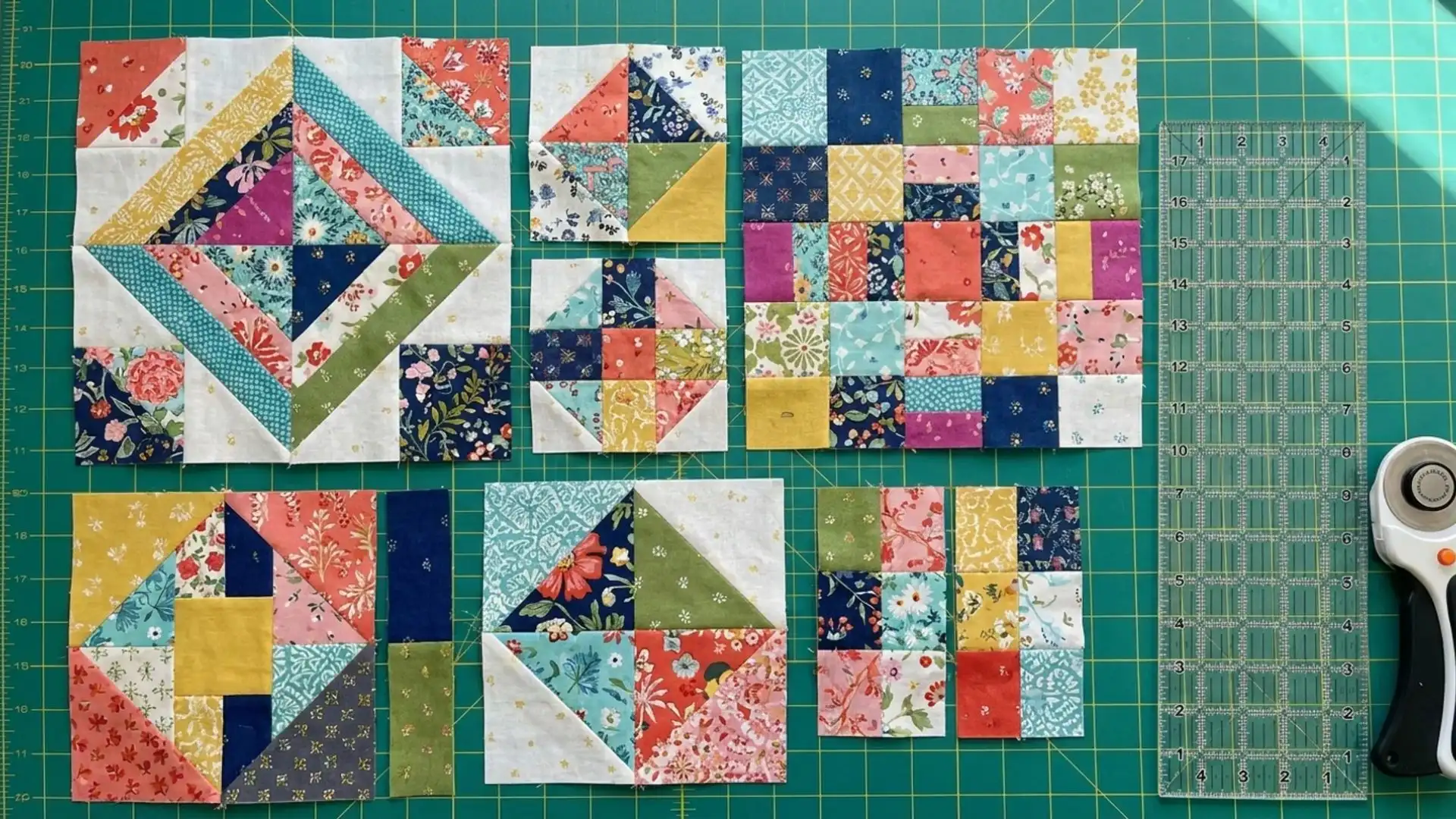
Understanding block sizes is just as important as knowing your finished quilt dimensions.
This section shows how individual blocks relate to the overall quilt size and how the block count shifts as the bed size grows.
Common Block Sizes Used in Quilting
Block size determines how many pieces you need to cut and how your quilt top comes together. The table below lists the most commonly used block sizes in quilting and where they are typically used.
| Finished Block Size | Unfinished Block Size | Best Used For |
|---|---|---|
| 3 x 3 inches | 3.5 x 3.5 inches | Detailed patterns, small quilts, borders |
| 4 x 4 inches | 4.5 x 4.5 inches | Baby quilts, miniature quilts |
| 5 x 5 inches | 5.5 x 5.5 inches | Charm quilts, scrappy projects |
| 6 x 6 inches | 6.5 x 6.5 inches | Beginner quilts, lap quilts |
| 8 x 8 inches | 8.5 x 8.5 inches | Twin and full-size bed quilts |
| 10 x 10 inches | 10.5 x 10.5 inches | Queen and king-size bed quilts |
| 12 x 12 inches | 12.5 x 12.5 inches | Large bed quilts, statement patterns |
Smaller blocks give you more design detail but require more cutting and piecing. Larger blocks come together faster and work well for simpler patterns on bigger beds.
How Does Block Count Change by Quilt Size?
Block count shifts based on the block size you choose and the finished quilt dimensions you are working toward. Picking the right block size early saves time, fabric, and effort across the entire project.
- Larger Blocks, Fewer Pieces: A 12-inch block on a queen quilt (90 x 108 inches) gives a 7 x 9 grid, totaling 63 blocks.
- Smaller Blocks, More Precision: A 6-inch block on the same queen quilt requires 15 blocks across and 18 blocks down, for a total of 270 blocks.
- Twin Quilts Shift Fast: A 10-inch block on a 60 x 80-inch twin gives 48 blocks. A 6-inch block pushes that to 130.
- King Size Feels It Most: A 12-inch block on a 108 x 108-inch king gives 81 blocks. A 6-inch block pushes that to 324.
- Block Size Affects Time Too: More blocks mean more cutting, pressing, and piecing added to your total project schedule.
Choose your block size based on your available time, skill level, and the amount of fabric you have before committing to a full cut.
Get It Right
Sizing a quilt incorrectly wastes fabric, time, and money that could go toward your next project.
This quilt size chart brings together all standard dimensions in one place, from crib quilts to king-size beds, so no measurement is left to chance.
Queen-size comforter dimensions, king quilt size, block counts, yardage estimates, and special project sizes are all covered and ready to use.
Save the free printable, return to this page whenever a new project starts, and cut every piece of fabric with complete confidence.
Frequently Asked Questions (FAQs)
What is the Difference Between a Quilt and a Duvet in Terms of Size?
Duvets typically run 10 to 20 inches larger than standard quilt dimensions to allow for an insert fill.
Does Quilt Size Change if I Use a Box Spring Under My Mattress?
Yes. A box spring adds 5 to 9 inches to total bed height, requiring a longer quilt drop.
Do Quilt Dimensions Change when I Add a Pillow Sham or Euro Sham?
Yes. Adding shams at the head of the bed typically requires 10 to 14 extra inches in quilt length.
Does Pre-Washing Fabric Noticeably Change the Final Quilt Dimensions?
Yes. Pre-washed quilting cotton can reduce your cut fabric by 2% to 5% across the full quilt size.