

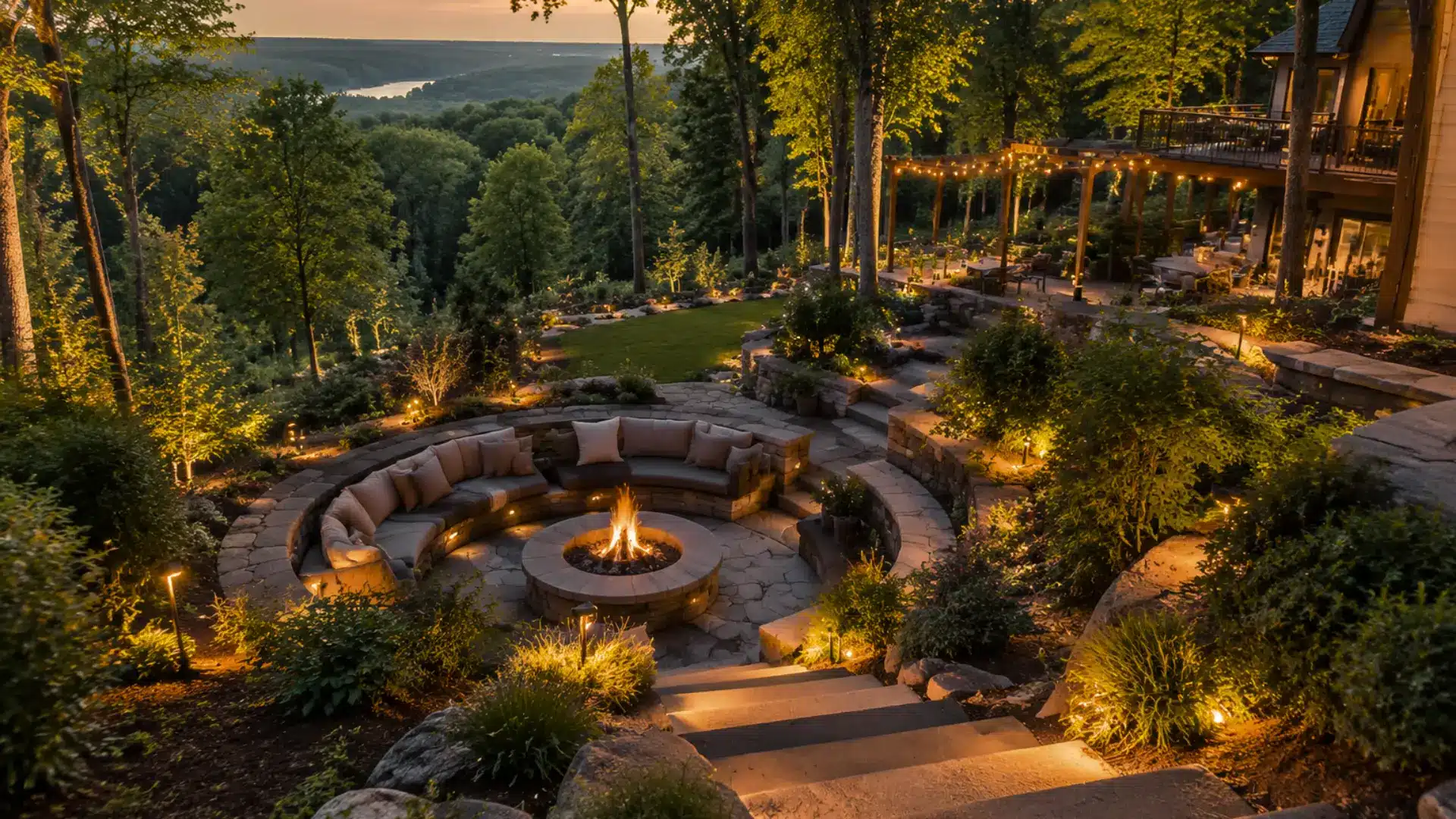
A sloped backyard sits there looking difficult until someone figures out what to do with it. That someone can be you.
Down-sloped backyard ideas give you a real starting point, whether you want a structured garden, a recreational space, or a full outdoor living setup.
Your yard does not need to be flat to work well or look good. A slope gives you levels, depth, and design options that a flat yard simply cannot offer.
The right idea can turn a hillside that felt like a headache into the part of your property you are most proud of. Keep reading to find yours.
What Makes a Sloped Backyard Different From a Flat Yard
A flat yard stays put. A sloped yard is always moving, even when you cannot see it happening. Rain hits a slope and runs. It carries soil, mulch, and nutrients with it. Over time, that adds up.
Flat yards hold water long enough for it to sink in. Sloped yards send it downhill before the ground gets a chance to drink.
That changes everything. Where you plant, how you build, and what materials you use all depend on your slope.
Once you understand how your yard behaves, the right solutions become a lot easier to spot.
Down Sloped Backyard Ideas to Alter Your Space
A sloped backyard gives you more to work with than a flat one ever could, from retaining wall ideas for sloped backyard spaces to full outdoor living setups. These ideas turn your incline into something you actually want to spend time in:
1. Terraced Garden Levels
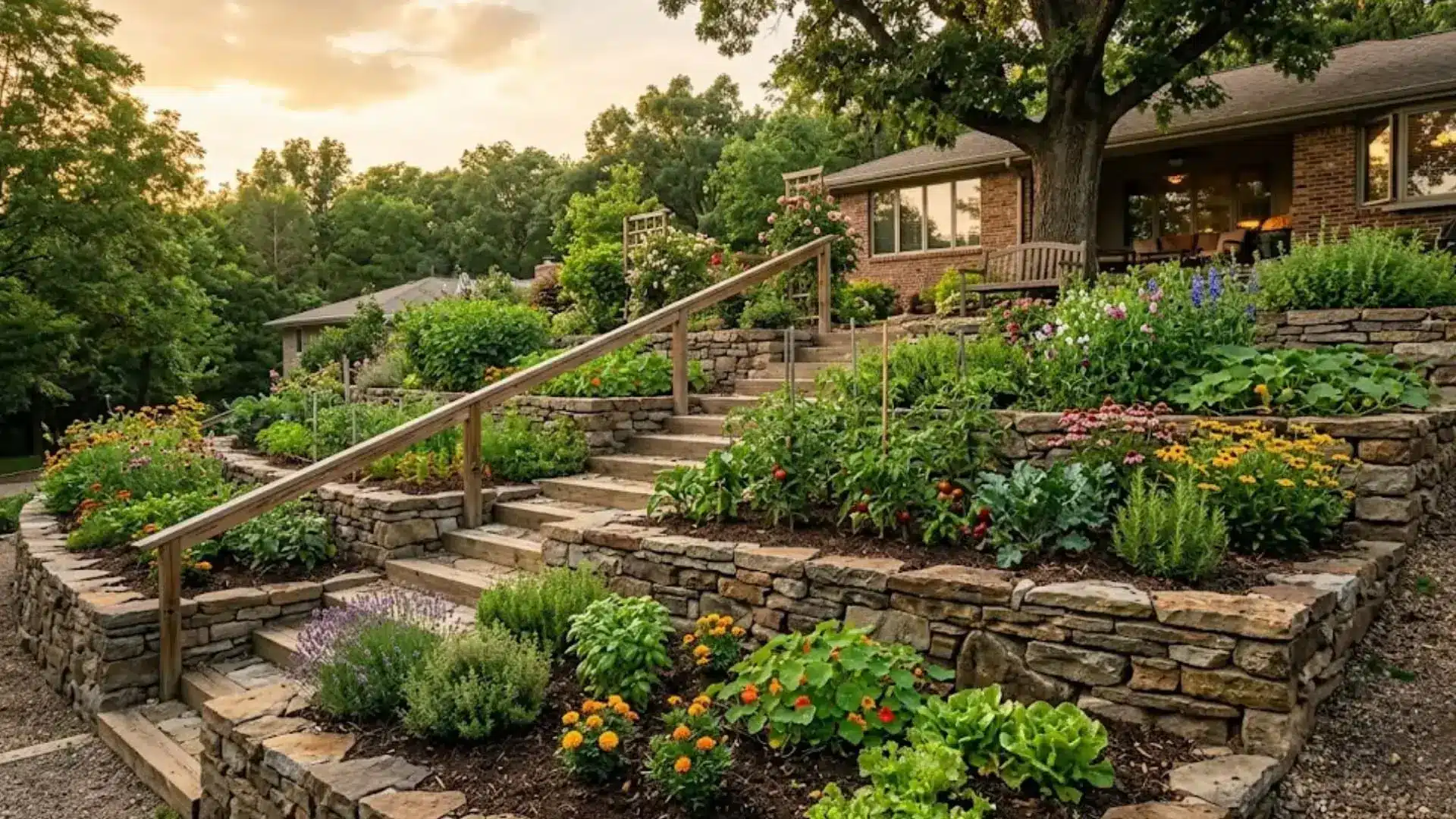
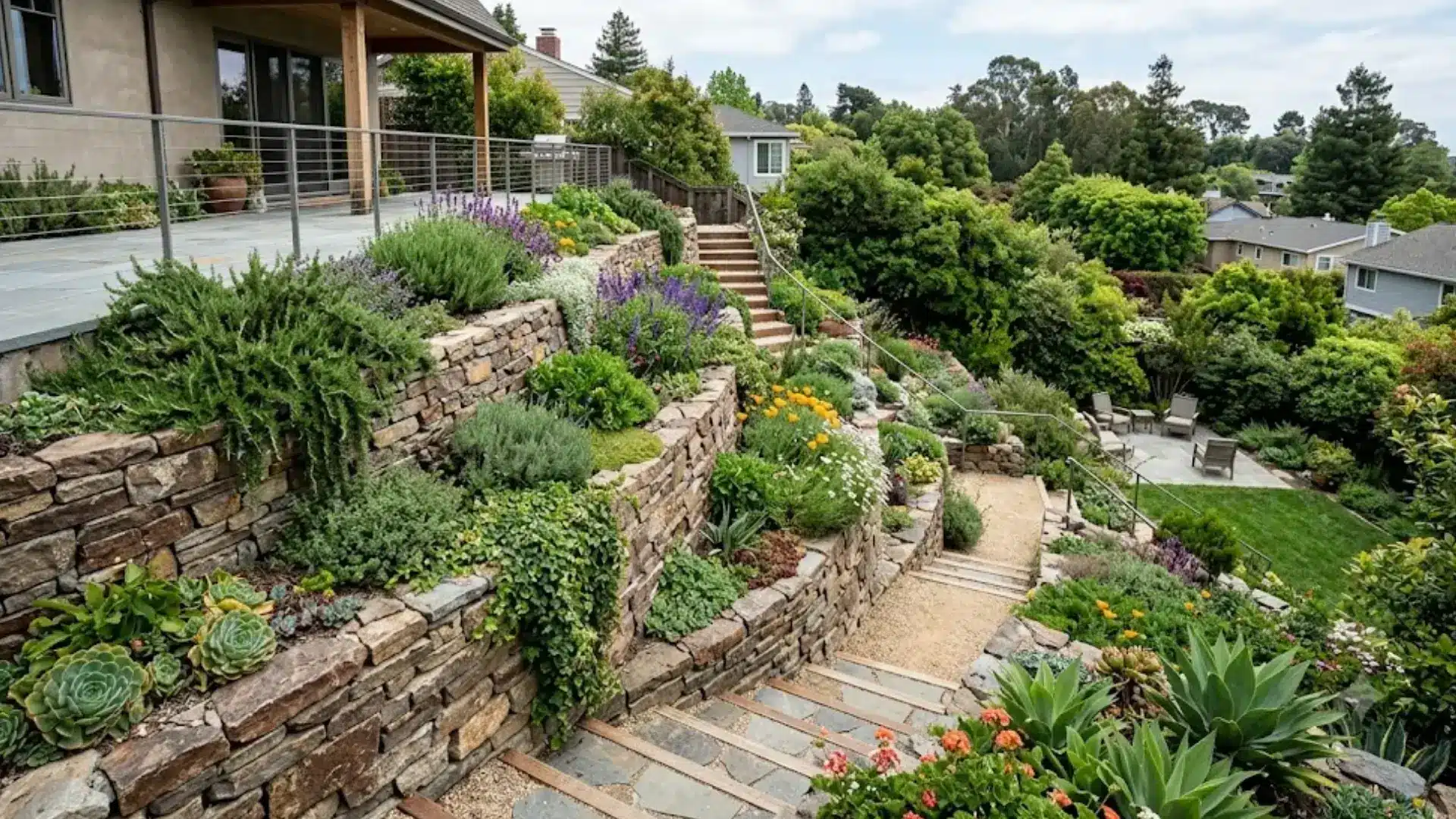
Terracing breaks your slope into a series of flat planting beds stacked at different heights, each held back by a low edge of timber, stone, or concrete.
The result is a layered garden that climbs the hill in clean, defined steps. To build it, work from the bottom up, compacting the soil at each level before filling the beds with flowers, vegetables, or herbs.
2. Multi-Level Outdoor Deck
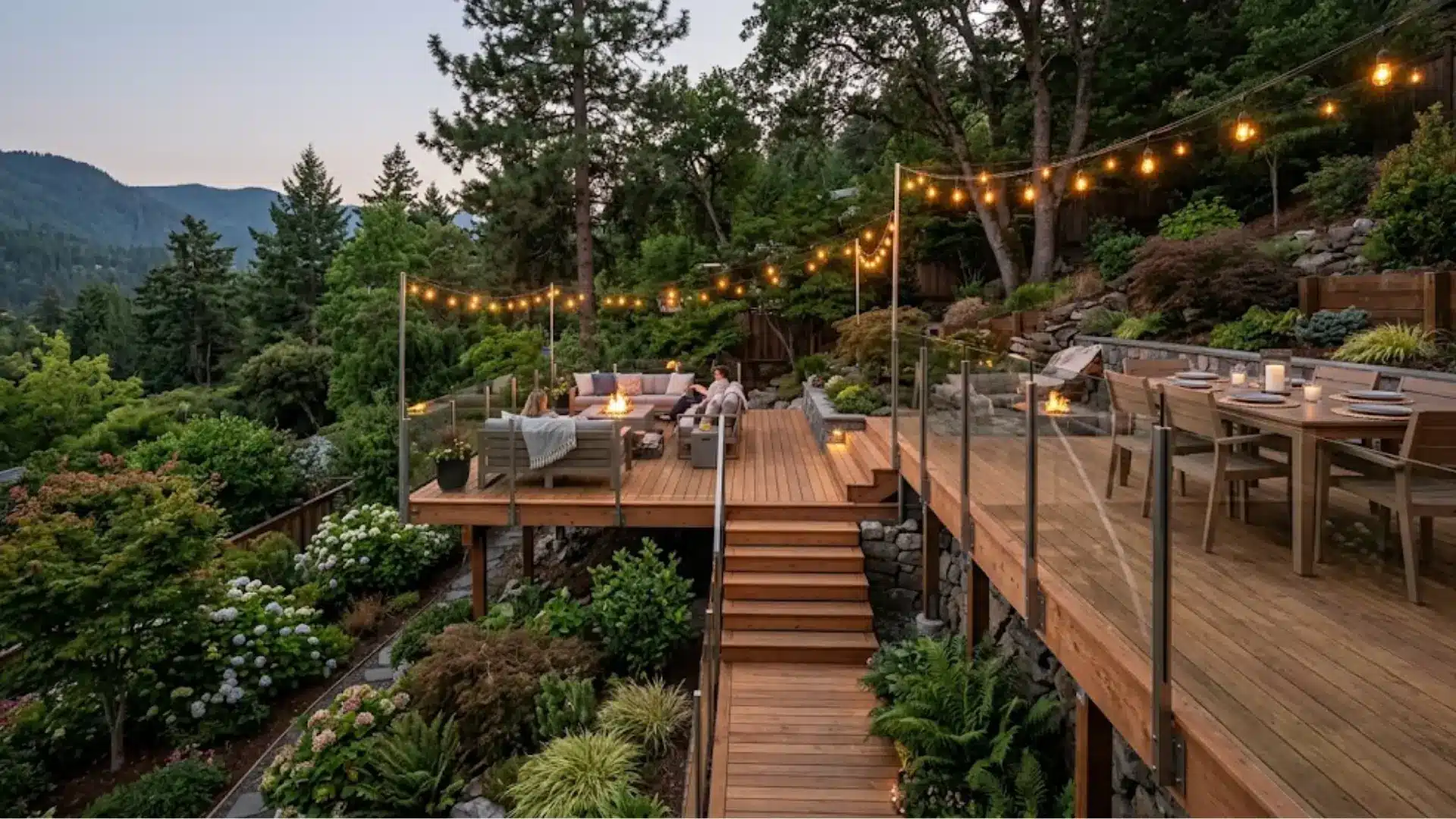
A multi-level deck follows the natural drop of your slope, stepping down in connected platforms linked by short flights of steps.
The finished result looks like a staircase of outdoor living spaces, each one slightly lower than the last.
Plan the platform heights around your slope’s natural fall, build on posts set into the ground, and designate each level for a different use like dining, lounging, or container gardening.
3. Sunken Fire Pit Area
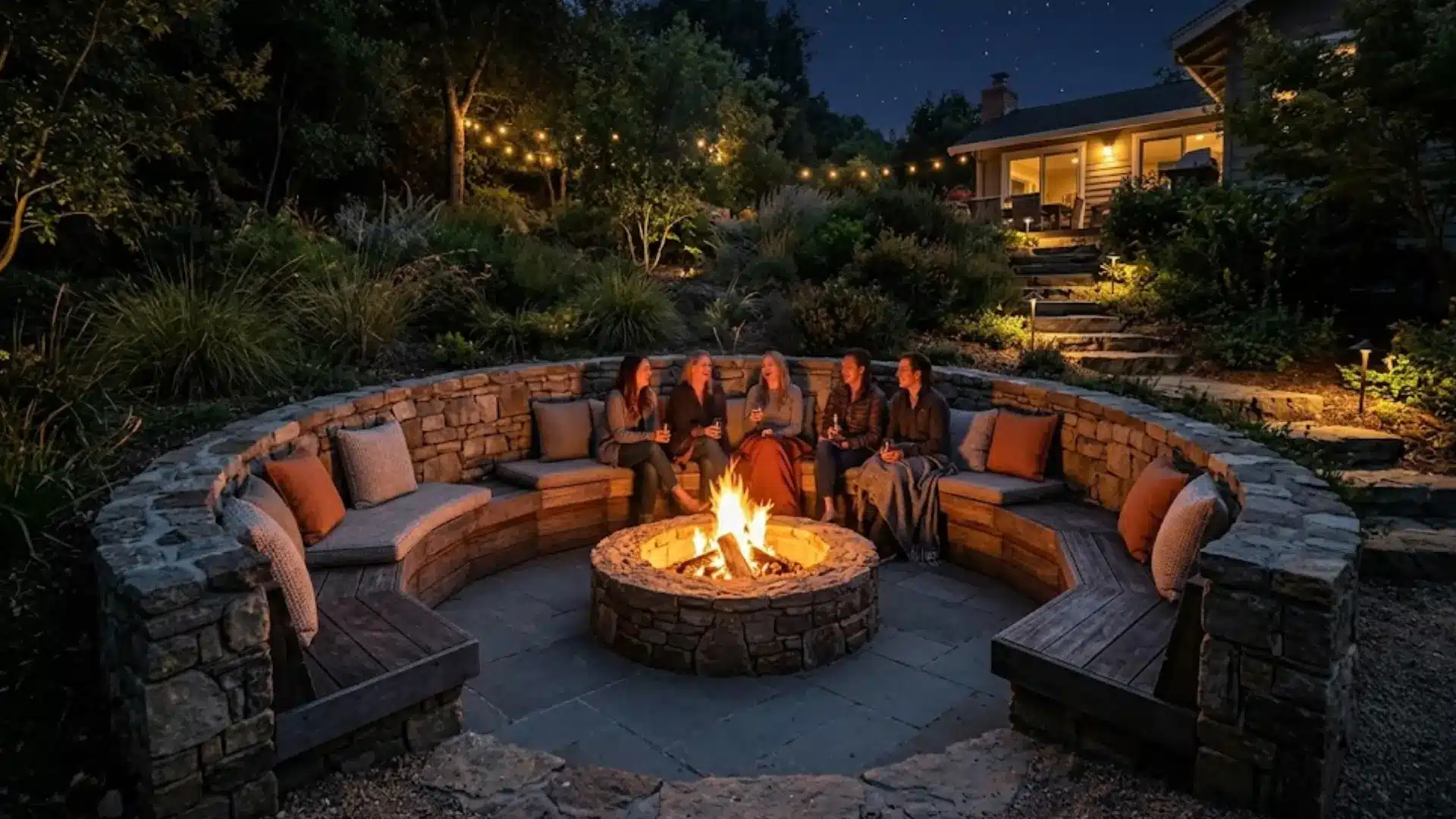
A sunken fire pit recesses a seating and fire space into the lower section of your slope, creating a sheltered gathering spot that feels carved out of the hillside itself.
The surrounding earth acts as a natural windbreak, keeping warmth in and noise out. Dig down two to three feet, line the interior walls with stone or brick, and arrange seating around the central fire feature.
4. Backyard Waterfall Feature
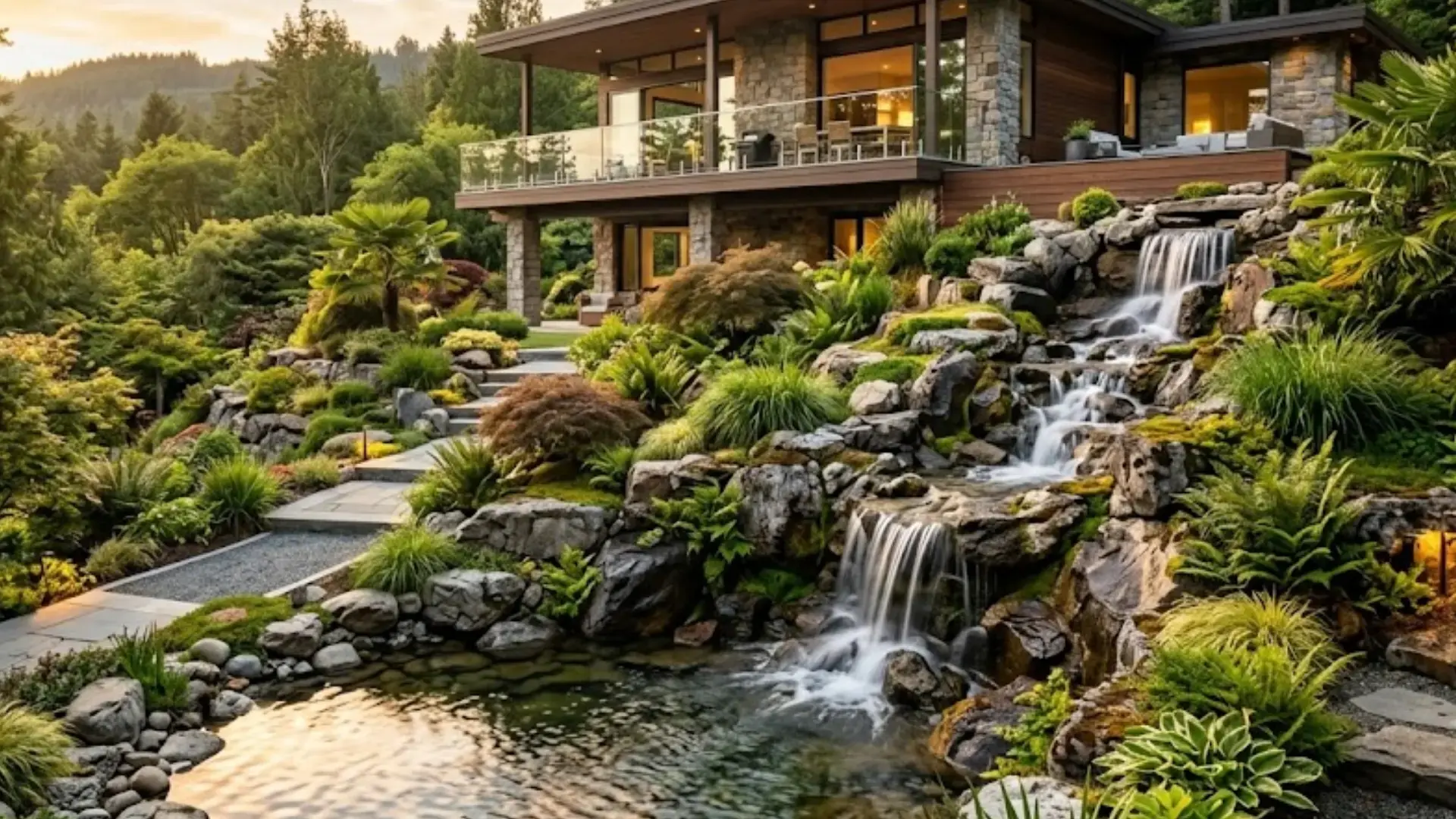
A backyard waterfall channels water from a high point on your slope down to a pool or basin at the bottom, creating a cascading stream that looks like it belongs naturally in the landscape.
The sound and movement make the yard feel alive in a way most features cannot.
Lay a waterproof liner along the channel, stack flat stones to shape the drops, and fit a recirculating pump at the base to keep it flowing.
5. Stone Staircase With Viewing Stops
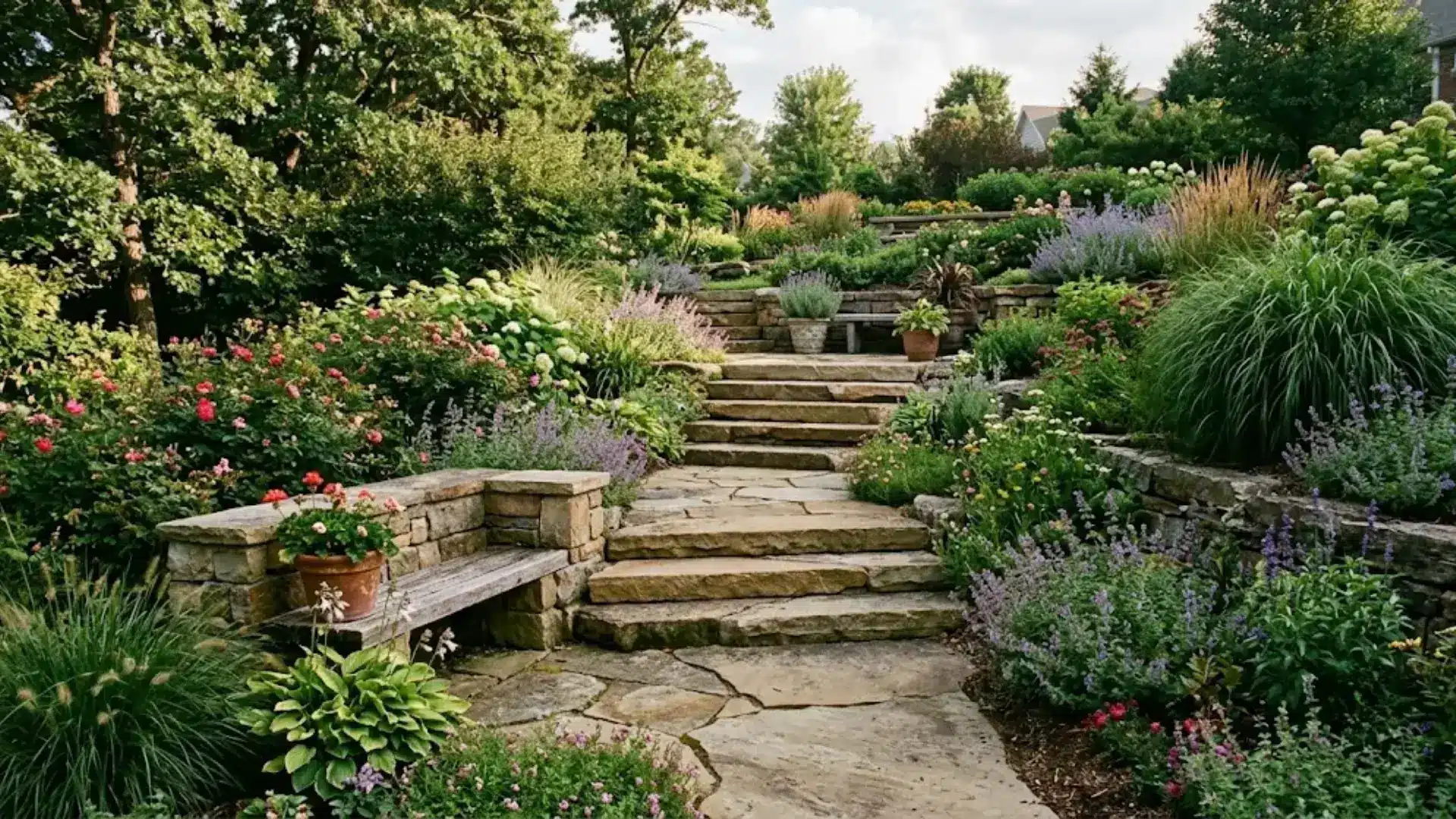
A stone staircase with viewing stops turns the climb up your slope into an unhurried experience, with wide flat landings built in at intervals that give you a reason to pause and take in the yard.
Framed by planting on both sides, it looks like a garden path rather than a practical necessity.
Set large flat stones into a compacted base and widen select landings into broader platforms with a bench or plants to mark each stop.
6. Hillside Vineyard or Edible Garden
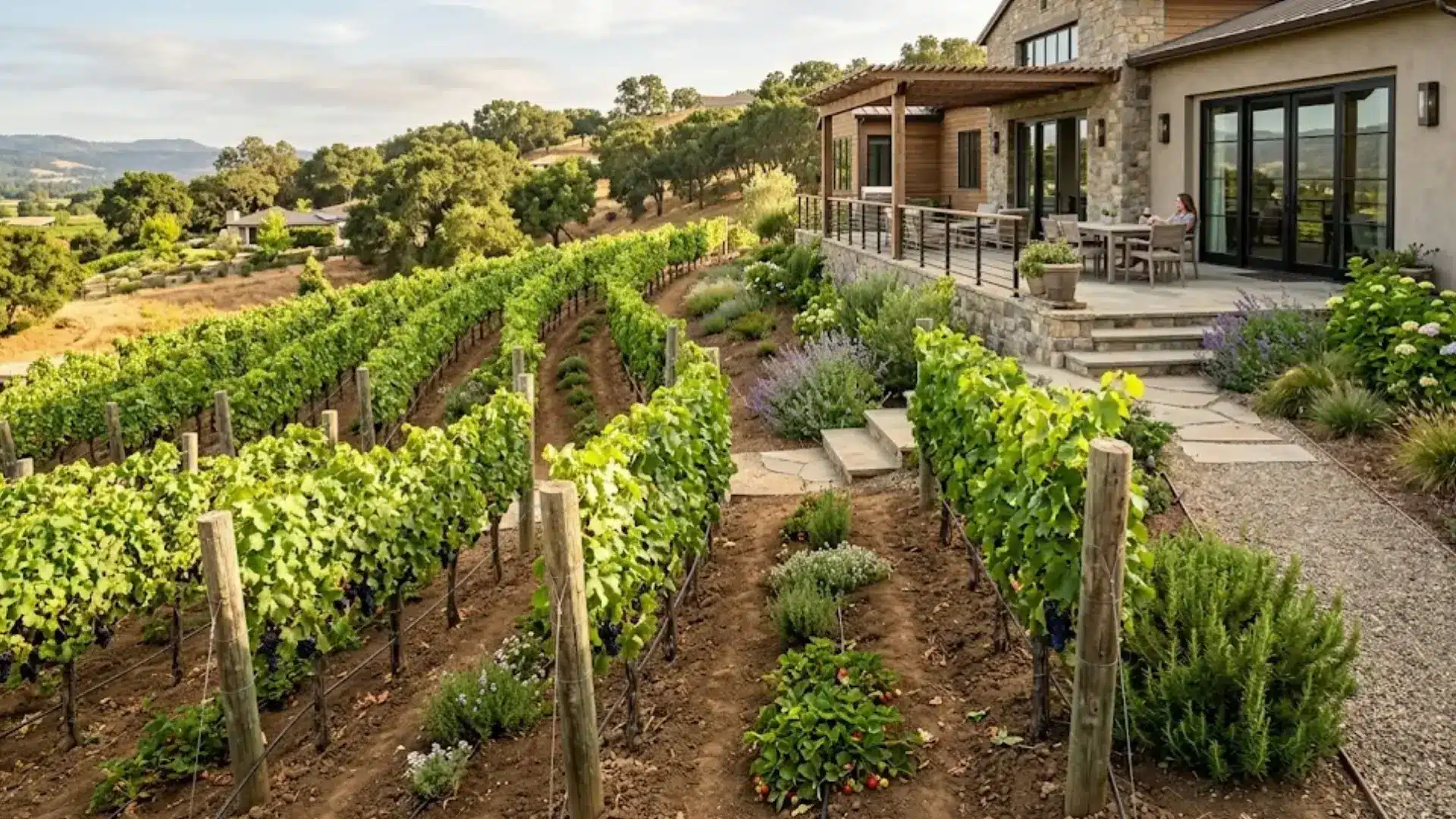
A hillside edible garden runs rows of fruits, herbs, and climbing vines along the natural contour of your slope, creating the look of a productive working garden that spills organically down the hill.
The slope’s natural drainage gives roots the dry, well-aerated conditions most edible plants prefer.
Border each row with low timber or stone to hold the soil, then plant grapes, strawberries, climbing beans, or herbs in the beds.
7. Outdoor Amphitheater Seating
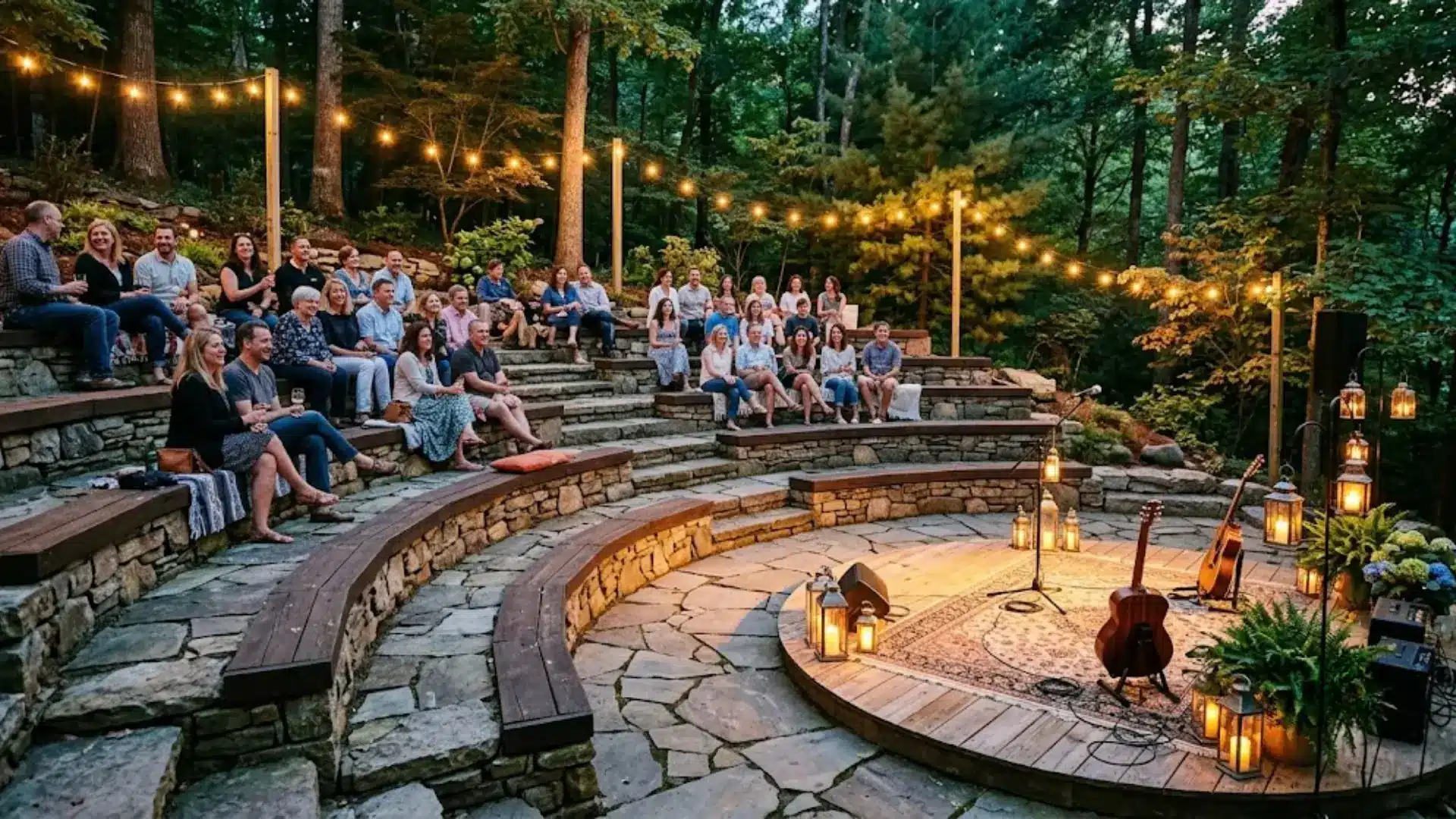
An outdoor amphitheater carves tiered seating directly into your slope and orients it toward a flat open area at the base, creating a natural gathering space with built-in sightlines.
It looks purposeful and relaxed at the same time, like the hill was always meant to be used this way.
Cut the slope into even horizontal steps, face each tier with timber or stone, and use the flat lower zone as your stage or screen area.
8. Zip Line or Adventure Play Zone
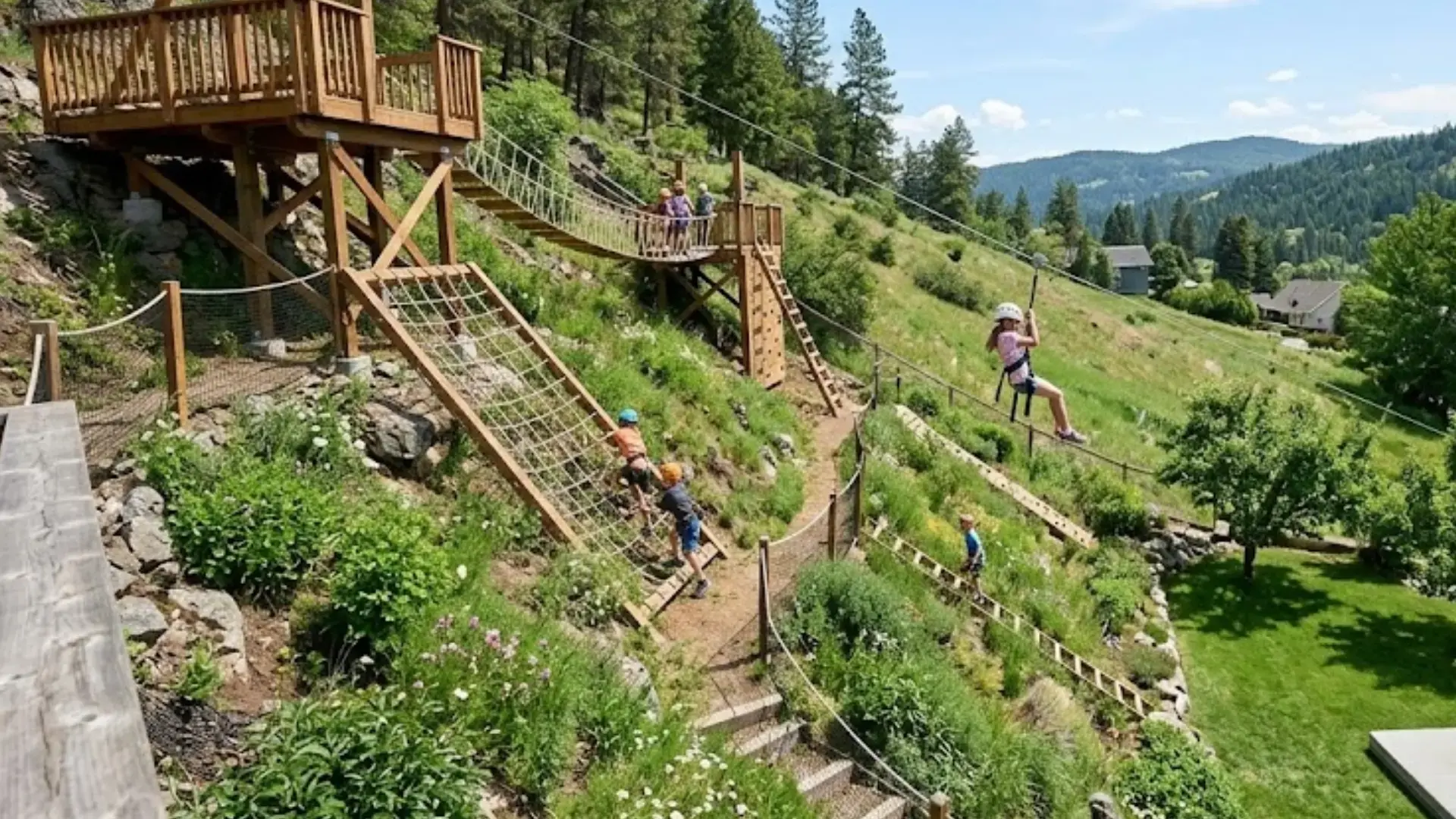
A hillside play zone harnesses the drop in the ridge of your slope to power a zip line, cargo net, or rope swing, turning the incline into a backyard experience course that looks intentional rather than improvised.
The slope provides the momentum, so the setup feels natural within the landscape.
Anchor the zip line between solid posts at the top and bottom, add climbing features along the hillside, and finish the base with a soft landing zone.
9. Infinity-Edge Patio
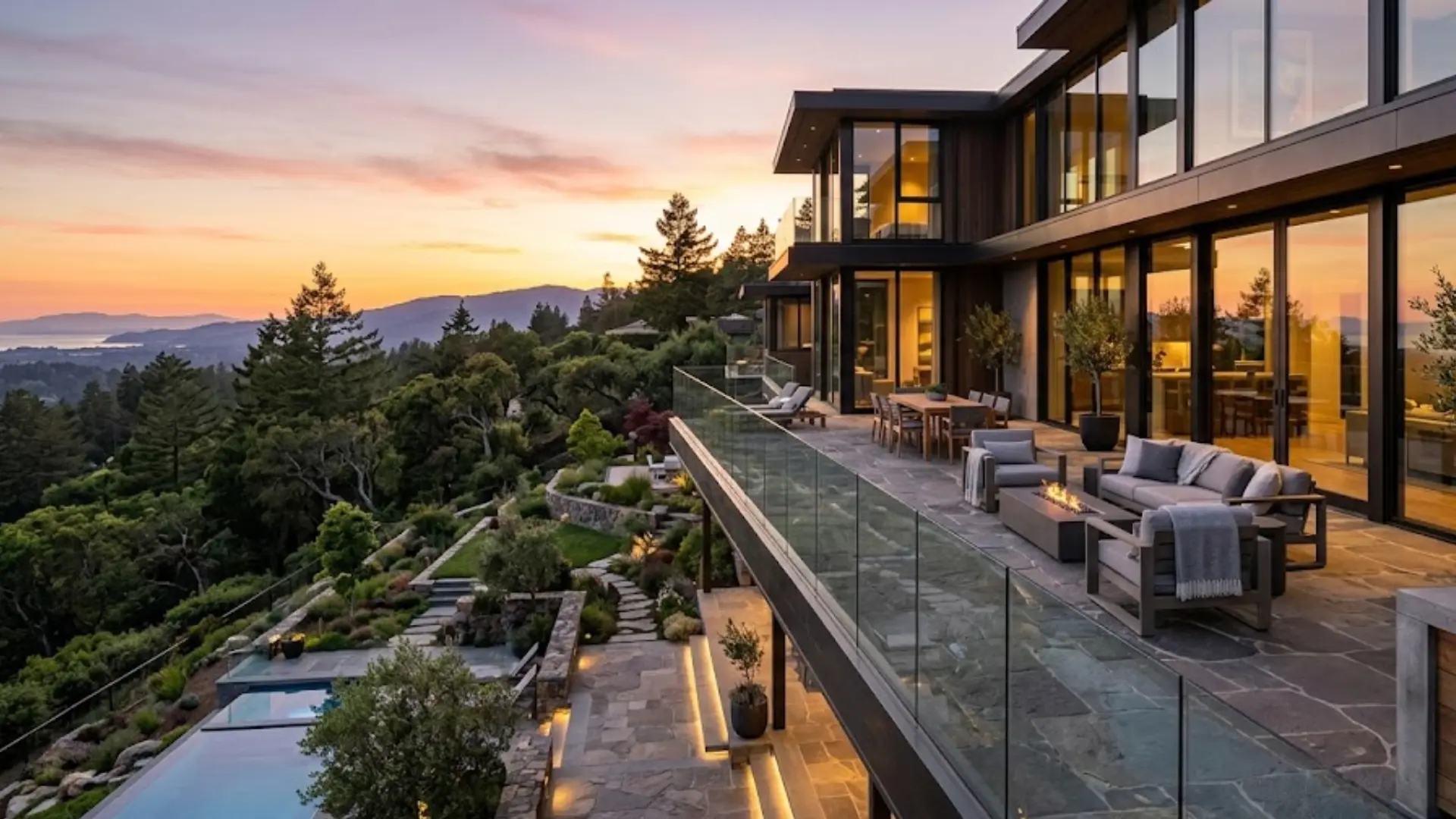
An infinity-edge patio sits at a high point on your slope with one open edge that appears to fall away into the landscape below, giving the whole surface a floating, expansive quality.
It looks dramatic from the patio itself and striking from anywhere lower in the yard.
Lay large-format pavers or poured concrete for the floor, and fit low glass or cable railing along the open edge to keep the view completely clear.
10. Hillside Wildflower Meadow
A hillside wildflower meadow replaces the frustration of mowing a steep slope with a naturalistic planting that shifts color through the seasons and grows more settled each year.
It looks intentional and alive, nothing like a neglected patch of grass. Clear the existing vegetation, lightly loosen the topsoil, and scatter a native wildflower seed mix across the slope in early spring or fall to get it started.
11. Outdoor Kitchen Terrace
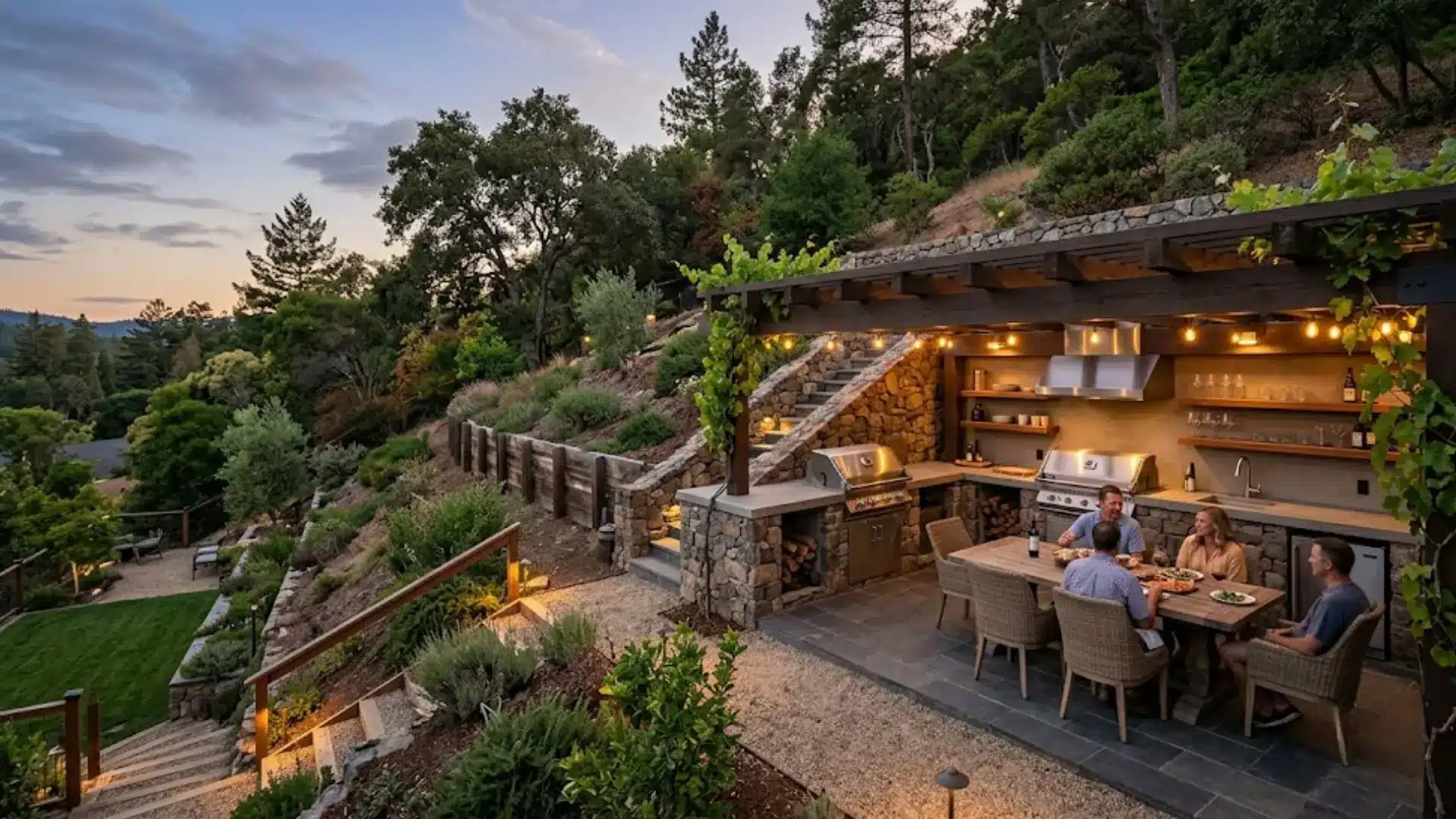
An outdoor kitchen terrace levels a section of your slope and turns it into a proper cooking and dining space, with the hillside rising behind it and the yard opening up in front.
It functions like an outdoor room that feels anchored rather than dropped into the landscape.
Level the ground using compacted fill or a rear retaining wall, lay pavers underfoot, add a grill and prep counter, and finish with a pergola overhead for shade.
12. Backyard Observation Deck
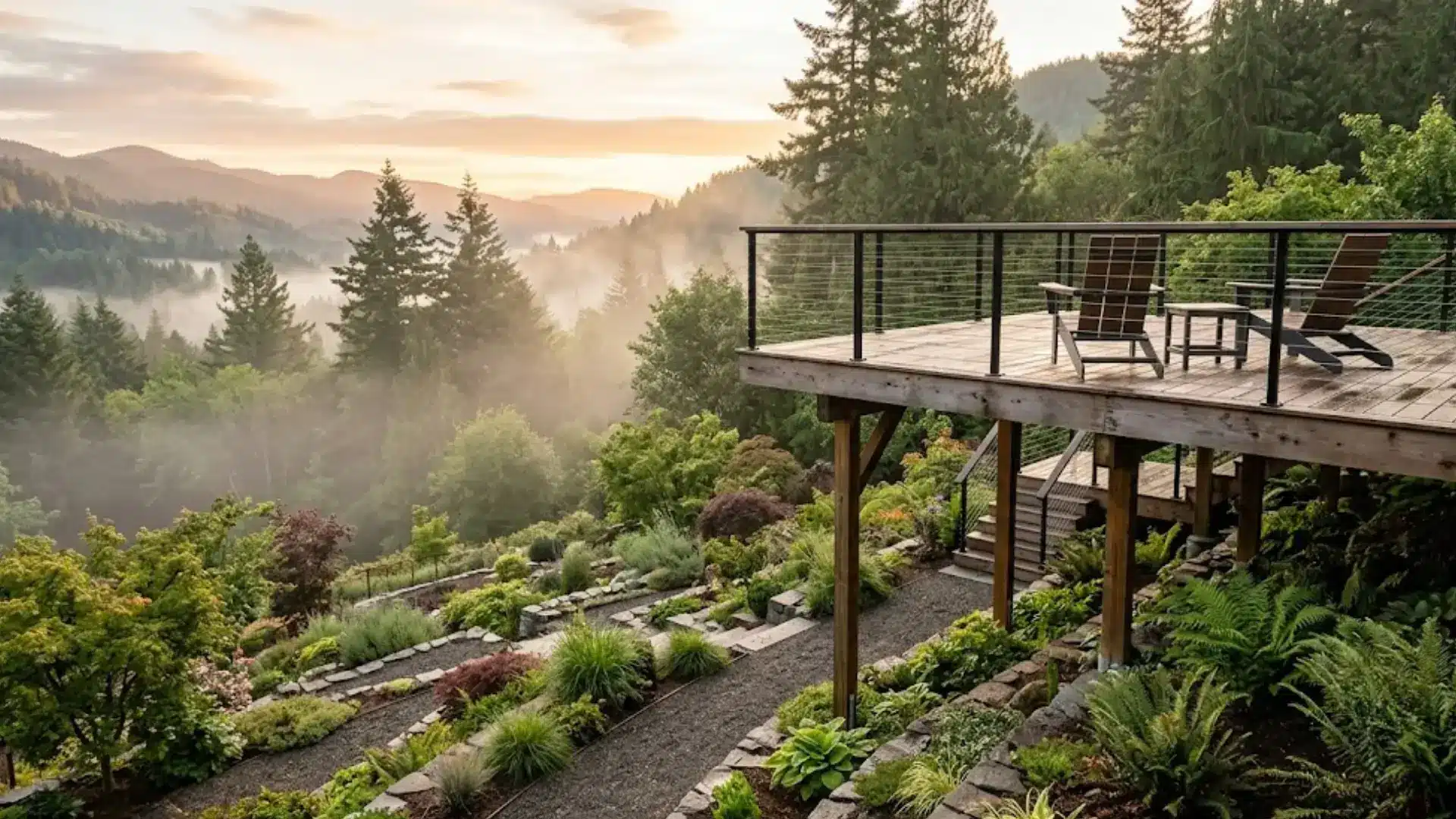
A backyard observation deck sits at the highest accessible point of your slope and gives you a raised platform to relax and look out over the yard below.
It looks quiet and uncluttered, like a deliberate pause point built into the top of the garden.
Set support posts into the slope, surface it with cedar or composite decking, add railings on the open sides, and keep the furniture simple so the view remains the focus.
13. Natural Boulder Landscape
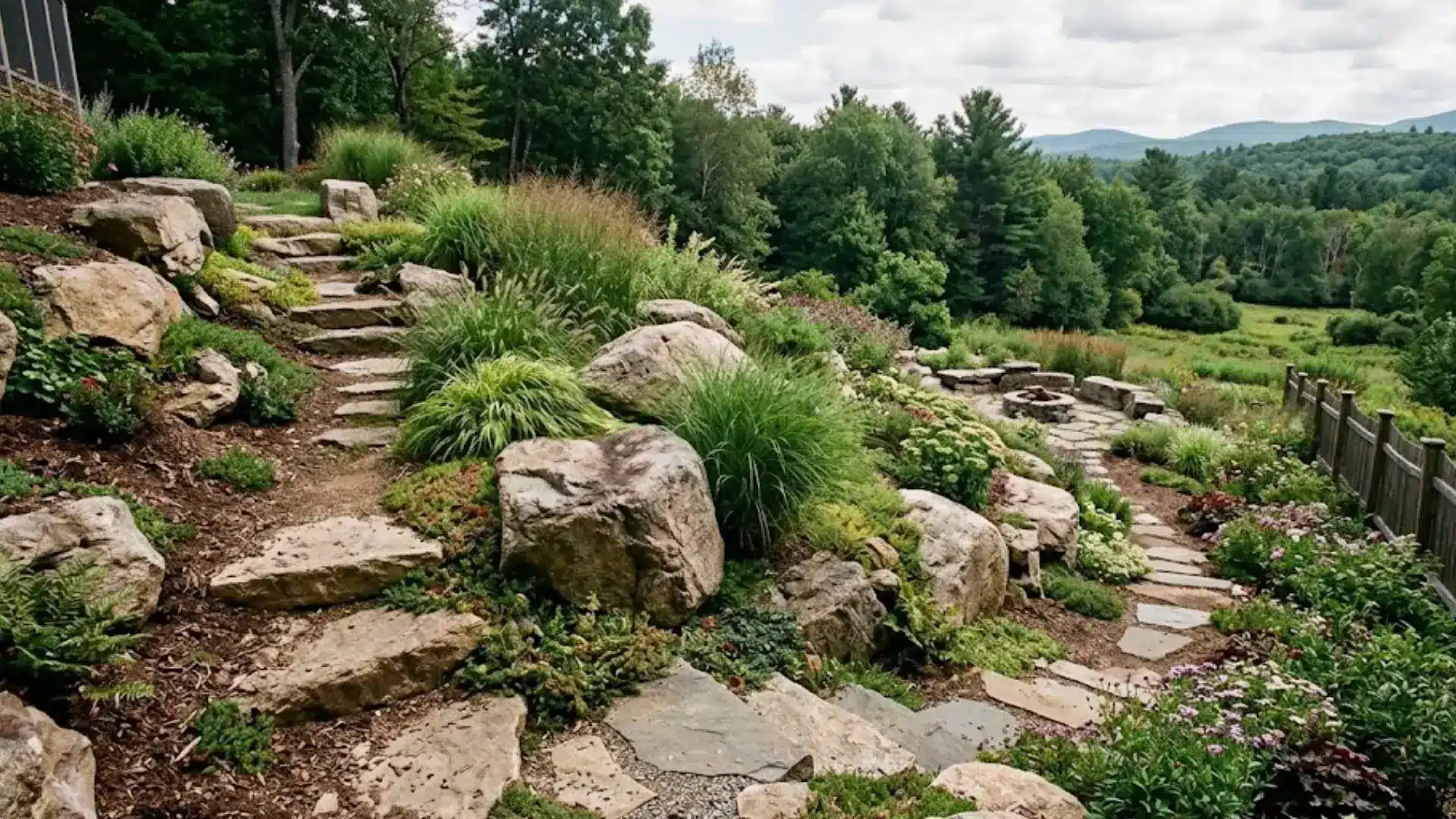
A natural boulder landscape anchors large stones at deliberate points along your slope, using their weight and presence to break up the incline and give the yard a sense of permanent structure.
Placed well, they look like they have always been part of the hillside rather than brought in and set down.
Sink each boulder at least one-third into the ground and plant ornamental grasses or spreading ground cover around the base to tie them into the landscape.
14. Hillside Putting Green

A hillside putting green levels a section of your slope and surfaces it with artificial turf, creating a compact practice space that sits comfortably within the wider landscape of the yard.
The surrounding slope adds natural challenge to putting and chipping that a flat green simply cannot replicate.
Build a compacted gravel base for drainage, lay the turf on top, and finish with a couple of cup holes, flags, and a small chipping area at the edge.
15. Forest-Style Walking Trail
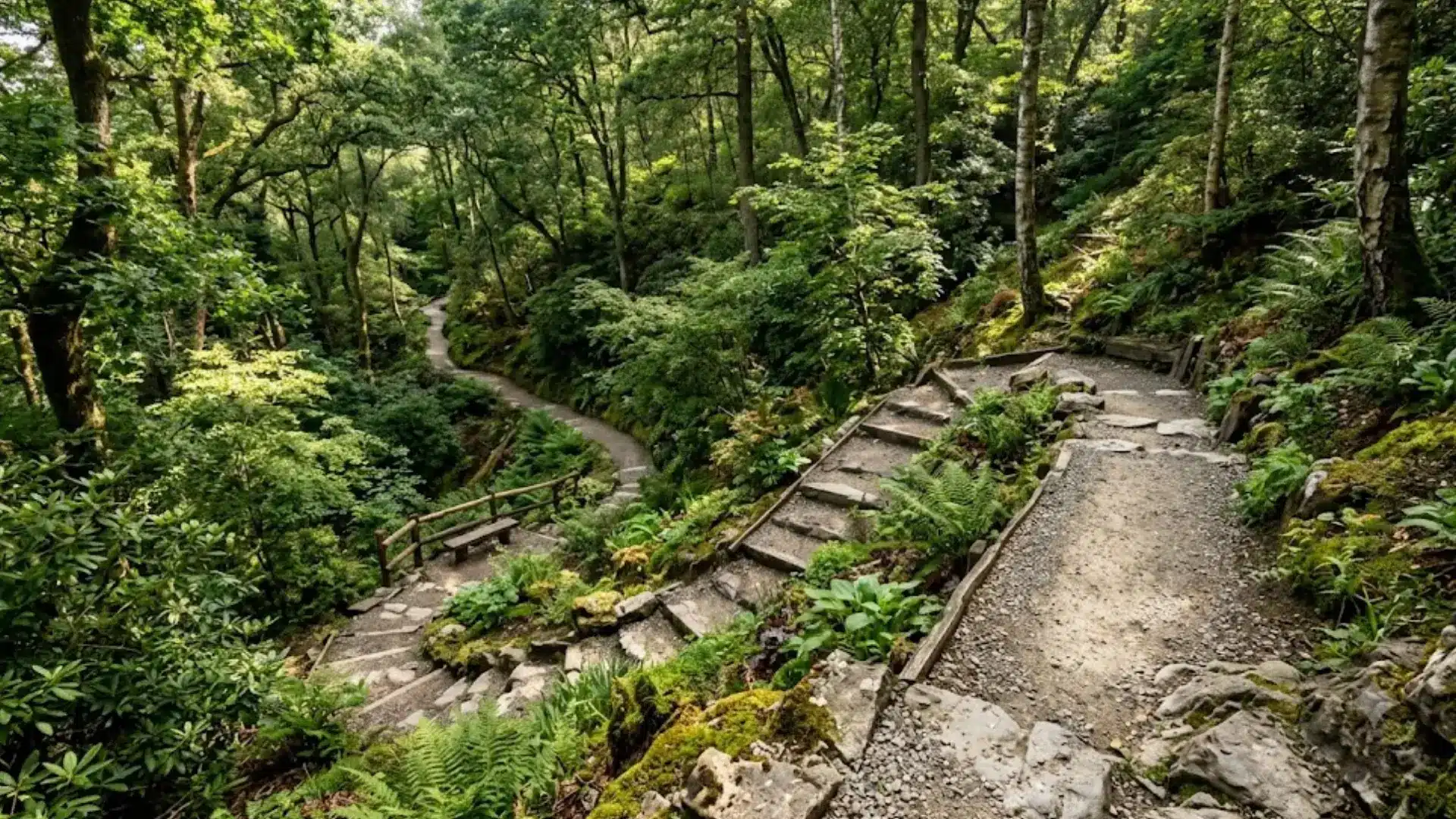
A forest-style walking trail winds through your sloped yard between planted areas, trees, and garden features at different levels, giving the space a sense of depth that makes it feel larger and more considered than it actually is.
The path slows you down and turns a walk outside into something worth doing.
Lay it using compacted gravel or stepping stones that follow the hill’s natural contour and build up dense planting on both sides to complete the feel.
16. Rain Garden Basin
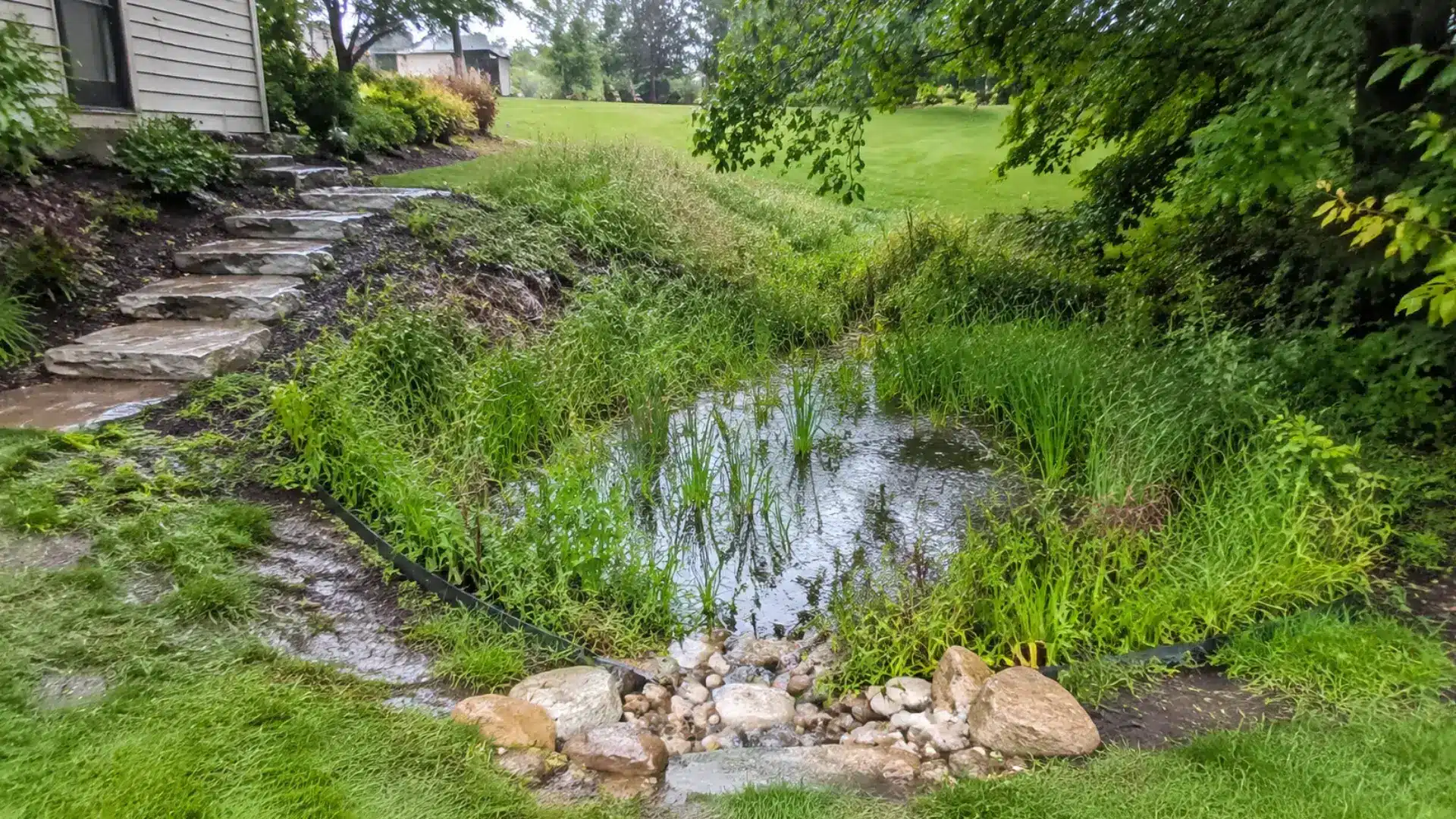
A rain garden sits at the lowest point of your slope and collects the water that runs downhill after rain, holding it in a shallow planted basin where it can absorb slowly into the ground.
It looks like a lush sunken garden bed that also solves a drainage problem.
Dig eight to twelve inches deep, loosen the base soil to improve absorption, and fill it with deep-rooted native plants that handle both wet and dry spells well.
17. Backyard Sculpture Garden
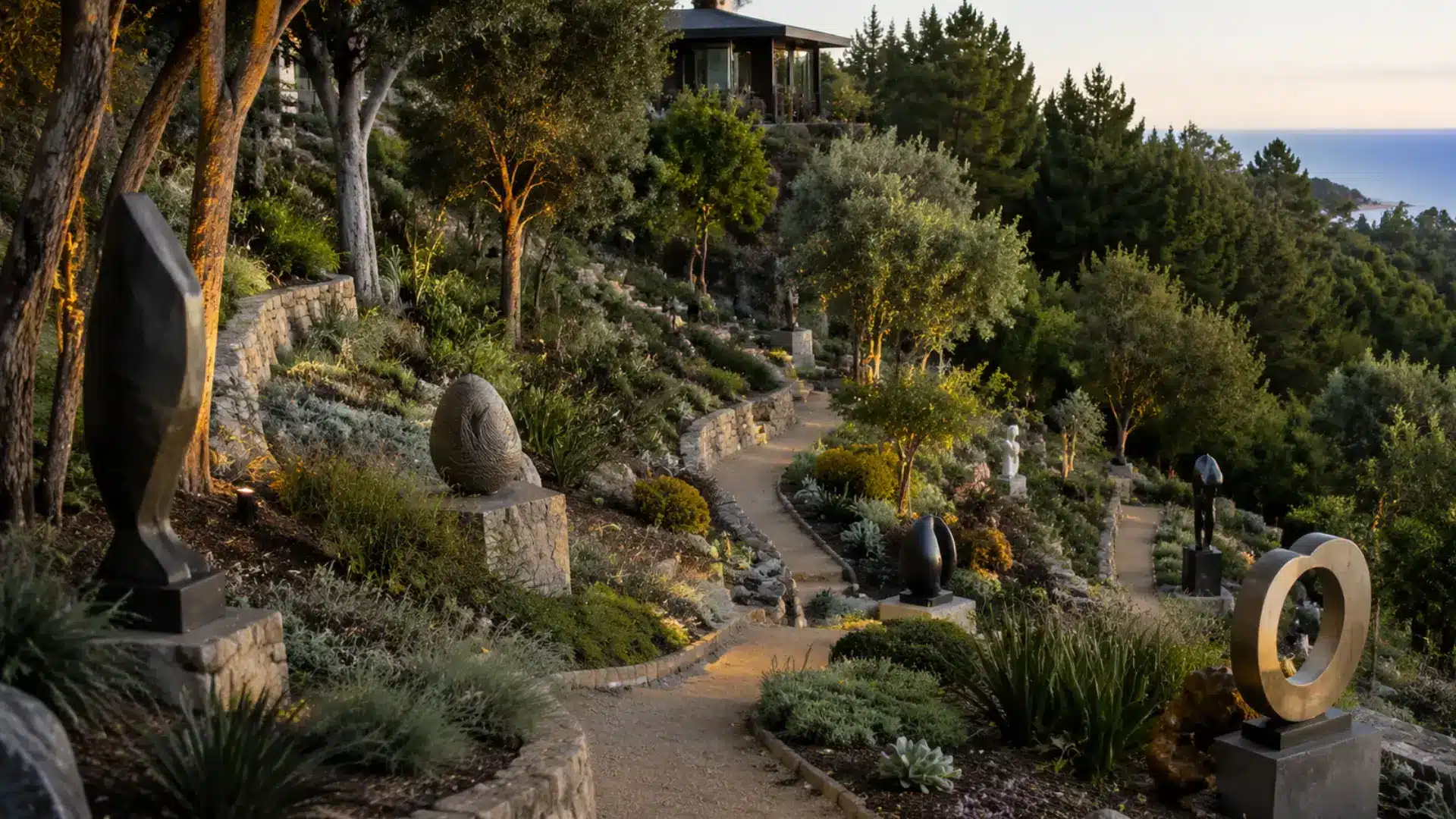
A backyard sculpture garden places art pieces, ceramic vessels, or carved stone features at different heights across your slope, letting the terrain frame each one and reveal them gradually as you move through the yard.
It gives the space a gallery quality without needing walls or formal paths.
Anchor larger pieces at the lower levels to ground the composition, place smaller works higher up where they catch the eye, and use planting between them as the backdrop.
How to Choose the Right Idea for Your Sloped Backyard?
Not every idea works for every slope, so it helps to start with what you are actually working with.
A steep incline needs structural solutions like terracing or retaining walls before you think about anything else. A gentler slope gives you more flexibility to focus on aesthetics and personal preference.
Think about your budget early because some ideas cost significantly more to build and maintain than others.
Low-maintenance options like wildflower meadows or boulder landscapes suit busy households better than a putting green or outdoor kitchen.
The best choice balances what your yard needs structurally with how you actually want to use and enjoy the space every day.
Tips for Designing a Functional Sloped Backyard
A sloped backyard takes a little more planning than a flat one. Getting the basics right from the start saves you a lot of trouble later:
- Control water before you do anything else. Runoff is the biggest problem on any slope. Unmanaged water erodes soil, damages structures, and drowns plants quickly. Grade the land carefully and use ground cover or a dry creek bed to slow it down.
- Use retaining walls to stop soil movement. Walls hold the ground in place and create flat usable areas at the same time. Stone, timber, and concrete block all work well depending on your budget.
- Mix hardscape with greenery to keep it balanced. Too much paving increases runoff and looks harsh. Too much planting without structure looks unfinished. Aim for hard surfaces that define zones and plants that soften the edges.
- Make every level easy and safe to access. Steps and pathways need to be wide enough to use comfortably on a stable base. Steep or narrow access points become a real hazard in wet conditions.
- Choose plants that hold soil and suit the slope. Deep-rooted natives, ornamental grasses, and ground covers anchor the ground while adding color. Avoid shallow-rooted plants on steeper sections where soil movement is a genuine risk.
A well-designed sloped backyard works with the land rather than against it. These principles keep it functional, safe, and good-looking all at once.
Frequently Asked Questions
Can a sloped backyard affect foundation safety over time?
Yes, uncontrolled water runoff can cause soil movement that puts pressure on nearby structures over time. Proper grading and drainage significantly reduce this risk.
What is the best way to test soil stability on a sloped yard?
Check how easily soil shifts after heavy rain as a starting point. For accuracy, a basic geotechnical soil test identifies compaction levels and drainage capacity reliably.
How long does it usually take to complete a sloped backyard changeover?
Timelines depend on project size, access, and materials. Small improvements can take a few days, while full structural changes may take several weeks or longer.
Are sloped backyards more expensive to maintain than flat yards?
Maintenance can run slightly higher due to water movement and accessibility challenges. However, costs depend heavily on the design choices and plant selection you go with.
Can wildlife be encouraged in a sloped backyard design?
Yes, sloped yards naturally support birds, pollinators, and small wildlife when native plants, water sources, and sheltered zones are built into the overall design.
The Bottom Line
Sometimes the yard that gives you the most trouble ends up being the one you are most proud of.
Down-sloped backyard ideas give you a real starting point, but the best result comes from matching the right idea to your specific yard.
Look at your slope, think about how you want to use the space, and start there. You do not need to do everything at once, and you do not need a big budget to make a real difference.
One good change can shift how the whole yard looks and feels. Pick your idea and drop it in the comments below.


One Response