
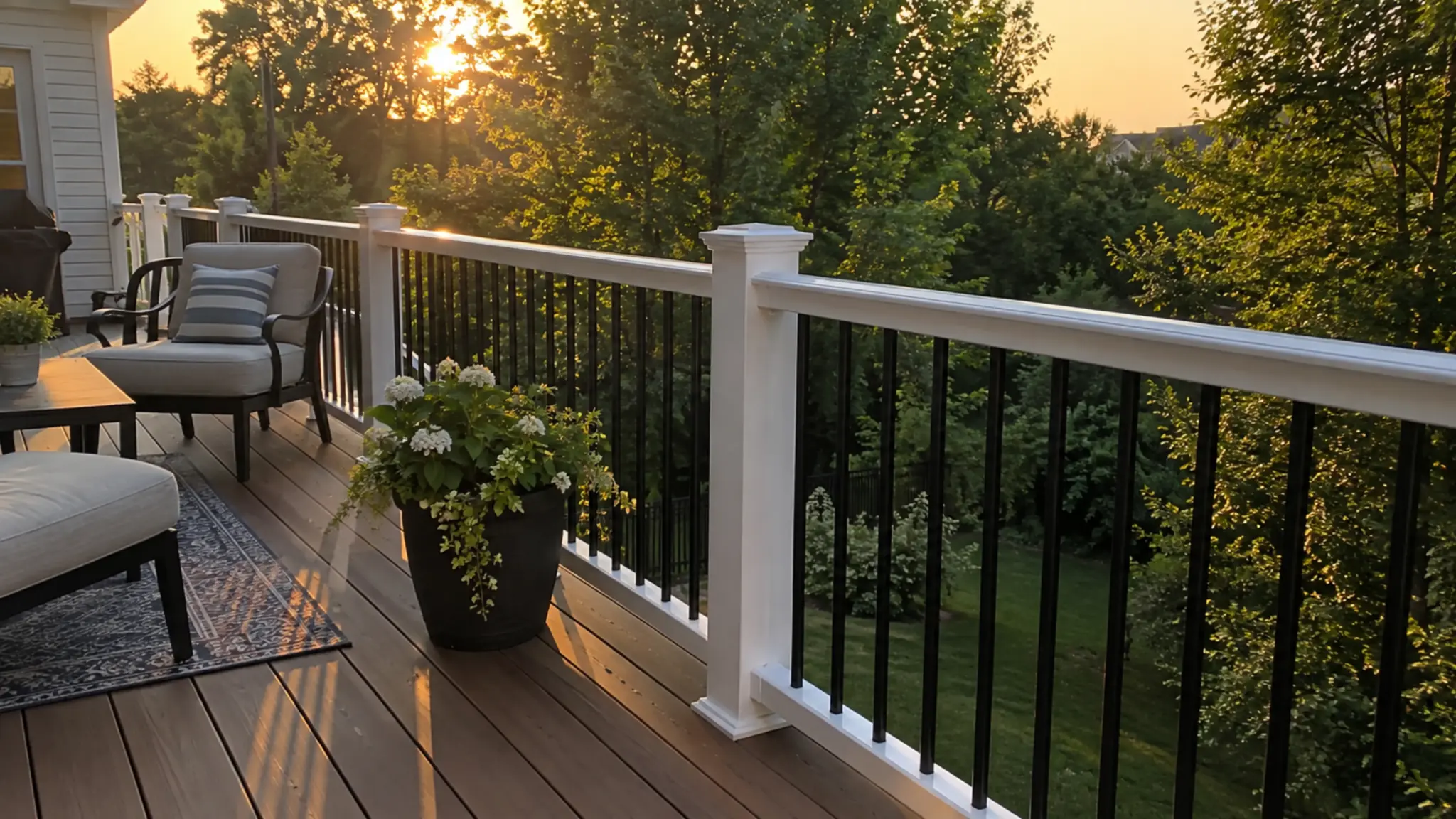
When you are planning a deck, railing height is one of those details that is easy to treat as an afterthought, right up until you are leaning on it.
I’ve seen this play out on my own projects, where a railing looked perfectly fine but did not actually hold up to what local code expected.
It is not just about appearance either, since the right height keeps the whole structure doing its job safely. And because requirements shift depending on where you live, it is worth knowing what actually applies to you.
Keep reading if you want to know how deck railing height works, the standard rules, regional differences, and a few practical things worth checking before you build.
What the IRC Actually Says About Guard Height
The rule itself comes straight from the International Residential Code (IRC).
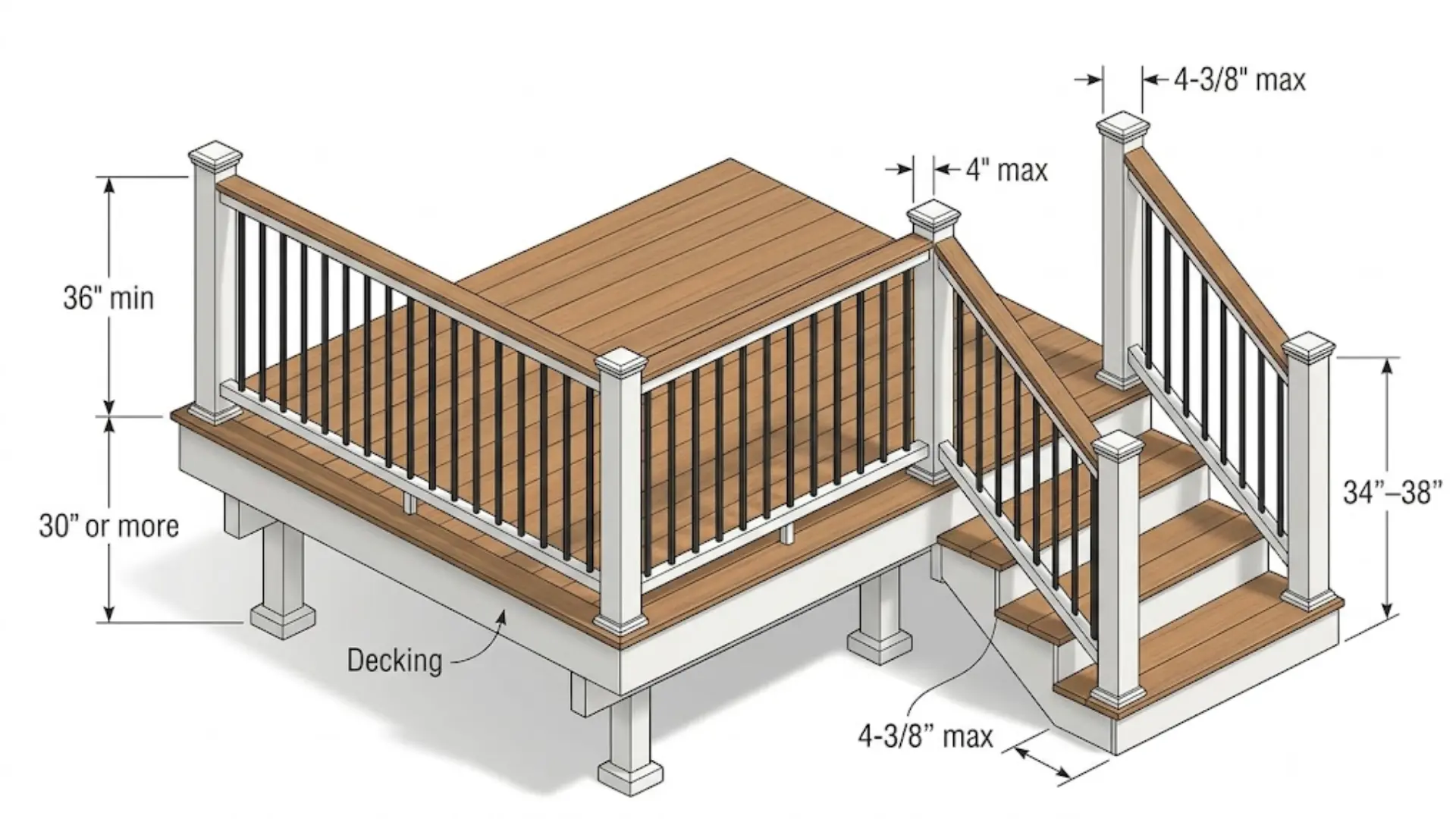
Guards are required once a walking surface sits more than 30 inches above grade, measured within 36 inches of the open edge (IRC Section R312).
Once that is the case, I always tell people to check that their rail is at least 36 inches, measured from the deck surface to the top of the rail.
Balusters and cable infill need to follow the 4-inch sphere rule, since a small gap can look fine and still fail inspection.
And do not confuse a guardrail with a stair handrail, which sits lower, between 34 and 38 inches.
Where 36 Inches is Not Enough: State and Local Variations
The IRC sets the baseline, but some states and property types raise that number, and it’s worth knowing exactly where 36 inches stops being enough.
State Codes Can Override the IRC Minimum
Not every state builds to the same number.
California and Washington are two clear examples; both have adopted amendments that raise the standard residential guard height from 36 to 42 inches.
A railing built to the general IRC minimum simply won’t pass inspection in either state, so if you are building there, plan for 42 inches from the start rather than adjusting later.
California Also Enforces Height Through Inspection Law
California backs this up with active enforcement.
Under SB 721 and SB 326, multi-family properties must undergo regular inspections of “Exterior Elevated Elements,” meaning decks, balconies, and walkways more than six feet above ground.
These inspections check railing height directly, and 34-inch rails have failed them even on structures that stood for years without an issue.
If your property falls under either law, do not assume an older railing is compliant just because it has not been flagged yet.
Building Type Changes the Requirement Too
Height rules do not only shift by location; they shift by who’s using the space.
Commercial buildings and most multi-family properties are typically held to a 42-inch minimum, no matter which state they are in.
That is because shared decks and walkways get used by a much wider mix of people, including children and elderly residents.
A residential-grade railing installed on a duplex or rental property can quietly end up out of compliance without anyone realizing it.
Before You Build: Local building departments (your Authority Having Jurisdiction, or AHJ) can require stricter rules than the IRC or your state’s baseline. Always confirm the exact number with them directly rather than assuming a general guide applies to your area.
Why 36 Inches Feels Low Even When It’s Legal?
Code compliance and comfort are not the same thing. An average adult male’s center of gravity sits closer to 41–42 inches.
That point comes up in real homeowner discussions like this one, where one person noted feeling far safer leaning on a rail near belly-button height than at the code minimum.
A 36-inch rail catches you below where your body actually pivots.
I have read accounts of homeowners rebuilding a wobbly 30-inch rail to 36 inches, only to still feel uneasy leaning on it. Some intentionally keep railings low to preserve a view, then regret it later.
On decks used for parties, alcohol plus leaning turns a code-minimum rail into a real risk, especially on elevated or sloped decks, where people report feeling noticeably safer at 42 inches.
How to Measure Your Railing Correctly?
A railing can look right and still be off by a few inches, which is why it’s worth measuring it properly instead of relying on a glance.
- Measure from the deck surface to the top of the rail, not from the ground below.
- On sloped lots, measure from the lowest adjacent grade, not the high side of the deck.
- Check height at multiple points, since decks settle unevenly over time.
- For stairs, measure from the nose of the tread, not the stair surface itself.
- Recheck after any repairs, since even small structural shifts can throw off the number.
A few minutes with a tape measure at the right spots tells you more than any guess ever will.
What to Do If Your Railing is Too Low or Out of Code?
Finding out your railing falls short does not always mean starting over.
In many cases, a rail extension or topper solves the height issue without rebuilding the whole structure.
If the rail wobbles at all, fix that first, since height won’t help if the structure is weak.
For spans longer than 6 to 8 feet, especially on a property you plan to rent out, add intermediate posts for extra support.
Simple height adjustments are usually fine as a DIY project, but if posts, framing, or structural connections are involved, it’s worth calling a professional.
Residential vs. Commercial Railing Height Compared
Residential and commercial properties do not follow the same baseline, and the difference comes down to a few key numbers.
Requirement | Residential | Commercial |
|---|---|---|
Minimum Height | 36″ | 42″ |
Trigger Height (above grade) | 30″ | Varies by IBC |
Stair Handrail | 34–38″ | 34–38″ |
Baluster Spacing | 4″ sphere rule | 4″ sphere rule |
Final Thoughts
Getting deck railing height right is not really about chasing an exact number; it is about matching code, comfort, and how the space actually gets used.
A well-built railing should feel steady enough that you forget it is even there, until the one moment you actually lean on it and need it to hold.
If your own deck has ever left you second-guessing the height, or you have made a choice that worked well for your space, share it in the comments. I’d genuinely like to hear how it turned out for you.
Frequently Asked Questions (FAQs)
Is 36 Inches Too Low for a Deck Railing?
Not legally; 36 inches meets the IRC minimum for most residential decks. Some homeowners still find it low for comfort, especially on elevated or sloped decks.
Does California Require 42-Inch Deck Railings?
Yes, California has adopted amendments raising the standard residential guard height to 42 inches. A railing built to the general IRC minimum of 36 inches won’t pass inspection there.
What Height Railing Do I Need for a 6-Foot Deck?
A 6-foot-high deck exceeds the 30-inch trigger, so a guard is required at 36 inches minimum (42 inches in states like California and Washington). Always confirm the exact number with your local building department.
Can I Make My Deck Railing Taller Than Code Requires?
Yes, code sets a minimum, not a maximum. Many homeowners choose 42 inches even where 36 is legal, for extra safety or peace of mind.
Do Stairs Need a Different Railing Height Than the Deck Itself?
Yes, stair handrails are measured differently and typically sit between 34 and 38 inches from the tread nosing. This is separate from the 36-inch guardrail required along the open sides of the deck itself.