
The moment you step into a room, your eyes settle on the furniture, walls, or lighting. Then you look up and see a patterned, structured ceiling that can make a space feel considered.
That is why coffered ceiling ideas are gaining attention beyond formal dining rooms and grand homes.
What used to signal old-money grandeur in libraries and grand estates has quietly found its way into modern everyday homes too.
Clean apartments, coastal cottages, weekend renovations that wanted a little more depth than a flat ceiling could offer.
Below you’ll see a whole range of ideas, from classic wood beams to bold color and unexpected materials, plus the practical stuff.
Are Coffered Ceilings Still in Style?
Not only are they still in style, but they’re also arguably having a real moment right now.
A coffered ceiling is a grid of recessed panels, called coffers, framed by beams or molding that create real dimension overhead instead of just a flat surface.
Designers consistently call coffered ceilings timeless rather than trendy, a style tracing back to ancient Egypt and Renaissance-era homes that’s remained a fixture in well-built interiors ever since.
What’s changed is how it shows up: designs favor wider, shallower grids; mixed materials like wood paired with drywall or metal.
Unexpected shapes like triangles replacing the standard square; and bolder painted or wallpapered finishes.
Color and Finish Ideas for Coffered Ceilings
Paint colors, wood stains, contrasting tones, and sheen levels can shape the mood of a room and highlight its ceiling details.
1. All-White Coffered Ceiling
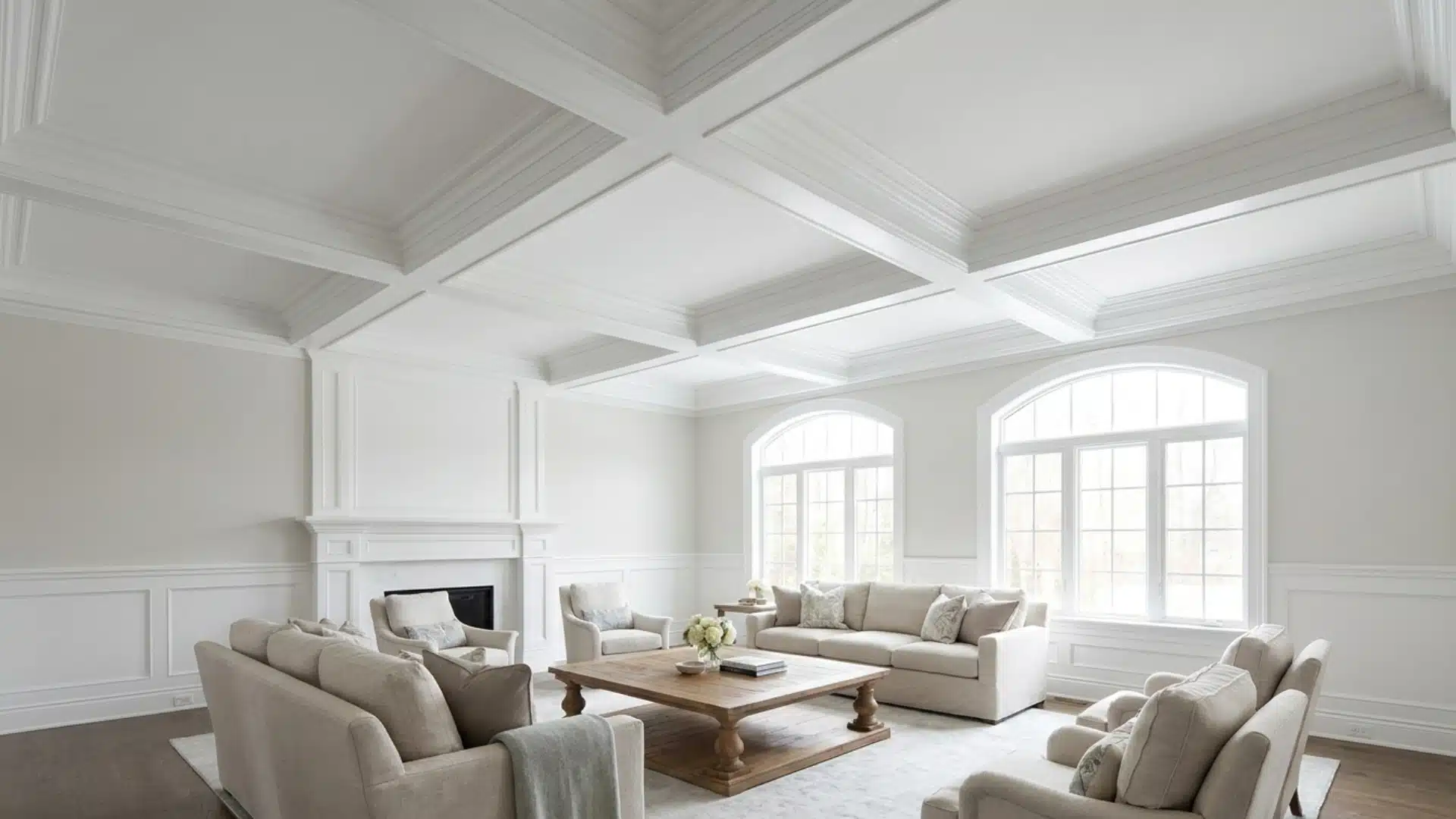
A clean, airy effect that keeps the architectural detail visible without adding visual weight to the room.
This works especially well in smaller spaces or rooms already rich in other textures and colors, where a busier ceiling color would compete rather than complement.
It also reflects light effectively, helping the whole space feel brighter and more open than a darker finish would allow.
2. Minimalist Modern Coffered Ceiling
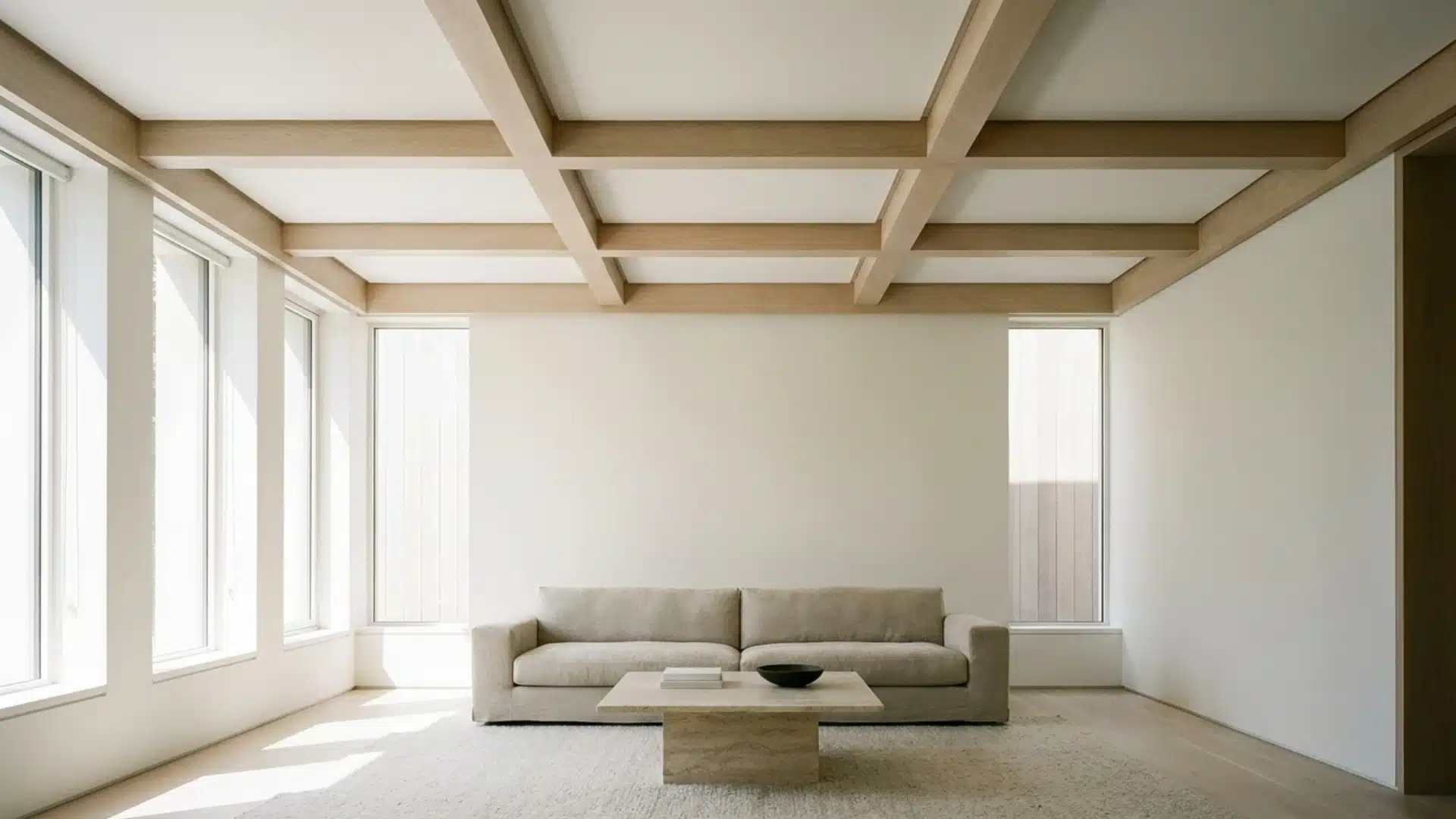
Flat beams, crisp edges, and no traditional molding define this stripped-back version.
Keeping the grid pattern while skipping anything that reads as overly ornate or dated.
It suits contemporary homes where clean lines matter more than decorative flourish, offering architectural depth without pulling attention away from the rest of the room’s minimalist design language.
3. Black or Charcoal Beams on White Panels
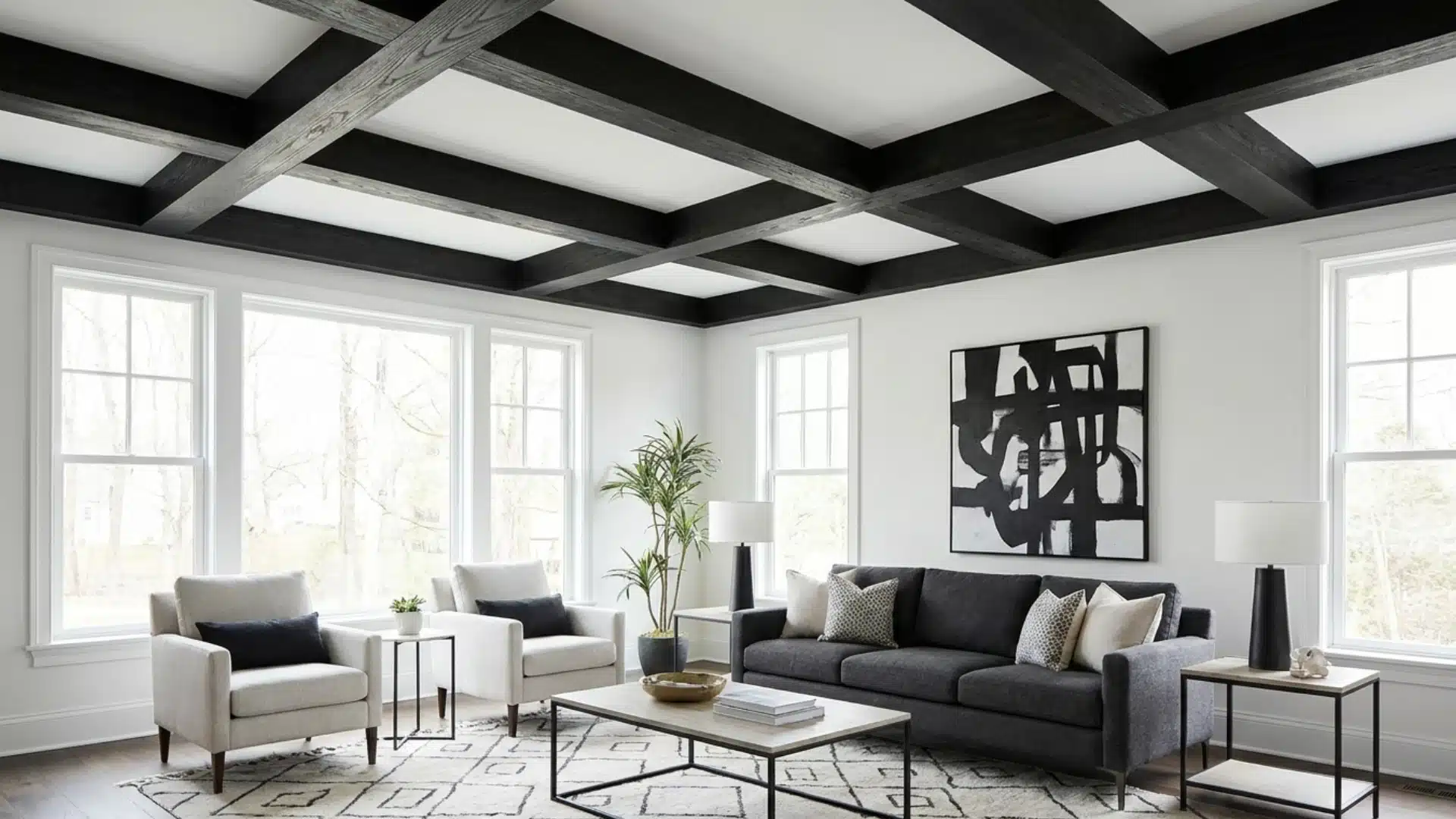
A bold, high-contrast combination that turns the ceiling into a genuine design statement rather than a background detail.
The dark beams create strong visual lines against the white panels, drawing the eye upward and giving the whole room a more dramatic, gallery-like presence than a single-tone ceiling.
4. Fully Painted Ceiling
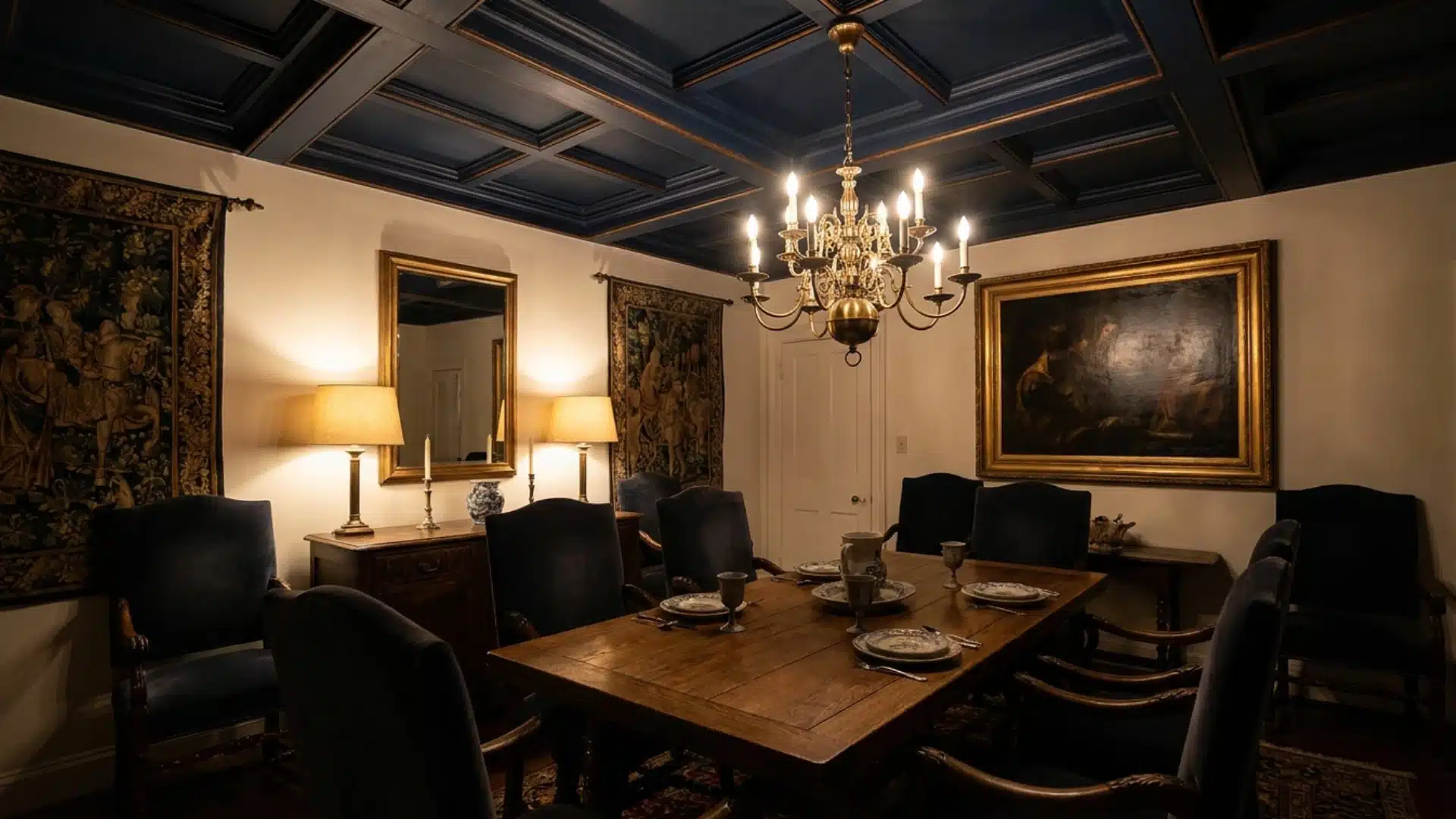
Navy, forest green, or charcoal painted across both beams and panels creates a dramatic, enveloping feel, especially striking in dining rooms and studies.
This approach works best paired with warm lighting and rich furnishings, since a fully dark ceiling can otherwise feel heavy without the right supporting elements around it.
5. Wood Beams With White Panels
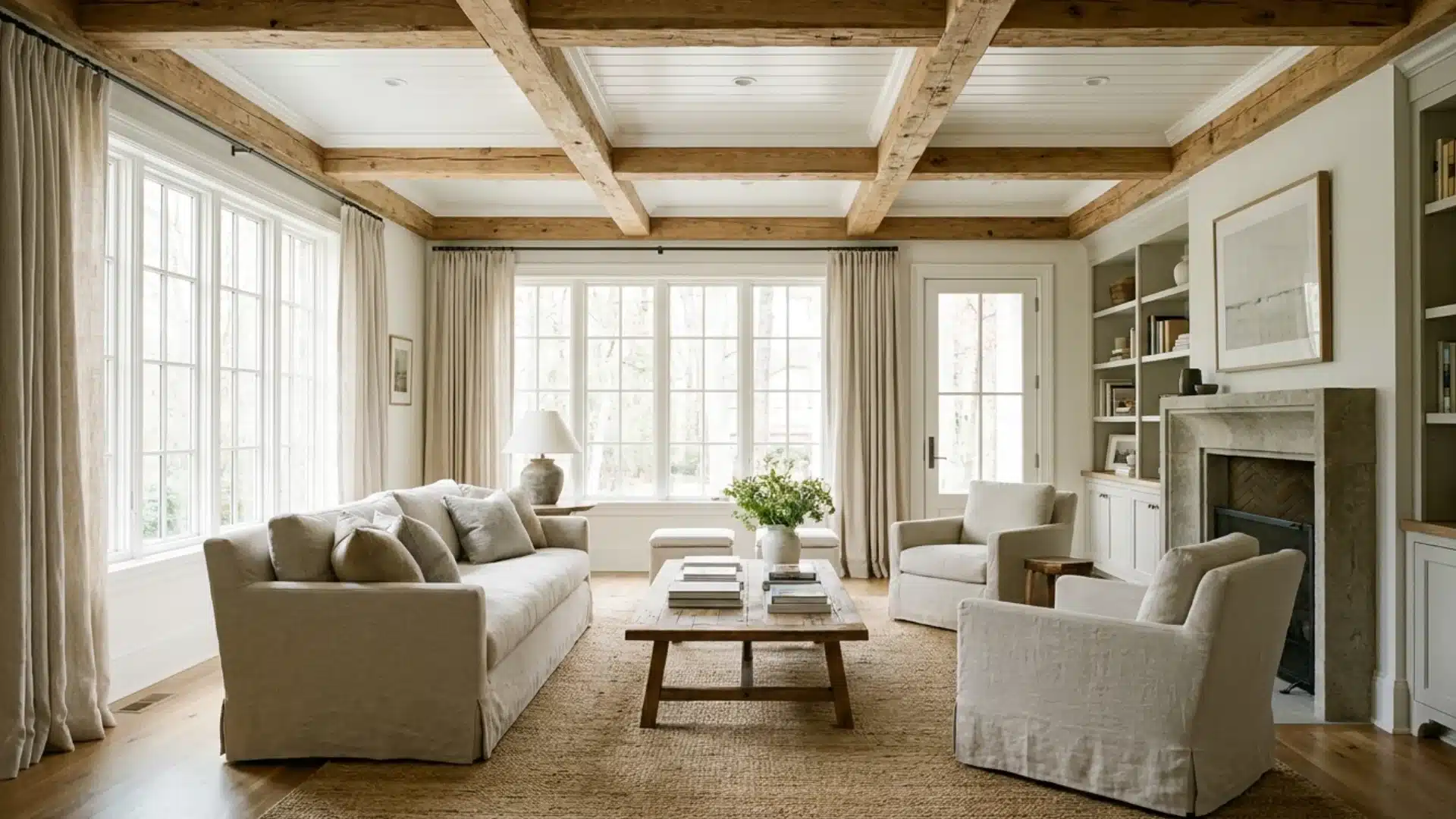
A classic pairing that balances warmth and brightness, letting the natural wood grain stand out against a crisp, neutral backdrop.
This combination works in nearly any home style, traditional, transitional, or modern farmhouse.
The contrast keeps the ceiling from feeling too heavy while still bringing genuine material texture into the space.
6. All-Wood Coffered Ceiling
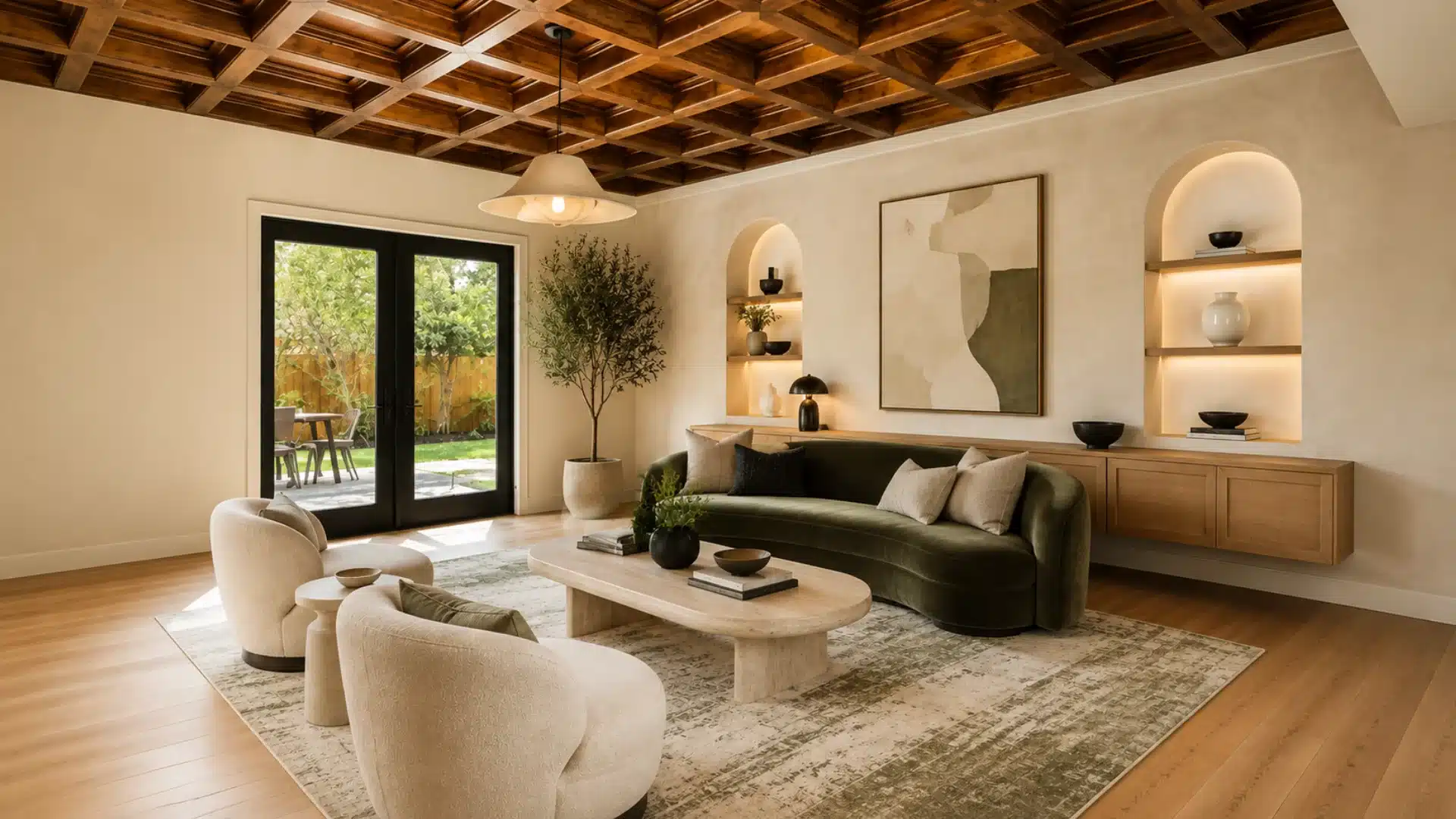
Stained wood throughout the entire grid creates a rich, traditional look that leans fully into natural material rather than paint.
This version tends to suit larger, more formal rooms best: libraries, studies, dining rooms, where the warmth and weight of solid wood feels intentional.
7. Light Oak Coffered Ceiling
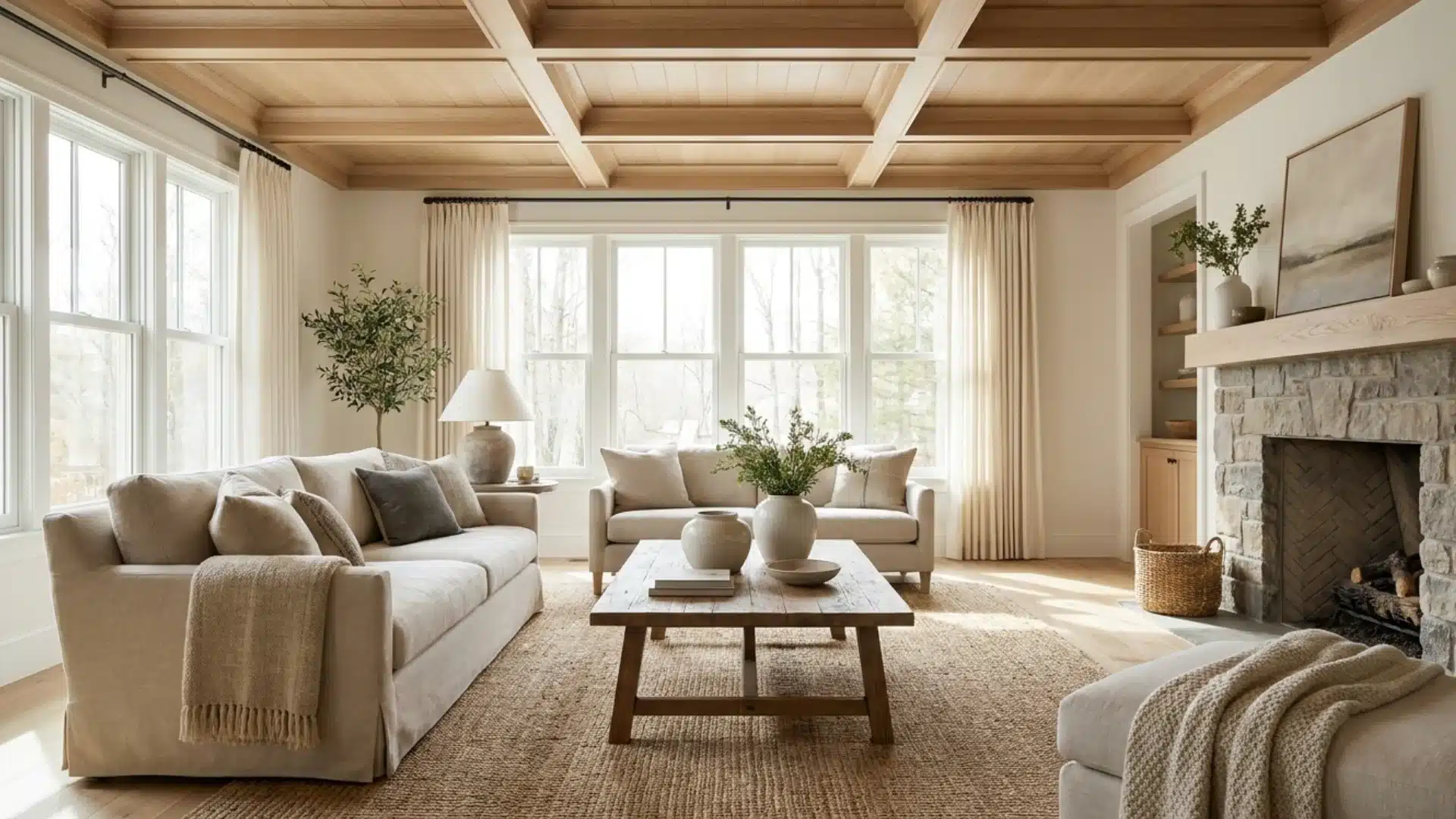
A softer, more contemporary take on wood tones that works especially well in Scandinavian or modern farmhouse interiors.
Light oak keeps the ceiling feeling bright and current rather than heavy or old-fashioned, offering the warmth of natural wood without the visual weight that darker stains typically bring into a room.
8. Reclaimed Wood Coffered Ceiling
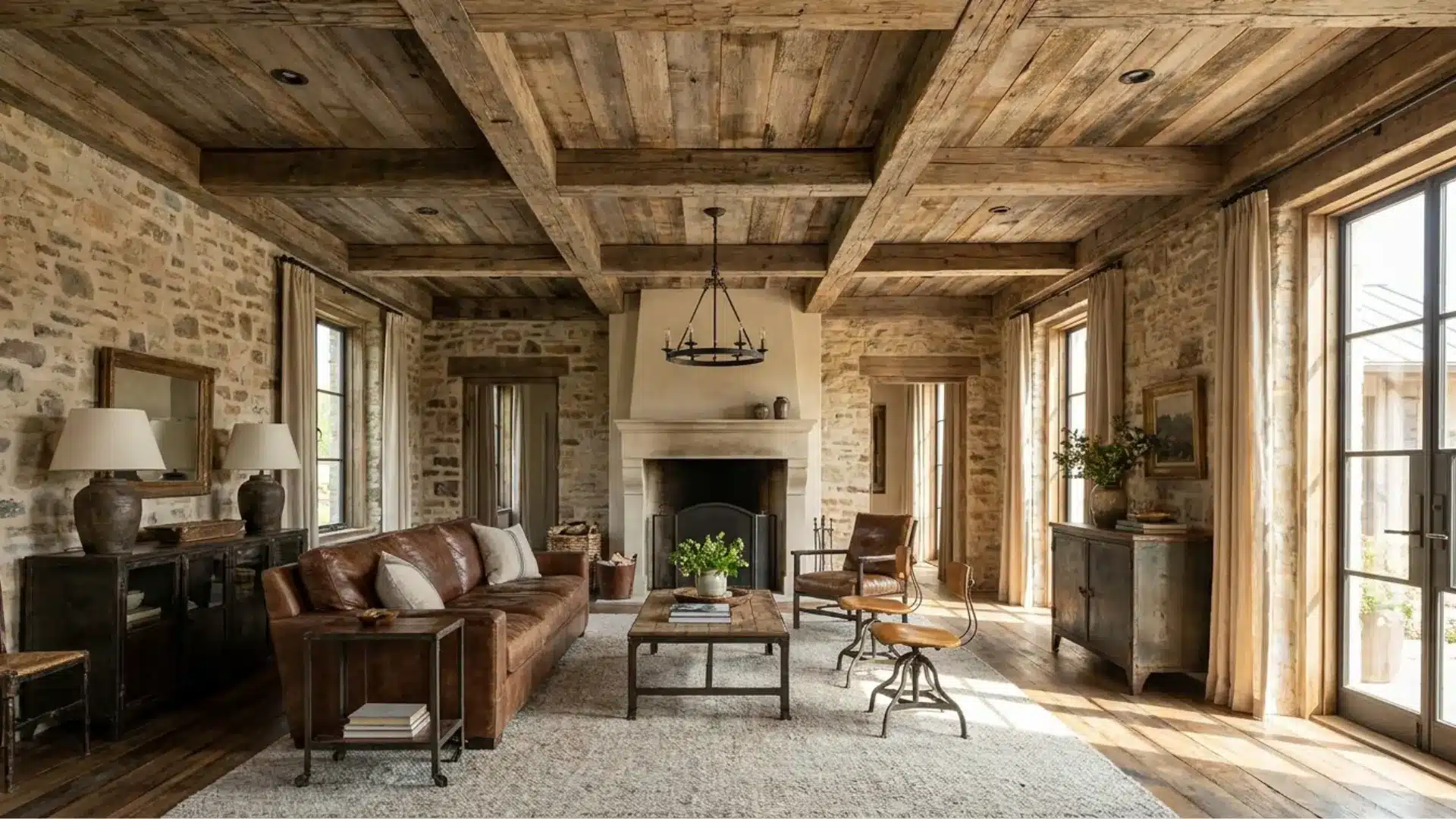
Weathered, characterful wood brings genuine age and texture to a ceiling, popular in rustic and industrial-leaning spaces.
Every beam carries its own imperfections and history, giving the room a sense of authenticity that new, uniform lumber simply can’t replicate, no matter how carefully it’s finished or stained afterward.
9. Subtle Two-Tone Neutral Scheme
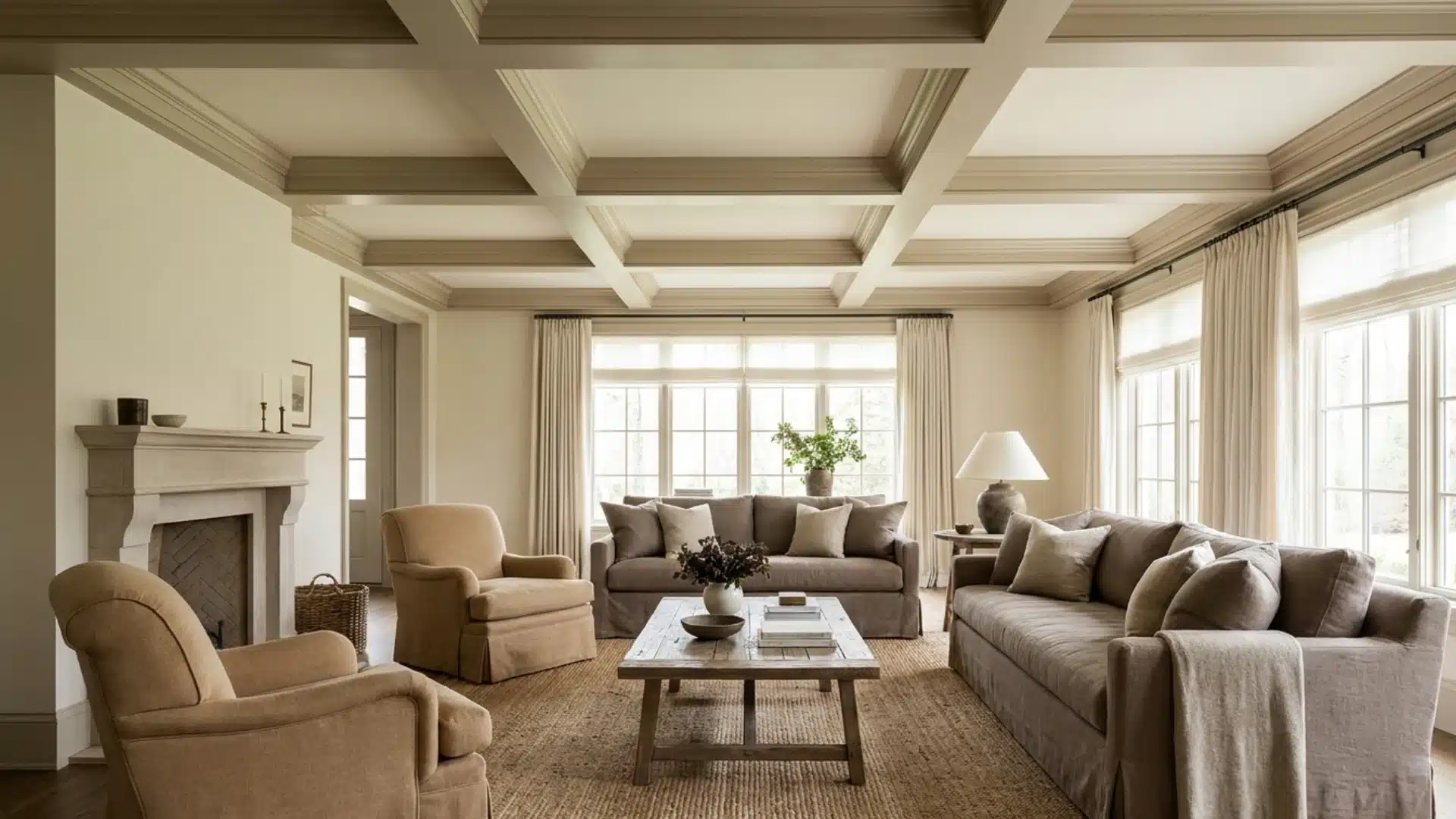
Slightly varied shades within the same neutral family, beige beams against ivory panels, for example, create dimension that still stays understated.
This approach adds depth without demanding attention, making it a safe, versatile choice for homeowners who want architectural interest without committing to anything too bold or attention-grabbing overhead.
10. Color-Drenched Ceiling and Walls
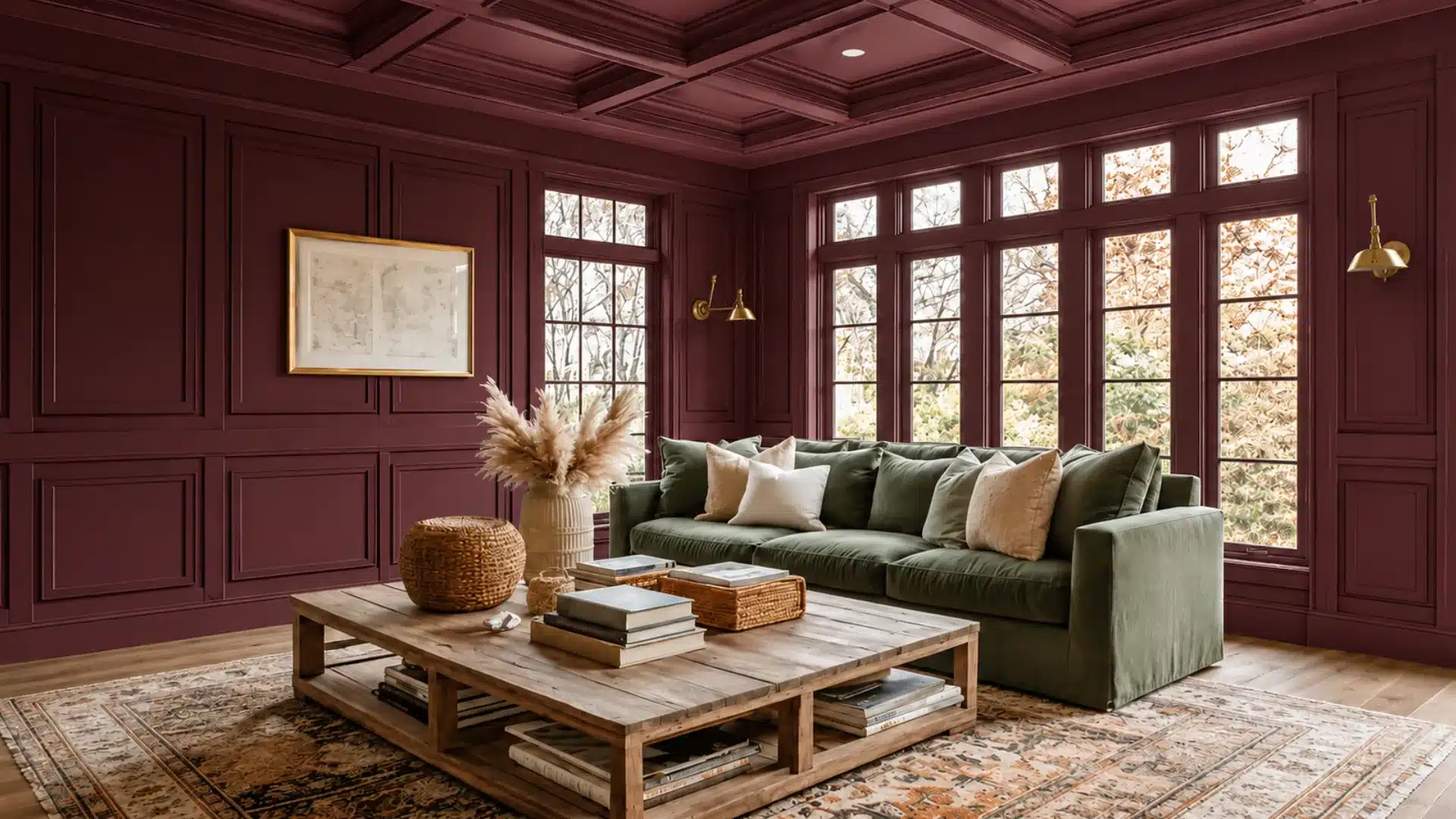
Painting the ceiling and walls in one continuous shade, coffers included, creates an immersive, cohesive look that removes the visual “stop” a ceiling color change usually creates.
This technique makes rooms feel enveloping and intentional, particularly effective in smaller spaces where blending surfaces can actually make the room feel larger.
Coffered Ceiling with Texture & Pattern
Wallpaper, wood grain, molding, and patterned panels can add depth and visual interest to a coffered ceiling.
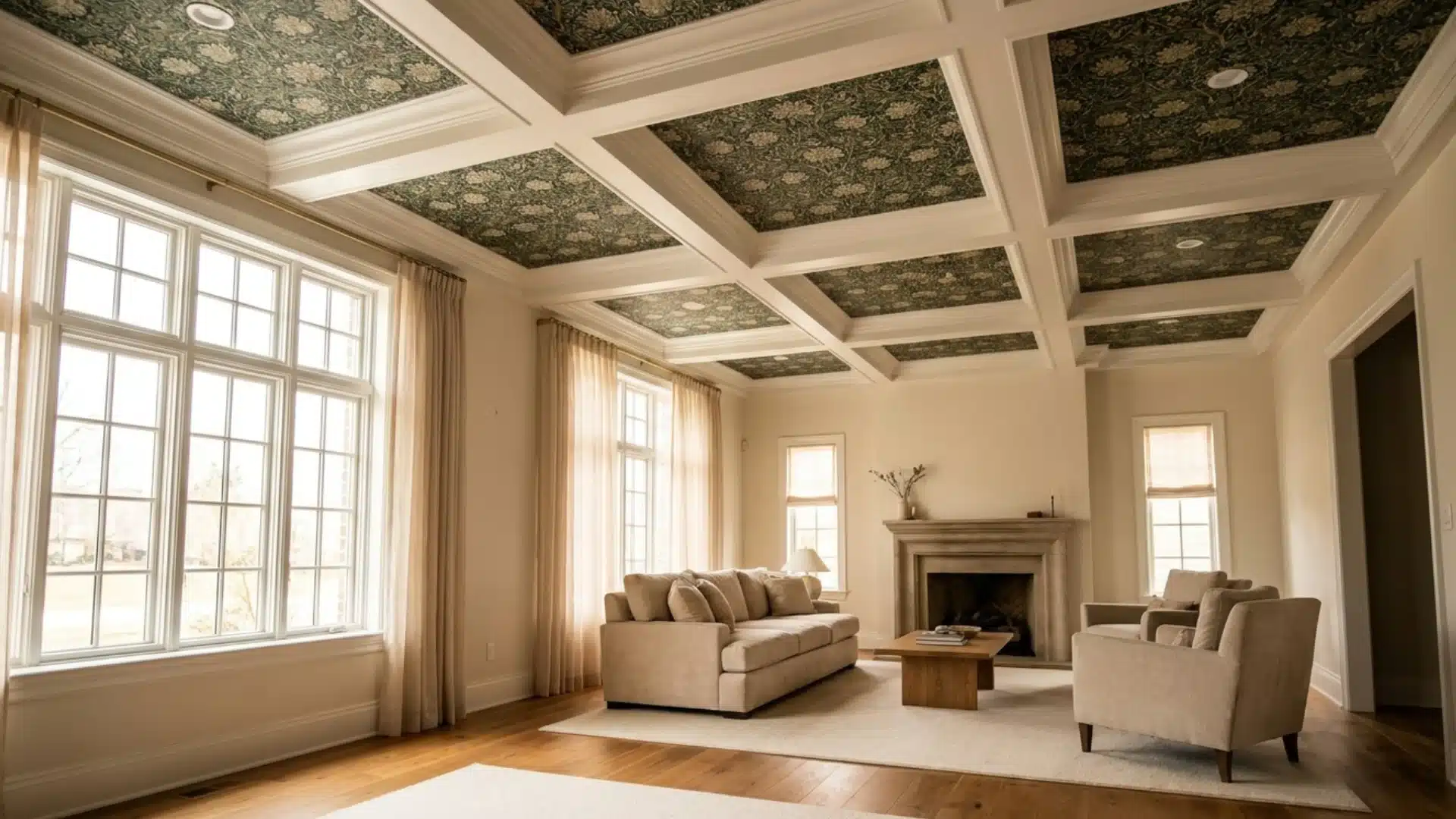
11. Wallpapered Coffer Insets
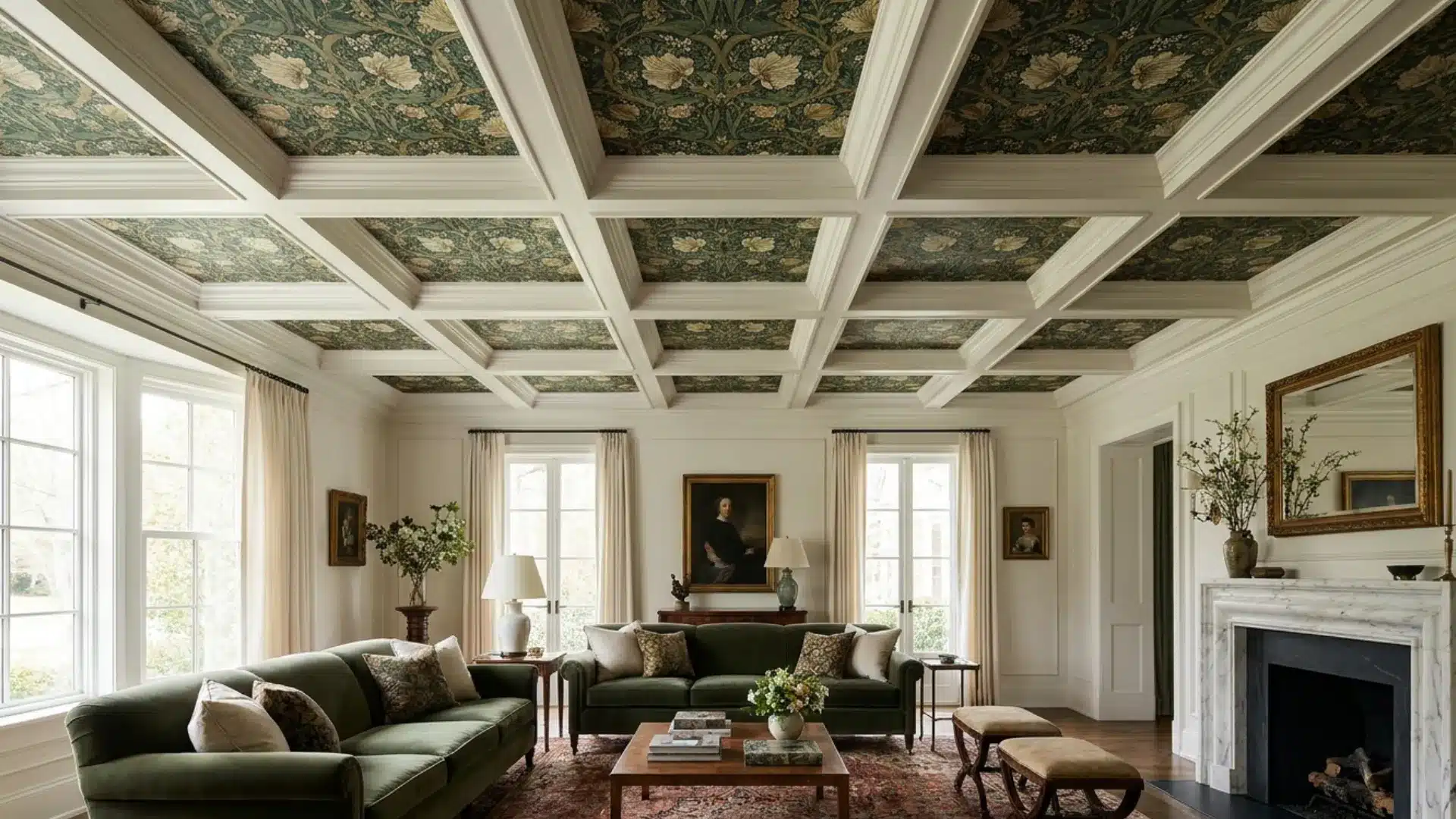
Grasscloth, metallic, geometric, or botanical wallpaper applied inside each panel adds pattern and texture without overwhelming the entire ceiling at once.
Since the wallpaper stays contained within each coffer, bordered by beams.
It reads as an intentional design choice rather than a busy, overwhelming print covering the whole surface.
12. Beadboard, Shiplap, or Wood Plank Panels
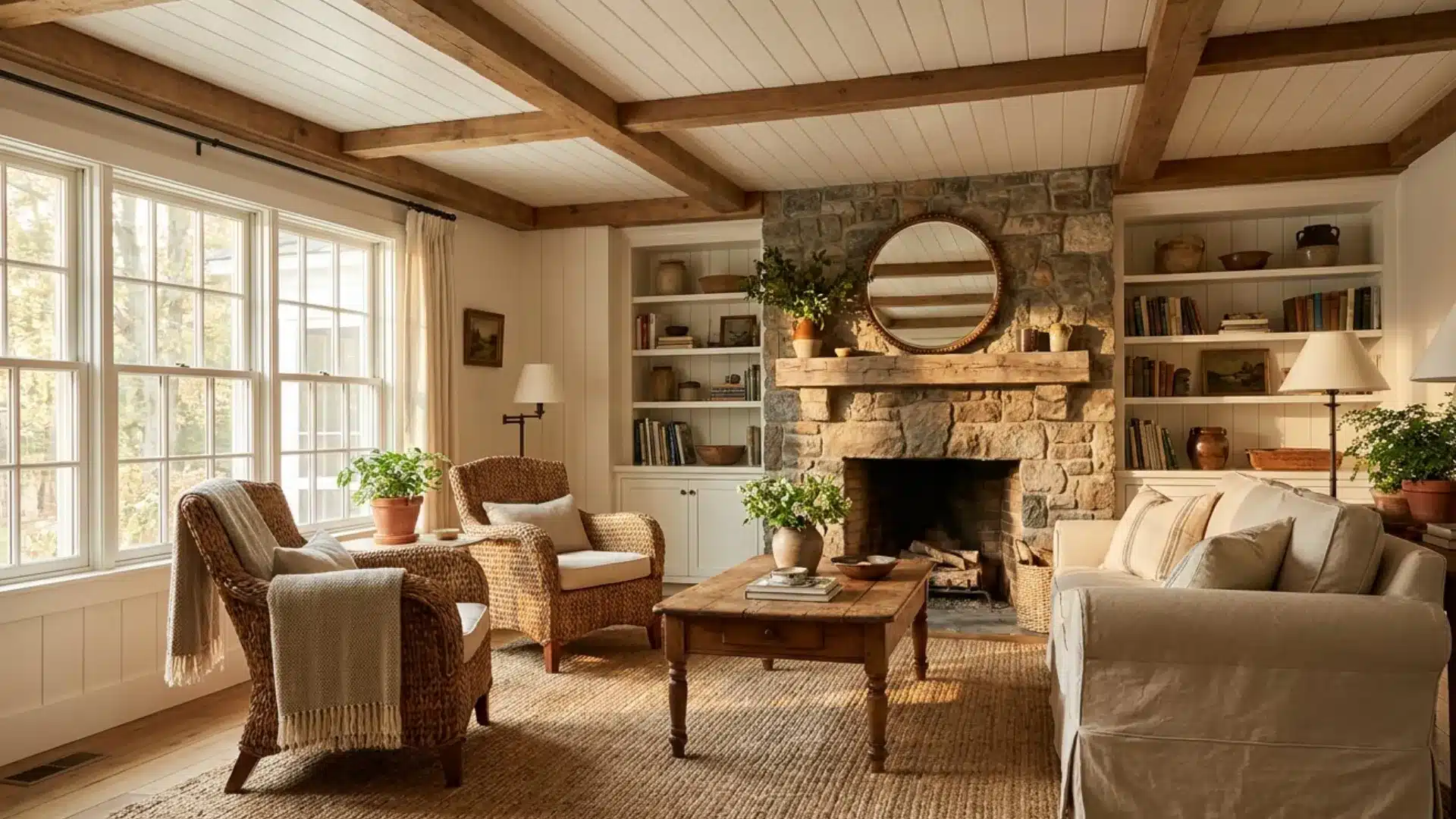
Lining the coffers with textured wood paneling brings a cottage or farmhouse feel that plain painted panels can’t quite replicate on their own.
The added texture catches light differently than a flat surface, giving the ceiling more visual richness while still keeping the overall grid structure clean and organized.
13. Traditional Decorative Molding
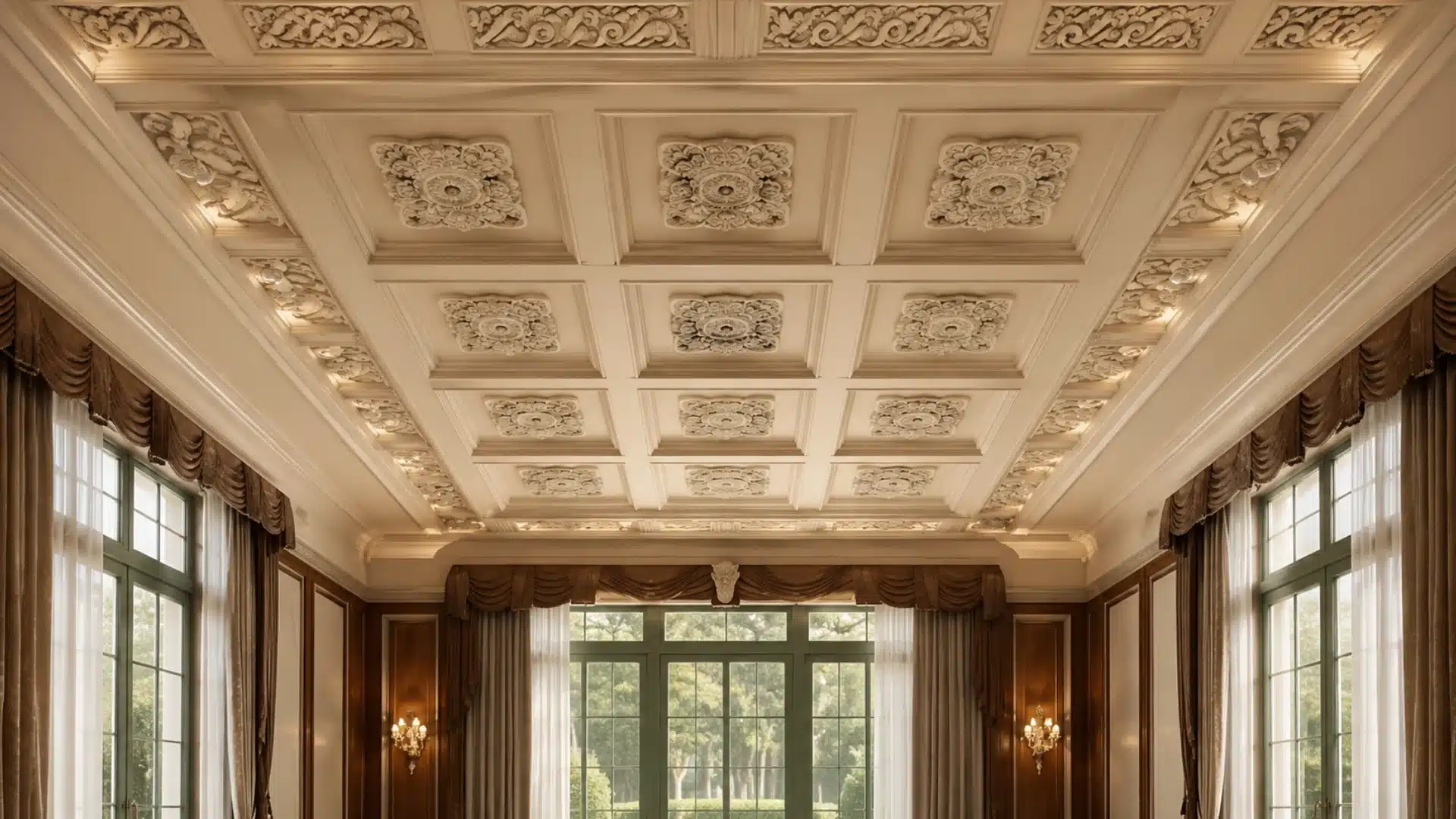
Crown molding, dentil trim, and other classic detailing dress up the grid for a more formal, historically inspired look overall.
This approach works particularly well in older homes or traditional-style interiors.
Where matching the ceiling’s detail level to existing trim elsewhere in the room creates a cohesive, well-considered finish.
Proportion and Layout Ideas for Coffered Ceilings
Grid dimensions, panel shapes, beam widths, ceiling height, and room size work together to create balanced proportions and a layout that feels naturally connected.
14. Shallow Coffers for Lower Ceilings
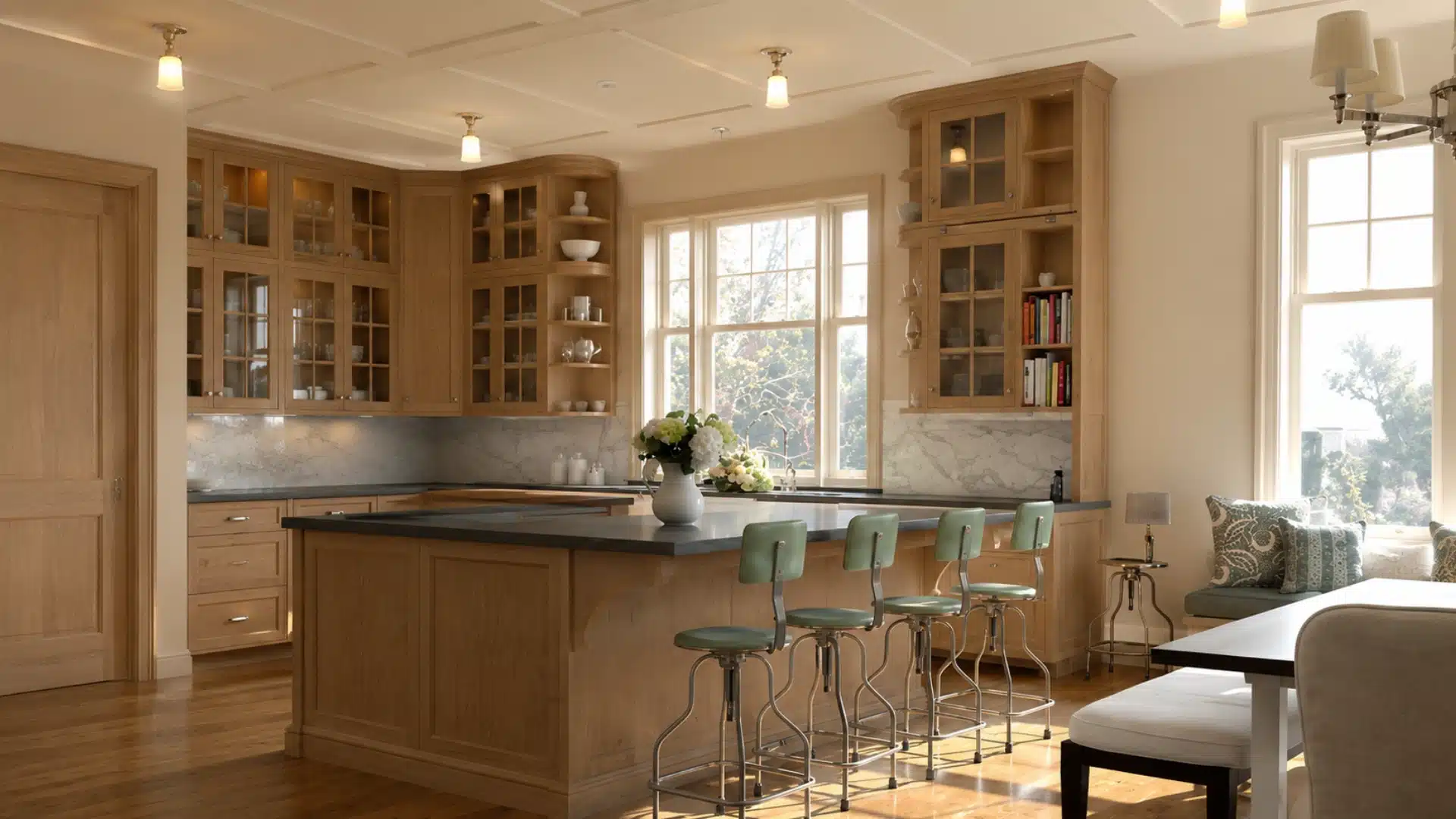
Minimal beam depth keeps the architectural detail intact without visually lowering a room that doesn’t have height to spare in the first place.
This approach lets homeowners with standard eight-foot ceilings still enjoy the coffered look, provided the beams stay slim, and the overall grid doesn’t feel too heavy overhead.
15. Deeper Beams for High Ceilings
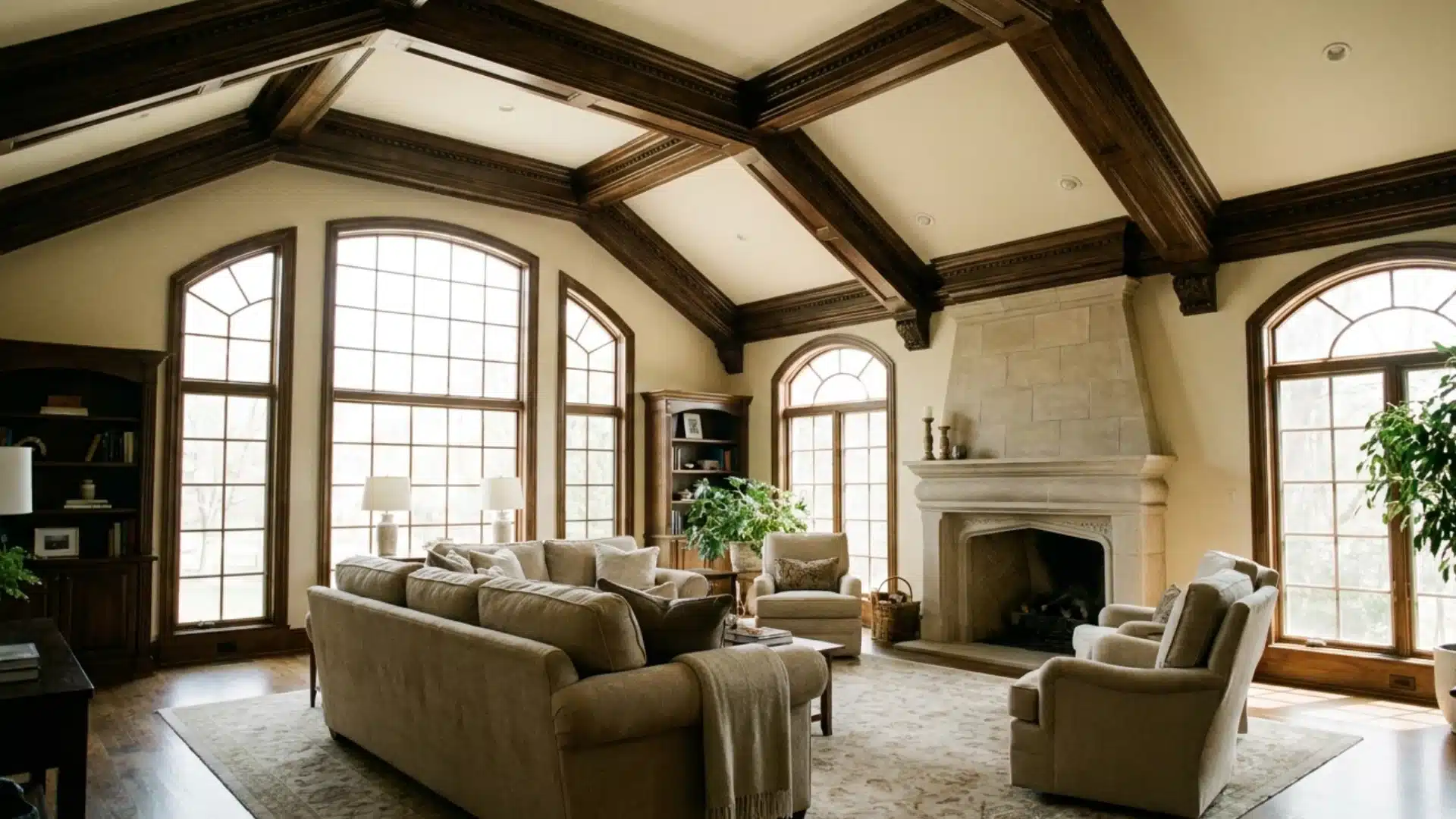
More substantial beam depth helps warm up a soaring ceiling that might otherwise feel cold or overly vast in scale.
Rooms with nine- or ten-foot ceilings can comfortably support this deeper, more dramatic profile, using the extra height to create genuine architectural presence rather than loo
16. Oversized Coffers for Open Floor Plans
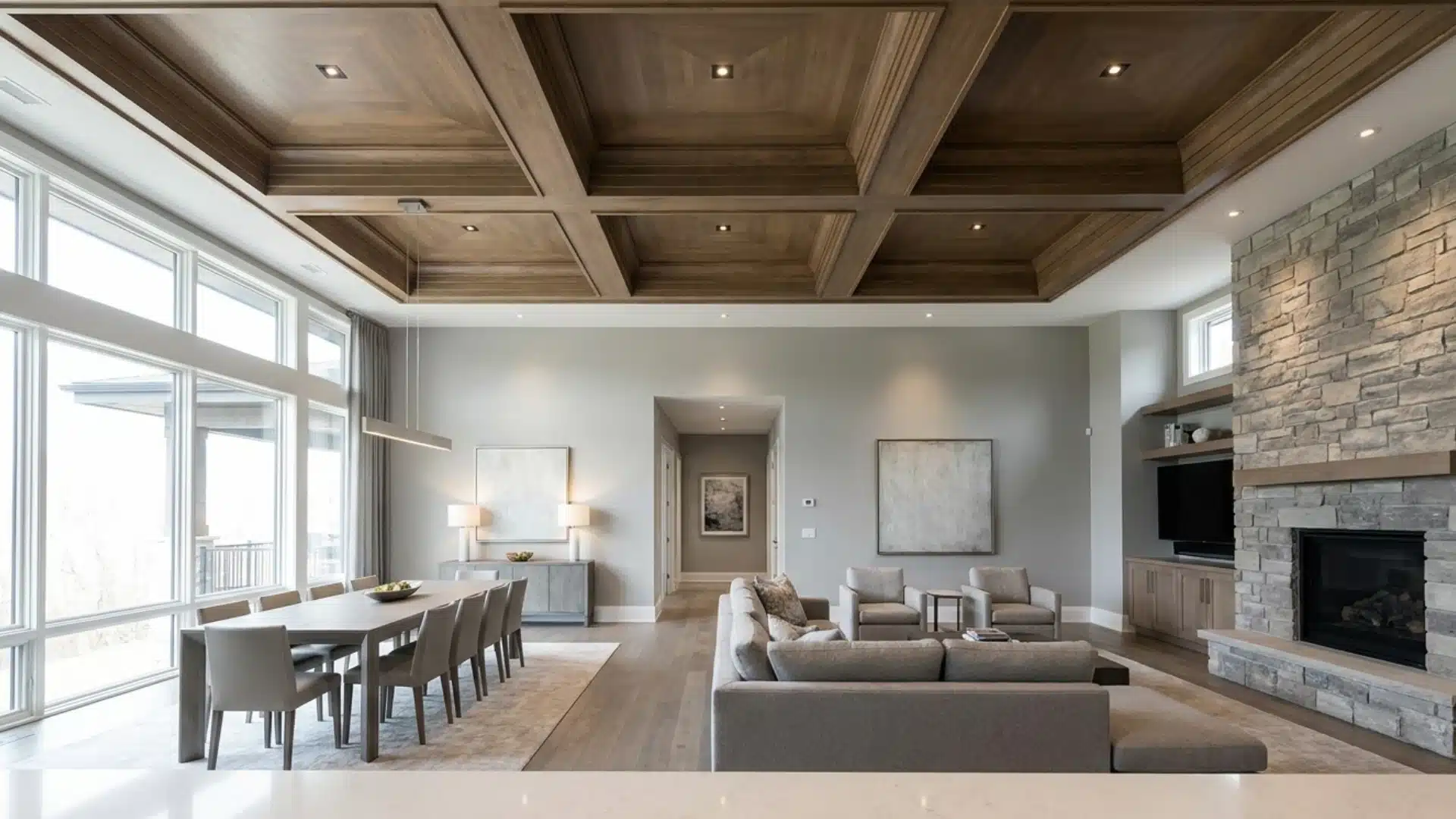
Larger panel sizes read proportionally correct in expansive, open-concept spaces where a tighter grid would look busy or cluttered from a distance.
Scaling the coffers up to match the room’s overall footprint keeps the ceiling feeling intentional rather than out of proportion with the wide-open floor plan beneath it.
17. Zone-Defining Coffered Sections
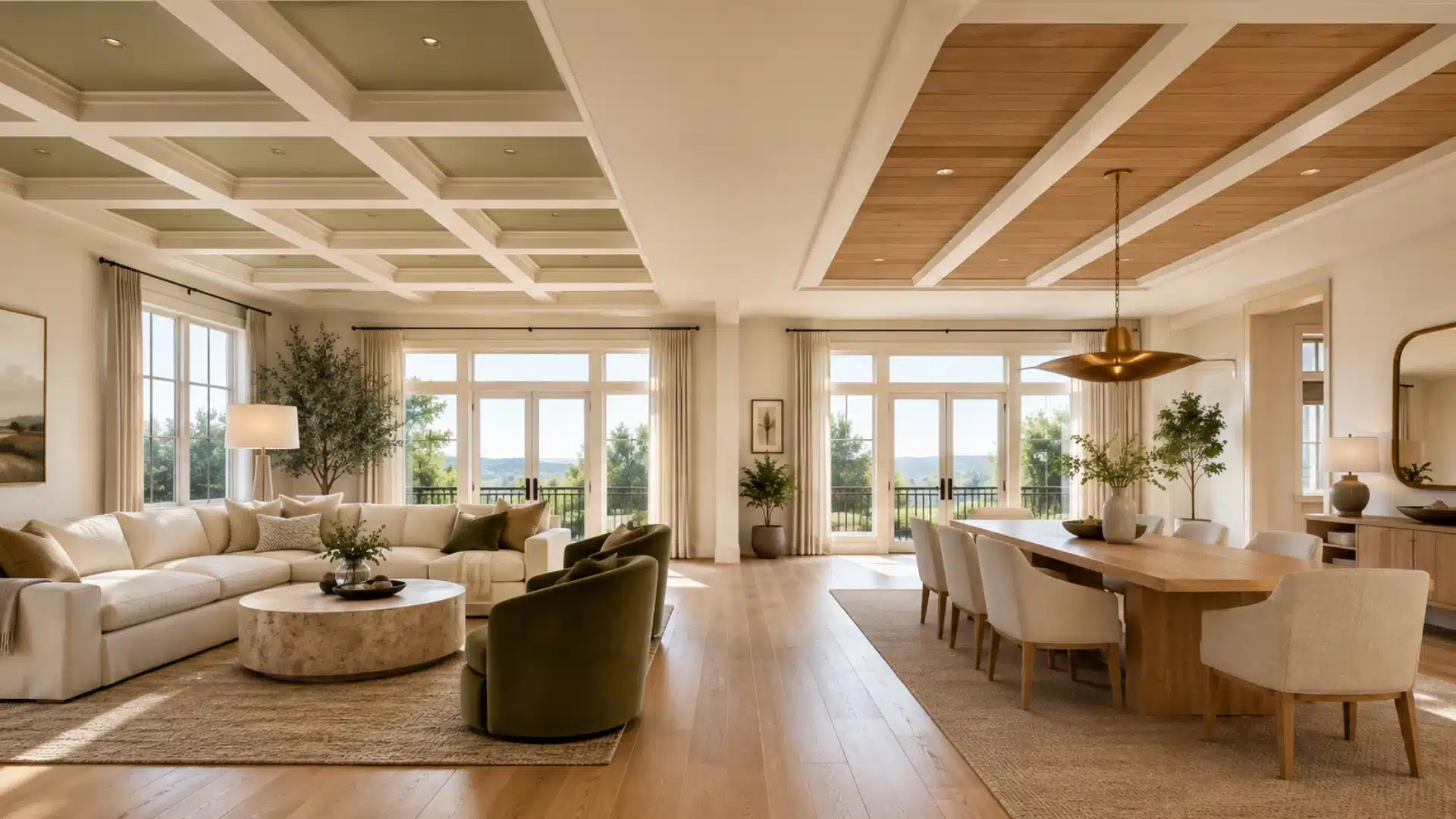
Using distinct coffered areas to visually separate a living space from a dining space within one open floor plan, without needing any actual walls.
This layout trick helps define separate rooms inside an open plan, giving each zone its own identity while keeping the overall space feeling connected and cohesive.
18. Elongated Rectangular Coffers
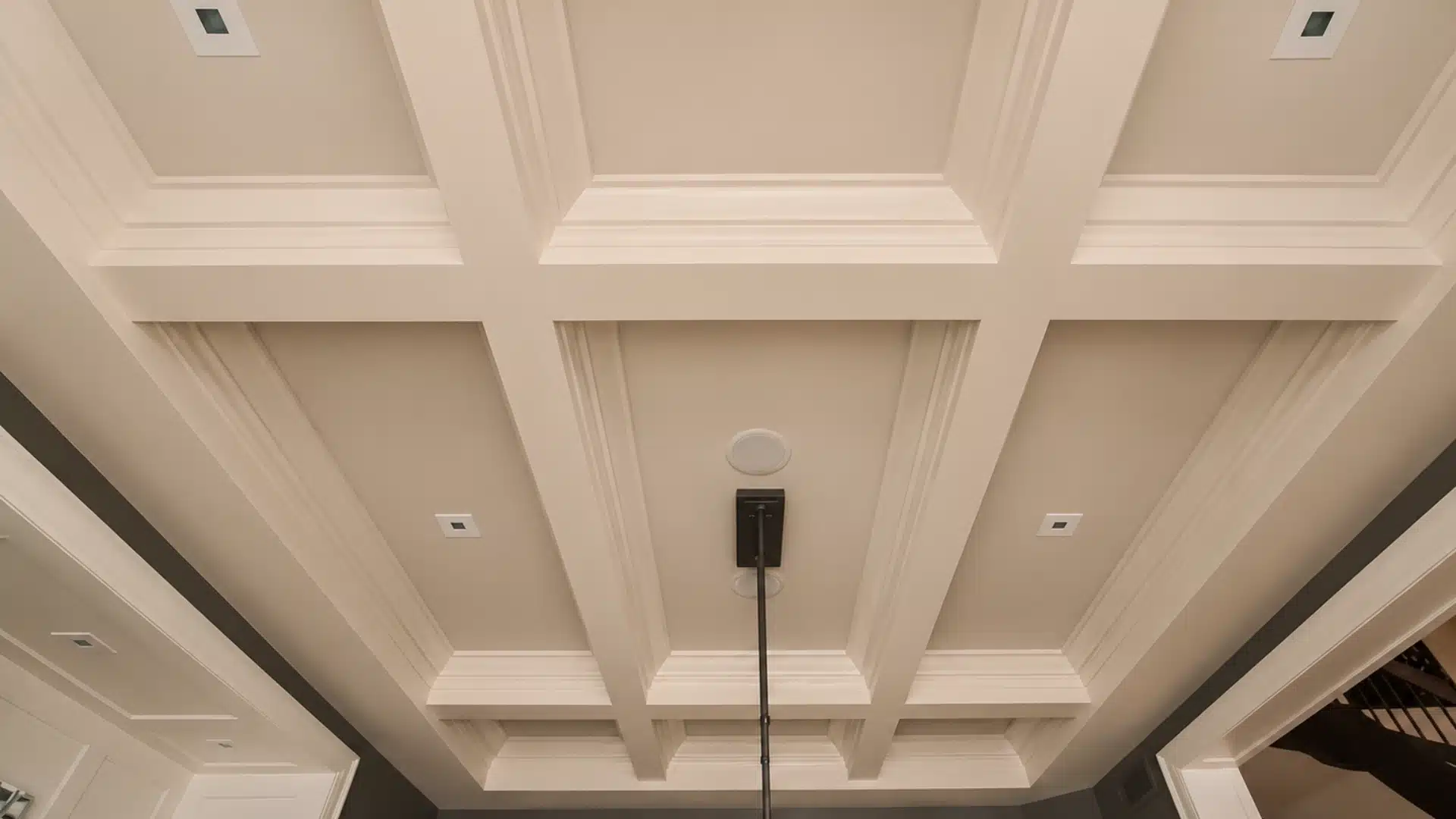
Panels stretched along a room’s longest dimension emphasize length and create a sense of visual flow from one end of the space to the other.
This layout works especially well in narrow rooms or hallways, where the elongated shape draws the eye forward instead of making the space feel cramped.
19. Diamond-Pattern Grid
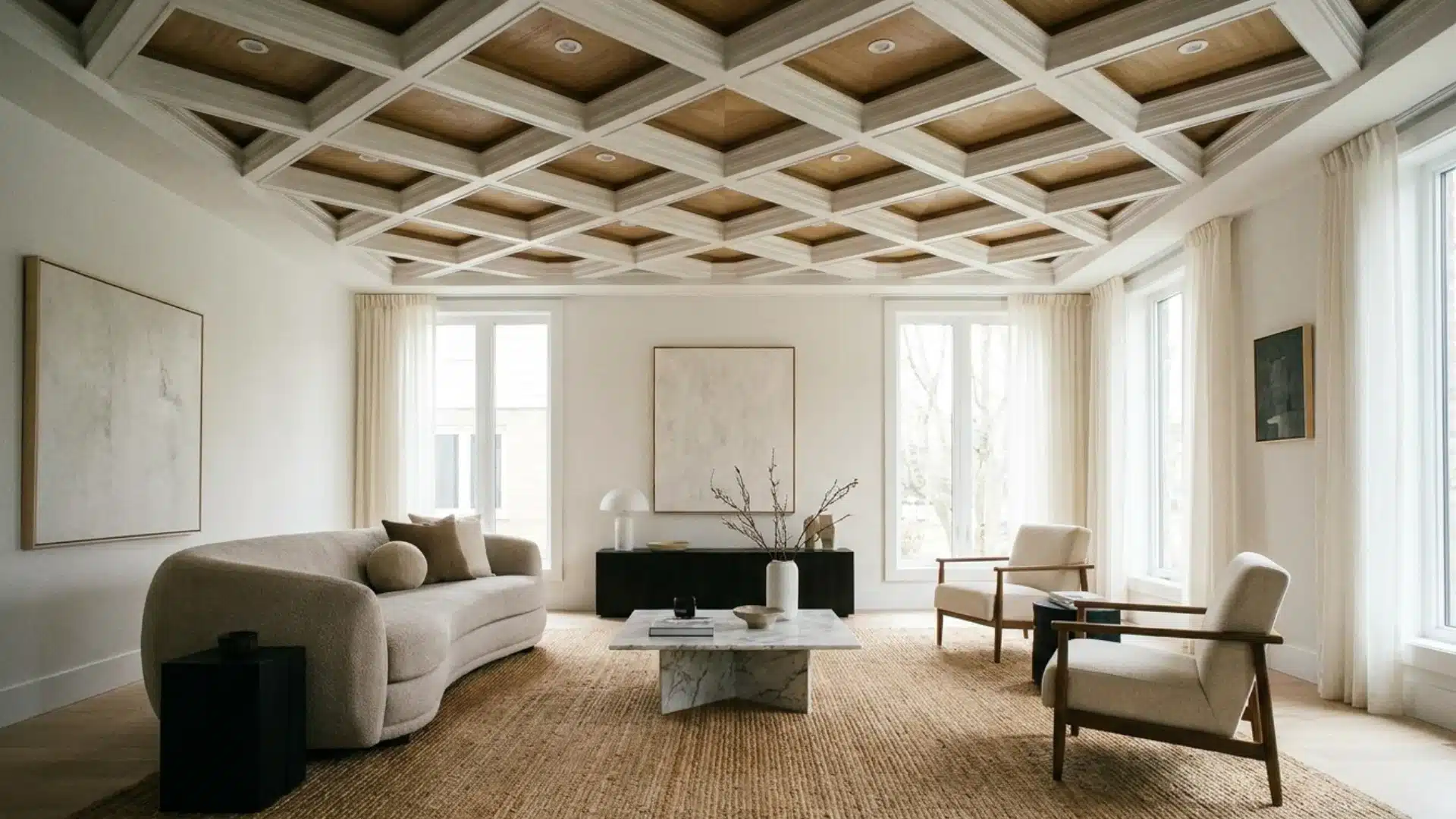
Rotating the standard grid into a diamond layout adds movement and a less predictable visual rhythm compared to a typical square or rectangular pattern.
This rotated approach gives an otherwise familiar coffered ceiling a fresh, more contemporary edge.
Especially effective in rooms where straight lines already dominate the furniture below.
20. Octagonal Coffers
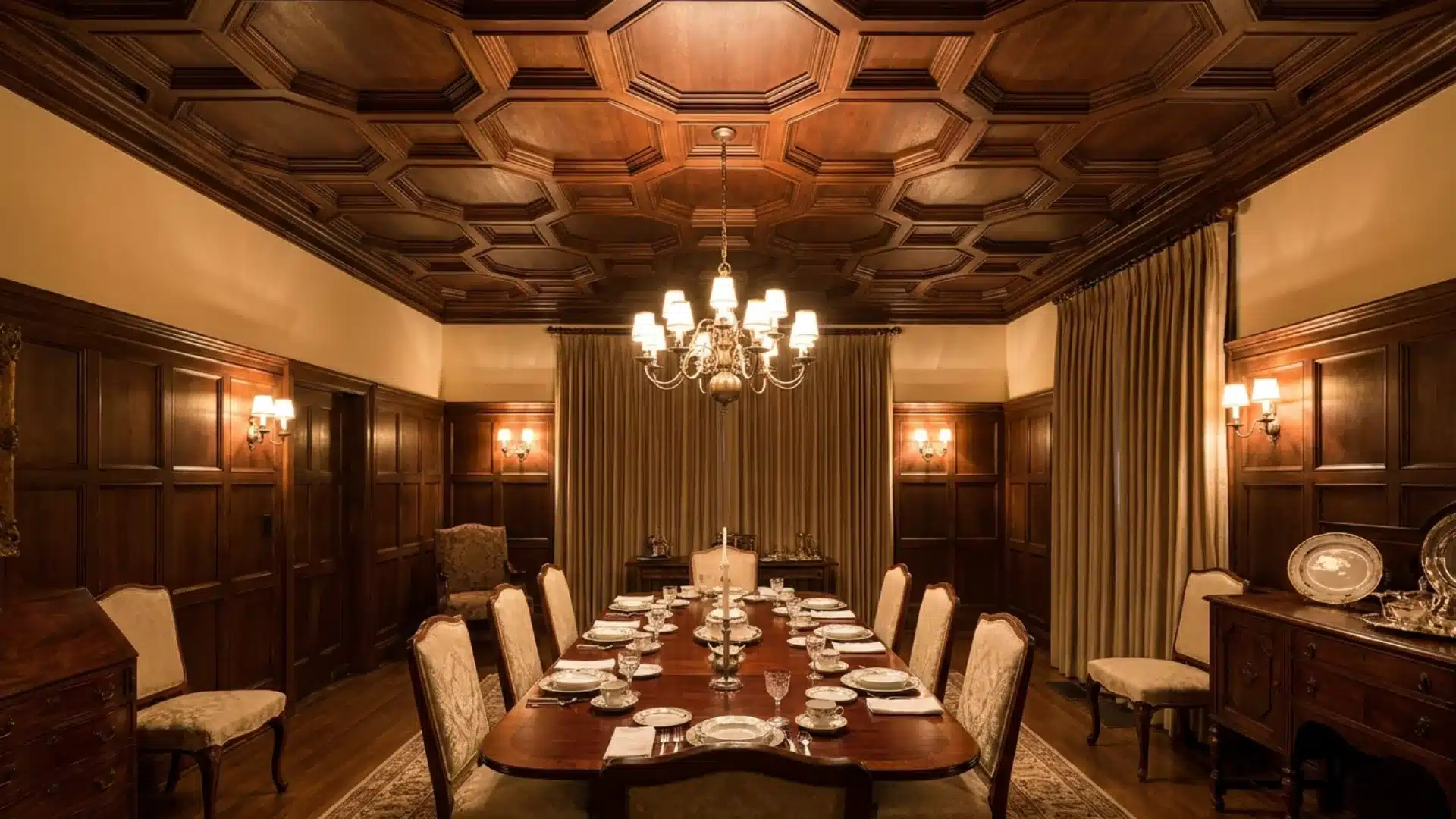
A traditional, formal shape that reads as more historic and ornate than a standard square or rectangular grid layout.
Octagonal coffers tend to suit grander, more classically styled rooms, formal dining rooms, or entryways.
Where the added geometric complexity feels appropriate rather than excessive for the space.
21. Mixed Geometric Shapes
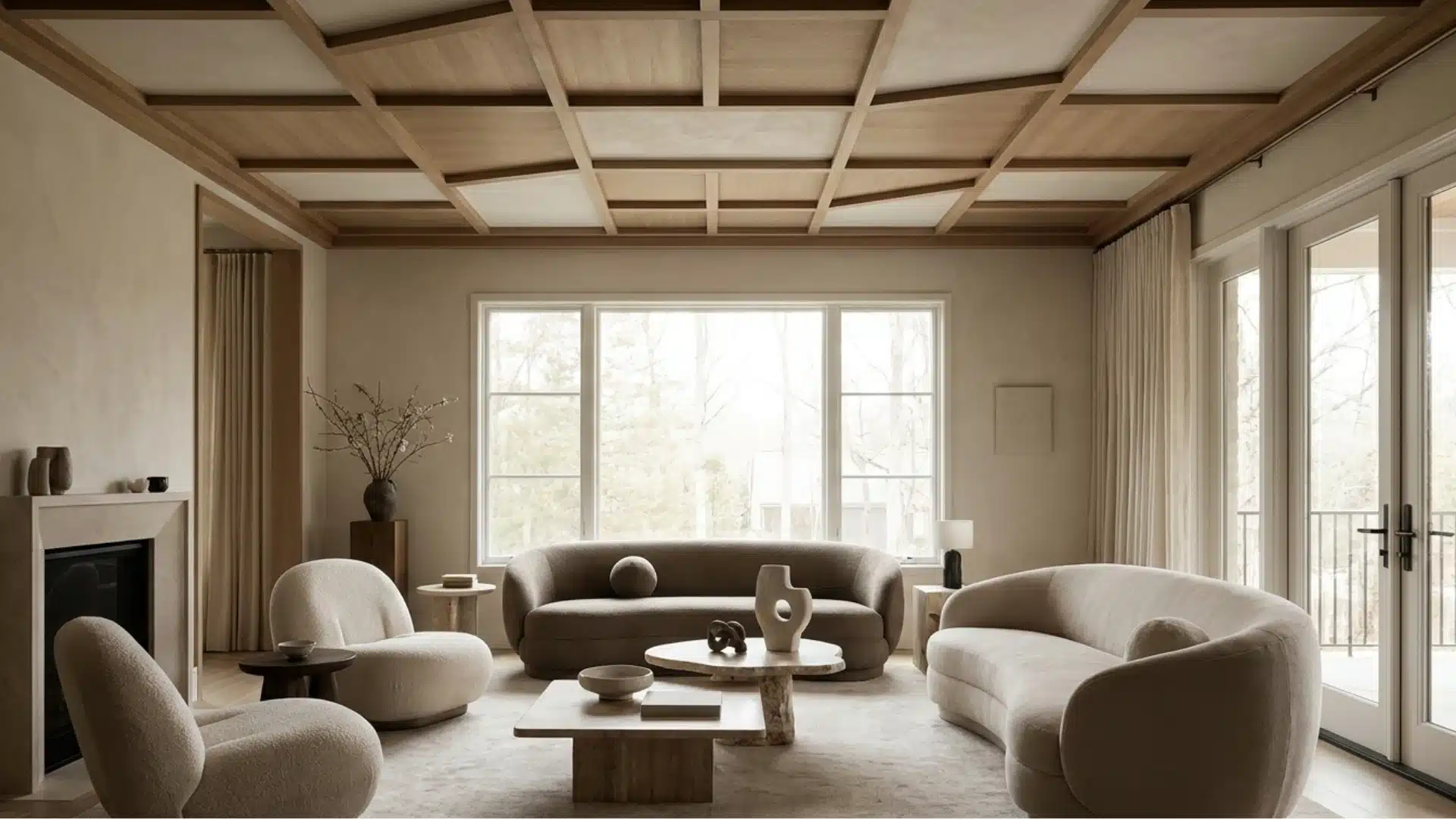
Combining squares, rectangles, and other shapes within one ceiling creates a custom, almost sculptural design that feels genuinely unique.
This approach requires more careful planning than a repeating grid.
But the payoff is a ceiling that feels bespoke rather than pulled from a standard, predictable template.
22. Grid Built Around a Central Feature
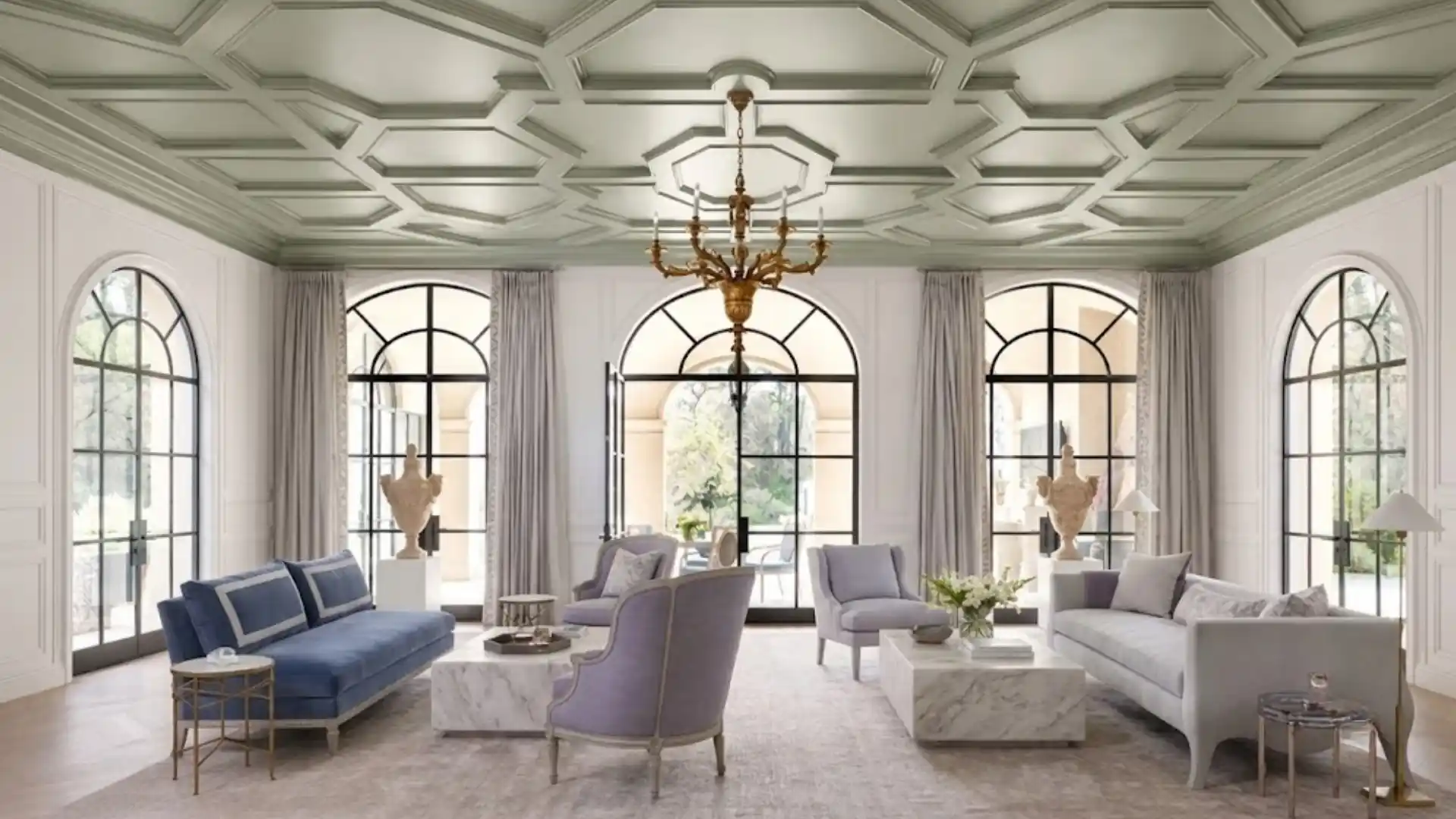
Designing the coffer layout to align directly with a chandelier, dining table, or fireplace below ties the whole room together intentionally.
This alignment signals that the ceiling wasn’t an afterthought; it was planned alongside the room’s other major elements from the very start of the design process.
Ceiling Lighting for Coffered Ceiling Designs
Lighting can turn a ceiling into a striking feature by combining recessed fixtures, hidden LED strips, and layered illumination that highlights every beam and panel beautifully.
23. Recessed Lighting Inside Coffers
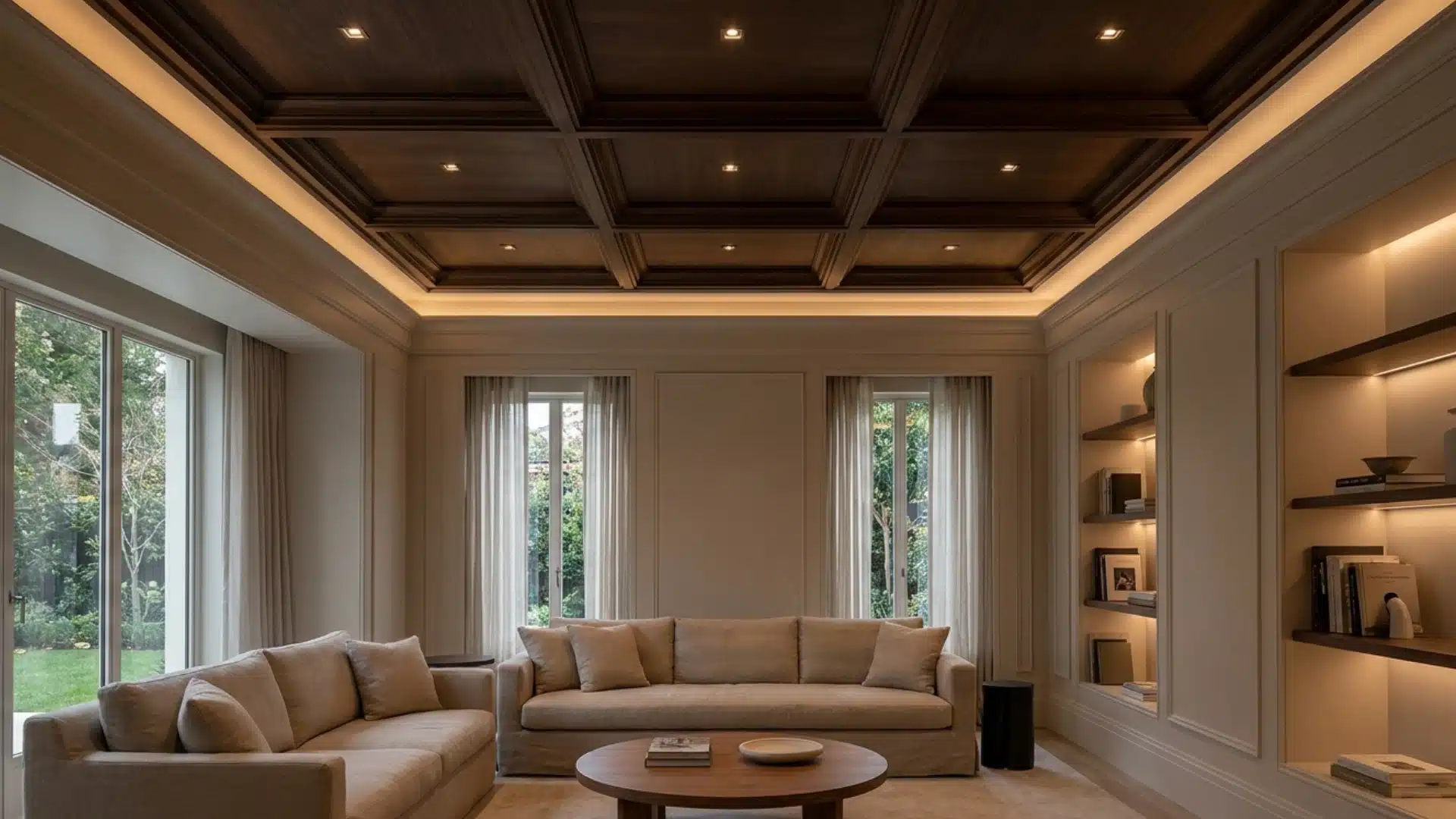
Small lights tucked into individual panels add subtle illumination without disrupting the ceiling’s clean architectural lines.
This approach works well for everyday ambient lighting, since the fixtures stay mostly hidden within the grid.
This approach lets the coffered structure itself remain the visual focus rather than the lighting fixtures.
24. Hidden LED Strip Lighting
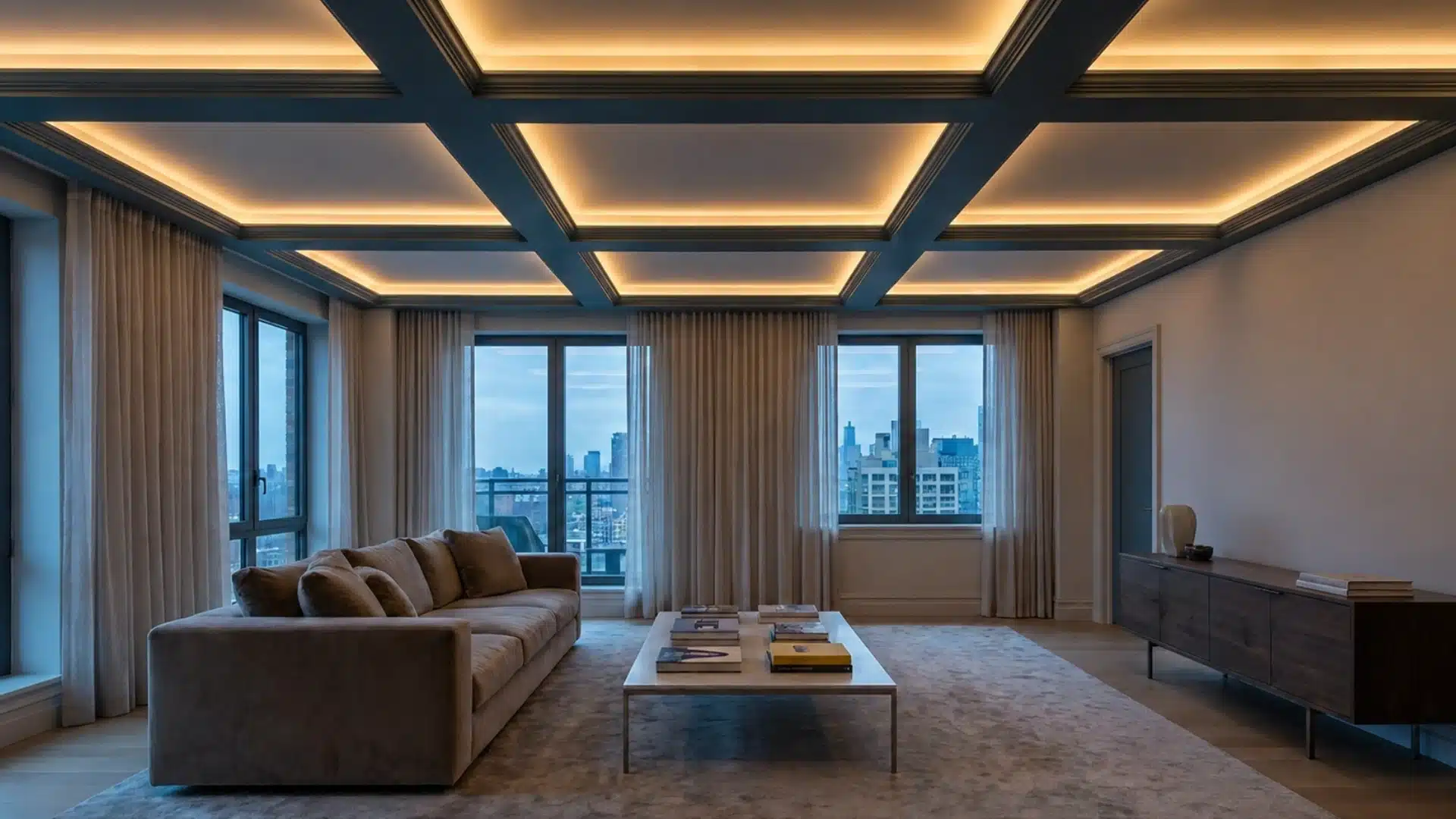
Concealed lighting along the beam edges creates a soft, floating glow that reads as distinctly modern and unexpected.
This technique makes the beams themselves appear to hover slightly.
Adding a subtle, almost architectural lighting effect that traditional recessed cans or surface-mounted fixtures simply can’t replicate on their own.
25. Centered Chandelier Aligned With the Grid
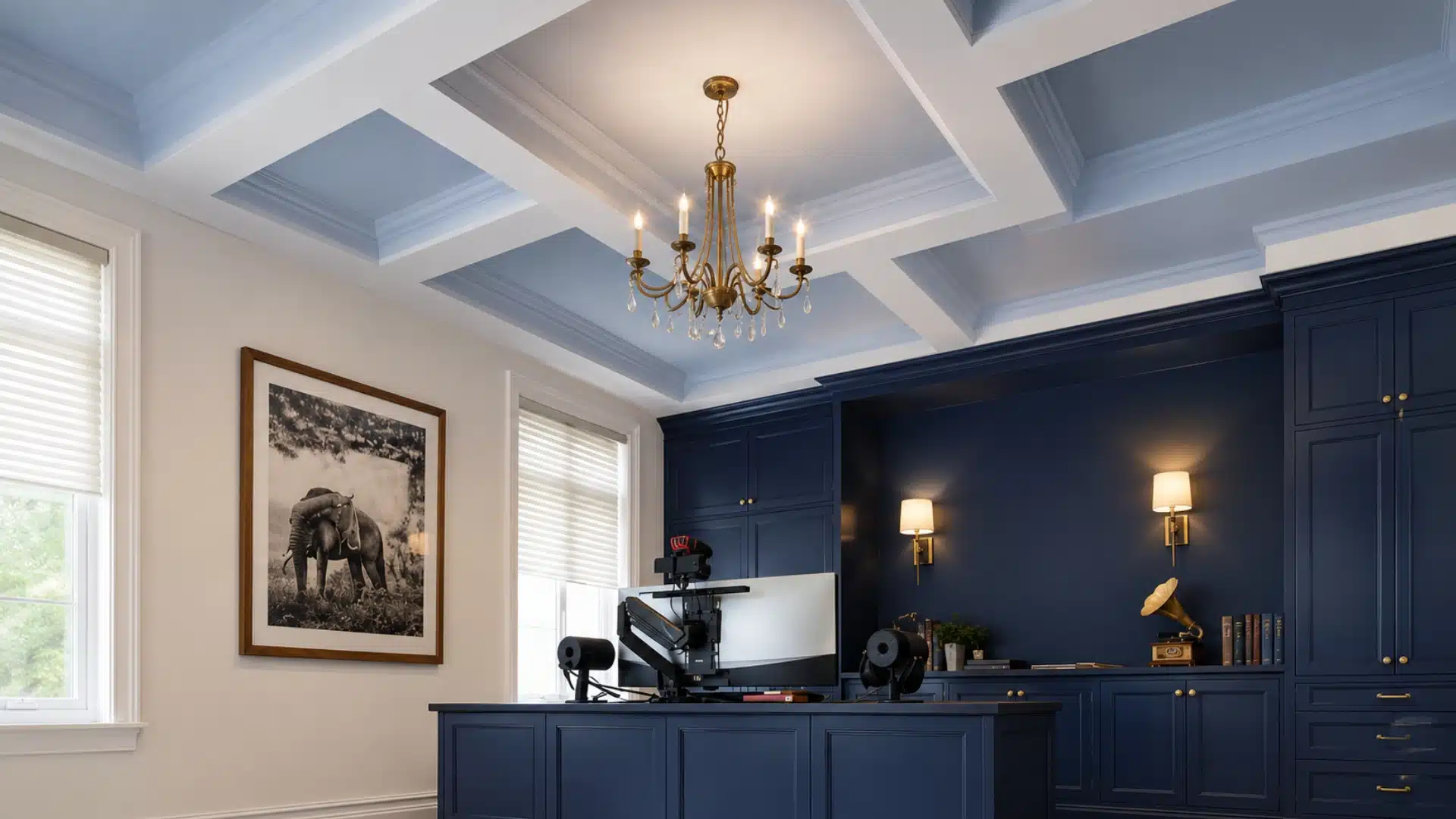
Positioning a chandelier to match the ceiling’s pattern reinforces the sense that everything above was planned together as one cohesive design.
This alignment turns the chandelier into a natural extension of the coffered grid itself, rather than a separate fixture simply hung somewhere in the middle of the room.
26. Matching Ceiling to Wall Millwork
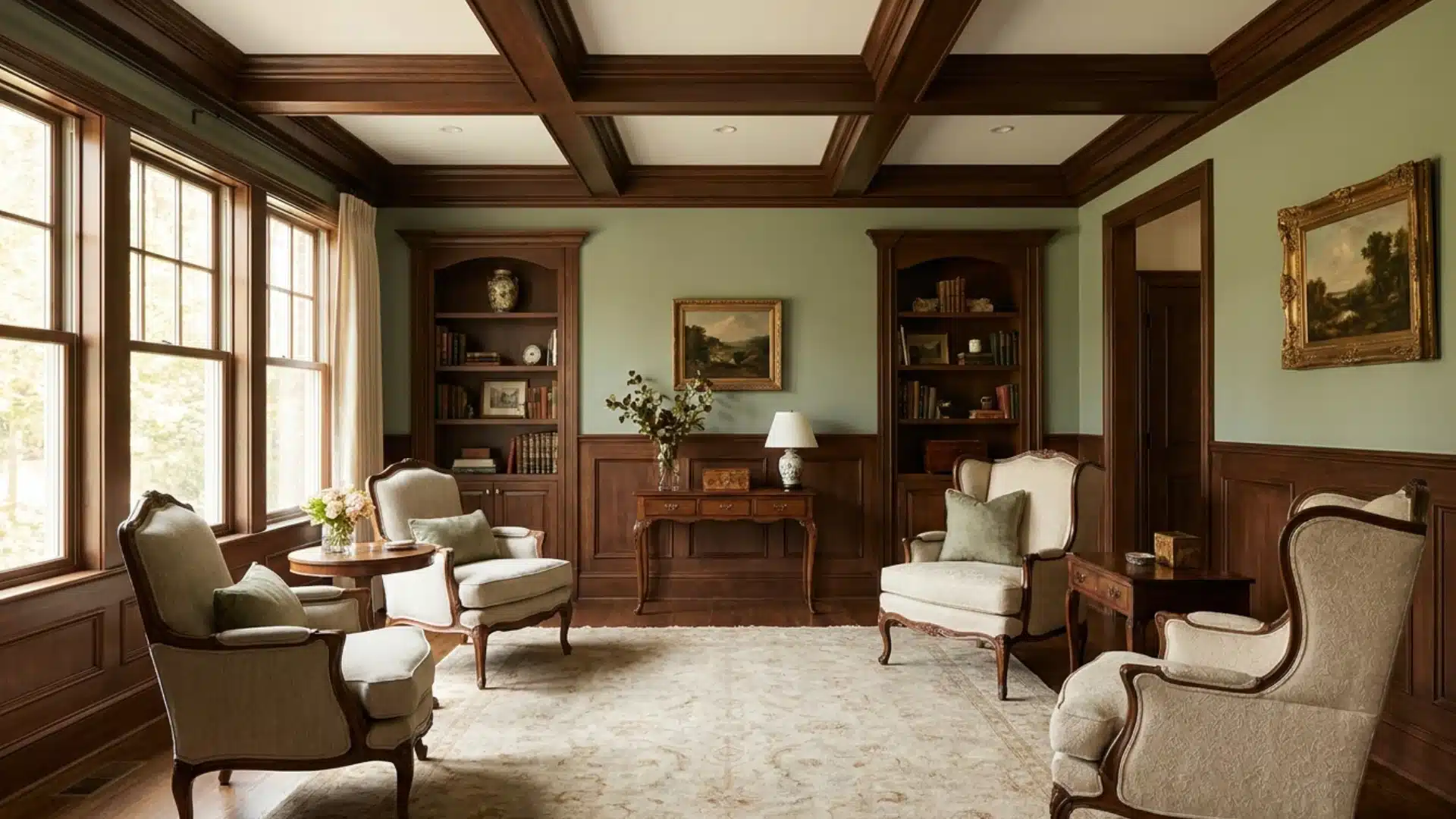
Coordinating the coffered ceiling with wainscoting, trim, or paneling on the walls creates a cohesive, fully considered look running from floor to ceiling.
This kind of continuity is one of the simplest interior design tips for tying a whole room together, rather than treating the ceiling as a separate, disconnected element.
27. Faux Beams for a Budget-Friendly Version
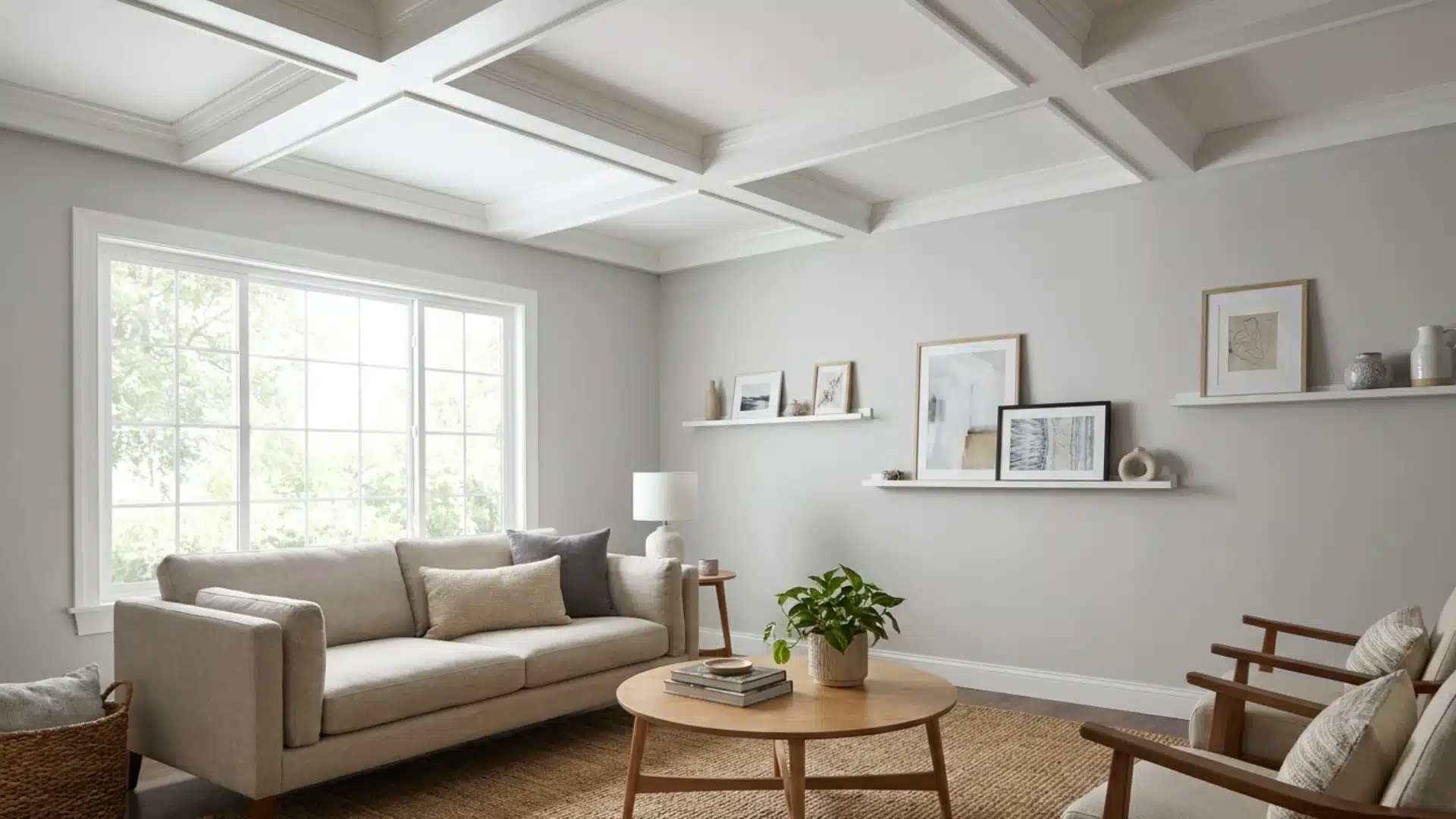
MDF, polyurethane, or painted lumber beams deliver the coffered look at a fraction of the cost and weight of solid wood construction.
This approach makes the style accessible to a much wider range of budgets, without sacrificing much of the visual impact solid wood beams would otherwise provide.
Best Coffered Ceiling Ideas for Different Rooms
A quick, room-by-room guide to which coffered ceiling style actually fits the space you’re working with.
| Room | Recommended Design | Design Consideration |
|---|---|---|
| Living Room | Large grid or central feature coffer | Align with fireplace and seating |
| Kitchen | Shallow, easy-to-clean coffers | Plan around cabinets, vents, pendants |
| Dining Room | Detailed molding or bold color | Center the grid above the table |
| Bedroom | Tonal paint, wallpaper, or light wood | Softer finishes, warm lighting |
| Home Office | Dark paint or natural wood | Consider acoustics and task lighting |
| Open Floor Plan | Oversized rectangular coffers | Use the grid to define zones |
| Basement | Shallow faux beams | Avoid crowding an already low ceiling |
Match the design to the room, not just your taste. Bolder in living rooms, shallower in kitchens, softer in bedrooms, lightest in basements.
Modern Coffered Ceiling Trends to Know
Coffered ceilings are moving toward cleaner lines, lighter finishes, and more varied materials.
These updates preserve the depth of traditional coffers while giving rooms a fresh, less formal appearance.
- Flush, minimal beams: The cleaner structure creates crisp shadow lines without making the ceiling feel heavy.
- Unconventional materials: Frosted glass, oxidized copper, and textured concrete bring new color and texture to coffered designs.
- Regional design influences: Urban penthouses often feature metallic beams and illuminated panels, while coastal homes favor whitewashed wood and soft, sea-inspired colors.
- Monochrome finishes: Applying the same warm white, soft beige, or muted pastel to the beams and panels creates subtle depth without adding visual clutter.
- Tone-on-tone combinations: Closely related shades distinguish the beams from the recessed panels while maintaining a calm and balanced appearance.
How Much Does a Coffered Ceiling Cost?
A coffered ceiling typically costs $10 to $40 per square foot installed, or roughly $1,500 to $6,000 for a standard 150-square-foot room.
| Material | Approximate Cost per Sq. Ft. |
|---|---|
| Drywall or plywood | $2-$3 |
| MDF or PVC | $2-$15 |
| Hollow poplar beams | $8-$15 |
| Solid hardwood (walnut, cherry) | Up to $30 |
Elaborate patterns, taller ceilings, and existing repairs all push costs higher; get a few local quotes for the most accurate number.
How to Maintain Your Coffered Ceiling?
Regular care helps a coffered ceiling retain its clean lines, rich finish, and structural condition.
Since beams and recessed panels collect more dust than flat ceilings, a few simple maintenance habits can prevent damage and reduce future repair work.
- Dust the beams and recesses: Use a microfiber duster or soft vacuum attachment every few months to remove dust from edges, corners, and decorative details.
- Check MDF and faux beams: Inspect the joints for small cracks or separation, especially in kitchens, bathrooms, and other humid rooms.
- Inspect solid wood beams: Look for warping, splitting, stains, or movement that could signal moisture or temperature problems.
- Refresh the finish: Repaint or restain the ceiling every few years when the color fades, peels, or loses its original appearance.
- Examine integrated lighting: Check fixtures, bulbs, and visible wiring periodically. Contact a qualified electrician if lights flicker or wiring appears damaged.
Conclusion
A coffered ceiling was never really about chasing a trend; it’s about giving a room a sense of depth and intention that a flat ceiling just can’t fake.
The right design comes down to matching the ceiling height, the room’s proportions, and the rest of your home’s bones.
Plan around your lighting and mechanicals early, and don’t be afraid to start smaller if the budget calls for it.
Which idea are you picturing in your own home? Save your favorites and start planning your ceiling today.
Frequently Asked Questions
Do Coffered Ceilings Make a Room Look Smaller?
Not necessarily. Shallow beams and lighter colors preserve a sense of height; it’s specifically deep, dark beams in a low-ceilinged room that are the ones that risk making a space feel smaller.
What is the Difference Between a Tray and Coffered Ceiling?
A tray ceiling features one single recessed section, usually centered in the room, while a coffered ceiling uses a repeating grid of multiple recessed panels framed by beams.
Are Coffered Ceilings Suitable for Kitchens?
Yes, though shallower coffers tend to work best there, since they’re easier to keep clean and won’t interfere with cabinets, vents, or pendant lighting placement.
Do Coffered Ceilings Improve Room Acoustics?
Yes, the recessed panel structure helps absorb sound and reduce echo, particularly useful in larger rooms with high ceilings and hard flooring.