
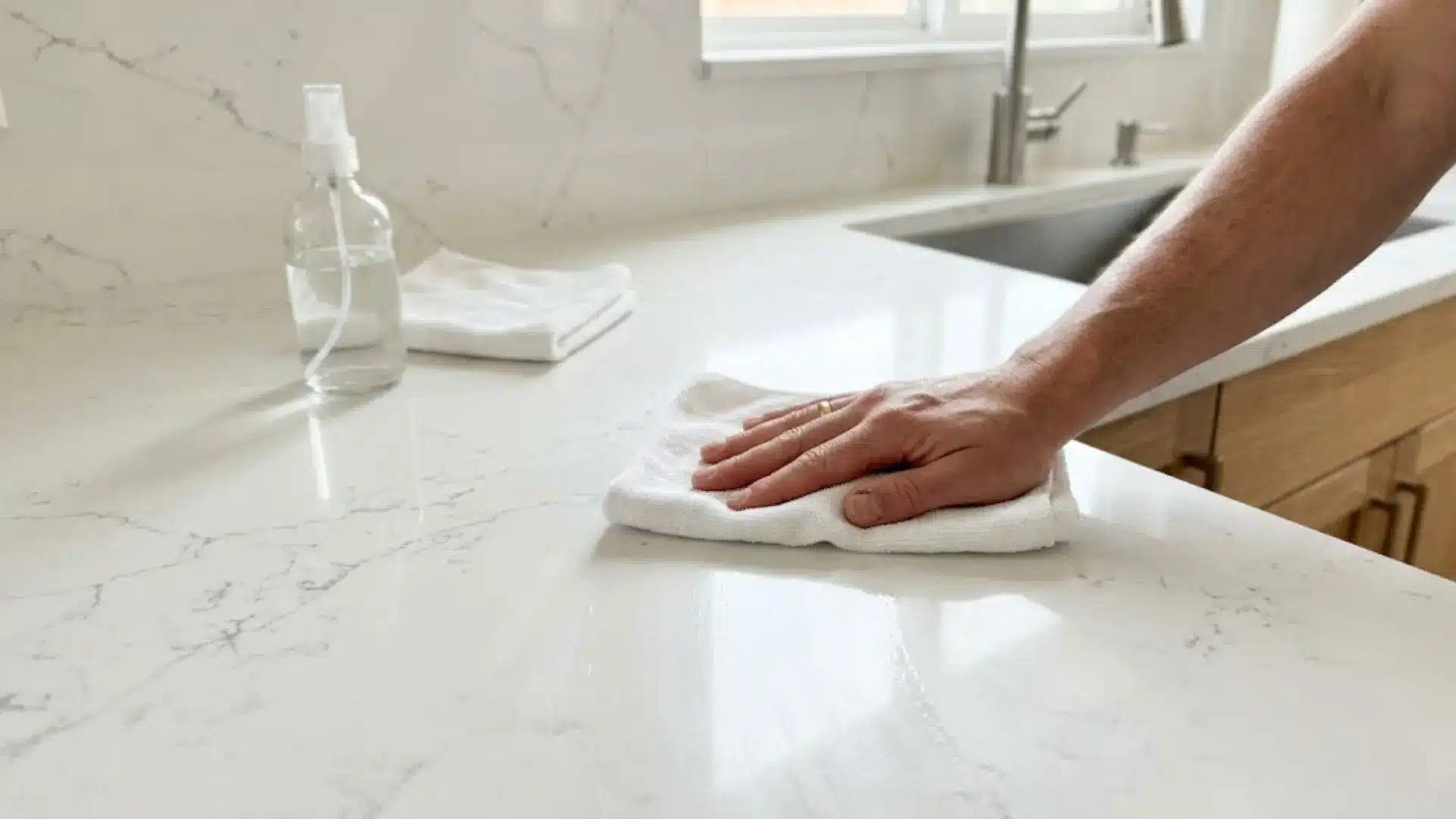
Quartz countertops can look spotless one moment and streaky the next. The good news is that keeping them clean does not require harsh products or complicated routines.
Grease spots and coffee rings show up on any counter. Quartz countertops handle daily use well, but they still need proper care.
Knowing how to clean quartz countertops keeps your kitchen looking neat. Grease, wine, and hard water spots build up over time. Harsh products can scratch the surface or leave dull patches behind.
Simple steps keep quartz clean without much extra effort. Soap, water, and a soft cloth handle most everyday spills. Daily wipes and occasional deep cleaning both help the surface last.
Small habits, done the right way, keep counters looking their best. Let’s look at easy ways to keep your quartz spotless.
What Makes Quartz Countertops Different?
Quartz countertops are not cut from natural rock like granite or marble. They are engineered surfaces made mostly from crushed quartz particles.
Manufacturers mix these particles with resins and pigments to form solid slabs. This process gives quartz a more even look across the countertop.
Natural stone often has different patterns and colors from slab to slab. Quartz tends to look similar from one piece to the next. The resin used in quartz also makes it nonporous.
Because it does not absorb liquids easily, quartz handles spills fairly well. This is one reason quartz needs a simpler care routine. Natural stone surfaces often need more frequent sealing and upkeep.
Supplies You Need Before You Start
Quartz does not require specialized equipment for routine cleaning. A few gentle tools and non-abrasive products are usually enough to remove everyday spills, grease, crumbs, and light residue without dulling or scratching the surface. Gathering the right supplies makes cleanup faster and safer:
| Supply | Estimated Cost Range |
|---|---|
| Mild dish soap | $3 to $6 |
| Warm water | No cost |
| Microfiber cloth | $5 to $10 for a pack |
| Soft, non-abrasive sponge | $2 to $5 |
| Spray bottle | $3 to $7 |
| Plastic scraper or putty knife | $4 to $8 |
| Quartz-safe surface cleaner | $8 to $15 |
| Clean, dry towel | $5 to $12 |
Keep these supplies together so spills can be handled quickly. Always check product labels and manufacturer instructions before using a new cleaner across the entire countertop.
Note: These are estimated cost ranges and may vary based on brand, retailer, location, and package size, so actual prices could differ slightly.
How to Clean Quartz Countertops for Different Needs
Quartz countertops need different cleaning methods based on the mess, how long it sat, and the surface finish. Here is the best way to clean quartz countertops without dulling, weakening resin, or streaking:
1. Daily Cleaning for Crumbs and Spills
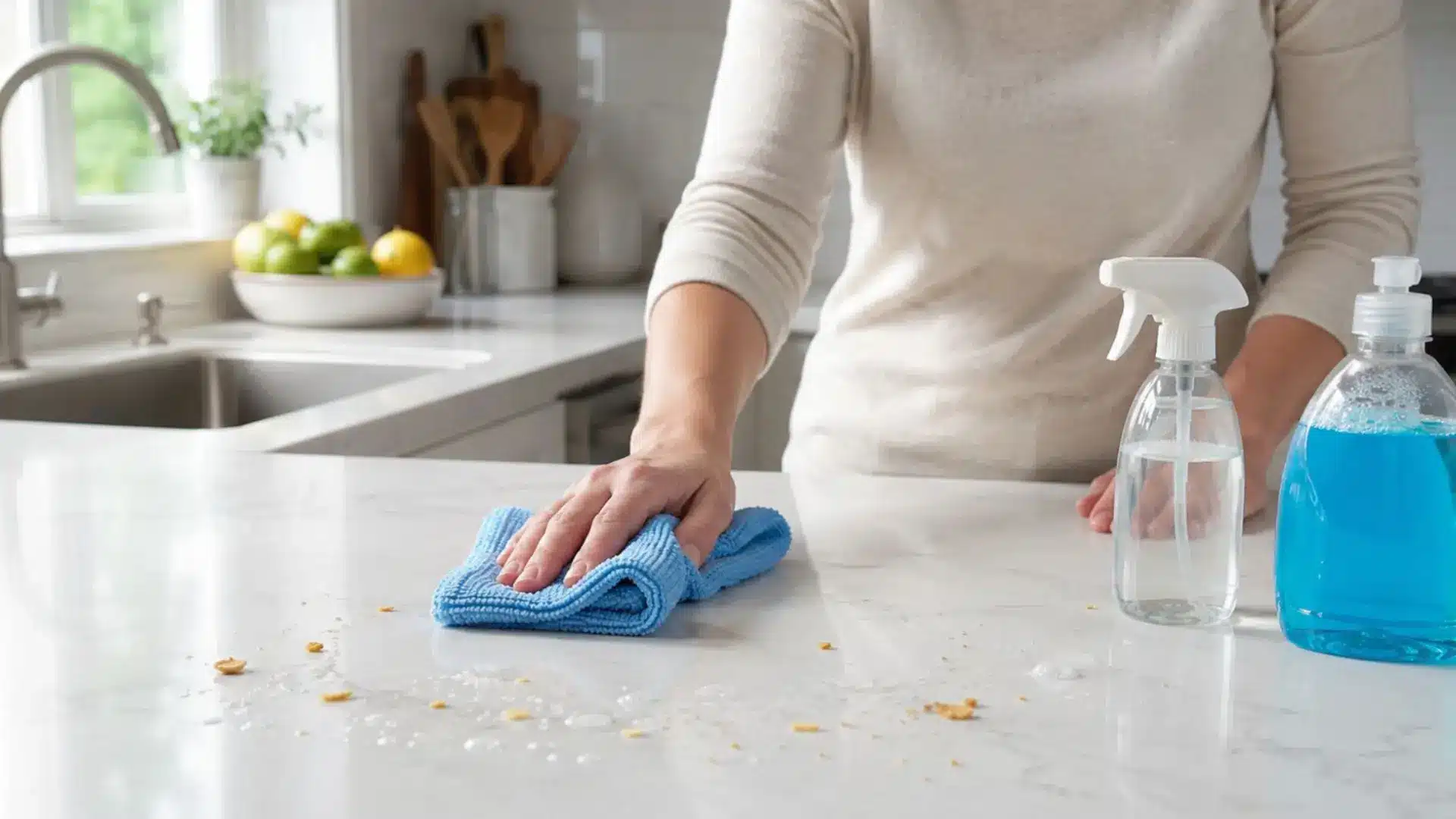
Daily cleaning prevents food residue, fingerprints, and light grease from building up. A simple soap-and-water routine is usually enough for regular kitchen use.
- Step 1: Remove loose debris and wipe crumbs and dust away with a dry microfiber cloth.
- Step 2: Prepare soapy water and mix warm water with a few drops of mild dish soap.
- Step 3: Wipe the surface and clean spills, fingerprints, and light grease using gentle circular motions.
- Step 4: Rinse and dry, then wipe again with clean water, then dry immediately to prevent streaks and water spots.
Clean spills as soon as possible, especially coffee, wine, cooking oil, and strongly colored sauces. Prompt wiping makes daily maintenance easier and reduces the risk of stubborn marks.
2. Deep Cleaning for Built-Up Residue
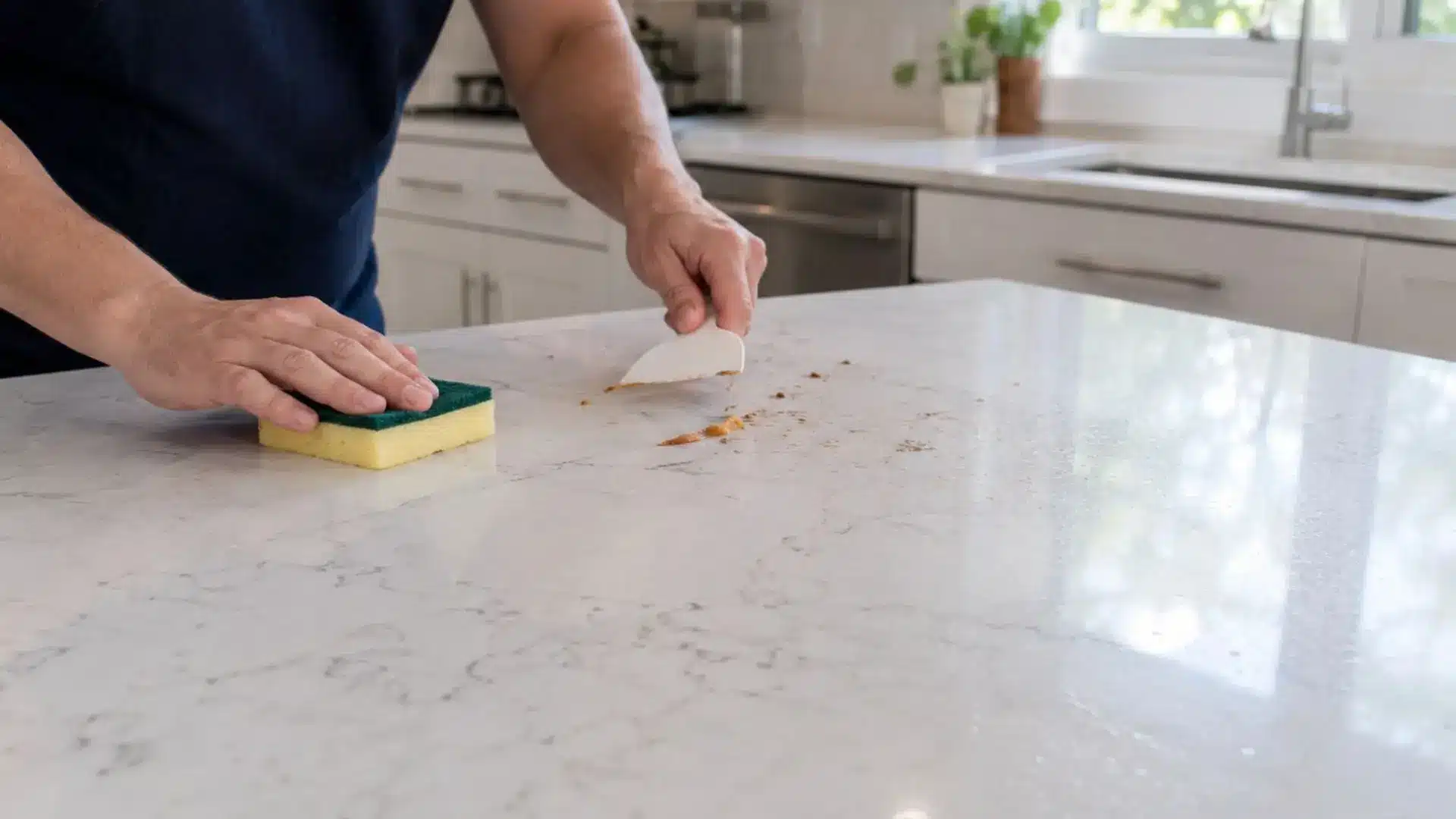
Deep cleaning is useful when the countertop feels greasy or looks dull even after routine wiping. Use a quartz-safe cleaner and avoid leaving moisture around seams and edges.
- Step 1: Clear the countertop and remove appliances, containers, and loose debris.
- Step 2: Apply a quartz-safe cleaner and then spray it evenly without soaking seams or edges.
- Step 3: Allow brief contact time. Follow the product label rather than letting the cleaner dry.
- Step 4: Loosen dried residue. Use a soft sponge or plastic scraper held at a low angle.
- Step 5: Rinse and dry. Remove all cleaner residue with fresh water and a microfiber towel.
Deep cleaning should be occasional rather than part of the daily routine. Finishing with clean water and a dry cloth prevents product buildup from leaving the surface cloudy.
3. Removing Stains, Grease, and Sticky Messes
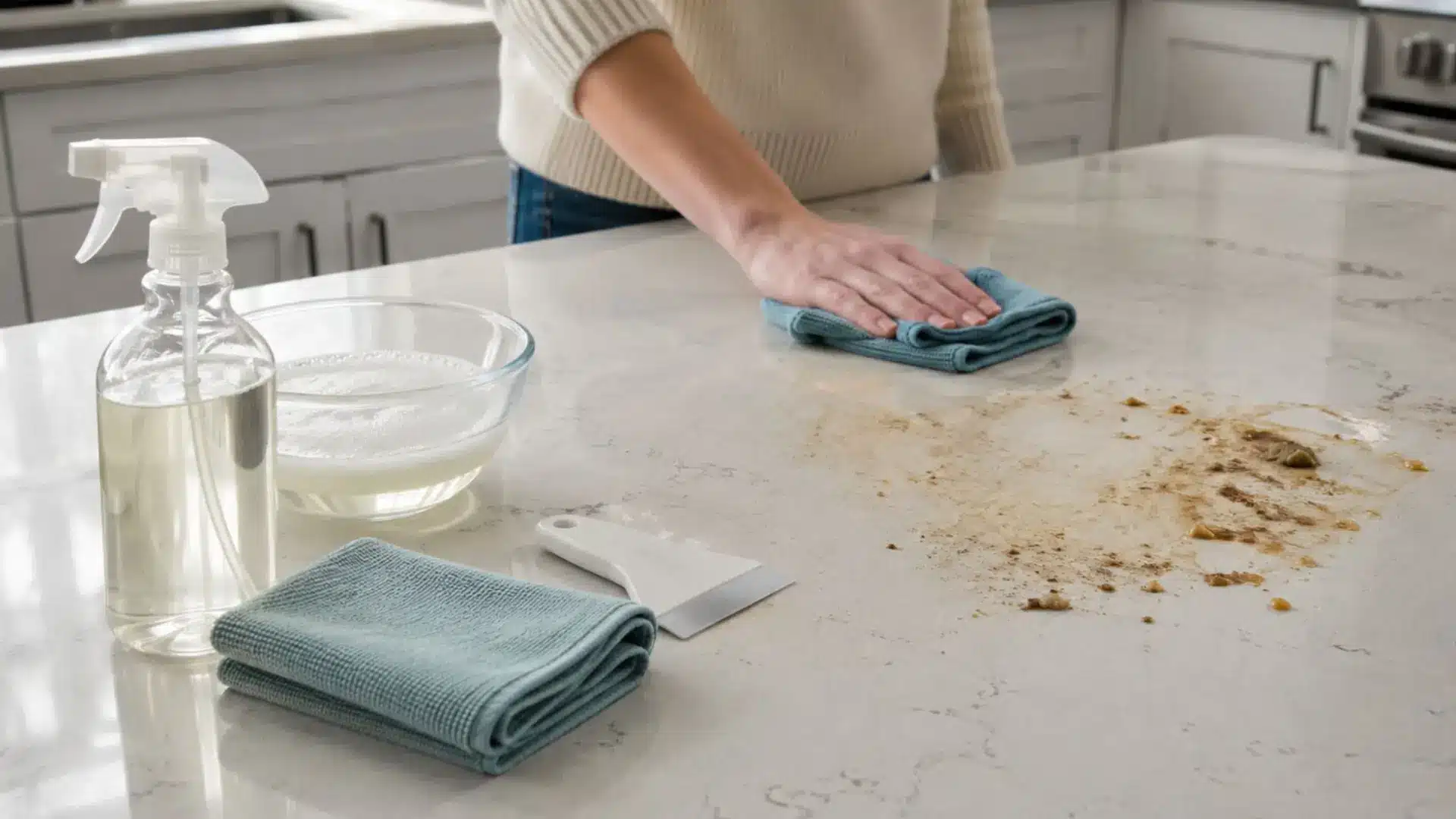
Treat stains and sticky residue according to the type of mess. Begin with mild soap before moving to a manufacturer-approved quartz cleaner.
- Step 1: Blot fresh spills; avoid spreading liquids across a larger area.
- Step 2: Wash with mild soap and use warm water to loosen food residue and grease.
- Step 3: Apply an approved cleaner and let it soften stubborn buildup for the recommended time.
- Step 4: Lift the residue and carefully use a plastic scraper instead of a metal blade.
- Step 5: Repeat gently and treat remaining marks without aggressive scrubbing.
- Step 6: Rinse, dry, and remove every trace of cleaner to prevent a dull film.
Avoid metal blades, scouring pads, and forceful scraping, as these may damage the finish. Several gentle treatments are safer than one aggressive cleaning attempt.
For grease or oily residue, a baking soda paste gently lifts buildup. Let it sit briefly, then wipe clean, much like other pantry-based cleaning solutions that work well on kitchen surfaces.
4. Treating Hard Water Marks and Cloudiness
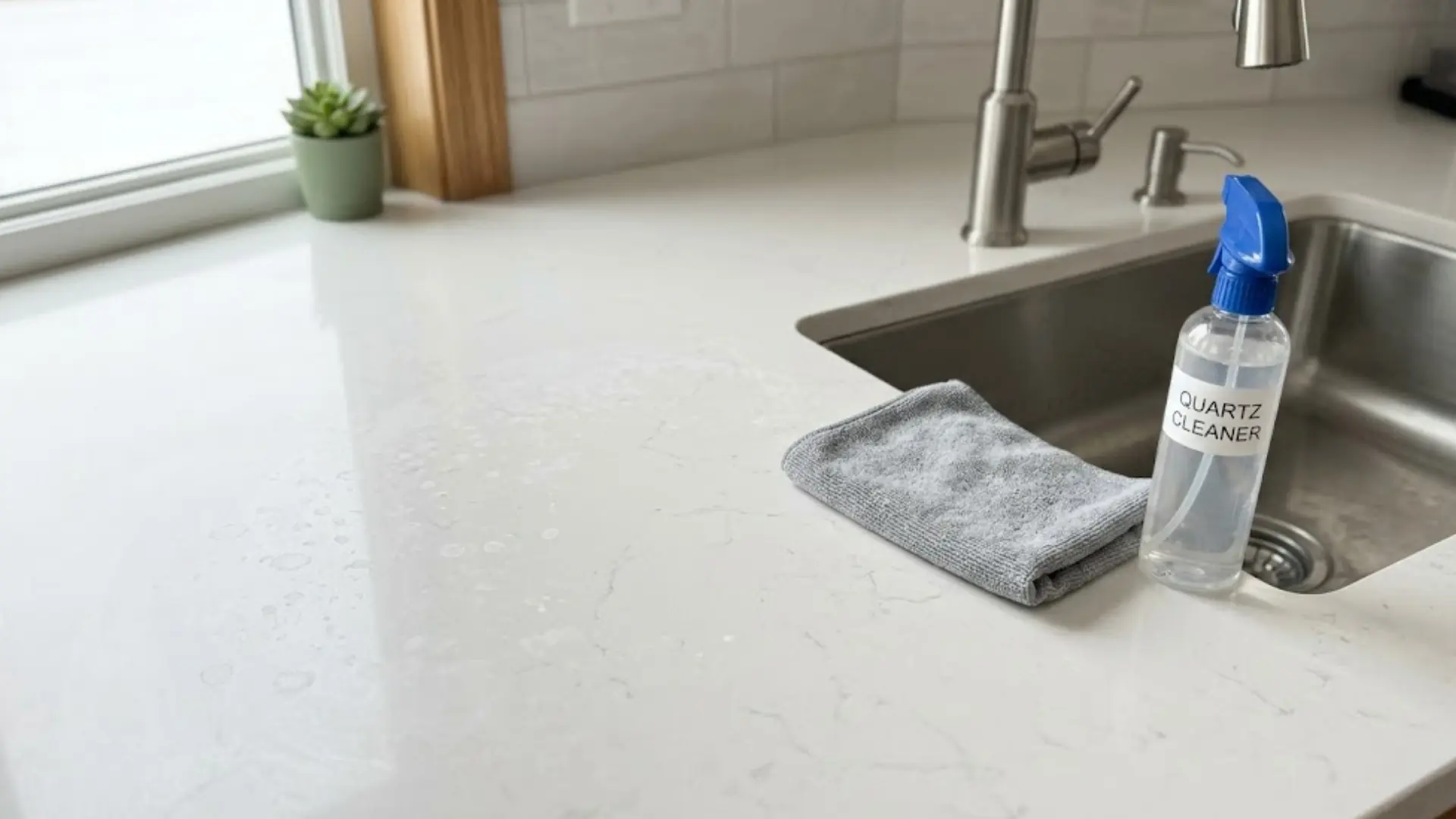
Hard water can leave chalky rings, pale spots, or a cloudy film, particularly near faucets and sinks. These marks usually come from mineral deposits or cleaner residue.
- Step 1: Identify the buildup and check for chalky rings, pale spots, or haze near faucets.
- Step 2: Clean with dish soap and wipe the area using warm water and a soft cloth.
- Step 3: Dry the surface, and some marks may disappear once moisture and soap residue are removed.
- Step 4: Apply a quartz-safe mineral cleaner and use only a product approved by the manufacturer.
- Step 5: Gently wipe the deposits, avoiding abrasive powders and rough pads.
- Step 6: Rinse thoroughly and then remove all cleaning-product residue.
- Step 7: Dry after each use; regular drying helps prevent new mineral deposits.
Drying wet areas after using the sink is the easiest way to reduce recurring spots. Persistent cloudiness may indicate product buildup or surface damage rather than ordinary dirt.
5. Disinfecting Quartz Without Surface Damage

Disinfecting may be necessary after handling raw meat, during illness, or when the surface has been exposed to contamination. The countertop should always be cleaned before disinfectant is applied.
- Step 1: Clean visible dirt first and remove crumbs, grease, and food residue with mild soap.
- Step 2: Select an approved disinfectant and confirm that its label lists engineered quartz as a safe surface.
- Step 3: Apply the product evenly and keep the countertop visibly wet for the stated contact time.
- Step 4: Wipe or rinse as directed and follow the manufacturer’s instructions carefully.
- Step 5: Dry completely and remove remaining moisture with a clean microfiber towel.
Never mix disinfectants with bleach, vinegar, ammonia, or other cleaning products. For ordinary daily cleaning, mild dish soap and warm water are generally sufficient.
Safety note: never combine disinfectants with bleach, vinegar, or ammonia. Mixing cleaning chemicals can release harmful fumes.
Cleaners and Products to Avoid on Quartz
Quartz is durable, but harsh chemicals and abrasive tools can weaken the resin, dull the finish, or leave permanent discoloration. Always check the manufacturer’s care instructions before testing a new product on this surface:
| Product | Why to Avoid | Safer Alternative |
|---|---|---|
| Abrasive powders and creams | Causes fine scratches and dull patches | Mild dish soap, soft sponge |
| Rough scrubbers | Damages polished and matte finishes | Microfiber cloth |
| Strong bleach solutions | Fades pigments, weakens resin | Quartz-approved cleaner |
| Oven and drain cleaners | Highly alkaline, can discolor surface | Dish soap and water |
| Paint removers and solvents | Causes permanent chemical damage | Diluted isopropyl alcohol |
| Wax, polish, and sealers | Leaves sticky buildup, unnecessary | Regular cleaning only |
| Undiluted vinegar | Acidic, may affect finish over time | Diluted vinegar, used sparingly |
Mild dish soap, warm water, microfiber cloths, and manufacturer-approved quartz cleaners work best for safer routine maintenance.
How to Care for Quartz Countertops Long Term
Simple daily habits can prevent most heat damage, scratches, chips, stains, and fading. Protecting the surface from daily wear starts with these simple pointers:
- Use trivets under hot pans and appliances to prevent scorch marks.
- Rely on cutting boards and soft cleaning tools instead of knives or abrasive pads.
- Avoid heavy impact near edges and sinks, where quartz is more vulnerable.
- Add blinds or curtains to countertops that sit in strong direct sunlight.
- Keep excess moisture away from seams to stop weakening over time.
- Skip wax, polish, and sealers, since quartz does not need them to stay shiny.
Following the manufacturer’s care instructions keeps these habits working as intended. Small chips, cracks, or loose seams should get repaired quickly before they turn into bigger problems.
Frequently Asked Questions (FAQs)
Why Does Quartz Feel Sticky After Cleaning?
Stickiness usually comes from leftover soap, grease, or cleaner residue. Rinsing the surface with warm water and drying it fully often removes the sticky feeling completely.
Can Direct Sunlight Discolor Quartz Countertops?
Yes, prolonged direct sunlight may cause fading or uneven color changes in some quartz surfaces. Using blinds or curtains can help protect countertops near sunny windows.
Are Quartz and Quartzite Cleaned the Same Way?
No, quartz is engineered and nonporous, while natural quartzite is porous stone. Quartzite often needs sealing and stone-safe cleaners to prevent staining and long-term surface damage.
Final Words
You now know how to clean quartz countertops the right way. Soap, water, and a soft cloth handle most daily messes easily. Hard water marks, sticky spots, and grease stains all have simple fixes.
Try not to use harsh chemicals and always dry the surface after cleaning. Small steps done often keep your counters looking clean and neat.
Trivets, cutting boards, and quick wipes protect your counter from wear. Good habits now save you time and effort later. Try these steps and keep your counters looking their best.
Drop a comment below and share your own cleaning tips!