
How often to water a vegetable garden is one of the most searched questions among home gardeners, and the answer is rarely clear.
Water too little, and plants stall. Water too much, and roots rot silently underground.
Soil type, climate, plant variety, and growth stage all play a role. Here, you’ll find real experiences from fellow gardeners, practical soil checks, and clear watering instructions to help you stop guessing for good.
Stick around, because the right watering routine could completely change how your garden grows this season.
Should I Water My Garden Every Day?
Most vegetable gardens thrive with watering 2-3 times weekly, depending on soil, climate, and crops.
When you water daily, the soil stays too wet for too long. This pushes air out of the soil and suffocates roots, making plants weak even when they look like they are getting enough.
Roots also stop going deeper because moisture is always at the surface.
Daily watering makes sense during heatwaves, for first-week seedlings or quick-drying container gardens.
Watch for yellowing leaves, soggy soil, or a sour smell near the roots.
These are clear signs your plants are getting more water than they need.
How Often to Water a Vegetable Garden: What Actually Matters
Watering frequency isn’t one-size-fits-all. These factors decide how often your garden actually needs water.
| Factor | Low Need | Moderate Need | High Need |
|---|---|---|---|
| Soil Type | Clay (retains moisture) | Loam (balanced drainage) | Sandy (dries fast) |
| Weather | Cool, cloudy, rainy | Mild, partly sunny | Hot, dry, windy |
| Growth Stage | Mature, established | Actively growing | Seedlings, new transplants |
| Garden Type | In-ground + mulch | Raised bed | Containers/pots |
Once you factor in these conditions, your routine becomes obvious: a sandy container garden in summer heat needs far more frequent watering than a mulched in-ground bed in a cool spring week.
GardenerWatering Routine: What to Actually Do Week to Week
Every gardener eventually settles into a weekly rhythm that works for their specific setup.
Many home vegetable gardeners follow a clear routine to keep their beds healthy without overdoing it.
- Day 1: Finger-test all beds; water only where the soil is dry to a depth of 2 to 3 inches.
- Day 2: Water thirsty crops like tomatoes, cucumbers, and peppers deeply at the base.
- Day 3: Skip beans, herbs, and drought-tolerant crops unless the soil is completely dry.
- Day 4: Check containers and raised beds separately; water if dry.
- Day 5: Full garden check, water where needed, top up thin mulch layers.
- Day 6: Check soil after any rainfall before watering; rain often counts as a full session.
- Day 7: Review the week, adjust next week’s schedule based on temperature and soil response.
This routine is a starting point. Tweak it as your garden responds, and you’ll find your rhythm in a few weeks.
Real Gardeners Share Their Watering Routines
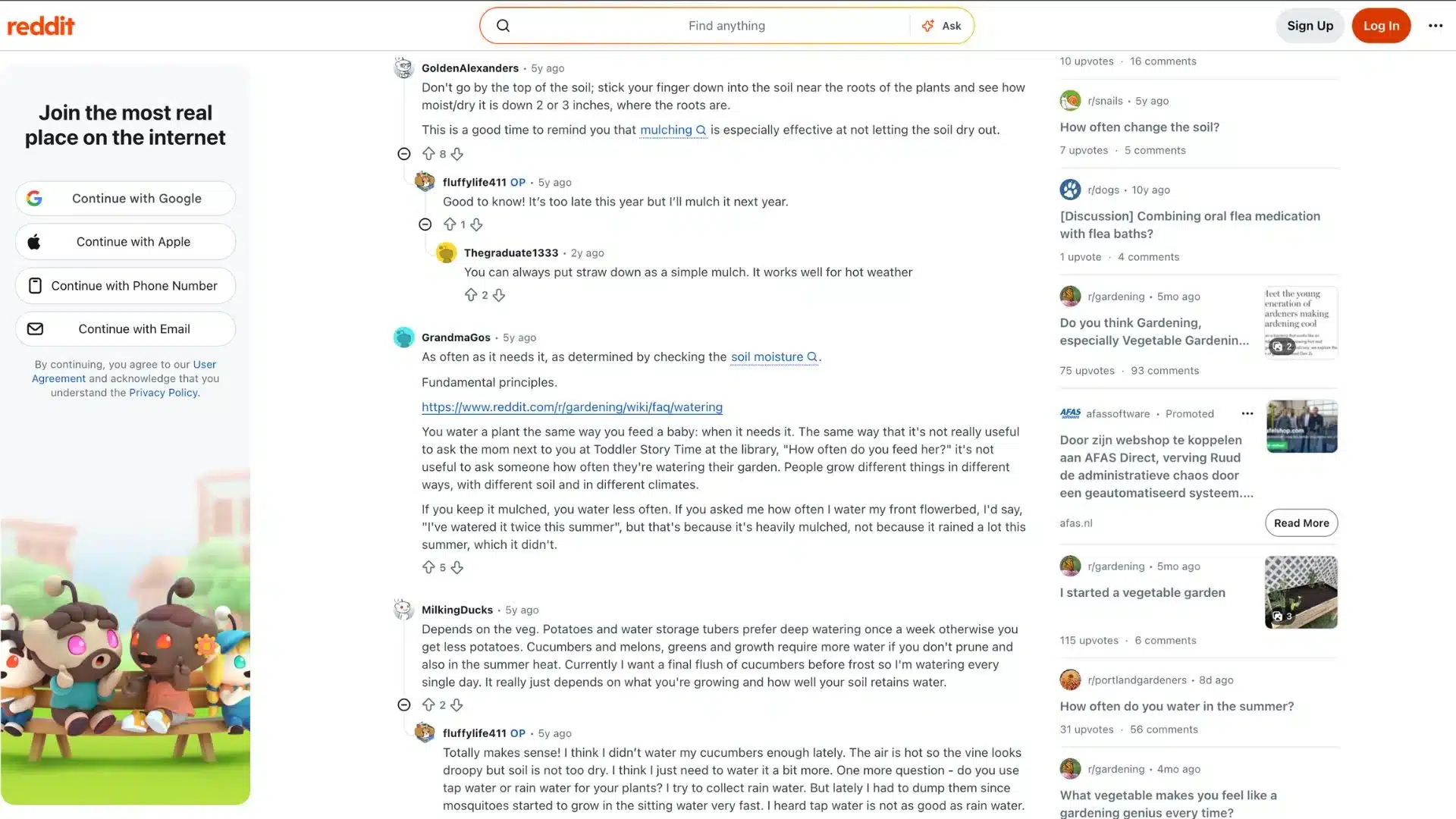
Real gardeners on Reddit share their watering habits for vegetable gardens.
This experienced gardener skips surface checks entirely and goes straight to the root zone.
She also points out that mulching plays a big role in keeping soil from drying out too fast.
Another gardener keeps it simple: water only when the plant needs it, as checked by soil moisture.
With heavy mulching, her front flowerbed needed watering just 2 times throughout the summer.
“If you keep it mulched, you water less often. If you asked me how often I water my front flowerbed, I’d say, I’ve watered it twice this summer, but that’s because it’s heavily mulched.”
How Often to Water Vegetable Gardens: Also Worth Watching
Credit: Savvy Gardening
Here’s a complete recap of the key watering tips covered in the video above.
Morning watering cuts evaporation and disease risk. Wet leaves overnight invite fungal problems; timing alone signals when to water. A rain gauge confirms if plants got their weekly inch, guiding next steps.
Wands and soaker hoses support deep, root-building watering.
Knowing that onions and potatoes rot in standing water helps you avoid overwatering.
How Much to Water Matters More than How Often
Not every vegetable drinks the same, and watering everything on one schedule is where most gardens go wrong.
This section breaks down which crops need frequent moisture, which ones prefer drier conditions, and how root vegetables and leafy greens differ in what they actually need from you each week to stay healthy.
Vegetables that Need More Water
Thirsty crops need consistent moisture as they actively fruit and draw water all season.
| Vegetable | Watering Frequency | Risk of Underwatering |
|---|---|---|
| Tomatoes | Every 2 to 3 days | Blossom-end rot, cracking |
| Cucumbers | Every 2 to 3 days | Bitter-tasting produce |
| Peppers | Every 2 to 3 days | Poor fruit development |
| Zucchini | Every 2 to 3 days | Wilting, stunted growth |
| Corn | Every 2 to 3 days | Poor kernel development |
Drying out between sessions can cause issues like blossom-end rot or bitter-tasting produce.
Vegetables that Can Handle Drier Conditions
These plants have stronger drought tolerance and do not need water every few days. Overwatering is actually the bigger risk, as it can cause root problems and reduce herb flavor.
A deep watering once or twice a week is usually enough.
| Vegetable | Watering Frequency | Risk of Overwatering |
|---|---|---|
| Beans | Once or twice a week | Root rot, weak stems |
| Swiss Chard | Once or twice a week | Yellowing leaves |
| Beets | Once or twice a week | Poor root development |
| Rosemary | Once a week or less | Flavor loss, root rot |
| Thyme | Once a week or less | Soggy soil, herb dieback |
If your garden has a mix of these crops, group them together in 1 bed and water that section separately.
They are low-maintenance once established, and pulling back on water actually does them more good than harm.
Root Vegetables vs. Leafy Greens: Watering Differences
Root vegetables prefer deep, infrequent watering that reaches the roots. Shallow daily watering keeps moisture at the surface and discourages proper root development.
| Type | Vegetables | Watering Style | Frequency |
|---|---|---|---|
| Root Vegetables | Carrots, Radishes, Parsnips | Deep, infrequent watering | Once or twice a week |
| Leafy Greens | Spinach, Lettuce, Kale | Light, frequent watering | Every 1 to 2 days in heat |
Grouping your vegetables by water needs before planting makes the whole season easier to manage.
Watering Frequency by Season: What Changes and Why
As temperatures, rainfall, and plant growth shift across all the seasons, so does the amount of water your vegetable garden actually needs. Your watering routine cannot stay the same all year.
- Spring: Soil stays moist longer; water seedlings regularly, but established beds need watering twice a week.
- Summer: Peak watering: water most beds every 2-3 days; check containers daily in heatwaves.
- Autumn: Plants slow down, and soil holds moisture longer. Pull back to watering most beds once a week or less
- Winter: Watering needs are minimal; cold-season crops require light watering every 10 to 14 days.
Adjusting your watering routine seasonally keeps your garden healthy year-round, prevents water waste, and avoids stressing plants during periods of low water needs.
Best Time of Day to Water Your Vegetable Garden
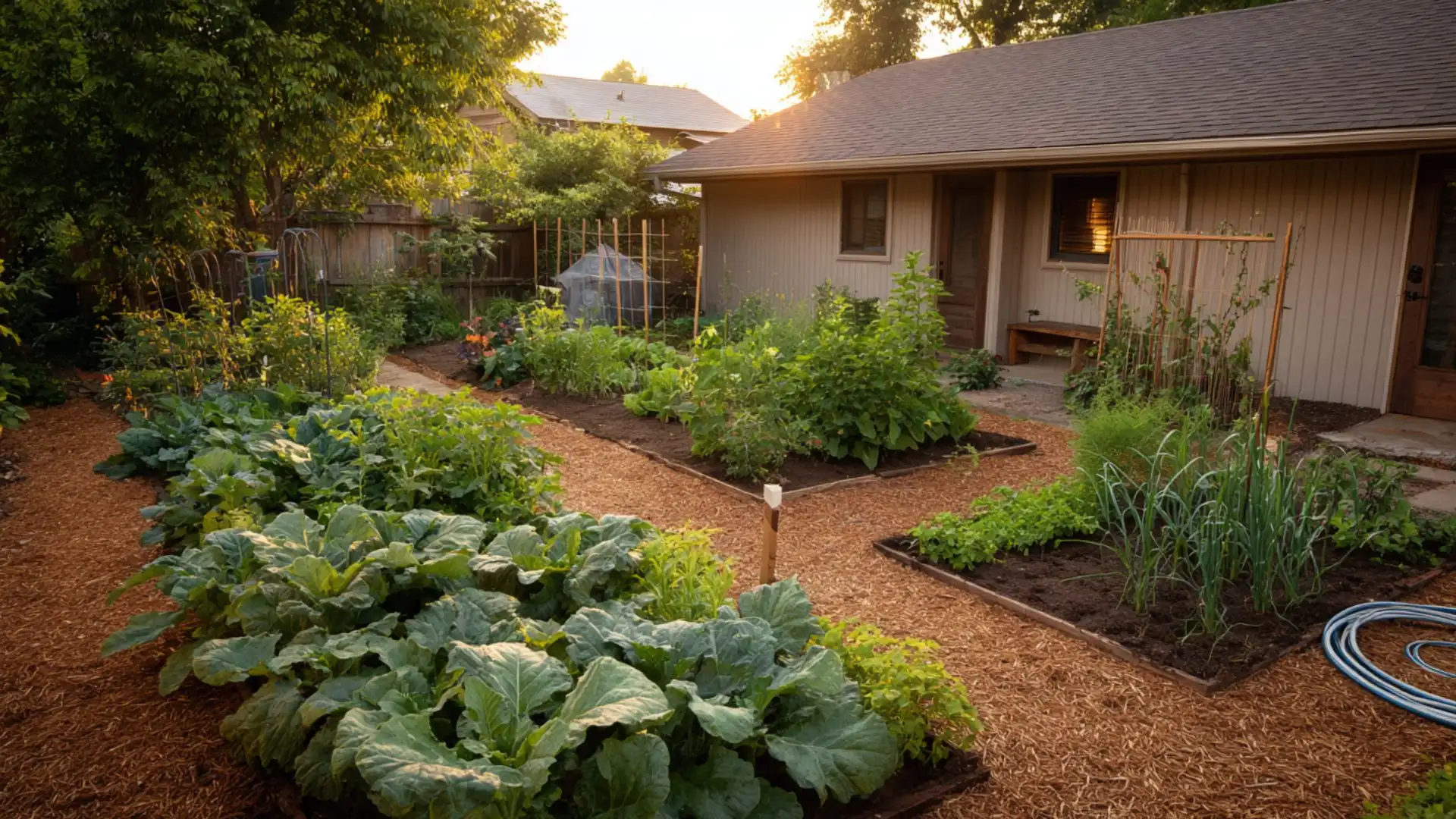
Timing your watering matters as much as how often you do it. The same amount of water applied at different times can produce very different results.
1. Morning Watering and Why Most Gardeners Prefer It
Morning is the most recommended time to water, and for good reason.
Most gardeners who water in the morning report healthier plants with fewer fungal issues over the season.
- When to: Water between 6 AM and 10 AM directly at the root zone before peak heat hits.
- When not to: Skip if soil is still visibly wet from the previous day.
Starting watering early helps plants by preventing overnight moisture buildup.
2. Evening Watering: Risks and When it Works
Evening watering is not ideal, but it is not always avoidable. Cooler temperatures and reduced airflow at night keep soil and foliage damp for hours, creating conditions for fungal disease.
- When to: water: at the base only when plants are visibly stressed by afternoon heat.
- When not to: Avoid if your climate has high overnight humidity or recurring fungal issues.
Watering at soil level in the evening carries far less risk than overhead watering at the same time.
3. Midday Watering: Should You Avoid It?
Water during peak heat evaporates quickly, so less reaches the roots.
- When to: water: at midday, only when a plant is visibly wilting and cannot wait.
- When not to: Avoid overhead watering entirely; go straight for the root zone with a slow, directed pour.
No matter what time you water, getting the water to the root zone consistently matters more than perfect timing.
Should I water my garden every day? Let your soil answer that. Morning remains the first choice, but your garden’s needs always take precedence.
Watering Methods and How They Affect Frequency
Your watering method changes how often you need to water.
Some deliver water slowly and efficiently; others lose more to evaporation.
| Method | How It Works | Frequency | Key Drawback |
|---|---|---|---|
| Drip Irrigation | Slow delivery via tubes to the root zone | Every 2-3 days | Higher setup cost |
| Soaker Hoses | Porous hose releases water slowly | Every 2-3 days | Clogs; uneven on slopes |
| Hand Watering | Applied via a can or a hose nozzle | Every 1-2 days | Time-consuming |
| Sprinklers | Overhead spray, wide coverage | Every 1-2 days | Wet foliage, higher disease risk |
Choosing the right method upfront cuts both watering frequency and water waste. Drip and soaker systems consistently beat overhead watering in efficiency and plant health.
How to Know When Your Garden Actually Needs Water
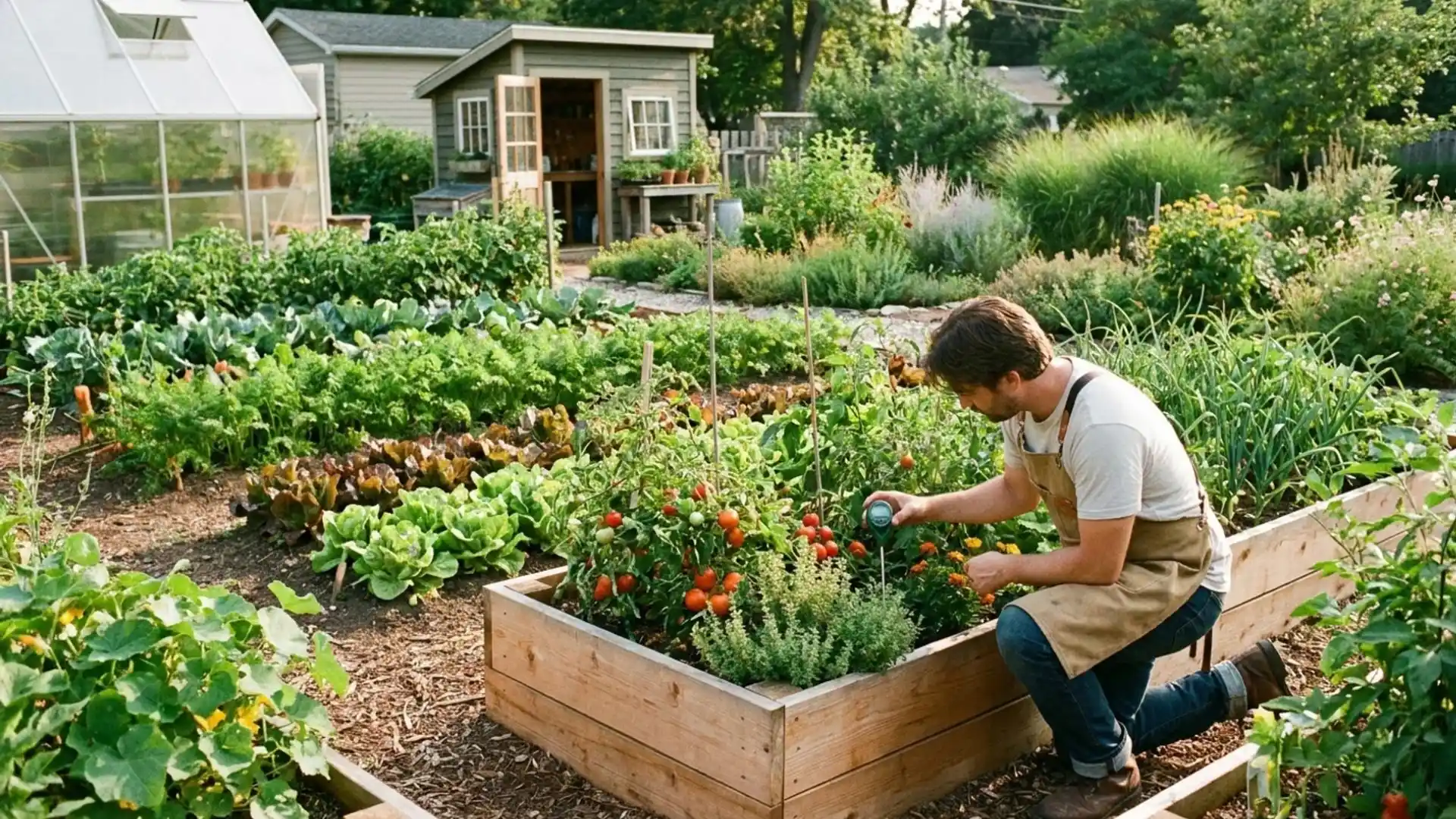
Guessing your garden’s water needs leads to either overwatering or underwatering.
These simple methods take the guesswork out and tell you exactly what your soil and plants are signaling.
1. The Finger Test and Soil Check
The finger test is the most reliable free tool any gardener has.
Push your finger 2-3 inches into the soil near the root zone. If dry, water; if moist, hold off. This method applies to all soil types and vegetables and requires no equipment.
How to: Push your finger 2 to 3 inches into the soil near the roots. Dry at that depth means it is time to water.
2. What Wilting Really Tells You
Wilting isn’t always due to thirst; plants naturally droop in hot afternoons and often recover by evening.
True water stress wilting stays through the cooler evening hours and does not bounce back.
Check your plants in the early morning. If they are still drooping after a cool night, the soil needs water.
How to: Check plants in the morning; persistent wilting after a cool night confirms they need water.
3. Using a Moisture Meter
A moisture meter gives you a direct reading of soil moisture at the root level without digging around. Push the probe 3 to 4 inches into the soil near the base of the plant and read the dial.
Most vegetables do best in the moist-to-medium range.
It is a useful tool for beginners who are still building the instinct for when to water.
How to: Insert the probe 3-4 inches into the soil near the plant’s base and water when it reads below moist.
The Role of Mulch in Reducing Watering Frequency
Mulch blocks the sun from reaching the soil directly, slowing moisture loss so you water less often.
Spread a 2- to 3-inch layer, keeping it a few inches from the stems to prevent rot and allow airflow.
- Straw: cools soil, lasts one season, ideal for beds and pathways.
- Wood chips retain moisture longest (2-3 years) and suppress weeds around borders.
- Grass clippings decompose fast and add nutrients within weeks.
- Shredded leaves: free, boost soil structure, great for autumn beds.
- Compost: it retains moisture while continuously feeding the soil.
Beyond saving trips to the hose, mulch improves soil health as it breaks down.
Before You Go!
Your garden will always tell you what it needs, and learning to listen is half the job done.
Watering frequency varies based on soil, climate, plants, and setup; no universal schedule exists.
You now have real gardener experiences, practical methods, and clear guidelines to build a routine that actually fits your garden. Stop watering on autopilot.
Check your soil today, adjust your routine, and watch your vegetable garden perform better this season.
Frequently Asked Questions (FAQ’s)
1. Do I Need to Water More After Fertilizing?
Yes, water right after fertilizing to help nutrients be absorbed without burning the roots.
2. Can Overwatering Kill Vegetable Plants Faster than Underwatering?
Yes, overwatering causes root rot, which kills plants more quickly than dry soil.
3. Should I Adjust Watering After Transplanting Seedlings Outdoors?
Yes, water daily for the first week until roots establish in the native soil.