
Your bookshelf is either the star of the room or the mess everyone ignores. There is no in between.
Knowing how to style a bookshelf comes down to using what you already have.
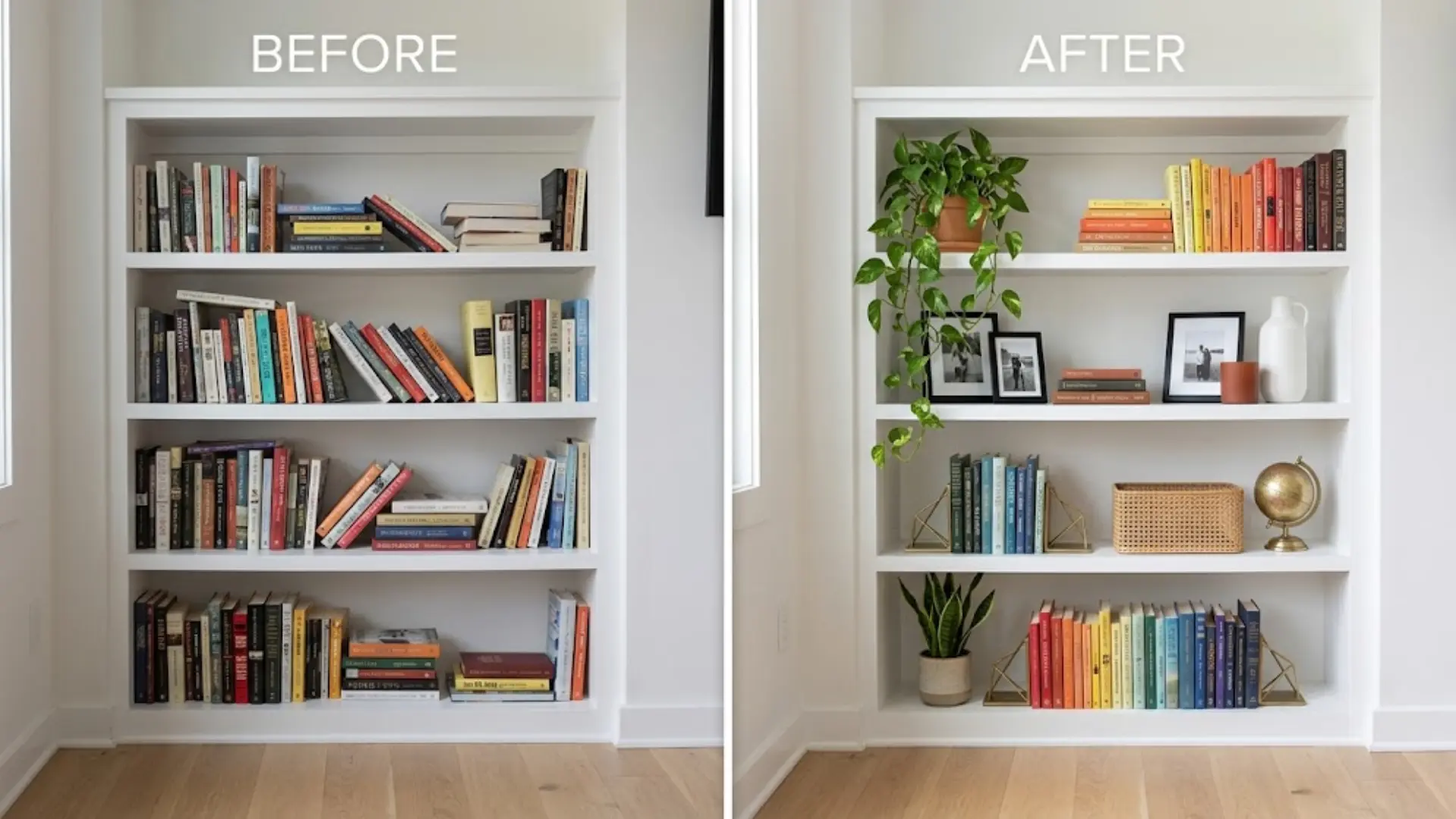
A little effort beats buying anything new. A messy shelf can drag down an entire corner of your space. The same items, placed with intention, can feel calm and pulled together.
Color, texture, and height all play a part in getting it right. Skip a step, and the shelf will feel off balance.
Grab your books and decor, and get ready to give that shelf new life.
What Bookcase Styling Can Do for a Room
A styled bookshelf changes the entire feel of a room, even when nothing else around it has changed.
Bookcase styling is not about owning more decor; it is about arranging what you already have with a bit more intention.
A shelf that looks thrown together can make a whole corner feel cluttered, while the same books and objects, simply rearranged, can read as calm and put together.
This is why learning a clear process matters more than buying new pieces, since the books and decor you already own are usually enough to work with.
How to Style a Bookshelf: Step-by-Step Guide
Follow these eleven ideas in order, since each one builds on the previous step to create a shelf that feels layered rather than random.
Step 1: Group Your Books by Color
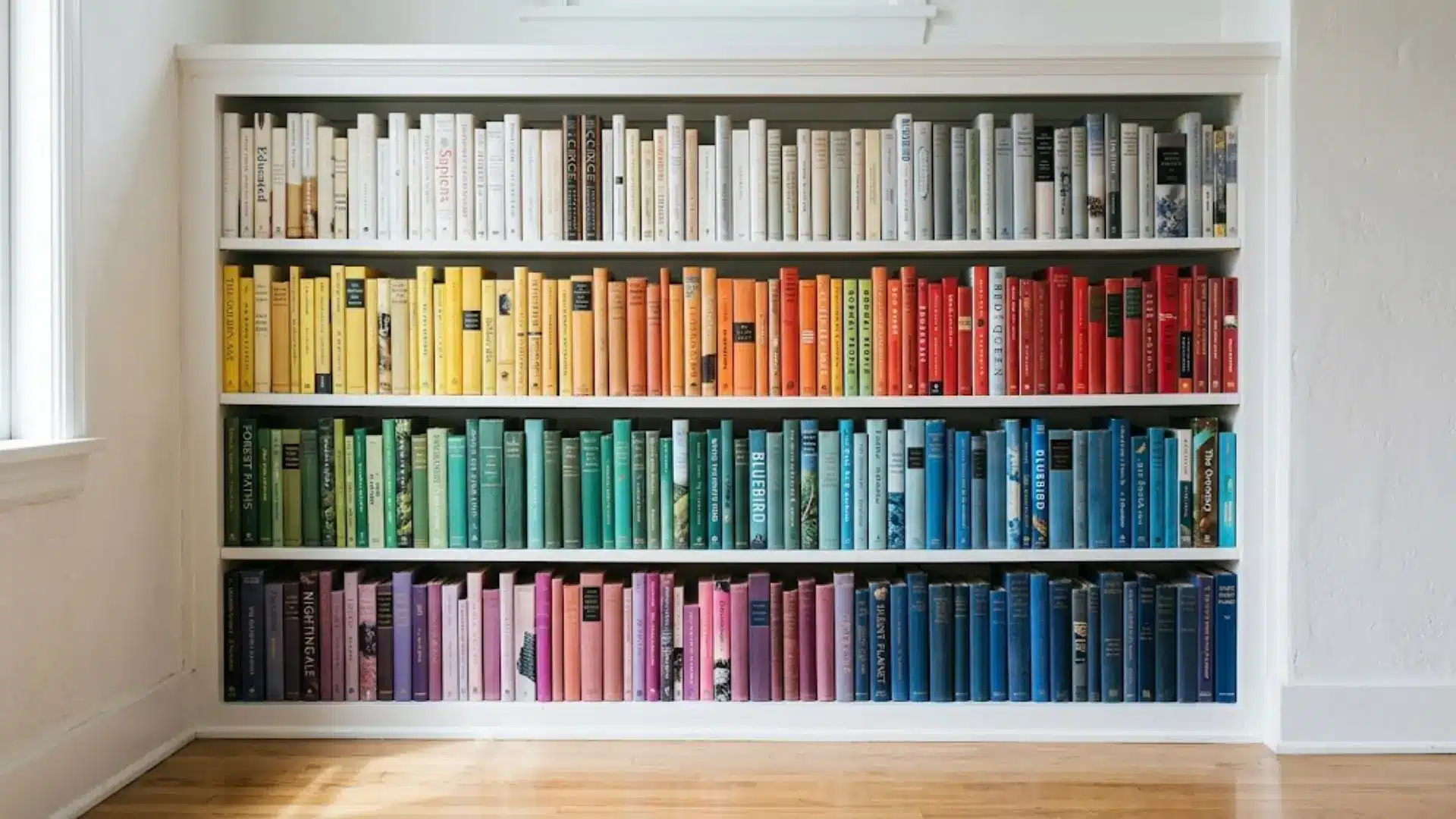
Begin by pulling every book off the shelf and sorting them by spine color. Group similar shades together, either in a smooth rainbow gradient or simple light-to-dark blocks.
Remove distracting dust jackets if the colors feel too busy or mismatched.
This single step creates instant visual order and gives your eye a clear path to follow before you add anything else to the shelf, making every later step easier to build on.
Step 2: Stack Some Books Horizontally
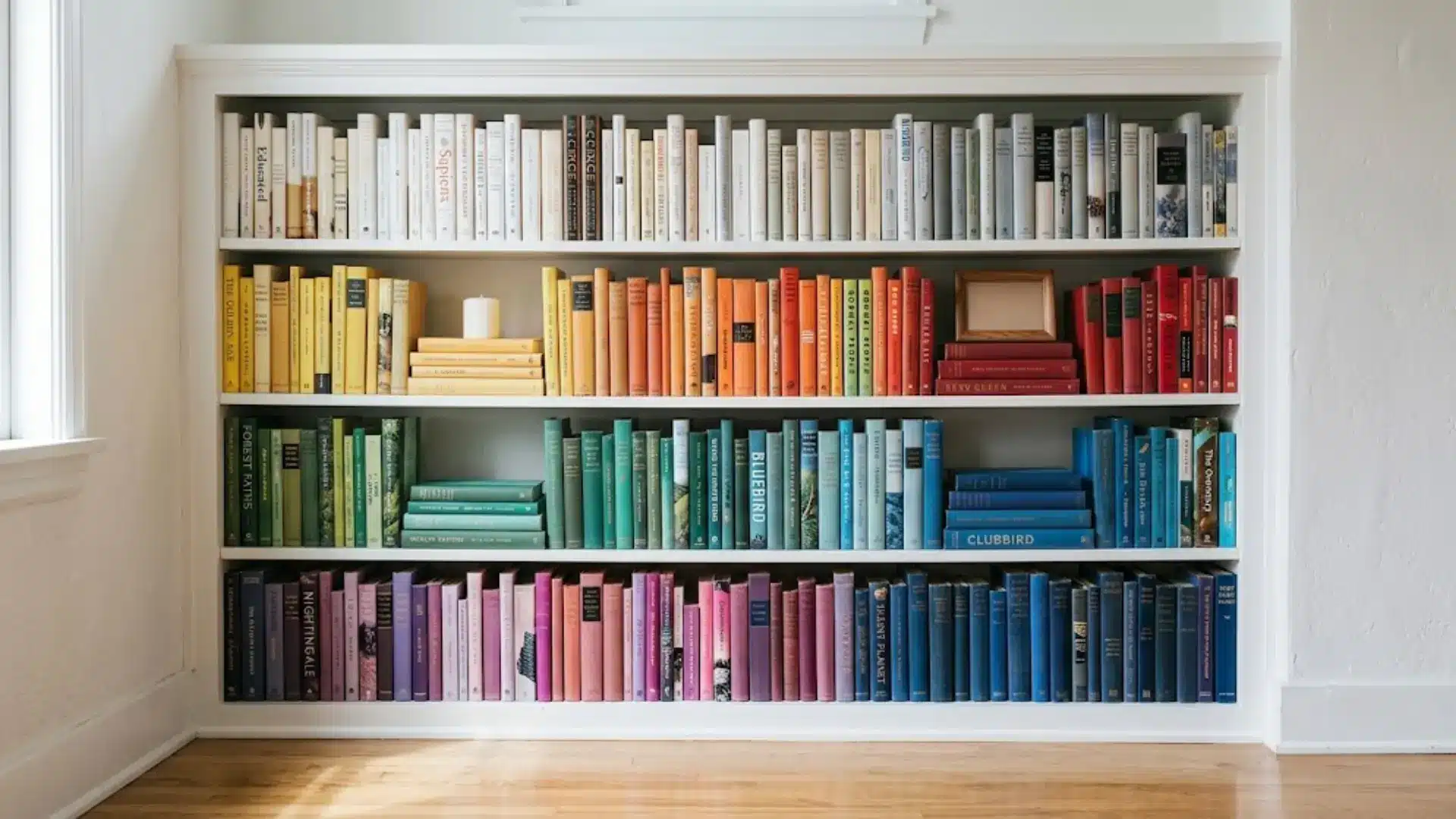
Once your books are color-sorted, break up the rows by laying a few stacks flat rather than standing every book upright.
These horizontal stacks act as natural risers for small decor pieces and stop the shelf from looking too uniform or library-like.
Alternate flat stacks with vertical rows across different shelves so the eye keeps moving. Top a few stacks with a small object, such as a candle or a small frame, to start adding height to the design.
Step 3: Add a Plant for Life and Texture
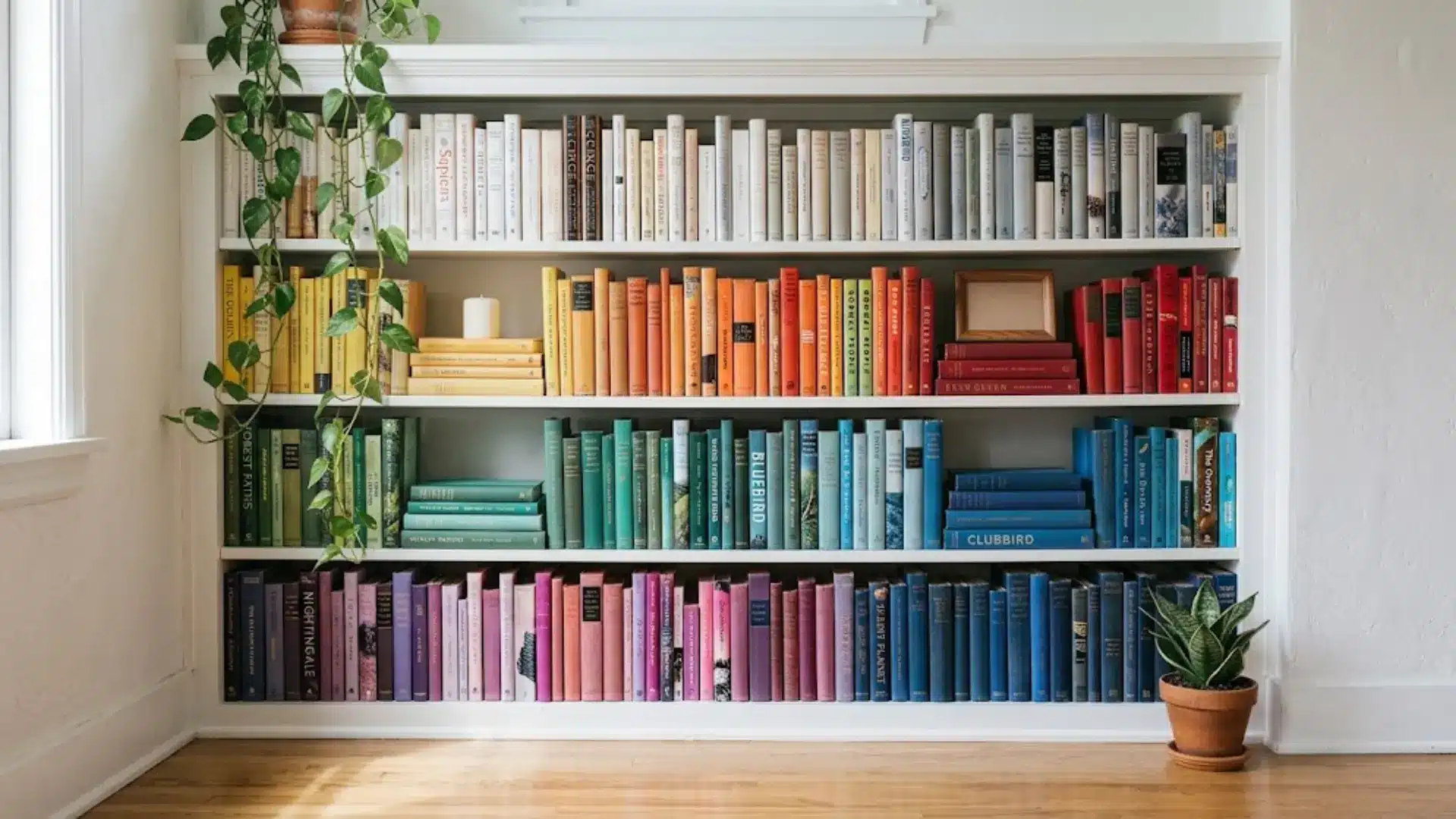
With your books arranged, bring in one plant to soften the shelf and add a bit of life. A trailing plant like pothos or ivy works well on a higher shelf, letting vines spill down naturally over the edge.
A compact plant, such as a small succulent or snake plant, suits a lower shelf with less room to spread.
Faux plants are fine if you want low-maintenance; just choose ones with realistic texture, so they blend in rather than stand out.
Step 4: Bring in Bookends as Decor
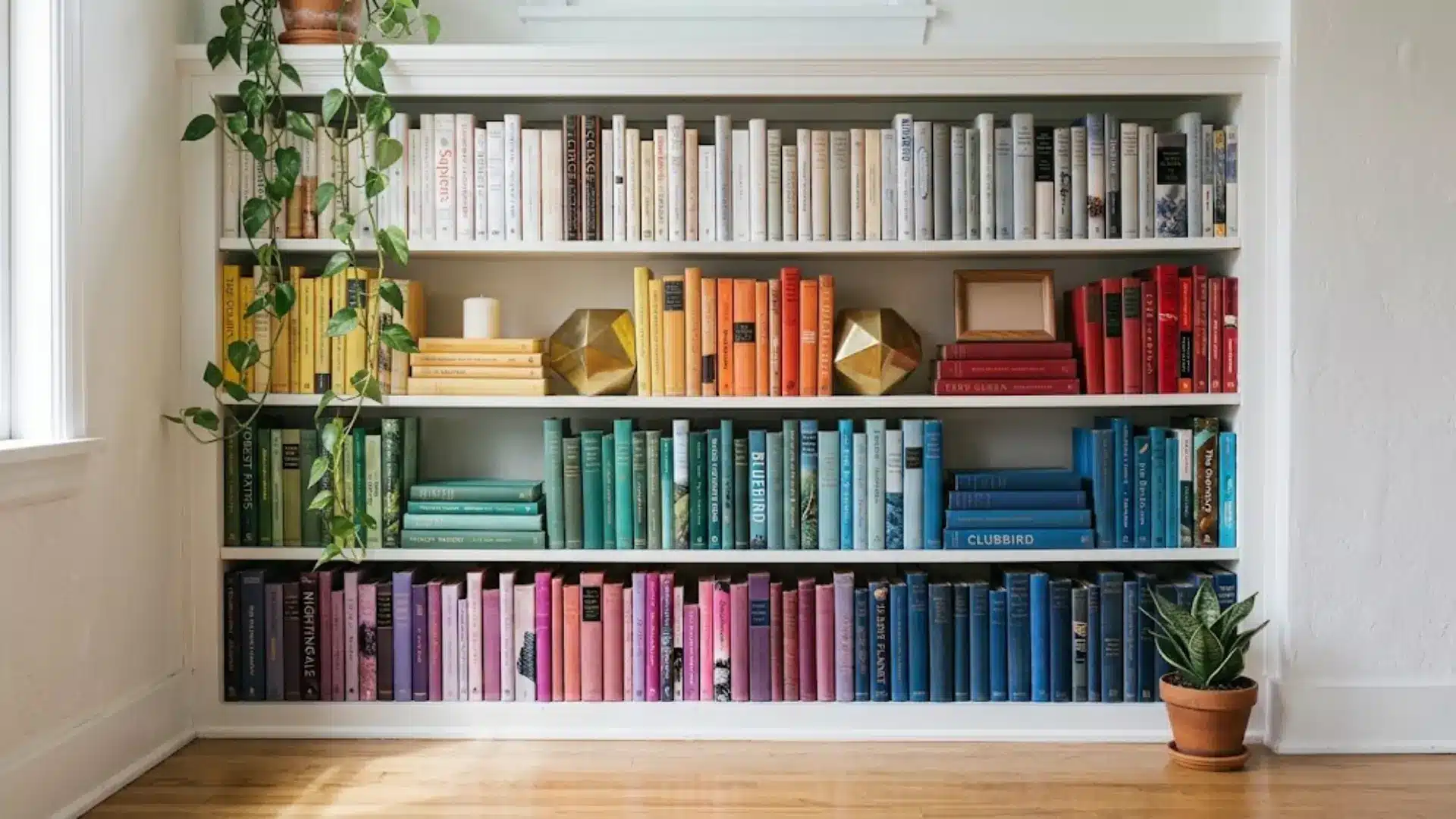
Bookends are doing double duty here, holding books upright while also adding a styling moment of their own.
Marble or brass bookends suit a more polished look, while wood or ceramic feels warmer and more relaxed. Choose a pair that matches the materials already on your shelf rather than something that fights with them.
Even simple geometric shapes can work as quiet decor, framing a stack of books without pulling too much attention away from everything else.
Step 5: Layer In Framed Photos or Art
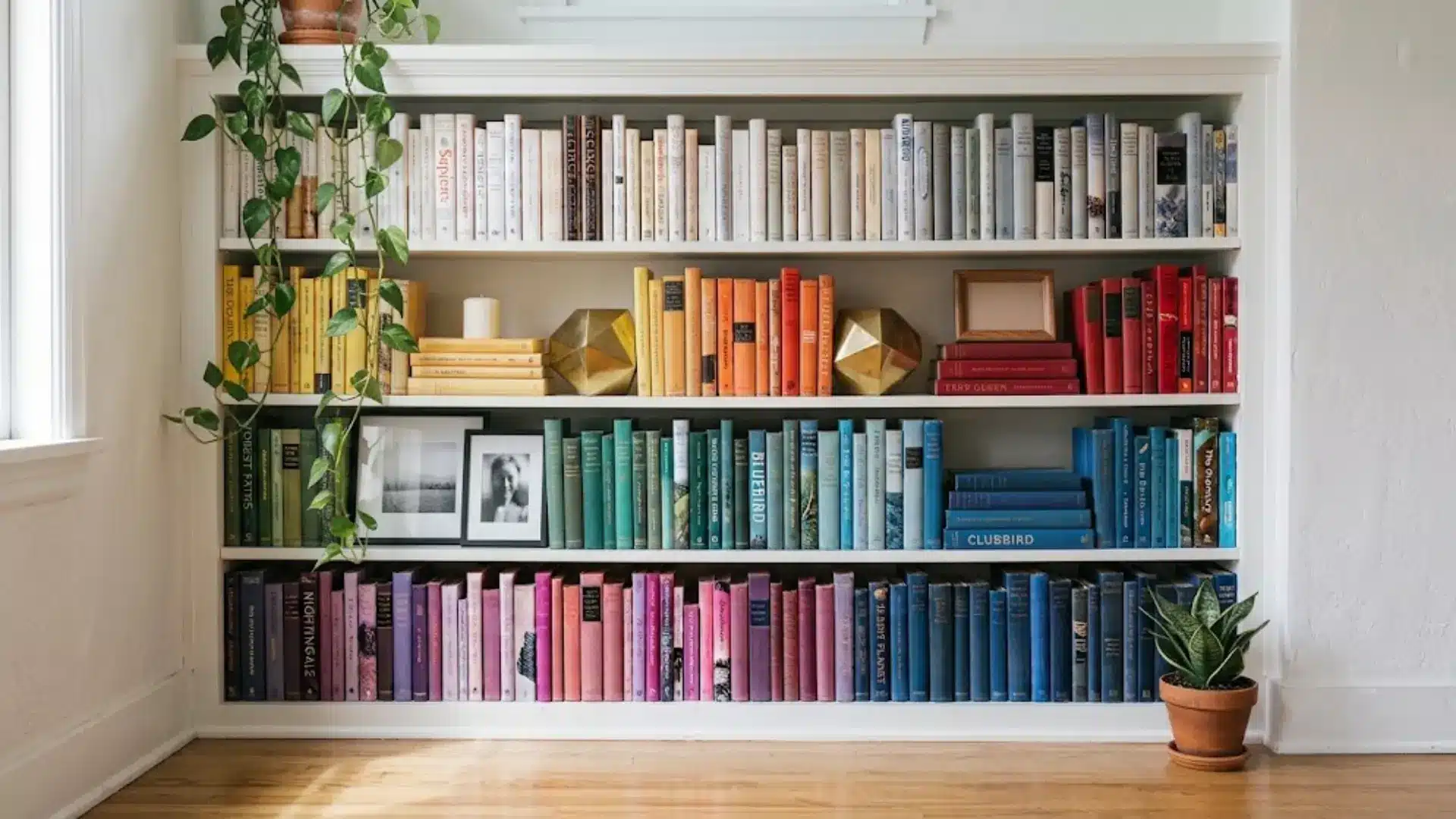
Now start adding personality with a few framed photos or small art prints. Leaning a frame against the back of the shelf, slightly behind a stack of books, creates depth without taking up wall space.
Mix one or two frame sizes so the layering feels natural rather than forced.
Keeping all your frames in a similar color, like black or warm wood, helps tie the shelf together, even when the images inside are completely different.
Step 6: Add a Ceramic Vase
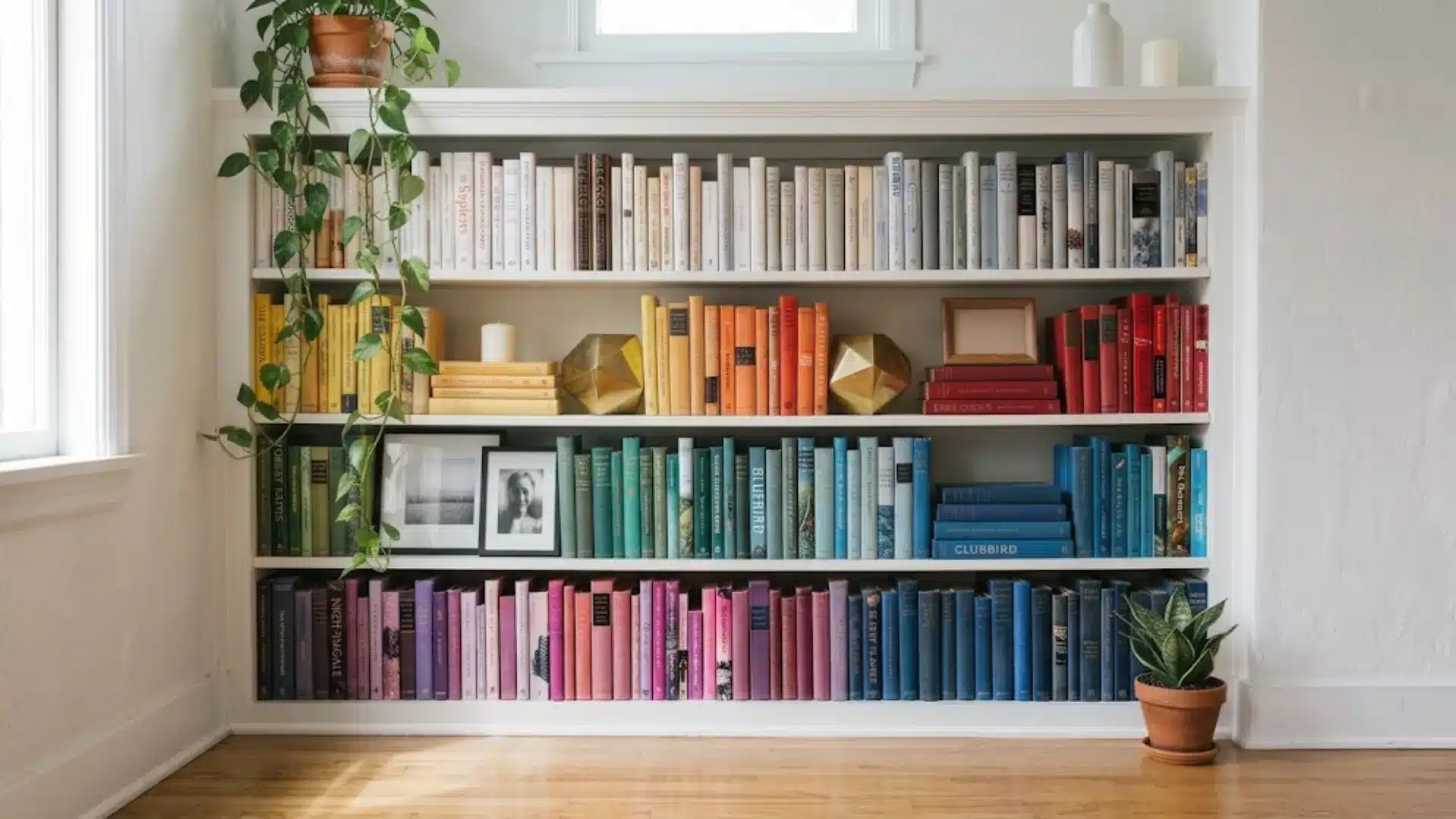
Bring in one tall ceramic vase and place it beside your shorter decor pieces to create a height contrast.
A vase like this works well as an anchor point, giving the shelf a gentle rise and fall instead of everything sitting at the same level.
If the vase looks too tall on its own, set a shorter item next to it rather than removing height, since contrast is what makes the shelf feel intentional instead of flat.
Step 7: Add a Coffee Table Book as a Base Layer
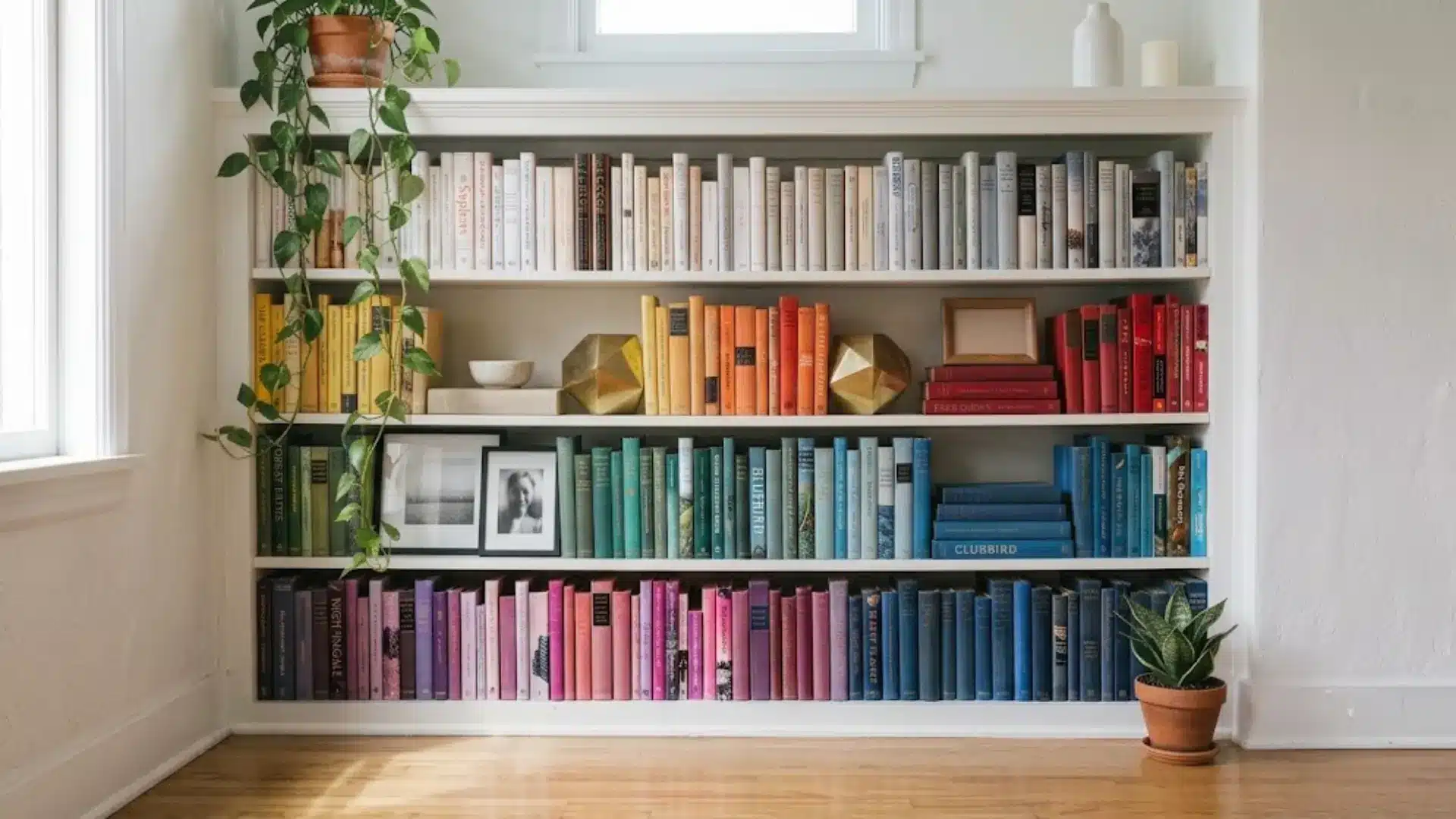
Lay one or two thick decorative books flat on a shelf to act as a base for smaller objects.
Choose books with a plain or textured cover rather than a busy spine, since they are working as a surface now, not as reading material. Set a small object, like a candle or a little dish, on top to give it purpose.
This base layer adds height variation and gives later additions a place to sit instead of floating directly on the shelf.
Step 8: Add One Accent Candle
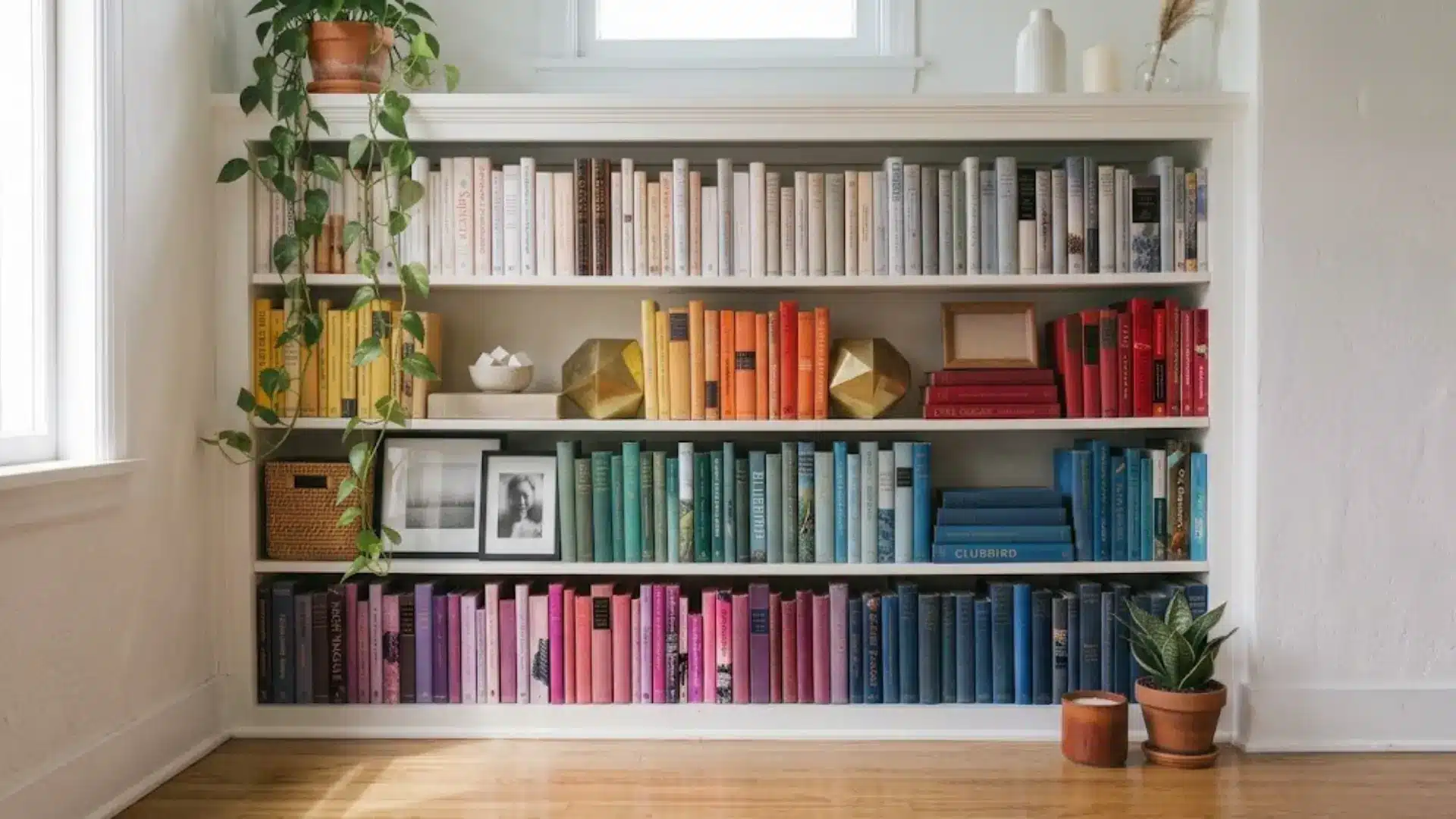
Bring in a single object in a color that stands out against the neutral palette already on the shelf, like a terracotta vase, a rust colored candle, or a small ceramic bowl.
This one piece becomes your repeating accent, something you can echo elsewhere later without needing to add several more colors.
Keep every other addition neutral from this point forward, since one accent color reads as intentional, while three or four scattered colors start to look random.
Step 9: Mix Textures on Every Shelf
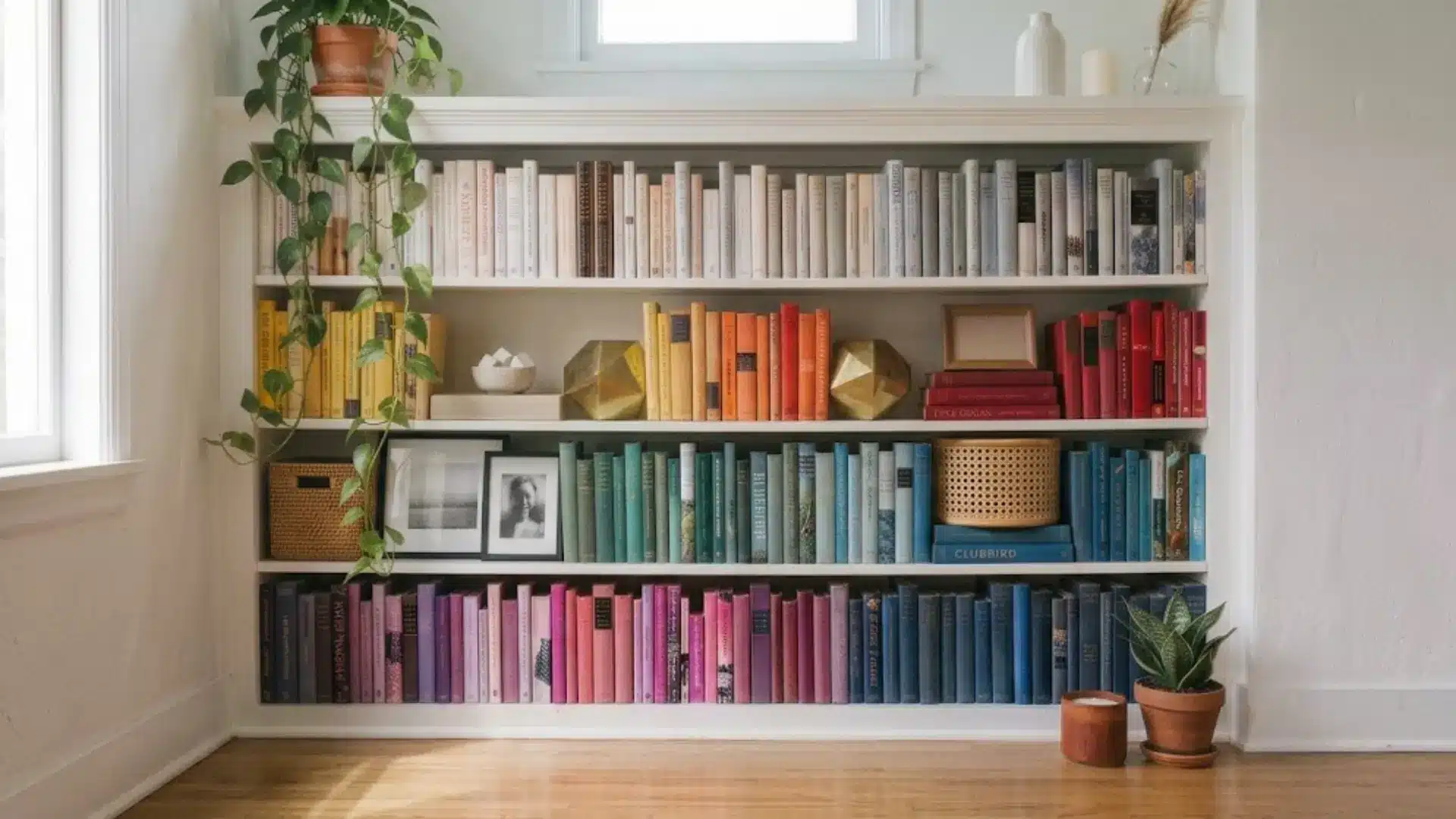
Even with a tight color palette, texture keeps the shelf from feeling flat. Combine a few different materials, such as a matte ceramic vase, a woven basket, a piece of glass, and something made of wood or metal.
These textures catch light differently and add richness even when everything is close in color.
Try to include at least two or three textures per shelf so nothing feels one-note, especially once the color palette has narrowed everything down.
Common Mistakes to Avoid Before You Style
A few habits can ruin a good bookshelf before starting. Keep these in mind.
- Packing every shelf completely full, which leaves no room for decor to breathe.
- Leaving books in no particular order, which makes the whole unit feel random instead of intentional.
- Mixing too many colors or materials at once, which pulls focus in too many directions.
- Skipping height variation, which leaves every shelf feeling flat and at the same level.
- Adding decor before editing leads to clutter rather than a curated look.
Knowing what to avoid makes the following step-by-step process much easier to apply correctly.
Frequently Asked Questions (FAQs)
What Is the Rule of Three in Bookshelf Styling?
The rule of three means grouping decor in sets of three rather than pairs or single items. Odd-numbered groupings feel more natural and visually balanced than even-numbered pairs.
How Many Books Should Be on a Shelf?
There is no fixed number, but most styled shelves work best around half full per shelf. This leaves room for decor pieces without making the shelf feel empty or sparse.
How Do You Style a Bookshelf without It Looking Cluttered?
Edit down before adding decor, keep five to seven pieces per shelf, and stick to a simple color palette. Negative space matters just as much as what you add.
What Decor Items Look Good on a Bookshelf?
Vases, candles, small framed photos, plants, bookends, and woven baskets all work well. Choose pieces that vary in height and texture rather than repeating the same shape twice.
Should All Bookshelves in a Room Match?
Not necessarily. Matching frames or color tones helps tie multiple shelves together, but the objects themselves can vary as long as the overall palette and style stay consistent.
Final Thoughts
Learning how to style a bookshelf comes down to a few repeatable steps, not natural talent or an expensive shopping list.
Sort your books, layer them in height, add texture, and edit before you finish; the same shelf that once looked cluttered can become one of the most intentional parts of the room.
Good bookcase styling is really just patience applied in the right order, working with what you already own rather than starting over.
Try these steps on your own shelf and see the difference for yourself.
Drop a comment below and let us know which step made the biggest difference for you.