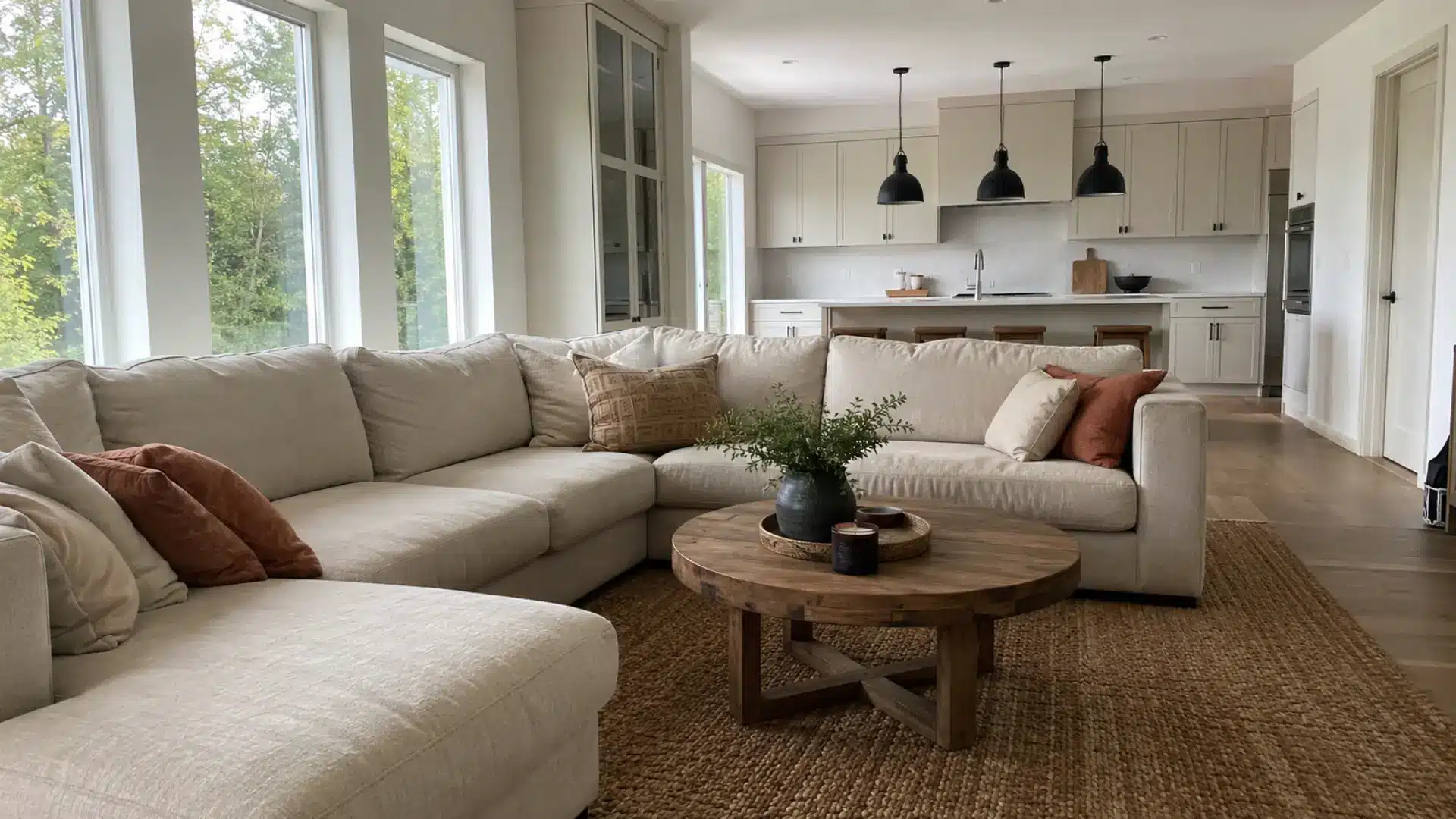

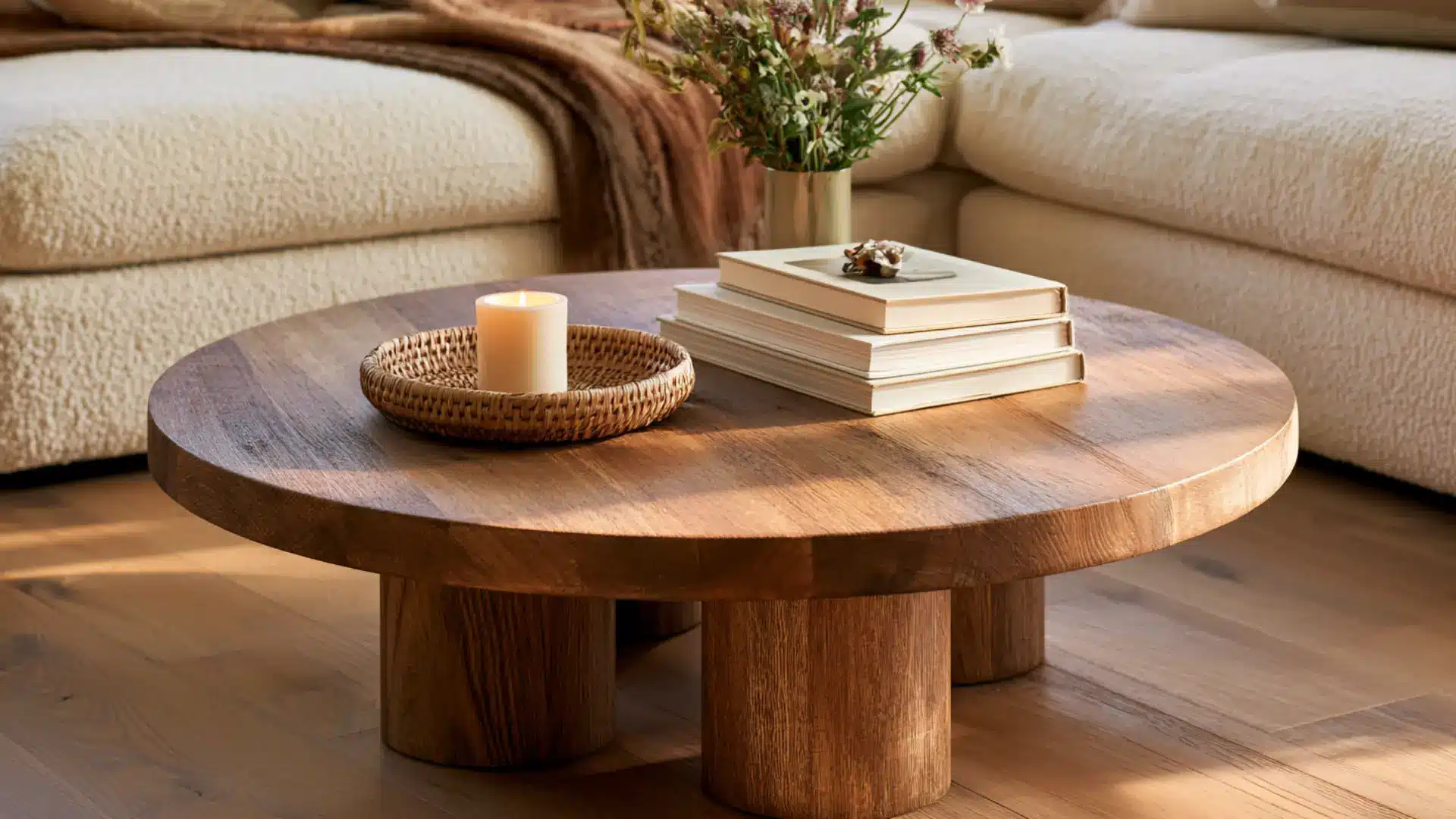
Your coffee table sees everything. Coffee rings, remote controls, feet up after a long day. Still, it is the one surface I see people plan around last.
After years of styling living rooms, I keep noticing the same pattern. People either pile the table high with random stuff, or leave it bare and call it minimalist. Neither one works.
Modern coffee table decor comes down to a handful of intentional pieces that actually earn their spot, not more stuff.
This roundup covers styling ideas, sculptural centerpieces, the tray-and-books formula I keep coming back to, and the simple rules that make any table look pulled together in minutes.
Why Coffee Table Decor Matters More Than You’d Think?
In my work styling living rooms, I have come to see a coffee table as small but heavy on visual weight.
It sits at eye level, right in the center of the room, which means it is often the first thing people notice when they walk in.
A cluttered or bare table can make even a well-designed space feel unfinished.
Styled thoughtfully, it does the opposite. It ties together your sofa, rug, and walls into one cohesive look, almost like a bridge between the bigger pieces in the room.
It also sets the tone for the whole space. A few well-chosen pieces can make a room feel warm and intentional, while the wrong styling can make it feel busy or disconnected.
That is why the ideas below start with a few ground rules before getting into specific looks.
4 Rules Every Well-Styled Coffee Table Follows
Before you buy a single tray or candle, learn the framework I lean on for every styling job.
These four rules turn random objects into an intentional vignette. Master them, and every idea below will just work.
- Odd Numbers Rule: Groupings of 3 or 5 feel more natural and visually balanced than pairs.
- Vary the Heights: Mix tall (vase), medium (books), and low (tray) elements to create rhythm.
- Leave Breathing Room: Do not cover every inch; negative space lets each piece stand out.
- Mix Materials and Shapes: Pair wood with glass, round with angular, matte with shine for contrast.
Keep these four in mind as you work through the ideas below. Once they click, arranging feels effortless
How to Decorate a Coffee Table by Shape?
Your table’s shape actually dictates how decor should sit on it. Get the shape logic right, and styling becomes intuitive instead of trial and error.
Have a look at how I approach it by shape:
| Table Shape | Best Approach | Why It Works |
|---|---|---|
| Round | One centered statement piece | Favors a single focal point |
| Rectangular | 2–3 styled zones, repeated elements | Creates visual rhythm |
| Square | Symmetrical pairs or centered grouping | Keeps the look balanced |
| Glass/Marble | Lightweight, soft-bottomed pieces | Prevents scratches, lets shine show |
Match your decor to your table’s shape first, then layer in a design style, like the ones below, to make it feel like yours.
A quick note before you get started: I have personally tried and styled a handful of the ideas below in my own work, and the rest are inspirations I have picked up and collected over time from other stylists, client homes, and design sources I trust.
Minimalist & Sculptural Coffee Table Decor Ideas
Less is not lazy; it is confident, and it is the approach I reach for most often when a table feels overloaded. When you strip styling down to a few intentional pieces, every object gets room to stand out.
This is coffee table decor for people who want their table to feel curated, not cluttered.
1. Single Statement Centerpiece
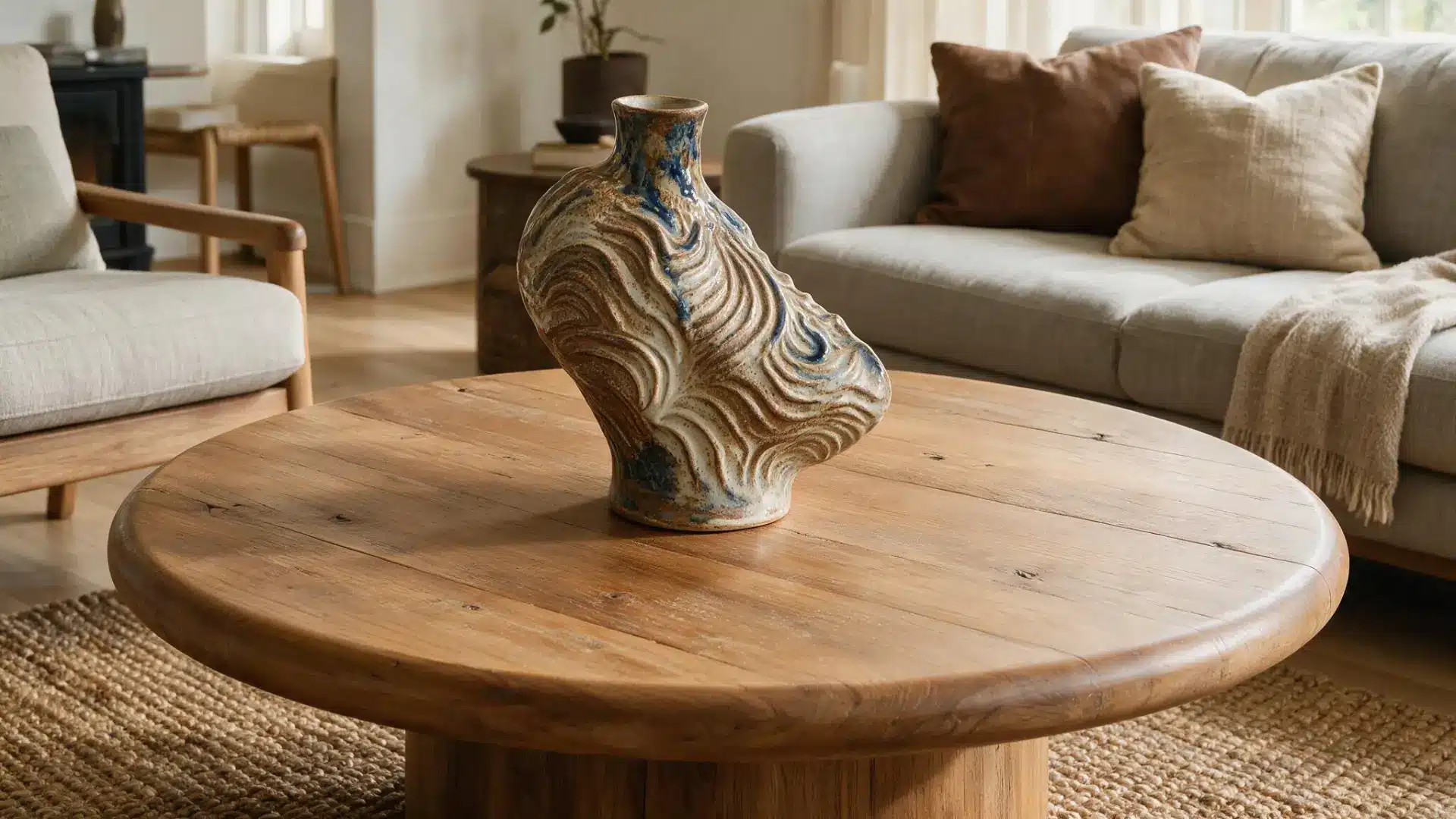
One striking object can do more work than ten small ones.
Choose a vase, bowl, or oversized decorative piece with a bold silhouette and let it stand as the single focus of the table.
This suits smaller tables or minimalist rooms where clutter competes with calm. The key is scale; go slightly bigger than expected so it reads as deliberate.
Styling Tip: Place it slightly off-center for a more natural, lived-in look.
2. Sculptural Object Display
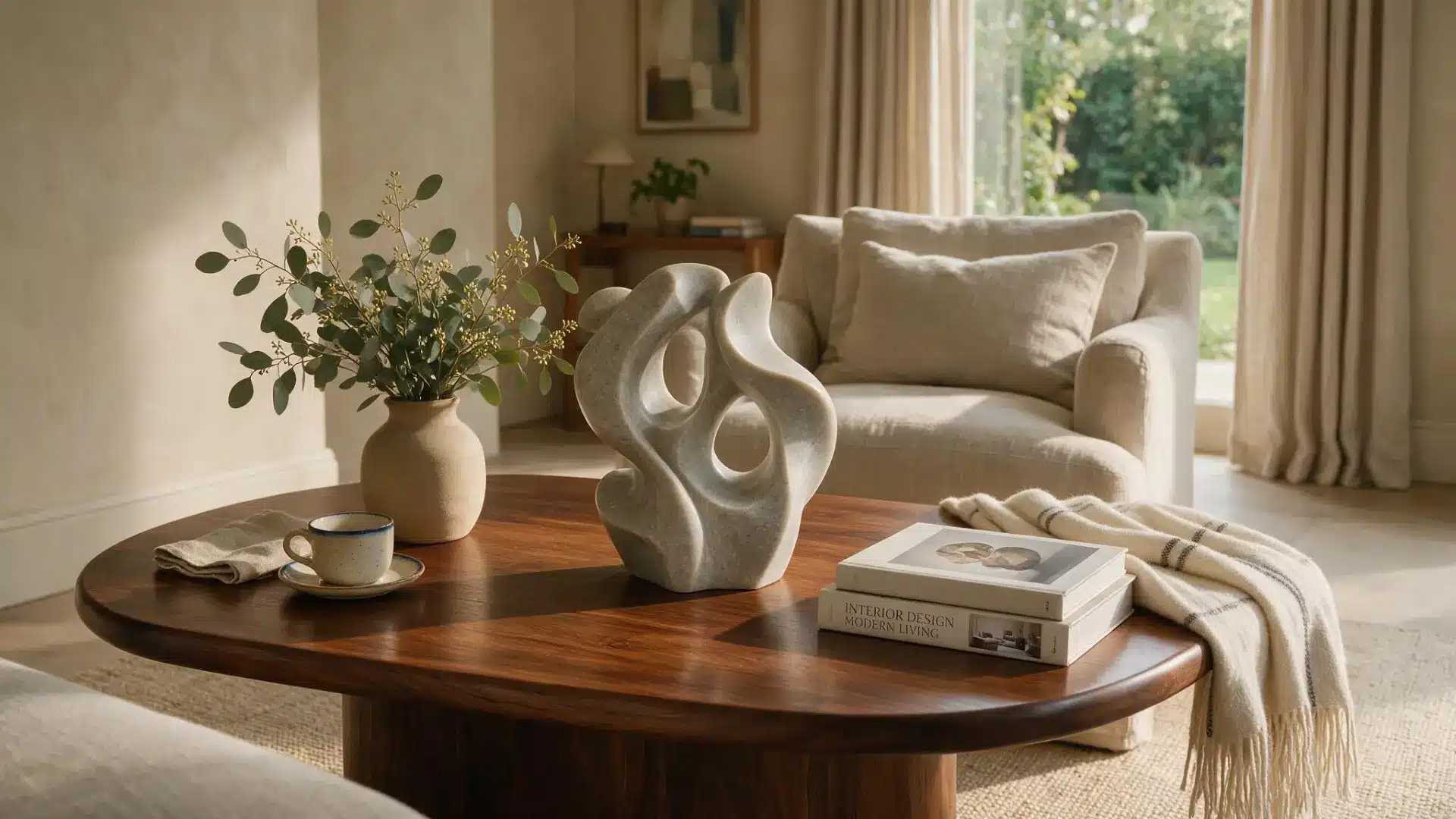
Abstract, artistic forms bring a gallery feel to your living room.
Choose sculptural pieces in resin, stone, or metal with unusual curves or angles that catch light differently through the day.
Unlike a single centerpiece, this idea focuses on artistic shape over function; the object exists purely to be admired. Avoid symmetry to keep it feeling like art.
3. Acrylic or Glass Accent Pieces
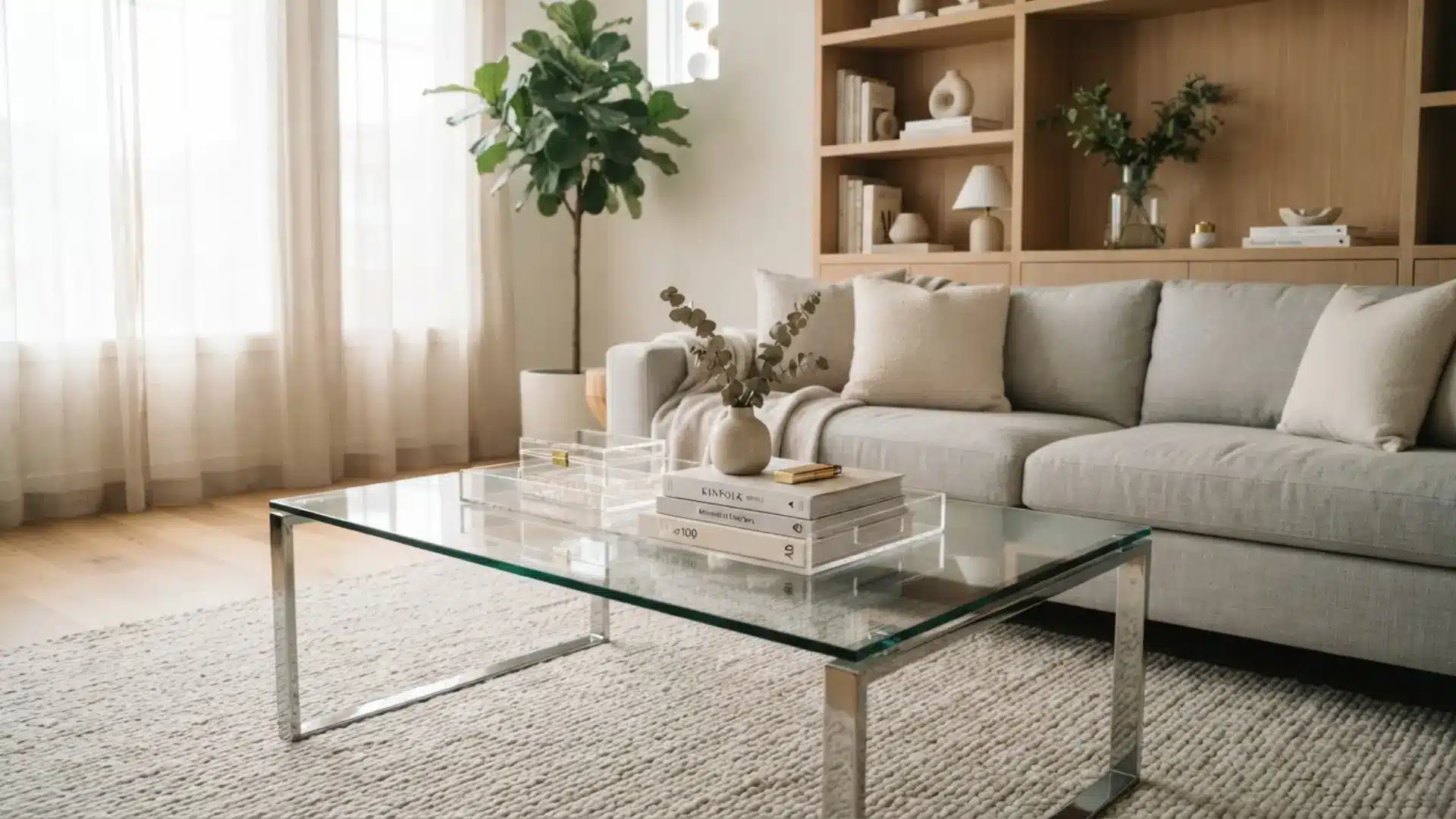
Clear and acrylic pieces add polish without visual bulk.
A lucite box, glass cloche, or acrylic riser lets your table’s material show through, keeping the whole vignette feeling light.
This works especially well on smaller tables where solid objects would feel heavy. It is a transparency-first approach, distinct from opaque sculptural or ceramic pieces elsewhere on this list.
4. Monochrome Styling
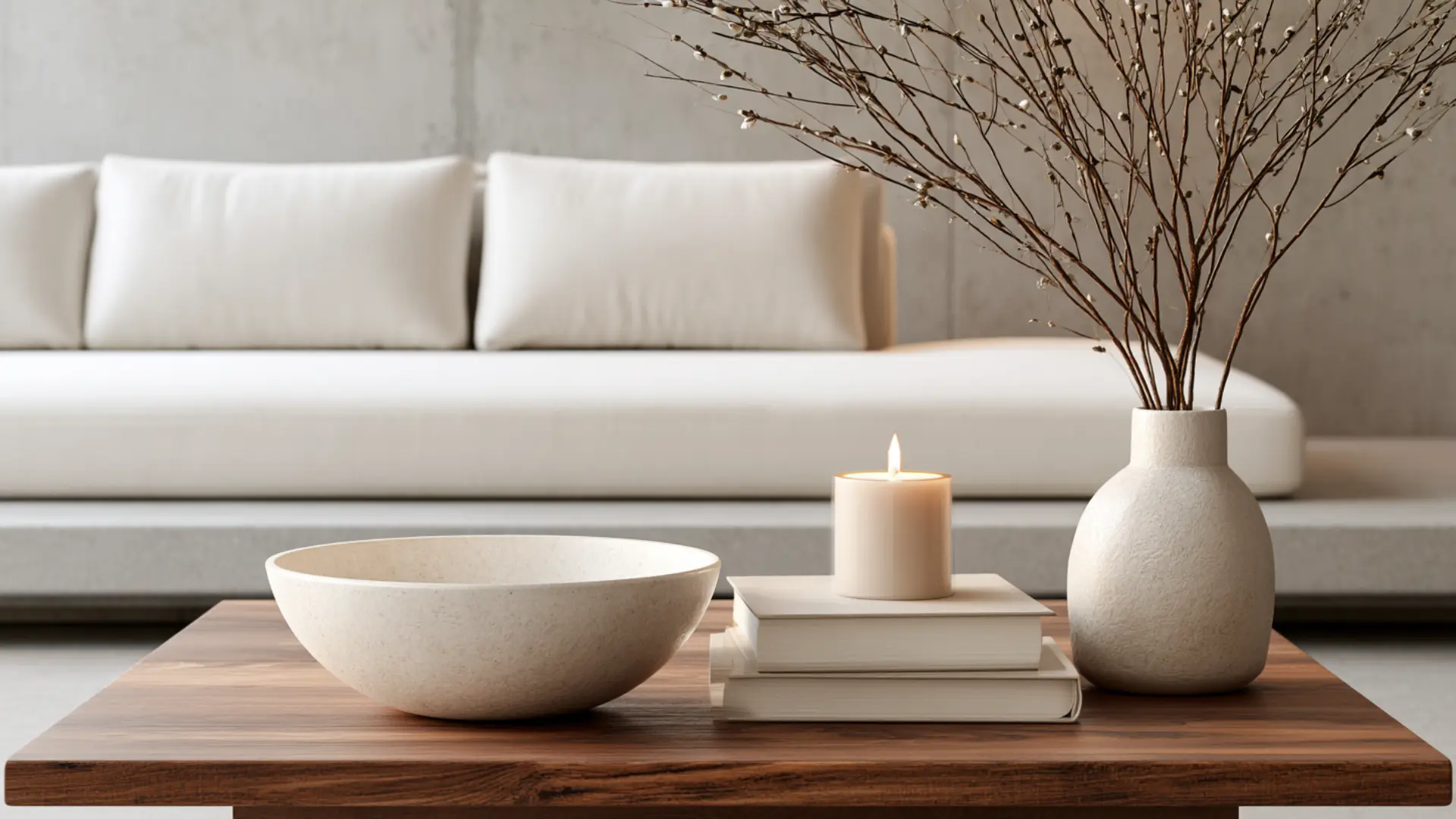
Keeping every object in one tonal family, whether all white, all black, or all sand, creates instant cohesion across an entire vignette, not just one piece.
This method removes decision fatigue and guarantees a polished result.
Mix textures within the same color family, like matte against glossy, so the palette still feels layered rather than flat.
Styling Tip: Add one metallic accent to break the monochrome without breaking the theme.
5. Negative Space as Design
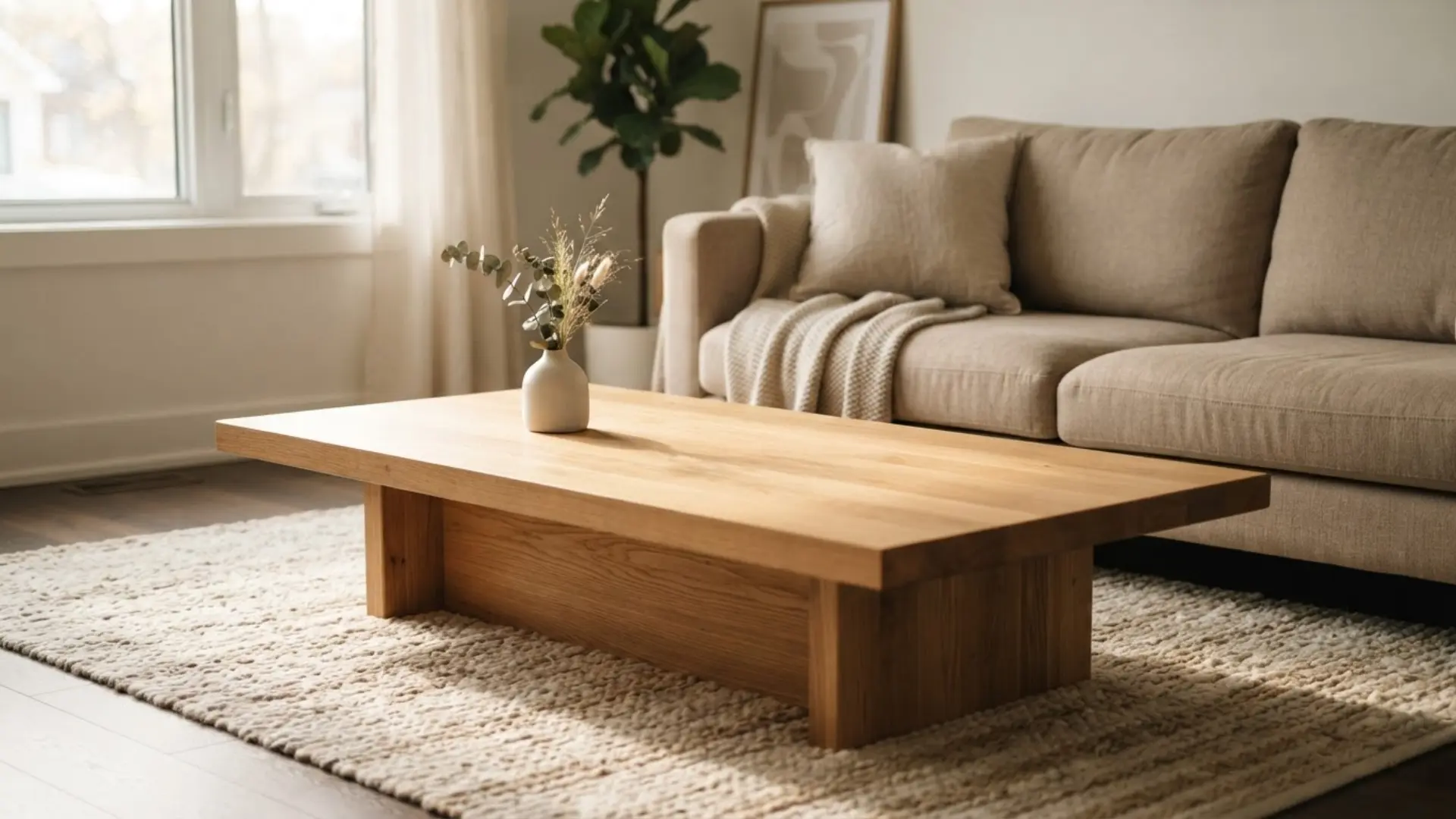
Sometimes the boldest design choice is restraint across the whole table, not just around one object.
Leaving generous open space is intentional styling that draws the eye to what little you did include. This is a whole-table philosophy, unlike centerpiece or monochrome ideas; it’s about what you leave off entirely.
Nature-Inspired Coffee Table Decor Ideas
Bring the outdoors in without overthinking it. Nature-inspired coffee table decor is one of my go-to fixes for a room that feels flat, and it softens hard edges while adding life to any space.
These ideas are low-effort, high-impact, and easy to refresh with the seasons.
6. Leafy Branch Arrangement
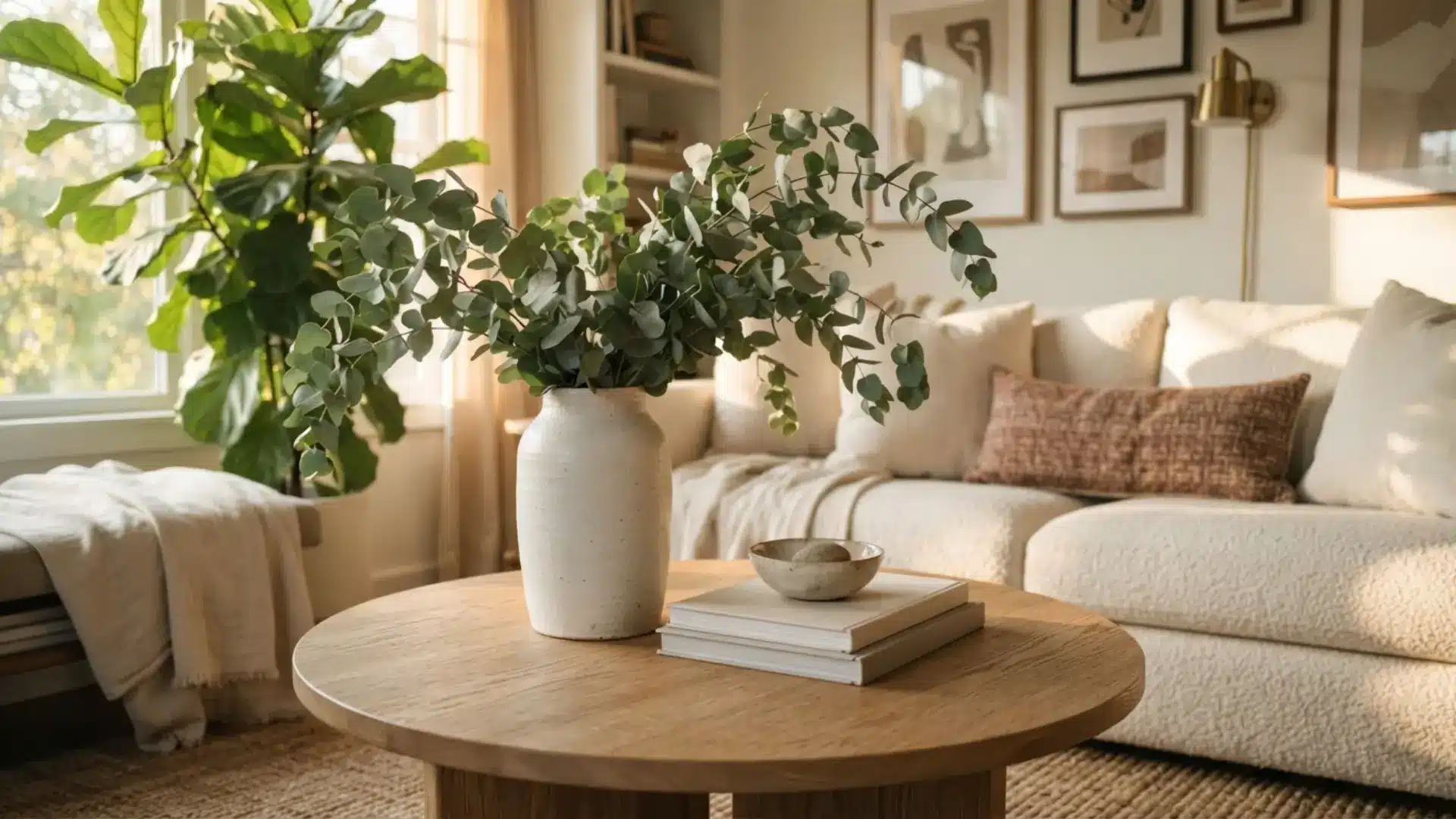
Tall branches, like magnolia, eucalyptus, or olive, add height and organic movement to a table that feels too flat.
Place them in a slim, tall vase so branches arch naturally rather than looking forced. This works as the “tall” element in a height-varied grouping, distinct from lower flower or stone accents nearby.
7. Small Potted Plant
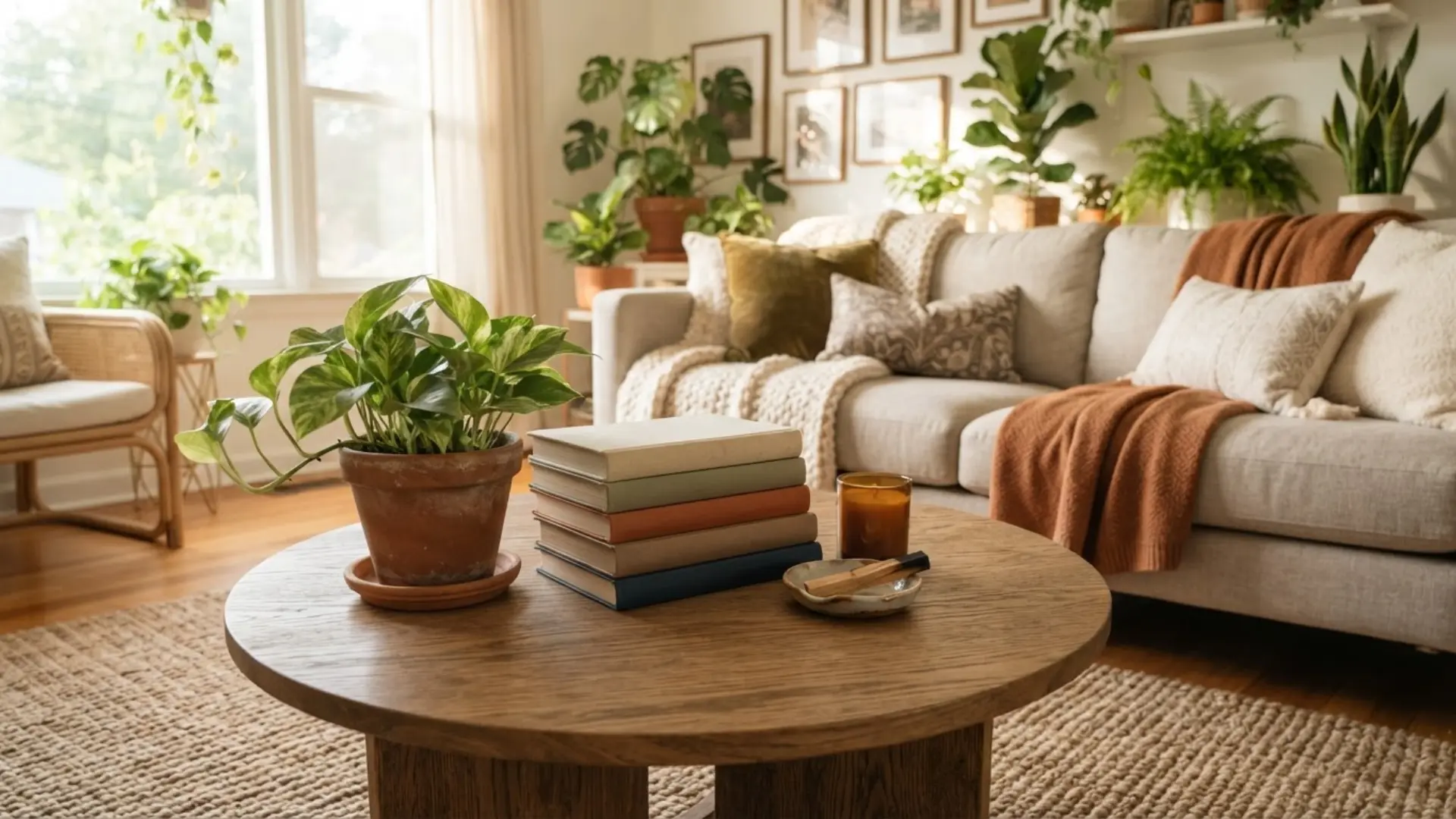
A compact potted plant, such as a pothos, succulent, or snake plant, brings living color without much maintenance.
Choose a pot that complements your table’s material: terracotta for wood or ceramic for glass.
Unlike cut branches or bouquets, this is a permanent, growing addition, making it one of the most versatile and long-term options here.
Styling Tip: Rotate the pot weekly so growth stays even on all sides.
8. Fresh Flower Bouquet
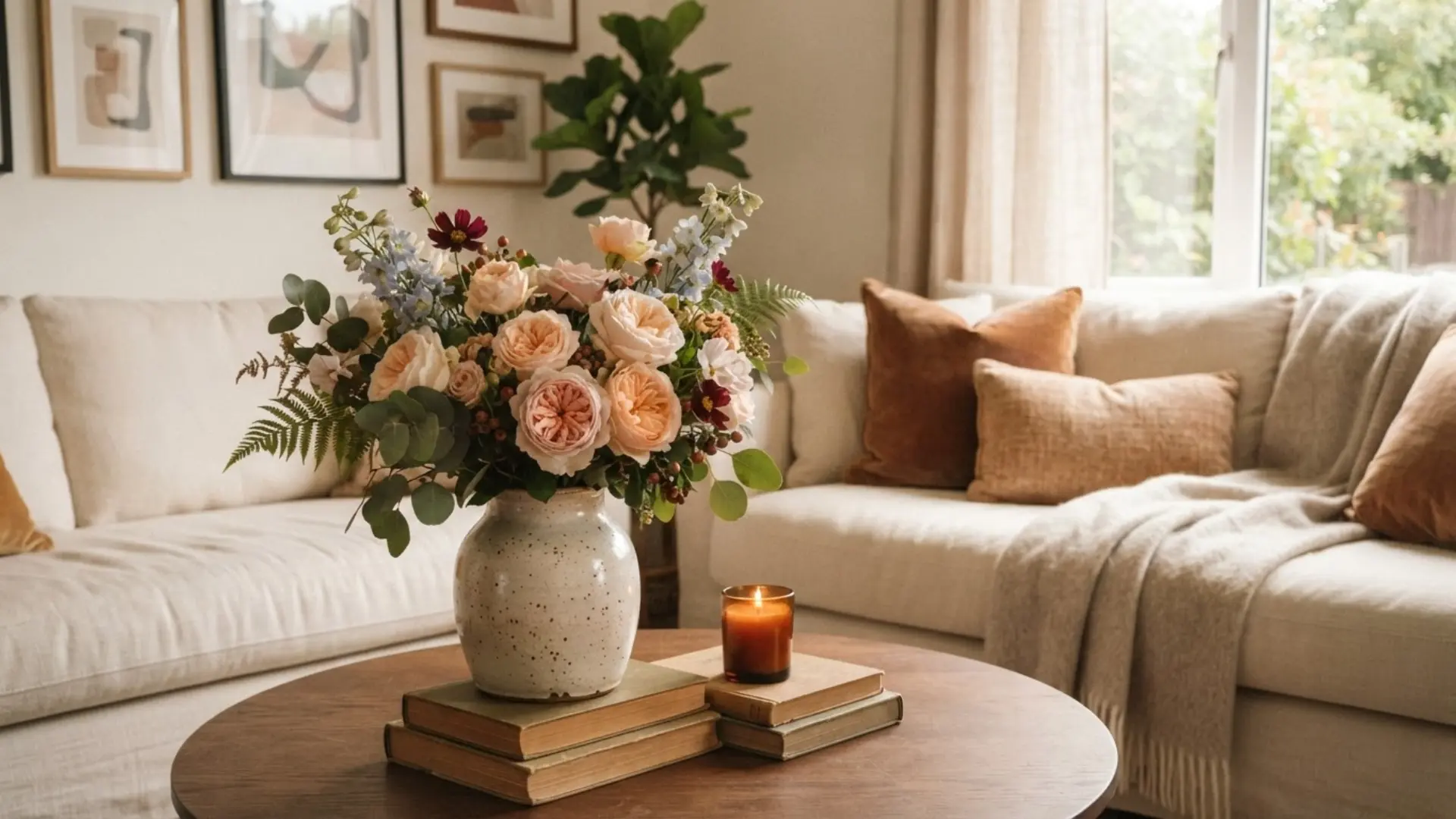
Nothing signals “lived-in” quite like fresh flowers on a coffee table.
Choose seasonal blooms in a vase matching your palette, keeping the arrangement loose and asymmetric rather than tight or formal.
Unlike potted plants, bouquets are meant to be temporary and rotated often, making them the easiest way to instantly refresh a space.
9. Dried Botanical Stems
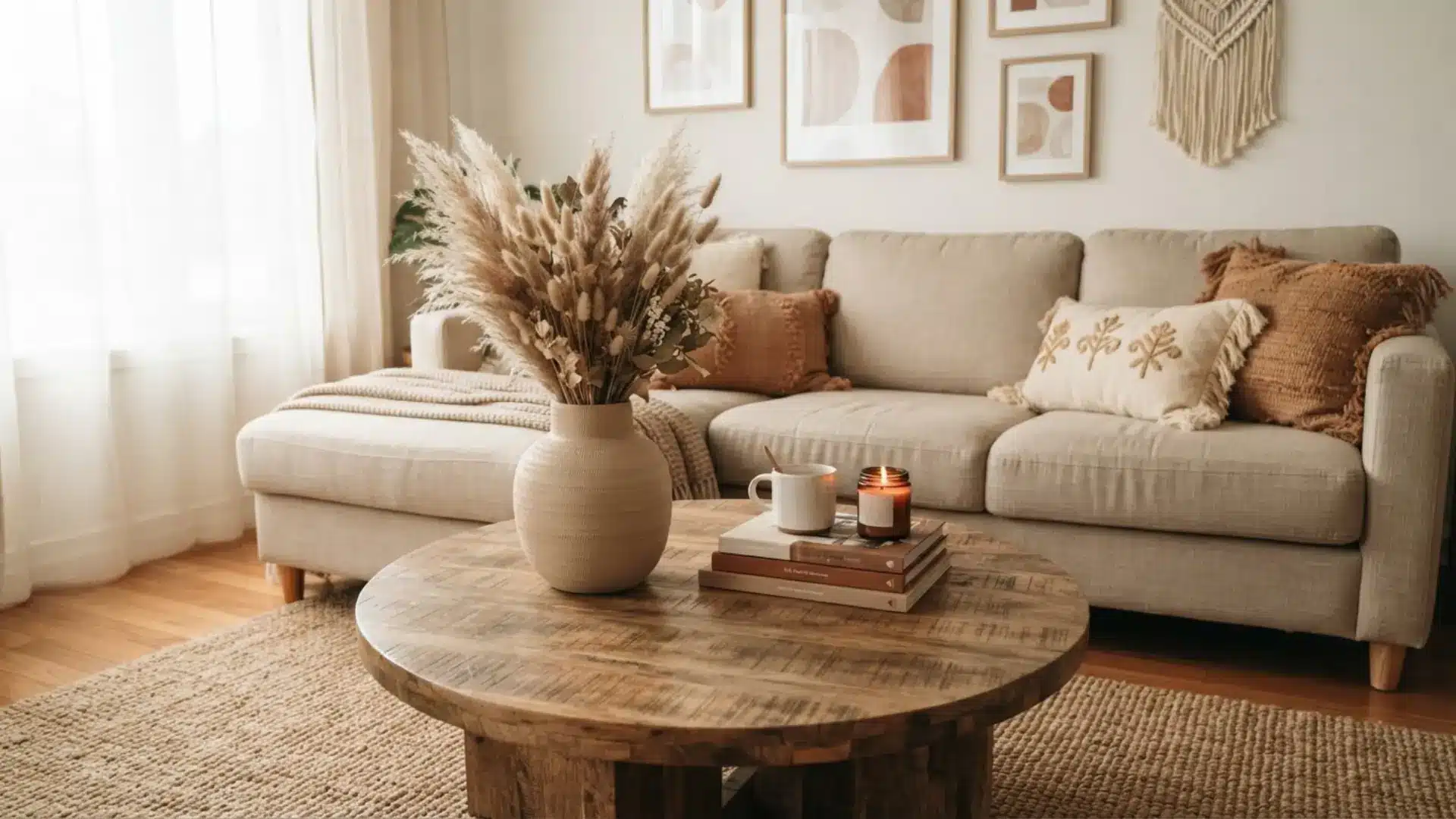
For a low-maintenance alternative to fresh flowers, dried stems like pampas grass, lunaria, or bunny tails offer texture without upkeep or wilting.
Their muted, neutral tones suit almost any palette, and they age gracefully over months instead of days.
This makes them the “forever” version of the fresh bouquet idea above.
Styling Tip: Fluff dried stems gently by hand to release shape lost in shipping.
10. Stone or Mineral Accents
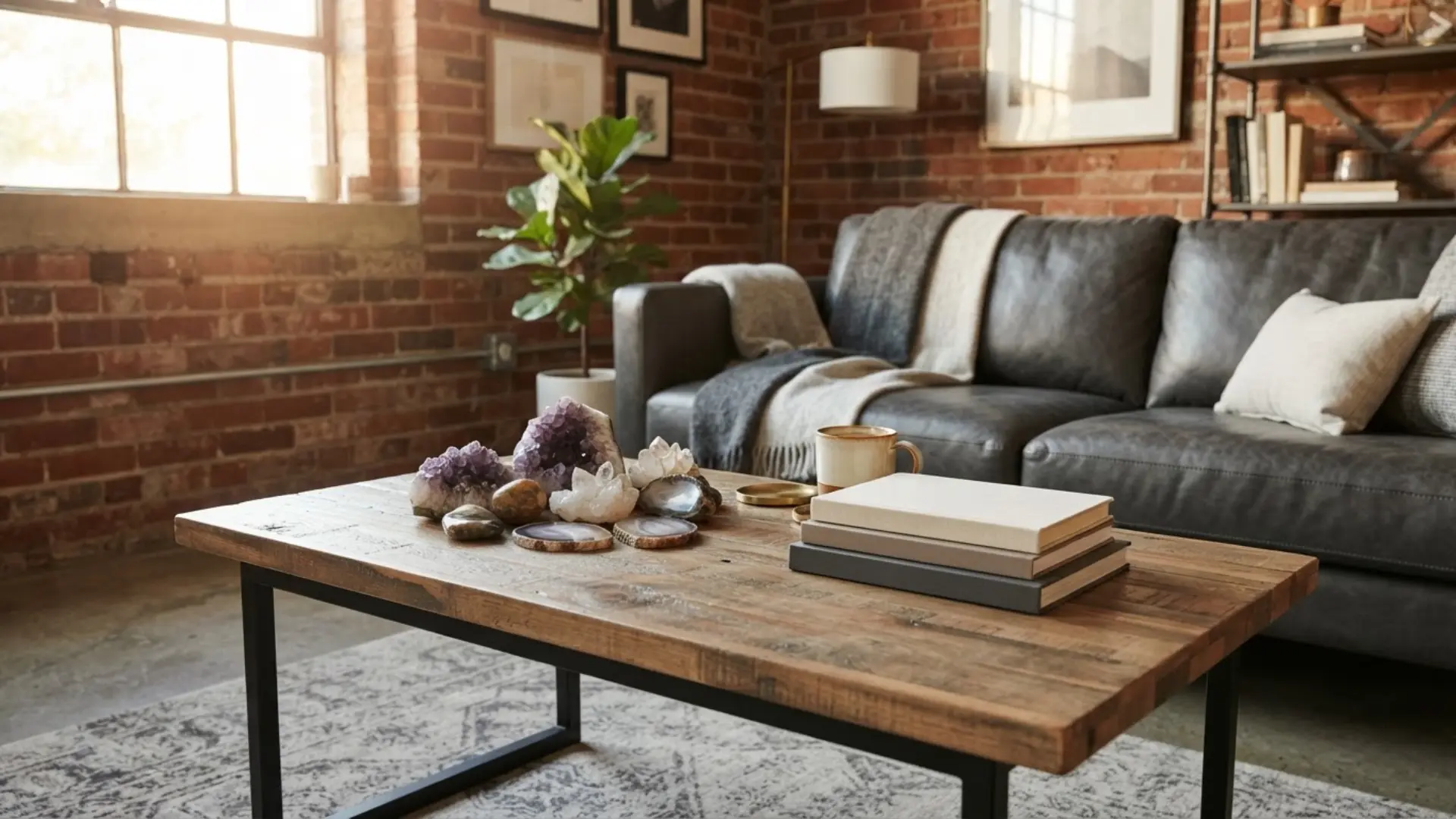
Raw geodes, polished mineral chunks, or small crystal clusters add earthy, grounded texture as standalone nature pieces.
Place them beside books or trays to introduce organic weight without water or upkeep.
Unlike the wood-and-stone pairing elsewhere, this idea celebrates minerals alone, as small curated collectibles rather than part of a combo.
Books & Tray Styling Coffee Table Decor Ideas
I treat trays and books as the backbone of good coffee table decor; they anchor everything else. Master this formula, and you’ve got a foundation that works in any room, any season, any style.
11. Classic Tray-Book-Candle Formula
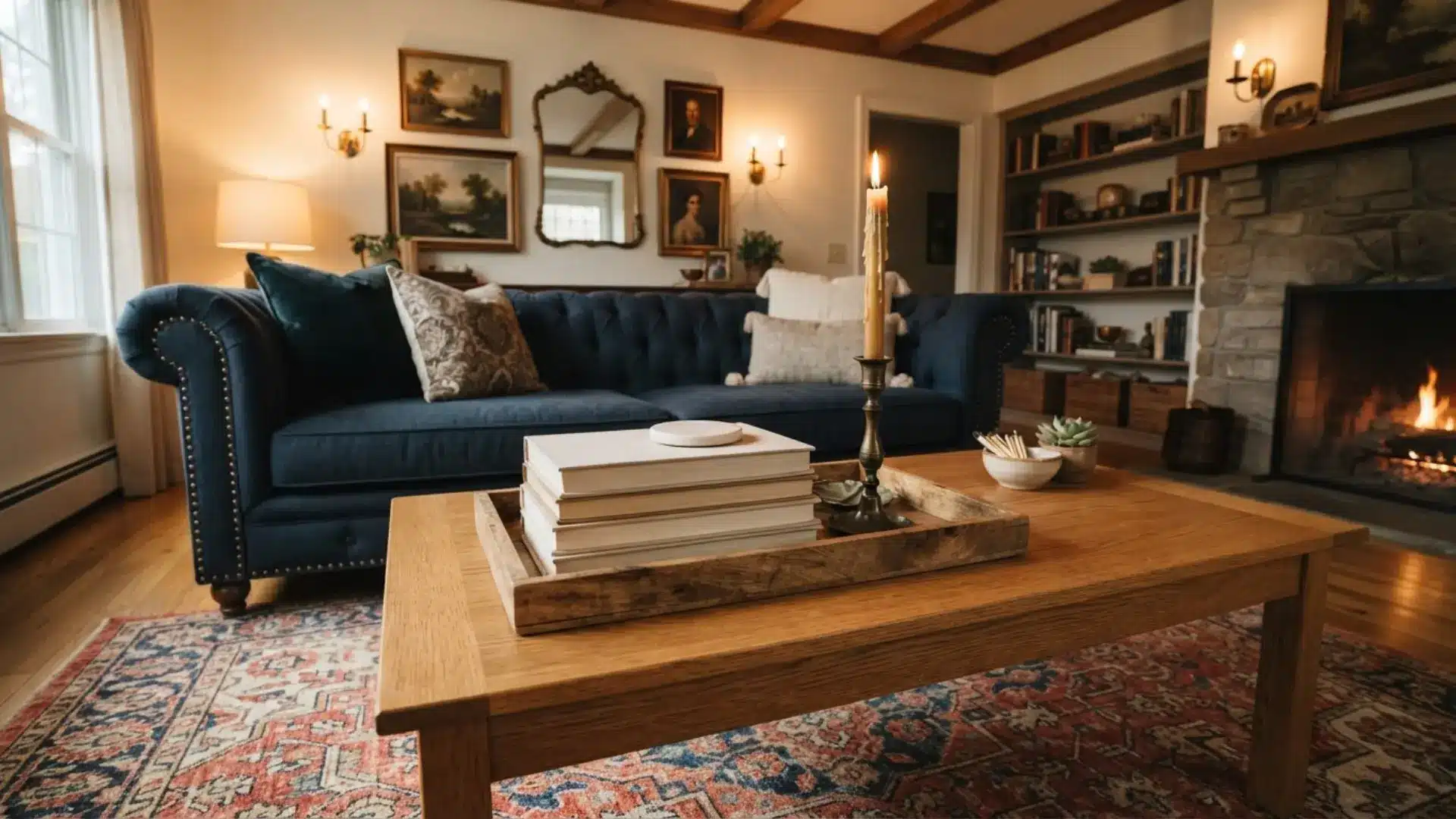
This tried-and-true trio uses a tray as the base, books for mid-height, and a candle for the tallest point.
The tray visually contains the grouping while the layered heights create instant rhythm. Unlike a standalone book stack, this idea combines three elements into one cohesive, foolproof vignette.
Styling Tip: Choose a candle taller than the book stack for balanced proportion.
12. Stacked Coffee Table Books
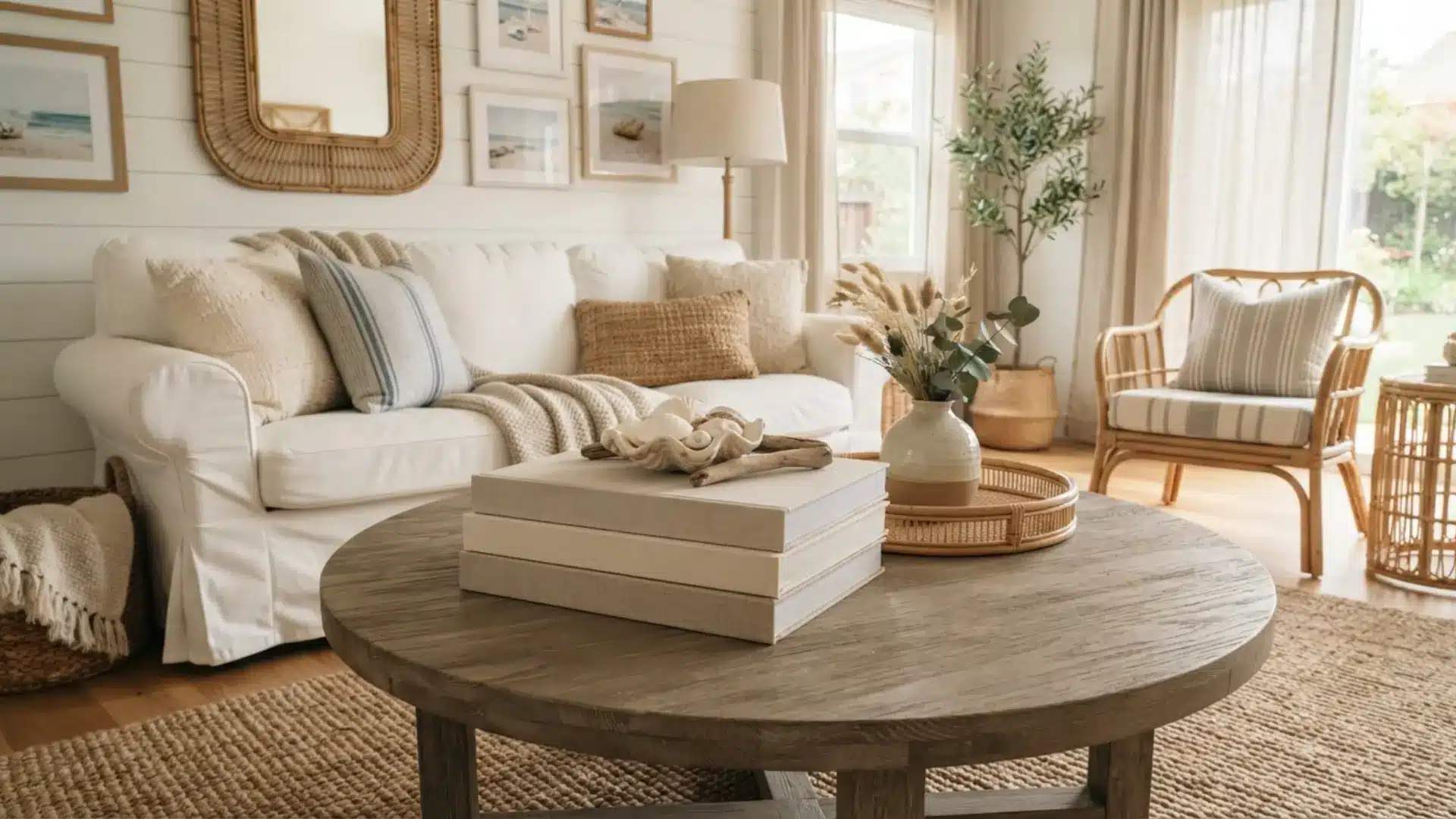
Focus purely on the books themselves here; choose two to three oversized titles with interesting spine colors, stacking the largest at the bottom for stability.
This differs from the tray-book-candle formula by treating the book stack as its own standalone feature, finished with one small topper like a paperweight or trinket.
13. Woven Tray Base
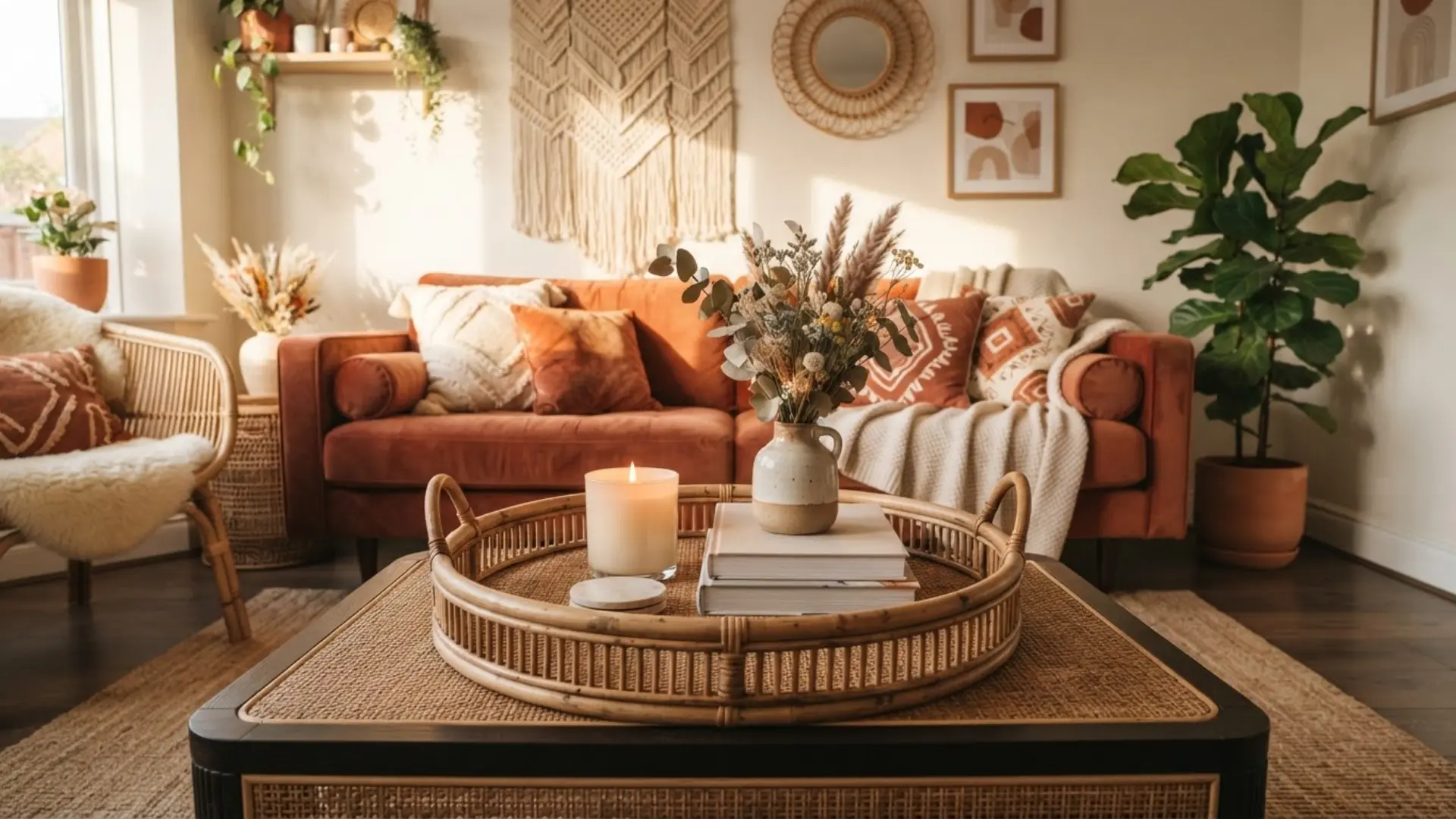
Swap a solid tray for rattan or seagrass to add texture beneath your styled objects.
This idea is specifically about the tray as a functional container that organizes smaller items, softening the look of glass or metal tables underneath.
14. Layered Trays for Height
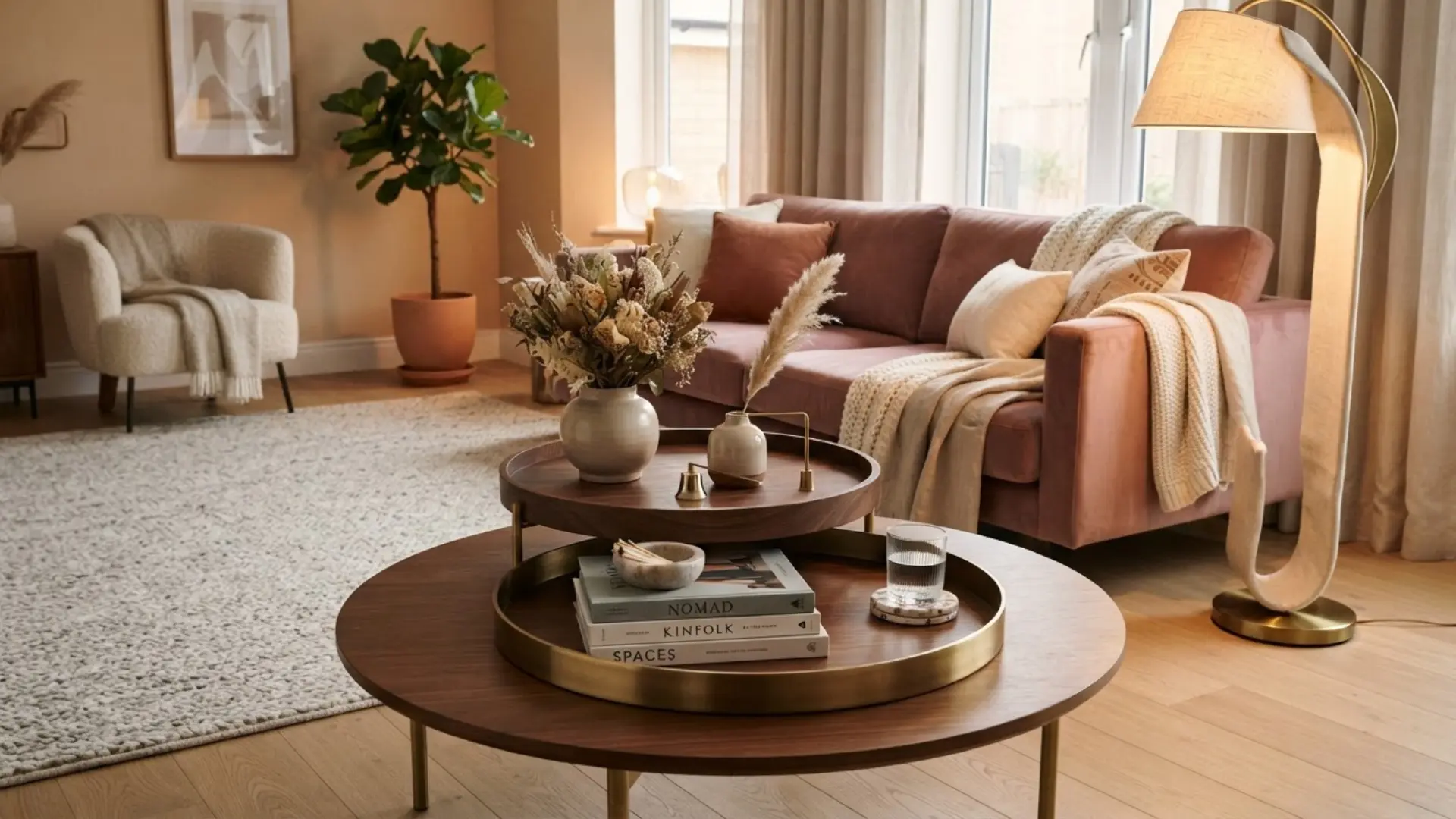
Stack two trays of different sizes to build a tiered display, elevating whatever sits on top without extra furniture.
Unlike a single woven tray base, this idea uses the trays themselves as the height-building tool, ideal for larger tables that need more visual structure.
Styling Tip: Choose trays in the same material but different finishes for subtle contrast.
15. Open Book Display
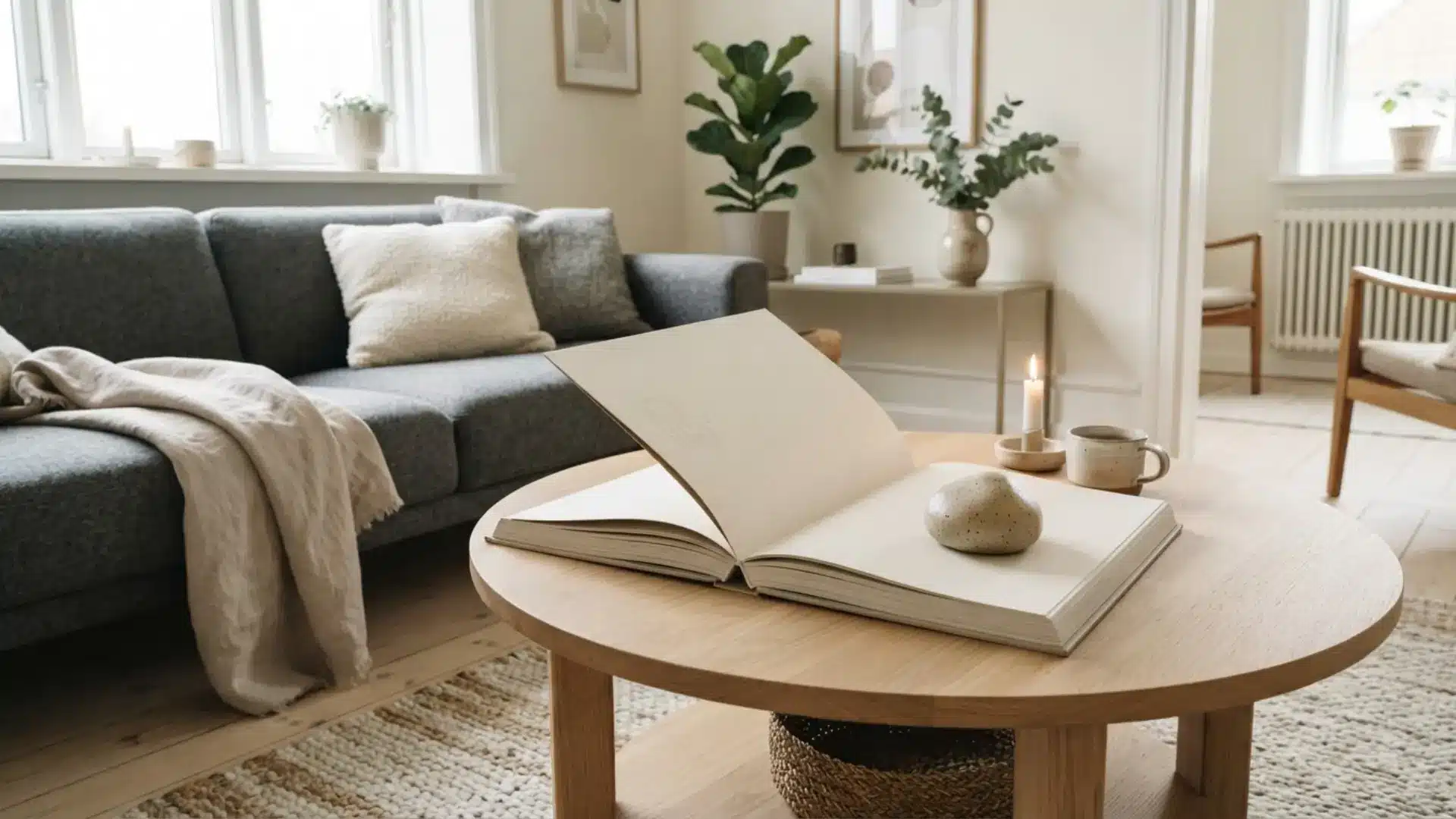
Instead of stacking books closed, prop one open to a beautiful page or image for a personal, lived-in touch.
This differs from the closed book stack by turning a single book into a visual focal point, often paired with one small object resting on the open pages.
Textural & Material Mix Coffee Table Decor Ideas
I have found great coffee table decor is not just about objects; it is about contrast.
Mixing materials and finishes turns a flat display into something layered and rich – the detail that separates memorable styling from forgettable styling.
16. Mixed Metal Accents
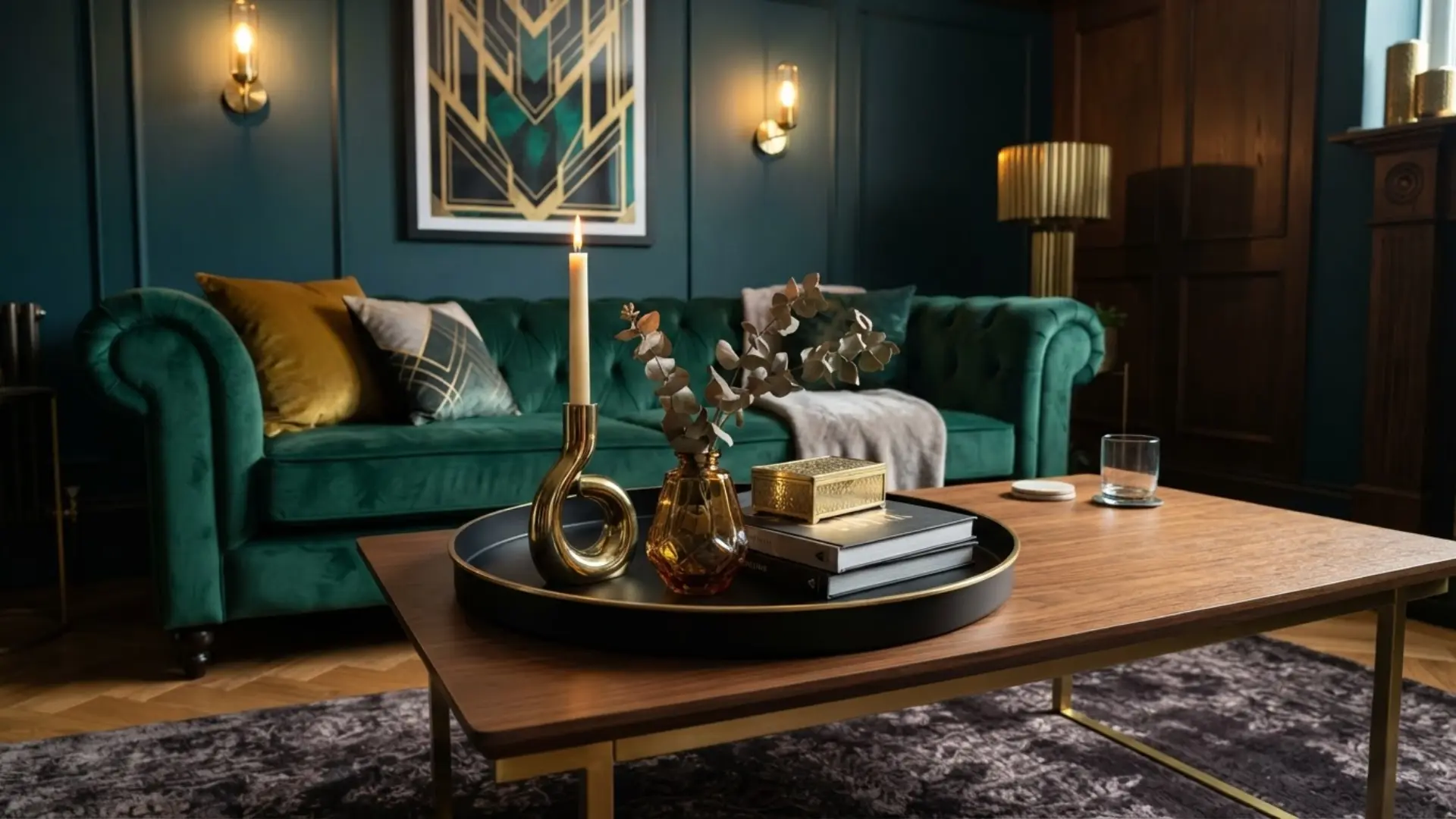
Combine gold, brass, and matte black finishes for layered depth across your display.
Do not be afraid to mix warm and cool metals; modern design has moved past matching-metals-only rules. Use metal pieces sparingly, as small trays or candle holders, so they highlight the grouping rather than overwhelm it.
17. Ceramic Bowl or Vessel
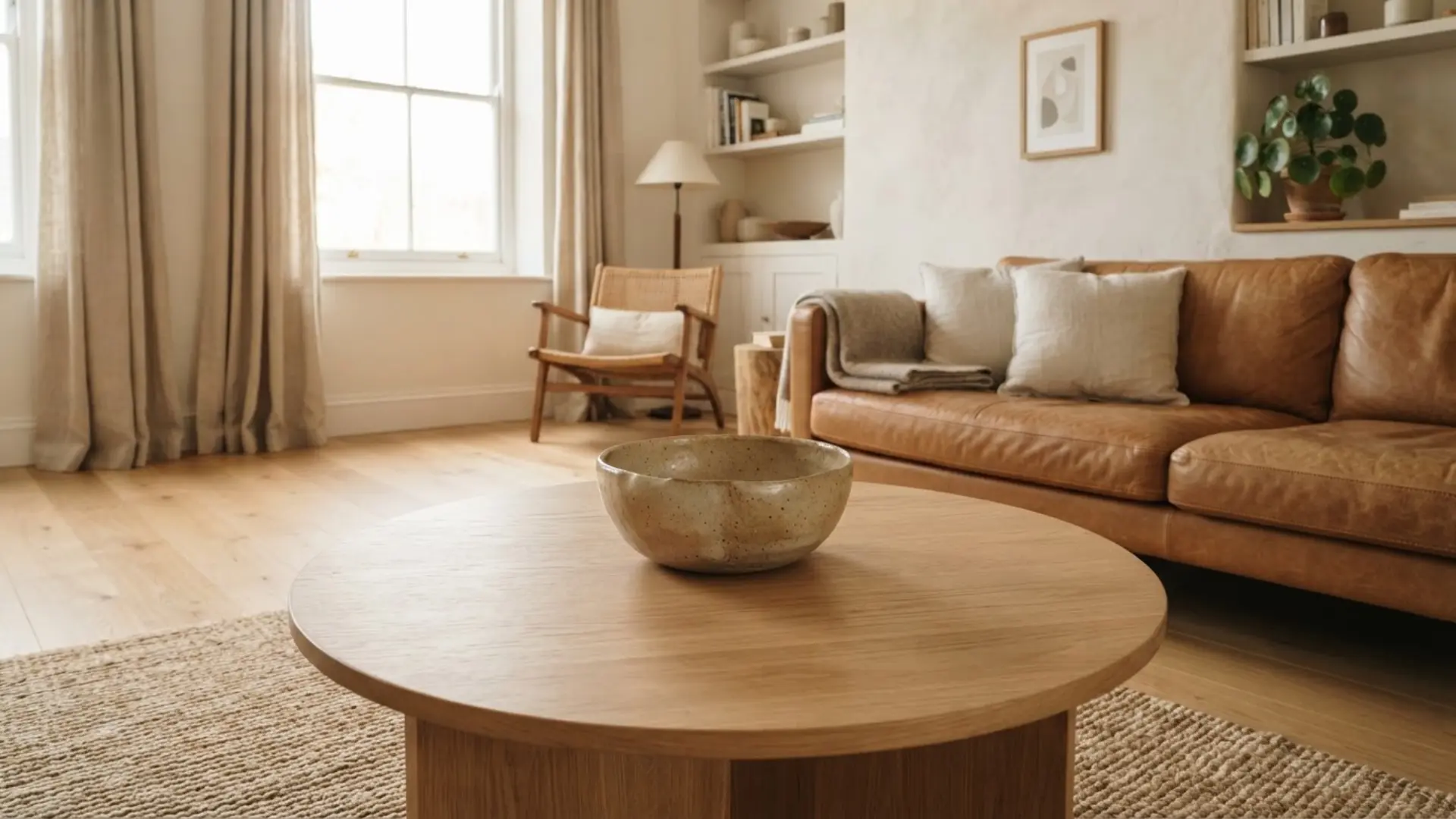
A ceramic bowl adds soft, handmade texture that contrasts against glass or metal tables.
Use it to hold small trinkets or leave it empty as its own sculptural piece.
Unlike a single statement centerpiece meant to dominate, this idea is about subtle, tactile material contrast within a larger grouping.
Styling Tip: Choose a matte glaze to soften a glossy table’s shine.
18. Wood and Stone Pairing

Pair natural wood objects with stone or marble accents for an earthy, grounded contrast; try a wood bowl beside a stacked marble coaster.
Unlike standalone stone accents in the nature section, this idea is specifically about combining two materials for timeless, complementary contrast.
19. Woven or Rattan Textures
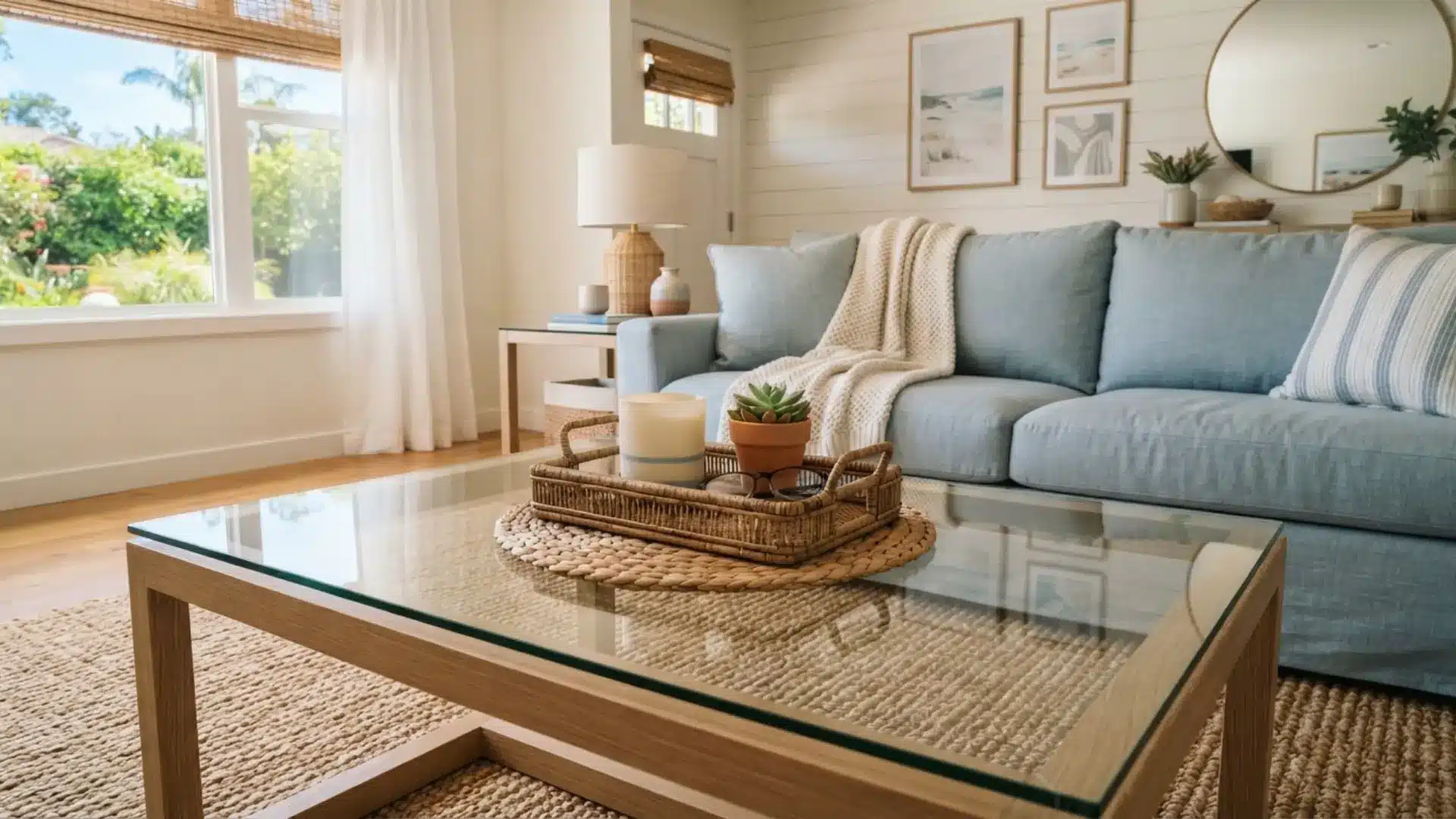
Baskets, placemats, or woven objects bring softness to hard, cold surfaces like glass or marble.
Unlike the woven tray idea earlier, this is about layering woven texture broadly across the table, as a base layer, storage piece, or standalone accent for an effortless, collected feel.
Styling Tip: Use a woven placemat under your tray to add a subtle textural layer.
20. Marble Accent Pieces
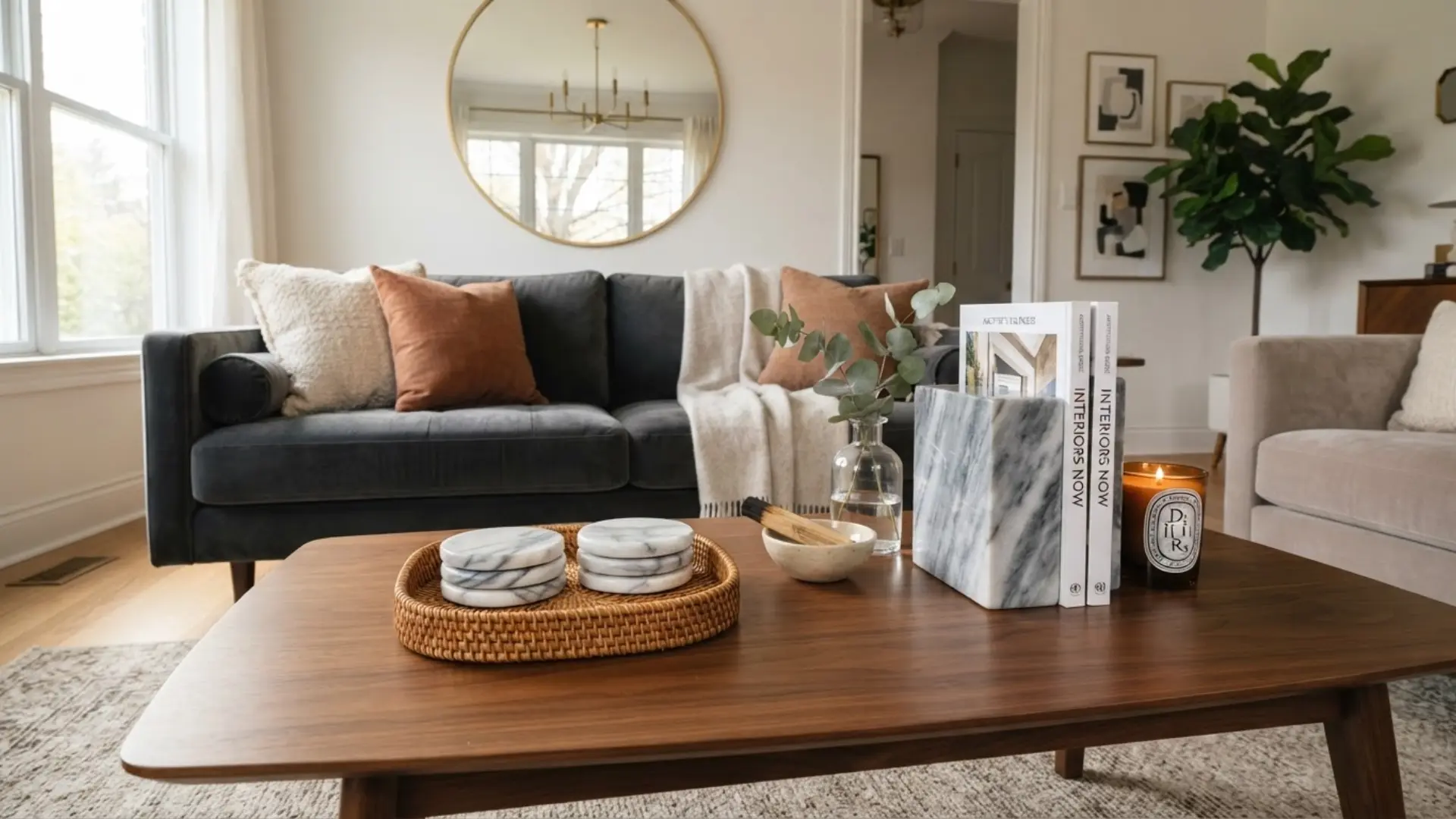
Small marble objects like coasters, bookends, or a mini tray add polish and coolness to any table.
Marble pairs beautifully with warmer materials like wood or brass to avoid feeling stark. Choose pieces with visible veining for character, distinct from plain stone or generic acrylic accents elsewhere.
Functional Coffee Table Decor Ideas
In my experience, decor doesn’t have to sacrifice usefulness. Functional coffee table decor lets you stay stylish while keeping everyday essentials in reach.
These ideas prove that practical and pretty can coexist.
21. Decorative Storage Box
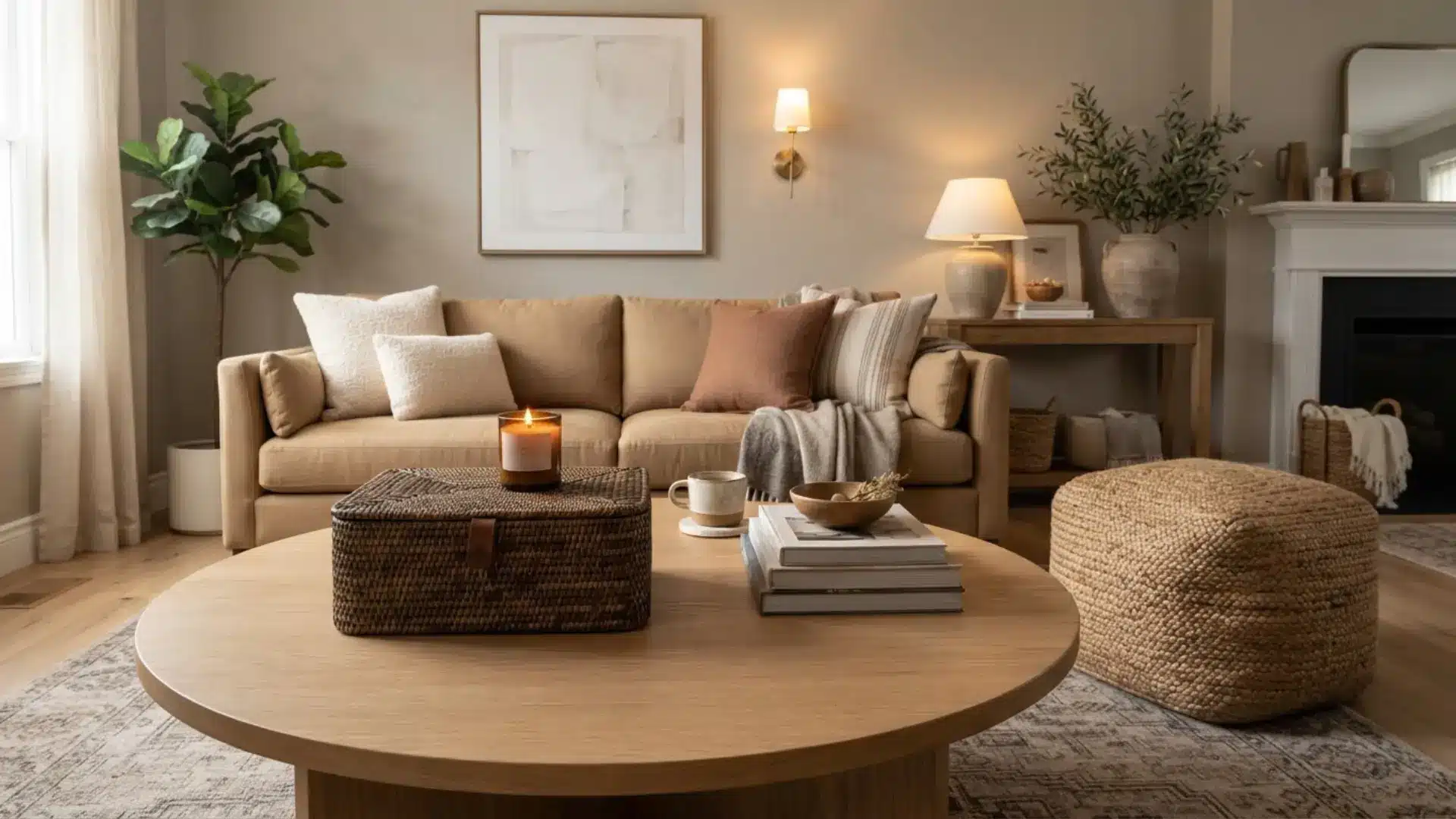
A lidded box hides remotes, chargers, or coasters while doubling as a styled object on its own.
Choose one in wood, leather, or woven rattan to match your table’s material, and use its flat top as a mini display surface for a candle or small trinket.
This idea hides clutter, unlike open organizers elsewhere on this list.
Styling Tip: Choose a box slightly taller than surrounding objects to anchor the grouping.
22. Coaster Sets as Decor
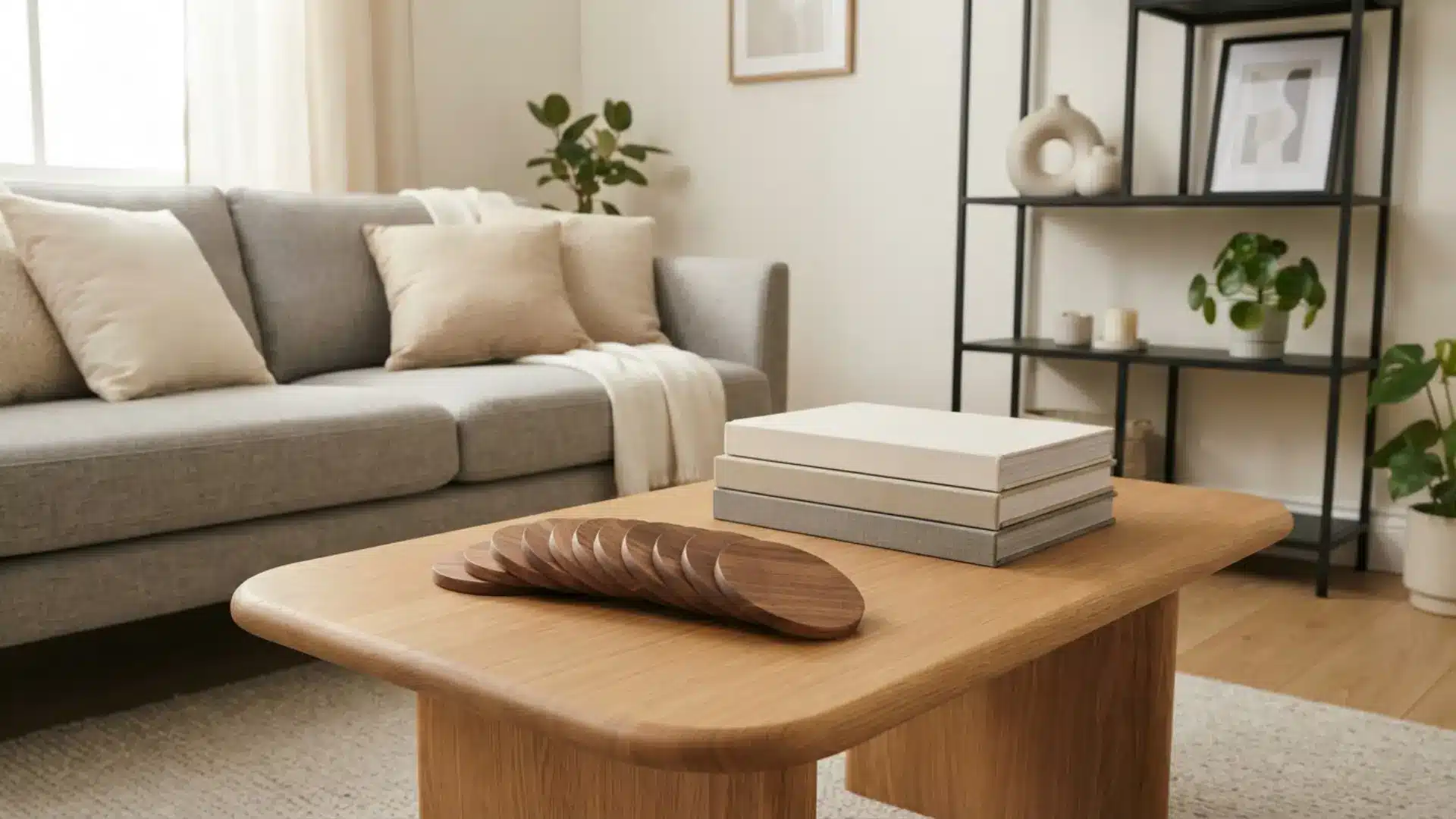
Instead of tucking coasters away, stack them as an intentional design element.
Choose a set in stone, wood, or brass with texture, and fan them slightly or stack them diagonally beside books. This turns a purely practical item into a textural accent, distinct from the storage box’s hidden-function approach.
23. Candle Trio Arrangement
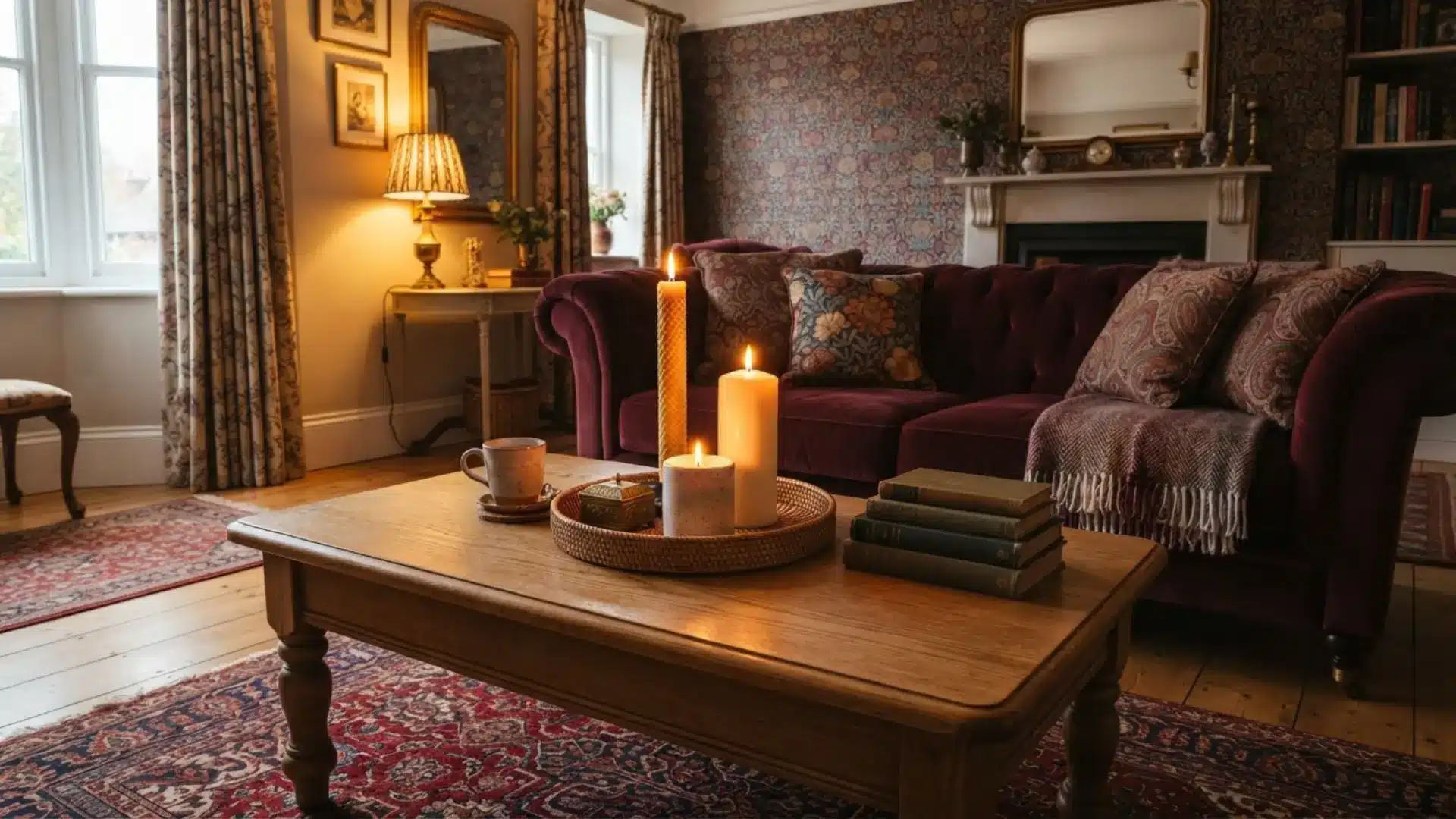
Group three candles at varying heights; tall, medium, short, for both mood and built-in height variation.
Unlike a single statement candle, this idea uses repetition and scale together, creating rhythm through multiples rather than one dominant piece.
Choose the same scent family for a cohesive sensory experience too.
24. Remote and Clutter Organizer
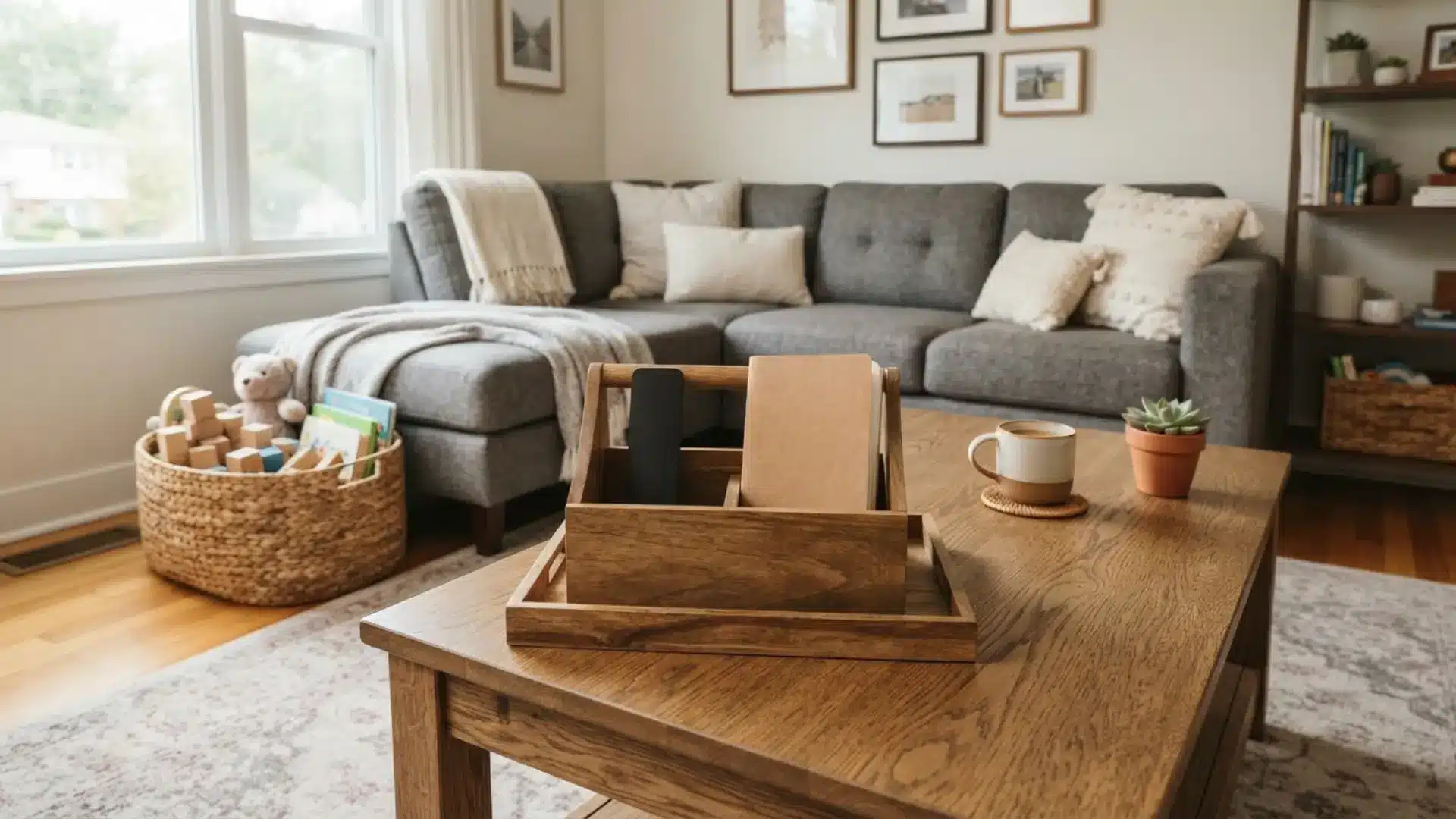
An open-topped caddy or divided tray keeps remotes, coasters, and small essentials sorted without hiding them completely.
Unlike the lidded storage box, this organizer keeps items visible and instantly accessible, making it ideal for daily-use tables in busy living rooms where lids would slow you down.
Styling Tip: Choose a caddy that matches your tray’s material for a cohesive, intentional look.
25. Multi-Purpose Tray Zones
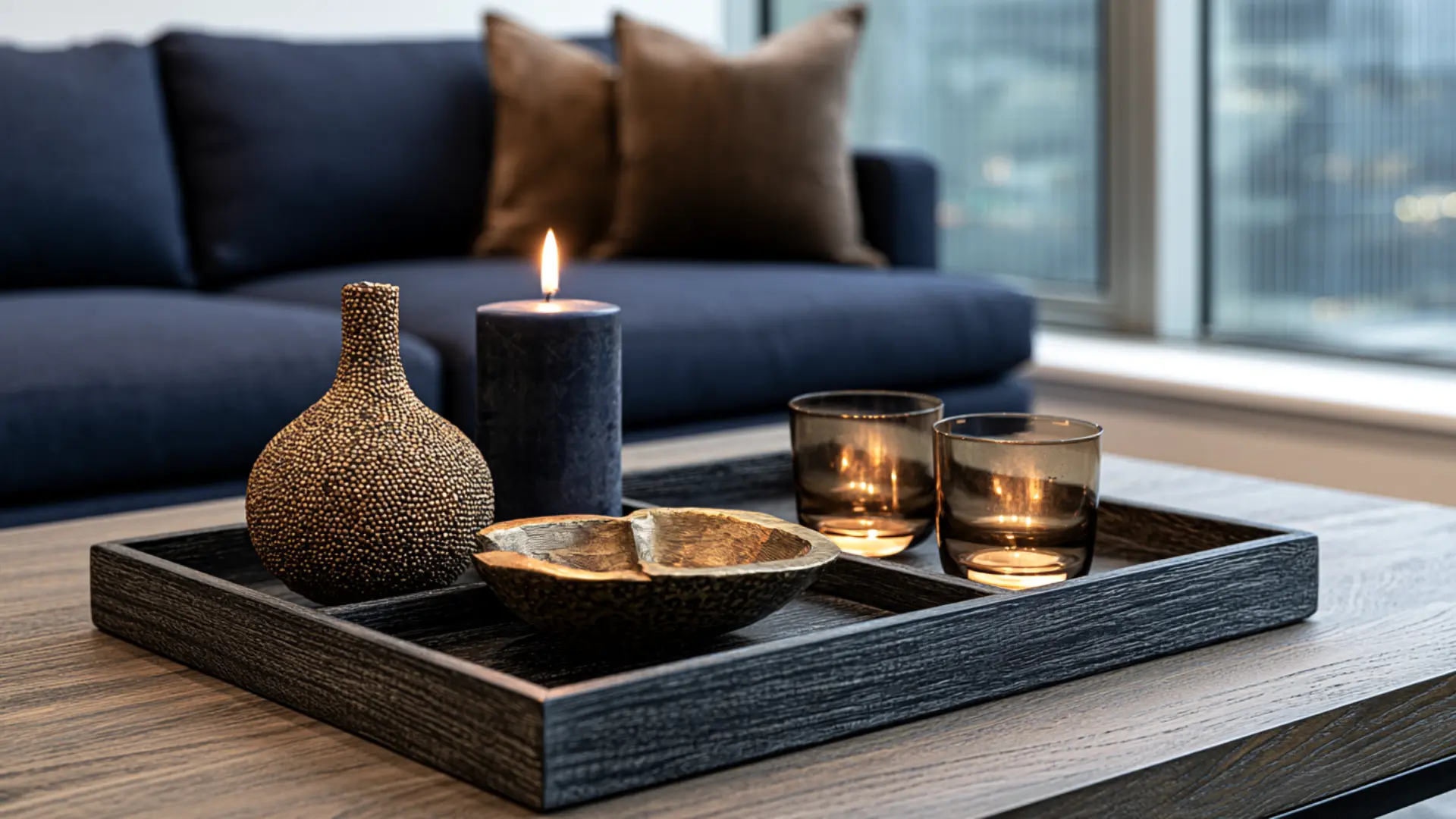
Use one large tray to create designated “zones,” one side for decor, one side for daily functional items like glasses or a notebook.
This differs from layered or woven trays elsewhere by focusing on zoning within a single tray, blending everyday use with styled presentation in one footprint.
Personal & Conversation-Starter Coffee Table Decor Ideas
I always tell clients the best coffee table decor tells a story. Personal touches turn a styled table into a reflection of who you are, sparking conversation instead of just filling space.
These ideas prioritize meaning over matching.
26. Travel Souvenir Display
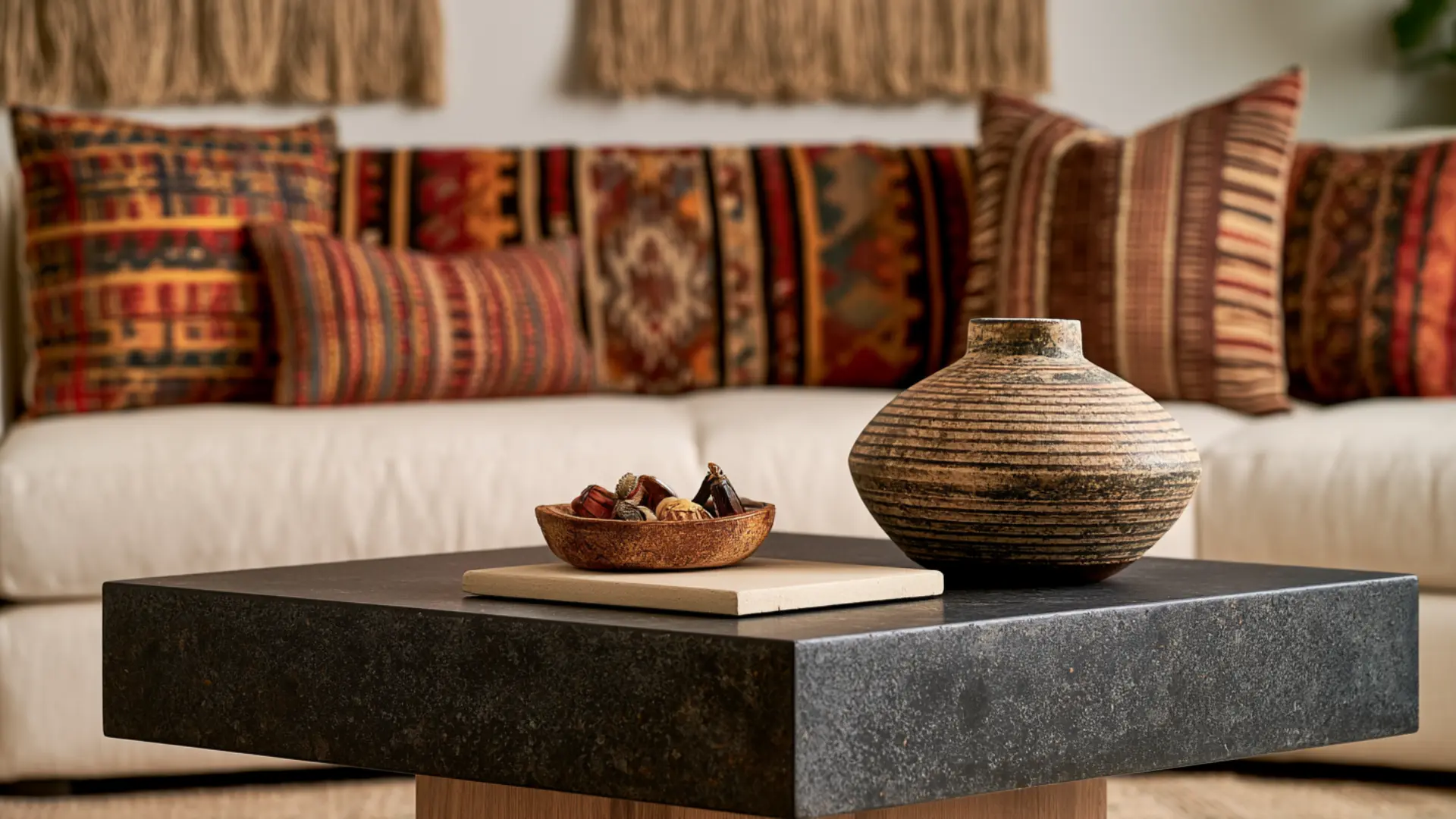
Small objects collected from trips, like a carved bowl, painted tile, or woven basket, bring personal history to your table.
Group two or three pieces from different destinations together rather than displaying everything you own, keeping the vignette curated.
This idea is about global personal memory, unlike locally sourced collections elsewhere.
Styling Tip: Rotate souvenirs seasonally to keep the display feeling fresh and current.
27. Art or Photography Book Stack
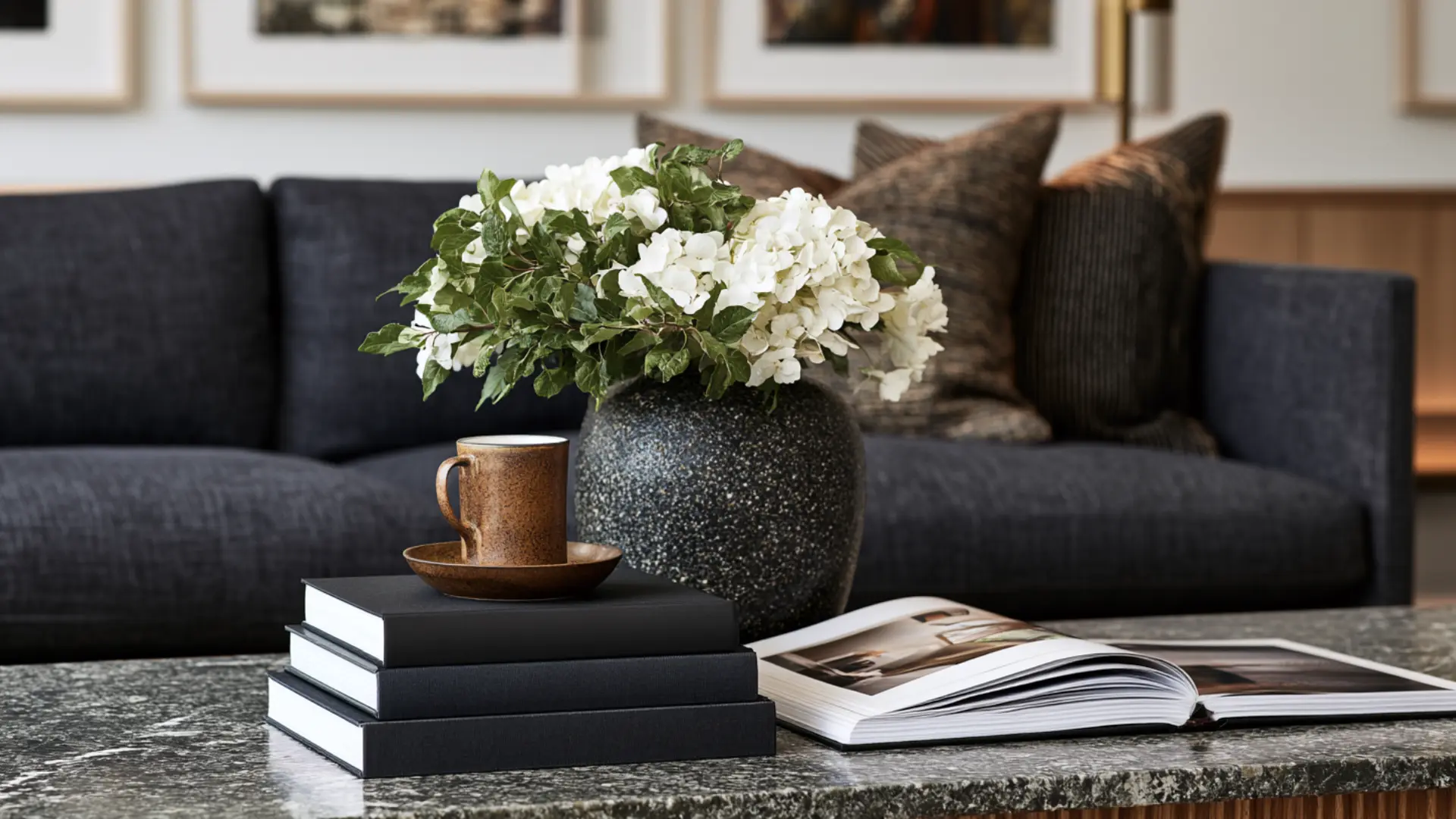
Choose books specifically for their visual subject matter, architecture, fashion, or photography, rather than for spine color alone.
This differs from the general stacked-books idea by prioritizing content and personal interest over pure aesthetics, making the stack a genuine reflection of what you love to look at.
28. Small Sculpture or Pottery Piece
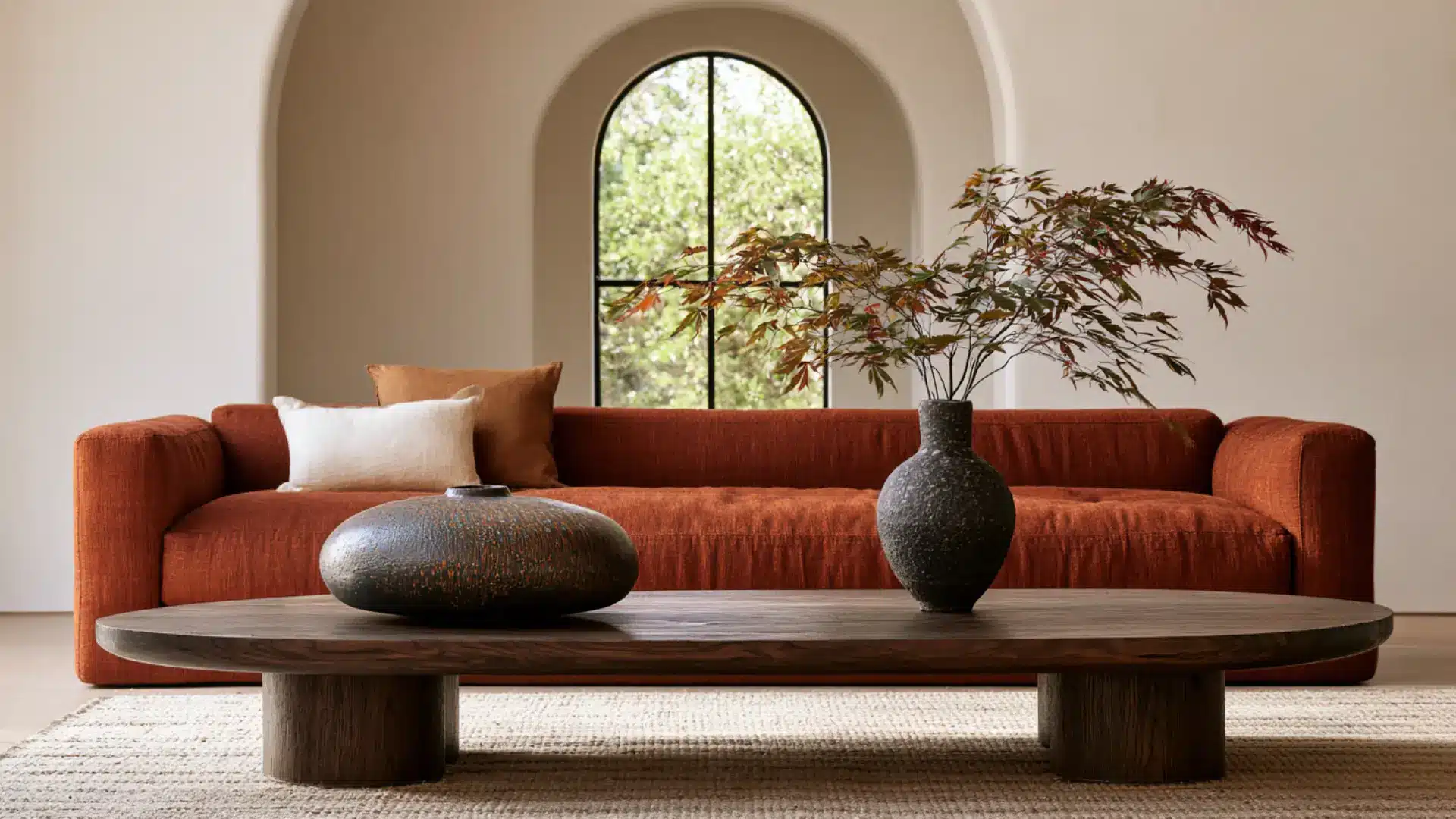
A handmade ceramic piece, whether purchased from an artist or made yourself, adds one-of-a-kind character no mass-produced item can replicate.
Unlike the sculptural display in the minimalist section, this idea leans into imperfection and craftsmanship as the point, celebrating visible handmade marks over polished, gallery-style forms.
29. Framed Mini Art
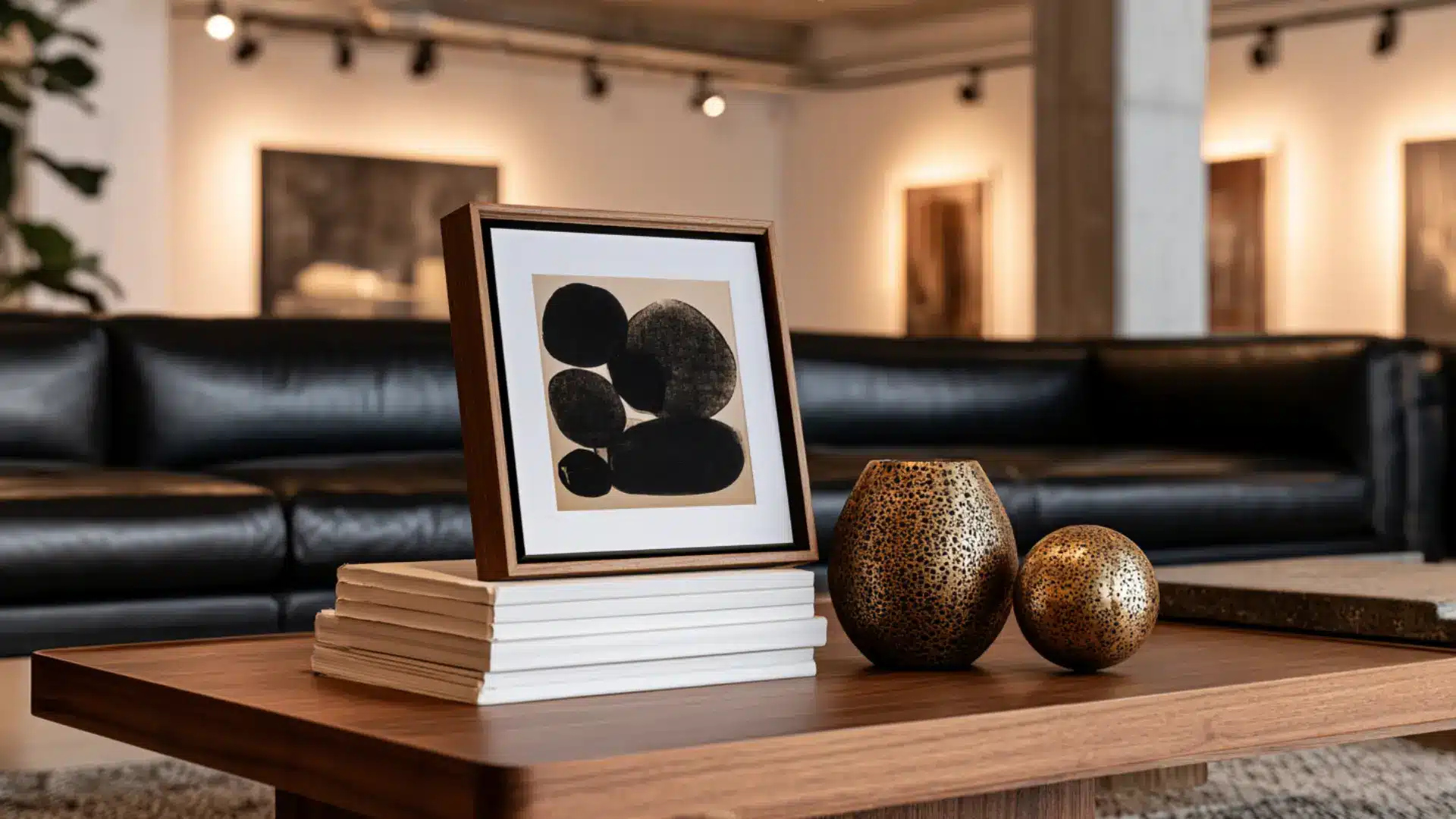
Lean a small framed print or original artwork against a book stack instead of hanging it on the wall.
This brings gallery-style layering to your table itself, distinct from any tabletop object; it is the only idea on this list that introduces wall-art scale and framing to a horizontal surface.
Styling Tip: Lean two frames of different sizes together for an editorial, collected look.
30. Puzzle or Board Game Display
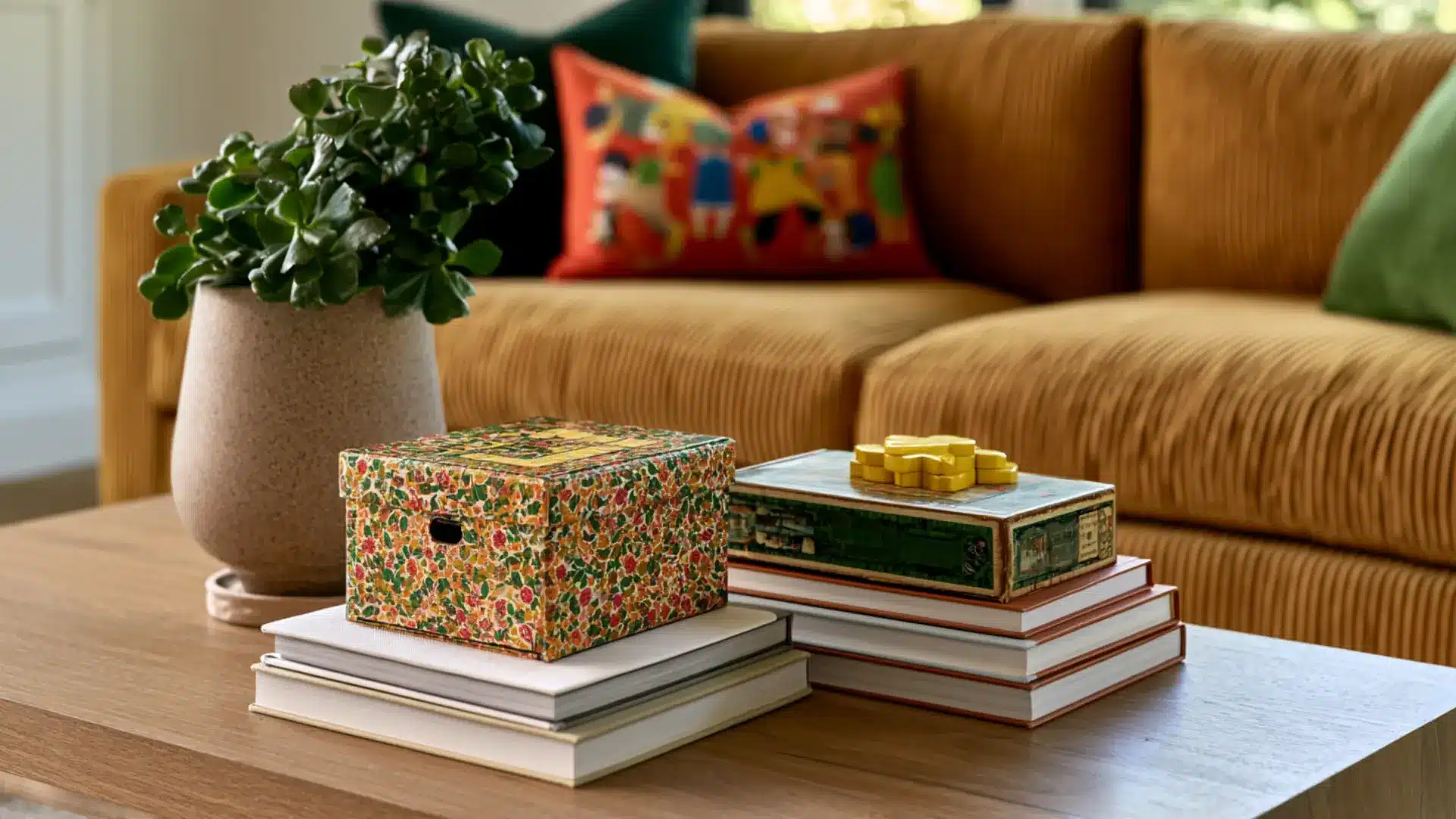
A beautifully designed puzzle box or vintage board game doubles as decor and an invitation to play.
Choose one with an eye-catching cover or box design, and stack it among books rather than hiding it in storage. Unlike static decor, this idea invites interaction, making your table genuinely social.
31. Personal Collection Showcase
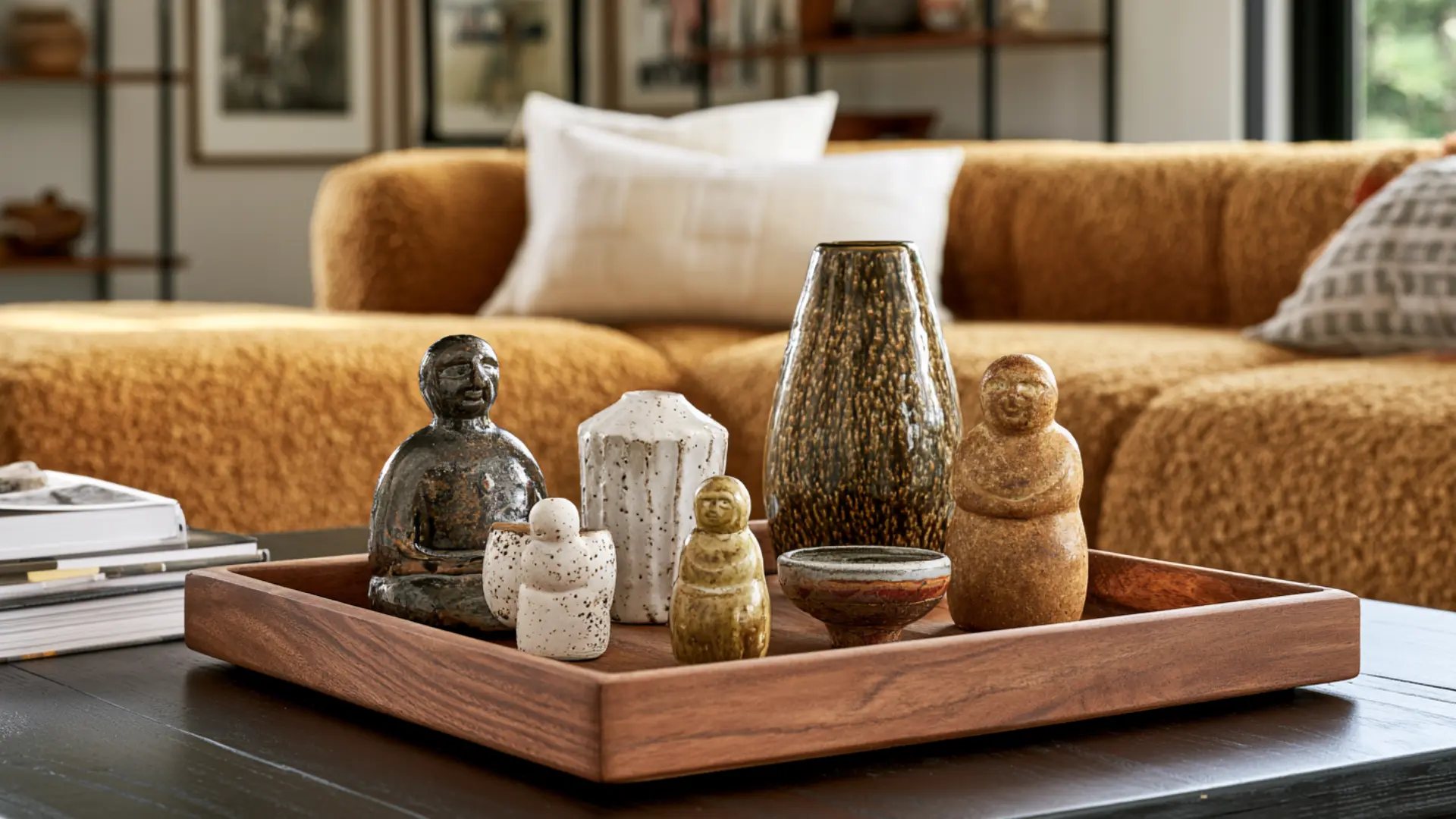
Whether it is vintage cameras, small figurines, or antique keys, displaying a curated personal collection makes your table unmistakably yours.
Limit the display to three to five pieces at most, so it reads as intentional rather than cluttered. This idea is the most autobiographical on the entire list, unlike souvenirs tied specifically to travel.
Styling Tip: Choose a small tray or dish to contain the collection and prevent visual sprawl.
Common Coffee Table Decor Mistakes to Avoid
Even great instincts can go wrong without a few ground rules, and I have watched it happen more times than I can count. Usually it is a small slip-up, not bad taste, that quietly undoes an otherwise beautiful table.
Spot them early, and your styling stays sharp all year round.
- Overstyling With No Breathing Room: Cramming too many objects together kills the intentional, curated look you are going for.
- Ignoring Height Variation: Flat, same-level objects make a table feel static instead of dynamic and layered.
- Choosing Looks Over Function: Skipping storage or durable materials leads to impractical, high-maintenance setups.
- Forgetting Seasonal Refreshes: A table styled once and left untouched quickly starts to feel stale.
Avoid these four traps, and small tweaks go a long way toward keeping a table looking pulled together.
How to Refresh Coffee Table Decor Every Season?
I do not restyle my whole table every season; I just swap a few key pieces. Small changes create a big seasonal impact without much effort.
Keep your base layout- the tray, books, and main centerpiece – consistent year-round. This foundation is your anchor, so you are never starting from scratch each season.
Instead, rotate the small, swappable details.
Trade candles for warmer scents in fall, switch dried stems for fresh blooms in spring, or refresh your bowl’s contents with seasonal accents like pinecones or citrus.
This approach keeps styling low-effort and budget-friendly, while your table always feels current and intentional through every season.
The Closing Note
Great coffee table decor rarely comes from chasing the newest trend.
It comes from a few consistent habits, grouping in odd numbers, varying height, leaving breathing room, and mixing materials that contrast rather than match.
Once those habits click, styling any table gets faster.
Pick two or three ideas from this list that caught your eye and try them this weekend. A tray, a stack of books, or one statement piece is often enough to notice the difference.
Which idea would work best on your coffee table right now? Drop it in the comments. I’d love to hear how you decide to style yours.
Frequently Asked Questions (FAQs)
How Many Items Should Be on a Coffee Table?
Aim for three to five objects grouped thoughtfully. Odd numbers feel more natural, and limiting the count prevents clutter while still giving your table visual interest and personality.
What is the Rule of Thirds in Coffee Table Styling?
It means arranging decor in odd-numbered groupings; typically three items of varying height and shape; since asymmetrical groupings feel more balanced and visually pleasing than paired items.
Is It Better to Leave a Coffee Table Empty or Styled?
Lightly styled beats empty. A few intentional pieces with breathing room look curated and lived-in, while a completely bare table often feels unfinished or overlooked.
How Do You Style a Small Coffee Table?
Stick to one or two objects max: a tray with a candle or small stack of books. Avoid clutter; small tables need simplicity, not miniature versions of larger setups.
What is the Easiest Coffee Table Decor Idea for Beginners?
The tray-book-candle formula is foolproof. It combines height variation, odd numbers, and function in one simple grouping- no design experience or extra shopping required.